
World War Two
Pubished 10 Aug 2021The Big Action at the Warsaw Ghetto continues, while The Japanese carry out retaliations against the Chinese for aiding American airmen. Dmitri Shostakovich’s “Symphony no. 7” premieres in the besieged city of Leningrad.
(more…)
August 11, 2021
The Symphony That Defeated the Wehrmacht – WAH 040 – August 1942, Pt .1
Comments Off on The Symphony That Defeated the Wehrmacht – WAH 040 – August 1942, Pt .1
August 9, 2021
QotD: Leonid Brezhnev and his mother
In China, The Communist Party’s Latest, Unlikely Target: Young Marxists. “Young people who belong to Marxist groups have recently become the unlikely targets of a state crackdown due to their zeal to help educate and mobilize China’s working class to fight for their rights. The conflict has exposed a paradox between a party founded on Marxist principles and the very young people it has tasked with carrying those principles out.”
It’s not really a paradox. Communism is just a con. When the true believers get in the way of the con, they have to be shut up.
The old Soviet joke went like this: General Secretary Brezhnev shows his mother his palatial apartment in Moscow, his fancy dacha in the countryside, his chauffer-driven limousine, his personal helicopter, etc. and says “See mom, I’ve really made it. Aren’t you proud?”
“Very much so,” she says. “But I’m worried, too.”
“What are you worried about?” asks Brezhnev.
“Well, Leonid — what if the communists come back?”
Glenn Reynolds, “This Reminds Me Of The Old Soviet Joke About Leonid Brezhnev And His Mother”, Instapundit, 2018-11-24.
Comments Off on QotD: Leonid Brezhnev and his mother
July 25, 2021
The plight of the Uyghurs in China
In this week’s excerpt from his full Weekly Dish, Andrew Sullivan considers the Chinese government’s ongoing suppression of the Uyghur minority:
There’s a story in a recent Atlantic memoir by a Uyghur refugee that lingers in the mind. The Chinese authorities in Xinjiang Province now regard the possession of any religious literature, including the Koran, as prima facie evidence of terroristic activities. Terrified Uyghurs in Urumqi, the regional capital, have learned these past few years to quickly dispose of any such items — some throwing out books into the streets overnight so they could not be traced to their households. But one old man in his seventies forgot about a Koran he had possessed, and, coming upon it late, was too scared to hand it over, so threw it into a river. Alas,
the authorities had installed wire mesh under all bridges, and when the mesh was cleaned, the Quran was found and turned over to the police. When officers opened it, they found a copy of the old man’s ID card: In Xinjiang, the elderly have a habit of keeping important documents in frequently read books, so that they are easily found when needed. The police tracked down the old man and detained him on charges of engaging in illegal religious activities. He was sentenced to seven years in prison.
The “prisons” this elderly, devout Muslim was shipped off to now have a capacity of around one million people. They have been built at breakneck speed. Buzzfeed News has found “more than 260 structures built since 2017 and bearing the hallmarks of fortified detention compounds.” The more recent building suggests they are going to become permanent parts of a bid to wipe Uyghur culture from the face of the earth.
The Atlantic story helps you understand how eerily reminiscent this campaign is to the early Nazi-era treatment of Jews, all the way down to the initial disbelief that the genocidal campaign was beginning, to the slow creeping oppression, the sudden new checkpoints and security procedures, the separation of Han and Uyghurs, knocks on the door at night, the attempts of some to escape without detection, and the sudden disappearances of friends, relatives, co-workers — never to be heard of again.
We cannot know for sure what happens inside the camps, but reports from survivors include torture, starvation, force-feeding, solitary confinement, and brainwashing. And in some ways, the entire region is now an open-air prison: security cameras are everywhere, the imprisoned are pressured to incriminate others, police go house to house searching for illicit materials, mosques and neighborhoods are razed, Uyghur language is banned, phones monitored, face recognition technology is ubiquitous. Family members, waiting for their turn to be arrested, leave notes like this one from a husband to his wife:
If they arrest me, don’t lose yourself. Don’t make inquiries about me, don’t go looking for help, don’t spend money trying to get me out. This time isn’t like any time before. They are planning something dark. There is no notifying families or inquiring at police stations this time … I’m not afraid of prison. I am afraid of you and the girls struggling and hurting when I’m gone. So I want you to remember what I’m saying.
It’s important to note that the concentration camps for Muslims in China are not extermination camps. (At least not yet. “They are planning something dark” is not a sentence one ever wants to read.) But it is the greatest, systematic detention of a religious minority since the Second World War, championed by a newly emerged dictator-for-life, Chinese President Xi. And it is not going to stop any time soon.
July 23, 2021
Panic is infectious, and the dying media are a primary vector
In City Journal, John Tierney looks at the two lethal waves of contagion the world has suffered since 2019, the Wuhan Coronavirus itself and the media-driven panic that almost certainly resulted in far more deaths than the disease that triggered it:

Wuhan Institute of Virology.
Wikimedia Commons.
Instead of keeping calm and carrying on, the American elite flouted the norms of governance, journalism, academic freedom — and, worst of all, science. They misled the public about the origins of the virus and the true risk that it posed. Ignoring their own carefully prepared plans for a pandemic, they claimed unprecedented powers to impose untested strategies, with terrible collateral damage. As evidence of their mistakes mounted, they stifled debate by vilifying dissenters, censoring criticism, and suppressing scientific research.
If, as seems increasingly plausible, the coronavirus that causes Covid-19 leaked out of a laboratory in Wuhan, it is the costliest blunder ever committed by scientists. Whatever the pandemic’s origin, the response to it is the worst mistake in the history of the public-health profession. We still have no convincing evidence that the lockdowns saved lives, but lots of evidence that they have already cost lives and will prove deadlier in the long run than the virus itself.
One in three people worldwide lost a job or a business during the lockdowns, and half saw their earnings drop, according to a Gallup poll. Children, never at risk from the virus, in many places essentially lost a year of school. The economic and health consequences were felt most acutely among the less affluent in America and in the rest of the world, where the World Bank estimates that more than 100 million have been pushed into extreme poverty.
The leaders responsible for these disasters continue to pretend that their policies worked and assume that they can keep fooling the public. They’ve promised to deploy these strategies again in the future, and they might even succeed in doing so — unless we begin to understand what went wrong.
The panic was started, as usual, by journalists. As the virus spread early last year, they highlighted the most alarming statistics and the scariest images: the estimates of a fatality rate ten to 50 times higher than the flu, the chaotic scenes at hospitals in Italy and New York City, the predictions that national health-care systems were about to collapse. The full-scale panic was set off by the release in March 2020 of a computer model at the Imperial College in London, which projected that — unless drastic measures were taken — intensive-care units would have 30 Covid patients for every available bed and that America would see 2.2 million deaths by the end of the summer. The British researchers announced that the “only viable strategy” was to impose draconian restrictions on businesses, schools, and social gatherings until a vaccine arrived.
This extraordinary project was swiftly declared the “consensus” among public-health officials, politicians, journalists, and academics. Anthony Fauci, director of the National Institute of Allergy and Infectious Diseases, endorsed it and became the unassailable authority for those purporting to “follow the science”. What had originally been a limited lockdown — “15 days to slow the spread” — became long-term policy across much of the United States and the world. A few scientists and public-health experts objected, noting that an extended lockdown was a novel strategy of unknown effectiveness that had been rejected in previous plans for a pandemic. It was a dangerous experiment being conducted without knowing the answer to the most basic question: Just how lethal is this virus?
The most prominent early critic was John Ioannidis, an epidemiologist at Stanford, who published an essay for STAT headlined “A Fiasco in the Making? As the Coronavirus Pandemic Takes Hold, We Are Making Decisions Without Reliable Data.” While a short-term lockdown made sense, he argued, an extended lockdown could prove worse than the disease, and scientists needed to do more intensive testing to determine the risk. The article offered common-sense advice from one of the world’s most frequently cited authorities on the credibility of medical research, but it provoked a furious backlash on Twitter from scientists and journalists.
Comments Off on Panic is infectious, and the dying media are a primary vector
July 13, 2021
Is the PRC really a paper dragon?
Sarah Hoyt is tired of finding posts on MeWe that fluff up the ChiComs as a way of “conservatives” scoring points against “progressives” in the US political context:
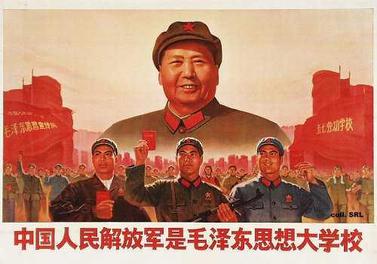
“The Chinese People’s Liberation Army is the great school of Mao Zedong Thought”, 1969.
A poster from the Cultural Revolution, featuring an image of Chairman Mao, published by the government of the People’s Republic of China.
Image via Wikimedia Commons.
What bilge? Oh, memes extolling the Chinese in relation to us. And all conservatives pick this crap up and echo it, because it happens to “side rail” against things they hate (and which it’s valid to hate.)
But the memes are crap. The aggrandizing of the Chinese bastards is crap. They’re either outright lies or laughable lies. And the memes, somehow, never hit the Chinese where it hurts: the fact their economy is so f*cked most of their people live like Medieval peasants; the fact their army of little emperors cried when they went up against India; the fact that they are having trouble feeding their own population; the crumbling empty cities they think are “investments”; their population collapse; Xi’s pretensions to world leadership; their slave camps. Which you know, tells you exactly where the meme factory is and who is propagating it.
The problem being when conservatives seize the memes and distribute, they are actively collaborating in the aggrandizing of China and putting down the US. They are also convincing the Chinese their victory over us will be easy. (This is good and bad, but if you have friends and relatives in large cities, think about the chances of it ending up with one of those catching a nuke because the idiots get cocky, okay?)
Chinese are masters of propaganda and psychological warfare, while Americans are so bad at it that it hurts. If you loved 2020 keep collaborating with the enemy.
If not, listen up:
Yeah, sure, the fact that the usurpers of our governmental institutions are making our armed forces participate in inclusivity and CRT training, and prioritizing bullshit SJW goals over preparedness IS a problem. But that doesn’t mean we’re not still the best fighting force in the world. Sure, it’s damning with faint praise, but comparing us to China and saying they’re “prepared for war” and “will win” is bullshit. You know it’s bullshit, I know it’s bullshit. It’s bullshit so rank I can smell it through the internet.
The Chinese have Little Emperors — single descendants of multiple families — who are no more prepared to risk themselves in war than I’m prepared to fly unassisted. Their army is bullshit.Why is it bullshit? Because they don’t have a fighting force. The only fighting strength they ever had was the ability to submerge any enemy in a wave of people. But they can’t. Because the communists destroyed that too.
Their weapons are bullshit. I’d like independent confirmation of their “achievements in space”. Why? Because, well, the USSR achievement in space was a) what they could steal from us b) flimsy and c) mostly trumped up. In the sense that they only publicized their wins, while it might be one in ten that succeeded.
Look, by definition an authoritarian regime sucks at tech. I’m not saying anything about “capabilities of the people” (duh) but seriously? If you can’t report failed experiments, failed assemblies or builds that need to be improved, you’re going to have crappy tech. And you can’t report any of that, because in a centralized authoritarian regime you’ll be punished for failure, even if it’s not your fault. And you might get accused of doing it on purpose.
When nothing less than 100% success is allowed, the process is corrupt and the result is excrement. (Look at our “science” right now. No, seriously. We’re sliding that way.)
So, no matter how made you are at what the army and our government is doing, stop echoing Xi’s bullshit. And counter it every time you see it. This is war by other means, or in the ancient Chinese tradition, softening the enemy so they’ll surrender at first attack.
Comments Off on Is the PRC really a paper dragon?
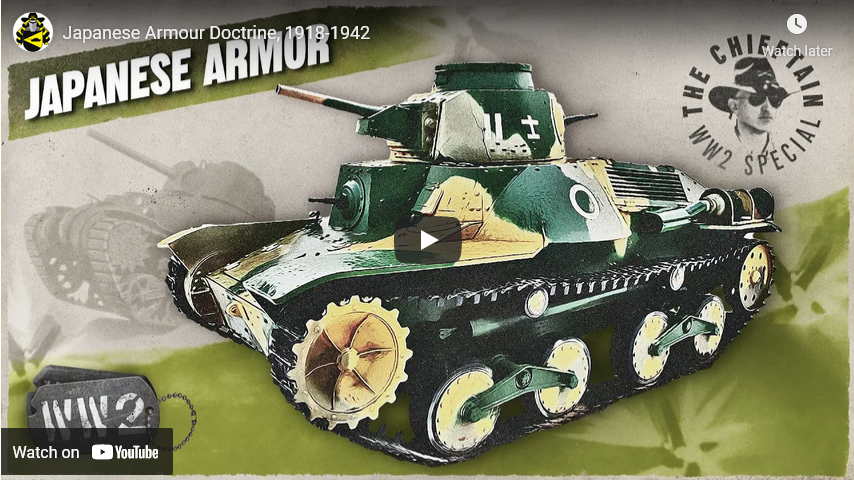
Japanese Armour Doctrine, 1918-1942
The_Chieftain
Published 11 Jul 2021Sources include:
Japanese tanks and armoured Warfare 1932-45, David McCormack
WW2 Japanese Tank Tactics, Gordon Rottmen, Akira Takizawa
Japanese Tanks, Tactics and anti-tank weapons, Donald McLean
Type 89 and Tankette books, Kazunori YoshikawaContinuing on this series of videos supporting the WW2 Channel, I look at what I can find about how the Japanese thought of tanks and their usage, tempered by quite a bit of combat experience.
Improved-Computer-And-Scout Car Fund:
Patreon: https://www.patreon.com/The_Chieftain
Direct Paypal https://paypal.me/thechieftainshat
Comments Off on Japanese Armour Doctrine, 1918-1942
July 9, 2021
The Western Warlords of Asian Armies – WW2 Gallery 004
World War Two
Published 8 Jul 2021From the Battle of Shanghai to the Burma Campaign and beyond, Western military advisors have played a big role in the actions of East Asian armies in the Pacific Theatre. Watch the videos to learn the stories of Joseph Stilwell, Claire Lee Chennault, the Flying Tigers, the Chindits, and more.
(more…)
Comments Off on The Western Warlords of Asian Armies – WW2 Gallery 004
July 3, 2021
Taiwan, 2021
Admiral Gary Roughead considers the regional situation of Taiwan in 2021:
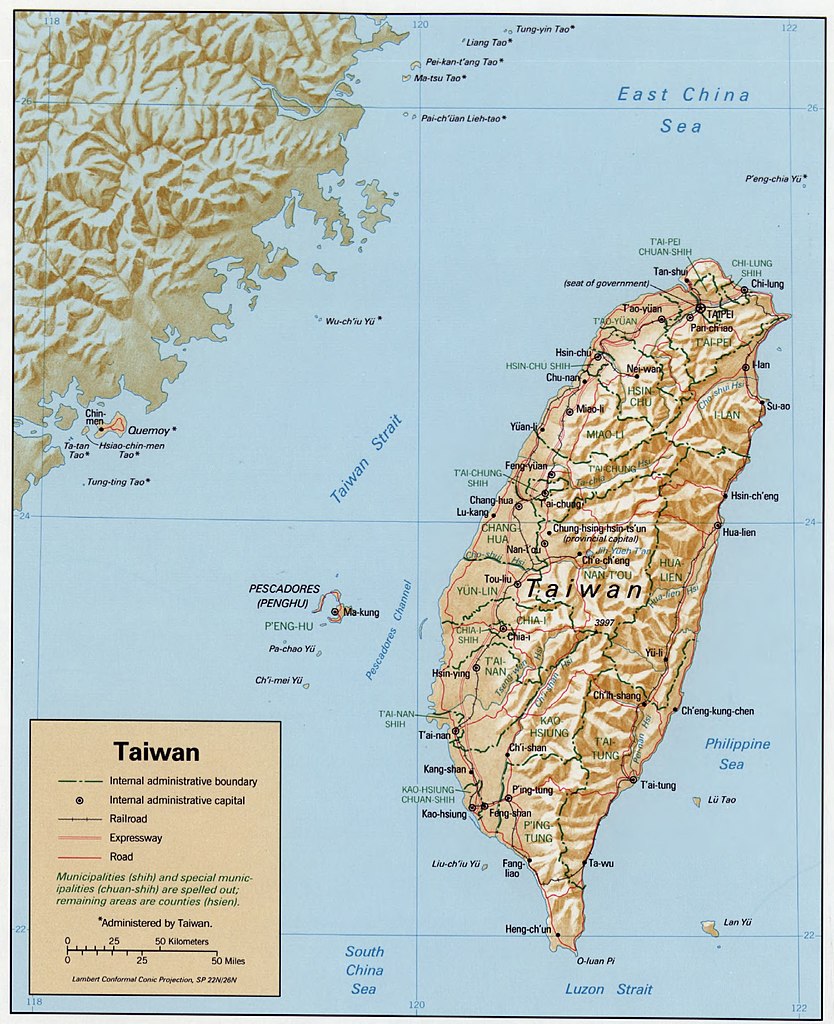
Taiwan relief map.
Library of Congress Geography & Map Division via Wikimedia Commons.
There has been a spate of recent articles proffering when the People’s Republic of China (PRC) will likely be capable of invading Taiwan. The prognostications are interesting but unhelpful as they distract from the reality of the range of coercive actions the PRC may impose on Taiwan and what could happen now as a result of the PRC increasing pressure and a related military accident or misstep in the vicinity of Taiwan.
The current American penchant to jump to military options to address thorny global problems often casts the Taiwan dilemma in a superficial bilateral or trilateral military context. That aperture must be opened more fully to consider the realities, attributes, and interests of Taiwan, and how those factors will influence the methods and timing of Beijing’s reunification objective. Moreover, those realities, some inconvenient, must underpin new and broader thinking about how to ensure Taiwan’s existence as a vibrant democracy.
[…]
Changing defense strategy to adjust to new circumstances can’t simply discount the realities of today. The interaction of the Air Forces of Taiwan and the PRC in 2020 was extraordinarily high and costly for Taiwan, and maritime and naval considerations will also continue to loom large for Taiwan’s security.
PRC naval force structure both in terms of capacity (numbers) and capability (effectiveness and quality) has grown impressively in the past two decades and some comparisons are worth noting. There are over 330 ships in the PLA Navy and construction continues at an impressive pace. The Chinese Coast Guard numbers 255 ships. The PLA Navy, except for short episodic out of area deployments of small numbers of ships, is concentrated within the First Island Chain. Taiwan’s navy has 86 ships in service, more than half are coastal patrol craft. Its small Coast Guard of 23 ships is not close to being on par in numbers, ship size, or capability as that of the PRC. The U.S Navy stands at 296 ships. The American fleet enjoys a qualitative advantage, but only approximately 60 percent of the U.S. Fleet is assigned to the Pacific, with 11 of those forward deployed to Japan. The remainder are thousands of miles away.
PLA Air Force and Taiwan Air Force aircraft inventories are similarly imbalanced with fighter numbers 600 (Eastern Theater) and 400 respectively. The PLA Air Force’s fighter total is 1,500 and would inevitably backfill shortages and combat losses. The U.S. Air Force combat coded fighters number 1,011. The PRC’s Air Force and Navy regional concentration is reinforced by a Rocket Force of nearly 1,000 intermediate and lesser range ballistic missiles and 300 ground launched cruise missiles.
China’s focus on “informationized” warfare integrates cyber operations into the PRC’s anti-access area denial strategy and architecture. The BeiDou satellite network enables full autonomy in positioning, navigation, and timing (PNT) information for PLA ground, sea, and air forces and is the essential factor in precision weapon employment. Another contributor to precision engagements and overall situational awareness is China’s 120 reconnaissance and remote sensing satellites. A robust People’s Armed Forces Maritime Militia also provides close-in maritime locating information and has and will interfere with U.S., Taiwanese, and other nations’ naval and maritime operations.
Comments Off on Taiwan, 2021
June 24, 2021
QotD: The fantasy world of Canadian geopolitical posturing
Yet for all the reflexive anti-Americanism that has been the meat and mead of Canadian nationalism, Canada’s leadership class has usually been pretty good about understanding who is in charge. Over the course of the 20th century, from the Ogdensburg agreement of 1940 and the post-war establishment of NORAD to the Free Trade Agreement of 1988, we cemented that reality with a defence and economic alliance.
Paradoxically, what this continental defence and economic security arrangement has given us is the opportunity to let our internationalist pretensions run wild. One of the weirdest things about Canada is the extent to which we like to frame our place in the world in a-geographic terms. We imagine that we are as threatened as anyone by the mix of post-Cold War failed states, opportunistic terrorism, regional authoritarianism, and humanitarian disasters. By the same token, we like to presume that we are as well-positioned as any other country to do something about all of this.
As the dean of Canadian defence policy Kim Nossal points out in a recent paper, this a-geographic security fantasy is reflected in the official defence reviews that Canadian governments have released since the 1990s. Or take, for example, the 2017 Liberal policy statement, entitled Strong, Secure, Engaged, which rejects the idea that Canada’s privileged geographic location mitigates these global threats for us. As Nossal concludes, when you look at how Canadian governments actually talk about our security situation, you get little sense that, thanks to the Americans, Canada occupies “one of the safest spaces in contemporary global politics.”
You can see the logical leaps, then.
Once you’ve convinced yourself that Canada’s security is disconnected from the geographical imperative of the American security guarantee, it’s only a few steps to the conclusion that who we choose as our global strategic partner is actually a meaningful choice. And if it is true, as China’s president Xi Jinping has claimed, that the East is on the rise and the West is in decline, then why not throw your lot in with the new big dog on the block?
Andrew Potter, “Hedging our bets with China was a mistake”, The Line, 2021-03-23.
Comments Off on QotD: The fantasy world of Canadian geopolitical posturing
June 6, 2021
QotD: The Soviet Union in the Cold War, China today
Needless to say, it was gibbering nonsense. The late ’80s Soviet collapse revealed that the USSR was never any kind of power at all – an economy that didn’t produce, weapons that didn’t work, a populace addicted to drink and overwhelmed with despair. “Bulgaria with nukes” is how someone characterized it, and truer words were never spoken. That remains the case today, despite Vlad Putin’s chest-beating, and it’s likely to remain the case as far ahead as anyone can see.
The same trope is being repeated regarding China. China, we are told, is the coming nation. The second largest economy on Earth, soon to be the first. A billion and a half people, each more educated than any American; a military power second to none, with advanced weapons of a nature that we can only gape at. A country exercising its power over vast reaches of the Pacific and moving into the Indian Ocean, Africa, and the Mideast with no one to oppose it.
We hear this from the likes of Thomas Friedman, who has spent much of his career looking for his personal Mussolini. It’s repeated by deeper figures across the political spectrum. In fact, it can be said without exaggeration to have become received wisdom.
There’s no point in asking how true this is. The proper question to ask is whether it embodies any truth at all.
J.R. Dunn, “The Myth of China as Superpower”, American Thinker, 2019-01-09.
Comments Off on QotD: The Soviet Union in the Cold War, China today
June 5, 2021
Battle of Khalkhin Gol 1939 – Soviet-Japanese War
Kings and Generals
Published 17 May 2020Our animated historical documentary series on modern warfare continues with a coverage of the Battles of Khalkin Gol of 1939, as the USSR and Japan clashed in Mongolia and Manchuria. Although this short war didn’t change much in the Far East, it played a huge role during World War II.
Cold War channel: http://bit.ly/2UHebLI
Modern Warfare series: http://bit.ly/2W2SeXFSupport us on Patreon: http://www.patreon.com/KingsandGenerals or Paypal: http://paypal.me/kingsandgenerals
We are grateful to our patrons and sponsors, who made this video possible: https://docs.google.com/document/d/17…
The video was made by Leif Sick, while the script was developed by Ivan Moran
This video was narrated by Officially Devin (https://www.youtube.com/user/OfficiallyDevin)
✔ Merch store ► teespring.com/stores/kingsandgenerals
✔ Podcast ► Google Play: http://bit.ly/2QDF7y0 iTunes: https://apple.co/2QTuMNG
✔ Twitter ► https://twitter.com/KingsGenerals
✔ Instagram ► http://www.instagram.com/Kings_GeneralsProduction Music courtesy of Epidemic Sound: http://www.epidemicsound.com
#Documentary #KhalkinGol #WorldWar2

Comments Off on Battle of Khalkhin Gol 1939 – Soviet-Japanese War
May 29, 2021
Justin Trudeau is clearly not concerned about China or Chinese involvement in Canadian affairs
In The Line, Jen Gerson outlines the PM’s latest display of insouciance in regard to anything involving China, their ruling Communist party, or the Chinese military:
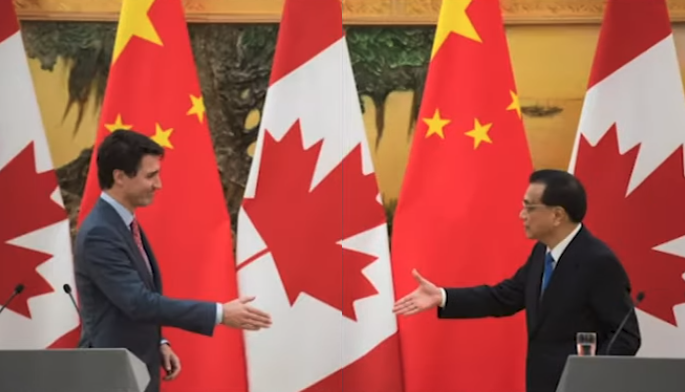
The Globe and Mail reported last week that Canada’s top infectious disease research centre, the National Microbiology Laboratory in Winnipeg, had hosted and otherwise collaborated with guest researchers and scientists from China — including some with links to that country’s military or government. O’Toole asked about this in the House, and Trudeau gave a very routine Trudeauvian non-answer. O’Toole and other Tories kept up the questioning, Trudeau eventually responded with this (as per Hansard): “Mr. Speaker, we have always and will always take this threat seriously. Public safety officials have met with more than 34 universities to help them keep their research safe. In 2020, CSIS engaged more than 225 different organizations, including universities, to ensure that they were aware of foreign threats. I also want to mention that we are seeing a disturbing rise in anti-Asian racism. I hope that my Conservative Party colleagues are not raising fears about Asian Canadians.”
Sigh. Where do we begin?
First of all, though this may shock our readers, the Sun papers, and its columnists, have been known to exaggerate their criticisms of the PM. The PM gave a more substantive answer than Lilley gave him credit for. You can disagree with the PM — see below! — without getting cute with what he actually said. The racism line was dumb, and shitty. It was beneath the PM and unfair to the legitimate questions that were being asked. Trudeau shouldn’t have said it, and he was right to get called out for it.
So yes, a dick move by the PM — in a hundred years, maybe one of his descendants can apologize for it. But let’s not take our eye off the ball.
Trudeau’s answers were more than Lilley suggested, but they’re still not good enough. O’Toole and the Conservatives are onto something. China’s ruling regime is aggressive, brutal, and thuggish. They’re a threat to security abroad, they’re committing outright crimes against humanity against their own religious minorities, they’ve crushed Hong Kong underfoot, and they’re actively hostile to Canada. None of this is racist to note.
And yet our federal Liberals remain alarmingly unable to admit any of this. We don’t buy that it’s just a matter of political expediency, an awkward but necessary consequence of the ongoing detention of the two Michaels. Hell, we wish that the Liberals were just being publicly cautious with their real views on Beijing while remaining clear-eyed about the threat behind closed doors. The evidence continues to suggest that the federal Liberals, from Trudeau on down, remain hopelessly naïve about the nature of Beijing’s rulers, even as more and more of our allies are getting real about what the next generation or two of geopolitics is gonna look like for the Western alliance. (Which Canada remains a part of, whether Trudeau likes it or not.)
The growing tensions with a rising China are a big deal. It is only going to become a bigger deal. The Liberals need to get with the program. We hope to see more on this across the Canadian media — and hopefully it’s a bit more useful and productive than what the Sun ran with this week. The Liberals look terrible on this file already for entirely legitimate, serious reasons. We don’t need to pop our aging joints as we stretch and contort ourselves to make it seem so.
Comments Off on Justin Trudeau is clearly not concerned about China or Chinese involvement in Canadian affairs
May 27, 2021
History Summarized: Ancient China
Overly Sarcastic Productions
Published 28 Dec 2018Check out our website at www.OverlySarcasticProductions.com
And after that we’ll defeat the Huns! Join Blue on a trek through the early centuries of Chinese History, from legendary foundations to the Shang and Zhou dynasties, past the Warring States Period, and into the Han dynasty — if you get to the Romance of the Three Kingdoms, you’ve gone too far.
Further reading: China: A History by John Keay
Kings and Generals’ fantastic videos on this subject:
Bactrians: https://youtu.be/IQATsepKoLE
War of the Heavenly Horses: https://youtu.be/g6Rphg_lwwMPATREON: www.patreon.com/OSP
MERCH LINKS:
Shirts – https://overlysarcasticproducts.threa…
All the other stuff – http://www.cafepress.com/OverlySarcas…Find us on Twitter @OSPYouTube!

Comments Off on History Summarized: Ancient China
May 24, 2021
History Buffs: Midway Part One
History Buffs
Published 21 May 2021Thank you guys so much for your patience. Quarantine has made somethings difficult and I know its been a while but it’s finally here! I hope you enjoy it!
You can join Nebula today and get Curiosity Stream at 26% off for a year! Click on the link below
http://curiositystream.com/historybuffs
Part Two of this review will be out next Friday on the 28th of May!● Follow us on Twitter: https://twitter.com/HistoryBuffs_

Comments Off on History Buffs: Midway Part One
May 6, 2021
Cold War 2: Electric Dumbaloo
Seva Gunisky at Hegemon has some thoughts on the undeclared-but-real new Cold War between the Peoples’ Republic Of China and what remains of the “west”:
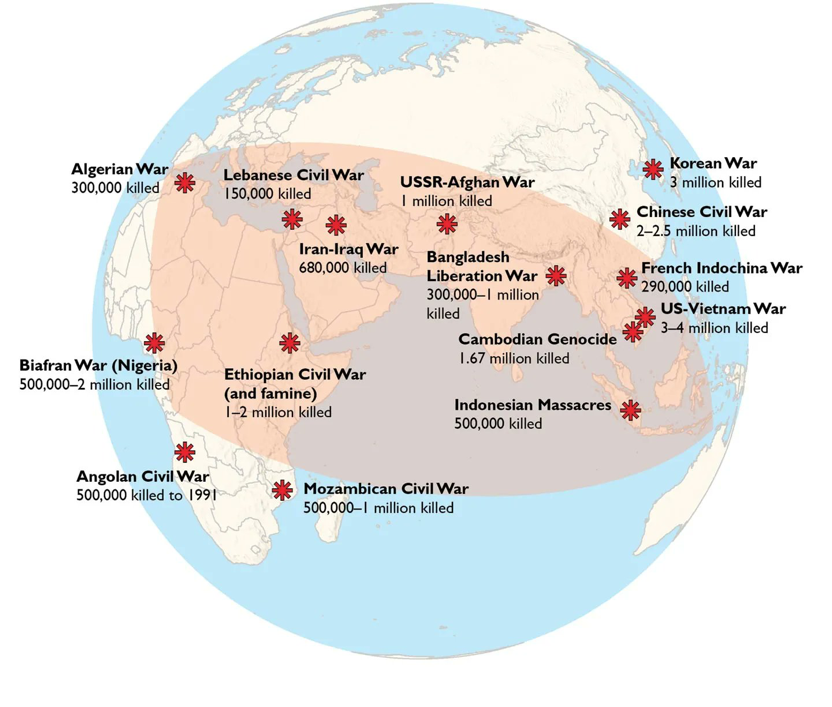
Approximate casualties of the many separate “hot” conflicts of the first Cold War.
Last week I discussed some reasons for and against the label of “Cold War” to describe US-Chinese relations, but mostly ignored the ethical implications of this debate. Since then I’ve encountered some genuinely terrible takes on the subject, so I wanted to expand on the idea just a bit.
One thing I failed to mention is how the presence of Chinese-Americans in the US — something largely missing during the first Cold War — complicates the debate. If you’re a China dove, one argument might be that any criticism of China’s regime amounts to racism against Chinese-Americans …
I’ve worked with many people with Chinese ancestry and people who came to Canada quite recently (in the software business it’d be hard to avoid working with folks from former and current communist countries), so I’ve always tried to be as careful as possible to couch my criticism of China — the PRC — to ensure that even a casual reader is clear that I’m against the government and their system, not individual people from China. It doesn’t always work, because for too many people these days, everything has to be viewed through a racist lens and anything that might possibly look or sound like racism must therefore absolutely be racism.
I think this argument can be taken too far, and used as a cheap way to shield China’s regime from legitimate criticism. As Alex Hazanov points out, it’s the same patronizing conflation people make when arguing that any criticism of Israel must be an attack on American Jews.
The doves are right, however, that the presence of nearly four million Chinese-Americans makes cold war discourse more fraught than the first time around, when the Soviets were “white” and safely far away. Official statements and attitudes will have to take special care, but in general the US does not have a great history in this regard. I fully expect reactionary cranks to demand that Chinese-Americans publicly and ritualistically denounce the Chinese government. Still, I hope it should be obvious that characterizing any critique of China’s government as “imperialist” or “sinophobic” is silly.
But brace yourselves for the shitstorm of dumb that will accompany this (hopefully cold) geostrategic conflict:
Take first Cold War discourse, add a dash of racism, filter it through social media, and you are beginning to get a sense of how dumb the debates are going to be.
[…]
And if we are going to pick a cold war “doctrine”, we should consider that neither Russia or China is looking great in the medium run. It seems that despite its supposed efficiency the Chinese regime is unable to resolve the information problem common in closed regimes, that regime personalization under Xi has worsened the problem, and that this, combined with structural/demographic problems, means the Chinese regime has a rough road ahead in the next 10-30 years.
If so, the best policy for US is certainly to avoid head-on confrontation in favor of something like neo-containment. But that’s another conversation.
H/T to Colby Cosh for the link.
Comments Off on Cold War 2: Electric Dumbaloo


