Anyone who deals with the general UK public (coercive) sector regularly, knows it is a cesspit of laziness, incompetence, arrogance and corruption, riddled with civil servants that are neither civil nor servants.
And I’m not suggesting that the levels of corruption and incompetence are comparable to those found in third world hellholes. A local official in your county council is very unlikely to demand a bribe and then have your daughter raped by his buddies if you decline. He’s especially unlikely to get away with it, and then douse your family in petrol and burn them alive if you complain – those are the levels of corruption found elsewhere in the world, so we need to retain some perspective here.
But those countries have not benefited from a thousand years of sacrifice to earn us a culture that has learned through bitter experience how to run a country. Our civil servants should be performing at the highest standard and be the best in the world, because what they inherited was a culture that conquered that world, and brought civilisation and progress (often at great cost) to every corner of it.
That they have fallen from these heights and now occupy such low places should be a matter for great national shame. And yet they continue to lord it over those they pretend to serve – try calling your local planning department if you want instruction in how supercilious a local functionary feels able to be when speaking to those he claims to serve. If you just want them to do their job, you better be prepared to beg.
Whereas on the flip side, we might agree that the private (voluntary) sector is largely filled with honest and hardworking people and entrepreneurs, but there are crony capitalists out there too.
Your local butcher and baker (those that have survived the regulatory avalanches under which the crony capitalists have begged their pet politicians to bury them) remain staunch servants of their customers (through regard to their own interests), whereas oligoplists (supermarkets, telcos, insurance companies, banks, energy suppliers or transport companies) deliver to us just what the monopolists of government do – an icy contempt that would soon turn to withering small arms fire if the laws allowed it.
Alex Noble, “Corruption In The Coercive And Voluntary Sectors: Rotten Apples? Or The Tips of Icebergs?”, Continental Telegraph, 2019-12-02.
March 3, 2020
QotD: Public service and competitive private enterprise
March 1, 2020
QotD: Women who “drag home strangers for a little nail-and-bail”
So, no, Sex and the City‘s Samantha isn’t a completely fictional character in how, after sex, she brushes men off herself like large, penis-equipped crumbs. […] I referenced research from anthropologist John Marshall Townsend, who discovered that Samantha’s post-sex detachment is pretty atypical — that many women who intend to use and lose a guy often find themselves going all clingypants the next morning.
Understanding what allows the Samantha type to escape this takes separating the women who have casual sex from those who feel okay about it afterward.
Women have casual sex for various reasons. For some, it seems the feminist thing to do — to prove they can do anything a man can do, whether it’s working on an oil rig or dragging home strangers for a little nail-and-bail. Townsend notes that women hook up because they aren’t ready for a relationship, because they’re trying to punch up their sex skills, or — as with rock groupies — to get some small piece of a guy they know is out of their league. Other women see hookups as the “free candy!” they can use to lure some unsuspecting man into the relationship van.
There’s a widespread belief, even held by some researchers, that higher testosterone levels in women mean a higher libido, but testosterone’s role in female desire is like that Facebook relationship status: “It’s complicated.” Research by clinical psychologist Nora Charles, among others, suggests that “factors other than … hormones” are behind which women become the Princess Shag-a-lots.
Personality seems to be one of those factors. In looking at what’s called “sociosexuality” — what sort of person has casual sex — psychologist Jeffrey A. Simpson finds that extraversion (being outgoing, exhibitionistic, and adventure-seeking), aggressiveness, and impulsivity are associated with greater willingness to have an uncommitted tumble.
However, once again, all the reasons a woman’s more likely to have casual sex don’t stop her from getting tangled up in feelings afterward. The deciding factor seems to be where she falls on what the late British psychiatrist John Bowlby called our “attachment system.” According to Bowlby, how you relate in close relationships — “securely,” “anxiously,” or “avoidantly” — appears to stem from how well your mother (or other primary caregiver) sussed out and responded to your needs and freakouts as an infant.
If she was consistently responsive (but not overprotective), you’re probably “securely attached,” meaning you have a solid emotional base and feel you can count on others to be there for you. This allows you to be both independent and interdependent.
Being “anxiously attached” comes out of having a caregiver who was inconsistently there for you (perhaps because they were worn thin) or who was overprotective. This leads to fear and clinginess in relationships (the human barnacle approach to love).
And finally, being “avoidantly attached” is a response to a cold, rejecting caregiver — one who just wasn’t all that interested in showing up for you. Not surprisingly, perhaps to avoid risking all-out rejection by being too demanding, the avoidantly attached tend to adapt by becoming people who push other people away.
It’s avoidantly attached women who social psychologist Phillip Shaver and his colleagues find can have casual sex without emotional intimacy — and, in fact, tend to see their “discard after using” attitude as a point of pride. (It sounds better to be a “sexual shopaholic” than a person with unresolved psychological problems.)
Amy Alkon, “Shaggedy Ann”, Advice Goddess, 2016-09-27.
February 28, 2020
QotD: Greek and Roman views of markets
Now, if it could be shown that the Aztecs had no concept of market behaviour, and that they were motivated by considerations wholly different from our own, it would be of little consequence. Everything we know about Aztec civilisation raises doubts whether it was worth calling a civilisation. The Aztecs had no writing and were ignorant of metal working and wheeled transport. Their cultural values were expressed in ritual torture, mass human sacrifice and cannibalism. The Mayans and Toltecs and all the others of their sort seem to have been no better. We may deplore the brutality of the Spanish conquest, but still conclude that it was, on balance, a blessing for the peoples of South America.
But it is different with the empires of the ancient Near East — and very different with the Greeks and Romans. These latter races are our intellectual fathers. Everything we ourselves have achieved is built on the foundations they laid. They gave us the names of all our arts and sciences. Eighty per cent of the English vocabulary is derived from Greek or Latin. Knowledge of these languages may be less widely diffused than it was until a century ago. But the general prestige of the Greeks and Romans is barely less now than it was among the mediaeval pilgrims who gaped at the crumbling remains of the Colisseum and the Baths of Diocletian. If it can be shown that they were wholly unlike us in their economic motivations, that would surely place in doubt the notion that market behaviour is natural to us.
And if few people outside the relevant university departments have read Polanyi and Finley, their conclusions are transmitted through popular histories and newspaper articles and television documentaries, and through large numbers of students who, however superficially, are exposed to these conclusions.
Sean Gabb, “Market Behaviour in the Ancient World: An Overview of the Debate”, 2008-05.
February 25, 2020
“… and men like you will teach the kids. Not poems and rubbish; SCIENCE! So we can get everything working!”
Apparently “the Artilleryman” from Jeff Wayne’s musical interpretation of War of the Worlds has taken over some important post at Oxford:
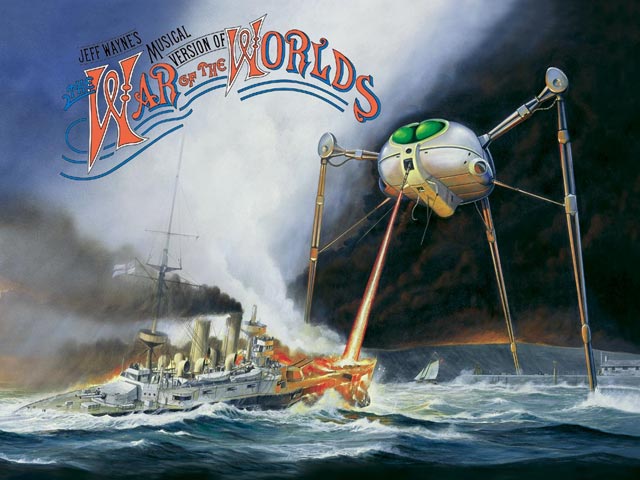
The Classics Faculty at the University of Oxford is considering whether to remove from its undergraduate courses the compulsory study in their original languages of Homer and Vergil. The reasons given are that students from independent schools, where some classical teaching is kept up, tend at the moment to do better in examinations than students from state schools, and that men do better than women. I regard this as the most important news of the week. I do so partly because I make some of my living from these languages, and so have a financial interest in their survival. I do so mainly because I see the proposal as a further enemy advance in the Culture War through which we have been living for at least the past two generations.
I could make this essay into another attack on the cultural leftists. I will come to these, as they are among the villains. They are not, however, the main villains. These are people who sometimes regard themselves, and are generally regarded by others, as conservatives. They once looked to Margaret Thatcher as their political champion, and then to Tony Blair. They were some of the most committed advocates of our departure from the European Union. They now look to the Johnson Government for the final triumph of their agenda. For these people, a nation is barely more than a giant economic enterprise – Great Britain plc. For them, the main, or perhaps the sole, purpose of education is to provide sets of skills that have measurable value in a corporatised market.
These people have been around for a long time. They were satirised by Charles Dickens in Hard Times, where Thomas Gradgrind explains his philosophy of education:
Now, what I want is, Facts. Teach these boys and girls nothing but Facts. Facts alone are wanted in life. Plant nothing else, and root out everything else. You can only form the minds of reasoning animals upon Facts: nothing else will ever be of any service to them. This is the principle on which I bring up my own children, and this is the principle on which to bring up these children. Stick to Facts, sir!
[…]
I agree that state education had become a joke where almost nothing of any kind was taught. As continued by Tony Blair, the Thatcher reforms did eventually drive up standards of literacy and numeracy. But this has been at a terrible cost. Any modern school that wants to be thought desirable must focus on its place in the league tables. This involves working the children like slaves – stuffing them in class with facts that can be regurgitated in tests and therefore graded, then handing out reams of homework that leaves no time for personal development.
The universities continue this conveyor belt approach. Around half of school leavers are pressured into “higher” education. Those who go into the “STEM” subjects – Science, Technology, Engineering, Mathematics – follow a narrow and specialised curriculum that leaves them ignorant of nearly everything outside their own subject. The rest sign up for largely worthless subjects – anything with the words “business” or “studies” in the name. There, they are kept busy with three-hour lectures. I know the value of these, as I used to give them. I fell asleep in one of them, and the students were happy when my voice finally trailed off. Progress in these subjects is measured by coursework that is increasingly plagiarised or ghost-written, or through examinations where the grades are fiddled. At the end of this, graduates – and everyone does graduate – are qualified for nothing better than employment in one of those bureaucracies of management or control that fasten on the actually productive like mistletoe on a tree. The universities look at rising numbers and the fact that graduates do find paid employment, and call this a great success. No one thinks it a disgrace if students never take up a book not on their worthless reading list, or that, having graduated, they never open another book.
Or school leavers at the bottom end are herded into courses in plumbing or hairdressing. I was once invited to teach a module in a Parking Studies degree – this for the certification of traffic wardens. I suppose people are needed to keep the roads clear, and I suppose they should be given some idea of their legal rights and duties. I am not at all sure if they need to have degrees. I am sure that skilled trades of undoubted value are best taught, as they always used to be, through private apprenticeships or informally on the job.
February 22, 2020
QotD: Veblen’s “leisure class” evolve into the “luxury belief class” in truly affluent cultures
Thorstein Veblen’s famous “leisure class” has evolved into the “luxury belief class.” Veblen, an economist and sociologist, made his observations about social class in the late nineteenth century. He compiled his observations in his classic work, The Theory of the Leisure Class. A key idea is that because we can’t be certain of the financial standing of other people, a good way to size up their means is to see whether they can afford to waste money on goods and leisure. This explains why status symbols are so often difficult to obtain and costly to purchase. These include goods such as delicate and restrictive clothing like tuxedos and evening gowns, or expensive and time-consuming hobbies like golf or beagling. Such goods and leisurely activities could only be purchased or performed by those who did not live the life of a manual laborer and could spend time learning something with no practical utility. Veblen even goes so far as to say, “The chief use of servants is the evidence they afford of the master’s ability to pay.” For Veblen, Butlers are status symbols, too.
Building on these sociological observations, the biologist Amotz Zahavi proposed that animals evolve certain displays because they are so costly. The most famous example is the peacock’s tail. Only a healthy bird is capable of growing such plumage while managing to evade predators. This idea might extend to humans, too. More recently, the anthropologist and historian Jared Diamond has suggested that one reason humans engage in displays such as drinking, smoking, drug use, and other physically costly behaviors is because they serve as fitness indicators. The message is: “I’m so healthy that I can afford to poison my body and continue to function.” Get hammered while playing a round of golf with your butler, and you will be the highest status person around.
Rob Henderson, “Thorstein Veblen’s Theory of the Leisure Class — A Status Update”, Quillette, 2019-11-16.
February 19, 2020
Enoch Powell
Theodore Dalrymple reviews a recent book by Paul Corthorn on Powell’s career and the concerns that animated him:
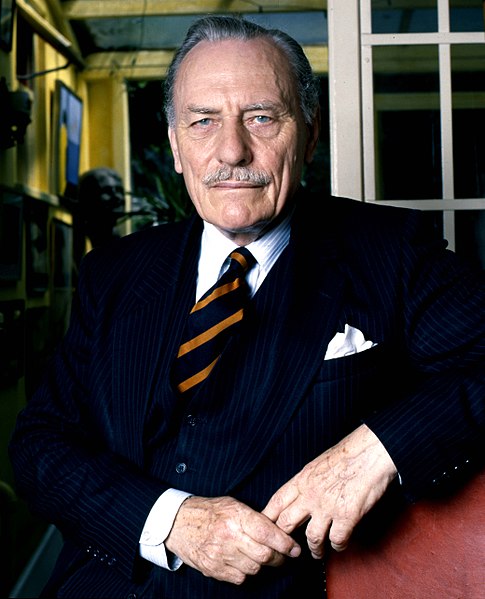
Enoch Powell in a 1987 portrait by Allan Warren.
Wikimedia Commons.
It does not pretend to be a biography, or even an intellectual biography. Rather, it chronicles, scrupulously but somewhat drily, Powell’s varying attitudes toward the main subjects of his political concerns: international relations, economics, immigration, Britain’s relations with Europe, and the status of Northern Ireland in the United Kingdom. Powell’s wider intellectual interests and religious views are scarcely touched upon, though it is mentioned that he went from being a believer to being (under the influence of Nietzsche) an atheist, to then returning to Christian belief. There is no description of his character in this book, not even by implication, and with this book as a guide, one would not recognise him if one met him. It is not possible to tell whether the author admires or detests his subject. This neutrality creates confidence in the accuracy of his scholarship, but also makes his book less than a pleasurable or exciting read. Perhaps it is the sign of a frivolous mind, but I prefer even histories of ideas to be spiced with a little biography (or, more truthfully, gossip).
The author does, however, offer a unifying interpretation of Powell’s various political concerns, namely that they were all responses to Britain’s precipitous national decline, the steepest part of which occurred in his lifetime, but which is continuing apace to the extent that Britain might even cease to be a nation at all. Powell was born in a great power and died in an enfeebled country with no industrial or military might, with precious little patriotism, and with no sense either of grandeur or collective purpose.
That this decline – relative rather than absolute, except in such fields as the maintenance of law and order — was inevitable given the conjunctures of the age, was evident to Powell (though not at first). This relative decline was already implicit in Disraeli’s dictum that “the Continent [of Europe] will not suffer England to be the workshop of the world.”
Powell’s concerns, then, were how to manage Britain’s decline and how to find it a new place in the world. He had not always been perceptive about the scale of its decline. He clung, for example, to the illusion that the Empire might still count for something even after the Second World War. Thereafter, however, he became a devotee of a kind of Realpolitik, to the extent of wanting a rapprochement or even alliance with the Soviet Union to balance the power of the United States, whose aims he had long distrusted. He discounted ideology, including communism, as a force in international politics, which is odd in a man who was by far the most intellectual and intellectually accomplished of all British politicians of the 20th century, being both a classical scholar and a brilliant linguist. He seemed to think that Soviet ambition was merely that of any large power in the great game. Those countries that fell into its grip knew otherwise.
On economics, Powell was an early devotee of the superiority of the market over state planning at a time when the intellectual tide was running the other way. There was one important subject, however, on which he was a confirmed statist, namely that of health care. He was for a time Minister of Health in the British government, during which he fiercely defended the NHS. He believed that the government had an ethical duty to provide health care for its citizenry, and it never seemed to occur to him that the centralised NHS was not the only possible way of doing so. He was often highly suspicious of international comparison, but it is difficult to see how judgment of the merits of a system could be made without it. It was clear, moreover, that in this, as in other fields, Britain was at best very mediocre. Perhaps Powell was blind to the NHS’s mediocre performance because of the benevolence of its stated intentions (an occupational hazard among intellectuals, even — or perhaps especially — among brilliant ones). At any rate, he never satisfactorily explained why health care should be different from other spheres of service provision in the superiority of private over public organization.
February 16, 2020
QotD: Immigration and diversity
In short, despite its other benefits, diversity is a centrifugal force, something the Founders were well aware of. In Federalist 2, John Jay wrote that we should count it as a blessing that America possessed “one united people — a people descended from the same ancestors, the same language, professing the same religion.” I repeat that diversity has many good effects too, and I am grateful that America took in my grandparents from Russia and Poland, and my wife’s parents from Korea. But Putnam’s findings make it clear that those who want more diversity should be even more attentive to strengthening centripetal forces.
Jonathan Haidt, “The Age of Outrage: What the current political climate is doing to our country and our universities”, City Journal, 2017-12-17.
February 11, 2020
Leaving the Left – Part 9: PJ O’Rourke
Economics in the Media
Published 18 Aug 2016“When I got my first paycheck I found that I netted $82.27 after federal income tax, state income tax, city income tax, Social Security, union dues, and pension fund contribution. I was a communist. I had protested for communism. I had rioted for communism. Then I got a capitalist job and found out we had communism already.”
– The Baby Boom, PJ O’RourkeParliament of Whores: A Lone Humorist Attempts to Explain the Entire U.S. Government
Full Interview with Peter Robinson
https://youtu.be/keJYIkxbieg

February 5, 2020
“On this issue, Canada’s two solitudes could hardly be more starkly apparent”
Chris Selley on the vastly different reaction from Quebec media to the Trudeau government’s notion to turn the country’s news organizations into a modern version of Joseph Goebbels’ propaganda apparatus, pumping out approved-by-the-Liberals story lines:
On Sunday, when CTV’s Evan Solomon pushed Heritage Minister Steven Guilbeault on the issue of issuing journalism licences to foreign media outlets, Guilbeault eventually just shrugged: “I’m not sure I see what the big deal is.”
Canadian Heritage Minister Steven Guilbeault, 3 February 2020.
Screencapture from CPAC video.The minister tried to walk it back on Monday, but the fact is many of his fellow Quebecers will also struggle to discern a big deal. There is simply much more tolerance of this sort of cultural gatekeeping among francophone Quebecers than in the Rest of Canada, and the tolerance extends well into the realm of journalism.
“In reading the (report’s) 260 pages and 97 recommendations, one word comes to mind” Sunday’s editorial in La Presse gushed: “Finally!”
Opposition to government regulation of journalism is firmly entrenched not just in anglophone Canada, but across the anglosphere. When the 2011 Leveson Inquiry proposed the British government create a powerful new press regulator, nearly every major outlet rejected the idea. Fraser Nelson, editor of The Spectator, famously vowed the magazine “will not attend its meetings, pay its fines nor heed its menaces.”
The same year, Laval University professor Dominique Payette’s report into Quebec’s struggling news media recommended the government legislate a “professional journalist” designation. The province’s largest journalists’ trade organization and the Quebec Press Council happily sat down with the government to bash out a power-sharing agreement on deciding who’s a proper journalist and who isn’t.
The English-language Montreal Gazette was dead-set against the idea, but Le Devoir called it a “logical outcome.” (The power-sharing discussions eventually fell apart, and the idea died a merciful death.)

February 4, 2020
Andrew Sullivan – “Our fate was almost certainly cast as long ago as 1964 and 1965”
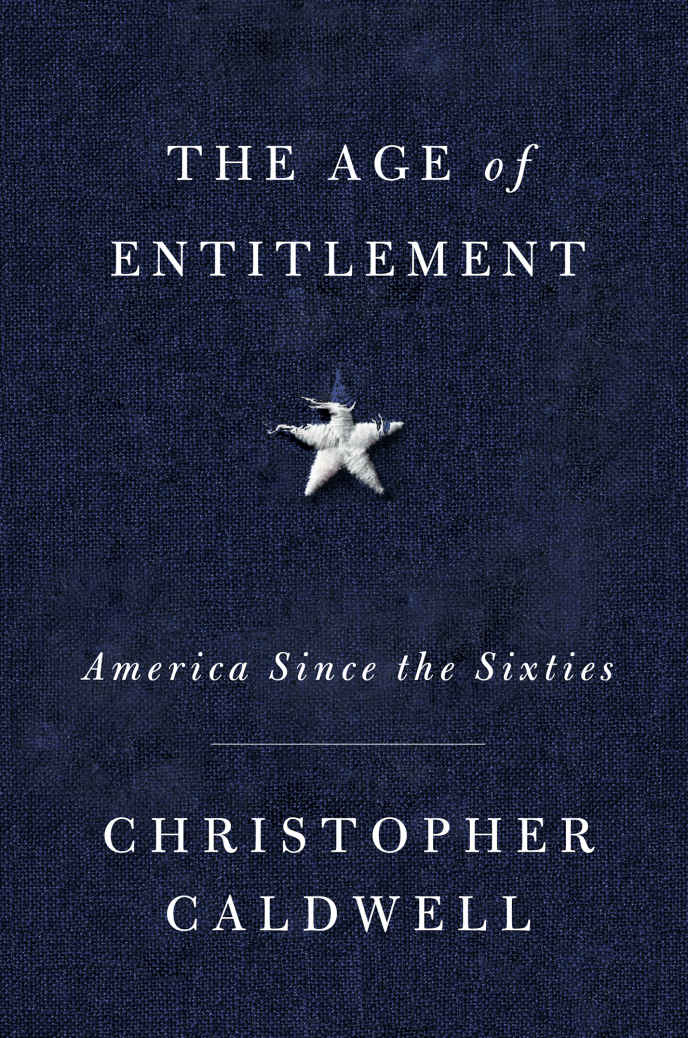
In his most recent New York magazine column, Andrew Sullivan reviews two new books on the same issues from different perspectives: Ezra Klein’s Why We’re Polarized and Christopher Caldwell’s The Age of Entitlement.
… both books agree on one central thing: Our fate was almost certainly cast as long ago as 1964 and 1965. Those years, in the wake of the Kennedy assassination, saw the Civil Rights Act upend the Constitution of a uniquely liberal country in order to tackle the legacy of slavery and racism, and the Immigration and Nationality Act set in motion the creation of a far more racially and ethnically diverse and integrated society than anyone in human history had previously thought possible. Still, at the time, few believed that either shift would have huge, deep consequences in the long term. They were merely a modernization of American ideals: inclusivity, expansiveness, hope.
As someone who was born just before these two changes were instigated, I regarded those tectonic shifts as simply part of the landscape — something that seemed always to have been here. And what could be questioned about either? One was reversing a profound moral evil; the other was banishing racism from the immigration laws. No-brainers. The strongest resistance to civil rights came from former segregationists or obvious racists, and there was little resistance to the Immigration Act, because most in the congressional debate seemed to think it wouldn’t change anything much at all. (The House sponsor of the Immigration Act, as Caldwell notes, promised that “quota immigration under the bill is likely to be more than 80 percent European,” while Ted Kennedy insisted: “The ethnic mix of this country will not be upset.”) There were a few dissenters to the 1964 Act, such as Robert Bork, who identified a significant erosion in the freedom of association. And there were southern senators who worried about immigrants from the developing world. But the resisters were easily dismissed on both counts, in the wake of LBJ’s 1964 landslide.
In fact, as Klein shows, a pivotal moment had arrived. The civil-rights movement quickly broke apart the old Democratic party, which had for decades combined the interests of blacks and southern whites into a single multiracial coalition. The result was a sorting of the two political parties into much purer vessels for their diverging ideologies, and into groupings that were also increasingly racially distinct. The GOP became whiter and whiter; the Democrats more and more became the party of the marginalized nonwhites as the years rolled by. Blacks and southern whites ceased to communicate directly within a single party, where compromises could be hammered out through internal wrangling. In the aggregate this was, as Klein emphasizes, a good thing — because blacks kept coming out the losers in those intraparty conversations, and with civil rights, they had a chance of winning in a clearer, less rigged, debate.
But it was also problematic because human beings are tribal, psychologically primed to recognize in-group and out-group before the frontal cortex gets a look-in. And so the whiter the GOP became, the whiter it got, and the more diverse the Democrats got. Simultaneously, the economy took a brutal toll on the very whites who were alienated by the culture’s shift toward racial equality, and then racial equity. Klein recognizes that this racial polarization, is, objectively, a problem for liberal democracy: “Our brains reflect deep evolutionary time, while our lives, for better and worse, are lived right now, in this moment.” So he can see the depth of the problem of tribalism — and its merging with partisanship, which goes on to create a megatribalism.
If humans simply cannot help their tribal instincts, then a truly multicultural democracy has a big challenge ahead of it. The emotions triggered are so primal, that conflict, rather than any form of common ground, can spiral into a grinding cold civil war. And you can’t legislate or educate this away. One fascinating study Klein quotes found that “priming white college students to think about the concept of white privilege led them to express more racial resentment in subsequent surveys.” Anti-racist indoctrination actually feeds racism. So tribalism deepens.
Klein sees this spiral more clearly than most on the left. He acknowledges the truth that in a period of extraordinary demographic and racial change — the U.S. is the first majority-white nation that will become majority nonwhite in human history — every group begins to feel like an oppressed minority. Including whites: “To the extent that it’s true that a loss of privilege feels like oppression, that feeling needs to be taken seriously, both because it’s real, and because, left to fester, it can be weaponized by demagogues and reactionaries.” And the truth is: It was left to fester. Whenever whites resisted ever-expanding concepts of civil rights or mass illegal and legal immigration, they were cast outside the arena of permissible disagreement, deemed racists, and stigmatized. Even the GOP scorned them. Eventually, Hillary Clinton named them: the deplorables. By 2016, plenty of Americans decided to embrace the label, and voted for Trump.
January 29, 2020
Charles Stross on “reality” TV
I don’t watch much TV at all … after catching the Superbowl on Sunday, I may not turn on the TV until the NFL preseason gets underway in the summer, so my impressions of reality TV offerings are gathered second- or third-hand at best. That said, I do recall watching some very early reality TV in the late 80s or early 90s (the one that comes to mind was something like “take a bunch of urban Brits and dump them in a recreated iron age village”). As Charles Stross describes the current crop of shows, I’m very confident that I’ve missed absolutely nothing over the decades:

I watch as little television as I can, and most of it by accident.
Whenever I do catch an eyeful, it usually consists of one of three things: a talking heads news channel, organized sportsball, or a Reality TV show. The first I try to ignore (they’re usually triangulated on the tabloid newspapers with added eye candy, then dumbed down: as information sources this century, TV news channels are useless). The sportsball I leave to my spouse (who is prone to lecturing me interminably about Manchester City). But the latter phenomenon — Reality TV — has all the grisly attention-grabbing potential of a flaming school bus careening out of control into a public execution: I basically have to leave the room in a hurry to avoid having my eyeballs sucked right out of my head by the visual media equivalent of internet clickbait.
What makes Reality TV shows so addictive?
The sector is dominated by a couple of competing recipes. As in so many mature markets, there’s an 80/20 split between a dominant incumbent and an insurgent that isn’t quite successful enough to overturn a monopoly but is too tenacious to die. Think Android/iPhone, or car/pick-up truck (that latter died about a decade ago in the US).
In the case of rTV shows, the 20% insurgent is about people demonstrating competence. Mythbusters was the classic competence-porn show (although it deteriorated into the explosion-of-the-week club after a few seasons): using science!!! and workshop/lab work to evaluate the plausibility of urban legends. Other competence rTV shows include: a team of dudes acquire a car wreck and restore it to good-as-new condition, a former special forces soldier/scout troop leader is dumped on a desert island and demonstrates survival skills, and so on.
But the other 80% of rTV shows are incompetence porn.
Incompetence porn Reality TV, as pioneered by Big Brother, usually aims to get the audience to laugh at or mock the participants in a contest designed to plumb the depths of humiliation. Instead of dropping a fit expedition leader on a desert island, the show dumps a bunch of washed-up B-list celebs in a wilderness of mosquitos and no soft toilet paper. Or perhaps it’s a bunch of Armani-suited sociopaths in a boardroom where they’re expected to pitch business start-up proposals at a washed-up B-list business celeb like Alan Sugar (or, in the American version of The Apprentice, a certain mobbed-up New York property speculator with shady Russian banking connections). Back-stabbing is a given in the celebrity/sociopath driven variant of rTV, as incompetent contestants are shoved out of the show at every episode until only the most obliviously egocentric remains.
(Note that the survivor selection criterion isn’t “competence”, be it at wilderness survival or boardroom brown-nosing: it’s entertainment value. Because these shows, despite the name, aren’t about reality, they’re showbiz.)
But these aren’t the worst.
“CanCon” rules for internet streaming services will be “inevitable”
Yes, the federal government is serious about extending the moronic “Canadian content” regime to internet streaming companies (like Netflix). Canadians are too blind to be allowed to select all of their own viewing without the paternal hand of government jiggling those choices in a politically desired direction, as Michael Geist explains:

Later this week, a government appointed panel tasked with reviewing Canada’s broadcast and telecommunications laws is likely to recommend new regulations for internet streaming companies such as Netflix, Disney, and Amazon that will include mandated contributions to support Canadian film and television production. In fact, even if the panel stops short of that approach, Canadian Heritage Minister Steven Guilbeault and Canadian Radio-television and Telecommunications Commission chair Ian Scott have both signalled their support for new rules with Mr. Guilbeault recently promising legislation by year-end and Mr. Scott calling it inevitable.
My Globe and Mail op-ed notes that the new internet regulations are popular among cultural lobby groups, but their need rests on a shaky policy foundation as many concerns with the fast-evolving sector have proved unfounded.
[…]
Third, the not-so-secret reality of the Canadian system is that foreign location and service production and Canadian content are frequently indistinguishable. Qualifying as Canadian requires having a Canadian producer along with meeting a strict point system that rewards granting roles such as the director, screenwriter, lead actors, and music composer to Canadians.
Yet this is a poor proxy for “telling our stories”. The rules mean foreign companies can never produce Canadian content leading to the absurd outcome that revivals of Canadian programs such as Trailer Park Boys and Degrassi will not meet the qualification requirements if Netflix is the sole funder and producer. Moreover, programs such as The Handmaid’s Tale may be based on a Margaret Atwood novel, but using one of Canada’s best known novelists as the source doesn’t count in the Canadian points system.
So what is Canadian? A quick scan of Canadian Audio-Visual Certification Office data turns up Blood and Fury: America’s Civil War, The Kennedys, Murder in Paradise, Natural Born Outlaws, Who Killed Ghandi?, and dozens of other programs that are Canadian in regulation-only. Further, there are also “co-productions”, in which treaty agreements deem predominantly foreign productions such as The Borgias or Vikings as Canadian.
January 27, 2020
QotD: The radicalization of the Republican Party
And this all happened along with the rise of Fox News. Many political scientists have noted that Fox News and the right-wing media ecosystem had an effect on the Republican Party that is unlike anything that happened on the left. It rewards more extreme statements, more grandstanding, more outrage. Many people will point out that the media leans left overall, and that the Democrats did some polarizing things, too. Fair enough. But it is clear that Gingrich set out to create a more partisan, zero-sum Congress, and he succeeded. This more combative culture then filtered up to the Senate, and out to the rest of the Republican Party.
Jonathan Haidt, “The Age of Outrage: What the current political climate is doing to our country and our universities”, City Journal, 2017-12-17.
January 18, 2020
History Summarized: Classical India
Overly Sarcastic Productions
Published 17 Jan 2020Classical and Medieval Indian History is a tale of constant flux — but in between the dozens and hundreds of states at play across the peninsula, there are clear trends that arise. Let’s take this chapter of history as an opportunity to dig into different types of sources, and try and wrap our heads around a story that doesn’t fit neatly into a single chronology.
FURTHER SOURCES: The Discovery of India by Jawaharlal Nehru, “A History of India” by Michael H. Fisher (lecture courtesy of The Great Courses).
Our content is intended for teenage audiences and up.
PATREON: https://www.Patreon.com/OSP
DISCORD: https://discord.gg/y7uUnzJ
MERCH LINKS: https://www.redbubble.com/people/OSPY…
OUR WEBSITE: https://www.OverlySarcasticProductions.com
Find us on Twitter https://www.Twitter.com/OSPYouTube
Find us on Reddit https://www.Reddit.com/r/OSP/

January 16, 2020
“… he returned to settle in a 250-year-old farmhouse in Wiltshire which he named ‘Scrutopia'”
In Quillette, Barbara Kay remembers Sir Roger Scruton:
Scruton’s breadth of knowledge was astonishing. None of his enemies could dispute that. He wrote whole books with complete authority on religion, architecture, opera, the environment, Islam, philosophy. But running through them all was a guilt-free love for, and fidelity to his — our — cultural inheritance. He loved his own home, England, and he would not repudiate it for its disfiguring historical warts, which seemed to preoccupy almost everyone else. It was Scruton who gave us the word “oikophobia” — hatred of one’s home — which is the hallmark of progressivism. He was out of sync with the hey-hey-ho-ho-western-civ-has-got-to-go zeitgeist. It didn’t help that he was the son of a lowly schoolmaster and had gone to the Royal Grammar School High Wycombe, a selective public high school.
Sir Roger Scruton
Photo by Pete Helme via Wikimedia Commons.Feeling isolated, like Andrew Sullivan and Christopher Hitchens before him, Scruton drifted “across the pond” to breathe the friendlier air of the last western redoubt where conservative thought finds a welcoming hearth. From 1992 to 1995, he taught a philosophy course at Boston University, and he spent a second stint in America from 2004 to 2009. But the pull of his beloved England proved too great, and he returned to settle in a 250-year-old farmhouse in Wiltshire which he named “Scrutopia.”
[…]
Among those who expressed their gratitude to Scruton in his final year were the governments of Poland and Hungary, who garlanded him with honors for the role he’d played in overthrowing the Communist regimes that had blighted their countries before the fall of the Berlin Wall. This recognition followed his receipt of the Czech Medal of Merit (First Class), presented to him by Vaclav Havel in 1998. At great risk to himself, Scruton had smuggled banned books across the Iron Curtain and helped dissidents organize an underground university, even arranging for degrees to be awarded by the Cambridge theology department. Among his other achievements, he was on the right side of history.
I cherish the memory of a brief conversation I had with Scruton after his Ottawa talk, in which he had expanded on the idea of decency, a concept of great interest and importance for me, especially in retrospect, for Scruton was himself a supremely decent man, although that did not save him from the postmodern jackals. I remember he said decency was easy to regulate in small towns, because you can’t be happy in a small town without a willingness to conform to standards. But these standards aren’t written down. There is no need. Everyone knows what they are. You know you’ve transgressed them when you receive disapproving glances or are cold-shouldered.
Compelled conformity — not legislated, God forbid, but enforced by social pressure — looks stifling to progressives, but in its own way it can be a great comfort, knowing the rules of what is and isn’t decent, and, through them, belonging. We all want to belong, but healthy belonging is sensitive to scale. We’re not made for globalization. We’re made for homes and homelands. If people don’t have homes to keep them rooted, feeling they belong in a good way, they will find fake homes that are tethered to ideas and theories, and then they often belong in a bad way. These are Scrutonesque musings.
Conformity and its effects, good and bad, absorbed Scruton. He once described the entire trajectory of his life as a constant movement toward “that impossible thing: an original path to conformity.” Like so many other of his gnomic utterances, it forces one to stop and think, really think, about what it means. And you know it means something worth thinking about because Roger Scruton never thought or spoke or wrote bullshit. He left that to his critics.