Quotulatiousness

December 21, 2018

Why do we celebrate Christmas in December?

Filed under: Europe, Food, History, Religion — Tags: , , , — Nicholas @ 03:00

The obvious answer is quite wrong: December 25th isn’t actually the birth date of Jesus … we don’t know when he was born (rather like the Queen’s Official Birthday, it’s been set to a particular date rather than tracking the actual natal day of the current monarch). So why did we end up with a fixed date in December? Tim Worstall explains:

… if you’re sitting in the middle of a culture that has a religious holiday that sends all children into a frenzy, you’re not part of that dominant religion, then you’d better come up with something quick. Don’t and you’ll find your hold on the minds – thus future religion of – the children loosening. Thus Hanukkah’s elevation in the holiday, if not liturgical, calendar. Thus, also, obviously the invention of Kwanzaa by those who would very much prefer not to be part of that dominant culture but were rather geographically stuck with it.

But then that’s why Jesus wasn’t born at Christmas too. We have absolutely no evidence at all that he turned up even one winter night let alone on Dec 25. What the Catholic Church in Europe did have – and at the relevant time there really only was the Catholic Church – was this inconvenient fact of a massive winter feast, what we might call Yuletide. This was very definitely pre-Christian and was sorta determined by climate.

You’re in Europe, you’re doing subsistence or at least peasant farming, this means you’ve not got enough fodder to keep all the animals going until the spring. Thus you slaughter near all – pigs not so much as they eat scraps, can forage for themselves etc – except your breeding stock. This gives you lots and lots of fresh meat and few good methods of meat preservation. This is also the last fresh meat you’re going to get until those spring lambs are ready in, say, April. So, you gorge on all that fresh meat.

Also, it’s cold outside, the days are short, why the heck not stay in by the fire while you burp through it all? Hey, bring the family ’round! And Pops, didn’t you get that beer going earlier in the year? OK, no hops, so ale. But mead maybe. Wine in many areas would be just about drinkable by now from that autumn crop.

This had been going on perhaps 6,000 years by the time those Christians turned up. The Church really needed to impose its views and authority on all of this, seriously, we can’t have the peasants continuing to celebrate the Old Gods, can we? Thus the invention of Christmas, a time for celebration, that called for lots of feasting of a happy event just about the time when everyone would be feasting anyway.

This is also the explanation for Halloween, All Hallows Eve. Or, All Souls Day followed By All Saints Day to replace the Celtic Samhaim. Hell, the oiks are going to be celebrating anyway, better make it a Church celebration.

Thus Hanukkah, thus Kwanzaa and thus whatever the next religion will come up with assuming that it’s one that initially grows in a European influenced culture. Even, perhaps any Northern Hemisphere, or northerly part of it, influenced one. Islam’s going to have a problem as it uses the lunar calendar and so no fixed feast will work, it’ll precess though the calendar and miss the yearly meeting with midwinter.

Hanukkah’s a big thing for the same reason Jesus wasn’t born at Christmas. At which point you’re expecting me to say Happy Holidays, aren’t you? Bah, Humbug!

QotD: “Baby, it’s cold outside”

Filed under: History, Humour, Media, Middle East, Quotations, Religion, USA — Tags: , , , , — Nicholas @ 01:00

Speaking of immorality, MGM’s censors cut the wrong song. A few decades back, a young middle-class Egyptian spending some time in the US had the misfortune to be invited to a dance one weekend and was horrified at what he witnessed:

    The room convulsed with the feverish music from the gramophone. Dancing naked legs filled the hall, arms draped around the waists, chests met chests, lips met lips …

Where was this den of debauchery? Studio 54 in the 1970s? Haight-Ashbury in the summer of love? No, the throbbing pulsating sewer of sin was Greeley, Colorado, in 1949. As it happens, Greeley, Colorado, in 1949 was a dry town. The dance was a church social. And the feverish music was “Baby, It’s Cold Outside,” as introduced by Esther Williams in Neptune’s Daughter. Revolted by the experience, Sayyid Qutb decided that America (and modernity in general) was an abomination, returned to Egypt, became the leading intellectual muscle in the Muslim Brotherhood, and set off a chain that led from Qutb to Zawahiri to bin Laden to the Hindu Kush to the Balkans to 9/11 to the brief Muslim Brotherhood takeover of Egypt to the Islamic State marching across Syria and Iraq. Indeed, Qutb’s view of the West is the merest extension of “Baby, It’s Cold Outside” — America as the ultimate seducer, the Great Satan.

I’m a reasonable chap, and I’d be willing to meet the Muslim Brotherhood chaps halfway on a lot of the peripheral stuff like beheadings, stonings, clitoridectomies and whatnot. But you’ll have to pry “Baby, It’s Cold Outside” from my cold dead hands and my dancing naked legs. A world without “Baby, It’s Cold Outside” would be very cold indeed.

Mark Steyn, “Baby, It’s Cold Outside”, Steyn Online, 2014-12-01.

December 20, 2018

China’s Cultural Revolution

Filed under: China, History — Tags: , , , , — Nicholas @ 05:00

In Quillette, James David Banker describes the beginnings of Mao Zedong’s Cultural Revolution:

“The Chinese People’s Liberation Army is the great school of Mao Zedong Thought”, 1969.
A poster from the Cultural Revolution, featuring an image of Chairman Mao, published by the government of the People’s Republic of China.
Image via Wikimedia Commons.

“Nobody is more dangerous than he who imagines himself pure in heart,” wrote James Baldwin, “for his purity, by definition, is unassailable.” This observation has been confirmed many times throughout history. However, China’s Cultural Revolution offers perhaps the starkest illustration of just how dangerous the “pure in heart” can be. The ideological justification for the revolution was to purge the Chinese Communist Party (CCP), and the nation more broadly, of impure elements hidden in its midst: capitalists, counter-revolutionaries, and “representatives of the bourgeoisie.” To that end, Mao Zedong activated China’s youth — unblemished and uncorrupted in heart and mind — to lead the struggle for purity. Christened the “Red Guards,” they were placed at the vanguard of a revolution that was, in truth, a cynical effort by Mao to reassert his waning power in the Party. Nevertheless, it set in motion a self-destructive force of almost unimaginable depravity.

The Cultural Revolution commenced in spirit when Mao published a letter indicting a number of Party leaders on May 16, 1966. But it was a seemingly minor event nine days later that ignited the revolution in effect: a young philosophy professor at Peking University named Nie Yuanzi placed a “big-character poster” (a handwritten propaganda sheet featuring large Chinese characters) on a public bulletin board denouncing the university president and others in the administration as bourgeois revisionists. Mao immediately endorsed her protest, which set off a chain reaction of student revolt that swept through China.

That chain reaction was accelerated by “working groups” of ideologues sent to administer schools. Under their tenure, schools became centers of activism rather than learning. Students were encouraged to create big-character posters exposing their own teachers, officials, and even parents. The accused were humiliated in daily “struggle sessions” in which their students and colleagues interrogated them and demanded confessions. The viciousness of these sessions rapidly intensified. Students beat, spat upon, and tortured — in horrifically creative ways — their often elderly teachers and professors. In one case, students demanded their biology professor stare at the sun with wide open eyes. If he blinked or looked away, they beat him. Even middle and elementary school students participated in the struggle sessions, sometimes beating their teachers to death with sticks and belt buckles.

Students were also encouraged to turn on their classmates. As the sins of one generation passed to the next, a new hierarchy was born: the children of revolutionaries on top and the children of “landlords,” “capitalists,” and “rightists” at the bottom. These students were labeled “rotten eggs” and were fair game for the same treatment meted out to their parents. The current president of the People’s Republic of China, Xi Jinping, endured this fate. He was only 15 years old when his father, a loyal Maoist and one-time propaganda chief, was purged, his sister executed, and his own mother forced to denounced Xi as a reactionary. Amid the hysteria, teachers, professors, and intellectuals did not dare to stand up to the students or defend their colleagues lest they suffer similar fates. But they could not escape by being bystanders. With every word and action becoming potential evidence of capitalist sympathy, teachers and intellectuals enthusiastically joined their students in the struggle sessions and screaming rallies.

QotD: An “authentic” peasant diet

Filed under: China, Europe, Food, Health, History, Quotations — Tags: , — Nicholas @ 01:00

The fact is that you wouldn’t want to eat like a European peasant of yesteryear, or a Chinese peasant, either. Sure, peasants ate well when the garden was producing and the harvest was ripe. A lot of the year, they ate pretty meager, dull fare. Many of the spices we now take as ordinary — salt and pepper, for example — were pretty pricey. So were meat and cheese, which, like everything else, tended to get pretty scarce in winter. When you read about what people were actually eating most of the year, you realize that diets were dull, repetitive, and heavy on grains and legumes, lightly complimented by salted and dried things (home canning, like many of the other things we think of as traditional, was another Industrial Revolution contribution, and before modern farming practices, cows tended to be “dried off” in the winter to save the expense of the extra feed a milking cow needed). And this stayed true throughout the 19th century for large swaths of the population in both America and abroad.

The farther north you went, the more this was true — it’s probably no accident that Ireland and Scandinavia are not, let us say, renowned for their fantastic contributions to world cuisine. When your growing season is a short cloudy period between miserable winters, you don’t have the raw materials to construct amazing dining experiences. (Sure, every country has at least one or two really good fairly traditional foods. But the shorter the time fresh ingredients are available, the fewer culinary marvels you’ll be able to produce.)

Too, we must remember that not everyone was a good cook. Cooking was a job, not an absorbing hobby, and as with any other job, many people did it badly. Every farm wife could produce enough calories to feed her family (at least, if the raw materials were available). Not all of them could produce anything you’d want to eat. Modern food-processing technology has relieved us of that most “authentic” culinary experience: boring ingredients processed by an indifferent cook into something that you’d only voluntarily consume if you were pretty hungry. Even the memory of these cooks has fallen away, though you’ll encounter a lot of them if you read old novels.

Megan McArdle, “‘Authentic’ Food Is Not What You Think It Is”, Bloomberg View, 2017-02-24.

December 10, 2018

QotD: No one “owns” a culture

Filed under: Politics, Quotations, Randomness — Tags: , , — Nicholas @ 01:00

To own something is to have the rights (1) to determine exclusively how it is used, (2) to appropriate exclusively any income or other benefits it yields, and (3) to transfer the foregoing rights to others by sale, gift, or bequest. In this light, it is clear that no one owns a culture, and hence no one may legitimately seek state violence for the defense of such asserted property rights.

One may have preferences about culture. One may have affections for or aversions to a culture or particular elements of a culture. But such preferences do not entail any rights of ownership. Moreover, all cultures are constantly changing to a greater or lesser degree by spontaneous, decentralized processes, including interaction with other cultures. Such interaction has always been the case except for the cultures of people completely isolated from the rest of the world.

To treat the arrival of new members of society who live to some degree in accordance with different cultures as if these persons were “invaders” who threaten to destroy one’s culture is simultaneously to evince little faith in the attractiveness and strength of one’s culture and to seek its defense as the enforcement of property rights where no such rights exist.

Robert Higgs, “No One Owns a Culture”, The Beacon, 2018-11-19.

December 9, 2018

QotD: The western way of war

Filed under: Economics, History, Military, Quotations — Tags: — Nicholas @ 01:00

Free capital is the key to war making on any large scale, what Cicero called “the sinews of war,” without which an army cannot muster, be fed, or fight. Capital is the wellspring of technological innovation, which is inextricably tied to freedom, often the expression of individualism, and thus critical to military success throughout the ages. That capitalism was born in the West, expanded through Europe, survived the alternate Western-inspired paradigms of socialism and communism, and found itself inextricably tied with personal freedom and democracy in its latest global manifestation explains in no small part Western military dominance from the age of Salamis to the Gulf War.

Victor Davis Hanson, Carnage and Culture, 2001.

December 8, 2018

QotD: The nationalist obsession

Filed under: Europe, History, Politics, Quotations — Tags: , , , — Nicholas @ 01:00

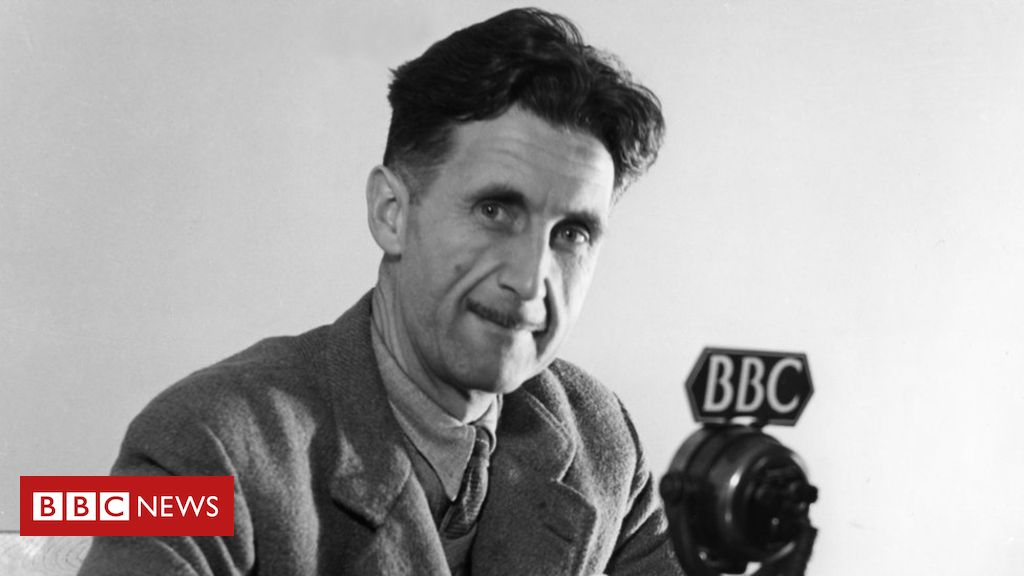
As nearly as possible, no nationalist ever thinks, talks, or writes about anything except the superiority of his own power unit. It is difficult if not impossible for any nationalist to conceal his allegiance. The smallest slur upon his own unit, or any implied praise of a rival organization, fills him with uneasiness which he can relieve only by making some sharp retort. If the chosen unit is an actual country, such as Ireland or India, he will generally claim superiority for it not only in military power and political virtue, but in art, literature, sport, structure of the language, the physical beauty of the inhabitants, and perhaps even in climate, scenery and cooking. He will show great sensitiveness about such things as the correct display of flags, relative size of headlines and the order in which different countries are named. Nomenclature plays a very important part in nationalist thought. Countries which have won their independence or gone through a nationalist revolution usually change their names, and any country or other unit round which strong feelings revolve is likely to have several names, each of them carrying a different implication. The two sides of the Spanish Civil War had between them nine or ten names expressing different degrees of love and hatred. Some of these names (e.g. ‘Patriots’ for Franco-supporters, or ‘Loyalists’ for Government-supporters) were frankly question-begging, and there was no single one of the which the two rival factions could have agreed to use. All nationalists consider it a duty to spread their own language to the detriment of rival languages, and among English-speakers this struggle reappears in subtler forms as a struggle between dialects. Anglophobe-Americans will refuse to use a slang phrase if they know it to be of British origin, and the conflict between Latinizers and Germanizers often has nationalists motives behind it. Scottish nationalists insist on the superiority of Lowland Scots, and socialists whose nationalism takes the form of class hatred tirade against the B.B.C. accent and even the often gives the impression of being tinged by belief in sympathetic magic — a belief which probably comes out in the widespread custom of burning political enemies in effigy, or using pictures of them as targets in shooting galleries.

George Orwell, “Notes on Nationalism”, Polemic, 1945-05.

December 5, 2018

QotD: Patriotism

Filed under: Europe, France, History, Quotations, USA — Tags: , , , — Nicholas @ 01:00

Once upon a time, patriotism was a fairly simple thing. It was tribal identification writ large, an emotional attachment to a people and their land. In most of the world, where patriotism exists at all it’s still like this — tribal patriotism, blood-and-soil emotionalism.

A different kind of patriotism emerged from the American and French revolutions. While American patriotism sometimes taps into tribal emotion, it is not fundamentally of that kind. Far more American is the sentiment Benjamin Franklin expressed: “Where liberty dwells, there is my country”

Thus, most Americans love their country in a more conditional way — not as a thing in itself, but insofar as it embodies core ideas about liberty. It is in the same spirit that our Presidents and miltary officers and naturalizing citizens swear to defend, not the land or people of the United States but its Constitution — a political compact. This is adaptive in many ways; one of them is that tribal patriotism is difficult to nourish in a nation of immigrants.

In France, the ideology of the Revolution displaced tribal patriotism, just as it did in the U.S. But the French, roiled by political instability and war, have never settled on a political unifying idea or constitutional touchstone. Instead, French patriotism expresses a loyalty to French language and culture and history. It replaces tribalism not with idealism but with culturism.

America and France are a marked contrast with, say, Denmark. I chose Denmark at random from the class of civilized countries in which patriotism is still fundamentally tribal. You don’t become a Danish patriot by revering the constitution or culture of Denmark; you become one by being a Dane. Which partly means being a tribesman, connected to the Danish gene pool, and partly means identifying with stories of past Danish heroism.

It hasn’t been easy to find a fire-breathing Danish patriot for at least fifty years, though. One of the effects of the terrible convulsions of the 20th century has been to discredit tribal patriotism. Many people in Europe, not unreasonably, associate it with racism and Naziism and are suspicious of anything that smacks of immoderate patriotism.

Eric S. Raymond, “Patriotism And Its Pathologies”, Armed and Dangerous, 2008-07-09.

November 27, 2018

Viking Expansion – A Song of Ice and Greenland – Extra History – #5

Filed under: Europe, History — Tags: , , , — Nicholas @ 04:00

Extra Credits
Published on 24 Nov 2018

The Scandinavians stumbled on Iceland, at first on accident — then, gradually exploring it — and finally intentionally migrating there because despite the clash of glaciers and volcanoes, Iceland was full of uninhabited empty land — perfect for settlers and saga-writers.

Join us on Patreon! http://bit.ly/EHPatreon

November 19, 2018

QotD: How nationalism distorts opinion and judgement

Filed under: Europe, History, Politics, Quotations, WW2 — Tags: , , — Nicholas @ 01:00

For those who feel deeply about contemporary politics, certain topics have become so infected by considerations of prestige that a genuinely rational approach to them is almost impossible. Out of the hundreds of examples that one might choose, take this question: Which of the three great allies, the U.S.S.R., Britain and the USA, has contributed most to the defeat of Germany? In theory, it should be possible to give a reasoned and perhaps even a conclusive answer to this question. In practice, however, the necessary calculations cannot be made, because anyone likely to bother his head about such a question would inevitably see it in terms of competitive prestige. He would therefore start by deciding in favour of Russia, Britain or America as the case might be, and only after this would begin searching for arguments that seemed to support his case. And there are whole strings of kindred questions to which you can only get an honest answer from someone who is indifferent to the whole subject involved, and whose opinion on it is probably worthless in any case. Hence, partly, the remarkable failure in our time of political and military prediction. It is curious to reflect that out of all the ‘experts’ of all the schools, there was not a single one who was able to foresee so likely an event as the Russo-German Pact of 1939. And when news of the Pact broke, the most wildly divergent explanations were of it were given, and predictions were made which were falsified almost immediately, being based in nearly every case not on a study of probabilities but on a desire to make the U.S.S.R. seem good or bad, strong or weak. Political or military commentators, like astrologers, can survive almost any mistake, because their more devoted followers do not look to them for an appraisal of the facts but for the stimulation of nationalistic loyalties. And aesthetic judgements, especially literary judgements, are often corrupted in the same way as political ones. It would be difficult for an Indian Nationalist to enjoy reading Kipling or for a Conservative to see merit in Mayakovsky, and there is always a temptation to claim that any book whose tendency one disagrees with must be a bad book from a literary point of view. People of strongly nationalistic outlook often perform this sleight of hand without being conscious of dishonesty.

George Orwell, “Notes on Nationalism”, Polemic, 1945-05.

November 17, 2018

Modern houses are not flexible

Filed under: Cancon, USA — Tags: , , , — Nicholas @ 03:00

Kate Wagner, of McMansion Hell fame, discusses the pressures that have combined to create the modern western house and why they are not as flexible in use as we really need:

Houses are a particular paradox. We expect them to serve as long-term, if not permanent, shelter — the word “mortgage” even has the prefix mort, death, implying that the house will live longer than we will — but we also expect them to shift in response to our needs and desires. As Christopher Alexander writes in his treatise The Timeless Way of Building, “You want to be able to mess around with it and progressively change it to bring it into an adapted state with yourself, your family, the climate … to reflect the variety of human situations.”

That is exactly what we want — and we’ve gone about it in exactly the wrong way. We’ve ended up with overstuffed houses that attempt to anticipate every direction our lives could go, when what we need are flexible houses that can adapt to the lives we’re actually living.

But flexibility rarely comes up, as [Stewart] Brand points out in his book [How Buildings Learn], in the fevered brouhaha of building and architectural consumption. And if we’re going to rethink how flexible our houses are, we need to do so at the level of our structures and the way they are built.

[…]

Of course, the premier example of a house designed for stuff is the McMansion, which, as I have argued at length elsewhere, is designed from the inside out. The reason it looks the way it does is because of the increasingly long laundry list of amenities (movie theaters, game rooms) needed to accumulate the highest selling value and an over-preparedness for the maximum possible accumulation of both people (grand parties) and stuff (grand pianos). This comes at the expense of structure, skin, and services. The structure becomes wildly convoluted, having to accommodate both ceilings of towering heights and others half that size, often within the same volume. Because of this, the rooflines are particularly complex, featuring several different pitches and shapes, and the walls are peppered with large great-room windows (a selling feature!), and other windows on any given elevation consist of many different sizes and shapes.

The skin — which often features many different types of cladding — and the roof are, due to their complexity, more prone to vulnerabilities, such as leaks. Because of the equally complex internal space plan, often following the trend of more and more open floorplans and large internal volumes, services like heating and cooling have to combat irregular volumes and energy leakage through features like massive picture windows. Rooms are programmed for specific activities: craft rooms, man caves, movie theaters. This is a kind of architectural stockpiling, devoting space to hobbies that could easily be performed in other parts of the house, out of a strange fear of not having enough space.

October 31, 2018

Great Britain Before World War 1 I THE GREAT WAR Special

Filed under: Britain, History, Military, WW1 — Tags: , , , — Nicholas @ 04:00

The Great War
Published on 29 Oct 2018

Check out War2Glory: http://bit.ly/TheGreatWar_W2G

Great Britain was the center of a vast colonial empire and a rapidly changing world during the 19th and early 20th century. But what happened in the country in the years leading up to World War 1?

October 30, 2018

Viking Expansion – The Serpent-Riders – Extra History – #1

Filed under: Europe, History — Tags: , , , , , — Nicholas @ 04:00

Extra Credits
Published on 27 Oct 2018

The medieval Scandinavians left an impact not just on Greenland and Iceland, but on France, England, Russia, and even briefly North America. But how did Scandinavian society begin, and what incited its voyage across the seas?
Join us on Patreon! http://bit.ly/EHPatreon

October 16, 2018

QotD: I’m All Right Jack

Filed under: Britain, History, Media, Quotations — Tags: , , , — Nicholas @ 01:00

I’m All Right Jack is a film delicately poised between two very different cultural moments. The opening scene looks back to the war, the heyday of collective endeavour and national solidarity, but the song — both in content and style — seems to look forward to a new era of aggressive hedonism and unashamed self-interest.

At the time, though, what attracted most attention was Peter Sellers’s hilarious performance as the obstreperous trade unionist Fred Kite (“We do not and cannot accept the principle that incompetence justifies dismissal”), which delighted many cinemagoers and won him a BAFTA. Not surprisingly, it went down very badly with union leaders and left-wing reviewers, but the Boultings were unrepentant. In an article for the Daily Express, they explained their reasoning:

    As individuals we believe in Britain because Britain has always stood for the individual.

    Nowadays there seem to be two sacred cows — Big Business and Organized Labour. Both are deep in a conspiracy against the individual — to force us to accept certain things for what in fact they are not. Both are busy feathering their nests most of the time. And to hell with the rest of us…

    AFter all, who is King in the Welfare State? That humourless, faceless monster — the official, the bureaucrat, the combine executive.

    Certainly a great deal has changed since we used to be Angry Men before the war … But at the end of this huge revolution we are not so sure that the losses have not been as great as the gains.

    For example, the tendency to think of people not as human beings but as part of a group, a bloc, a class.

The Boultings knew, of course, that this would annoy some poeple. But the great strength of the “average Briton”, they insisted, lay in “laughing at his leaders and institutions. We believe our films reflect the popular attitude and mood. Their success seems to prove our point.”

Since I’m All Right Jack is in black and white, it is easy to forget how bracingly modern it must have seemed, not just to the Queen and Harold Macmillan, but to the large audiences who flocked to see it in the autumn of 1959. It was released only ten years after Passport to Pimlico, but the difference in mood and tone can hardly be exaggerated. It is not just a question of colletivism versus individualism, but the social context that those two ideas reflected. The Ealing film was made against a background of austerity; the Boultings’ film is drenched in consumerism. In the early scenes of Passport to Pimlico, we find ourselves in a world of rationing and restrictions, bomb damage and dereliction. What kicks off the action, in fact, is the accidental detonation of an unexploded German bomb. But I’m All Right Jack is set in the late 1950s, a world awash with appliances and advertising, in which wartime austerity is merely a fading memory. The narrator tells us that at long last “industry, spurred by the march of science in all directions, was working at high pressure to supply those viatl needs for which the people had hungered for so long”. But when Ian Carmichael’s blundering hero gets a job in industrial management, he soon finds out what these “vital needs” are: Num-Yum chocolate bars and Detto washing powder, each with its own irritatingly catchy jingle.

Dominic Sandbrook, The Great British Dream Factory: The Strange History of our National Imagination, 2015.

September 30, 2018

Moral panic à la mode: Witch hunt, 2018

Barrett Wilson compares a moral panic that convulsed the Wilson family (Satanic lyrics and overt sexual messages in contemporary movies and rock music) with today’s moral panic:

When my very Christian parents tried to throw away my 14-year-old sister’s heavy metal records, she ran away to her friend’s house. I cried for days. It felt like the end of everything. My sister would be gone forever. I would now live in what was referred to at the time as a “broken home.” I imagined that I’d be reunited with my sister in a few years—on the mean city streets after I’d been forced into a life of crime.

Both my parents and sister seemed to make good arguments. My mother and father tried to trash the records because they loved my sister, while my sister ran away because of her love for Dee Snyder. My parents wanted my sister to be safe. My sister wanted to express her individuality through music. My parents claimed that heavy metal was the cause of my sister’s rebellious behavior. My sister said that Judas Priest rocked, and elevated Ozzy Osbourne to secular sainthood. My parents thought my sister had fallen victim to satanic messages encoded in vinyl, while my sister believed my parents were enslaved to religious dogma printed in the Bible.

I remember the Bible studies and prayer groups well. There was a uniformity of belief and cause that united my parents and their pious peers. There was a collective smugness and sense of superiority that led members of the church to purge the culture (or what parts of the culture they could control) of dangerous and unholy influences. They wanted culture to be safer. Their targets: violence and overt sexuality in movies, music and video games.

So that was then, back in the benighted dark ages before the cell phone and broadband internet and all-consuming social media — they knew so little back then. We, as a culture, have grown so wise and mature that we’d never fall back into that kind of moral panic … oh, damn.

The right-left pro-censorship alliance that Gore formed three decades ago has its modern equivalent in the Twitter era. Right-wing men’s rights advocates and hyper-progressives found common cause in an online shaming campaign targeting Canadian feminist Meghan Murphy, for instance, after she dared suggest that women born into their female bodies might have reason to see themselves differently from those born with penises. And the recent de-platforming of second-wave feminist icon Germaine Greer on the basis of perceived transphobia would be met with gleeful applause by stridently conservative Australians as much as by stridently progressive gender-studies post-docs. The tactics used by right-wing Twitter trolls such as Mike Cernovich to get James Gunn fired from Disney are identical to those used by the left to get Twitter troll Godfrey Elfwick de-platformed. Their crime was the same: tweeting controversial jokes.

But while all forms of social panic tend to resemble one another, there are some stark differences between now and then. For one thing, young people today seem more naturally censorious and culturally conservative than their parents. Peace, love, freedom, and experimentation have been replaced by an obsession with emotional safety. Today’s young men and young women seem scared to death of each other. The LGBT community has fractured into its alphabetic constituent parts. And racial tensions are fed by a steady diet of online microaggressions. Everyone feels at risk, despite the fact the free world has never been safer.

Of course, moral panics are not based on facts but fears. In Stanley Cohen’s 2002 introduction to Folk Devils and Moral Panics, he writes that in moral panics, “the prohibitionist model of the ‘slippery slope’ is common … [and] crusades in favor of censorship are more likely to be driven by organized groups with ongoing agendas.” They are driven by organized groups, yes, but they are facilitated by well-meaning, ill-informed actors such as activists, therapists, and law enforcement officers. From the censorship of comic books, to video games, to music, we’ve known about the agendas of these special interests for a very long time. So why do we keep falling for it?

Moreover, there seems to be more hypocrisy at play in 2018 than there was during the moral panics of the 1980s. Many Christians who embraced Tipper Gore’s campaign truly were sincere anti-sex and anti-violence crusaders. But the world that people inhabit in 2018 is at once hyper-explicit and puritanical. In one browser tab, we’re typing about how words are violence, while in the other tab, we’re engaging in malicious gossip that could ruin someone’s career.

A feverish approach that seeks to sanitize culture is harmful but is also futile. Forbidding people from consuming content can often serve to make that content more desirable to consumers, something similar to the Streisand Effect. This phenomenon is named after Barbra Streisand’s futile attempt to keep photos of her Malibu mansion off of the internet. The harder she tried to stop people from posting photos, the more photos appeared. Paternalistically making music and art “forbidden content” makes it sexier, and elevates its status. The PMRC’s Filthy Fifteen is chockfull of rock and roll classics that went on to make millions. My parents’ disdain for heavy metal certainly did not make my sister pop Perry Como into her Walkman – she just rocked harder. Fans and free speech advocates rally around Tyler, the Creator today now more than ever.

Update:

« Newer PostsOlder Posts »

Powered by WordPress