
What was especially unfortunate (rather insidious really) about this moment was that the broadcast model of television distribution created a situation of artificial scarcity. It was not a proper competitive environment like we enjoy today. It truly was monopolistic, even if the snake did have three heads. Only a few huge corporations could afford the infrastructure for these national networks. Airspace was limited. Thus to make room for the new, the old had to be cast aside. As I happen to love all those new shows CBS introduced, I am glad they were brought into being. But how much better it would have been if the older shows could have been retained at the same time, because I also love those. TV variety, heir to vaudeville, was effectively killed dead by this historical moment, and that’s to be regretted.
[…]
But during the second half of the decade things changed. I have a good sense of when all the good shows started going wrong, but have had a harder time on figuring out why they did. As near as I can tell in most cases, the stars of the shows became too big for their britches. They won awards, they were on the covers of all the magazines, they got huge salary increases, and then they started getting creative control over their shows. I’m still somewhat at a loss as to why the actors’ mass madness took the same form all across the board, this humorless didacticism, the need to be “dramatic.” But it could be simply that there is a very funny elephant in the room. Because when I find myself asking the question, “Is it possible that actors are egotistical? Self-indulgent? Consumed with self-importance? Megalomaniacs?” Well, there’s your answer. Those qualifiers practically form part of the textbook definition of the word “actor”. They want to be taken seriously. And so, across the board, most of the stars of these shows started either transforming their characters into Christ-like saviors, or turning their programs into pulpits.
Also perhaps to a certain extent these new situation comedies attracted a different kind of star. The new breed were not the Buddy Ebsen/Lucille Ball/Jackie Gleason/Red Skelton type vaudeville clowns. Most of the new stars were college educated, had gone to drama school, been in improv and other theatre and sketch troupes, and appeared in lots of legit theatre. They didn’t just know who Shaw and Ibsen were, they had performed in such serious drama. They scorned old school comedy as “corny”; they were much more concerned with what they called “truth”. I remember reading interviews with Alan Alda in which he complained about episodes from the first season of M*A*S*H that had more farcical plots (e.g. “Tuttle” or the one where Frank Burns gets gold fever.) Fans happen to love these episodes; Alda however tends to favor dramatic episodes from the later years, but we’ll return to that.
Trav S.D., “The Insufferables, or Sanctimony in the Seventies: How Hollywood Helped Make Liberalism Unpopular”, Travalanche, 2018-03-12.
December 6, 2020
QotD: Mid-70s TV
December 5, 2020
The “new normal” will, by definition not be “normal”
At Spiked, Brendan O’Neill cries “Down with the New Normal!”
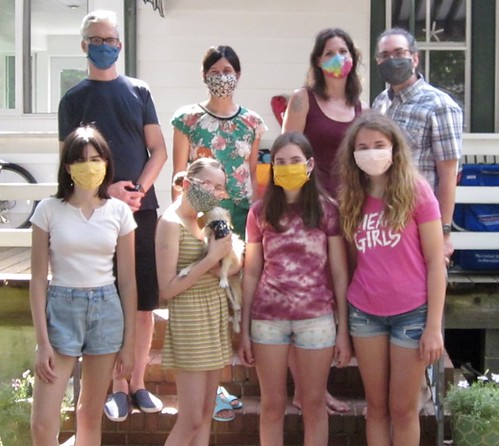
“Covid 19 Masks” by baldeaglebluff is licensed under CC BY-SA 2.0


Few phrases inspire more horror in me than “the new normal”. It is falling from the lips of public-health experts and lockdown-loving commentators everywhere. Forget the “old normal” of going maskless into the streets, or ramming yourself into a crowd of thirsty punters at the bar in a pub, or taking a lover without constantly worrying that he or she might make you ill with his or her breath. Such reckless libertinism was for the old world, apparently, the era BC (Before Covid). We are all now heading into the New Normal, a brave new world of forever social-distancing being built for us by a benevolent bureaucracy that simply wants to protect us from disease.
Everywhere you turn there is talk of the new normal. Out will go bare faces, hand-shaking, hugs and sweaty crowds, and in will come masks, elbow-bumping, and sitting six feet away from everyone else at concerts and shows. Bye bye, mosh pits. Yes, even when the vaccine comes, which is when many of us hoped we would see our freedoms restored, the uber-cautious habits we have developed during the Covid crisis should continue, experts say. Jonathan Van-Tam, England’s deputy chief medical officer, said this week that these “habits”, including face-covering, should continue for “many years”. Better safe than sorry, eh?
Van-Tam isn’t alone. Many experts and commentators are predicting, and even welcoming, a decline in social engagement and physical contact as we head into the new normal. “The Coronavirus killed the handshake and the hug — what will replace them?”, asks Time magazine, blissfully unaware of how mad it sounds. “Hugs, high fives, fist bumps, back pats [and] shoulder squeezes” could all disappear after 2020, Time predicts. And it talked to one of many experts who thinks that’s no bad thing. Dr Mark Sklansky, an American cardiologist, told Time he has always hated hand-shaking. “Hands are warm, they’re wet, and we know that they transmit disease very well”, he said. But where “being anti-handshake was fringe thinking” in the past — !! — it is now increasingly common to be handshakephobic, says the wise doctor. Put your wet, diseased paws away, everyone.
And the new normalists are not letting the imminent rolling-out of the vaccine puncture their dreams of a world without clammy handshakes and other forms of sickness-spreading human contact. People expecting to be “back to normal by spring” are “expecting too much” of the vaccine, said a British microbiologist a couple of weeks ago. Even with a vaccine, “we will not be returning to the old normal”, decrees the Lancet. No, apparently “physical distancing and hand hygiene must continue indefinitely”. Maybe these doom-mongers are keen on physical distancing because they know a lot of people would probably like to give them a clout for their miserabilism?
December 4, 2020
5 strange Canadian objects
J.J. McCullough
Published 22 Jul 2017Let’s take a look at a couple of weird things only Canadians will understand.
O Canada ending music care of SuperNIntendoGameboy, check out full version here: https://www.youtube.com/watch?v=b0qmP…

December 3, 2020
Modern narcissism
In Quillette, Marilyn Simon discusses a song her daughters learned in school and what it reveals about modern thought:
There is a pop song by Canadian artist Alessia Cara that my daughters have learned to sing in their school choir. The song is “Scars to Your Beautiful.” It is a catchy, simple song. Many readers probably know it. The message it promotes is, by all accounts, a positive one, which is presumably why it’s being taught to children at school. The chorus goes like this:
There’s a hope that’s waiting for you in the dark,
You should know you’re beautiful just the way you are,
And you don’t have to change a thing,
The world could change its heart,
No scars to your beautiful,
We’re stars and we’re beautiful.In spite of my girls’ sweet singing voices, and the intention of the lyrics, I think it is one of the most disturbing songs my kids have ever learned in school (right up there with Lennon’s insipid and juvenile “Imagine”). It is a narcissistic anthem painfully unaware of its hypocrisy. It reinforces the notion that beauty is rightfully a girl’s desirable goal, and that her aspiration to be “a star” is not only attainable — without any corresponding effort or talent on her part, naturally — but also the world’s ethical responsibility to ensure. In other words, there are no standards, ideals, nor any objectivity; instead the world needs to change its heart in order to conform to an individual’s subjective self-desiring.
Narcissism isn’t merely an issue of having an inflated ego. It is the condition of being enamored with one’s idealized projection of oneself to the exclusion of reality and of one’s real self. This occurs not because one is vain, but because one is too fragile to admit failings or fault. It has nothing to do with self-love, but rather with being locked in a solipsistic gaze with a fantasy of one’s self. Contemporary culture has taken classic narcissism and turned it into a new moralism. What we deem goodness now is that everyone else affirms the delusions of one’s wishful thinking as objective truth. Cara’s song, for instance, first reinforces the fantasy that each one of us is equally beautiful, and then makes the claim that the world must “change its heart” and endorse the image of oneself that is, in the first place, a self-interested desire. In other words, the mythology of “Scars to Your Beautiful,” and of our self-positive, identity-affirming culture as a whole, would suggest that not only is Narcissus correct in falling in love with a projection, an unreal and unreachable image of himself in a pond — something the Greeks thought was quite bad enough — but also that the rest of world must affirm his reflection as the real thing and celebrate his dead-end obsession with it.
So, positive reinforcement of self delusion is now a social good. The individual and society reject what is objectively real and instead embrace infantile narcissism, where the self’s fantasy of its own perfection is reaffirmed by the uncritical and unconditional love of a universal parent. Cara’s song intends to be encouraging, and in some ways it is (I’m not entirely deaf to my pre-teens’ rebuttals of “Mommm! You’re so depressing. It’s just a song to make us feel good!” and I will assent to the wisdom of my 12-year-old that healthy self-esteem is a good thing). But at its core, the song is self-delusion dressed in the garb of pop psychology. This is an accurate picture of our contemporary moral code: Everyone’s ideal projection of her or himself must be coddled and adored by a soft and nurturing world. Only a bad person would suggest that not everyone is equally beautiful, that not everyone is the “star” she imagines herself to be. (And only a monster would suggest that some people don’t even have inner beauty, either.)
“Competitive individualism,” writes Christopher Lasch, has channeled “the pursuit of happiness to the dead end of a narcissistic preoccupation with the self. Strategies of narcissistic survival now present themselves as emancipation from the repressive conditions of the past, thus giving rise to a ‘cultural revolution’ that reproduces the worst features of the collapsing civilization it claims to criticize.” Lasch’s words, written in 1979, predict so much of our contemporary upheaval — in our efforts to overcome racism, we have fallen into the trap of making (almost) everything about race. In our efforts to end sexual harassment, we have traded natural, often playful, interactions between women and men for institutional policies, while simultaneously treating women as somehow less than fully human, incapable of deceit and of misreading situations, and incapable of deftly handling sexual innuendo and sexual tension. The same thing has occurred with our culture’s criticism of our esteem for idealized physical beauty, particularly female beauty, while we make the contradictory insistence that we are all ideally beautiful, and should be admired accordingly. Beauty, we say, shouldn’t be venerated. That’s shallow. But we should also all believe that “we’re stars, and we’re beautiful.” That’s virtue.

November 27, 2020
QotD: Popular music and survivorship bias
Man, I just {LISTENED_TO_ALBUM/WENT_TO_CONCERT} by {$GROUP_FROM_MY_TEENS/EARLY_TWENTIES} and they still kicked ass just like they did when they were new.
{$GROUP_LIKED_BY_KIDS_WHO_SHOULD_GET_OFF_MY_LAWN} just won’t have that same kind of staying power.”
Part of that phenomenon is that we’re less likely to form strong emotional connections to specific pieces of music the way we were when we were younger, and part of it is that the music that gets remembered from the good ol’ days is just the good stuff. The year 1968, for instance, had huge chart hits from The Beatles and The Rolling Stones, but also from 1910 Fruitgum Company and Tiny Tim.
The airwaves had plenty of crap in my teens and early twenties, but I prefer to forget that. Say what you will about the Kids These Days, but they aren’t listening to Milli Vanilli … of course, as it turned out, neither were kids back then.
Survivorship Bias is baked right into a lot of hobbies that interface with older things. “Man, they really knew how to build [cameras/pocket knives/watches/revolvers] in the old days!” is skewed by the fact that only the well-built stuff has survived. The handgun counter at the hardware store in a hypothetical Old West town had Colts and Smith & Wessons and Remingtons, and plenty of cheaply-made Victorian equivalents of Hi Points and Jennings, too.
Tamara Keel, “Survivorship Bias”, View From The Porch, 2020-08-24.
November 20, 2020
QotD: Tolerance
Tolerance represents a mutual compact to which the state itself is a party. And its minimalism is an important feature. Tolerance does not ask you to approve of gay people, or to like atheists, or to appreciate a jaunty Sikh turban, or to trust a redhead. It insists only that you treat them as humans and fellow citizens — equal to yourself in legal endowments and social entitlements, and most particularly in the right to be left alone.
Tolerance means you do not persecute; you do not abuse; you do not commit or threaten violence. It is a restriction on behaviour, above all, or, more broadly, on conduct: it is not a test of one’s disposition, private opinions or feelings.
Colby Cosh, “‘Can we stop talking about tolerance?’ Lord, I hope not”, National Post, 2018-08-23.
November 13, 2020
Oddly, the Canadian media evince no interest whatsoever in the Trudeau government’s malign plans for the Internet
In The Line, Peter Menzies shows how little the mainstream media outlets in Canada care about the power grab the feds are attempting with their proposed “get money from web giants” shakedown:

Canadian Heritage Minister Steven Guilbeault, 3 February 2020.
Screencapure from CPAC video.
In order to understand where media and public attention has been the past couple of weeks, all you had to do was listen in on Monday morning’s Ottawa news conference.
Six days after Heritage Minister Steven Guilbeault had introduced ground-breaking legislation to regulate content online, Prime Minister Justin Trudeau announced more cash to bring better Internet to rural and remote communities. There were also some COVID-19 updates and something about help for agriculture.
And, of course, the questions asked by the media were about the U.S. election. What else could possibly be of interest?
Eventually there were a few inquiries about Telesat and low-Earth-orbit satellites, but you get the point: things that matter to people’s daily lives such as cable bills, data plans, Netflix, cellular service, crappy WiFi and slow Internet connections haven’t been of much interest to Canadian media lately.
So there has been a dearth of chatter about Guilbeault’s controversial plan to (my words, not his): restrict consumer choice, tax Netflix to finance certified Canadian content (Cancon) and bring to an end the greatest period of prosperity in the history of the Canadian film and television industry. Did I mention stifling innovation, increasing streaming subscription costs and scaring away investment? No? My bad. Those too.
Guilbeault has decided that the agency dedicated to defining the nation’s TV and radio diet — the Canadian Radio-television and Telecommunications Commission (CRTC) — is now going to be in charge of what you are allowed to dine on online as well. No longer will you be able to manage your preferences. No more popcorn and candy for you. Going forward, Cancon spinach and broccoli will be on your plate every evening. Breathtakingly, Guilbeault has “modernized” communications legislation by giving authority over the Internet to something called a “radio-television” commission by using something still called the “broadcasting” act.
November 9, 2020
QotD: The Children of Men becomes disturbingly real in Japan
In Lady James’ speculative fiction, pets are doted on as child-substitutes, and churches hold christening ceremonies for cats. In contemporary Japanese reality, Tokyo has some 40 “cat cafés” where lonely solitary citizens can while away an afternoon by renting a feline to touch and pet for a couple of companiable hours.
In Lady James’ speculative fiction, all the unneeded toys are burned, except for the dolls, which childless women seize on as the nearest thing to a baby and wheel through the streets. In contemporary Japanese reality, toy makers, their children’s market dwindling, have instead developed dolls for seniors to be the grandchildren they’ll never have: You can dress them up, and put them in a baby carriage, and the computer chip in the back has several dozen phrases of the kind a real grandchild might use to enable them to engage in rudimentary social pleasantries.
P.D. James’ most audacious fancy is that in a barren land sex itself becomes a bit of a chore. The authorities frantically sponsor state porn emporia promoting ever more recherché forms of erotic activity in an effort to reverse the populace’s flagging sexual desire just in case man’s seed should recover its potency. Alas, to no avail. As Lady James writes, “Women complain increasingly of what they describe as painful orgasms: the spasm achieved but not the pleasure. Pages are devoted to this common phenomenon in the women’s magazines.”
As I said, a bold conceit, at least to those who believe that shorn of all those boring procreation hang-ups we can finally be free to indulge our sexual appetites to the full. But it seems the Japanese have embraced the no-sex-please-we’re-dystopian-Brits plot angle, too. In October, Abigail Haworth of The Observer in London filed a story headlined “Why Have Young People in Japan Stopped Having Sex?” Not all young people but a whopping percentage: A survey by the Japan Family Planning Association reported that over a quarter of men aged 16–24 “were not interested in or despised sexual contact.” For women, it was 45 per cent.
Mark Steyn, The [Un]documented Mark Steyn, 2014.
November 8, 2020
QotD: Tribal and post-tribal economies
This is because people don’t view their public posts as something they do to make society better/serve society or even do a job, but as a way to enrich themselves/benefit their friends/make it easier to make money in the future.
Everything, from truly shoddy workmanship to rushed, corner/cutting work, to outright corruption comes from viewing a job not as something you take pride in and work to do your best at, but from viewing a job as an opportunity to enrich yourself and your family while doing as little work as humanly possible. In fact in some societies, this is viewed as a duty. As someone in comments cited there are places in Africa where locals can’t run a shop, because all their relatives near and distant will expect to be given merchandise for free … or even money out of the till.
A lot of this is because the idea of the individual as independent of the tribe and the family is a very new thing in most of the world. We kind of have a head start on it because we are/are descended from those who left family and tribe behind.
[…]
Also in most of the world working for money is vaguely shameful. Particularly so if you’re working for someone else. […] And even here not only does that attitude persist, but it’s trying to make itself normal. Particularly in politics.
So, take pride in what you do, and do the best job you can. It’s not just important for you, it’s a building block of society. Do the best you can, and control as much as you can, so maybe you will have just reward which is an incentive to do better.
This way is civilization built. This way do things actually improve.
Sarah Hoyt, “BUILD!”, According to Hoyt, 2018-07-25.
November 2, 2020
Federal government to web giants: “BOHICA!”
Michael Geist provides an unauthorized backgrounder on the Canadian government’s quixotic attempt to shakedown the likes of Netflix for money to give to “struggling” Canadian media companies:
Canadian Heritage Minister Steven Guilbeault, 3 February 2020.
Screencapure from CPAC video.
Canadian Heritage Minister Steven Guilbeault is set to introduce his “Get Money from Web Giants” Internet regulation bill on Monday. Based on his previous public comments, the bill is expected to grant the CRTC extensive new powers to regulate Internet-based video streaming services. In particular, expect the government to mandate payments to support Canadian content production for the streaming services and establish new “discoverability” requirements that will require online services to override user preferences by promoting Canadian content. The government is likely to issue a policy direction to the CRTC that identifies its specific priorities, but the much-discussed link licensing requirement for social media companies that Guilbeault has supported will not be part of this legislative package.
These reforms mark the culmination of a dramatic reversal in government digital policy. After then-Heritage Minister Melanie Joly unveiled her 2017 digital cancon strategy that focused on market-based solutions and emphasized exports of Canadian culture, extensive lobbying gradually let to a major policy flip flop. The CRTC reversed its prior position on Internet streaming regulation in 2018 with a regulate-everything approach, the deeply flawed Yale report released earlier this year provided the blueprint for CRTC-led regulation, and Guilbeault jumped on board with a declaration that his top legislative priority was to “get money from web giants.”
On Monday, the government will undoubtedly line up the lobby groups that supported the reform to provide positive quotes, suggest reforms will lead to billions in new revenues, and claim the bill ensures regulatory fairness by requiring that everyone contribute. Yet much of the policy is based on fictions: that this levels the playing field, that there is a Cancon crisis, that discoverability requirements respond to a serious concern, that this will result in quick payments to the industry, that this is consistent with net neutrality, or that consumers will not bear the costs of reform.
None of this is true. But beyond those issues – each discussed in further detail below – this most notably represents a significant new source of speech regulation. We do not require government authorization to publish newspapers, blog posts, or to simply voice our views in a public forum. That we require governmental authorization in the form of licensing for broadcasters was largely justified in furtherance of cultural policies on the grounds of limited access to scarce spectrum. That justification simply does not apply to the Internet, no matter how many times Guilbeault refers to the inclusion of Internet companies within the “broadcast system.” This is not a matter of Internet exceptionalism. Laws and regulations such as taxation, competition, privacy, and consumer protection are all among the rules that apply regardless of whether the service is offline or online. But speech regulation by the CRTC should require a far better justification than the lure of “free money” from Internet companies.
October 21, 2020
Aryan invasion, migration theory (Truth or fiction) India documentary
Epimetheus
Published 24 Jan 2018Aryan invasion, migration theory (Truth or fiction) India documentary
Epimetheus on Patreon
https://www.patreon.com/Epimetheus1776David Frawley Aryan invasion videos
https://www.youtube.com/watch?v=qych3…
https://www.youtube.com/watch?v=jyz_S…Tags:
Aryan invasion india, india history, indian history, documentary, history of india, india,history, india documentary, hindi, 2018, ancient india, indus valley civilization, 5,000 Years History of India documentary, Aryan migration theory, Aryan invasion theory, indo-aryan, indo Aryan migration

October 14, 2020
“For Generation Z — roughly speaking, those born between 1995 and 2010 — ‘flattering’ is becoming a new F-word”
Hannah Betts explains why it’s now somewhere between awkward and mortally offensive to use the word “flattering” to or about a member of Gen Z:
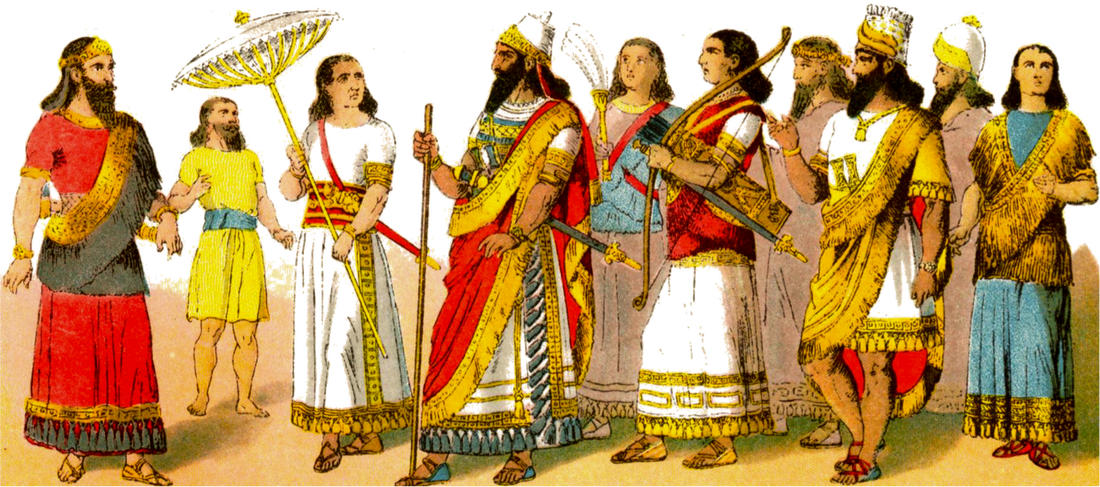
Why do we wear clothes? The mundane answer runs “for protection against the elements”, pointing to the succession of Ice Ages to which homo sapiens was subjected, forced to borrow fur from more hirsute species.
Well, up to a point, Lord Copper. The ancient civilisations that grew up in the fertile valleys of the Euphrates, the Nile and the Indus, were more tropical than a Wham! video, and clearly using their outfits to signify status, occupational, sex and gender differentiation.
Some may even have wanted to be regarded as individuals — despite we modern types imagining we invented all that — cutting a dash with a tufted Mesopotamian fringe here, or supple Egyptian weave there.
I raise the question because the issue of why we dress is feeling modish again, and not merely because the great grounding brought about by Covid has made comfort king.
The costumes of both genders had been heading in this direction already — what with normcore, athleezure, and the lemming-like “casualisation”. But, I’m talking about something else here, a resistance to the at-one-time uncontroversial notion of what is “flattering”, a term now considered oppressive by the young.
To quote the Guardian‘s Jess Cartner-Morley, never backward about coming forward in identifying a zeitgeist moment: “For Generation Z — roughly speaking, those born between 1995 and 2010 — ‘flattering’ is becoming a new F-word.
“To compliment a woman on her ‘flattering’ dress is passive-aggressive body-policing, sneaked into our consciousness in a Trojan horse of sisterly helpfulness. It is a euphemism for fat-shaming, a sniper attack slyly targeting our hidden vulnerabilities. ‘Flattering’, in other words, is cancelled.”
October 11, 2020
QotD: Britain’s National Health Service cult
Survival from many serious illnesses such as cancer, heart attacks and strokes is lower in Britain than in most European countries. Publicity is sometimes given to these statistics but they are not immediately apparent to patients or their relatives, and in any case the NHS is immune to criticism because its deficiencies are assumed to be departures from its essential goodness or the result of inadequate funding.
No number of scandals, such as that of Mid Staffs in which hundreds of patients were neglected to a degree that often defied belief, all in plain sight of a large bureaucracy supposedly devoted to ensuring the quality of patient care, can dent faith in the NHS. Staff committed, and management connived at, acts of cruelty that would have made Mrs Gamp blush. Mr Cameron’s government, anxious not to seem an enemy of the NHS, which would have been politically damaging, swept the scandal under the carpet.
A system whose justification for its nationalisation of healthcare was egalitarianism has failed even in the matter of equality. If anything, the difference between the health of the richest and poorest sections of the population has increased rather than decreased under the NHS.
The gap between the life expectancy of unskilled workers and that of the upper echelons, which had been stable for decades before the foundation of the NHS, began to widen afterwards and is now far wider than it ever was. Again, there are reasons for inequality in health other than the deficiencies of healthcare, the prevalence of smoking and obesity, for example; but if systems are to be judged by their effects, the NHS has failed in its initial goal.
Theodore Dalrymple, “Empire of conformists”, The Critic, 2020-04-29.
September 30, 2020
“The culture war is the ‘New Normal'”
Andrew Doyle discusses the debate over the culture war in Spiked:
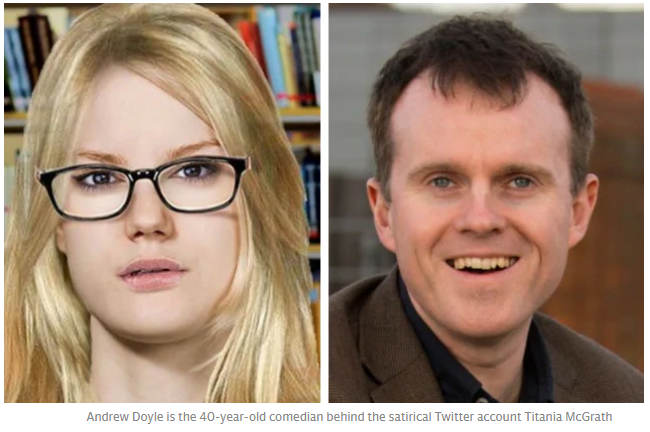
The phrase that probably best characterises the events of 2020 is the “New Normal”. Although it’s typically used to describe our changed circumstances under lockdown, it could just as easily be applied to the way in which we have all grown accustomed to the worst excesses of the social-justice revolution.
News stories that only five years ago would have been dismissed as asinine aberrations now recur with a quotidian certainty. Recent notable examples include: Princeton University confessing to “systemic racism”, leading to an investigation by the Department of Education on the grounds that racism is a violation of civil-rights law; the Royal Academy of Dramatic Arts making a similar admission, thereby emboldening some of its students to produce a 100-page document full of demands so entitled that it would make Veruca Salt blush; and an academic and novelist stating that debate is “an imperialist capitalist white supremacist cis-heteropatriarchal technique that transforms a potential exchange of knowledge into a tool of exclusion and oppression”. Yes, the culture war is the “New Normal”.
Yet with all the evidence before our eyes, certain commentators persist with their view that the culture war is a right-wing myth advanced by those who are resistant to change. “There’s no actual ‘culture war’, is there?”, writes LBC’s James O’Brien: “It’s just a new way of describing disagreements between people who hate racism and discrimination and people who love it.” Then there is the Guardian‘s Owen Jones, who maintains that “a lot of what’s called ‘the culture war’ is just younger people trying to assert their different social and moral values over older generations who run most of the media”. Nesrine Malik has argued that the culture war has been manufactured by the right, although it will not have escaped most people’s attention that the majority of salvos come from the left side of the battlefield.
It’s this kind of gaslighting – to borrow the language of social-justice activists – that we have already seen from writers who insist that “cancel culture” doesn’t exist, in spite of abundant and incontrovertible evidence that it does.
This is because, as Helen Pluckrose and James Lindsay have so clearly outlined in their seminal book Cynical Theories, the ideology of social justice has its origins in postmodernism, a school of thought which favours “lived experience” and multiple “ways of knowing” over objective truth. It doesn’t matter, for instance, that JK Rowling has never said or written anything transphobic — her new novel must be denounced for advancing an anti-trans agenda, even though it contains no actual references to trans people. These activists have apparently taken their cues from Humpty Dumpty in Lewis Carroll’s Through the Looking Glass (1871). “When I use a word”, he says to Alice, “it means just what I choose it to mean – neither more nor less”.
QotD: Victimhood culture
Victimhood culture departs from dignity culture in several important ways. Moral worth is in large part defined by the color of one’s skin, or at least one’s membership in a fixed identity group: i.e., women, people of color, LGBTIQ, Muslims, or indigenous peoples. Such groups are sacred, and a lack of deference to them is seen as a sign of deviance. The reverse is true for those who belong to groups that are considered historical oppressors: whites, males, straight people, Zionists. Anyone belonging to an “oppressor” group is stained by their privilege, or “whiteness,” and is cast onto the moral scrapheap.
Claire Lehmann, “The Evils of Cultural Appropriation”, Tablet, 2018-06-11.


