
Real Time History
Published Jun 5, 2024In just six days in 1967 Israel managed to decisively defeat Egypt, Jordan and Syria in the Six Day War. In the process they expand the territory they control with the Golan Heights, Sinai, the West Bank, and Gaza.
(more…)
September 26, 2024
Why Three Arab Nations Lost the Six-Day War Against Israel
Comments Off on Why Three Arab Nations Lost the Six-Day War Against Israel
QotD: The Asshole License, First Class
Here’s the “official” definition of “passive-aggressive”:
Passive-aggressive behavior is characterized by a pattern of passive hostility and an avoidance of direct communication. Inaction where some action is socially customary is a typical passive-aggressive strategy (showing up late for functions, staying silent when a response is expected). Such behavior is sometimes protested by associates, evoking exasperation or confusion. People who are recipients of passive-aggressive behavior may experience anxiety due to the discordance between what they perceive and what the perpetrator is saying.
There’s definitely a lot of that going around, but it doesn’t describe the behavior of the apple polishers, or the people who have issued themselves the Asshole License. You know the ones I mean: SJWs, of course, but also CrossFitters, vegans, cyclists … basically, anyone who takes up a certain cause or lifestyle seemingly for the sole purpose of being an enormous douchebag about it in every possible social situation. Neither I nor anyone else would have a problem with vegans, say, if they really were doing it for their health, as they so often claim, because if they really were doing it for their health, they’d bring it up once, and then forever shut the fuck up about it.
But they don’t. Similarly, nobody would have a problem with bike riders if they’d just follow the goddamn rules of the road. But they don’t, and the more “cyclist” shit they own — the racing bikes made out of space station parts, the lycra bodysuits, the helmets that look like cranial jockstraps — the less the rules of the road apply to them. Spot one of those fuckers in full kit, and you’re guaranteed to see him weaving in and out of four lanes, turning abruptly without signaling, and blowing through stop signs at full speed, with nary a glance at cross traffic. They’re possessors of the Asshole License First Class, you see, so obviously the rules don’t apply when they’re doing their Official Asshole Thing.
See what I mean? That’s not “passive-aggressive”. But it’s not “active-aggressive” either. They’re not trying to pick a fight. It’s like virtue-signaling, in that you, the audience, are absolutely necessary, but unlike the standard virtue-signal, which is strictly an intra-Leftist competition, this one entails hostility towards the rest of the world, not just toward fellow Leftists …
Severian, “The Passive-Aggressive Society”, Rotten Chestnuts, 2021-07-24.
Comments Off on QotD: The Asshole License, First Class
September 25, 2024
The Korean War 014 – Breakout from the Perimeter! – September 24, 1950
The Korean War by Indy Neidell
Published 24 Sept 2024Last week’s amphibious invasion of Incheon completely surprised the North Koreans, and there are now thousands of UN troops deep in their rear and their logistic system is totally compromised; on top of that, as this week begins in the south, the UN forces begin breaking out of the Pusan Perimeter, first in a trickle, but by the end of the week in a huge torrent of force, running through, around, and over the North Korean forces.
(more…)
Comments Off on The Korean War 014 – Breakout from the Perimeter! – September 24, 1950
Freddie deBoer on “deference politics”
In the first of a series of articles, Freddie deBoer discusses the phenomenon of “deference politics” practiced by many (most?) progressives in the United States (and equally in Canada):

When I talk about deference politics, I’m referring to the tendency of left-leaning people to substitute interpersonal obsequiousness towards “marginalized groups” for the actual material change those groups demand.
If you’ve lived in any left-aligned spaces in the past decade, you’ve encountered deference politics many times. A white person in a humanities seminar, an organizing meeting, an industry convention, a workplace gathering, etc., who makes the conscious decision to avoid engaging or to engage from a position of proactive apology towards various identity groups is engaged in deference politics. Someone who insists that members of “dominant groups” should censor themselves or speak softly or avoid speaking too much or defer to or otherwise “make space” for members of minority identities is advocating for deference politics; someone from a dominant group who tells others in that group that they should defer is practicing (self-aggrandizing) deference politics. “Maybe men should just shut up for awhile,” voiced by a man, is quintessential deference politics. “I sat my white ass down and listened” is deference politics. “Teach me how not to oppress you,” spoken at an academic conference by a straight person to LGBTQ people on a panel, is deference politics. Avoiding sharing a challenging opinion on an issue of controversy for fear of running afoul of the wrong kind of identity accusation is deference politics.
The infamous image above, of Democratic leaders wrapped in kente cloth and taking a knee in memory of George Floyd, actually preceded a meaningful attempt at material change, the George Floyd Justice in Policing Act. While that bill would not have been a sufficient overhaul of America’s criminal justice system — it’s hard to use the federal government to reform policing, which tends to be governed by state policies and influenced by local conditions — it would have been a good start. The Democrats, sadly, were not able to pass the bill in two tries, though perhaps it could still be revived. That the party simply didn’t have the votes to make the bill law isn’t something that we should be particularly hard on the Democrats about, but the contrast between its failure and the theatrics that attended its announcement is deference politics in its essential form: at a moment of mass discontent over the state of race and policing, Black Americans got the absurd performance from Congressional leaders but not the substance of better policy. And this is core to the critique of deference politics; the point is not that the good intentions of the people who practice them are worthless but that the people who practice deference politics never seem to recognize that all of the deferring never makes positive action more likely. Like many great political crimes, deference politics privileges the communicative and the emotional over the material and the actual.
It’s important to point out that many Black activists and writers recoiled at the deference politics practiced after George Floyd’s death and pointed out that they had never asked for such theatrics.
Is “deference politics” just a way to say “woke”?
No. Deference politics could conceivably be practice or demanded in any given political context and by members of any given political tendency. Conservatives do occasionally advocate for deference politics, such as when they insist that only veterans should comment on issues of war and peace. Nor do woke people assertively practice deference politics all the time; in fact, for various demographic reasons most people practicing social justice politics are themselves members of dominant groups, and they have a tendency to assert their own superior right to speak rather than to defer to others. The term “deference politics” should likewise not be used to refer to all cringey elements of “allyship”, which involves a diverse suite of questionable tactics and attitudes, but certainly deference politics are core to the behavior of the modern ally. The practice epitomizes the modern liberal obsession with defining politics as a matter of interpersonal niceties rather than as the systems through which human values are expressed in material terms in the real world.
Comments Off on Freddie deBoer on “deference politics”
The Life and Times of Xerxes
seangabb
Published Jun 10, 2024An occasional lecture for our Classics Week, this was given to provide historical background for a lecture from the Music Department on Handel’s opera “Serse” (1738).
Books by Sean Gabb: https://www.amazon.co.uk/kindle-dbs/e…
His historical novels (under the pen name “Richard Blake”): https://www.amazon.co.uk/Richard-Blak…
If you have enjoyed this lecture, its author might enjoy a bag of coffee, or some other small token of esteem: https://www.amazon.co.uk/hz/wishlist/…
Comments Off on The Life and Times of Xerxes
QotD: “Rooting for the meteor”
So far, the meteor has a horrible track record. It showed up once in the clutch for mammals millions of years ago and that’s about it. We need to stop rooting for the meteor. If the meteor even does show up it’ll likely cause all kinds of problems. We need to start rooting for more sensible and practical ways to end a game with both teams losing. Options like:
- Root for Bane
- Root for the large sinkhole
- Root for the tornado
- Root for the alien abduction
- Root for spontaneous player combustion
- Root for lightning
- Root for the ball ending up being a bomb
- Root for the dune sandworm
- Root for the unexpected plane crash. We almost got this one once!
- Root for the Killdozer to show up
- Root for the nerve gas attack
- Root for the Brown Note
- Root for spiked Gatorade that gets everybody sick
- Root for stadium structural failure
- Root for both teams to become friends and refuse to fight
- Root for acid rain
- Root for the big squid from the end of the original Watchmen comic
- Root for the suitcase nuke
- Root for everyone to suddenly become naked, a state of being it is hard to play football in
- Root for a dragon to show up. Any dragon. Pick your favorite. I choose Volvagia from Ocarina of Time
- Root for the solar flare
- Root for the uprising of the skeleton army
Dave Rappoccio, “Rooting for the Meteor Only Worked Once”, The Draw Play, 2024-06-24.
Comments Off on QotD: “Rooting for the meteor”
September 24, 2024
British stagnation – “at some point it becomes impossible to grow when investment is banned”
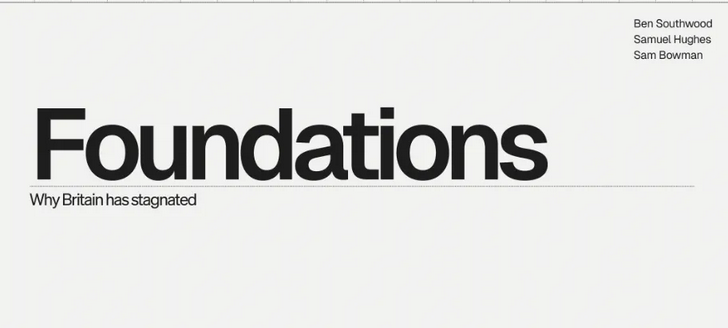
Ed West reviews a new essay by Ben Southwood, Samuel Hughes, and Sam Bowman which tries to identify the underlying reasons for British economic stagnation:
The theme running through the essay is that the British system makes it very hard to invest and extremely expensive and legally difficult to build, making housing and energy costs prohibitive.
While we all know we have fallen in status, “most popular explanations for this are misguided. The Labour manifesto blamed slow British growth on a lack of “strategy” from the Government, by which it means not enough targeted investment winner picking, and too much inequality. Some economists say that the UK’s economic model of private capital ownership is flawed, and that limits on state capital expenditure are the fundamental problem. They also point to more state spending as the solution, but ignore that this investment would face the same barriers and high costs that existing infrastructure projects face, and that deters private investment.”
The problem is that “all of these explanations take the biggest obstacles to growth for granted: at some point it becomes impossible to grow when investment is banned”.
Even before the Russian invasion of Ukraine, the industrial price of energy had tripled in under 20 years. Per capita electricity generation in Britain is only two-thirds that of France, and a third of the US, making us closer to developing countries like Brazil and South Africa than other G7 states. Transport projects are absurdly expensive, mired by planning rules, and all of this helps explain why annual real wages for the median full-time worker are 6.9 per cent lower than in 2008.
In one of the most notorious examples, the authors note that “the planning documentation for the Lower Thames Crossing, a proposed tunnel under the Thames connecting Kent and Essex, runs to 360,000 pages, and the application process alone has cost £297 million. That is more than twice as much as it cost in Norway to actually build the longest road tunnel in the world.”
Britain’s political elites have failed, they argue, because they do not understand the problems, so “they tinker ineffectually, mesmerised by the uncomprehended disaster rising up before them”.
Even “before the pandemic, Americans were 34 percent richer than us in terms of GDP per capita adjusted for purchasing power, and 17 percent more productive per hour … The gap has only widened since then: productivity growth between 2019 and 2023 was 7.6 percent in the United States, and 1.5 percent in Britain … the French and Germans are 15 percent and 18 percent more productive than us respectively.” The gap continues to widen, and on current trends, Poland will be richer than the United Kingdom by the end of the decade.
Britain began to fall behind after the War, but after decades of relative stagnation, its GDP per capita had converged with the US, Germany and France in the 1980s, and our relative wealth peaked in the early Blair years. (Personally, I wonder if one reason for the great Oasis nostalgia is simply that we were rich back then.) If Britain had continued growing in line with its 1979-2008 trends, average income today would be £41,800 instead of £33,500 — a huge difference.
France is the most natural comparison point to Britain, a country “notoriously heavily regulated and dominated by labour unions”. This is sometimes comical to British sensibilities, so that “French workers have been known to strike by kidnapping their chief executives – a practice that the public there reportedly supports – and strikes are so common that French unions have designed special barbecues that fit in tram tracks so they can grill sausages while they march.” Only in France.
It is also heavily taxed, especially in the realm of employment, and yet despite this, French workers are significantly more productive. The reason is that France “does a good job building the things that Britain blocks: housing, infrastructure and energy supply”.
With a slightly smaller population, France has 37 million homes compared to our 30 million. “Those homes are newer, and are more concentrated in the places people want to live: its prosperous cities and holiday regions. The overall geographic extent of Paris’s metropolitan area roughly tripled between 1945 and today, whereas London’s has grown only a few percent.” One quality-of-life indicator is that “800,000 British families have second homes compared to 3.4 million French families“.
They also do transport far better, with 29 tram networks compared to seven in Britain, and six underground metro systems against our three. “Since 1980, France has opened 1,740 miles of high speed rail, compared to just 67 miles in Britain. France has nearly 12,000 kilometres of motorways versus around 4,000 kilometres here … In the last 25 years alone, the French built more miles of motorway than the entire UK motorway network. They are even allowed to drive around 10 miles per hour faster on them.”
Comments Off on British stagnation – “at some point it becomes impossible to grow when investment is banned”
Trust, once lost, is very difficult to re-gain
Public officials and legacy media often complain about the public’s significant decrease in trust for once highly trusted organizations, yet rarely seem to realize that they’ve done everything they could to destroy the public’s confidence in them and their actions:

Dr. Jay Varma, 21 April, 2021.
Photo by the New York City Health Department via Wikimedia Commons.
I don’t want to be a cynic.
While I don’t think anyone should blindly trust anything or anyone who hasn’t earned it, I don’t want to blindly distrust everything and everyone, either.
However, there are areas where distrust is warranted.
Over the weekend, a number of stories popped up in my various feeds that sort of illustrated the point pretty well from a number of different angles.
Let’s start with partying in the time of COVID.
New York City’s former COVID czar was caught on a hidden camera boasting about having drug-fueled sex parties mid-pandemic — and admitting New Yorkers would have been “pissed” if they had found out at the time.
Dr. Jay Varma — who served as senior health adviser to then-Mayor Bill de Blasio and was tasked with running the Big Apple’s pandemic response — made the confession in secretly recorded conversations with a so-called undercover operative from conservative podcaster Steven Crowder’s “Mug Club“.
“I had to be kind of sneaky about it … because I was running the entire COVID response in the city,” Varma was filmed telling the unidentified woman on Aug. 1 in what appears to be a restaurant.
The edited clips of the hidden camera footage, which were all recorded between July 27 and Aug. 14 in New York, were released by Crowder on Thursday. The Post has not reviewed the full, unedited recordings.
Now, let’s remember that Varma admits to doing the exact opposite of what he was telling everyone else to do. He was part of the government and part of the effort to shape New York’s response to COVID-19.
And the city is large enough that their response was likely to inform other communities.
Meanwhile, he’s out partying it up while everyone else is sitting at home, trying to figure out how to survive.
Remember how our current problems stem from this time. People like Varma told us we all had to stay inside. Most of us couldn’t go to work, couldn’t go to bars or restaurants, couldn’t go out to the movies or to take part in activities. As a result, people suffered and the economy suffered. Stimulus plans were put in place to flush trillions of dollars into the economy, only to remain there as more and more got pumped in later, creating inflation and making the economy worse in the long run, but that time locked up was essential because we had to stop the virus.
And this twit is out sexing it up while the rest of us were shut inside trying not to go nuts.
He wasn’t alone, either. A number of folks from various institutions were part of the “rules for thee but not for me” crowd, such as California Gov. Gavin Newsom’s trip to dinner at The French Laundry — which is the dumbest name for a restaurant ever — during the lockdowns or Austin’s mayor telling everyone to stay inside while he went to Mexico.
Of course, bad public officials are nothing new. We’ve all seen them over the years.
But our media is also failing us.
Comments Off on Trust, once lost, is very difficult to re-gain
Sten Mk5: The Cadillac of the Sten Family
Forgotten Weapons
Published Jun 17, 2024The Sten Mk5 (sometimes written Sten MkV) was really the Cadillac of the Sten series. It was designed in 1943, and featured a full wooden buttstock patterned after the No4 Enfield rifle, as well as an adjustable front sight and bayonet lugs for the Enfield. It has a wooden pistol grip as well (and early production examples also had a wooden vertical front grip). It was mechanically the same as the earlier Stens, simply with the fire control group moved forward to fit the pistol grip.
The Mk5 was not quite as insanely cheap and fast to make as the MkII and MkIII, but by the time it went into production British arms supply had largely caught up to demand, and they could afford to be a bit less economical. The Mk5 was really much better handling than earlier models, and was well liked, seeing combat as early as the invasion of Normandy in June 1944. In total, 527,428 of them were produced and they remained in service until the adoption of the L2 Sterling submachine gun in 1957 (and they were not completely phased out until at least the late 1960s).
(more…)
Comments Off on Sten Mk5: The Cadillac of the Sten Family
QotD: Is vexillology considered part of the LGBT sexual spectrum?
But activists love their flags, and Pride Month™ wouldn’t be complete without the full range of other designs to represent the innumerable sexualities and genders that we’ve only just heard of but have apparently always existed.
There are flags to signify people who identify as nonbinary, polyamorous, polysexual, agender, genderfluid, genderqueer, neutrois, two-spirit and many more. If you haven’t heard of all of these terms, don’t worry. There’s a concerted effort in the public sector to fly these flags at every opportunity and educate the bigoted masses. In April, staff at Royal Stoke Hospital were photographed holding a banner with twenty-one of these flags. And in January, Network Rail unveiled its “Pride Pillar” at London Bridge station, which displayed a similarly garish range.
There are flags for pansexuals (those who are attracted to all sexual identities), somnisexuals (those who are only attracted to people in their dreams), parasexuals (those who don’t feel sexual attraction but will have sex for reproductive purposes) and dozens more. There’s even a flag for “allosexuals”, which apparently means anyone capable of experiencing sexual attraction. Presumably “Allo Allo Sexuals” are people who get aroused by dodgy French accents.
Andrew Doyle, “How many flags does one movement need?”, Andrew Doyle, 2024-06-22.
Comments Off on QotD: Is vexillology considered part of the LGBT sexual spectrum?
September 23, 2024
Forgotten War Ep3 – Death in the Arakan
HardThrasher
Published 18 Sept 2024Please consider donations of any size to the Burma Star Memorial Fund who aim to ensure remembrance of those who fought with, in and against 14th Army 1941–1945 — https://burmastarmemorial.org/
(more…)
Comments Off on Forgotten War Ep3 – Death in the Arakan
In Toronto, school kids are being used as pawns in political protests
The Toronto District School Board has some serious issues if a recent high school “field trip” to a political protest is typical of how the board’s employees are allowed to insert their own political agenda into the teaching process:
There were some parents who opted out of allowing their children to participate in a Toronto District School Board (TDSB) sanctioned field trip to observe (not participate) in a public protest. Parents were informed that the event at Grange Park in Toronto involved the Grassy Narrows First Nation’s decades-long struggle with mercury contamination caused by industry. However, they should have taken this proposed field trip as a major red flag. Indeed, according to Spadina-Fort York MP Kevin Vuong, “What the TDSB teachers did was deceitful and unconscionable”.
When I was a kid, my school never attended a protest. And before last Wednesday, I’ve never heard of any school ever planning such an inappropriate field trip – that ended up being used by the ultra-woke TDSB as an excuse to indoctrinate children into social justice activism (which entails the labelling of all white/Jewish children as racists, colonizers, and settlers on stolen land). How many TDSB parents were even aware of what they were signing up for? It appears that many knew of the general shape of things – which had something to do with Grassy Narrows and mercury poisoning – but no parent could have known about the anti-Israel / anti-Semitic component (a mainstay of social justice), which appeared to be the focal point, eclipsing anything to do with Canadian First Nations.
Indeed, the email from the TDSB explained that the protest event was an “educational opportunity … to learn about Indigenous activism, environmental justice and human rights”. The red flag would have been enormous and flapping vigorously in a strong wind for those parents who are initiated into the tenets of critical social justice theory. To those parents, participation in woke activism is a hard hell no. However, many families are still oblivious, or maybe have misunderstood the intentions of the TDSB, or maybe just don’t quite get what critical social justice is. They are unaware that far too many school administrators, trustees, and teachers have decided that their priority is transforming society through a cultural revolution, not educating the young. This, of course, involves transforming children.
The letter to parents assured them that their children would not be participating in the protest. Students would be on site only to observe. However, videos have emerged on social media of middle school aged children marching alongside anti-Israel protestors. Understandably, many parents now feel betrayed. In my view, they should have seen this coming. The TDSB is literally infested with anti-Semetic black radicals and other such woke activists who follow the same identity politics playbook which entered North America through the period of violent 1960s era black radicalism. (I refer the reader to Cedric Robinson’s volume Black Marxism: The Making of the Black Radical Tradition. And, to Dr. Scott Miller’s essay published in these pages “A Moral Chimera: Diversity, Illiberal No-White-Male Policies and the Power of the Black Radical Tradition“. And lastly, if you want to see black radicals in action, read my piece, “Exploring The Grievance Pathway Of Anti-Racism“, on a Parents of Black Children meeting I attended).
Concerning those videos of the protest which circulated social media sparking outrage amongst parents, according to the Toronto Sun, “footage showed students marching alongside flag-waving Elementary Teachers of Toronto members, while a masked woman in a white ‘Justice for Grassy Narrows’ shirt shouted anti-Israel chants into a megaphone”.
CG Idit Shamir (Consul General @IsraelinToronto) posted the following to X (I completely agree with her sentiment):
“Shocking. 7th and 8th graders from public schools in Toronto were taken yesterday on a Toronto District School Board (TDSB) -approved field trip—not to a museum, but to march in a political protest where they chanted pro-Palestine slogans. Adults in keffiyehs and face coverings led the way, while young minds were subjected to a one-sided political narrative.
“The @tdsb has crossed a line. Children get sent to school to learn; they should NEVER be forced to participate in political protests. It’s not just that they’ve taken a side—it’s that they have utterly disregarded the rights of pro-Israel and Jewish students and staff, along with any commitment to truth and balance. This isn’t education; it’s indoctrination—it’s an affront to the very purpose of education.”
MPP Goldie Ghamari, also had a strong reaction:
“What the actual f**k is going on with @tdsb educators in Toronto?
This isn’t 1944 Nazi occupied Germany.
This is 2024 in Canada.
This antisemitic behaviour is unacceptable.
If you stay silent after reading this, you’re part of the problem and need to hang your head in shame.”

Comments Off on In Toronto, school kids are being used as pawns in political protests
Berlin’s Der Tagesspiegel wants to help you keep your kids from the perils of right-wing ideology
eugyppius on the help Berlin’s leading daily newspaper is offering to their readers whose kids are hearing the siren call of non-progressive politics:
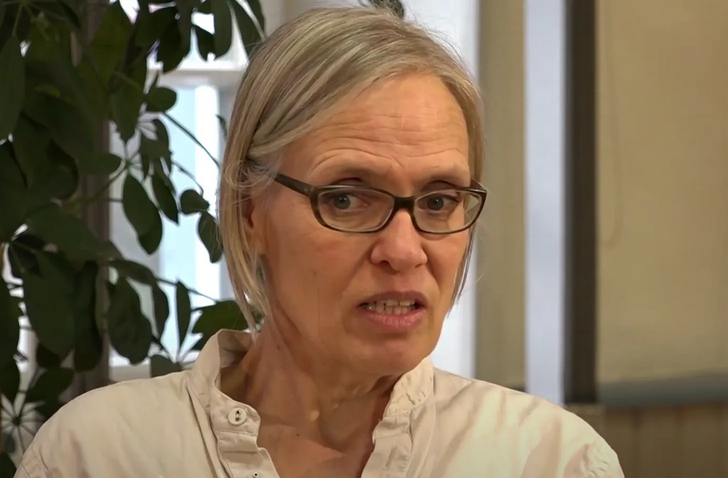
This obviously charming, cheerful and not at all withered or overwrought woman is named Eva Prausner. She is a social worker, and she directs something called the “Project for Strengthening Parents“, which provides “Training, networking, and counselling in the area of family and right-wing extremism”. This means that she runs around telling parents what to do when they suspect their children are succumbing to political wrong-think. And this in turn makes Frau Prausner the woman of the hour, for never before in the history of the Federal Republic have so many undemocratic children bloomed under the noses of so many upstanding democratic parents.
It is very hard to understand how this happened. The leftists and the Greens, after all, have been doing the Lord’s work teaching leftism and Greenism in schools for decades now, but despite their valiant efforts we are rapidly losing our youth to malign antidemocratic forces. It can’t be that elevating leftoid lunacy into an establishment ideology has backfired, transforming the once cool, counter-cultural left into a political movement for middle-aged scolds and schoolmarms – the kind of thing from which teenagers flee in terror. No, nothing could be less plausible. The real reason for the pandemic of right-wing children must simply be that we haven’t indoctrinated them enough. If parents will not do their part and bring indoctrination also to the home, our democracy will collapse and it will be 1933 all over again, just like it was 1933 all over again two weeks ago after the elections in Thüringen and Saxony.
For these reasons, Der Tagesspiegel, Berlin’s largest daily newspaper, interviewed Prausner on her advice for parents who find themselves forced to deal with their evil, right-leaning spawn. The product is a prescient write-up for the ages bearing the headline “Help, my child is turning right-wing! Eight tips for democratic parents with undemocratic children“.
The rightward shift in East Germany is a shift above all among the youngest, as the elections in Saxony and Thüringen have shown. One in three young people there voted for the far right. In Thüringen, as many as 38% of 18- to 34-year-olds cast their ballot for the AfD – more than in any other age group. Many a parent who values living in a democracy will have wondered: “What have we done wrong?”
In Brandenburg, too, it is becoming clear that even the youngest are now leaning towards the right. In the under-16 vote a week before the state election, the AfD came out on top with around 30% … In the state elections on 22 September, the AfD could become the strongest force, thanks in part to young first-time voters.
Do parents still have any influence over their AfD-voting children?
Alas, Prausner is not very certain that they do, but she believes that democratic parents “should at least try” to rescue their children from the grave heresy of voting for the wrong political parties. Children in Brandenburg are particularly endangered, because Brandenburg is largely rural, and Prausner has discovered that the countryside is absolutely dripping with “condensed prejudicial attitudes”. There is so much racial prejudice in the Brandenburg air that it is collecting on cool surfaces, like windows and beer glasses, that is how bad things are there. Also all children everywhere are in danger because the internet is a powerful right-wing force that helps bad organisations like the AfD pump their fascist mind virus directly into millions of young yet-forming cerebral cortices.
Comments Off on Berlin’s Der Tagesspiegel wants to help you keep your kids from the perils of right-wing ideology
What Food was Served at Wild West Saloons?
Tasting History with Max Miller
Published Jun 11, 2024Baked beans made with molasses and salt pork
City/Region: United States of America
Time Period: 1886One of the definitions for a saloon is a place that serves food and drink, but makes most of its money from drink. This certainly was the case in the Old West, where a lot of saloons served a free lunch as long as you bought a drink. Just because it was free, didn’t mean it was low quality food. In fact, many saloons, especially those in larger cities with more competition, served fancier and fancier meals to draw in patrons.
These beans aren’t the French cuisine that some saloons served, but they are delicious. Even without the onions and spices that some recipes used, they’re so flavorful and much better than canned versions.
Baked Pork and Beans
Wash and pick over a large heaping cupful of navy beans and steep them in water over night. Put them on next morning with fresh water to more than cover, and baking soda the size of a bean and let boil about an hour. Then carry them to the sink, pour all into a colander letting the water run away and put back into the saucepan with cold water enough to come up to a level. Boil again and in a few minutes they will be soft. Season with a little salt and tablespoon of molasses. Put them into four pint bowls or tin pans, lay an ounce slice of salt pork on each and bake half an hour.
— Cooking for Profit by Jessup Whitehead, 1886
Comments Off on What Food was Served at Wild West Saloons?
QotD: On Roman Values
Now, of course it isn’t surprising to see Roman exemplars mobilized in support of this or that value system, as people have been doing that since the Romans. But I think the disconnect between how the Romans actually thought and the way they are imagined to have thought by some of their boosters is revealing, both of the roman worldview and often the intellectual and moral poverty of their would-be-imitators.
In particular, the Romans are sometimes adduced by the “RETVRN” traditionalist crowd as fundamentally masculine, “manly men” – “high testosterone” fellows for whom “manliness” was the chief virtue. Romans (and Greeks) are supposed to be super-buff, great big fellows who most of all value strength. One fellow on Twitter even insisted that the chief Roman value was VIRILITAS, which was quite funny, because virilitas (“manhood, manliness”) is an uncommon word in Latin, but when it appears it is mostly as a polite euphemism for “penis”. Simply put, this vision bears little relation to actual Roman values. Roman encomia or laudationes (speeches in praise of something or someone) don’t usually highlight physical strength, “high testosterone” (a concept the Romans, of course, did not have) or even general “manliness”. Roman statues of emperors and politicians may show them as reasonably fit, but they are not ultra-ripped body-builders or Hollywood heart-throbs.
Bret Devereaux, “Fireside Friday, March 29, 2024 (On Roman Values)”, A Collection of Unmitigated Pedantry, 2024-03-29.
Comments Off on QotD: On Roman Values


