
We associate human achievement, striving, and greatness with the archaeological remains that testify to them — things like written works and monumental architecture — because often that’s our only evidence that it ever happened. But sometimes, a little clever digging (literal or figurative) can uncover glories of a barbarian past. The most obvious example, of course, is that of the Iliad and the Odyssey, products of a non-state people’s oral culture in the Greek Dark Ages and only recorded with the reintroduction of writing centuries later. How many other texts would be considered classics of world literature if only they had ever become, you know, actual texts? But let’s go beyond art: if you want to talk world-bestriding greatness more broadly, look no further than the ferociously expansive Proto-Indo-Europeans, whose obsession with “imperishable fame” left their DNA all over Eurasia and their culture and even mythology so deeply embedded in their daughter cultures that it can be convincingly reconstructed today.1 Or the Polynesians, whose expansion is arguably even more impressive given how much harder it is to travel across ocean than steppe. Sure, it’s not the Lion Gate or the Mona Lisa — or even the cuckoo clock — but the remains we do have should remind us of the other cultural achievements that have doubtless been lost like tears in the rain.
“What cultural achievements?” you may ask, eyeing the world’s few remaining hunter-gatherers, and it’s true: we judge barbarians of the past by analogy to barbarians of today.2 But that’s not entirely reasonable; there’s no reason to assume that a lack of cultural elaboration among, say, the highlanders of Papua New Guinea reflects anything about the Lapita culture, let alone about the Middle Stone Age or Neolithic Europe.3 It reminds me of the friend who once explained to me, quite seriously, that he would never work for a startup because they’re all culturally dysfunctional and have stupid products. And, you know, statistically he’s probably right: most startups suck, because if they’re any good at what they do they don’t stay startups for long.4 But we all know that different cultures are different: some groups of people see a horizon and burn with the desire to know what’s beyond it, and others don’t. Well, guess who those horizons are going to end up belonging to?
Of course there’s something nice about things that last: the written works and monumental architecture give succeeding generations something to point to and discuss, a jumping-off point for their own striving. Reading Latin is great, partly because you can read what the Romans had to say but more because you can read the same things that every educated person since the Romans has read. But that’s talking about their utility for us, not anything intrinsic to them; if the Huns or the Mongols or the Turks had come a little farther west and despoiled a little more thoroughly, it wouldn’t have retroactively detracted from the grandeur that was Rome. It would simply have turned it into a dark age because it would have left us blind.
Jane Psmith, “REVIEW: Against the Grain, by James C. Scott”, Mr. and Mrs. Psmith’s Bookshelf, 2023-08-21.
- Calvert Watkins argues for a Proto-Indo-European Ur-myth in the charmingly-titled How to Kill a Dragon: Aspects of Indo-European Poetics, which really ought to contain more stat blocks than it does.
- Or, more often, a hundred years ago, since there are vanishingly few non-state peoples left.
- I can’t get over how annoying it is that there’s an entirely different set of terms for periods of human history depending on what continent you’re discussing.
- I’m sorry if it’s uncool, but by the time you employ someone with a certification from the Society of Human Resource Managers you’re not really a startup anymore even if your office fridge is full of energy drinks.
April 15, 2026
QotD: Archaeological evidence of human achievement misses a lot
April 13, 2026
QotD: Cognitive Bias
Why do we have cognitive biases? They seem like a colossal failure of the evolution of the human brain. But the more we learn about them, the better we understand their purposes. One is that they save us time and effort — the frugal reasoning argument. Suppose we go into the supermarket to buy cereal. You carefully read all the boxes, figuring out whether the All-Bran or the Just Right gives you the best nutritional balance and value in dollars per kilogram or pound. I grab a box because I like the colour or because it has a sponsorship deal with my football team. You make the more rational choice, but I spend much less of my life in the cereal aisle at the supermarket and more doing other things. It’s easy to see how the same logic gets applied to, for example, voting. Assuming that the consequences of voting the “wrong” way don’t cause me to lose as much time and effort as I would have given up to carefully select the right candidate, I come out ahead in the end.
And then there’s the prospect that cognitive biases could simply be side-effects of useful and valuable short-cuts our brains have developed. Our tendency to see patterns in randomness leads to the spread of conspiracy theories. Our ability to generalise from a few points of information leads to prejudice. The knee-jerk reactions to danger which kept our ancestors from being eaten by sabre-tooth tigers can also lead to irrational decisions in the face of more abstract threats like crime, terrorism, natural disasters, or stock-market crashes. And finally, shared beliefs, even incorrect beliefs, might promote group cohesion. Our brains are imperfect at reasoning, but they may be so for good reason.
Adam Wakeling, “George Orwell and the Struggle against Inevitable Bias”, Quillette, 2020-08-08.
April 12, 2026
“The ‘Green Energy Transition’ is … a watermelon, green on the outside and red on the inside”
On Substack, John Robson discusses the state of the fake green economy in the wake of a carbon market scandal where a now-bankrupt “green” company appears to have sold far more “carbon credits” than they should have:

One problem among many with the “Green Energy Transition” is that it was always a watermelon, green on the outside and red on the inside. It wasn’t market-driven, it was designed, and hyped, by people who didn’t care what people actually wanted to buy and indeed, in many cases, who actively believed that consumer preferences were inefficient and unenlightened. As when Bloomberg Green worries about “What a Clean Cookstove Company’s Bankruptcy Means for Carbon Markets”. Why one company’s bankruptcy should mean anything for “carbon markets” is less clear even than what a “clean cookstove” would be. One where you sprayed and wiped the backsplash as well as the main surface? But both are clearer than “carbon markets”. You just can’t go into a store and buy carbon. What are they talking about? Why, another face-plant by central planning, of course.
According to the article, in case you weren’t independently aware of it:
This year was supposed to be a turning point for carbon markets, with the United Nations’ long-delayed country-to-country trading system coming into force and airlines preparing to enter a mandatory program to offset their emissions.
Before we get to “a turning point for carbon markets” let us give a bit of attention to “supposed to be”. Supposed by whom? Perhaps people who think the United Nations was an efficient central planner, or some subset of them. But we’ll bet that nobody normal ever said to you, or anyone else, in the course of a chat last year, “2026 will be a turning point for carbon markets”. Nobody.
Also, who was going to compel airlines to enter a “mandatory program”? Laws are made at the national level, not internationally. Turns out it’s the UN too, via the International Civil Aviation Organization, so no one was going to bungle or cheat, obviously. What could go wrong?
[…]
Why? If a company selling stoves went bankrupt in Peoria, would it cause people in Kenya, or Patagonia, or Tokyo to reconsider the whole issue of applying heat to transform food and decide that stoves, food or both were overrated? No. Of course not. The problem here is that this whole business of carbon credits was flummery.
First you made an estimate of how much harm carbon dioxide did which was nonsense. Then you made an estimate of how much CO2 some activity would release that was also nonsense. And then you made an estimate of how much CO2 some activity would not release (in this case cooking with ethanol in Mombasa) that was also nonsense. And on that basis you proposed to link the worlds of high finance, aviation and having stuff generally to a system that would have been economic rubbish even if it weren’t flashing a big bright sign “Defraud the gullible foreigners HERE!!!” Which it was.
Mathiness being in vogue, Bloomberg Green has a colourful chart explaining that “Cookstove credits are expected to become more important from 2027” that deserves as much respect as the journalistic passive voice typically does. Or perhaps even less.
The story also says:
Prices on Corsia, the marketplace for airlines where Koko was looking to sell its credits, fell as low as $12.25 from about $15 just before the firm’s collapse, according to data compiled by Bloomberg, and now sit at $12.85.
As prices for tulips softened abruptly in the Netherlands in 1637. Except at least there really were tulips and markets for same. Corsia is not a marketplace. It is, instead, the ICAO’s (remember: the International Civil Aviation Organization) “Carbon Offsetting and Reduction Scheme for International Aviation”. As if ethanol stoves in Kenya, a land of some 53.3 million people who presumably only eat three meals a day on average, could offset the vast clouds of so-called “carbon pollution” that travellers, including the big-carbon-footprint bigmouths who lead most western countries, emit every day. The whole thing is speculation piled on ignorance atop mismeasurement built on the sand of dishonesty. What could go wrong?
April 7, 2026
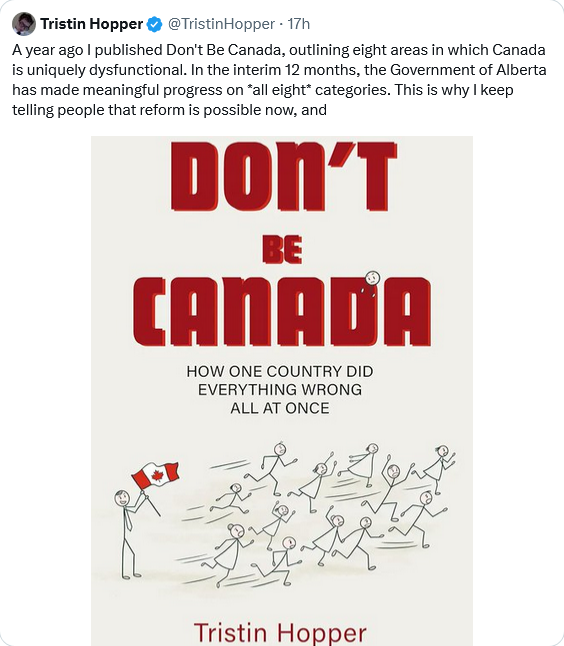
Alberta is the only province moving in the right direction
On the social media site formerly known as Twitter, Martyupnorth responds to Tristin Hopper’s post about Don’t Be Canada: How One Country Did Everything Wrong All At Once, which he published a year ago:
Here is a one-line summary of each of Tristin’s 8 points:
Housing crisis: Canada pioneered turning entire cities into over-leveraged real estate bubbles, driving home ownership out of reach for ordinary people because prices detached from wages.
Crime and justice: Soft-on-crime policies, catch-and-release bail, and activist courts created a revolving door for repeat offenders, leaving our streets unsafe.
Harm reduction & drugs: “Safe supply” and decriminalization experiments escalated addiction and public drug use, worsening overdoses, tent cities, and societal harm instead of reducing it.
Euthanasia (MAiD): Canada rapidly expanded medical assistance in dying into one of the world’s most aggressive programs, with soaring death numbers and cases pushing it as a tratement for poverty and disability.
Healthcare system: Despite high spending, Canada’s “free” system ranks near the bottom in performance among developed nations, with deadly wait times and dysfunction.
Transgender policies: Canada went further than most countries with permissive rules on youth transitions, pronouns, biological males in female spaces, and related ideology in schools and institutions.
Identity politics and “anti-racism”: Canada outdid even the U.S. in embracing divisive oppressed frameworks, including declaring itself guilty of an ongoing “genocide” against Indigenous people with little accountability.
Censorship and speech laws: Expansive hate speech rules, online content takedowns, and bills like the Online Harms Act pushed Canada toward Orwellian restrictions, chilling expression and drawing international warnings.
Canada took progressive ideas further and faster than peers, almost always with cascading negative consequences, turning a once-stable nation into a totally dysfunctional one.
He’s right in saying that Danielle Smith is the only one finally acknowledging that things aren’t working, and is trying to reverse some of these pad idea.
It’s still not enough to save Alberta, we need to divorce ourselves from the rest of Canada and their bad ideas.
April 4, 2026
Be on the lookout for “toxic confidence”
Freddie deBoer disagrees with a recent New York Times piece which proclaims that “toxic confidence” is the current psychological tic of choice:
[…] But then, the whole theatrical embrace of imposter syndrome wasn’t really about a sincere belief that they didn’t belong in the program, that they had gotten in through some mistake. It was, instead, an expression of a very weird element of Millennial culture, which is the embrace of insecurity as a means of belonging.
Which brings me to Savannah Sobrevilla and her recent trend piece, destined to be a New York Times classic, “Toxic Confidence Has Taken Over”. You can already guess the argument here, but I’ll give you the nut anyway:
… it used to be that “impostor syndrome” dominated conversations, the anxious stance of millennials with adult responsibilities and women leading corporate workplaces trying not to rankle. Even if you felt deserving of accolades, the social graces of the time required the expression of modesty.
Now, in an era of aggressively handsome incels and macho political posturing, cultivated humility feels trite. A younger generation, coming out of high school and college in Covid lockdown, feels less beholden to dampening their light. Who has time for affected meekness when playing the braggart not only tickles the soul, but has the potential to convince others of one’s own greatness?
The phrase itself, “toxic confidence”, is doing a lot of work in this essay, and I can just imagine an NYT editor reading the pitch, seeing that phrase, and salivating. But there’s not a lot there, really. Strip away the arch tone and the carefully curated examples (reality-television grifters, Trump-administration blusterers) and what you’re left with is a fairly straightforward complaint: some people believe in themselves too much, and it’s making a certain kind of person uncomfortable. Of course, there’s always been braggarts and narcissists and perennially self-impressed people around us, in any era, and that they’re annoying is not generally considered newsworthy. What makes this a classic NYT trend piece is that it makes an observation that’s comprehensible only to a certain strata of reader — middle aged or younger, culturally savvy, educated, urban in ethos if not necessarily in geography, too online. These people aren’t experiencing the age-old frustration with the conventionally overconfident, but are facing (if Sobrevilla is to be believed) the demise of a recent generational embrace of performative insecurity, which makes them uncomfortable. That discomfort is worth examining, because it reveals less about a cultural pathology than about whose neuroses we’ve decided to normalize.
As usual, I blame my own generation. For roughly fifteen years, Millennial culture ran a remarkable experiment: it rebranded anxiety, self-doubt, and chronic insecurity as virtues. This is certainly connected to the phenomenon of illness as identity and disorder as fashion I’m always complaining about […] but is, I think, a distinct phenomenon, the rearrangement of healthy confidence into pathology and pathological self-doubt into virtue. The weird affordances of social media gave certain culturally and socially influential people the ability to imprint their own neuroses onto the wider culture, recasting that neuroses as a sort of down-to-earth norm. In that context, impostor syndrome ceased to be something to overcome and became a membership card. Everybody started bragging about their social anxiety; people gleefully declared their FOGO; “I’m the worst”, said with the right ironic lilt, became fodder for bonding. Vulnerability, performed on cue, was currency. The implicit agreement was powerful and, when you examine it, fairly cruel: if you seemed too assured, too unbothered by your own inadequacy, you were either deluded or dangerous. The rules had been rewritten by indoor kids, the chronic overthinkers, the people who had built entire identities around their relationship with self-doubt, and the rules said confidence was suspect.
What Sobrevilla calls “toxic confidence” is largely just the renegotiation of those rules, an attempt to cast an incipient reclamation of basic, uncomplicated self-assurance as some sort of aggressive masculinist cult. A couple of examples that Sobrevilla calls out specifically include Olympic free skier Eileen Gu and actor Timothée Chalamet; I’m afraid these examples just make Sobrevilla seem afraid of excellence. When Gu — an Olympic gold medalist, a celebrity, a Stanford student, and a burgeoning entrepreneur — says that being inside her own head is “not a bad place to be”, that isn’t pathology; it’s the statement of a young woman who has done the work and is honest about it. (And wouldn’t we prefer for everyone to feel like insider their own head is a nice place to be?) Maybe Gu is a genuinely awful human being, I don’t know, but nothing Sobrevilla references rises to the level of narcissism or whatever other pseudo-medical accusation we’re throwing around these days. I find Chalamet a little aggravating, but when he says that he aspires to be considered among the great actors of his time, when all is said and done, that’s not a statement of Trumpian bellicosity but instead a reflection of honest, healthy ambition. We’ve been so conditioned to expect performative self-deprecation that accurate self-assessment reads as arrogance.
Artemis II – later than hoped, but better now than never
CDR Salamander goes fullbore (because it’s Friday, and that’s what he normally does on a Friday):
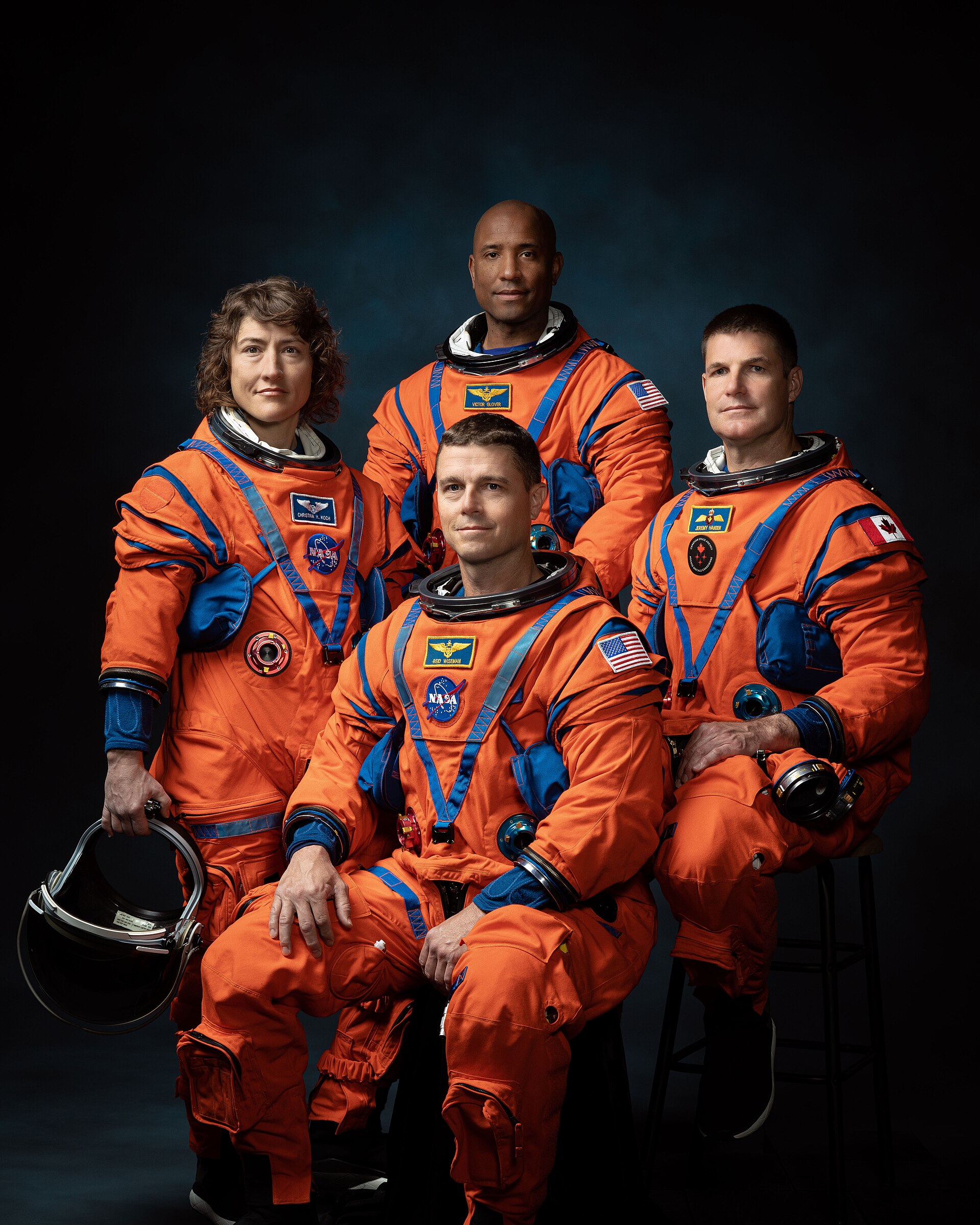
Official crew portrait for Artemis II, from left: NASA Astronauts Christina Koch, Victor Glover, Reid Wiseman, Canadian Space Agency Astronaut Jeremy Hansen.
Photo by Josh Valcarcel for NASA
I grew up with the Apollo Program and some of my earliest memories were watching astronauts during the lunar landings. You could see the Saturn V launches from my backyard.
Just as I was getting old enough to really enjoy it, it all stopped.
The 1970s.
The worst people for the worst reasons killed the space program as it became part of the national malaise of the 1970s, the core of which was defined by the period from the last person on the moon in 1972 through the fall of Saigon three years later, and bookended by the Iranian hostage crisis of 1979-80.
For those who received the promise of 1968’s 2001: A Space Odyssey as to what the future in space would be never fulfilled, we tried to get excited by partial measures — Skylab; the Space Shuttle and its disasters; the downgrading of Reagan’s Space Station Freedom into the “Model UN in space”, the International Space Station; and the lingering malaise and distraction that we endured during the Clinton and Obama administrations.
Here we are 53 years later, and at last we are reaching for the moon again. We never should have left.
[…]
And so North America—three Americans and a Canadian—is heading to the moon.
Back at last.
The Commander Reid Wiseman, is a U.S. Navy Captain and former F-14 driver. The Pilot is another U.S. Navy Captain, Victor Glover, though he was a F/A-18 bubba.
Navy wins again!
Mission Specialist Christina Koch comes from a great ACC school, and for comic relief, we have our Canadian Mission Specialist, Jeremy Hansen, the only one who is on their first space flight.
Somewhere there are plenty of young men and women who, I hope, are watching as my generation did, the best of mankind again reaching out.
Let’s not let the momentum stop this time. Keep pushing out. It is what our species does best, and it brings the best out of us.
April 3, 2026
“Rocket launches are America at its best”
Jen Gerson on the Artemis II launch on April 1st:
Artemis II launch, 1 April, 2026
NASA imageI’m not The Line‘s resident space dork; and, yet, I, like everyone likely reading this piece, watched the launch of Artemis II last night, enraptured and hopeful for a successful slingshot around the moon.
My son watched with me, he counted down from 10, and he jumped up when the rockets lit up, throwing four astronauts in a tin can into space.
This stuff is cool on its own merit, but it hits us all somewhere a little deeper than mere wonder at the extraordinary mechanics.
Watching a manned rocket launch is the barest little window-crack opening into a distant future. It’s a monumental effort to throw a fine fishing line into the darkness, hoping against hope that some great destiny is on the other side just waiting for us to tug at it.
By all rational accounts space travel is dumb. It’s an extraordinarily expensive use of human capital and time and resources to reach into nothingness and expanse. We all love pictures of stars and planets and nebulae, but we may never glean much of real material value from these investments in our own lifetimes. Or our great-grandchildren’s lifetimes.
There may be nothing but lifeless rock and death beyond our own ecosystem; no other place we will ever call home.
In fact, from where we sit today, that’s probably true.
Yet we do this stupid thing anyway. We must do the stupid thing anyway.
[…]
Rocket launches are America at its best, and perhaps now more than usual, we need to remind ourselves that this best still exists. Perhaps especially on the same night we sat fearing the President would announce that NATO was over and the world was breaking. (He didn’t, and I guess it’s not for now.)
And regardless of what nation we belong to, whether we’re accountants, butlers, or mothers, every single one of us carries that thin thread of life forward. We all take part in the project. We all have a place. Some of the big roles may be assigned to individual players, but the destiny of humanity is shared. (Whether we like it or not.)
So, we can all be moved together in these moments. We can all imagine what great-great-great grandchildren who have long forgotten our own names might think while watching archival footage of the Artemis II launch. What even greater world might they achieve. What more fanciful ambitions might be open to them. Maybe they will say that this was the moment we started to get our priorities right and our acts together. Maybe things will get better.
Maybe Artemis II, absurd and wasteful, is neither. Who knows how my son will metabolize the video stream of this really cool rocket; I cannot say who he may come to be for witnessing it.
Our craziest aspirations are the way we send our love to the children too far distant for us to see or know.

For my own part, I caught the space bug very early through science fiction of the 1950s and 60s, especially from the writings of Robert Heinlein and Arthur C. Clarke. Earth is just our starting point, and one planet isn’t enough to ensure the survival of our species, so exploring space is an evolutionary necessity.
April 2, 2026
Modern-day serial killers are called “Doctor”
At Science is not the answer, William M. Briggs explains why these are the long-foretold “hard times”:
Poor John Wayne Gacy. Reports are that the infamous mass murderer was looking up from his perch in Hell, musing about the more than thirty people he raped, tortured, then butchered and said “I was born too early”.
He was right.
If he had only waited a few short years to begin his horror spree, not only would he not have been arrested and executed, he would have received glowing tributes, warm praise from his colleagues, and he would have been paid by the state for every person he killed. And he would have had a much, much higher score than a mere 33 (official count).
Tale the case of modern-day born-on-time serial killer Dr — doctor, doctor — Ellen Wiebe. She beats Gacy’s score by more than ten times. She is credited with slaughtering over 500 people in Canada’s MAiD program. As impressive as that tally is, it is incomplete. It doesn’t count the lives inside would-be mothers she ended, for she is also an abortionist. And she is still going strong, cheered on by the Canadian government. By the time she is done, Mao himself will be envious of her feats.
That its own government joyfully starts killing off its own people proves Canadian civilization has exhausted itself. It, and a great many other civilizations, are experiencing the last phase of the ancient cycle: hard men make good times, good times make soft men, soft men make hard times. The hard times are just coming upon them, and us, created by the good times the remarkable lives of our predecessors created for us.
There are small cycles and large. Small versions of this litany are always playing out: in individual lives, in select localities, in nations. These are easy to see. But there are also larger waves, harder to spot because they are so encompassing. They are global in scope and span eras. This is why even when riding down a Great Wave toward an abyss, it can seem, and be, for a time and in a place things are improving.
Our lives are short, we see most things only with immediacy; we extrapolate too easily, and we expect matters will play out in Hollywood time, as it were. The fault is expected because when history is presented it is foreshortened. Events which took centuries are completed in pages. It is almost impossible to put ourselves in the position of a man who lived in the latter stages of the Roman empire, who lived his entire life in reasonable enough times, and who didn’t see the end coming.
It is a great mistake to view the litany wholly, or even largely, in material terms. Certainly cushy living makes for sloth and fat men. But we are also spiritual (rational) creatures. When the bulk of our ideas are given to us in packaged “education”, and we don’t have to work from them, we are cursed by easy thinking, intellectual malaise. It’s true the West has largely given up Christianity, its ideas stale and uninspiring to most. But in the East it is the same. The great hope of Science has paled. Our customary motivating forces are no longer motivating, the great old visions no longer forceful as they once were. Largely. There are many local exceptions. But they are just that: exceptions.
We recall Emil Cioran, who said, “Every exhausted civilization awaits its barbarian, and every barbarian awaits his demon”. Our barbarians are no longer awaited (we are their demons). Rulers in the West are inviting them in. And making it a crime, in many places, to oppose the inflow. Such is their ardor to have strangers among us, it is hard not to argue that these rulers want to be put out of their misery.
April 1, 2026
“Facilitated Communication (FC) is a discredited technique that should not be used”
Perhaps it’s just me, but I read Freddie deBoer‘s refutation of Facilitated Communication with a kind of rising horror, that a parent or trusted adult could so take advantage of a disabled person to commit this kind of fraud:
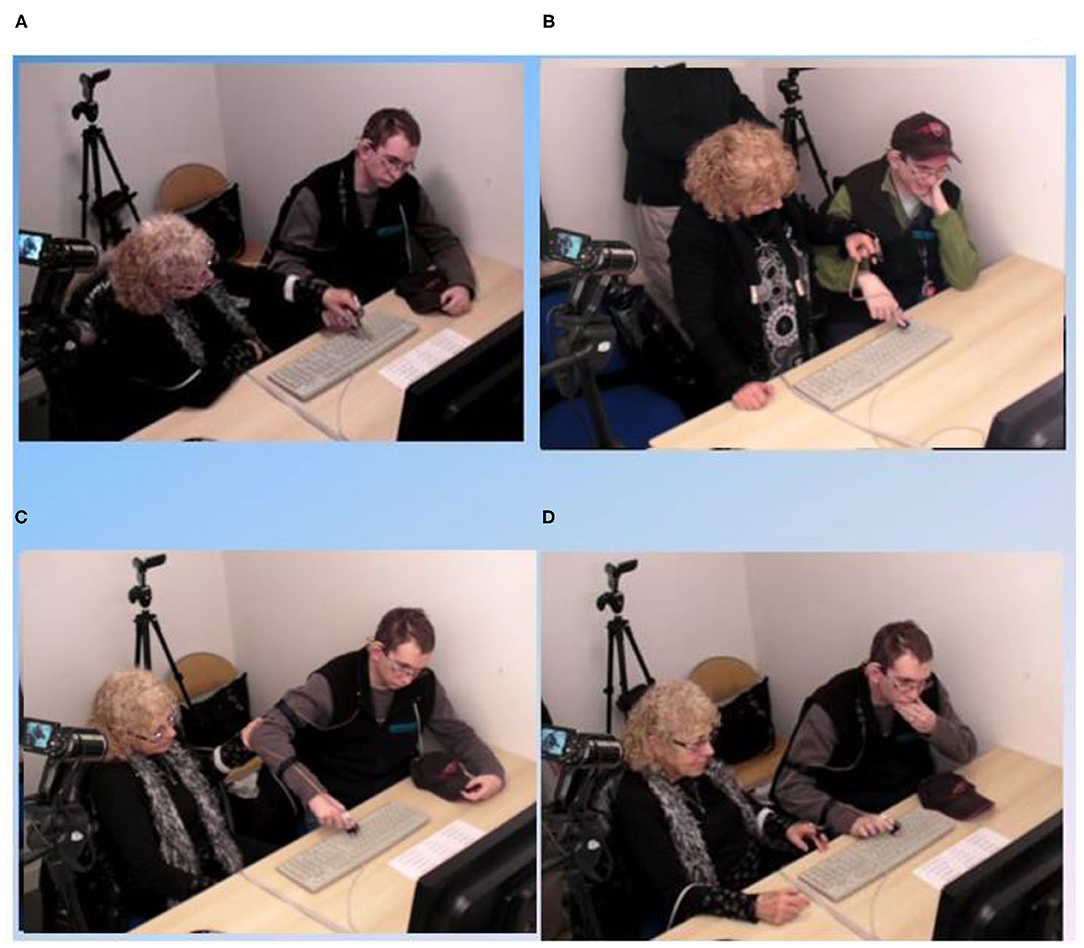
“Facilitated Communication” by Faure P, Legou T and Gepner B is licensed under CC BY-SA 4.0 

 .
.
Stop me if you’ve heard this one before: The New York Times has again casually endorsed facilitated communication, or FC, a relentlessly-discredited practice that plays on the desperation and credulousness of parents of severely disabled children. As in the past, they’ve done this while barely seeming to understand that they’re doing something controversial at all. The culprit this time is a review of the new novel Upward Bound “by” Woody Brown, a man with severe autism who has been nonverbal his entire life and dictated his book through FC, which is also the means through which he earned a masters degree and other remarkable feats. Brown, like so many others who have been “saved” through FC, was found to have all manner of remarkable intellectual abilities once someone else was “facilitating” his communication.
The review describes Brown “tapping letters on a board” while his mother interprets and voices the words. That is the textbook structure of FC: a disabled person who cannot otherwise communicate produces output while a facilitator mediates, guides, or stabilizes the process. Or so proponents claim. Without the facilitator, the disabled person is mute; with their guidance, they suddenly become remarkably verbally proficient, often learned and verbose. If you’re new to the FC debate, you should trust your skepticism: the fact that the mother has to be present and participating, the fact that Brown cannot manipulate the board without the mother’s involvement, the fact that he has never been subject to rigorous research that involves “message-passing” or “double-blind” tests … This is the inconvenient, damning reality.
Message passing, or double-blind, tests are simple and remarkably effective. Information is provided to both the disabled person and the facilitator, often in the form of pictures or individual words, with both the facilitator and the test subject receiving the same information some times and discordant information other times. That is to say, the disabled person and the facilitator will sometimes both be shown a star or a watermelon or a flower or a bird, while at other times one might get the star picture while the other gets the bird, etc. If the disabled person genuinely crafts their responses, this should be a trivially easy test to pass: the facilitated communication will produce the information that the disabled subject received. And yet very close to literally 100% of the time in rigorous research, across dozens of studies with thousands of combined attempts, interactions produce the information the facilitator received and not the information the disabled person received. Surveying the literature, the consistency of this finding is remarkable — and there is no coherent explanation for how this could happen if indeed FC results in messages being sent from a conscious and alert test subject. Instead, these findings are perfectly consistent with Occam’s razor and the assumption that the facilitator is the one speaking.
Thanks to this overwhelming body of research literature, professional societies have tended to be unusually blunt about FC. The American Speech-Language-Hearing Association, the leading professional body in this field, states unequivocally: “Facilitated Communication (FC) is a discredited technique that should not be used”. It continues: “There is no scientific evidence of the validity of FC, and there is extensive scientific evidence … that messages are authored by the ‘facilitator’ rather than the person with a disability”. This is not a marginal view; it reflects decades of careful studies across multiple countries. There are many other statements from relevant medical organizations and expert bodies that reach the same conclusion, which is to be expected, considering that the evidence points in only one direction. Are the facilitators deliberately engaging in fraud? No, it’s very likely that they’re being sincere, at least in the large majority of cases. The explanation is the ideomotor effect, the same unconscious motor influence that drives Ouija boards. The facilitator is not deliberately faking communication but unknowingly producing it, usually to satisfy their own desperate longing to connect with the disabled person.
So how did we get here? I guess the Times feels like it’s fine to smuggle in flagrant pseudoscience under the guise of a book review. Hey, it’s just a book review! But I’m afraid that claims of fact that appear in the paper’s pages are the paper’s responsibility, and this review represents a profound journalistic failure. The review treats FC as valid, when in fact FC has been exhaustively discredited for decades. In doing so, it does something worse than merely misinform; it participates in a harmful fiction that exploits vulnerable families and misrepresents disabled individuals. As I’ve said before, this issue is difficult to address in part because the families who fall for FC are so sympathetic. And the FC community goes to great lengths to enable this form of wishful thinking; they’ve created a number of superficially-different approaches to avoid scrutiny and defy the debunkings of the past, including avoiding the term “facilitated communication” itself. They now tend endorse tools like letter boards and techniques like “spelling”, which they claim are fundamentally different. But it’s all still FC, all still a matter of a verbal and cognitively-unimpaired adult “interpreting” the language of a severely disabled person and producing language that they’re consistently and conspicuously incapable of producing on their own.
March 30, 2026
QotD: The Revenge of the Archaeologists
It is thus relevant that over the past half-century or so, it has so happened that effectively all ancient historians have had to develop a strong grasp of archaeological data; we don’t all necessarily learn to do the excavation work, of course (that’s what archaeologists do), but pretty much all ancient historians at this point are going to have to be able to read a site or artifact report as well as have a good theoretical grasp of what kinds of questions archaeology can be used to answer and how it can be used to answer those questions. This happened in ancient history in particular for two reasons: first, archaeology was a field effectively invented to better understand the classical past (which is now of course also used to understand the past in other periods and places) so it has been at work the longest there, but also because the sources for ancient history are so few. As I like to say, the problem for the modern historian is taking a sip of meaning from the fire-hose of evidence they have; but the challenge of an ancient historian is finding water in the desert. Archaeological data was a sudden, working well in that desert and much of the last two decades of ancient history has been built around it. Other fields of history are still processing their much larger quantity of texts; why dig so deep a well when you live next to a running river?
The result, in ancient history, has been what I tend to refer to as “the revenge of the archaeologists”. Not, mind you, revenge on medievalists, but in fact revenge on a very specific ancient historian and classicist, Moses Finley. Moses Finley was, from the 1950s to the 1980s, one of the most prominent classicists and his work touched on many fields, including the study of the ancient economy. Finley, writing in the 1960s was generally skeptical of the ability of archaeology to provide useful answers about the ancient economy (he preferred to understand the question by probing the mentalities of the Greek and Roman elite). Archaeology, Finley thought, was frequently over-interpreted and could never give a representative sample anyway; as he quipped in his 1965 article “Technical Innovation and Economic Progress in the Ancient World”, “we are too often victims of that great curse of archaeology, the indestructibility of pots”, a line for which, as far as I can tell, he is still quite unforgiven by some archaeologists.
As if in response, the archaeologists have spent the subsequent almost-six-decades proving again and again the tremendous value of their discipline by, among other things, utterly burying Finley’s The Ancient Economy (1973) under a mountain of archaeological data. It turns out the mentalités of aristocrats who largely hated merchants were not a good barometer of the activities of those merchants.
But you may now guess how this is going to play out in the discussion of Late Antiquity. The ancient historians come to the question ready to think in archaeological terms and ask what archaeological data can do to clear up these questions. Scholars of Late Antiquity trained as medievalists on the other hand, may or may not be well versed in archaeological methods or data (to be clear, some medievalists very much are versed, including prominent voices on the “change and continuity” side of this debate! But it is also very possible to be a “pure text” medievalist in a way that I don’t think I know a “pure text” ancient historian younger than sixty) because their field has not been forced, by dint of the paucity of sources, to revolve so heavily around archaeological data and because the archaeological data on the Middle Ages is not yet as voluminous as that on Classical Antiquity.
As I noted in the first post, beginning in the 1970s, what James O’Donnell calls the “reformation in Late Antique studies” launched a long overdue reassessment of Late Antiquity and the impact of the Fall of Rome – what we’ve called the “change and continuity” argument. I bring up all of this to note that the “counter-reformation” – what we’re calling the “decline and fall” argument – that really emerges beginning in the 90s is in many ways an extension of the “revenge of the archaeologists” in Classical studies (and especially the ancient economy) into the field of Late Antiquity. Indeed some of the scholars are the same (e.g. Willem Jongman) and many of them enter the debate on Late Antiquity as an extension of the debate about the Roman economy (in part demanding that “change and continuity” Late Antique scholars acknowledge things now generally considered “proved” by ancient historians about the earlier Roman economy).
In my own experience, particularly in more informal conversations, the methodological difference that interaction creates between ancient historians – for whom it has long been almost entirely settled that in a “fight” between archaeological evidence and effectively any other kind, the archaeological evidence “wins” – and medievalists for whom archaeology is a much less central part of their method (in part because their textual sources are more extensive) can lead to situations where the two sides of the debate talk past each other.
But when it comes to questions of demographics, economics and the conditions of life for the sort of people who rarely figure in our sources, archaeological evidence – although it is often incomplete and hard to interpret – offers the possibility of decisive answers to questions that otherwise would have to live entirely within the realm of speculation.
Bret Devereaux, “Collections: Rome: Decline and Fall? Part III: Things”, A Collection of Unmitigated Pedantry, 2022-02-11.
March 29, 2026
Women’s highly specific expectations for males showing emotion
An older post from Rohan Ghostwind but still fully relevant:
… or, why they have such a hard time sharing their feelings, the same way that women do.
Biological reasons aside, for most men, the answer to this is obvious: They’ve attempted to open up to someone in the past, and had it backfire so spectacularly that they realized they should probably never do it again.
Specifically, a lot of young men realize that in order to be a functional participant in society, it requires them to regularly stuff down their emotions and carry on with the tasks of their daily lives.
Much of the rhetoric around wanting more emotionally vulnerable men therefore comes across as vacuous, because many men subconsciously realize that people (both men and women) only want these emotions at specific times, and in specific contexts.
Women want to see the man who cries at the end of the Disney movie, not the man who’s so depressed that he’s in bed for 18 hours a day. Obviously this is an extreme case, but it’s something that pretty much every man has experienced to some degree or another.
But this hides the fact that women themselves are just as responsible for creating this incentive structure, if not more. For as much as women want a guy who opens up and shares his feelings, this usually comes after the man has developed some degree of competency in all the other relevant domains of life — education, career, finances, looks, etc.
Again, many men have to learn this lesson the hard way; they have indeed attempted to open up, only to find that it hurt their relationship prospects, or otherwise made them less attractive to women. As such, he realizes he has to “win” the game of the patriarchy before he’s given the opportunity of subverting the rules of the game.
In other words, emotions are reserved for the elite — for the rest of us low human capital™, we need to shut the fuck up and get good at tensorflow and B2B sales before we even think about having a hard time.


March 28, 2026
Noelia Castillo Ramos, RIP
Celina provides the background information you certainly won’t get from skimming the mainstream media’s coverage of the death of twenty-five year old Noelia Castillo Ramos:
This is how broken the West has become. On Thursday, March 26, 2026, in a clinically sterile room within an assisted living facility in Barcelona, Spain, the government executed a twenty five year old paralysed rape victim. Her name was Noelia Castillo Ramos.1 Noelia did not die of a terminal illness, nor did she pass away from natural causes. Rather, she was administered a lethal injection by the Spanish state that had dismantled her family, forced her into a hostile and horribly dangerous environment, ignored her horrific violation, and ultimately deemed her broken existence too inconvenient to maintain.2
A still from Noelia Castillo’s Antena 3 interview on March 24.
While Noelia Castillo’s heart was stopped by a cocktail of state-sponsored chemicals, the unvetted migrant men who gang-raped her, shattered her mind, and drove her to fling herself from a fifth-floor window continue to walk the streets of Europe, entirely shielded from justice. They faced zero consequences. She faced the death penalty.
These were the last words that her grandmother said to Noelia: “I love you, my girl; someday we will be together again”.
The fate of Noelia Castillo stands as a single almost perfect, undeniable illustration of everything that is broken, evil, and actively suicidal about modern Western society under progressive, woke, open-border, and secular-left governance. Progressive Europe has functionally and legally decided that native European women and girls are a disposable commodity, just collateral damage in the grand suicidal project of multiculturalism.


March 22, 2026
“In 1800, most people worked the land. By 1900, most didn’t. … That’s a psychological earthquake”
On the social media site formerly known as Twitter, L. Wayne Mathison points out just how vast the disruption of normal, traditional lives over less than a century has torn most of us from our historical moorings:
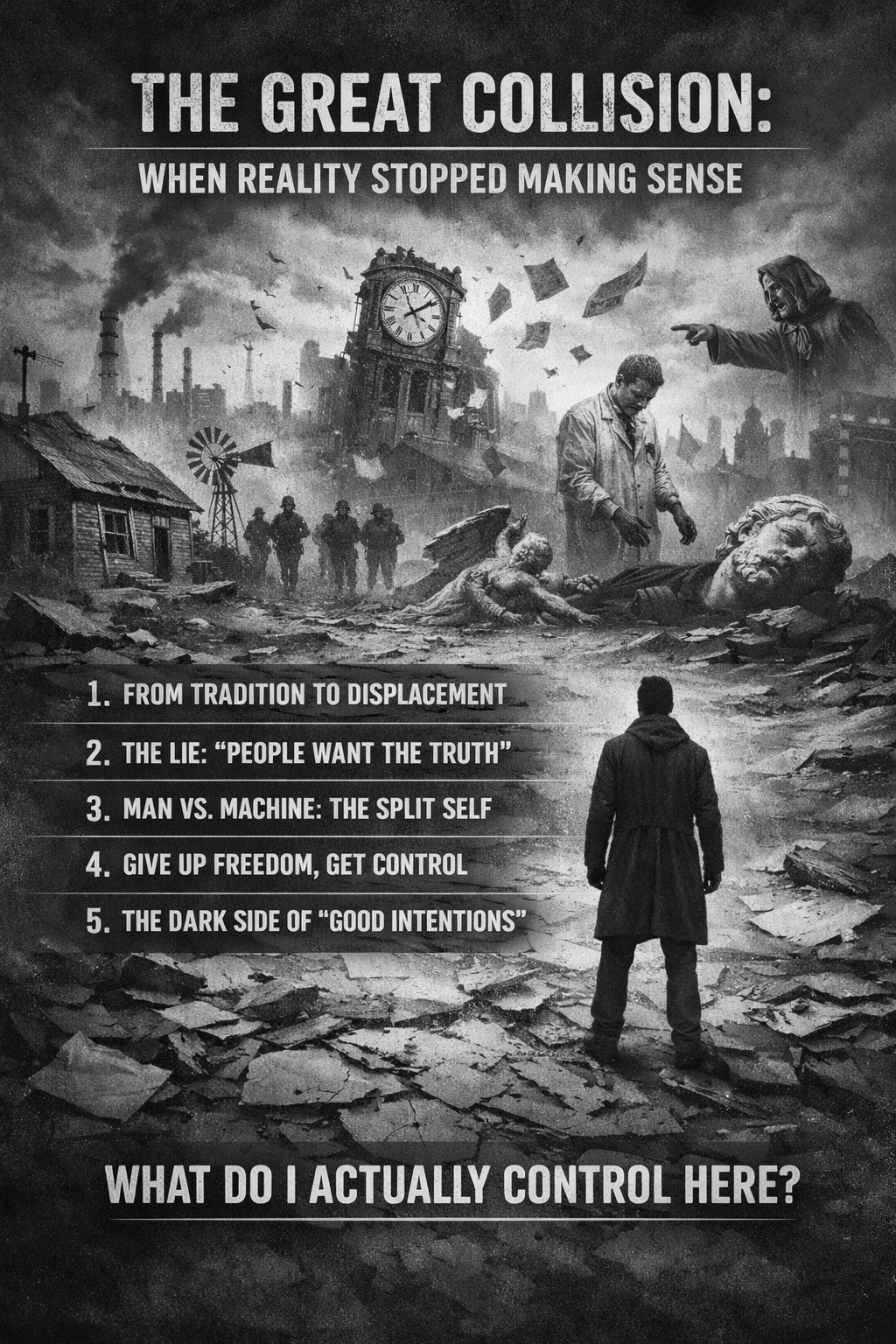
Image generated with AI
The Great Collision: When Reality Stopped Making Sense
For most of human history, life wasn’t confusing. It was hard, yes. Brutal, often. But simple.
You were born into a pattern. You followed it. You died in it.
Then the 20th century showed up like a wrecking ball.
What people call “progress” was really a mass psychological dislocation. We didn’t just move from farms to cities. We lost the structure that told us who we were.
We solved survival. Then immediately created a meaning crisis.
That’s the trade nobody advertises.
1. The Shock: When Life Broke Its Own Pattern
People think industrialization was about better tools. It wasn’t. It was about ripping people out of identity.
In 1800, most people worked the land. By 1900, most didn’t. That’s not a statistic. That’s a psychological earthquake.
Tradition vanished faster than people could adapt. So the state stepped in and did what states always do. Standardize. Educate. Normalize.
Mass schooling didn’t just teach reading. It replaced lost culture with manufactured culture.
Useful? Yes.
Neutral? Not even close.
You don’t remove a thousand-year identity system and expect people to just “figure it out”.
They don’t. They drift.
2. The Lie We Tell Ourselves: “People Want the Truth”
No, they don’t. They want to feel right.
Semmelweis proved it. Doctors were killing women by not washing their hands. When he showed them, they didn’t thank him. They rejected him. Destroyed him.
Why?
Because truth wasn’t the problem. Identity was.
If the facts say “you’re causing harm”, and your identity says “I’m a healer”, most people will reject the facts. Not update the identity.
That’s the Is vs Ought gap in plain terms:
The world is what it is
You believe what should be
When they collide, you protect the beliefNot truth. Belief.
That’s not stupidity. That’s self-preservation.
3. The Split: Are You a Person or a Machine?
Here’s the quiet tension nobody resolves.
You experience yourself as a decision-maker. You choose. You judge. You act.
But science describes you as chemistry and electrical signals.
Both are true. And they don’t fit together cleanly.
The old world said: you are a moral agent.
The modern world says: you are a biological system.
So which one is responsible when something goes wrong?
If you lean too far into “machine”, responsibility disappears.
If you lean too far into “agent”, you ignore constraints.
Most people bounce between the two depending on what excuses them fastest.
4. The Dangerous Shortcut: Let Someone Else Decide
Freedom sounds nice until it demands something from you.
Dostoevsky nailed this. People don’t just want freedom. They want relief from it.
So they trade it. Quietly.
Security, comfort, certainty. Those become the new gods.
And then comes the predictable move. Someone steps in and says:
“I’ll decide what’s good for everyone.”
History has a word for those people. It’s not flattering.
Once you remove any higher standard, the only thing left is preference backed by power.
That’s when things get ugly fast.
5. When “Good Intentions” Go Off the Rails
This is where it usually collapses.
When there’s no fixed standard, people start building their own. Then enforcing it.
George Bernard Shaw is a perfect example. Smart. Influential. Completely untethered.
Once you decide some people are “in the way”, the logic gets dark very quickly.
Not because people are monsters.
Because they think they’re right.
That’s always the justification.
Final Reframe: You Don’t Get Meaning for Free
Here’s the uncomfortable truth.
The old systems that gave people meaning are gone or weakened. They’re not coming back in their original form.
So now you’re left with a choice most people avoid:
Drift and absorb whatever narrative is loudest
Or build your own framework and take responsibility for itThere is no neutral ground.
You’re either shaping your values, or inheriting someone else’s without noticing.
Most people think they’re thinking.
They’re not. They’re echoing.
Simple Stoic Move
Strip it down.
Ask one question:
“What do I actually control here?”
Then act there. Only there.
Everything else is noise.
And right now, there’s a lot of noise.
[NR] – minor formatting added.
QotD: The treason of the scientists
Luca Barbato @lu_zero_
Research is not taking money and then creative-write whatever fits the political faction you align with.And that’s why there are at least some people, that value science a lot, that consider burning down or starve “institutions” the correct first step to amend course.
One of those people is me.
I can still keenly remember my first feelings of crushing disappointment back in the 1980s when I started reading the “scientific” literature on gun policy and realized how utterly fraudulent much of it was.
I had grown up loving The Science, thinking of research scientists as the best of humanity, carrying us forward into a better future with honesty and courage. Discovering that there were people who would violate this sacred trust to push a political agenda hurt me.
But it only started with the gun policy literature. Sociology, psychology, political “science”, climatology. Learning how far the rot had spread was deeply dispiriting to me.
And the worst of it wasn’t even the hacks and partisans. The worst was noticing the cowardice of the people who failed to oppose them. Because that part isn’t just an indictment of the successful activists and manipulators, it’s an indictment of almost all scientists, everywhere.
Which is why I now contemplate rude, ignorant populists proposing to burn down large swathes of research funding and find myself rooting for the populists, not the scientists.
Because the lesson needs to be learned. It’s not just about driving out the hacks and partisans. Scientists, as a culture, need to learn the hard way that cowardice has a price — that if you don’t call out politicization when it’s happening, you don’t deserve the trust of the rest of our society, or the funding and privileges that come with it.
ESR, The social media site formerly known as Twitter, 2025-12-21.
Update, 23 March: Welcome, Instapundit readers! Have a look around at some of my other posts you may find of interest. I send out a daily summary of posts here through my Substack – https://substack.com/@nicholasrusson that you can subscribe to if you’d like to be informed of new posts in the future.
March 12, 2026
Homelessness can’t be solved by just throwing more money at the problem
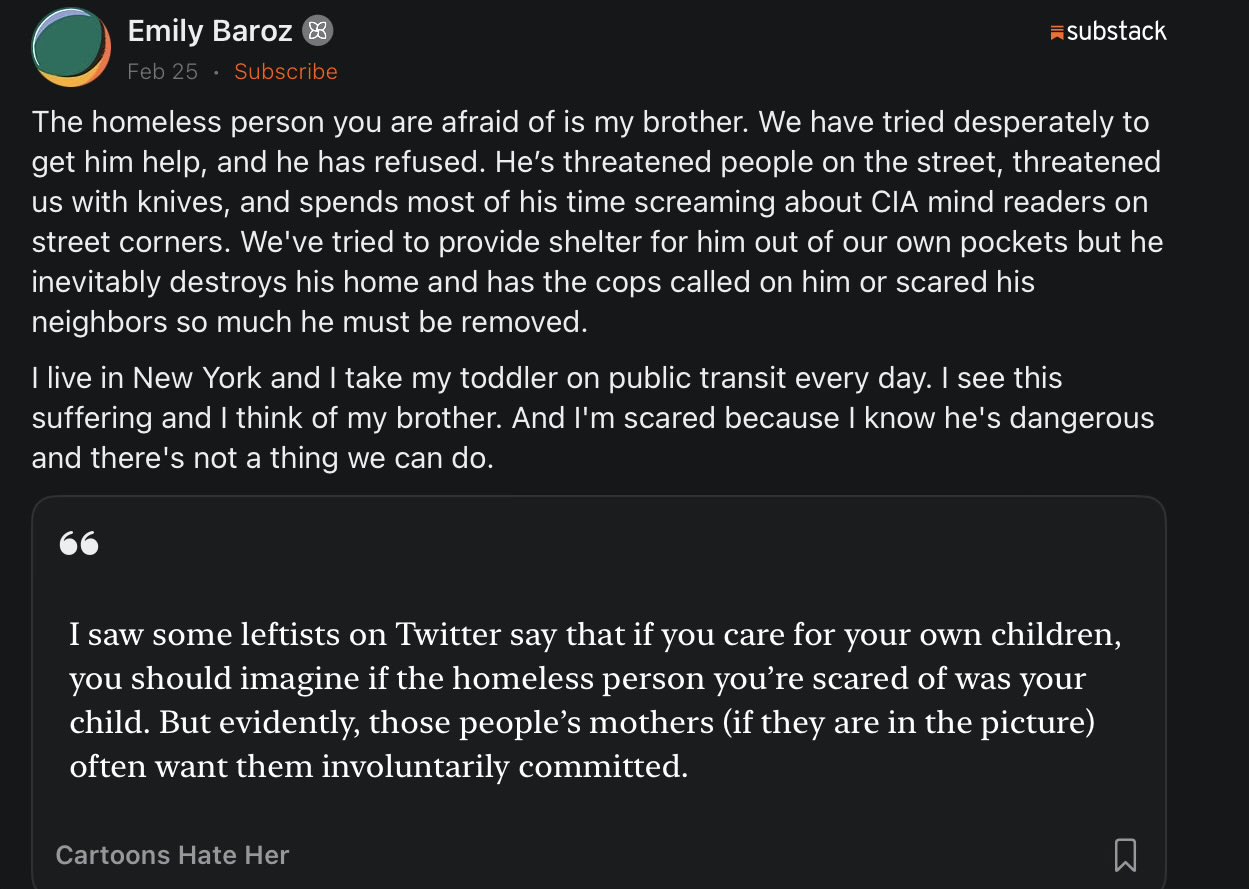
On the social media site formerly known as Twitter, L. Wayne Mathison responds to someone explaining their family’s tragic problem of a homeless relative:
The post hits a nerve because it exposes the part of the homelessness debate people prefer not to talk about.
A lot of the public story says homelessness is mainly about housing and compassion. If we build more units and remove stigma, the problem fades. That sounds humane. The trouble is that it ignores what families dealing with severe addiction and psychosis actually face.
Emily Baroz describes the reality many relatives know too well. The person on the street is often not just poor. They are deeply mentally ill, addicted, paranoid, sometimes violent, and frequently refusing help. Families try everything. Housing. Money. Treatment. Support. The illness itself destroys the ability to cooperate. Meanwhile the legal system often blocks intervention until someone gets hurt.
So the public debate becomes strange theatre. Compassion is defined as leaving the person alone. Authority is treated as cruelty.
That brings us closer to home. Manitoba’s NDP government is now moving toward supervised consumption sites. The argument is harm reduction. The idea is that if people are going to use drugs anyway, the state should at least make it safer.
The problem is that the evidence across Canada is far from comforting. Vancouver, Toronto, and other cities expanded harm-reduction sites over the last decade. Yet overdoses, street disorder, and visible addiction kept rising. Recovery rates did not suddenly surge. In many neighbourhoods the result was more normalization of drug use without a clear path back to stability.
If a policy is supposed to reduce harm, the basic question is simple: are fewer people addicted, dying, or trapped in the street?
If the answer is no, the policy deserves scrutiny.
Safe consumption sites may prevent some immediate overdoses. But they also risk locking people into a long-term cycle where the system manages addiction instead of helping people escape it. Families who are begging for treatment beds, detox spaces, psychiatric care, and recovery programs often watch governments invest more energy in enabling use than in ending it.
That’s the tension people feel but rarely say out loud.
A compassionate society does not abandon people to addiction while calling it care. Compassion sometimes means structured treatment, involuntary intervention when someone is clearly incapable of making rational choices, and serious investment in recovery infrastructure.
Otherwise we are simply managing decline.
And families like the one in that post already know it.
Update, 14 March: Welcome, Instapundit readers! Have a look around at some of my other posts you may find of interest. I send out a daily summary of posts here through my Substack – https://substack.com/@nicholasrusson that you can subscribe to if you’d like to be informed of new posts in the future.
Update, the second: Devon Eriksen had a relevant-to-this-topic aside on a longer post –
One of the most common sources of confusion is “using the wrong word”.
For example, if you have a drug zombie problem, and you call it a “homeless” problem, then you spend a lot of tax money giving houses to drug zombies, who turn them into rat-infested drug dens.
The wrong word implies the wrong understanding.


