Devon Eriksen recently pointed out that today’s Marxists are hostile to space flight and off-world colonization. But in Cold War times, Marxists who ran countries were aggressively futuristic about space, treating it as the empire of their dreams.
What caused this turnaround?
To understand this, it’s helpful that to notice that spaceflight is not the only technology about which Marxist attitudes have done a 180. Nuclear power is another. More generally, where Marxists used to be pro-growth and celebrate industrialization and material progress, they’re now loudly for degrowth and renunciation.
But the history of western Marxism is more interesting than that. Western Marxists flipped to strident anti-futurism in the late 1960s and early 1970s while futurist propaganda in the Communist bloc did not end until its post-1989 collapse.
That 20-year-long disjunct was particularly strong about nuclear power, with the Soviets providing ideological support and funding to the foundation of European Green parties and the US’s anti-nuclear-power movement at the same time as they were pouring resources into nuclearizing their own power grid.
And that’s your clue. Domestic Marxism favored making power cheap and abundant, while their Western proxies pushed to keep it expensive and scarce and preached degrowth rather than expansion. Futurism vs. anti-futurism: why?
We don’t need to theorize about this. Yuri Bezmenov, a former gear in the Soviet propaganda machine, told us the answer starting in the early 1980s. Fewer people listened than should have.
Bezmenov explained that unlike Marxism in the Sino-Soviet bloc, Western Marxism was a mind virus, a memetic weapon designed to weaken and degrade its host societies from within, softening them up for totalitarianism and an eventual Soviet takeover. The West was to be denied power, both in a literal and figurative sense.
Ever wonder why today’s Marxists are so quick to make alliances with radical religious Islamists? This shouldn’t happen. According to Marxist theory, Islamism is a regression to an earlier stage of the dialectic than capitalism, and today’s Marxists ought to fear and hate it as a counter-ideology more than capitalism. But they don’t, because to them Islam is a tool to be used for nihilistic ends.
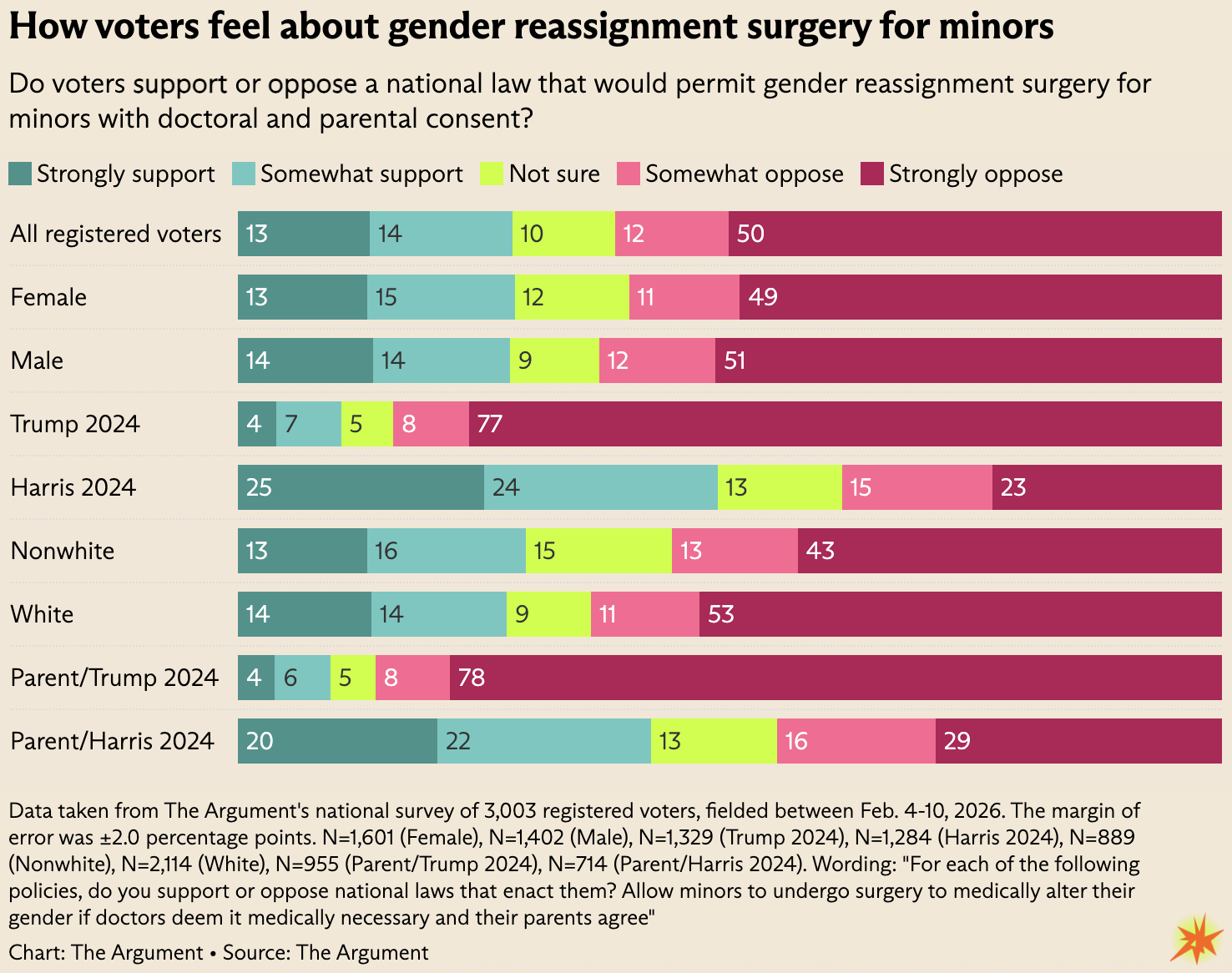
That nihilism is the actual purpose of Western Marxism and all its offshoots, including “woke”. One sign of this is how fervently it embraces the sexual mutilation of children.
The Soviets are gone but their program is still running autonomously in the brains of people who were infected by their Cold-War-era proxies and the successors of those proxies. And that program is nihilism all the way down.
Yuri Bezmenov should have been heeded. There is no simpler theory that fits the observed facts.
Eric S. Raymond, Twitter, 2024-05-14.
July 3, 2025
QotD: Why Marxists turned away from space exploration and colonization
June 30, 2025
June 23, 2025
How Sex in War Breeds Boys – W2W 33
TimeGhost History
Published 22 Jun 2025That prolonged war triggers an increase in male baby births had been ordered since at least 250 years. This “returning soldier effect” happens again during WW2 and right after. How this happens is a mystery, but research in the past decades might provide some answers.
(more…)
June 22, 2025
QotD: “Autism stolen valor”
“Autism stolen valor”. What a concept.
The very concept that anyone would ever claim to be autistic as a status move would have seemed incomprehensibly bizarre to me when I was growing up.
I get it, though. In the intervening decades, somehow a lot of people have developed the notion that anybody above the middle range of IQ must be autistic-spectrum.
It’s not true. I’ve met enough autists, brights and super-brights to know differently. I’ve read a fair bit of the literature on psychometrics and MBD syndromes. And I’ve been a guest for faculty tea at the Institute for Advanced Study, which is very illuminating if you’re even a little bit observant about people.
Here’s what I think I know:
Many autists are seriously damaged and non-functional, to the point where they need to be institutionalized or have semi-institutional special care. Few people outside the mental-health profession know this. The “autists” we encounter in daily life are a selected high-functioning group.
HFAs (high functioning autists) have one advantage over average-IQ neurotypicals: they can really concentrate on things that aren’t social-status games or sexual maneuvers.
Average-IQ neurotypicals can only just barely manage that, so it’s difficult for them to compete with HFAs in fields where you have to be able to concentrate for long periods in order to do decent work.
Like, say, writing software. The upper reaches of software engineering are stiff with HFAs. This has become well known.
This doesn’t mean your typical HFA is actually brighter than a median average-IQ neurotypical. In fact, if you put a whole bunch of HFAs through a psychometric battery you’ll find their average IQ is lower than for neurotypicals, not higher.
HFA is actually a drag on general intelligence that HFAs overcome by being obsessive — grinding really hard on intelligent-people stuff.
The result is that HFAs as a population excel over average-IQ neurotypicals, compete fairly evenly with bright neurotypicals, but top out lower than super-bright neurotypicals do.
This is hard to notice because there are so few super-brights that many people never meet one at all. Very few people have observed enough super-brights to make valid generalizations about them. And of the few people who have a large enough observational sample, still fewer are themselves bright enough to comprehend what they see.
But I have been to faculty tea at the IAS. (I had been an invited speaker that day.)
Most of my friends and peers are people in the tippy-top end of the HFA cohort. Top 1% software engineers and people like that. So at the IAS, people-watching a bunch of Nobel laureates and people bright enough to work with Nobel laureates day-to-day, my jaw dropped open.
Because compared to who I usually hang out with, these people are mostly *normal*. Neurotypical. As near as I can tell, the people in the crowd showing HFA tells are the slow ones.
Imagine if you can being so natively intelligent that even though your brain is constantly trying to distract you into playing monkey socio-sexual status games, you can still think rings around 99.9% of the people in the world.
That’s what actual super-brights are like. They’re not brain-damaged. They’re not obsessive or compulsive or neurotic. They don’t have sensory disabilities. And they leave high-functioning autists in their dust.
Because I know this, I find the concept of people faking being autists amusing. They think they’re positioning themselves as the superior, smartest people. They are hilariously wrong.
Eric S. Raymond, Twitter, 2024-05-27.
June 19, 2025
QotD: Peer review and the replication crisis
But what about the error correction function of peer review? Surely it’s important to ensure that the literature doesn’t fill up with bullshit? Shouldn’t we want our journals to publish only the most reliable, correct information – data analysis you can set your clock by, conclusions as solid as the Earth under your feet, uncertainties quantified to within the nearest fraction of a covariant Markov Chain Monte Carlo-delineated sigma contour?
Well, about that.
The replication crisis has been festering throughout the academic community for the better part of a decade, now. It turns out that a huge part of the scientific literature simply can’t be reproduced. In many cases the works in question are high-impact papers, the sort of work that careers are based on, that lead to million-dollar grants being handed out to laboratories across the world. Indeed, it seems that the most-cited works are also the least likely to be reproduced (there’s a running joke that if something was published in Nature or Science, you know it’s probably wrong). Awkward.
The scientific community has completely failed to draw the obvious conclusion from the replication crisis, which is that peer review doesn’t work at all. Indeed, it may well play a causal role in the replication crisis.
The replication crisis, I should emphasize, is probably not mostly due to deliberate fraud, although there’s certainly some of that. There was a recent scandal involving the connection of amyloid plaques to Alzheimer’s disease which seems to have been entirely fraudulent, and which led to many millions – perhaps billions – of dollars in biomedical research programs being pissed away, to say nothing of the uncountable number of wasted man-hours. There have been many other such scandals, in almost every field you can name, and God alone knows how many are still buried like undiscovered time bombs in the foundations of various sub-fields. Most scientists, however, are not deliberately, consciously deceptive. They try to be honest. But the different models, assumptions, and methods they adopt can lead to wildly divergent results, even when analyzing the same data and testing the same hypothesis. Beyond that, they can also be sloppy. And the sloppiness, compounded across interlinked citation chains in the knowledge network, builds up.
Scientists know quite well that just because something has received the imprimatur of publication in a peer-reviewed journal with a high impact factor doesn’t mean that it’s correct. But while they know this intellectually, it’s very difficult to avoid the operating assumption that if something has passed peer review it’s probably mostly okay, and they’re not inclined to spend valuable time checking everything themselves. After all, they need to publish their own papers – in order to finish their PhD, get that faculty position, or get that next grant – and papers that are just trying to reproduce the results of other papers, that aren’t doing something novel, aren’t very interesting on their own, hence unlikely to be published. So instead of checking carefully yourself, you assume a work is probably reliable, and you use it as an element of your own work, maybe in a small way – taking a number from a table to populate an empty field in your dataset – or maybe in an important way, as a key supporting measurement or fundamental theoretical interpretative framework.
But some of those papers, despite having been peer reviewed, will be wrong, in small ways and large, and those erroneous results will propagate through your own results, possibly leading to your own paper being irretrievably flawed. But then your paper passes peer review, and gets used as the basis for subsequent work. Over time the entire scientific literature comes to resemble a house of cards.
Peer review gives scientists – and the lay public – a false sense of security regarding the soundness of scientific results. It also imposes an additional, and quite unnecessary, barrier to publication. It frequently takes months for a paper to work its way through the review process. A year or more is not unheard of, particularly if a paper is rejected, and the authors must start the whole process anew at a different journal, submitting their work as a grindstone for whatever rusty old axe the new referee is looking to sharpen. Far from ensuring errors are corrected, peer review slows down the error correction process. A bad paper can persist in the literature – being cited by other scientists – for some time, for years, before the refutation finally makes it to print … at which point some (not all) will consider the original paper debunked, and stop citing it (others, not being aware of the debunking, will continue to cite it). But what if the refutation is itself tendentious? The original authors may wish to reply, but their refutation of the refutation must now go through the peer review process as well, and on and on it interminably drags …
As to what is happening behind the scenes, no one – not the public, not other scientists – has any idea. The correspondence between referees and authors is rarely published along with the paper. Whether the review was meticulous or sloppy, whether the referee’s critiques warranted or absurd, is entirely opaque.
In essence, the peer review process slows down the publication duty cycle, thereby slowing down scientific debate, while taking much of that debate behind closed doors, where its quality cannot be evaluated by anyone but the participants.
John Carter, “DIEing Academic Research Budgets”, Postcards from Barsoom, 2025-03-17.
June 10, 2025
The limits of female empathy
Janice Fiamengo discusses the 2006 book Self-Made Man: One Woman’s Year Disguised As A Man by journalist Norah Vincent. Intended as a kind of exposé of male privilege, her investigations turned into something rather different than she originally intended:
Many men are lonely. Many don’t like the work they do. Many are unhappily married. They struggle with an at-times overwhelming sex drive. Their encounters with women, romantic or otherwise, often involve rejection and contradictory tests of their masculinity. They are the objects of blame and bigotry in their societies, yet are expected to remain stoic and put women’s needs first.
It’s a strange world in which the above observations — by a woman — are seen as outstanding insights, but it’s the one we’re in.
In 2006, American journalist Norah Vincent published Self-Made Man: One Woman’s Year Disguised As A Man, an under-cover adventure in which the author, a mannish lesbian with big feet, spent close to 18 months periodically disguised as a man named Ned, notching up about 150 episodes in drag.
With breasts flattened, fake stubble on her chin, and a stuffed jock strap in her pants, having hired a tutor to teach her how to pitch her voice low and move like a man, she set out to “infiltrate exclusive all-male environments and if possible learn their secrets” (p. 18). She joined a bowling league, went on dates, did sales calls, spent some weeks at a monastery, and attended a Robert Bly-influenced men’s wilderness retreat.
Expecting to learn something about male power, she found instead “the hidden pain of masculinity and my own sex’s symbiotic role in it” (p. 254). The planned exposé became a feminist mea culpa.
The book got a lot of attention when it was published, and many men expressed gratitude and appreciation for the empathy and insight in Vincent’s work.
Reading the many accolades, I felt sadness, tenderness, and amazement. Wasn’t this a bit much? Was it really so remarkable that a woman could develop sympathy for the opposite sex?
Most men are so unaccustomed to any empathy from a woman, even when it’s mixed with patronizing descriptions and questionable conclusions, that they respond as if to heroism. The woman who cares, even within circumscribed limits, is catapulted into the company of the saints.
Imagine the reaction if a man had masqueraded as a woman for a year or more, and then pretended to understand women (even sympathetically) using a shop-worn ideological framework? Imagine a white person putting on blackface in order to become an expert, even a well-intentioned one, on the need for black self-improvement? There would be howls of outrage and indignant rebuttals, especially by members of the impersonated group.
Not in Vincent’s case. So rare is a woman’s attempt to understand male experiences that she doesn’t need to be consistently sympathetic or accurate.
Even when someone goes beyond temporary male drag, there is a palpable surprise that mens’ lives are not a well-watered garden of male privilege:
Today, of course, there is still always a reason to look away from men’s pain. Feminist-inclined men and women routinely “bathe in male tears“. They claim that discussing men’s issues is misogynistic, and ask “Can White Men Finally Stop Complaining?” No wonder it seems that the only time men can be heard is when women speak for them.
Notably, women who “transition” to male through hormone treatments and surgery are often shocked by the indifference and unkindness they encounter in public, where men are not eager to help and women expect deference. Zander Keig wrote as a trans man in “Crossing the Divide” of a pronounced sense of aloneness: “No one, outside of family and close friends, is paying any attention to my well-being”.
June 9, 2025
Parenting style choice – “small people who do not yet know very much or … pets who can talk”
I always felt that my son was a person, and did my best to treat him that way while still being his father. I think that was the correct choice, although clearly a lot of other parents choose the other option for their children:

“Happy family cyanotype 2” by simpleinsomnia is licensed under CC BY 2.0 .
There are two views of children — that they are small people who do not yet know very much or that they are pets who can talk. I prefer the former. One implication is that children and parents are, in a fundamental sense, peers. Obviously they are not equal in what they know or what they can do or how strong they are. But they are not different sorts of people in a way that goes beyond that. Children should usually believe their parents about things the parents know much more about but parents should believe children when that asymmetry is reversed, as it sometimes is. The mere fact that one is parent and the other child does not determine which is right and which wrong when they disagree; that is determined, as between adults, by which has better arguments, more evidence.
One implication of treating children as people not pets is that you have to keep promises to them, as to other people. Another is that if you assert something to them you have the same obligation you would have if you said it to an adult to defend it or, if you find you cannot, admit that you can’t.
I once heard an elderly man tell a child who disagreed with him on something that he should never contradict his elders. The statement struck me as not merely wrong but blasphemous. The elder was probably correct on what they disagreed about but the appropriate response is to demonstrate that, at worst decline to argue it, not to imply either that truth is determined by seniority or that it is discourteous to point out errors to a status superior. I am reasonably sure that neither of my parents ever told me to believe something just because they said so or refused to entertain arguments against their views. The son of my first marriage, who spent summers with me and my wife when he was growing up, told a friend that his project for that summer was to get my wife to say “because I told you so.” I doubt that he succeeded.
Treating your children as your peers is easier if you sometimes interact with them in contexts where they demonstrably are at least your equal. I was the first member of our family to play World of Warcraft, so when my wife and our children, then eleven and fourteen, joined the game I was more skilled, had a higher level character, more in-game resources. They improved over time and there was a long period, during which we sometimes played separately, sometimes as a family team, were all on about the same level. By the time I eventually quit the game some years later we all had top level characters and all three of them had become more skilled at the game than I was.
Going back to my childhood, the nearest equivalent that occurs to me is ping-pong. We had a table in the basement on which my father and I played. We equalized the contest with a sliding handicap, a number of points I started each game with. Every time he won the handicap went up, every time I won it went down. Over a period of years, as I got better, the handicap went down, eventually to zero, I think occasionally below zero. The family also played bridge together, there being conveniently four of us.
I spent a lot of time arguing with my father on a wide range of subjects. Someone who met us skiing on Colorado when I was in high school told a friend of mine that we spent all our time arguing and I won half the arguments. I don’t think the latter was true, but if my father won a majority of the arguments he won them fair.
June 6, 2025
Marc Garneau, the first Canadian in space, RIP
The career of Marc Garneau is summarized by Tom Spears for The Line:

Astronaut Marc Garneau, with a camera in hand, floats in the hatchway that leads from Unity to Pressurized Mating Adapter-3 (PMA-3), which leads to Endeavour. Garneau, STS-97 mission specialist representing the Canadian Space Agency (CSA), and his four crew mates went into the International Space Station (ISS) following hatch opening. The photograph was taken with a digital still camera, 8 December 2000.
NASA photo via Wikimedia Commons.
Marc Garneau died Wednesday, at the age of 76. His passing was announced by his wife, Pam, who said that he’d been surrounded by family at the end, and had received excellent care during an unspecified short illness. (Other reports have cited cancer as the ailment.) The news was met with an immediate outpouring of grief from Canadians from across the political spectrum, as befitted a man of his profile and stature.
He had earned that profile gradually over the decades. Back in 1983 Garneau was a young naval officer with a fine pedigree — graduate of Royal Military College, PhD in electrical engineering from Imperial College London — but unknown to most Canadians. Then he joined our country’s first group of astronauts, becoming an instant celebrity.
Even more sudden was his first assignment. He was named to a space shuttle crew that would fly the following year — lightning-fast career advancement, considering he had not yet undergone the usual training as a mission specialist in NASA’s astronaut school.
That vaulted him ahead of many more senior astronauts, and he felt it keenly. He told the Ottawa Citizen years later that he felt his colleagues’ eyes “boring holes in my back” as he walked by them. Crewmate Dave Leestma later recalled how the rookie gained the respect of those around him through quiet competence.
Indeed, Garneau always looked calm, but his mother, Jean, said as he prepared for a second flight in 1996: “There’s a lot of controlled excitement there, and happiness … He figures he’s very, very lucky.”
[…]
“Everybody was always brutally honest about how they screwed up … about how we let the team down,” Garneau says. “If we’re not going to be very honest with each other, if we’re going to find excuses … Nobody tries to evade responsibility.”
Given his background and experience, I wonder how he was able to handle being a member of the Liberal government of the day, where evading responsibility was perhaps their top competency.
June 2, 2025
The progressive case for unlimited immigration
Theophilus Chilton takes on the progressive arguments for bringing in as many “high quality” immigrants as humanly possible from his own professional background:
One of the constants that you can count on in any debate about the value of immigration (of every sort) is the inevitable assertion about the NECESSITY of immigration. Immigrants POWER AMERICA. Without them, NOTHING WOULD HAPPEN! They are ELITE HUMAN CAPITAL without which the White American chuds who did things like build the atom bomb and otherwise created modern technological civilisation would barely be able to keep the lights on in their single-wides. It’s not just that immigrants want a new life or might be useful — they are an absolutely necessity and the ones coming here are the cream of the world’s crop.
As a result, the recent move by Marco Rubio and the State Department to revoke visas from Chinese students in American universities (especially those associated with the CCP or who are in positions to commit especially damaging industrial espionage) will certainly not be well-received by this crowd. For example, witness Alex Nowrasteh, who’s whole schtick is to burble on about “meritocracy” and whine about “affirmative action for White Americans” while filling a useless sinecure at the Cato Institute that he got by being the token immigrant. He is appalled that we’d act in our own national interest rather than in the interests of a bunch of random foreigners.
Many people who know me on X already know this, but most readers here may not. Before I made a radical life-changing vocational choice a few years ago, I used to be a scientist in Big Pharma. For a little over two decades, I worked in the biotech/biopharma industry, covering a wide range of drug development stages and product types. I’ve developed vaccines (which is why I was skeptical about the Covid vaxx from the very beginning). I’ve developed small molecule drugs. I helped to bring to market several of the pharmaceuticals that millions take regularly and which you see advertised on television. I’ve done everything from bench scale analytical work to protein purification on 5000-liter batches used in support of human clinical trials. I’m proficient in literally dozens of different analytical techniques. Before that, in both undergraduate and graduate school, I specialised in synthetic organic small molecule development across a number of different subspecialties. And I’m good at all of this.
One other thing that I did throughout was work side-by-side with, and later manage, LOTS of visa holders and immigrants, especially from “tech heavy” countries like India and China, the stereotypical “H1-Bers”. As a result, I consider myself to be a pretty good judge of the value which visa holders bring to tech fields.
My judgment is, and has been for decades, that their value is minimal and it certainly does not live up to the hype. Indeed, one of the constants that I observed among most Indian, Chinese, and other visa holders was that they did not really, truly understand the science that was involved with the products being developed and the techniques being used to develop and test them. Most of these folks were the living embodiment of cramming to pass the test. When the test methods and the SOPs being employed were straightforward, these folks were great. They had a robot-like efficiency that comes with repetitively doing the same thing over and over and over again. Unfortunately, for anything requiring innovative or independent thinking, they’d be totally lost. If results from a test deviated from expectations and required some commonsense interpretation? That’s where the wheels came off. I mean, there was little to no capacity to deal with anything that wasn’t completely textbook.
Even basic scientific sense was often missing. At one job, there was an Indian guy who would takes dumps in the bathroom and then walk straight out back to his manufacturing suite in the cell line division without even washing his hands. I know this because I observed it for myself several times. I mean, even if you don’t care about getting fecal coliform bacteria all over door handles and whatnot, at least don’t carry them back into the suite where you’re helping to grow batches of genetically engineered E. coli. I assume he was properly gowned before going in, but still, there’s just that basic lack of sense there.
And then there are the ethics (or lack thereof) displayed by many visa holders (especially Chinese and Middle Eastern). Data manipulation, tweaked results, etc. etc. These tend to occur because both of those groups are under intense social pressure within their own cultures to “get the right results” rather than just dealing with the results you get. The “tiger mom” mentality carries over into the workplace. There is a reason for why these two groups are disproportionately overrepresented on the FDA’s debarment list. Indians can be subject to serious lapses in integrity as well, though theirs tend to revolve more around cutting corners and mistreating underlings, as I illustrated in a thread on X about three years ago where I recounted my time working for an Indian-owned company.
Over the years, my observations have been substantiated and reiterated by any number of people in various tech-heavy industry to whom I’ve related them. Whether it’s pharma or IT or medicine or metallurgy or whatever else, the familiar story is told. It’s really, really difficult to reconcile this mass of lived experience with the theoretical assertions made by people like Nowrasteh that immigrants are this valuable resource that we absolutely need to be or remain competitive in world markets.
In effect, the goal with this type of white-collar mass immigration is to “roboticise” tech fields which can’t be given over to AI or actual robotics just yet. The formula is to import masses of workers who can simply follow a script and save companies money on labour costs. If you think about it, this is really a low IQ, high time preference approach by corporations whereby they sacrifice real innovativeness and future competitiveness for short-term savings. I’d argue that the entry of H1-B and other visa holders in large numbers into American tech industries which accelerated around the late 2000s-early 2010s has actually led to a slowdown in real innovation. We may have tons of new apps for our phones, but fewer truly groundbreaking advances in tech across the board.
June 1, 2025
QotD: Robert E. Howard was more accurate with Conan than the historians of his day
This is one of my favorite facts of history that makes me laugh maniacally when I think about it. In some respects, Robert E. Howard’s “Hyborian Age” fantasies of Conan the Barbarian described the late Neolithic and early Bronze Age more accurately than archaeologists and historians managed to during most of the century after the fantasies were published.
(I’m not the first to point this out. Credit goes to Greg Cochran, co-author of “The 10,000 Year Explosion”, on his blog West Hunter.)
How did this happen? Scholars, reacting against 19th century Romanticism (and especially the weird polyp of it that turned into Nazi racial theory) adopted a sort of meta-model of prehistoric civilizations in which they usually evolved peacefully in place, with large-scale migration and warfare being exceptional.
It was only the advent of paleogenetics that shattered this cozy image. We now know that the Cimmerians (the Yamnaya ancestors of modern Europeans) did in fact come storming off the steppes to kill every male in sight and take all the women as sex slaves. We can read the traces of this catastrophe in our chromosomes.
ESR, Twitter, 2025-02-10.
May 31, 2025
QotD: Explaining the science to the non-scientific layperson
There’s a famous video in which Richard Feynman is asked by a BBC journalist if he can explain magnetism to him, and Feynman pauses for a moment and says “no”. The journalist is totally incredulous, and demands to know what Feynman means by that, and the great scientist tells him that he knows so little of the basics, and magnetism is so deep and so tricky,1 that it would be impossible to explain much of anything without either misleading him or giving him a false understanding.
I’ve always thought that nearly all pop science books fall into one version or another of this trap. Either they abandon all attempts at explaining the difficult concept in simple terms, or they simplify and elide so much as to become actively misleading.2 I call the latter horn of the dilemma “string theory is like a taco”-syndrome, and it’s by far the more common failure case. This is because undersimplification makes your audience feel dumb, while oversimplification makes them feel smart, so you sell a lot more books by oversimplifying. Unfortunately the effects on the audience of oversimplification are far more dangerous and insidious. After reading something impenetrable, you at least still know that you don’t really understand it, so there’s still a chance for you to go on and learn it some other way. Reading an oversimplified explanation, however, can fool you into thinking that you now grasp the concept, when in reality all you’ve grasped is a lossy analogy that will lead you astray.
All of which is to say I think it’s pretty impressive how well [author David] Reich does at diving into some of the real statistical meat of his techniques while still making them comprehensible to a smart layman. He has the gift that the greatest scientific expositors possess of being able to communicate in simple terms what it is that makes a problem hard, and then also giving you the broad strokes of an elegant solution to that hard problem. He doesn’t pretend that he hasn’t left anything out, instead he points out exactly where he’s glossed over details, so that you can go back and look them up if you want. This doesn’t sound all that impressive, but it’s actually really freaking hard to pull off, especially in a field that’s new and hence hasn’t been reformulated and recondensed a hundred times until it’s turned into a crystalline version of itself.
Okay, what was your favorite interesting genetic fact that this book taught you about a contemporary population? Mine was definitely that the various Indian jatis are as genetically distinct from one another as the Ashkenazi Jews are from everybody else. Not one group, but hundreds and hundreds of groups, all living in close proximity to each other, have gone millennia with incredibly minimal genetic mixing. How is that possible? It makes me take some of the assertions made by classical Indian texts a little bit more seriously.
Jane Psmith and John Psmith, “JOINT REVIEW: Who We Are and How We Got Here, by David Reich”, Mr. and Mrs. Psmith’s Bookshelf, 2023-05-29.
1. It always bothered me when people ragged on Insane Clown Posse for expressing humility and awe at magnets. In fact their attitude is exactly the appropriate one. Back when ICP were in the news more often, I made a minor hobby of demanding that anybody who made fun of them explain magnets scientifically to me on the spot. Nobody ever succeeded.
2. And sometimes, remarkably, a pop science book manages to make both mistakes at the same time. I’m reminded of Edward Frenkel’s horrible book Love & Math, which is full of passages like: “Think of the Hitchin fibration as a box of donuts, except that there are donuts attached not only to a grid of points in the base of the carton box, but to all points in the base. So we have infinitely many donuts — Homer Simpson would sure love that! It turns out that the mirror dual Hitchin moduli space, the one associated to the Langlands dual group, is also a donut topic/fibration over the same base. Donuts. Is there anything they can’t do?”
May 24, 2025
Forget it, Fraser Institute: as Trudeau explained, there’s no business case for Canadian LNG
In the National Post, Tristin Hopper reports on a recent Fraser Institute study on the benefits of expanding the production of Canadian liquid natural gas, but as the meme might put it, the feds don’t want benefits, they want to eliminate Canadian LNG production:
A new report says that if Canada really wanted to save the climate, the most effective thing it could do would be to sell as much natural gas to Asia as humanly possible.
The 46-page study, published on Thursday by the right-leaning Fraser Institute, is premised on the notion that Canadian natural gas exports could singlehandedly reduce Asian dependence on coal.
If Canada could double its LNG production, write the authors, it would divert enough coal from Asian power plants to stop 630 million tonnes of greenhouse gases per year from entering the Earth’s atmosphere.
For context, that nearly represents Canada’s entire carbon footprint. According to the most recent figures from Environment and Climate Change Canada, the country was responsible for 694 million tonnes of carbon emissions in 2023.
“Instead of focusing on reducing domestic GHG emissions in Canada by implementing various policies that hinder economic growth, governments must shift their focus toward global GHG reductions and help the country cut emissions worldwide,” the report says.
The Fraser Institute’s calculation is based on the simple fact that natural gas is an easy substitute for coal, and can produce the same amount of energy with far lower emissions.
The U.S. Energy Information Administration maintains a ranking of fossil fuels by the quantity of emissions they produce for every one million BTUs (British Thermal Units) — roughly the amount of power needed to heat a standard house for several days.
Generating one million BTUs by burning coal will produce between 93 and 103 kilograms of carbon dioxide. Doing the same with natural gas will produce just 53 kilograms.
Canada currently produces about 17.9 billion cubic feet per day of natural gas. Most of this is consumed domestically, while 39 per cent is exported, mostly to the United States via pipeline.
The Fraser Institute calculated that if Canada could double production and “send the surplus … to Asia”, it could potentially supplant more than 200 million tonnes of coal every year.
May 20, 2025
Joe Biden’s cancer diagnosis
News broke the other day that former President Joe Biden is suffering from a highly advanced cancer and it only reinforces the questions about who was really performing the role of the President during Biden’s term in office:
Well, now it almost isn’t funny anymore.
Here’s the progression of the Democrats’ desperate attempts to shame you out of talking about Joe Biden’s mental and physical health:
“Stop talking about this because it’s not true.”
“Stop talking about this because he’s not the president anymore.”
“Stop talking about this because he has cancer.”You may notice a pattern.
I think it was Andrew Klavan who made me realize the First Commandment of the Democratic Party: Thou shalt STFU. All their gaslighting, shaming, whataboutism, and other dishonest rhetorical techniques are attempts to stop you from talking about whichever lie they’re telling at that particular moment.
Why would they stop at cancer?
A lot of medical professionals are pointing out that a prostate cancer diagnosis doesn’t just come out of the blue like this. It’s easily detectable in blood work, it takes years and years to progress, and it should’ve been detected at his last annual physical.
Even Dr. Ezekiel Emanuel (an oncologist, Rahm’s older brother, and certainly no MAGA-head) says Biden must have learned of this diagnosis many years ago.
If Biden was undergoing cancer treatments during his presidency — remember all those unexplained trips to Delaware? — it would explain a lot of his behavior. “Chemo brain”. And of course he and Jill would keep it under wraps, because it would only strengthen a 25th Amendment challenge.
Who else knew about this, and when did they know it?
And who the hell was performing the duties of the president of the United States for four years?
Keep in mind that Joe Biden loves using his personal tragedies as a Get Out of Jail Free card. We heard it in that just-released Robert Hur audio from October 2023, when Biden deflected a question he didn’t want to answer about his handling of classified documents by complaining that his son Beau died. He couldn’t remember the exact year, but he used it as an excuse anyway.
If he’ll use his dead son, why wouldn’t he use a cancer diagnosis?
eugyppius also notes that such an advanced case can’t have just popped up recently, reinforcing the notion that his term in office was partially or completely a “regency”:
Yesterday evening, Joe Biden’s office announced that the former president had been diagnosed “with an aggressive form of prostate cancer that has spread to his bones“. Biden must have had this cancer for a long time for it to have spread that far, and thus it seems very strange that someone receiving presidential levels of medical care should have been diagnosed only just last week. Many in our circles posit that insiders have known about Biden’s illness for years, but that they have kept his diagnosis and treatment under wraps for political reasons. Among other things, they argue that this explains a July 2022 gaffe in which Biden complained that environmental pollution is “why I and so damn many other people I grew up with have cancer“.1
In fact, I think a simple cover-up is the most harmless possibility here. It’s likely that doctors have diagnosed Biden’s cancer so late because the former president was subject to a high degree of isolation and medical neglect while in office. Perhaps family and close advisers carefully managed Biden’s annual physicals to avoid any inconvenient findings as part of a broader campaign to hide his dementia. Alternatively, it’s possible that signs of cancer were discovered at some point, but that Biden’s inner circle avoided confirming the diagnosis or pursuing treatment. Either way, the late diagnosis and the advanced cancer together suggest that Biden has been left sick and untreated for a long time.
As I wrote last year, Biden’s presidency was an informal and unacknowledged regency. Biden himself did not have the mental capacity to rule on his own, and so a confined circle of close advisers and family effectively directed the actions of the presidential office on his behalf.
Importantly, this regency was not “the White House” or “Biden’s staff” or “the Democratic Party” in general. It was much smaller than all of those things. The regents worked hard to obscure Biden’s dementia from Congress, from large parts of Biden’s own campaign, from the Democratic Party and from many others within Biden’s White House. They ensured that even internal meetings unfolded in highly scripted and predetermined ways, so that cabinet and other officials could not gain a clear idea of Biden’s mental state. They berated and intimidated anyone voicing concern about the president’s health behind the scenes. And they had very simple reasons for doing all of this: If Biden’s dementia were to become common knowledge and not merely an object of private suspicion (however widespread), the regency would be shown up as illegitimate and potentially broken.
Regents exercise power by restricting access to their charge and restricting their charge’s access to information and the outside world. It is thus unsurprising to find that Biden’s regents subjected him to strict social isolation, particularly towards the end of his term …
1. The White House clarified that Biden was referencing his earlier diagnoses for non-melanoma skin cancer.
May 19, 2025
The Roman Empire and climate change
Sebastian Wang considers “what we all know” about the rise and fall of the Roman Empire in the light of more recent research (not all of it politically motivated) into climate change:
Before we get into climate, and for those who tend to the wholly ignorant spectrum of my readers, we need a quick sketch of Roman history. The Empire officially began in 27 BC, when Octavian — better known as Augustus — became the first emperor. It ended in the west in AD 476, when the last western emperor was kicked out. As said, the eastern half, based in Constantinople, carried on for another thousand years.
Broadly, we can divide Roman history as follows:
- 27 BC – AD 180: The golden age. Augustus and his successors took over and further expanded a huge empire. There was peace (mostly), trade flourished, and cities grew. People call it the “Pax Romana“.
- AD 180 – 284: Everything starts to fall apart. This is called the Crisis of the Third Century. Civil wars, foreign invasions, plagues, and economic collapse all hit at once.
- AD 284 – 395: The empire pulls itself together. Emperors like Diocletian and Constantine bring in reforms. But the empire is now divided for administrative convenience — east and west.
- AD 395 – 476: The west goes under. It’s invaded. It’s conquered and broken up. Very quickly, it disappears. Though, once again, a parochial view of history, we call this the Fall of the Roman Empire.
The standard histories still blame bad rulers or too many wars. That’s fair enough. There were some very bad rulers, and the wars without number. But if you look at the climate data — tree rings, ice cores, sediment levels — you start to see another pattern underneath what may be called the political and economic superstructure of Roman history.
When Rome came to greatness, the climate was unusually good. From around 200 BC to AD 150, there was a long phase of stable, warm, and mostly wet conditions. Scientists call this the Roman Climate Optimum. In Egypt, the Nile flooded regularly and well. That meant lots of grain. In the Alps, glaciers shrank. In northern Europe, people were growing grapes in places too cold for vineyards today. In the Middle East, the Dead Sea stayed high, showing good rainfall.
This kind of weather made everything easier. Crops were reliable. Surpluses could be taxed. Cities could be fed. Roads and aqueducts could be built and maintained. And because the army was well supplied, the Empire was protected, and could even continue a modest expansion. But, as McCormick and his team point out, the high phase of Nile flooding correlates exactly with the high point of Roman prosperity — and once those floods became less predictable, problems followed.
The good times came to an end. By the mid-second century, a wave of volcanic eruptions thew great masses of dust into the atmosphere, blocking sunlight. Solar activity dropped. The climate became less stable. Then came the Antonine Plague in AD 166. It probably started in the east and spread quickly. Some think it was smallpox. Whatever it was in terms of microbiology, it was almost certainly brought on by changes in the climate. It may have killed a third of the Empire’s population.
Worse was coming. By AD 200, climate records show more erratic rainfall and cooling. In Gaul and the Balkans, harvests became less predictable. Glaciers began to advance again. Speleothem data from Austrian caves shows sharp shifts in rainfall patterns.
At the same time, the empire started to shake. Between 235 and 284, Rome had over twenty emperors. Most were generals who seized power, then got killed. Civil wars broke out. Trade declined. Foreign tribes pushed harder at the frontiers. Coin hoards — money buried for safety — increased in number. That’s usually a sign of fear and instability. Cities shrank. The economy shrivelled.
Was this all because of climate? No — not wholly. A good definition of historical crank is someone who tries to explain everything in terms of one cause or set of causes. But as McCormick et al. argue, bad weather made everything worse. It weakened agriculture, strained supplies, and made people more likely to panic or rebel. In a world without modern logistics, you couldn’t afford bad harvests two or three years in a row.
The empire buckled in the third century, but didn’t collapse. And its survival probably was an effect of human agency. A line of competent Emperors rose from the army and stabilised the frontiers. This line culminated in the reigns of Diocletian and Constantine, who restructured the Empire. They fixed taxes. They reorganised the army. Constantine built his new capital in the east. His successors found Constantinople safer and more strategically useful than Rome.
This being said, around AD 290, climate records suggest a small rebound. Warmer temperatures and better rainfall returned — especially in the east. That helped the eastern provinces recover faster. They had stronger governments and better infrastructure. But climate helped. Dead Sea levels remained relatively high, which meant steady rain in the Levant.
The west wasn’t so lucky. Italy and parts of Gaul stayed unstable. In Britain, pollen records show that farmland was being abandoned. The archaeology matches this, with fewer building projects and shrinking urban centres. The killing shock for the west came in the fifth century. In Central Asia, a long drought began around AD 370. Steppe tribes like the Huns were hit hard. They migrated west, pushing other tribes like the Goths ahead of them. In AD 376, the Goths crossed the Danube into Roman territory. Two years later, they crushed a Roman army at Adrianople. This all happened in the eastern half. But greater wealth and better leadership allowed the government in Constantinople to push the barbarians west. Over the next century, the western empire was hit again and again.
Meanwhile, the weather got worse. Europe cooled. Rainfall patterns shifted. Flooding and crop failures increased. Volcanic sulphur levels spike in the ice core record from Greenland.
Rome was sacked in AD 410. Again in 455. Finally, in 476, the last western emperor was deposed. That was it. The western Roman Empire was gone.
The east survived. But was hardly untroubled. In AD 536, a huge volcanic eruption darkened skies around the world. The sun barely shone. Crops failed. Famines spread.
A few years later, the Plague of Justinian broke out. It probably started in Egypt and spread through trade routes. Some say it killed half the population in affected areas.
Climate and disease worked together. Hunger weakened people. Infection finished them off. As McCormick et al. put it, the event of 536 and the plague that followed created one of the worst demographic shocks in recorded history.