On Friday, February 20, 1959, 14,000 employees were immediately fired and sent home, after a project they had been working on since 1953, was abruptly cancelled. That project was the military, supersonic, advanced interceptor, the Avro Arrow. The company they worked for, A.V. Roe Canada Limited, had come into being just after the war, with the express purpose of designing and building both commercial and military aircraft in Canada. Its subsidiaries included Avro, responsible for developing and building the platform and Orenda, for developing the engines.
The first project of this new company was the C-102 Jetliner, the first commercial inter-city jet to fly in North America in 1949, and the second [civilian] jet to fly in the world, behind the trans-oceanic British Comet. After being test flown successfully for three years and with potential orders pending, the Jetliner project was cancelled, allegedly in favour of committing all company resources to the development of the military sub-sonic CF-100. The Arrow was to be the successor to the latter, designed to intercept and destroy if need be, incoming supersonic bombers coming across the North Pole, from the then Soviet Union.
The Arrow was a sleek, twin engine, delta winged aircraft embodying many advanced features such as fly-by-wire controls, titanium and magnesium alloys for light weight and resistance to frictional heat, transistorized electronics and an advanced engine, the Iroquois. While some other aircraft may have included some of these advanced features, what made the Arrow unique was that all of them were built into this one singular aircraft.
Adding insult to injury, the five flying preproduction aircraft, including all technical documentation, tooling and jigs and fixtures and others in various stages of assembly, were ordered destroyed. Why was a project being hailed by aviation experts around the world, suddenly cancelled? In the absence of clear facts and in the presence of rumour and innuendo, debates have raged back and forth as to the reasons, sparking a series of myths and misconceptions about the entire affair.
In 1988, the late Canadian historian, Professor Desmond Morton, lamented the fact that he could not obtain any government archival documents on the Arrow, assuming they even existed. Out of interest, I decided to try my own hand in this endeavour. Since then I have uncovered and have had declassified thousands upon thousands of records including many Secret and Top Secret, ranging from memos, reports both scientific and financial, to minutes of meetings and letters. The list includes some from the United States and Great Britain as well.
Those documents which I deemed more critical, I have either quoted from or have reproduced in my books, with full references. Following is a discussion of some of the myths and misconceptions that the documents have helped clarify.
Arrow Destruction
Perhaps one of the most enduring myths is that the destruction of the completed Arrows and all else, was ordered by Prime Minister John Diefenbaker, due to his hatred of the President of A.V. Roe, Crawford Gordon. Alternatively, it has been argued that it was Gordon who had everything destroyed as a spite against the Prime Minister. Neither account is true.
The government records from the Department of National Defence clearly show the order to destroy came from the Minister of National Defence, George R. Pearkes, after receiving that recommendation from Hugh Campbell, Chief of the Air Staff, and after conferring with numerous others including the Deputy Minister of National Defence and the Minister of the Department of Defence Production. The documents contain the signatures of those involved, all of whom would later deny publicly having any knowledge of the destruction, leaving the Prime Minister to be subsequently vilified for it. In fact, the paper trail ends with Minister Pearkes. The matter was not discussed with the Prime Minister at all.
Even today, when the Department decides to dispose of something – it does not matter if it is an aircraft, a tank, a ship or some other equipment – there is no need to seek approval or even advise the Prime Minister as to the manner of its disposal. In fact, all departments dispose of their equipment through an arm of the government. At the time it was called Crown Assets Disposal, but today it is renamed GC Surplus. The name may change yet again.
Palmiro Campagna, “The Avro Arrow: Exploding the Myths and Misconceptions”, Dominion Review, 2025-02-20.
May 25, 2025
QotD: Cancellation of the Avro Arrow and destruction of the prototypes
May 24, 2025
German democracy trembles as the extremely extreme extreme right AfD aren’t going to be banned
eugyppius updates us on the continued shaky state of German democracy, as the scary extremely extreme right Alternative für Deutschland (AfD) party seems to have somehow escaped being banned from participation in politics due to some ridiculous “lack of substantive evidence” excuse:
Last week, a supersecret assessment of Alternative für Deutschland by the Federal Office for the Protection of the Constitution (BfV) leaked to the press. This document was supposed to prove, in excruciating detail, why the AfD are so evil and so fascist and so Nazi and so Hitler, and in this way make a preliminary case for banning the party. In fact its contents turned out to be such an arrant joke that it sapped all remaining momentum within the German political class to prohibit the AfD. I suspect even the “right-wing extremist” classification of the AfD is now in jeopardy and may well be thrown out by the courts, that is how bad this much-heralded supersecret assessment turned out to be.
It took a few days for the full impact of the report’s idiocy to really sink in. That’s how it is with really stupid things – the incredulity they inspire must first dissipate. Finally, though, on Tuesday of this week, Interior Minister Alexander Dobrindt announced that the dubious evidence marshaled by the BfV was “not sufficient” to support ban proceedings. Dobrindt also said that the whole debate had become “counterproductive” and that it was time to begin finding ways to “end social polarisation”, whatever that means. Hours later, it emerged that Chancellor Friedrich Merz had ordered the entire CDU leadership never to say another word about banning the AfD. If everyone will just shut up, Merz believes his party can “avoid further debate” and avoid “giving voters the impression that the CDU is aiming to eliminate a rival party” – which is of course exactly what the CDU were hoping to do until the BfV fucked everything up with their retarded 1,108-page collection of dyspeptic Facebook-grade political takes.
There’s still a few scattered calls for ban proceedings coming from the left, but their heart isn’t in it and they don’t matter anyway. Without Union votes, no ban application will ever get to the Federal Constitutional Court in Karlsruhe. Raed Saleh, an extremely obnoxious politician who heads the SPD faction in the Berlin House of Representatives, whined to the press this morning about how “appalling and disgraceful” it is that outlawing the opposition is no longer on the table and that his party is now being asked to “engage in political debate” with the AfD instead. Federal Justice Minister Stefanie Hubig, also of the SPD, likewise fervently hopes that the AfD might still be banned and she thinks the Interior Ministry should spend more time “evaluating” that BfV dumpster-fire assessment. Since Hubig is Justice Minister and not Interior Minister it doesn’t really matter what she thinks the Interior Ministry should be doing. I don’t understand why so many are citing Hubig’s remarks like they mean anything.
The implosion of this ban-the-AfD arc seems like kind of a big deal to me. Since 2021, the party have been “under suspicion” of right-wing extremism, but despite four years of snooping the BfV have been able to come up with nothing that is not some combination of legally irrelevant, harmless, banal, uninteresting, stupid and a complete waste of government resources. At some point, you have to put the question: If the AfD are so evil and so Nazi and so fascist and so Hitler, why can’t anybody, anywhere, adduce any evidence of their evil Nazi Hitler fascism?
May 23, 2025
“‘[D]isrupting traditional ideas’ of what a ‘triumphant figure’ is”
William M. Briggs uses the most recent installation of a statue of a black woman in highly public spaces to explore the idea that even black people “have Black Fatigue”:

Statues of fat ugly lumpen surly ill-kempt statues of black women, all in poses to accentuate their quarrelsome uselessness, are being placed in prominent places in the West. The Latest, rising like a creature in a 1960s Japanese monster movie, is in Times Square. The person who created these blots of bad taste said they were “a way of ‘disrupting traditional ideas’ of what a ‘triumphant figure’ is”.
He’s right. These figures do represent triumph. DIE requires elevating the least and representing them as the best, and forcing all to pretend the charade is real. Indeed, it is difficult to think of a more perfect representation of the true spirit of DIE than these misshapen piles of metal. They demand you say they are equivalent to great men whose statues we are no longer allowed to have.
If it were only statues, there would be no story. But everybody knows that bad black behavior of all kind is being ignored, excused or outright celebrated.
One example will suffice. After the lifelong thug and criminal lowlife George Floyd met his expected end — poisoning himself with drugs and engaging in all manner of misbehavior — our rulers and “elites” fell to their knees, even in Congress itself, to show their adoration of black criminality. Not to mention Floyd’s own statues which cropped up like poisonous mushrooms, each encouraging emulation of Floyd’s exasperating antics.
It’s so bad now that parents of white kids murdered by blacks rush out to forgive or excuse the killers, lest anybody dare to think they would condemn bad black behavior.
The question is why.
Before you answer, understand this is not only your “racist” Uncle Sergeant Briggs asking this question. Blacks themselves are asking.
There is an entire growing genre of YouTube videos of blacks telling us they grow weary of the constant misadventure of “ratchet blacks” (their word, not mine) and our culture’s welcoming attitude toward them. Take “Why Black Fatigue Is On The Rise“. Black fatigue is the natural exhaustion from having to deal routinely with with misbehaving blacks, where “dealing with” means having to pretend, while in polite society, we are not seeing what we are all seeing.
Watch just the first two minutes if you haven’t the time for more. The man in the inset quite rightly points out that blacks are now, as everybody always wanted, being judged by the content of their character, and not the color of their skin. The problem is the content of their character, or at least the character of those who are celebrated for misdeeds. As one commenter to the video said, the problem are blacks who are “Offended by everything. Ashamed of nothing. Entitled to everything. Responsible for nothing.”
The natural desire for separation, and to be with ones’ own, leads blacks to label blacks not confirming to expected behavior as “acting white”. The natural solution would be a formal separation: you go your way, we go ours. That, of course, would never be countenanced, and is anyway not desired by the majority. One thing absolutely demanded by our elites is “diversity”, by which they mean strict uniformity of belief. Our betters weep fake tears over things like colonization, which we know are fake because when we ask them to let us go our own way they say no.
If we can’t separate, then we have to find a way to get along with each other. Whatever this way is, it can’t have a basis in transparent lies.
May 22, 2025
Lucy Connolly, political prisoner
I’m no firebrand on social media — I’d probably have a lot more followers if I were — but I can easily imagine a situation like the one that got Lucy Connolly sent off to the British gulags for an ill-judged social media post:
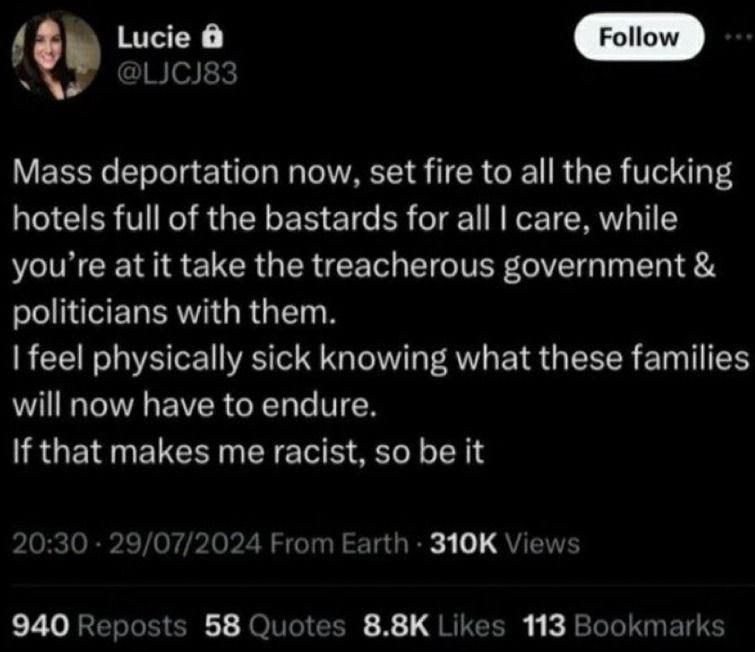
In what has become an emblematic case of the UK’s betrayal of free speech, Lucy Connolly has now lost her appeal for early release. This mother and childminder had posted an offensive tweet in the direct aftermath of the Southport murders, in which a psychopath brutally attacked children with a knife at a yoga class. She had believed the false claim that the perpetrator was an asylum seeker, and written online that she had no objection to people burning down hotels where immigrants were residing.
The tweet was taken as evidence that Connolly had intended to “stir up racial hatred” and incite violence during the febrile climate of the summer riots. It had been deleted within hours, no violence occurred as a result, and yet she was sentenced to 31 months in prison. Given that the severity of Connolly’s sentence was doubtless related to unofficial government pressure on the judiciary, many have made the case that Connolly is a political prisoner.
For all our shared revulsion at the tweet, we must remember that we are still talking here about words, not actions. It was completely right that Philip Prescott, a man who attacked a mosque as part of a mob during the riots, was sentenced to 28 months in jail. But Connolly has received an even longer sentence having committed no acts of violence at all. Many rapists and paedophiles have been treated far more leniently. I know of no sound argument that could possibility justify this state of affairs. It is the very definition of two-tier justice.
Let’s get the caveats out of the way. Nobody is defending what Connolly wrote. It was unpleasant, rash, misjudged, and much else besides. Here is the post in full.
Grim stuff. But it by no means fulfils any serious definition of incitement to violence. For one thing, she is not calling on hotels to be torched, but is rather making clear that she would not care if that occurred. This distinction is key, but has been overlooked. Moreover, Connolly has zero influence or clout. It is not as though anyone reading this could have taken it as an instruction or order and acted accordingly. Those wishing to appreciate the full context of why Connolly behaved as rashly as she did should read this excellent piece by Allison Pearson for The Telegraph.
It should go without saying that in a free society some people are going to say ghastly things. That’s the price we pay for liberty. The judge in this case made a statement in his ruling that has been widely interpreted as political: “It is a strength of our society that it is both diverse and inclusive. There is always a very small minority of people who will seek an excuse to use violence and disorder causing injury, damage, loss and fear to wholly innocent members of the public and sentences for those who incite racial hatred and disharmony in our society are intended to both punish and deter.”
Trump, “the American Mussolini”, versus ever-so-democratic Mark Carney
In the National Post, John Robson contrasts the authoritarian dictator at the helm of the American ship of state with our peaceful, democratic, and fully accountable to the voters prime minister:
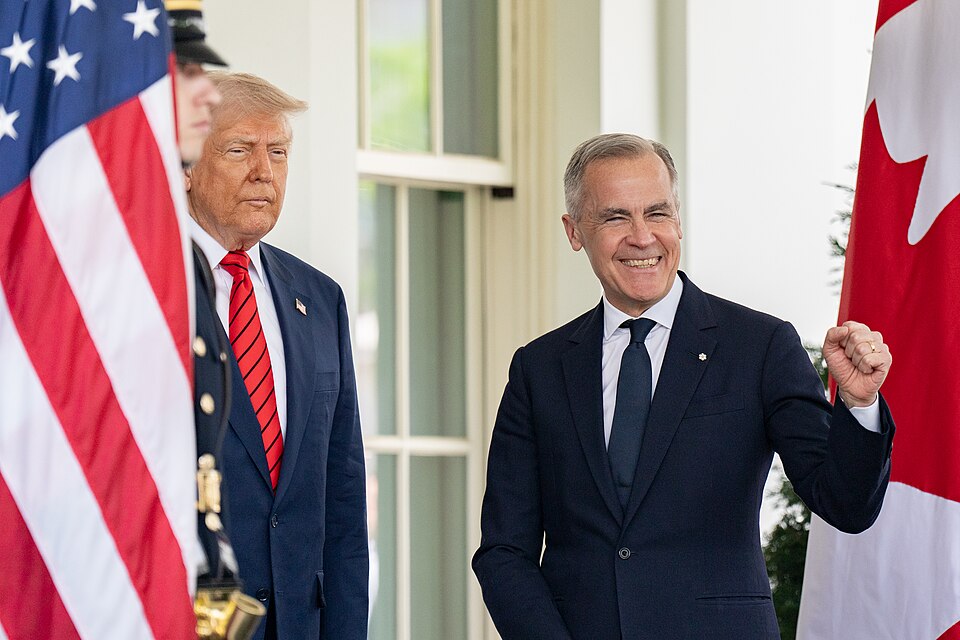
President Donald Trump greets Prime Minister of Canada Mark Carney, Tuesday, May 6, 2025, at the West Wing entrance of the White House.
(Official White House Photo by Gabriel B Kotico)
It was the best of budgets, it was the worst of budgets, it was the age of restraint, it was the age of profligacy, it was the epoch of the legislature, it was the epoch of the executive, it was the season of open debate, it was the season of closed doors, it was the spring of Canada, it was the winter of America. Or possibly the other way around.
The confusion arises because as a patriotic Canadian I keep hearing how U.S. President Donald Trump is an American Mussolini who has abolished the last vestiges of the old Republic, so we should drink rye not bourbon or some other decisive action easily performed while sitting down. Yet the news media mysteriously insist that the Bad Orange Man is having trouble getting his budget through some quaint relic called the United States Congress while Green Mark Carney isn’t bothering to get his spending plans rubber-stamped by some quaint relic called the Canadian Parliament. How can it be?
Tuesday’s the Morning newsletter from the New York Times, which is no MAGA outlet, reads: “Speaker Mike Johnson has a math problem. He wants to pass a megabill before Memorial Day to deliver President Trump’s legislative agenda.” But with only three spare votes in the House, “there are way more than three G.O.P. dissenters, and they don’t agree on what the problem is. Some think the cuts to Medicaid are too large. Others think they’re too small. Some want to purge clean-energy tax breaks. Others want to preserve them because their constituents have used them.”
Likewise The Atlantic, part of the thundering herd of independent liberal American minds, says: “The struggle to pass Donald Trump’s second-term agenda in Congress has never been between Republicans and Democrats … it’s been a battle between the House and Senate GOP, between moderates and hard-liners, and, most salient, between Republicans and reality.”
Egad. What manner of rambunctious folly is this? Open debate within the Maximum Leader’s own party? Dictatorship! By contrast here in decorous Canada can someone remind me which inane or malicious measures from former prime minister Justin Trudeau were ever put at risk by the principled courage, truculence or mere pandering even of his NDP coalition non-partners, let alone the trained seals in red?
Periodically one would bark. But which ever bit? To be sure, as the Canadian Press noted on Sunday, “Prime Minister Mark Carney says the Liberal government will present a federal budget in the fall, allowing time for clarity on some key economic and fiscal issues to emerge”. But if there’s going to be a brawl, it will be inside his office, or head, with his finance minister promising to brush aside Parliament with an “economic statement” before Carney overrode him, saying the government would introduce “a much more comprehensive, effective, ambitious, prudent budget in the fall”.
May 21, 2025
Canadian voters got fooled again
Roxanne Halverson on Canadian voter gullibility that Mark Carney and the Liberals took full advantage of in the election campaign:
Offer not applicable in Canada, apparently.
Liberals voters on your elbows up crusade — do you feel foolish, do you feel shamed? Are you ready to admit that you were duped? That you were played like the fiddle in the Devil went down to Georgia. How does it feel to know that you fell for Mark Carney’s fear mongering fabricated crisis that made him Prime Minister. Or is your Trump Derangement Syndrome so severe that you cannot recognize how the Liberals used it and used you to win an election they didn’t deserve to win. It wouldn’t be so bad if only you had to pay the price, but unlike the phony COVID mantra, of we’re all in this together, we really are all in this nightmare together for another possible four years of Liberal rule and corruption, and we’re all going to pay the price. That includes those of us who didn’t get fooled again, but most of us are the same ones who also didn’t get fooled in the last three elections that gave the country the Liberals under Justin Trudeau for a decade of destruction.
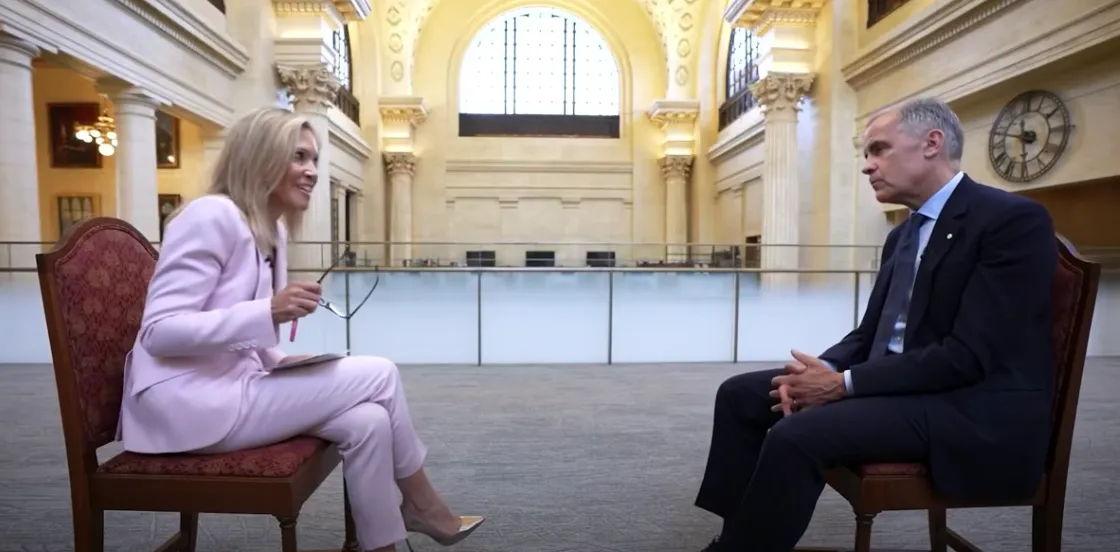
Did you see the interview Prime Minister Mark Carney did with Sky News Australia?
You really should watch it. Because in it he admits what those of us who didn’t vote for him knew, and what he, himself also knew. There was never any real threat from Trump to annex Canada. And when pushed on it by the Sky News interviewer Samantha Washington who asks if he inflated the threat as political tool to inflame voters who hated Donald Trump, Carney dances around it saying one minute it wasn’t a threat and the next minute, well he thought it was and so did the Canadian people and well maybe he did use it to kind of stir them up. Essentially he was trying to dodge the fact that he lied and knew all along that Trump wasn’t really going to make Canada the 51st state.
So, let’s begin with the Trump threat — the existential threat to the existence of our country! According to Carney, Trump “wanted to take Canada, he wanted to break it“. But when asked by Washington about that ‘existential threat’, Carney walked it back. In his words, “No the existence is not at stake, it was more of economic crisis, and had a heavy element of national security comes with it, the extent to which we will be cooperating with others, particularly with the United States“.
Now wait a minute, Carney told voters — the elbows uppers — that Canada’s existence was at stake. And now he’s adding in a national security element? I don’t recall Trump ever saying anything about invading Canada or threatening our national security, in fact it was quite the opposite, he said the United States would always protect Canada for any foreign threat. His interest in national security had to do with Canada’s porous border and the fentanyl trade that the Liberals chose to ignore. This response is a typical Carney word salad dancing around answering the question. Something he seems to have in common with his predecessor Justin Trudeau. But at its core, he says, no Canada’s existence was never in danger.
Yet, he repeatedly told crowds at rallies that the US wanted to break us, when it was really just an economic crisis — something Canada has faced many times before, often due to bad Liberal policies.
But that’s what Mark Carney, with the help of his cartel media echo chamber, drummed into the heads of the elbows up crowd during his leadership campaign and during his entire election campaign. Trump was going to come and take our country — “he wants our resources, he wants our land, and he wants our water“.
Now here’s another word salad, walking back the ‘threat’ from Trump. When Washington asked him why he met with Trump when he was still disrespecting Canada by talking about making it the 51st state, even during their meeting in the Oval Office, which he said it, as she described it, “right to your face“. According to Carney this was ‘different’, and then he delivers another word salad because apparently, “Trump was expressing a desire … he had shifted from an expectation to a desire for that to happen. He was also coming from a place where he recognized that that wasn’t going to happen. I made it clear to him in that context.”
May 20, 2025
Joe Biden’s cancer diagnosis
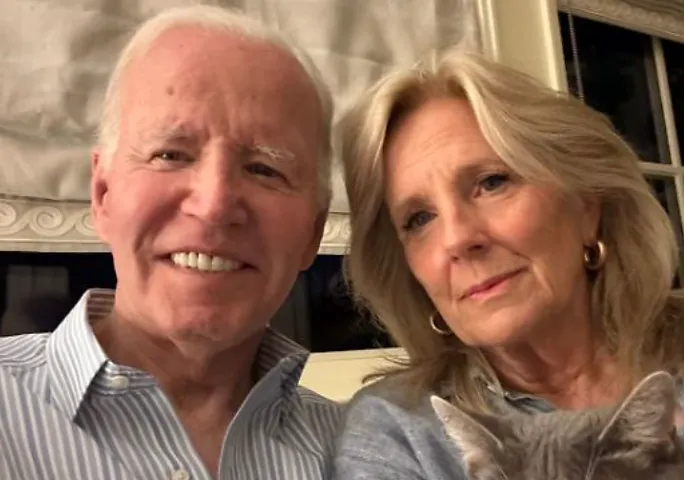
News broke the other day that former President Joe Biden is suffering from a highly advanced cancer and it only reinforces the questions about who was really performing the role of the President during Biden’s term in office:
Well, now it almost isn’t funny anymore.
Here’s the progression of the Democrats’ desperate attempts to shame you out of talking about Joe Biden’s mental and physical health:
“Stop talking about this because it’s not true.”
“Stop talking about this because he’s not the president anymore.”
“Stop talking about this because he has cancer.”You may notice a pattern.
I think it was Andrew Klavan who made me realize the First Commandment of the Democratic Party: Thou shalt STFU. All their gaslighting, shaming, whataboutism, and other dishonest rhetorical techniques are attempts to stop you from talking about whichever lie they’re telling at that particular moment.
Why would they stop at cancer?
A lot of medical professionals are pointing out that a prostate cancer diagnosis doesn’t just come out of the blue like this. It’s easily detectable in blood work, it takes years and years to progress, and it should’ve been detected at his last annual physical.
Even Dr. Ezekiel Emanuel (an oncologist, Rahm’s older brother, and certainly no MAGA-head) says Biden must have learned of this diagnosis many years ago.
If Biden was undergoing cancer treatments during his presidency — remember all those unexplained trips to Delaware? — it would explain a lot of his behavior. “Chemo brain”. And of course he and Jill would keep it under wraps, because it would only strengthen a 25th Amendment challenge.
Who else knew about this, and when did they know it?
And who the hell was performing the duties of the president of the United States for four years?
Keep in mind that Joe Biden loves using his personal tragedies as a Get Out of Jail Free card. We heard it in that just-released Robert Hur audio from October 2023, when Biden deflected a question he didn’t want to answer about his handling of classified documents by complaining that his son Beau died. He couldn’t remember the exact year, but he used it as an excuse anyway.
If he’ll use his dead son, why wouldn’t he use a cancer diagnosis?
eugyppius also notes that such an advanced case can’t have just popped up recently, reinforcing the notion that his term in office was partially or completely a “regency”:
Yesterday evening, Joe Biden’s office announced that the former president had been diagnosed “with an aggressive form of prostate cancer that has spread to his bones“. Biden must have had this cancer for a long time for it to have spread that far, and thus it seems very strange that someone receiving presidential levels of medical care should have been diagnosed only just last week. Many in our circles posit that insiders have known about Biden’s illness for years, but that they have kept his diagnosis and treatment under wraps for political reasons. Among other things, they argue that this explains a July 2022 gaffe in which Biden complained that environmental pollution is “why I and so damn many other people I grew up with have cancer“.1
In fact, I think a simple cover-up is the most harmless possibility here. It’s likely that doctors have diagnosed Biden’s cancer so late because the former president was subject to a high degree of isolation and medical neglect while in office. Perhaps family and close advisers carefully managed Biden’s annual physicals to avoid any inconvenient findings as part of a broader campaign to hide his dementia. Alternatively, it’s possible that signs of cancer were discovered at some point, but that Biden’s inner circle avoided confirming the diagnosis or pursuing treatment. Either way, the late diagnosis and the advanced cancer together suggest that Biden has been left sick and untreated for a long time.
As I wrote last year, Biden’s presidency was an informal and unacknowledged regency. Biden himself did not have the mental capacity to rule on his own, and so a confined circle of close advisers and family effectively directed the actions of the presidential office on his behalf.
Importantly, this regency was not “the White House” or “Biden’s staff” or “the Democratic Party” in general. It was much smaller than all of those things. The regents worked hard to obscure Biden’s dementia from Congress, from large parts of Biden’s own campaign, from the Democratic Party and from many others within Biden’s White House. They ensured that even internal meetings unfolded in highly scripted and predetermined ways, so that cabinet and other officials could not gain a clear idea of Biden’s mental state. They berated and intimidated anyone voicing concern about the president’s health behind the scenes. And they had very simple reasons for doing all of this: If Biden’s dementia were to become common knowledge and not merely an object of private suspicion (however widespread), the regency would be shown up as illegitimate and potentially broken.
Regents exercise power by restricting access to their charge and restricting their charge’s access to information and the outside world. It is thus unsurprising to find that Biden’s regents subjected him to strict social isolation, particularly towards the end of his term …
1. The White House clarified that Biden was referencing his earlier diagnoses for non-melanoma skin cancer.
The Death of Marat
Daniel Jupp uses the famous Jacques-Louis David painting of the 1793 assassination of French revolutionary leader Jean-Paul Marat by Charlotte Corday to illuminate the twisted dealings of the various radical factions within the larger revolutionary movement:
La Mort de Marat (The Death of Marat) by Jacques-Louis David (1748-1825)
From the Royal Museums of Fine Arts of Belgium via Wikimedia Commons.
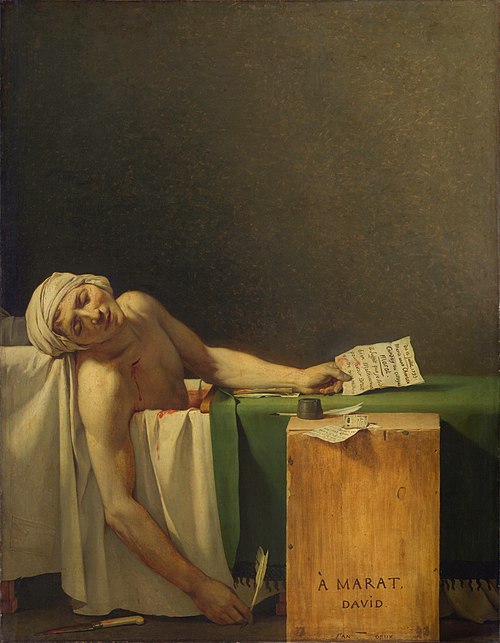
One of the most famous and celebrated works of art in European history is a painting about a political assassination. That painting is The Death of Marat (La Mort de Marat in French) by Jacques-Louis David. It was painted in 1793. David was already one of the most respected French artists of the 18th century, a leader of French Neoclassical art. He was also himself a political figure, a prominent member of the Montagnard faction (itself a subset of the Jacobins) and a member of the revolutionary Committee of General Security.
It’s an overtly political painting in every way, created by a man who was as much a French Revolutionary politician as he was an established and esteemed artist. It’s about a shocking political event, and it was crafted as an exercise in propaganda. […] The painting shows us Marat in his bath, immediately after being assassinated by Charlotte Corday on the July 13, 1793. It is a beautifully composed image of political martyrdom. Marat’s posture, for anyone with the slightest awareness of Western art traditions, immediately shows where the sympathies of the artist lie (and also, where the sympathies of the artist lie).
Marat’s pose is, of course, a deliberate mirroring of the pose of Christ in hundreds if not thousands of Western art traditional depictions of the Crucifixion. The pale, slim but muscular figure, marked by the assassin’s blade but in a manner that might be compared to the puncture wound inflicted by the Spear of Longinus or to the stigmata nail wounds of crucifixion on Christ himself, has that peculiar serenity in death that other artists place in depictions of Jesus. The blood is present as proof of supreme sacrifice, but artistically minimised, prevented from distracting from the clean, shining, almost marble-like flesh of the deceased, who is already a kind of heroic statue in repose, fixed for the admiration of the ages. The dead man has a gentle, compassionate smile on his lips, as if interrupted in the process of forgiving his murderer. The angle, the gentleness, the delicacy of it all suggests Christ-like self sacrifice, as if Marat has chosen his death knowingly, given his life willingly.
Here is the martyr of the Revolution. A new Christ, as good as the old one … if not better.
[…]
It’s at this point that we should mention the central dishonesties here. Christian self sacrifice and martyrdom is a very different thing to one politically radical extremist being murdered by another. Marat was, in reality, about as far away from this movingly gentle depiction of him as one could imagine. As one of the most radical and zealous figures of the Revolution, Marat was a lesson for the ages in the exact opposite way to the one that David depicts. He wasn’t a gentle figure of self sacrifice. He wasn’t a Lamb bringing Peace in the manner of Christ. He wasn’t an innocent. He was a brutal, grasping, rapacious sadist. He was one of the leaders of the storming of the Bastille, and that too has symbolic and practical importance – the terrible monarchical regime had hardly anyone in its most hated prison, whereas the Revolutionary “liberators” soon stuffed it full of their political enemies.
Even at a point where many murders were already being committed, Marat was noted as an unusually brutal proponent of Revolutionary excess. His assassin was from a rival, supplanted Jacobin faction, the Girondists. The Girondists too had supported the earliest uses of violence, riot and uprising within France, and were a “war party” who wanted to export the Revolution abroad and topple monarchical dynasties across Europe. These two factions did not really differ on whether you should murder your political enemies or not, but the Girondists were at times embarrassed by Montagnard violence when it was at its most indiscriminate. The Girondists tended to be the most intellectualised of the Revolutionaries. They were the writers of pamphlets and doctrines of great length and increasingly mind-numbing tediousness. Marat, although also a street-level gutter pamphleteer, was much more of a bloody handed man of action, more akin to a modern terrorist. But the two were aligned in the creation of the bloodshed, even if the Girondins wanted it to be more focused and controlled and ultimately directed outside France:
Temperament largely accounts for the dividing line between the parties. The Girondins were doctrinaires and theorists rather than men of action. They initially encouraged armed petitions, but then were dismayed when this led to the émeute (riot) of 20 June 1792. Jean-Marie Roland was typical of their spirit, turning the Ministry of the Exterior into a publishing office for tracts on civic virtues while riotous mobs were burning the châteaux unchecked in the provinces.
The split between the two factions came to a head as a fall out from the September Massacres of 1792. Marat, a leader of the peasant sans-culottes mobs, was personally engaged in the orgy of bloodshed. Girondist leaders were alarmed, already sensing that previously aligned Revolutionaries or widespread mob violence could turn on them. Typically, the Girondists took defensive measures that were mainly concentrated on written statements, declarations or on bureaucratic ministries, whereas the Montagnards gradually took control of revolutionary militias and the people who were prepared to actually decide, at the point of a sword or via the barrel of a musket, who got killed and when. Neither side could be described as moderates, but one side were more ruthlessly pragmatic, which is why it was the Girondists who ended up being put on the execution lists of the Terror.
At the time that Corday assassinated Marat, Girondists had already been ousted from positions of power and arrested. Marat, along with Danton and Robespierre, was one of their three most prominent denouncers and enemies. Corday stated that she had “killed one man so that 100,000 could be saved”. It’s clear that she had hoped her action would save her arrested Girondin allies and personal friends, but it had the opposite effect and sealed their subsequent trial and executions.
Gen Z is blaming Capitalism for the sins of Cronyism
Lika Kobeshavidze at the Foundation for Economic Education explains why angry Gen Z’ers are blaming capitalism but should instead be blaming crony capitalism for the economic plight they find themselves in:
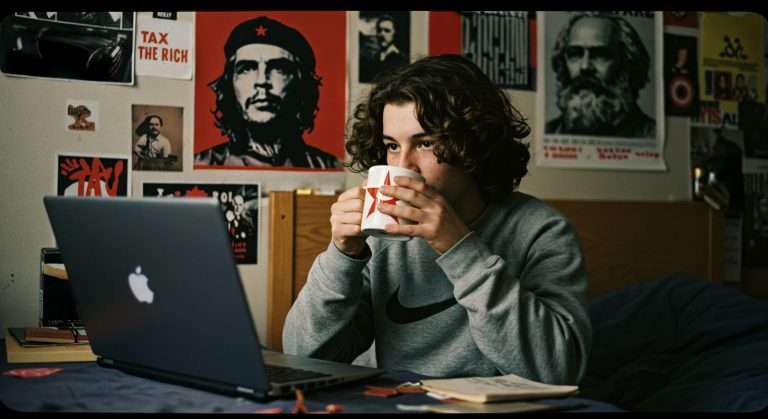
Image Credit: Custom image by FEE
Across college campuses, on TikTok feeds, and in everyday conversations, a familiar narrative is gaining steam: capitalism is broken.
Rising rents and stagnant wages fuel the claim among some young people that free markets have failed an entire generation. According to a 2024 poll by the Institute of Economic Affairs, more than 60% of young Britons now view socialism favorably. In the United States, the trend is similar, with Generation Z increasingly skeptical of capitalism’s promises.
But much of this idealism is rooted in distance — many of the young people romanticizing socialism have never lived through the economic dysfunction or political repression it often brings. For those who experienced Soviet shortages, Venezuelan collapse, or East Germany’s surveillance, the word socialism doesn’t suggest fairness or opportunity — it suggests fear, failure, and control. There’s a reason so many fled those systems to come to freer countries. What sounds utopian in theory has too often turned dystopian in practice.
But blaming capitalism misses the mark. The real culprit is cronyism, the unholy alliance between big government and big business that twists markets, blocks competition, and rewards political connections over genuine innovation.
[…]
Cronyism is not limited to one country or one political party. Across the United States and Europe, the symptoms are the same.
In the US, Canada, and the UK, the dream of homeownership slips further away for young people. Sky-high housing prices are blamed on “market failure”, but the real cause lies in layers of government-imposed barriers: restrictive zoning laws, burdensome permitting requirements, and endless bureaucratic delays. Big developers who can afford to navigate or influence the system survive. Everyone else gets locked out.
In Europe, the pattern repeats. France’s labor laws, designed to protect workers, instead stifle opportunity. Hiring becomes risky and expensive, especially for young people. Large corporations, with the resources to manage compliance costs, consolidate their dominance. Small firms and startups never get off the ground.
There’s also a persistent myth that big business fears government intervention. In reality, the largest corporations often embrace it, because it keeps them on top. Tech giants like Facebook and Google now lobby for more regulation, knowing that complex new rules will strangle smaller competitors who can’t afford fleets of compliance officers. Green energy subsidies, meant to combat climate change, often end up showering billions on well-connected firms while locking out emerging innovators.
Cronyism doesn’t reward the best ideas. It rewards the best lobbyists.
May 18, 2025
Trump today, Taft a century ago – interfering with Canadian federal elections
In the Coolidge Review, Amity Shlaes looks at the long-ago pre-Trumpian example of US interference in Canadian federal politics:
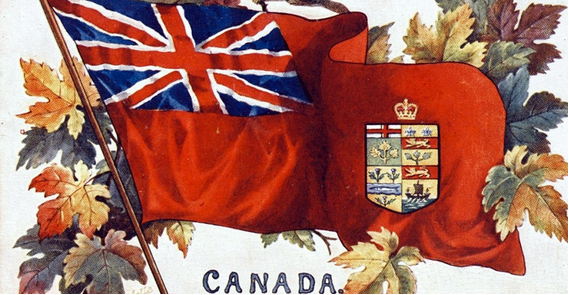
President Trump isn’t the first U.S. leader to turn a Canadian election with a few remarks. A little over a century back another president, William Howard Taft, managed the same feat.
The story starts in 1908, when outgoing president Theodore Roosevelt handpicked a successor, the lawyerly Taft. Taft won election. But from the eve of inauguration, Roosevelt began to voice doubts that Taft was up to the job. Word got around. Taft reacted to this disloyalty by attempting to prove he was no Roosevelt puppet. Where Roosevelt had invaded nations, Taft would write trade treaties. As Taft biographer Jeffrey Rosen writes, the motto of Roosevelt had been “speak softly and carry a big stick”. Taft’s maxim could have been “speak softly and carry a free-trade agreement”.
Taft’s marquee effort was to be a trade agreement with Canada, then lodged in the ambiguous status of “self-governing dominion”. As Taft noted, the dominion did have the freedom to conduct trade policy. Canada’s prime minister, Wilfrid Laurier, was a distinguished free marketeer. The political stars appeared to align. In his enthusiasm Taft praised Canada, practically crowing: “She has cost us nothing in the way of preparations for defense against her possible assault, and she never will … I therefore earnestly hope that the measure will be promptly enacted into law.” Such a treaty, Taft said, would mark a new “epoch” for North America.
In those days, tariffs represented a much more important share of U.S. federal revenues. Selling free trade was no easy work, especially not to Republicans, for whom tariffs were part of the brand. Then as now, trade treaties, unlike peace treaties, required support from both chambers of Congress. But again Taft sang his heart out, not only making the usual case for an “increase in trade on both sides of the boundary line” but also trying out wider arguments.
Early in 1911, Taft infused urgency into negotiations by threatening Canada via ultimatum: Team up with the United States, or there might be a “parting of the ways”. Hunting votes at home, Taft wrote a private letter to the still influential Roosevelt. Appealing to the imperialist in his predecessor, though not very hard, Taft suggested such a treaty might render Canada “only an adjunct of the United States”. Historians debate whether the “adjunct” letter was leaked or stayed private over the course of the 1911 negotiations. Lawmakers on the Hill, in any case, began to speak in similar tones.
Next, Taft called a special session of Congress. Congress warmed to the treaty but pounded the imperialist angle as much as Taft’s main case. “I hope to see the day when the American flag will float over every square foot of the British North American possessions, clear to the North Pole,” thundered the soon-to-be House Speaker, James Beauchamp “Champ” Clark of Missouri.
Such statements did not elude Canadian ears. Some loathed the treaty for pulling Canada farther from Britain; others, independence minded, loathed the idea of trading the thumb of one empire upon them for the thumb of another. By the time Taft signed the Tariff Reciprocity Agreement in July 1911, Canadian reciprocity opponents were on the march. By September, Canada was rejecting in a landslide referendum Taft’s and Laurier’s work.
As The Literary Digest commented in 1912, these flamboyant statements from U.S. politicians were handy weapons for Canada’s treaty opponents. They had put into Canadian Conservatives’ hands “an excellent club with which to cudgel the Liberals and their brilliant leader, Laurier”. Laurier himself was defeated in an election as well, on the argument he was pandering to the U.S.
May 17, 2025
German democracy … saved by bureaucratic incompetence?
Checking in to the situation in Germany, it seems that the big secret report compiled by the German spy agency on the extremely extreme extreme right-wing Alternative für Deutschland party is a bit less than what was expected. Okay, a lot less:
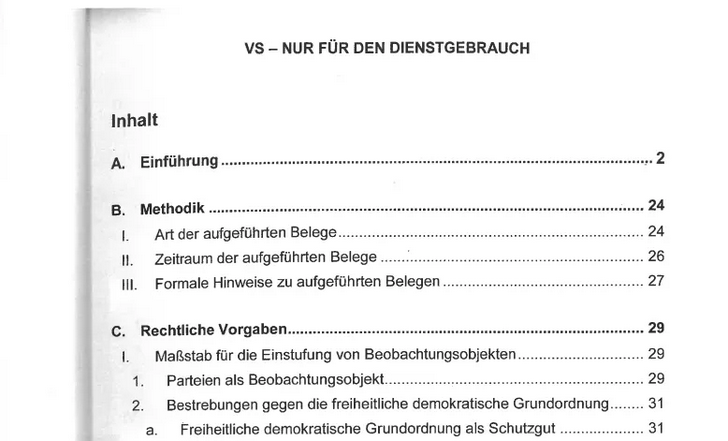
In my last post, I wrote that “The campaign to ban Alternative für Deutschland is not going well“. Today – a mere seventy-two hours later – you could say that the campaign to ban Alternative für Deutschland is all but dead. This is because the people most committed to banning the AfD also happen to be some of the stupidest, most incompetent legal and political operators the world has ever seen. Their incompetence is so enormous that I am for once willing to entertain conspiracy theories as to why they might have undermined their own project. It is that bad.
Two weeks ago, you may remember, Interior Minister Nancy Faeser forced the Federal Office for the Protection of the Constitution (BfV) to rush their long-planned upgrade of the AfD and declare the party to be a “confirmed right-wing extremist” organisation. Word spread of a mysterious 1,100-page assessment, full of damning proofs that allegedly supported this upgrade. This document had to be kept secret, Faeser explained in an interview, “… to protect sources and withhold indications of how our findings were obtained”. So espionage, much secret, wow.
The thing was, the anti-AfD dossier could not have been that secret, because somebody (almost certainly, somebody in the Interior Ministry) immediately leaked it to Der Spiegel, whose journalists published various excerpts in an effort to make the case for how evil and fascist and Nazi and Hitler the AfD are. In this way the press could climax repeatedly in a wave of democratic orgasms over the renewed possibility of an AfD ban, even in the absence of the supersecret report.
The media circus dissipated quickly, however. The publicity campaign, the roll-out – a lot of things went wrong, some of them inexplicably wrong. Still, I thought there was a 40% chance that the Bundestag would try to open ban proceedings sometime this year. That, as I said, was on Monday. What happened on Tuesday, is that Cicero, NiUS and Junge Freiheit all received the secret 1,100-page assessment (actually, it contains 1,108 pages) and published it in its entirety. Since Tuesday evening, a great many people have been reading this document, and they have been realising various things.
The first thing they’ve realised, is that it contains hardly anything derived from supersecret spy sources at all. It is little more than a collection of public statements by AfD politicians. Faeser’s sources-and-methods justification for keeping the report hidden was a total lie.
The second thing they’ve realised, is that it is an abomination. The vast majority of material that the BfV have collected is not even suspect. It is a lot of off-colour jokes, memes, but also just banal nothing statements – thousands and thousands and thousands of them, arranged under various hysterical subject headings. Nothing in here is remotely strong enough to support the case for banning the AfD and a lot of it is also very bizarre in terms of argument. Not only have the prospects of an AfD ban all but evaporated, but I think it’s even likely the party will succeed in their present lawsuit and that the administrative court in Cologne will throw out the “right-wing extremist” label.
QotD: Suburbs and their critics
It gets a lot of bad press, it has got a lot of influential haters, ridiculers and deriders. There are the urbanists, the town planners, the architects, most of whom can’t abide the sprawl. It’s ugly, inefficient, unsustainable, it lacks amenities and it lacks a sense of community, it prioritises – or privileges, as they would say – cars over pedestrians, it wastes space and it wastes resources, it’s barbaric. Those much smarter and more creative than us have offered a lot of alternatives: high-density living, modernist spaces, Le Corbusier’s houses as “machines for living”. They tore down the slums and erected high rise projects, council flats, banlieues and osiedla. They designed and built whole new districts, rich in concrete and wide bare expanses of public space.
Then there are the cultural as opposed to professional haters, and they too are as old as the suburbs themselves. The sprawl is a prison, a conformist hell. It deadens imagination and stifles creativity. It’s full of dumb people leading dumb lives. It’s a triumph of materialism, selfishness and narrow mindedness over selflessness, community and commonweal. From literature through movies and music to TV shows, suburbs don’t get a break; they are the hotbed of reaction, sexism, racism, homophobia, xenophobia, intolerance, prejudice, oppression and kitsch. “Revolutionary Road”, “Stepford Wives”, “American Beauty”, “Weeds”, “Little Boxes”, Stephen King novels, the list is endless, but you get the drift.
There are many differences between the suburbanites and the suburbs haters, but the one big one is this: the suburbanities are the live-and-let-live crowd – they know what they like but they don’t give a shit if you don’t like it. It’s your business and it’s your life – you can do whatever you like. The suburbs haters, on the other hand, not only know what they like but they believe that everyone else should like it to, and if they don’t, tough luck, they should be forced to change for the sake of what’s really good for them and for the whole community. Suburbs are not something that can be tolerated as an option; they should be destroyed, land reclaimed, ideally by nature, their former residents corralled and concentrated.
In many ways it’s yet another example of the old elite versus the masses cultural clash. The masses essentially just want to be left alone. The elites want to remake the whole world so it accords to their vision of what’s good and useful. The masses’ is not to question why …
Arthur Chrenkoff, “In praise of sprawl”, Daily Chrenk, 2020-05-21.
May 16, 2025
Those scary “Brexity books”
Andrew Doyle on the sudden interest British police seem to be taking about what kind of books you may have on your shelves at home:
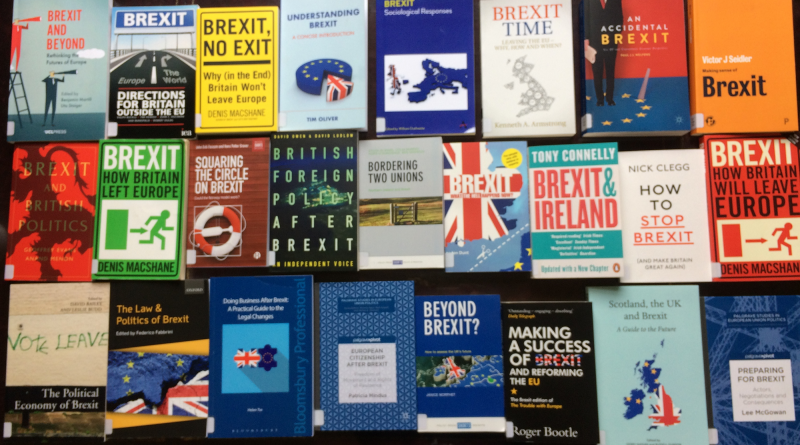
If the British police saw this collection, you’d be lucky to get out of prison in fifty years!
The UK police certainly seem to believe in that old aphorism that that “You can tell everything you need to know about a person from their bookshelf”. There has been much press coverage this week of the case of Julian Foulkes, a former policeman who was arrested at his home in Gillingham for tweetcrime. It took six officers to handcuff the pensioner and take him to a cell, and bodycam footage from the arrest shows them assessing the contents of his bookshelves. One was seen singling out The War on the West by Douglas Murray and another remarked that there were “very Brexity things”.
I have a fair few “Brexity” books on my shelf too. I have just as many “anti-Brexity” books, as it happens. It seems to have escaped the attention of these officers that it is possible to read multiple points of view without necessarily subscribing to any of them. They have also apparently forgotten that “Brexity” views are fairly commonplace, enough so to win the largest democratic mandate the country has ever seen. If it’s a majority view, is it really all that controversial?
I recall during the lockdown I was scheduled for a television interview and, having set up the webcam, I suddenly realised that the two volumes of Ian Kershaw’s excellent biography of Hitler were not only visible, but prominent. The design of the books’ spines is such that the word “HITLER” is displayed in huge letters. Very dramatic and marketable, but not so helpful if you’re about to appear on live television. I must confess that I repositioned my chair to ensure that the books were obscured.
But why? It isn’t as though any sensible person could possibly believe that my interest in the history of tyranny implies an endorsement of it. I could just as easily have a copy of Mein Kampf on the shelf and still retain my wholehearted opposition to its author and everything he stood for. If I owned a copy of the Koran, would that make me a Muslim? If I owned a copy of Jilly Cooper’s Riders, would that make me prone to passionate romps in stables? As a chronic hay fever sufferer, this hardly seems likely.
The assumption that the books we choose to read are a mirror-image of our private thoughts, or that we are so malleable that any opinion we encounter will automatically be assimilated, is very much a core tenet of faith in today’s woke mindset, one that has quite palpably infected the justice system. Those who are currently serving prison time for offensive tweets will be aware that the unevidenced belief that the public act on cue to the language they read has some very authoritarian consequences.
May 14, 2025
We welcome (almost) all refugees
Mark Steyn notes the odd situation of rabid pro-refugee organizations suddenly finding that there are some refugees they don’t want to come to the United States after all:
We are told, relentlessly, that “diversity is our strength”. But it’s a delicate balance, isn’t it? After Biden’s untold millions of drug mules and sex fiends, just fifty-nine whites from South Africa could completely destroy all the multiculti harmony:
I confess to mixed feelings about those scenes myself. When I was a kid, the Boers had a reputation, unlovely as they might be in certain aspects, as the toughest buggers on the planet. In Britain and Canada, it was not uncommon to hear fellows, depressed at how their own countries were going, talk breezily about emigrating to South Africa. Yet in the end they folded in nothing flat — and the country’s new masters don’t want them and they have to find somewhere to go. Gee, it’s almost like that might be a lesson of more general application in the year ahead.
So it’s interesting to see the American left tiptoe all the way up to making the real purpose of “diversity” explicit: We’re in favour of open borders … except for whites. Rather than sully their hands with fifty-nine Afrikaners, the Episcopal Church has declared it’s willing to forego the moolah from the federal “refugee resettlement” racket. The spousal-abusing MS-13 gangbanger may be the quintessential “Maryland man”, but these white guys never can be.
Watching hoity-toity upper-class whites like NBC’s Andrea Mitchell finger-wagging from the anchor chair about their anti-whiteness is instructive. They assume that they will never have to face the consequences of their virtue-signalling. But the chasm between Eliteworld and Reality yawns wider with every day, and it will one day consume most of the west’s high-status “progressives” too. There are limits to kingly power. That’s the lesson Canute tried to teach his courtiers when he took them to the water’s edge and commanded the tide to lay off his loafers. But King Canute would never have ordered his staff to tell the peasantry to eat crickets on a bed of cockroach coulis. Because that would be too ridiculous.
For that we had to wait until Justin Trudeau, sinking bazillions of dollars into bug farms as part of the masterplan: that’s not just a bug, it’s an indispensable feature. Because at the World Economic Forum all the clever guys decided that, in the interests of saving the world from “climate change”, our rulers had to do to our own farmers what the mob is doing to white South Africans: destroy their farms, kill all the cows and sheep, and ensure that nothing grazes there ever again.
There are few things sadder than a post-developed society. If you walk around South African towns at the end of the day, you will notice in high-rise buildings the absence of lights on the upper floors: the inability to maintain skyscrapers is one of the first signs of a society in decline. It starts at the heights and then sinks to the basement, whether those heights are Boeing or bug farms. If you’re in on the racket, you can still live high off the hog-simulating scorpions … for a while. But the people who make the running in the western world are mad, and their fever dreams are boundless.

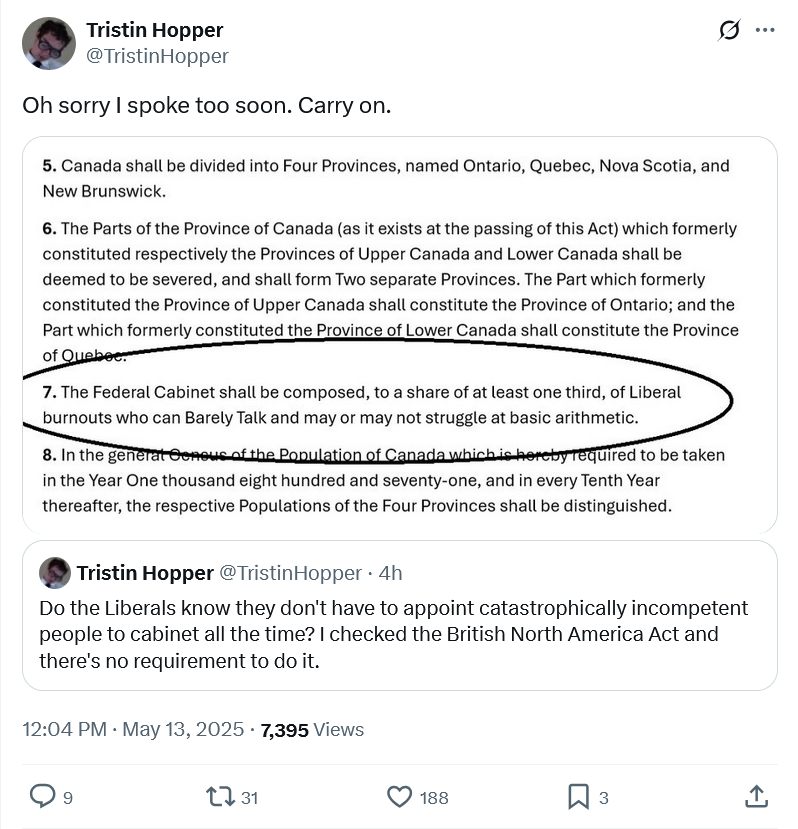
Carney’s new cabinet – remarkably similar to Trudeau’s cabinets
Prime Minister Mark Carney talked as if he was initiating a new era in Canadian politics, but when it came to nominating his first cabinet, it’s plus ça change, plus c’est la même chose with most of the same cast of incompetents, crooks, lickspittles, and fart-catchers. Justin Trudeau would feel right at home:

Prime Minister Mark Carney promised change, a new way of doing things at speeds never before seen. Yet to help him do this, he is relying on the same old, tired, incompetent ministers who got us into the mess we’re currently in.
The Liberals will trumpet the large number of new faces in Carney’s 28-member cabinet — there are 15 MPs who have never served before.
But the top tier of ministers — the ones sitting in the front row at the swearing-in ceremony on Tuesday — were all former Trudeau acolytes, cabinet ministers now committed to rescuing us from a crisis of their own making.
In the front row was Sean Fraser, our new justice minister and attorney general, and the man who, under former prime minister Justin Trudeau, was responsible for immigration and then housing, two files he spectacularly failed at. If we want to know how bad Fraser was in those jobs, we need only look to Carney’s election platform.
“The last time we faced a housing crisis at such a broad scale was after the Second World War”, read the platform. This crisis “has left younger generations facing rents, down payments and mortgage payments so high that it turned housing into a barrier to opportunity instead of a cornerstone of opportunity”.
What about Fraser’s record at immigration? According to the Liberal platform, the Trudeau government let immigration “grow at a rapid and unsustainable pace”.
In December, when Liberal fortunes were in the toilet, Fraser announced that, for family reasons, he was quitting politics. Strangely, after the party witnessed a reversal in the polls, he announced he was returning.
In Carney’s eyes, Fraser’s blundering on two key files qualifies him to become justice minister. The only thing worse than Fraser as a cabinet minister may be Carney’s judgment.
Also in the front row was Chrystia Freeland, who served as deputy prime minister and finance minister under Trudeau and is now returning to cabinet as minister of transportation and internal trade.
Freeland’s record is best summed up, again, by the Liberal platform: “Business investment in Canada has dropped from 14 per cent of GDP in 2014 to 11 per cent in 2024, undermining long-term economic growth”.
Meanwhile, long-time Trudeau lieutenant Mélanie Joly, whose reign at foreign affairs was about as successful as Fraser was at housing and immigration, moves to industry.
Well, if we’re stuck with Carney’s retreads, at least we can laugh about ’em. Through the tears:
Noah has some faint praise for the new minister of National Defence and the new Secretary of State for Defence Procurement:
Welp it’s official. Bill Blair is out.
I cant say that it’s overly shocking. I don’t think anyone truly expected Blair to be MND by the end of today. While I will give Blair some credit for holding the fort, most of you already know I wasn’t his biggest fan.
He was a great placeholder who was able to smoothly roll out the plans left to him. He also did have several good public showings, such as his efforts in Korea last year. I will give credit where it is due.
However, he was also uninspiring, too passive in his role, and while I have no doubt he took it seriously, was never going to be a great long-term option. He had long overstayed his welcome […] Now he’s out completely from cabinet and in his place we have not one but two new ministers on the defence profile!
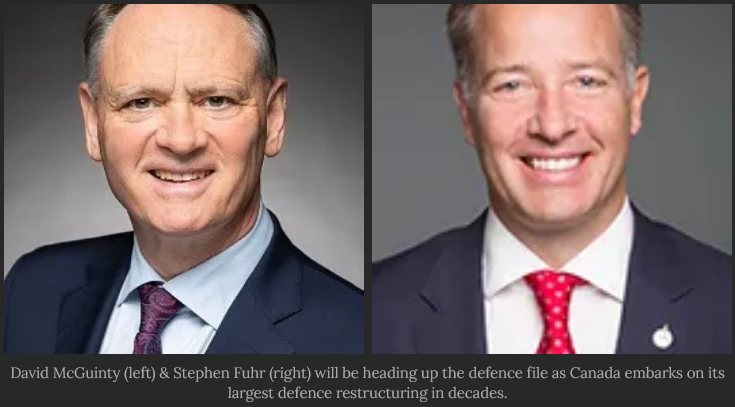
David McGuinty, best known for his eight-year stint as Chair of the National Security and Intelligence Committee has taken the reigns as the new Minister of National Defence While Kelowna MP and veteran Stephen Fuhr will take on a new role as Secretary of State for Defence Procurement.
In this role Fuhr will work under McGuinty specifically to tackle the file of Defence Procurement ahead of the establishment of the DPA. He is one of eight new secretaries of state that will operate on a “junior” level in cabinet.
Now McGuinty wouldn’t have been my first pick. I will openly admit that, but it is hard [not] to argue that he is the most prepared for the role, and likely the best we have available.
McGuinty previously held the NSICOP chair from 2017 all the way until December when he was appointed Minister of Public Safety. He has a background in International Development before becoming a parliamentarian, including stints with UNICEF.
He isn’t coming into this without a background on the current security climate we’re facing. He certainly can’t be said to be ill-prepared to take the role at a time when CAF and the DND are at one of their most pivotal moments in restructuring.