Quotulatiousness

December 4, 2025

The Swiss vote overwhelmingly against a new wealth tax

Filed under: Europe, Government, Politics, USA — Tags: , , , — Nicholas @ 04:00

As the California government wants to impose a new wealth tax, it’s worth checking how similar schemes are viewed in other jurisdictions. The Swiss voters were given an opportunity to scalp their very richest citizens and permanent residents with a proposed wealth tax, but it went down with 78% voting against it:

“Switzerland on Sunday overwhelmingly rejected a proposed 50% tax on inherited fortunes of 50 million Swiss francs ($62 million) or more, with 78% of votes against the plan, an outcome that even exceeded the two-thirds opposition indicated in polls,” Reuters reported this week.

All Swiss cantons already tax assessed gross worldwide assets, minus debts and with exceptions, making it one of the few countries in the world to retain a wealth tax. But competition among cantons keeps the tax burden relatively low and, as the Tax Foundation notes, “the Swiss wealth tax acts as a substitute for a capital gains tax and an estate tax, which are common in other countries”. The referendum would have imposed an additional and very steep national tax.

This was actually the second recent failed attempt to impose a national wealth tax on inheritances. Seventy-one percent of Swiss voters rejected a 2015 proposal for a 20 percent tax on estates and gifts of over 2 million francs. The revenues would have been earmarked for old-age pensions.

‘Inequality in Opulence is Better than Equality in Poverty’

The 2025 tax scheme openly played to envy. It was targeted at combating “inequality” by seizing half the assets of the rich and allocating proceeds to offset the climate damage they allegedly cause.

Finance Minister Karin Keller-Sutter opposed the proposal, warning that “many wealthy people would simply emigrate to avoid the tax and keep their wealth”. She also pointed out that while all but two of the country’s 26 cantons tax inheritances, “the people have abolished inheritance tax for children and spouses in many cantons”. She added, “I think it is right that what was developed in the nuclear family can be passed on”.

Philosopher Olivier Massin, a professor at the University of Neuchâtel, criticized the motivation driving much of the campaign for the tax. He wrote that “inequality is by nature neither good nor bad” and that envy is the main driver of egalitarianism. “Envy being inglorious, we grimace in indignation, making what is ultimately only the expression of resentment a moral cause.”

Massin added that “inequality in opulence is better than equality in poverty”.

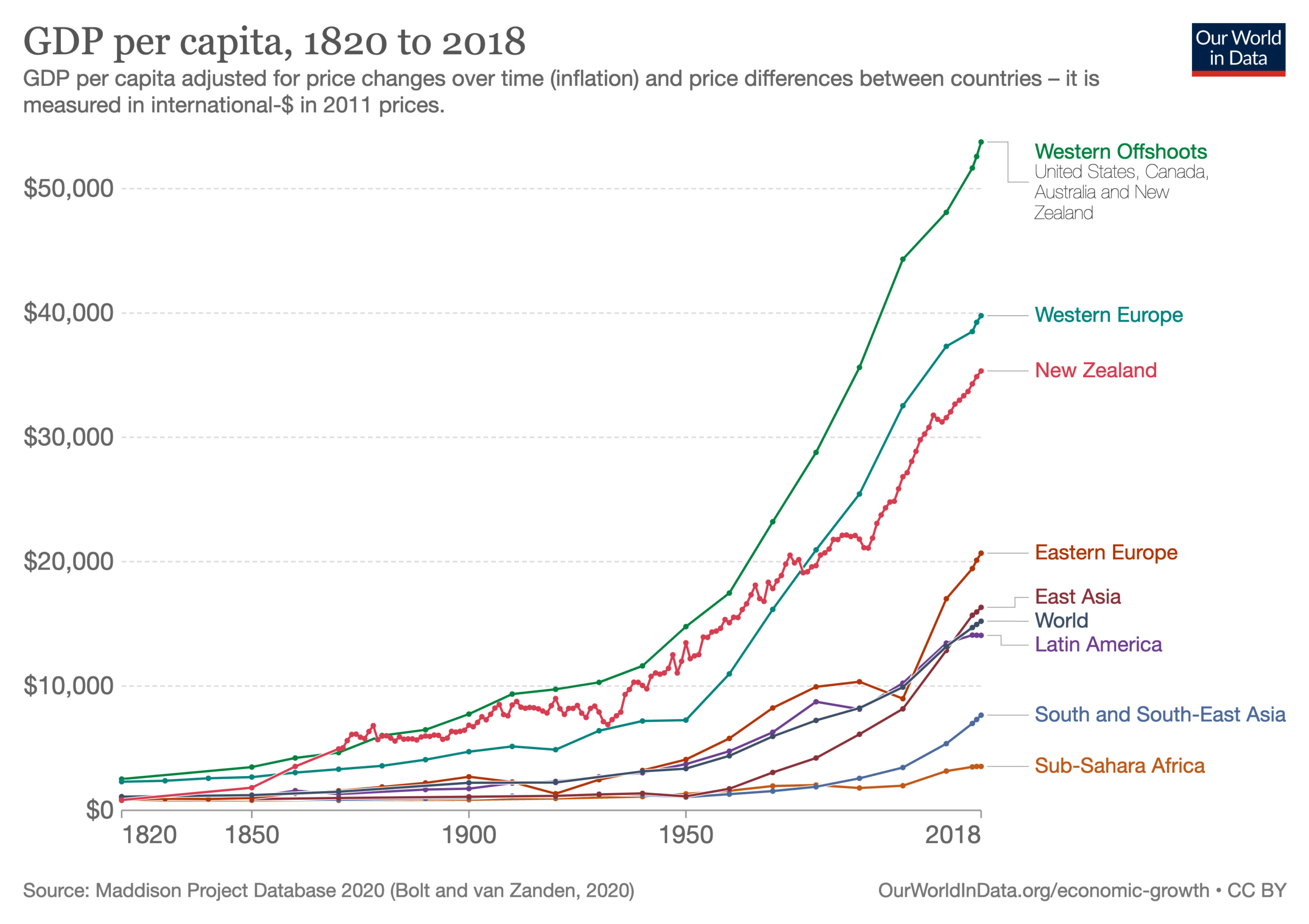
And Switzerland is undoubtedly “opulent” — or, at least, prosperous — with a per capita gross domestic product of $103,669 as compared to $85,809 for the U.S., according to the World Bank. It builds that wealth with a second-place score in the current Index of Economic Freedom (the U.S. is now ranked at 26), suggesting that less government meddling in economic matters is the best way to increase prosperity.

December 3, 2025

Like him or loathe him, Trump’s response to the DC shootings was “spot on”

In The Conservative Woman, Richard North makes the case that US President Donald Trump is the only western political leader who can stop the migration crisis:

Like him or loathe him, question his inconsistencies and his many other flaws, but in my view Donald Trump’s response to the shooting of two members of the West Virginia National Guard in Washington DC by an Afghan migrant was spot on.

There was none of the pussyfooting “my thoughts are with …” etc. Without equivocation, he immediately branded the shooting “an act of evil, an act of hatred and an act of terror”, adding: “It was a crime against our entire nation”.

Shortly thereafter, Secretary of State Marco Rubio posted a tweet declaring: “President Trump’s State Department has paused visa issuance for ALL individuals travelling on Afghan passports. The United States has no higher priority than protecting our nation and our people.”

Attached was an official tweet from the Department of State making it clear that the ban was of immediate effect, with the Department “taking all necessary steps to protect US national security and public safety”.

This added to the ban in June when Trump imposed restrictions on citizens from 12 countries, including Afghanistan, but that ban did not revoke visas previously issued, and holders of Special Immigrant Visas (SIV) were exempt.

Now Trump has gone further. In a Thanksgiving message posted on X, he offered a salutation which, in Trumpian style, didn’t mince words. It started with: “A very Happy Thanksgiving salutation to all of our Great American Citizens and Patriots who have been so nice in allowing our country to be divided, disrupted, carved up, murdered, beaten, mugged, and laughed at, along with certain other foolish countries throughout the world, for being ‘politically correct’, and just plain STUPID, when it comes to immigration …”

That was only the start of a very long and quite extraordinary tweet which, if nothing else, can be criticised for a complete absence of paragraphs and sentences which rivalled in length those in a Dickens novel.

With his opening out of the way, Trump asserted that the official United States foreign population stands at 53million, most of whom, he averred, “are on welfare, from failed nations, or from prisons, mental institutions, gangs, or drug cartels”.

“They and their children,” Trump continued, “are supported through massive payments from patriotic American citizens who, because of their beautiful hearts, do not want to openly complain or cause trouble in any way, shape or form”.

Warming to his theme, he declared: “They put up with what has happened to our country, but it’s eating them alive to do so! A migrant earning $30,000 [£27,000] with a green card will get roughly $50,000 [£38,000] in yearly benefits for their family. The real migrant population is much higher.”

Pressing his point, he stated what none of Starmer’s motley crew will admit.

“This refugee burden is the leading cause of social dysfunction in America, something that did not exist after World War II (failed schools, high crime, urban decay, overcrowded hospitals, housing shortages, and large deficits, etc)”, the Donald wrote.

In a passage which might have got him arrested had he posted in the UK, with refreshing candour, the President gave the example of “hundreds of thousands of refugees from Somalia” who were “completely taking over the once great State of Minnesota”.

Somali gangs, he said, “are roving the streets looking for ‘prey’ as our wonderful people stay locked in their apartments and houses hoping against hope that they will be left alone”.

No matter which country they end up in, Somalis tend to be bad news. There are multiple reports stretching back to 2007 of a plague of criminal gangs among the 32,000 Somalis who have settled in Minnesota.

Recently the Minnesota gangs have been associated with a series of massive welfare fraud schemes, the proceeds of which may have been funnelled to the Somalia-based terror group al-Shabab.

The largest fraud scandal involving Somalis was the “Feeding Our Future” scheme. Prosecutors racked up 56 criminal convictions in what they alleged was a plot to steal $300million (£270million) from a federally funded programme meant to feed children during the covid event.

December 2, 2025

The elites will continue pushing high immigration despite the obvious social costs it imposes

One of the very tip-top luxury beliefs is that massive immigration is always and under all circumstances a good thing. A great thing, even. One of the things about the holders of luxury beliefs is that they are almost always completely insulated from any of the consequences of their beliefs, and this is especially true in this case. As Lorenzo Warby points out, the elites’ devotion to this cause contributes to collapsing levels of trust in the society absorbing all those immigrants and deeply undermines confidence that the leadership have anyone else’s but their own best interests at heart:

There is a straightforward, respectable view on immigration to Western countries. More people means more transactions, means more gains from trade, so immigration is a good thing. Immigration grows the economy, it increases GDP, so sensible folk support immigration.

There are extra bells and whistles, such as providing needed skills; compensating for falling fertility; willingness to do jobs locals are not. All the extra bells and whistles have responses. Why not train locals (i.e., citizens)? Won’t the immigrants’ fertility also fall? (Yes, though possibly more slowly.) The real willingness is to do jobs at lower wages and conditions than the locals would accept. For instance, potentially using US H1B visas to bring in entry-level employees who will work for less, and in worse conditions, than the locals.

Moreover, increasing total GDP is not the same as increasing per capita GDP. Even with per capita GDP, there are always questions about the distribution of those gains to GDP.

Nevertheless, the basic intuition is: immigration means more transactions, more gains from trade. Those who believe in markets — in positive-sum interactions — should support immigration.

This is not the trumping response it appears to be. Immigration does not only import workers—nor even just increase mutual-gain transactions — it imports people, so potentially affects all aspects of the receiving society. This means, of course, that there are a much wider range of possible concerns about immigration that “yes, but more gains from trade” is not an adequate response to.

Efficiency and number of transactions are not the only issues for a social order, particularly not a flourishing social order. There are also issues of social cohesion; social resilience; connections and social capital; the distribution of GDP gains; effects on relative prices; congestion costs; how well institutions are managing the influx; effects on local communities; cultural differences; social coordination issues and the ability to manage collective action problems; increased competition for positional goods — goods that cannot, or are blocked from, responding to increased demand.

These are all legitimate grounds for concern that are not answered by “yes, but more gains from trade“. How many of those “yes, but more gains from trade” folk have grappled with mass rape and sexual exploitation of young women and girls as a cost of culturally divergent immigration (and its systematic mismanagement)? How many of those “yes, but more gains from trade” folk have grappled with violent disturbance, even civil war, as a potential cost of immigration, even though we have historical examples of precisely that?

If, on one hand, the respectable people insist “yes, but more gains from trade” is an adequate response, and that other concerns are not legitimate, this will almost certainly be taken as the contemptuous dismissal it is. Not only will it not be persuasive, it will (and does) generate anger and resentment.

If people have concerns that the “reasonable”, “liberal-minded” folk will not deal with — or, worse, are dismissive of such concerns even being raised — then people will turn to unreasonable and illiberal folk, if they are the only people who will respond to their concerns. Significant gaps in political markets will be filled by political entrepreneurs.

If folk are told that “if you believe in markets, you have to support (high levels of) immigration” then many folk will respond with “OK, I reject markets“. Moreover, it is simply false that market economics entails that mass immigration is a good thing.

The idea that there is some economic phenomena such that marginal costs exceeds marginal benefits for all people over all ranges in all forms is not Economic thinking, it is magical thinking. (More precisely, it is class-signalling parading as Economics.)

It is magical thinking that falls foul of economist Thomas Sowell‘s dictum that there are no solutions, only trade-offs. Immigrants may be engaging in lots of positive-sum, gains from trade transactions, yet still be imposing more costs than benefits on a society, and on resident citizens, precisely because societies are not just efficiency arenas for free-floating transactions and no one is just an economic transactor.

Update, 3 December: Welcome, Instapundit readers! Please do have a look around at some of my other posts you may find of interest. I send out a daily summary of posts here through my Substackhttps://substack.com/@nicholasrusson that you can subscribe to if you’d like to be informed of new posts in the future.

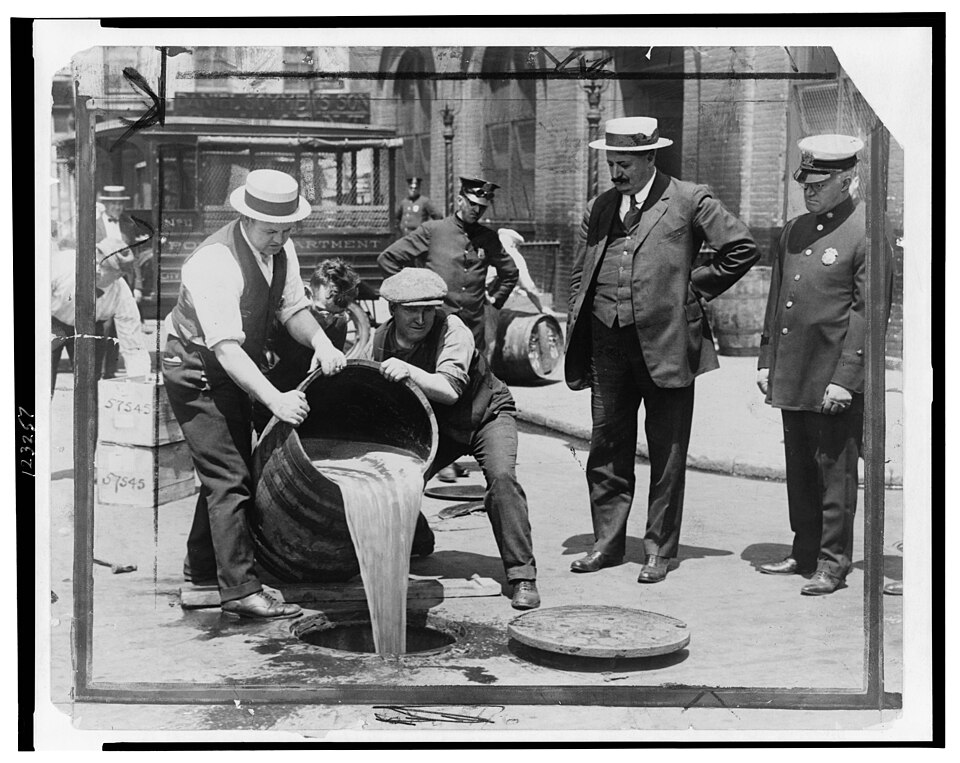
Dead Wrong: How Canada got the Residential School story so wrong

Filed under: Books, Cancon, History, Media, Politics — Tags: , , , , — Nicholas @ 03:00

Juno News shares Candice Malcolm‘s foreword to Dead Wrong by C.P. Champion and Tom Flanagan:

Canada is off track. We’ve lost our way.

How else could we make sense of the moral panic produced from a half-baked report coming from a small Indian Band in Central British Columbia in the spring of 2021? In response, the country lost its mind. Following reports of 215 “unmarked graves” at the site of the former Kamloops Residential School, the supposedly trusted sources of our society – journalists, elected officials, academics and so-called experts – reported fiction as fact, without doing any due diligence or research into the still unproven and questionable claims of mass graves and secret midnight burials of hundreds of deceased children.

A failure of this magnitude doesn’t happen instantaneously. It’s built over time as those who profess to speak the truth deliver deception, doublespeak, and misinformation – all in the name of addressing some grievance, advancing an agenda, and creating a narrative.

The only conclusion we can now draw is that our country is not what it should be, not what it was.

There are a myriad of complicated reasons to explain our clear downward trajectory – institutional capture, a hard-left consensus among political and cultural elites (driven in large part by government-funded journalists and the state broadcaster pushing woke propaganda), a large and inefficient bureaucracy that stifles growth and

innovation, institutions built upon a moral code that became unfashionable, and so on.

Canada has become a feminist country that proudly discriminates against men and diminishes the role of mothers. It has become a post-national country that loathes its founders and openly discriminates against individuals based on skin colour. It isn’t just post-Christian, it’s anti-Christian – evident from the treatment of Evangelical prayer leader Sean Feucht, the coordinated attacks against him in the summer of 2025 and the cancellation of tour stops across the country, not to mention total disinterest and cover-up of the 120+ churches that have been decimated and destroyed in the wake of the unmarked graves fiasco.

Over the past decade, we’ve witnessed our country fall from a functional system, into something almost unrecognizable.

The Canada I grew up in was safe, stable and secure. We knew our neighbours, we trusted institutions and didn’t worry too much about politics. Being Canadian meant something. We had a community, an identity, a shared purpose. Most of us believed in upward mobility and the Canadian dream: that if you work hard and play by the rules, you will have the same – or dare I say better – opportunities and quality of life than your parents.

This is clearly no longer the case for most Canadians under the age of 45, and that is a major problem for all of us.

I came across a simple social graph by William Meijer that clearly explains what has happened better than anything else I’ve seen. You could apply this to countries, companies and even personal relationships.

Simply put: kindness got in the way of truth.

Meijer writes the accompanying caption: “An extreme commitment to the truth makes relationships acutely dysfunctional but systems chronically functional (think Elon Musk).

An extreme commitment to kindness makes relationships acutely functional but systems chronically dysfunctional (think Sweden, UK).”

Canada perhaps represents the “kind dysfunction” better than any other place.

QotD: Brutalism “is to architects what propaganda was to communist leaders: It serves to make them feel powerful”

Filed under: Architecture, Britain, History, Politics, Quotations — Tags: , , , — Nicholas @ 01:00

When a country is intent on committing suicide, as is Britain, it celebrates the very things that have led, or are leading, to its demise. Whether this is because it thinks it no longer has a right to exist and the world would be better off without it, or whether it is because, when something appears inevitable to us, we welcome it to disguise our impotence to halt it, I do not know. But the fact is that London is about to have a museum devoted to the kind of architecture that has turned so much of Britain’s urban landscape into a visual nightmare, a scouring of the retina.

I have long suspected, but cannot prove with an indisputable argument, that this architecture has played its part in the brutalization of daily life and social behavior in the country. Certainly, it has dehumanized the appearance of many towns and cities; its harsh surfaces and willfully austere and jagged designs leave the mere human being feeling that he is about as welcome as an ant on a kitchen counter — which, indeed, he now much resembles.

This architecture is to architects what propaganda was to communist leaders: It serves to make them feel powerful, not despite the fact that so many people detest it, but because so many people detest it. They are like the doctors of old, who, if they could not cure their patients, could at least make them take the most repellent and noxious medicine, on the grounds that a little bit of what revolts you does you good.

The projected museum is in a former school in the north of London, designed in 1968. Here is fairly typical commentary on the building:

    Despite decades of wear and some unfortunate interventions, the raw concrete structure has remained a cherished example of socially driven modernist design.

It is to be noticed that the cherishing done here is independent of anyone who cherishes; as for “socially driven modernist design”, we might read “totalitarian”. Indeed, the building exudes totalitarianism, as raw reinforced concrete exudes ghastly stains after a short time.

Le Corbusier, one of the founders of this kind of architecture, was indeed a fascist in the most literal sense, though he had no real objection to communist totalitarianism, either. What he most hated was what he called the street, that is to say the place where people behave spontaneously and without direction from above, and where they are not corralled into functions imposed on them by all-wise socially driven architects. It was for this reason that he and his acolytes preferred to build urban wildernesses of the kind that have now been built the world over, but especially in Britain.

The architects who have been given the task of renewing the school building where the museum dedicated to architectural brutalism is to be housed have “noted its distinct geometry, as well as its symbolic presence reflecting the ideals of the school’s broader 1960s Brutalist architecture conceived in an era of social progress”.

Apologists for such architecture write a pure Soviet langue de bois — or perhaps I should say langue de béton, since concrete rather than wood is their favorite material:

    Consultation with the school, families and local stakeholders has underpinned the project from the outset, ensuring that the building’s next chapter remains tied to its founding ethos centered on architecture as a tool for collective learning and expression.

Does anyone, after the death of the late, not much lamented, Leonid Brezhnev, have thoughts that correspond to, or are couched in, words such as these? By their language shall ye know them.

Theodore Dalrymple, “Architects of Our Own Destruction”, New English Review, 2025-08-08.

November 30, 2025

Canada’s growing Islamist problem

Filed under: Britain, Cancon, Media, Politics, Religion — Tags: , , , , , — Nicholas @ 03:00

At Juno News, Joe Adam George points to the problems Britain is having with their well-established Muslim extremists and says Canada has exactly the same issues here:

When 35-year-old Jihad al-Shamie terrorized a Manchester synagogue last month on Yom Kippur pledging allegiance to ISIS, few were shocked by what investigators later uncovered. He attended a Salafi-inspired mosque where extremist rhetoric was routine. His father had praised Hamas’s October 7 attackers as “Allah’s men on earth”. Years of indoctrination taught him that violence was virtue, resistance was glory, and terror was faith.

What unfolded in Manchester is a warning to Canada, where similar currents of Islamist radicalism have been manifestly gathering strength. Across Canadian cities, extremist narratives are taking root among young people through community networks, activist circles, and online echo chambers.

A prominent Shia mosque in Windsor, Ontario, recently held a memorial service for slain Hezbollah leader Hassan Nasrallah — for the second year running — where youths eulogised the notorious terrorist as a “hero” and “martyr”. The Toronto Metropolitan University’s arts faculty funded a research paper which argues that Canada’s designation of Islamist groups as terrorist organizations is deeply flawed because of “systemic Islamophobia” and racism. Such episodes do not merely glorify violence; they sanctify terrorism and rebrand militancy as a necessity.

Earlier this year, Canada’s spy agency, the Canadian Security Intelligence Service, warned it was “increasingly concerned” about the threat of ISIS-inspired attacks. That concern is well-founded. The Royal Canadian Mounted Police reported a staggering 488 per cent rise in terrorism-related charges between April 2023 and March 2024, much of it driven by ISIS-motivated youth radicalisation. In the same period, antisemitic incidents surged by more than 670 per cent. An ISIS-inspired teenager was arrested in Montreal in August for terrorism offences. These are not isolated events but symptoms of a cultural shift — where extremism masquerades as activism and hate is sold as justice.

Since the breakout of the Israel-Hamas war, unrestrained radicalisation has seeped into mosques, schools, charities, and universities — often protected by Canada’s own liberal frameworks. Islamist networks have mastered the art of exploiting the Charter of Rights and Freedoms to propagate radical ideologies while deflecting scrutiny. Wrapped in the language of “human rights” and “anti-racism”, they advance intolerance behind a façade of moral virtue.

As former FBI agent and counter-terrorism expert Lara Burns noted, it’s a tactic that echoes the Muslim Brotherhood’s “sabotage strategy” in North America — infiltrating institutions to steer public debate and soften attitudes toward Islamist causes.

Campaigns to institutionalize so-called “anti-Palestinian racism” (APR) is turning Canada’s classrooms and government offices into laboratories for grievance politics. Marketed as anti-discrimination, APR in reality brands any criticism of Palestinian militancy as racism, giving extremists a moral shield and silencing dissent. Even Canada’s Islamophobia czar, Amira Elghawaby, has been accused of abusing her taxpayer-funded post to conjure up Islamophobia and APR where none existed. During a visit to London in June, she reportedly met officials shaping the UK’s own Islamophobia legislation — a troubling sign of cross-pollination between partisan ideologues.

QotD: US illegal immigration, or, creating a new helot class

Filed under: Media, Politics, Quotations, USA — Tags: , , , , , , — Nicholas @ 01:00

    I see many comments to the effect that restricting illegal immigration will cause all sorts of shortages in agriculture and construction. I call bullshit on this for two simple reasons. Before the Great Replacement became enshrined into law in 1965 we had few immigrants of any sort and somehow we managed to pick our own cotton and build houses. We did it the old fashioned way – white and black Americans worked. High school kids would work the fields at harvest time. Black people didn’t have welfare so they did unskilled and even skilled work – bricklayers, lathe-and-plaster work, etc. Is there any reason we can’t do this today?

None whatsoever. The Democrats (which includes the Republicans) don’t know the word “helot“, of course, but that’s what all this boils down to: They’re importing a helot class. It’s probably futile, attempting to pinpoint the exact moment in time when America transformed into AINO, but my best guess is “The moment the phrase ‘jobs Americans won’t do’ was uttered for the first time”. Who the fuck are you, to declare that work, any work, is beneath you?

That’s probably the main reason America became a word-bestriding colossus: Our bone-deep belief in the fundamental dignity of labor. Well within my lifetime, “He’s a hard worker” was considered high praise, at least among people who were still Americans (as opposed to AINO-ites). He might not have anything else going for him, but he pulls his weight, and that’s enough.

What’s more, the LEFT understood this, well within my lifetime. I never tire of pointing out that you could read well-written, well-supported, logically airtight articles against illegal immigration in the pages of The Nation and Mother Jones, right up to the very end of the 20th century. The poor negroes, for instance, can’t “break the cycle of poverty” — a phrase never heard anymore — because all the jobs once available to them have been taken from them by illegals.

But somehow, the Left convinced themselves that the only “jobs” worth having involve clicking a mouse; everything else is an insult to their special wonderfulness. And since the Left control everything, that became one of the defining assumptions of AINO culture — if you can’t do it with a laptop, it’s for peons. Compared to “the laptop class”, the Ancien Regime were kind, tolerant social reformers.

Severian, “Friday Mailbag”, Founding Questions, 2025-01-31.

Update, 1 December: Welcome, Instapundit readers! Please do have a look around at some of my other posts you may find of interest. I send out a daily summary of posts here through my Substackhttps://substack.com/@nicholasrusson that you can subscribe to if you’d like to be informed of new posts in the future.

November 29, 2025

Eliminating fathers – a long-term goal of early Feminists

Filed under: History, Law, Media, Politics — Tags: , , , , , — Nicholas @ 05:00

Janice Fiamengo laments a recent British change to family law that “family courts will no longer work on the presumption that having contact with both parents is in the best interests of a child”. This is merely the latest move in a long-running legal and political struggle to alienate fathers from their children:

“Even today most people will refuse to believe that one of feminism’s main aims is, and always was, to give women the power to rid their families of men.” — William Collins, The Empathy Gap (2019)

“‘The person who is least likely to abuse a child is a married father,’ notes Canadian Senator Anne Cools. ‘The person who is most likely is a single, unmarried mother.'” — quoted in Stephen Baskerville, Taken Into Custody: The War Against Fathers, Marriage and the Family (2007)

[…]

It is a truism that feminists seek to destroy the father-led family and have long worked to do so through anti-father propaganda, legal chicanery, and evidence-free allegations of abuse.

Those who have not read feminists’ own words on this subject may have difficulty appreciating the depth of their desire to deny fathers any legally- or socially-recognized familial role.

Elizabeth Gould Davis’s The First Sex (1971) provides a compelling example. Written at the height of the Second Wave of feminism, and published three years before the author’s death by suicide, it was a popular female-supremacist treatise. In it, Davis rhapsodized about goddess worship and female power in the ancient world, detailing a time when societies allegedly recognized and revered women as the superior sex.

In these societies, according to mythographer Robert Graves, “Men feared, adored, and obeyed the matriarch” (quoted p. 121). In thrall to women, men were peripheral, their roles as fathers non-existent: “[The woman] took lovers, but for her pleasure,” writes Davis, “not to provide her children with a father, a commodity early woman saw no need for” (p. 121). In this matriarchal sexual utopia, “Sexual morals were a matter of personal conscience, not of law” (p. 116), and the sole familial bond was between the mother and her offspring.

A chapter on “Mother-Right” made the case for a return to such a system, explaining that fathers contribute nothing good to their children’s lives. “The father is not at all necessary for a child’s happiness and development” (p. 117). Even children allegedly know this to be so: “In nearly every child’s experience, it is the mother, not the father, who loves all the children equally, stands by them without regard to their worth or lack of it, and forgives without reservation” (p. 118).

The father’s irrelevance is rooted, Davis explained, in men’s inability to love. “Maternal love was not only the first kind of love. For many millennia it was the only kind” (p. 119). Man has merely “learned to appreciate and be grateful for woman’s love, even though he was not emotionally equipped to return it in kind” (p. 119). She quoted Freudian psychoanalyst Theodor Reik to support her view that when men speak of love, they are actually speaking of a mere ‘scrotal frenzy'” (p. 119).

This rhapsody to female power and assertion of male uselessness continues for hundreds of pages in Davis’s ludicrous yet impressively-detailed book. Many feminists at this period made similar claims, attacking fatherhood and calling for the destruction of the patriarchal family. Author and activist Kate Millett, for example, argued in Sexual Politics (1970) that women’s oppression could not be ended without a transformation of “patriarchy’s chief institution […] the family” (p. 33).

In the same year, feminist radical Shulamith Firestone excoriated the patriarchal nuclear family as the “most rigid class/caste system in existence” (The Dialectic of Sex, p. 15). Two years earlier, would-be killer Valerie Solanas had expressed the sentiment crudely in her SCUM Manifesto: “The effect of fathers, in sum, has been to corrode the world with maleness. The male has a negative Midas touch — everything he touches turn to shit” (p. 45).

These were not simply sad cranks penning screeds in cat-piss-scented rooms (though many of them were mentally ill). They were acknowledged leaders of a movement that would, within a few decades, shape and control the core institutions of western civilization.

November 28, 2025

Social media isn’t completely a depressing waste of time

Filed under: Media, Politics, Technology, USA — Tags: , , , , , , — Nicholas @ 03:00

On the social media site formerly known as Twitter, Devon Eriksen reacts to a political hack who wants to impose regulations on social media that would allow him to shut down people who criticize him and other swamp creatures:

We all know what’s really going on here.

Utah senator John Curtis, and other political hacks like him, are getting their boomer asses handed to them on social media.

They long for the days of television, when they could control the narrative by having a cozy relationship with the networks, and so they could lie to you without fear of contradiction by some autist named @DataRepublican whose existence is solely defined by her full-time hobby of sniffing out lying dirtbags.

So they want to pass a bunch of laws to make the internet behave like television. To filter it all through a set of major website choke-points that they can control by threatening the corporate entities that run them.

Long, complicated, and vaguely defined liability laws are a tool to do that.

Basically what they do is allow John Curtis to put any website out of business if people say mean things about him on it, such as pointing out that he looks like some kind of deranged and malevolent goblin that just crawled out of a swamp.

The problem he has right now is that when I say stuff like that on Twitter, I’m the one who said it.

Not Twitter.

There’s nothing he can do to me. Because even if I get hit by a unmarked sedan tomorrow in a totally unrelated accident, there’s a million more people like me who are only too happy to point out that John Curtis looks like a deranged and malevolent goblin that just crawled out of a swamp.

So he wants legal tools to punish Twitter for what I said.

So how does he go about that? What is a deranged and malevolent goblin, with a “business management” degree, and a history of changing political parties when convenient, to do?

Why, muddy the waters with vague platitudes about “safety”, of course.

Except we’ve heard that song before, and we’re not interested. So let us laugh at him, remind him that he looks like a deranged and malevolent goblin that just crawled out of a swamp, and mock until he goes back to doing what he normally does, which is shilling for the “Fairness For High Skilled Immigrants Act”.

And then we can eventually replace him with someone who cares about fairness to actual fucking Americans.

Update, 29 November: Welcome, Instapundit readers! Please do have a look around at some of my other posts you may find of interest. I send out a daily summary of posts here through my Substackhttps://substack.com/@nicholasrusson that you can subscribe to if you’d like to be informed of new posts in the future.

QotD: Life is not a race to some arbitrary “finish line”

Filed under: Books, Britain, Government, Media, Politics, Quotations — Tags: , , , , — Nicholas @ 01:00

On a friend’s Facebook page I left the following comment about the claim of the writer Abi Wilkinson (in the Guardian!) that inheritance should be confiscated by government to fund the UK’s welfare state. What could possibly go wrong?

I wrote:

    The hostility to inheritance also comes from a mistaken sense of fairness. As Robert Nozick argued in Anarchy, State and Utopia (I quote from memory), people wrongly think life resembles an athletics race, where the racers compete to hit the finishing line. As a result, those “lucky” athletes endowed by nature/god whatever with stronger muscles etc must be handicapped by having weights in their shoes, for example. Just as a child of rich parents must be deliberately held back to give poor kids a more “fair” chance of winning. But as Nozick said, life isn’t like that. It is about people exchanging goods, services and ideas with one another. There’s no fixed end-point to which we are all racing.

    Also, the idea that there is some “prize” that humans compete for implies that someone or some entity has created that “prize” in the first place. But that’s smuggling in a sort of communitarian assumption into the actions of individuals. In an open society, the prizes on offer are varied and multiply constantly.

I should add that the second section of Nozick’s renowned book dissects and ultimately rejects forced redistribution for egalitarian or other forms of “patterned” notions of justice, and he robustly defends what he calls an “entitlement” concept of justice.

One of the approaches that the late Prof. Nozick used was the thought experiment, such as the example referenced above about a fictitious athletics race in which the entrants are hampered/favoured to make the race more “even”, and then assuming that society in general should be like this. A race, held by people who know the rules and seek to abide by them, is not like an open society. “Open” is the key word here: there is no single end to which persons are heading, such as winning the race.

And yet a lot of the metaphors one comes across around discussions around equality, including equality of opportunity as well as outcome, seem to borrow, perhaps unwittingly, from this “race competition” worldview. To give another example, I remember reading some months ago about a university professor (Warwick) who suggested that when parents read stories to their children, this is a form of privilege. This also plays to the idea that life has a fixed end-measure of success, so that anyone giving a value to someone else is giving the latter an unfair “head start” on someone else. It would require a State to exercise totalitarian control of our actions from the moment we wake up to go to sleep lest our actions unfairly advantage/hamper someone in the “race” they are considered, by this worldview, to be on. (It also, by the way, shows that today’s Higher Ed. is full of certifiable fools and worse.)

Johnathan Pearce, “The assault on inheritance and the assumptions that drive it”, Samizdata, 2025-08-21.

November 27, 2025

Carney – “Who cares?”

Filed under: Business, Cancon, Economics, Government, Media, Politics, USA — Tags: , , — Nicholas @ 03:00

On the social media site formerly known as Twitter, Melanie in Saskatchewan reacts to Prime Minister Mark Carney’s shrugging-off the economic concerns of ordinary Canadians with a casual “Who cares?”

Dear @MarkJCarney

“Who cares?”

That’s what you actually said when asked when you last bothered talking to Trump about the tariffs that are currently body-slamming Canadian jobs.

“Who cares? … It’s a detail.”

Really Mark? Let’s meet some of those “details”, Prime Minister.

The single mom juggling three gig jobs because the factory that used to pay her mortgage “paused investment” and then paused her entire livelihood: she’s just a detail.

The Windsor autoworker whose night shift got cancelled forever while you were busy perfecting your thoughtful squint for the cameras: tiny detail.

The steelworker in Hamilton burning through EI while the mill runs skeleton crews and you call the carnage a “temporary adjustment”: just a little detail.

The small-shop owner deciding which of her three employees to fire this month because 25% tariffs turned her cross-border contracts into suicide notes: who cares, right? Detail.

The rail worker staring at empty tracks where trains full of Canadian auto parts and steel used to roll: super minor detail.

The Saskatchewan electrician watching Nutrien build its next billion-dollar terminal in Washington State instead of BC because at least the Americans aren’t at war with their own economy: I guess that’s barely worth mentioning.

The welders and millwrights being told the next big plants are going up in Ohio and Texas, not Ontario or Alberta, because Canada’s too busy arguing about jurisdiction to actually fight for work: pfft, details.

The family parked on gurneys in an ER hallway at 3 a.m. because we never trained enough doctors and now the ones we have are bolting: honestly, who has time for that detail?

All those kids with degrees doing DoorDash because private-sector job growth is wheezing and every company is frozen waiting for the next Trump tweet or Trudeau shrug: whatever, details.

You flew around the world taking heroic photos, sold us “Team Canada”, bragged you were the adult who could handle Trump, and the second a reporter asks when you last actually picked up the damn phone to fight for Canadian jobs, you smirk and say “Who cares?”

Message received, loud and clear.

Those people I mentioned above? They care.

Every single one of them cares when the shift vanishes, the mortgage renews, the mill goes quiet, the doctor quits, the plant gets built south of the border, and their kids ask why Mom’s crying at the kitchen table again.

But you don’t care.

And the worst part? You didn’t even bother to lie about it.

You lied to every single Canadian to get elected, yet you don’t care.

Well Mark … we sure as hell do care.

And you WILL care.

When your greasy grifting ass is voted to the curb and we undo all the harm you’ve caused Canadians to fatten your coffers. You cant stand living in Canada and can’t wait to move back to the UK … remember?

We sure will.

Just watch us.

Sincerely,
One of the millions of Canadians tired of being your rounding error.

Melanie in Saskatchewan

Also published on her Substack.

Apparently even the most detached of politicians can occasionally be persuaded to acknowledge an unforced error:

November 26, 2025

The importance of “a bicycle shop in Bermuda” to Mark Carney’s financial affairs

Filed under: Cancon, Government, Law, Media, Politics — Tags: , , , , , , — Nicholas @ 03:00

It’s no secret that Prime Minister Mark Carney is a rich man. When he entered politics, he put his financial holdings into a blind trust to satisfy the federal government’s ethical and conflict of interest rules. But through this arrangement, he still owns significant positions in companies whose fortunes can (and are) affected by the actions of his government. On Monday, this was discussed at some length by a Parliamentary committee in Ottawa, as reported on his Substack by Dan Knight:

On November 24, in a basement room of West Block, MPs spent two hours asking a very simple question that everyone in Ottawa is suddenly pretending is complicated:

If Mark Carney gets richer when Brookfield does better, and Brookfield is running big climate and infrastructure funds out of what one MP described as a bicycle shop in Bermuda, how on earth is that not a problem for the Prime Minister of Canada?

The man in the hot seat was Justin Beber, Chief Operating Officer of Brookfield Corporation. His job was to calm everyone down. Instead, under oath, he calmly confirmed just about everything the government would rather you didn’t think about too hard.

He started with the corporate biography. Brookfield, he reminded the committee, is a massive global investor headquartered in Toronto. It has more than 600 direct employees in Canada, more than 15,000 workers in its operating businesses, and it paid over $750 million in federal tax last year, not counting provincial and local taxes. All of that is true. None of it changes the basic conflict: the sitting Prime Minister still has long-term compensation that rises when Brookfield, and certain Brookfield funds, succeed.

Conservative MP Michael Barrett went straight there. He asked Beber whether, when Brookfield’s value increases, the value of stock options and deferred share units also increases. Beber said yes. Then Barrett asked whether that changes if those options and units are placed in a blind trust. Beber said no. It does not. The economic reality is exactly the same: if Brookfield’s share price goes up, those instruments are worth more, whether they are in Mark Carney’s brokerage account or parked with a trustee behind frosted glass.

[…]

Cooper spelled out why it matters. Carney, he said, knows what kind of public policy could improve the success of the fund. The fund’s success determines his future bonus pay. Without knowing who the investors are or all of the fund’s positions, Canadians have no way to see where those incentives may line up — or collide — with the national interest. These are not theoretical conflicts. They are simply invisible ones.

Eventually, after some confusion over terminology, Beber did confirm that Transition Fund I has invested in 20 companies and that their names are listed in the ethics annex. Only one of those firms, Entropy, is in Canada. The rest of the portfolio, and the roster of big-money investors behind it, sits offshore, beyond any serious public scrutiny, while the Prime Minister’s upside rides on how well those bets pay off.

The tax side of the story is just as revealing. Bloc MP Luc Thériault put it bluntly: tax avoidance is not a conspiracy theory, it is a business model so widespread that the OECD and G20 built an entire 15 percent global minimum tax regime to deal with it. He cited Canada Revenue Agency estimates of tens of billions of dollars in lost federal revenue each year, including billions attributable specifically to tax avoidance. He asked Beber whether Brookfield engages in tax avoidance. Beber refused to use the term. “We practice tax planning”, he said, like “any other company”. He repeated that Brookfield pays all taxes that are “due and payable” in the jurisdictions where it operates.

That phrase sounds reassuring until you remember who writes the rules that decide what is “due and payable”, and who benefits when the system can be routed through Bermuda via something that, on paper, looks like a bicycle shop.

[…]

At some point, the pattern becomes impossible to ignore. The Prime Minister of Canada left a giant global investor with standard executive incentives, kept his vested long-term instruments, retained a carried interest in a $15 billion Bermuda-run climate fund that will operate into the 2030s, and knows exactly which sectors that firm is betting on. His government is now pouring public money and regulatory support into many of those same sectors. The firm uses structures justified as “tax transparent” that just happen to run through low-tax jurisdictions, including one address a Conservative MP described as a bicycle shop in Bermuda. The man running the firm’s operations will not say the Prime Minister’s potential upside is small. He will not say the global minimum tax is being met in practice. He will not disclose who the fund’s other investors are.

You do not need to be an expert in securities law to see the conflict. You do not need to be an expert in global taxation to see why a bicycle-shop registration in Bermuda is not about cycling. You just need to watch what they are desperate not to talk about directly: the hard link between public power in Ottawa and private profit offshore, wrapped in legal jargon, buried in annexes, and shielded from sunlight by a blind trust and a lot of very careful answers.

QotD: Racism and social justice

Filed under: Media, Politics, Quotations, USA — Tags: , , , , , , — Nicholas @ 01:00

A definitive proof of the evil of social “science” is that — faced with the real problem of racism — it has come up with the insane idea of racist post mortem justice; demanding that living white people compensate living black people for what some dead white people did to some dead black people. If you question the logic of this then — boom — you confirm the whole crooked theory because it’s your “privilege” that blinds you to its truth. It’s like the ducking stool as a test for witchcraft. Guilty or not, you’re done for. Oh and by the way, you can’t just ignore this piffle and quietly get on with your harmless life because “white silence is violence”.

This very American problem is poisoning the world through the dominance of US popular culture and the influence of the wealthy US universities. On this side of the Pond we have our own problems. We really don’t need a whole raft of America’s too. But white privilege is such a wonderful tool for creating and exploiting division that our leftists can’t leave it be. It’s a social A-bomb just lying there waiting to be detonated.

The Left is an immoral political movement. It seeks to divide. It seeks to promote hatred between classes and other groupings in society in order to create problems that can only be “solved” by employing legions of leftists with no otherwise marketable skills to direct us to the “correct” path. The extent to which it’s already achieved its real, unstated aim of creating a well-paid cadre of apparatchiks is visible in the present pandemic. The only jobs that are safe are of those employed by the state and rewarded by reference to almost anything other than economic contribution. Those thus paid for are “essential workers.” Those who pay for them are not. Anyone who points this scam out is monstered by a leisured army of social “scientists” and their graduates in the media — also paid for by us “inessential” saps.

Judge them by the outcomes of their policies and governance and the theorists and politicians of the Left are clear failures. The squalor in which poor black Americans live is almost invariably presided over by them just as a Labour council in Britain is a promise of continued poverty for all but its apparatchiks. If the poor are your voters, the more poverty the better. If the oppressed are your voters, the more (real or imagined) oppression the merrier.

The perfect symbol of Leftist politicians in this respect is the character of Senator Clay Davis in The Wire — perhaps the greatest TV show ever made and (among many other marvellous things) a searing indictment of American racial politics. It’s a show that couldn’t be made today because it reeks of white privilege. By the way, the fact that this concept would have prevented The Wire being made is by itself a small proof that it’s a wicked one.

Tom Paine, “Checking my privilege”, The Last Ditch, 2020-06-02.

November 25, 2025

“So what?”

Filed under: Media, Politics — Tags: , , , , — Nicholas @ 05:00

Spaceman Spiff makes the case for the two simple words in the title being the most powerful words in the English language:

The two most powerful words in the English language are, so what? We do not use them enough.

A “so what?” is a rebuff, a rejection of some cherished belief. It confronts the promoter of an idea with the worst form of disagreement, indifference.

In a narcissistic world where attention is often the goal of agitators, genuine disinterest is difficult to manipulate. It disarms anyone intent on destroying established norms.

A “so what?” forces a reconsideration. It has the strongest effect on the issues we care most about.

Nobody enjoys their precious cause being dismissed. That is why we must use it more.

Who cares?

Many of today’s moral crusades are imposed on us against our will. We are told we must attend to issues most of the world ignores.

Here are a few to consider.

Racism and diversity

Accusations of racism are now endemic in Western nations. The underlying drive is one of punishment. Natural wariness of alien peoples is recast as a moral failing, the antidote to which is enforced mixing to demonstrate the backwardness of one’s social inferiors. A policy unique to Western countries.

The promotion of diversity quotas rests upon tacit acceptance of the idea that homogeneity is undesirable. This requires our participation to succeed, especially the consequence of this belief, that the mass importation of foreigners is needed to improve society.

The response to accusations of a lack of diversity should be, so what? It needs to be laughed at. Who cares if we are too homogenous? Says who?

No rational group seeks to dilute their numbers. This is a perverse affectation confined to a handful of ethnomasochists who think racism is unique to Western societies.

A robust rejection of this helps recalibrate to the global norm, a useful reminder to anyone steeped in woke catechisms. Much of the world views out-group preference as either treason or mental illness, a perspective easily observed simply by travelling.

Sexism and gender equality

There is a mismatch between the sexes. Men win the prizes, dominate their fields and invent the inventions.

We are told this is a disgrace. Such patriarchal domination will not do.

A key flashpoint is the “gender wage gap” that unwittingly illustrates the insincerity of feminism. There is no wage gap. There is a lifetime earnings gap. This is a consequence of decisions women voluntarily make such as spending more time with family or choosing less risky employment closer to home.

This is firmly established and supported with unimpeachable data, often produced by the very governments pursuing gender pay gap legislation.

Polite counterarguments against feminist talking points like this fail despite their thoroughness because facts are dismissed as they are inconvenient to a lucrative narrative.

Therefore the response to accusations of gender imbalances should be met with a robust so what? If they don’t care about engaging with established facts why should we care about the issue at all? Energetic indifference is the only way to deprive feminism of its momentum.

Much of the “argument” for gender equality is emotional manipulation. It abuses men’s protective instincts in a shameless way.

A firm “so what?” arrests this natural urge in men. It provides a small space for us to escape manipulation and examine the facts.

Who cares if women are underrepresented or have less money? This is a result of decisions women themselves make, so solve the problem yourself. Stop begging men for special favours.

Update, 26 November: Welcome, Instapundit readers! Please do have a look around at some of my other posts you may find of interest. I send out a daily summary of posts here through my Substackhttps://substack.com/@nicholasrusson that you can subscribe to if you’d like to be informed of new posts in the future.
QotD: British Socialism in the 1930s

Filed under: Britain, History, Politics, Quotations — Tags: , , , — Nicholas @ 01:00

As with the Christian religion, the worst advertisement for Socialism is its adherents. The first thing that must strike any outside observer is that Socialism, in its developed form, is a theory confined entirely to the middle classes. The typical Socialist is not, as tremulous old ladies imagine, a ferocious-looking working man with greasy overalls and a raucous voice. He is either a youthful snob-Bolshevik who in five years time will quite probably have made a wealthy marriage and been converted to Roman Catholicism; or, still more typically, a prim little man with a white-collar job, usually a secret teetotaller and often with vegetarian leanings, with a history of Nonconformity behind him, and, above all, with a social position which he has no intention of forfeiting. This last type is surprisingly common in Socialist parties of every shade; it has perhaps been taken over en bloc from. the old Liberal Party. In addition to this there is the horrible — the really disquieting — prevalence of cranks wherever Socialists are gathered together. One sometimes gets the impression that the mere words “Socialism” and “Communism” draw towards them with magnetic force every fruit-juice drinker, nudist, sandal-wearer, sex-maniac, Quaker, “Nature Cure” quack, pacifist, and feminist in England … To this you have got to add the ugly fact that most middle-class Socialists, while theoretically pining for a class-less society, cling like glue to their miserable fragments of social prestige.

George Orwell, The Road to Wigan Pier (1937)

« Newer PostsOlder Posts »

Powered by WordPress