… on Dec. 7, 1941, a U.S. Army Air Force lieutenant was spending his first-ever shift with a radar unit atop some Hawaiian high ground. Radar was brand new technology, and the U.S. was still figuring out how to best use it. The poor lieutenant watched on a scope as a big blob of something approached the naval base. He assumed it was a bunch of friendly planes coming in from the U.S. — what else would it be, right? Besides, even if he had been worried, there was no established protocol to sound an alarm. Forty-some-odd years before the release of Ghostbusters, the poor lieutenant was living the iconic tagline — when there’s a big mass of planes flying toward your base, who ya gonna call? And so the lieutenant and his men could only watch Japan’s massively successful attack on the U.S. fleet, an attack that caught the American defenders totally unprepared, with sailors asleep in their racks and senior officers golfing or breakfasting. There had been some intelligence warnings that Japan was up to something, but no one guessed that an attack on Hawaii was imminent. Not even the guys who quite literally saw it coming.
Let’s jump forward a few decades: in 1973, Israeli military intelligence was fully aware of a huge build-up of men and weapons on its borders with Syria and Egypt. The mobilizations were impossible to hide — tens of thousands of troops, tanks, artillery, the whole apparatus of modern warfare was lining up across Israel’s borders. But Israel’s top military intelligence officer concluded that the build-up was intended to apply political pressure ahead of negotiations, not actually to prepare for an assault. Israel was militarily superior, after all, and had handily defeated the combined Arab armies before, including just six years prior. The Arabs simply wouldn’t dare try again. Right?
Wrong. They dared, Israel was caught totally by surprise, and the Jewish state came shockingly close to defeat and likely destruction.
Ideally, these kinds of mistakes — mistakes of preparedness, mistakes of erroneous conclusion — are studied, learned from and then never repeated. In the real world, of course, we tend to make the same mistakes over and over.
Matt Gurney, “How the COVID crisis broke our leaders’ minds”, The Line, 2021-04-23.
August 12, 2021
July 28, 2021
QotD: Lawrence and the Hejaz railway
Christian Wolmar, Engines of War: How Wars Were Won & Lost on the Railways, 2010.
July 27, 2021
History Summarized: The Crusades
Overly Sarcastic Productions
Published 11 Jun 2017Making a video exclusively about the crusades? That’s a bold strategy, Blue, let’s see how it pays off.
RELEVANT LINKS:
History Summarized: Islam: https://youtu.be/Uvq59FPgx88
History Summarized: Christianity: https://youtu.be/A86fIELxFds
History Summarized: Judaism: https://youtu.be/aKB6WduDwNE
History Summarized: Christianity, Judaism, and the Muslim Conquest https://wp.me/p2hpV6-gQv
History Summarized: Venice (Part 2): https://youtu.be/byMleAJ5kRs
History Summarized: Byzantine Empire: https://youtu.be/-ucHQVu8Dw0History Summarized: Abrahamic Religious Philosophy: https://youtu.be/B7myRRt0Mn8
PATREON: www.patreon.com/user?u=4664797
MERCH LINKS:
Shirts – https://overlysarcasticproducts.threa…
All the other stuff – http://www.cafepress.com/OverlySarcas…Find us on Twitter @OSPYouTube!
July 20, 2021
History Summarized: Christianity, Judaism, and the Muslim Conquest
Overly Sarcastic Productions
Published 10 Jun 2017It’s all coming together now. With the individual histories of Islam, Christianity, and Judaism covered, Blue puts it together to summarize how the three interacted in the centuries leading up to the Crusades. The next video will cover the Crusades. Hype.
RELEVANT LINKS:
History Summarized: Islam: https://youtu.be/Uvq59FPgx88
History Summarized: Christianity: https://youtu.be/A86fIELxFds
History Summarized: Judaism: https://youtu.be/aKB6WduDwNEHistory Summarized: The Crusades: https://youtu.be/wZhyDIIkeLo
History Summarized: Abrahamic Religious Philosophy: https://youtu.be/B7myRRt0Mn8PATREON: www.patreon.com/user?u=4664797
MERCH LINKS:
Shirts – https://overlysarcasticproducts.threa…
All the other stuff – http://www.cafepress.com/OverlySarcas…

June 29, 2021
History Summarized: Rise of Islam
Overly Sarcastic Productions
Published 16 Nov 2016Note to viewers: This video contains images of the *Blue Mosque* in Istanbul, which is Not the Hagia Sophia. The Hagia Sophia was a church, later converted into a mosque, but the Blue Mosque, which, to be fair, looks fairly similar to the Hagia Sophia, is a totally different building, and was built by the Ottomans.
HE LIVES! … by at least a few medical metrics. Blue went on a huge training montage for the entirety of Autumn and is back to talk about the history of Islam!
If you have any questions about anything in the video and would like to learn more, leave them in the comments and I’ll do my best to answer!
MERCH LINKS:
Shirts – https://overlysarcasticproducts.threa…
All the other stuff – http://www.cafepress.com/OverlySarcas…Follow us on Twitter @OSPYouTube!

June 24, 2021
First Arab-Israeli War 1948 – Political Background – COLD WAR
The Cold War
Published 31 Aug 2019Our series on the history of the Cold War period continues with a documentary explaining the political background of the First Arab-Israeli War of 1948.
To learn about the military events of this conflict, go to the Kings and Generals channel
Consider supporting us on Patreon: https://www.patreon.com/thecoldwar

June 16, 2021
QotD: The Shah of Iran
He was intelligent and wily, and his achievements were not negligible. He managed to wrest control of Iran’s oil first from the British and then from the international oil consortium that succeeded them. He played the oil market with great skill. He instituted an important land reform that genuinely benefitted the peasantry, expanded education, and had a full understanding of the importance of technology in the modernization of Iran necessary if it were to be anything other than a dependent state. His foreign policy was flexible, pragmatic, and shrewd. He needed the Americans but did not trust them (or anybody else, for that matter), realising that in politics there were no friendships, only common interests. This was to be borne out in the most terrible and tragic way during his last few years of exile, with which this book does not deal. Where there is no friendship, there is no gratitude for services rendered.
His failures were at least as great as his successes, and in the end more important from the point of view of his personal destiny. He so hollowed out political life in Iran, in order to exercise power as a true autocrat, that it came to have two poles: sycophancy and plotting against him. Sycophancy is a terribly addictive drug, no doubt a permanent temptation of the powerful (and therefore a good reason to restrict political terms of office); you can never have enough of it, nor can it ever be outrageous enough.
Unfortunately for the Shah, no one is sycophantic from principle, indeed sycophants tend (rightly) to despise themselves, fully aware that they are acting from the most naked of self-interest. There is no rat that leaves a sinking ship faster than a sycophant deserting a lost cause. A sycophant will take a risk to preserve his skin, but not to preserve his master.
Theodore Dalrymple, “Downfall of the House of Pahlavi”, The Iconoclast, 2021-03-03.
June 15, 2021
History Summarized: Persistence of Judaism
Overly Sarcastic Productions
Published 7 Apr 2017Gooooood morning everybody! Today, Blue finishes the trilogy of Abrahamic religions with a video summarizing the history of the Hebrew people and the Jewish faith. There’s a lot of ground to cover, so fasten your seatbelts for a twenty-minute rundown of the facts, the theories, and the ever-so-popular misconceptions!
Look forward to next time, when Blue brings it all together to talk about Religious Wars and Religious Philosophy!
PATREON: www.patreon.com/user?u=4664797
MERCH LINKS:
Shirts – https://overlysarcasticproducts.threa…
All the other stuff – http://www.cafepress.com/OverlySarcas…Find us on Twitter @OSPYouTube!

May 27, 2021
“Are you an ally of an all-powerful white supremacist, colonialist apartheid regime led by baby-killing oppressors, the likes of whose evil the world has never seen?”
Why, yes. Yes I am, Barbara Kay. And you should be too:
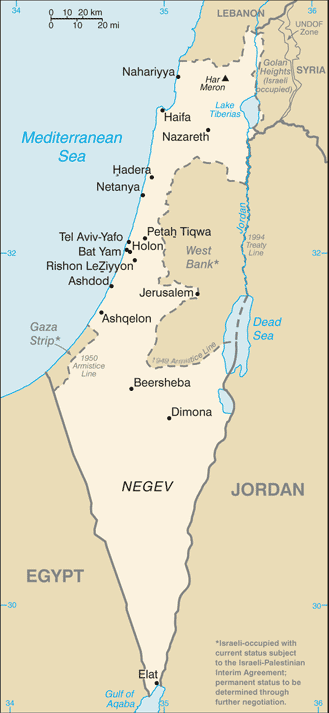
Nobody with eyes to see can press on with the myth that this is a political conflict. The anti-Semitism that lurks behind obsessive Israel-bashing can no longer be credibly passed off as “criticism of Israel”. It’s not about Israel and never was. It’s about those maddening Jews. Wherever they are, they make trouble. What is it with their stubborn insistence on their right to live and flourish in their homeland, when they know they are not wanted there?
Never mind the historical facts surrounding Jews’ indigenous rights, or the painstaking legal journey to national sovereignty (along with other newly minted Middle Eastern countries like Iraq and Syria, both of which have appalling human rights records, but never have their right to exist questioned). Treaties and international law are too dull, nuanced and complex. They take time and effort to understand. It’s very taxing for the brain. Narrative, though, takes no time at all to absorb. Stories of good and evil are simple, unnuanced and satisfyingly emotive.
If you attend to the myth-mongering on social media, it seems your choice is stark. Are you an ally of an all-powerful white supremacist, colonialist apartheid regime led by baby-killing oppressors, the likes of whose evil the world has never seen? Or are you a decent, compassionate human being, committed to social justice and ready to lend your support to those infamous Zionist monsters’ powerless, oppressed, racialized victims, who are languishing in their open-air prisons?
It’s a tough choice for progressive Jews. Before 1967, living with oneself as a Jew was easy. Socialist Israel was little David then and the massed hostile Arab states were Goliath. Even Bernie Sanders enjoyed his time on a kibbutz in 1963. (Mind you, that particular kibbutz, Sha’ar Ha’amakim, was so far left, one of its members was convicted of spying for the Soviet Union.)
Then those upstart Jews dared to win a war against incredible odds and had the chutzpah to take back territory that had been stolen from them in the 1948 War of Independence. The pivot from victim to victor, from powerlessness to power, was the kiss of death for their support from the left.
May 26, 2021
The not-so-hidden subtext of One Thousand And One Nights
At least, that’s how Scott Alexander at Astral Codex Ten opens this review of (an abridged version) of One Thousand And One Nights:
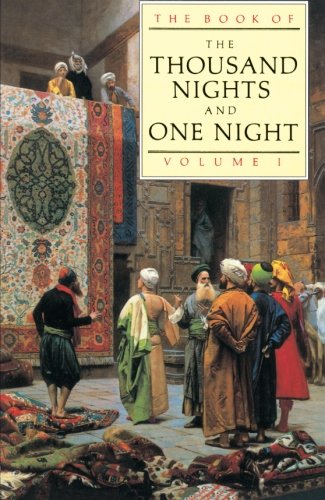
One of many different covers of various editions of this book, but almost certainly not the edition reviewed here.
One Thousand And One Nights is a book about love, wonder, magic, and morality. About genies, ape-people, and rhinoceroses who run around with elephants impaled on their horns. About how to use indexical uncertainty to hack the simulation running the universe to return the outcome you want. But most of all, it’s a book about how your wife is cheating on you with a black man.
Nights stretches from Morocco to China, across at least four centuries — and throughout that whole panoply of times and places, your wife is always cheating on you with a black man (if you’re black, don’t worry; she is cheating on you with a different black man). It’s a weird constant. Maybe it’s the author’s fetish. I realize that Nights includes folktales written over centuries by dozens of different people — from legends passed along in caravanserais, to stories getting collected and written down, to manuscripts brought to Europe, to Richard Burton writing the classic English translation, to the abridged and updated version of Burton I read. But somewhere in that process, probably multiple places, someone had a fetish about their wife cheating on them with a black man, and boy did they insert it into the story.
Our tale begins in Samarkand. One day the king, Shah Zaman, comes home unexpectedly and sees his wife cheating on him with a black man. He kills her in a rage, then falls sick with grief, and is taken to the palace of his brother, King Shahryar of Persia. While there, he sees King Shahryar’s wife cheat on him with a black man. He tells King Shahryar, who kills his wife in a rage too, then also falls sick with grief. The two grief-stricken kings decide to wander the world, expecting that maybe this will help in some way.
They come across a mighty king of the genies, and the brothers hide lest he see them and kill them. The genie falls asleep, and the genie’s wife finds them and demands they have sex with her or she’ll kill them. They have sex, and all the while, the genie’s wife is boasting about how even the king of the genies can’t prevent his wife from cheating. The two kings find this experience salutary — apparently the problem isn’t specific to them, it’s just an issue with the female sex in general. So they go back to the palace and everyone lives happily ever … no, actually, King Shahryar vows that he will bed a new woman every night, then kill her the following morning, thus ensuring nobody can ever cheat on him again.
So for however many years, King Shahryar beds a new woman every night, then kills her in the morning. After a while the kingdom begins to run dangerously low on women. The vizier frets over this, and his daughter Scheherazade hears him fretting. She develops a plan, and volunteers to be the king’s victim that night. After having sex, she tells the king a story. At the end, she says it’s too bad she’s going to die the next morning, because she knows other stories which are even better. Perhaps if the king spared her life for one night she could tell some of those too.
(I’d always heard that she leaves him at a cliff-hanger and makes him spare her to find out how it ends, which I think makes a better story, but this isn’t how the real Arabian Nights works).
Scheherazade’s stories are set in an idealized Middle East. The sultans are always wise and just, the princes are always strong and handsome, and almost a full half of viziers are non-evil. Named characters are always so beautiful and skilled and virtuous that it sometimes gets used it as a plot device — a character is separated from his family member or lover, so he wanders into a caravanserai and asks for news of someone who is excessively beautiful and skilled and virtuous. “Oh yes,” says one of the merchants, “I talked to a traveler from Cairo who said he encountered the most beautiful and skilled and virtuous person he’d ever seen in a garden there, he couldn’t shut up about them for days” — and now you know your long-lost brother must be in Cairo. In one case, a woman went searching for her long-lost son, tasted some pomegranate jam in Damascus, and immediately (and correctly!) concluded that only her son could make pomegranate jam that good. She demanded to know where the merchant had gotten the jam, and the trail led to a happy reunion.
The most common jobs in Idealized Middle East are sultan, merchant, poor-but-pious tailor, fisherman, merchant, evil vizier, sorcerer, merchant, thief, person who gets hired to assist a sorcerer because they have the exact right astrological chart to perform some otherwise-impossible ritual, and merchant. Of these, merchant is number one. Whatever else you’re doing — sailing, stealing, using your perfect astrological chart to enter a giant glowing door in the desert mysteriously invisible to everyone else — you’re probably also dealing goods on the side. The only exceptions are Moroccans (who are all sorcerers), Zoroastrians (who are all demonic cannibals), and Jews (who are all super-double merchants scamming everyone else). Also maybe the 5 – 10% of the Middle Eastern population who witches have turned into animals at any given time.
May 25, 2021
536 AD – Worst Year in History
Kings and Generals
Published 11 May 2021Start speaking a new language in 3 weeks with Babbel 🎉 Get 6 months FREE when you sign up for 6 months! ➡️ HERE: https://go.babbel.com/6plus6-youtube-…
Kings and Generals’ historical animated documentary series on the history of Ancient Civilizations continues with a video on the year 536 AD, which many historians consider the worst year in history, as plague, famine, volcanic eruption, and extreme weather patterns changed the fate of the millions, especially influencing Sassanid and Eastern Roman Empires.
Support us on Patreon: http://www.patreon.com/KingsandGenerals or Paypal: http://paypal.me/kingsandgenerals We are grateful to our patrons and sponsors, who made this video possible: https://docs.google.com/document/d/1o…
Art and animation: Haley Castel Branco
Narration: Officially Devin (https://www.youtube.com/user/OfficiallyDevin)
Script: Matt Hollis✔ Merch store ► teespring.com/stores/kingsandgenerals
✔ Podcast ► Google Play: http://bit.ly/2QDF7y0 iTunes: https://apple.co/2QTuMNG
✔ Twitter ► https://twitter.com/KingsGenerals
✔ Instagram ► http://www.instagram.com/Kings_GeneralsProduction Music courtesy of EpidemicSound
#Documentary #WorstYearInHistory #536

May 9, 2021
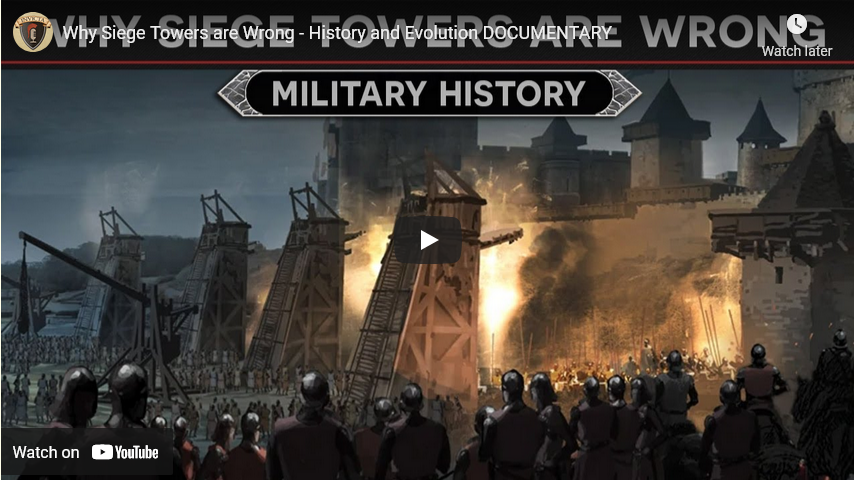
Why Siege Towers are Wrong – History and Evolution
Invicta
Published 1 Feb 2021The depiction of siege towers as massed, glorified troop elevators in most modern media is completely a-historic. In this video let’s reveal the true history of the Siege Tower.
Check out The Great Courses Plus to learn about daily life in the past: http://ow.ly/DWyz30rsjSX
In this video we explore the history of siege warfare and in particular the siege tower. This begins with our earliest civilizations in the Fertile Crescent. It is here in ancient Mesopotamia that people like the Assyrians began to experiment with new siege technology such as the siege tower. We look specifically at the best example of Assyrian Warfare and the Assyrian army with the Siege of Lachish. From here, siege technology would spread to nearby Egypt and across the Mediterranean. The Greeks picked it up and helped push the technology forward with great application in the campaigns of Alexander the Great. The Roman Army then adopted the Siege Tower and worked to perfect its application. We then finally turn to the use of the Siege Tower in the middle ages. Along the way we cover lots of specific examples like The Siege of Alesia, The Siege of Jerusalem, the Siege of Masada and much more.
#History
#Documentary
May 4, 2021
What was the first professional army in History?
Epimetheus
Published 3 Aug 2019The First Professional Army in History, The Ancient Assyrian Army
Sources:
The Ancient Assyrians by Mark Healy
Warfare in the Ancient World by John Hackett
A History of the Ancient Near East by Marc Van Der MieroopVideo on History of the Assyrian Empire From the Old Empire to the Neo-Assyrian Empire
https://youtu.be/aT57dnlo-TwThis video is sponsored by my Patrons over on Patreon
https://www.patreon.com/Epimetheus1776

May 1, 2021
Rulers Who Were Actually Good — History Hijinks
Overly Sarcastic Productions
Published 30 Apr 2021History is full of Rulers, but most of them (especially some famous ones) can be Kind Of Terrible upon closer inspection. So let’s take a look at two kings we can actually consider to be Good — not perfect, not blameless, but a heck of a lot more virtuous than the average ruler, that’s for sure.
This topic was requested by our patron Duncan! Thank you for your patronage, and for the topic suggestion.
SOURCES & Further Reading: The Great Courses Plus lectures “Being Persian” by Robert Garland, “The Persian Era” by Jean-Pierre Isbouts, “Saladin: Chivalry and Conquest – 1187” by Eamonn Gearon, and “Saladin and the Defeat of the Crusaders” by Dorsey Armstrong.
Our content is intended for teenage audiences and up.
TRACKLIST: “Monkeys Spinning Monkeys,” “Pippin the Hunchback” Kevin MacLeod (incompetech.com)
Licensed under Creative Commons: By Attribution 4.0 License
https://creativecommons.org/licenses/…PATREON: https://www.Patreon.com/OSP
PODCAST: https://overlysarcasticpodcast.transi…
DISCORD: https://discord.gg/osp
MERCH LINKS: http://rdbl.co/ospOUR WEBSITE: https://www.OverlySarcasticProductions.com
Find us on Twitter https://www.Twitter.com/OSPYouTube
Find us on Reddit https://www.Reddit.com/r/OSP/

April 5, 2021
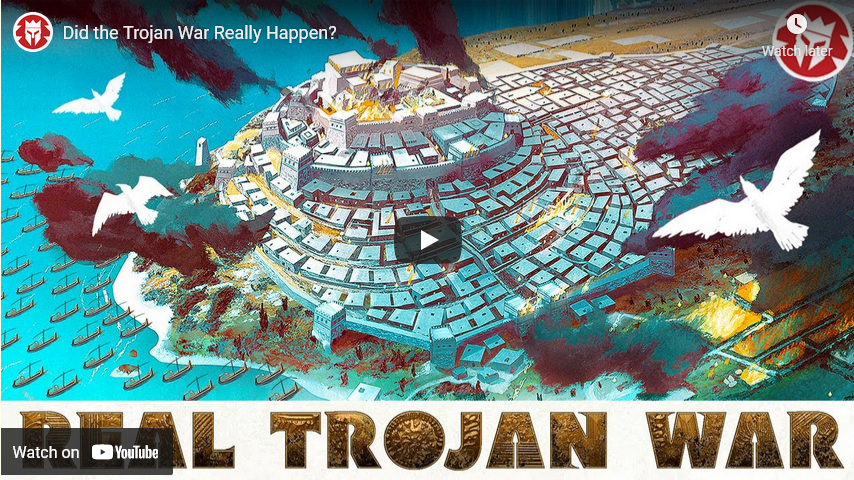
Did the Trojan War Really Happen?
Kings and Generals
Published 13 Aug 2020Kings and Generals’ historical animated documentary series continues with a video on the Trojan War, as we talk about the historicity of the conflict between Trojans and the Greeks depicted in the immortal Iliad of Homer. We also cover the Mycenaean and Hittite civilizations. How did this story come to be? Is it just a myth or is there historical proof that it happened? What does archeology tell us about the conflict at the end of the Bronze age? Were Hector, Achilles, Helen and Paris even real?
Support us on Patreon: http://www.patreon.com/KingsandGenerals or Paypal: http://paypal.me/kingsandgenerals We are grateful to our patrons and sponsors, who made this video possible: https://docs.google.com/document/d/1o…
Art and animation: Oğuz Tunç http://bit.ly/2H6oRjw
Script: Leo Stone
Narration: Officially Devin (https://www.youtube.com/user/OfficiallyDevin)✔ Merch store ► teespring.com/stores/kingsandgenerals
✔ Podcast ► Google Play: http://bit.ly/2QDF7y0 iTunes: https://apple.co/2QTuMNG
✔ Twitter ► https://twitter.com/KingsGenerals
✔ Instagram ► http://www.instagram.com/Kings_GeneralsProduction Music courtesy of Epidemic Sound: http://www.epidemicsound.com
#Documentary #Troy #Greece