History Matters
Published 12 Sep 2016Twitter: https://twitter.com/Tenminhistory
Patreon: https://www.patreon.com/user?u=4973164This episode of Ten Minute History (like a documentary, only shorter) covers the French Revolution and the Napoleonic Wars from the beginning of King Louis XVI’s reign all the way to the death of Napoleon Bonaparte in 1821. The first half covers the life and death of Louis XVI during the events of the revolution, including the rise and fall of Robespierre and the Reign of Terror. The second half covers the rise of Napoleon, the Napoleonic Wars and the eventual allied victory over France.
Ten Minute History is a series of short, ten minute animated narrative documentaries that are designed as revision refreshers or simple introductions to a topic. Please note that these are not meant to be comprehensive and there’s a lot of stuff I couldn’t fit into the episodes that I would have liked to. Thank you for watching, though, it’s always appreciated.
October 7, 2020
Ten Minute History – The French Revolution and Napoleon
October 6, 2020
“The Caucasus is a bad neighborhood”
Fighting broke out between Azerbaijan and Armenia last week over the status of the Nagorno-Karabakh region, a quasi-independent Armenian-majority territory still technically part of Azerbaijan (Nagorno-Karabakh’s declaration was not followed by formal recognition by other states). Mark Movsesian provides some historical background to the conflict in First Things:
Thirty years ago, in response to discriminatory treatment and outright pogroms against Armenians, the region declared independence. Armenia (population 3 million) supported Karabakh — though it has never formally recognized its independence — and a bloody war followed, in which 30,000 people died and hundreds of thousands on both sides became refugees. Against all odds, Armenia and Karabakh prevailed and established a buffer zone comprising perhaps 20 percent of Azeri territory.
An unstable ceasefire has held since 1994. But last week, Azerbaijan launched a military offensive against Karabakh and Armenia itself. This is more serious than past Azeri efforts to break the stalemate. Flush with petrodollars, Azerbaijan has purchased a large stockpile of heavy weapons, which it now employs against Armenia. Moreover, Turkey (population 80 million), which borders Armenia on the other side, is supporting Azerbaijan. Azeris are a Turkic people, though they are Shia, not Sunni, Muslims, and the Erdogan government sees the conflict as a way to pursue its goal of pan-Turanism. Turkey has supplied Azerbaijan with military advisers and equipment, including drones and fighter jets and thousands of Islamist soldiers from Syria, who fight for Azerbaijan on the front lines.
[…]
One needs to go back at least a century, to the collapse of the Ottoman and Czarist Empires. The two empires had long contested the border between them, which ran to the southwest of the Caucasus. Armenians, an ancient Christian people who lived on both sides of the border, found themselves in the crosshairs. During World War I, fearful that Armenians on the border would rise up and side with Russia — some Armenians did fight with the Russians, but many others fought with the Ottomans, and the Armenian threat was always exaggerated — the Ottoman government undertook an ethnic cleansing campaign, killing millions of Armenians and other Christians in the Armenian Genocide.
The Genocide eliminated Turkey’s once sizable Christian population. It likely would have eliminated the Armenian population on the other side of the border, too, except that a hastily-organized Armenian militia stopped a Turkish army in 1918 at the Battle of Sardarabad, which took place just outside the city of Yerevan, today Armenia’s capital. Sardarabad is unknown in the West, but the image of a small group of Christian Armenians fighting, alone, to stop a Muslim Turkish army bent on their annihilation is a powerful part of Armenian consciousness today.
When the war ended, the Soviet Union quickly settled the border dispute with Turkey, giving up some historic Armenian lands around the city of Kars, and took over the Caucasus and divided it among the region’s ethnic groups. The Soviets initially promised to place Karabakh, whose Armenian identity dated back many centuries and whose population was more than 90 percent Armenian, in the new Soviet Republic of Armenia. But Stalin, as commissar for nationalities, decided to place the region in Azerbaijan instead, as part of a divide-and-conquer strategy. Armenians never accepted the decision and, when the Soviet Union collapsed and the nations of the Caucasus gained independence, the conflict over the region resumed.
October 3, 2020
Sir John Glubb (“Glubb Pasha”), general and amateur historical theorist
In Quillette, Leo Nicolletto considers the theories of Sir John Glubb (commonly known as “Glubb Pasha”):

Glubb Pasha at a parade of the Arab Legion’s honor guard of the Jordanian army at the palace.
Detail of an original photo by Willem van de Poll via Wikimedia Commons.
Pasha Glubb was an English army officer who spent the best part of his career serving the newly-independent governments of Iraq and Jordan. An avid — if amateur — historian, he developed a theory on hegemonic orders that he called the “Fate of Empires.” Comparing a series of ancient and modern empires, he concluded that their average lifespan was 10 generations — about 250 years — and that, despite great geographic, technological, religious, and cultural differences, all empires follow a general pattern as they expand, develop, and finally decline and collapse. Although Glubb himself was the first to acknowledge the risks of over-simplification in his generalised model, his observations aptly describe, in broad-brushstrokes, not only the fate of past empires, but the contemporary situation in global politics today, particularly regarding the West and China.
Glubb was agnostic on whether the “laws” of history he claimed to uncover were at all deterministic, but hoped that, by understanding how empires decline and collapse, modern citizens stood a chance of avoiding their typical fate. And so, I want to consider ways in which the predicted collapse of Western hegemony might be averted. It’s another question whether or not such a collapse ought to be avoided. Glubb — as a man of his time and class — had imperialist tendencies, though his immersion in foreign cultures gave him an open-mindedness that is generally lacking in the present-day imperialists of Western conservative parties. At any rate, as we go along, I’ll suggest that if the West is to avoid the fate of past empires, it needs to stop acting like a typical empire. And to do that, it needs to move as far as possible from modern conservative policy — and its emphasis on corporate profit and economic growth — as it can.
* * *Glubb noted that empires tend to begin with a “breakout” phase, in which an insignificant nation on the margins of an established power — say, the Macedonians before Alexander, the Arabs before Muhammed, or the Mongols before Genghis Khan — suddenly overwhelms its neighbours. This “Age of Pioneers” becomes an “Age of Conquests” when, encouraged by early successes, the rising nation takes over the power structures of its conquered neighbour and continues to expand. Glubb noted that successful new empires are not motivated simply by loot and plunder. With an emphasis on “noble” virtues — adventurousness, courage, strength, and, importantly, honesty — rising empires don’t want simply to subdue the established power; they want to become as they perceive them to be: advanced, technological hegemons. The Arabs took over Greek and Persian institutions — as the Mongols would take over Chinese and Islamic institutions — to become masters of a revitalised and expanded civilisation.
A rising empire, argued Glubb, has at its advantage an optimistic sense of initiative, and a spirit of improvisation, that contrasts with the defensive deference to tradition found in more established powers, who have too much to lose by experimentation. The rising power, he claimed, is also typically marked by a racial homogeneity, and its members consequently feel a strong sense of duty and loyalty to their tribe. This frequently evolves into a sort of “ruling caste,” as the conquerors situate themselves at the head of the pre-existing societal order of the conquered, as happened in India, first with the Mughals, and later with the British.
Having established control over large, diverse territories, the new pax impera creates ideal conditions for trade. And so begins what Glubb called the “Age of Commerce.” The desire for honour and glory gradually becomes a desire for material riches. At first, the conquering class may participate only indirectly in such commerce. Their military success has made the roads and seas safe for merchants, whom they tax and protect, but from whom they remain aloof — indeed, it’s intriguing how low on the social scale merchants and businessmen are considered in many pre-modern cultures. But sooner or later, seeing the potential for riches, the ruling class can’t but get itself involved. However, Glubb claimed that at these still-early stages of the “Age of Commerce,” material gain is still seen in terms of national glory, an extension of political conquest. “Noble” virtues continue to be taught and idealised, above all a sense of duty to the nation.
The “Age of Commerce” thus gives way to an “Age of Affluence,” marked by great civic works and building projects, and investments in art and culture, as the rich look for ways to spend their newfound wealth. In our own day, this depiction aptly fits China. The ruling class of the Communist Party — long aloof, at least in theory, from material excess — has joined forces with the commercial classes to promote not just prosperity but fantastic wealth. All the same, many Chinese — in business as well as in engineering or research — describe their motivations just as much as a duty to the country as for their own or their family’s benefit. Success in business is a source of national pride.
Though perhaps not for long.
September 28, 2020
What Happened After The Bronze Age Collapse?
Epimetheus
Published 17 Jun 2020What Happened After The Bronze Age Collapse?
This video covers the period of time from the Bronze Age collapse through the Near Eastern dark age and to the first Iron Age empire.
This video is sponsored by my Patrons over on Patreon
https://www.patreon.com/Epimetheus1776
From the comments:
Epimetheus
3 months ago
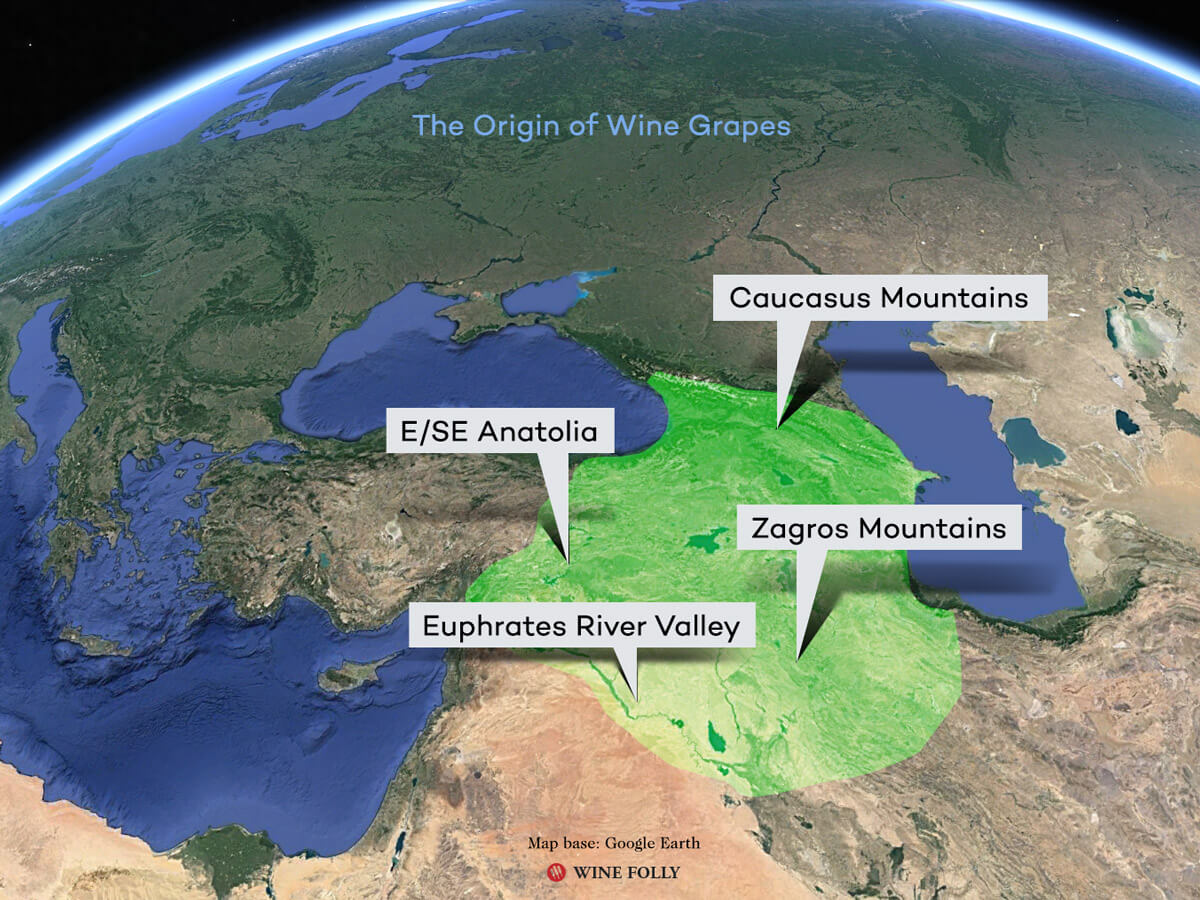
Additional info some might find interesting:Although the Arameans emerged from arid Southern Syria (in a similar manner to the earlier Amorites, taking advantage of a power vacuum) it is debated whether or not they were originally from there, with some believing they came from the Zagros mountains to Syria, before re-entering Mesopotamia. Others believe they were related to the Amorites, essentially they were the Amorites that stayed behind. There is also some debate if Ahlamu (also from the same region) is a synonym for Aramean or if it was a more broad generic term for the nomads, outlaws and ruffians of the region. (For example the Suteans, Chaldeans and Arameans may have all been considered Ahlamu) It is also interesting that many fugitives from authority in previous centuries found refuge in the frontier Ahlamu regions of the south.
All of that more or less got cut out of the video, and I thought some of you would find interesting.
September 27, 2020
Dividing Up The Middle East – The Creation of Lebanon I THE GREAT WAR 1920
The Great War
Published 26 Sep 2020Sign up for Curiosity Stream and get Nebula bundled in: https://curiositystream.com/thegreatwar
In the summer of 1920 it became clear that the many different voices and local opinions on the future of the former Ottoman provinces were going to be mostly ignored. France and Britain had their own ideas for the new mandate states in the region.
» SUPPORT THE CHANNEL
Patreon: https://www.patreon.com/thegreatwar» OUR PODCAST
https://realtimehistory.net/podcast – interviews with World War 1 historians and background info for the show.» BUY OUR SOURCES IN OUR AMAZON STORES
https://realtimehistory.net/amazon *
*Buying via this link supports The Great War (Affiliate-Link)» SOURCES
Sicker, Martin. The Middle East in the Twentieth Century (Greenwood Publishing, 2001)Gontaut-Biron, Roger. Comment la France s’est installée en Syrie (Paris: Plon, 1922). https://archive.org/details/commentla…
Cornwallis, K. Notes on the Middle-East No.4. 1920. File 756/1917 Pt 2-3 “ARAB BULLETIN Nos 66-114” [374r] (756/834), British Library: India Office Records and Private Papers, IOR/L/PS/10/658.
Miller, David Hunter. My Diary. At the Conference of Paris. Vol 4. (New York, 1924). https://archive.org/details/MyDiaryAt…
D’Andurain, J. “Gouraud, Henri” in: 1914-1918-online. International Encyclopedia of the First World War, ed. by Ute Daniel, Peter Gatrell, Oliver Janz, Heather Jones, Jennifer Keene, Alan Kramer, and Bill Nasson, issued by Freie Universität Berlin, Berlin 2014-10-08. DOI: 10.15463/ie1418.10303. https://encyclopedia.1914-1918-online…
Naamany, B. “A hundred years since Sykes-Picot, maps’ reading”. General Secretariat of the Arab League. Tunis. Tunisia. 2018. http://nna-leb.gov.lb/en/show-news/98…
Meouchy, N. “Les temps et les territoires de la révolte du Nord (1919-1921).” In: Alep et ses territoires: Fabrique et politique d’une ville (1868-2011). (Beyrouth – Damas: Presses de l’Ifpo, 2014).
Raymond, André. “III – La Syrie, du Royaume arabe à l’indépendance (1914-1946)”. In La Syrie d’aujourd’hui. Aix-en-Provence: Institut de recherches et d’études sur les mondes arabes et musulmans, 1980. (pp. 55-85)
Kouyoumdjian, O. “Le Liban à la veille et au début de la Grande Guerre: Mémoires d’un gouverneur, 1913-1915″. Revue D’histoire Arménienne Contemporaine. Paris: Centre d’histoire arménienne contemporaine. 2003.
Government of New Zealand, Ministry for Culture and Heritage. “Anzac troops take revenge on Arab civilians at Surafend” https://nzhistory.govt.nz/page/anzac-….
Ministère de la Guerre. Etat-major des armées. Service historique. Les armées françaises dans la Grande guerre. Tome IX. 9, 1, ANNEXES. Imprimerie Nationale. Paris. France. 1935.
Australian Imperial Force unit war diaries. 1914-1918 War. Light Horse. Item number: 10/3/47. Title : 3rd Australian Light Horse Brigade. December 1918. AWM4 Class 10 – Light Horse. https://www.awm.gov.au/collection/C13…
» MORE THE GREAT WAR
Website: https://realtimehistory.net
Instagram: https://instagram.com/the_great_war
Twitter: https://twitter.com/WW1_Series
Reddit: https://reddit.com/r/TheGreatWarChannel»CREDITS
Presented by: Jesse Alexander
Written by: Jesse Alexander
Director: Toni Steller & Florian Wittig
Director of Photography: Toni Steller
Sound: Toni Steller
Editing: Toni Steller
Motion Design: Philipp Appelt
Mixing, Mastering & Sound Design: http://above-zero.com
Maps: Daniel Kogosov (https://www.patreon.com/Zalezsky)
Research by: Jesse Alexander
Fact checking: Florian WittigChannel Design: Alexander Clark
Original Logo: David van StepholdContains licensed material by getty images
All rights reserved – Real Time History GmbH 2020
September 24, 2020
The End of the European Empires? | The Suez Crisis | Part 5
TimeGhost History
Published 23 Sep 2020Whilst the fighting may be over, the Crisis certainly isn’t. For starters, the three invaders may have agreed to a ceasefire, but aren’t too keen to give up the land they’ve conquered. And even if this is resolved, what lies in wait for the humiliated ex-colonial powers? Ultimately, only one thing does seem certain — irreversible change.
Join us on Patreon: https://www.patreon.com/TimeGhostHistory
Hosted by: Indy Neidell
Written by: Francis van Berkel
Director: Astrid Deinhard
Producers: Astrid Deinhard and Spartacus Olsson
Executive Producers: Astrid Deinhard, Indy Neidell, Spartacus Olsson, Bodo Rittenauer
Creative Producer: Joram Appel
Post-Production Director: Wieke Kapteijns
Research by: Francis van Berkel
Image Research: Daniel Weiss
Edited by: Daniel Weiss
Sound design: Marek Kamiński
Maps: Ryan WeatherbyColorizations:
– Mikolaj Uchman
– Daniel Weiss – https://www.facebook.com/The-Yankee-C…
– Norman Stewart – https://oldtimesincolor.blogspot.com/Sources:
National Archives NARA
Images from the UN News and Media
1960s Soviet Film “Egypt our Arab Ally”From the Noun Project:
– speech_16988 By Juan Pablo Bravo, CL
– Parliament_1658396 By Dimitrios Stamatis, GB
– Money by Gilberto
– Ship by Edward Boatman
– soldier by Wonmo Kang
– oil barrel by Musmellow
– europe By Randomhero
– Income(not dollar)_2897802
– Trade by Adrien Coquet
– Handshake By priyanka, IN
– world by Guilherme Furtado
– telegraph By Luke Anthony Firth, GB
– people by ProSymbols
– documents by Srinivas AgraSoundtracks from Epidemic Sound:
– “Devil’s Disgrace” – Deskant
– “In the Bank We Trust” – Jon Sumner
– “Searching Through Sand” – Deskant
– “The Inspector 4” – Johannes Bornlöf
– “Crying Winds” – Deskant
– “Scented Nectar” – Rune Dale
– “As the Rivers Collapse” – Deskant
– “Dark Beginning” – Johan Hynynen
– “Guilty Shadows 4” – Andreas JamshereeArchive by Screenocean/Reuters https://www.screenocean.com.
A TimeGhost chronological documentary produced by OnLion Entertainment GmbH.
From the comments:
TimeGhost History
2 days ago (edited)
So that’s the end of our series on the Suez Crisis. It’s been a pretty wild and messy ride, but we think our realtime format gave it a fresh perspective that hasn’t done before.If you liked that final point Indy made about Churchill and The Beatles, and you want to find out more about decolonisation, then you should look up the work of Bill Schwarz. He was the one who originally made the comparison in his book White Man’s World, and it’s a really fascniating read, if also a bit challenging. Decolonisation is actually becoming a really vibrant field of study in academia and there are a whole host of books available if any of you want to dive into the topic. Europe After Empire by Elizabeth Buettner is an excellent place to start and Fight or Flight by Martin Thomas will be right up your street if you want to learn about the wars of decolonisation and the politics behind them. If you have any other suggestions then feel free to post them below.
Anyway, we hope you enjoyed the series and learnt a thing or two.
September 23, 2020
The Man in Monty’s Shadow – Claude Auchinleck – WW2 Biography Special
World War Two
Published 22 Sep 2020Claude Auchinleck put military matters over that of politics. Although this angered some, mainly Churchill, Auchinleck still found himself in India, and later facing down Rommel in North Africa.
Join us on Patreon: https://www.patreon.com/TimeGhostHistory
Or join The TimeGhost Army directly at: https://timeghost.tvCheck out our TimeGhost History YouTube Channel: https://www.youtube.com/c/timeghost?s…
Follow WW2 day by day on Instagram @ww2_day_by_day – https://www.instagram.com/ww2_day_by_day
Between 2 Wars: https://www.youtube.com/playlist?list…
Source list: http://bit.ly/WW2sourcesHosted by: Indy Neidell
Written by: Francis van Berkel
Director: Astrid Deinhard
Producers: Astrid Deinhard and Spartacus Olsson
Executive Producers: Astrid Deinhard, Indy Neidell, Spartacus Olsson, Bodo Rittenauer
Creative Producer: Maria Kyle
Post-Production Director: Wieke Kapteijns
Research by: Lennart Visser
Edited by: Monika Worona
Sound design: Marek KamińskiColorizations by:
Norman StewartSources:
National Portrait Gallery
USHMMArchive by Screenocean/Reuters https://www.screenocean.com.
A TimeGhost chronological documentary produced by OnLion Entertainment GmbH.
September 17, 2020
The British are Coming! Is Nuclear War as Well? | The Suez Crisis | Part 4
TimeGhost History
Published 16 Sep 2020As Britain, France, and Israel continue to push home their advantage in the face of overwhelming international pressure, the Soviet Union finally enter the arena. Britain now faces utter disaster. The Soviets are threatening nuclear war and the British economy faces free fall; how much longer can Britain reject a ceasefire?
Join us on Patreon: https://www.patreon.com/TimeGhostHistory
Hosted by: Indy Neidell
Written by: Francis van Berkel
Director: Astrid Deinhard
Producers: Astrid Deinhard and Spartacus Olsson
Executive Producers: Astrid Deinhard, Indy Neidell, Spartacus Olsson, Bodo Rittenauer
Creative Producer: Joram Appel
Post-Production Director: Wieke Kapteijns
Research by: Francis van Berkel
Image Research by Daniel Weiss & Shaun Harrison
Edited by: Karolina Dołęga
Sound design: Marek Kamiński
Maps by Ryan WeatherbyColorizations:
– Mikołaj Uchman
– Daniel Weiss
– Carlos Ortega Pereira, BlauColorizations – https://www.instagram.com/blaucolorizations
– Norman Stewart – https://oldtimesincolor.blogspot.com/Sources:
– IDF Spokesperson’s Unit
– Imperial War Museums: © MH 23498, MH 23513, HU 4190, HU 4183
– Bundesarchive
– The Bank of England ArchiveMusic:
– “As the Rivers Collapse” – Deskant
– “Descending Mount Everest” – Trailer Worx
– “Last Man Standing 3” – Johannes Bornlöf
– “March Of The Brave 10” – Rannar Sillard.mp3
– “Moving to Disturbia” – Experia
– “Break Free” – Fabien Tell
– “Last Point of Safe Return” – Fabien Tell
– “Epic Adventure Theme 4” – Håkan Eriksson
– “Deflection” – Reynard Seidel
– “Last Minute Reaction” – Phoenix Tail
– “Force Matrix” – Jon BjorkThe icons from The Noun Project by Geovani Almeida, alerma, Mochammad Kafi, Gilberto, Leona Grande, Smalllike & Pause08
Archive by Screenocean/Reuters https://www.screenocean.com.
A TimeGhost chronological documentary produced by OnLion Entertainment GmbH.
From the comments:
TimeGhost History
2 days ago
We thought we’d share with you a quote that didn’t make it into the final script but really sums up the outpouring of protests the British government received upon its military intervention in Suez.It’s a letter in The Times newspaper on November 6, written by none other than Violet Bonham Carter — a leading member of the Liberal Pary, close friend of Winston Churchill, and grandmother of actress Helena Bonham Carter. It reads: “For the first time in our history our country has been reduced to moral impotence. We cannot order Soviet Russia to obey the edict of the United Nations which we ourselves have defied, nor to withdraw her tanks and guns from Hungary while we are bombing and invading Egypt. Today we are standing in the dock with Russia … Never in my lifetime has our name stood so low in the eyes of the world. Never have we stood so ingloriously alone.”
September 10, 2020
Is The War Ending? – Oil Crisis and UN Intervention | The Suez Crisis | Part 3
TimeGhost History
Published 9 Sep 2020As Israel nears victory in Operation Kadesh, Britain and France are fighting a losing war of their own on the frontlines of the global political scene. The UN are staunchly against Britain and France’s involvement, and if the duo aren’t careful, another superpower may soon enter the fray, one with the intention of a war of more than just words.
Join us on Patreon: https://www.patreon.com/TimeGhostHistory
Hosted by: Indy Neidell
Written by: Francis van Berkel
Director: Astrid Deinhard
Producers: Astrid Deinhard and Spartacus Olsson
Executive Producers: Astrid Deinhard, Indy Neidell, Spartacus Olsson, Bodo Rittenauer
Creative Producer: Joram Appel
Post-Production Director: Wieke Kapteijns
Research by: Francis van Berkel
Image Research: Shaun Harrison & Daniel Weiss
Edited by: Daniel Weiss
Sound design: Marek Kamiński
Maps: Ryan WeatherbyColorizations:
– Mikolaj Uchman
– Daniel Weiss – https://www.facebook.com/The-Yankee-C…
– Carlos Ortega Pereira (BlauColorizations) – https://www.instagram.com/blaucolorizations
– Norman Stewart – https://oldtimesincolor.blogspot.com/
– Jaris Almazani (Artistic Man) – https://instagram.com/artistic.manSources:
National Archives NARA
Images from the UN News and Media
1960s Soviet Film “Egypt our Arab Ally”From the Noun Project:
– Letter by Bonegolem
– soldier by Wonmo Kang
– Oil Tank by MangsaabguruSoundtracks from Epidemic Sound:
– “Devil’s Disgrace” – Deskant
– “As the Rivers Collapse” – Deskant
– “Invocation” – Deskant
– “Call of Muezzin” – Sight of Wonders
– “Crying Winds” – Deskant
– “On the Edge of Change” – Brightarm Orchestra
– “Where Kings Walk” – Jon Sumner
– “Divine Serpent” – Deskant
– “Synchrotron” – Guy Copeland
– “Dunes of Despair” – DeskantArchive by Screenocean/Reuters https://www.screenocean.com.
A TimeGhost chronological documentary produced by OnLion Entertainment GmbH.
From the comments:
TimeGhost History
2 days ago
We took a long time to settle on a title for this episode because so much happens. Nasser promises a people’s war; the entirety of Western Europe faces an oil crisis; America looks like it might sanction its allies; Israel almost calls the whole thing off; the first-ever international Peacekeeping Force is proposed at the UN; the list goes on. Complicated stuff but this is why our realtime format is so important. Something as crazy as the Suez Crisis can only be adequately understood if you go through it step-by-step. Otherwise, it just becomes an incomprehensible mass of information.Want to ensure we can carry on doing stuff like this? Join the TimeGhost Army https://www.patreon.com/TimeGhostHistory
September 3, 2020
Britain and France vs. The World | The Suez Crisis | Part 2
TimeGhost History
Published 2 Sep 2020After much delay, Britain and France finally keep to their side of the bargain with Israel and begin their bombing campaign of Egypt. But the condemnation from America and the UN calls into question how long the invaders can keep this up.
Join us on Patreon: https://www.patreon.com/TimeGhostHistory
Hosted by: Indy Neidell
Written by: Francis van Berkel and Joram Appel
Director: Astrid Deinhard
Producers: Astrid Deinhard and Spartacus Olsson
Executive Producers: Astrid Deinhard, Indy Neidell, Spartacus Olsson, Bodo Rittenauer
Creative Producer: Joram Appel
Post-Production Director: Wieke Kapteijns
Research by: Francis van Berkel and Joram Appel
Image research by: Shaun Harrison & Karolina Dołęga
Edited by: Karolina Dołęga
Sound design by: Marek KamińskiColorizations by:
Mikołaj Uchman
Daniel Weiss
Norman Stewart – https://oldtimesincolor.blogspot.com/Visual Sources:
Israeli Defense Forces
National Photo Collection of Israel
Universal Studios
Tony Clarke Collection – David Whitworth from Wikimedia Commons
Abubiju from Wikimedia Commons
Fortepan Donor
Government Press Office (Israel)
National Archives NARA
Icons from The Noun Project by: Gilberto, Komkrit Noenpoempisut, Alice Design, SmalllikeMusic:
“As the Rivers Collapse” – Deskant
“Moving to Disturbia” – Experia
“March Of The Brave 10” – Rannar Sillard – Test
“Weapon of Choice” – Fabien Tell
“Disciples of Sun Tzu” – Christian Andersen
“London” – Howard Harper-Barnes
“Maze Heist” – Max Anson
“Descending Mount Everest” – Trailer WorxArchive by Screenocean/Reuters https://www.screenocean.com.
A TimeGhost chronological documentary produced by OnLion Entertainment GmbH.
From the comments:
TimeGhost History
2 days ago (edited)
This episode is pretty much the same as the last, only turned up to 11. Israel continues making gains in Sinai, but they are now aided by British and French air forces that have finally arrived.Meanwhile, Britain and France continue lying through their teeth about any collusion with Israel. The British Foreign Minister will lie to his own Parliament about military collaboration while French ships are supporting an Israeli offensive against the settlement of Rafah.
The economic costs of this also become very apparent in this episode. Nasser successfully closes the Canal, and with America in no mood to help, the whole of Europe faces oil shortages.
In short, the whole thing is a mess. Don’t worry though, Indy will guide you through it.
August 30, 2020
August 27, 2020
Israel Faces U.S. Sanctions – The Second Arab-Israeli War Begins | The Suez Crisis | Part 1
TimeGhost History
Published 26 Aug 2020Israel launches its invasion of Egypt, much to the surprise of America who reacts furiously to the act of aggression. It quickly becomes apparent to America that Israel is not acting alone when Britain and France deliver an ultimatum to Egypt. However, could Anglo-French war plans hit the buffers if the expected American backing does not materialize?
Join us on Patreon: https://www.patreon.com/TimeGhostHistory
Hosted by: Indy Neidell
Written by: Francis van Berkel and Joram Appel
Director: Astrid Deinhard
Producers: Astrid Deinhard and Spartacus Olsson
Executive Producers: Astrid Deinhard, Indy Neidell, Spartacus Olsson, Bodo Rittenauer
Creative Producer: Joram Appel
Post-Production Director: Wieke Kapteijns
Research by: Francis van Berkel and Joram Appel
Image Research: Shaun Harrison & Daniel Weiss
Edited by: Daniel Weiss
Sound design: Marek Kamiński
Maps: Ryan WeatherbyColorizations:
– Mikolaj Uchman
– Daniel Weiss
– Carlos Ortega Pereira (BlauColorizations) – https://www.instagram.com/blaucoloriz…
– Norman Stewart – https://oldtimesincolor.blogspot.com/Sources:
National Archives NARA
Library of Congress Geography and Maps Department
Photo From the IAF website, https://www.iaf.org.ilFrom the Noun Project:
– telegraph – Luke Anthony Firth, GB
– soldier – Wonmo KangSoundtracks from Epidemic Sound:
– “Devil’s Disgrace” – Deskant
– “Searching Through Sand” – Deskant
– “As the Rivers Collapse” – Deskant
– “Crying Winds” – Deskant
– “Where Kings Walk” – Jon Sumner
– “Dreamless Nights” – The New Fools
– “Call of Muezzin” – Sight of Wonders
– “Dunes of Despair” – DeskantArchive by Screenocean/Reuters https://www.screenocean.com.
A TimeGhost chronological documentary produced by OnLion Entertainment GmbH.
From the comments:
TimeGhost History
2 days ago
Some of the military history buffs out there no doubt know about B.H. Liddell Hart and his contribution to interwar strategic theory. Well, he reportedly referred to the Israeli invasion here, code-named Operation Kadesh, as one of the finest applications of the strategy of the indirect approach he developed. This is reason enough to watch this episode, but the opening of hostilities in Sinai is interesting for reasons beyond purely theoretical concerns.From the get-go, military plans are inherently tied to political maneuvering. From the secrecy and deception of the IDF’s movements to the delaying of the Anglo-French bombing campaign; politics determine the course of this war. However, it’s easy in limited conflicts like this that are almost academic in their application, to forget that it’s destroying the lives of ordinary people. Not only the soldiers fighting, but also the civilians whose homes and lives are under threat.
Average Egyptian and Palestinians suffered disproportionately in this short campaign. You’ll learn in a later episode about at least one massacre in a Palestinian town, and there was a blatant disregard for civilian life on all sides. You probably all have different opinions on which side deserves to win here and who is at fault. But let’s not forget the real people who suffered as a result of international politics.
August 25, 2020
The Bronze Age Changes with Archeological Evidence
The Cynical Historian
Published 22 Feb 2019Check out the full collaboration playlist here: https://www.youtube.com/playlist?list…
Up until the 19th century, the Bronze Age was merely a time of legends, where the Bible and Iliad told fantastic tales of brutality and triumph. But archeology changed that, and that’s what I want to talk about today, how the Bronze Age was rescued from legend.
————————————————————
references:
Stephen L. Dyson, “Archaeology and Ancient History,” in A Companion to Ancient History, edited by Andrew Erskine (Malden, Mass.: Blackwell Publishers, 2002), 59-66. https://amzn.to/2PCf04XMarie-Henriette Gates, “Archeology and the Ancient Near East: Methods and Limits,” in A Companion to the Ancient Near East, edited by Daniel C. Snell (Malden, Mass.: Blackwell Publishers, 2005), 65-79. https://amzn.to/2BrsBqO
Alan B. Lloyd, “Chronology,” in A Companion to Ancient Egypt, vol. 1, edited by Alan B. Lloyd (Malden, Mass.: Blackwell Publishers, 2010), xxxii-xliii. https://amzn.to/2LqGZnM
John Marincola, “Historiography,” in A Companion to Ancient History, edited by Andrew Erskine (Malden, Mass.: Blackwell Publishers, 2002), 13-22. https://amzn.to/2PCf04X
John Van Seters, “Historiography in Ancient Israel,” in A Companion to Western Historical Thought, edited by Lloyd Kramer and Sarah Maza (Malden, Mass.: Blackwell Publishers, 2002), 15-34. https://amzn.to/2PAC5Vz
Tim Whitmarsh, “Ancient History through Ancient Literature,” in A Companion to Ancient History, edited by Andrew Erskine (Malden, Mass.: Blackwell Publishers, 2002), 77-86. https://amzn.to/2PCf04X
————————————————————
Support the channel through PATREON:
https://www.patreon.com/CynicalHistorian
or pick up some merchandise at SpreadShirt:
https://shop.spreadshirt.com/cynicalh…LET’S CONNECT:
Discord: https://discord.gg/Ukthk4U
Twitter: https://twitter.com/Cynical_History
————————————————————
Wiki: The Bronze Age is a historical period characterized by the use of bronze, and in some areas proto-writing, and other early features of urban civilization. The Bronze Age is the second principal period of the three-age Stone-Bronze-Iron system, as proposed in modern times by Christian Jürgensen Thomsen, for classifying and studying ancient societies.An ancient civilization is defined to be in the Bronze Age either by producing bronze by smelting its own copper and alloying with tin, arsenic, or other metals, or by trading for bronze from production areas elsewhere. Bronze itself is harder and more durable than other metals available at the time, allowing Bronze Age civilizations to gain a technological advantage.
Copper-tin ores are rare, as reflected in the fact that there were no tin bronzes in Western Asia before trading in bronze began in the third millennium BC. Worldwide, the Bronze Age generally followed the Neolithic period, with the Chalcolithic serving as a transition. Although the Iron Age generally followed the Bronze Age, in some areas (such as Sub-Saharan Africa), the Iron Age intruded directly on the Neolithic.
Bronze Age cultures differed in their development of the first writing. According to archaeological evidence, cultures in Mesopotamia (cuneiform script) and Egypt (hieroglyphs) developed the earliest viable writing systems
————————————————————
Hashtags: #history #TheBronzeAge #archeology #BronzeBonanza
August 20, 2020
Britain, France, and Israel’s War Collusion | The Suez Crisis | Prelude 2
TimeGhost History
Published 19 Aug 2020Britain and France are becoming increasingly worried about the growing threat of Egypt to the Middle East and Africa — they are not alone — Israel is also worried. Israel’s close proximity to Egypt makes them a valuable secret accomplice in finding justification for a war that will seek to remove Gamal Abdel Nasser.
Join us on Patreon: https://www.patreon.com/TimeGhostHistory
Hosted by: Indy Neidell
Written by: Joram Appel and Francis van Berkel
Director: Astrid Deinhard
Producers: Astrid Deinhard and Spartacus Olsson
Executive Producers: Astrid Deinhard, Indy Neidell, Spartacus Olsson, Bodo Rittenauer
Creative Producer: Joram Appel
Post-Production Director: Wieke Kapteijns
Research by: Joram Appel
Image Research: Ian Irungu, Shaun Harrison & Daniel Weiss
Edited by: Daniel Weiss
Sound design: Marek Kamiński
Maps: Ryan WeatherbyColorizations:
– Mikolaj Uchman
– Daniel Weiss
– Carlos Ortega Pereira (BlauColorizations) – https://www.instagram.com/blaucoloriz…
– Norman Stewart – https://oldtimesincolor.blogspot.com/Sources:
National Archives NARA
Library of Congress Geography and Maps Department
Munich_conference – Mareček2000From the Noun Project:
– Paris – Vonn WeisenbergerSoundtracks from Epidemic Sound:
– “Devil’s Disgrace” – Deskant
– “Dreamless Nights” – The New Fools
– “Where Kings Walk” – Jon Sumner
– “Invocation” – Deskant
– “Call of Muezzin” – Sight of Wonders
– “Crying Winds” – Deskant
– “Divine Serpent” – Deskant
– “Pepper Seeds” – Rune Dale
– “Searching Through Sand” – Deskant
– “Scented Nectar” – Rune Dale
– “As the Rivers Collapse” – DeskantArchive by Screenocean/Reuters https://www.screenocean.com.
A TimeGhost chronological documentary produced by OnLion Entertainment GmbH.
From the comments:
TimeGhost History
2 days ago
“And now for our second prologue episode on the Suez Crisis. This one is all about a conspiracy where three countries believe they can fool the US, USSR, and entire UN all at the same time. Hindsight is of course 20/20, but it really is astounding that Britain, France, and Israel thought they could start a war with another member of the UN with a completedly engineered casus belli. This isn’t the first or last time something like this has happened in the history of international relations. Still, the pure audacity of Britain and France in their plans here really does seem quite unique. Can you guys think of any other examples of this kind of thing?”Cheers,
Francis.
August 14, 2020
How Feminism Came to the Middle East – Women’s Emancipation – WW2 – On the Homefront 006
World War Two
Published 13 Aug 2020While battles rage across the world, women at home are fighting for their basic emancipation. In Egypt, Huda Shaarawi stands at the centre of this struggle.
Join us on Patreon: https://www.patreon.com/TimeGhostHistory
Or join The TimeGhost Army directly at: https://timeghost.tvFollow WW2 day by day on Instagram @World_war_two_realtime https://www.instagram.com/world_war_two_realtime
Between 2 Wars: https://www.youtube.com/playlist?list…
Source list: http://bit.ly/WW2sourcesHosted by: Anna Deinhard
Written by: Spartacus Olsson and Fiona Rachel Fischer
Director: Astrid Deinhard
Producers: Astrid Deinhard and Spartacus Olsson
Executive Producers: Astrid Deinhard, Indy Neidell, Spartacus Olsson, Bodo Rittenauer
Creative Producer: Joram Appel
Post-Production Director: Wieke Kapteijns
Research by: Fiona Rachel Fischer
Edited by: Miki Cackowski
Sound design: Marek Kamiński
Map animations: Eastory (https://www.youtube.com/c/eastory)Colorizations by:
Daniel Weiss
Carlos Ortega Pereira, BlauColorizations – https://www.instagram.com/blaucoloriz…
Norman Stewart – https://oldtimesincolor.blogspot.com/Sources:
TIMEA
Bundesarchiv
IWM E 817
USHMM
From the Noun Project: Letter by Mochammad KafiSoundtracks from the Epidemic Sound:
Rune Dale – “Scented Nectar”
Deskant – “Genie’s Bane”
Deskant – “Divine Serpent”
Deskant – “Dunes of Despair”
Sight of Wonders – “Call of Muezzin”
Philip Ayers – “Trapped in a Maze”
Skrya – “First Responders”Archive by Screenocean/Reuters https://www.screenocean.com.
A TimeGhost chronological documentary produced by OnLion Entertainment GmbH.