
World War Two
Published 1 Apr 2023As the Allies prepare to close in on Germany from all fronts, a shake up of the German military leadership can only achieve so much…
(more…)
April 3, 2023
Goodbye Manstein… Hello Model – WW2 – Week 240 – April 1, 1944
Comments Off on Goodbye Manstein… Hello Model – WW2 – Week 240 – April 1, 1944
The poison garden of Alnwick
Tom Scott
Published 29 May 2017Inside the beautiful Alnwick Garden, behind a locked gate, there’s the Poison Garden: it contains only poisonous plants. Trevor Jones, head gardener, was kind enough to give a guided tour!
For more information about visiting the Castle, Garden, and poison garden: https://alnwickgarden.com/
(And yes, it’s pronounced “Annick”.)
(more…)
Comments Off on The poison garden of Alnwick
April 2, 2023
Vektor Mini-SS: South Africa’s Answer to the FN Minimi
Forgotten Weapons
Published 9 Dec 2022While under international embargo and at war in the late 1970s, South Africa needed a new 7.62mm GPMG. The answer was Vektor’s SS77, a design which would replace the FN MAG in South African service in the 1980s. The gun had really substantial problems for many years, and took a lot of work to revise and improve until it was finally fit for service. However, that work did result in a really excellent gun. With the US adoption of the FN Minimi as a Squad Automatic Weapon, interest developed in a 5.56mm version of the SS77.
Named the Mini-SS, this was initially envisioned as a conversion of the SS77, but that never actually came to pass. Instead, the Mini-SS was built from the ground up as a 5.56mm SAW, with a number of changes to reduce its weight (like a simple fixed polymer stock, fixed gas port, and the removal of tripod attachment points). Coming into service in the early 1990s, the Mini-SS has developed an excellent reputation.
Mechanically, both of the Vektor designs are unusual for the use of an asymmetric side-tilting bolt (like the ZH-29 and only a few other production guns). It is a very simply gun to disassemble, and has a lot of quite clever design features.
(more…)
Comments Off on Vektor Mini-SS: South Africa’s Answer to the FN Minimi
QotD: The (in-)effectiveness of chemical weapons against “Modern System” armies
… it is far easier to protect against chemical munitions than against an equivalent amount of high explosives, a point made by Matthew Meselson. Let’s unpack that, because I think folks generally have an unrealistic assessment of the power of a chemical weapon attack, imagining tiny amounts to be capable of producing mass casualties. Now chemical munition agents have a wide range of lethalities and concentrations, but let’s use Sarin – one of the more lethal common agents, as an example. Sarin gas is an extremely lethal agent, evaporating rapidly into the air from a liquid form. It has an LD50 (the dose at which half of humans in contact will be killed) of less than 40mg per cubic meter (over 2 minutes of exposure) for a human. Dangerous stuff – as a nerve agent, one of the more lethal chemical munitions; for comparison it is something like 30 times more lethal than mustard gas.
But let’s put that in a real-world context. Five Japanese doomsday cultists used about five liters of sarin in a terror attack on a Tokyo Subway in 1995, deployed, in this case, in a contained area, packed full to the brim with people – a potential worst-case (from our point of view; “best” case from the attackers point of view) situation. But the attack killed only 12 people and injured about a thousand. Those are tragic, horrible numbers to be sure – but statistically insignificant in a battlefield situation. And no army could count on ever being given the kind of high-vulnerability environment like a subway station in an actual war.
In order to produce mass casualties in battlefield conditions, a chemical attacker has to deploy tons – and I mean that word literally – of this stuff. Chemical weapons barrages in the First World War involved thousands and tens of thousands of shells – and still didn’t produce a high fatality rate (though the deaths that did occur were terrible). But once you are talking about producing tens of thousands of tons of this stuff and distributing it to front-line combat units in the event of a war, you have introduced all sorts of other problems. One of the biggest is shelf-life: most nerve gasses (which tend to have very high lethality) are not only very expensive to produce in quantity, they have very short shelf-lives. The other option is mustard gas – cheaper, with a long shelf-life, but required in vast quantities (during WWII, when just about every power stockpiled the stuff, the stockpiles were typically in the many tens of thousands of tons range, to give a sense of how much it was thought would be required – and then think about delivering those munitions).
[…]
But that’s not the only problem – the other problem is doctrine. Remember that the modern system is all about fast movement. I don’t want to get too deep into maneuver-warfare doctrine (one of these days!) but in most of its modern forms (e.g. AirLand Battle, Deep Battle, etc) it aims to avoid the stalemate of static warfare by accelerating the tempo of the battle beyond the defender’s ability to cope with, eventually (it is hoped) leading the front to decompose as command and control breaks down.
And chemical weapons are just not great for this. Active use of chemical weapons – even by your own side – poses all sorts of issues to an army that is trying to move fast and break things. This problem actually emerged back in WWI: even if your chemical attack breaks the enemy front lines, the residue of the attack is now an obstruction for you. […] A modern system army, even if it is on the defensive operationally, is going to want to make a lot of tactical offensives (counterattacks, spoiling attacks). Turning the battle into a slow-moving mush of long-lasting chemical munitions (like mustard gas!) is counterproductive.
But that leaves the fast-dispersing nerve agents, like sarin. Which are very expensive, hard to store, hard to provision in quantity and – oh yes – still less effective than high explosives when facing another expensive, modern system army, which is likely to be very well protected against such munitions (for instance, most modern armored vehicles are designed to be functionally immune to chemical munitions assuming they are buttoned up).
This impression is borne out by the history of chemical weapons; for top-tier armies, just over a century of being a solution in search of a problem. The stalemate of WWI produced a frantic search for solutions – far from being stupidly complacent (as is often the pop-history version of WWI), many commanders were desperately searching for something, anything to break the bloody stalemate and restore mobility. We tend to remember the successful innovations – armor, infiltration tactics, airpower – because they shape subsequent warfare. But at the time, there were a host of efforts: highly planned bite-and-hold assaults, drawn out brutal et continu efforts, dirigibles, mining and sapping, ultra-massive artillery barrages (trying a wide variety of shell-types and weights). And, of course, gas. Gas sits in the second category: one more innovation which failed to break the trench stalemate. In the end, even in WWI, it wasn’t any more effective than an equivalent amount of high explosives (as the relative casualty figures attest). Tanks and infiltration tactics – that is to say, the modern system – succeeded where gas failed, in breaking the trench stalemate, with its superiority at the role demonstrated vividly in WWII.
Bret Devereaux, “Collections: Why Don’t We Use Chemical Weapons Anymore?”, A Collection of Unmitigated Pedantry, 2020-03-20.
Comments Off on QotD: The (in-)effectiveness of chemical weapons against “Modern System” armies
April 1, 2023
The fastest growing demographic in Canada might be the “Pretendians”
In Quillette, George Case outlines the fraught topic of claimed First Nations heritage among Canadians:

“The Pretendians”, a CBC documentary – https://www.cbc.ca/passionateeye/episodes/the-pretendians
Many North Americans have cited such extraction as a conversation piece, an exotic mark of character, or just an intriguing bit of genealogy: among them are singers Cher and Beyoncé, actor Johnny Depp, rockers Jimi Hendrix and Robbie Robertson, baseball great Johnny Bench, and numerous others.
That such backgrounds are both perfectly plausible and difficult to verify tells us something about the history of the human species since 1492. Consensual or coerced relations between Europeans, Africans, and Indigenous people throughout the Americas — even when socially deplored or officially prohibited—must have happened countless times to generate the populace we are today. Most of us, by some measure, are mini-melting pots. And consider, too, today’s routine unions of partners whose great-grandparents might have been horrified at the prospect of “marrying out”: Protestants with Catholics, Jews with Gentiles, Asians with Anglos, and a rainbow of other combinations. Indeed, to oppose such relationships, and the products thereof, is now usually seen as a small-minded prejudice of the ignorant and intolerant.
Unless the opponent happens to be a Native person. In Canada, over the last few years, a rash of scandals have erupted over prominent figures whose claims of Aboriginal heritage have been heatedly disproved, like novelist Joseph Boyden, actress and filmmaker Michelle Latimer, academic Carrie Bourassa, and former judge Mary Ellen Turpel-Lafond. The uproar around “Pretendians” has raised uncomfortable questions around race and politics that the angriest Aboriginals may not have intended in their denunciations. Métis lawyer Jean Teillet has called the phenomenon “the ultimate step in colonialism”, while on The Indigenous Foundation website, Neegahnii Madeline Chakasim has asserted, “To claim Indigenous ancestry and/or claim to be a member of a Nation without any evidence, or claiming Indigeneity for the fun of it, is a complete slap to the face of any existing Indigenous person.” And Ojibwe writer Drew Hayden Taylor explained the message of his 2022 documentary, The Pretendians, by remarking, “In past centuries, the dominant culture has tried to take so many things from us, leaving behind the one thing most important to us: who we are.”
Yet just who are “we”? As with so much else in conventional Canadian wisdom around Native issues, the jealous guarding of authentic Native identity has its logical terminus in a separate-but-equal regime that contradicts the universal impartiality promised to all citizens: sanctioned racial essentialism for Aboriginals, mandatory multiculturalism for everyone else. Never discriminate against, but always discriminate in favor. In principle, all people are to be treated interchangeably, but in practice, one subset of people must be impermeably sealed off from others. At its creepiest, the Pretendian problem has echoes of the one-drop standards that obtained in Nazi Germany and the Jim Crow American South, insofar as sorting the real Natives from the fake ones is determined in part by a biological purity that few other cultures attempt to preserve, much less openly endorse.
It’s also ironic that in many episodes of exposed Pretendians, the purported disadvantage of a Native background — statistically, Canadian Natives are poorer than non-Natives, suffer higher rates of addiction and suicide, and have long been overrepresented in prisons and as victims of crime — is used as a bonus credential in academia or the arts. Schools and other institutions eager to boast of their ameliorative “Indigenization” programs have hired, commissioned works by, or otherwise granted special recognition to applicants based on unchecked claims of Aboriginal ancestry.
Eventually — and inevitably — some of those claims turn out to be flimsy: a vague personal biography here, a tenuous adoption record there, suspicious gaps in government documentation (Canadian Natives are entitled to hold a “Status Indian” card issued by federal or provincial agencies) somewhere else. This has happened across Canada, from Vancouver’s Emily Carr University of Art and Design, where faculty member Gina Adams’s Native lineage was called into question in 2021, to Kingston Ontario’s Queen’s University, where no less than six instructors and staff had their Native self-identification doubted in an anonymous report that came out the same year.
Complicating these situations, however, is that few of these cases seem to have been deliberate frauds. Even the famous imposter Archie Belaney (1888–1938), an Englishman whose Scottish-Apache persona of “Grey Owl” was wholly invented, parlayed his imaginary Native status into genuinely progressive campaigns for wilderness conservation in the early 20th century.
Comments Off on The fastest growing demographic in Canada might be the “Pretendians”
Athenian or Visigoth? Western civilization or barbarism?
Jon Miltimore recalls Neil Postman’s 1988 essay titled “My Graduation Speech”, which seems even more relevant today than when he wrote it:
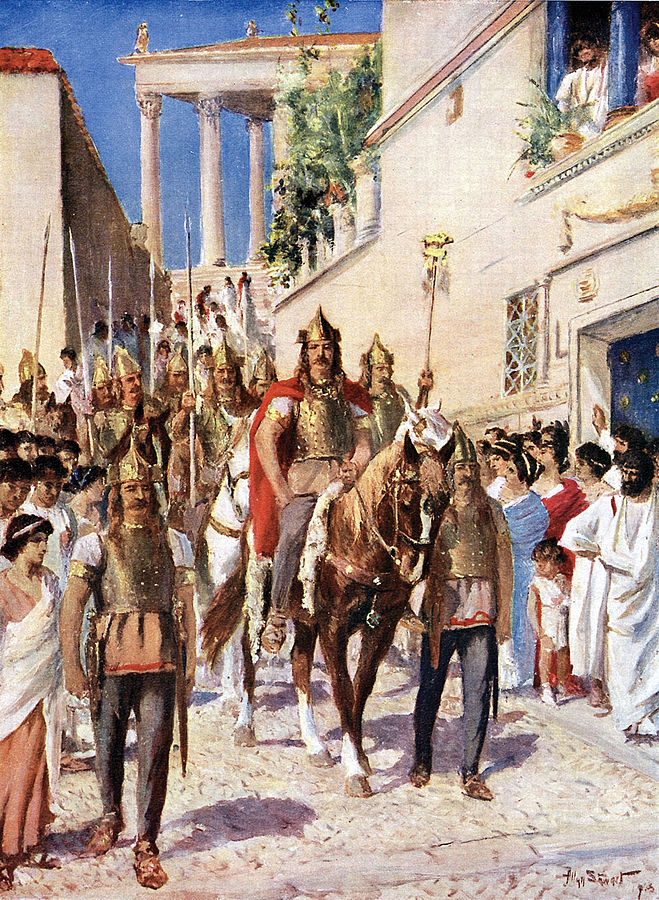
Alaric, King of the Visigoths, entering Athens in 395 AD.
Public domain illustration originally published in the Encyclopedia Britannica, 1920 via Wikimedia Commons.
What seemed to bother Postman was a nagging suspicion that modern humans were taking civilization for granted. This sentiment was more clearly expressed in one of Postman’s less-known literary works, his 1988 essay titled “My Graduation Speech“.
In his speech, Postman discusses two historic civilizations familiar to most people today — Athenians and Visigoths. One group, the Athenians, thrived about 2,300 years ago. The other, the Visigoths, made their mark about 1,700 years ago. But these civilizations were separated by much more than time, Postman explained.
The Athenians gave birth to a cultural enlightenment whose fruits are still visible today — in our art, education, language, literary works, and architecture. The Visigoths, on the other hand, are notable mostly for the destruction of civilization.
Postman mentions these peoples because, he argued, they still survive today. Here is what he wrote:
I do not mean, of course, that our modern-day Athenians roam abstractedly through the streets reciting poetry and philosophy, or that the modern-day Visigoths are killers. I mean that to be an Athenian or a Visigoth is to organize your life around a set of values. An Athenian is an idea. And a Visigoth is an idea.
But what ideas? What values? Postman explains:
To be an Athenian is to hold knowledge and, especially the quest for knowledge in high esteem. To contemplate, to reason, to experiment, to question — these are, to an Athenian, the most exalted activities a person can perform. To a Visigoth, the quest for knowledge is useless unless it can help you to earn money or to gain power over other people.
To be an Athenian is to cherish language because you believe it to be humankind’s most precious gift. In their use of language, Athenians strive for grace, precision, and variety. And they admire those who can achieve such skill. To a Visigoth, one word is as good as another, one sentence in distinguishable from another. A Visigoth’s language aspires to nothing higher than the cliché.
To be an Athenian is to understand that the thread which holds civilized society together is thin and vulnerable; therefore, Athenians place great value on tradition, social restraint, and continuity. To an Athenian, bad manners are acts of violence against the social order. The modern Visigoth cares very little about any of this. The Visigoths think of themselves as the center of the universe. Tradition exists for their own convenience, good manners are an affectation and a burden, and history is merely what is in yesterday’s newspaper.
To be an Athenian is to take an interest in public affairs and the improvement of public behavior. Indeed, the ancient Athenians had a word for people who did not. The word was idiotes, from which we get our word “idiot”. A modern Visigoth is interested only in his own affairs and has no sense of the meaning of community.
Postman said all people must choose whether to be an Athenian or a Visigoth. But how does one tell one from the other? One might be tempted to think that education is the proper path to becoming an Athenian. Alas, Postman argued that this was not the case.
I must tell you that you do not become an Athenian merely by attending school or accumulating academic degrees. My father-in-law was one of the most committed Athenians I have ever known, and he spent his entire adult life working as a dress cutter on Seventh Avenue in New York City. On the other hand, I know physicians, lawyers, and engineers who are Visigoths of unmistakable persuasion. And I must also tell you, as much in sorrow as in shame, that at some of our great universities, perhaps even this one, there are professors of whom we may fairly say they are closet Visigoths.
Postman concluded his speech by expressing his wish that the student body to which he was speaking would graduate more Athenians than Visigoths.
The production of educated barbarians was relatively low in 1988, despite Postman’s pessimism. The production of such modern-day Visigoths is unimaginably higher now than the tail end of the Cold War when he was writing. I fear we have already made our decision … and may God have mercy upon our souls.
Comments Off on Athenian or Visigoth? Western civilization or barbarism?
“The Spaghetti Harvest” (1957) | Panorama | Classic BBC clips | BBC Archive
BBC Archive
Published 31 Mar 2022Panorama reports from Switzerland, where the combination of a mild winter and the virtual disappearance of pests like the spaghetti weevil, has resulted in a bumper spaghetti crop.
This clip is believed to be one of the first televised April Fools pranks – the original fake news, if you will. The narrator of the film is the highly respected journalist Richard Dimbleby. Back in 1957, some viewers failed to see the funny side and criticised the BBC for airing the spoof news item on what is supposed to be a serious factual programme. Others, however, were so intrigued that they wrote in to the BBC asking where they could purchase their very own spaghetti bush.
Originally broadcast 1 April, 1957.
(more…)
Comments Off on “The Spaghetti Harvest” (1957) | Panorama | Classic BBC clips | BBC Archive
QotD: P.G. Wodehouse and Sir Oswald Mosley
There was one exception. The object of Wodehousian scorn was the moustachioed leader of Britain’s black-shirted Fascists, Sir Oswald Mosley, 6th Baronet. A fencing champion at school, dashing war record in the Flying Corps, and a Member of Parliament, he was the recipient of an inherited title, with a family tree that stretched back to the 12th century, a country house and a Mayfair residence. In Wodehouseland, Mosley is transformed into the equally aristocratic Roderick Spode, 7th Earl of Sidcup.
Plum was intolerant of even the vaguest of threats to the established order of things. He voiced his dislike of Spode through Bertie Wooster, likening the fascist leader to one of “those pictures in the papers of dictators, with tilted chins and blazing eyes, inflaming the populace with fiery words on the occasion of the opening of a new skittle alley”. Plum focussed his gaze on the Spode/Mosley moustache, which was “like the faint discoloured smear left by a squashed black beetle on the side of a kitchen sink”, describing its owner as “one who caught the eye and arrested it”.
The proto-dictator appeared, thought Wodehouse, “as if Nature had intended to make a gorilla but had changed its mind at the last moment”. Every reader would have known it was Mosley in the crosshairs, because Spode was the leader of a fascist group called the “Saviours of Britain, also known as the Black Shorts”. The transition of attire is because, as another of Wodehouse’s masterful creations, Gussie Fink-Nottle, observed, “by the time Spode formed his Association, there were no black shirts left in the shops”.
A different Wodehouse character warned, “Never put anything on paper … and never trust a man with a small black moustache.” Indeed, anyone “whose moustache rose and fell like seaweed on an ebb-tide” was best avoided. Plum could have been referring to Mosley or Hitler. The former, as leader of Britain’s real-life black shirts, was an unashamed admirer of the latter, and he interned in Holloway prison during the war. Afterwards, as an advocate of what we today would call Holocaust denial, he moved to Paris where he died in 1980. His political journey was interesting. Mosley started as a Conservative, drifted leftwards into the Labour Party, then further left into his own independent party, which evolved into the right-wing British Union of Fascists.
Modelled on the Italian and German fascist movements, Mosley and his supporters came to believe that “Jewish interests commanded commerce, the Press, the cinema, dominated the City of London, and killed British industry with their sweatshops”. Fascism lurking in the upper classes troubled Plum Wodehouse so greatly that Spode and his Black Shorts appeared in five of his works between 1938–74.
Peter Caddick-Adams, “Coups and coronets”, The Critic, 2022-12-13.
Comments Off on QotD: P.G. Wodehouse and Sir Oswald Mosley
March 31, 2023
Canada’s not-so-secret ruling class – the Laurentian elite
Yuan Yu Zhu explains why Canada, despite its huge geographical spread, is ruled almost exclusively by people drawn from a very small, very incestuous ruling class:

University College, University of Toronto, 31 July, 2008.
Photo by “SurlyDuff” via Wikimedia Commons.
Unlike many countries’ socio-political elites, the Laurentians are not readily identifiable on sight. They have long abandoned their differentiated mid-Atlantic drawl; their houses do not have moats.
What distinguishes them above all else is the uniformity in their outlook. Britain is often said to be run by a consensus blob; but its Canadian equivalent make the Westminster blob seem positively anarchical.
As John Ibbitson, the great chronicler of the Laurentian elite, has written:
Although they often disagree among themselves, they share a common set of assumptions about Canada: that it’s a fragile nation; that the federal government’s job is to bind together a country that would otherwise fall apart; that the biggest challenge is keeping Quebec inside Confederation; that the poorer regions must forever stay poor, propped up by the richer parts of the country; that the national identity — whatever it is — must be protected from the American juggernaut; that Canada is a helpful fixer in the world, a peacekeeper, a joiner of all the best clubs.
Latterly they have added to this list the belief that Canada is a genocidal state built on stolen land, which should atone for its past through part-performative truth and reconciliation – without, however, actually giving any of the stolen land back. It is perhaps unnecessary to add that they are almost all small-l and/or big-L liberals.
This is not to say that their class background (in a country whose official ideology denies the existence of such a thing) is not highly homogenous. They are generally to be found in the two or three large cities of Ontario and Quebec. They tend to be from the upper-middle class families and be secularized.
Many will have been educated in the same private secondary schools; most will have attended a smattering of universities in Ontario and Quebec: the University of Toronto, Queen’s, and McGill (which Johnston headed when Trudeau was a student there).
A large number of them are bilingual, in a country where real bilingualism remains the exception.
Many have post-graduate degrees, often from abroad; something like a quarter of Mr Trudeau’s cabinet ministers have degrees from Oxbridge alone, a shocking figure given how uncommon they are among the population at large.
They then tend to gravitate into the same professional occupations, and they even live in the same few neighbourhoods in the same few cities. Sometimes, like the prime minister and his special rapporteur, they even end up sharing adjoining vacation cottages literally in the Laurentians region.
Comments Off on Canada’s not-so-secret ruling class – the Laurentian elite
March 30, 2023
FN’s Millionth Pistol: Presented to John Browning; Saved by a Belgian Cop
Forgotten Weapons
Published 28 Nov 2022Fabrique Nationale was formed as a consortium of small gunmakers to produce Mauser rifles for the Belgian Army, and when that work was complete the company basically had nothing else to do … until they met John Browning. Browning had a new pistol design and needed a manufacturer — and FN happened to be a manufacturer in need of a new design. The resulting partnership would last until Browning’s death decades later, and essentially created the modern FN that we know today.
FN produced its one millionth Browning pistol on July 15th, 1912 and decided to throw a huge party in recognition of the achievement. It would take 18 months to get everything arranged, and the gala was held on January 31st, 1914. John Browning attended, along with his son Val, several Belgian government ministers, and FN’s international sales agents. As part of the festivities, a number of Baby Browning pistols marked “Un Million” were presented to VIPs, and Browning himself was given this Model 1900 with a gold engraved serial number “1,000,000”. It’s worth noting that FN did not actually make a million Model 1899/1900 pistols — those only reached about 725,000. The one million number included production of later models, like the Baby Browning and FN 1910.
Browning was not particularly interested in commemorative guns, and gave the pistol to his notary in Bruges when he left to return to the US. It remained with that man until his death, when it because his widow’s property. When the Belgian government passed a gun registration law in 1945, she duly registered it — and that record remains. It was registered again in 1985 in the new computerized Belgian system (listed as a revolver; gun registries are always notoriously full of errors). In 2006 Belgian gun laws changed again, and many guns had to be surrendered to the police. This pistol was one of them; handed in for destruction to a local police office. Fortunately, the officer who received it recognized that it was a historically significant piece, and was able to arrange its preservation.
(more…)
Comments Off on FN’s Millionth Pistol: Presented to John Browning; Saved by a Belgian Cop
March 29, 2023
The Grauniad something something glass houses something something throwing stones
In UnHerd, Ashley Rindsberg recounts the details we know so far about the Guardian‘s embarassing historical project to find out about the newspaper’s links to the slave trade:
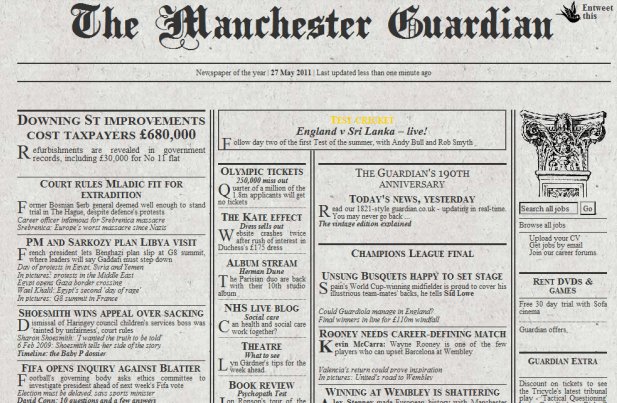
The Guardian prides itself on being one of the most Left-leaning and anti-racist news outlets in the English-speaking world. So imagine its embarrassment when, last month, a number of black podcast producers researching the paper’s historic ties to slavery abruptly resigned, alleging they had been victims of “institutional racism”, “editorial whiteness”, “microaggressions, colourism, bullying, passive-aggressive and obstructive management styles”. All of this might smack of progressive excess, but, in reality, it merely reflects an institution incuriously at odds with itself.
Questions about The Guardian‘s ties to slavery have been circulating since 2020, when, amid the media’s collective spasm of racial conscience following the murder of George Floyd, the Scott Trust announced it would launch an investigation into its history. “We in the UK need to begin a national debate on reparations for slavery, a crime which heralded the age of capitalism and provided the basis for racism that continues to endanger black life globally,” journalist Amandla Thomas-Johnson wrote in a June 2020 Guardian opinion piece about the toppling of a statue of 17th-century British slaver Edward Colston. A month later, the Scott Trust committed to determining whether the founder of the paper, John Edward Taylor, had profited from slavery. “We have seen no evidence that Taylor was a slave owner, nor involved in any direct way in the slave trade,” the chairman of the Scott Trust, Alex Graham, told Guardian staff by email at the time. “But were such evidence to exist, we would want to be open about it.” (Notably, Graham, in using the terms “slave owner” and “direct way”, set a very specific and very high bar for what would be considered information worthy of disclosure.)
The problem is that the results of the investigation, conducted by historian Sheryllynne Haggerty, an “expert in the history of the transatlantic slave trade”, have never been made public. When contacted with questions about what happened to the promised report, Haggerty referred all inquiries to The Guardian‘s PR, which has remained silent on the matter. (The Guardian was asked for comment and we were given the stock PR response The Guardian gave following the podcaster’s letter.) But what we do know is this: according to Guardian lore, a business tycoon named John Edward Taylor was inspired to agitate for change after witnessing the 1819 Peterloo Massacre, when over a dozen people were killed in Manchester by government forces as they protested for parliamentary representation. Two years later, Taylor, a young cotton merchant, with the backing of a group of local reformers known as the Little Circle, founded the paper.
“Since 1821 the mission of The Guardian has been to use clarity and imagination to build hope,” The Guardian‘s current editor, Katharine Viner, proudly proclaims on the “About us” page of the paper’s website. Part of this founding myth concerns one of the defining social and political issues of the day, slavery, which the Little Circle members, including Taylor, vigorously opposed as a moral affront. “The Guardian had always hated slavery,” Martin Kettle, an associate editor, wrote in a 2011 apologia on why during the Civil War the paper had vociferously condemned the North while equivocating on the South.
That may be true, but it also presents an incomplete picture. The Manchester Guardian, as the paper was then known, was founded by cotton merchants, including Taylor, who were able to pool the money needed to launch the paper by drawing on their respective fortunes. While none of these men, many of whom were Unitarian Christians, is likely to have engaged in slavery, they didn’t just benefit from but depended upon the global slave trade that provided virtually all of the cotton that filled their mills. As Sarah Parker Remond, an African American abolitionist, said upon visiting Manchester in 1859: “When I walk through the streets of Manchester and meet load after load of cotton, I think of those 80,000 cotton plantations on which was grown the $125 million worth of cotton which supply your market, and I remember that not one cent of that money ever reached the hands of the labourers.”
Comments Off on The Grauniad something something glass houses something something throwing stones
Will Finland Leave the War? – WW2 Special
World War Two
Published 28 Mar 2023The Finns have been fighting the Soviet Union since the Winter War. But now, Marshal Mannerheim and Prime Minister Risto Ryti look like they might pull out of the Eastern Front commitments they agreed upon with their Axis allies. German-Finnish relations seem to be at breaking point, and Red Army troops are threatening the borders. How long will Finland stay in this war?
(more…)
Comments Off on Will Finland Leave the War? – WW2 Special
The obscure Polish banker who foresaw the carnage and deadlock of the First World War
Jon Miltimore on one of the few people to realize the increased deadliness and growing size of modern armies foreclosed any possibility of a quick, glorious war that would have the troops “home for Christmas”:
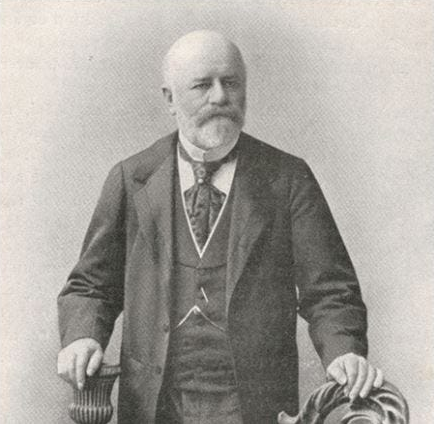
Jan Bloch, author of The War of the Future in its Technical, Economic and Political Relations (1898).
One man who did portend the carnage was Jan Bloch, a Polish banker and railroad baron who moonlighted as a military theorist. In 1898, Bloch published a little-noticed six-volume work titled The War of the Future in its Technical, Economic and Political Relations. The following year, the work was re-published in a single volume under a new title: Is War Now Impossible?
In the work, Bloch, who had closely studied Britain’s campaign in Africa during the Boer War, explained that modern weaponry had become so deadly that it had fundamentally changed warfare. Bayonet charges and cavalry flanking maneuvers were obsolete in an era defined by sophisticated earthworks and precision projectiles, he suggested.
Everybody will be entrenched in the next war. It will be a great war of entrenchments. The spade will be as indispensable to a soldier as his rifle. The first thing every man will have to do, if he cares for his life at all, will be to dig a hole in the ground. War, instead of being a hand-to-hand contest in which the combatants measure their physical and moral superiority, will become a kind of stalemate, in which neither army is able to get at the other, threatening each other, but never being able to deliver a final and decisive attack.
War would be “impossible” in the sense that it would be suicidal. Neither side would be able to gain a decisive advantage, battles along massive contiguous fronts would continue indefinitely.
Was Bloch suggesting that modern man had vanquished war by making it so deadly and terrible? Hardly. He argued that humans would be slow to realize the changes, and the results would be catastrophic.
At first there will be increased slaughter — increased slaughter on so terrible a scale as to render it impossible to get troops to push the battle to a decisive issue. They will try to, thinking that they are fighting under the old conditions, and they will learn such a lesson that they will abandon the attempt forever. Then, instead of war fought out to the bitter end in a series of decisive battles, we shall have as a substitute a long period of continually increasing strain upon the resources of the combatants. The war, instead of being a hand-to-hand contest, in which the combatants measure their physical and moral superiority, will become a kind of stalemate, in which neither army being willing to get at the other, both armies will be maintained in opposition to each other, threatening the other, but never being able to deliver a final and decisive attack …
That is the future of war — not fighting, but famine, not the slaying of men, but the bankruptcy of nations and the breakup of the whole social organization …
First World War generals don’t get much credit for their varied efforts to break the trench warfare deadlock, and later historians certainly piled on for the leaders’ collective failure to resolve the problem, but as Bret Devereaux pointed out, there was no easy solution. Artillery wasn’t the answer, nor were the famed German Stoßtruppen, nor the technical innovation of tanks, nor air power (either tactical or strategic). The technology of the day provide no one answer, but the leaders tried everything they could and the bleeding went on.
Comments Off on The obscure Polish banker who foresaw the carnage and deadlock of the First World War
Anti-Tank Chats #7 | Panzerschreck | The Tank Museum
The Tank Museum
Published 2 Dec 2022Join Historian Stuart Wheeler as he details another anti-tank weapon, the Panzerschreck.
(more…)
Comments Off on Anti-Tank Chats #7 | Panzerschreck | The Tank Museum
QotD: Sacrifice
There is some concern for the place and directionality of the gods in question. Sacrifices for gods that live above are often burnt so that the smoke wafts up to where the gods are (you see this in Greek and Roman practice, as well in Mesopotamian religion, e.g. in Atrahasis, where the gods “gather like flies” about a sacrifice; it seems worth noting that in Temple Judaism, YHWH (generally thought to dwell “up”) gets burnt offerings too), while sacrifices to gods in the earth (often gods of death) often go down, through things like libations (a sacrifice of liquid poured out).
There is also concern for the right animals and the time of day. Most gods receive ritual during the day, but there are variations – Roman underworld and childbirth deities (oddly connected) seem to have received sacrifices by night. Different animals might be offered, in accordance with what the god preferred, the scale of the request, and the scale of the god. Big gods, like Jupiter, tend to demand prestige, high value animals (Jupiter’s normal sacrifice in Rome was a white ox). The color of the animal would also matter – in Roman practice, while the gods above typically received white colored victims, the gods below (the di inferi but also the di Manes) darkly colored animals. That knowledge we talked about was important in knowing what to sacrifice and how.
Now, why do the gods want these things? That differs, religion to religion. In some polytheistic systems, it is made clear that the gods require sacrifice and might be diminished, or even perish, without it. That seems to have been true of Aztec religion, particularly sacrifices to Quetzalcoatl; it is also suggested for Mesopotamian religion in the Atrahasis where the gods become hungry and diminished when they wipe out most of humans and thus most of the sacrifices taking place. Unlike Mesopotamian gods, who can be killed, Greek and Roman gods are truly immortal – no more capable of dying than I am able to spontaneously become a potted plant – but the implication instead is that they enjoy sacrifices, possibly the taste or even simply the honor it brings them (e.g. Homeric Hymn to Demeter 310-315).
We’ll come back to this idea later, but I want to note it here: the thing being sacrificed becomes sacred. That means it doesn’t belong to people anymore, but to the god themselves. That can impose special rules for handling, depositing and storing, since the item in question doesn’t belong to you anymore – you have to be extra-special-careful with things that belong to a god. But I do want to note the basic idea here: gods can own property, including things and even land – the temple belongs not to the city but to the god, for instance. Interestingly, living things, including people can also belong to a god, but that is a topic for a later post. We’re still working on the basics here.
Bret Devereaux, “Collections: Practical Polytheism, Part II: Practice”, A Collection of Unmitigated Pedantry, 2019-11-01.
Comments Off on QotD: Sacrifice


