
Vlogging Through History
Published Apr 23, 2024See the original here –
• Caesar Marches on Rome (49 B.C.E.)
See “Caesar Crosses the Rubicon” here –
• Caesar Crosses the Rubicon – Historia…#history #reaction
August 17, 2024
Caesar Marches on Rome – Historia Civilis Reaction
Comments Off on Caesar Marches on Rome – Historia Civilis Reaction
QotD: Sheep and wool in the ancient and medieval world
Our second fiber, wool, as readers may already be aware, comes from sheep (although goat and horse-hair were used rarely for some applications; we’re going to stick to sheep’s wool here). The coat of a sheep (its fleece) has three kinds of fibers in it: wool, kemp and medullated fibers. Kemp fibers are fairly weak and brittle and won’t accept dye and so are generally undesirable, although some amount of kemp may end up in wool yarn. Likewise, medullated fibers are essentially hair (rather than wool) and lack elasticity. But the wool itself, composed mostly of the protein keratin along with some lipids, is crimped (meaning the fibers are not straight but very bendy, which is very valuable for making fine yarns) and it is also elastic. There are reasons for certain applications to want to leave some of the kemp in a wool yarn that we’ll get to later, but for the most part it is the actual wool fibers that are desirable.
Sheep themselves probably descend from the wild mouflon (Ovis orientalis) native to a belt of uplands bending over the northern edge of the fertile crescent from eastern Turkey through Armenia and Azerbaijan to Iran. The fleeces of these early sheep would have been mostly hair and kemp rather than wool, but by the 4th millennium BC (as early as c. 3700 BC), we see substantial evidence that selective breeding for more wool and thicker coats has begun to produce sheep as we know them. Domestication of course will have taken place quite a bit earlier (selective breeding is slow to produce such changes), perhaps around 10,000 BC in Mesopotamia, spreading to the Indus river valley by 7,000 BC and to southern France by 6,000 BC, while the replacement of many hair breeds of sheep with woolly sheep selectively bred for wool production in Northern Mesopotamia dates to the third century BC.1 That process of selective breeding has produced a wide variety of local breeds of sheep, which can vary based on the sort of wool they produce, but also fitness for local topography and conditions.
As we’ve already seen in our discussion on Steppe logistics, sheep are incredibly useful animals to raise as a herd of sheep can produce meat, milk, wool, hides and (in places where trees are scarce) dung for fuel. They also only require grass to survive and reproduce quickly; sheep gestate for just five months and then reach sexual maturity in just six months, allowing herds of sheep to reproduce to fill a pasture quickly, which is important especially if the intent is not merely to raise the sheep for wool but also for meat and hides. Since we’ve already been over the role that sheep fill in a nomadic, Eurasian context, I am instead going to focus on how sheep are raised in the agrarian context.
While it is possible to raise sheep via ranching (that is, by keeping them on a very large farm with enough pastureland to support them in that one expansive location) and indeed sheep are raised this way today (mostly in the Americas), this isn’t the dominant model for raising sheep in the pre-modern world or even in the modern world. Pre-modern societies generally operated under conditions where good farmland was scarce, so flat expanses of fertile land were likely to already be in use for traditional agriculture and thus unavailable for expansive ranching (though there does seem to be some exception to this in Britain in the late 1300s after the Black Death; the sudden increase in the cost of labor – due to so many of the laborers dying – seems to have incentivized turning farmland over to pasture since raising sheep was more labor efficient even if it was less land efficient and there was suddenly a shortage of labor and a surplus of land). Instead, for reasons we’ve already discussed, pastoralism tends to get pushed out of the best farmland and the areas nearest to towns by more intensive uses of the land like agriculture and horticulture, leaving most of the raising and herding of sheep to be done in the rougher more marginal lands, often in upland regions too rugged for farming but with enough grass to grow. The most common subsistence strategy for using this land is called transhumance.
Transhumant pastoralists are not “true” nomads; they maintain permanent dwellings. However, as the seasons change, the transhumant pastoralists will herd their flocks seasonally between different fixed pastures (typically a summer pasture and a winter pasture). Transhumance can be either vertical (going up or down hills or mountains) or horizontal (pastures at the same altitude are shifted between, to avoid exhausting the grass and sometimes to bring the herds closer to key markets at the appropriate time). In the settled, agrarian zone, vertical transhumance seems to be the most common by far, so that’s what we’re going to focus on, though much of what we’re going to talk about here is also applicable to systems of horizontal transhumance. This strategy could be practiced both over relatively short distances (often with relatively smaller flocks) and over large areas with significant transits (see the maps in this section; often very significant transits) between pastures; my impression is that the latter tends to also involve larger flocks and more workers in the operation. It generally seems to be the case that wool production tended towards the larger scale transhumance. The great advantage of this system is that it allows for disparate marginal (for agriculture) lands to be productively used to raise livestock.
This pattern of transhumant pastoralism has been dominant for a long time – long enough to leave permanent imprints on language. For instance, the Alps got that name from the Old High German alpa, alba meaning which indicated a mountain pasturage. And I should note that the success of this model of pastoralism is clearly conveyed by its durability; transhumant pastoralism is still practiced all over the world today, often in much the same way as it was centuries or millennia ago, with a dash of modern technology to make it a bit easier. That thought may seem strange to many Americans (for whom transhumance tends to seem very odd) but probably much less strange to readers almost anywhere else (including Europe) who may well have observed the continuing cycles of transhumant pastoralism (now often accomplished by moving the flocks by rail or truck rather than on the hoof) in their own countries.
For these pastoralists, home is a permanent dwelling, typically in a village in the valley or low-land area at the foot of the higher ground. That low-land will generally be where the winter pastures are. During the summer season, some of the shepherds – it does not generally require all of them as herds can be moved and watched with relatively few people – will drive the flocks of sheep up to the higher pastures, while the bulk of the population remains in the village below. This process of moving the sheep (or any livestock) over fairly long distances is called droving and such livestock is said to be moved “on the hoof” (assuming it isn’t, as in the modern world, transported by truck or rail). Sheep are fairly docile animals which herd together naturally and so a skilled drover can keep large flock of sheep together on their own, sometimes with the assistance of dogs bred and trained for the purpose, but just as frequently not. While cattle droving, especially in the United States, is often done from horseback, sheep and goats are generally moved with the drovers on foot.
Bret Devereaux, “Collections: Clothing, How Did They Make It? Part I: High Fiber”, A Collection of Unmitigated Pedantry, 2021-03-05.
1. On this, note E. Vila and D. Helmer, “The Expansion of Sheep Herding and the Development of Wool Production in the Ancient Near East” in Wool Economy in the Ancient Near East and the Aegean, eds. C. Breniquet and C. Michel (2014), which has the archaeozoological data).
Comments Off on QotD: Sheep and wool in the ancient and medieval world
August 16, 2024
“Operation Dragoon … was described by Adolf Hitler as the worst day of his life”
The “other” D-Day landing in France that few people know much about: Operation Dragoon.

Southern France, 15-28 August 1944.
West Point Military Atlas.
Often referred to as “the other D-Day”, Op Dragoon ran until 14 September 1944 and was a pivotal turning point in the Second World War.
Op Dragoon was a huge and complex operation by land, sea and air that liberated nearly two-thirds of France by linking up with troops from the Normandy invasion on 11 September and pushing the German forces right back to their frontier.
It also secured the ports of Marseilles and Toulon so Allied troops could flood into France.
This was a bitter blow for Hitler, who during conversations with his generals that were discovered in records written in shorthand, said: “The 15th of August was the worst day of my life”.
Dr Peter Caddick-Adams, a military historian and defence analyst, spoke to BFBS Forces News about Operation Dragoon, a largely French/American operation with support from countries including the UK and Canada.
He said: “It set the victory over Germany firmly on its way — and the end of the Second World War couldn’t really have been achieved without Operation Dragoon.
“This is the D-Day that you’ve never heard of.
“Originally there was planned to be two invasions of France on the same day — in Normandy and on the south coast of France along the Riviera.
“It was found that we didn’t have enough landing craft to do both at the same time simultaneously.”
It also didn’t help that Winston Churchill was against the idea and tried to cancel the operation.
The Prime Minister wanted the Italian campaign to remain dominant and was worried Dragoon would take troops and other resources away from Italy.
However, despite his best efforts, the Americans and French prevailed and Operation Dragoon went ahead.
Initially, the operation was given the codename Anvil, because Operation Overlord, the invasion of Normandy, was originally going to be called Sledgehammer.
The plan was for Germany’s armed forces to be smashed between the hammer and the anvil.
Churchill never changed his opinion about the operation despite its eventual success, as Dr Caddick-Adams explained: “At the last minute Churchill had the name changed to Dragoon and, legend has it, because he felt he was being dragooned into an operation that he didn’t want to undertake”.
Comments Off on “Operation Dragoon … was described by Adolf Hitler as the worst day of his life”
Dining on the luxury liner RMS Lusitania
Rich, creamy banana ice cream with banana compote
City/Region: England
Time Period: 1894Today, the Lusitania is most remembered for being the target of a German torpedo on May 7, 1915, but when she sailed, she was known for being the height of speed and luxury. This ice cream dessert was served to second class passengers on October 9, 1913 on board the Lusitania, and the same dessert is on a menu from April 11, 1912 aboard the Titanic.
It’s not hard to see why Victoria Pudding was served to fancy passengers. The flavors are layered and delicious, the texture is luxurious and creamy, and the compote is undeniably fancy. At first you get the flavor of the banana, then the floral notes from the orange flower water come in, and nothing is overpowering. The banana compote is quite a bit of work, and as it doesn’t add any new flavors to the dish, I think it’d be okay to skip it. If you’re going for maximum opulence, though, then definitely make it.
Victoria Pudding
Pouding à la Victoria
Take one pint of vanilla custard (Book of Ices, p. 23), add to it the purée of six large or eight small raw ripe bananas that have been pounded with one ounce of castor sugar, the pulp of two oranges and one lemon, and a quarter-pound of raw ripe or cooked pineapple; mix these together, and colour with a little of Marshall’s Apricot Yellow, and rub through a fine hair sieve; flavour with a wineglassful of orange-flower water, a teaspoonful of vanilla essence, and a wineglassful of brandy; pour the mixture into the charged freezer and freeze it to the consistency of a thick batter; then add half a pint of whipped cream that is sweetened with half an ounce of castor sugar; refreeze it and put it into a fancy pudding mould, place this in the charged ice cave for three and a half to four hours, during which time turn it occasionally from side to side, so as to get the ice evenly frozen. When ready to serve turn out the pudding in the usual way on to a dish, and serve round it a compote of bananas (see recipe).
This is a nice dish for a dinner or luncheon sweet, and if the mould has a pipe the space made by it can be filled with the compote of fruit.Compote of Bananas
Put two tablespoonfuls of thick apricot jam into a basin with the pulp of two bananas, a wineglassful of Marshall’s Maraschino Syrup, a few drops of Marshall’s Carmine, a saltspoonful of Marshall’s Apricot Yellow, the juice of one lemon and of one orange; mix these together with this purée three or four raw ripe bananas that have been freed from skin and sliced about a quarter of an inch thick; set it on ice till quite cold, then use.
— Fancy Ices by Agnes B. Marshall, 1894
Comments Off on Dining on the luxury liner RMS Lusitania
August 15, 2024
Yet another revisionist history of World War II
In the latest anonymous review at Astral Codex Ten, the book to be considered is How the War Was Won by Phillips Payson O’Brien:
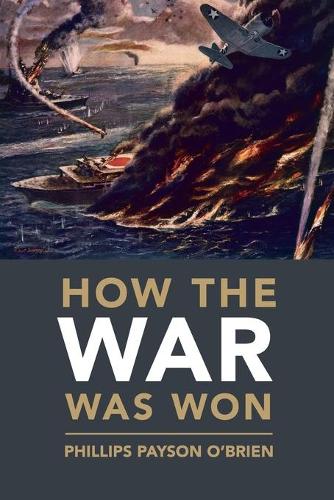
To a first approximation, there are a million books about World War II. Why should you care about How the War Was Won (hereinafter “HtWWW”) by Phillips Payson O’Brien?
- It provides a new, transformative view of the conflict by focusing on production of key goods and what affected that production instead of the ups and downs of battles at the front.
- That particular lens used can (and should) be applied outside of just World War II, and you can get a feel for how that might be done by reading HtWWW.
- I have lectured about World War II and read many, many books about it. I have never texted friends more excerpts of a book than this one.
I have some criticisms of HtWWW, but if the criticisms dissuade you from reading the book, I will have failed. These complaints are like tut-tutting Einstein’s penmanship.
The Wikipedia-Level Story of World War II (and O’Brien’s Counterargument)
To understand why O’Brien’s argument is so novel, you need to know the modern-day conventional understanding of the story of World War II. Here is my summary of the conventional narrative of World War II:
- Germany conquered Poland and France. It tried to bomb the UK into submission/maybe enable an invasion. That effort failed when Germany was defeated in the Battle of Britain, thanks largely to the plucky efforts of British airmen (memorably summarized by Winston Churchill: “Never in the field of human conflict was so much owed by so many to so few”.)
- Stymied in the West, Germany invaded the Soviet Union, won a bunch of crushing victories, but then got turned back at the gates of Moscow. The Soviets moved all of their factories east of the Ural Mountains and produced a vast tide of T-34 tanks that overpowered the Germans.
- The Germans suffered a catastrophic defeat at Stalingrad and a bloody strategic defeat at Kursk, after which the Soviets relentlessly pounded Germany to defeat.
- The US and the UK sent a lot of material help and eventually fought the Germans too, most notably in the D-Day invasion and the Battle of the Bulge. However, most of the fighting was done by the Soviets.
- It is very difficult to say how important the aerial bombing campaigns of the Western Allies were in defeating Germany. The Germans moved much of their production underground, insulating them from truly disastrous effects.
- The U.S. mostly fought alone against Japan, which won a series of impressive early victories (e.g., Pearl Harbor, the conquest of Singapore) until the decisive Battle of Midway, after which the vastly larger US industrial base outproduced Japan into oblivion.
- The US bombed the Japanese into submission by destroying Japanese cities, ultimately by dropping atom bombs on Hiroshima and Nagasaki.
By examining where the Axis focused their productive capacities and how the Allies disrupted those capacities, O’Brien challenges virtually every part of that narrative:
- The Battle of Britain was not a close-run thing. The fact that British fighter planes were flying over their own territory meant their attrition rate of pilots and aircraft were far lower than the Germans’.
- American and British bombing mattered far more to the war’s outcome than the battles of the Eastern Front, which consumed a much smaller portion of German expenditures.
- American and British airpower made German battlefield victories on the Western Front virtually impossible and dramatically limited the force Germany could bring to bear in the East.
- Japan (really, Japan plus the giant empire it conquered at the beginning of the war) was an industrial behemoth to rival the Soviet Union. However, the destruction of the Japanese merchant fleet by American air and sea forces wrecked Japan’s economy.
- The firebombing of Japanese cities and the atomic bombings of Hiroshima and Nagasaki had an ambiguous strategic effect. American air power played a much more important role in severing Japan from the natural resources it had conquered in the early part of the war.
Comments Off on Yet another revisionist history of World War II
QotD: The bitter fruit of deinstitutionalization
Freddie deBoer, “We Closed the Institutions That Housed the Severely Mentally Ill and We Made It Dramatically Harder to Compel Them to Receive Care”, Freddie deBoer, 2024-05-14.
Comments Off on QotD: The bitter fruit of deinstitutionalization
August 14, 2024
The Korean War Week 008 – The First UN Counterattack – August 13, 1950
The Korean War by Indy Neidell
Published 13 Aug 2024The first UN large scale counterattack goes off this week; this by the American Task Force Kean. It has both successes and failures, and it runs right into a new North Korean offensive. The fighting happens just about everywhere on the Pusan Perimeter this week, though. That’s the area into which the UN forces have been compressed, and it is particularly threatening at the Naktong Bulge. It is, plain and simple, a week of desperate and bloody fighting and that’s about it.
Chapters
00:47 Recap
01:27 The Pusan Perimeter
04:31 Task Force Kean
07:44 The Naktong Bulge
10:09 The Fight Around Daegu
13:45 Summary
(more…)
Comments Off on The Korean War Week 008 – The First UN Counterattack – August 13, 1950
Madsen M50: From the Korean War to Star Trek
Forgotten Weapons
Published May 1, 2024During World War Two, Madsen (DISA) manufactured a licensed copy of the Finnish Suomi (see: Danish M1941 Suomi SMG). When the war ended, they wanted to replace this with a more modern, inexpensive design of their own. The result was the Model 1946 Madsen, a creative clamshell design of stamped parts. It is a very simple blowback, open-bolt 9x19mm SMG that perfectly fit the post-war era. The M46 version was sold to a few countries, and after some continued development and refinement the M50 version was demonstrated to a public audience in November 1950. This pattern was even simpler than before, and proved a popular gun for many unaligned countries in Central and South America and Southeast Asia — so much so that it remained in production until the 1980s. A bunch were imported into the US in the 1950s and 1960s, and they found a home in the movie industry, where they were often used in fantasy/sci-fi films to avoid having guns that would be recognized by American movie audiences.
(more…)
Comments Off on Madsen M50: From the Korean War to Star Trek
August 13, 2024
The Original Secret History
Tom Ayling
Published Apr 28, 2024This is the story of Procopius’s Secret History Of Justinian – originally written around 550, but not published until 1623.
In this video we look at how Procopius wrote the text, how it survived, almost unknown, for 1,000 years, how it came to be published in the 1620s, and the extraordinary ramifications when it was.
00:00 Introduction
00:44 The Original Composition Of The Secret History
02:40 The Survival Of The Text In Greek Manuscripts
05:56 The Rediscovery And Publication Of The Secret History
08:23 Secret Histories Go ViralTo learn more about Secret Histories, sign up to receive my catalogue of rare books devoted to the subject – https://www.tomwayling.co.uk/register
I couldn’t have made this video without the help of two works in particular. The first is Brian Croke’s magisterial Procopius: From Manuscripts To Books: 1400-1850. The second is The Secret History In Literature, 1660-1820 which is edited by Rebecca Bullard and Rachel Carnell.
My name’s Tom and I’m an antiquarian bookseller – you can browse the books I have for sale on my website: https://www.tomwayling.co.uk/
Comments Off on The Original Secret History
QotD: The weird world of the Iliad
Homer (“Homer“) presents the gods as having unified identities, desires, and attributes, which of course you have to have in order to have any kind of coherent story but which is not at all the way the Greeks understood their gods before him (or even mostly after). The Greeks didn’t have a priestly caste with hereditary knowledge, or Vedas, or anything like that, so their religion is even more chaotic than most primitive religions. “The god” is a combination of the local cult with its rituals, the name, the myths, and the cultic image, and these could (and often did) spread separately from one another. The goddess with attributes reminiscent of the ancient Near Eastern “Potnia Theron” figure is Hera, Artemis, Aphrodite, Demeter, or Athena, depending on where you are. Aphrodite is born from the severed testicles of Ouranos but is also the daughter of Zeus and Dione. “Zeus” is the god worshipped with human sacrifice on an ash altar at Mt. Lykaion but also the god of the Bouphonia but also a chthonic snake deity. Eventually these all get linked together, much later, primarily by Homer and Hesiod, but even after the stories are codified — okay, this is the king of the gods, he’s got these kids and this shrewish wife, he’s mostly a weather deity — the ritual substrate remains. We still murder the ox and then try the axe for the crime, which has absolutely nothing to do with celestial kingship but it’s what you do. If you’re Athenian. Somewhere else they do something completely different.
I also really enjoyed this book, and I think for similar reasons to you. Because you’re right, at the end of the classical world it wasn’t just the philosophers. One major theme in Athenian drama is the conscious attempt to impose rationality/democracy/citizenship/freedom (all tied together in the Greek imagination) in place of the bloody, chthonic, archaic world of heredity.1 It’s an attempt at a transition, and one which gets a lot of attention I think in part because people read the Enlightenment back into it. But my favorite part of the The Ancient City is Fustel de Coulanges’s exploration of the other end of the process: where did all the weird inherited ritual came from in the first place?!
The short version of the answer is “the heroön“. Or as he puts it: “According to the oldest belief of the Italians and Greeks, the soul did not go into a foreign world to pass its second existence; it remained near men, and continued to live underground.” Everything else follows from here: the tomb is required to confine the dead man, the burial rituals are to please him and bind him to the place, the grave goods and regular libations are for his use, and he is the object of prayers. Fustel de Coulanges is incredibly well-read (that one sentence I quoted above cites Cicero’s Tusculan Disputations, “sub terra censebant reliquam vitam agi mortuorum“, plus Euripides’ Alcestis and Hecuba), and he references plenty of Vedic and later Hindu texts and practices too. I also immediately thought of the Rus’ funeral described by ibn Fadlan and retold in every single book about the Vikings, in which, after all the exciting sex and human sacrifice is over, the dead man’s nearest kinsman circles the funerary ship naked with his face carefully averted from it and his free hand covering his anus. This seems like precautions: there’s something in the ship-pyre that might be able, until the rites are completed, to get out.2 And obviously we now recognize tombs and burial as being very important to the common ancestors of the classical and Vedic worlds — from Marija Gimbutas’s kurgan hypothesis to the identification of the Proto-Indo-Europeans with the Yamnaya culture (Ямная = pit, as in pit-grave) — their funerary practices have always been core to how we understand them. But I’m really curious how any of this would have worked, practically, for pastoral nomads! Fustel de Coulanges makes it sound like you have your ancestor’s tomb in your back yard, more or less, which obviously isn’t entirely accurate when you’re rolling around the steppe in your wagon.
I’d also be interested to see an archeological perspective on his next section, about the sacred hearth. This is the precursor of Vesta/Hestia and also Vedic Agni, the reconstructed *H₁n̥gʷnis (fire as animating entity and active force) as opposed to *péh₂ur (fire as naturally occurring substance). I looked back through my copy of The Wheel, the Horse, and Language and (aside from a passing suggestion that the hearth-spirit’s genderswap might be due to the western Yamnaya’s generally having more female-inclusive ritual practices, possibly from the influence of the neighboring Tripolye culture), I didn’t find anything. I suppose this makes sense — you can’t really differentiate between the material remains of a ritual hearth and a “we’re cold and hungry” hearth, especially if people are also cooking on the ritual hearth so there’s not a clear division anyway. But if anyone has done it I’d like to see.
I don’t know enough of the historiography to know whether Fustel de Coulanges was saying something novel or contentious in the mid-19th century, but he seems to be basically in line with more recent scholarship even if he’s not trendy. But The Ancient City can be read as a work of political philosophy as well as ancient history!
Jane and John Psmith, “JOINT REVIEW: The Ancient City, by Numa Denis Fustel de Coulanges”, Mr. and Mrs. Psmith’s Bookshelf, 2023-02-20.
1. And of course that tension is extra intriguing because the dramas are always performed at one of these inherited rituals, in this case the city-wide Great Dionysia festival, although it was a relatively late addition to the ritual calendar. Incidentally it’s way less bizarre than the Attic “rustic” Dionysia which is all goat sacrifices and phallus processions. (There’s also the Agrionia in Boeotia which is about dissolution and inversion and nighttime madness, and another example of “the god” being a rather fluid concept.)
2. Neil Price, in his excellent Children of Ash and Elm, says that the archaeological evidence seems to confirm this:
“Most of the objects [in the Oseberg ship burial] were deposited with great care and attention, but at the very end most of the larger wooden items — the wagons, sleds, and so on — were literally thrown onto the foredeck, beautiful things just heaved over the side from ground level and being damaged in the process. The accessible end of the burial chamber was then sealed shut by hammering planks across the open gable, but using any old piece of wood that seems to have been at hand. The planks were just laid across at random — anything to fill the opening into the chamber where the dead lay. The nails were hammered in so fast one can see where the workers missed, denting the wood and bending or breaking off the nail heads.”
Comments Off on QotD: The weird world of the Iliad
August 12, 2024
Lions, foxes and wolves
N.S. Lyons tries to explain how Britain has gotten into its current social and political plight by recalling the works of Niccolò Machiavelli:
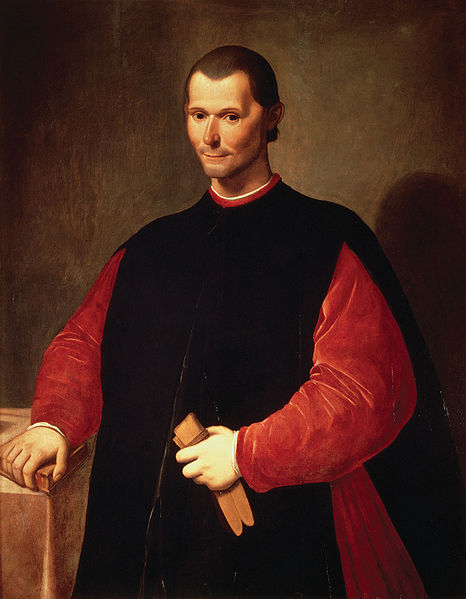
Portrait of Niccolò Machiavelli by Santi di Tito (1536-1603)
Via Wikimedia Commons.
The riots that have recently wracked the streets of the UK reflect decades of pent up public frustration with the country’s governing elite, especially their total refusal to control mass immigration despite vote after vote demanding they do exactly that. The pot has now boiled over. But the ongoing back-and-forth of ethnic violence also represents a signal that the British elite’s whole broader strategy of governing – one based in the fundamental personality of the ruling class itself – may be beginning to break down. And that carries some significant implications.
To understand why, however, we need to take a brief detour back about five centuries to Niccolò Machiavelli. He identified two archetypical psychological profiles of people who become leaders: the cunning but weak fox, who can outmaneuver his opponents but is “defenseless against wolves”; and the strong and brave lion, who likes to fight and who can scare off wolves but who is “defenseless against traps”. Machiavelli argued that a true statesman must embody both personalities, or risk destruction.
A distant student of Machiavelli, fellow Italian political theorist Vilfredo Pareto, would later expand the metaphor further. Observing history, he noted that the rise and fall of states and civilizations could be matched to a cyclical pattern in the collective personality of their ruling classes.
Nations are founded by lions, who are a society’s natural warrior class – its jocks, so to speak. They establish and expand a kingdom’s borders at the point of a sword, pacifying external enemies. Like Sparta’s Lycurgus or Rome’s Augustus, their firm hand often also puts an end to internal strife and establishes (or re-establishes) the rule of law. Their authority can be dictatorial, but it is relatively honest and straightforward in nature. They value directness and the clarity of combat. They are comfortable with the use of raw force, and open about their willingness to use it, whether against criminals or their own enemies. They have a firm sense of the distinction between enemies and friends in general – of who is part of the family and who is a prowling wolf to be guarded against. The security and stability they establish is what allows the nation to grow into prosperity.
Security and prosperity produce a proliferation of foxes. Foxes are unsuited to and deeply uncomfortable with the employment of force; they prefer intellectual and rhetorical combat, because they’re nerds. They seek to overcome obstacles through clever persuasion or the manipulation of people, information, narratives, and formal processes. If they have to use physical force they will, but prefer to disguise its nature and are prone to use it ineptly. The brainy and cosmopolitan foxes have talents the lions don’t, however: they are good at managing complexity and scale, navigating the nuances of diplomatic alliances, or extracting profits from an extensive empire.
As long as peace prevails, civilizations come increasingly to morally prize the indirect and diplomatic methods of foxes and to avoid and indeed abhor the strength and violence of lions. And as states grow larger and more complex, establishing new layers of bureaucracy, law, and procedure, this quickly favors the byzantine organizing and scheming of foxes. In comparison lions are inarticulate and unprepared for the traps of more underhanded mammals. So eventually a wholesale replacement of the elite occurs: the lions who founded the nation are pushed out of its leadership, marginalized and excluded by a class of foxes who see them as brutish relics of a barbaric age.
But a curious thing then happens, Pareto observed: the instability of societies overly dominated by foxes begins to increase relentlessly. The foxes, reluctant to properly distinguish and identify real threats, or to openly employ force even when necessary, find themselves defenseless against wolves both internal and external. When faced with escalating challenges, the foxes tend to resort to doubling down on their preferred strategy of misdirection, manipulation, and attempting to bury or buy off threats rather than confront them directly. This does nothing to solve problems that require the firm use of force, or the threat of it, such as keeping packs of wolves on the other side of the borders. Eventually, when things get bad enough, foxes may desperately lash out with violence, but do so indecisively, ham-fistedly, or in entirely the wrong direction. The wolves, for their part, can instinctively smell weakness and just keep coming.
Like the rest of the West, Britain has been ruled for decades now by an effete managerial elite whose system of technocratic control is absolutely characteristic of foxes. There could be no better example of this than how the government has attempted to manage immigration and the ethnic tensions it has brought to unhappily multi-cultural Britain. It has sought to control public perception of the problem, and indeed has strived mightily to pretend the entire problem simply doesn’t exist.
It has done so, in classic foxlike fashion, through careful control of media and online information, engaging in an effort to downplay inconvenient facts, obscure the identity of terrorists and violent criminals, memory-hole potentially divisive events, and censor counter-narratives. Those who have continued to speak out on the issue are smeared with reputation-destroying labels like “racist”, “xenophobic”, or “far right” in order to deflect others from listening to them. This reflects foxes’ consistent instinct to turn first and foremost to information warfare and narrative manipulation over direct confrontation. Hence the ruling elite’s immediate reaction to the latest riots: blaming them on “misinformation” and “unregulated social media” – the implication being that nothing at all would be amiss if the information common people had access to could just be better suppressed.
Comments Off on Lions, foxes and wolves
Robin Hood, But Make it ⚔️ICONIC⚔️
Jill Bearup
Published Apr 29, 2024The Adventures of Robin Hood (1938) is a classic, and I am hopefully unlikely to get in copyright trouble if I use huge chunks of it. So prepare for an exhaustive (or possibly exhausting) fight breakdown, and a few minor comments about Errol Flynn and parrying.
(more…)
Comments Off on Robin Hood, But Make it ⚔️ICONIC⚔️
August 11, 2024
The US drops two atomic bombs on Japan – WW2 – Week 311 – August 10, 1945
World War Two
Published 10 Aug 2024This week atomic bombs are for the first time in history dropped on cities — Hiroshima and Nagasaki in Japan. The bombs kill over 100,000 people and flatten large parts of the urban area. The Japanese government is actually meeting while the second bomb is dropped to consider their response to the first and to the demands for unconditional surrender. The response is not just to that first bomb, though, for on the 8th the Soviets tell the Japanese not only that they will not help them negotiate some sort of settled peace with the other Allies, they too are declaring war on Japan, and indeed invade Manchuria. With two atomic bombs and an invasion instead of mediating help, Japanese Emperor Hirohito cuts off any debate and says that Japan will surrender. This could happen next week.
00:00 Intro
00:17 Recap
00:44 Hiroshima Bombing
02:35 The Bombing Mission
04:19 Descriptions Of The Blast
06:38 The Nagasaki Bomb
07:37 The Tactics
08:31 The Japanese Response
12:55 Soviets Invade Manchuria
16:18 Splitting Korea
18:07 Operation Zipper
19:31 End Notes
20:08 Summary
20:30 Conclusion
(more…)
Comments Off on The US drops two atomic bombs on Japan – WW2 – Week 311 – August 10, 1945
M1 Thompson: Savage Simplifies the SMG
Forgotten Weapons
Published Apr 28, 2024The Thompson submachine gun struggled to find a market when it was originally produced, with the first batch of 15,000 Colt-made guns not finally all selling until the late 1930s. By that time, the clouds of war were gathering, and demand for submachine guns finally began to really grow. The US military had some Thompsons, and the British began buying as many as they could. The US wanted to increase production, and that meant simplifying the gun, both to reduce cost and to increase manufacturing efficiency. Talks to this end began in late 1941, and by February 1942 the engineers at Savage had a prototype of what would become the M1 Thompson.
This new version simplified almost every element of the gun, but most significantly it replaced the 3-piece Blish lock bolt with a solid one-piece affair that just worked as a normal blowback action. Unnecessary elements like the vertical front grip, Cutt’s compensator, quick-detach stock, and fancy contoured selector levers were discarded. The adjustable Lyman rear sight was replaced by a single metal tab with an aperture (quickly given a set of protective wings though, as the tab alone proved too fragile). The recoil guide rod was simplified, the oiling pads inside the receiver removed, and a simpler recoil buffer designed. The capability to use drum magazines was also discarded, and a new 30-round box magazine took their place.
The M1 was adopted in the spring of 1942, and July saw the first major delivery, of 48,000 guns. Simplification work continued, however, and by the end of October a yet-simpler M1A1 pattern was adopted. This model replaced the hammer mechanism with a fixed firing pin. As a result, M1 production lasted only about 5 months. A total of 285,480 M1 Thompsons were made, but most of these were retrofitted to M1A1 configuration by simply swapping in the simpler new bolt. Finding intact M1 configuration guns is rather unusual today as a result.
(more…)
Comments Off on M1 Thompson: Savage Simplifies the SMG
QotD: Greek and Roman notions of courage
I would not rate a man worth mention or account
either for speed of foot or wrestling skill,
not even if he had a Cyclops’ size and strength
or could outrun the fierce north wind of Thrace;
I would not care if he surpassed Tithonus’ looks,
or Cinyras’ or Midas’ famous wealth,
or were more royal than Pelops son of Tantalus,
or had Adrastus’ smooth persuasive tongue,
or fame for everything save only valour: no,
no man’s of high regard in time of war
unless he can endure the sight of blood and death,
and stand close to the enemy and fight.
This is the highest worth, the finest human prize
and fairest for a bold young man to win.
It benefits the whole community and state,
when with a firm stance in the foremost rank
a man bides steadfast, with no thought of shameful flight,
laying his life and stout heart on the line,
and standing by the next man speaks encouragement
This is the man of worth in time of war.This is not a daring courage, but a stoic (in the general sense) courage – the courage of standing a place in the line. And note for Tyrtaeus, that courage is more important than skill, or strength or speed; it matters not how well he fights, only that he “bides steadfast” “with a firm stance”. There is no place for individual exploits here. Indeed, when Aristodemus (another Spartan), eager to regain his honor lost by having survived the Battle of Thermopylae, recklessly charged out of the phalanx to meet the Persian advance at the Battle of Plataea, Herodotus pointedly notes that he was not given the award for bravery by the Spartans who instead recognized those who had held their place in line (Hdt. 9.71; Herodotus does not entirely concur with the Spartan judgement).
This was a form of courage that was evolving alongside the hoplite phalanx, where either shameful retreat or a reckless charge exposed one’s comrades to danger by removing a shield from the line. While, as Lendon is quick to note, there was still a very important aspect of personal competition (seeking to show that you, personally, had more bravery to hold your position than others), this is a fundamentally collective, not individual style of combat and it has values and virtues to match. Indeed, the Greeks frequently disparaged the fighting style of “barbarians” who would advance bravely but retreat quickly as cowardly.
And so the man who holds his place in the group and does not advance recklessly is the bravest of Greeks, but among the Crow Native Americans would seem a coward, while the bravest Crow who cleverly and daringly attacked, raided and got away before the enemy could respond would in turn be regarded by the Greeks as a reckless coward, unworthy of honor. These notions of courage aren’t merely different, they are diametrically opposed demanding entirely different actions in analogous circumstances!
The translator will call both of these ideas “courage”, but clearly when one gets down to it, they demand very different things. And these are just two examples. As Lendon notes (op. cit.), the virtus of the Roman was not the same as the andreia of the Greek, though both words might well be translated as “courage” or “valor” (and both words, etymologically mean “manliness”, lest we forget that these are very gender-stratified societies). Roman virtus was often expressed in taking individual initiative, but always restrained by Roman disciplina (discipline), making that system of military values still different from either the Crow or the Greek system.
Bret Devereaux, “Collections: The Universal Warrior, Part IIa: The Many Faces of Battle”, A Collection of Unmitigated Pedantry, 2021-02-05.
Comments Off on QotD: Greek and Roman notions of courage


