
Competition leaves people with choices. But under the New Socialism, people will really discover what it means to be unfree when they only have this choice: work for the state and spend your falling wages on government-supplied goods — or starve. And to whom does the unhappy citizen turn when there is only one healthcare provider, one landlord, and one education system? The state monopolies under socialism offer a kind of subjugation and submission far greater than that in competitive markets. The faceless corporate decision makers that trouble professor Robin are far less sinister than government bureaucrats who can block all exit options. Imagine how poorly the Post Office would function without competition from Federal Express and UPS.
Richard Epstein, “The Intellectual Poverty of the New Socialists” [PDF], 2018.
October 16, 2022
October 15, 2022
Freeland does a good job of “talking the talk”, but the government is doing anything but “walking the walk”
In The Line, Matt Gurney reluctantly agrees that at least some of what Deputy Prime Minister Chrystia Freeland covered in her recent speech to the Brookings Institute in Washington, DC was logical, sensible and well-crafted. What he finds mind-croggling is the chasm between what Freeland talks about and what the government she’s deputy leader of is actually doing:
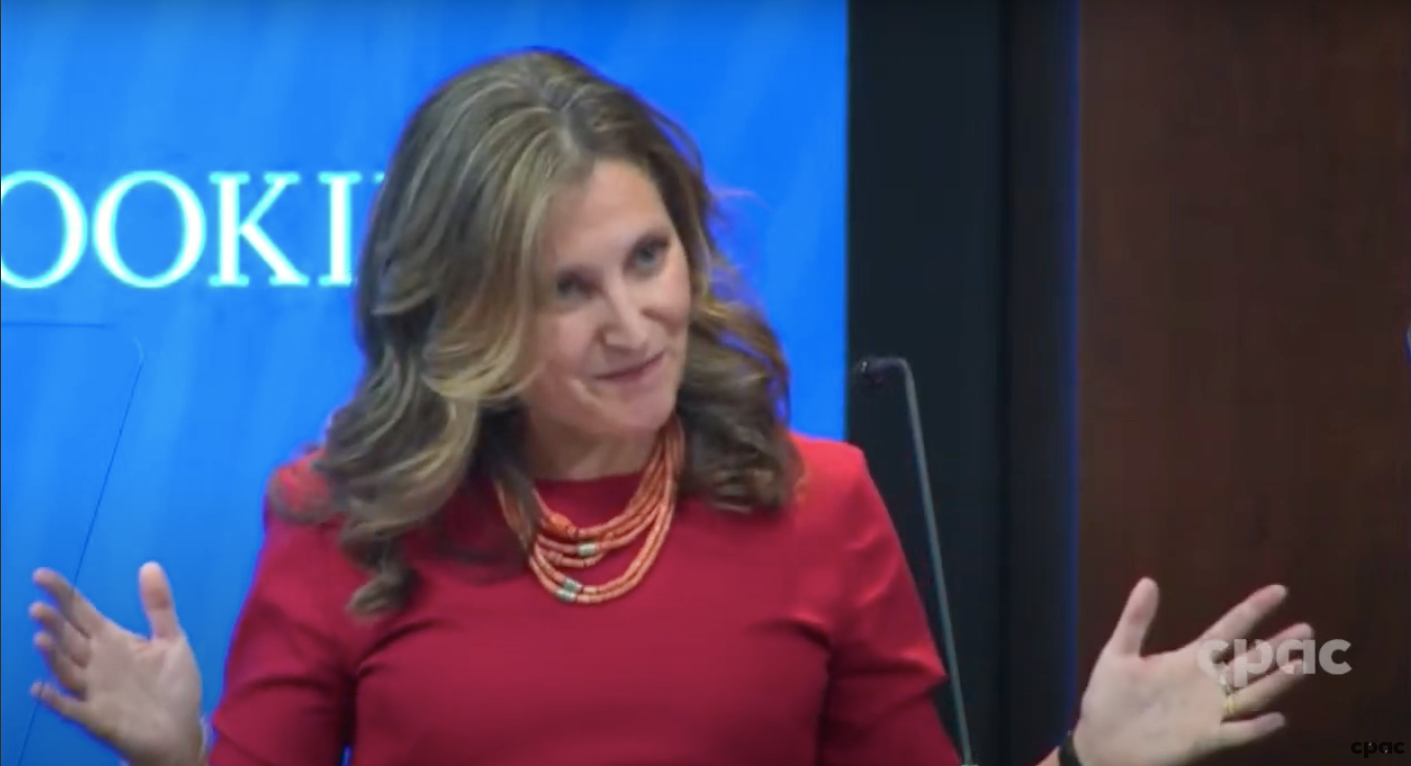
Screencap from the CPAC video of Chrystia Freeland’s speech this week.
Deputy Prime Minister Chrystia Freeland went to Washington this week, to give a speech at the Brookings Institution. It is a very interesting speech. Truly — it’s interesting. You should read it.
Is it a good speech, though?
In some ways, yes. You could even go so far as to say it’s a very good speech. Freeland lays out a stark but convincing critique of more than 30 years of Western foreign policy and economic assumptions, and offers some worthwhile Canadian initiatives that seek to address what we got wrong. We were wrong to believe that history had ended, Freeland said, and must now accept that we’re going to have to fight for the world we want to live in, and to win hearts and minds. We can’t just sit around and wait for the arc of history to bend things our way — we must work consciously and deliberately with our allies to make the Western alliance stronger, richer and safer, better able to withstand the hostility of our enemies and win over the undecideds of the world.
That’s the good stuff. There is, however, some bad news.
[…]
Freeland’s speech is full of little examples like this, where the value of her ideas collides bodily with the reality of her government’s competency problems. She is saying the right things. She is also saying the things that her government could already have been doing, but either hasn’t wanted to or isn’t capable of actually pulling off.
So we’re going to spend some domestic political capital to help draw the democratic allies together, eh? That sounds great. But what if they want to sell us some cheese or fancy butter? Are we going to spend some domestic political capital on that, or nah? Freeland says we must “deepen and expand” NATO and our other alliances, which also sounds super, but we’re already seeing signs that our allies are increasingly cutting us out of the loop and forming new Canada-free forums because we simply aren’t interested in deepening or expanding anything, and don’t add anything but an extra meal tab when we show up for the family photo. Freeland says that adapting to our changing world order is “one of our most urgent tasks”. Okay! Again, that sounds fantastic, but are we going to do a defence policy review? A foreign policy review? Are we going to spearhead any new initiatives? Are we going to build out our military, expand our diplomatic corps, and invoke that famous convening power in a way that tangibly helps? Or is this one of those things where the urgency is in the saying aloud before a well-heeled crowd, but not so much in the doing?
Indeed, this goes well beyond what I’d call this government’s meta-failure: a strong preference for saying the right things in place of doing the right things, but still expecting full credit for said things, as if they’d actually pulled it off. That problem is bad enough, but on top of that is layered the very real concerns I and many others have about our state capacity. Even if we chose to spend political capital to get things done, and then tried really hard to succeed, could we? I know it’s a bit of a deep cut now, but I wonder if everything Freeland wants to do will be charitably deemed “underway with challenges” by the time the war in Europe enters its second year, or fifth, or tenth.
There’s a line in Freeland’s speech that really jumped out at me. Early on, she’s talking about the assumptions many of us in the West had about the “end of history” — the proclaimed permanent triumph of democracy and capitalism after the end of the Cold War. “It is easy to mock the hubris and the naiveté which animated that era”, she said.
She’s right! Here’s the thing, though: it’s equally easy to mock the hubris and naiveté of a Canadian deputy PM who flies to Washington to lay out a vision of allied solidarity and hard work that her own government has yet to demonstrate the slightest interest in putting into action. Her government’s own record undercuts her (truly) very fine words. Canada could be leading by example here. Instead, Freeland is giving a speech about the things we ought to be doing, and could already be doing, but aren’t. The D.C. audience may not know enough of her government’s record to mock the hubris and naiveté; we Canadians have no such luxury of ignorance.
I’ll say this for Freeland: I believe she is sincere. I believe she means what she says, I believe she has thought about these issues long and hard, and despite my previously acknowledged quibbles, it is a damn good speech. The problem, in this case, isn’t the message, or even the messenger. The problem is who the messenger works for.
October 13, 2022
Are we to believe that Prime Minister Trudeau lied about the Freedom Convoy? To the fainting couches!
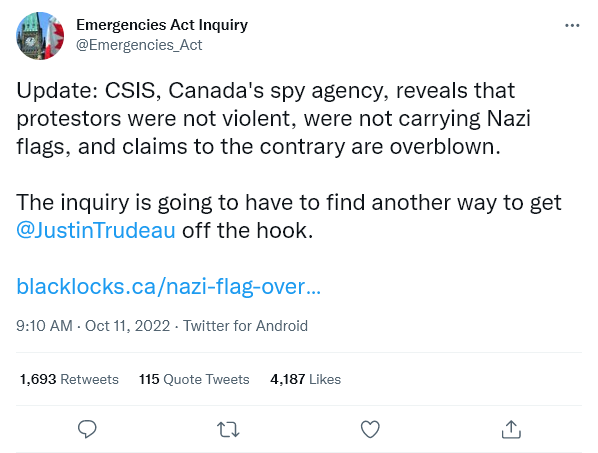
Some recent revelations show that Prime Minister Justin Trudeau was … less than perfectly honest … about the intelligence reports he was receiving about the Freedom Convoy:
It has now been revealed that statements by Prime Minister Justin Trudeau associating the “Freedom Convoy” with Nazism were unfounded, according to Canadian Security Intelligence Service (CSIS) documents published by Blacklock’s Reporter.
On January 31, 2022, Trudeau conflated support for the “Freedom Convoy” with “Nazi symbolism” in his first press conference addressing the massive anti-mandate demonstration that captured the world’s attention in the first two months of the year.
Trudeau also stated at the time that he would not meet with the truckers because of their supposed “hateful rhetoric” and “violence towards citizens”, behavior he consistently implied was a core aspect of the movement’s strategy to put an end to COVID jab mandates nationwide.
Contradicting Trudeau’s characterization, the now-revealed documentation from CSIS, dated February 2 – just two days after the prime minister’s initial comments – explain that the protest was predominantly comprised of “patriotic Canadians standing up for their democratic rights” and not of those holding extremists beliefs.
Detailing how the presence of bigoted imagery is “not unique” when it comes to large-scale protests, CSIS also noted that the presence of swastikas on some flags was “not necessarily to self-identify as Nazis but to imply the Prime Minister and federal government are acting like Nazis by imposing public health mandates”.
It was therefore the conclusion of CSIS that while some attendees had manually added swastikas to flags, it was to associate Trudeau with Nazism as a statement of their opposition to the ideology.
Two weeks after the CSIS report was produced, Trudeau doubled-down on his conflation of the Freedom Convoy with Nazism, accusing the Conservative Party of Canada, and in particular Jewish MP Melissa Lantsmann, of standing “with people who wave swastikas”.
October 12, 2022
The two traditions of the American political left
Chris Bray responds to a post by Leighton Woodhouse that declares that “left libertarianism” has won the battle for the soul of the American left:
I see two traditions on the American political left.
One is a tradition skeptical of authority, or aggressively hostile to it: Striking miners battling Coal and Iron Police, or Pinkertons, or Colorado sheriffs, or the National Guard; Wobblies fighting cops in the street; Great War-era socialists attacking the military draft, and going to prison for it; the Weatherman planting bombs in police and military offices. This tradition on the left views government as authority, a repressive servant of the status quo — “the executive committee of the bourgeoisie”. Leftists in this tradition say that of course government serves capitalism and corporate power, and of course the government isn’t on our side. Go back to the Coal and Iron Police to see how radical labor activists saw them: state-sanctioned police, with badges, on the private payroll of the industrialists. The young radical George Orwell, writing about his time fighting in Spain: “When I see an actual flesh-and-blood worker in conflict with his natural enemy, the policeman, I do not have to ask myself which side I am on.”
The other is a tradition centered on the supposedly inherent decency, wisdom, and fairness of government, a tradition that runs through the capital-p Progressive Era and Woodrow Wilson, to the New Deal, and onward into the Great Society. In this tradition, state power is benevolence itself, and points its kindness downward. Government interposes itself between the downtrodden worker and the power of the wealthy, ensuring the dignity of the poor. Tax the rich! In this tradition, government represents our best selves, our highest yearning for a better world. Why, just look at how much more equitable the progressive income tax made our social order, back when marginal tax rates were so much more fair at the top. Government serves, protects, nurtures: It’s the tool of the ordinary man, offering the noble guarantees of Social Security and Medicaid. Of course government is on our side, fellow downtrodden, and we need more of it.
Those two traditions don’t fit together, though the obvious way to square the circle is to say that a Bill Ayers opposes the power of the state when it opposes him, and embraces it if he thinks his side has come to control it. This would mean that there aren’t two ideological traditions — just two different instrumental postures. But no one who survived the Ludlow Massacre thought the government was a benevolent servant of the working man.
As Leighton Woodhouse notes, we have a good deal of what looks like anti-authority leftism in our cities, in the form of movements that call for the end of mass incarceration, the defunding of the police, and the transition to a social services model in response to homelessness and drug addiction. In this view, rising crime and growing homelessness are signs of urban leftists rejecting authority as a tool. Homelessness is not a crime, you fascists!
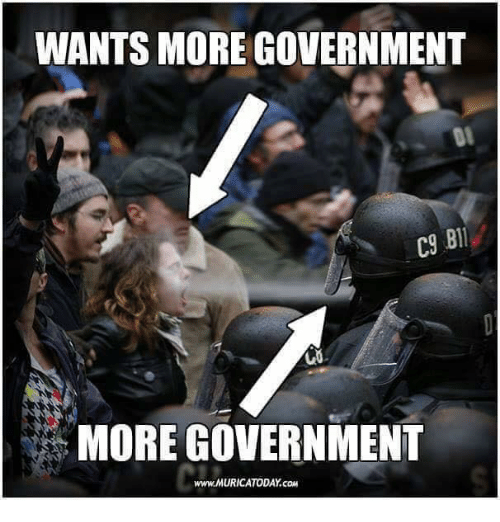
But I’ve written before about the incredible strangeness of progressive political columnists denouncing Donald Trump’s vicious authoritarianism, and then proudly pivoting to an expression of their approval of the warm and caring Justin Trudeau — who cracked down on incipient Trumpism in his country by boldly freezing the bank accounts of dangerous participants in the evil right-wing truck convoy. When government freezes the bank accounts of protesters, government is fighting against authoritarianism, obviously. More government power means less authoritarianism!
October 10, 2022
How tall?
“An Englishman in New York” contemplates the ideal heights of city buildings:
I have often wondered what the maximum number of storeys for a good street is. No doubt an individual building can be indefinitely high, in the right setting. But this surely cannot be true of streets: a street with a thousand storeys would either be terrifyingly dark and claustrophobic, if the street were of normal width, or vast and bleak, if its width were scaled up to correspond with its height. So there must be some maximum beyond which pleasing street-based urbanism becomes impossible.
Some people think that the maximum is two or three. These people often believe that one is moving into inhumane scales when one goes above this point. Growing up in London, I knew the maximum must be at least four or five, since that is the norm for the Georgian terraces. I have a distinct memory of visiting Paris and realising it could not be less than eight, since that is the norm for the Belle Epoque.
Visiting Manhattan for the first time, I find it must be more still. The streets of Midtown Manhattan, each 60 feet wide, are often built up to ten or twelve storeys, with four or six more slightly set back above. The avenues, 100 feet wide, are often built up to fifteen or twenty storeys, with another five or ten set back. And to be clear: I refer to the height at which they are continuously built up, excluding the towers that rise above. The avenues of New York are perhaps not paradigmatic great streets, notably because they are almost invariably packed with four lanes of traffic. But their underlying form is good, as is borne out in the handful of cases in which they have been partly pedestrianised.
These streets evolved under New York’s famous 1916 building regulations. Before 1916, New York landowners could essentially build as high as they liked, and this did indeed generate streets that were sometimes rather menacing (pictured below left). The 1916 system was designed to allow as much height as possible while preserving the amenity of the street, indexing the height of the buildings to the width of the street and setting back the upper storeys in the time-honoured European fashion (pictured below right). This system lasted until 1961, when it was replaced with modernist regulations designed to generate slab blocks standing on open plazas; the results of this were so obviously inferior that the older system has been partly reinstated.
A pre-1916 street; a post-1916 avenue
My sense is that Manhattan’s tallest 1916-61 streets could not take many more storeys without losing amenity: the regulators basically succeeded in allowing as much height as possible without compromising the public spaces. In a city at a more southerly latitude, where the light is more intense, perhaps a few could be added; and perhaps the avenues could be widened further, with a corresponding growth in the buildings. It is hard to judge imaginary streets. But at any rate, New York shows we can go a lot higher than I had once supposed: there can be great streets with twenty storeys, five or ten more under a light plane, and more again in isolated towers.

And on grid-pattern streets:
Gridiron street plans have been used for planned cities in many times and places — in Harappa, in Dynastic China, in European Antiquity, even in the Middle Ages — so I assume there must be something very good about them. But I have never quite worked out what it is. One annoying thing about gridiron plans is the great frequency of road crossings. Walking the 3.2 miles from the Empire State Building to 1 Wall Street, one must wait, by my count, at 62 traffic lights. Walking the 3.3 miles from the Tower of London to Buckingham Palace, one encounters only 12, along with 8 crossings without lights that probably do not require waiting.
That is a slightly extreme example, but I think frequency of crossings is a general truth about gridirons. A gridiron distributes crossing points evenly and regularly, such that there is no way to reduce the number that one passes. If one wants to go three blocks east and twelve blocks south in Manhattan, there is no way one can avoid traversing fifteen roads. In an organic street plan with an equal overall density of roads, the crossings will be grouped in irregular ways. If one walked randomly, one would average the same number of crossings. But of course people do not walk randomly: one chooses one’s route, with a view in part to reducing the number of roads one has to cross. And so, rather picturesquely, the street plans long called “irrational” are in this respect preferable precisely because they are used by rational creatures.
October 9, 2022
What do you call it when a military-funded organization intervenes in US domestic politics? It’s “anti-fascism“, obviously
Chris Bray continues digging into the activities of a Department of Defence-funded operation at the University of Maryland:
I wrote this morning about the disinformation expert Caroline Orr Bueno, a postdoctoral fellow at ARLIS — the Applied Research Laboratory for Intelligence and Security at the University of Maryland (who is identified as Caroline Orr on her ARLIS profile, so that’s the name I’ve used for her). Orr aggressively and repeatedly argues against the American political right, framing conservative politics as fascist and describing Donald Trump as an authoritarian figure. She makes a political argument, and she does it often.
This is true not only of her social media posts, but also of her published work. She’s a pro-Antifa political partisan (more about this in a moment), specifically arguing against the right and against Donald Trump rather than only studying disinformation across the political spectrum.
Now: ARLIS, where Orr works, is primarily funded by the Department of Defense, and its “core sponsor” is the Undersecretary of Defense for Intelligence and Security. You can download the 2021 annual report from ARLIS here […] You can find a description of the laboratory’s $46 million in funding on page 26 of that report:
So a research center largely funded by the military, and specifically sponsored by and aligned with the Undersecretary of Defense for Intelligence and Security, is arguing against a likely candidate for President of the United States and his supporters, participating in the work of shaping a political narrative while drawing DOD funds. Orr’s national security work as a military intelligence-funded researcher is to make sure people know that Donald Trump is bad.
This scholar has military funding:
Military intelligence is paying for politics. Military-funded academic researchers have the same academic freedom every other academic researcher has, and Orr has a right to express political opinions. But she’s doing government-funded research into the academic topic of Trump is bad so don’t support him, and that’s a misuse of federal funding and military authority. I assign the failure to the institution, not to the person. (The irony of military-funded academic leftist politics is not hard to spot, but that sort of thing doesn’t seem to matter anymore.)



The Nanny State’s manifold failings
Christopher Snowden scoffs at the pro-Big Nanny maunderings of Matthew Parris in the Spectator recently:
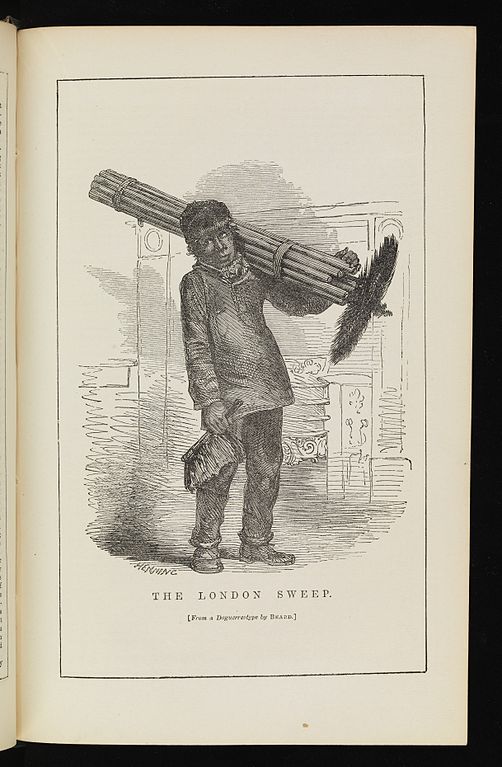
The London Sweep (from a Daguerreotype by BEARD).
Image from London labour and the London poor: a cyclopaedia of the condition and earnings of those that will work, those that cannot work, and those that will not work, 1851, via the Wellcome Collection.
A few years ago I was on the panel at the Battle of Ideas in London. I can’t remember what the topic was exactly, but it was something like the sugar tax or e-cigarette regulation. Rather than deal with the merits of these policies directly, I noticed that my opponents talked in general terms about the good that government can do, referencing the abolition of slavery and the ban on children going up chimneys.
Given all the regulation of recent decades, I found it telling that they had to go back 200 years to find laws that everyone can agree were jolly good. If I had been presenting the case for anarchism, their arguments might have landed, but since I was making the more modest case that perhaps there might be one or two laws in existence that are unnecessary and illiberal, their approach looked more like a diversionary tactic.
Matthew Parris did the same thing in last week’s Spectator. Thanks to the Royal Mail strike, it only landed on my doormat today, but you can read it here. It is titled “Maybe Nanny does know best”. Confusingly, Parris does not use the term “nanny state” in the conventional sense meaning lifestyle paternalism, but as a catch-all term for any government regulation whatsoever.
His target is Liz Truss whom Parris dislikes even more than he disliked Brexit and Boris Johnson. Unless Rory Stewart or Nick Clegg somehow become Prime Minister, I suspect that Parris will be demanding the head of whoever is in charge of the government until his dying day. He is not impressed by Truss’s “dash for growth”.
Parris’s argument is that Big Government is the friend of economic growth, not its foe. He confesses that he, like Truss, once held the view that the “dead hand of the state” stifled growth and led to inefficiencies but that he has grown out of all that stuff now and, with two gin-scented tears trickling down the sides of his nose, he welcomes his bureaucratic overlords.
Why? Because, a hundred years ago, the government gave women the vote and allowed them to work.
There was a time not so long ago when a certain group – half our potential workforce – were all but disqualified from contributing to Britain’s GDP. This group were called “women”. Women were generally unable to own property, or to play much more than a menial role in business (let alone politics, where they could not vote). So who helped unleash women’s potential, gave them rights in the workplace, stopped employers throttling their potential by restricting them to mindless occupations? Was it free trade? Was it big business? Was it competition? Was it Adam Smith’s “Invisible Hand”? No. Step forward Nanny. Nanny it was – legislation, the House of Commons, the first world war, the state – who commanded these things, driven in part by the forces of democracy.
The idea that women only started “contributing to Britain’s GDP” — i.e. working for pay — after the First World War is historically illiterate. It may have been true of the upper class and some of the middle classes, but for all other households it was a financial necessity for women to work, whether in agriculture, textiles, domestic service, pubs or whatever. It is true that more men were employed than women, but women were pregnant a lot of the time and had an enormous amount of unpaid work to do. They were certainly never “all but disqualified” from working, except in a few sectors such as the police force.
And who was it who banned women from owning property and voting in the first place? It wasn’t Adam Smith. It was the government, or, as Parris, would have it, the “nanny state”. So which nanny state are we supposed to be thankful for — the one that gave women the vote for a hundred years or the one that denied them the vote for hundreds of years?
Nanny had been busy since the 18th century, when in the Papists Act of 1778 she decreed that Catholics should not be excluded from key parts of the economy. She was still busy in the 20th century, starting with the Sex Disqualification (Removal) Act 1919, and later the 1944 Education Act outlawing the barring of married women from teaching.
Again, who excluded Catholics from key parts of the economy in the first place? Who barred married women from teaching? That’s right, it’s our old friend Big Government, the arsonist that Parris treats like a fireman.
October 8, 2022
First BoJo “Miss me yet?” meme time?
Dominic Sandbrook on the terrible, awful, very bad start to Liz Truss’s Premiership:
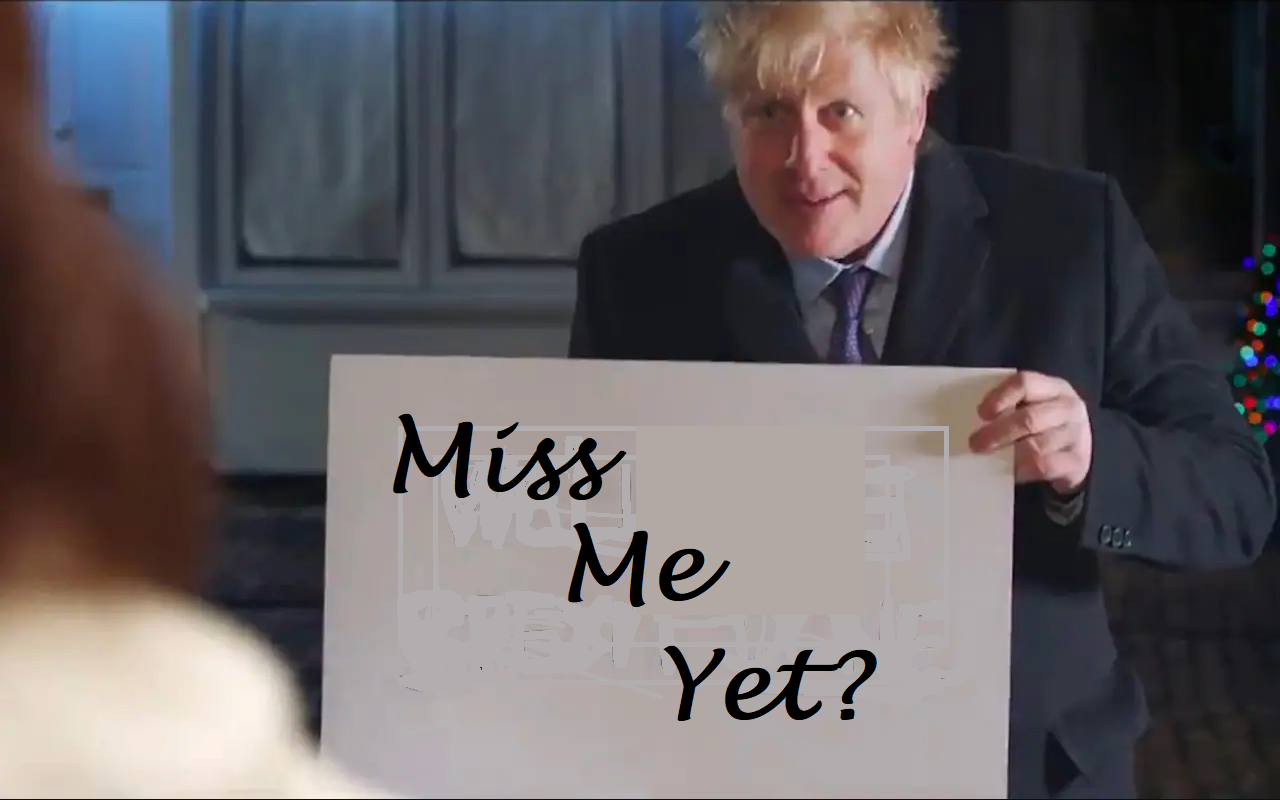
If you believe the mainstream media, it has been yet another cosmically dire week for the Conservatives. But let’s stop going on about all the little things that went wrong, and concentrate instead on what went right. Nobody died. Liz Truss got through her speech without losing her voice, losing her mind or falling off the stage. The pound is back up to its level before Kwasi Kwarteng’s Fiscal Event. And maybe, just maybe, things are going to come right after all.
The winter energy crisis won’t be as bad as everybody fears. Inflation will start to come down. By the spring, that enormous Labour poll lead will be a fading memory. And as the next election approaches, ordinary people across the land will throw their caps in the air and cheer the name of Good Queen Liz …
No. No, I can’t do it. Tempting as it is to tilt against the conventional wisdom, sometimes you just have to face facts. The conference was awful. The speech was awful. This has been the worst start to any premiership, I think, in recent history — perhaps even in all British history.
Perhaps some readers will think this very harsh. But one close Truss ally, speaking off-the-record to the Financial Times, didn’t seem to think so. “I just went back to my hotel room and cried,” he said. “It’s a total disaster.” That’s pretty much what the general public think, too. In focus groups this week, the words that came up again and again were “incompetent”, “useless”, “untrustworthy”, “dangerous” and “clueless”. The punters aren’t always right, of course. But this time they are right, aren’t they?
“Our policy is great,” Penny Mordaunt told a fringe conference audience a couple of days ago, “but our comms is shit.” But if your comms really is shit, then who cares about the policy? Who even knows about it? Communicating your policy is the very essence of politics. If you can’t do it, you’ll never win another election.
I watched Truss’s speech through my fingers, embarrassed not just by the sheer lack of content, but the comically wooden and childlike delivery. It speaks volumes that in their desperation to find something, anything, nice to say about it, sympathetic papers applauded her for staying calm after she was interrupted by hecklers. Only somebody who had never heard of Harold Wilson, Margaret Thatcher or Tony Blair — all of whom were brilliant at dealing with interruptions — could have possibly thought this worth applauding.
For although academics and activists often prefer to talk about the abstractions of ideology or the nuts and bolts of policy, performance really, really matters in politics. To some extent, in fact, performance is politics. Even in a parliamentary system, you need a messenger who embodies the message, a leader who can charm and explain. Watch Thatcher talking to Robin Day in 1984, or Jim Callaghan being interviewed by Thames TV’s This Week in 1978, and it’s like entering a different world. Whatever their ideological differences, Thatcher and Callaghan are seasoned, accomplished performers, at the top of their respective games. They think about the questions. They talk in complete sentences, even complete paragraphs. They give long, considered, serious answers. They seem like impressive, well-informed, formidable people. Then watch Truss again, and try not to weep.
October 7, 2022
The “two movies on the same screen” effect: most Canadians see impending collapse but our “elites” think everything’s peachy
Tara Henley contrasts the reality many Canadians are facing day-to-day with the out-of-touch “laptop elites” who, as a class, did great through the last two and a half years and who have no clue at all why anyone would see the state of the country as anything like a collapse:

Pierre and Ana Poilievre at a Conservative leadership rally, 21 April, 2022.
Photo by Wikipageedittor099 via Wikimedia Commons.
There has been much discussion lately about the state of our nation — and whether or not we, as a society, are in decline.
Former journalist and Justin Trudeau speechwriter (and current Substacker) Colin Horgan published a provocative essay at The Line last month, arguing that our country is vulnerable to extremists who believe that “the current system of liberal democracy is inherently corrupt and corrupted, verging on collapse, and that, in the extreme, its downfall can and should be hastened by acts of violence”.
Horgan worries that Conservative leader Pierre Poilievre — who’s been actively speaking to this ambient vibe of distress and dissatisfaction — could accelerate such destabilization.
Poilievre does not say extreme things, Horgan concedes, but Poilievre’s message is “still poison” because “what he telegraphs is the vision of a social order at a tipping point, with the suggestion that it can be easily pushed over”.
In short, Poilievre has tapped into “an Internet language of decline”.
There’s a thriving cottage industry in the Canadian legacy media doing everything they can to tar Poilievre as a Canadian Hitler and to continue the re-typing and re-phrasing of government talking points for the mass market. The government subsidies to “approved” media outlets will help keep the lights on a bit longer as they continue to lose audience share — and trust.
Our quality of life has been eroded for some time now. Wages have been stagnant for decades. Precarious work is the order of the day, both for the working class and professionals. Rents and property prices are through the roof; according to the Globe and Mail, since 2000, domestic home prices have increased by 420 percent. Inflation is high. Gas is expensive. Food costs are up. We are coping with a crisis of social isolation. Our opioid epidemic rages on.
Meanwhile, pandemic policy has benefited the laptop class and harmed the most vulnerable among us. (See lockdowns and school closures, for starters.)
Indeed, there has been extreme winners and losers during the COVID era, which saw a massive transfer of wealth upwards. Billionaires in this country, in fact, saw their wealth increase 68 percent during the pandemic.
Should we be surprised that those on the losing end are expressing their frustration?
[…]
Things have only gotten worse as the pandemic has dragged on and citizens have been hit with high inflation and rising interest rates (while also staring down other looming financial catastrophes).
According to an Angus Reid poll out this week, nine out of ten Canadians have cut their household budgets due to inflation and high prices. And 46 percent of Canadians say their personal finances are worse off now than they were at this time last year.
But if the material conditions in this country are dire, so too is the national mood.
In fact, there is a gaping wound at the centre of our national psyche.
Essential workers have laboured throughout the COVID crisis, endangering their health and that of their families, in order to keep society running. In return for their heroic efforts, the unvaccinated among them — many of whom previously contracted COVID and have natural immunity — have seen themselves ostracized and smeared as racists and misogynists. Their fundamental values have been mocked in the public square, and their basic rights and freedoms, including freedom of expression, have been compromised. Some have lost jobs, social lives and more for declining vaccination.
To comprehend the human toll this has taken, one need only look to the grassroots #TrudeauMustGo campaign on Twitter.
The consequences of vaccine mandates should have been covered in great depth by our national press. But instead, the Canadian media largely fell down on this story, often generating coverage that uncritically reproduced the Liberal party line.
Trust in the Canadian news media is now at its lowest point in seven years.
And judging from the reader mail I get, the Liberals’ decision to turn vaccine mandates into a wedge issue has had significant social consequences — tearing apart families, communities, and workplaces in ways that may take years to recover from.
All told, what we are witnessing is not merely a state of decline. It is a form of collapse. A collapse of the social contract. A collapse of the expectations we grew up with — that if you worked hard and respected the law, you could have a home, a family if you chose, and, crucially, a say in our democracy.
What we are living through is a collapse of life as we knew it in Canada.
What was once a stable, prosperous, diverse democracy is now a nation divided, rife with fear and anger, and financial and social instability.
Not only has our Prime Minister failed to grasp this, but he’s actively stoked tensions.
Churchill and the Queen
In The Critic, Andrew Roberts outlines the relationship between Prime Minister Winston Churchill and Queen Elizabeth II:
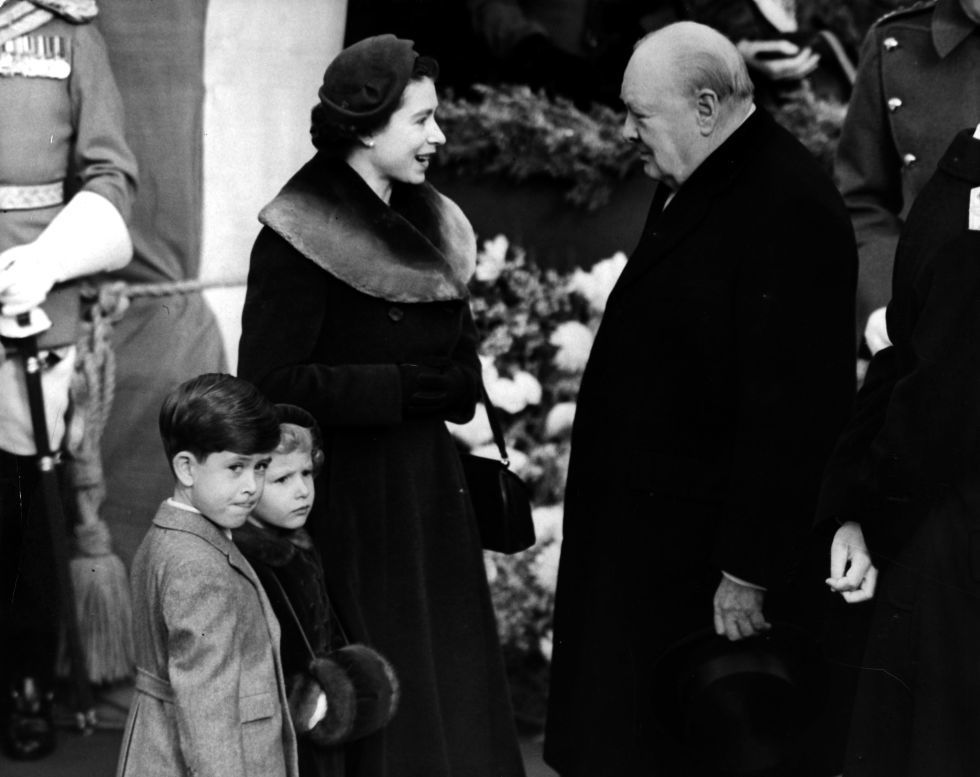
Queen Elizabeth II and Sir Winston Churchill, with Prince Charles and Princess Anne in the foreground, 10 Februrary 1953.
Official photograph via Wikimedia Commons.
Winston Churchill was besotted with Queen Elizabeth II: the word is precise. He worshipped and adored her. His relations with some other members of the royal family were, on occasion, complicated — not least when King Edward VII was sleeping with his mother. But for the late Queen he had nothing but an almost puppy-dog love.
[…]
When King George VI died unexpectedly on 6 February 1952, aged only 56, Churchill was devastated, weeping copiously both on hearing the news and at the funeral. Of the new monarch he told his private secretary, Jock Colville, that “he did not know her and that she was only a child”.
Nonetheless he saw an opportunity of romanticising the country’s situation. “Famous have been the reigns of our queens,” he said in his BBC broadcast on the King’s death. “Some of the greatest periods in our history have unfolded under their sceptre. Now that we have the second Queen Elizabeth, also ascending the Throne in her twenty-sixth year, our thoughts are carried back nearly 400 years to the magnificent figure who presided over and, in many ways, embodied and inspired the grandeur and genius of the Elizabethan Age.”
Although she was his sixth sovereign, Churchill was the new Queen’s first prime minister and old enough to be her grandfather. For all the 51-year age difference — or perhaps because of it — Churchill quickly grew devoted to her. “There was one lady by whom, from 1952 onward, Churchill was dazzled,” noted Colville. “That was the new Queen. Here was a woman whom he respected and admired more than any man.”
[…]
On 24 January 1965, 70 years to the day after the death of his father Lord Randolph Churchill, Sir Winston died. The Queen waived all custom and precedent to attend his funeral at St Paul’s Cathedral. She added a message in her own handwriting to the wreath of white flowers that was placed upon his coffin: “From the Nation and the Commonwealth. In grateful remembrance, Elizabeth R.” It echoed that which Churchill had placed on her father’s coffin, simply saying “For Valour”, the motto of the Victoria Cross, and a reference to the late king’s moral and physical courage during the Second World War, and perhaps also at the battle of Jutland in 1916.
[…]
The Queen decided Churchill should have a State funeral following his stroke in 1953. Once he had recovered, she told him so. The plans had to be rewritten several times over the next 12 years because, as Lord Mountbatten joked, Churchill kept on living but the pallbearers kept on dying.
There is a powerful symmetry to the friendship of monarch and premier that the next State funeral after Churchill’s was to be the Queen’s own, a full 57 years later.
QotD: King Agis IV’s and King Cleomenes III’s failed reform attempts in Sparta after 371BC
Thus the Spartan state might grant marginal, borderland to small groups of freed helots – the neodamodes and the Brasidioi – but actually bringing up the military strength of the polis in full could only be achieved by de-consolidating the kleroi – the best, most productive land (because you can only support so many hoplites on disputed, marginal land). This is one thing, of course, that the wealthy Spartiates who dominated the state were unwilling to do. The mothakes and hypomeiones, pushed to the edges of Spartan society, might be brought in to make up the difference, but unless they were made equals – homoioi – this was a recipe for instability, as seen with Lysander and Cinadon. This is the other thing the Spartiates were unwilling to do – if I had my guess, because for the poor Spartiates who still clung to their status (and might still use the Apella to block reform, even if they couldn’t use it to propose reform), that status differential was just about the only thing they had (apart from all of the slave labor they enjoyed the benefits of, of course).
(A different polis might have tried to make up this difference by either hiring large numbers of mercenaries, or arming its own people at state expense, as a way of using the fortunes of the rich to fund military activity without expanding the citizenry. But, as Aristotle notes – (we’ll come back to this when we talk about Spartan war performance) the public finances of Sparta were pitiful even by ancient standards – for precisely the same reason that deconsolidating the kleroi was politically impossible: the state was dominated by the wealthy (Arist. Pol. 2.1271b). With no real source of wealth outside of landholding and all of the good land held by the Spartiates, it seems that Sparta – despite being by far the largest polis in Greece and holding some of the best farmland outside of Thessaly, was never able to raise significant revenue.)
Instead, the clique of wealthy Spartiates arrayed about the kings did nothing, decade on decade, as the Spartiate citizen body – and the military power of Sparta – slowly shrank, until at least, in 371 it broke for good. But what is perhaps most illustrative of the dysfunction in the Spartan political system is the sad epilogue of efforts in the second half of the third century (in the 240s and 220s) to finally reform the system by two Spartan kings.
The first effort was by Agis IV (r. 245-241; Plut. Agis). By the time Agis came to power, there were only a few hundred Spartiate households. Agis tried to reform through the system by redividing all of the kleruchal land into 4,500 plots for Spartiates and another 15,000 for the Perioikoi (who might also fight as Hoplites). Agis gets the Apella to support his motion – his offer to put his own royal estates into the redistribution first earns him a lot of respect – but the Gerousia, by a narrow margin, rejects it. Agis is eventually politically isolated and finally executed by the Ephors (along with his mother and grandmother, who had backed his idea) – the first Spartan king ever executed (I have left out some of the twists and turns here. If you want to know Plutarch has you covered).
Cleomenes III (r. 235-222) recognizes what Agis seemingly did not – reform to the Spartan system could not happen within the system. Instead, he stages a coup, having four of the five Ephors murdered, exiled eighty citizens – one assumes these are wealthy and prominent opponents – and possibly had the other king assassinated (Plut. Cleom. 8, 10.1; Plb. 5.37). Cleomenes then redistributed the kleroi into 4,000 plots and made his own brother his co-king (Plut. Cleom. 11), essentially making him a tyrant in the typical Greek mold. He then set about continuing his war with the neighboring Achaean League in an effort to re-establish Spartan hegemony in the Peloponnese and presumably retake Messenia (which by that point was free and part of the Achaean league).
It was far, far too late. Had this been done in the 380s or even the 350s, Sparta might well have resumed its position of prominence. But this was the 220s – Macedon had dominated Greek affairs now for a century and the Antigonids – the dynasty then ruling in Macedon – had no intention of humoring a resurgent Sparta. In 224, a Macedonian army marched into the Peloponnese in support of Sparta’s enemies and in 222 it smashed the Spartan army flat at Sellasia, almost entirely wiping out the Spartiate citizen body – new and old – in the process (Plutarch claims only 200 adult Spartiate males survived, Plut. Cleom. 28.5). The victorious Macedonian – Antigonis III Doson – for his part re-crippled Sparta: he occupied it, restored its constitution to what it had been before Cleomenes and then left, presumably content that it would not threaten him again (Plut. Cleom. 30.1). The time when a state with a citizen body in the few thousands could be a major player had been over for a century and the great empires of the third century were in no mood to humor self-important poleis who hadn’t gotten the message.
Bret Devereaux, “Collections: This. Isn’t. Sparta. Part V: Spartan Government”, A Collection of Unmitigated Pedantry, 2019-08-29.
October 4, 2022
“… apparently the future of science is BAJEDI (Belonging Accessibility Justice Equity Diversity and Inclusion), which is quite a bit cooler than mere DEI”
And you thought the stuffy old National Science Foundation was only supporting pale, stale, cisgendered white male research? Think again!
I’ve written many times about the National Science Foundation and its increasingly politicized conception of “science”. As an independent federal agency with a nearly $9 billion budget, the NSF is a behemoth in the world of academic science, shaping research agendas and the future of the professoriate. And apparently the future of science is BAJEDI (Belonging Accessibility Justice Equity Diversity and Inclusion), which is quite a bit cooler than mere DEI. Here’s a current funding opportunity for scientists:
The federal agency that funds research projects like “Probing Nucleation and Growth Dynamics of Lithium Dendrites in Solid Electrolytes” is moving hard into the business of social justice, with career-making grants that will focus STEM researchers on the problem of racial grievances. Here’s how much money is available for that racial equity program:
The premise underlying this turn toward equity-focused science projects is that “science scholars who are underrepresented in STEM produce higher rates of scientific novelty”. Innovation is grounded in race and ethnicity; the more gloriously intersectional you are, the more creative you become. Imagine the boldness of a transgendered Asian Pacific Islander astrophysics, and how much newer and fresher our conception of the universe is when it doesn’t come from straight white males.
And so the NSF wants to fund “diversity champions” who will freshen up our science with BIPOC innovation — which means adding more sociologists to the team of geophysicists: “When developing proposals, the PI team should acknowledge the need for increased engagement from social and behavioral science experts to address issues related to BAJEDI in the geosciences and include these best practices and experts in proposed projects.” […]
It’s a real cultural revolution in the world of academic science.


QotD: “The world bought British and British was best”
The world has never offered us an easy living. There is no reason why it should. We have always had to go out and earn our living — the hard way. In the past we did not hesitate. We had great technical skill, quality, reliability. We built well, sold well. We delivered on time. The world bought British and British was best. Not German. Not Japanese. British. It was more than that. We knew that to keep ahead we had to change. People looked to us as the front runner for the future.
Our success was not based on Government hand-outs, on protecting yesterday’s jobs and fighting off tomorrow’s. It was not based on envy or truculence or on endless battles between management and men, or between worker and fellow worker. We did not become the workshop of the world by being the nation with the most strikes.
I remember the words written on an old trade union banner: “United to support, not combined to injure”. That is the way we were. Today we still have great firms and industries. Today we still make much of value, but not enough. Industries that were once head and shoulders above their competitors have stumbled and fallen.
It is said that we were exhausted by the war. Those who were utterly defeated can hardly have been less exhausted. Yet they have done infinitely better in peace. It is said that Britain’s time is up, that we have had our finest hour and the best we can look forward to is a future fit for Mr Benn to live in. I do not accept those alibis. Of course we face great problems, problems that have fed on each other year after year, becoming harder and harder to solve. We all know them. They go to the root of the hopes and fears of ordinary people — high inflation, high unemployment, high taxation, appalling industrial relations, the lowest productivity in the Western world.
People have been led to believe that they had to choose between a capitalist wealth-creating society on the one hand and a caring and compassionate society on the other. But that is not the choice. The industrial countries that out-produce and outsell us are precisely those countries with better social services and better pensions than we have. It is because they have strong wealth-creating industries that they have better benefits than we have. Our people seem to have lost belief in the balance between production and welfare. This is the balance that we have got to find. To persuade our people that it is possible, through their own efforts, not only to halt our national decline, but to reverse it and that requires new thinking, tenacity, and a willingness to look at things in a completely different way. Is the nation ready to face reality? I believe that it is. People are tired of false dawns and facile promises. If this country’s story is to change we the Conservatives must rekindle the spirit which the socialist years have all but exhausted.
Margaret Thatcher, “Speech to Conservative Party Conference”, 1979-10-12.
September 30, 2022
Witness about to testify on Bill C-11? Time to break out good old Parliamentary bullying and intimidation tactics!
It’s had to believe, but the Liberal government continues to defy expectations in their continued mission to prevent public participation in political processes, as Michael Geist documents here:
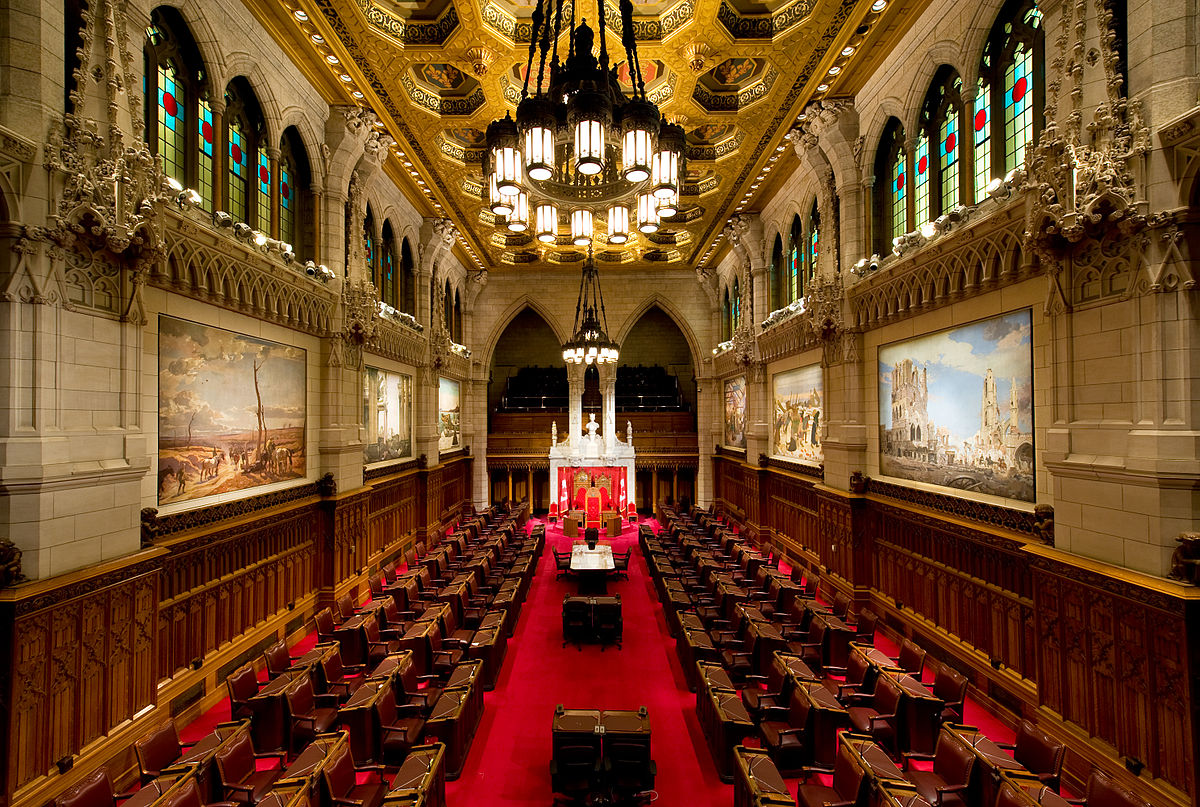
“In the east wing of the Centre Block is the Senate chamber, in which are the thrones for the Canadian monarch and consort, or for the federal viceroy and his or her consort, and from which either the sovereign or the governor general gives the Speech from the Throne and grants Royal Assent to bills passed by parliament.”
Photo and description by Saffron Blaze via Wikimedia Commons.
The Senate Bill C-11 hearings have provided a model for the much-needed, engaged, non-partisan inquiry that was largely missing from the House committee’s theatrics in which the government cut off debate on over 150 amendments. But this week those hearings attracted attention for another reason: serious charges of witness intimidation and bullying by government MPs, most notably Canadian Heritage Parliamentary Secretary Chris Bittle (yes, the same Bittle who last month suggested I was a racist and a bully for raising concerns about Minister Pablo Rodriguez silence over Canadian Heritage funding of an anti-semite as part of its anti-hate program).
The Globe and Mail reported late on Tuesday night that Bittle – together with his colleague, Liberal MP Lisa Hepfner – had sent a letter to the Lobbying Commissioner to seek an investigation into the funding of Digital First Canada, a group representing digital first creators. The letter may have been shopped around to other MPs as Liberal MP Anthony Housefather has told the Globe he did not sign it. DFC’s Executive Director, Scott Benzie, had appeared before the Heritage committee months ago and Bittle used his time to focus on the organization’s funding. Leaving aside the fact that government MPs reserve these kinds of questions only for critics of Bill C-11 (there were no similar questions this week from Ms. Hepfner to the Director of Digital Content Next, whose organization supports Bill C-18 and counts Fox News among its members), the timing of Globe story was incredibly troubling. The Lobbyist Commissioner letter was apparently filed nearly two months ago and Benzie had been assured that he was compliant with the law. Yet the story was presumably leaked to coincide with Benzie’s appearance before the Senate committee last night.
The letter and leak smacked of witness intimidation and bullying with the government seeking to undermine critics of the legislation hours before a Senate appearance. Indeed, the entire tactic felt like the policy equivalent of a SLAPP suit, which are used to intimidate and silence critics through litigation. By the end of the day, the tactic had clearly backfired on Bittle and the government. Conservative MP John Nater filed a point of privilege in the House of Commons, arguing that Bittle had attempted to intimidate a Senate witness.
I rise on a question of privilege, for which I gave notice earlier this same day, regarding the conduct of the member for St. Catharines, who attempted to intimidate Scott Benzie, a witness appearing before a committee of the Senate studying Bill C-11, an act to amend the Broadcasting Act and to make related and consequential amendments to other acts, as reported yesterday by the Globe and Mail.
While I appreciate that this attempt to intimidate relates to proceedings of a Senate committee currently studying Bill C-11, the culprit in this case is a member of the House, and that same witness appeared before the House of Commons Standing Committee on Canadian Heritage during its deliberations on Bill C-11, an appearance where Mr. Benzie, no doubt, first established himself as an undesirable witness for the government on the merits of Bill C-11.
The government response was surprisingly muted with MP Mark Gerretsen simply asking for a couple of days to formulate a response, perhaps recognizing that defending Bittle would mean defending the indefensible.
September 28, 2022
This Is Why We Can’t Have Nice Infrastructure
Kite & Key Media
Published 31 May 2021America is a land of constant progress. Sometimes it seems like there’s nothing we can’t accomplish. And then we try to build something…
In recent years, infrastructure projects have taken way too long and cost way more than they should. Boston’s “Big Dig”, for example, took 15 years and cost more than 5x as much as projected. California’s High-Speed Rail was supposed to run between L.A. and San Francisco by 2020. Instead, some track nowhere near either city might be ready by 2027.
Why can’t America build quickly or cost effectively anymore? A well-intentioned regulatory law from the 1970s has a lot to do with it…
When the National Environmental Policy Act (NEPA) first took effect in the 1970s, the environmental impact analysis it required from builders before a project could begin would often run less than 10 pages. Today, the average is more than 600 pages.
Maybe delays and ballooning costs are worth it to protect the planet, right? Here’s the crazy part: NEPA doesn’t even guarantee that. In some cases, it’s actually making us less green.
(more…)


