Quotulatiousness

December 7, 2019

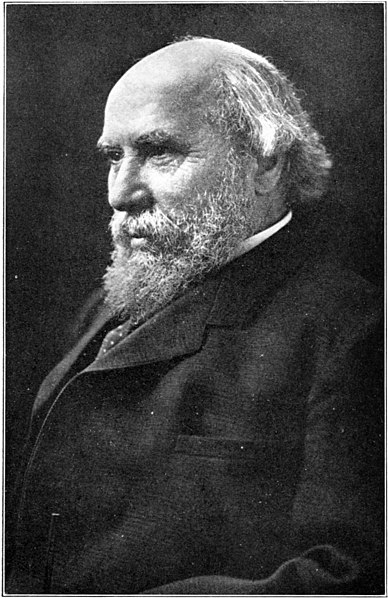
Bryan Donkin, 19th century inventor, amateur public relations whiz and independent lobbyist

Filed under: Britain, Government, History, Technology — Tags: , , , , , — Nicholas @ 03:00

In the latest installment of Anton Howes’ Age of Invention newsletter, he recounts the story of Bryan Donkin and his efforts to save innovators from excessive government interference:

One of the major arguments of the book I’m writing is that inventors’ talent for public relations and lobbying was one of the main reasons that Britain — rather unexpectedly — was the place that experienced an unprecedented acceleration of innovation.

The greatest of these lobbyist-inventors has to be Bryan Donkin, a nineteenth-century mechanical engineer. As an inventor, Donkin improved threshing machines, dredging machinery, and a variety of other tools. He invented the steel pen, dabbled in chemistry, as well as phrenology, and was one of the key people responsible for mechanising the production of paper. He became best known for improving and commercialising tin cans for food. Mechanised paper-making and canned food, having both been invented in France, were perfected in Britain by Donkin. He was the archetypal tinkerer.

Bryan Donkin (1768-1855).
Photographer unknown via Wikimedia Commons.

But it’s as a lobbyist that I think Donkin was truly exceptional. His experience has important lessons for all would-be supporters of invention today.

In April 1817, Donkin read in his newspaper that there had been a disaster in Norwich: the boiler aboard the steamboat Telegraph had exploded. Of the boat’s twenty-two passengers, eight had died immediately in the blast, and another six had eventually succumbed to their wounds. It was a shocking tragedy. And for Donkin, doubly so: in addition to the human death toll, the explosion threatened to kill off one of the era’s newest and most exciting inventions.

Although some of the first trials of steamboats had taken place in the 1780s, it wasn’t until the turn of the century that they began to be practical. By 1817, the first commercially successful steamboat service in Britain, Henry Bell’s Comet, had been chugging its way up the River Clyde between Glasgow and Greenock for only five years. And Londoners like Donkin had only just seen their first steamboat, Margery, when she puffed her way into the Thames in 1815 (the following year, after becoming the first steamboat to cross the Channel, she reinvented herself in Paris as Elise). Thus, by the time of Telegraph‘s explosion, the passenger steamboat had only just been born. There was a very real risk that it would be banned.

Fortunately, however, the steamboat had Donkin in its corner. His immediate reaction upon reading about the explosion was to gather some of his engineer friends — Timothy Bramah and John Collinge — and set off for Norwich to view the explosion site for themselves. As the first expert engineers on the scene, they then took control of the narrative about the explosion. Donkin and his friends went straight to Norwich’s MP to ask him to set up a parliamentary select committee to look into the disaster. And while they waited for the politicians to be assembled for the committee, they held a series of public meetings about the disaster at the Crown & Anchor Tavern — a favourite haunt of London’s engineers. There, they had a chance to rally the rest of the profession and get their story straight about what must have caused the explosion.

December 6, 2019

Mikhail Gorbachev and the “third generation”

Filed under: Government, History, Russia — Tags: , , , , , — Nicholas @ 05:00

At Rotten Chestnuts, Severian explains why Mikhail Gorbachev’s perestroika was doomed to fail:

US President Ronald Reagan and Soviet General Secretary Mikhail Gorbachev at the Hofdi House in Reykjavik, Iceland during the Reyjavik Summit in 1986.
Official US government photograph via Wikimedia Commons.

Perestroika‘s what happens when you turn the reins over to the third generation — the generation that didn’t come up hard, and thus wasn’t forced to deal with objective reality. For all his faults, and for all the debate over whether Stalin was “really” a Communist (hint: he was), the Boss knew what it takes to hold onto power in a one-party state. He learned his craft in the hardest school — maneuvering against Lenin and Trotsky, two of the coldest, most ruthless sons-of-bitches ever to draw breath. His successor, Nikita Khrushchev, survived both the Great Purge and the Great Patriotic War for the Motherland — an achievement, as you can imagine, that pretty much no one else of consequence could boast.

Mikhail Gorbachev, by contrast, was born in 1931. His childhood was affected by the war — as was every Russian child’s — but his grandfather was a kolkhoznik from way back; Mikhail was wired in to the Party from birth. Stalin died in 1953. Gorbachev was 22 — in an earlier generation he could’ve been a serious player at that age, but the postwar generation didn’t start rising until their 30s, or more usually their 40s. He was still at university when the Boss kicked the bucket; he didn’t start his official political career until 1955, and wasn’t recognized as a bona-fide comer until the late 1960s.

What this meant was that Gorbachev grew up in the kinder, gentler Soviet Union — the one where Khrushchev released a whole bunch of folks from the Gulag and denounced cults of personality. This is not to say that Gorbachev wasn’t a sincere Communist; he was. In fact, that was his problem — he was too sincere. The earlier generations faced the stark choice between hewing to orthodox Marxism, or hanging on to power. They chose the latter, of course, and that’s why Trotsky had to go — he kept on claiming to be the only true Marxist of the bunch (which he was, of course, but that’s a story for another day). Gorbachev, though, got to see Communism “working,” and from this he deduced — not unreasonably for someone who didn’t come up hard — that Communism’s manifest failures were due to not following Marx and Lenin more exactly. Marx and Lenin talked a great game about “openness” (glasnost), “democracy,” and all that “improving the lot of the People” jazz.

So he did all that, the fool, not realizing that Communism “worked,” such as it did, only through repression. Take your foot off The People’s neck enough to let them breathe, by all means — that was Comrade Khrushchev’s great insight — but if you ease off any further, they’ll try to wriggle out … and eventually kill you, their tormentor. Having never seen The People at close range — as everyone in the previous generations had — he couldn’t understand this, and so crashed the system.

December 4, 2019

Defund the BBC? Well, if you can’t just sack, burn, and salt the earth it stands on, defunding might help

Filed under: Britain, Government, Media, Politics — Tags: , , — Nicholas @ 05:00

Hector Drummond wonders if the Overton Window has moved far enough that the BBC might lose its sacred status:

In a notorious talk given to Conservative Future in 2009, Sean Gabb made the following radical recommendation:

    On the first day of your government, you should close down the BBC. You should take it off air. You should disclaim its copyrights. You should throw all its staff into the street … You must shut it down – and shut it down at once.

I have for many years been torn between thinking this a good idea, and thinking that it would result in such uproar that the government would immediately fall, and be replaced by a new government who would restore the BBC. But the question was purely abstract anyway, because no Conservative government would even contemplate doing such a thing. No Conservative government was even going to contemplate taking away the licence fee.

But finally, after three years of disgraceful conduct — well, extra disgraceful conduct — the future of the BBC is finally an issue that that can be broached. It’s finally an issue that can be talked about without people throwing up their hands in horror and demanding you be thrown out of wherever you are. People will listen sympathetically if you suggest that the BBC can’t go on like it has been. People will join in enthusiastically if you say that Channel 4 is a disgrace that should no longer be state-funded. Well, not if you’re in the common room. But in the ordinary pubs around the country they will. They will at the dinner parties that are being held outside the M25. And even some inside it.

So what should be done? The conventional conservative/libertarian idea is that the BBC should be moved to a subscription model. The more radical Gabb idea is not one that has ever been talked about much. In fact, it’s an idea that until recently would have shocked most people, even most conservatives. (If you read to the end of the Gabb article, you’ll see that the young conservatives were themselves outraged by Gabb’s idea). But actually it’s a very good idea. Because here’s the thing. If you privatise the BBC, it may do very well for itself, and then it would be free to spin the news far more outrageously than it currently does.

More recently than Dr. Gabb, Richard Delingpole made a suggestion that I stole for my headline:

So the idea is no longer so alien. Particularly amongst younger people, who just don’t watch the BBC any more. They generally don’t watch much TV at all, they prefer YouTube and TikTok (which are filled with rubbish, it has to be said, but that’s another story), but they especially don’t watch the BBC (or channel 4). So most young people won’t even notice if the BBC is closed down, although about thirty sociology undergraduates will eventually tweet about it once their lecturers tell them what’s happened, and then the Guardian will have a fit and try to make it a big story, but there’ll be no BBC to amplify that, so it won’t be that effective. And the other channels are unlikely to shed too many tears over the shutdown of a subsidised rival (although I expect that the news staff will as they’re all lefties now).

November 29, 2019

Revolts, civil wars, and revolutions

Filed under: Britain, Government, History, Politics — Tags: , , , , , — Nicholas @ 03:00

Severian offers his taxonomy of protest with examples from English history:

King Charles I and Prince Rupert before the Battle of Naseby 14th June 1645 during the English Civil War.
19th century artist unknown, from Wikimedia Commons.

  • A revolt is a large-scale, semi-organized riot. It aims, at best (e.g. Wat Tyler’s Rebellion), at the redress of specific grievances. At worst, it’s violent nihilism (e.g. the Jacquerie).
  • A civil war aims to replace one leader with another, leaving the underlying civil structure intact — e.g. any of the Roman civil wars post-Augustus.
  • A revolution‘s goal is total social transformation. We’re stipulating that it’s violent, because while stuff like the Industrial Revolution is fascinating, we’re not looking at peaceful change here in the Current Year. Revolutions are necessarily, fundamentally ideological.

I realize this can cause some confusion, as events I’d classify as “revolutions” are called civil wars in the history books, and vice versa. But the difference is important, because it sheds light on the development, course, and outcome of events.

The paradigm case is the English Civil War, 1642-51. This was clearly a revolution, as it aimed at — and achieved — the near-total overthrow of existing society. When Charles I took the throne in 1625, his kingdom was very much closer to a Continental-style divine-right monarchy than most Britons would like to admit. While the English had succeeded in clawing some of their liberties back from the crown after Henry VIII’s death, the fact remains that the Stuart state, like the Tudor state, was despotic. But by 1625, the despot was completely out of step with his people, and his times.

By 1642, the first revolutionary prerequisite was in place: No clear alternative. There were lots of revolts against Henry VIII, and one of them, the Pilgrimage of Grace, had the potential to turn into a civil war, or even a revolution. The revolts against Elizabeth I didn’t quite rise to that level, but the Northern Rebellion, and Essex’s Rebellion certainly imperiled her government. See also Wyatt’s Rebellion against Queen Mary, the Prayer Book Rebellion and Kett’s Rebellion against Edward VI, etc. In all of these, the alternative was clear — return to Rome, replacement of one court faction with another, or return to the old ways.

November 28, 2019

It’s time for the ever-popular Game of Budget Leaksmanship for the British military

Filed under: Britain, Government, Military — Tags: , , , — Nicholas @ 05:00

Sir Humphrey wants to encourage all defence-minded readers not to panic unduly at the all-too-predictable tactics used by all sides in the next round of British government defence planning:

It’s that time again, a period theoretically seen every five years or so, but occasionally more recently than that. A group of people who it seems cordially loathe each other spend months leaking, shouting, briefing and making grandiose pledges that don’t always get fulfilled. This whole, and at times, unedifying, process is, of course, the latest iteration in a Strategic Defence Review.

The Sunday Times leads with a story today that the Army is facing cuts to its manpower, and that in return they want the Navy to be forced to lease or mothball one of the two Queen Elizabeth class carriers. The article talks about a range of debates going on, and the latest news about what may or may not be scrapped or cut in any future budget settlement. Is this something to worry about, or is it merely the opening salvos in what is likely to be a long and painful campaign of attrition?

Defence reviews are driven from the very centre of Government – they occur usually with the Prime Minister of the day’s blessing, and they are now run centrally – usually via the Cabinet Office, and not by the MOD. This reflects the fact that modern national security requirements means the need to bring all departments together in a consensus and not isolated pockets doing their own thing.

He also provides a helpful list of the specific “the-sky-is-falling!” predictions you can expect to see through all stages of any given defence review process:

What is clear is that the new season of “Game of Planning Rounds” has begun. We can expect plenty more leaks like this to a variety of sources and papers which will be intended to achieve effect. If past performance is anything to go by, you can expect to see a “greatest hits” collection of some variants of the following options leaked in the next 12-18 months:

a. Parachute regiment to merge with Royal Marines
b. White elephant carriers are all to blame
c. The nasty MOD civil service did it …
d. SAS to merge with SBS
e. RAF to take control of all F35 and scrap FAA
f. Army has more horses than tanks
g. Army to no longer have enough troops to deploy a Division
h. Cranwell, Sandhurst and Dartmouth to close / merge in one location
i. RN to scrap X number of frigates or other ships
j. Naval Infantry Division to return …
k. Army to scrap Y number of tanks
l. RAF to dispose of Z aircraft fleets

All of these have appeared in the past, but how many of them actually happened or were true? The above links are just a snapshot in time (based on a quick google) but demonstrate that in the build up to a review, we’ll see a lot more articles like this one (which predicted cuts, many of which never happened) and a lot of rumours, angst and predictions.

Humphreys honest advice is simple – DON’T PANIC! Until the review is finalised, and has gone to the Prime Minister of the day for approval, nothing is set in stone. There will be leaks aplenty, rumours aplenty and very little in the way of actionable outcomes. Until the final package of measures is approved, everything is to play for, and anything can happen. It is just not worth getting worked up about because unless you are on the inside track as part of the Review team, you don’t know what is going on.

“The chickens are coming home to roost … but they are, actually, Pierre Trudeau’s chickens”

Filed under: Cancon, Government, Military, Politics, USA — Tags: , , , , — Nicholas @ 03:00

Ted Campbell looks at Justin Trudeau’s plight — needing to focus on policies that will increase his party’s chances of winning more seats in Quebec — with increasing demands from south of the border to get the Canadian commitment to higher military spending moved from “aspirational goal” to actual policy:

Justin Trudeau meets with President Donald Trump at the White House, 13 February, 2017.
Photo from the Office of the President of the United States via Wikimedia Commons.

Many in the media are saying, and I agree, that Justin Trudeau’s agenda for the next couple of years is about 99.9% domestic and focused, mainly, gaining seats in on Québec and holding on, at least, in Atlantic Canada and in urban and suburban Ontario and British Columbia. The overarching aim ~ the ONLY aim ~ of this government is to be re-elected with a majority.

As I mentioned a week or so ago, Donald J Trump is about to rain all over Justin Trudeau’s parade.

As Murray Brewster reports, for CBC News,

    The Liberal government is facing renewed political pressure from the administration of U.S. President Donald Trump to increase defence spending to meet the benchmark established by NATO [… and …] Robert O’Brien, the new U.S. national security adviser, said it is an “urgent priority” to get allies across the board to set aside military budgets that are equal to two per cent of the individual country’s gross domestic product [… while …] Speaking with journalists at the Halifax International Security Forum on Saturday, O’Brien rattled off a list of the world’s flashpoints, including Iran and Venezuela, as well as traditional adversaries such as Russia and China [… saying …] “There are very serious threats to our freedom and our security [… and adding that …] Canada made a pledge at [the 2014 NATO Summit in] Wales to spend two per cent. We expect our friends and our colleagues to live up to their commitments, and Canada is an honourable country; it’s a great country.”

Note the choice of words by Mr O’Brien, who is “a lawyer and former U.S. State Department hostage negotiator.” He doesn’t say that President Trump and the USA “asks” Canada to keep its word (although the Harper government said that spending 2% of GDP on defence was an “aspirational goal,” rather than a firm commitment) nor did he say something like “the US hopes Canada will change its ways and spend more on defence.” He said that Donald Trump’s America “expects” Canada to live up to its “pledge.” As I mentioned before, when President Trump negotiates with friends and allies he usually has both fists in the air and his knuckles are often reinforced with unfair trade tariffs and the like. Right now he is, for example, asking Japan and South Korea to pay much, much more to support American forces in their countries because, in his mind, he (America) is providing a “service” which is all for the Asians and is not, in any way, in America’s self-interest and, therefore, he wants to be reimbursed. It’s a very Trumpian notion. I am sure he sees NATO and NORAD in very much the same light.

[…]

The issue that worries some analysts is that while Canada is, in the final analysis, protected by the US because it is in America’s best interests to protect us, NATO provides a useful counter-balance and, in effect, helps us to at least pretend to be a little less than just another American colony. And that, having the status of being little better than a US colony, is what Pierre Trudeau willed upon Canada in the late 1960s and early 1970s when he wanted to leave NATO, entirely and saddled Canada with his, juvenile, nonsensical, neo-isolationist “Foreign Policy For Canadians” white paper in 1970. Although Brian Mulroney wanted Canada to be independent – think standing up to President Reagan and Prime Minister Thatcher on South Africa – and Stephen Harper did, too, the cumulative impact of Trudeau-Chrétien-Trudeau for 30 of the last 50 years has been too much to change. When our political leaders don’t care about Canada being a leader amongst the nations and don’t, in fact, even care about Canada being a truly sovereign state then we will sink, inevitably, into the status of an American colony.

November 27, 2019

The Deep State versus the President

Filed under: Bureaucracy, Government, Politics, USA — Tags: , — Nicholas @ 03:00

David P. Goldman reviews a new book by Andrew McCarthy on the ongoing conflict between the elected President of the United States and the permanent bureaucracy:

Donald Trump addresses a rally in Nashville, TN in March 2017.
Photo released by the Office of the President of the United States via Wikimedia Commons.

America’s Central Intelligence Agency in concert with foreign intelligence services manufactured the myth of Donald Trump’s alleged collusion with Russia, argues Andrew McCarthy, a distinguished federal prosecutor turned public intellectual.

A contributor to Fox News and a prolific writer for The National Review and other conservative media, McCarthy well knows how to build a case and argue it before a jury. His latest book Ball of Collusion should be read carefully by everyone with an interest in American politics. It is exhaustively documented and brilliantly argued, and brings a wealth of evidence to bear on behalf of his thesis that an insular, self-perpetuating Establishment conspired to sandbag an outsider who threatened its perspectives and perquisites.

From my vantage point as an American, the constitutional issue is paramount: The American people elected Donald Trump, and it is horrifying to consider the possibility that a cabal of unelected civil servants supported by the mainstream media might nullify a presidential election. That is why I support the president unequivocally and without hesitation against his detractors.

But this sordid business has deep implications for America’s allies as well as her rivals. Trump is not a popular president overseas, except in Poland, Hungary, and Israel. In the eyes of polite opinion, McCarthy writes, “Donald Trump was anathema: a know-nothing narcissist – as uncouth as Queens – riding a populist-nationalist wave of fellow yahoos that threatened their tidy, multilateral post-World War II order.” China (and not only China) views Trump as a bully who presses American advantage at the risk of disruption to the global economy.

Donald Trump has one quality for which the rest of the world should be grateful: He really does not care how China, Russia, or any other country manages its affairs. By “America First,” he simply means that he cares about what happens in America, and is incurious about what happens outside America unless it affects his country directly. That stands in sharp contrast to view of all the wings of America’s political Establishment – progressive, “realist” and neoconservative – who believe that America should bring about the millenarian End of History by bringing democracy to Iraq and Afghanistan, by expanding NATO into a giant social-engineering project, by pressing China to transform itself into a Western-style democracy, and so forth.

McCarthy reports in persuasive detail how the spooks set up the president. There is more to be said, though, about why they did it. I will summarize McCarthy’s findings, and afterward discuss the motivation.

November 25, 2019

QotD: The origins of the state

Filed under: Government, History, Quotations — Tags: , , — Nicholas @ 01:00

Taxation most likely began ten thousand years ago, when nomadic hunter-gatherers gave up their wandering ways — and the tools associated with them — settled down, and started growing crops and herding livestock, which requires an entirely different suite of tools than hunting. The hunter-gatherers’ tools could be used as weapons because that’s essentially what they were — ask any mastodon — the farmers’ could not. As a result, anti-productive marauders who had been held off by the hunters’ tools (or the ability of the hunters and their families to escape and evade) took advantage of those who were stuck to the plots of land they had learned to farm with clumsy agricultural implements (which could not be wielded as easily by females, relegating them to a subordinate role for fifty centuries), and forced to to pay tribute to the bandits. Go take another look at the 1960 movie masterpiece The Magnificent Seven for illustration. The thieves eventually learned to call themselves “government” and the goods they stole, “your fair share”.

L. Neil Smith, “What Would Real Tax Reform Look Like?”, Libertarian Enterprise, 2017-10-29.

November 23, 2019

Sir Charles Trevelyan, head of the Irish relief efforts during the potato famine, and creator of the modern civil service

By happenstance, after posting the OSP video on the history of Ireland, a post at Samizdata covered one of the questions I had from OSP’s summary, specifically that the famine was worsened by British “laissez-faire mercantilism”. Mercantilism is rather different from any kind of laissez-faire system, so it was puzzling to hear Blue link them together as though they were the same thing. Of course, I live in a province currently governed by the Progressive Conservative party, so it’s not like I’m unable to process oxymorons as they go by…

Anyway, this post by Paul Marks looks at the man in charge of the relief efforts:

Part of the story of Sir Charles Trevelyan is fairly well known and accurately told. Charles Trevelyan was head of the relief efforts in Ireland under Russell’s government in the late 1840s – on his watch about a million Irish people died and millions more fled the country. But rather than being punished, or even dismissed in disgrace, Trevelyan was granted honours, made a Knight Commander of the Order of the Bath (KCB) and later made a Baronet, not bad for the son of the Cornishman clergyman. He went on to the create the modern British Civil Service – which dominates modern life in in the United Kingdom.

Charles Edward Trevelyan (contemporary lithograph). This appeared in one of the volumes of “The drawing-room portrait gallery of eminent personages principally from photographs by Mayall, many in Her Majesty’s private collection, and from the studios of the most celebrated photographers in the Kingdom / engraved on steel, under the direction of D.J. Pound; with memoirs by the most able authors”. Many libraries own copies.
Public domain, via Wikimedia.

With Sir Edwin Chadwick (the early 19th century follower of Jeremy Bentham who wrote many reports on local and national problems in Britain – with the recommended solution always being more local or central government officials, spending and regulations), Sir Charles Trevelyan could well be described as one of the key creators of modern government. If, for example, one wonders why General Douglas Haig was not dismissed in disgrace after July 1st 1916, the first day of the Battle of the Somme when twenty thousand British soldiers were killed and thirty thousand wounded for no real gain (the only officers being sent home in disgrace being those officers who had saved some of them men by ordering them stop attacking – against the orders of General Haig), then the case of Sir Charles Trevelyan is key – the results of his decisions were awful, but his paperwork was always perfect (as was the paperwork of Haig and his staff). The United Kingdom had ceased to be a society that always judged someone on their success or failure in their task – it had become, at least partly, a bureaucratic society where people were judged on their words and their paperwork. A General, in order to be great, did not need to win battles or capture important cities – what they needed to do was write official reports in the correct administrative manner, and a famine relief administrator did not have to actually save the population he was in charge of saving – what he had to do was follow (and, in the case of Sir Charles, actually invent) the correct administrative procedures.

But here is where the story gets strange – every source I have ever seen in my life, has described Sir Charles Trevelyan as a supporter of “Laissez Faire” (French for, basically, “leave alone”) “non-interventionist” “minimal government” and his policies are described in like manner. […]

Which probably explains why Blue used the term in the previous video. Then these “laissez-faire” policies are summarized, which leads to this:

None of the above is anything to do with “laissez faire” it is, basically, the opposite. Reality is being inverted by the claim that a laissez faire policy was followed in Ireland. A possible counter argument to all this would go as follows – “Sir Charles Trevelyan was a supporter of laissez faire – he did not follow laissez faire in the case of Ireland, but because he was so famous for rolling back the state elsewhere (whilst spawning the modern Civil Service) – it was assumed that he must have done so in the case of Ireland“, but does even that argument stand up? I do not believe it does. Certainly Sir Charles Trevelyan could talk in a pro free market way (just as General Haig could talk about military tactics – and sound every inch the “educated soldier”), but what did he actually do when he was NOT in Ireland?

I cannot think of any aspect of government in the bigger island of the then UK (Britain) that Sir Charles Trevelyan rolled back. And in India (no surprise – the man was part of “the Raj”) he is most associated with government road building (although at least the roads went to actual places in India – they were not “from nowhere to nowhere”) and other government “infrastructure”, and also with the spread of government schools in India. Trevelyan was passionately devoted to the spread of government schools in India – this may be a noble aim, but it is not exactly a roll-back-the-state aim. Still less a “radical”, “fanatical” devotion to “laissez faire“.

What? No minister for socks? How will Justin decide what to wear?

Filed under: Cancon, Economics, Government — Tags: , , — Nicholas @ 03:00

Chris Selley on the quirky decision to appoint a “Minister of Middle Class Prosperity” to Justin Trudeau’s new cabinet:

Typical image search results for “Justin Trudeau socks”

Wednesday’s Cabinet shuffle featured the usual head-scratching reorganization of portfolios and outright invention of others, “bigger” being for some reason a stated goal. Joyce Murray, for example, becomes Minister of Digital Government. It has a very pre-Y2K ring to it, but then again the government in question accepts payment for access-to-information requests by cheque, and sometimes fulfills them (if at all) via CD-ROM, and it can’t manage a simple payroll system. So maybe it’s not such a bad thing to have someone on that job specifically.

Then there’s Ottawa-Vanier MP Mona Fortier’s new job. I literally assumed people were joking about the Liberals’ obsessive branding, but it’s true: No word of a lie, she is an Associate Minister of Finance and, specifically, the Minister of Middle Class Prosperity.

Should a government need a minister whose job is to ensure Canadians are prospering? One might reasonably hope that’s the goal of pretty much any minister when she rolls out of bed in the morning. But they sure don’t always act that way, so maybe a Minister for Making People Richer isn’t such a bad thing.

But the “middle class” flourish is so ridiculously on-brand that it turns the very idea into a joke. Recalling Trudeau’s 2015 catchphrase, many wags asked: “Shouldn’t it be the Minister of the Middle Class and Those Working Hard to Join It?” And they have a point. After four years in government, the Liberals have a good story to tell on social mobility: Poverty rates are at an all-time low. And yet they remain officially obsessed with a middle class that was never as imperilled as they claimed.

November 21, 2019

“Gosh I miss the good old days” … when the CIA and the FBI were the bad guys, according to all good progressives

Filed under: Government, Media, Politics, USA — Tags: , , , — Nicholas @ 05:00

Severian on the amazing change in popularity of the bad old US cloak-and-dagger set among Democrats, Democratic Socialists, Progressives, and other well-intentioned folks:

For anyone who grew up during the Cold War, reading the news these days is like your first time getting stoned. Everything’s fine, nothing’s happening, and then … what the hell? Wait wait wait … the cloak-and-dagger goons are the good guys now?

For the benefit of younger readers: Back when the USSR was a going concern, the Left spent a great deal of time excusing Commies’ behavior Scooby Doo-style — they would’ve gotten away with it, were it not for those meddling kids! The Reds’ hearts were in the right place, of course, but gosh darn it, the CIA insisted on interfering with spontaneous sovereign people’s movements, and that’s why the Marxist guerrillas invariably had to massacre all those peasants. It was pretty much an entrance exam for NGOs back in the days — if you couldn’t find a way to blame the excesses of, say, Kim Il Sung’s torturers on Ronald Reagan, you couldn’t get a job at Amnesty International.

Naturally, then, all correct-thinking people hated the CIA and their domestic Mini-Me, the FBI. Those two organizations used to show up at college job fairs, and a good way to meet easy girls was to drop in on the inevitable protests. Slap on a Che t-shirt (available at the campus bookstore, natch), do a Ricardo Montalban impression while saying “Sandinista,” and let the magic happen. Don’t forget to stop by the Emma Goldman clinic for some free rubbers on your way back to her dorm room!

Gosh I miss the good old days, but whatever, the point is, watching groovy antiques like Nancy, Bernie, and Hillary telling me to trust the black helicopter guys is like watching Bruce Jenner in drag — you’re embarrassed for him, and scared of his enablers. Listening to them screech about Russia like the most paranoid Reaganaut is so weird, I can’t even come up with an analogy. Yo, guys, THIS was your idea, wasn’t it? Just like it was you guys calling the FBI the American Gestapo all those years? Hello? COINTELPRO? Remember that? Hello? Is this thing even on?

November 19, 2019

No matter who you vote for the (permanent) government always gets in

Filed under: Bureaucracy, Government, Politics — Tags: , — Nicholas @ 05:00

Arthur Chrenkoff on the differences between the theoretical role of civil servants and what they actually do:

The western front of the United States Capitol. The Neoclassical style building is located in Washington, D.C., on top of Capitol Hill at the east end of the National Mall. The Capitol was designated a National Historic Landmark in 1960.
Photo via Wikimedia Commons.

Public servants consider themselves more intelligent and expert in their areas of competence than politicians. In many cases they are right. This only adds to the frustration. Because it’s not the job of public servants to make policy but to give advice to elected officials and to implement their decisions. And it certainly is not their job, if elected officials choose not to accept and act on that advice, to sabotage their efforts or even try to engineer the downfall of their political masters.

If you are a public servants who disagrees with the direction the politicians are taking, you have a simple, binary choice: you can clench your teeth, stay in your job and implement the politicians’ will or you can resign – at which stage you have every right as a concerned citizen to publicly campaign against people and policies you disagree with. There are more legitimate avenues of dissent and opposition outside than inside the system.

The ideal of the public service is a completely apolitical and impartial workforce, which faithfully assists government of the day in implementing its agenda, whatever that agenda might be. The reality is that while many bureaucrats are able to separate their personal beliefs from their professional duty, some can’t and won’t. For the reasons that are both obvious and unnecessary to go into detail here, public sector attracts those on the left, the way private sector attracts those on the right. Thus, left wing governments rarely encounter the problem of bureaucratic dissent, unless they really act out of the traditional left-wing box. The right wing governments, by contrast, face at best dutiful but unenthusiastic and sullen cooperation. There are no vast and organised conspiracies; this is a systemic phenomenon where organisations are required to do things that go against the conventional institutional wisdom and against the individual beliefs of the majority of members who shape the informal internal culture. This is the Shallow State. Bureaucracy will always cheer on the expansion of its numbers and powers and shriek at the prospect of shrinking the state. It will embrace and run with the policies it approves and stumble with the policies it doesn’t.

Forgetting the rank and file of the public service, which is unmovable and unchangeable, the reason why new governments enjoy the power of key appointments, including diplomatic ones, is not simply the patronage of rewarding supporters and the faithful but more importantly ensuring that the key administrative positions in bureaucracy are occupied by people who share their vision and can therefore be counted on to enthusiastically pursue the government’s agenda within the particular organisation. This, of course, only kicks the basic problem down the line, in that the top government appointees then have to struggle with the “permanent” employees on the levels below. The lower ranks might still succeed in frustrating their superiors, or worse, in “capturing” the political appointees by converting them to the institutional consensus. But for the government, having its own people in top positions is better than having no support at all. In an ideal world, of course, none of this would be necessary and happening because the impartial public service would be working well with whoever is in power. This is not an ideal world; certainly not for right wing governments. The Shallow State is always the reality. The Deep State is nothing more and nothing less than the Shallow State going well beyond the usual sullen uncooperativeness and taking a particularly strong stance against the government they disagree with. It’s a difference between passive resistance and active resistance.

It is not the job of bureaucracy to resist the government. Hence the current vogue for insubordination and sabotage is necessitating a rather radical redefinition of public service. Recently, we seem to have finally crossed the threshold from years of obfuscation (“The Deep State is a right wing conspiracy theory”) to acknowledging the reality (“The Deep State are patriots trying to protect America and the American people from the president”). But for all the talk about the supposed collusion, treason, crimes and corruption of the Trump administration, which could thus justify the resistance, the only thing that the endless agitation and investigation has succeeded in showing over the past three years is policy differences. Quite simply, the public service is vehemently opposed to the president’s views on a whole range of matters, and they are outraged that he has not followed their conventional wisdom.

November 17, 2019

QotD: Socialist beliefs about “capitalism”

Filed under: Business, Economics, Government, Politics, Quotations — Tags: , , , , — Nicholas @ 01:00

The poor understanding of economic and political institution that Marx did so much to promote remains widespread today. “Progressive” and hard-left opponents of markets hold mistaken – or, at the very least, questionable – presumptions about reality, which include:

  • Wealth is either fixed in amount, or, while it might be destroyed or diminished by certain human activities (such as war), if wealth grows this growth occurs largely independently of human ideas, choices, actions, and institutions;
  • trade and commerce, therefore, are largely zero-sum – that is, each exchange situation pits a party who will win against one who will lose;
  • trade and commerce, in turn, involve activities are thus, at best, suspect; trade and commerce too often reward greediness and duplicity while penalizing generosity and honesty;
  • the “distribution” of wealth – whether conceived as financial flows or assets, or as access to real goods and services – is determined largely by power;
  • prices set on markets are largely arbitrary; prices seldom play any role beyond determining how much one party “wins” from trade and how much the other party “loses.”
  • each of a handful of large groups of people, mostly as conceptualized by intellectuals with no understanding of economics, has its own “interests” – interests that are shared by all members of the group and that are at odds with the interests of other groups; for example, “labor” has interests that are are shared by all workers and that are at odds with the interests of “employers”;
  • while the state can be captured by ill-intentioned people, the state – especially under unlimited majoritarian rule – is also the only possible savior of the powerless against the predations and frauds of the powerful;
  • absent vigorous state intervention, ordinary people – people whose main asset is the value of their own labor – lack both the power to get their fair share of society’s wealth and the intelligence or self-discipline to use wisely whatever share of wealth they do manage to secure;
  • social progress is achieved by the powerless grabbing power under the leadership of men and women of singular vision, intelligence, and courage; “the People” will be led to the Promised Land – can be led to the Promised Land – only if they faithfully follow their caring messiahs;
  • those who argue in favor of free markets are either soulless mercenary cronies for the powerful propertied class or they are ideologically blinded dupes for this class; no intelligent and decent person could possibly deny the enormous benefits available to “the People” when the state is empowered to work on their behalf against the propertied few.

Don Boudreaux, “Some Links”, Café Hayek, 2017-10-08.

November 15, 2019

“In a functioning system, the head of the government sets foreign policy and the diplomats enact it. So naturally there’s not a chance of that in Washington”

Filed under: Bureaucracy, Government, Politics, Russia, USA — Tags: , , , — Nicholas @ 03:00

Mark Steyn on the foggiest of Foggy Bottom diplomatic bafflegab on the first day of the :

Yesterday I caught a bit of the impeachment theatre en route to a lunchtime speaking engagement. To be honest, if they’d come round and performed it live in my hotel room, I’d still have fled. If universally respected eminent lifelong career foreign-service bigshots Bill Taylor and George Kent are Adam Schiff’s star witnesses, their chief purpose seems to be to get Democrats pining for the charisma of Bill de Blasio and the self-effacement of John Kerry.

In a functioning system, the head of the government sets foreign policy and the diplomats enact it. So naturally there’s not a chance of that in Washington. When Taylor and Kent whine that there seemed to be a “shadow foreign policy”, the shadow is theirs; they spent a day testifying that everything had been going ticketty-boo for decades just as they’d always done things – and then Trump came along and took a different view. Oh, my! Anyone would think that, as Barack Obama once proposed, “elections have consequences”.

First up was George Kent, the “Deputy Assistant Secretary of State for Eastern Europe and the Caucasus”. He warmed up the crowd with some extensive biographical material about the “nearly sixty years” of George Kents (I believe he’s George III or some such) who have “chosen” to endow America with the blessings of their “public service”. It didn’t help that he wore a bow tie. Eventually he stopped talking about himself and started talking about Ukraine:

    Our strategic aim for the entirety of my foreign service career is not possible without a Ukraine whole, free, and at peace, including Crimea and Donbas, territories currently occupied by Russia.

Crimea is, of course, familiar to anyone who’s read “The Charge of the Light Brigade”:

    Theirs not to reason why
    Theirs but to do or die…

Or, in the case of low-level diplomats who’ve never had a single conversation with the President, theirs not to reason why, theirs but to do or tender their resignations after first ensuring that their pensions won’t be affected. Instead:

    Into the valley of the SCIF
    Rode the six hundred hearsay witnesses…

As I said, any Tom, Dick or Harry can bandy Crimea, but it takes a career striped-pants Foggy Bottom public servant to toss in “Donbas” with gay abandon. It would have been interesting to see whether Adam Schiff or anyone else in the room could have found Donbas on a map. The odds of pinning the tail on the Donbas blindfolded are better. It’s bordered to the north, east and south-east by Russia, so it’s akin to the Russian foreign ministry regarding northern Mexico as a vital national-security interest of Moscow’s.

In fact, northern Mexico is a vital national-security interest of America’s, but, under the mass wankerization of public policy, Perma-Beltway cares more about the borders of Ukraine than it does about the borders of the United States.

November 14, 2019

Albertan separatism – “we don’t want to become Newfoundland”

Filed under: Cancon, Government, Politics — Tags: , , , — Nicholas @ 03:00

Colby Cosh discusses the hot topic in western Canada, separatism:

In trying to puzzle out the immediate future of Greater Alberta’s struggle with Confederation, one is naturally exposed to many varieties of the question “What are you blue-eyed sheiks complaining about?” Alberta is still a province with relatively high incomes despite a labour market that has been in the doldrums for years: why, people ask, is there separatist panic in a place that is still far wealthier than, say, Newfoundland? A good short answer to this would be “That’s why everybody here is going nuts: we don’t want to become Newfoundland.”

Newfoundland, unlike Alberta, was given the choice of joining Confederation on a bare majority vote; the result, in time, is that the province’s defining cod industry was permanently annihilated … thanks to expert, scientifically informed, completely well-intentioned centralized management from Ottawa. Hey, mistakes happen! One long-term consequence of this one is that a large fraction of the ethnic stock of Newfoundland now lives and works in Alberta. It might be that “Wexit” sentiment is especially strong in this expatriate community, though no one has any hard data to hand yet.

A crucial purpose of Alberta Premier Jason Kenney’s “Fair Deal Panel,” announced on the weekend, is to gather some. Kenney announced, in a speech which reaffirmed his own strong commitment to federalism, that Preston Manning will head a group of MLAs and academics whose job will be studying ideas for giving Alberta more autonomy within Confederation. The “Fair Deal Panel” is going to look at a number of concepts that have been swirling around for decades but which were ignored by Alberta’s Progressive Conservative governments. One notes, however, that the panel does have a mandate to sound out public opinion quantitatively, through polling and focus groups.

Some of the political concepts recommended to the Fair Deal Panel for study appeared in what is remembered as the Alberta “Firewall Letter,” authored by Stephen Harper and a group of Calgary School fellow-travellers (not including Kenney); the letter was first published in this newspaper in 2001. The firewall had five components: Alberta withdrawal from the Canada Pension Plan, Alberta withdrawal from the federal Tax Collection Agreement, the revival of an Alberta Provincial Police force, a request for tax points from the federal government in place of cash transfers for health and welfare, and a provincial referendum on Senate reform, which was still a thing back then.

« Newer PostsOlder Posts »

Powered by WordPress