
HardThrasher
Published Aug 14, 2024In January 1942 the Japanese Army poured over the border with Burma, and pushed back the Indian and British Armies to the border with Burma. Today we look at how that disaster came about, why and the first phase of the campaign
(more…)
August 17, 2024
Forgotten War Ep1 – Witness the Rising Sun
Comments Off on Forgotten War Ep1 – Witness the Rising Sun
August 16, 2024
Dining on the luxury liner RMS Lusitania
Rich, creamy banana ice cream with banana compote
City/Region: England
Time Period: 1894Today, the Lusitania is most remembered for being the target of a German torpedo on May 7, 1915, but when she sailed, she was known for being the height of speed and luxury. This ice cream dessert was served to second class passengers on October 9, 1913 on board the Lusitania, and the same dessert is on a menu from April 11, 1912 aboard the Titanic.
It’s not hard to see why Victoria Pudding was served to fancy passengers. The flavors are layered and delicious, the texture is luxurious and creamy, and the compote is undeniably fancy. At first you get the flavor of the banana, then the floral notes from the orange flower water come in, and nothing is overpowering. The banana compote is quite a bit of work, and as it doesn’t add any new flavors to the dish, I think it’d be okay to skip it. If you’re going for maximum opulence, though, then definitely make it.
Victoria Pudding
Pouding à la Victoria
Take one pint of vanilla custard (Book of Ices, p. 23), add to it the purée of six large or eight small raw ripe bananas that have been pounded with one ounce of castor sugar, the pulp of two oranges and one lemon, and a quarter-pound of raw ripe or cooked pineapple; mix these together, and colour with a little of Marshall’s Apricot Yellow, and rub through a fine hair sieve; flavour with a wineglassful of orange-flower water, a teaspoonful of vanilla essence, and a wineglassful of brandy; pour the mixture into the charged freezer and freeze it to the consistency of a thick batter; then add half a pint of whipped cream that is sweetened with half an ounce of castor sugar; refreeze it and put it into a fancy pudding mould, place this in the charged ice cave for three and a half to four hours, during which time turn it occasionally from side to side, so as to get the ice evenly frozen. When ready to serve turn out the pudding in the usual way on to a dish, and serve round it a compote of bananas (see recipe).
This is a nice dish for a dinner or luncheon sweet, and if the mould has a pipe the space made by it can be filled with the compote of fruit.Compote of Bananas
Put two tablespoonfuls of thick apricot jam into a basin with the pulp of two bananas, a wineglassful of Marshall’s Maraschino Syrup, a few drops of Marshall’s Carmine, a saltspoonful of Marshall’s Apricot Yellow, the juice of one lemon and of one orange; mix these together with this purée three or four raw ripe bananas that have been freed from skin and sliced about a quarter of an inch thick; set it on ice till quite cold, then use.
— Fancy Ices by Agnes B. Marshall, 1894
Comments Off on Dining on the luxury liner RMS Lusitania
August 15, 2024
“The Establishment … are indifferent to the deaths of the girls, but visibly outraged at protests and calls to end immigration”
Spaceman Spiff risks getting the full power and majesty of the British legal system arrayed against him for offering an opinion critical of the authorities and the ongoing immigration policies of this and previous British governments:

Britain is experiencing civil unrest in response to the recent murders of three young girls at the hands of an individual whose family was allowed to enter Britain from Africa and settle in Wales.
The Establishment response is similar to comparable European states like Ireland or Germany. They are indifferent to the deaths of the girls, but visibly outraged at protests and calls to end immigration.
Vocal rejection of multiculturalism and evidence of its failure in Britain is treated as a hate crime, a subject that cannot be discussed.
This has done nothing to quell discomfort and has done little more than show us Britain’s elites are lost in a bubble that is increasingly divorced from reality.
Mass immigration is deeply unpopular
Immigration has been an issue since the 1950s. Since the 1990s it has featured as one of the key issues in every election, often the top issue for most.
Conversely it has been summarily ignored by the educated classes who run the country. Immigration is here to stay, and Britain must change to accommodate it.
The elite section of society promoting immigration is especially indifferent to those most affected, low wage workers. There is also a strong cultural component beyond the economic arguments, an understanding the drive is to make Britain less white with very vocal attempts to champion non-natives in every area of life.
For many decades the educated classes have viewed notions of patriotism or national loyalty with suspicion. Many fancy themselves as internationalists more in tune with the educated in foreign nations than their working-class compatriots.
Now, after decades of immigration, whole communities have been displaced. Some areas of Britain have no Europeans living there. Some tourists complain parts of London do not look English.
[…]
It is the height of arrogance to believe we can somehow circumvent the wisdom accumulated throughout history. And the price being paid is by the British people who are losing their homeland.
Those behind our utopian schemes are working harder and harder to shore them up. Not just mixing cultures but expensive climate initiatives, radical feminism and fractional reserve banking to name only a few of today’s fads. None of them were ever going to work and now they are obviously failing.
The announcements represent the beginning of the end of bad ideas that were doomed from the start. A sane government would take note and begin a plan to reset Britain starting with listening to concerns about mass immigration.
Instead our ruling elite are digging in, and that will probably mean increased civil disturbance as more and more recognize they have no voice and no say.
Given who we are, who we really are under the political correctness and the good manners, this is absolute insanity on their part. Perhaps just the latest decision in a long line of bad ideas unable to accommodate reality. The distortions within their bubble are strong and they are becoming impossible to hide.
The end is nigh for the believers in Western liberalism.
Comments Off on “The Establishment … are indifferent to the deaths of the girls, but visibly outraged at protests and calls to end immigration”
Yet another revisionist history of World War II
In the latest anonymous review at Astral Codex Ten, the book to be considered is How the War Was Won by Phillips Payson O’Brien:
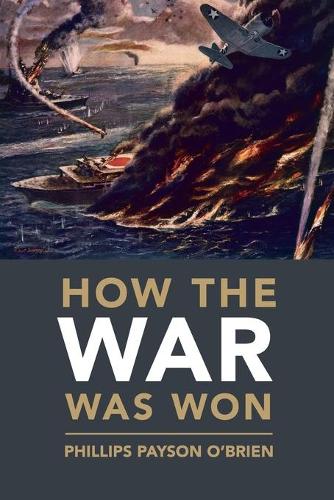
To a first approximation, there are a million books about World War II. Why should you care about How the War Was Won (hereinafter “HtWWW”) by Phillips Payson O’Brien?
- It provides a new, transformative view of the conflict by focusing on production of key goods and what affected that production instead of the ups and downs of battles at the front.
- That particular lens used can (and should) be applied outside of just World War II, and you can get a feel for how that might be done by reading HtWWW.
- I have lectured about World War II and read many, many books about it. I have never texted friends more excerpts of a book than this one.
I have some criticisms of HtWWW, but if the criticisms dissuade you from reading the book, I will have failed. These complaints are like tut-tutting Einstein’s penmanship.
The Wikipedia-Level Story of World War II (and O’Brien’s Counterargument)
To understand why O’Brien’s argument is so novel, you need to know the modern-day conventional understanding of the story of World War II. Here is my summary of the conventional narrative of World War II:
- Germany conquered Poland and France. It tried to bomb the UK into submission/maybe enable an invasion. That effort failed when Germany was defeated in the Battle of Britain, thanks largely to the plucky efforts of British airmen (memorably summarized by Winston Churchill: “Never in the field of human conflict was so much owed by so many to so few”.)
- Stymied in the West, Germany invaded the Soviet Union, won a bunch of crushing victories, but then got turned back at the gates of Moscow. The Soviets moved all of their factories east of the Ural Mountains and produced a vast tide of T-34 tanks that overpowered the Germans.
- The Germans suffered a catastrophic defeat at Stalingrad and a bloody strategic defeat at Kursk, after which the Soviets relentlessly pounded Germany to defeat.
- The US and the UK sent a lot of material help and eventually fought the Germans too, most notably in the D-Day invasion and the Battle of the Bulge. However, most of the fighting was done by the Soviets.
- It is very difficult to say how important the aerial bombing campaigns of the Western Allies were in defeating Germany. The Germans moved much of their production underground, insulating them from truly disastrous effects.
- The U.S. mostly fought alone against Japan, which won a series of impressive early victories (e.g., Pearl Harbor, the conquest of Singapore) until the decisive Battle of Midway, after which the vastly larger US industrial base outproduced Japan into oblivion.
- The US bombed the Japanese into submission by destroying Japanese cities, ultimately by dropping atom bombs on Hiroshima and Nagasaki.
By examining where the Axis focused their productive capacities and how the Allies disrupted those capacities, O’Brien challenges virtually every part of that narrative:
- The Battle of Britain was not a close-run thing. The fact that British fighter planes were flying over their own territory meant their attrition rate of pilots and aircraft were far lower than the Germans’.
- American and British bombing mattered far more to the war’s outcome than the battles of the Eastern Front, which consumed a much smaller portion of German expenditures.
- American and British airpower made German battlefield victories on the Western Front virtually impossible and dramatically limited the force Germany could bring to bear in the East.
- Japan (really, Japan plus the giant empire it conquered at the beginning of the war) was an industrial behemoth to rival the Soviet Union. However, the destruction of the Japanese merchant fleet by American air and sea forces wrecked Japan’s economy.
- The firebombing of Japanese cities and the atomic bombings of Hiroshima and Nagasaki had an ambiguous strategic effect. American air power played a much more important role in severing Japan from the natural resources it had conquered in the early part of the war.
Comments Off on Yet another revisionist history of World War II
August 13, 2024
Taboo by Eric Kaufmann
In Quillette, John Lloyd reviews Eric Kaufmann’s Taboo:How Making Race Sacred Produced a Cultural Revolution:
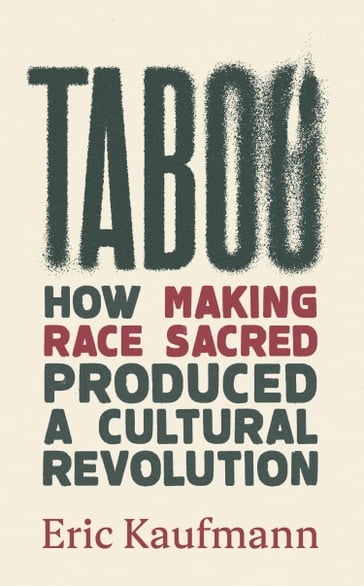
Earlier this year, Eric Kaufmann, a Canadian professor of political science, left Birkbeck College in the University of London where he had taught for twenty years. He was also head of the political science department there, and already had a number of deeply researched books behind him. But neither long service, departmental prominence, nor publishing success offered much of a defence against three separate attempts to cancel him. Indeed, his 2018 book Whiteshift told against him, since it argued, inter alia, that white majorities should have as much right to protect their identity and culture as minorities, a position now perceived by some as evidence of racism. “Repressing white identity as racist”, he wrote, “and demonising the white past, adds insult to the injury of this group’s demographic decline. This way lies growing populist discontent, or even terrorism.”
During the first part of his career, Kaufmann mostly kept his conservative views to himself, and with good reason. When he revealed them in Whiteshift, he became a marked man and spent several years fending off persistent efforts to strip him of his job and livelihood. His academic colleagues were generally unsupportive, and some of them participated in the campaign against him. So, he left Birkbeck for the University of Buckingham, the first of a small clutch of private universities created since the 1970s with the enthusiastic backing of Prime Minister Margaret Thatcher. Buckingham takes pride in rejecting leftist monoculture in favour of an approach that privileges open debate without the risk of career obliteration.
These days, Kaufmann is — as the Scots saying goes — a “bonnie hater” (or what others might call a “happy warrior”). With his new book, he joins the best of those (disproportionately American) writers, journalists, and politicians alarmed by the activities of ideologically motivated individuals and organisations operating under the vague umbrella term “wokeism”. This inchoate movement, Kaufmann maintains, is deeply destructive of freedom (and of freedom of speech in particular), learning, virtue, public morality, patriotism, and emotional continence. It is, Kaufman recently told the Daily Mail, an “Orwellian threat to the [E]nlightenment — free speech, equal treatment, due process, objective scientific truth. I believe this new woke ideology threatens the foundations of our civilisation.”
Wearying of the years of harassment he received for his views (none of which, he stresses, was ever physical), Kaufmann moved to Buckingham. He wanted to take advantage of the opportunity to establish a Centre for Heterodox Sociology where progressive doctrines could be studied, dissected, and debated, a pursuit he believes would be impossible anywhere else. Buckingham received first prize for free speech in last year’s National Student Survey. It will now be required to live up to that distinction, since Kaufman’s approach — after many years spent avoiding conflict — has become direct and uncompromising. Any determined left-leaning student or scholar would find this an intolerable provocation — a display of prejudice and bigotry meriting expulsion from the scholarly body lest it spread to innocent souls insufficiently prepared to counter it.
The list of progressive doctrines Kaufmann has compiled to define “wokeism” is probably the most comprehensive assembled to date. Much of what concerns him most relates to education. He believes that higher education, in particular, has become a place of inflexible dogmas on race, gender, emotional fragility, and anti-white bias rather than a home of serious study, reflection, and discussion. But he does not believe—as many other critics of contemporary progressivism do—that this is a kind of warmed-over Marxism, in which the fragile student has taken the place of the exploited proletarian. Instead, progressivism’s concern for the outnumbered, the vulnerable, and the frail can be traced back to Christ’s teachings, and especially to his Sermon on the Mount reported in Matthew 5:5: “Blessed are the meek, for they shall inherit the earth.” This injunction is now marshalled into a secular hallowing of blacks (above all), Muslims, women, and LGBT individuals.
Kaufmann calls the upshot of this genealogy “cultural socialism” — a movement that privileges equality, but equality of outcome not merely opportunity. He points to a speech that US president Lyndon Johnson delivered to students at the historically black Howard University in 1965, in which Johnson claimed that “we seek not just equality as a right and a theory, but equality as a fact and equality as a result”. Suddenly, Kaufmann remarks, “the door was open to restricting liberty and equal treatment in the name of achieving ‘equality of result’.” Such a regime, he points out, will inevitably disincentivise effort and excellence. Why forgo pleasure to work hard when the dedicated and indolent alike will all be made equal in the end? It’s worth remarking, however, that socialism does not necessarily provide the low road to unequal equality. Kaufmann quotes the historian Eric Hobsbawm — an unapologetic communist until he died in 2012 — who insisted that privileging one group over another will destroy society by breaking it into mutually hostile communities.
Comments Off on Taboo by Eric Kaufmann
The Original Secret History
Tom Ayling
Published Apr 28, 2024This is the story of Procopius’s Secret History Of Justinian – originally written around 550, but not published until 1623.
In this video we look at how Procopius wrote the text, how it survived, almost unknown, for 1,000 years, how it came to be published in the 1620s, and the extraordinary ramifications when it was.
00:00 Introduction
00:44 The Original Composition Of The Secret History
02:40 The Survival Of The Text In Greek Manuscripts
05:56 The Rediscovery And Publication Of The Secret History
08:23 Secret Histories Go ViralTo learn more about Secret Histories, sign up to receive my catalogue of rare books devoted to the subject – https://www.tomwayling.co.uk/register
I couldn’t have made this video without the help of two works in particular. The first is Brian Croke’s magisterial Procopius: From Manuscripts To Books: 1400-1850. The second is The Secret History In Literature, 1660-1820 which is edited by Rebecca Bullard and Rachel Carnell.
My name’s Tom and I’m an antiquarian bookseller – you can browse the books I have for sale on my website: https://www.tomwayling.co.uk/
Comments Off on The Original Secret History
August 12, 2024
Lions, foxes and wolves
N.S. Lyons tries to explain how Britain has gotten into its current social and political plight by recalling the works of Niccolò Machiavelli:
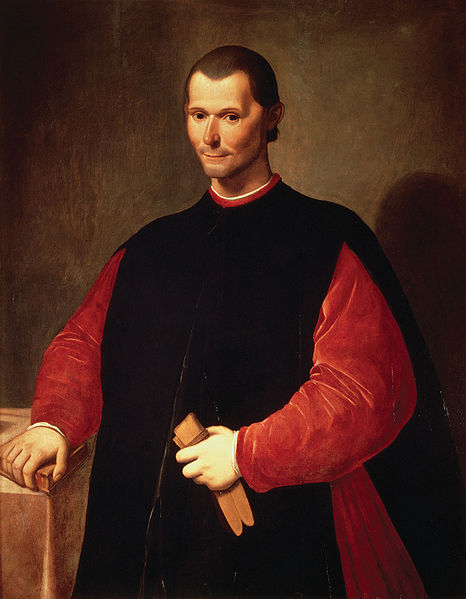
Portrait of Niccolò Machiavelli by Santi di Tito (1536-1603)
Via Wikimedia Commons.
The riots that have recently wracked the streets of the UK reflect decades of pent up public frustration with the country’s governing elite, especially their total refusal to control mass immigration despite vote after vote demanding they do exactly that. The pot has now boiled over. But the ongoing back-and-forth of ethnic violence also represents a signal that the British elite’s whole broader strategy of governing – one based in the fundamental personality of the ruling class itself – may be beginning to break down. And that carries some significant implications.
To understand why, however, we need to take a brief detour back about five centuries to Niccolò Machiavelli. He identified two archetypical psychological profiles of people who become leaders: the cunning but weak fox, who can outmaneuver his opponents but is “defenseless against wolves”; and the strong and brave lion, who likes to fight and who can scare off wolves but who is “defenseless against traps”. Machiavelli argued that a true statesman must embody both personalities, or risk destruction.
A distant student of Machiavelli, fellow Italian political theorist Vilfredo Pareto, would later expand the metaphor further. Observing history, he noted that the rise and fall of states and civilizations could be matched to a cyclical pattern in the collective personality of their ruling classes.
Nations are founded by lions, who are a society’s natural warrior class – its jocks, so to speak. They establish and expand a kingdom’s borders at the point of a sword, pacifying external enemies. Like Sparta’s Lycurgus or Rome’s Augustus, their firm hand often also puts an end to internal strife and establishes (or re-establishes) the rule of law. Their authority can be dictatorial, but it is relatively honest and straightforward in nature. They value directness and the clarity of combat. They are comfortable with the use of raw force, and open about their willingness to use it, whether against criminals or their own enemies. They have a firm sense of the distinction between enemies and friends in general – of who is part of the family and who is a prowling wolf to be guarded against. The security and stability they establish is what allows the nation to grow into prosperity.
Security and prosperity produce a proliferation of foxes. Foxes are unsuited to and deeply uncomfortable with the employment of force; they prefer intellectual and rhetorical combat, because they’re nerds. They seek to overcome obstacles through clever persuasion or the manipulation of people, information, narratives, and formal processes. If they have to use physical force they will, but prefer to disguise its nature and are prone to use it ineptly. The brainy and cosmopolitan foxes have talents the lions don’t, however: they are good at managing complexity and scale, navigating the nuances of diplomatic alliances, or extracting profits from an extensive empire.
As long as peace prevails, civilizations come increasingly to morally prize the indirect and diplomatic methods of foxes and to avoid and indeed abhor the strength and violence of lions. And as states grow larger and more complex, establishing new layers of bureaucracy, law, and procedure, this quickly favors the byzantine organizing and scheming of foxes. In comparison lions are inarticulate and unprepared for the traps of more underhanded mammals. So eventually a wholesale replacement of the elite occurs: the lions who founded the nation are pushed out of its leadership, marginalized and excluded by a class of foxes who see them as brutish relics of a barbaric age.
But a curious thing then happens, Pareto observed: the instability of societies overly dominated by foxes begins to increase relentlessly. The foxes, reluctant to properly distinguish and identify real threats, or to openly employ force even when necessary, find themselves defenseless against wolves both internal and external. When faced with escalating challenges, the foxes tend to resort to doubling down on their preferred strategy of misdirection, manipulation, and attempting to bury or buy off threats rather than confront them directly. This does nothing to solve problems that require the firm use of force, or the threat of it, such as keeping packs of wolves on the other side of the borders. Eventually, when things get bad enough, foxes may desperately lash out with violence, but do so indecisively, ham-fistedly, or in entirely the wrong direction. The wolves, for their part, can instinctively smell weakness and just keep coming.
Like the rest of the West, Britain has been ruled for decades now by an effete managerial elite whose system of technocratic control is absolutely characteristic of foxes. There could be no better example of this than how the government has attempted to manage immigration and the ethnic tensions it has brought to unhappily multi-cultural Britain. It has sought to control public perception of the problem, and indeed has strived mightily to pretend the entire problem simply doesn’t exist.
It has done so, in classic foxlike fashion, through careful control of media and online information, engaging in an effort to downplay inconvenient facts, obscure the identity of terrorists and violent criminals, memory-hole potentially divisive events, and censor counter-narratives. Those who have continued to speak out on the issue are smeared with reputation-destroying labels like “racist”, “xenophobic”, or “far right” in order to deflect others from listening to them. This reflects foxes’ consistent instinct to turn first and foremost to information warfare and narrative manipulation over direct confrontation. Hence the ruling elite’s immediate reaction to the latest riots: blaming them on “misinformation” and “unregulated social media” – the implication being that nothing at all would be amiss if the information common people had access to could just be better suppressed.
Comments Off on Lions, foxes and wolves
August 11, 2024
Tears are still a powerful weapon for female politicians
Janice Fiamengo on the tactic available to — and resorted to frequently — only females in politics, turning on the waterworks to generate sympathy and support:
Recently, a friend sent me a news article that illustrates, in small, the world of Anglophone politics, in which notions of what is owed to women, who are understood to be far more sensitive and fragile than men, operate alongside stern interdictions against stating that women are in any manner unsuited for strenuous, high stress roles.
Last week, an ABC News report detailed years-old allegations against a former aide to Josh Shapiro, the Governor of Pennsylvania who was, at the time of the article, one of Kamala Harris’s touted VP possibilities (she has since chosen Tim Walz, Governor of Minnesota). Shapiro’s former staffer, Mike Vereb, who resigned in 2023 over a sexual harassment allegation, is said to have brought a woman to tears in 2018 with threats made over the phone (“You will be less than nothing by the time Josh and I get done with you”, he is alleged to have said).
The woman, who runs an advocacy group, was left “weeping and in shock standing alone in a parking lot”. She did not report the alleged incident until she heard about the aide’s resignation five years later.
[…]
With the staffer long gone from Shapiro’s administration, the story had legs only because it was about a man who made a woman cry.
The problem is that women do cry rather frequently in politics. And complain. And perform their sensitivity to criticisms, monikers, crude jokes, the faux terror of J6, and bantering innuendo. Far too often such women make politics about them as women and about the trouble men allegedly cause them.
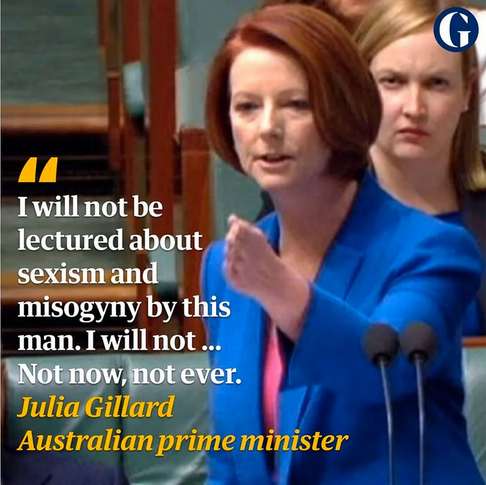
Such was the case with Australian Prime Minister Julia Gillard, who earned plaudits from feminists in 2012 for a fury-filled speech in the House of Representatives about sexism, in which she accused the opposition leader of misogyny for a number of statements he’d made that were not at all misogynistic, including that women were likely under-represented in Australian institutions of power because men were “more adapted to exercise authority”. Gillard also said she was “personally offended” (a more serious state of affairs, one assumes, than simply being “offended”) by the opposition leader’s contention that abortion was “the easy way out”. (The text of her speech is here.) “Julia Gillard’s Attack on Sexism Hailed as Turning Point for Australian Women” ran one enthusiastic headline. And perhaps it was, signaling the point at which women in politics stopped thinking they should accommodate themselves to the rigors of public life, and decided that politicians must instead accommodate themselves to the rigors of women’s demands.
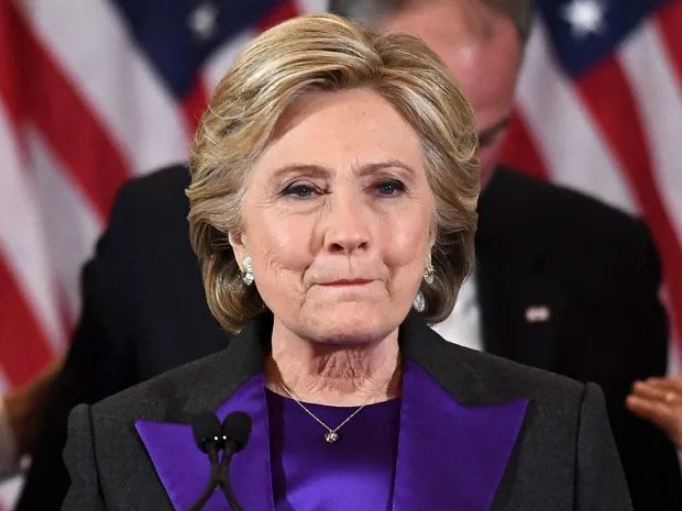
Even seemingly tough-as-nails Hillary Clinton has been allowed to go from interview to interview revisiting the now years-old indignity of her election loss in 2016, like a once-popular debutante who can’t believe she didn’t make the cheerleading squad. No man would ever be given such a prolonged pity party. Having contended for years that it was misogyny that prevented her from beating Donald Trump, she more recently pointed her finger at female voters’ failures of confidence: “They left me [in the final days of the campaign] because they just couldn’t take a risk on me, because as a woman, I’m supposed to be perfect“, she explained in May, 2024. No one seems to have informed Clinton that nothing reveals her crippling unsuitability for leadership than her embarrassing refusal to stop feeling sorry for herself.
And she is, alas, far from unique. Nicola Sturgeon, former First Minister of Scotland, sat and sobbed at last winter’s Covid-19 Inquiry in Edinburgh, deflecting critical questions about her government’s actions during the pandemic by proclaiming that she would carry the impact of them for as long as she lived. Forget the thousands of Scots who suffered or even died because of those decisions: the woman in charge was the one in need of compassion. Sturgeon had previously made a career of complaining about the sexism that allegedly put obstacles in the way of female politicians. Her focus on her own emotional discomfort at the Covid inquiry did more than any naysayers to indict the feminine style. How refreshing if either of these women could simply accept responsibility for their failures.
Comments Off on Tears are still a powerful weapon for female politicians
August 10, 2024
British NPCs have all downloaded the latest patch – “Spaceship Man Bad!”
Elon Musk is the new Emmanuel Goldstein for British NPCs:

I always knew Britain’s liberals were secretly illiberal. That our chattering classes who genuflect at the altar of “human rights” would happily snatch away the rights of anyone who says something offensive online. That these dwellers of the leafy suburbs who weep over the jailing of dissidents in China will chortle over the sacking or blacklisting of dissidents at home, whether it’s women who think you can’t have a knob and be a lesbian or ex-Muslims whose criticisms of Islam are a tad too salty. And yet even I’ve been shocked by their frothing rage against Elon Musk in recent days. By their priestly demands that X be censured and possibly even wiped from the web. It’s one of the most batshit things I’ve seen in ages.
It’s not enough to call this a “mask-off moment”. It’s more like the phoney liberals have ripped their masks to shreds and stomped them into the dirt for good measure. Their rage is linked to the riots currently rocking the UK. Musk’s own tweets, they say, not least his chatter about Britain being on the road to “civil war”, have helped to whip up the mayhem. Worse, his “free-speech absolutism”, as one “liberal” magazine snottily refers to it, has meant that every tosser with a smartphone has been able to tweet their inflammatory views on the riots and even to spread misinformation. In essence, says a writer for the Guardian, Musk has been “leading from behind on UK thuggery and race riots”.
Got that? The reason Britain is going to shit is not because of any internal rot but because a billionaire in Texas said “civil war” on the internet. Glad we cleared that up. Even worse than the great and the good’s shameless deflection tactics – where they try to pin the blame for their own failures on a foreigner with money – is their tinpot solutions to this supposed problem. It might be time, says that sexagenarian Marxian in a leather jacket, Paul Mason, to “pull the plug” on X entirely. Yesteryear’s tyrants smashed up printing presses and chased booksellers out of town – today’s want to switch off a website on which no fewer than half a billion souls regularly share their thoughts and feelings.
They really have taken leave of their senses. Musk’s “horrific version of Twitter” is “a bit like Paris under Nazi occupation”, says Peter Jukes of Byline Times, the preferred publication of rich liberals who’ve been in a state of red mist since the plebs voted for Brexit eight years ago. Just like Paris in the 1940s, says Jukes, some are fleeing Musk’s X, while others are sticking around to “work for liberation”. The narcissism of it. Imagine thinking that keeping your X account open so you can continue spouting bollocks in your echo chamber is as brave as when Parisians stayed in Paris to resist Nazi rule.
Any mention of the Nazis is usually a reliable sign of madness. And so it is with the outburst of Muskphobia among Britain’s influencers. Musk’s antics on X led “straight to” rioting in the UK, says Will Hutton of the Observer (my italics). Do they really believe this? Do they really believe the reason that young shirtless fella looted the Greggs in Hull is because Elon Musk said “#TwoTierKeir” on X? Apparently they do. And there’s only one solution. “Pass a bill closing down Twitter in the UK”, says barrister and arch Remoaner Jessica Simor. That she said this on Twitter at least provided us with fleeting comic relief amid the elite’s lunacy. Does she know she can deactivate her account? Can someone tell her?
It’s the haughtiness of Britain’s influential haters of Musk that is most irksome. Alastair Campbell accused Musk of talking “utter shite” about Britain and its riots. That’s big talk from the undisputed king of shite, the man whose BS about Iraq helped to start a war in which tens of thousands of Arabs perished. Look, I know Musk’s words hurt liberals’ feelings, but at least they don’t hurt people’s lives and limbs.
“Elon Musk’s menace to democracy is intolerable”, pronounced Edward Luce of the Financial Times. That’s the paper that regularly made the case for overthrowing the largest democratic vote in British history. “Democracies can no longer ignore” the threat posed by Musk’s X, says Luce. I don’t like the term dogwhistle, but this is a tyranny dogwhistle, isn’t it? It’s a nod and a wink at “democracies” to clamp down on the “menace” of unfettered online speech. Lewis Goodall of The News Agents – a podcast hosted by ex-BBC staff for whom the BBC wasn’t quite wanky enough – wonders if “unmediated platforms” like Musk’s X are “beyond redemption”. “Should we stop using it?”, he wonders. Please, yes.
Comments Off on British NPCs have all downloaded the latest patch – “Spaceship Man Bad!”
QotD: “The Gods of the Copybook Headings”
As I pass through my incarnations in every age and race,
I make my proper prostrations to the Gods of the Market Place.
Peering through reverent fingers I watch them flourish and fall,
And the Gods of the Copybook Headings, I notice, outlast them all.We were living in trees when they met us. They showed us each in turn
That Water would certainly wet us, as Fire would certainly burn:
But we found them lacking in Uplift, Vision and Breadth of Mind,
So we left them to teach the Gorillas while we followed the March of Mankind.We moved as the Spirit listed. They never altered their pace,
Being neither cloud nor wind-borne like the Gods of the Market Place,
But they always caught up with our progress, and presently word would come
That a tribe had been wiped off its icefield, or the lights had gone out in Rome.With the Hopes that our World is built on they were utterly out of touch,
They denied that the Moon was Stilton; they denied she was even Dutch;
They denied that Wishes were Horses; they denied that a Pig had Wings;
So we worshipped the Gods of the Market Who promised these beautiful things.When the Cambrian measures were forming, They promised perpetual peace.
They swore, if we gave them our weapons, that the wars of the tribes would cease.
But when we disarmed They sold us and delivered us bound to our foe,
And the Gods of the Copybook Headings said: “Stick to the Devil you know.”On the first Feminian Sandstones we were promised the Fuller Life
(Which started by loving our neighbour and ended by loving his wife)
Till our women had no more children and the men lost reason and faith,
And the Gods of the Copybook Headings said: “The Wages of Sin is Death.”In the Carboniferous Epoch we were promised abundance for all,
By robbing selected Peter to pay for collective Paul;
But, though we had plenty of money, there was nothing our money could buy,
And the Gods of the Copybook Headings said: “If you don’t work you die.”Then the Gods of the Market tumbled, and their smooth-tongued wizards withdrew
And the hearts of the meanest were humbled and began to believe it was true
That All is not Gold that Glitters, and Two and Two make Four
And the Gods of the Copybook Headings limped up to explain it once more.As it will be in the future, it was at the birth of Man
There are only four things certain since Social Progress began.
That the Dog returns to his Vomit and the Sow returns to her Mire,
And the burnt Fool’s bandaged finger goes wabbling back to the Fire;And that after this is accomplished, and the brave new world begins
When all men are paid for existing and no man must pay for his sins,
As surely as Water will wet us, as surely as Fire will burn,
The Gods of the Copybook Headings with terror and slaughter return!Rudyard Kipling, 1919.
Comments Off on QotD: “The Gods of the Copybook Headings”
August 9, 2024
Domicidal maniacs in charge
Lorenzo Warby provides an oh-so-useful word to accurately capture what the diversity-at-all-costs elites running most western countries these days are actually up to:
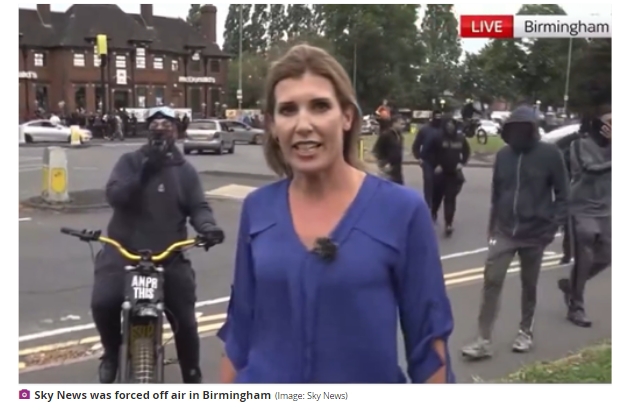
Domicide is the destruction of home. It comes in the “hard” version — the physical destruction of houses and infrastructure.
Domicide also comes in a “soft” version — flooding localities with new people, separating people from, and otherwise degrading, their heritage. When folk say Britain is becoming “unrecognisable”, it is the domicidal effect of mass migration they are referring to.
The UK is suffering from a domicidal elite, one that uses mass migration to break up working-class communities; asymmetric multiculturalism to elevate incoming cultures over those of native English (the Celtic fringe get minority brownie points); favours non-“white” faces in advertising; asymmetric race-swapping in entertainment against the native English; denigration of British history as racist, white supremacist, imperialist, colonialist, etc.
Much of this is insulting virtue-signalling allied to, or presenting, cartoonish (simplified) and caricature (distorted) history. It all undermines social cohesion. But it is the use of migration policy as a systematic weapon against the resident working class which does the most damage. Though two-tier policing — obviously treating Muslims in particular with a deference not shown to the natives, especially when it comes to policing speech — is also highly corrosive of social cohesion.
Many working-class communities in Britain were already fairly dysfunctional — though the British state is not innocent in those dysfunctions1 — and sections of the British working class are very far from admirable. None of this justifies the use of mass migration to make things worse for such folk, however much it may help to explain the moralised class contempt that underlies so much of modern progressivism and modern managerialism.
To improve such things, to “level up”, requires a strong sense of how to create and maintain social order. Modern progressivism is strongly antipathetic to such understanding. To “level up” also requires a strong sense of custodianship, which managerialism typically lacks: particularly progressivist managerialism.
Indeed, modern feminist, progressivist, managerialism—in its lack of custodianship; lack of social solidarity;2 in its antipathy to taking the problems of social order seriously — is running the British state into the ground. The post-medieval British aristocratic and mercantile elite did a much better job of state management. But those elites had mechanisms — such as duelling, that forced men to defend their reputation at the risk of their life, and grand country houses, that turned into expensive investments in social isolation if you behaved badly — that selected for character.
Nowadays, the British elite only selects for capacity and even that is being degraded by DEI undermining the signals of competence. It turns out, over the longer term, character matters more than capacity. For capacity without character selects for manipulative, anti-social personalities that degrade institutions over time.
1. For a particularly brutal depiction in fiction of the dysfunctional British welfare state — especially its school system — see Christopher Nuttall’s Mystic Albion series, especially the first book.
2. Feminisation of institutions and discourse has tended to degrade social solidarity, see Benenson et al, 2009. The most conspicuous example of this in the UK is how uncouth it is in elite circles to mention the systematic rape and sexual exploitation of underage working class girls by overwhelmingly Muslim gangs.
Comments Off on Domicidal maniacs in charge
August 8, 2024
The Korean War Week 007 – The Pusan Perimeter – August 6, 1950
The Korean War by Indy Neidell
Published Aug 6, 2024The UN forces are withdrawn this week across the Naktong River into a new defensive zone in the Southeast corner of the Peninsula — the Pusan Perimeter, but already as the week begins they are in great danger from the right hook near the coast by the North Korean 6th Division, that threatens to upend everything, taking Chinju and aiming for Masan. There are also machinations afoot with the Chinese in Taiwan, and the fear that a larger war could erupt if things aren’t handled right concerning the Chinese; it’s a week full of tension.
(more…)
Comments Off on The Korean War Week 007 – The Pusan Perimeter – August 6, 1950
August 7, 2024
“Two Tier Keir” fails the latest challenge
Violent protests continued in many British cities over the weekend, and despite promising to crack down on violent groups, Prime Minister Sir Keir Starmer fluffed it again:

Young Muslim men rampaging through Birmingham should have offered the government a convenient chance to quash the accusations that the Prime Minister is “Two Tier Keir”.
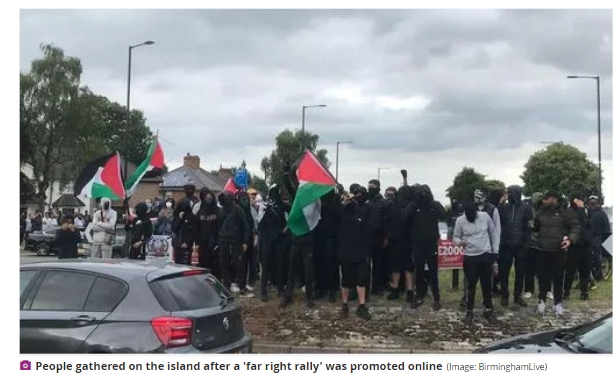
Fuelled by rumours that the far right were organising a protest in the area, the demonstration soon took on a dark life of its own. Young men in balaclavas harassed journalists, driving Sky News’ “communities correspondent” off the air, with an attempt even being made to slash the wheels of the Sky van. LBC’s Fraser Knight was chased out of the area. Mr Knight explained that “6 men ran after us down a road with what looked like a weapon”, and that “cars followed us”. “There wasn’t a safe place for us to go for miles,” he says.
Meanwhile, a white man was attacked outside a pub by a mob of masked men, and attempts were made to stop random drivers. This violence and intimidation, of course, mirrors that which has been perpetrated in riots elsewhere.
But there is a difference. Where were the police in Birmingham? We have seen riot police wielding dogs and batons against the far right, and Keir Starmer was promising that rioters would face the “full force of the law“. In Birmingham, though, the police appear to have acted with a light touch. One officer was recorded apparently dismissing the violence as a “small scuffle“.
Local MP Jess Phillips is famed for her outspoken and combative manner, so one might have expected swift condemnation. (Indeed, given that Phillips was recently bragging about how “unflappable” she is around criminals, it’s a shame she wasn’t there to resolve things.)
Actually, Phillips’ first public response to the disorder was to quote tweet a video of a group of masked men and write:
To be clear all day rumours have been spread that a far right group were coming and it was done entirely to get Muslim people out on the street to drive this content. It is misinformation being spread to create trouble.
Okay, I can believe it. But surely this was time to tell them to disperse and go home? Phillips then quote tweeted Richard Tice MP, who had published a video of the Sky News team being intimidated. “These people came to this location because it has been spread that racists were coming to attack them,” she wrote:
This misinformation was spread entirely to create this content. Don’t spread it MR Tice!
Sure, again, we get it. The gathering was fuelled by misinformation. But when a group of journalists — with a female correspondent, no less — is being intimidated by masked men flashing trigger fingers at the camera, it has clearly evolved into something more hooliganistic. These men were not confronting a skinhead in a “Blood and Honour” t-shirt. They were confronting a woman trying to do her job.
Esmerelda Weatherwax gathers reports from local media in Birmingham over the weekend:
A huge crowd gathered in Bordesley Green this evening following rumours that a “far right rally” was going to take place … hundreds of mostly young men in balaclavas and face masks gathered outside the McDonald’s at the junction of Bordesley Green and Belchers Lane.
300 or so people mostly Asian and male, many dressed in black and wearing masks or coverings, turned up after the rumour spread rapidly online.
Despite the rumours circulating today, there was no rally and the crowd was seen later dispersing, with some young men using the opportunity to show off on motorbikes.
A 45-year-old from Bordesley Green said he was there to stand up against fascism … “We don’t want this portrayed as Muslim men causing trouble …”
Yardley West and Stechford Cllr Baber Baz was among the crowd this evening and said there was a “strong response from the community”. Cllr Baz added: “As long as it remains peaceful which I am sure it will we are sending a strong message to the EDL that they are not welcome here and will not divide our community.”
A Sky News reporter was forced off air after she was sworn at, with one man on a bike riding towards the camera before saying: “Free Palestine, f*** EDL“. A man wearing a balaclava and wielding a knife “stabbed” the tyre of a Sky News van after its reporter was forced off air, it has been reported. Sky News had to cut short its broadcast in Bordesley Green after its reporter was sworn at on TV.
Comments Off on “Two Tier Keir” fails the latest challenge
QotD: The crew of HMS Sheffield in the Falklands
But it’s 40 years since the Falklands. And from that we get this:
May 4th 1982: As HMS Sheffield is abandoned and the fire spreads towards the Sea Dart ammunition. The remaining crew gather on the foredeck singing “Always look on the bright side of life”.
Now I have heard that story and I’ve always thought it were more than a little bit mythmaking. And yet, and yet. Someone I know (our fathers knew each other, he took a sister out a few times, we worked together for 6 months later on) was actually there. Running the flight control stuff from the next ship over:
Singing led by the FC that we had loaned to them. One of our Sea Kings closed on the fo’c’sle to pick up wounded and saw them all swaying from side to side with their arms outstretched. I learned why when he got back.
I’ll take that as being something that really happened then. Not for publication, not something published for home consumption, but something that actually happened. Young men, on a burning ship, not knowing whether they’d be lifted off before the fire got to the missiles and the kaboom of their little bits all over the South Atlantic. […]
We’re a weird, weird culture here in Britain. We will, and do, take the piss out of absolutely anything, including our own impending death.
Now, whether that’s quite what the economists mean by institutions that aid in economic development is another thing but it is indeed one of those institutions of that British culture.
It’s also wholly glorious but then I’m a Brit so I would say that, wouldn’t I?
Tim Worstall, “The British Are A Very, Very, Weird People”, It’s all obvious or trivial except …, 2024-05-06.
Comments Off on QotD: The crew of HMS Sheffield in the Falklands
August 6, 2024
Britain’s immigration debate turns violent
At The Last Ditch, Tom discusses how the immigration issue has become the issue in modern Britain:
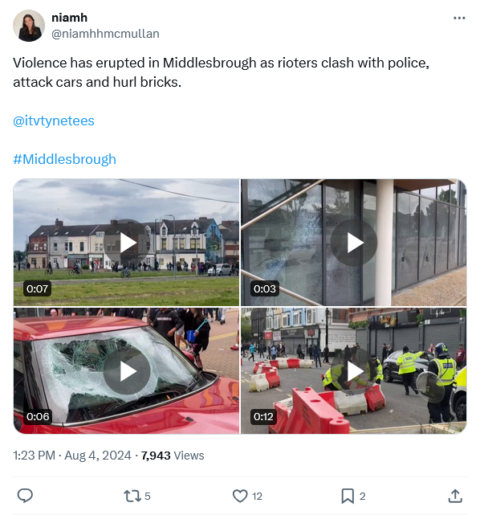
Protest and counter-protest in Middlesbrough over the weekend of August 3-4.
Margaret Thatcher famously quoted Kipling’s Norman and Saxon to President Mitterand of France in an EU meeting;
The Saxon is not like us Normans. His manners are not so polite.
But he never means anything serious till he talks about justice and right.
When he stands like an ox in the furrow – with his sullen set eyes on your own,
And grumbles, “This isn’t fair dealing”, my son, leave the Saxon alone.She was trying, perhaps not as delicately as her diplomats would have wished, to explain how the apparently calm British will react – eventually – to being wronged.
I spent twenty years in three other countries and worked closely in business with people from many more. I have often smiled to myself since returning when I hear British people speak of our unique sense of fair play. It’s not unique at all. Everyone has it. We do not own fairness. We do not own tolerance.
We do, however, traditionally pride ourselves on both and the way we see ourselves has shaped our reactions over the last twenty-five years as we welcomed more immigrants than in the previous two millennia. A few years ago I listened quietly to a Bangladeshi friend – a would-be human rights lawyer – talk about racism in our country. I asked her where in the world was a better place to live as a member of an ethnic minority. On reflection, she agreed with me that there is nowhere.
I am not saying we couldn’t treat each other better. Of course we could and should try. But let’s take a moment, as our streets burn and our elites condemn us as far-right racists, to be proud of how we’ve behaved in general towards so many new arrivals in such a short time.
[…]
One day history may reveal which politician in the capital of an old European empire realised there was a ready supply of workers in the former colonies. People who spoke our languages and were familiar with our systems of government – because both had been forced on their ancestors. It was a perilous idea that may yet prove to be the end of European civilisation but he must have looked like a genius to his peers.
The doors were opened and cheap labour flooded in. From the lofty heights where the elites survey us, it looked like a perfect solution. On the ground, not always so much. Mostly we’ve been welcoming, accepting and tolerant. We’ve sometimes even gone beyond tolerance and flattered our new arrivals that they’ve enhanced our magnificent old culture with their jerk chicken and curries.
Yet already when I was a youngster practising criminal law problems had begun to emerge. A custody sergeant with whom I used to chat when waiting to see clients in the cells told me suicide rates among Muslim girls in our Midlands city were disturbingly high. Asked why that was, he said they were not suicides, but honour killings – the first time I’d heard that phrase. No-one, he said, commits suicide by pouring paraffin over themselves and setting themselves alight. It’s just too painful. Muslim men were killing their daughters and sisters. Asked why there were no prosecutions, he said senior police officers made it clear to their subordinates that it was “racist” to suggest the dead girls’ families’ stories of suicide were untrue.
Fresh out of my university law faculty, I sneered that his bosses were right and he was a racist. I will never forget the last words he said to me;
Young man, then you’re part of the problem.
And I was. In that moment, I’d turned away from murdered women to preserve my smug world view. Just as, decades later, council staff and police officers in cities all over Britain turned away from young girls groomed and raped by Muslim men, for fear of being called bad names.
Gary Fouse in the New English Review asks whatever happened to Merry Olde England:
If you have been following the news out of England for the past week, you might think that the country has all but fallen into civil war. Riots and various forms of violent protests and counterprotests have broken out in cities all over the country in reaction to a shocking murder that occurred in the town of Southport last week. On July 29, a group of little schoolgirls were attending some sort of Taylor Swift-themed dancing class when a 17-year-old son of Rwandan immigrants (who was born in England) attacked them with a knife. Three of the schoolgirls (ages 6. 7, and 9) have died and eight others went to the hospital with serious knife wounds.
The entire nation has erupted in shock and anger. Obviously, the anger is being directed at immigrants in general — given the country’s out of control migration situation and long-simmering tensions with the largely-radicalized Muslim communities. It seems that now-finally — the people have had enough. At least one migrant shelter has been attacked, and several Muslim young men are showing up to counter-protest and do battle with young white men. Now the cops in several cities are trying to keep the two sides apart.
I should state at this point that I will not condone the violence and destruction that is taking place and the objects being thrown at police who are trying to keep order. While I do not condone the violence, I think I can understand why it is taking place. I recall back in the 1960s when there were many riots in inner city areas of the US during the Civil Rights era and in response to the murders of black civil rights leaders like Martin Luther King and Medgar Evers. Many responsible black leaders condemned the violence but also added that they could understand the reasons for it. It was a different era then in America, and in the South, segregation had the force of local laws behind it. Many blacks felt that the government was not responding to their grievances.
[…]
The fact is that far too many nations in the West, including ours, have suffered from bad political leadership. We see it in our cities, we see it in our state capitals, and we see it in Washington DC. Bad political leadership results in bad cities, bad states, and a bad country. The fish rots from the head, and what we need to do-in England-in France, in America, etc is elect responsible people who recognize that their government’s number one duty is to protect the citizens. When a government fails to do so, eventually what happens is what we see in England today.
Comments Off on Britain’s immigration debate turns violent


