
World War Two
Published 3 Aug 2024The Japanese reaction to the Allied ultimatum for unconditional surrender is … mokusatsu. This can be translated several ways, but all involve not giving a response. Meanwhile, materials for atomic bombs to be dropped on Japan are delivered to Tinian, though the ship making the delivery is sunk by a Japanese submarine days afterward. The active war continues in Burma and China, and the Potsdam Conference ends in Germany with the map of Poland very much re-drawn.
00:00 Intro
00:56 Mokusatsu
05:47 Delivering Atomic Material
07:22 Sinking The Indianapolis
09:26 Bombing Japan
12:22 The War In Burma And China
14:07 Potsdam Confernece Ends
17:02 Conclusion
(more…)
August 4, 2024
Mokusatsu! – WW2 – Week 310 – August 3, 1945
Comments Off on Mokusatsu! – WW2 – Week 310 – August 3, 1945
August 3, 2024
“Multiculturalism is when yummy food”
Fortissax pours scorn on the defenders of multiculturalism-at-all-costs for one of the most common arguments in favour:
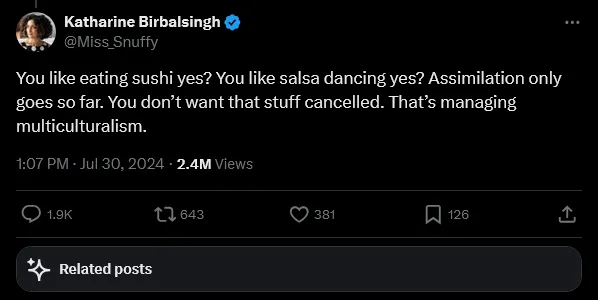
“Multiculturalism is when yummy food” is a real position people take. If you ask them what benefits of multiculturalism are, they’re going to say food and nothing else. Westerners don’t watch Bollywood films, they don’t listen to Desi music, they don’t watch cartoonishly bad Latin American dramas, usually for Hispanic abuelas still living in Mexico where every actor is suspiciously fairer-featured than everyone in their whole family. People can’t say “I love the food, the music, the culture” because they don’t engage in any of this. Salsa isn’t even popular; it hit its peak at the end of the 1990s because white boomer Americans approached an intensely Anglicised, sanitised form of Latin-American culture as introduced to them through the likes of Enrique Iglesias and other English-speaking Latin pop artists.
I don’t believe all leftists say this out of sincerity. It’s a knee-jerk reaction to any criticism of multiculturalism. They don’t put a lot of thought into it. The justification is usually related to how “bad” that “white people food” is. This follows the same thread of accusations that “white people can’t dance”, “white people can’t jump”, “white people can’t fight”, and “white people can’t fuck”. It’s another lib-coded tract to bash English-speaking white Americans over the head with, to justify demographic displacement by portraying them as boring, ugly, weird, or uncool. On some level, they probably know food isn’t worth human lives, but they have to reinforce their moral view or the whole thing collapses, and they have to admit fault for doing things and promoting ideas that are so destructive that people would want to unalive them. If they give up now, it’s over. It’s sunk cost fallacy.
For the rest who’re wholly sincere: it’s just straight up bullshit. Foreign restaurants serve you a Westernized version of their slop. Their bulk food suppliers are Western, the ingredients are Western-derived, but they sell it as “authentic” when it isn’t. That crab rangoon you just spent $40 on Doordash was bulk bought at Costco during a last ditch grocery run. They’re selling you the experience. A sampling of the real thing, deliberately fitted to your people’s general dietary preferences. All of these “ethnic”, “exotic” restaurants do this. Everyone knows about “secret menus” at Chinese or Indian restaurants. Anybody who works in culinary, hell, anybody whose watched the UK version of Hell’s Kitchen where Gordan Ramsay tries to rescue failing restaurants owned by small business owners can tell you most of these people aren’t using fresh or original ingredients. You go to any “Japanese” restaurant in North America, the staff are a random assortment of Asian, or sometimes Korean or Chinese, or maybe even Filipino but it doesn’t matter because they look Asian enough to boomers, correctly guessing people can’t tell the difference at a passing glance.
Comments Off on “Multiculturalism is when yummy food”
August 2, 2024
Why WW1 Turned Into Trench Warfare
The Great War
Published Apr 12, 2024Trench warfare is one of the lasting symbols of the First World War, especially on the Western Front. But when the war began, the German and French armies envisioned sweeping advances and defeating the enemy swiftly. So, how and why did the Western Front in 1914 turn into the trench system we associate with WW1?
(more…)
Comments Off on Why WW1 Turned Into Trench Warfare
July 31, 2024
The Korean War Week 006 – Stand or Die! – July 30, 1950
The Korean War by Indy Neidell
Published 30 Jul 2024The UN Forces have been pushed back ever further, but this week, US 8th Army Commander Walton Walker issues the order to “stand or die”; he sees no other options. American reinforcements are finally getting into the actual fight, though, and Britain has decided they will send in ground troops, so things might turn around … if they can hold out long enough for those troops to arrive, because a brilliant North Korean strategy might win the war and soon.
(more…)
Comments Off on The Korean War Week 006 – Stand or Die! – July 30, 1950
The History of the British Rail Symbol
Jago Hazzard
Published Apr 21, 2024Moving forward or indecision?
Comments Off on The History of the British Rail Symbol
July 29, 2024
W.H. Smith attempts to rebrand their stores to “raise awareness” or something
British bookseller from time immemorial, W.H. Smith, apparently decided that the corporate branding they’d been using since the 18th century was just too boring for modern consumers, so they brainstormed a daring new design for the 21st century … that sucked.

“UK High Street” from https://www.whsmithplc.co.uk/media/media-gallery/images
When the British retailer, W.H. Smith, rebranded its logo last year, confusion and bafflement ensued.
The high street fixture, its Times New Roman logo mostly unchanged since 1792, earned its reputation by selling books, stationery, and for fleecing bleary-eyed travellers in airports. Through sheer zombie persistence, W.H. Smith remains a constant of British retail. Never mind the threadbare carpets, the general dilapidation, or the desperate staff forced to offer you a bottle of knock-off perfume with your twenty Lambert and Butler.
W.H. Smith endures because its business model concentrates on a captive audience. Go to an airport or a hospital — any place in which people cannot escape — and you’ll find a W.H. Smith reliably charging double for a Lucozade Sport. W.H. Smith will outlive Great Britain. The retailer’s existence — puzzling to the most scientific of minds — defies natural law.
Last year, creative designers attempted to play God. They sanded off the logo’s regnant edges and stripped “Smiths” altogether. The dynamic branding screamed minimalism: a plain, white “WHS” stamped on to a blue background.
I’d imagine the big revelation underwhelmed those paying for the work. “That’s interesting.” Or “It’s certainly different“.
Mockery ensued. “Baffling” said one. “It looks like the NHS logo,” observed another.
No doubt the designers plotted a revolution in design. Of course, these “creatives” — invariably young and invariably uncreative — fancied their vandalism as “forward thinking” and “dynamic”. I’ll wager at least one thought the new logo addressed the plight of some faraway progressive cause to which they subscribe. The public, unschooled in the most voguish developments in design, concluded: The new logo is shit.
W.H. Smith soon backtracked. Passive-aggressive defences of the staid new logo melted into sulky denial. It’s just a trial, they mewled.
A breathless spokesman revealed the truth. Or some addled version of the truth. The fresh signs, they revealed, were “designed to raise awareness of the products W.H. Smith sells”. What else, I wonder, is a shop sign meant to achieve?
The phrase “raising awareness” is one of a litany of linguistic evasions which say nothing. By shoehorning that ghastly phrase into a sentence, the speaker hopes to evade criticism. Reader, I’m not ploughing through a duty-free bottle of Chateau le Peuy Saincrit in the obscene Bulgarian sunshine. I’m raising awareness of the plight of southern French winemakers.
That passive-aggressive statement of the obvious — our shop sign raises awareness of our shop — you plebeian fools — crystallises the creative industry’s age problem.
Three-quarters of the creative industry is under 45. Perhaps this age gap (not the sexually consensual and fun kind) explains why so much of what we see and hear is cliché-riddled evasive hoo-hah.
When talking to anyone under 45, I mentally add a question mark to the end of their sentence. Millennials and Zoomers avoid declarative sentences. Listen. Almost every utterance sounds like a question. Further to this quirk, I note the adverbs and filler words. Young people stuff their speech with “basically”, “actually”, “literally”, and “like”. Zoomers are especially militant. They eschew capital letters. Capital letters are grammatical fascism. Full stops reveal a latent proclivity for Zyklon-B. Influencers add another tic to this repertoire of anxiety and unsurety. They crackle their voice as if a frog has lodged in their throat.
Comments Off on W.H. Smith attempts to rebrand their stores to “raise awareness” or something
July 28, 2024
Allies Issue Potsdam Declaration – WW2 – Week 309 – July 27, 1945
World War Two
Published 27 Jul 2024China, Britain, and the US issue a Declaration demanding Japan’s unconditional surrender, and promising complete destruction if this does not happen and happen soon. The plan is to for the Americans to use their atomic bombs on Japan if she does not comply, but by the end of the week the Japanese have not replied. They still have hopes for the Soviets to mediate some sort sort of peace. What they don’t have is a navy, as its final destruction comes this week.
00:00 Intro
00:50 Recap
01:32 The Potsdam Conference
04:41 Japanese Hopes
05:56 The Potsdam Declaration
10:53 The Initial Reaction
14:48 The End Of The Japanese Navy
15:05 The War On Land
19:10 Summary
19:30 Conclusion
(more…)
Comments Off on Allies Issue Potsdam Declaration – WW2 – Week 309 – July 27, 1945
July 27, 2024
Cancelling Orwell (again)
In The Daily Sceptic, Paul Sutton recounts a recent discussion with some Oxford graduate students where the topic of George Orwell came up:
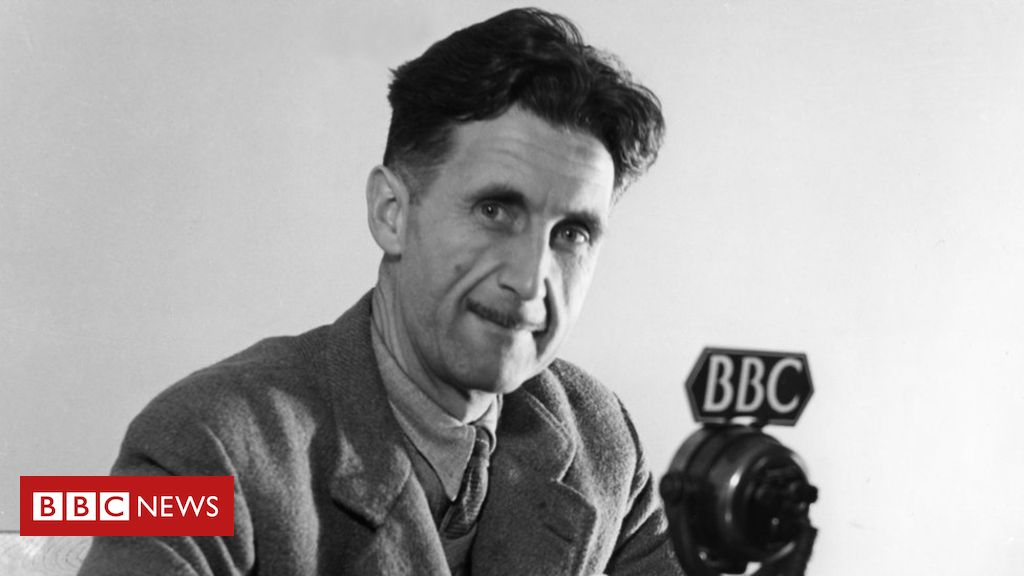
The students maintained that the important thing is quality of writing but, paradoxically, this can only be judged by a strict contemporary “evaluation” of any Right-wing or outdated views. Inevitably, this contextualisation then reveals that said writers are “problematic” and “not as good as XYZ” – usually some figure who fits their sensibilities, and coincidentally one who’s almost always female – or at least better suited to the diversity required by these commissars.
So far, so well known and wearily familiar. The absolute impossibility of literature under such a mindset – one enthusiastically endorsed by graduate students who professed to live for literature – is utterly depressing. We’re in effect dealing with its cancellation.
I made a perfunctory effort in observing their complete inconsistency, but things got more interesting when Orwell was discussed. Of course, Orwell famously wrote against their stand, not least in his brilliant defence of Kipling’s literary merit and his refusal to allow orthodoxy to dictate his aesthetic preferences, in “Benefit of Clergy“.
Unfortunately, Orwell’s stint in the Burmese Imperial Police made him a despicable figure to the students, little better than a Waffen SS or Gestapo officer. True, he’d belatedly retrieved himself by his “eventual writing” in the 1940s, but he’d spent many years performing the dirty work of the British Empire. His famous essay, “A Hanging“, showed him enthusiastically hands on at it.
I’d honestly never heard such a narrow and limited view, and was intrigued. As a preposterous misrepresentation, it needs little rebuttal. “A Hanging” is indeed a brilliantly disturbing account of an Indian murderer being hanged, a man who’d have been executed at that time in any country. The essay explores the deep unease Orwell felt about his role, so it’s a lie to claim it shows him uncritically doing his job, let alone revelling in his exertion of British authority.
Such an interpretation shows a shocking lack of understanding. As does the idea that Orwell only recanted any pro-Imperial views in the 1940s; his underrated Burmese Days was published in 1934 and he wrote extensively about his disgust for the job he did in the late 20s and 1930s. Of course, he didn’t only feel disgust, nor would he pretend that the British brought only misery and were unique as imperial exploiters.
What I’m most interested in is how an alternative Orwell was then offered up, a writer who’d accepted the British Empire was “problematic” yet offered a nice comforting view of how nice and comforting life can be – if you agree with the progressives, that is.Step forward Jan Morris and his trilogy Pax Britannica. Now, I haven’t read this non-fictional account of the British Empire but from background knowledge, it’s not in any way a replacement for Orwell or even remotely comparable. It’s an exhaustive historical work, not a personal creative one. But this trilogy was extolled by the students as what Orwell should have done when discussing empire. There was the implication that Orwell could now be – somewhat thankfully – ignored.
Bizarrely, the Englishman then introduced Joyce, first saying that the man was a lifelong sponger who’d have probably fleeced him, but as a writer was the very model of a pan-European, liberal and open to all cultures. Again, the grubby contradictions and sheer banality of such a perspective are eye-popping – from a DPhil student in perhaps the country’s finest university.
And I’ve a nagging feeling that Jan Morris – a famous case of gender realignment (he “transitioned” to female in 1972) – was picked for the “acceptable author” reasons. That’s the problem with “author context” vetting – as with “diversity hires”. Much as I’ve enjoyed Morris’s travel writing, especially Oxford, it’s staggering for this author to be proposed as some alternative to Orwell! Not only in terms of obvious lesser importance, but they’re not remotely comparable in terms of genre or aims. How could any serious reader – let alone one at a leading university – talk such gibberish?
Comments Off on Cancelling Orwell (again)
July 25, 2024
QotD: Why devolution has not worked in the United Kingdom
Reading this Samizdata quote of the day got me thinking about why devolution in the UK has been a general disappointment and source of endless annoyance.
I remember when arguments were originally made for devolution, commentators would claim that devolution would work in the same way that the federal structure of the US works, or, for that matter, how the cantonal system works in Switzerland. By which they meant that if a state such as Zug in Switzerland or Wisconsin in the US tried a specific policy (encouraging cryptos, or enacting Workfare, to take two actual examples), that the perceived success or failure of these policies would be studied by other cantons and states. Hence the idea that devolution allows a sort of “laboratory experiment” of policy to take place. It creates a virtuous kind of competition. That’s the theory.
What seems to have happened is that since devolution in the UK, Scotland, Wales and to some extent, Northern Ireland, have competed with England in who can be the most statist, authoritarian and in general, be the biggest set of fools. Whether it is 20 mph speed limits spreading to many places and harsh lockdowns (Wales) or minimum pricing on booze and “snitching” on your own family for views about gender (Scotland), the Celtic fringe appears to be more interested in being more oppressive, rather than less. I cannot think of a single issue in which the devolved governments of the UK have been more liberal, and more respectful, of liberty under the rule of law. (Feel free to suggest where I am mistaken.)
One possible problem is that because the UK’s overall government holds considerable budgetary power, the devolved bits of the UK don’t face the consequences of feckless policy to the extent necessary to improve behaviour.
Even so, I don’t entirely know why the Scots and Welsh have taken this turn and I resist the temptation to engage in armchair culture guessing about why they tend to be more collectivist at present. It was not always thus. Wales has been a bastion of a kind of liberalism, fused to a certain degree with non-conformity in religion, and Scotland had both the non-conformist thing, and the whole “enlightment” (Smith, Hume, Ferguson, etc) element. At some point, however, that appears to have stopped. Wales became a hotbed of socialism in the 20th century, in part due to the rise of organised labour in heavy industry, and then the whole folklore – much of it sentimental bullshit – about the great achievements in healthcare of Nye Bevan. Scotland had its version of this, plus the resentments about Mrs Thatcher and the decline of Scotland as a manufacturing power.
[…]
Maybe the “test lab” force of devolution will play a part in demonstrating that, as and when we get a Labour government for the whole of the UK, it will be a shitshow on a scale to put what has happened in the Celtic parts of the UK in the shade.
Johnathan Pearce, “Why has devolution not worked in a liberal direction?”, Samizdata, 2024-04-23.
Comments Off on QotD: Why devolution has not worked in the United Kingdom
July 24, 2024
Chieftain V T-62 | Operation Nasr, Iran – Iraq War, 1981
The Tank Museum
Published Apr 13, 2024Two tanks designed to fight each other in Northern Europe would face each other during the Iran-Iraq war in 1981. On one side, the British built Chieftain MBT. On the other, the Soviet-built T-62.
In this video, we examine what happened during Operation Nasr to find out which tank came out on top …
00:00 | Intro
01:19 | Meet the Tanks
02:15 | The T-62
03:26 | The Chieftain
06:21 | From Paper to the Battlefield
09:25 | The Outcome and Findings
(more…)
Comments Off on Chieftain V T-62 | Operation Nasr, Iran – Iraq War, 1981
July 22, 2024
“Lovable loser” is not a good look for a political leader, even a British one
In The Critic, Andy Mayer points out that former British PM Rishi Sunak does not deserve the post facto praise he’s been getting from the media and should not be “rehabilitated” by them:
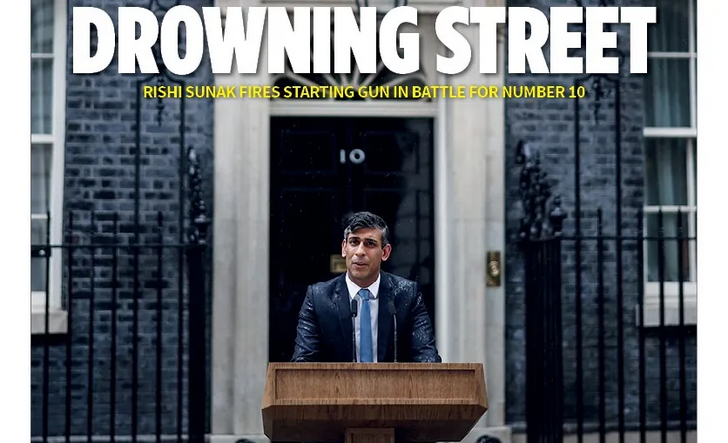
Rishi Sunak was a “wet” even before his farcical aquatic ceremony to kick off the 2024 general election.
We love a loser in Britain. From Eddie the Eagle to Gareth Southgate, our default reaction to a lack of success is warm appreciation. Parliament in that regard could not have been kinder to Rishi Sunak on his return as Leader of the Opposition. Never mind that the Conservative Party now looks more like the garrison of Rourke’s Drift than a campaign army. Never mind that the majority lies speared in the dust from their July 4th Isandlwana. Never mind that on the horizon General Farage is stirring the nativists for a future Bore War. The Lord Chelmsford of Prime Ministers marches on.
Less allegorically, Sunak, having made a couple of good speeches, is as one commentator put it “precisely the leader the Conservative Party needs right now”. On a personal level he is clearly a lovely guy, smart, capable, talented and has a very bright Clegg-like future ahead of him, whether in the valley or teaming up with Tony Blair to hawk AI to dictators. He is being feted by all the usual suspects who regard Parliament as a jolly club for centrist dads. Little thought however has been put into how this comes across to the poor bloody Tory infantry still pulling the bodies out of the metaphorical Buffalo River, wondering whether the inexperienced lieutenants rowing in the redoubts have what it takes to hold the line.
So let us be blunt, as a leader Sunak was hopeless. He had no coherent ideology or vision. He treated consensus building as an end in itself rather than as a means to an end. Even then he was better at building coalitions against rather than for him and was advised by people who used polls to tell them what to think, rather than as tools to move the public their way. He was neither a campaigner nor a political strategist.
As a result, he demonstrated cataclysmic judgement on the timing of the election. Whether this was through arrogance, naivety, or ignorance, he amplified the losses. He did so in the teeth of ample public commentary praising an assumed wise decision to delay until winter. Catching his own side by surprise, benefitting only morally vacuous apparatchiks boosting their betting accounts, and a far better prepared Opposition.
In office he was addicted to fad policies like generational bans, the Rwanda scheme, and the triple lock. He ducked hard choices on growth like building homes and cutting red tape, both things his deeply buried Thatcherite instincts should have told him were fights worth having. He was useless at implementation. Note, for example, the failure of his own borders policy or thinking through how to reform Ed Miliband’s ideological Net Zero architecture into something pragmatic.
He was right about one big thing — the importance of fiscal prudence and sound money. But he was also the Chancellor who undermined that prudence with wasteful lockdown splurges that destroyed growth and pushed the national debt over 100 per cent. He loved the sugar rush of popularity that came with being a spender in a crisis, but afterwards reformed nothing, preferring instead to raise taxes, generally by copying Labour’s madder talking points. For example, putting up corporation (company profits) tax to 25 per cent, freezing personal allowances, and hitting the North Sea with a 75 per cent “temporary” windfall tax, that has already outlasted the short period of high prices that inspired it. The latter has mortally wounded domestic investment, ripe for the Labour administration to finish it off. An error made despite his predecessor Osborne making exactly the same mistake with the same disastrous consequences only a few years earlier.
Comments Off on “Lovable loser” is not a good look for a political leader, even a British one
July 21, 2024
The Atomic Age Begins! – WW2 – Week 308 – July 20, 1945
World War Two
Published 20 Jul 2024This week the Americans explode a nuclear bomb at the Trinity Test in New Mexico. The plan is to possibly use more such bombs against targets in Japan. US President Harry Truman is meanwhile in Germany for the Potsdam Conference with other Allied leaders to hammer out some details of the postwar global order. The active war continues, of course, in Burma, Borneo, the Philippines, and China, with the Japanese being defeated everywhere.
00:00 Intro
00:22 Recap
00:51 The Trinity Test
02:46 The Potsdam Conference Begins
04:09 Bretton Woods Agreement
05:38 The Active War Continues
09:39 Summary
11:00 Conclusion
(more…)
Comments Off on The Atomic Age Begins! – WW2 – Week 308 – July 20, 1945
Britain’s Weird Vietnam War
Real Time History
Published Mar 15, 2024Fall 1945: the Second World War is over, but there is fresh fighting in Vietnam. Now, former enemies become allies as British-Indian troops, French Commandos, and surrendered Japanese soldiers join in a rag-tag alliance against Ho Chi Minh’s Communists in Saigon. The outcome will shape Vietnam’s future for decades to come, in Great Britain’s weird Vietnam War.
(more…)
Comments Off on Britain’s Weird Vietnam War
July 17, 2024
Americans Repeatedly Routed – The Korean War – Week 004 – July 16, 1950
The Korean War by Indy Neidell
Published 16 Jul 2024Elements of the US 24th Division, the only American one that’s arrived in force in Korea so far, take on the North Korean forces aiming for Taejon, but they are badly — and easily — defeated each time. In the center and the east coast it’s the ROK- the forces of the South — that are reorganizing and getting into position to try to stop the enemy. And Douglas MacArthur is officially appointed commander of all UN forces in Korea.
(more…)
Comments Off on Americans Repeatedly Routed – The Korean War – Week 004 – July 16, 1950
July 16, 2024
Britain’s Tories – “It is hard to think of any political Party that has so relentlessly thrown away its political mandate”
Lorenzo Warby considers a few of the early lessons that can be drawn from the British general election results:
I dislike the term “the deep state”. It mystifies what is much more straightforward, even bland: how metastasising bureaucracy is undermining the resilience of Western societies and their political systems.
The British Labour Party has won a massive Parliamentary majority in the House of Commons even though its total votes fell: from 10,269,051 in 2019 — 32.1% of total votes — to 9,704,655 in 2024 — 33.7% of total votes. Labour’s massive Parliamentary majority is not a product of enthusiasm for Labour, but the fracturing of the votes of its opponents.
The Scottish National Party (SNP) vote fell dramatically — from 1,242,380 votes in 2019 to 724,758 in 2024. This was largely a casualty of the SNP embracing the genderwoo of Transactivism. Outside some narrow urban enclaves, no one votes for “woke” but, given a genuine opportunity, folk will vote against it. As Scots have.
The Liberal Democrats did very well, as they have a regionally concentrated vote — which, this time, they targeted properly — and disgruntled (posh) Shire Tories will protest vote Lib-Dem. Clearly, lots did.
The Tories did so badly because their already low vote was further reduced by the Reform vote surge. The Reform vote represented voters punishing the Tories for their failure to do anything they had promised. As political scientist Matt Goodwin puts it:
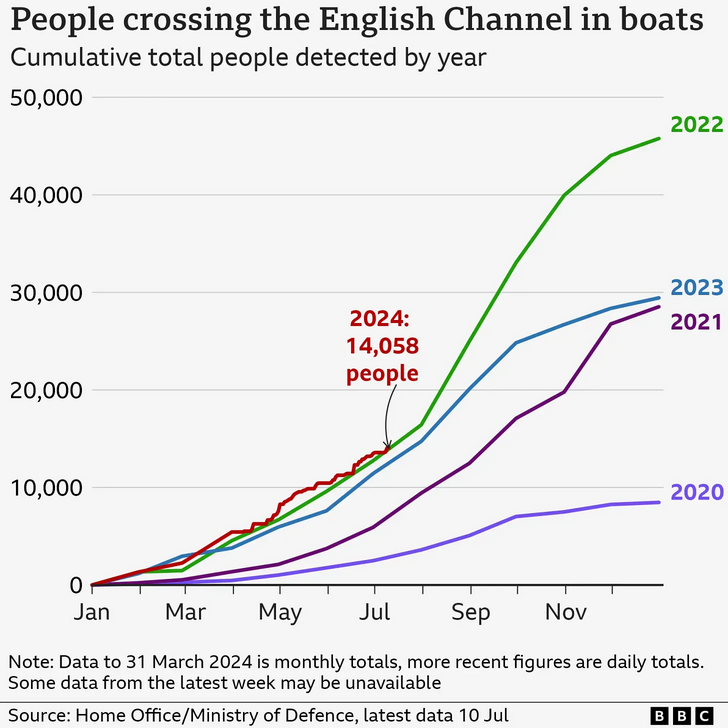
They failed to control our borders.
They failed to lower legal immigration.
They failed to cut taxes and the size of the state.
They failed to take on woke, exposing our children to ideas with no basis in science.
And they failed to level-up the left behind regions.
It is hard to think of any political Party that has so relentlessly thrown away its political mandate.
So, an angry, unhappy electorate (rightfully) punished two governing Parties (Tories and SNP) and has given Labour a massive majority, with little enthusiasm — almost two-thirds of voters voted for someone else — on a relatively low turnout.
There is, however, a deeper institutional issue underlying these results. Why are voters so disgruntled? Why did the Tories fail so spectacularly?
The answer to these questions is a mixture of how institutions have evolved, the development of media culture, the Anywhere-Somewhere divide and technocratic delusions.
Technocratic delusion
The technocratic delusion is multi-layered. It holds that governing is a managerial input-output problem, government bureaucracy simply implements policy, and that politics is not a motivation and coordination problem.
None of these presumptions are true, so technocratic politics fails. It does not connect to voters and does not understand, or grapple with, the actual institutional landscape.
The technocratic delusion is a way for clever people to be spectacularly clueless. Not the only such mechanism in the modern world.
Comments Off on Britain’s Tories – “It is hard to think of any political Party that has so relentlessly thrown away its political mandate”


