
spottydog4477
Published Dec 25, 2009
July 16, 2024
This Jet Age – Farnborough Airshow, 1953
Comments Off on This Jet Age – Farnborough Airshow, 1953
QotD: Corruption and crony capitalism
When leftists look at the private sector, they see tips of icebergs – for every businessperson caught gouging the consumer, they insist there are a thousand under the surface waiting to trap the unwary. Whereas a libertarian like myself sees the mirror image – the odd bad civil servant caught is not a rotten apple as they claim, but the tip of another large iceberg.
Surely we have seen enough to know that large organisations like the government and their crony capitalists in the corporate sector are deeply resistant to independent investigations, whistleblowers and all other genuine threats to their status?
Whereas those that battle away in the competitive private sector don’t even get the chance to be that corrupt – they either treat their customers and employees well, or they crumble into dust like the costumed retards in the entertainment industry are doing so reliably these days, those beloved of progressive dunces the world over.
There are few cover-ups in the world of dogwalking and fishmongering – these people do a good job or they get told to piss off by their customers. But in the public sector and the corporate world that depend upon it …?
When we catch a corrupt civil servant or corporate lackey, we are seeing the Tip of An Iceberg. But when we catch a corrupt landscape gardener or carpenter, we are finding a Rotten Apple.
My claim is that terrible government officials and corrupt crony capitalists are the both the tips of icebergs, so the cries from Left and Right about rotten applies need to go away. Those that work in the public sector or depend upon their relationship with it, are routinely terrible and usually without consequence.
Alex Noble, “Corruption In The Coercive And Voluntary Sectors: Rotten Apples? Or The Tips of Icebergs?”, Continental Telegraph, 2019-12-02.
Comments Off on QotD: Corruption and crony capitalism
July 14, 2024
Japan’s New Defense plan, 100 million dead – WW2 – Week 307 – July 13, 1945
World War Two
Published 13 Jul 2024Japan is aware that soon enough the Allies will invade the Home Islands, and they will mobilize absolutely everything and everyone they can for their defense plan, “The Glorious Death of the 100 Million”. In the meantime, Allied carrier forces keep hitting them, the Australian advance on Borneo continues, the Chinese advance on Guilin continues, the Allied rebuilding of Okinawa continues, and American preparations are nearly complete for a test detonation of an atomic bomb.
(more…)
Comments Off on Japan’s New Defense plan, 100 million dead – WW2 – Week 307 – July 13, 1945
Britain’s First Naval Defeat in 100 years – Coronel 1914
Historigraph
Published Sep 26, 2020
Comments Off on Britain’s First Naval Defeat in 100 years – Coronel 1914
QotD: Method acting
Mark Steyn, “Charlie and the Chocolate Factory”, The Spectator, 2005-07-30.
Comments Off on QotD: Method acting
July 13, 2024
The BBC – the Biased Broadcasting Corporation
Like Canada’s CBC, the BBC considers itself to be more than just a TV, Radio, and online broadcaster. From its founding in the early 1920s, the BBC has taken upon itself the role of teacher, moral example, and moulder of public opinion. The BBC has always been more progressive in most senses than the British public (as the CBC has been in Canada), but over the last few decades, the BBC has been hurtling leftward on gender issues faster than ever before:

Complaints about BBC impartiality are nothing new. The state broadcaster has a kind of constitution in the form of its Royal Charter, by which it is required to maintain due impartiality in its news reporting and when it comes to controversial subjects. But does it succeed?
In holding politicians from the left and the right to account in its reporting, accusations of bias are always likely to occur. Some people claim the BBC is inherently left-leaning, others claim it is inherently right-leaning. It really depends on your perspective. For my part, I believe that BBC does a generally good job — with a few notable lapses — when it comes to political impartiality.
However, where I think it clearly fails is in regard to its ideological impartiality. When it comes to the ideology of Critical Social Justice, what has become known colloquially as the “woke” movement, the BBC in my view clearly suffers from an extreme bias. This explains why so many people no longer trust its reporting.
I know from personal anecdotes from employees at the BBC that there is a kind of internal struggle going on to overcome the problem, but nobody I have yet spoken to denies that the organisation is ideologically captured. And we can all see it for ourselves. You might have seen the educational film by the BBC called Identity – Understanding Sexual and Gender Identities, aimed at 9 to 12 year-olds, which claimed that there are “over 100 gender identities”.
Where is the balance there? Why is the BBC making pseudo-religious proclamations to children as though they were uncontested fact?
[…]
But perhaps most damning of all is the question of the WPATH Files. In March of this year, a series of internal documents and videos from the World Professional Association for Transgender Health were leaked to journalist Michael Shellenberger. As Mia Hughes’s report for the Environmental Progress think tank revealed, these leaks showed that members of the world’s leading global authority in gender treatment were engaging in medical malpractice.
There are messages proving that surgeons and therapists are aware that a significant proportion of young people referred to gender clinicians suffer from mental health problems. They reveal that some specialists associated with WPATH are proceeding with treatment in the knowledge that no consent has been secured from either the children or those directly responsible for their wellbeing. They have also withheld from patients details of potential lifelong complications, or continued down this path knowing that the children do not understand the implications. And the WPATH Standards of Care are the go-to policies for gender treatment throughout the world, and have been influential in our own NHS.
[…]
And yet if you search for the WPATH Files on the BBC News website, what do you find? Precisely nothing.

Comments Off on The BBC – the Biased Broadcasting Corporation
The real story of Henry Hook, VC – Zulu
The History Chap
Published Nov 23, 2023Henry Hook, VC, 1850-1905. Zulu — the Battle of Rorke’s Drift.
Henry Hook was one of 11 defenders at the mission station at Rorke’s Drift (battle of Rorke’s Drift, Anglo-Zulu War 1879) who were awarded the Victoria Cross. Controversially, his character was misrepresented in the 1963 film Zulu. His character, played by James Booth (1927-2005), was depicted as an insubordinate barrack-room lawyer, a drunk and a malingerer. This was far from the truth.
Hook was actually a model soldier, who was teetotal, and who would serve as a regular and volunteer for over 40 years. His family were upset by the film, although contrary to popular stories, there is no evidence that Henry Hook’s daughters walked out of the [movie’s] premiere.
Nevertheless, in this video I aim to share his real story. Not just of his service in the army (and at Rorke’s Drift) but of a humble man from Gloucestershire, who returned home to find his wife had run off with another man, who found love for a second time and who worked in the British Museum.
Where is Henry Hook buried? Henry Hook’s grave can be found at St. Andrew’s church in the hamlet of Churcham, Gloucestershire. it is about five miles west of Gloucester.
0:00 Introduction
1:26 Early Life
3:10 Rorke’s Drift
3:56 Zulu
5:00 Defending The Hospital
7:45 Assegai wound
9:47 Making Tea
10:23 Victoria Cross
11:07 After Rorke’s Drift
13:11 Failing Health
15:10 The History Chap
(more…)
Comments Off on The real story of Henry Hook, VC – Zulu
July 12, 2024
The British prison system is over-capacity, and Starmer’s new government has a plan
As Ed West points out, the new Labour government’s plan is to move in a different direction than most Britons were hoping:
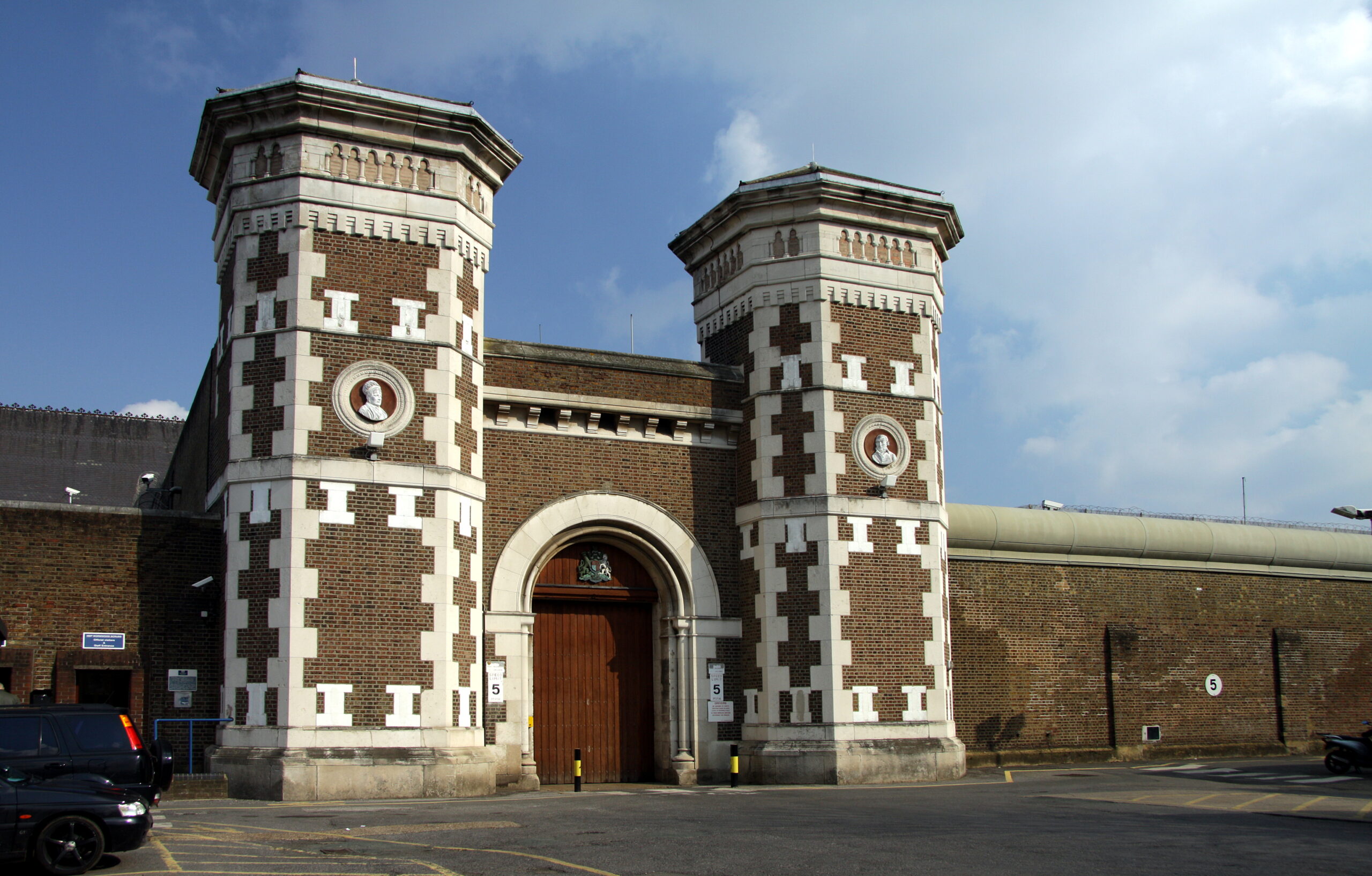
“Main gate to the HM Prison Wormwood Scrubs in spring 2013” by Chmee2 is licensed under CC BY-SA 3.0 

 .
.
Britain’s prisons are desperately overcrowded and morale among staff at an all-time low, following years of underfunding by the Conservative government and the inability of the state to build new jails against local opposition.
Now the incoming prime minister says that we have too many prisoners, while new prison minister James Timpson believes the British justice system is “addicted to punishment”, stating that only a third of inmates should be in jail.
The justice secretary, meanwhile, is considering “lowering the automatic release point for prisoners to less than 50 per cent through their sentence”. While currently prisoners serve half their sentences, or two-thirds for some sexual, violent or terror-related offences, the government plans to push the automatic release point to 40 per cent of their terms for those serving less than 4 years, benefitting 40,000 inmates — but not necessarily benefitting the rest of us.
This would be a very unwise move. The majority of prisoners are inside for sexual or other violent crimes, and even restricting early releases to those serving under four years would set free some very dangerous individuals, while previous amnesties of this type have led to huge increases in crime.
The idea that Britain “is addicted to punishment” jars with the sentences regularly handed out even for the most horrendous crimes, and the way that incorrigible criminals are allowed to offend again. This is the subject of a Twitter thread which I began six years ago, in order to highlight how the common belief in the punitive state was mistaken.
As an illustration, and bear in mind that their “sentences” are often twice what they actually served, here are a few cases:
A man who killed his wife in 1981, who was released after a few years and went on to strangle a girlfriend 12 years later, was subsequently freed — and ended up killing a third woman.
There was serial rapist Milton Brown, who was sentenced to 21 years for raping three women – one of whom took her own life – and was released early, only to rape again.
Or Joshua Carney, 28, freed on licence from prison and who just five days later brutally raped a mother and her 14-year-old daughter. He was allowed out despite 47 previous convictions, and now having been convicted of “13 charges including rape, attempted rape, actual bodily harm and theft” he is still eligible for parole in 10 years. Doesn’t sound like a country addicted to punishment.
There was John Harding, who treated a woman “like a rag-doll” when he beat and threatened to kill her after she told him she didn’t want a relationship. Despite terrorising his victim, including wrapping a sheet around her neck, and being in breach of a 30-month community order for a number of offences, including assault and threatening to kill another woman, and having other convictions for theft and criminal damage, he received a sentence of 21 months. As a result, in 2023, Harding was free to rape two women. Now convicted of rape, actual bodily harm, false imprisonment, strangulation and threats to kill, his sentence of 15 years means he could be out in 10.
If you believe that criminals only behave that way because of “systemic racism” or “poverty” or some other form of impersonal forces, you’ll likely also believe that punishment therefore serves no useful purpose and be in favour of all sorts of alternatives. At least until you or someone close to you is a victim of violent crime …
Comments Off on The British prison system is over-capacity, and Starmer’s new government has a plan
July 11, 2024
“If -“, by Rudyard Kipling
Lindybeige
Published Jul 10, 2024A poem with an excellent popularity-to-title-length ratio.
The timeless classic. A father talks to his son about how to be a good man. If any son ever lived up to all the virtues described, he would certainly be impressive.
If you can keep your head when all about you
Are losing theirs and blaming it on you,
If you can trust yourself when all men doubt you,
But make allowance for their doubting too;
If you can wait and not be tired by waiting,
Or being lied about, don’t deal in lies,
Or being hated, don’t give way to hating,
And yet don’t look too good, nor talk too wise:If you can dream — and not make dreams your master;
If you can think — and not make thoughts your aim;
If you can meet with Triumph and Disaster
And treat those two impostors just the same;
If you can bear to hear the truth you’ve spoken
Twisted by knaves to make a trap for fools,
Or watch the things you gave your life to, broken,
And stoop and build ’em up with worn-out tools:If you can make one heap of all your winnings
And risk it on one turn of pitch-and-toss,
And lose, and start again at your beginnings
And never breathe a word about your loss;
If you can force your heart and nerve and sinew
To serve your turn long after they are gone,
And so hold on when there is nothing in you
Except the Will which says to them: “Hold on!”If you can talk with crowds and keep your virtue,
Or walk with Kings — nor lose the common touch,
If neither foes nor loving friends can hurt you,
If all men count with you, but none too much;
If you can fill the unforgiving minute
With sixty seconds’ worth of distance run,
Yours is the Earth and everything that’s in it,
And—which is more — you’ll be a Man, my son!
Comments Off on “If -“, by Rudyard Kipling
On immigration, progressives are following Brecht’s advice to “dissolve the people and elect another”
In the US, Canada, Britain, and most of western Europe the tide of immigration (legal and illegal) never seems to ebb, despite clear indications from the electorates that they’ve had enough. But perhaps progressives in each country are merely taking Bertolt Brecht’s advice for times when the people have forfeited the government’s confidence:

The problem extends far, far beyond merely glutting the labor market and lowering our wage scale, however. See, I’ve explained above why many Republicans go along with the Amnesty Express. But what about the Democrats? What’s in it for them, especially since Big Labor – whose members stand to lose a great deal because of the depression of wage levels – makes up such a prominent part of the Democrat coalition?
What the Democrats stand to win is permanent political power.
See, unlike previous waves of immigration, we are making no effort whatsoever to assimilate current immigrants to our culture and society. Instead, immigrants tend to cluster in indigestible lumps, maintaining their own cultures, languages, and ways from “the old country”. This is doubly true of illegal immigrants, who have managed to turn large swathes of many of our cities into small-scale replicas of Mexico and Morocco. This is even more troublesome because practically all of these immigrants come from places whose histories and traditions are grossly incompatible with our own. These folks don’t know about the idea of protecting life, liberty, and property through a rule of law system, so consequently they don’t CARE about such a system. They’re just here to get jobs or get welfare, for the most part.
In essence, when you import millions of people from socialistic and/or primitive Global South countries, you will end up with a socialistic, primitive Global South country of your own. And that’s what the Democrats are counting on. This is essentially what has been happening with the millions of people coming across our southern border from all over the world.
If the Democrats can get all of the 30-60 million illegals in America amnestied so that they can stay here and start their “path to citizenship”, and can bring in millions more through the various visa processes, then the Democrats are setting themselves up to be able to gain total control in about two decades – which is how long it will take for the children of all these immigrants to join the pool of voters with their parents. Further, they don’t seem to even want to have to wait that long, considering how they are opposing a bill currently before the Congress that would crack down on voting by illegal immigrants. Essentially, the Democrats – who have been unable to convince the current set of American voters to consistently elect them – want to replace us with a new set of voters, one which will vote overwhelmingly for the Democrats every election, up until we reach the point where there aren’t any more elections.
This is why I say that immigration is more important even than abortion or these other issues that people on the Right are so concerned about. Think about it. With 100 million newly-minted Democrat voters, the Democrats will be able to gain permanent control of all branches of government, at all levels, in nearly all of the states. What that means is that they will get to push through their policies at will. That means no more pro-life restrictions on infanticide. No more gun rights. No more religious liberty. No more rollback of the gay agenda. No more tax cuts or spending rollbacks. No more economic liberty. Kiss private property goodbye. THAT’S what the Democrats want – and the only way for them to get it to convince enough idiots in this country to give it to them via immigration, both legal and illegal.
So while conservatives are clawing each other’s eyes out because one candidate or the other isn’t as pro-life as they want them to be, the Democrats are setting up the playing field to replace the current American electorate with a new one from the Third World, complete with all the third world values of corruption and socialism that come with them.
Of course, for “Democrats”, read “Liberals” in Canada, “Labour” in the UK, and so on. The party labels change, but the basic beliefs are remarkably consistent across the western world (and Rishi Sunak’s just-ousted Conservatives were just as committed to open borders and mass immigration as Keir Starmer’s new Labour government).
Comments Off on On immigration, progressives are following Brecht’s advice to “dissolve the people and elect another”
Wittmann’s Tiger Rampage | Villers-Bocage, June 1944
The Tank Museum
Published Mar 30, 2024In the space of 15 minutes, Michael Wittmann took a single Tiger tank and stopped a major British advance, destroying 10 tanks, 10 halftracks, 8 Bren carriers, 1 scout car and a six-pounder anti-tank gun in the process. An eye-catching achievement … But was this a victory handed on a plate?
John Delaney outlines Wittmann’s audacious and decisive action at Villers Bocage against the British Desert Rats, examining its military significance. It’s become the stuff of legend. It was a gift to Nazi propagandists, who wasted no time in championing the achievements of their “tank ace”. For the British, it was an embarrassing blow to military prestige.
Wittmann got lucky. But luck runs out eventually …
00:00 | Introduction
00:42 | Arrival into Villers-Bocage
03:08 | Wittmann’s Rampage Begins
04:51 | Rampaging Through the Village
11:56 | Wittmann’s Luck Runs Out
14:09 | Was Wittmann Really a Tank Ace?
16:54 | ConclusionThis video features archive footage courtesy of British Pathé.
#tankmuseum #tankactions #johndelaney #michaelwittmann #tigertank
Comments Off on Wittmann’s Tiger Rampage | Villers-Bocage, June 1944
July 10, 2024
The Korean War – Never Fear, MacArthur’s Here! – Week 003 – July 9, 1950
The Korean War by Indy Neidell
Published 9 Jul 2024American troops have arrived in Korea and engage the KPA — the forces of the North — in the field this week for the first time. It does not go well for them. In fact, it’s hard to imagine it going worse. The Americans are outnumbered and outgunned and are routed. In fact, the KPA are advancing all over the country, though they are taking heavy casualties themselves.
(more…)
Comments Off on The Korean War – Never Fear, MacArthur’s Here! – Week 003 – July 9, 1950
July 9, 2024
What it was like to visit a Medieval Tavern
Tasting History with Max Miller
Published 27 Mar 2024Medieval stew with meat, spices, and verjuice, and thickened with egg yolks
City/Region: England
Time Period: 15th CenturySome medieval taverns may have had what is called a perpetual stew bubbling away. The idea is basically what it sounds like: as stew was taken out, more ingredients would be added in so that the stew kept on stewing. In southern France, there was a perpetual stew that was served from the 15th century (around when this recipe was written) all the way up until WWII, when they couldn’t get the right ingredients.
I have opted to not make this stew perpetual, but it is delicious. The medieval flavor of super tender meat with spices and saffron is so interesting, especially with the added acidity and sweetness from the verjuice.
A note on thickening with egg yolks: if you need to reheat your stew after adding the egg yolks, like I did, they may scramble a bit. The stew is still delicious, it’s just the texture that changes a little and it won’t be quite as thick.
Vele, Kede, or Henne in bokenade
Take Vele, Kyde, or Henne, an boyle hem in fayre Water, or ellys in freysshe brothe, and smyte hem in pecys, and pyke hem clene; an than draw the same brothe thorwe a straynoure, an caste there-to Percely, Swag, Ysope, Maces, Clowys, an let boyle tyl the flesshe be y-now; than sette it from the fyre, and alye it up with raw yolkys of eyroun, and caste ther-to pouder Gyngere, Veriows, Safroun, and Salt, and thanne serve it forth for a gode mete.
— Harleian Manuscript 279, 15th Century
Comments Off on What it was like to visit a Medieval Tavern
July 8, 2024
Train & Public Transport in London (1941)
Charlie Dean Archives
Published Sep 24, 2013According to tfl.gov.uk: “Not only did the Tube help 200,000 inner-city children escape to the country, it was also used to shelter hundreds of thousands of civilians every night during the Blitz. On 27 September 1940 a census found that a staggering 177,500 Londoners were sleeping in Tube train stations. With so many people seeking shelter in the Tube, London Underground sprang into action and installed 22,000 bunk beds, washroom facilities and even ran trains that supplied seven tonnes of food and 2,400 gallons of tea and cocoa every night. Before long there were even special stations with libraries, evening classes, movies and musical evenings.”
The film states that 10 million people used public transport in London. Today, that figure stands at around 8.6 million. The opening title cards state that this film began filming just as the London Blitz began, yet there is very little visual reference to this.
(more…)
Comments Off on Train & Public Transport in London (1941)
July 7, 2024
More on the British general election results
At Postcards from Barsoom, John Carter has some further thoughts on the Sunak implosion on the 4th of July:

Sir Keir Starmer speaking to the media outside Number 10 Downing Street, 5 July, 2024.
Picture by Kirsty O’Connor/ No 10 Downing Street via Wikimedia Commons.
The Conservative wipeout was disappointingly not the annihilation that early polls predicted. The Tories were successful in scaring a critical mass of boomers in a last minute get-out-the-vote effort. At the same time, I suspect that some incidents late in the election that were used to paint Reform as raving Nazis were successful in driving down the Reform vote. One such incident involved a marginal Reform candidate caught on microphone being extraordinarily vulgar, who later turned out to be an actor that specialized in playing precisely the sort of character he was portraying for the media, which is of course all rather suspicious.
As a result, Reform only got 4 seats. This was less than the 13 that were predicted by the BBC based on exit polling, which prediction was revised to the 4 that Reform in fact won partway through counting, as the models’ Bayesian priors were updated accordingly, no doubt. That said, among those 4 seats is Nigel Farage, who is now a sitting member of Parliament.
That Parliament is now, in all likelihood, in the hands of the weakest massive majority government in its history, and if that’s not true (British history in its entirety being rather extensive), certainly close to it.
Keir Starmer’s Labour has 412 seats of Parliament’s total 650, giving it an unassailable majority. This is not because of a sudden surge in their popularity: their share of the popular vote didn’t budge, from around a third of the population. Turnout was moreover unenthusiastic, about 59% of the population I think, which while not as wince-inducing as the nearly 50% participation that the BBC was claiming throughout most of the counting period, is still nothing to write home about. The total number of people who voted for Labour decreased by 600,000. Labour cannot claim any sort of popular mandate, and they know it.
Not that Labour — or any western political party elected under these circumstances — could be expected to take it into consideration. From their point of view, all that matters is the seats in the House of Commons, and they’ve got them in spades.
Reform and the Lib Dems were not the only beneficiaries of the Conservative collapse. This can be seen immediately in the crazy quilt of the electoral map, which despite Labour’s two-thirds majority, is planted with the flags of all sorts of weird political tribes.
My favourite part is Northern Ireland, where Sinn Fein held its 7 seats (making it the fifth-largest party after the SNP), and the rest of it is split up in an impenetrable jumble of splinter parties vaguely associated with different reasons for remaining part of the UK and/or the EU. Wales has been painted bright green by Plaid Cymru, the Party of Wales, who doubled their presence in parliament to 4. This is the same number of seats as Reform got, despite Plaid Cymru having gotten just under 200,000 votes, as compared to Reform’s 4.1 million, yet another perversity of first-past-the-post.
To everyone’s disappointment, first-past-the-post did not deliver a seat into the hands of the Monster Raving Loony Party, who received only 5,814 votes, a dismal 0.02% of the total 28.4 million votes cast. I do not know what kind of person votes for the Monster Raving Loony Party, but I bet they are absolutely fascinating. They should consider moving to one of Britain’s remote underpopulated islands, the Orkneys perhaps, where they might just be able to take over a seat. Having a strong, concentrated regional presence seems to be the best way to get members into Parliament in a first-past-the-post system, and having a sitting member for the Monster Raving Loonies would be even funnier than having Nigel in there.
First-past-the-post gets a lot of hate, and I’ve been ripping on it here, but it actually seems well-suited to an island which is shared by a bunch of squabbling ancient tribes. While it tends to produce majorities quite easily due to the winner-take-all nature of the contest within each riding, this also allows areas with strong regional identities to assert a disproportionate presence in parliament, despite getting a measly percentage of the vote. Not that that especially matters, given the aforementioned tendency for the system to hand out crushing jackpot majorities to the dominant players, as it has indeed done once again.
With the sole exception of Reform, there has not been any wave of enthusiasm for any of the parties in parliament. Large numbers of voters simply stayed home, whether tuning it all out or punishing their home parties while failing to see anything they wanted to vote for. It is as though the tide has gone out, exposing the sand and rocks of the sea shore. Whether this is a regular tide, which will gently slosh back in again in time, or a tsunami, remains to be seen. Certainly it feels that the water has receded very far indeed, exposing more of the seafloor’s surface than one normally sees. Say, is that Doggerland over there?

Comments Off on More on the British general election results


