
Geography By Geoff
Published Jul 16, 2024Did you know that Newfoundland and Labrador were once an independent country in the same manner as Canada was? It’s true! It was called the Dominion of Newfoundland and due to a series of unfortunate events, it had to relinquish its independence. In today’s video, we cover the vast geography of the province, it’s very old history (including Vikings!) and how the country managed to lose its independence when it managed to survive on its own for decades. Oh … and we’ll also talk about why Labrador got included in the name upon confederating with Canada.
(more…)
November 24, 2024
How Newfoundland and Labrador lost their independence
Comments Off on How Newfoundland and Labrador lost their independence
November 23, 2024
How the US Paranoia of Leftism was Born
World War Two
Published 21 Nov 2024Elizabeth Bentley’s defection in 1945 didn’t just expose a Soviet spy network — it fueled America’s second Red Scare and a wave of anti-communist paranoia. Her revelations about Soviet infiltration within the U.S. government became a catalyst for McCarthyism, reshaping American politics and society in an era defined by fear and suspicion.
(more…)
Comments Off on How the US Paranoia of Leftism was Born
November 21, 2024
1966: Chieftain Tank Simulator | Tomorrow’s World | Retro Tech | BBC Archive
BBC Archive
Published Jul 15, 2024“All the tension, the excitement, and indeed the technical demands of driving a modern tank into battle … but, in fact, I haven’t moved a yard.”
Raymond Baxter test drives the British Army’s Chieftain tank simulator, used for training tank drivers. The illusion is created using a large 1:300 scale model of the battlefield, a computer, and a roving mirror connected to a television camera. The battlefield can be altered simply by swapping out the model trees and buildings.
Mr Baxter can attest to how realistic the experience is, and it costs just one tenth of the price of training in a real Chieftain tank.
Clip taken from Tomorrow’s World, originally broadcast on BBC One, 28 September, 1966.
Comments Off on 1966: Chieftain Tank Simulator | Tomorrow’s World | Retro Tech | BBC Archive
November 20, 2024
The Korean War Week 22 – Winter is Coming! – November 19, 1950
The Korean War by Indy Neidell
Published 19 Nov 2024Eighth Army commander Walton Walker makes his final preparations for the big push north to the Yalu River. The Communist Chinese prepare their own forces and wait for the Americans to make their move. At the same time, the freezing Korean winter arrives in force, plunging temperatures well below freezing. The Americans must get this done, and soon.
(more…)
Comments Off on The Korean War Week 22 – Winter is Coming! – November 19, 1950
November 18, 2024
“The Great Canadian Lie is the claim that we’ve ‘always been multicultural'”
Fortissax thinks that the rest of Canada has lessons to be learned from Quebec:
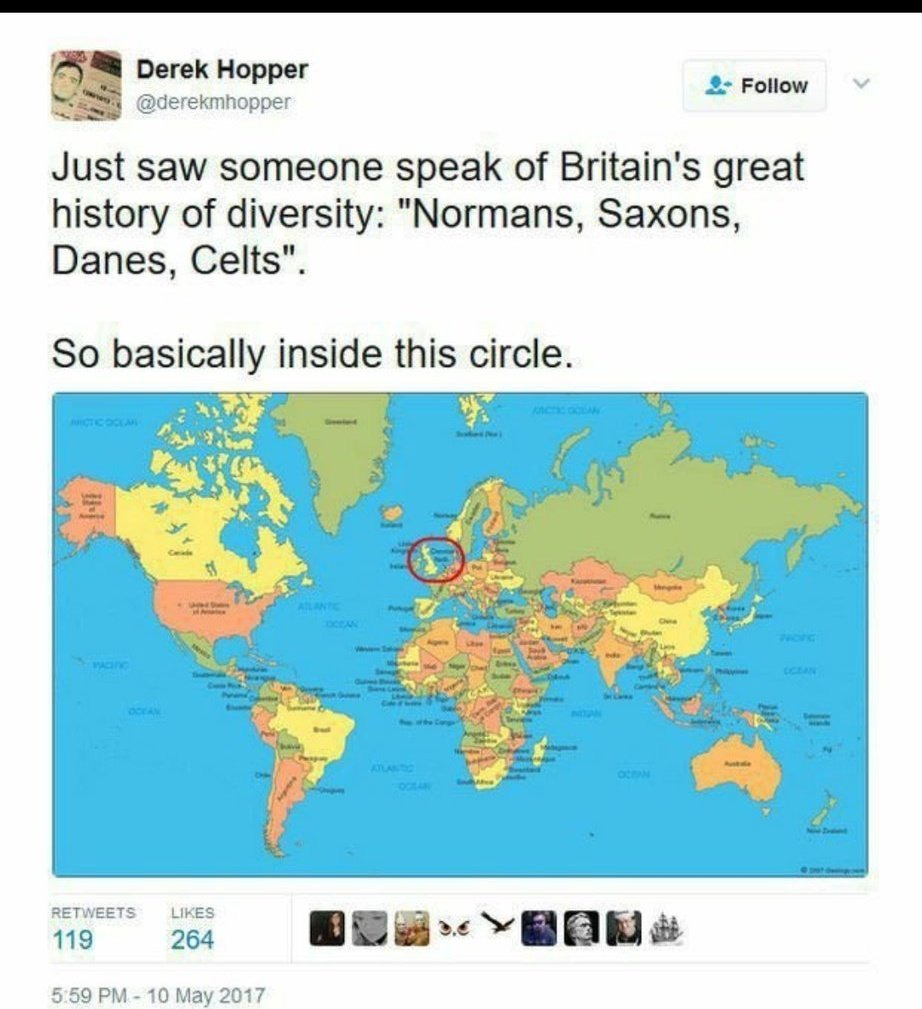
If you are a Canadian born at any point in the Post-WWII era, you have been subjected to varying degrees of liberal “Cultural Mosaic” propaganda. This narrative exploits the historic presence of three British Isles ethnic groups (which had already been intermixing for millennia) and the predominantly Norman French settlers to justify the unprecedented mass migration of people from the Third World into Canada. This process only began in earnest in the 1990s before accelerating rapidly in the 2010s.
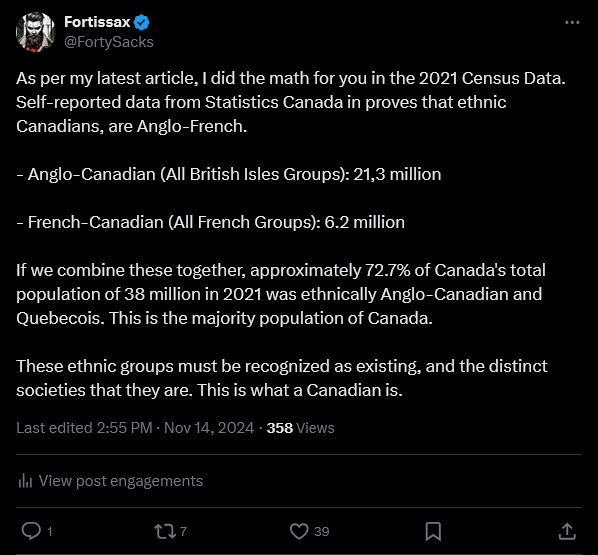
The Great Canadian Lie is the claim that we’ve “always been multicultural”, as though the extremely small and inconsequential presence of “Black Loyalists” or the historically hostile Indigenous groups (making up only 1% of the population at Canada’s founding in 1867) played any serious role in shaping the Canadian nation, its identity, institutions, or culture. Inspired by Dr. Ricardo Duchesne’s book Canada in Decay: Mass Immigration, Diversity, and the Ethnocide of Euro-Canadians (2017), which chronicled the emergence of two ethnic groups uniquely born of the New World, I delved into the 2021 Census data collected by the Canadian government to explore the ethnic breakdown of White Canadians in greater detail
The evidence is clear. In 2021, just four years ago, 72.7% of the entire Canadian population was not just White, but Anglo-Canadian and French-Canadian, representing an overwhelming presence compared to visible minorities and other White ethnic groups, such as the small populations of Germans and Ukrainians.
In the space last night, I highlighted this historical fact and explained to the audience the ethnogenesis of the Anglo-Canadian and its significance. While we all recognize that the Québécois are a homogeneous group descended predominantly from Norman French settlers — such as the Filles du Roi and Samuel de Champlain’s 1608 expedition, which established Quebec City with a single-minded purpose — the Anglo-Canadian story also deserves similar recognition for its role in shaping Canada’s identity.
But what is less known is that Anglo-Canadians are just as ethnically homogeneous as the Québécois, from Nova Scotia to British Columbia. Anglo-Canadian identity emerged from Loyalist Americans in the 1750s, beginning with the New England Planters in Nova Scotia — “continentals” with a culture distinct from both England and the emergent Americans. After the American Revolutionary War, they marched north with indomitable purpose, like Aeneas and the Trojans, to rebuild their Dominion. Author Carl Berger, in his influential work The Sense of Power: Studies in the Ideas of Canadian Imperialism, demonstrates that the descendants of Loyalists were the one ethnic group that nurtured “an indigenous British Canadian feeling.” The following passage from Berger’s work is worth citing:
The centennial arrival of the loyalists in Ontario coincided with the fiftieth anniversary of the incorporation of the City of Toronto and, during a week filled with various exhibitions, July 3 was set aside as “Loyalist Day”. On the morning of that day the platform erected at the Horticultural Pavilion was crowded with civic and ecclesiastical dignitaries and on one wall hung the old flag presented in 1813 to the York Militia by the ladies of the county. Between stirring orations on the significance of the loyalist legacy, injunctions to remain faithful to their principles, and tirades against the ancient foe, patriotic anthems were sung and nationalist poetry recited. “Rule Britannia” and “If England to Herself Be True” were rendered “in splendid style” and evoked “great enthusiasm”. “A Loyalist Song”, “Loyalist Days”, and “The Maple Leaf Forever”, were all beautifully sung
The 60,000 Loyalist Americans, who arrived in two significant waves, were soon bolstered by mass settlement from the British Isles. However, British settlers assimilated into the Loyalist American culture rather than imposing a British identity on the new Canadians. The first major wave of British settlers after the Loyalists primarily consisted of the Irish. Before Confederation in 1867, approximately 850,000 Irish immigrants settled in Canada. Between 1790 and 1815, an estimated 6,000 to 10,000 settlers, mainly from the Scottish Highlands and Ireland, also made their way to Canada.
Another large-scale migration occurred between 1815 and 1867, bringing approximately 1 million settlers from Britain to Canada, specifically to Ontario, Nova Scotia, and New Brunswick. New Brunswick was carved out from the larger province of Nova Scotia to make room for the influx of Loyalists. During this time, settlers from England, Scotland, and Ireland intermingled and assimilated into the growing Anglo-Canadian culture. Scottish immigrants, who constituted 10–15% of this wave, primarily spoke Gaelic upon arrival but adopted English as they integrated.
All settlers from the British Isles spoke English (small numbers spoke Gaelic in case of Scots), were ethnically and culturally similar, and had much more in common with each other than with their continental European counterparts.
Settlement would slow down in the years immediately preceding Confederation in 1867 but surged again during the period between 1896 and 1914, with an estimated 1.25 million settlers yet again from Britain moving to Canada as part of internal migration within the British Empire. These settlers predominantly also [went] to Ontario and the Maritimes, further forging the Anglo-Canadian identity.
A common misconception among Canadians is that Canada “was a colony” of Britain, subordinate to, or a “vassal state”. This is wrong. Canadians were the British, in North America. There were no restrictions on what Canadians could or could not do in their own Dominion. From the first wave of Loyalists onward, Canadians were regularly involved in politics and governance, actively participating in shaping the nation.
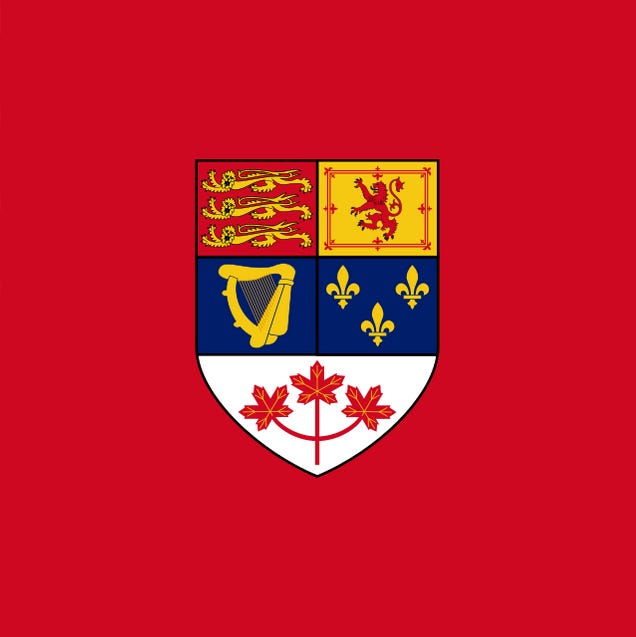
Like the ethnogenesis of the English, which saw Angles, Saxons, Jutes, and Frisians converge into a new people and ethnicity (the Anglo-Saxons), Anglo-Canadians are a combination of 1.9 million English, 850,000 Irish (from both Northern and Southern Ireland), and 200,000 Scots, converging with 60,000 Loyalist Americans from the 13 Colonies. These distinct yet similar ethnic groups no longer exist as separate peoples in Canada. Anglo-Canadians are the fusion of the entire British Isles. The Arms of Canada, the favourite symbol of Canadian nationalists today, represents this new ethnic group with the inclusion of the French:
Arms of England, Scotland, Ireland and France in that order.
It’s no coincidence that, once rediscovered, the Arms of Canada exploded in popularity as the emblem of Canadian nationalists. Unlike more controversial symbols that appeal to pan-White racial unity, such as the Sonnenrad or Celtic cross, the Arms of Canada resonate as a distinctly Canadian icon, deeply rooted in the nation’s true heritage and history — a heritage that cannot be bought, sold, or traded away. This is an immutable bloodline stretching into the ancient past. If culture is downstream from race, and deeper still, ethnicity, then Canadian culture, values, and identity are fundamentally tied not just its race, but its ethnic composition. The ethnos defines the ethos. Canadians are not as receptive to the abstract idea of White nationalism for the same reason Europeans aren’t — because they possess a cohesive ethnic identity, unlike most White Americans.
Comments Off on “The Great Canadian Lie is the claim that we’ve ‘always been multicultural'”
November 17, 2024
Contrasting origin stories – the 13 Colonies versus the “Peaceful Dominion”
At Postcards From Barsoom, John Carter outlines some of the perceived (and real) differences in the origin stories of the United States and Canada and how they’ve shaped the respective nations’ self-images:
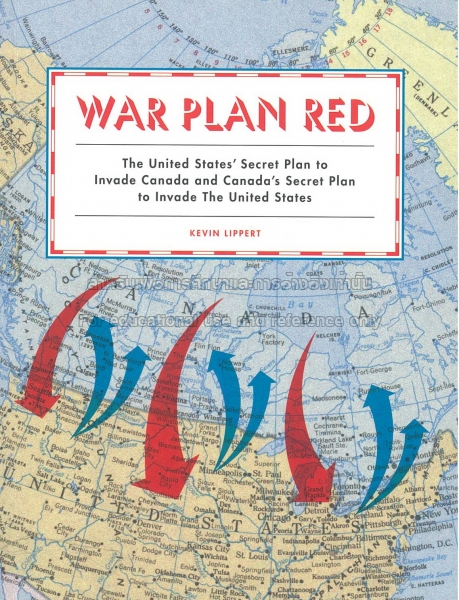
The US had plans to invade Canada that were updated as recently as the 1930s (“War Plan Crimson”, a subset of the larger “War Plan Red” for conflict with the British Empire). Canada also had a plan for conflict with the US, although it fell far short of a full-blooded invasion to conquer the US, designated as “Defence Scheme No. 1”, developed in the early 1920s.
In perennial contrast to its tumultuous southern neighbour, Canada has the reputation of being an extremely boring country.
America’s seeds were planted by grim Puritans seeking a blank slate on which to inscribe the New Jerusalem, and by aristocratic cavaliers who wanted to live the good life while their slaves worked the plantations growing cash crops for the European drug trade. The seeds of America’s hat were planted by fur traders gathering raw materials for funny hats.
America was born in the bloody historical rupture of the Revolutionary War, casting off the yoke of monarchical tyranny in an idealistic struggle for liberty. Canada gained its independence by politely asking mummy dearest if it could be its own country, now, pretty please with some maple syrup on top.
America was split apart in a Civil War that shook the continent, drowning it in an ocean of blood over the question of whether the liberties on which it was founded ought to be extended as a matter of basic principle to the negro. Canada has never had a civil war, just a perennial, passive-aggressive verbal squabble over Quebec sovereignty.1
America’s western expansion was known for its ungovernable violence – cowboys, cattle rustlers, gunslingers, and Indian wars. Canada’s was careful, systematic, and peaceful – disciplined mounties, stout Ukrainian peasants, and equitable Indian treaties.
Once its conquest of the Western frontier was wrapped up, America burst onto the world stage as a vigorous imperial power, snatching islands from the Spanish Empire, crushing Japan and Germany beneath the spurred heel of its cowboy boot, and staring down the Soviet Union in the world’s longest high-stakes game of Texas Hold’Em. Canada, ever dutiful, did some stuff because the British asked nicely, and then they went home to play hockey.
America gave the world jazz music, rock and roll, and hip-hop; Canada contributed Celine Dion and Stan Rogers. America has Hollywood; Canada, the National Film Board and the Canadian Broadcasting Corporation. America dressed the world in blue jeans and leather jackets; Canadians, flannel and toques. America fattened the people with McDonald’s; Canada burnt their tongues with Tim Horton’s, eh.2
The national stereotypes and mythologies of the preceding paragraphs aren’t deceptive, per se. Stereotypes are always based in reality; national mythologies, as with any successful mythology, need to be true at some level in order to resonate with the nations that they’re intended to knit together. Of course, national mythologies usually leave a few things out, emphasizing or exaggerating some elements at the expense of others in the interests of telling a good story. Revisionists, malcontents, and subversives love to pick at the little blind spots and inconsistencies that result in order to spin their own anti-narratives, intended as a rule to dissolve rather than fortify national cohesion and will. Howard Zinn’s People’s History of the United States is a good example of this kind of thing, as is Nikole Hannah-Jones’ tendentious 1619 Project.
Probably the most immediately obvious difference between Americans and Canadians is that Americans don’t suffer from a permanent identity crisis. Demographic dilution due to decades of mass immigration notwithstanding, Americans by and large know who they are, implicitly, without having to flagellate themselves with endless introspective navel-gazing about what it means to be an American. The result of this is that most American media isn’t self-consciously “American”; there are exceptions, of course, such as the occasional patriotic war movie, but for the most part the stories Americans tell are just stories about people who happen to be American doing things that happen to be set in America. Except when the characters aren’t American at all, as in a historical epic set in ancient Rome, or aren’t set in America, as in a science fiction or fantasy movie. That basic American self-assurance in their identity means that Americans effortlessly possess the confidence to tell stories that aren’t about America or Americans at all, as a result of which Hollywood quietly swallowed the entire history of the human species … making it all American.
As Rammstein lamented, We’re All Living in Amerika …
Since we’re all living in Amerika, the basic background assumptions of political and cultural reality that we all operate in are American to their very core. Democracy is good, because reasons, and therefore even de facto dictators hold sham elections in order to pretend that they are “presidents” or “prime ministers” and not czars, emperors, kings, or warlords. Insofar as other countries compete with America, it’s by trying to be more American than the Americans: respecting human rights more; having freer markets; making Hollywood movies better than Hollywood can make them; playing heavy metal louder than boys from Houston can play it. It’s America’s world, and we’re all just along for the ride.
America’s hat, by contrast, is absolutely culturally paralyzed by its own self-consciousness … as a paradoxical result of which, its consciousness of itself has been almost obliterated.
Canada’s origin – the origin of Anglo-Canada, that is – was with the United Empire Loyalists who migrated into the harsh country of Upper Canada in the aftermath of the Revolutionary War. As their name implies, they defined themselves by their near-feudal loyalty to the British Crown. Where America was inspired by Enlightenment liberalism, Canada was founded on the basis of tradition and reaction – Canada explicitly rejected liberalism, offering the promise of “peace, order, and good government” in contrast to the American dream of “life, liberty, and the pursuit of happiness”.
1. Quebec very nearly left the country in a narrow 1995 referendum in which 49.5% of the province’s population voted to separate. It is widely believed in Anglo Canada that had the rest of the country been able to vote on the issue, Quebec would be its own country now.
2. Well actually a Brazilian investment firm has Timmies, but anyhow.
Comments Off on Contrasting origin stories – the 13 Colonies versus the “Peaceful Dominion”
November 15, 2024
“OK, you’re here to accuse me of causing offence but I’m not allowed to know what it is. Nor can I be told whom I’m being accused by? How am I supposed to defend myself, then?”
At the current rate, future generations will have to be persuaded that Franz Kafka wasn’t actually and Englishman:
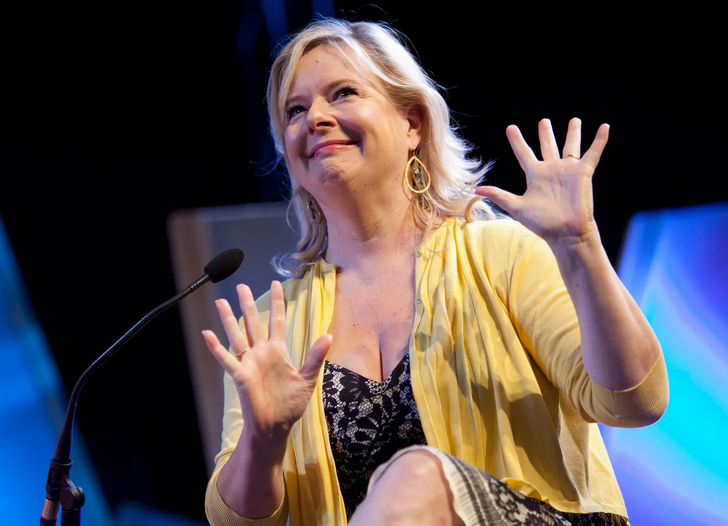
Franz Kafka’s The Trial opens with the novel’s protagonist, Josef K., being arrested early in the morning by two officers of the law. When he asks them to explain their reasons, one of the men tells him: “That’s something we’re not allowed to tell you. Go into your room and wait there. Proceedings are underway and you’ll learn about everything all in good time.” He never finds out, of course. Even after the story’s abrupt and chilling end, the reader is none the wiser as to why any of this has occurred.
And so it is hardly surprising that Telegraph columnist Allison Pearson described it as “Kafkaesque” that she was visited by two police officers on the morning of Remembrance Sunday. She was informed that she had been accused of “stirring up racial hatred” by means of an unspecified social media post from a year ago. Anyone who is familiar with Allison’s writing will understand just how improbable this is. Her account of the discussion that followed could have been lifted directly from The Trial itself:
“What did this post I wrote that offended someone say?” I asked. The constable said he wasn’t allowed to tell me that.
“So what’s the name of the person who made the complaint against me?”
He wasn’t allowed to tell me that either, he said.
“You can’t give me my accuser’s name?”
“It’s not ‘the accuser’,” the PC said, looking down at his notes. “They’re called ‘the victim’.”
Ah, right. “OK, you’re here to accuse me of causing offence but I’m not allowed to know what it is. Nor can I be told whom I’m being accused by? How am I supposed to defend myself, then?”
The term “Kafkaesque”, like “Orwellian”, has become something of a cliché, precisely the kind of writing that Orwell continually urged us to avoid. But what else are we to call it? I am reminded of Christopher Hitchens’s account of his visit to Prague in 1988 to report on the Communist regime. He had decided in advance that he would be “the first visiting writer not to make use of the name Franz Kafka”. As it transpired, this resolution was impossible to fulfil. During one of Václav Havel’s “Charter 77” committee meetings, police burst into the building, threw Hitchens against a wall, and arrested him. When he asked for the details of the charge, he was told that he “had no need to know the reason”. How else could he describe this other than “Kafkaesque”? As he was later to say at a lecture at the University of Western Ontario: “They make you do it”.
This is all very well for the Státní bezpečnost, but I’m not sure even Hitchens could have imagined that such behaviour would become routine in the United Kingdom in the twenty-first century. I have written previously on my Substack about the phenomenon of “non-crime hate incidents” (NCHIs), but it’s worth repeating here the key points. Estimates suggest that the police in England and Wales have recorded over a quarter of a million NCHIs since the practice began in 2014. Those who are so branded are often not informed, and these can show up on DBS (Disclosure and Barring Service) checks, thereby impeding their employment prospects. According to the Times, three thousand people are arrested each year in the UK for offensive comments posted online, even in cases where a joke had clearly been intended. This is because Section 127 of the Communications Act 2003 criminalises online speech that can be deemed “grossly offensive”. Whatever that means.
Comments Off on “OK, you’re here to accuse me of causing offence but I’m not allowed to know what it is. Nor can I be told whom I’m being accused by? How am I supposed to defend myself, then?”
November 14, 2024
QotD: The tragedy of the commons in North London
Despite this being North London we’re not talking about common people here and the tragedy of their entering the precincts of the progressives. Rather, the tragedy of common resources.
One fact about those bathing ponds on the Heath:
Honesty boxes for bathers to pay to swim were introduced in 2005. There were plans for a compulsory charge in 2012, but they came to nothing.
We have open access to a resource, Marxian access. We also have one other fact:
It was once a well-kept secret. Now the bathing ponds on Hampstead Heath are among the most crowded parts of London on a hot summer’s day.
We have – by one measure at least – excessive use of that resource, use that needs to be limited in some manner.
This is a problem that has been noted before, it’s called the Tragedy of the Commons. As Garrett Hardin points out there are only two ways of restricting such access, capitalist – charge for it – or socialist – regulate.
The third option, Elinor Ostrom’s, does not work with this number of people. That communal agreement tops out at about 3,000 peeps, not 10 million.
Which of the two solutions works depends upon the specific circumstance and isn’t the point to be made here. Rather, the lesson to learn is that Marxian access just doesn’t work when demand is at or above capacity. A useful thing to think about when contemplating other areas of the economy.
Tim Worstall, “Hampstead Heath Ponds And The Tragedy Of The Commons”, Continental Telegraph, 2020-01-19.
Comments Off on QotD: The tragedy of the commons in North London
November 13, 2024
Ah, the lovely Welsh countryside, where everything is … racist?
Andrew Doyle digs into the claim that the Welsh government recently made that “racism relating to climate change, environment, and rural affairs” is oppressing visible minorities in the principality and preventing them from accessing the countryside:
The Welsh government believes that the countryside presents a problem for ethnic minorities. Its latest report on “racism relating to climate change, environment, and rural affairs” concludes that certain racial groups “face barriers created by exclusions and racism preventing them from fully participating in ‘environmental’ activities”. In response, the Welsh Conservative leader Andrew R. T. Davies has told a reporter from Guido Fawkes: “This kind of outdated virtue signalling nonsense is completely out of touch with the needs of the people of Wales. Labour is stuck on yesterday’s thinking, the kind that is being roundly rejected globally. Time to turf them out.”
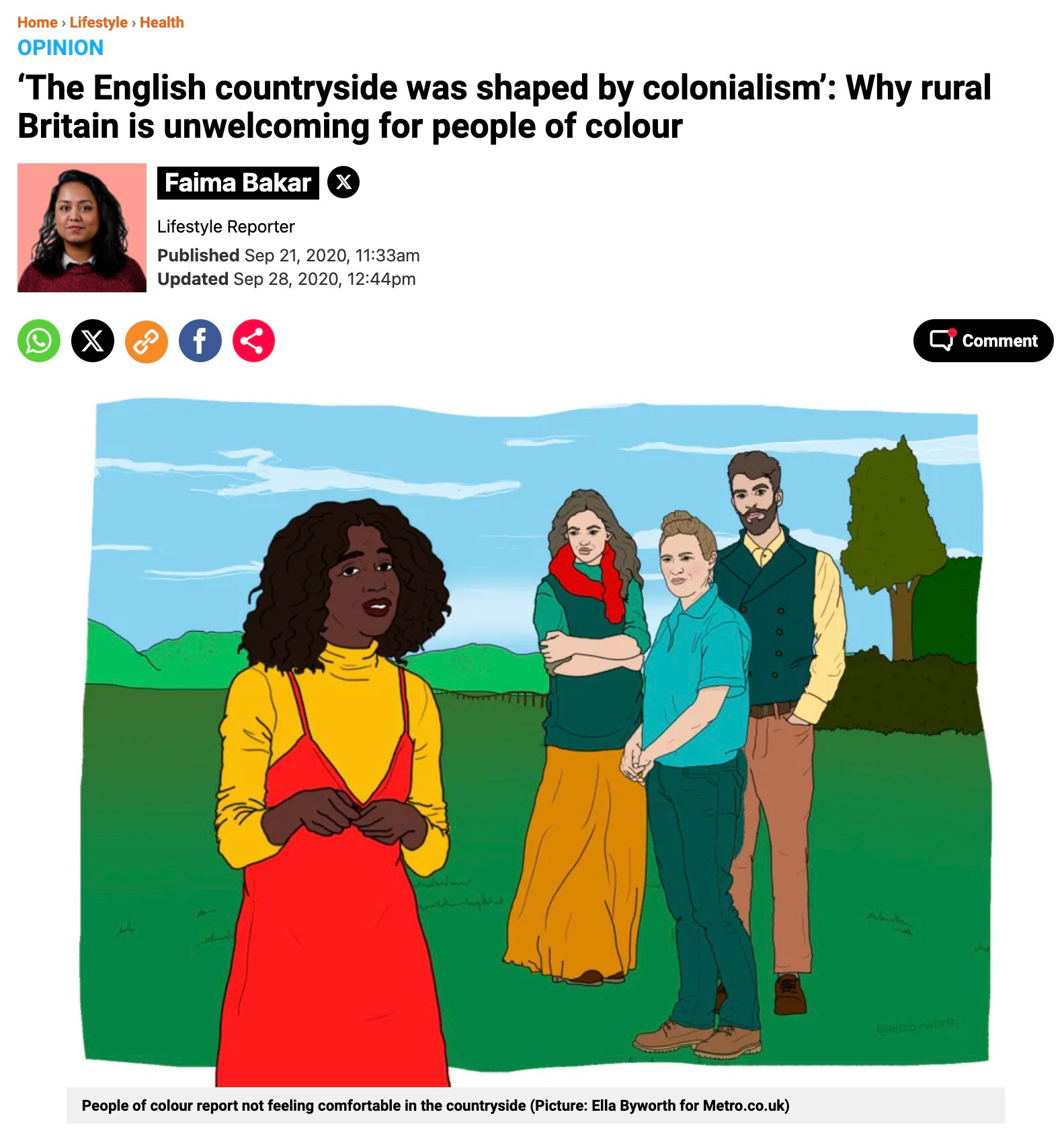
The horticultural pun is forgivable given the sheer magnitude of the absurdity. While we might dismiss this as the usual brain-addled antics of the Welsh government, it’s just the latest example of a trend that has been ongoing for years. In September 2020, an article appeared in the Metro claiming that the countryside was “shaped by colonialism” and therefore is “unwelcoming to people of colour”.
Apparently, the illustration of three white people scowling at a black woman while standing in a meadow is proof of the article’s central thesis. I may as well sketch a shiny goblet and claim it as evidence that I’ve found the Holy Grail.
[…]
All of these examples are ostensibly frivolous and easy to dismiss as yet more “woke gone mad” news items, but there are other sinister aspects to consider. For instance, I was able to discover the reason why Kew Gardens went along with this ideological bilge by reading its Equality, Diversity and Inclusion Delivery Plan. One of Kew’s EDI “strategy pillars” includes the seeking of accreditation by outside activist groups including Stonewall. Like many public bodies, ideas are implements in the workplace in return for points on schemes like Stonewall’s Workplace Equality Index.
And this has serious ramifications. You might remember when the Times uncovered documents revealing that Stonewall has attempted to control what NHS trusts, government departments and local councils say on their social media accounts, demanding public support for its views on gender identity ideology, and then rewarding them with points towards its Top 100 Employers index. This means that if a government department uses the term “birthing parent” instead of “mother” they are able to advance in the scheme. It’s quite the racket.
Worse still, 10% of the Scottish government’s score on the index was relating to consultation with Stonewall on revising legislation. In other words, for a while there it was looking very much as though the SNP were using taxpayers’ money to fund a lobbying group that would in turn reward the government for changing the law according to their ideology.
The Welsh government is one of the worst offenders when it comes to pushing gender identity ideology onto children and working at the behest of identitarian activists. A Freedom of Information request in 2023 revealed that “Stonewall Cymru was directly funded by Welsh Government in the sum of £100,000 for the financial year requested”. (The full details can be accessed here.) I am not alleging that the latest drive to “problematise” the countryside is being directed by activist groups for financial gain, but it does suggest a certain susceptibility when it comes to this kind of ideological mania.
So when the Welsh government and other institutions insist that the countryside is racist, or that chrysanthemums are homophobic, or that badgers hate Sikhs, or whatever the current delusion might be, we shouldn’t just laugh it off. These are just the latest and silliest symptoms of a much deeper cultural malaise. This is an illiberal and regressive ideological movement masquerading as liberal and progressive, and it has ways of asserting its power.
Let’s face it, if they can convince you that the countryside is a domain of heteronormative white supremacy, they can convince you of anything.
Comments Off on Ah, the lovely Welsh countryside, where everything is … racist?
Anglo-German Dreadnought Arms Race – Anything you can build I can build better!
Drachinifel
Published Nov 17, 2021Today we take a whistlestop tour behind the driving forces and outcome of the Anglo-German Naval Arms Race that led up to WW1.
Comments Off on Anglo-German Dreadnought Arms Race – Anything you can build I can build better!
November 12, 2024
QotD: Roger Scruton, terroiriste
>Good wine is a “somewhere”, not an “anywhere”. It is stamped with a place and a year. Rooted, literally. The fancy French word for this is terroir, referring to the way in which environment — soil, geology, even the history of a place — is all responsible for a wine’s character. Terroir is a sense of place in a glass. Roger Scruton often referred to himself as a “terroiriste“. And this could describe his political philosophy as much as his philosophy of wine. From 2001 to 2009, Scruton wrote a wine column in the New Statesman, enabling him to smuggle into that otherwise exclusively Left-wing journal, all sorts of reactionary political ideas: about God, about fox-hunting, about beauty, about his love of the countryside.
Wine, for Scruton, was never just about the taste, never a merely aesthetic sensation. Indeed, he was extremely sniffy about all those “blind tastings” — the ones where we delight when an expert fails to spot the difference between plonk and Premiere Cru. They miss the point, says Scruton. Blind tasting, he explained, is like blind kissing — not a good way to distinguish, for example, between someone who is sexy and someone who is not. Indeed, if the experiment on Love Island is anything to go by, it’s not even a good way to distinguish who your own girlfriend is.
That’s because sexual chemistry, like wine, is a great deal more than some momentary sensation on the lips. It’s a great deal more than a message sent by taste receptors to the brain. It is all about the terroir. And this is not just a comment about wine but about aesthetic experience in general. When we encounter a work of art, we bring a whole hinterland of knowledge that makes sense of that specific experience and gives it its character as art. Music is more than a vibration of the air and its reception by the ear and the brain. So too with wine and taste.
Giles Fraser, “Raise your glass to Roger Scruton, the terroiriste“, UnHerd, 2020-01-15.
Comments Off on QotD: Roger Scruton, terroiriste
November 11, 2024
In memoriam
A simple recognition of some of our family members who served in the First and Second World Wars:
The Great War
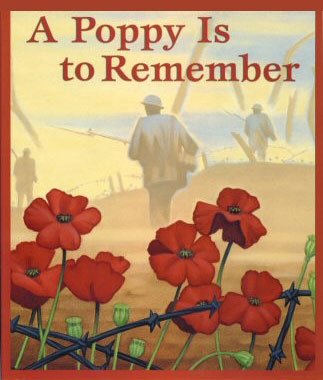 Private William Penman, Scots Guards, died 16 May, 1915 at Le Touret, age 25
(Elizabeth’s great uncle)- Private Archibald Turner Mulholland, Argyll & Sutherland Highlanders, mortally wounded 25 September, 1915 at Loos, age 27
(Elizabeth’s great uncle) - Private David Buller, Highland Light Infantry, died 21 October, 1915 at Loos, age 35
(Elizabeth’s great grandfather) - Private Harold Edgar Brand, East Yorkshire Regiment. died 4 June, 1917 at Tournai.
(My first cousin, three times removed) - Private Walter Porteous, Durham Light Infantry, died 4 October, 1917 at Passchendaele, age 18
(my great uncle, who had married the day before he left for the front and never returned) - Corporal John Mulholland, Argyll & Sutherland Highlanders, wounded 2 September, 1914 (shortly before the First Battle of the Aisne), wounded again 29 June, 1918, lived through the war.
(Elizabeth’s great uncle) - John Eleazar (“Ellar”) Thornton, (ranks and dates of service unknown, served in the Royal Garrison Artillery, the East Surrey Regiment, and the Essex Regiment (dates of service unknown, but he likely joined the RGA in 1899). Put on the “Z” list after the war — recall list. He died in an asylum in 1943.
(my grandfather’s eldest brother) - Henry (Harry) Thornton, (uncertain) Lancashire Fusiliers. (We are not sure it is him as there were no identifying family or birth date listed. Rejected for further service.)
(my grandfather’s second older brother)
The Second World War
- Flying Officer Richard Porteous, Royal Air Force, survived the defeat in Malaya, was evacuated to India and lived through the war.
(my great uncle) - Able Seaman John Penman, Royal Navy, served in the Defensively Equipped Merchant fleet on the Atlantic convoys, the Murmansk Run (we know he spent a winter in Russia at some point during the war) and other convoy routes, was involved in firefighting and rescue efforts during the Bombay Docks explosion in 1944, lived through the war.
(Elizabeth’s father. We received his Arctic Star medal in July, 2024.) - Private Archie Black (commissioned after the war and retired as a Major), Gordon Highlanders, captured during the fall of Singapore (aged 15) and survived a Japanese POW camp (he had begun to write an autobiography shortly before he died)
(Elizabeth’s uncle) - Elizabeth Buller, “Lumberjill” in the Women’s Timber Corps, an offshoot of the Women’s Land Army in Scotland through the war.
(Elizabeth’s mother) - Trooper Leslie Taplan Russon, 3rd Royal Tank Regiment, died at Tobruk, 19 December, 1942 (aged 23).
Leslie was my father’s first cousin, once removed (and therefore my first cousin, twice removed). - Reginald Thornton, rank and branch of service unknown, hospitalized during the war with shellshock and was never discharged back into civilian life. He died in York in 1986.
(my grandfather’s youngest brother)
My maternal grandfather, Matthew Kendrew Thornton, was in a reserved occupation during the war as a plater working at Smith’s Docks in Middlesbrough. The original design for the famous Flower-class corvettes came from Smith’s Docks and 16 of the 196 built in the UK during the war (more were built in Canada). My great-grandmother was an enthusiastic ARP warden through the war (she reportedly enjoyed enforcing blackout compliance in the neighbourhood using the rattle and whistle that came with the job).
For the curious, the Commonwealth War Graves Commission the Royal British Legion, and the Library and Archives Canada WW1 and WW2 records site provide search engines you can use to look up your family name. The RBL’s Every One Remembered site shows you everyone who died in the Great War in British or Empire service (Canadians, Australians, New Zealanders, South Africans and other Imperial countries). The CWGC site also includes those who died in the Second World War. Library and Archives Canada allows searches of the Canadian Expeditionary Force and the Royal Newfoundland Regiment for all who served during WW1, and including those who volunteered for the CEF but were not accepted.
In Flanders fields the poppies blow
Between the crosses row on row,
That mark our place; and in the sky
The larks, still bravely singing, fly
Scarce heard amid the guns below.We are the Dead. Short days ago
We lived, felt dawn, saw sunset glow,
Loved and were loved, and now we lie
In Flanders fields.Take up our quarrel with the foe:
To you from failing hands we throw
The torch; be yours to hold it high.
If ye break faith with us who die
We shall not sleep, though poppies grow
In Flanders fields.Lieutenant Colonel John McCrae, MD Canadian Army Medical Corps (1872-1918)
Here is Mark Knopfler’s wonderful song “Remembrance Day” from his Get Lucky album, set to a slideshow of British and Canadian images from World War I through to more recent conflicts put together by Bob Oldfield:
Comments Off on In memoriam
November 10, 2024
WW2 in Numbers
World War Two
Published 9 Nov 2024World War II wasn’t just the deadliest conflict in history — it was a war of unprecedented scale. From staggering casualty numbers to military production and economic costs, this episode breaks down the biggest statistics that defined the global conflict.
(more…)
Comments Off on WW2 in Numbers
November 9, 2024
QotD: George Bernard Shaw
H.L. Mencken, “Shaw as Platitudinarian”, The Smart Set, 1916-08.
Comments Off on QotD: George Bernard Shaw
November 8, 2024
QotD: David Lloyd George and the British Liberal Party
Lloyd George was from nowhere. He grew up in Llanystumdwy, Caernarfonshire, where he lived in a compact cottage with his mother, uncle, and siblings, and was trained as a solicitor in Porthmadog. He rose to dominate British politics, and to direct the affairs of the most expansive empire the world had known, seeing off thousands of more privileged rivals, on the basis of truly exceptional native gifts, and without even speaking English as his first language.
How he got into the position to direct World War I is one of the most remarkable personal trajectories in British history. Contemporaries everywhere saw it as an astonishing story, even in the most advanced democracies. As the New York Times asked when Lloyd George visited America in 1923, “Was there ever a more romantic rise from the humblest beginning than this?”
The second reason why Lloyd George is fascinating is his extraordinary command of words. Collins is good on this. The book is full of speeches that turn tides and smash competitors. Lloyd George could exercise an equally mesmeric command over both the Commons and mass audiences, typically rather different skills. Harold Macmillan called him “the best parliamentary debater of his, or perhaps any, day”.
Biblical references and Welsh valleys suffused his speeches. As another American journalist put it, when Lloyd George was speaking, “none approaches him in witchery of word or wealth of imagery”, with his “almost flawless phraseology” communicated through a voice “like a silver bell that vibrates with emotion”. Leading an imperial democracy through a global war demanded rhetorical powers of the rarest kind. Asquith lacked them. That, amongst other reasons, is why Lloyd George was able to shunt him aside.
The last reason we should all be interested in Lloyd George — as readers will have anticipated — is that he was the last British politician to inter a governing party. His actions during the war split the Liberals into Pro-Asquith and pro-Lloyd George factions, and the government he led from 1916 until 1922 was propped up by the Conservatives. Though the Liberal split was partly healed in 1923, it was all over for the party as a governing force. By the time Lloyd George at last became leader of the Liberal Party (in the Commons) in 1924, he had only a rump of 40 MPs left to command.
By the 1920s, Lloyd George’s shifting ideologies could not easily accommodate the old party traditions or the new forces reshaping allegiances and identities in the aftermath of the war. In 1918 he described his political creed to George Riddell, the press magnate, as “Nationalist-Socialist”. The consequence was an unprecedented redrawing of the map of British party politics, producing the Labour/Conservative hegemony we have lived with ever since.
The rot had arguably begun to set in for the Liberals in the elections of 1910, when they lost their majority. Fourteen years later, in 1924, Lloyd George stepped up to the Commons leadership of an exhausted, defeated party, and neither he nor his successors could arrest the slide into irrelevance. […] The Liberals could not come back because they were left with no clothes of their own. What had once been distinctive lines on economics, religion, welfare, the constitution, foreign policy and even “progress” were either appropriated by their competitors or ceased to be politically relevant. The party’s history as the dominant political force of the last near-century was no proof against radical structural change.
Alex Middleton, “Snapshot of the PM who killed his party”, The Critic, 2024-08-01.
Comments Off on QotD: David Lloyd George and the British Liberal Party


