
In the various fora and social media circles in which I run, there’s a self-selecting bias toward literacy. Thoughts tend to be expressed in complete sentences with reasonably correct grammar and punctuation.
But sometimes I’ll find myself looking at the posts of a Facebook friend-of-a-friend-of-a-friend and I see these random aggregations of misspelled words. They have the occasional capital letter or punctuation mark thrown in, as though the writer knew they were supposed to include those, but not how or why.
And I find myself wondering “What’s it like inside their head?” I mean, you’d probably be going through life slightly angry, thinking everybody was secretly laughing at you behind their hands, that there was some arcane code of keyboard use you were violating. The whole internet would be like one of those fancy restaurants with too much silverware and you never know which implement to use to eat which dish.
Tamara Keel, “I’ve always wondered…”, view from the porch, 2018-08-24.
December 20, 2020
QotD: Online literacy
December 16, 2020
QotD: Distorting the history of America’s “Gilded Age”
To some extent, during the late 1800s — a period historians call the “Gilded Age” — American politicians learned from the past. They had dabbled in federal subsidies from steamships to transcontinental railroads, and those experiments dismally failed. Politicians then turned to free markets as a better strategy for economic development. The world-dominating achievements of Cornelius Vanderbilt, James J. Hill, John D. Rockefeller, and Charles Schwab validated America’s unprecedented limited government. And when politicians sometimes veered off course later with government interventions for tariffs, high income taxes, anti-trust laws, and an effort to run a steel plant to make armor for war — the results again often hindered American economic progress. Free markets worked well; government intervention usually failed.
Why is it, then, that for so many years, most historians have been teaching the opposite lesson? They have made no distinction between political entrepreneurs, who tried to succeed through federal aid, and market entrepreneurs, who avoided subsidies and sought to create better products at lower prices. Instead, most historians have preached that many, if not all, entrepreneurs were “robber barons”. They did not enrich the U.S. with their investments; instead, they bilked the public and corrupted political and economic life in America. Therefore, government intervention in the economy was needed to save the country from these greedy businessmen.
Burton W. Folsum, “How the Myth of the ‘Robber Barons’ Began — and Why It Persists”, Foundation for Economic Education, 2018-09-21.
November 20, 2020
The political danger if the “chumps” unite
In City Journal, James B. Meigs describes what he calls the “Chump Effect” in American politics:

Senator Elizabeth Warren speaking at the Iowa Democrats Hall of Fame Celebration in Cedar Rapids, Iowa, on 9 June, 2019.
Photo by Lorie Shaull via Wikimedia Commons.
Last January, a small but telling exchange took place at an Elizabeth Warren campaign event in Grimes, Iowa. At the time, Warren was attracting support from the Democratic Party’s left flank, with her bulging portfolio of progressive proposals. “Warren Has a Plan for That” read her campaign T-shirts. The biggest buzz surrounded her $1.25 trillion plan to pay off student-loan debt for most Americans.
A man approached Warren with a question. “My daughter is getting out of school. I’ve saved all my money [so that] she doesn’t have any student loans. Am I going to get my money back?”
“Of course not,” Warren replied.
“So you’re going to pay for people who didn’t save any money, and those of us who did the right thing get screwed?”
A video of the exchange went viral. It summed up the frustration many feel over the way progressive policies so often benefit select groups, while subtly undermining others. Saving money to send your children to college used to be considered a hallmark of middle-class responsibility. By subsidizing people who run up large debts, Warren’s policy would penalize those who took that responsibility seriously. “You’re laughing at me,” the man said, when Warren seemed to wave off his concerns. “That’s exactly what you’re doing. We did the right thing and we get screwed.”
That father was expressing an emotion growing more common these days: he felt like a chump. Feeling like a chump doesn’t just mean being upset that your taxes are rising or annoyed that you’re missing out on some windfall. It’s more visceral than that. People feel like chumps when they believe that they’ve played a game by the rules, only to discover that the game is rigged. Not only are they losing, they realize, but their good sportsmanship is being exploited. The players flouting the rules are the ones who get the trophy. Like that Iowa dad, the chumps of modern America feel that the life choices they’re most proud of — working hard, taking care of their families, being good citizens — aren’t just undervalued, but scorned.
The word “chump” probably derives from an ancient Norse term for a stump or large chunk of wood. The modern word “blockhead” comes to mind, which — no coincidence — was Lucy’s favorite label for the too-trusting Charlie Brown in the Peanuts comic strip. Lucy never tired of snatching away the football; Charlie fell for it every time. We all know the feeling: when you’re inching forward in the freeway exit lane, say, and another driver flies past and swerves onto the ramp at the last second; when your child has to complete her college-entrance exams within a designated time period, but your neighbor’s child gets twice as long because of a suddenly diagnosed “learning disability”; when you pay extra to have your pet travel in the airplane’s cargo hold but the yipping poodle across the aisle, an “emotional-support animal,” gets to ride on its owner’s lap for free. You didn’t know that you could get an emotional-support card just by claiming an anxiety disorder and paying a fee to an online agency? What are you — a chump?
November 2, 2020
In the University of Michigan’s Sexual Health Certificate Program, “mainstream sexual health issues that affect wide swaths of the population, such as marriage, reproduction, and family life, were treated as niche topics”
In Quillette, Tim Courtois explains what the University of Michigan’s Sexual Health Certificate Program is actually intended to teach:

When I signed up for the University of Michigan’s unique, year-long “Sexual Health Certificate Program” (SHCP), however, I truly did believe the experience would be both professionally and intellectually rewarding. I care about sexuality. I know that it is a fundamental component of the human search for joy and meaning. As a Michigan-based psychotherapist and licensed professional counselor, I wanted to deepen my understanding of sexuality, and become better equipped to provide care for the many clients who come to me with issues related to sexual health. The American Association of Sexuality Educators, Counselors, and Therapists sounded like the perfect fit for me, and the idea of becoming an AASECT-certified sex therapist appealed to me. I applied and was accepted for the 2019-2020 cohort. When I showed up, my class included participants from around the world — including Iceland, Egypt, Lebanon, and China — just as you’d expect at the kind of high-value, authoritative program that we all believed we’d signed up for.
The doubts started to creep in early, though — on day one, to be exact. Our first classroom module was titled “Sexual Attitude Reassessment.” I amused myself with the thought that this sounded like an unsettling euphemism for a brainwashing session. Sadly, that’s what it was.It quickly became clear that the issue of sexuality — the ostensible subject — often would serve merely as a pretext for more general harangues about society, and the urgent need to remake it according to AASECT’s ideological blueprint. In a keynote lecture entitled “Why Fetishism Matters,” the speaker argued that the world we inhabit is socially constructed, and told us (with what now seems like admirable candor), “I’m not neutral. I’m here to recruit you to a particular point of view about how kink should be valued.” The same speaker said that he’d been accused of teaching students that any form of sexual behavior is acceptable as long as there is consent from all parties. “Yes, that’s exactly right,” he said. Clearly, our attitude “reassessment” was well underway.
From the get-go, the scientific content was mostly superficial, and was often undercut by claims that the very idea of truth is a harmful (and even oppressive) construct. The teaching was not so much impartial and informative as it was evangelistic. Yet it was also self-contradictory: Declarations that there are no real “correct” moral values were uttered (without irony) alongside absolutist proclamations about the correct way to understand sex — and morality.As I learned, “Sexual Attitude Reassessment” (SAR) is an established term in the field, one that is often used to describe curriculum content that serves to educate sexual-health professionals about the wide range of sexual experiences that they may encounter among clients. The object is to ensure they won’t be shocked when such encounters occur, and to invite them to reassess their judgments and assumptions about various expressions of sexuality. These are valid and important goals. Unfortunately, the SAR in the SHCP descended into an exercise in overstimulation and desensitization — specifically, two full days of pornographic videos and interviews. At times, it felt like the famous brainwashing scene from A Clockwork Orange. There was a series of videos of people masturbating (one of which involved a strange interaction with a cat), a woman with “objectiphilia” who had a sexual attraction to her church pipe organ, various sadomasochistic acts, and a presentation on polyamory designed to make it clear that the polyamorous lifestyle is healthy, wholesome, and problem-free.
The focus on BDSM was a particular fixation throughout the program. In the SAR, we were shown videos of a woman meticulously applying genital clamps to the scrotum of a willing man, and a dominatrix teaching a class how to properly beat people while demonstrating on an eager participant. We also watched an interview with a sex-dungeon “dom” (the male equivalent of a dominatrix) who described one of his experiences: His client had instructed him, as the dom recounted it, “I want you to bind me and then beat me until I scream. And no matter how much I scream or beg you to stop, I want you to keep beating me.” The dom did as he was told, continuing the beatings through the customer’s begging and pleading, until the client went totally limp and silent, seeming to dissociate. At this point, the dom unbound the man, who then began to weep uncontrollably in the dom’s arms.
BDSM is a real and active sexual subculture, and I don’t object to its inclusion in the course materials. But I was shocked to see how much further the professors in the program took things, insisting that BDSM behaviors — up to and including the sexual “Fight Club” style of behavior described above — must be uncritically viewed as wholesome and beautiful. Students learned to sing from the same psalm book, with one memorably exclaiming “I’m so inspired by the wisdom and beauty in the BDSM community!” and insisting that the behavioral codes observed among BDSM participants can help us create a similar climate of safety and respect “in all our relationships.”
The program was focused on an agenda of “centering” the experience of minorities — in this case, sexual minorities. This meant that huge portions of time in class after class were spent focusing on BDSM, LGBTQIA+ issues, and polyamory, not to mention the obligatory discussions of oppression and privilege that were shoehorned into every discussion. Meanwhile, mainstream sexual health issues that affect wide swaths of the population, such as marriage, reproduction, and family life, were treated as niche topics. Further, while many Americans view sexuality through the prism of faith, religion hardly came up at all. And when it did, it was typically so that religious values could be denigrated. Even the few religious people in the program got the message: Whenever any made passing reference to their own observant religiosity, it was usually in a spirit of shame or penance.
In a few brief web searches to find a public domain or Creative Commons image to use for this post, I realized that web search engines offer “safe” options for a reason…
October 17, 2020
Andrew Sullivan on the pervasiveness of Critical Race Theory in academia
In his latest Weekly Dish, Andrew Sullivan discusses how deeply embedded Critical Race Theory has become in the academic, journalistic and cultural realms controlled by the left:
… the CRT advocates have brilliantly managed to construct a crude moral binary to pressure liberals into submission. Where liberalism allows neutrality or doubt or indifference, CRT demands an absolute and immediate choice between racism and anti-racism (defined by CRT) — and no one wants to be a racist, do they? Legitimate anguish about racial inequality and the sheer terror of being publicly labeled a bigot have led liberals to surrender their core values to the far left.
The second reason for CRT’s triumph is that it’s super-easy. Social inequalities are extremely complicated things. A huge variety of factors may be in play: class, family structure, education, neighborhood, sex, biology, genetics and culture are some of them. Untangling this empirically in order to figure out what might actually work to improve things is hard work. But when you can simply dismiss all of these factors and cite “structural racism” as the only reason for any racial inequality, and also cover yourself in moral righteousness, you’re home-free. Those who raise objections or complications or cite nuances can be dismissed by the same easy method.
Then there’s the deep relationship between CRT and one of the most powerful human drives: tribalism. What antiracism brilliantly does is adopt all the instincts of racism and sexism — seeing someone and instantly judging them by the color of their skin, or sex — and drape them with a veil of virtue. You don’t have to correct yourself when your tribal psyche makes you more cognizant of someone’s visible racial differences, and pre-judges them. You don’t have to resist this any more. You can give in to your core nature, and feel pride, rather than shame. You get to have all the feels of judging people entirely by their involuntary characteristics, while actually dismantling racism and sexism! What’s not to like?
Social aspiration also plays a part. The etiquette of wokery is increasingly indispensable for high society. They mark you as someone high up in the American social hierarchy. The right words and phrases signal your ease in this elite; the wrong ones — “sexual preference”! — expose you as a rube, a bigot or, worse, a middle class provincial. Rob Henderson argues that this aspiration to be in the upper classes helps explain why Asian-Americans, who are targeted for direct race discrimination under CRT, nonetheless often support it: “While money and education are tickets to the middle class, prizing diversity is a requirement to join the upper class. It’s part of what the sociologist Pierre Bourdieu referred to as cultural capital — tastes, vocabulary, awareness and mannerisms which give social advantages to those higher in the social hierarchy.” Reihan Salam has also written brilliantly about this.
There’s little doubt, either, it seems to me that there is a religious component to wokeness. A generation of nones can feel bereft of transcendence and meaning, and “becoming woke”, like being “born again,” fills that spiritual hole. In an atomized and lonely age, feeling as if you are on “the right side of history”, banishing doubt, joining with countless of your fellow converts in marches and seminars, can abate the isolation and emptiness of it all. Many moderns want the experience of religion without God. With CRT, as in the past with communism, they can have it.
But what also make CRT so successful is ruthlessness. Those who hold a view of the world in which only power, and the struggle for power, matters, have few qualms in exercising it. After all, under CRT, power is always on the side of the white cis-heteropatriarchy, so payback is always fair play. Discriminating against the unwoke or whites or males or the cis-gendered or Asian-American, is not just fair, but vital. Shutting down speech protects the oppressed; bullying on social media and in the workplace becomes a form of virtue; mercy and forgiveness are mere buttresses for white supremacy; HR departments diligently identify dissidents, and discipline them. Once you set up this system of censorship and fear, persecute a few prominent sinners pour décourager les autres, and encourage snitches, dissidents will increasingly self-censor, and dissent peter out, until the new orthodoxy is the only one.
In the past, a new set of ideas could be engaged in a clash of argument and debate. But you’ll notice that the advocates of what Wes Yang has called “the successor ideology” never debate any serious opponents of their position. This is because debate in a liberal society implies equal standing for both sides, and uses reason to determine who’s right or wrong. But there can be no “both sides” within CRT, no equation of “racists” and “antiracists”, and debates are inherently oppressive. Logic, evidence, and reason are, in this worldview, mere products of white supremacy, forms of violence against the oppressed. In CRT, remember, there is no truth or objectivity; there are merely narratives. So, yes, 2 + 2 = 5, and math is inherently a function of whiteness. And what racist is going to deny this?
October 13, 2020
QotD: Generalizations
H.L. Mencken, Men versus the Man: A Correspondence between Robert Rives La Monte, Socialist, and H.L. Mencken, Individualist, 1910.
September 12, 2020
Andrew Sullivan on a “genetic case for communism”
Actually, this isn’t the case Sullivan himself is making, but he’s summarizing a recent book by Fredrik deBoer, The Cult of Smart: How our broken education system perpetuates social injustice:
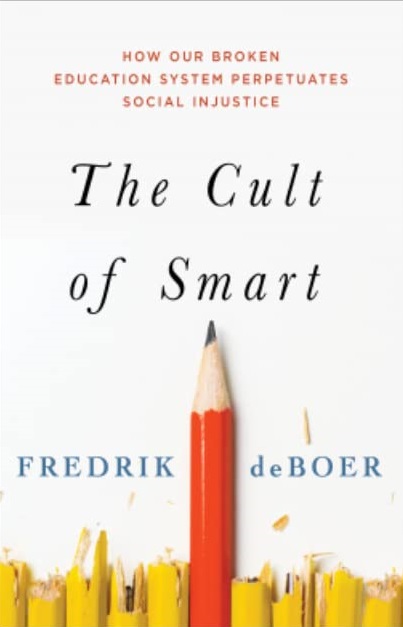
There aren’t many books out there these days by revolutionary communists who are into the genetics of intelligence. But then there aren’t many writers like Freddie DeBoer. He’s an insistently quirky thinker who has managed to resist the snark, cynicism and moral preening of so many others in his generation — and write from his often-broken heart. And the core of his new book, The Cult of Smart, is a moral case for those with less natural intelligence than others — the ultimate losers in our democratic meritocracy, a system both the mainstream right and left have defended for decades now, and that, DeBoer argues, gives short shrift to far too many.
This isn’t a merely abstract question for him. He has grappled with it directly. As a school teacher he encountered the simple, unavoidable fact that some humans are more academically gifted than others, and there’s nothing much anyone can do about it. He recalls his effort to teach long division to a boy who had managed to come a long way socially (he’d gone from being a hell-raiser to a good student) but who still struggled with something as elemental as long division: “At one point he broke into tears, as he had several times before … I exhaled slowly and felt myself give up, though of course I would never tell him so. I tried to console him, once again, and he said, ‘I just can’t do it.’ And it struck me, with unusual force, that he was right.”
What DeBoer tries to do is explain how our current culture and political system is geared to torment, distress and punish this kid for no fault of his own. “This is the cult of smart,” DeBoer proclaims. “It is the notion that academic value is the only value, and intelligence the only true measure of human worth. It is pernicious, it is cruel, and it must change.” It has become un-American — or perhaps it always was? — to say that an individual has natural limits, that, even with extremely hard work, he won’t always be able to realize his dreams. And this is not because of anything he has done or failed to do — but simply because of his draw in the genetic lottery of life. The very American cult of education is supposed to end this injustice — except that it doesn’t, because it can’t, and its brutal logic actually exposes and entrenches the least defensible inequality of all, the inequality of nature.
This genetic reality — in fact, the very idea of nature existing at all — is currently a taboo topic on the left. In the most ludicrously untrue and yet suffocatingly omnipresent orthodoxy of our time, critical theory leftists insist that everything on earth is entirely socially constructed, that all inequality is a function of “oppressive systems”, and that human nature itself is what John Locke called a “white paper, void of all characters” — the famous blank slate. Freddie begs to differ: “Human behavioral traits, such as IQ, are profoundly shaped by genetic parentage, and this genetic influence plays a larger role in determining human outcomes than the family and home environment.”
People are not just born unequally and unfairly into class, and culture, and place, they are inherently unequal in various ways in their very nature: “not everyone has the same ability to do calculus; not everyone has the same grasp of grammar and mechanics … we can continue to beat our heads against the wall, trying to force an equality that just won’t come. Or we can face facts and start to grapple with a world where everyone simply can’t be made equal.” And this is not a counsel of despair. What Freddie is arguing is that, far from treating genetic inequality as a taboo, the left should actually lean into it to argue for a more radical re-ordering of society. They shouldn’t ignore genetics, or treat it as unmentionable, or go into paroxysms of fear and alarm over “eugenics” whenever the subject comes up. They should accept that inequality is natural, and construct a politics radical enough to counter it.
[…]
This genetic case for communism can leave a reader a little disoriented, I have to say, if only for its novelty. But it is more coherent, it seems to me, than a leftism that assumes that genes are irrelevant to humans and society, that the ultimate goal is to be as smart and thereby wealthy as possible, and that we can set up an educational system where everyone, regardless of their genetic inheritance, can succeed or fail by their own efforts. What sounds like a meritocratic dream is, in practice, a brutal and unforgiving formula for most who can’t achieve it — and has obviously failed if its task is to foster equality. In fact, mass education appears to have increased the gulf between rich and poor. As Freddie notes, “education is not a weapon against inequality; it is an engine of inequality.”
September 9, 2020
Today’s intelligentsia: helpless captives of their uber-woke disciples
Theodore Dalrymple on the temptations of power:

A building burning in Minneapolis following the death of George Floyd.
Photo by Hungryogrephotos via Wikipedia.
One must not exaggerate, of course. We do not yet live under a Soviet-type tyranny in which every university thesis, on no matter how arcane a subject, was obliged by hook or by crook to quote Lenin. It is still possible, though not at all easy, to live as a scholar in our societies outside the university system. But it does not require the tyranny of the complete police state to obtain a high degree of intellectual conformity, as we can now observe at our leisure. Young university academics of my acquaintance in several countries tell me that they are now afraid to speak their mind, not because they would fear for their lives, but fear for their promotion. This is not the same, or as terrible, as fearing for their lives, but it is nonetheless very far from the Millian ideal of freedom of thought and speech.
There is much worse. It is not merely that they must keep their mouth shut and not say what they think, bad enough as this must be for those who have chosen the life of the mind; it is that they must positively subscribe to things that they believe to be bad or false. And this is a mark of totalitarianism. They must subscribe to doctrines they believe absurd, for example by describing in job applications their future efforts to promote diversity, so-called. By making the expression of untruth the condition of employment, probity is destroyed in advance. Those who lack it are easier to control.
Increasingly, social movements do not allow any neutrality with regard to the causes that they promote. Non-adherence is no different from enmity and derogation is evil: if you are not part of the solution you are part of the problem. In vain might you argue that your interest is elsewhere, in the taxonomy of grasshoppers, for example, or in the biochemistry of acorns, or in the bibliography of Alexander Pope: there is one subject that trumps all others in importance, and on it only one opinion is permissible. You must pass a test of loyalty.
The latest of these movements is, of course, Black Lives Matter, and its success in cowing so large a part of the intelligentsia is in a way admirable, a model of political organization for the future, though one much to be feared. By claiming that silence is violence, it has made hand-wringing (to avoid its anathema) the mark, and almost the whole, of virtue. It has successfully reversed Martin Luther King’s goal, such that the colour of a man’s skin is once again more important than the content of his character, and it has made respectable that most Stalino-Maoist of notions, that people should be promoted and rewarded according to their social (in this case, racial) origins. And anyone who disagrees is an Enemy of the People, the word People being here used in a severely technical sense, to mean the arbiters of the allocation of rewards.
September 7, 2020
QotD: H.L. Mencken on progress
H.L. Mencken, Men versus the Man: A Correspondence between Robert Rives La Monte, Socialist, and H.L. Mencken, Individualist, 1910.
August 2, 2020
Words are verbal tools, but tools can be weaponized
In this week’s newsletter, Andrew Sullivan analyzes the roots of wokeness:
In the mid-2010s, a curious new vocabulary began to unspool itself in our media. A data site, storywrangling.org, which measures the frequency of words in news stories, revealed some remarkable shifts. Terms that had previously been almost entirely obscure suddenly became ubiquitous — and an analysis of the New York Times, using these tools, is a useful example. Looking at stories from 1970 to 2018, several terms came out of nowhere in the past few years to reach sudden new heights of repetition and frequency. Here’s a list of the most successful neologisms: non-binary, toxic masculinity, white supremacy, traumatizing, queer, transphobia, whiteness, mansplaining. And here are a few that were rising in frequency in the last decade but only took off in the last few years: triggering, hurtful, gender, stereotypes.
Language changes, and we shouldn’t worry about that. Maybe some of these terms will stick around. But the linguistic changes have occurred so rapidly, and touched so many topics, that it has all the appearance of a top-down re-ordering of language, rather than a slow, organic evolution from below. While the New York Times once had a reputation for being a bit stodgy on linguistic matters, pedantic, precise and slow-to-change, as any paper of record might be, in the last few years, its pages have been flushed with so many neologisms that a reader from, say, a decade ago would have a hard time understanding large swathes of it. And for many of us regular readers, we’ve just gotten used to brand new words popping up suddenly to re-describe something we thought we knew already. We notice a new word, make a brief mental check, and move on with our lives.
But we need to do more than that. We need to understand that all these words have one thing in common: they are products of an esoteric, academic discipline called critical theory, which has gained extraordinary popularity in elite education in the past few decades, and appears to have reached a cultural tipping point in the middle of the 2010s. Most normal people have never heard of this theory — or rather an interlocking web of theories — that is nonetheless changing the very words we speak and write and the very rationale of the institutions integral to liberal democracy.
What we have long needed is an intelligible, intelligent description of this theory which most people can grasp. And we’ve just gotten one: Cynical Theories: How Activist Scholarship Made Everything About Race, Gender and Identity, by former math prof James Lindsay and British academic, Helen Pluckrose. It’s as deep a dive into this often impenetrable philosophy as anyone would want to attempt. But it’s well worth grappling with.
What the book helps the layperson to understand is the evolution of postmodern thought since the 1960s until it became the doctrine of Social Justice today. Beginning as a critique of all grand theories of meaning — from Christianity to Marxism — postmodernism is a project to subvert the intellectual foundations of western culture. The entire concept of reason — whether the Enlightenment version or even the ancient Socratic understanding — is a myth designed to serve the interests of those in power, and therefore deserves to be undermined and “problematized” reason whenever possible. Postmodern theory does so mischievously and irreverently — even as it leaves nothing in reason’s place. The idea of objective truth — even if it is viewed as always somewhat beyond our reach — is abandoned. All we have are narratives, stories, whose meaning is entirely provisional, and can in turn be subverted or problematized.
During the 1980s and 1990s, this somewhat aimless critique of everything hardened into a plan for action. Analyzing how truth was a mere function of power, and then seeing that power used against distinct and oppressed identity groups, led to an understandable desire to do something about it, and to turn this critique into a form of activism. Lindsay and Pluckrose call this “applied postmodernism”, which, in turn, hardened into what we now know as Social Justice.
August 1, 2020
Why incompetent people think they’re amazing – David Dunning
TED-Ed
Published 9 Nov 2017Check out our Patreon page: https://www.patreon.com/teded
View full lesson: https://ed.ted.com/lessons/why-incomp…
How good are you with money? What about reading people’s emotions? How healthy are you, compared to other people you know? Knowing how our skills stack up against others is useful in many ways. But psychological research suggests that we’re not very good at evaluating ourselves accurately. In fact, we frequently overestimate our own abilities. David Dunning describes the Dunning-Kruger effect.
Lesson by David Dunning, directed by Wednesday Studio, music and sound by Tom Drew.
Thank you so much to our patrons for your support! Without you this video would not be possible!
Juan, Jordan Tang, Kent Logan, Alexandra Panzer, Jen, Ellen Spertus, Ryan Mehendale, Mary Sawyer, Scott Gass, Ruth Fang, Mayank Kaul, Hazel Lam, Tan YH, Be Owusu, Samuel Doerle, David Rosario, Katie Winchester, Michel Reyes, Dominik Kugelmann, Siamak H, Stephen A. Wilson, Manav Parmar, Jhiya Brooks, David Lucsanyi, Querida Owens.
July 29, 2020
The Equity, Inclusivity, and Diversity Industrial Complex
In The Dominion, Ben Woodfinden comments on a Ross Douthat column on the “antiracist” demands of our modern protestariat (the hordes of un- or under-employed university-educated young liberals and socialists):
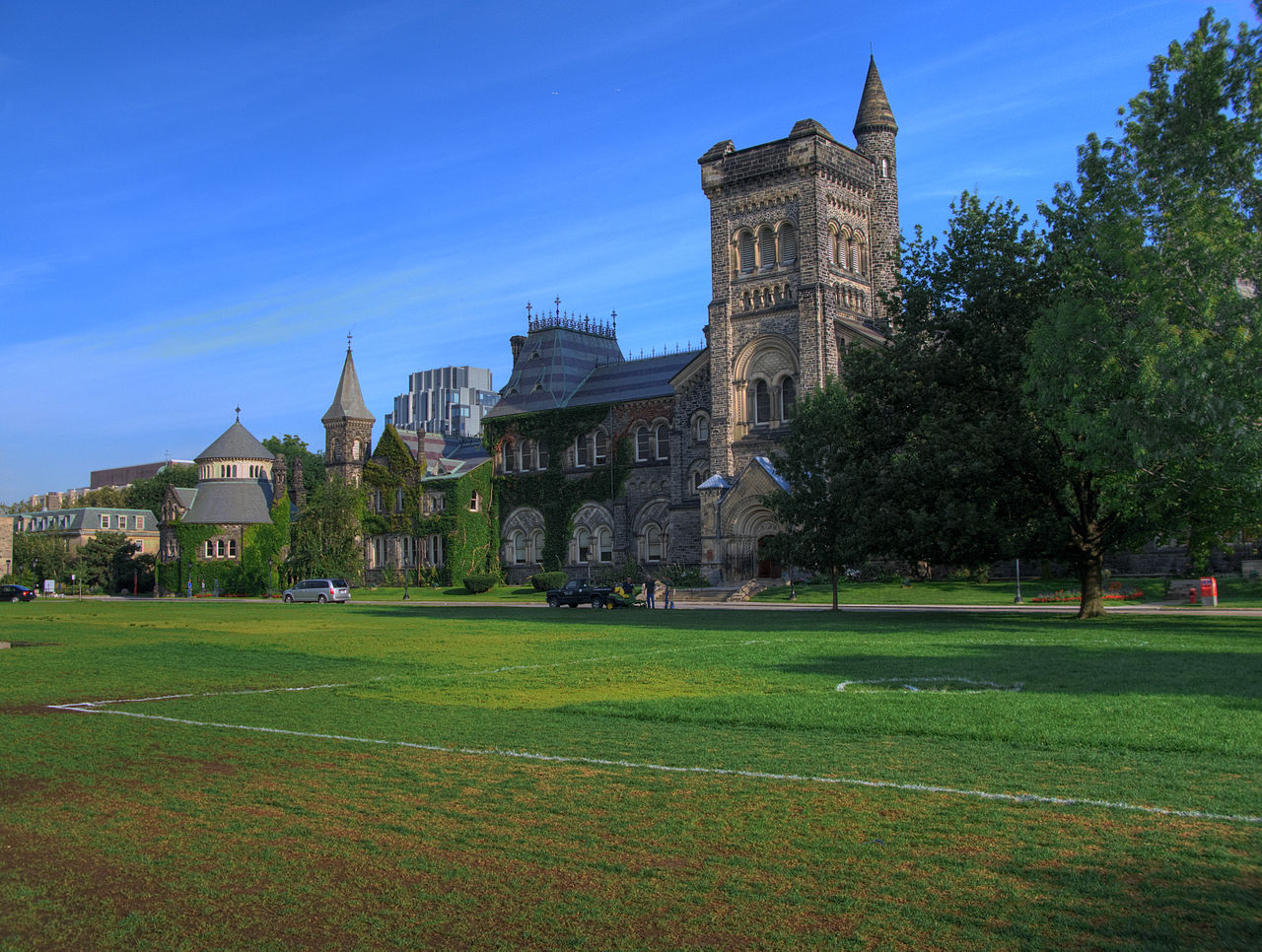
University College, University of Toronto, 31 July, 2008.
Photo by “SurlyDuff” via Wikimedia Commons.
… the most interesting aspect of this lockdown-induced outpouring of collective rage hasn’t been the protests, or the cancellations, but the woke job creation that is going on. The ideology behind things like “white fragility” is increasingly being transformed into what can be described as an equity-inclusivity-diversity (EID) industrial complex that might end up being the most significant long term structural change that emerges out of the protests.
One of the most common responses in elite institutions as they promise to address systemic racism has been the creation of new jobs and positions that will supposedly help to do so. For instance, the Washington Post created a set of new positions that will be focusing on racial issues. This included hiring a “Managing Editor for Diversity and Inclusion.” At Princeton, the administration announced, like many other elite universities, new courses (which means new teaching opportunities) focused on racial injustice, as well as new projects and funding for research to explore and address racial issues. Stanford has created a new Centre for Racial Justice at its law school.
This direct job creation is just the tip of the iceberg. The real EID industrial complex is in the creation of a vast number of new jobs dedicated to the promotion and advancement of the basic tenets of this ascendant ideology through the expansion of human resource departments to deal with these issues, the creation of new EID bureaucrats and administrators in universities, corporations, government departments, the rise of EID consulting and mandatory courses and workshops for employees, new jobs and potential litigation for lawyers, as well as courses and modules in law schools to teach aspiring lawyers about these things.
In the bestselling Ibram X. Kendi book How To Be An Antiracist, one of Kendi’s central solutions is to pass an anti-racist amendment to the U.S. Constitution and permanently establish and fund a Department of Anti-racism. This department:
would be comprised of formally trained experts on racism and no political appointees. The DOA would be responsible for preclearing all local, state and federal public policies to ensure they won’t yield racial inequity, monitor those policies, investigate private racist policies when racial inequity surfaces, and monitor public officials for expressions of racist ideas. The DOA would be empowered with disciplinary tools to wield over and against policymakers and public officials who do not voluntarily change their racist policy and ideas.
The radical tendencies of the bourgeois bolsheviks in the streets might make them seem like true revolutionaries, but what this movement seems to actually want to create, with remarkable success, is new employment opportunities for true believers in the new anti-racist creeds. Racism won’t so much be solved by tearing society down, but by massively expanding new professional and managerial jobs that can guarantee full employment for the credentialed class of true believers.
O’Boyle’s thesis is that the revolutions that swept across European cities in 1848 were because a large surplus of resentful and overeducated men felt society was denying to them what they were rightfully owed. O’Boyle looks at Germany, where university education was cheap, and was “emphasized as an avenue to wealth and power.” This ending up producing an excess of ambitious, but resentful and frustrated men who felt society was not allotting them the status and comfort they deserved. The same was true in France. But in Britain, the opportunities produced by industrialization that had yet to fully materialize on the continent kept this excess surplus of overeducated men much smaller, and helped insulate Britain from revolution.
What if the EID industrial complex actually helps to reduce the scarcity of opportunities in elite fields and institutions that will put a lid on the unrest that overproduction breeds? The EID industry is worth billions of dollars, and in a way it might be the solution liberalism offers to both the radical progressivism of this ideology, and to the challenge posed by elite overproduction.
July 20, 2020
QotD: Protectionists misunderstand the role of money
The Econ 101 teacher typically draws on the white board a diagram of two countries trading with each other. Country A is shown exporting (say) steel to country B in exchange for dollars, and then using those dollars to buy lumber from country B. The Econ 101 teacher informs his or her class that, while these exchanges are mediated by dollars, what ultimately is going on in this diagram is that the people of country A produce steel and send some of that steel to the people of country B because the people of country A want lumber from country B. Likewise, the people of country B produce lumber and send some of it to the people of country A because the people of country B want steel from country A. “The money that you see, class,” explains the Econ 101 teacher, “merely facilitates the exchange of steel for lumber. What’s important here is the getting of steel and of lumber. Money is a tool used by the people of country A to transform some of the steel they produce into lumber that they want to consume. Likewise, money is a tool used by the people of country B to transform some of the lumber they produce into steel that they want to consume.”
The protectionist thinks of this hypothetical two-country exchange entirely differently from the way that the Econ 101 teacher thinks of it. For the protectionist, the people of country A produce steel as a means of getting money; that is the ultimate goal. And the people of country B produce lumber as a means of getting money; that – the getting of money – is the ultimate goal. While for the Econ 101 teacher the two-country diagram that he or she draws is meant to show how money facilitates the ultimate acquisition by the peoples of each country of real goods, for the protectionist the diagram seems to show that the production of real goods is a means of facilitating the ultimate acquisition by the peoples of each country of money.
Don Boudreaux, “A Protectionist is Someone Who…”, Café Hayek, 2018-04-10.
July 16, 2020
QotD: The young Herbert Hoover
His father died when he is 6, his mother when he is 10. The orphaned Hoover and his two siblings are shuttled from relative to relative. He spends one summer on the Osage Indian Reservation in Oklahoma, living with an uncle who worked for the Department of Indian Affairs. Another year passes on a pig farm with his Uncle Allen. In 1885, he is more permanently adopted by his Uncle John, a doctor and businessman helping found a Quaker colony in Oregon. Hoover’s various guardians are dutiful but distant; they never abuse or neglect him, but treat him more as an extra pair of hands around the house than as someone to be loved and cherished. Hoover reciprocates in kind, doing what is expected of him but excelling neither in school nor anywhere else.
In his early teens, Hoover gets his first job, as an office boy at a local real estate company. He loves it! He has spent his whole life doing chores for no pay, and working for pay is so much better! He has spent his whole life sullenly following orders, and now he’s expected to be proactive and figure things out for himself! Hoover the mediocre student and all-around unexceptional kid does a complete 180 and accepts Capitalism as the father he never had.
His first task is to write some newspaper ads for Oregon real estate. He writes brilliant ads, ads that draw people to Oregon from every corner of the country. But he learns some out-of-towners read his ads, come to town, stay at hotels, and are intercepted by competitors before they negotiate with his company. Of his own initiative, he rents several houses around town and turns them into boarding houses for out-of-towners coming to buy real estate, then doesn’t tell his competitors where they are. Then he marks up rent on the boarding houses and makes a tidy profit on the side. Everything he does is like this. When an especially acrimonious board meeting threatens to split the company, a quick-thinking Hoover sneaks out and turns off the gas to the building, plunging the meeting into darknes. Everyone else has to adjourn, the extra time gives cooler heads a change to prevail, and the company is saved. Everything he does is like this.
(on the other hand, he has zero friends and only one acquaintance his own age, who later describes him to biographers as “about as much excitement as a china egg”.)
Hoover meets all sorts of people passing through the Oregon frontier. One is a mining engineer. He regales young Herbert with his stories of traveling through the mountains, opening up new sources of minerals to feed the voracious appetite of Progress. This is the age of steamships, skyscrapers, and railroads, and to the young idealistic Hoover, engineering has an irresistible romance. He wants to leave home and go to college. But he worries a poor frontier boy like him would never fit in at Harvard or Yale. He gets a tip – a new, tuition-free university might be opening in Palo Alto, California. If he heads down right away, he might make it in time for the entrance exam. Hoover fails the entrance exam, but the new university is short on students and decides to take him anyway.
Herbert Hoover is the first student at Stanford. Not just a member of the first graduating class. Literally the first student. He arrives at the dorms two months early to get a head start on various money-making schemes, including distributing newspapers, delivering laundry, tending livestock, and helping other students register. He would later sell some of these businesses to other students and start more, operating a constant churn of enterprises throughout his college career. His academics remain mediocre, and he continues to have few friends – until he tries out for the football team in sophomore year. He has zero athletic talent and fails miserably, but the coach (whose eye for talent apparently transcends athletics) spots potential in Hoover and asks him to come on as team manager. In this role, Hoover is an unqualified success. He turns the team’s debt into a surplus, and starts the Big Game – a UC Berkeley vs. Stanford football match played on Thanksgiving which remains a beloved Stanford football tradition.
Scott Alexander, “Book Review: Hoover”, Slate Star Codex, 2020-03-17.
July 15, 2020
Wilfred Laurier University – from university to indoctrination centre
In the National Post, Barbara Kay notes how things are changing from general support of freedom of speech to cracking down on “dissent” of any nature, with WLU being a leading example:
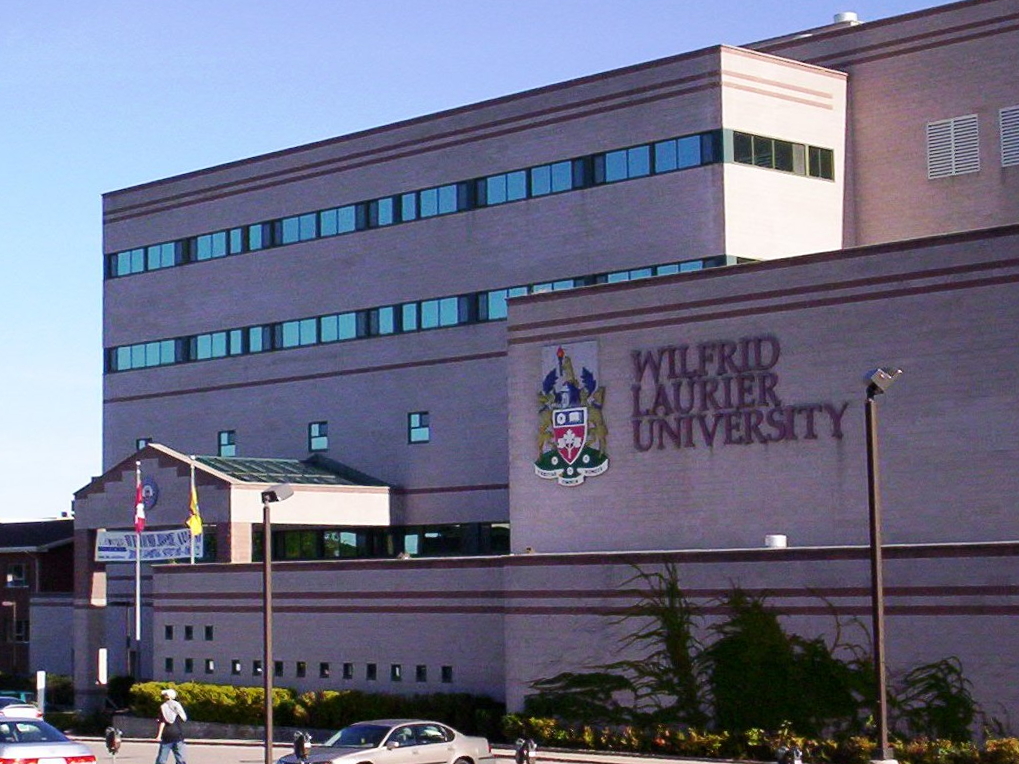
Wilfred Laurier University in Waterloo, Ontario. This photo taken from University Avenue shows the Maureen Forrester Recital Hall and John Aird Centre, 23 September, 2005.
Photo by Radagast via Wikimedia Commons.
My editor, a man in his prime, recently tweeted bemusement that his older readers often preface their emails to him with allusions to their age (“as a 75-year old man …” “I’m an 82-year old woman …”).
I know these readers. Or others like them.
When my oldie readers introduce generation markers in their emails, it’s generally a semaphore signifying bewilderment at a cultural landscape so utterly changed from their youth, they cannot find their bearings. I empathize with these readers because, an oldie myself, I share their anxiety at the continual erosion of classic liberal principles we took for granted as permanent. Especially the freedom to dissent from popular views.
[…]
If you had told us in our youth that one day students would be screaming obscenities and blaring horns to prevent presentations by visiting speakers whose opinions they dislike, as happens frequently in American universities and occasionally in Canada, we would have been shocked. If you had told us that someday a graduate student who exposed her class to a range of opinions on a controversial subject — the norm in my university experience — would be officially censured for including the views of a conservative commentator because his views might “harm” students, we would have been gobsmacked.
Lindsay Shepherd’s 2017 recording of her disciplinary session at Wilfrid Laurier University for the crime of exposing her students to Jordan Peterson’s views on compelled speech brought her to national attention. (Peterson was compared to Hitler by one interrogator. A defamation lawsuit by Peterson against WLU is in progress.) The broadcast of the ruthless performance that reduced Shepherd to tears was a pivotal teaching moment in the illiberalism that governs academia in the name of diversity, equity and inclusion.
Shepherd was the only adult in that room. But she was already an exception to the rule in her cohort, and the chances of another such act of dissidence by a WLU graduate student are slim to vanishing.


