
Unacceptable Views is a fantastic new documentary film about the Freedom Convoy protest. All 100 minutes of it can be watched for free on Rumble here. Sharp, marvelous footage. Great interviews with truckers who went to Ottawa.
One of my favourite scenes occurs around the 19:20-minute mark. A Polish immigrant talks about being arrested as a teenager in Poland during the 1981 freedom protests in that country. She looks into the camera and says:
I’m so proud that the young generation finally have balls and they stand up for the freedom …
The next gentleman who appears on screen, a Sikh, denies witnessing any misogyny, racism, anger, or violence in Ottawa. Instead, he describes the protest as “heaven on Earth, the energy was supreme”.
December 13, 2022
Unacceptable Views trailer
Comments Off on Unacceptable Views trailer
December 12, 2022
“The reason that Canada’s arts do not resonate with 95% of Canadians is that they are products of socialist realism’
Elizabeth Nickson on the parasitic world of official “Canadian culture” with its gatekeepers, subsidies, and luxury beliefs:
When I say society, I don’t mean the upper reaches of the wealthy. While we do have the very rich in Canada, they are rigorous in their hiddenness because we have the worst lefties on the continent and that is saying something. The safe thing for any wealthy family is give $ to socialists, bow and scrape to the harpies at the CBC and hope they don’t notice your bank balance. Anyway, these dreadful people arrived post WW2 with their hideous Frankfurt School ideas and just preyed on the simplest most innocent well-meaning good white people you could ever imagine, and literally ate, ravenous and braying all the while, the country’s potential.
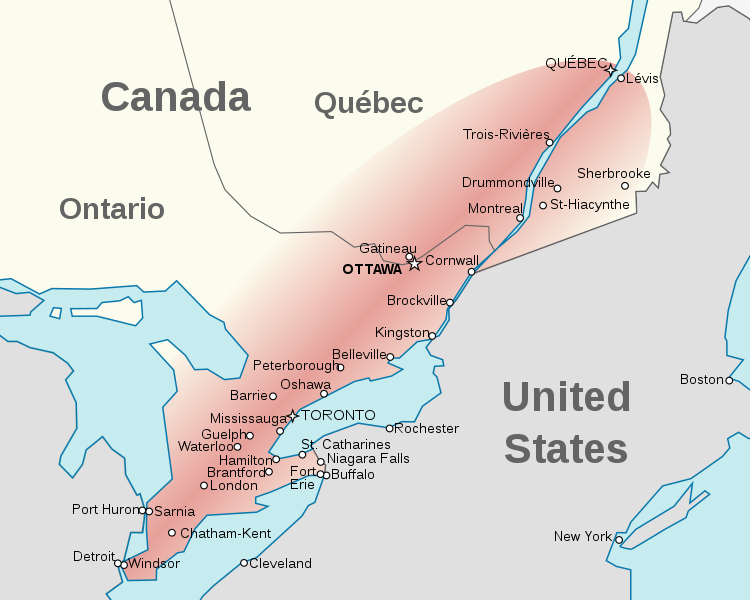
So the scandal took place among them, or rather the world they created, which is basically a clutch of 150,000 grifters located between Ottawa, Toronto and Quebec City, whose only mission is to divest the government of as much public money as possible. This is particularly true of their defensive line which consists of the arts and journalism. Theirs is a world where no stone is left unsubsidized by taxes on the hidden rich, waitresses at truck stops in Kamloops and anyone who dares to make money unapproved by the CBC. They are, as a former editor swore to me, the gatekeepers. That was before her circulation collapsed by 65%., but no doubt she still believes it.
The arts and media in Canada are constructed entirely for the 5%, consumed by those who live the lush subsidized life — or those who want to — whether in government or in semi-independent corporations or businesses who require government help and “seed” money etc. (There are a hundred terms for the grift.)
Books, if you look at their sales, are tragic. There have been a handful of impressive films, despite the literal billions thrown at filmmakers over the past 20 years. Most of them are catastrophically depressing, the books make you want to cut out your heart with a grapefruit spoon. Painters paint, if you subtract all the hectoring from minor artists, from forced inclusion, some of them are very good. We can create good art. But not with our current curators.
The reason that Canada’s arts do not resonate with 95% of Canadians is that they are products of socialist realism. They describe humans and human life as they either believe it to have been (dark and in need of enlightened beings like themselves) or as they feel it must be in the future (filled with people expressing their oppression and being paid for it). It’s basically fantasy, and no one likes it, watches it, reads it.
The rest of Canada is a centre-right country, a gut-it-out-and-build-it-kind of place. I know that is the exact opposite of the propaganda, but Conservatives win a majority of the votes in every election, yet still only amount to 40%. We have five parties, and four of them are leftie — their platforms are all “more money for us” — but the big party, the one that receives about 30% of the vote is so crafty, so embedded in our vast vast bureaucracy that fixing the game is child’s play. Informed by their Frankfurt School gurus, they have been in power 100 years, with brief Conservative interludes.
We take in about half a million immigrants a year, and most of them are from desperate places. Vote harvesting in those neighborhoods is done by leaders in each immigrant community. These men and women are the strongest, most educated and frankly from the ones I’ve met, thuggish, and through them comes all access to government programs, housing and education. Therefore, when they collect your vote, you know for whom your vote is meant. The thing about immigrants though is that they were coming for the old Canada, not the new Commie police state.
But for now? Easy. No one investigates this. Why not? Our media is subsidized. ALL of it.
Comments Off on “The reason that Canada’s arts do not resonate with 95% of Canadians is that they are products of socialist realism’
December 11, 2022
An Amphibious Landing to take Rome? – 224 – December 10, 1943
World War Two
Published 10 Dec 2022There are plans afoot to hit the enemy from behind in Italy. Allied leaders are meeting again in Cairo to go over other plans, notably what to do about China and Burma. There is active fighting on two fronts in Italy too, though this week it doesn’t go particularly well for the Allies. Attacks in the USSR are unsuccessful for the Soviets, but do go well for the Germans, and there are Allied attacks by air in the Marshall Islands and over France.
(more…)
Comments Off on An Amphibious Landing to take Rome? – 224 – December 10, 1943
December 9, 2022
Canada’s “historic” shift toward the Indo-Pacific is … more marketing than strategy
In The Line, retired Canadian Lieutenant General Mike Day distills down all the airy phrases to see just what the Canadian government is actually going to do in the Indo-Pacific as opposed to merely talking about it:
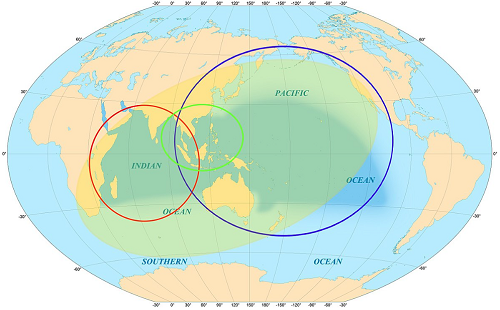
“Red circle/oval roughly depicts the Indian Ocean region. Blue circle/oval covers the Pacific region. Green oval covers ASEAN. Yellow overlay covers the Indo Pacific.”
Map annotation by Eric Gaba via Wikimedia Commons.
A formal public-policy statement from the Government of Canada is a rare thing. It is even rarer when it is not just a speech but a published written document. The rarest of these is undoubtedly when such a document focuses on foreign policy. When Foreign Affairs Minister Mélanie Joly recently pitched her “once-in-a-generation shift” toward the Indo-Pacific, much was made of why Canada was doing it and what it would achieve. No fewer than four cabinet ministers took part in the announcement. Canada will, they announced, step up naval patrols of the region, continue to expand trade with China while also tightening our protections of intellectual property and ownership rules for strategic industries, and use “Team Canada” trade missions to boost commercial links with other growing regional economic powers, including India. We seek also to expand our intelligence and cybersecurity links with allies and partners in the region.
Now that the dust on the rhetoric has settled, closer examination reveals that this might simply be an exercise of branding separate activities into a marketing-friendly bundle, as opposed to a coherent plan focused on achieving specific outcomes.
In examining the document two approaches are equally useful in assessing value: whether the content has some substance and whether the policy framework is sufficiently robust to hang various activities and plans on its body.
Three hints are provided as to why the new plan might not be the cornerstone of Canada’s foreign policy that it portends to be. Firstly, operating in the “National Interest”, a phrase used six separate times over the 26 pages, is given neither form nor function and lacks any definition. It is reminiscent of the Cheshire Cat talking to Alice asking her “where do you want to get to”. When Alice replies that “I don’t much care …” the Cheshire Cat wisely suggests that “Then it doesn’t matter which way you go.” With no definition of national interests pretty much anything can be hand waved as to being necessary and required, or not, for its achievement.
This leads in turn to the second hint that the plan might be more posturing than substance. Lacking the single aimpoint of operating in the national interest, the “objectives” supposedly fill that gap by providing a set of specific achievements which in combination would be a sufficiently clear aimpoint. But normally objectives can, and should, be thought of as something specific and measurable, allowing plans to be developed to achieve them. “Save 100 dollars this month” or perhaps, in more relevant terms, “Increase our trade in the Indo-Pacific region by 100 per cent over the five years of this policy enactment.” Plans can then be developed to achieve those objectives. But reviewing those objectives reveals that they are themselves actions, not end-states. It appears that the policy is based on “doing, not achieving”. I am reminded of my sons many years ago. When asked if their rooms were clean, they would reply, “I’m cleaning it.” The process was enduring but we most certainly disagreed on the value of the activity as opposed to achieving a measurable result. Under this construct the government can claim that as long as Canada is doing stuff the policy should be considered a success.
Comments Off on Canada’s “historic” shift toward the Indo-Pacific is … more marketing than strategy
December 7, 2022
The media: they hate you, they really hate you
In a follow-up to yesterday’s post at Thank You Truckers!, Donna Laframboise provides more details on one of the individual cases highlighted by Douglas Murray in the Munk Debates last week:
Collectively, those examples demonstrate three things: Egregious journalistic bias. A frightening inability to empathize with the working class. And a bizarre eagerness to slander and dismiss fellow human beings.
Because the examples cited by Murray are vile, I didn’t amplify them. But those of you who watched the three-minute clip heard about them. On further reflection, therefore, I’m going to highlight one of them. Simply to make the point that Murray wasn’t exaggerating. When he used the words rancid and corrupt to describe our current media environment, he was wholly on target. Here’s a small portion of Murray’s remarks, including some third party profanity:
You had a Toronto Star columnist saying, quote (sorry for the language), it’s a homegrown hate farm that was then jet-fuelled by an American right-funded rat-fucking operation …
Yup, that was a real tweet from Bruce Arthur, who earns his living as a sports writer, currently for the Toronto Star. Below is his full reply to comments made by another Canadian journalist, Jeet Heer, who writes for The Nation, a far-left US publication:
I worked with both these gentlemen 20 years ago, in the earliest days of the National Post. It was a large newsroom. I didn’t get to know either of them.
The day after they catapulted these deluded, venomous tweets into the world, I arrived in Ottawa. I spent a week there, taking photos and actually talking to people. The Freedom Convoy protesters I met were supremely decent human beings. Since then, I’ve formally interviewed many of them. I’ve learned about their lives, their triumphs, their troubles, their sorrow.
My conclusion? If I were stranded on a desert island — or if a nuclear bomb detonated anywhere near me — I’d be sticking close to folks like these. People who know how to fix things, how to build things, and how to get things done. People sufficiently concerned about right and wrong to put themselves at risk. People of faith, many of them, who show us religion at its finest — a stable, calming force. A source of courage, strength, and big picture perspective.
Those who protested in Ottawa were human beings, not saints. That’s true of every large gathering. But overwhelmingly, they were decent, salt-of-the-earth people.

Even the members of the Canadian media still trying to be more even-handed in their coverage felt obligated to go looking for the red-hatted Trump supporters, the “hard men”, and the potential trouble-makers to the point that those relatively few people seemed disproportionally represented in the published articles. Of course, all of them spent a lot of time and effort desperately searching for more idiots like that paid government agent who’d briefly been able to get on-camera waving his Nazi flag …
Comments Off on The media: they hate you, they really hate you
December 6, 2022
Elizabeth Nickson on Prime TV’s new mystery series, Three Pines
I don’t watch much TV myself, aside from Minnesota Vikings football games, so what little I know about current TV offerings is pretty much all second-hand … and as Elizabeth Nickson‘s review shows, I don’t think I’m missing much at all:

I had the distinct unpleasure this week of watching Prime TV’s new mystery series, Three Pines, set in the village I grew up in, Knowlton, Quebec, where the author now lives and the geography within which she sets her series. I have a rule of not watching anything violent (except Yellowstone) but to catch a glimpse of the village I ranged through as a kid, I sucked it up.
Of course, I was immediately insulted, as the first scene had a white-blond beefy Anglo (Nazi Alert!) cop in Quebec City (an Anglo cop in Quebec City is vanishingly rare) beating up an Indian woman. The thing marched on, hitting every nasty leftie trope, through an increasing ugly physical landscape. The writer, Louise Penny, is very successful, top of the NYTimes bestseller list with every book and much loved by women of a certain age. Penny’s work is a look inside their heads. Hillary Clinton and she are friends, ’nuff said.
The show is like a beautiful painting over which an angry adolescent has thrown red and black paint in order to “show reality”. A friend who who lives across the street from Penny’s palatial residence states that, contra her reality, there has been one murder in the village in the last 80 years and that was an argument over a pig.
Penny has populated my village with killers, bigots, madmen and women, noble Indians, and noble artistes who wrestle with evil normals, all of whom are unhappy because they are so unethical, bigoted, homophobic and racist. There is also a former residential school in situ, which there was not. There are literally no children in the show. No children, no families. (Penny is childless like most of her generation of Canadian artists) Just noble artistes, hard-done-by-noble Indians and noble French policemen.
Oh wait, there is one 12 year old. She murders her mother.
An unrelated thematic undercurrent about Canada’s maltreatment of its native peoples clubs the viewer, so of course that gives Penny permission to trash the culture she exploits. There is, apparently, no wound that she will not scrape at, making it bigger, more dramatic, more focused on her hatred for white Anglo men.
And women. The villain, like all her villains, is a sick, entitled, white woman. Basically Penny loathes rich white people of any sex, while living a lush life in the place they created. Because Knowlton was the summer and weekend place of Canada’s then corporate elite. A village of 500 bulked out to 1500, as the interlocking network of the people who built the infrastructure of modern Canada came to summer. Penny profits off the product of bitterly hard generational labor, while trashing it. Which is a metaphor for our arts.
I went to the local school for seven years so was friends with both parts of the community. My father was on every committee in the village, and he and his fellows made sure there was not one fallen sparrow in the region. The only way anyone fell out of the network of care that used to exist in every small town in Canada and the US, was through alcoholism. Aside from crime caused by that sickness, there was virtually none. And for the fallen, there were halfway houses and treatment. Unlike Penny’s implication of hate and neglect, Indians in the area were, to the extent they allowed, helped, funded, cared for. Like almost every early settler family, my father’s family had married into two Indian tribes, and in the case of my father, given his cousinage, were understood.
Because that’s what Christians do, and at the time, everyone was Christian.
That job now falls to bureaucrats who, like Penny, see everyone as unreconstructed bigots, walking beasts capable of sudden mayhem, and treats them accordingly. The village, if my eyes are telling me true, is no longer beautiful. At least the filmmakers don’t see any beauty in it. Setting it there, like Penny, they hope to capitalize on the mythical small town’s history as a place where happiness and safety were possible. And then they can destroy its memory as a place where goodness reigned.
Comments Off on Elizabeth Nickson on Prime TV’s new mystery series, Three Pines
The outcome of the latest Munk Debates
Donna Laframboise summarizes what happened last week in the Munk Debates as Matt Taibbi and Douglas Murray spoke in favour of the proposition “Be it resolved, don’t trust mainstream media” while Malcolm Gladwell and Michelle Goldberg argued against:
Last week, an old fashioned public debate took place here in Canada. The topic:
Be it resolved, don’t trust mainstream media.
Journalists Douglas Murray (UK) and Matt Taibbi (US) argued the pro/agree side.
Journalists Malcolm Gladwell (Canada) and Michelle Goldberg (US) argued the con/disagree side.
The event was sponsored by Munk Debates, which has been holding these events since 2008. Before the debate commences, audience members vote. Two hours later, they vote again.
On this occasion, the opinion swing was dramatic. The “don’t trust” side grew by 39% — apparently the largest swing ever in a Munk debate. At the beginning, slightly less than half of the in-house audience held this opinion (48%). Afterward, it was two-thirds (67%).
(When two-thirds of a population agrees on anything, you’re in supermajority territory — a number large enough to change constitutions.)
Here’s the key point: the winning side of the debate placed great emphasis on the scandalous manner in which Canada’s mainstream media covered the Freedom Convoy. Residing as he does in Britain, Douglas Murray had no trouble cutting through the nonsense. In the 3-minute video clip at the top of this post, he says our Prime Minister started by calling protesters names, and ended by invoking the Emergencies Act. Here’s what he says next:
At such a time, what would the mainstream media do? It would question it. It would question it. The Canadian mainstream media did not.
The Canadian mainstream media acted as an Amen chorus of the Canadian government. I will give you a couple of examples, but ladies and gentlemen I could go on for hours with examples of this. You had a CBC host describing the Freedom Convoy as a quote feral mob …
Why is this so rancid? Utterly, utterly rancid and corrupt. Because in this country, your media, your mainstream media is funded by the government. A totally corrupted system.


Comments Off on The outcome of the latest Munk Debates
December 5, 2022
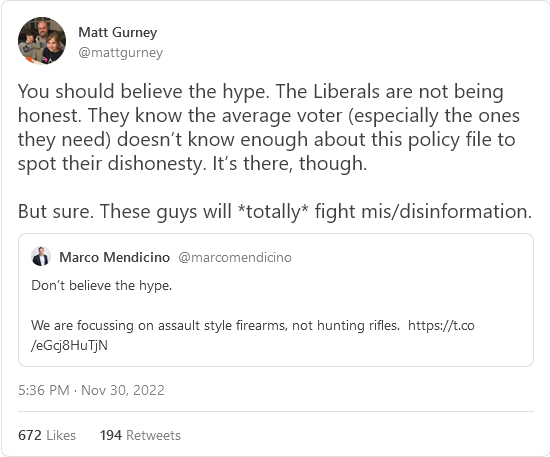
“… when confronted, our self-proclaimed warriors against fake news and misinformation are just lying about what they’re doing”
From the free-to-cheapskates excerpt from this weekend’s dispatch from The Line:

A typical haul of weapons confiscated by Toronto Police Services in 2012. Most of these guns are in the “restricted” or “prohibited” category of Canadian firearms and would not be available for legal purchase by anyone who had not gone through a rigorous RCMP background check and passed multiple training courses. Almost certainly none of them came from a legal owner.
We hate this as much as you do, but we must discuss guns with you again. We think the Liberals have screwed up, and we aren’t sure yet they realize it. (But they’re probably clueing in.)
You know why we’re suspicious? The Liberals are extremely good at marketing. A depressing amount of the time, it’s all they’ve got. They can take the smallest morsel of accomplishment and make it the centrepiece of a coordinated nation-wide grassroots mobilization campaign and fundraising drive. They have memes and other social shareables ready to go. Cabinet ministers release cringe videos captured by staffers who probably realize, in the very moment of their filming, that they’ve wasted their God-given potential on … this.
Outcomes? The hell with those. Let’s talk about those inputs, baby! In both official languages.
But this time? When the Liberals have actually embarked on what would be the most significant overhaul of our firearms laws in a generation? Not only have they not said boo. They’re going out of their way to deny that they’ve done anything. Or, when confronted, our self-proclaimed warriors against fake news and misinformation are just lying about what they’re doing.
So either they don’t know what they’re doing (very possible), regret what they’ve done (also very possible) or it’s a confused mix of both (our working theory).
But let us explain. And forgive us, but things will get a bit technical. (We’ll keep it as simple as possible, but guns are complicated.)
Canadian firearms policy has generally tried to classify firearms by their technical specifications. Three broad categories were created by the major reforms of the 1990s. “Prohibited” firearms essentially were machine guns, automatic assault rifles of the kind used by modern militaries, and easily concealed short-barrelled handguns; prohibited licences were issued in the 1990s to a relatively small number of individuals who already owned such firearms and their immediate descendants (to cover family heirlooms), but prohibited firearms otherwise are not available to the public. “Non-restricted” firearms were the very common rifles and shotguns suited (and frequently used) for hunting or target shooting sports, and require the least onerous level of licensing (but still, you do need a licence that involves background checks and vetting). In the middle we had “restricted” firearms — mostly handguns — that require a special licence beyond the normal licence, requiring extra training and conditions.
These broad categories do not always reflect the reality of how the laws actually shaped up. The prohibited and restricted categories were often stretched by meddling politicians to apply more broadly than they ought to have, so that politicians (mainly Liberals) could claim to be “tough on guns” in particular instances. But these three categories have been generally stable for a generation, and functioned well, more or less. Perfectly? No. But our gun-control laws worked for the public at large, which is why violent gun crime by licensed individuals is rare despite a relatively high rate of firearms ownership in Canada.
You wouldn’t think it given all the political controversy, but Canadian gun control has been a fundamentally successful public-policy program, for decades. The very real problem we have with gun violence in this country is overwhelmingly committed with illegal guns smuggled in from the United States, and fall outside the scope of our gun-control system, which works well doing what it is supposed to do: licensing lawful gun owners, regulating the legal uses of guns and regulating, as well, the lawful hunting and shooting sports industry.
For all its success as public policy, though, the system didn’t work for the Liberals politically. So they decided to get cute. And that’s where their problems began.
Comments Off on “… when confronted, our self-proclaimed warriors against fake news and misinformation are just lying about what they’re doing”
The Halifax Explosion
[For more on the events leading up to the explosion, you can read my page on the event here.]
OTD Canadian Military History
Published 3 Dec 2022Halifax, Nova Scotia was rocked by a massive explosion on the morning of 6 December 1917 after the French cargo ship SS Mont-Blanc collided with the Norwegian vessel SS Imo in the harbour. Nearly 2000 people were killed and 9000 were injured. More than 25,000 were left without adequate shelter.
This video includes a photo of the Halifax explosion itself and footage from its aftermath as I explain details of the explosion and the relief efforts.
(more…)
Comments Off on The Halifax Explosion
December 2, 2022
Matt Taibbi – “This is not journalism. It’s political entertainment, and therefore unreliable.”
Matt Taibbi posted his opening remarks for the Munk Debate on the topic “Be it resolved: Do not trust the mainstream media”:
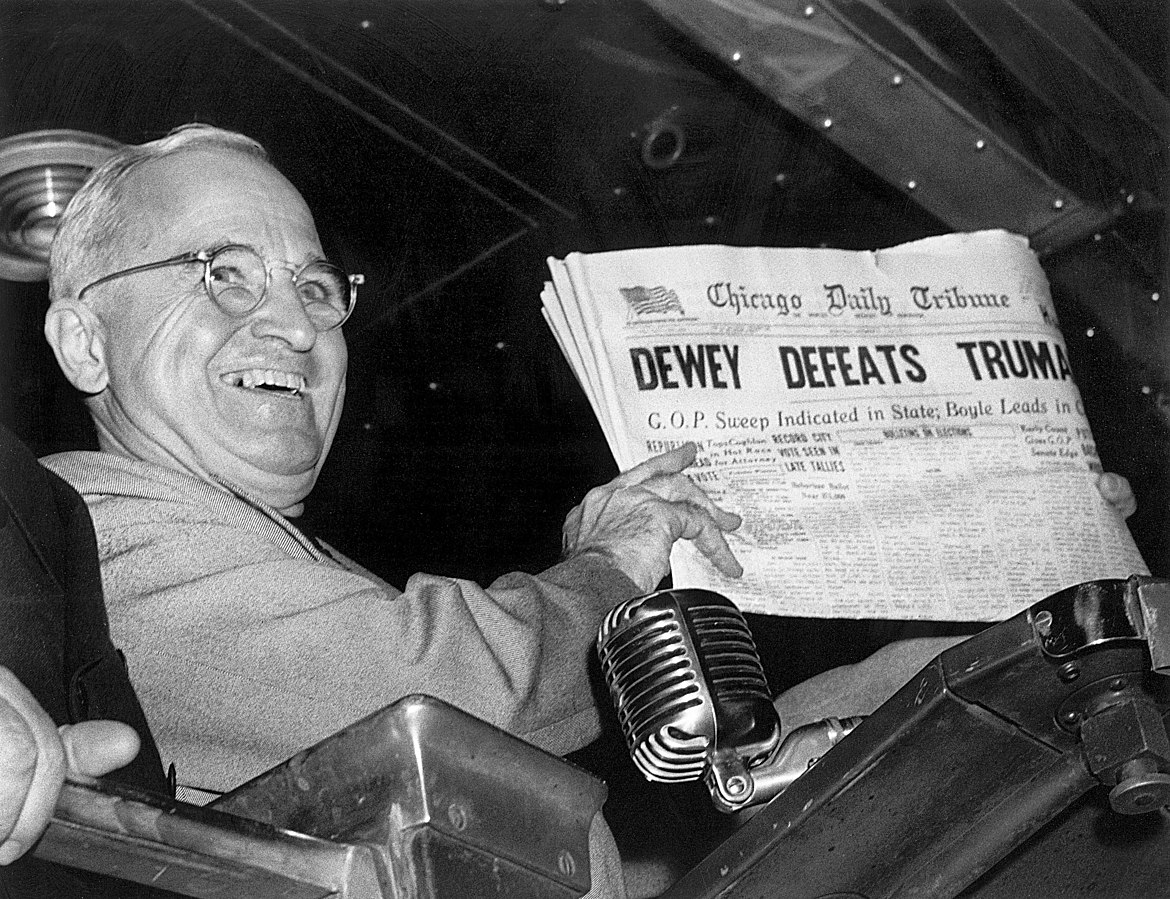
President Harry S. Truman holds up an election day edition of the Chicago Daily Tribune, which – based on early results – mistakenly announced “Dewey Defeats Truman.”
AP Photo/Byron Rollins from November 4, 1948, via Wikimedia Commons
I love the news business. It’s in my bones. But I mourn for it. It’s destroyed itself.
My father had a saying: “The story’s the boss.” In the American context, if the facts tell you the Republicans were the primary villains in this or that disaster, you write that story. If the facts point more at Democrats, you go that way. If it turns out they’re both culpable, as was often the case for me across nearly ten years of investigating Wall Street and the causes of the 2008 crash for Rolling Stone, you write that. We’re not supposed to nudge facts one way or another. Our job is to call things as we see them and leave the rest up to you.
We don’t do that now. The story is no longer the boss. Instead, we sell narrative, as part of a new business model that’s increasingly indifferent to fact.
When there were only a few channels, the commercial strategy of news companies was to aim for the whole audience. A TV news broadcast aired at dinnertime and was designed to be consumed by the whole family, from your crazy right-wing uncle to the sulking lefty teenager. This system had its flaws. However, making an effort to talk to everybody had benefits, too. For one, it inspired more trust. Gallup polls twice showed Walter Cronkite of CBS to be the most trusted person in America. That would never happen today.
[…]
Our colleagues on the other side tonight represent two once-great media organizations. Michelle, the Pew survey says the audience for your New York Times is now 91% comprised of Democrats. Malcolm, the last numbers I could find for the New Yorker were back in 2012, and even then, only 9% of the magazine’s readers were Republicans. I imagine that number is smaller now.
This bifurcated system is fundamentally untrustworthy. When you decide in advance to forego half of your potential audience, to fulfill the aim of catering to the other half, you’re choosing in advance which facts to emphasize and which to downplay. You’re also choosing which stories to cover, and which ones to avoid, based on considerations other than truth or newsworthiness.
This is not journalism. It’s political entertainment, and therefore unreliable.
With editors now more concerned with retaining audience than getting things right, the defining characteristic across the business — from right to left — is inaccuracy. We just get a lot of stuff wrong now. It’s now less important for reporters to be accurate than “directionally” correct, which in center-left “mainstream” media mostly comes down to having the right views, like opposing Donald Trump, or anti-vaxxers, or election-deniers, or protesting Canadian truckers, or any other people deemed wrongthinkers.
In the zeal to “hold Trump accountable”, or oppose figures like Vladimir Putin, ethical guardrails have been tossed out. Silent edits have become common. Serious accusations are made without calling people for comment. Reporters get too cozy with politicians, and as a result report information either without attribution at all or sourced to unnamed officials or “people familiar with the matter”. Like scientists, journalists should be able to reproduce each other’s work in the lab. With too many anonymous sources, this becomes impossible.
Comments Off on Matt Taibbi – “This is not journalism. It’s political entertainment, and therefore unreliable.”
November 29, 2022
Prime Minister Justin Trudeau, expert projectionist
Donna Laframboise on part of Prime Minister Justin Trudeau’s performance last Friday at the Public Order Emergency Commission’s hearings in Ottawa:
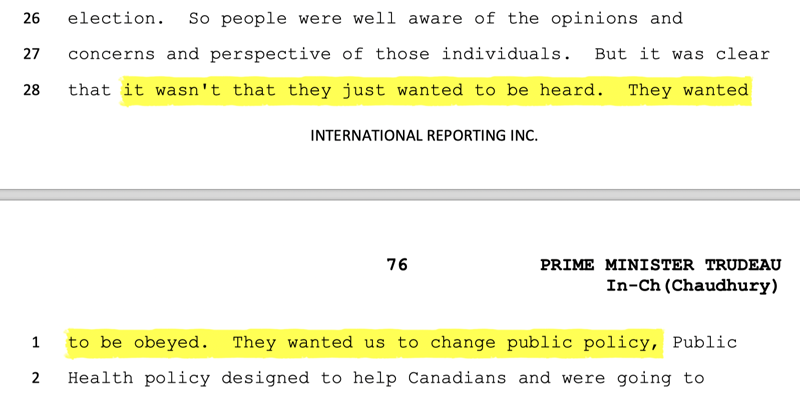
There’s a concept in psychology known as projection – accusing others of your own shortcomings. Last week Canada’s Prime Minister, Justin Trudeau, told an Emergencies Act hearing that Freedom Convoy protesters didn’t just want to talk. They wanted, he said, to be obeyed.
That was a strange word for him to use. About people he’d never spoken to. Yet it sums up his own posture rather nicely: Don’t bother trying to change my mind. I’m in charge, you must obey. Conversation over. Case closed.
According to Mr. Trudeau, the Freedom Convoy didn’t deserve a face-to-face meeting with his government because it wanted to change public policy. How terrible that free people, in a free country might want some influence over the increasingly draconian COVID rules they were required to follow. How unreasonable for them to come to Ottawa in an attempt to communicate the depths of their desperation.
A Prime Minister who received less than 33% of the votes cast during the federal election a mere four months earlier chose to thumb his nose at these protesters. Get lost, peasants. You will not be changing public policy.
[…]
We need to recognize what has happened here. The same federal officials who meet with corporate lobbyists by the thousands refused to have a single meeting with the truckers.
This, ladies and gentleman, is the state of Canada’s democracy.
November 26, 2022
Indigo vastly prefers selling pillows, candles, and tchotchkes of all kinds rather than – ugh! – books
In the latest SHuSH newsletter, Ken Whyte explains why it’s becoming harder and harder to find actual books in Canada’s biggest bookstore chain … because they no longer want to be a bookstore chain:
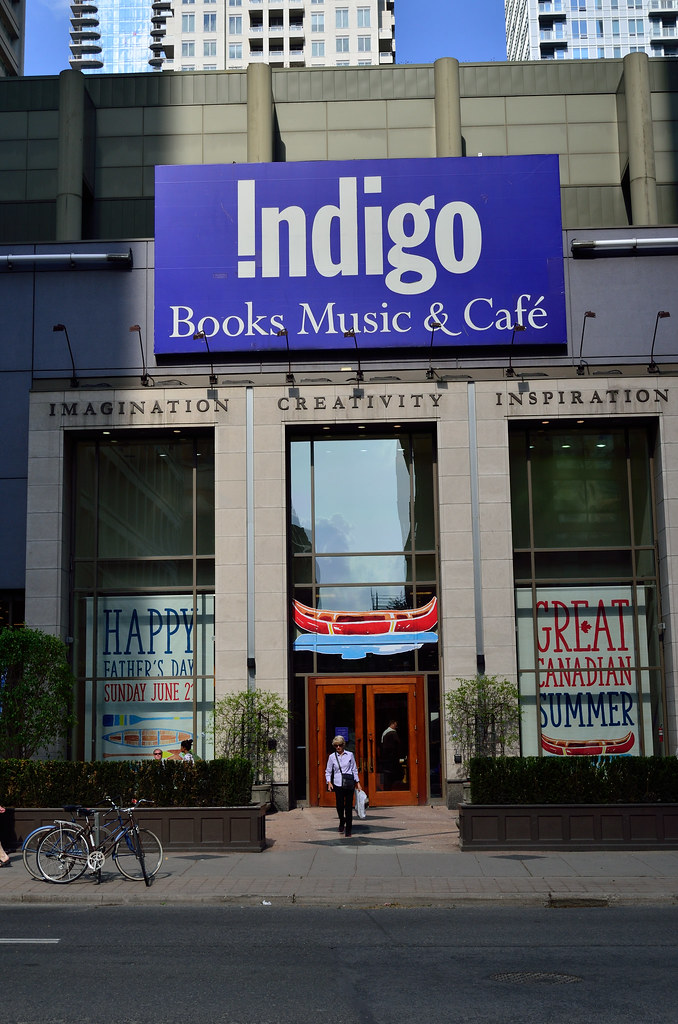
“Indigo Books and Music” by Open Grid Scheduler / Grid Engine is licensed under CC0 1.0

We need to talk about Indigo. As you know, it’s Canada’s biggest bookstore chain, with 88 superstores and 85 small-format stores. It sells well over half the books that are bought in stores in Canada, with Walmart, Costco, and independent bookstores accounting for most of the rest.
One problem with Indigo is that it’s failing. The other problem is that it’s abandoning bookselling. Yes, that sounds like a Woody Allen joke, but it’s not funny from a publishing perspective. We depend on Indigo.
The company’s finances have been ugly for some time. It lost $37 million in 2019, $185 million in 2020, and $57 million in 2021. Things looked somewhat better in 2022 with a $3 million profit, but the first two quarters of 2023 are now in the books (it has a March 28 year end) and Indigo has already dropped $41.3 million.
[…]
Indigo hasn’t come right out and said we’re through with books. It can’t, given that Heather [Reisman] has spent the last twenty-five years building herself up as the queen of reading in Canada. Also, the Indigo brand is still associated with books in most people’s minds and that won’t change overnight no matter how many cheeseboards it stocks. So Heather talks about a gradual, natural transition: “We built a wonderful connection with our customers in the book business. Then, organically, certain products became less relevant and others were opportunities.”
To be clear, books are irrelevant; general merchandise is the opportunity. Heather recently appointed as CEO a guy named Peter Ruis who has no experience in books. He comes from fashion retail, most recently the Anthropologie chain, which sells clothing, shoes, accessories, home furnishings, furniture, and beauty products. Anthropologie was hot in 2008, and it seems to be where Indigo wants to go today.
Fair enough. You own a company, you can take it in any direction you want, so long as your shareholders will follow. I don’t blame Heather for having second thoughts about the book business. (I have them every week. It’s a tough business.) But where does that leave readers, writers, agents, publishers, and everyone else who remains committed to books?
You’ll recall that Indigo and Chapters, between them, decimated the independent bookselling sector in Canada in the nineties. They are the principal reason Canada has so few independent bookstores today. You could probably fit the combined stock of all our independents into a handful of Heather’s stores.
The federal government let Heather’s Indigo buy Larry Stevenson’s Chapters in 2001, which gave her a ridiculously large share of the market. That shouldn’t have happened.
At the same time, with the help of some lobbying by Heather, the federal government made it clear that the US chains, Borders and Barnes & Noble, weren’t welcome up here. The argument was that bookselling was a crucial part of our cultural sector and needed to be protected from foreign domination by the Canadian government.
In that spirit, Indigo also asked the federal government to prevent Amazon from opening warehouses in Canada. That request was denied in 2010, which is about when Indigo began its transition out of books.
One can see how Heather might feel betrayed by the federal government. Instead of protecting bookselling, it swung the door wide open for Amazon. You said I wouldn’t have to compete!
Comments Off on Indigo vastly prefers selling pillows, candles, and tchotchkes of all kinds rather than – ugh! – books
November 25, 2022
“… no Canadian should trust any government enough to settle for a ‘trust me’ on matters this serious”
Matt Gurney at TVO Today on the likely outcome of the Public Order Emergency Commission’s deliberations after testimony ends on Friday with whatever Prime Minister Justin Trudeau is planning to say:
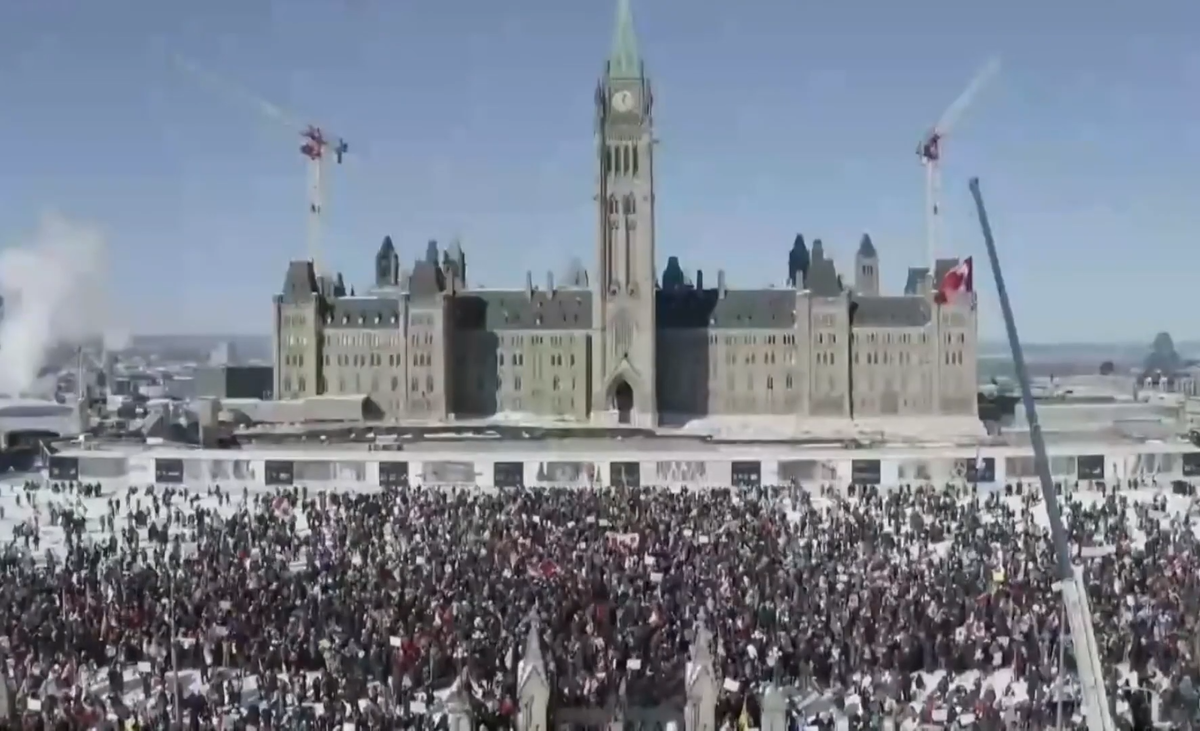
A screenshot from a YouTube video showing the protest in front of Parliament in Ottawa on 30 January, 2022.
Photo via Wikimedia Commons.
We can’t simply outsource decision-making to federal agencies, particularly intelligence services! The federal cabinet has the right to disagree with CSIS’s conclusions, especially as it may consider a broader range of information. That’s why we elect leaders. That’s democracy.
But a democracy is supposed to empower the people. We are citizens, not subjects. And there is something very worrisome in Vigneault’s comments. He noted that he had information that informed his decisions — information that cannot be publicly disclosed. This apparently includes legal opinions that the federal government has not disclosed (citing attorney-client privilege) and also, reportedly, classified information.
Attorney-client privilege is important. So is secrecy on matters of national security. Both of these things are essential for a society to function. But, in this case, they are corrosive to democracy and public faith in the federal government.
The Trudeau government’s case for invoking the Emergencies Act isn’t a slam dunk. It’s not bulletproof. I’ve been swayed by some of its arguments and some of the testimony and documents that have been produced. But it hasn’t sealed the deal. And if its final argument hinges on legal advice and classified information, that’s … awful. That’s just a terrible situation. That would amount, in effect, to Trudeau saying, “We can’t tell you why we did this incredibly rare and controversial thing, but trust us.”
No.
That’s it. Just no.
I don’t trust this government. That’s partially, I grant, a criticism of this particular government, which I am not a fan of. It is often high-handed, arrogant, and incompetent, and I do not trust it won’t try to duck criticism by hiding dirty laundry behind privilege and secrecy. Its conduct over the past seven years in office simply has not earned it any benefit of the doubt.
But there’s a deeper truth here: no Canadian should trust any government enough to settle for a “trust me” on matters this serious. That’s not how a democracy is supposed to work. Bluntly, if that’s how your democracy is working, it isn’t working or a democracy.
Comments Off on “… no Canadian should trust any government enough to settle for a ‘trust me’ on matters this serious”
Canada’s all-purpose VTOL transport that could have changed everything; the Canadair CL-84 Dynavert
Polyus Studios
Published 14 Jul 2018The program that developed the CL-84 lasted for almost 20 years and produced one of the most successful VTOL aircraft ever, as far as performance. Canadair produced four Dynavert’s over those 20 years and two of them crashed. In fact one crashed twice. The story of the great CL-84 is one of perseverance and missed potential.
(more…)
Comments Off on Canada’s all-purpose VTOL transport that could have changed everything; the Canadair CL-84 Dynavert
November 24, 2022
Viewing the Public Order Emergency Commission spectacle from abroad
Chris Bray on how the Public Order Emergency Commission inquiry in Ottawa has utterly failed to show up on the radar of the US legacy media:
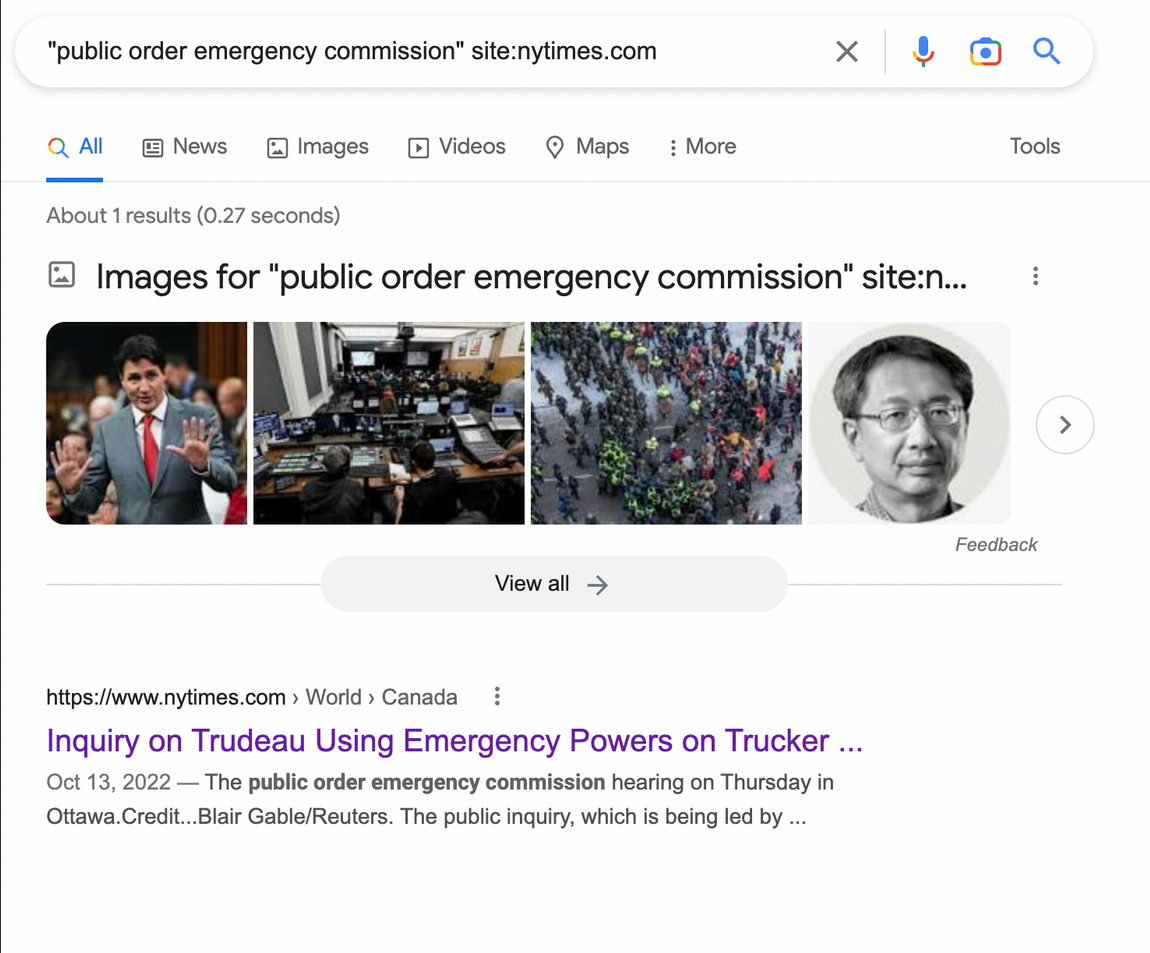
I conducted a dignified survey of a number of politically savvy people this evening, by which I mean I staggered around a bar and slurred questions at friends, and I was surprised to discover that no one has noticed the POEC. At all. Similarly, the US news media appears to have taken a nearly complete pass on covering the thing. The New York Times offered a single story, more than a month ago, describing the fact that it would be happening, and then lapsed into silence. I left some blank space at the bottom of this image so you can see all the nothing down there:
But the spectacle has been extraordinary, and it opens the curtains on the world of high-status malevolence, elite mediocrity, and news media cravenness. For background, remember that the Canadian government led by Prime Minister Derek Zoolander responded to the peaceful truckers’ “Freedom Convoy” in Ottawa and anti-Covid-measure blockades at several border crossing areas this February — the infamous bouncy castle protests — by invoking Canada’s Emergencies Act, for the first time since that law was created in 1988. That declaration of a national emergency allowed the government to exercise extraordinary power, most infamously in the form of an order to Canadian banks to completely freeze the bank accounts of protest participants. Zoolander lost his state of emergency as the Canadian Senate signaled its growing alarm at the decision, after a shameful vote in the House of Commons to affirm the declaration. The state of emergency was declared on February 14, and revoked on February 23.
Now comes the second act. The invocation of the Emergencies Act triggers a legal duty to review that decision after the fact. Here’s the directive calling the Public Order Emergency Commission into being.
So the commission is meeting, with testimony from government officials, and — this is the important part — with cross-examination from lawyers representing the targets of the declaration of emergency. In effect, the truckers are in the room; their representatives can ask questions of the government officials who did things like ordering banks to take their money because they disagreed with the government.
If you read the mainstream Canadian press, which pisses me off every time I try to do it, this means that the moronic lawyers for a bunch of idiotic terrorists are being pointlessly mean to senior government officials. Conspiracy theories! Debunked claims! I mean, truck drivers versus respectable figures, amirite? All the usual deployment of marking language is in effect, telling readers what to think about what’s happening while carefully limiting their description of what’s actually happening.
[…]
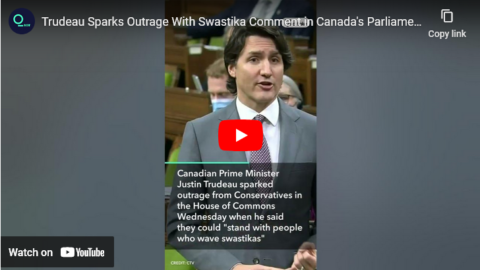
And finally, most remarkably, if you followed the Emergencies Act debate in the House of Commons back in February, you’ll recall that Prime Minister Zoolander and his ministers responded to every criticism and question regarding their handling of the convoy by saying that Canadians won’t stand with people who carry Confederate flags, and with “those who fly swastikas”.
That’s how they framed the entire event, full stop: the truckers, the swastika people. The anti-vaccine-mandate Nazis!
The news media picked up that framing and ran with it, non-stop, pounding the message that the truckers were flying Nazi symbols and Confederate flags:
Now: Miller said, before the commission, that he knows the identity of the people who carried those Nazi and Confederate flags in Ottawa — and that they’re employees of a public relations firm that was working on behalf of officials in the Canadian government.

Comments Off on Viewing the Public Order Emergency Commission spectacle from abroad


