Quotulatiousness

July 4, 2025

Another military procurement cock-up … this time it’s the C-19 rifles of the Canadian Rangers

Filed under: Bureaucracy, Cancon, Military, Weapons — Tags: , , , , , — Nicholas @ 03:00

The Canadian Rangers, one of the least-known parts of the Canadian Armed Forces, are a mainly Inuit reserve force operating in the Canadian north. They’d been equipped with WW2-era Lee Enfield rifles since the 1940s and the weapons were getting too old to perform the task so the CAF’s procurement folks settled on a Finnish rifle manufactured under license by Colt Canada. The Rangers, operating primarily as small patrols or as individuals, didn’t need the high firepower of a modern infantry rifle and the harsh climate they work in meant that a bolt-action rifle was desired. Bolt-action rifles are not new technology, so you’d think the CAF procurement would have been pretty straightforward, but no, they managed to miss something critical in the specifications they issued for the contract. And because the rifles met the published specifications, it’s on the CAF rather than the manufacturer to make sure that the weapons are safe to operate by the Canadian Rangers:

A Canadian Ranger handles the military’s new C-19 rifle. Shortly after the rifles were sent to Ranger units, red dye from the stocks started appearing on the hands of the soldiers when the weapons were exposed to wet conditions. (Credit: Canadian Armed Forces)

Canadian Rangers who use their new rifles in the rain are finding their hands covered in red dye because the stocks on the weapons can’t handle moisture, according to newly released military records.

The problem was discovered in May 2018 as the new C-19 rifles were initially being distributed to Canadian Ranger units as part of a $32.8-million contract with Colt Canada. The .308 C-19, which is equipped with a red stock, replaced the Lee Enfield .303 rifle that had been used by Canadian Rangers since 1947.

Under the contract, the new rifles were required to withstand extremely cold temperatures in the Arctic as well as moderate-to-high humidity in the coastal and forested regions of the country.

“Obviously from a health and safety perspective having dye released onto the skin is not a good situation,” Arthur Hall, who is with the Department of National Defence’s small arms program, noted in a May 9, 2018 email regarding the C-19.

Further complaints continued to come in from Ranger units who also found the stocks were cracking.

“The issue is that when exposed to moisture the red dye in the stock will run, and will discolour the hands of the user,” Luke Foster of the Directorate of Soldier Systems Program Management, pointed out in a July 3, 2018 email. “This is also an indication that the stocks are not properly protected from the elements.”

One report from an officer assigned to the Rangers noted he took his new rifle outside in the rain for only five minutes before returning indoors. Once back inside he noticed the weapon was dripping red dye. “I held the weapon for approximately 5-10 mins and it stated to stain my hand,” Captain T.M. Collier wrote in a May 9, 2018 email.

The documents, acquired by the Ottawa Citizen, were released under the Access to Information Act.

Department of National Defence officials, however, say it will be up to taxpayers to cover the costs of replacing the stocks on the 6,800 new rifles. That cost is estimated to be up to $10 million.

QotD: US-Canadian conflict before Confederation

Filed under: Cancon, History, Military, Quotations, USA — Tags: , , , , , — Nicholas @ 01:00

Canada has never fought a direct war against the United States. However, before confederation (1867) when Canada became a self-governing dominion, the territories that would later form that dominion, which had been under the control of the British, engaged in a small number of military conflicts with the United States (or as they were known previously, the Thirteen American Colonies). The total is four, if we only count significant engagements which involved organized forces. Economic wars, or trade disputes, are another story. We’ll get there.

The Aroostook War (1838–1839) drew no blood. The conflict concerned the Maine-New Brunswick border and was resolved amicably by the Webster-Ashburton Treaty of 1842. A quarter of a century later the Fenian Raids (1866–1871) saw the Irish-American Fenian Brotherhood make multiple non-state sanctioned attacks in British North America in an effort to sway Britain to withdraw forces from Ireland.

The other far more consequential military struggles between the two North American friends and neighbours occurred first in the late eighteenth century, and second in the early nineteenth century. During the American Revolutionary War (1775-1783), which saw limited involvement of areas north of the 49th parallel, British North America thwarted a particularly serious invasion by the Americans in 1775 known as The Battle of Quebec.

It was fought during a snowstorm on December 31, 1775 (one of few battles fought in such miserable conditions during the revolutionary war). The American intention was to conscript the British colony, which today forms the province of Quebec (and also included parts of Ontario) into their struggle against the British. The Patriots of the Thirteen Colonies had earlier that year begun rebelling against British taxation and governance. They surmised that the French-speaking Quebec settlers, disaffected with the imposition of British rule as it was laid out in the 1763 Treaty of Paris (which ended the Seven Years War), would join the American cause. A significant miscalculation, to say the least.

The battle was fought on two fronts against a British garrison of 1800 soldiers led by British commander, Governor Guy Carleton. The combined total of American troops was only 1200. The first front was commanded by Brigadier General Richard Montgomery, who led his troops in an attack of the Lower Town from the south. The second assault occurred from the north and was led by Colonel Benedict Arnold (who would later become an infamous American traitor).

Montgomery and several officers were killed instantly on their initial advance. This sparked a retreat amongst his remaining soldiers. Arnold had slightly more luck. His army penetrated northern defences but were stymied in the narrow streets of Quebec. During fighting Arnold was wounded, after which he handed the command to Daniel Morgan. After hours of fighting, Morgan and his men were forced to surrender. The Americans lost the battle decisively ensuring Quebec would remain a loyalist stronghold.

The second of the two significant conflicts involving British North America and the Thirteen American Colonies was the infamous War of 1812 – a more well-known period of antagonism between proto-Canada and her American neighbours.

Here is a topline summary with some extra history concerning the U.S.-Canada border (the world’s longest undefended border), from Terry Glavin:

    The War of 1812 — which the Americans still pretend they won — was officially concluded with the Treaty of Ghent in 1814. Then came the Rush-Bagot Pact of 1817 and the Convention of 1818, which set the border at the 49th parallel.1

The War of 1812 took place during Britain’s struggle against Napoleonic France. The two most famous Canadian battles from this tragic conflict were the Battle of Queenston Heights and the burning of York (now Toronto) – British troops would even the score of the latter by burning Washington D.C.

The war was unpopular. Like today, there were too many bonds between the Americans and proto-Canadians. But also like today, with Canada and the United States once again bickering over trade and various political interests, the disagreements were accompanied by a reluctance to engage in hostilities.

From Pierre Burton’s War of 1812:

    At the outset, it was a gentleman’s war. Officers on opposing sides met for parlays under flags of truce, offered hospitality, exchanged cordialities, murmured the hopes that hostilities would quickly end.2

No matter what time period we are examining, we can never forget that Britons, Canadians and Americans are all first cousins. Yes we disagree from time to time, sometimes we even fight. But always over some unfortunate political dispute, and never for each other’s annihilation.

In 1812, for a variety of reasons, the Americans, especially a minority of hawkish elites in Washington, felt they had no other choice but to invade the north. Some of them felt it would be easy. An aggravating factor concerned Britain’s support of Indian tribes in the north west, at a time when the Americans were aggressively expanding into that region. But also, during their imperial contest with France, the British were impressing sailors in the American navy (forcing them to join British forces), because they considered them traitors of the British crown. Further, they blocked key trade ports under Napoleon’s control, disrupting trade between America and France.

Isn’t it curious how trade so often appears as the rift in Canadian-American relations? Further examples include: the Reciprocity Treaty of 1854 which allowed for free trade of natural resources between the American and British colonies. However, the Americans abrogated that treaty in 1866 partly out of frustration at perceived British support of the confederacy after the Civil War. A post-confederation trade war with the Americans ensued after Canada’s first Prime Minister John A. MacDonald adopted the National Policy in 1879, which imposed high tariffs to protect Canadian industry. Triggering the Americans to respond with tariffs of their own.

James Pew, “Canadians and our ties to Americans”, Woke Watch Canada, 2025-03-30.


July 2, 2025

“In short order, Trudeau was describing his own country with the kind of apocalyptic rhetoric one typically associates with, say, the Holocaust, Holodomor, or Rwandan Genocide”

Filed under: Cancon, History, Media, Politics — Tags: , , , , — Nicholas @ 03:00

In Quillette, Tristin Hopper provides some excerpts from his book Don’t Be Canada: How One Country Did Everything Wrong All At Once, published earlier this year:

Prime Minister Justin Trudeau holding a teddy bear in the proximity of a soil disturbance in a field at the site of a former residential school in Cowessess First Nation, Saskatchewan.
July 6, 2021.

This is the story of how, in 2019, Canada became the first (and, to this day, only) country to declare itself guilty of committing an ongoing genocide against its own citizens.

To outsiders, who (correctly) view Canada as a humane democracy, the tale will seem bizarre. But to Canadians, there was a certain twisted political logic to it — at the time, at least.

In the late 2010s and early 2020s, back when my country was still ruled by Justin Trudeau, Canada’s progressive elites bought into then-ascendant social-justice manias with a born-again fervour that was arguably unmatched in any other nation. This was a time, readers will recall, when college students were busily confessing their internalised white supremacy and racist thought crimes to one another on social media. Seeking to ingratiate his Liberal Party with this young demographic, Trudeau extrapolated their cultish movement on a national scale.

His rhetorical style became increasingly manic, as one social-justice slogan led to another; with each being rapturously liked and retweeted on social media. In short order, Trudeau was describing his own country with the kind of apocalyptic rhetoric one typically associates with, say, the Holocaust, Holodomor, or Rwandan Genocide.

In this regard, Trudeau’s first truly epic act of national self-incrimination took place at a 2019 women’s conference in Vancouver. The PM had just been handed the final report of the National Inquiry into Missing and Murdered Indigenous Women and Girls (MMIWG), a probe he’d authorised as a means to investigate the high rates of homicide committed against Canada’s female Indigenous population.

As it turned out, however, the MMIWG report authors’ most prominent demand had nothing to do with the technical details of criminal investigation. Instead, they were focused on language: They wanted homicides targeting Indigenous women and girls to be described as an ongoing “race-based genocide” perpetrated by Canadian society at large.

Murder wasn’t the government’s only instrument of genocide, the authors claimed. Higher rates of Indigenous heart disease and suicide attempts were also described as foreseeable results of Canadian policies that are “explicitly genocidal”.

Canadians tend to feel guilty about the genuinely shameful way their country treated Indigenous peoples at many historical junctures (more on this below). Because of this high baseline guilt level, it is often seen as taboo (especially among journalists) to push back against even the most obviously counterfactual claims made on behalf of Indigenous peoples. And the MMIWG report was a case in point: the inquiry’s insistence that Canada was in the midst of an active genocide was reported uncritically by most media outlets.

Some public figures did speak out against this hyperbolic use of language — such as Roméo Dallaire, the retired general who’d been in Rwanda during that country’s (actual) genocide in 1994. Yet Canada’s most important public figure — Trudeau himself — accepted the inquiry’s conclusions without reservation; even if this meant that he was now signalling his status as leader of a nation that, day in, day out, under his own watch, was committing a genocide against its own population.

“Earlier this morning, the national inquiry formally presented their final report, in which they found that the tragic violence that Indigenous women and girls experienced amounts to genocide,” he told his Vancouver audience. Trudeau then paused for nine seconds to accommodate his desired reaction — which consisted of cheers and applause.

July 1, 2025

Like a cheap suit, Canada folds under Trumpian pressure on the Digital Services Tax grab

Filed under: Cancon, Government, Media, Politics, USA — Tags: , , , , , — Nicholas @ 05:00

A couple of days back, I characterized Prime Minister Mark Carney’s determination to push ahead with the Digital Services Tax “insane”, as it was overwhelmingly likely to trigger a strong reaction from the Trump administration. As it did. So, finally recognizing they were in a no-win situation, the federal government announced at the last minute that they wouldn’t be demanding the literally billions of dollars from the US “tech giants” after all. Michael Geist can legitimately say “I told you so” on this issue:

President Trump Attends G7 Summit in Canada by White House https://www.whitehouse.gov/gallery/president-trump-attends-g7-summit-in-canada/ CC BY 3.0 US

After years of dismissing the warnings of likely retaliation, the Canadian government caved last night on the digital services tax. Faced with the prospect of the U.S. suspending trade negotiations, Finance Minister François-Philippe Champagne announced that the government would drop the DST altogether, payments scheduled for Monday would be cancelled, and legislation will be forthcoming to rescind the legislation that created it in the first place. Over the weekend, I wrote about the repeated warnings that the DST was a serious trade irritant with the U.S. that cut across party and presidential lines. While ignoring the risks was bad enough, I argued that Canada played its DST card too early. Rather than delaying implementation in the hopes of incorporating it into a broader trade deal with U.S., it marched ahead, leading to an entirely predictable response from U.S. President Donald Trump. That left Canada in a no-win situation: stick with the DST but face the prospect of higher tariffs or embarrassingly drop the DST (and $7.2 billion in revenue over five years) with only restarting negotiations that were on until government overplayed its hand to show for it.

It is hard to overstate how badly the government managed the DST issue over the past five years. It alienated allies by pushing ahead with the DST despite efforts at an international deal at the OECD, stood alone in rejecting an extension of a moratorium on new DSTs, made the DST retroactive which solidified opposition, and continually downplayed the concerns of successive U.S. Presidents and Members of Congress from both sides of the aisle. Meanwhile, when companies began passing along the costs of the DST to Canadian businesses, it did nothing. And when they urged the government to delay implementation to at least allow for the issue to be incorporated into a broader trade pact, it ignored the advice.

At every step, there were better options. This year, the likelihood that the DST would come to a boil was obvious to anyone who was paying attention. But rather than following the UK strategy, which managed to salvage a smaller DST (2% rather than 3%) as part of a bigger agreement that includes a commitment to support UK digital access to the U.S. market and to negotiate a larger digital trade deal, Canadian officials seemingly assumed that the U.S. was bluffing and would not retaliate.

If this sounds familiar, it is because the Canadian government misreading the tech sector has become a hallmark of its policy. Talk tough, practically dare companies and foreign governments to respond, and then frantically seek an exit strategy when they do. This was the case with the Online News Act and Meta’s blocking of news links, with the government’s AI regulation which new Minister of AI Evan Solomon says will not be re-introduced, with the Online Harms bill, and now with the DST.

The Food Professor explains what Trump got right in his Trade War

On the social media site formerly known as Twitter, Dr. Sylvain Charlebois, aka @FoodProfessor explains how Trump’s Trade War strategy is working out for US interests, in contrast to the Trudeau/Carney governments’ approach:

The Globalism Hangover: What Trump’s Trade War Got Right

“Trump’s bombastic style aside, his nationalist approach to trade and food policy is forcing global institutions to justify their existence — and that’s a conversation Canada can no longer afford to ignore.”

For the past six months, President Donald Trump’s trade policies have been widely mocked, criticized, and condemned. Some of it is certainly warranted. The Wall Street Journal, for instance, recently likened his tariff-heavy approach to global trade as a direct path toward another Great Depression. But data out of the United States tells a more nuanced story — one that challenges conventional wisdom.

Despite persistent headwinds, the U.S. economy continues to outperform expectations. The Federal Reserve Bank of Atlanta projects second-quarter GDP growth at 3.8%. In May, the U.S. economy added 139,000 jobs, outpacing forecasts, while inflation remained subdued at 0.1% month-over-month and 2.4% annually. The U.S. trade deficit has been cut nearly in half, pointing to stronger export performance and a rebalancing of trade relationships.

Canada, by contrast, is showing signs of economic strain. The national economy is shrinking, manufacturing is struggling under U.S. trade pressure, and food inflation is outpacing general inflation. In short, our economy is not keeping pace—despite our public criticism of the Trump administration.

To make matters worse, the Trump administration has now halted all trade negotiations with Canada, signaling that our bilateral economic relationship holds little strategic value for Washington. For the U.S., Canada is no longer a priority — especially under a Carney-led government that has visibly pivoted toward Europe, a market still heavily invested in maintaining close ties with the United States. From an agri-food standpoint, this shift is consequential: access to our largest trading partner is narrowing, while Ottawa appears more focused on diplomatic optics than on securing stable, competitive trade channels for the Canadian agrifood economy.

This is the one thing the ‘Elbows Up’ crowd never understood — and still doesn’t. We’re not in a trade war with the U.S. There’s no war to be won. For Trump, this is about a realignment of the global order, plain and simple — one centered entirely on American supremacy.

Love him or loathe him, Trump is not destroying the U.S. economy — not yet, anyway. His unapologetically nationalist agenda extends far beyond tariffs. He has withdrawn U.S. support from key global institutions such as the WHO and is threatening to sever ties with others, including NATO and several UN-affiliated agencies. Among them is the Food and Agriculture Organization (FAO), the UN’s most authoritative body on food security.

At a recent event in Brazil, a senior FAO official acknowledged that fundraising dynamics have shifted. In the Trump era, governments are asking harder questions: Why should we fund the FAO? What domestic benefit does it provide? What used to be assumed support is now conditional — and arguably, more accountable.

This shift isn’t unique to Washington. Many countries are quietly aligning with the U.S. position, scrutinizing globalist institutions with renewed skepticism. Transparency and accountability are byproducts of this anti-globalist sentiment — something not inherently negative.

For decades, globalism pushed the world to believe that trade liberalization was the only viable path to growth and prosperity. It became conventional wisdom. But globalism has made some nations — and some people — richer, while leaving others behind. In the process, domestic sectors, including agriculture, were often sidelined or sacrificed in the name of global efficiency.

The problem with globalism, particularly in agri-food policy, is its tendency to pursue uniformity over relevance. Canada, for example, adopted the carbon tax under a globalist climate agenda that often overlooks the vital role food producers play in feeding people. Instead of being supported, the sector is too often vilified as a problem. But agriculture is not a liability — it is a necessity.

Trump’s message — wrapped, of course, in provocative and often abrasive language — is that one-size-fits-all global policies rarely work. Nations have different socio-economic realities, and those should come first. While cooperation is essential, so is recognizing local and regional priorities. In this sense, his “America First” approach is not without logic — especially when it seems to be yielding short-term economic gains.

For Canada’s agri-food sector, the lesson is clear: striking a better balance between global commitments and national imperatives is overdue. We should not abandon multilateral cooperation, but we must stop anchoring policy to global agendas we have little influence over. Instead, let’s define what works for Canadians — what supports our farmers, protects our food security, and reflects our unique landscape — while keeping the broader global context in view.

We are not there yet. But if this moment of disruption sparks a more realistic and regionally attuned approach to food policy, we’ll be better for it.

The Maple Leaf Forever

Filed under: Cancon, History — Tags: , — Nicholas @ 02:00

Columbia Yore
Published 13 Jun 2018

The Maple Leaf Forever was written by Alexander Muir in 1867 and served as the unofficial anthem of Canada from 1867-1980.

QotD: Canadian measuring “systems”

Filed under: Cancon, Government, History, Quotations, WW1 — Tags: , , — Nicholas @ 01:00

There’s a section in a book about First World War that’s been called the most Canadian paragraph ever written. It’s in the book At the Sharp End by historian Tim Cook, and he’s describing the way Canadian soldiers built trenches. Writes Cook, “the front-line trenches were ideally some six feet deep, and surmounted by another half to full meter of parapet”. If you’re Canadian, you probably didn’t notice anything off about that. But what Cook did was to casually mix two measurement systems in a single paragraph: He starts off by measuring the trench in feet, and then switches to meters for no particular reason. And Canadians do this all the time. Most of the world uses the metric system. The Americans use imperial. And then Canada uses an unholy amalgam of both. It’s one of our weirdest national traits – and one of the first things that immigrants notice when they come here.

We measure weather and room temperature in Celsius, but we still bake in Fahrenheit. Your weight is in pounds, but your car’s weight is in kilograms. You drink alcohol by the ounce, but soda by the millilitre. The phenomenon was summed up in an imaginary dialogue by Canadian comedian Janel Comeau. Scene: An American, a European and a Canadian. The American says “I use miles and pounds”. The European says “I use kilometres and kilograms”. The Canadian takes an assortment of global measuring systems, crushes them into a powder, and snorts them like cocaine before declaring, “I’m 5’3, I weigh 150lbs, horses weigh 1000kgs, I need a cup of flour and 1L of milk”.

And none of this is an accident. Canada’s bizarre system of half-imperial, half-metric represents the truce lines of a culture war battle whose scale and ferocity is all but forgotten today. There were people in the 1970s who wanted to purge this country of any memory of the imperial system. Feet, inches and gallons were a relic of a backwards, colonial age, and the future belonged to rationalist, scientific metrication. A small army of bureaucrats armed with meter sticks and one-litre jugs were dispatched to spread the metrication gospel. And if you didn’t comply with the new metric zeitgeist, you could face severe consequences. For example, if you were a gas station continuing to sell gas by the gallon instead of by the litre, you could be fined.

But this grand plan to reprogram the Canadian psyche was thwarted, and thwarted forever. And when you buy beef by the pound or do your carpentry with inches and feet, you are the unwitting legacy of a populist, anti-government protest movement that hated the metric system and went all-out to stop it. We’re talking protests. Lawsuits. Civil disobedience. This story will literally feature a group of pissed-off Conservative MPs opening a “freedom” gas station to defy federal mandates to sell gasoline by the litre.

Tristin Hopper The metric schism | Canada Did What?”, National Post, 2025-03-11.

June 29, 2025

Carney’s insane determination to keep the Digital Services Tax

One of the most noted features of Prime Minister Mark Carney’s attitude toward, well, everything is his unwillingness to take the concerns of his opponents into account. He seems to feel that he always knows best and therefore any opposition is therefore, by his definition, wrong. The government had been warned by pretty much every observer that the attempt to impose a protectionist digital service levy had incredibly high chances of triggering blowback … and it has:

Mark Carney’s thought process when he encounters dissent, probably

In other words, you can have many reactions to the current DST battle, but surprise should not be one of them. Canada pushed ahead despite efforts at an international agreement on the issue and later dismissed the increasing friction over the issue with the U.S., which has been signalling its opposition to the DST for many years. Donald Trump has taken action, but his views are not dissimilar from Joe Biden’s on the issue nor Members of Congress from both parties. Further, the companies directly affected by the rules have been similarly responsive. For example, Google began levying a 2.5% DST fee on Canadian advertisers last year in anticipation of the DST taking effect in 2025, thereby passing along much of the DST cost to Canadian businesses and consumers.

To be clear, Canada is free to adopt whatever tax policies it wants and tech companies should pay their fair share of taxes. Ensuring tech companies collect and remit sales taxes on digital sales and services is now well established in Canada. But the government’s policy of “making web giants pay” by going above taxes all companies pay with a percentage of revenues to support Canadian film and television, millions for the news sector, and now the DST was always going to spark a reaction.

Further, the Canadian DST is exceptionally complex, covering a wide range of digital revenues that occur in Canada. The baseline applicability is for companies that generate 750 million euros (about C$1.1 billion) in global revenue of which at least $20 million is digital services revenue in Canada. Digital services revenue can arise from (1) online marketplace services revenue (which would cover an Ebay, Airbnb or Uber), (2) online advertising services revenue (Google or Microsoft), (3) social media services revenue (Facebook or TikTok), and (4) user data revenue (any company that collects and sells user data). Targeting these services means there is a lot stake, estimated by the Parliamentary Budget Officer at $7.2 billion over five years.

Other countries have DSTs, but Canada was the only one to introduce one despite an agreement to institute a moratorium on new DSTs years ago at the OECD. And then it was one of the only countries to reject an extension of that moratorium. The government insisted it would move ahead without delays and indicated it was confident it could avoid retaliation.

Given the trade tensions with the U.S. since the election of Donald Trump, unilaterally dropping the DST in the midst of a trade battle did not make much sense as we needed policy certainty under a broader deal. In other words, the DST was a card we had to play as part of a negotiation. But once we played that card by announcing the tax would take effect next week, it virtually guaranteed the U.S. would respond as it did. The priority should have been a broader deal. The government could have adopted a Trump-style delay for a month to give more time for negotiations. It could have have followed the UK model of weaving it into a broader agreement and committing to a larger digital trade deal. Instead, the government continued years of dismissing the trade risks associated with the DST, potentially creating bigger economic problems in the process.

Dan Knight on how Ottawa deliberately baited Trump, despite all the warnings that this was an incredibly stupid idea:

Donald Trump has officially walked away from the negotiating table. The trigger? Canada’s ill-conceived Digital Services Tax (DST) — a reckless, retroactive grab for revenue targeting U.S. tech firms. Trump isn’t mincing words: he’s calling it a “blatant, discriminatory attack” on American innovation, and now he’s moving to punish Canada economically for it.

So what exactly is this tax?

The Digital Services Tax, passed by the Liberal government and implemented under Mark Carney’s leadership, applies a 3% levy on revenue — not profits — earned by large digital firms operating in Canada. And it’s retroactive. That means it’s being applied to earnings from as far back as January 1, 2022, with companies forced to make lump-sum payments by June 30, 2025.

This tax specifically targets companies with global revenue of at least 750 million and Canadian digital revenue of at least CAD 20 million. Translation: It’s a direct hit on American giants like Google, Amazon, Meta, Airbnb, and Uber, and it spares Canadian firms and EU-based entities from equivalent exposure. It’s not tax fairness — it’s protectionism with a smiley-face sticker.

Trump has responded in kind. As of June 27, all trade negotiations with Canada are suspended. Retaliatory tariffs — already mounting since February — are set to escalate. Trump is drawing a red line, and he’s daring Canada to cross it.

What’s at stake?

Everything. Canada sends over 75% of its exports to the United States. We’re talking about nearly a trillion dollars in annual trade. With Trump now actively leveraging tariffs and ending negotiations, entire sectors — from automotive to agriculture, energy to manufacturing — are in the crosshairs.

Already this year, Trump has slapped 25% tariffs on Canadian imports, with specific hits to steel, aluminum, vehicles, and auto parts, and 10% tariffs on Canadian oil, gas, and potash. These moves have already disrupted markets. Ending trade negotiations is a body blow to an already wobbly Canadian economy — still reeling from Trudeau-era mismanagement and Carney’s corporate globalist agenda.

So who could have seen this coming?

Almost everyone.

June 28, 2025

Breathtaking hypocrisy in the BC Ferries deal to buy ships from China

Filed under: Cancon, China, Government — Tags: , , , , — Nicholas @ 03:00

As you’d imagine, with the coastal geography of British Columbia, there’s a lot of demand for ferry service between the mainland and Vancouver Island (and other less-accessible-by-land locations). BC Ferries runs a fleet of ships to handle this traffic and needed some new ferries to replace older vessels. They decided, in the middle of a trade war, to source the ships from China rather than a Canadian shipyard. And the federal government financially backed the purchase:

So just to recap — because this one’s almost too absurd to believe: BC Ferries cuts a billion-dollar deal with a Chinese state-owned shipyard to build four new ferries. Canada’s Deputy Prime Minister Chrystia Freeland — always quick to perform outrage when the cameras are on — writes a stern letter saying how “dismayed” she is. She scolds British Columbia for daring to do business with a hostile foreign regime that’s literally attacking our critical infrastructure in real time.

And then — wait for it — it turns out her own federal government quietly financed the whole thing.

Yes, really.

According to an explosive report from The Globe and Mail, the Canada Infrastructure Bank — a federal Crown corporation — provided $1 billion in low-interest financing for the very same China shipbuilding deal Freeland claimed to oppose. The contract was signed in March 2025. The outrage? That only came later, when the public found out about it in June.

Freeland’s letter to BC’s Transportation Minister was loaded with warnings. She talked about China’s “unjustified tariffs” and “cybersecurity threats”. She demanded assurances that “no federal funding” would support the purchase. But what she didn’t mention — what she conveniently left out — was that Ottawa had already cut the cheque. The financing was already in place. The loan had been approved. Freeland just didn’t say a word.

And when reporters asked for clarification, what did her office say? Nothing. They passed the buck to another minister. The new Infrastructure Minister, Gregor Robertson, now claims the government had “no influence” in the procurement decision. No influence? You loan a billion dollars to a company and have no opinion on where it goes?

Let’s be clear: This wasn’t some harmless miscommunication. If it wasn’t a cover-up, then it was sheer incompetence — the same brand of incompetence that’s driven our shipyards into obsolescence, our economy into dependence, and our country into managed decline. An entire federal cabinet stood by, watched this unfold, signed the cheque — and then pretended they had nothing to do with it.

And British Columbia’s government? Just as bad. Premier David Eby, the man who pretends to champion “BC First”, claims he was “not happy” with the China deal but says it’s “too late” to change course. Too late? This isn’t an asteroid heading for Earth. It’s a contract. And contracts can be rewritten, canceled, renegotiated — if anyone in charge had the political will to stand up and say, “No, we don’t hand billion-dollar infrastructure projects to hostile regimes”.

But instead, we get excuse after excuse. They say BC Ferries is independent. They say there was no capacity in Canada. They say we had no choice. All the while, Canadian shipyards sit idle, unionized workers are frozen out, and the Canadian taxpayer is stuck subsidizing Chinese shipbuilding — and Chinese espionage.

June 27, 2025

The fading Boomer Laurentianus

Filed under: Cancon, Media, Politics — Tags: , , , , — Nicholas @ 03:00

Last week in The Critic, Charles Kirwin described the people who saddled us with three terms of Justin Trudeau and hope to continue their reign of error by supporting Mark Carney with his Europhile whims and intolerance for dissent:

Boomer Laurentianus is a Canadian subspecies of Boomerus Senectus, so named because he models himself on the so-called Laurentian Elite, Canada’s governing class that inhabit the “Laurentian corridor”, the narrow strip of land along the Saint Laurence river between Montreal and Toronto that, for a certain kind of Canadian, is the only bit of the country that matters.

In spirit, he is a child of the sixties and still believes he is a radical at heart. Despite this he expects to be treated with the deference reserved for those awarded the Victoria Cross, despite his closest experience to combat being glancing longingly at pictures of the cancelled Avro Arrow or campaigning to defend the local parking lot from being turned into affordable houses.

Like his British and American cousin, he supports progressive policies like safe supply of drugs, lenient sentences and bail conditions for criminals, and whatever economic policies keep his pension fund high and his property values increasing. Naturally, he lives in neighbourhoods untouched by the crime and addiction that are the direct result of the policies he supports.

It is important to note that while his modes of thinking and beliefs are those of the Laurentian Elite, his mind is shaped by the institutions of the Laurentian Elite: The Canada Council for the Arts, the Canadian Broadcasting Corporation, the Governor General’s Literary Award, various other high-minded organisations that form the intellectual life of Laurentian Canada, Boomerus Laurentianus is not necessarily “of” them.

Molson Canadian is the spirit of his patriotism. In 2000, Molson released a beer advertisement in which a typical Canadian played by actor Jeff Douglas shouts into a microphone to an audience of Americans, dismissing various Canadian stereotypes (we say aboot, drive dogsleds, are all lumberjacks and fur traders et cetera) and notes some of the differences that make Canada not the US. “I have a Prime Minister not a President … I believe in Peacekeeping not policing … I can proudly sew my country’s flag on my backpack while travelling”. The advertisement is something of a cult hit in Canada and has been parodied by just about everyone including William Shatner.

This one-minute advertisement swells at the heart of the Boomer Laurentianus view of his country. It is both superficial and, in places, factually incorrect (the equivalent of the US president is not the Prime Minister but the King or Queen of Canada). But he has built his entire sense of nationalism around myths such as peacekeeping or being liked by foreigners more than Americans. This last point is sacred to his sense of identity.

Boomerus Laurentianus exists in a superposition state usually reserved for Schrödinger’s cat wherein he is both completely American and not American at all. It was often claimed of Rhodesians that they were “More British than the British”. Boomer Laurentianus is more Yank than the Yanks. Despite his reverence for the CBC, he gets his recipes from the New York Times and his opinions from CNN. He watches American television, travels to the US frequently, may even own a second home there. He can almost convince himself that they are the same country, sometimes to the point of putting up signs supporting, Democratic political candidates, seemingly unaware that he cannot vote in foreign elections.

June 26, 2025

NATO members “commit” to a new 5% defence spending target

Filed under: Cancon, Europe, Military, USA — Tags: , , , , , , — Nicholas @ 03:00

As many predicted, just as Canada finally gets around to at least pretending to meet the 2% defence spending target we agreed to over a decade ago, those goalposts get moved:

So today the leaders of Nato convene for a landmark summit:

NATO countries agree to increase defence spending to 5%

That headline isn’t strictly accurate. Member states have apparently agreed to commit to a target of 5% by 2035, to mark the start of the fourteenth anniversary of the Ukraine war. Which means that, as always with Nato, they’ll all look butch at the photo-op, and then they’ll do bugger all. Even the “commitment” to a “target” is too much for Spain, which has secured an opt-out.

But hang on a minute: Nato has been at war — or at proxy-war — with Russia for three-and-a-half years now. So it’s been on a war-footing, supposedly, for seven-eighths of the length of the First World War. How’s that war-footing going? Per Nato’s head honcho, Mark Rutte (the woeful former Dutch PM — ask our pal Eva Vlaardingerbroek), earlier this month:

    The Russian army is developing its war capabilities by multiple times more than that of NATO despite having an economy 25 times smaller, NATO’s secretary general has warned …

    “The Russians, as we speak are reconstituting themselves at a rapid pace and producing four times more ammunition in three months than the whole of NATO in a year,” said Rutte.

That’s a rather confusing way of putting it; what he means is: the Russians (who, as Mark Levin assures us, “scare nobody”) produce more ammunition in three weeks than the whole of Nato does in a year. Can even Nato be that worthless?

Taking the Secretary-General at his word, if you’re wondering why the Pentagon has to divert ammo marked for Israel to Ukraine and then divert it back from Ukraine to Israel … well, let’s do what everybody else does and dredge up the only historical analogy anybody knows — not the First World War, but the Second (see Levin’s “Iranian Nazi regime”): We’re asked to believe that Nato needs longer than the US was in the Second World War for to move to a war-production footing.

To be sure, supply chains are always difficult: Iran’s threat to close the Strait of Hormuz could have seriously impacted McDonald’s need to recall the hash browns it sent to Montenegro and divert them to Kiribati.

Trump gets something very basic: Flying the highest of high-tech weaponry seven thousand miles to drop down a ventilation shaft opening the size of a dishwasher is the kind of brilliant, dazzling one-off only the United States can do. But what next? Almost all geopolitical conflicts start with a bit of shock-&-awe (Pearl Harbor, even the assassination of the Archduke) and then dwindle down to old-school wars of attrition – as the United States should certainly know after taking twenty years to lose to goatherds with fertiliser, and three years to lose to “a gas station masquerading as a country” (thank you, John McCain). In wars of attrition, old-fashioned unglamorous things become important, like the ability to manufacture bullets in a timely manner. The basic arithmetical calculations are not complex: Don’t get into a long war with an enemy whose stock of long-range ballistic missiles outnumbers your surface-to-air missiles.

So Trump had the narrowest window of opportunity, and used it.

On the other side, the last week-and-a-half mostly revealed the shallowness of the War Party. You’ll recall, for example, that Ted Cruz got into a spat with Tucker over the actual population of Iran. Last week, a UK podcast had a brief discussion on The US Army-Marine Corps Counter-Insurgency Field Manual, which notes the following (foot of page xxvi):

    The troop demands are significant. The manual’s recommendation is a minimum of twenty counterinsurgents per 1,000 residents.

That’s roughly what the British had in Malaya. Which they won, by the way. Twenty-two years ago, a couple of weeks after the fall of Saddam, I stopped on the shoulder of the main western highway from Jordan to Baghdad to fill up from an enterprising Iraqi who’d retrieved some supplies from a looted petrol station and was anxious to sell them to any passing Canadian tourists. As he was topping off, I asked him how agreeable he found the western soldiery. He grinned a big toothless grin and pointed to a chopper that had just come up over the horizon to hover above our heads. Then he said: “Americans only in the sky.”

We did not win that one, you’ll recall. Instead, we created an Iranian client-state.

That’s why Ted Cruz’s breezy indifference when Tucker asked him the population of Iran was so revealing. The senator told Tucker that it doesn’t matter whether the population of Iran is eighty million or a hundred million. Really?

Because, per the Pentagon’s own field manual, the latter figure would require finding an extra 400,000 troops. Oh, wait. If it’s a Nato mission, the other members could muster 127 guys between them, so it would only require 399,873 extra Americans.

Even if the public were minded to put one-and-a-half million pairs of boots on the ground, it couldn’t do it. “Americans only in the sky” equals what an Australian prime minister told me, after a flying visit to the troops in Afghanistan, was “the Crusader fort mentality”.

It doesn’t work. The political divide in America is between, crudely, Trumpians and neocons. The former are anti-war; the latter are pro-war … but a way of war that doesn’t work.

June 22, 2025

Delaying Mark Carney’s next book

Filed under: Books, Business, Cancon, Politics, USA — Tags: , , , — Nicholas @ 03:00

In the latest SHuSH newsletter, Ken Whyte outlines the various oddities of Mark Carney’s next book to market:

Three years ago, long before he declared himself a politician, Mark Carney published Value(s), his attempt at solving some of the world’s biggest problems: income inequality, climate change, systemic racism, etc. The book was reasonably well received. It sold well. A sequel was in order.

Announced last year, The Hinge: Time to Build an Even Better Canada was ostensibly Carney’s attempt to address Canada’s biggest issues, and perhaps to position himself as our future leader. The book was set for release in May 2025. Events interceded and Carney was elected prime minister on a far tighter timeline than anyone, including his publisher, could have imagined. Publication of The Hinge was delayed. An anonymous source told the Toronto Star Carney was too busy politicking to finish the final edits on the book. I heard the delay had more to do with campaign finance rules that would consider a book publicized or released in election season as political advertising. Anyway, a new release date was set for July 1. Amazon now has The Hinge coming next January.

Carney’s political opponents have been enjoying the delay. Critics both left and right have attributed it to the difficulty of squaring positions taken by Carney a year or two ago with positions he espoused during the campaign and, more recently, as prime minister.

I don’t doubt that Carney’s politics have moved over the last six months. And I wouldn’t be surprised if his second book is being rewritten in whole or in part. I don’t have a problem with that. Much has happened, both in Canada and south of the border. We’ve all been reconsidering our positions.

My problem with Carney’s conduct is not that he’s revising his manuscript, if he is, but that he’s not revising his publishing contract.

The Hinge is set to be published by Signal. Signal is a division of McClelland & Stewart. M&S is a division of Penguin Random House Canada. PRHC is a division of Penguin Random House LLC, corporate headquarters at 1745 Broadway, 3rd Floor, New York, New York, 10019.

Penguin Random House LLC is owned by Bertelsmann, a media conglomerate in Gütersloh, Germany, but legally and operationally, it is a US company. Its executive leadership, including CEO Nihar Malaviya, works out of the above address. Strategy and publishing priorities are set in New York, and profits in PRH’s many far-flung international divisions flow to New York. So the prime minister of Canada is publishing his book with the Canadian branch plant of a US company.

Other recent prime ministers have done the same. Justin Trudeau published Common Ground with HarperCollins. Steven Harper published Right Here, Right Now with Signal, and his forthcoming memoir sits there, too. Jean Chretien released My Stories, My Time with Random House Canada. Most of our politicians have published with branch plants of American firms.

I should add that many of our best writers publish at these same branch plants, if not directly with US publishers. (Even middling scribblers like me have published directly in the US.)

But, again, the world has changed. To quote no less an authority than Mark Carney, Canada’s old relationship with the US, “based on deepening integration of our economies and tight security and military cooperation, is over”. We need to “fundamentally reimagine our economy”, “retool” our industry, and enhance our self-sufficiency.

He sees our cultural relationship with the US as part of this project. From the Liberal platform: “In this time of crisis, protecting Canada means protecting our culture, our journalism, our perspectives. The Americans have threatened our sovereignty and issued inflammatory statements about our economy; we need to be able to tell a story that fights back.”

Right under the cultural section of the platform was a “Buy Canadian” plank. “At a time when our economy is under threat, consumers want to do their part as patriotic Canadians, buying things that are truly made here.” Team Carney promised to make it easier to determine what is and isn’t a Canadian product and prioritize made-in-Canada suppliers in every sector of the economy, limiting bidders from foreign suppliers, and so on.

So it’s “eLbOwS uP!” for the voters, but carry on publishing your next book through a US-owned subsidiary, eh? You have to admit they wear their hypocrisy proudly.

June 18, 2025

Canada’s Supply Management system – protecting us from cheaper milk, eggs, and chicken

On the social media site formerly known as Twitter, The Food Professor celebrates the latest achievement in Canada’s omni-competent supply management system:

The Chicken Crisis Supply Management Won’t Admit

Canada’s supply management system—once heralded as a pillar of food security and agricultural self-sufficiency—is failing at its most basic function: ensuring reliable domestic supply.

According to the latest figures from the Canadian Association of Regulated Importers (CARI), Canada imported over 66.9 million kilograms of chicken as of June 14 — a 54.6% increase from the same period last year. To put that in perspective, this volume could feed 3.4 million Canadians for an entire year, based on per capita poultry consumption. That’s roughly 446 million individual meals — meals that, under a tightly managed quota system, were meant to be produced domestically.

To be fair, the avian influenza outbreak in Canada has disrupted poultry production, and it partially explains some of the shortfall. But even accounting for that disruption, the numbers are staggering. Imports under trade quotas established by the WTO, CUSMA, and CPTPP are all running at or near pro-rata levels, signaling not just opportunity — but urgency. Supplementary import permits — meant to be emergency tools — have already surpassed 48 million kilograms, exceeding the total annual import volumes of some previous years. This is not a seasonal hiccup. It is systemic failure.

Canada’s poultry sector is supposed to be insulated from global volatility through supply management. Yet internal shocks — like the domestic avian flu outbreak — have shown how fragile the system truly is. When emergency imports become routine, we must ask: what exactly is being managed?

The original intent of supply management was to align production with domestic demand while stabilizing prices and farm incomes. But that balance is clearly off. The A195 production period, ending May 31, 2025, showed one of the worst underproduction shortfalls in more than 50 years. Producers remain constrained by rigid quota allocations, while consumers continue to face rising poultry prices. More imports. Higher costs. Diminished confidence.

Some defenders will insist this is an isolated event. It’s not. This is the second week in a row Canada has reached pro-rata import levels across all chicken categories. Bone-in and processed poultry products — once minor parts of emergency programs — are now central to keeping the market supplied.

The dysfunction extends beyond chicken. Egg imports under the shortage allocation program have already topped 14 million dozen, up 104% from last year. Just months ago, Canadians were criticizing high U.S. egg prices — yet theirs have fallen. Ours haven’t.

All this in a country with $30 billion in quota value, intended to protect domestic production and reduce reliance on imports. Instead, we are importing more — and paying more.

Meanwhile, Bill C-202, now before the Senate, aims to shield supply management from future trade negotiations, making it even harder to adapt or reform. So we must ask: is this what we’re protecting? A system that fails to meet demand, relies on foreign supply, and costs Canadians more at the checkout?

Our trading partners are seizing the moment. Chile, for instance, has increased its chicken exports to Canada by over 63%, now representing nearly 96% of CPTPP-origin imports. While we double down on rigidity, others are gaining long-term footholds in our market.

It’s time to face the facts. Supply management no longer guarantees supply. And when a system meant to ensure resilience becomes the source of fragility, it’s no longer an asset — it’s an economic liability.

Fixing the CAF will require a lot more than just money

The Canadian Armed Forces are in a dire state. I could literally have written that in any year since I started blogging in 2004 … with brief, unsustained funding boosts for unplanned military commitments here and there that actually made the overall situation worse rather than better. Canada’s military procurement system seems incapable of doing anything quickly … or inexpensively, so pouring billions more into a broken process won’t work out well. There used to be a meme about being able to get whatever you wanted — “good, fast, cheap … pick two”. The CAF can’t even get one of those options.

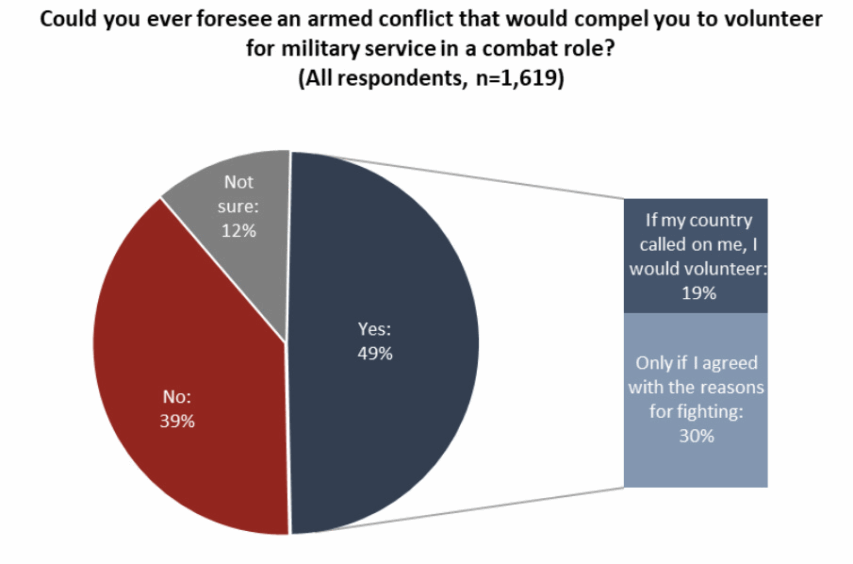
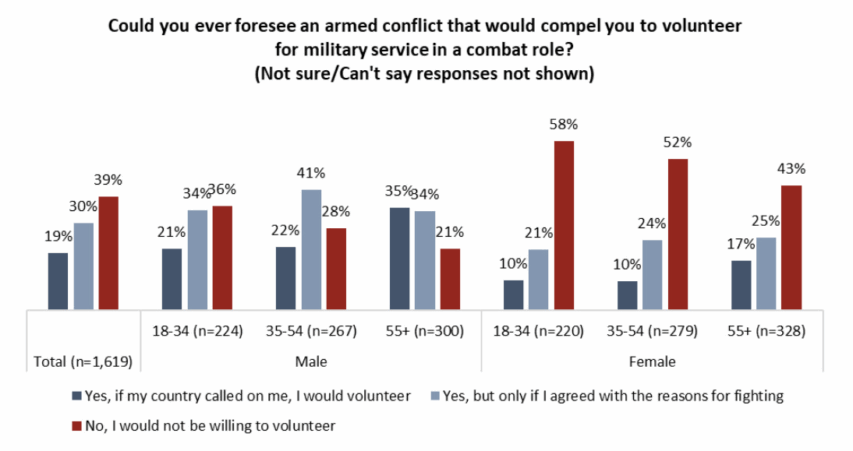
We’ve had surprising numbers of media folks paying attention to the crippling recruiting crisis, as even on current funding, the CAF is short thousand and thousands of soldiers, sailors, and aircrew. Sadly, but predictably, most of that media attention looks at the shortfall of new recruits being trained for those jobs, which is true but incomplete. The biggest problem on the intake side of the CAF is the bureaucratic inability to bring in new recruits in anything remotely like a timely fashion. The last time I saw annual numbers, the CAF had huge numbers of volunteers coming in the door at recruiting centres, but getting the paperwork done and getting those volunteers into uniform and on to job training was an ongoing disaster area. More than seventy thousand would-be recruits applied to join the CAF and the system managed to process less than five thousand of those applicants and get them started on their military careers.

At a time that we’re losing highly trained technicians in all branches to overwork, underpay, and vocational burn-out, we somehow lack the competence to take in more than one in twenty applicants? That is insane.

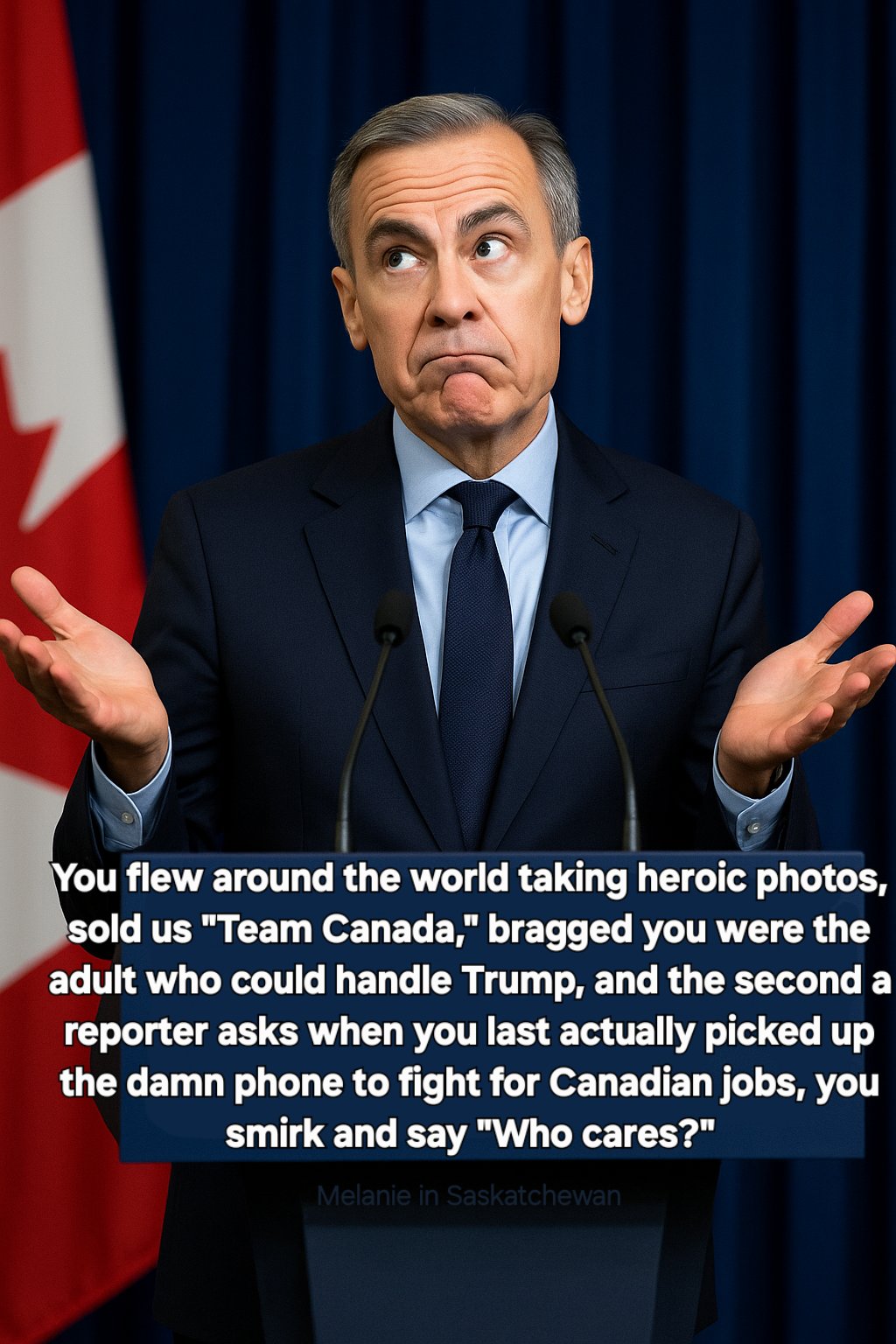
In the National Post, Michel Maisonneuve says much the same as I just did, but rather more coherently:

I’m told the Treasury Board has already approved the new funds, making this more than just political spin. Much of the money appears to be going where it’s most needed. Pay and benefit increases for serving members should help with retention, and bonuses for re-enlistment are reportedly being considered. Recruiting and civilian staffing will also get a boost, though I question adding more to an already bloated public service. Reserves and cadet programs weren’t mentioned but they also need attention.

Equipment upgrades are just as urgent. A new procurement agency is planned, overseen by a secretary of state — hopefully with members in uniform involved. In the meantime, accelerating existing projects is a good way to ensure the money flows quickly. Restocking ammunition is a priority. Buying Canadian and diversifying suppliers makes sense. The Business Council of Canada has signalled its support for a national defence industrial strategy. That’s encouraging, but none of it will matter without follow-through.

Infrastructure is also in dire shape. Bases, housing, training facilities and armouries are in disrepair. Rebuilding these will not only help operations but also improve recruitment and retention. So will improved training, including more sea days, flying hours and field operations.

All of this looks promising on paper, but if the Department of National Defence can’t spend funds effectively, it won’t matter. Around $1 billion a year typically lapses due to missing project staff and excessive bureaucracy. As one colleague warned, “implementation (of the program) … must occur as a whole-of-government activity, with trust-based partnerships across industry and academe, or else it will fail.”

The defence budget also remains discretionary. Unlike health transfers or old age security, which are legally entrenched, defence funding can be cut at will. That creates instability for military suppliers and risks turning long-term procurement into a political football. The new funds must be protected from short-term fiscal pressure and partisan meddling.

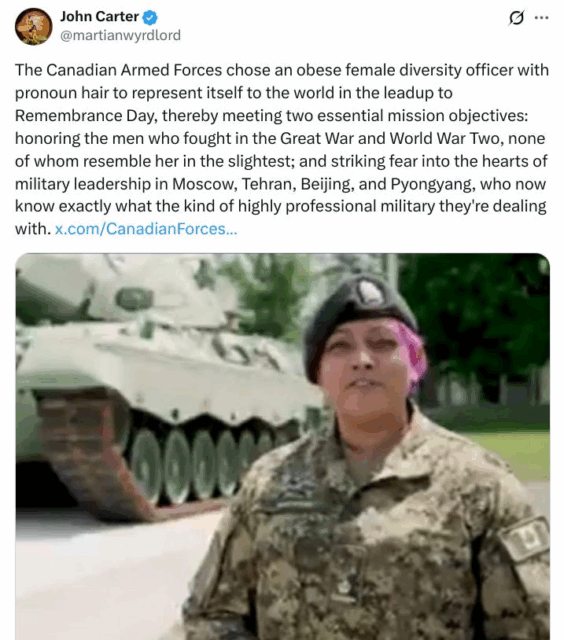
One more concern: culture. If Canada is serious about rebuilding its military, we must move past performative diversity policies and return to a warrior ethos. That means recruiting the best men and women based on merit, instilling discipline and honour, and giving them the tools to fight and, if necessary, make the ultimate sacrifice. The military must reflect Canadian values, but it is not a place for social experimentation or reduced standards.

They finally did retire the Sea King, long after almost everyone else did. All CAF equipment is expected to have far longer working lives than any of our allies’ equipment.

June 17, 2025

BC is buying ferries from China … to spite Trump!

Filed under: Cancon, China, Government, Media, Politics — Tags: , , , — Nicholas @ 03:00

After all the “buy Canadian” blather of the last federal election campaign, it was only a matter of time before the feds or one of the provinces did something astoundingly out-of-step with the mantra. Smart money was always on Quebec being the first (because that often makes sense for internal provincial political reasons), but no, this time it’s British Columbia going a long way out of their way to not buy Canadian for a huge government purchase:

BC Ferries’ MV Spirit Of Vancouver Island between Galiano Island (Bluffs Park) and Mayne Island, en route from Tsawwassen to Swartz Bay, BC on April 6, 2022.
Photo by Gordon Leggett via Wikimedia Commons.

British Columbia’s transportation minister claimed Friday that buying new ferries from European shipyards would have cost roughly $1.2 billion more than buying them from a Chinese government-owned shipyard in Weihai, Shandong province, which is a city roughly the size of Montreal that I had never heard of until this week. China knows how to build cities. They burst into existence from nothing, like popcorn. China also knows how to build ships, and highways, and high-speed rail, and just about anything else you would care to name, better and more efficiently than the Canadian public service can realistically comprehend.

The four ships B.C. Ferries is fixing to replace, of 1960s and 1970s vintage, were built at Seaspan in North Vancouver (which is an active shipyard), at the Victoria Machinery Depot (which is no longer an active shipyard), and at the Burrard Dry Dock (which is also defunct). Canada’s shipyards, for better or worse — certainly for expensive! — are very busy building things for the navy.

B.C. Ferries has plenty of experience with foreign-built vessels. Its current fleet includes ships built in Romania, Poland, Germany and Greece. Other than the Baynes Sound cable ferry on Vancouver Island — which is not especially popular — the Crown corporation’s newest Canadian-built boat went into service in 1997. So “foreign” obviously isn’t the problem.

But China is China, and that’s legitimately another thing. China is not a Canadian ally. They try to screw with our democracy, and most other democracies by the sounds of it. And right now we are in a profoundly protectionist moment: Across the political spectrum, mostly because of President Donald Trump, “buy Canadian” is the only philosophy really on offer.

But does that make sense? We should pay over the odds for ferries … because of Trump? There wasn’t half of all this foofaraw when Marine Atlantic on the East Coast bought its newest ferry from Weihai. Since last year it has safely been shepherding Canadians between Nova Scotia and Newfoundland, without a whisper of controversy in the Rest of Canada.

I don’t quite get the Trump angle, which is perhaps why I’m more interested in Dean Broughton‘s take:

… I’m not just disappointed — I’m furious — about the NDP government’s decision to award the construction of four new BC Ferries vessels to a Chinese state-owned shipyard. This isn’t just outsourcing. It’s betrayal dressed up as budget management.

Back in 2021, the NDP government unveiled a “Made-in-B.C.” shipbuilding strategy with great fanfare. They formed a Shipbuilding Advisory Committee, posed for cameras, and promised to rebuild a long-neglected industry. It was supposed to be a turning point, a real investment in local jobs and industrial capacity.

Now, many of those same politicians have turned their backs on everything they claimed to support. Not only did they ship the contracts overseas, but, according to Eric McNeely, president of the BC Ferry and Marine Workers’ Union, they didn’t even give B.C. shipyards a fair shot. The procurement process was so rushed and restrictive that no local yard could realistically compete. They didn’t lose the bid — they were boxed out.

That’s not fiscal prudence. That’s political cowardice.

The hypocrisy is staggering. This is the same government that talks endlessly about investing in clean industry and supporting working families, and they just handed a massive public contract to a country with a well-documented record of environmental abuses and human rights violations.

They talk about reconciliation and sustainable development—and then funnel hundreds of millions to an authoritarian regime.

Worse still, they did this knowing full well that B.C.’s industrial base is already in decline.

We have so little left beyond resource extraction. Shipbuilding could have been part of our economic renewal. Instead, it’s another casualty of government optics and empty promises.

I remember my father’s outrage in 1990 when the federal government cancelled the Polar 8 icebreaker — a Canadian-built vessel meant to defend our Arctic sovereignty. That decision was dismissed as a “cost-saving measure” and today our claim to the North has never been weaker.

The BC Ferries decision reeks of the same short-sighted logic.

« Newer PostsOlder Posts »

Powered by WordPress