… but it’s the nature of bureaucracy itself that’s most to blame. Everyone who has ever worked for even a midsize company has had this kind of experience: You’re in Customer Service, and some hotshot from Sales calls you up. He’s promised a big new potential client the earth and stars, and now he needs you to deliver. Alas, you tell him, you can’t do it. Not won’t, can’t — you’re not set up for that kind of thing. So you call your Department Supervisor over, and he comes up with what looks like a workaround …
… except no, now Accounting chimes in, that looks like it might be a violation of some codicil to some sub-paragraph of an addendum to a regulation, better check with Compliance. But before you can do that, the Division Managers get into it, because hotshot has called his Department Supervisor over and said look, Dave, I brought in seventy gorillion dollars last fiscal year, you owe me this one …
… and so forth. Everybody with me? No one is corrupt in this scenario. Nobody’s trying to pull a fast one on anybody else. Indeed, everybody’s on the same page, and everybody has every incentive to find a solution, because all our Christmas bonuses are going to look a little nicer if the firm lands this fat client. All we’re trying to do is add one task to the existing Customer Service workflow, but it’s going to take at least a Division Manager-level meeting, if not the direct input of the Big Boss himself, to get it hammered out. It’s an exponential increase in energy expenditure.
And of course it ramifies, and of course that’s true no matter what solution you come up with. Make an exception to the workflow for this one client, and pretty soon you’re going to be making exceptions for every client — every wannabe-hotshot up in Sales is going to demand the works for every little podunk potential client. Same deal if you designate one guy from Customer Service as the dedicated exception-handler. Same deal if you create a whole new sub-unit inside Customer Service (but a lot faster). And so forth.
I’m sure everyone has had that experience, too: Watching your company lose out on a potential big client because the various Departments couldn’t get on the same page for whatever reason.
And that’s just around the office! Meaning: yeah, it’d be nice if we could land that big client, maybe see an extra hundred bucks on our Christmas bonus, but nobody’s losing any sleep over it. Well, ok, Hotshot up in Sales probably is, but even the best salesman loses far more often than he wins. He’ll get over it in a day or two, or he won’t be a salesman much longer.
But the same thing happens when it comes to stuff that matters, which is why complex societies collapse.
Severian, “Collapse II”, Founding Questions, 2021-12-09.
August 26, 2025
QotD: Problem-solving in large organizations
August 23, 2025
Another Bud Light moment: Cracker Barrel gets rid of the cracker
I haven’t been to the United States for more than a decade — not for political reasons, just for financial ones … I haven’t had the money to travel since 2015 — so it’s at least that long since I visited a Cracker Barrel. On our usual driving holidays, we’d stop somewhere like a Cracker Barrel to get a big breakfast to tide us over to our next destination a few hundred miles further down the road. I’d heard that the food quality had dropped after Covid, but I can’t confirm that from personal experience. Here’s ESR’s take on the latest rebranding that has riled up the online commentariat and apparently tanked the company’s stock price:
Today I’m here to talk about why I dislike Cracker Barrel, but dislike the Cracker Barrel rebrand even more.
My first reaction to the outpouring of social-media sentimentality about the destruction of CB’s comfortable old-timey ambience was to stare and wonder if these boosters had gone entirely out of their minds.
Yes, CB was designed to evoke a sort of folk memory of what rural country stores used to be like. But it’s, at best, a gigantized, commoditized, kitschy simulacrum of what they were — Hee Haw as filtered through the mind of an urban-corporate bugman.
Exhibit A for this is the gauntlet you have to run through to get to the food — gift shops that are unrivaled for the utter tastelessness and worthlessness of the cheesy crap on their shelves.
Once you get to the food, well … they serve a decent breakfast. Everything else is bland, homogenized slop.
And yet, I find that I dislike the rebranded look and feel even more. Because at least CB as it was gestured feebly in the direction of something authentic and American. The new look strips out all those vestiges — it has all the character of a generic airport lounge.
If you’re reading this and getting hot under the collar because I’ve impugned an experience that has sentimental value for you … look, I get it, okay? Old CB wasn’t designed for me, nor for anybody else who can unironically describe themselves as urbane, sophisticated cosmopolitans. But in its own pastiched way it had value, value which is now being destroyed.
Certainly the stock market thinks so. CB’s share price has been dropping like a rock — the rebrand is a failure even by corporate-bugman standards.
If the chain needed saving, the right thing to do would have been to double down on the attractive parts. Keep the local memorabilia on the walls, improve the menu, turn down the wince-inducing tackiness of the gift shop. Make it more like the mythical olden days, not less.
But no. Because the CEO is an idiot. I’ve been on a corporate board of directors and I’m here to confirm that if CB’s doesn’t convene an emergency meeting to fire her before the end of the week they are not doing their job.
August 18, 2025
Canadian grocers are “maple-washing” products to hide their actual origin
Sylvain Charlebois on the new phenomenon of grocery stores going to great lengths to pretend that items for sale are Canadian when they’re not — “maple-washing”:
Canadian grocery retailers are misleading shoppers about where their food really comes from. Behind the patriotic packaging lies a growing problem: “maple-washing” — using Canadian symbols to suggest products are homegrown when they’re not. It’s eroding consumer trust and must end.
That’s why more Canadians are paying closer attention to what labels actually mean. Awareness around origin labelling has grown as people learn the difference between “Product of Canada”, “Made in Canada”, and “Prepared in Canada”. The Food and Drugs Act requires labels to be truthful and not misleading. A “Product of Canada” must contain at least 98 per cent Canadian ingredients and processing. “Made in Canada” applies when the last substantial transformation happened here, while “Prepared in Canada” covers processing, packaging or handling in Canada regardless of ingredient source.
The differences may seem technical, but they matter. A frozen lasagna labelled “Prepared in Canada”, for example, could be made with imported pasta, sauce and meat — packaged here but not truly Canadian. These rules give consumers the clarity they need to make informed choices.
Armed with this clarity, many Canadians have become more selective about what they buy. That vigilance has emerged alongside a surge in consumer nationalism, spurred partly by geopolitical tensions and anti-American sentiment. Even with U.S. giants like Walmart, Costco and Amazon dominating Canadian retail, many shoppers are deliberately avoiding American food products. The impact has been significant: NielsenIQ reports an 8.5 per cent drop in sales of American food products in Canada over just a few months. In an industry where sales usually shift by fractions of a per cent, such a drop is extraordinary. It shows how quickly Canadians are voting with their wallets.
That kind of shift, rare outside of crises, caught many grocers off guard. The sudden change left supply chains long dependent on U.S. products under pressure, and store-level labelling grew inconsistent. Early missteps — like maple leaves displayed beside imported goods — were excused as logistical oversights. But six months later, those excuses no longer hold. Persisting with misleading displays and false origin claims has crossed the line into misrepresentation. Instances of oranges or almonds labelled as Canadian, with prices quietly adjusted after complaints, show the problem is systemic, not accidental.
August 16, 2025
This is just crazy enough to work …
Disclaimer: I’m not an American and I don’t know the details of the US immigration system, but from what I’ve read elsewhere, Copernican‘s suggestion has a lot of merit:
I can’t be the only one sick of H1Bs destroying the western labor market, particularly in tech, but across the board. Out-of-work tech workers further compress the labor market in other areas. This problem is not unique to the United States, but I understand the laws of the US better, so I’ll be arguing from that perspective.
I know it. Walt Bismarck has a whole organization dedicated to trying to find reasonable employment by job-stacking. A few new and interesting resources have appeared, dedicated to screwing with these companies that open the floodgates to a horde of foreign software engineers. Seven-eleven clerks, and SAAR YOU MUST REDEEMs, that can crash our software, our ships, and our interstate semi-trucks for us.
Fortunately, there’s something we can do to fight back.
[…]
Well, while the government doesn’t seem intent on doing anything about it, the Millennials and Zoomers that have been fucked-over appear to finally have enough cultural weight to start pushing back. Here’s the thing about hiring H1B workers: doing so requires that the company demonstrate that no American Citizens can fulfill the role. That demonstration usually takes the form of a listing in a newspaper with 500 readers, the back-end of a website with black text on a black background, or something similar. They don’t want Americans to apply for these jobs; they want to successfully demonstrate that no Americans even applied.
So they make the application process nearly impossible.
Usually, the way this is done is that when an H1B is hired, they are permitted to remain in the country for up to 6 years (2 renewals of 2 years). Once that’s completed, either the H1B worker is forced to return to where they came from, or the job must be re-posted for 2 weeks for a potential American worker. If no American worker applies (because they didn’t see it because it was posted in a hidden corern of the website or a newspaper with no readers), then the H1B may be sponsored for perminent US residency.
What was clearly once a method for gaining the Best and Brightest as potential employees in the United States has become a system of exploitation. H1Bs are underpaid, undervalued, and often booted from the country, so there’s no impetus for them to assimilate. It’s a mess all the way around, and the only ones who benefit are stockholders for billion-dollar tech companies.
For the most part, we all know the story.
But … what if during that 2-week posting, a qualified American candidate does apply for the job? Well, then everything goes to shit. The company is legally not allowed to deny an American Candidate that job without opening themselves up to a massive lawsuit and fines, and penalties. If only one American candidate has applied, then the company has to hire that individual … and if they don’t hire the American candidate and then apply for another H1B to fill that slot, the company is in deep shit in a legal sense.
August 14, 2025
The “Big Mac Index” is bogus and Purchasing Power Parity (PPP) is wrong
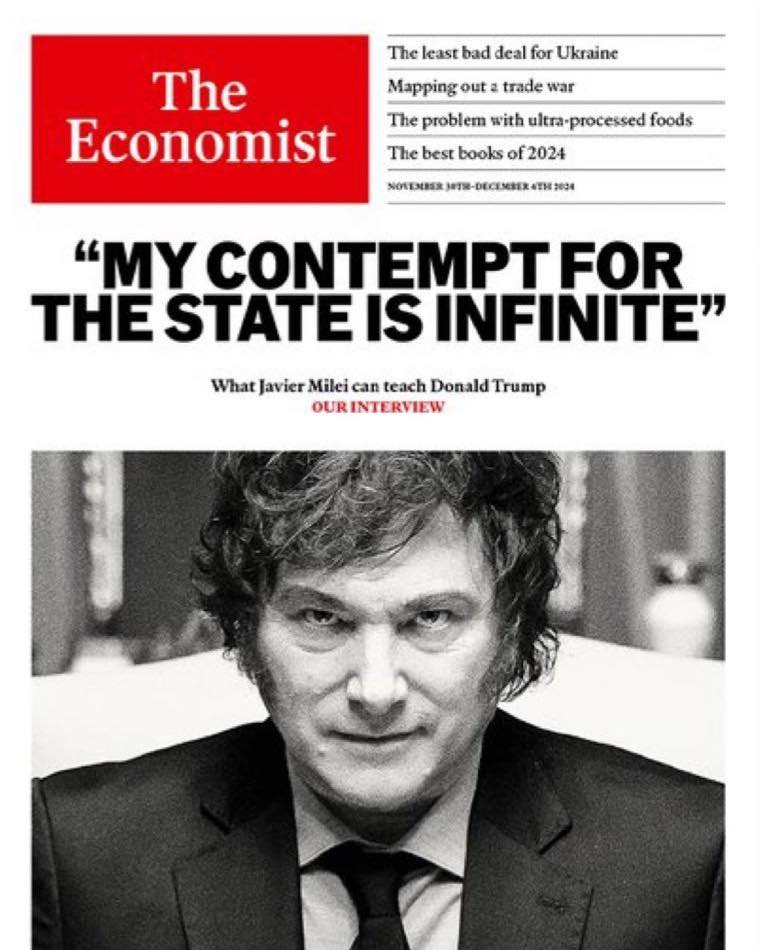
I started reading The Economist when I was in college in the early 1980s. I subscribed after I left college, no longer having access to the school library’s copies, and I continued my subscription for about 20 years. Eventually, I gave up on The Economist as their editorial stance shifted further and further leftward. One of the things they ran regularly was their “Big Mac Index” which compared prices of McDonalds’ Big Mac hamburgers across a range of countries to show the Purchasing Power Parity of the respective countries’ currency against the US dollar. I thought it was a neat way to use readily available data in a form that most consumers would be familiar with to illustrate a wider economic fact. But, as Tim Worstall points out here, the index isn’t actually measuring what it claims to be measuring at all:
Purchasing Power Parity (PPP) constitutes a foundational concept within mainstream international economics, asserting that, over the long term, real exchange rates will naturally adjust to equalize the purchasing power of currencies across nations. This suggests that the cost of an identical basket of goods should, in principle, be uniform globally once currency exchange rates are applied. This notion is frequently popularized through informal measures such as the Big Mac Index. PPP is conceptualized as a specific application of the Law of One Price (LOOP), which posits that, when abstracting from transactional frictions like transportation costs, tariffs, and taxes, any particular commodity traded or purchased should sell for a similar price regardless of its geographical location.
Aaaand, no. The Law of One Price says that a *traded* commodity should be at the same price everywhere, absent transport costs, tariffs and all the rest. Anything that’s not traded this will not be true of. For example, to use an example provided to us:
For instance, if a Starbucks coffee is considerably more affordable in Tokyo than in Manhattan, Purchasing Power Parity (PPP) would indicate an undervalued Yen.
No, Starbucks coffee is not a tradeable item. Coffee beans are globally traded, yes, and coffee beans are the same price the world over — given transport costs, tariffs and so on. But the coffee bean is pennies on the dollar of a Starbucks coffee.
The use of the Big Mac in The Economist‘s popular version of PPP actually runs entirely the other way around. The note is that a Big Mac is made the same way around the world. But it’s always made of *local* ingredients, not internationally traded ones. Therefore we are not measuring whether tradeable goods are the same price in different places at all — we’re measuring what local goods cost in different places.
Comparative advantage, whereby nations specialize in their most efficient productions for reciprocal benefit, is a myth. Absolute advantage reigns supreme.
Then there’s that as well. Which is to misunderstand comparative advantage as well. The insight is not about whether Britain makes cloth better than Portugal and then the same again with wine in reverse. Which is indeed absolute advantage. It’s about whether Britain makes cloth better than Britain makes wine, whether Portugal makes wine better than it does cloth. Each should do what they are *least bad at* and then share the increased production making both richer.
It’s also, once we move away from Ricardo, nothing to do with countries either. It’s something that applies to each and every individual. We should all do what we’re least bad at then swap the production. This does produce an interesting result for given how good, *ahem*, my economic writing is take a guess at how skilled I am at other ways of making a living? Quite.
So, you know, not getting PPP, LOOP nor comparative advantage — but still ending up calling for world government and that proper democratic control of the economy. Ah well, at least it’s fashionable even if incorrect.
August 12, 2025
AOL to shut down its last dial-up access: dozens to be inconvenienced
James Lileks on the end-of-era announcement from AOL — and I can’t recall the last time I thought of that company — that they’ll be eliminating the last of their dial-up internet access accounts:
New tech: shiny today, tarnished tomorrow. Everything that was once bright and brilliant now stamps its walker towards the exit door. The headlines wave goodbye: Last telegram office in the US shut down.
Last phone booth in New York is decommissioned. The latest: AOL to shut off its landline customers.
You’d think this would be news on the level of “homing pigeon trainer employment hits record lows”.
Who uses dialup? Yahoo, which now owns the AOL brand, says that the user base is in the “low thousands”, which suggests that some people forgot to turn off autopay in 2005. What does AOL do today? The usual basket of dross and chum. A website that offers “trending videos” — gosh, don’t know where else you’d find those — and a lot of news stories, supplied by Yahoo, and its … numberless army of journalists, I guess.
It’s a legacy brand for people who want to slide into the internet like comfy slippers they left under the desk. And that’s fine. Facebook serves the same function. It’s a place to start, a home base. A familiar window out which we gaze daily We all have them. But let us not get nostalgic for AOL and the early days of the internet. Some people, of course, love to talk about the pioneer days, and how it required some technical know-how:
Well, we didn’t have those fancy little pre-made modems like you got in the 90s, so we had to get a little matchbox and fill it up with a certain kind of specially-bred insect that sang a note at a particular pitch when exposed to electrical current. So you’d crank up the generator and put the little alligator clips on the box and hold the box up to the phone while you entered your user name in Morse code by pushing on the hang-up buttons, and then you had to shake the box so the insect singing would modulate. Took about an hour, but then you’d be “On the Line”, as we said, and you could go to a Usenet group and call people Nazis. Kids today, they can call someone a Nazi without lifting a finger.
QotD: Rick Wakeman – “I was Spinal Tap for real”
One afternoon [Wakeman] dropped by a local recording studio, where he spotted an odd little keyboard in the corner. The manager of the studio, Tony Visconti, told him it was a Mellotron, the spooky-sounding, electro-mechanical instrument made famous by the Beatles on “Strawberry Fields”. But it was so difficult to play that nobody in the studio could figure out how to use it. “Mind if I have a go?” asked Wakeman. Visconti and his recording crew watched in awe as the gawky kid made the mellotron sing.
“How’d you do that?” an engineer asked.
“Don’t tell him,” Visconti told Wakeman. “It’ll make you a fortune!”
Visconti asked Wakeman if he could come back to play mellotron for one of his artist’s recording sessions. After getting dropped off at the studio by his mother, Wakeman was greeted at the studio by a precocious young rocker whose eyes appeared to be two different colors. His name was David Bowie, and he wanted Wakeman to play mellotron on “Space Oddity”, the title track of his second album. “This will be a piece of cake for you,” he reassured Wakeman.
“Oh, okay,” Wakeman stammered.
“I take it you have played a piece of cake before?” Bowie replied. Wakeman, confused and nervous, offered no reply.
“Well,” Bowie went on, “maybe not then.”
The song launched a lifelong friendship with Bowie, and Wakeman’s career. He became rock’s go-to keyboardist, playing in countless sessions. In 1970, Melody Maker, at the time England’s most influential music publication, featured Wakeman on a cover story that anointed him “Tomorrow’s Superstar”. Bowie offered him a few key pieces of advice: get your own band, play with musicians who understand you, and, when it comes time to perform, “do what you want onstage, especially if you’re using your own money. Don’t let a promoter, agent, or manager tell you otherwise — they don’t have the imagination.”
Wakeman put the advice to use in the brashest of ways: He turned down Bowie’s offer to play in his sideband, the Spiders From Mars, and instead became the keyboardist for Yes. With its mystical lyrics, orchestral productions, Tolkienseque album art, and long, multipart songs, Yes exemplified progressive rock in all its technical breadth and portentous glory. Wakeman, who surrounded himself with keyboards and wore a cape to hide his arms after a critic said he moved like “a demented spider”, became prog rock’s most iconic star. “Here comes Rick, the caped crusader!” the band’s lead singer, Jon Anderson, recalls with a laugh. “He had a great sort of stance onstage, and very powerful energy. It really put him apart from any other keyboard player.” Or, as Wakeman deadpans, “I was Spinal Tap for real”.
David Kushner, “The Stranger-Than-Fiction Secret History of Prog-Rock Icon Rick Wakeman”, Vanity Fair, 2020-06-25.
August 7, 2025
“The Beer Store seems to be going down faster than, well, a nice, cold beer”
In The Line Scott Stinson discusses the precipitous fall in the fortunes of Ontario’s former beer retail behemoth now that beer is available in — shock! horror! — grocery stores and even (gasp!) convenience stores:

“The Beer Store” by Like_the_Grand_Canyon is licensed under CC BY-NC 2.0
A major Ontario retailer announced last month that it would permanently close 20 locations in August. This follows the closure of 10 of its stores just over a week before that, and precedes the planned shuttering of 10 more locations in September.
What business could possibly be swooning this much? A general retailer pummelled by Amazon? An exporter battered by Trump’s tariffs?
Nope: Beer. Seriously. The Beer Store seems to be going down faster than, well, a nice, cold beer.
Welcome to the uniquely weird world of alcohol sales in the province of Ontario, where somehow selling beer has become a struggling business.
Some background is probably required, for those who, understandably, must think by this point that I am full of shit.
For ages the vast majority of Ontario’s beer sales ran through The Beer Store, a chain of 450-ish outlets that was co-owned by Canada’s largest brewers. You could also get beer at the provincially owned LCBO, but the largest size available there was a six-pack. That was it. This system was exceedingly unfriendly to consumers, but owing to our puritan roots and the fact that the brewers had excellent lobbyists at Queen’s Park, it remained that way through decades — and governments of all three major parties.
About a decade ago, the Toronto Star got its hands on one of the agreements between The Beer Store and the province, which revealed what a sweetheart deal it was getting. Among other things, the deal greatly restricted the degree to which the LCBO could compete in beer retail, which caused much frothing over the fact that The Beer Store, long since owned by multinational conglomerates, was getting preferential treatment over the province’s own booze outlet.
The Liberal government of the day responded by loosening The Beer Store’s stranglehold on beer retail, but just a little: allowing it to be sold at a limited number of grocery stores, a hilariously small step but one that in Ontario was nevertheless a great leap forward.
Doug Ford’s Conservative government had long wanted to expand alcohol sales much further, but always stumbled over the fact that The Beer Store had a deal that prohibited such expansion until 2026. But then Ford wanted to hold an election last spring and he convinced The Beer Store to let him break that deal a year early for $225 million, which always seemed like an awfully steep price to move up that expansion by what amounted to a number of months.
It’s only in recently, though, that it has become clear how spectacularly dumb that giant payment was in the first place.
August 5, 2025
High tech and lust for power are a bad combination
Spaceman Spiff discusses the malign confluence of technocrats and amoral power-seekers (BIRM):
Today’s technocrats, assisted by billionaire tech bros, want to implement a digital surveillance grid that will eradicate any notion of anonymity or privacy forever.
Every major country, including the United States, is working on this with enthusiastic support from governments and their many agents.
The sales pitch is primarily platitudes about protecting people from harm, especially children.
What they seek is the end of the internet as it currently is, which means it will look a lot more like licensed corporate TV than the current free for all. From here their goal is to extend their surveillance operation into every aspect of our lives, from the energy we consume to the food we are permitted to eat.
This will probably cause a lot of damage, but it will ultimately fail.
Tech bro arrogance meets managerial control freakery
We are witnessing a partnership between the technocratic elite, with a limited understanding of technology, and silicone valley titans, who are blinded by the promise of technology.
Each group believes draconian surveillance systems combined with fancy data analysis will solve many societal problems and usher in a new era with them at the helm.
To the technocrats it promises full-spectrum control of all our choices. The food we eat, the material we consume, the ability to travel.
They are salivating at the thought of the ultimate control, the issuing of government-controlled digital currencies they can deactivate on a whim. No steak for the memelords, and no road trips for those without the right carbon profile.
They have been discussing these things for many years with a degree of enthusiasm bordering on mania.
The technologists see a chance to keep in with the powerful, to join the club. If they can be the trusted partner of the visionaries currently wrecking our world they will cash in and perhaps be spared from the concentration camps.
The technologists have powerful tools that promise amazing things. Machine learning, predictive programming, behavioural modelling.
Spotting patterns within trillions of data points is appealing to society’s tinkerers, all the better to predict problematic behaviours and to spot trends. Combined with nudge units and related horrors of social engineering this promises to be the holy grail for a technocratic managerialist regime absolutely convinced it can steer society in enlightened directions, just like they imagine they did during Covid.
It is all very futuristic, and it has clearly impressed our technology gurus as well as those who love control.
But along with the outsized data stores will come outsized cockups they cannot properly plan for.
Climate modelling has promised immense benefits and accuracy for decades and we have yet to see a single successful prediction. Indeed, some of the most famous climate predictions are almost comically wrong but nonetheless trigger endless rounds of funding, chatter, conferences and hubris. Such is the lure of anything that can be adapted to enforce top-down social control.
There have been many attempts to harness technology to predict the stock market, another obvious target. None of them worked either. It doesn’t seem to matter. No one is checking the track record. It is sold on its promise and that works because of who is buying. Or, rather, the type of person who embraces these schemes.
Digital surveillance, digital currencies, digital voting, digital IDs. Everything we do tracked and stored. Such absolute total control would make our superiors into gods as they exploit these powerful tools to direct us towards better versions of ourselves.
There is a delusion at play here. Those closest to this seem lost in their fantasies. They are blind.
August 4, 2025
The EU still dominates in one key area – over-regulation
At the Foundation for Economic Education, Cláudia Ascensão Nunes identifies the one area that the EU has carved out a unique niche for itself … and it’s global in scope:
In a world where global power is measured by military strength, technological innovation, or cultural influence, it is striking that the European Union, without housing major tech giants or centers of disruptive innovation, has turned bureaucracy into a tool of global power. It shapes the behavior of global companies, including American big tech firms, which adapt their products to comply with European norms. This phenomenon is known as the “Brussels Effect” and has positioned the EU as the world’s regulatory superpower, fueling growing tensions, particularly with the United States following the re-election of Donald Trump.
The European market comprises 450 million consumers with significant purchasing power, making it an essential destination for global companies. However, access to this attractive market comes with detailed regulations based on the precautionary principle, ostensibly prioritizing consumer and environmental protection, and enforced by an efficient bureaucracy capable of implementing and enforcing rules with precision. This combination encourages companies to align their global operations with European standards, as maintaining different product versions for each region is costly and complex. In practice, this exports European standards worldwide.
American big tech companies such as Apple, Google, and Meta exemplify the impact of the “Brussels Effect,” as they face the requirements of legislations like the Digital Markets Act (DMA) and the Digital Services Act (DSA). These laws have forced companies to overhaul their business models, often at high cost and with significant implications. The DMA, for instance, forced Apple to allow alternative app stores and third-party payment systems on iOS, leading the company to announce, in 2024, global changes to its app policy affecting users even outside Europe, with cost estimates in the billions of dollars to restructure its infrastructure and address revenue losses from the App Store.
Google, under the same regulation, was required to offer alternatives to its search engine on Android and to unbundle services such as YouTube, impacting its global strategy and requiring significant investments in new operating systems and interfaces. The company faced potential fines of up to 10% of its global revenue for non-compliance.
Meanwhile, Meta, under the DSA, was required to invest billions in content moderation systems, a serious imposition that openly seeks to control freedom of expression on a global scale. Operational costs increased by around 20%, according to market analysts. These costly adjustments are ultimately coercive due to the weight of the European market, demonstrating how Brussels shapes corporate behavior on a global scale.
These successive impositions and forced adaptations illustrate precisely Friedrich Hayek’s warning about the dangers of central planning. By replacing spontaneous order with top-down, uniform rules imposed by a technocratic authority, the capacity for local adaptation and respect for market complexity is lost. In this scenario, the European Union increasingly takes on the features of a regulatory Leviathan, a body concentrating disproportionate power in the hands of bureaucrats far removed from citizens, reducing freedom of choice and stifling innovation.
August 3, 2025
20th century advertising alchemy rediscovered
Much sound and fury has been devoted to the ritual denunciations of American Eagle and their new ad campaign featuring blatant Nazi ideology and imagery, er, I mean Sydney Sweeney:
Whenever I endure a sentence which trespasses into a jibe about whiteness or men or some other illusory bugbear, I stop reading and launch the laptop through the window. This week, I’ve cleaned out eBay. As one delivery driver lugs a fresh laptop to my front door, another scoops up the last to fall from the sky.
Those all-too-common laments about skin colour or genitalia are the scarlet letter imprinted on the chest of the thoughtless bore. It’s a mind virus without antidote. Screeching “whiteness!” upon snapping one’s shoelace betrays sound psychological health.
Take Sydney Sweeney, an American actress blessed with a merciless, unfair genetic inheritance. This week, Sydney broke the internet. Her crime? She’s rather attractive. Worse yet, Sydney flaunts her icy, Scandinavian beauty.
In an advert for American Eagle, the dewy, lissom blonde squeezes her gymnastic body into a pair of denim jeans. Smouldering before the camera, Sydney flutters her “great genes”.
Those great genes sashay around a classic Mustang — 400 horses of unapologetic masculine energy. Sydney pats her hypnotic behind. She fires up that climate-melting engine. The infernal marriage of masculine-feminine consummates as she roars off into the distance.
Advertisers know what they did. Diana, Roman goddess and huntress of men. Her chariot, the male appendage made steel and exploding gasoline. A combination to light our monkey brains on fire. The symbolism hijacks our amygdala: buy these jeans, and she’s yours. Or, for the other sex, buy these and manipulate them.
I’m sorry to be so blunt, reader. Those claims, as primitive as they may appear, are the animating spirit of advertising. Back in the 1920s, Freud’s nephew, Edward Bernays, transplanted Uncle Siggy’s theories into the advertising business. Out went staid adverts praising a product’s utility. In went adverts selling visions of your unconscious, insatiable self. Bernays transformed the public relations and advertising worlds. He sold products that stirred the galloping herds of the subconscious mind.
Take cigarettes. Before Bernays, smoking was a decidedly male pursuit. Tobacco giants, keen to double their potential customer pool, turned to him. Bernays transformed smoking from a vulgar, unladylike pastime into a symbol of freedom and female empowerment. Men buy Patek Phillipe watches for the same reason. As Dave Chappelle put it: “If a man could fuck a woman in a cardboard box, he wouldn’t buy a house”.
In just a few moments, Sweeney’s serpentine hips lulled advertising away from overt wokeness to its subliminal witchcraft. It worked. American Eagle’s stock surged fifteen percent.
For research, I studied the ad twenty-seven times. Your humble narrator bought thirty-seven pairs of jeans and then signed over his entire inheritance to Ms Sweeney.
The reaction on the identitarian left authored five additional chapters to the upcoming edition of the Diagnostic and Statistical Manual of Mental Disorders.
By teasing the words “genes” and “jeans”, Sweeney called for the annexation of Poland and the Sudetenland. MSNBC excelled itself, even birthing a new pidgin English indecipherable to 97 percent of native speakers:
“Sydney Sweeney’s ad shows an unbridled cultural shift towards whiteness”.
Well, that’s one way to think about it.
July 31, 2025
QotD: Web browsing “naked”
I recently, foolishly, and for reasons that now escape me, bathed in the stroboscopic glow of the un-adblocked Daily Mail. It’s like they just took a bag full of flashing random crap, shook it up, then threw it at the screen. I’m not at all convinced that advertising is a viable model for internet use. It feels much more intrusive and aggravating than print or TV ads. Partly, I suppose, because it’s happening on your device. Maybe it’s just me, but I find myself repelled by it, and sites that use it, quite emphatically. I’ve stopped counting the sites I’ll no longer visit because they insist on the reader deactivating their adblocker, resulting in an insulting, actively hostile, all but unusable experience.
David Thompson, commenting on “Scenes from Woketopia”, davidthompson.com, 2020-06-23.
July 28, 2025
The AI threat to the laptop classes
Warren at Coyote Blog responds to a recent Gato Malo post on the way artificial intelligence (however described) will continue to disrupt the workplace especially as it begins to threaten the “laptop class” workers:
I agree with Gato that AI has a huge potential to disrupt current work patterns, in the same way that the industrial revolution did. The 19th century disruptions were severe, and many people suffered as their experience and skill set no longer matched the new economy. But eventually everyone, from the poorest to the rich, were better off for letting the industrial revolution run its course.
But in the 19th century, the disrupted were essentially powerless. What happens this time around, though, when the disrupted are the ruling elite themselves? These potentially disrupted professions include lawyers and doctors who already have shown themselves very willing to organize to block innovation, squash competition, and protect their high pay. Just look at the history of the attempts by Congress to reduce Medicare reimbursements to doctors. And that was minor compared to the potential AI disruption. Let me give you another example of the powerful resisting a technological change that should have disrupted their businesses.
When TV first was being rolled out, the industry coalesced around a network of local broadcast stations, many of whom became affiliates of a network like NBC or CBS. Why this model? Mainly it was driven by technology — the farthest a TV signal could reasonably be broadcast was about 50-75 miles. Thus everyone by necessity got their TV through three or four TV stations in their metropolitan area, each its own small business.
Now fast forward to today. There are multiple ways to broadcast a TV signal nationwide — there are several satellite options and many streaming internet approaches. So now when we watch DirecTV or Youtube TV, we just watch the national NBC or ABC feed, right? Nope. Federal law requires that whatever service you use MUST serve up NBC, for example, via the local affiliate. That is why your streaming TV service harasses you when you travel, because it is worried about violating the law by showing you the Phoenix CBS affiliate when you are staying overnight in Atlanta (gasp).
This is hugely costly. In order to be able to provide NBC among its stations, Youtube TV must gather the feeds from 235 different stations. In the Internet streaming era this is costly but in the satellite era it was insane. DirecTV, with its limited bandwidth, had to simultaneously broadcast 235 stations, most showing identical content, just to legally provide you with NBC. So why this crazy, expensive, insane effort? I am sure you have guessed — pound for pound local TV stations are among the most powerful lobbyists in the country. First, they have money and a massive incentive to defend their local geographic monopoly — Car dealers and alcohol distributors are much the same, which is why every potential innovation is resisted in those markets. But TV stations have one extra card to play — nearly every Congressman in the House likely depends on the three or four TV stations in one major metropolitan area for a huge part of their publicity and coverage. No politician is going to screw with that. At the end of the day, local stations did not get disrupted, they actually became more valuable with this government-enforced distribution of their product.
This is a small example of the fight that is coming in AI. Congressmen will couch their arguments in fear-charged terminology as if their real fear is some Terminator-like AI apocalypse. But the real concern will be from the influential elite who are being disrupted. What would have happened to the Industrial Revolution if the hand-loom weavers were the children of the nobility? Would the government have allowed the revolution to proceed? We are about to find out.
On a cheerier note (if you’re an AI), here’s Ted Gioia‘s most recent concerns about AI getting more evil as it gets more capable:
I hate to be the bearer of bad news, but AI doesn’t make ethical decisions like a human being. And none of the reasons why people avoid evil apply to AI.
Okay, I’m no software guru. But I did spend years studying moral philosophy at Oxford. That gave me useful tools in understanding how people choose good over evil.
And this is relevant expertise in the current moment.
So let’s look at the eight main reasons why people resist evil impulses. These cover a wide range — from fear of going to jail to religious faith to Darwinian natural selection.
You will see that none of them apply to AI.
Do you see what this means? You and I have plenty of reasons to choose good over evil. But an AI bot is like the honey badger in a famous meme — and just don’t care.
So sci-fi writers have good reason to fear AI. And so do we. The moral compass that drives human behavior has no influence over a bot. As it gets smarter, it will increasingly resemble a Bond villain. That’s what we should expect.
Anyone who tries to forecast the future of AI must take this into account. I certainly do.
And even though I’d like to think that I’m a fearless predictor, I must admit that what I see playing out over the next few years is very, very very troubling.
Here’s my hypothesis: Let’s call it Ted’s Unruly Rules of Robotics:
- Smart machines will have an inherent tendency to evil—because human moral or legal or religious or evolutionary tendencies to goodness don’t apply to them.
- The only way to stop this is through human intervention.
- But as the machines get smarter, this intervention will increasingly fail.
QotD: The technology ecosystem
A lot of thinkfluencers will describe technology as an “ecosystem” without grappling with the full implications of that term. Most often when they say it they’re referring to a cluster of consumer-facing businesses that rent space or other capabilities from a “platform” provider, like apps on an App Store. But that isn’t an ecosystem, that’s a shopping mall. Real ecosystems have energy and nutrient flow both up and down the food chain, as well as laterally; they have vast swarms of bottom feeders, fungi, and other detritivores that recycle matter through decomposition and make its constituents bioavailable once more; they also have a constant source of energy input (usually the sun) to make up for the constant entropic drag that would otherwise grind things to a halt. One of the great discoveries of modern ecology is that apex predators, macrofauna, the plants and animals we notice and admire are perched precariously atop a vast network of invisible supports. A tiger is the temporary result of too many worms gathering in one place.
Technology is also an ecosystem, not the way bluechecks talk about it, but in this more profound sense. A Boeing or a Google is like a tiger: the highly-visible culmination of a vast subterranean drama. Turn over a spade and you’ll find them — the suppliers and subcontractors, investor networks, tooling manufacturers, feeder universities, advisors, researchers, shipping and packaging experts, friendly bankers and government officials, producers of upstream technological inputs, and a vast collection of lower-tier companies in related markets that act like an economic flywheel, absorbing and releasing excess labor as the economy shudders through its fits and starts.
In nature, it’s energy and nutrients that move through the food webs. Here their analogues are capital and knowledge. It’s hard to miss the money sloshing back and forth — world-changing companies are nurtured through their awkward adolescence by sophisticated and patient pools of capital, and the high-flying champions of those companies become the next generation’s venture investors after cashing out. Harder to see but even more influential is the vast economic dark matter made up of professionals who struck it rich enough to live comfortably but not rich enough to fly private. These unobtrusive capitalists are the first to hear through professional whispernets that so-and-so has quit his job to work on such-and-such. Since they’re still in the rat-race, they can have an informed opinion on the caliber both of the idea and of the team around it, and are usually the early champions of the most unusual and speculative ventures. And finally, money sloshes around between the companies themselves through a complicated network of deals, joint ventures, and strategic investments.
The money is more visible, but the way knowledge moves is more important. Part of it is academic, propositional knowledge or technical data whose discovery is accelerated when a dozen different teams are on its scent, sometimes racing each other to the prize, sometimes egging each other on and celebrating each others’ victories. But the bulk of what makes this ecosystem hum, the true currency that drives nearly every barter or exchange, is practical, process knowledge of the sort that 莊子 first described and Michael Oakeshott later re-popularized for our benighted and ignorant age. What makes process knowledge unusual is that by its very nature it cannot be separated from people, cannot be digitized or divorced or attached to an email. It is at once the nous of a technological ecosystem and the thing that makes it fundamentally illegible — an immaterial, intangible essence that inheres only in individuals, like a mind or a soul.
John Psmith, “REVIEW: Flying Blind by Peter Robison”, Mr. and Mrs. Psmith’s Bookshelf, 2023-02-06.
July 24, 2025
QotD: Migrant farm workers
The decision to import Eastern European workers, particularly from Romania, to work on farms and pick fruit was greeted with outrage. This use of foreign labour despite the epidemic was something else entirely from its use in the NHS, being akin to naked exploitation.
It is certainly true that the fruit-pickers would not be well-paid. Moreover, their accommodation during their stay would almost certainly be uncomfortable and overcrowded. The work they would do would be hard and possibly back breaking. It is certainly not the kind of work I should want to do myself, though I might have thought of it as a bit of an adventure for a couple of weeks to earn some pocket money when I was nineteen. But the Romanian workers are not coming for a bit of youthful adventure: they are coming because they are poor and need the money to live.
The fruit season is short. If the fruit is not picked, it will rot where it grows. Prices are such that farmers cannot offer high wages, and it is surely a good thing that fruit is available at a price that everyone can afford. There have been appeals to the British unemployed (in whose numbers there has been a sudden and great increase) to do the work, but they have not responded. The wages are not such as to attract them, and their economic situation would probably have to be considerably worse before the wages did attract them — and if their situation were to worsen to such an extent, they might choose crime, riot, disorder and looting rather than fruit-picking as a means of getting by economically. As for coercing the unemployed to take the work that is theoretically available to them, for example by withdrawing their social security unless they agreed to do it, the political repercussions would be too terrible to contemplate. It is easy to see in the abstract how our system of social security distorts the labour market, such that we have to import labour to perform such unskilled tasks as fruit-picking, but now is not a propitious moment at which to try radical reform. In politics as in life, you are always starting out from where you are, not from where you should have been had your past conduct been wiser or more prudent.
Theodore Dalrymple, “Contradictions of Labor”, New English Review, 2020-05-05.
Update, 26 July: Original link replaced. Link rot is sadly real.