Quotulatiousness

October 18, 2020

Larry Correia on the danger in allowing Big Tech to decide what speech is and is not allowed to be heard

Filed under: Government, Liberty, Media, Politics, Technology, USA — Tags: , , , , , — Nicholas @ 05:00

The recent now-you-see-it, now-you-don’t over allegations that former Vice President Biden’s son used his father’s influence to gain vast sums of money are — ahem — unproven but persuasive. The frantic efforts of companies like Google, Facebook, and Twitter to keep those allegations out of the public eye get Larry Correia very angry:

If social media had banned Obama’s press secretary, and then stopped Diane Feinstein and Chuck Schumer from sharing articles from the New York Times, and then shut down the Obama campaign page nineteen days before his election against Mitt Romney, everyone would have lost their fucking minds. And rightfully so! Because that kind of blatant manipulation of information is evil.

If I put that into a thriller my editor would tell me it was too far fetched. Nobody would buy into such mustache twirling villainy, even if I was writing cyberpunk dystopia.

But Correia, they are private companies and you are usually against meddling in the affairs of private companies, you big hypocrite! Yeah, usually I am, but this is also something new, the likes of which mankind has never seen before, with these entities being the primary exchange of information for BILLIONS of people, so it’s kind of hard to put this thing which didn’t exist before into historical context. Facebook has no real competitors, and it has something like 2.7 billion regular users. With the flick of a switch it can stop a third of the Earth’s population from seeing whatever it doesn’t want them to see. Humanity has never had that before.

That’s real fucking power right there.

Now, unlike most people on the internet, I am not compelled to pretend to be a lawyer who just got my law degree from the University of Internet. Communications law is not my area, and I’m not going to be a Dunning-Krugerand talking about section 230 or whatever.

However, what I do know is that this is some seriously dangerous bullshit, and if we keep going down this road it is going to lead to some very bad ends. Freedom of speech functionally ceases to exist when both sides speak, but only one side is heard. If social media is a forum, then it needs to be an actual forum. If it is functionally a propaganda arm of the DNC, then so be it, but it can’t keep pretending to be something it’s not, while mindfucking the populace.

They are subpoenaing the Twitter CEO to come testify before congress but I expect that to be another utterly useless clown show where dummies ask dumb questions about something they don’t understand to some clever asshole who is just going to lie.

Like most liberty minded people, I have a reflexive dislike for government regulation of the free market. If the government can screw something up, it will. However I doubt I’ll feel that strongly about the sanctity of the free market as I’m being starved to death in a re-education gulag, after conservatives were stupid enough to let a tiny group of control freak statists have absolute power over the whole country’s speech and information.

What we’ve got right now with a handful of organizations having a monopoly over news and knowledge is stupid, getting stupider, and going to end extremely badly.

I don’t give a shit if you are liberal or conservative, the idea of some entity like Google determining what mankind is allowed to know or not know should terrify the shit out of you. Free speech becomes a meaningless concept if only approved speech is ever seen. And if you are cheering this shit on because right now it is helping your team score points against the other team, you are fool. Because once they have that power it is only a matter of time until one of your beliefs ends up on the naughty list too.

(note, that’s not an issue for Kool Aid drinking progs, because they don’t actually have any beliefs beyond GET POWER. It took them less than 24 hours to change “sexual preference” to a bad thing in the dictionary)

The only good thing about this situation is that even though Facebook and Twitter are trying to monopolize the flow of information, they are still bad at it. This week’s attempt at shutting down the New York Post‘s expose will probably go down as the biggest Streisand Effect in history. Their painfully obvious censorship will make far more people pay attention and lend credence to the report. Because after all, they wouldn’t try this hard to squish it, if there wasn’t some meat to it.

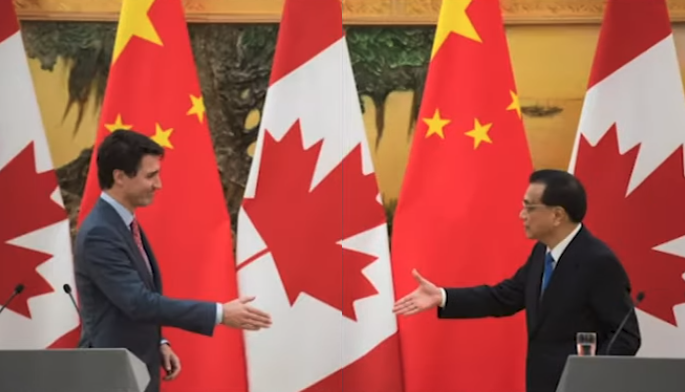
The diplomatic spat with China is “forcing the prime minister to bring out the biggest guns in his arsenal: his really serious socks”

Filed under: Cancon, China, Government, Politics — Tags: , , , — Nicholas @ 03:00

The Line shows just how seriously Justin Trudeau is taking China’s most recent not-so-veiled threats against Canadians in Hong Kong:

The warm glow of a good feed faded quickly in Ottawa, alas, where our nice little vacation from history continues its unravelling apace. China’s ambassador to Canada is issuing increasingly dire threats to the safety of our citizens, specifically the hundreds of thousands of Canadians living in Hong Kong, forcing the prime minister to bring out the biggest guns in his arsenal: his really serious socks, a very frowny photograph by Adam Scotti, and, we expect, the imminent announcement that on top of all her current duties, Chrystia Freeland will be appointed Progressive Minister In Charge Of Figuring Out What The Hell We Should Do About China But Not In A Way That Offends Anyone The Middle Class Build Back Green Error Error Program Alarm—

Whoa! Sorry! The Freeland Job Generator glitched again. No surprise, considering the miles Trudeau has put on it in only five years. Let’s hope it doesn’t give out entirely — we’d need 47 years to procure another one.

Anyway, as to the matter at hand, your Line editors are pragmatic folk. Canada can’t punch at the same level as China; under Mr. Trudeau, indeed, despite all our for-Liberal-egos-only preening about Canada being back, we can’t even punch at the same level as Ireland and Norway. But it’s time Canadians face facts: we can either continue pretending that China’s increasingly aggressive and threatening behaviour is a problem that will go away if we ignore it long enough, or we can at least pretend that we have balls and take what actions we can. Obviously we’re not going to send a fleet to parade up and down their coast, but there are things we can realistically do, and we aren’t. Australia, for instance, also in Beijing’s sights, has rolled out a series of measures to curtail China’s substantial influence there. Canada ought to be doing the same. And we could start by immediately banning Huawei, and encouraging every other country that would listen — which doesn’t seem to be many — that they should too.

Do we expect the Liberal government to do this? No. Making money shilling for the Chinese regime is the best thing to happen to post-politics Liberals since Ontario’s air ambulance service. But they should do this. And the delay is only gonna make it hurt more when events eventually force us to accept that China is not our friend, never has been, and never will be under the current political leadership.

October 17, 2020

Actually, his photo has that effect on me too …

… except that I still keep the beard. David Warren, on the other hand, is clean shaven:

“Jack Dorsey, Twitter and Square founder, in a London cafe in November 2014.” by cellanr is licensed under CC BY-SA 2.0

Every time I see a photograph of Jack Dorsey, I want to wash and shave. It is seldom that another human being has such an hygienic effect on me; especially one I have never personally met. Thanks to him, I may report to gentle reader that, up here in the privacy of the High Doganate (surrounded by jackhammers), I am quite clean-shaven this morning. I was able to resist the temptation to bathe in Dettol, but my shower was the next best thing.

I’m going out on a limb here. I am assuming my reader knows who Jack Dorsey is. (It’s not hard to find his picture.)
The boss of Twitter is among the “deep tech” executives who have, in a less ambiguous way than ever before, shut the accounts of the Trump campaign, within three weeks of a national election, and are blocking those (rather numerous) subscribers who are trying to forward the meaty revelations appearing in the New York Post. Those, incidentally, unambiguously show that one of the presidential candidates (Biden, of all people) is seriously fraudulent and corrupt. Who’d have guessed it? (Well, I did.)

Now, when I write “deep tech,” some reader will accuse me of touting a conspiracy theory. I use this expression on the analogy of “deep state.” Curiously, I don’t think this is a conspiracy at all. In the District of Columbia, where the bureaucratic institutions of the Merican Nanny State are chiefly located, Democrats routinely take well over 90 percent of the vote. Republicans do not necessarily finish second, however. That the labour pool for these institutions is overwhelmingly “progressive,” is something I infer.

Ditto for Silicon Valley. The residents do not need to conspire, although the speed at which identical editorial decisions are reached, is amazing. This I attribute to their electronic hardware.

Some seven years ago, under the influence of well-intended friends, I did a three-month experiment of “being on Twitter.” They said it would immensely increase my “hits,” and it did — while dramatically decreasing attention to them. I was flattered by all the fan-mail I received, because I am a shallow person, but when the three months were up I got off. For I do not covet a mass audience, or that kind of fame. Engaging in live-time battles of wits with other Twitterers is fun for a while, but sooner or later one recovers one’s self-respect. Or at least some people do.

September 5, 2020

Beginning the transition from personal rule to the modern bureaucratic state

Anton Howes discusses some of the issues late Medieval rulers had which in some ways began the ascendency of our modern nation state with omnipresent bureaucratic oversight of everyone and everything:

… the bureaucratic state of today, with its officials involving themselves with every aspect of modern life, is a relatively recent invention. In a world without bureaucracy, when state capacity was relatively lacking, it’s difficult to see what other options monarchs would have had. Suppose yourself transported to the throne of England in 1500, and crowned monarch. Once you bored of the novelty and luxuries of being head of state, you might become concerned about the lot of the common man and woman. Yet even if you wanted to create a healthcare system, or make education free and universal to all children, or even create a police force (London didn’t get one until 1829, and the rest of the country not til much later), there is absolutely no way you could succeed.

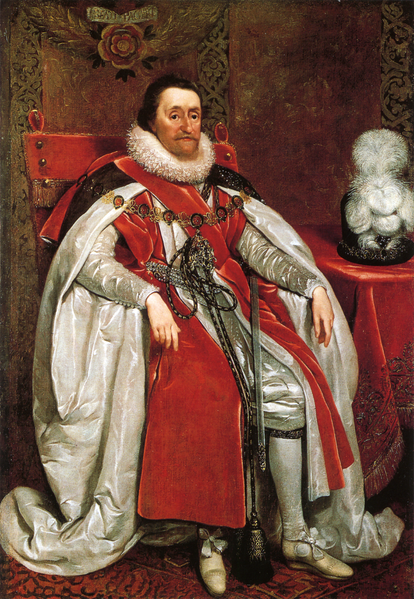
King James I (of England) and VI (of Scotland)
Portrait by Daniel Myrtens, 1621 from the National Portrait Gallery via Wikimedia Commons.

For a start, you would struggle to maintain your hold on power. Fund schools you say? Somebody will have to pay. The nobles? Well, try to tax them — in many European states they were exempt from taxation — and you might quickly lose both your throne and your head. And supposing you do manage to tax them, after miraculously stamping out an insurrection without their support, how would you even begin to go about collecting it? There was simply no central government agency capable of raising it. Working out how much people should pay, chasing up non-payers, and even the physical act of collection, not to mention protecting that treasure once collected, all takes substantial manpower. Not to mention the fact that the collecting agents will likely siphon most of it off to line their own pockets.

[…]

It was not until 1689, when there was a coup, that an incoming ruler allowed the English parliament to sit whenever it pleased. Before that, it was convened only at the whim of the ruler, and dispersed even at the slightest provocation. In 1621, for example, when James I was planning to marry his heir to a Spanish princess, Parliament sent him a petition asserting their right to debate the matter. Upon hearing of it, he called for the official record of parliamentary proceedings, personally ripped out the page with the offending vote, and promptly dissolved the Parliament. The downside, of course, was that James could not then acquire any parliamentary subsidies.

Ruling was thus an intensely personal affair, of making deals and finding ways to circumvent deals you had inherited. Increasing your capabilities as a ruler – state capacity – was thus no easy task, as the typical ruler was stuck in an essentially medieval equilibrium. Imposing a policy costs money, but raising money involves imposing policy. Breaking out of this chicken-and-egg problem took centuries of canny leadership. The rulers who achieved it most would today seem hopelessly corrupt.

To gain extra cash without interference from Parliament, successive monarchs first asserted and then abused their ancient prerogative rights to grant monopolies over trades and industries. They eventually granted them to whomever was willing to pay, establishing monopolies over industries like gambling cards or alehouses under the guise of regulating unsavoury activities. They also sold off knighthoods and titles, and in 1670 Charles II even made a secret deal with the French that he would convert to Catholicism and attack the Protestant Dutch, all in exchange for cash. Anything to not have to call a potentially pesky Parliament. At times, the most effective rulers even resembled mob bosses. Take Elizabeth I’s anger when a cloth-laden merchant fleet bound for an Antwerp fair in 1559 was allowed to depart. Her order to stop them had not arrived in time, thus preventing her from extracting “loans” from the merchants while she still had their goods within her power.

August 1, 2020

“All style and no substance made it the perfect match for Trudeau”

Filed under: Cancon, Government, Politics — Tags: , , , , , — Nicholas @ 03:00

Andrew Lawton on the Prime Minstrel’s performance in “explaining” his role in the WE scandal:

“Don’t look at me – I’m just the prime minister.”

That about sums up Justin Trudeau’s defense in a Canadian scandal starring grifters, shell corporations, virtue signallers and a federal ethics probe.

The WE-Scam, as it’s come to be known in Canadian circles, is, on its surface, a simple one.

Trudeau’s government created a $912 million government program to pay students to volunteer – formerly known as “working” if memory serves – and outsourced the administration of it to WE Charity, one of those purported international development charities more known for holding glitzy, celebrity-filled parties than digging any wells in Africa.

All style and no substance made it the perfect match for Trudeau.

WE would have netted about $44 million from the program had the government not pulled the plug amid the backlash. The charity would also have had a budget to pay teachers up to $12,000 each to funnel their students into the paid volunteer channels.

The program itself was a boondoggle, but bad policy became a scandal because Trudeau and virtually everyone in his immediate family have personal and financial connections to WE, as do at least two of his cabinet ministers, not to mention his chief of staff – all of whom say their relationships had nothing to do with WE getting the sole-sourced contract.

After weeks of ducking scrutiny from his political opponents, Trudeau made a rare appearance before the parliamentary finance committee Thursday, though his testimony was heavy on the sanctimony and light on the details.

July 30, 2020

Membership in the Laurentian Elite isn’t about intelligence, it’s about power and status

Filed under: Cancon, Government, Politics — Tags: , , , , — Nicholas @ 03:00

In The Line, Andrew Potter wonders why Canadian political elites tend to be so … dumb:

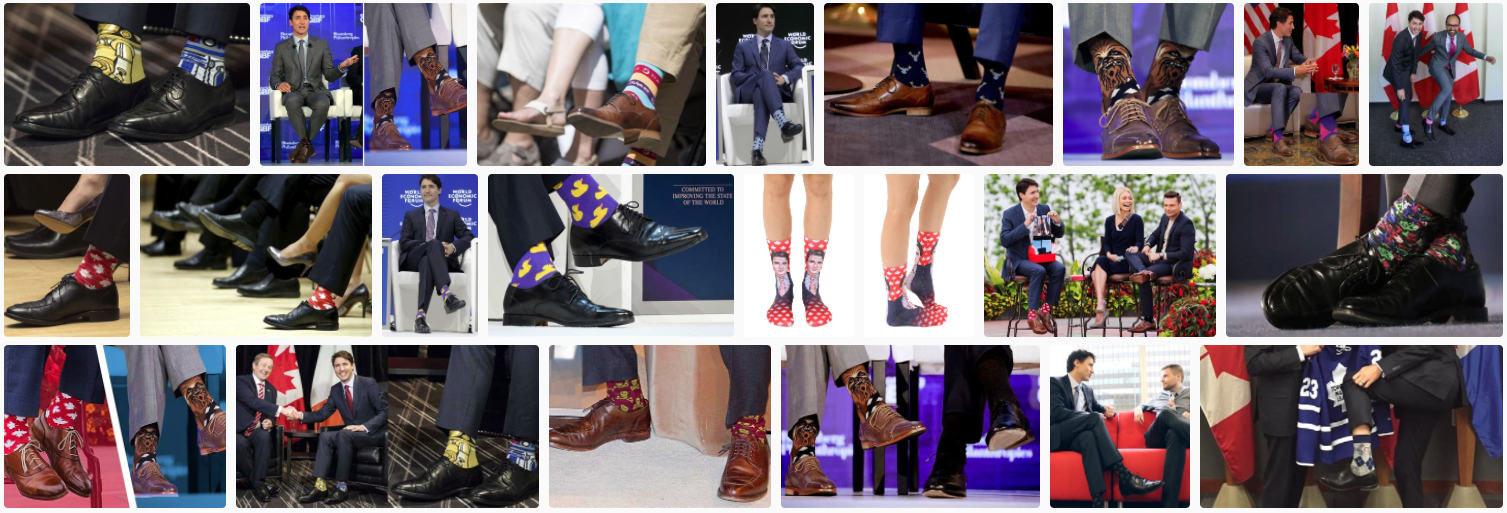
Typical image search results for “Justin Trudeau socks”

Recent events in Canadian federal politics have raised anew the familiar conundrum: why are high status people so stupid?

Anyone who has had much interaction with high status individuals is familiar with the phenomenon. It isn’t the shallow ignorance of the merely uneducated, or the malevolent brainlessness of the criminal class. It’s not even your bog-standard lack of intelligence. No, high class stupidity is of a very special type: A sort of studied lack of interest in facts, an offhand relationship with norms, an outright animosity to new ideas.

But it is important to specify just what we mean by “high status,” because status means different things to different people. (Indeed, how you define “status” is one of the key markers of class differences in Canada.) For some people status is defined by money or wealth, for others it is a function of education, while for still others it is a matter of taste. And even if you are sure it comes down to money, there are clear status differences based on how you got rich. Everyone instinctively understands the difference between the guy who got rich off a chain of used car dealerships and the one who made his bundle selling his dotcom startup, and there’s a reason why “nouveau riche” is a derogatory term.

And so the high-status individuals we are talking about here are the highest of high, the upperest of upper, the ones whose wealth is inherited, whose lives are defined by their privilege, and for whom the question of which rung of the status ladder they stand upon never arises, because there is no one above them.

Which brings us to the Liberal government, and in particular to Prime Minister Justin Trudeau, Minister of Finance Bill Morneau and the scandal over the sole-sourced contract (sorry, “contribution agreement”) with a branch of the Kielburger-led WE conglomerate. First, Canadaland broke the story two weeks ago that Trudeau’s mother and brother had received almost a quarter of a million dollars in speakers’ fees from the WE organization.

[…]

Trudeau and Morneau are both very wealthy men, and if they were going to get into the business of selling their offices it wouldn’t be to a children’s charity for penny ante sums. No, as a number of columnists have pointed out, what is at work here is not corruption, it is privilege: It probably never occurred to either Trudeau or Morneau that this sort of thing was wrong. And it didn’t occur to them, because they are the sort of people who have spent their lives not worrying about the comings and goings of money and how it may affect their lives.

That is why the defining feature of the WE scandal is not the corruption, but the almost deliberate stupidity that is on display — in particular the lack of interest in basic material facts or in following the rules that govern the lives of most people. Which brings us back to the question we started with.

Update: Corrected the attribution for this … Andrew Potter’s article appeared in The Line, not The Dominion. Apologies for the brain fart…

July 23, 2020

Justin Trudeau and the Overton Window

Filed under: Cancon, Media, Politics — Tags: , , , , , , — Nicholas @ 05:00

Ted Campbell explains how Canada’s mainstream media work so hard to move the Overton Window to benefit Justin Trudeau and the Liberal Party:

… this explanation from Politico might help:

    The concept of the “Overton window,” the range of ideas outside which lie political exile or pariahdom, was first batted around in a series of conversations by the late free-market advocate Joseph Overton in the 1990s. After Overton’s untimely death in a plane crash in 2003, his friend and colleague at the libertarian Mackinac Center, Joseph Lehman, formalized and named the idea in a presentation meant to educate fellow think-tank warriors on the power of consistent advocacy. Ring the bell loudly for your idea, no matter how unpopular, and back it up with plenty of research and evidence, so the thinking went. Today’s fringe theory can become tomorrow’s conventional wisdom by the shifting of the finely tuned gears that move popular opinion; to Overton and Lehman the role of the think tank was to at least familiarize voters with these ideas, giving them an institutional home when public opinion finally moved their way.

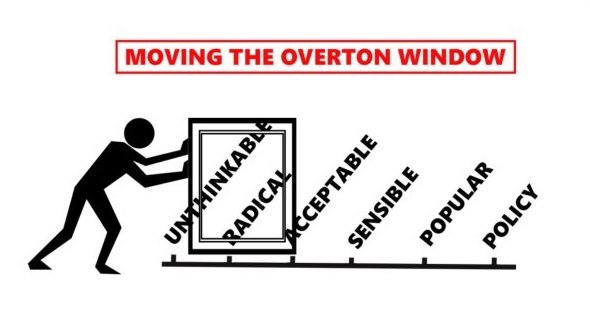
Or, and even more brief visual explanation is:

Anyway, I believe that the Liberal Party of Canada and its allies in e.g. the CBC, The Star, and amongst the others who speak for the Laurentian Elites are working very hard, right now, to move the Overton Window frame of one idea from “Unthinkable” to at least barely “Acceptable.” That idea is that Justin Trudeau’s personal corruption (I believe that’s the right word) is acceptable because the alternative is a Conservative government that is, by Liberal/Laurentian Elite definition, authoritarian (fascist), homophobic, militaristic, racist, and sexist.

That’s right, the Liberal/Laurentian Elites admit that Justin Trudeau is dishonest, that he, unthinkingly, breaks the rules, over and over again ~ because, you see, he’s a really nice person but, sadly, he’s just not very smart. I have even made that case for them. I suggested, almost a year ago, that Justin Trudeau is an intellectual lightweight who is in no way qualified to hold high office … but he has the “second hand” celebrity of a famous name and he’s photogenic, too, and so, in 21st-century Canada he’s electable.

July 9, 2020

Austin Bay on how Malawi fixed a crooked election

Filed under: Africa, Government, Law — Tags: , , , — Nicholas @ 03:00

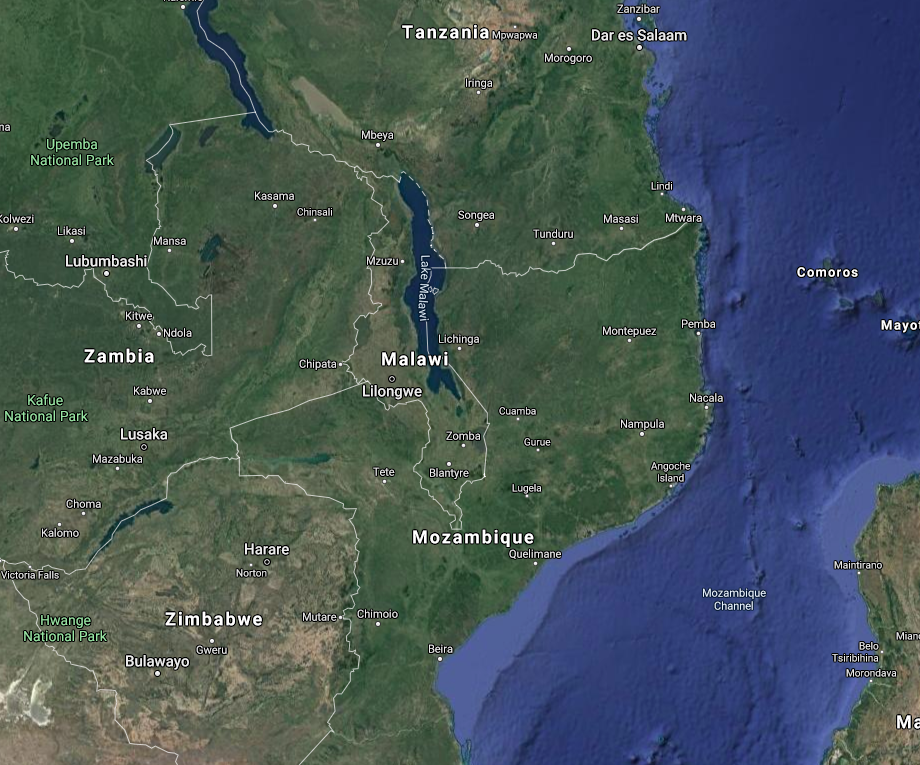
At Strategy Page, Austin Bay recounts the efforts to overturn an election that was clearly fraudulent in the small land-locked African country of Malawi:

Malawi and surrounding countries in southern Africa.
Satellite image via Google Maps.

Since he retained the title of president, Mutharika believed he controlled the guns and the courts. The protests would fade.

He learned otherwise. Malawi’s military, the Malawi Defense Force (MDF) and the Malawi Police Service, watched the country carefully, keeping order but not taking sides. The opposition appealed to Malawi’s highest court, the Constitutional Court. MDF commanders made it clear their service, as protectors of the constitution, would protect the court’s justices and respect the court’s decision.

Ignoring intimidation and enticements (Mutharika offered splendid early retirement), in February 2020, the court annulled the 2019 results as tainted and ordered new elections in June 2020 — the Fresh Presidential Election.

MDF soldiers prepared to secure the FPE’s paper ballots. In a June briefing, an MDF general told motorists to “maintain a distance of at least one kilometer between them and vehicles” carrying ballots. Enter the security zone and get a warning, but “(overtly) following the vehicles can lead to loss of lives if one is not careful.” Beware political thugs — MDF weapons prevent ballot hijacking.

Voters need protection, too. On June 22, MDF soldiers in central Malawi detained 16 men local citizens identified as intruders seeking to disrupt the vote. When police officers questioned the 16, they admitted they worked for Mutharika’s governing Democratic Progressive Party.

On June 23, opposition leader Chakwera received 60% of the vote in the untainted do-over. Mutharika got 38%. An MDF contingent immediately began protecting Chakwera.

Voting irregularities occur in mature democracies. However, election fraud does severe harm to developing nations where the disenfranchised have little or no systemic recourse and free speech is risky. Hope and nascent civil participation give way to wrath and alienation, which produce violence and destruction, not stability and economic development.

In the six decades since decolonization, election rigging by sub-Saharan Africa elites has stunted economic and social progress in nations whose people deserve far better (see Ghana). Disregard of constitutional law and violent intimidation of opposition voters by the party in power inevitably accompany election theft. Burundi and Congo are examples.

March 25, 2020

Armchair History: The Borgia

Filed under: Europe, History, Italy, Politics, Religion — Tags: , , , — Nicholas @ 02:00

Overly Sarcastic Productions
Published 30 Jun 2015

CONTENT DISCLAIMER: This video no longer meets my standards of quality for historical research and presentation. I made this one in the days long past, when the question of “How do I make an entertaining and historically interesting video” was answered by “IDK, memes I guess?”. This video in particular was an experiment with a shorter format, and is by no means definitive history. Take the video above with a grain of salt and enjoy the jokes.

In what could be a landmark in terms of progress, Overly Sarcastic Productions has decided to start making SHORT videos as well as rather long ones.

The Borgias were one messed up family, I tell you what.

March 3, 2020

QotD: Public service and competitive private enterprise

Anyone who deals with the general UK public (coercive) sector regularly, knows it is a cesspit of laziness, incompetence, arrogance and corruption, riddled with civil servants that are neither civil nor servants.

And I’m not suggesting that the levels of corruption and incompetence are comparable to those found in third world hellholes. A local official in your county council is very unlikely to demand a bribe and then have your daughter raped by his buddies if you decline. He’s especially unlikely to get away with it, and then douse your family in petrol and burn them alive if you complain – those are the levels of corruption found elsewhere in the world, so we need to retain some perspective here.

But those countries have not benefited from a thousand years of sacrifice to earn us a culture that has learned through bitter experience how to run a country. Our civil servants should be performing at the highest standard and be the best in the world, because what they inherited was a culture that conquered that world, and brought civilisation and progress (often at great cost) to every corner of it.

That they have fallen from these heights and now occupy such low places should be a matter for great national shame. And yet they continue to lord it over those they pretend to serve – try calling your local planning department if you want instruction in how supercilious a local functionary feels able to be when speaking to those he claims to serve. If you just want them to do their job, you better be prepared to beg.

Whereas on the flip side, we might agree that the private (voluntary) sector is largely filled with honest and hardworking people and entrepreneurs, but there are crony capitalists out there too.

Your local butcher and baker (those that have survived the regulatory avalanches under which the crony capitalists have begged their pet politicians to bury them) remain staunch servants of their customers (through regard to their own interests), whereas oligoplists (supermarkets, telcos, insurance companies, banks, energy suppliers or transport companies) deliver to us just what the monopolists of government do – an icy contempt that would soon turn to withering small arms fire if the laws allowed it.

Alex Noble, “Corruption In The Coercive And Voluntary Sectors: Rotten Apples? Or The Tips of Icebergs?”, Continental Telegraph, 2019-12-02.

March 2, 2020

Downfall of the Superpower China – Ming and Qing Dynasty l HISTORY OF CHINA

Filed under: China, Economics, History — Tags: , , , — Nicholas @ 02:00

IT’S HISTORY
Published 17 Aug 2015

With the dynasties of the Ming and the Qing came social security and flourishing international trade. The White Lotus Movement advocated progressive thinking in the time of the conservative Ming dynasty. In 1616 the Qing dynasty came to power. Also known as the Manchu dynasty, the Qing refused to open their borders to limitless trade which led to frustrated European merchants. This caused hostility and mistrust of the “barbaric Chinese”. Shortly thereafter China’s economy lost its race against European Colonialism and would lose military influence after gunpowder reached Europe. All about the fall of the former Chinese superpower in this episode on IT’S HISTORY!

» SOURCES
Videos: British Pathé (https://www.youtube.com/user/britishp…)
Pictures: mainly Picture Alliance
Content:
Twitchett, Denis and Loewe, Michael. The Cambridge History of China. Cambridge University Press.
Wilkinson, Endymion, Chinese History: A New Manual. Harvard University, Asia Center
Loewe, Michael; Shaughnessy, Edward L. The Cambridge History of Ancient China. Cambridge University Press
John M. Roberts A Short History of the World. Oxford University Press
Xu, Pingfang The Formation of Chinese Civilization: An Archaeological Perspective. Yale University Press.
Fairbank, J. K.; Goldman, M. China: A New History. Harvard University Press. ”

» ABOUT US
IT’S HISTORY is a ride through history – Join us discovering the world’s most important eras in IN TIME, BIOGRAPHIES of the GREATEST MINDS and the most important INVENTIONS.

» HOW CAN I SUPPORT YOUR CHANNEL?
You can support us by sharing our videos with your friends and spreading the word about our work.

» CAN I EMBED YOUR VIDEOS ON MY WEBSITE?
Of course, you can embed our videos on your website. We are happy if you show our channel to your friends, fellow students, classmates, professors, teachers or neighbors. Or just share our videos on Facebook, Twitter, Reddit etc. Subscribe to our channel and like our videos with a thumbs up.

» CAN I SHOW YOUR VIDEOS IN CLASS?
Of course! Tell your teachers or professors about our channel and our videos. We’re happy if we can contribute with our videos.

» CREDITS
Presented by: Guy Kiddey
Script by: Guy Kiddey
Directed by: Daniel Czepelczauer
Director of Photography: Markus Kretzschmar
Music: Markus Kretzschmar
Sound Design: Bojan Novic
Editing: Markus Kretzschmar

A Mediakraft Networks original channel
Based on a concept by Florian Wittig and Daniel Czepelczauer
Executive Producers: Astrid Deinhard-Olsson, Spartacus Olsson
Head of Production: Michael Wendt
Producer: Daniel Czepelczauer
Social Media Manager: Laura Pagan and Florian Wittig

Contains material licensed from British Pathé
All rights reserved – © Mediakraft Networks GmbH, 2015

February 7, 2020

QotD: The negative economic and human value of foreign aid

Filed under: Africa, Economics, Government, Quotations, USA — Tags: , , — Nicholas @ 01:00

I’d like nothing better than to be proven wrong, but I’m gloomily confident that my prediction of failure will be verified. History and sound economics both warn that foreign aid is far more likely to harm than to help economies.

During the past four decades, Western governments have lavished on Africa nearly a half-trillion dollars in aid. But to no good effect. Everyone agrees that Africans remain desperately poor.

Academic studies confirm aid’s ineffectiveness. In his celebrated 2001 book, The Elusive Quest for Growth, former World Bank economist William Easterly carefully reviews aid’s history and concludes that it is one of abject failure.

Indeed, many studies find that aid harms economies. For example, University of Regina economist Tomi Ovaska, writing in the Cato Journal, finds that “a 1 percent increase in aid as a percent of GDP (gross domestic product) decreased annual real GDP per capita growth by 3.65 percent.”

The reasons for this dismal record should be plain to anyone with a rudimentary understanding of economics. Failure of economies to develop is not because of lack of resources. Instead, it’s because of overbearing and corrupt governments, as well as to the dysfunctional social and cultural institutions that keep such governments in power and that are themselves fostered by such governments.

As long as a country is cursed by a malignant government and dysfunctional institutions, no amount of foreign aid will help it.

Don Boudreaux, “Faulty Band-Aid”, Pittsburgh Tribune-Review, 2005-06-18.

January 11, 2020

The bubbly 1720s

Filed under: Americas, Britain, Business, Economics, France, Government, History — Tags: , , , , , — Nicholas @ 03:00

In the latest Age of Invention newsletter, Anton Howes looks at Britain’s volatile financial scene in the 1720s:

William Hogarth – The South Sea Scheme, 1721. In the bottom left corner are Protestant, Catholic, and Jewish figures gambling, while in the middle there is a huge machine, like a merry-go-round, which people are boarding. At the top is a goat, written below which is “Who’l Ride”. The people are scattered around the picture with a sense of disorder, while the progress of the well-dressed people towards the ride in the middle represents the foolishness of the crowd in buying stock in the South Sea Company, which spent more time issuing stock than anything else.
Scanned from The genius of William Hogarth or Hogarth’s Graphical Works via Wikimedia Commons.

Over in France, a Scottish banker named John Law had in the late 1710s overseen an ambitious scheme to reorganise the government’s finances. He ran the Mississippi Company, one of the many companies with monopolies on France’s international trade. His scheme was for the company to acquire all of the other similar monopolies, so that it could have a monopoly on all of the country’s intercontinental trade routes. By 1719, the Mississippi Company had swelled into a Company of the Indies, which in turn had purchased the right to collect French taxes, from which it took took its own cut. In exchange for acquiring these monopolies, Law’s new super-monopoly would buy up the French government’s accumulated war debts, allowing repayment on more generous terms. By allowing the state to borrow more cheaply, the scheme was to be a key plank in improving French military might.

Meanwhile, in Britain, a very similar project was afoot. Following the War of the Spanish Succession, one of the things Britain won from France was the asiento – the monopoly on supplying African slaves to Spain’s colonies in America. The asiento was given to the South Sea Company, which had the monopoly on British trade with South America, and which in 1720 began to follow a scheme similar to Law’s. Given developments in France, it would not do for the British state to be left behind in terms of its capacity to take on more debt for war. Thus, with political support, the South Sea Company began to buy up the government’s debt, persuading its creditors to exchange that debt for increasingly valuable company shares.

In 1720, both schemes came crashing down. In the case of Law’s scheme, he had printed paper currency with which people could buy his company’s shares, but in 1720 discovered he had printed too much. When he prudently tried to devalue the company’s shares to match the quantity of paper notes, the devaluation spun out of control. In the case of the South Sea Company, the causes of the crash were a little more mysterious, perhaps even verging on the mundane. One explanation is that too many wealthy investors simply tried to sell their shares so that they would have ready cash to spend on holidaying in Europe, precipitating a minor fall in the share price which then led to a more widespread panic. Regardless, it did not end well. The company itself continued for many years thereafter — it even got involved with whaling off the coast of Greenland — but the collapse of its share price ended its chance to restructure the government’s debts.

December 15, 2019

Policing London – The Bow Street Runners – Extra History – #3

Filed under: Britain, Government, History, Law — Tags: , , , , — Nicholas @ 06:00

Extra Credits
Published 14 Dec 2019

Henry Fielding was a dangerous man … with a pen. He had a razor-sharp wit and created the page-turner novel, but that’s not what we want to focus on here. Because Henry Fielding is also responsible for assembling London’s first organized police force. The Bow Street Runners were inspired by Wilde’s operation just … not corrupt. But Fielding quickly found that in London’s justice system, corruption was the assumed default, not the exception. He certainly had his work cut out for him!

Henry Fielding – Everything Wilde did but you know… without the whole… being morally bankrupt bit.

Join us on Patreon! http://bit.ly/EHPatreon

December 14, 2019

Who will “Big Dairy” push as the next Conservative leader?

The Canadian supply management system is a classic case of concentrated benefits and diffused costs … all Canadians pay more for milk, cheese, and other dairy products, but the extra profits go to those who hold the quota allotment for production. During the last federal Conservative leadership race, the “temporary conservatives” were enough to push the Milk Dud over the top to defeat Maxime Bernier — because Bernier was outspoken in his opposition to the whole supply management cartel and threatened those guaranteed profits for the insiders. The Milk Dud has announced he’s stepping down, so who will Big Dairy choose to replace him?

Andrew Scheer, paid tool of Big Dairy, chugs some milk during a Press Gallery speech in 2017. I’ve called him the “Milk Dud” ever since.
Screencapture from a CTV video uploaded to YouTube.

To my mind the defining image of Andrew Scheer’s efforts to become prime minister of Canada, which officially came to an end Thursday, comes from the 2017 Press Gallery Dinner in Ottawa. “There’s some suggestion out there that I’m beholden to a certain group within the Conservative family,” he told the crowd, grinning. And then, dimples at maximum, he took a swig from a one-litre carton of Neilson two-per-cent milk.

It’s nice when politicians can poke fun at themselves. Most are really bad at it, betraying only their own ego. Scheer’s routine, by contrast, reportedly brought the house down. The problem is that, by all the evidence, Scheer was utterly beholden to the dairy industry. And absent the effects of alcohol, that’s not really very funny.

We knew at the time that, days before, Scheer had barely beaten Maxime Bernier in the party leadership contest with help from a few thousand votes from people whom Bernier not unreasonably called “fake Conservatives” — i.e., people who had purchased memberships for the sole purpose of voting for Scheer, for the sole purpose of maintaining supply management in the dairy industry (which Bernier opposes) intact.

We came to know later, thanks to a Dairy Farmers of Canada briefing book discovered by an aggrieved delegate to the 2018 party convention in Halifax, that the dairy lobby considered Scheer a “safety net.” Regardless of any vote by the party membership that might recommend freer markets in dairy, the book alleged, the farmers had Scheer’s commitment never to undermine supply management in an election platform.

Scheer denied any such deal existed, of course. But it seemed doubtful the dairy industry’s notoriously fearsome, professional and effective lobbyists could have been so misinformed.

It ought to have been a liability from the start: Here was the self-styled middle-class alternative to Justin Trudeau, the man who knows what it’s like to plan a family budget around the breakfast table, to scrimp and save, whose parents didn’t own a car, declaring his fealty to a cartel dedicated to inflating milk prices for the benefit of wealthy businesses. Har, har, har.

« Newer PostsOlder Posts »

Powered by WordPress