Ever heard of Atlantropa? Probably not. It was a nutty scheme hatched by a nutty guy, and it never had even the remotest chance of ever coming to pass. In the 1920s, Europe was suffering from a myriad of post–World War I problems. There was a refugee crisis, the result of the shifting borders and population transfers that occurred at the war’s end. There was an energy crisis, and a serious shortage of natural resources. And, of course, there was the economic depression. Several years before a madly gesticulating Austrian with a wacky mustache would rise to power with his own solution to the continent’s ills, a plucky architect from Bavaria named Herman Sörgel proposed a different one: Drain the Mediterranean! Dam the Med and partially drain it, in order to form a contiguous body of land between Europe and Africa. A new continent that would be called Atlantropa. To Sörgel, this would cure Europe of all that ailed her. The dammed Mediterranean would create hydroelectric power plants to relight Europe’s recently dimmed lamps, and the elimination of pesky ocean crossings would allow millions of European refugees to stream into Africa, where they would take their rightful place as lord and master. Better still, this newly conquered African land would be ripe with fertile soil, minerals, and a plethora of natural resources for the taking.
Oh, Herman Sörgel, you pie-in-the-sky dreamer! You were the Elon Musk of your day (but slightly more grounded). The idea never took off, not just because of the fact that it was batshit insane, but also because, at that time, the left’s intellectual elite — the League of Nations crowd, the “forward-thinkers” — understood that you don’t cure one nation or one continent’s refugee problem by sending all of the huddled, wretched refuse to another people’s nation or continent. Back then, the left understood that this would pose serious problems for the host nation or continent. And the left was right. Atlantropa would have been a nightmare for native Africans, and eventually, there would have been a Rhodesia- or South Africa-style reckoning.
In the 1920s, if anyone had suggested that the specter of millions of European refugees streaming into Africa did not constitute an invasion, that person would have been dismissed as a lunatic, because of course it would have been an invasion. Those in favor of Atlantropa, and those against it, all got that point. The European refugees would not have been content to live like Africans, or to live under African rule. Europe’s refugee crisis would have become Africa’s domination crisis. So to the liberal elites, the best solution was to tell the refugees to stay put.
David Cole, “When Refugees Were Conquerors”, Taki’s Magazine, 2018-10-29.
April 20, 2021
QotD: The Atlantropa project
April 16, 2021
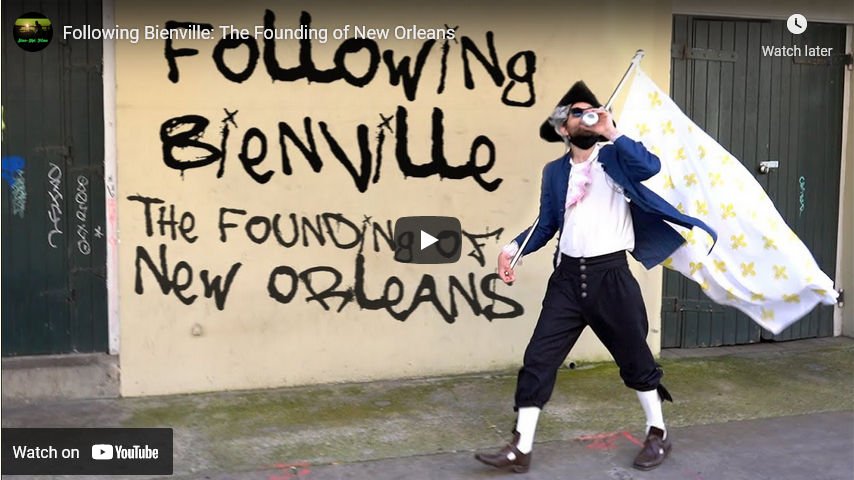
Following Bienville: The Founding of New Orleans
Atun-Shei Films
Published 15 Apr 2021The origin story of New Orleans is a tale of rampant corruption, unchecked greed, fiendish vice, and gross incompetence – not much has changed!
Join me on an epic journey of discovery as I trace the route of the first French explorers to this area by paddling down Bayou St. John and walking overland to the French Quarter, exploring the geography and history of the city along the way.
Support Atun-Shei Films on Patreon ► https://www.patreon.com/atunsheifilms
Leave a Tip via Paypal ► https://www.paypal.me/atunsheifilms
Buy Merch ► teespring.com/stores/atun-shei-films
#NewOrleans #Louisiana #History
Maps by Carl Churchill ► https://twitter.com/Cchurchili
Reddit ► https://www.reddit.com/r/atunsheifilms
Twitter ► https://twitter.com/atun_shei
~REFERENCES~[1] B.F. French. Historical Collections of Louisiana and Florida, Including Translations of Original Manuscripts Relating to Their Discovery and Settlement (1875). Albert Mason, Page 24-25
[2] Lawrence N. Powell. The Accidental City: Improvising New Orleans (2012). Harvard University Press, Page 11-15
[3] Philomena Hauck. Bienville: Father of Louisiana (1998). Center for Louisiana Studies, University of Louisiana at Lafayette, Page 12-13
[4] Richard Campanella. “Link to the Past: From French Colonists to the Beginnings of Jazz, Spanish Fort Traces its History Across Three Centuries” (2019). Times Picayune/New Orleans Advocate https://richcampanella.com/wp-content…
[5] Hauck, Page 23-25
[6] Hauck, Page 6
[7] Hauck, Page 44-57
[8] Powell, Page 25-32
[9] Richard Campanella. Bienville’s Dilemma: A Historical Geography of New Orleans (2008). Center for Louisiana Studies, University of Louisiana at Lafayette, Page 109-110
[10] Campanella, Page 77-78
[11] Andrea P. White. “Archaeology of the New Orleans Area.” 64Parishes https://64parishes.org/entry/archaeol…
[12] Campanella, Page 111
[13] Powell, Page 43-51
[14] Powell, Page 68-73
[15] Karen Ordahl Kupperman. A True and Exact History of the Island of Barbados by Richard Ligon (2011). Hackett Publishing Company, Page 19
[16] Hauck, Page 89
[17] Powell, Page 56-58
March 5, 2021
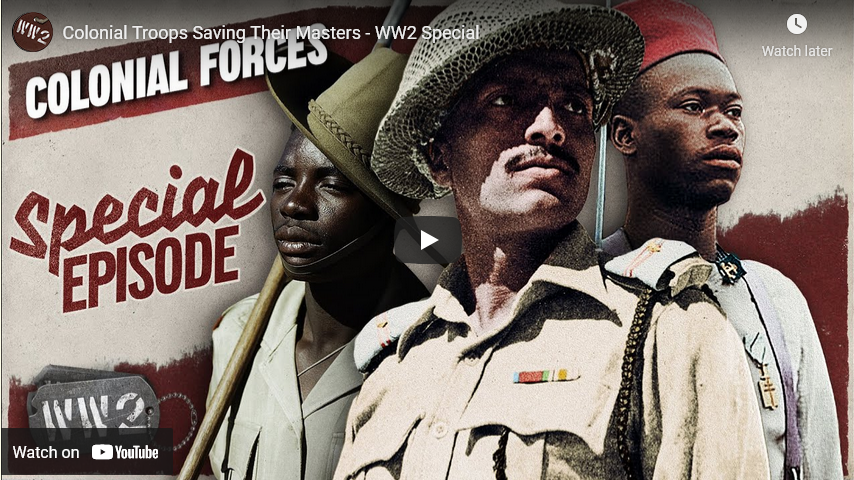
Colonial Troops Saving Their Masters – WW2 Special
World War Two
Published 4 Mar 2021Without the incredible support and sacrifice of troops from British and French colonies, the Allies would be having an even harder time withstanding the Axis onslaught. This episode looks at their formation and their fighting style.
Join us on Patreon: https://www.patreon.com/TimeGhostHistory
Or join The TimeGhost Army directly at: https://timeghost.tvFollow WW2 day by day on Instagram @ww2_day_by_day – https://www.instagram.com/ww2_day_by_day
Between 2 Wars: https://www.youtube.com/playlist?list…
Source list: http://bit.ly/WW2sourcesHosted by: Indy Neidell
Written by: Markus Linke and Indy Neidell
Director: Astrid Deinhard
Producers: Astrid Deinhard and Spartacus Olsson
Executive Producers: Astrid Deinhard, Indy Neidell, Spartacus Olsson, Bodo Rittenauer
Creative Producer: Maria Kyhle
Post-Production Director: Wieke Kapteijns
Research by: Markus Linke
Edited by: Miki Cackowski
Sound design: Marek Kamiński
Map animations: Miki Cackowski, Eastory (https://www.youtube.com/c/eastory)Colorizations by:
Daniel Weiss
Mikołaj UchmanSources:
Photo of French Saharan troops (1932), courtesy of Acln https://commons.wikimedia.org/wiki/Fi…
Archives du département du Rhône et de la métropole de Lyon
The New York Public Library – Digital Collections
USMC Archives
IWM E 11584, CBM 2264, E 6605, IND 2864, IND 2290, K 1385
Picture of Sudanese Defense Force near Kufra Oasis, courtesy of Major PJ HurmanSoundtracks from Epidemic Sound
Johannes Bornlof – “Deviation In Time”
Hakan Eriksson – “Epic Adventure Theme 3”
Phoenix Tail – “At the Front”
Philip Ayers – “The Unexplored”
Johannes Bornlof – “The Inspector 4”
Fabien Tell – “Weapon of Choice”
Reynard Seidel – “Deflection”
Fabien Tell – “Other Sides of Glory”
Philip Ayers – “Please Hear Me Out”Archive by Screenocean/Reuters https://www.screenocean.com.
A TimeGhost chronological documentary produced by OnLion Entertainment GmbH.
From the comments:
World War Two
9 hours ago
As regular viewers will know, we try to give the most complete picture of World War Two possible by diving into the multitude of people that took part and seeing it from their unique perspective.This episode is part of that effort, looking at the colonial troops who fought on the side of their imperial administrators. In a different way, our On the Homefront series is also part of that effort, and we are happy to announce that we have just got started with it again. Check out the latest episode here where Anna looks at the changing role of the Geisha in wartime Japanese society: https://youtu.be/7Y3IYsNC1WM
February 20, 2021
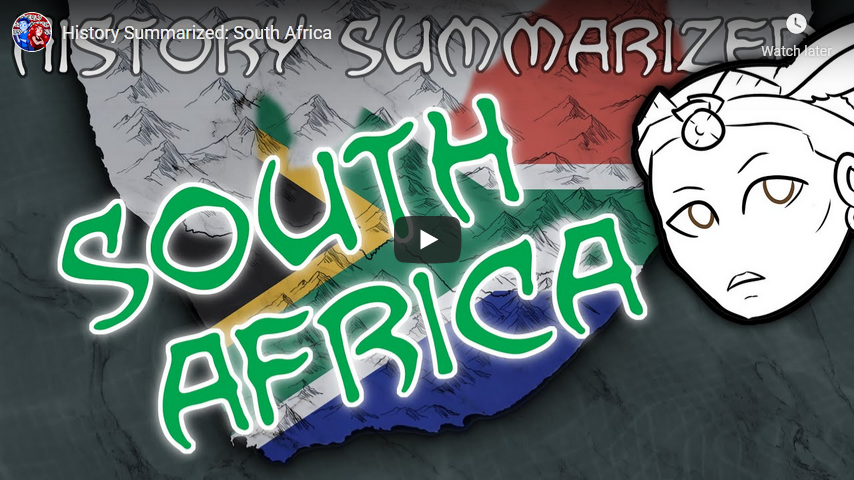
History Summarized: South Africa
Overly Sarcastic Productions
Published 19 Feb 2021In the past few centuries, few corners of the African Continent were quite as busy as the south. It’s a winding river from the first migrations and waves of colonists in the Cape Colonies to the Rainbow Nation we know today, so let’s dive in and see how it all played out!
SOURCES & Further Reading for Black History Month:
— The African Experience From ‘Lucy’ to Mandela From the Great Courses Plus, lectures 15-18 “South Africa: The Dutch Cape Colony & The Zulu Kingdom & Frontier and Unification & Diamonds and Gold”, 26 “Segregation and Apartheid in South Africa”, and 32 “The South African Miracle”— Born A Crime by Trevor Noah: https://bookshop.org/books/born-a-cri…
— Home Team History is a YouTube channel covering all corners of the African continent. They have several videos about Southern Africa, such as “A History of Stone Architecture in Southern Africa” (https://youtu.be/0U4Wu3CmL0U) and “Southern Africa: The Birthplace of Iron Mining” (https://www.youtube.com/watch?v=b9HO0…), and “A history of the Xhosa People” (https://youtu.be/axajPiZnDqo)
— Lastly, looking to modern times, it’s important to recognize how the COVID crisis has exacerbated massive preexisting disparities between healthcare for Black and minority communities and that of white Americans. It’s not enough to just acknowledge history, we all have a responsibility to understand modern problems and work on solutions. Read more: (https://www.scientificamerican.com/ar…) and please consider Donating to support the NAACP’s COVID relief programs: (https://naacp.org/coronavirus/coronav…)With special thanks to the members of our discord community who helped polish my script: Holben, Klieg, Good Hunter, and Sticc (who has a History of Africa podcast: https://www.listennotes.com/podcasts/…)
This topic was voted on by our community of Patrons! If you’d like to get extra rewards and play a role in the content we make, please consider supporting our channel at https://www.Patreon.com/OSP
Our content is intended for teenage audiences and up.
PODCAST: https://overlysarcasticpodcast.transi…
DISCORD: https://discord.gg/osp
MERCH LINKS: http://rdbl.co/osp
OUR WEBSITE: https://www.OverlySarcasticProductions.com
Find us on Twitter https://www.Twitter.com/OSPYouTube
Find us on Reddit https://www.Reddit.com/r/OSP/
February 17, 2021
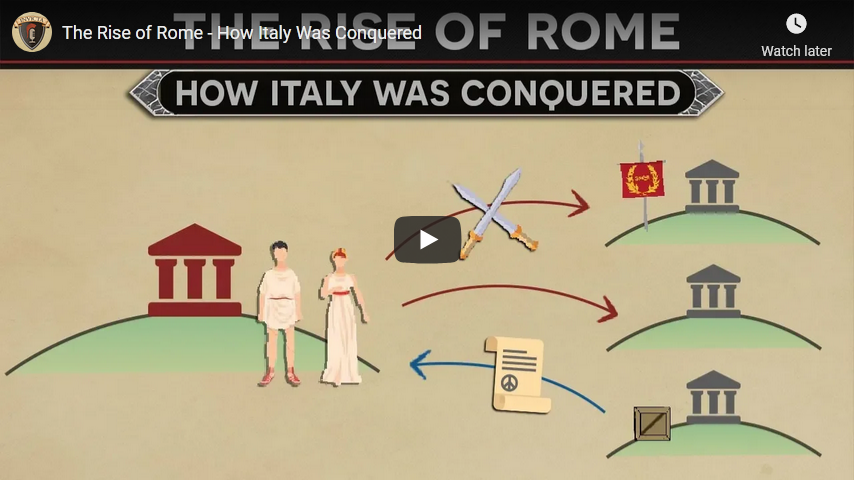
The Rise of Rome – How Italy Was Conquered
Invicta
Published 4 Aug 2018Let’s talk about the rise of the Roman Republic in its early years, specifically how the diverse communities across Italy were united! If you love this time period, I suggest you take a look at the “Rise of Rome” DLC coming out soon for Rome II Total War. I’ll be showing off gameplay on the 2nd channel.
Literary Sources:
“The Rise of Rome” by Anthony Everitt
“Early Roman Warrior” by Osprey Publishing
“The Roman Army” by Chris McNab
“Uniforms of the Roman World” by Kevin F. Kiley
“The Archaic Community of the Romans” by Robert E. Palmer#RomanHistory
#RiseofRome
February 3, 2021
Fatah demands that Britain return Big Ben to its original Jerusalem home
Daniel Greenfield unravels the historical misconceptions that informed the demand:

“Big Ben” by kev_zilla is licensed under CC BY-NC-ND 2.0


“The Jerusalem Clock is hidden in London today,” Fatah, the political movement behind the PLO and the Palestinian Authority, asserts in a post titled, “Jerusalem Stolen Clock”.
It goes on to claim that the British military ordered the clock tower dismantled. Then the “British moved the clock first to a new tower across from the municipality of Jerusalem, and transferred it to the British Museum in London, to become the famous British icon, ‘Big Ben’.”
How did Big Ben, which was built in 1859, become a Muslim clock tower from the 20th century?
There are some other slight differences between London’s Big Ben and the “stolen clock” such as the fact that Big Ben is 316 feet tall while the “Palestinian” clock tower was only 42 feet.
But the story of the “Palestinian clock” is also the story of the entire myth of “Palestine”.
When you believe that the Jerusalem of King David and King Solomon was originally yours, you can just as easily believe that London’s Big Ben was originally the property of “Palestine”.
The “Palestinian clock” is as real as “Palestine”. The myth of a “Palestinian” people propounded by Fatah which has spent decades killing over it is also the story of the “Palestinian clock”.
There’s no more of a “Palestinian” people who were dispossessed by the Jews than Big Ben is a “Palestinian” clock stolen and passed off as London’s Big Ben. Both are fake history built out of resentments and garbled stories whose context has been lost, but whose hatreds remain real.
There were never any Palestinians. When the clock was built the region had been part of the Ottoman Empire, the last Caliphate until ISIS. The caliphates had settled it with Arab Muslim clans who dominated Christian refugees fleeing Muslim persecution, along with groups of other minorities from escaped slaves to gypsies, along with the indigenous Jewish population.
The Ottomans had become obsessed with clock towers as a symbol of their empire. But the Ottomans hadn’t invented them, they had adopted them from Europe, and planted them in major cities of the empire to create a common sense of time and belonging for their subjects.
Sultan Abdul Hamid II, the last real sultan of the empire, obsessively erected clock towers to show off how modern the Ottoman Empire was. But by then the Empire was anything but modern and Hamid’s clock tower craze was powered by his German allies. Kaiser Wilhelm II gave Hamid a batch of clocks at the turn of the century which the Turks put into clock towers.
The Ottoman Empire erected some of its clock towers in Israel. These clock towers utilized the talents and funds of the indigenous Jewish and the Arab Muslim settler population. The clock tower projects in Israel began in 1901 which is also the date when Wilhelm sent Hamid a whole bunch of clocks. One of these clock towers was stuck on Jerusalem’s Jaffa Gate which Hamid had previously cut a hole in so that the Kaiser could enter Jerusalem in his tall plumed helmet.
H/T to Kate at SDA for the link.
January 28, 2021
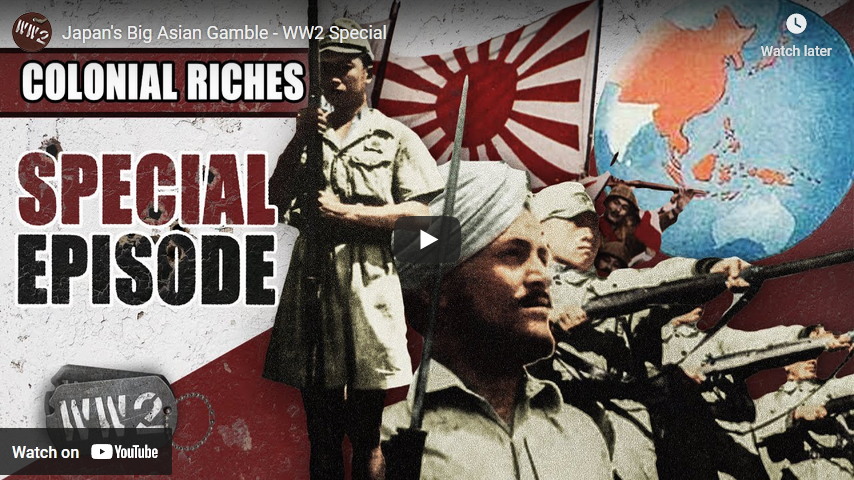
Japan’s Big Asian Gamble – WW2 Special
World War Two
Published 27 Jan 2021Access to scarce natural resources and labor was a big reason for the Japanese to invade numerous South-East asian countries. But was that necessary? And did the benefits outweigh the risk? Let’s find out!
Join us on Patreon: https://www.patreon.com/TimeGhostHistory
Hosted by: Indy Neidell
Written by: Joram Appel
Director: Astrid Deinhard
Producers: Astrid Deinhard and Spartacus Olsson
Executive Producers: Astrid Deinhard, Indy Neidell, Spartacus Olsson, Bodo Rittenauer
Creative Producer: Maria Kyhle
Post-Production Director: Wieke Kapteijns
Research by: Joram Appel
Image Research by: Michał Zbojna
Edited by: Michał Zbojna
Sound design: Marek KamińskiColorizations:
Julius Jääskeläinen – https://www.facebook.com/JJcolorization/Icons from The Noun Project:
asia by Ted Grajeda
clothing by Adnen Kadri
Coal by Eucalyp
Wire by Arthur Shlain
noun_Wool_2842881
noun_rock_12609
noun_rock_481051
noun_hemp_2183488
Iron Ingot by Jetro Cabau Quirós
rock by Bakunetsu Kaito
Medicine by Ladalle CS
noun_rock_481016
noun_silk_3492403
noun_Oil_3319962
Paper by Sergey Demushkin
rock by Aline Escobar
tire by Juan León
soap by Roman
noun_Wood_2177037
noun_Metal_3369307
rock by Bakunetsu Kaito
noun_Mineral_3517065Soundtracks from Epidemic Sound:
“Sights of the Tokyo Tower” – Sight of Wonders
“Paths of a Samurai” – Mandala Dreams
“Pacific Shores” – Mandala Dreams
“Sights of the Tokyo Tower” – Sight of Wonders
“Save Her” – Jon BjorkSources:
Archive by Screenocean/Reuters https://www.screenocean.com.
A TimeGhost chronological documentary produced by OnLion Entertainment GmbH.
From the comments:
World War Two
4 hours ago
Japan wasn’t the only nation that went to war over Asia’s natural resources. Indonesia was a big source of wealth for the Dutch ever since it became a colony, so The Netherlands went to war after World War Two, when the Indonesians declared their independence. We have made a whole series about the Indonesian War of Independence, including a prologue covering the colonial context (including WW2 occupation) of Indonesia. You can watch that prologue right here: https://youtu.be/IkKJSRaeOik
January 27, 2021
Australia’s aboriginal people
On Australia Day, which progressives want to rename as “Invasion Day”, a look at the aboriginal culture(s) who had inhabited the continent for thousands of years before contact with Europeans:
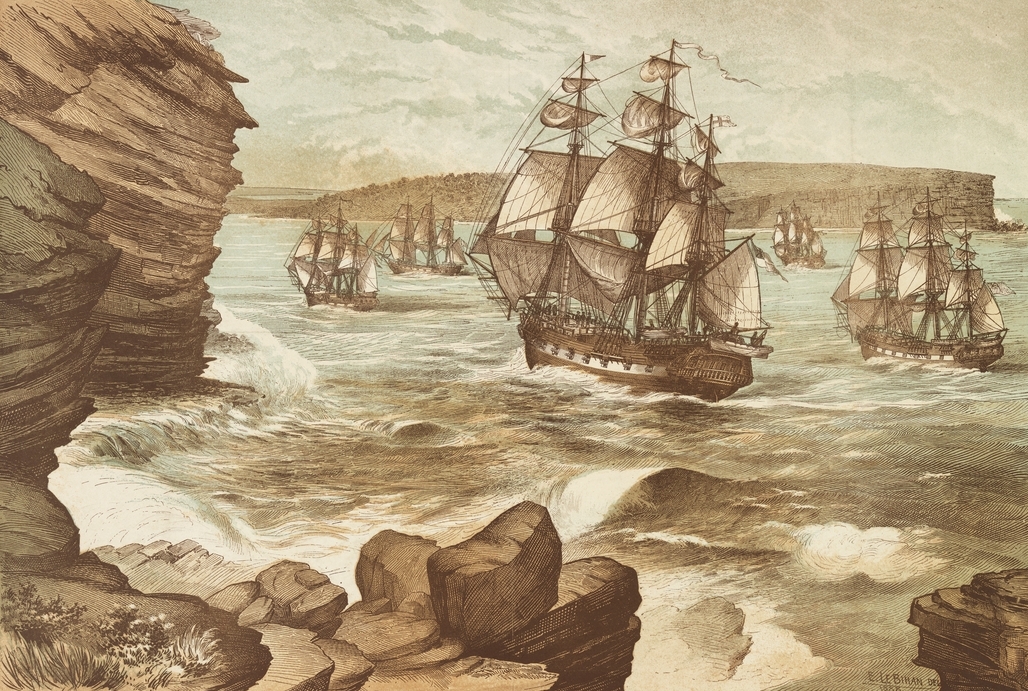
Colour lithograph of the First Fleet entering Port Jackson on January 26 1788, drawn in 1888.
Original by E. Le Bihan via Wikimedia Commons.
Liam Hemsworth and others are spruiking nonsense which is also being taught to school children as they protest against “invasion day”:
We are spiritually and culturally connected to this country.
This country was criss-crossed by generations of brilliant Nations.
Aboriginal and Torres Strait Islander people were Australia’s first explorers, first navigators, first engineers, first farmers, first botanists, first scientists, first diplomats, first astronomers and first artists.
Australia has the world’s oldest oral stories. The First Peoples engraved the world’s first maps, made the earliest paintings of ceremony and invented unique technologies. We built and engineered structures – structures on Earth – predating well-known sites such as the Egyptian Pyramids and Stonehenge.
Our adaptation and intimate knowledge of Country enabled us to endure climate change, catastrophic droughts and rising sea levels.
Always Was, Always Will Be. acknowledges that hundreds of Nations and our cultures covered this continent. All were managing the land – the biggest estate on earth – to sustainably provide for their future.This statement is a work of poorly written fiction. All humans are descended from ancestors that roamed Africa. At some stage – perhaps 50,000 to 60,000 years ago according to archaeological records – some Homo Sapiens (so far as we know, Homo Erectus do not appear to have migrated to the land mass now know as Australia) moved to this continent during the Pleistocene (ice age) when sea levels were much lower allowing transit without seafaring. Later the ice age abated, ice melted and the Australian continent became separate and its inhabitants isolated.
In Jared Diamond’s book Guns, Germs and Steel – the Fates of Human Societies, he argues that circumstances (pressure on resources etc) lead to innovations and changes to society. On Australia he wrote:
Australia is the sole continent where, in modern times, all native peoples still lived without any of the hallmarks of so-called civilization – without farming, herding, metal, bows and arrows, substantial buildings, settled villages, writing, chiefdoms or states. Instead Australian Aborigines were nomadic or semi-nomadic hunter-gatherers, organised into bands, living in temporary shelters or huts and still dependent on stone-tools. – (p. 297).
Compared with Native Australians, New Guineans rate as culturally “advanced” … most New Guineans … were farmers and swineherds. They lived in settled villages and were organised politically into tribes rather than as bands. All New Guineans had bows and arrows, and many used pottery. – (p. 297-8).
While New Guinea … developed both animal husbandry and agriculture, … Australia … developed neither. – (p. 308).
Isolated from other populations, and lacking little in the way of resources, Australia’s first inhabitants were not pressured into changing their ways of life and remained essentially hunter gatherers and nomadic societies. I make no judgement on whether this is good or bad, merely that despite the lack of competition over resources, life wasn’t always rosy and violence and skirmishes, murder and rape occurred as much among those humans as it did elsewhere.
It was inevitable that this isolation would not persist – it is perhaps surprising that it persisted as long as it did. But contact with other humans was inevitable and the outcome of that contact would be widely varying depending on whether the contact was made by the Portuguese, Spanish, Dutch, Chinese, British or others. The fact that Australia became a British colony is probably the best of the many alternatives that could have sprung from colonialisation. And we are all affected, mostly positively, by that contact – there would be few Aboriginal Australians (perhaps none) who today could say that they have no ancestry at all from settlers who arrived after 1787. We are all of mixed blood and we all descend from those original Homo Sapiens who evolved in Africa. It is time to talk about unity rather than division.
January 25, 2021
QotD: Indira Gandhi’s exploitation of the goddess Kali
Indira Gandhi — the daughter of one of the freedom movement’s protagonists Pandit Nehru and India’s first and only female prime minister — chose consciously to co-opt this divinity in service of burnishing her own self-image. Indeed, during her first spell in office, from 1966-1977, Indira’s image was as prolific as the colourful printed pictures of the tantric goddess splashed across India’s towns and bazaars. Her appearance was, understandably, more benign. But in India’s jostling visual marketplace her image — big smile and bobbed black hair shot with a streak of white framed by a demure uttariya (veil) — was as inescapable as any deity’s.
Indira played the demagogue superbly. But just as her popularity among Indians soared, and her political confidence grew, those around her began equating her strong, intolerant, and cold politics with female divinities and their overwhelming powers. According to a hugely contentious apocryphal story, Indira’s young rival Atal Bihari Vajpayee, who would go on to succeed her as prime minister, was so overcome by devotion at the sight of her gallantry during India’s war with Pakistan in 1971 that he called her Ma Durga — Kali’s mother.
Cleo Roberts, “Indira Gandhi: a gift from the gods?”, The Critic, 2020-10-15.
January 23, 2021
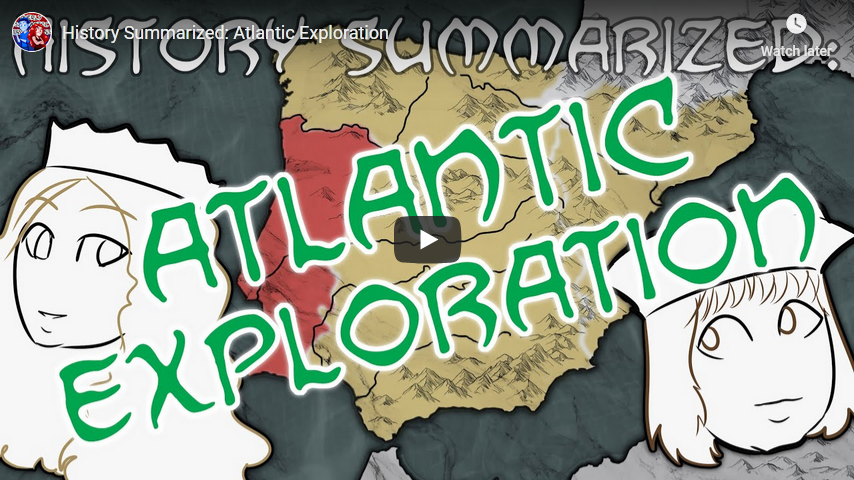
History Summarized: Atlantic Exploration
Overly Sarcastic Productions
Published 22 Jan 2021So you just conquered Iberia, and you’re wondering where to go from here? It’s a more common conundrum than you might think. Consider: a big wooden floaty house that goes splish-splash in the Atlantic Ocean. Anyway, this is a video about Portuguese and Spanish (erm, Castilian) exploration in the Atlantic during the 1400s. Please note my deliberate decision to Nope on out at the turn of the 1500s.
This topic was requested by our longtime patron Antonio Juarez! Thank you Antonio for supporting our work and helping to provide entertaining educational content.
SOURCES & Further Reading: Ornament of the World by Maria Rosa Menocal; lectures from Great Courses Plus “1571: Spain, Portugal Encircle the Globe” by Donald J. Harreld, “Renaissance and Exploration: New Horizons” by Jennifer McNabb, “Portugal’s Great Leap Forward” by “Vejas Gabriel Liulevicius”
TRACKLIST: “Scheming Weasel (faster version),” “Monkeys Spinning Monkeys”, “Local Forecast – Elevator” Kevin MacLeod (incompetech.com)
Licensed under Creative Commons: By Attribution 4.0 License
http://creativecommons.org/licenses/b…Our content is intended for teenage audiences and up.
PATREON: https://www.Patreon.com/OSP
PODCAST: https://overlysarcasticpodcast.transi…
DISCORD: https://discord.gg/osp
MERCH LINKS: http://rdbl.co/osp
OUR WEBSITE: https://www.OverlySarcasticProductions.com
Find us on Twitter https://www.Twitter.com/OSPYouTube
Find us on Reddit https://www.Reddit.com/r/OSP/
January 22, 2021
Japan’s Only Pacific “Ally” – Phibun’s Thailand – WW2 Biography Special
World War Two
Published 21 Jan 2021Thailand’s prime minister and de-facto dictator Plaek Phibunsongkhram imported European fascism, nationalism and militarism to his country. But when Japan’s threat to South-East Asia became imminent, Phibun didn’t know what to do. His story is one of utter indecisiveness and opportunism.
Join us on Patreon: https://www.patreon.com/TimeGhostHistory
Or join The TimeGhost Army directly at: https://timeghost.tvFollow WW2 day by day on Instagram @ww2_day_by_day – https://www.instagram.com/ww2_day_by_day
Between 2 Wars: https://www.youtube.com/playlist?list…
Source list: http://bit.ly/WW2sourcesHosted by: Indy Neidell
Written by: Joram Appel
Director: Astrid Deinhard
Producers: Astrid Deinhard and Spartacus Olsson
Executive Producers: Astrid Deinhard, Indy Neidell, Spartacus Olsson, Bodo Rittenauer
Creative Producer: Maria Kyhle
Post-Production Director: Wieke Kapteijns
Research by: Joram Appel
Edited by: Miki Cackowski
Sound design: Marek Kamiński
Map animations: Eastory (https://www.youtube.com/c/eastory)Sources:
IWM HU 675
Portrait of Plaek Phibunsongkhram, courtesy of 冯銮披汶 https://commons.wikimedia.org/wiki/Fi…
From the Noun Project: people by ProSymbols, tick by akash kSoundtracks from the Epidemic Sound:
Johannes Bornlof – “Deviation In Time”
Philip Ayers – “Trapped in a Maze”
Rannar Sillard – “March Of The Brave 4”
Fabien Tell – “Last Point of Safe Return”
Johannes Bornlof – “The Inspector 4”
Farrell Wooten – “Blunt Object”Archive by Screenocean/Reuters https://www.screenocean.com.
A TimeGhost chronological documentary produced by OnLion Entertainment GmbH.

December 4, 2020
5 strange Canadian objects
J.J. McCullough
Published 22 Jul 2017Let’s take a look at a couple of weird things only Canadians will understand.
O Canada ending music care of SuperNIntendoGameboy, check out full version here: https://www.youtube.com/watch?v=b0qmP…

November 30, 2020
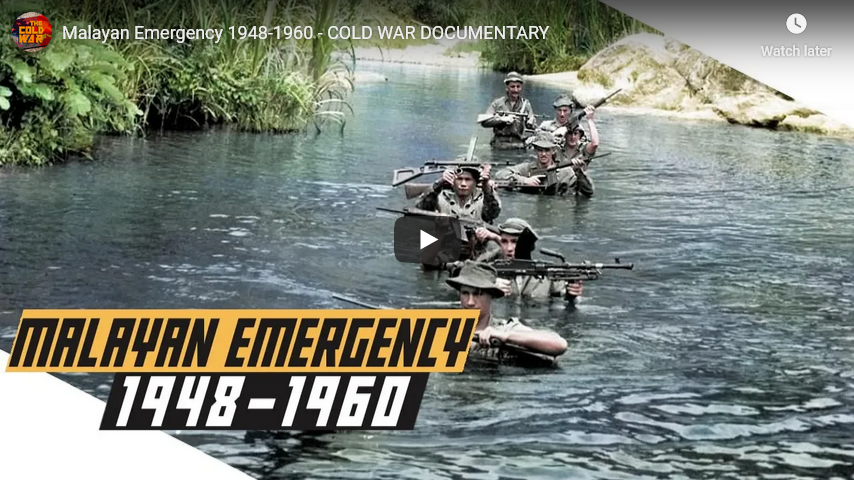
Malayan Emergency 1948-1960
The Cold War
Published 28 Sep 2019Our series on the history of the Cold War period continues with a documentary on Malayan Emergency of 1948-1960 during which the British empire was challenged by the emerging Malayan Communist Party. These events led to the independence of Malaya.
Consider supporting us on Patreon: https://www.patreon.com/thecoldwar
November 12, 2020
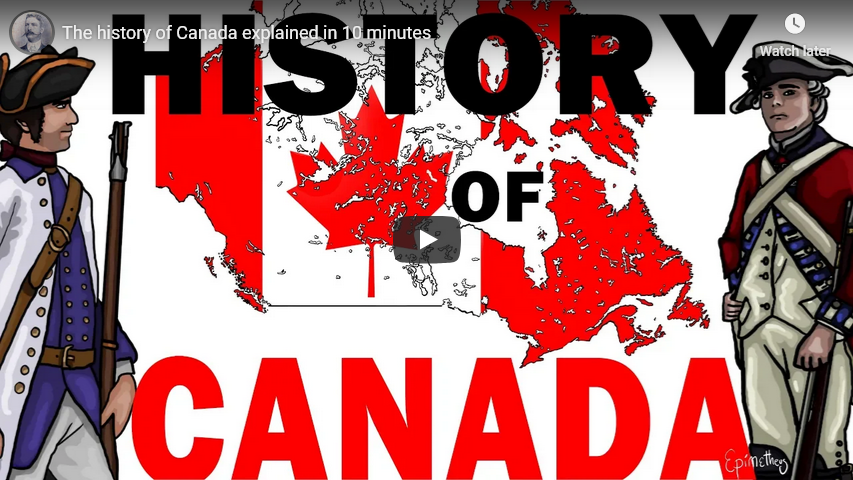
The history of Canada explained in 10 minutes
Epimetheus
Published 19 Jan 2019The history of Canada explained in 10 minutes
Support new videos on this channel on Patreon! 🙂
https://www.patreon.com/Epimetheus1776Canadian history from the discovery of the Vikings to the French and English colonization until modern times.
Tags:
Canadian history documentary, Canadian history crash course, Canada history, history of Canada documentary, history Canada summarized, Canada, history, Canadian history, Canadian American history, animated history of Canada, canadian history in a nutshell, canadian history for kids, educational, Canada Indians, Canada great Britain, English Canada, Quebec, French Canada, French English Canada,
October 3, 2020
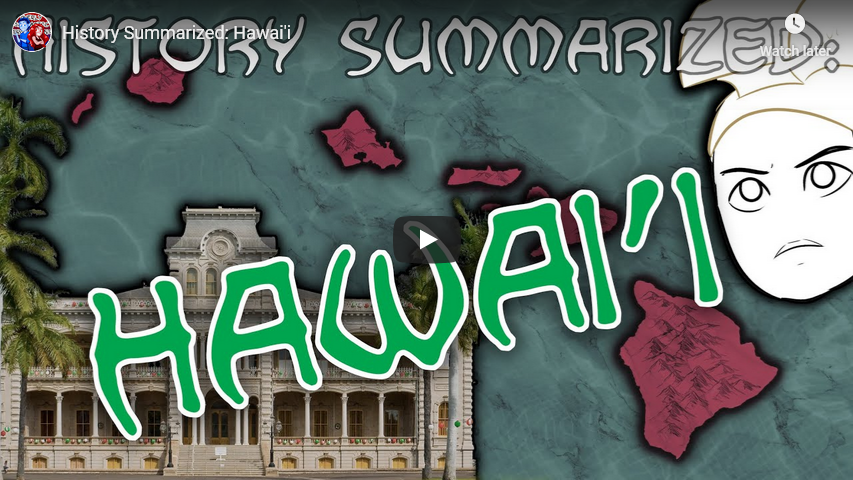
History Summarized: Hawai’i
Overly Sarcastic Productions
Published 2 Oct 2020To learn more about the Native Hawaiian community and their culture, visit: https://www.hawaiiancouncil.org/about
This year, to celebrate Indigenous People’s Day, we’re taking a look at the history of Hawai’i, from its early history in the Polynesian maritime culture to its forming a Kingdom to its annexation by the United States. Beyond simply a special case in the story of American expansion, Hawai’i has a deep history that deserves to be better known.
SOURCES & Further Reading: Great Courses Lecture “Lifeways of Australia and the Pacific” by Craig Benjamin, Britannica Hawai’i, “The Navigators: Pathfinders of the Pacific” By Low & Estus, Lonely Planet Hawai’i History, and lots of discussion with a native Islander (see discord section below).
This video was edited by Sophia Ricciardi AKA “Indigo”. https://www.sophiakricci.com/
Our content is intended for teenage audiences and up.
DISCORD: https://discord.gg/kguuvvq — Come to the #New-Video-Discussion channel to chat about this video, and ask questions about Hawai’i to my friend Lady Eris#9175, a native Islander!
PATREON: https://www.Patreon.com/OSP
MERCH LINKS: http://rdbl.co/osp
OUR WEBSITE: https://www.OverlySarcasticProductions.com
Find us on Twitter https://www.Twitter.com/OSPYouTube
Find us on Reddit https://www.Reddit.com/r/OSP/