I saw from the start that some of Nikole [Hannah-Jones]’s 1619 rubbish merely exposed her utter ignorance of her subject. The blacks whom the Virginians bought from a Portuguese slave trader in 1619 were treated like whites – that is, they were treated as indentured servants who after 10 years were freed, given some farm tools, pointed at a plot of land and left to get on with it. (Some of them got on so well that before mid-century they were buying white and black indentured servants themselves to work their expanding acreages.)
One could justly say these early-arriving blacks were not treated exactly like poor English whites who – unless convicted of a crime – had always chosen to sign their ten-year indenture, to pay for transport across the Atlantic and survival while they found their feet. The closer analogy is to some Scottish whites. More than one clan chief sold some clansmen on indentures across the Atlantic when funds were low, and in 1707 a leading Scottish parliamentarian informed his peers that there was no need for them to fix the disastrous financial situation by accepting the English payment and voting their own abolition – Scotland’s elite could keep their separate parliament and avoid national bankruptcy by selling enough poor Scots to the Americas instead.
When the Portuguese offered to sell black slaves, those 1619 Virginians could only buy them as ten-year-indentured servants. They were still wholly under English common law and Lord Mansfield’s 1770s ruling merely echoed a two-centuries earlier ruling of Elizabethan judges that English common law knew no such state as slavery. It took the Virginians decades to start even questioning this and almost a century to unlearn it fully. As late as the 1690s, a black man who petitioned the Virginia council that his white master had made him serve not for ten years but for twelve “contrarie to all right and justice“, was freed by their order. If Nikole had called it the 1705 project, I’d have thought she at least knew something about the actual faults of the country whose history she was travestying. Only positive statute law can override English common law’s aversion to slavery, said Lord Mansfield – and 1705 was the year the Virginia legislature completed providing it. I knew from the start that Nikole was not just lying about all that, not just indifferent to the truth of all that – she was also pretty clueless about it.
Niall Kilmartin, “Critical Race Theorist literally knows nothing”, Samizdata, 2021-07-16.
October 19, 2021
QotD: Slaves and indentured servants in early Virginia
October 12, 2021
Richard Overy looks at the “Great Imperial War” of 1931-1945
I missed Rana Mitter‘s review of Richard Overy’s latest book when it was published in The Critic last week:
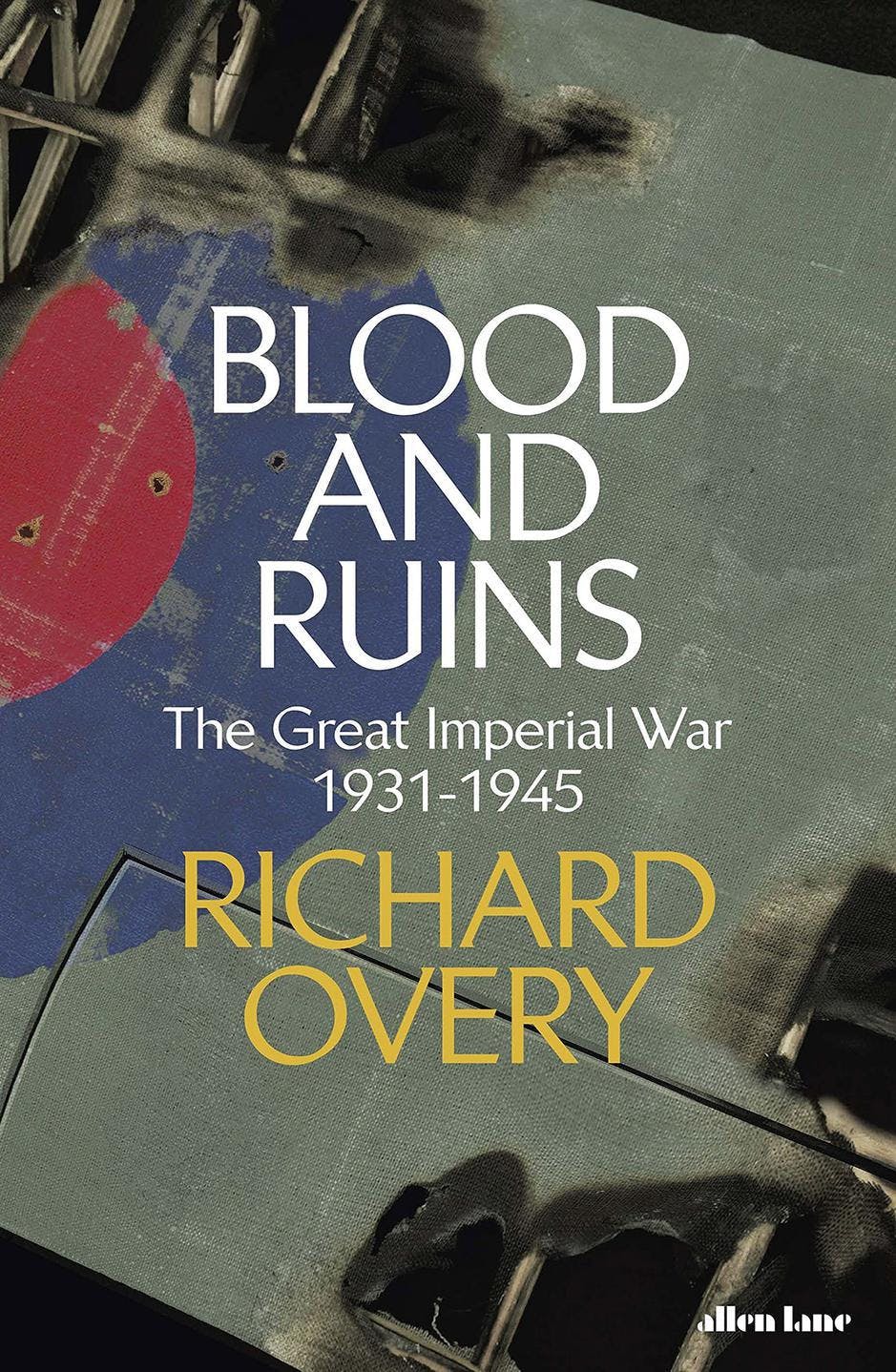
Imagine there’s no Hitler. It’s not that easy, even if you try, at least if you’re a westerner thinking about the Second World War. But for millions of Asians, those years of conflict had little to do with the horrors of Nazi invasion and genocide, and it is their experience that frames Richard Overy’s account of a seemingly familiar conflict. For most non-Europeans, the war was not a struggle for democracy, but a conflict between empires, and in this book, that imperial struggle begins not with the invasion of Poland by Germany in 1939 but the occupation of Manchuria by the Japanese in 1931.
Blood and Ruins is really two books in one. The first is perhaps the single most comprehensive account of the Second World War yet to appear in one volume. You might think that by reading extensively, you could construct a book like this one. You could not — unless you have Overy’s control over a staggering range of World War II scholarship, much of it drawn from his own decades of research on the economics of total warfare, the development of technology, from radar to aerial bombing, and the idea of the “emotional geography” of war, encompassing morale, hope, and despair. Then you’d need to go back and cover all those categories for each of the major Allied and Axis belligerents: Britain, the US, Japan, Germany, France, Italy and China among them.
The second book is an argument about what kind of conflict the Second World War really was. Overy is clear: on a global as opposed to European scale, it was not (just) a war about democracy, but about empires and their fate, although “the starting point in explaining the pursuit of territorial empire is, paradoxically, the nation.”
Overy points out what is generally lost to view when the European war is placed at the centre of the historiography: both Britain and France were undertaking an “awkward double standard” in their defence of democratic values, as their Asian and African possessions “rested on a denial of those liberties and the repression of any protest against the undemocratic nature of colonial rule”. While this argument has been made before (not least by figures such as Nehru and Gandhi in India at the time), Overy does something unusual and revealing: he compares the western empires with Japan’s justification for its own imperial project in the early twentieth century.
The book is scrupulously careful not to endorse or excuse the worldview of Tokyo’s imperialists, and gives full weight to the voices of the Chinese nationalists and communists who were bitterly opposed to Japan’s expansion on the Asian mainland. Still, the comparison of Japan’s pre-war and wartime empire to those of the western powers provides an important and original broadening of a contemporary debate.
There is ongoing public British (and to some extent French) argument about whether empire was a “good” or “bad” thing. Yet neither attackers nor defenders of the British empire tend to analyse it alongside the Japanese equivalent that lasted nearly half a century. Britain committed colonial massacres (Amritsar) and deadly repression (Mau Mau). So did Japan (the rape of Nanjing, invasion of Manchuria).
Britain’s empire also created an aspirational middle class full of cosmopolitan nationalists, and drew on ideas of loyalty to recruit its subjects to fight in world wars. All these things are also true of Japan, which like Britain was a multi-party democracy for much of its period as an overseas empire (between 1898 and 1932), and whose capital city was an intellectual hub for political activists from across Asia.
As a colony of Japan between 1895-1945, Taiwan developed a middle class that was Japanese-speaking and keen to draw on new economic opportunities brought by empire: Lee Teng-hui, the first democratically elected president of the Republic of China on Taiwan, always thought of Japanese as his mother tongue. Park Chung-hee, the American-sponsored dictator of Cold War South Korea, learned his political craft as an army officer in the Japanese Manchukuo Army that occupied Manchuria.
October 11, 2021
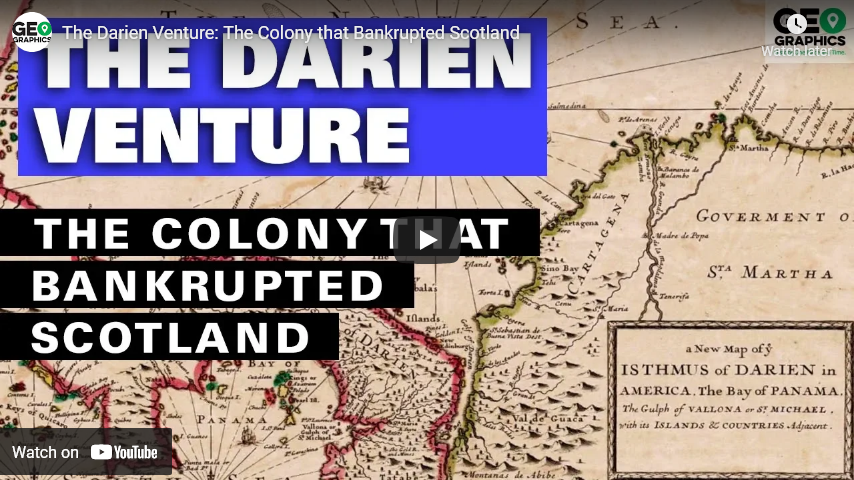
The Darien Venture: The Colony that Bankrupted Scotland
Geographics
Published 14 Nov 2019If a Nation’s wealth and power were to be measured in stubbornness, resilience, and inventiveness, rather than GDP, Scotland would be a top-5 superpower. The people that brought to you televisions, refrigerators, penicillin, and gin & tonic have gone through many a rough patch throughout their history. Very often, hard times were related to their rocky relationship with their Southern neighbours, the English.
Credits:
Host – Simon Whistler
Author – Arnaldo Teodorani
Producer – Jennifer Da Silva
Executive Producer – Shell HarrisBusiness inquiries to admin@toptenz.net
QotD: Columbus Day
But when Columbus landed on the Caribbean Island of San Salvador in the Bahamas, he set off a wave of exploration and colonization which the previous discoveries had not. The Viking and Chinese settlements did not last, but the post-Columbian ones did. And that is an incredibly significant historical event, no matter how you view history.
In the 1970s it became popular on the left to consider Columbus a monster, a villain who gave the innocent and peaceful natives diseases, enslaved them, wiped out their culture, and destroyed all that was good. This theory teaches that the American natives were all good and peaceful and wonderful and just and true and righteous. They all ate free trade non-GMO gluten free food and were perfectly multicultural and non-judgmental, free of war and with perfect gender equality. Columbus, an evil white European showed up and ruined it all. In short, Columbus he infected the Eden-like paradise of the Americas with his Euro-masculinity.
And the origin of this theory is that of the Noble Savage. There were people living outside the evil corrupting influence of White European Males, and Columbus found them and ruined everything. That’s why when you hear someone talking about this, they never mention the nearly-constant wars, cannibalism, human sacrifice, rape, pillaging, genocide, disease, poverty, and incredible lack of technical and scientific, artistic, and literary knowledge of the native peoples of America.
Columbus was a man of his time, and a particularly greedy one at that. He ripped off his own people, acting as the King’s supreme representative and authority in the Americas (which at the time was not known to be as vast as it is). He took credit for what others did, he took over what they developed, he took the riches they found, and so on. And yes, he and his men enslaved the local natives, and because of their culture of “free love” spread European venereal diseases among the natives they were not exposed to before. Entire tribes were wiped out by the infections they had no resistances to.
Of course, the natives spread disease among the Europeans they hadn’t been exposed to, either, such as Typhus and Syphilis, and the natives were murderous and killed Europeans but those are details that modern revisionist historians either ignore, gloss over, or present as a rough sort of justice: they had it coming for daring to set foot in the Eden of the Americas.
Objectively, neither side was particularly admirable, as one would expect if you understand innate and original sin. If what’s bad comes from within us rather than outside influences, then its spread evenly throughout all humanity without regard to creed, culture, race, or location. The natives were bad because people are bad. The Spaniards and Columbus (who was Italian) was bad, because people are bad.
Christopher Taylor, “Eden Ruined By Italian”, Word Around the Net, 2018-10-09.
September 25, 2021
Will Mars become the equivalent to Earth that India and the East Indies once were for Europe?
In the latest Age of Invention newsletter, Anton Howes goes a long way in both time and space away from his normal Industrial Revolution beat to consider what might happen as humans attempt to colonize Mars:

The first true-colour image generated using the OSIRIS orange (red), green and blue colour filters. The image was acquired on 24 February 2007 at 19:28 CET from a distance of about 240 000 km; image resolution is about 5 km/pixel.
Photo taken by the ESA Rosetta spacecraft during a planetary flyby.
The other week I attended an unconference, which had a session on the implications of establishing colonies on other planets. Although this was largely meant to be about the likely impact on Earth’s natural environment — what will be the impact of extracting raw materials from asteroids and other planets? — some of the discussion reminded me of the challenges faced by the long-distance explorers, merchants, and colonists of four hundred years ago. There are quite a few parallels I can see between travelling to Mars, say, in a hundred years’ time, and travelling between continents in the age of sail.
For a start, there’s the seasonality and duration of the voyages. European ships headed for the Indian Ocean had to time their voyages around the monsoon season; trips across the Atlantic were limited to just half the year because of hurricanes. Round-trips took years. Similarly, the departure window for a voyage from Earth to Mars only comes around once every 26 months, and even the most optimistic estimates place eventual journey times at about 4-6 months. Supposing that Mars can be permanently settled, any colony there will likely be extremely dependent on the regular arrival of resupply craft. There’s only so long that any group can survive in a hostile environment on their own.
[…]
The Portuguese had once been the only Europeans to trade directly into the Indian Ocean, but the structure of their trade — essentially a state-run monopoly with some licensed private merchants — was unable to compete with the arrival of the Dutch. The initial Dutch forays into the Indian Ocean in the 1590s had originally been financed by lots of different companies, often associated with particular cities — similar to the proliferation of billionaire-led space exploration companies today. But the Dutch soon recognised that such a high-risk trade would only be able to survive if it came with correspondingly high rewards — rewards that could only be guaranteed by eliminating domestic competitors (and if possible, foreign ones too). They therefore amalgamated all of the smaller concerns into a single company with a state-granted monopoly on all of the nation’s trade with the region. In this, they actually copied the English model, but then outdid them in terms of the organisation and financing of that company […].
Are we likely to see a similar move towards state-granted monopoly corporations when it comes to space colonisation? I suspect it depends on the potential rewards, and on the strength of the competition. There is certainly precedent for incentivising risky and innovative ventures in this way, through the granting of patent monopolies. Patents for inventions in the English tradition originally even had their roots in patents for exploration. I would not be surprised if such policies end up being used again by countries that are late-comers to the space race, perhaps by granting domestic monopolies over the extraction of resources from particular planets or moons. Although direct state funding can help in being first, like they did for Spain and Portugal in the fifteenth and sixteenth centuries, state-granted monopolies for private actors may again end up being the ideal catch-up tool for laggards, as they were for the English and the Dutch.
How the monopolies are managed will also matter. The English East India Company, for example, was initially more focused on rewarding its shareholders than it was on investing in the full infrastructure with which to dominate a trade route. The Dutch company, by contrast, from the get-go was part of a more coordinated imperial strategy — one that sought to systematically rob the Portuguese of their factories and forts, to project force with the aid of the state. Indeed, if there’s one big lesson for the geopolitics of space, it’s that far-flung empires can be extremely fragile, with plenty of opportunities for late-arriving interlopers to take them over.
Although it’s difficult to imagine space colonies being able to become self-sufficient any time soon, it seems likely that those controlled by particular companies or countries may occasionally be persuaded — by bribes or by force — to defect. What’s to stop them when they’re hundreds of millions of kilometres away from any punishment or help? Ill-provisioned factors, forts, or colonies happily switched sides to whoever might provision them better. As I mentioned last week, such problems curtailed the ambitions of other would-be colonial powers, like the Duchy of Courland and Semigallia. When the Dutch turned up in the Indian Ocean, many of the Portuguese forts they threatened simply surrendered.
I bow to Anton’s far greater historical knowledge in most things, but state monopolies in the 16th to 19th centuries were very different creatures than their potential modern equivalents, and the much more comprehensive degree of state control of the economy now would probably mean that a state monopoly over extraterrestrial activities would be a worst-possible outcome. The greater the powers in the hands of the state, in almost every case, the worse all state-controlled activities have become. The incentives of civil servants are vastly different than those of individuals or businesses and are farcically incompatible with the risk-taking necessary on a dangerous frontier.
September 13, 2021
How Is Worcestershire Sauce Made? | How Do They Do It?
DCODE by Discovery
Published 25 Sep 2018Worcestershire Sauce was invented in 1835 when a posh army officer went to India to help run the British Empire. He fell in love, not with a woman, but with a fish sauce. DCODE how the iconic sauce is made in England today.
#DCODE, #HowDoTheyDoIt, #WorcestershireSauce

September 3, 2021
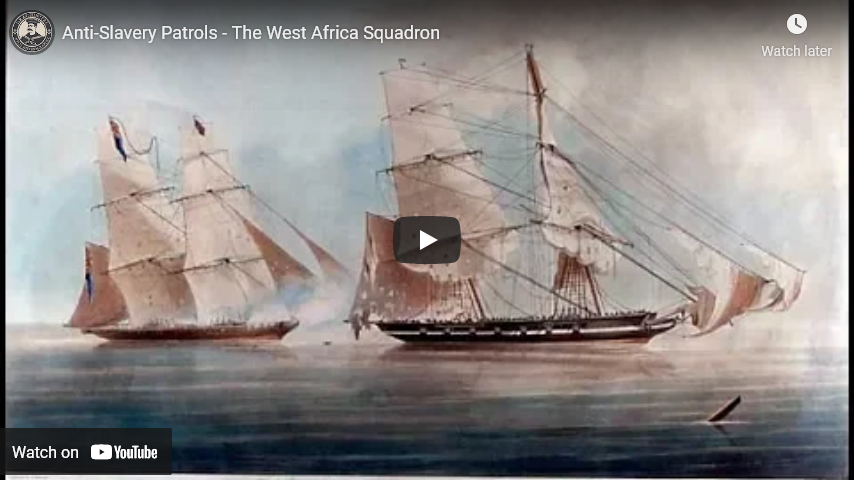
Anti-Slavery Patrols – The West Africa Squadron
Drachinifel
Published 1 Dec 2018Title says it all really, we look at something that was definitely worth doing, which really should have been done much sooner.
August 24, 2021
Aztec Chocolate – Blood & Spice
Tasting History with Max Miller
Published 9 Mar 2021Help Support the Channel with Patreon: https://www.patreon.com/tastinghistory
Tasting History Merchandise: crowdmade.com/collections/tastinghistoryFollow Tasting History here:
Instagram: https://www.instagram.com/tastinghist…
Twitter: https://twitter.com/TastingHistory1
Tiktok: TastingHistory
Reddit: r/TastingHistory
Discord: https://discord.gg/d7nbEpyTasting History’s Amazon Wish List: https://amzn.to/3i0mwGt
LINKS TO INGREDIENTS & EQUIPMENT**
Sony Alpha 7C Camera: https://amzn.to/2MQbNTK
Sigma 24-70mm f/2.8 Lens: https://amzn.to/35tjyoW
Molinillo: https://amzn.to/3rpoXGJ
Cacao Beans: https://amzn.to/3v4feIe
Cacao Nibs: https://amzn.to/3sX7JAU
Achiote/Annatto Powder: https://amzn.to/3rpWe4CLINKS TO SOURCES**
The Secret Life of Chocolate by Marcos Patchett: https://amzn.to/3qoLOB1
For more information visit thesecretlifeofchocolate.com
The True History of Chocolate by Sophie & Michael Coe: https://amzn.to/3sWBl1f
Florentine Codex by Bernardino de Sahagún: https://amzn.to/2OrKiAE
Thomas Gage’s Travels in the New World: https://amzn.to/3sO3YxA**Some of the links and other products that appear on this video are from companies which Tasting History will earn an affiliate commission or referral bonus. Each purchase made from these links will help to support this channel with no additional cost to you. The content in this video is accurate as of the posting date. Some of the offers mentioned may no longer be available.
Subtitles: Jose Mendoza
PHOTO CREDITS
Metate et Mano: Yelkrokoyade, CC BY-SA 3.0 https://creativecommons.org/licenses/…, via Wikimedia Commons
Olmec Head No 3: By Maribel Ponce Ixba (frida27ponce) – Flickr, CC BY 2.0, https://commons.wikimedia.org/w/index…#tastinghistory #aztec #chocolate

August 22, 2021
QotD: Woodrow Wilson, wrong on many things, but quite right on this one thing
National Realism comprehends and respects the perhaps tragic, but nevertheless undeniable, fact that most people are deeply attached to collective identities and aspirations. It accepts as both natural and important that psychological well-being would be rooted in a terroir, a set of traditions or other mythologies about who people are and where they come from, that can serve as a source of meaning and self-understanding, as well as social cohesion. It acknowledges that nationalism is a fixture of modern social and political reality.
The idea that a self-described people should have the right to determine its own collective destiny was once considered progressive. Nineteenth-century liberal nationalists like Giuseppe Mazzini in Italy and Ernest Renan in France saw in the nation-state the fullest political expression of peoplehood, a true source of law and legitimacy, a celebration of diversity, and a font of culture, art, and human flourishing. The idea of national self-determination also resonated with the American Founding and with the Declaration of Independence, which proclaimed that governments derive their powers from the consent of the governed and found in Natural Law the right for one people to “dissolve the political bands which have connected it with another, and to assume among the powers of the earth the separate and equal station to which the Laws of Nature and of Nature’s God entitle them.” For good or ill, the French Revolution had awakened modern ethnic self-awareness among European peoples, and ever since, nationalism has been the most robust political force in international affairs. Nationalism is a property of modern nation states, the same way that gravity is a property of physical matter. It is unwise to underestimate its power.
Diversity is now, supposedly, the primus inter pares of our political values. But ethnic and racial diversity, in all its colorful pageantry, is traditionally associated with empires, not republics. Diversity brings to mind Barbara Tuchman’s description of Queen Victoria’s Diamond Jubilee, with its splendid processions of Royal Nigerian Constabulary, Borneo Dyak Police, turbaned and bearded Lancers of Khapurthala and Badnagar, Zaptichs from Cyprus with their tasseled fezzes and black-maned ponies, Houssas from the Gold Coast, Chinese from Hong Kong, and Malays from Singapore, all paying homage to the great monarch. Imperial Rome was an equally spectacular kaleidoscope of nations and religions. By contrast, republican Rome was merely, austerely, Roman.
As a good Progressive, Wilson understood that modern democratic government is incompatible with multi-ethnic empire. But it took the cataclysmic breakdown of the Old World empires in the meat-grinder of World War I to bring the idea of national self-determination into political focus. It would be wise to remember that that civilization-shattering conflict was blamed in large part on the lack of congruence between state and ethnic boundaries. Most of Wilson’s famous Fourteen Points, outlined 101 years ago this month, were dedicated to correcting this discrepancy on the basis of national self-determination.
E.M. Oblomov, “The Case for National Realism: Diversity is the hallmark of empires, not democracies”, City Journal, 2019-01-02.
August 2, 2021
QotD: Western military superiority
Victor Davis Hanson, Carnage and Culture, 2001.
August 1, 2021
Christopher Hitchens on George Orwell
DailyHitchens
Published 22 Jan 2010Aug 7, 2009. Christopher Hitchens talks with EconTalk host Russ Roberts about George Orwell. Drawing on his book Why Orwell Matters, Hitchens talks about Orwell’s opposition to imperialism, fascism, and Stalinism, his moral courage, and his devotion to language. Along the way, Hitchens makes the case for why Orwell matters. For more videos, updates and info on Christopher Hitchens, please visit http://www.dailyhitchens.com

July 29, 2021
Buster Keaton, British Imperialism, and the Era of Spectacle | B2W: ZEITGEIST! I E.23 Spring 1924
TimeGhost History
Published 28 Jul 2021There’s no business like show business and in the spring of 1924, you can see why. Buster Keaton and Hollywood as a whole are producing some iconic films, the British Empire is putting on a massive exhibition, and there is even talk of a death ray.
(more…)
June 5, 2021
The morality of collective intergenerational responsibility
Arthur Chrenkoff believes that the responsibility to compensate people for historical wrongs ends when the individuals who were harmed have died:
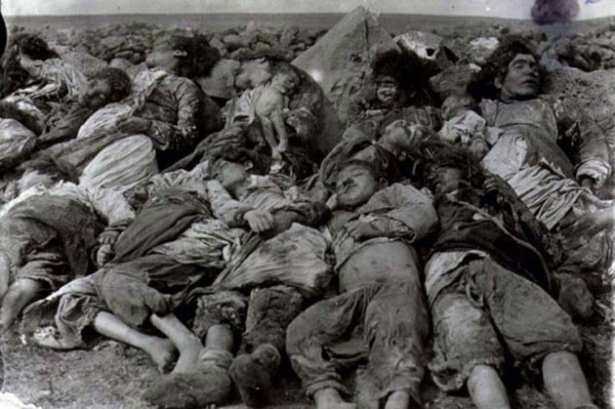
Victims of genocide
Photo by Cantetik2 via Wikimedia Commons.
What I was querying was the practicality and the morality of reparations being paid today: “If great-great-grandchildren of perpetrators have to pay great-great-grandchildren of survivors, is there any limit on historical liability? 200 years? 500 years?”
Before we get any further into the discussion, let me restate here my position, which has not changed at all in light of the subsequent online exchanges and name-calling: I do not believe in collective intergenerational responsibility. Far from modern and enlightened, it strikes me as a primitive, ancient principle, in line with the Old Testament’s “an eye for an eye” mentality. Thought to call it Old Testament might be unkind to Old Testament, since already by the time the Book of Ezekiel was being compiled during the Babylonian Exile, mid-first millennium BC, the Judaic theology had morally evolved beyond the belief that the sins of the fathers are visited on their children. We are each a moral agent, enjoying free will and exercising own judgments and actions, and for all that we are rightly held responsible and accountable. But it is unjust to blame (and, at the other end of the spectrum, absurd to praise) us for what our literal and metaphorical ancestors had done or failed to do at one point or another in the past, or what they have collectively achieved.
And so, to the comment that genocide has no statute of limitation, I say: it should, and it should be right about the time that all those who were alive at the time and affected by it have passed away.
The concept of reparations for historical wrongs is increasingly in the news. In the United States, the question revolves around the evil of slavery, but it’s hardly an American-centric debate. In many Western European countries there is talk of reparations for colonialism. Then there is the agitation in Poland, long supported by the ruling Law and Justice party, that Germany should pay Poland reparations for death and destruction caused during the Second World War. While the quantum has sometimes been calculated upward of US$15 trillion, the official suggestions have hovered around the more “modest” €850 billion (1947 estimates in today’s currency).
[…]
Not just genocide – everything that has ever happened, both bad and good, ripples across time and shapes the present. This is what history is about. Each event has an infinite number of causes and an infinite number of consequences. Hence, conceptual problems start popping up once you try to unscramble the egg and make simple adjudications about complex past situations. It’s one thing to make moral judgments about what had happened, it’s another to apply judicial standards used in disputes between contemporaries to met out sanctions and punishment in relations to historical wrongs, which might have occurred centuries ago. For starters, the collective approach to situations where each individual was affected it their own unique way might simplify things but it surely does not paint an accurate picture or deliver real justice. This goes for both the victims and the perpetrators. (At the extreme, for example, potentially forcing the descendants of German pacifists to compensate the descendants of Polish collaborators. In fairness, there were few of either at the time, but most other historical events are significantly more complicated than the black and white story of Nazi aggression and crimes against humanity.)
Which brings me to the second problem: the supposed intergenerational nature of responsibility and punishment. Not only are we talking about entire nations or ethnic (or social or religious or other) groups as monoliths for legal purposes, somewhat akin to a corporation, but also monoliths in time, across an unlimited number of generations. I find it morally odious, but you may well say “well, it’s not about moral blame per se, but whether you have, intentionally or not, benefitted at the expense of past others as a consequence of the evil actions of your ancestors” – in other words, it’s not a punitive but a restorative justice. Putting aside, again, the fact that no two individuals are ever affected in exactly the same way, the past is much more complex than your simplistic unicausal, zero-sum calculations allow and so, consequently, simple justice in theory is simply unjust in practice. Take Germany for example; if you think that Germany and Germans as a collective had benefitted from their rapacious actions during the war, you clearly have little idea what happened to them between, say, 1943 and 1946. You might think, as many did particularly in the immediate aftermath of the war, that this was still not a (collective) punishment enough considering the extent and the gravity of crimes committed (including the Holocaust) but if there was a time to tip the scales even more it was contemporaneously. The point I’m making is that any short-term German gains have been wiped out by the deliberate actions (military or otherwise) of the Allies, who in so doing destroyed much of the native German wealth as well as the wealth stolen by Germany from the occupied territories. That Germany is rich today is despite, not because of the Second World War. And while it’s true that Poland, for example, and at least some of its people are poorer today than they would have been had there been no war, I return back to my original position: how is it just and fair for a 25-year old from Bremen to compensate Poland as a whole (or the Polish government to be exact) for the “ripples” set off six decades before they were even born?
May 17, 2021
Christopher Hitchens – On EconTalk discussing George Orwell [2009]
CaNANDian
Published 25 Sep 2012Christopher Hitchens talked with EconTalk host Russ Roberts about George Orwell. Drawing on his book Why Orwell Matters, Hitchens talked about Orwell’s opposition to imperialism, fascism, and Stalinism, his moral courage, and his devotion to language. Along the way, Hitchens made the case for why Orwell matters.
Download audio: http://www.econtalk.org/archives/2009…

History Summarized: Africa
Overly Sarcastic Productions
Published 7 Jul 2017THE DANGER OF A SINGLE STORY: https://youtu.be/D9Ihs241zeg
It’s been brought to my attention that I made two mistakes: 1) Yes, I disappear at 18:26. Not sure how that happened. 2) At 12:25 I use a map of Africa that with some weird borders. That’s my bad. But if you look at a legit map of Africa, you’ll see the same straight lines in the places that I marked them.
(Remember: making mistakes is ok, so long as we learn from them)The Epic of Mwindo sure was cool, huh? This video is here to show you all about the lovely continent that it came from: Africa! And BOY are there a lot of misconceptions about it.
This video was produced with assistance from the Boston University Undergraduate Research Opportunities Program.
PATREON: www.patreon.com/user?u=4664797
MERCH LINKS:
Shirts – https://overlysarcasticproducts.threa…
All the other stuff – http://www.cafepress.com/OverlySarcas…Find us on Twitter @OSPYouTube!