
Scenic Routes to the Past
Published 18 Oct 2024Hierapolis — modern Pamukkale, Turkey — was built over hot springs. During the Middle Ages, these encased much of the city in gleaming travertine.
See my upcoming trips to Turkey and other historical destinations: https://trovatrip.com/host/profiles/g…
February 2, 2025
Hierapolis: a city encased in stone
Comments Off on Hierapolis: a city encased in stone
QotD: Tariffs
Who is punished by tariffs on imported goods? Let’s go through the steps. The Canadian government imposes high tariffs on American dairy imports. That forces Canadians to pay higher prices for dairy products and protects Canada’s dairy producers from American competition. What should be the U.S. government’s response to Canada’s screwing its citizens? If you were in the Trump administration, you might retaliate by imposing stiff tariffs on softwood products built from pine, spruce and fir trees used by U.S. homebuilders. In other words, the U.S. should retaliate against Canada’s harming its citizens by forcing them to pay higher dairy product prices, by forcing Americans through tariffs to pay higher prices for wood and thereby raising the cost of building homes.
Walter E. Williams, “Economics Reality”, Townhall.com, 2020-02-04.
Comments Off on QotD: Tariffs
February 1, 2025
DOGE’s first week
J.D. Tuccille on the odd position DOGE finds itself in, as many Americans seem conflicted about cutting back the federal government:

The new Department of Government Efficiency (DOGE) is off to a quick start, if we consider the advisory board’s claimed savings in federal spending and the voluntary buyout of workers that could reduce the ranks of federal employees with a minimum of drama. But while the public agrees that corruption, inefficiency, and red tape are serious problems for the government, DOGE itself enjoys mixed popularity and majorities believe the government spends too little on big-ticket items, leaving little room for savings. The American people themselves are a big obstacle to paring the federal government to size.
DOGE Off to a Good Start
“DOGE is saving the Federal Government approx. $1 billion/day, mostly from stopping the hiring of people into unnecessary positions, deletion of DEI and stopping improper payments to foreign organizations, all consistent with the President’s Executive Orders,” the DOGE X feed boasted this week. “A good start, though this number needs to increase to > $3 billion/day.”
The Trump administration also sent a letter to the majority of the federal government’s roughly three million workers, offering a “deferred resignation” plan. Those who accept the deal could stop working for the government as of February 6 and still be paid through September of this year. The administration expects up to 10 percent of workers to take the offer. The voluntary nature of the plan blunts inevitable complaints from unions about “purging the federal government of dedicated career civil servants”.
We will have to see what the results will be in the coming months and years. But if that works out, it’s a pretty good launch for an administration and its advisory board that are less than two weeks old. Unfortunately, Americans aren’t sure where they stand on all this.
The Public Frets About Corruption, Inefficiency, and Red Tape …
According to AP-NORC polling, majorities believe that corruption (70 percent), inefficiency (65 percent), and red tape such as regulations and bureaucracy (59 percent) are “major problems within the federal government.” These findings square with the results of other surveys revealing that “nearly 2/3 of Americans fear that our government is run by corrupt officials” (Babbie Centre at Chapman University, Spring 2024), that 56 percent of Americans say government is “almost always wasteful and inefficient” (Pew Research, June 2024), and that “55% of Americans say the government is doing too much” (Gallup, November 2024). That’s exactly what the Trump administration created DOGE to combat, so it should be a good sign for the project.
But Americans are torn over DOGE. Asked by AP-NORC to share their opinions of “an advisory body on government efficiency led by Elon Musk and Vivek Ramaswamy” (before Ramaswamy left to run for office), only 29 percent support the venture while 39 percent oppose it. That seems to reflect its leadership. Fifty-two percent of those polled have an unfavorable opinion of tech titan Musk, while 36 percent view him favorably.
Why the hate? Musk’s problem may be that he’s a high-profile rich guy with things to say at a time when that type of person isn’t especially popular. Sixty percent of respondents believe it would be a bad thing “if the president relies on billionaires for advice about government policy”. That disapproval crosses over into opinions about DOGE, even if people say they support its goals.
Comments Off on DOGE’s first week
China produced DeepSeek, Britain is mired in deep suck
In the Sean Gabb Newsletter, Sebastian Wang discusses the contrast between China’s recent release of the DeepSeek AI platform that appears to be eating the collective lunches of the existing LLM products by US firms and the devotion of the British Labour government to plunge ever deeper into their Net Zero dystopian vision:

Net Zero image from Jo Nova
For those few readers who may be unaware, DeepSeek is an advanced open-source artificial intelligence platform developed in China. Released in late 2024, it has set a new standard in AI, outperforming American counterparts in adaptability and capability. It excels in natural language processing, machine learning, and data analysis, and — critically — it is open source. Unlike the proprietary models that dominate the American tech landscape, DeepSeek allows anyone to adapt, improve, and use it as he sees fit. It’s not just a technological triumph for China; it’s a serious challenge to American domination of information technology and an opportunity for those who want to break free from the stranglehold of Silicon Valley.
As a Chinese person, I take pride in this achievement. It’s a testament to what my people can achieve with focus and ambition. But my concern is less about taking pride in what China has done and more about lamenting how little Britain has contributed to this revolution. Britain, the birthplace of the Industrial Revolution, seems to have no place in this new world of AI-driven progress. The question is why?
The answer is simple: The people who rule Britain have chosen decline. Crushing taxes on income and capital gains, and inheritance taxes, punish those who want to create wealth. Endless regulations stifle ambition, making it easier to conform than to innovate. Worst of all, there are the net zero policies, which have made energy costs the highest in the world, making electricity unaffordable and unreliable. Industries that depend on energy have been priced out of existence, and the dreamers and doers who might have built the next DeepSeek are being ground down by a system designed to reward mediocrity.
Net zero is not a noble goal born of misconception; it’s a disaster by design. It’s a wealth transfer scheme that takes from ordinary working people and hands billions to a small clique of green profiteers. The winners are the wind farm builders, the financiers running opaque carbon trading schemes, and the activists cashing in on government handouts. The losers are everyone else — families struggling to pay energy bills, businesses forced to close, and an entire country left unable to compete.
Compare this to China. DeepSeek wasn’t luck — it was the product of a system that rewards innovation. Electricity in China is cheap and reliable. Regulations focus on enabling progress, not blocking it. Ambition is celebrated, not treated as a threat. The ruling class there, for all its many and terrible faults, understands the value of creating wealth and technological self-reliance. Britain’s ruling class, by contrast, has abandoned the idea of building anything. They’d rather sit in the City of London, counting money made elsewhere, than see industry and innovation flourish in the country at large. They have chosen decline — not for them, but for us.
Comments Off on China produced DeepSeek, Britain is mired in deep suck
A century of war: The cartridge that remains deadly on today’s battleground
BFBS Forces News
Published 19 Oct 2024Say “7.62mm” when talking about rifle and machine gun rounds, and most people will think of the Nato cartridge that was introduced in 1954, but there’s a far older one that’s still in use – the 7.62x54mmR.
While the 7.62x51mm Nato cartridge was brought into service in 1954, the 7.62x54mmR dates back to 1891 in Imperial Russia.
Although this cartridge was developed in Russia, the “R” actually stands for “Rimmed” and this is what makes these two 7.62mm cartridges so different.
(more…)
Comments Off on A century of war: The cartridge that remains deadly on today’s battleground
QotD: In a centrally planned economy, all that matters is meeting or exceeding the Gross Output Target
When told to produce 10,000 shoes, the shoe factory manager made 10,000 baby shoes, all left feet, because that was easiest to do with the material on hand — he didn’t have to retool, or go through nearly as many procurement processes, and whatever was left over could be forwarded to the “broker”, who’d make deals with other factory managers for useful stuff. When Comrade Commissar came around and saw that the proles still didn’t have any shoes, he ordered the factory manager to make 10,000 pairs of shoes … so the factory manager cranked out 20,000 baby shoes, all left feet, tied them together, and boom. When Comrade Commissar switched it up and ordered him to make 10,000 pounds of shoes, the factory manager cranked out one enormous pair of concrete sneakers …
So long as Comrade Commissar doesn’t rat him out to the NKVD — and why would he? he’s been cut in for 10% — nobody will ever be the wiser, because on the spreadsheet, the factory manager not just hit, but wildly exceeded, the Gross Output Target. That nobody in Krasnoyarsk Prefecture actually has any shoes is irrelevant.
Severian, “The Finger is Not the Moon”, Rotten Chestnuts, 2021-09-14.
Comments Off on QotD: In a centrally planned economy, all that matters is meeting or exceeding the Gross Output Target
January 31, 2025
Canada – sovereign nation or “post-national state” with “no core identity”?
In The Line, Andrew Potter retraces Canada’s history from British colony to self-governing Dominion to proud mover-and-shaker in the postwar world to whatever the heck it is today:
There is a map that shows up on social media from time to time, and it looks like this.
Sometimes it is followed by this one:
And then maybe this one:
What’s the point of these maps? Apart from noting the obvious, which is that Canada is sparsely populated, and much of the population is gathered in cities very close to the border with the United States, they raise important questions about the exercise of political power and its legitimacy, forms of governance, and, ultimately, sovereignty. By what methods did Canada come to be, and by what right does a small and relatively concentrated group of people, most of whom live down by the Great Lakes or along the St. Lawrence River, lay claim to almost ten million square kilometres of the Earth’s landmass?
It is easy to draw lines on maps. Anyone can do it. If you want those lines to represent some sort of generally accepted reality, two things must be true. First, the people inside the lines need to see those lines as legitimate, and be willing to take the necessary steps, up to and including the use of force, to assert them against outsiders. And second, enough outsiders of sufficient global importance also need to recognize those lines.
Any student of Canadian history knows that the borders of Canada are highly contingent. Rewind the tape of the past, and there are any number of moments where things could have turned out differently. In some scenarios, Canada ends up smaller than it currently is; in others, Canada ends up larger, perhaps substantially so. And in some alternative histories, Canada does not exist at all — or if it does, we’re all speaking French.
There’s nothing that is either sinister or celebratory in pointing this out. History is a bunch of stuff that happened, and in some cases, things might have turned out differently. But again, if you know your Canadian history, you know that the process by which Canada went from a French fur trading outpost to a collection of British mercantile colonies to a continent-spanning multinational federation and parliamentary democracy was made possible only through a rough admixture of ambition, cunning, scheming, coercion, violence, strong foreign support, and, between 1812 and 1814, war.
To get to the point: Canada’s sovereignty wasn’t something we just stumbled upon, nor is it something we were happily given. It was a thing we did. We did not do it alone, though; for most of the 19th century, the main ongoing threat to Canada’s sovereignty was the United States, while the ultimate guarantor of that sovereignty was Great Britain.
That dynamic shifted over the first half of the 20th century, when the British Empire went into decline, and the United States became the dominant world power. There was a short period after 1931, while British influence was ebbing and that of the Americans was flowing, in which Canada stood more or less independent and autonomous. This largely ended in 1940; Britain was on the ropes against Nazi Germany, Canada was in Hitler’s sights, and an increasingly anxious Franklin Roosevelt invited Mackenzie King down to Ogdensburg, New York, for a friendly chat about continental security.


Comments Off on Canada – sovereign nation or “post-national state” with “no core identity”?
“… and 10% for the Big Guy”
In the New English Review, Bruce Bawer reviews Miranda Devine’s new book, The Big Guy: How a President and His Son Sold Out America:

Even now, roughly half of Americans seem to believe that all the attention that’s been paid to Hunter Biden and his laptop has to do with his love of prostitutes and drugs rather than with high crimes and misdemeanors committed by him on behalf of his dad and other members of the clan. Even now, many Americans seem to be blithely unaware of the mountains of evidence showing that Hunter has long been fleecing foreign firms on Daddy’s behalf. For some reason those clueless Americans, even if capable of accepting that Hunter was up to no good, simply can’t believe that his pop – good old Lunchpail Joe – has ever been guilty of anything. (These same people, of course, are convinced that Donald Trump is the most corrupt politician ever to come down the pike.)
This blindness to facts – or stubborn refusal to pay attention to them – is immensely frustrating. And it must be especially frustrating for Miranda Devine, the Australian-American New York Post journalist who, in Laptop from Hell: Hunter Biden, Big Tech, and the Dirty Secrets the President Tried to Hide (2021), detailed the contents (by turns sordid and criminal) of Hunter’s celebrated computer, the story of which her newspaper broke 20 days before the 2020 presidential election, and who in her new book, The Big Guy: How a President and His Son Sold Out America, focuses on the cover-up.
To say that Devine tells her story in impressive detail would be an understatement. Like War and Peace, The Big Guy opens with a long list of the main players, just in case you lose track of who’s who. And you will. Reading this book isn’t just like reading War and Peace – it’s like reading War and Peace at the same time as One Hundred Years of Solitude. You have to remember a slew of foreign-sounding names, many of which sound very much alike, all the while following an exceedingly labyrinthine narrative.
To be sure, this tale also involves plenty of Americans, some of them public officials who, when they scented the heady whiff of corruption in the Biden circle, actually did their jobs by digging into the facts and gathering evidence. Others, alas, are people who also held positions of authority but who did their damnedest to put up “roadblocks” or “obstructions” or “delays” or “logjams” – to use some of the many synonyms that Devine uses to describe efforts to keep the public in the dark.
And boy, was there a lot to cover up. Among the expenses that Hunter tried to write off on his taxes – not that he was quick to pay them, mind you – were disbursements to prostitutes and drug dealers and memberships in sex clubs. During one “crack and hooker bender” in 2018, he spent $8,000 on a single sex worker, $140,000 on a stay in Las Vegas, and $34,000 on a sojourn at the Chateau Marmont in L.A. The Chateau Marmont is legendary for playing host to celebrities on drug binges, but Hunter caused so much damage to his room that he was banned from the place thereafter, which even he suspected was a first.
Part of the reason why Hunter was able to go through a small fortune so quickly was that he had a “sugar daddy” by the name of Kevin Morris, who for reasons that still remain a mystery chose to give him millions of dollars over the years to save him from financial crises (such as the ones posed by the relatively modest monetary demands of Hunter’s baby mama in Arkansas). A 2019 book contract with Simon & Schuster also netted Hunter a $750,000 advance, even though the book (surprise!) ended up selling so few copies that it made back only a tiny fraction of that sum. Then there were his paintings, which brought in at least $1.5 million. People laughed when Hunter first revealed his artworks to the world in 2020, but I didn’t: they’re no worse than a hell of a lot of contemporary art – and, after all, the art market these days is as much about laundering money than it is about aesthetics.
But Hunter’s main sources of mazuma were foreign companies. One of them was Barisma in Ukraine. Another, in Russia, was run by a man named Zlochevsky who said that Hunter, whom Joe Biden had called the smartest man he knew, was in fact stupider than Zlochevsky’s dog. A third was the Chinese energy company CEFC, a leading promoter of China’s Belt and Road Initiative. CEFC put Hunter on its board – and paid him millions – in exchange for his promise to use his father’s name to “open … doors around the world” for the firm.
Collecting loot from all these sources and funneling some of it to family members involved a complex network of bank accounts and shell companies that was designed to make the moolah tough to trace. To illustrate the process, Devine follows the path of a single $5 million payment by a CEFC affiliate to one of Hunter’s firms, HWIII. Over time, Hunter transferred most of that $5 million to another firm of his, Owasco; in addition, he wired some of it to his uncle Jim’s company, after which Jim’s wife, Sara, withdrew a fraction of that sum and deposited it in the couple’s personal account and dispatched a $40,000 check to Joe Biden.
Comments Off on “… and 10% for the Big Guy”
I Spent Over 12 Hours on an Amtrak Train (on purpose)
Not Just Bikes
Published 6 Oct 2024Chapters
0:00 Intro
1:24 Leaving New York
3:04 On the train
4:03 The views
4:38 Freight trains & delays
5:37 The train is so much more comfortable
7:09 The border crossing
8:17 The Canadian side
9:24 Should you take this train?
10:20 Comparisons to Europe & Japan
11:20 We need more high-speed rail
12:02 VIA Rail is bad … and getting worse
12:58 VIA Rail is expensive!
14:11 The new VIA Rail baggage policy 🤦♂️
15:49 Better train service is important!
17:14 Concluding thoughts
(more…)
Comments Off on I Spent Over 12 Hours on an Amtrak Train (on purpose)
QotD: “Did you know the government faked the moon landings?”
Today I am compelled to much more sympathy with people who have come to believe that. It’s still objectively stupid, but I understand how they got there. It’s an interaction between a low-trust, polluted information environment and the cheater-detection module wired into human brains.
If you pose people a logic problem phrased in two different ways, one of which is “spot the cheater” and one of which is not, they’ll do substantially better on the first version. We are social animals who survived by forming trust networks, and for millions of years spotting the cheater was a life or death matter.
Now put yourself in the shoes of a person of average intelligence — not very good at following complex arguments or extracting generative patterns from large masses of evidence. This person has gradually become aware over the last quarter century that public information sources are saturated with lies. The media is corrupt and partisan, corporations deceive to boost their profits, education is ideologically captured, and governments constantly peddle vast falsehoods to gain compliance.
In this environment, and given the capacity limitations of the average human, the cheater-detection module goes into overdrive. The least bad strategy is to try to spot the worst liars and then believe the opposite of everything they say.
“The moon landings were faked” has to be understood as a symptom not of individual insanity, but of governing institutions and elite classes who have repeatedly burned up their long-term credibility for short-term gains.
This trend had been building for a long time, but undoubtedly culminated with the series of colossal lies, blunders, and “we’ve always been at war with Eastasia” reversals around COVID.
I wish I knew a way back from this. I’m not sure anything less than the abolition of secrecy could do it.
ESR, Twitter, 2024-10-27.
Comments Off on QotD: “Did you know the government faked the moon landings?”
January 30, 2025
Proposed California legislation to allow “Big Oil” to be sued for “climate change damage … regardless of cause”
California is a lovely place. I’ve only ever been there once, back in January 1991 but it was a wonderful (business) trip. California’s political “leaders” on the other hand are clearly in need of immediate re-institutionalization:
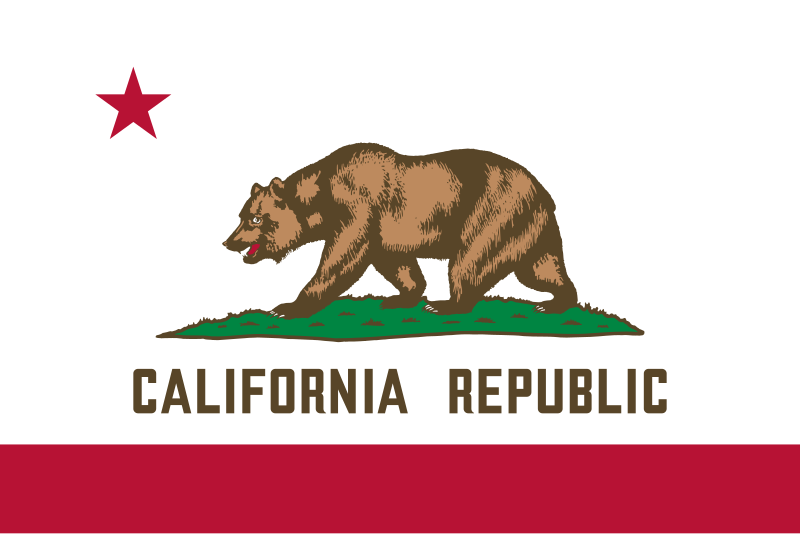
First, the madness of the California state legislature is richly displayed in Senator Scott Wiener’s remarkable new bill that would allow people to sue the oil industry because climate change damaged their property, via “natural catastrophe, including a hurricane, tornado, storm, high water, wind-driven water, tidal wave, tsunami, earthquake, volcanic eruption, landslide, mudslide, snowstorm, or drought, or, regardless of cause, a fire, flood, or explosion”.
I hope you caught that “regardless of cause” thing, there at the end. If this bill passes — it won’t, being mostly a theatrical performance, but let’s pretend — Californians will supposedly be able to sue Chevron or ExxonMobil (and so on) because a flood or fire damages their property, which implicates fossil fuel-induced climate change, regardless of the cause of the flood or fire.
- I threw matches on your couch
- Climate change
- Big Oil burned your couch
On the hook: anyone who sold “fossil fuels” in California “since the year 1965”, although a lawsuit has to be brought within three years of the discovery of the damage caused by the fossil fuel’s effect on the climate.
Favorite part, and look at item #2 (click to enlarge):
I’m not a lawyer, but I have doubts about declaring in a law that you can’t question the constitutionality of the law. We had similar legal doctrines on the playground in elementary school, despite which some members of the first-grade community controversially persisted in utilizing the disallowed tag-back.
Wiener’s press release on the bill is … very special. California government knows why the recent fires were so harmful, and none of it involves California government. Sample quote from, please help me, the state senator who represents my district:
“The Eaton Fire destroyed over 9,000 structures in my District, wiping out almost the entire town of Altadena, leaving thousands of my residents calling for justice and accountability,” said Sen. Sasha Renée Pérez (D-Pasadena). “Our communities have never seen anything like this in urban Los Angeles. The reality is that climate change is here and will continue impacting communities everywhere. What makes this worse is decades ago, Big Oil knew this would be our future, but prioritized lining their own pockets at the expense of our environment and the health of our communities. The Affordable Insurance and Climate Recovery Act will hold the oil industry responsible for the damage it has inflicted, and provide relief for future communities impacted by climate disasters.”
Decades ago, Big Oil knew Altadena would burn, but they did it anyway. Case closed.
I’m also quite fond of the senator’s use of “my residents”, which sounds like she’s buying up dead souls to expand her vassalage. I pay her in grain, of course.

Comments Off on Proposed California legislation to allow “Big Oil” to be sued for “climate change damage … regardless of cause”
Hitler Testifies, Brüning Battles On – Rise of Hitler 10, October 1930
World War Two
Published 28 Jan 2025October 1930 brings more unrest to Weimar Germany. Chancellor Brüning survives no-confidence votes, while Nazi and Communist clashes escalate into chaos. Berlin sees mass protests, Jewish businesses attacked, and rumors of a Nazi-Soviet conspiracy swirl.
(more…)
Comments Off on Hitler Testifies, Brüning Battles On – Rise of Hitler 10, October 1930
The MAGA movement as “America’s Thermidorian Reaction”
Fortissax lays out the case for Canada remaining separate from the United States, in what he says is the longest single article he’s written. It is indeed a long piece, from which I’ve selected a small portion that helps identify the US MAGA movement as something other than just pro-Trump activism:

“Canada’s national identity is rooted in Order, as expressed in its national motto, Peace, Order, and Good Government, conceived by Sir John A. Macdonald. This stands in contrast to the United States, whose core value is Liberty, reflecting its liberal and individualist foundations in the pursuit of life, liberty, and the pursuit of happiness.”
The MAGA movement, as explored in my colleague and fellow Canadian Endeavour’s article, can be understood not as a counter-revolutionary or genuinely reactionary force, but as America’s Thermidorian Reaction — a movement within the post-WWII liberal order to purge its own radical excesses. Endeavour draws parallels to the French Revolution, where the Thermidorian Reaction was not a restoration of the monarchy but a moderation of the Reign of Terror’s extremism, and to the Soviet Union’s Destalinization, which sought to distance the regime from Stalin’s radical policies without abandoning communism.
Similarly, MAGA does not aim to dismantle the liberal framework established during the cultural revolution of the 1960s, marked by the Civil Rights Act and Hart-Celler Act, but instead seeks to address the instability caused by the radicalization of this framework during the “Great Awokening” of the 2010s. Its faith in “colourblind meritocracy” is rock solid. Just as the Thermidorians and Khrushchev’s regime sought to preserve their respective systems by eliminating destabilizing elements, MAGA represents an attempt to recalibrate the liberal order by challenging excessive ideological commitments like open borders, identity politics, and globalist policies.
While MAGA appeals to traditionalist sentiments, it ultimately operates within the boundaries of the same liberal system it critiques, lacking the philosophical depth to present a true alternative. Trump’s 2016 campaign was fueled by widespread dissatisfaction with the establishment and a sense of cultural alienation among, working-class European-Americans. As an outsider candidate, Trump faced opposition from both political parties and the media but managed to channel populist anger into an unexpected victory. However, his presidency revealed that he posed less of a threat to the system than many anticipated. Trump’s administration implemented some reforms but fell short of disrupting the liberal order, leading many elites to reframe him as a tolerable alternative to the increasing instability caused by radical left-wing movements. The 2024 campaign differs significantly from Trump’s earlier runs because he has garnered support from influential elite factions. Figures in Big Tech, such as Elon Musk and Peter Thiel, and segments of the Zionist lobby, see Trump as a tool to stabilize the system without fundamentally altering it. While Trump continues to appeal to his populist base, his elite backers are likely to exert more influence over his presidency than grassroots supporters.
The Four Agendas of America’s Elite
Endeavour outlines four major agendas driving the U.S. political landscape, which often overlap but also compete for dominance:
- The Anti-White Agenda (Wokeism)
This agenda promotes diversity, equity, and inclusion (DEI) as core principles, advocating for identity politics, demographic transformation, and the demonization of traditional Western cultural norms. Organizations like the NAACP, SPLC, and Open Society Foundations champion this cause.
- Managerialism
Focused on centralized control, managerialism, coined by James Burnham, expands bureaucratic oversight in both public and private sectors. The COVID-19 pandemic epitomized managerial overreach, as policies enforced compliance on an unprecedented scale. Key proponents include BlackRock, the World Economic Forum (WEF), and the Bill & Melinda Gates Foundation.
- The Zionist Lobby
Primarily concerned with ensuring unwavering U.S. support for Israel, the Zionist agenda overlaps with wokeism in promoting leftist social causes but diverges when these causes conflict with Israeli interests. Organizations like AIPAC and the ADL straddle this divide.
- Big Tech
Initially aligned with wokeism, Big Tech has begun to push back against its most radical elements due to its impact on innovation and competence. Elon Musk’s purchase of Twitter (now X) symbolizes this shift, as does growing discontent with DEI mandates within the tech sector.
While these agendas are not inherently unified, they collectively uphold the liberal framework established in the 1960s, even as they compete for dominance within it. I’ve defined these forces in the past as left-liberalism vs right-liberalism, which I covered here: MAGA & Wokism
Parallels to Historical Thermidorian Reactions
MAGA’s role is likened to historical Thermidorian Reactions, where moderates sought to rein in revolutionary excesses to stabilize their regimes. For example:
- The Thermidorians ended Robespierre’s radical Reign of Terror, easing persecution and executions while maintaining the republic.
- Khrushchev’s Destalinization moderated Stalin’s authoritarian rule but preserved the communist system.
Similarly, MAGA seeks to temper the radicalism of woke managerialism without challenging the core tenets of the liberal order. The “Great Awokening,” characterized by intensified DEI policies, identity politics, and cancel culture, parallels the Reign of Terror and Stalinist purges in its ideological zeal. Trump’s 2024 campaign represents an attempt to dial back these excesses and restore a degree of moderation.
Challenges Facing the Thermidorians
Despite its goals, MAGA faces significant hurdles in moderating the system:
- Demographic Shifts: The growing influence of progressive, non-white voting blocs entrenches leftist policies.
- Institutional Entrenchment: Managerial bureaucracies are staffed with ideologues deeply committed to woke principles, making reform difficult.
- Superficial Reforms: Even if MAGA eases censorship and curbs DEI mandates, it is unlikely to reverse structural changes such as demographic transformation or the Civil Rights Act.
Endeavour contends that MAGA’s moderation of woke managerialism may improve short-term conditions but will not address deeper contradictions in the liberal order. For example:
- The Zionist lobby’s support for both Israeli ethno-nationalism and woke policies in the U.S. creates unsustainable contradictions.
- Universalist egalitarianism remains fundamentally flawed, and attempts to reform it, like Gorbachev’s Perestroika in the USSR, may inadvertently accelerate systemic collapse.
While MAGA may temporarily stabilize the United States, it will not fundamentally alter the trajectory set in motion during the cultural revolution of the 1960s. The deeper issues of demographic change, cultural alienation, and institutional decay remain unresolved. Trump’s vision—and likely that of most within the MAGA movement—is rooted in nostalgia for the 1980s and 1990s, a romanticized era cherished by many baby boomers. This idealized vision imagines a time when race was purportedly invisible, the black middle class thrived, and patriotism unified Americans across racial lines. This narrative conveniently ignores the darker realities of that period, including the L.A. race riots and the rise of militant groups like the Black Panther Party. At the same time, this Thermidorian Reaction is being leveraged to solidify control over America’s imperial vassals, with the Anglosphere serving as its primary appendages and European nation-states as key dependencies. Populist movements across Europe echo rhetoric nearly identical to that of MAGA, with many receiving direct or indirect support from individuals and entities affiliated with the movement. Figures like Elon Musk have actively amplified some of these efforts, like promoting the Alternative für Deutschland party and bolstering independent actors aligned with MAGA’s agenda, thereby expanding its influence across the Western world. Not ideal, but a means to an end for sure.
Comments Off on The MAGA movement as “America’s Thermidorian Reaction”
How to Make a Wallclock | Episode 6
Paul Sellers
Published 27 Sept 2024The decorative undercarriage is a matter of choice, and because the clock is somewhat traditional, Paul decided to add the feature to his version here.
The steps are simple and quick to do even without using any machines at all. By creating the roundover followed by the coved profile and joining the two together, we create something of a more classic look in a matter of a few minutes.
Using a traditional carving gouge, we make the cove from a solid section of oak and show you how to refine the cove using a card scraper.
With the main block attached to the underside of the clock, we are to transform the whole appearance of the clock.
(more…)
Comments Off on How to Make a Wallclock | Episode 6
QotD: Michael Moore
But most folks are nicer than that.
And so you can’t help noticing that, for a champion of the little guy, he goes to an awful lot of time and effort to make the little guy look like a chump. Moore has no interest in digging deep into his subjects when all the fun’s to be had on the surface of American life — the squeaky receptionists, the bored security guards, the bland PR women, the squaresville company guy in the suit, the State Police trooper with the infelicitous phrasing, the bozo in the pool hall … His vision of America as a wasteland of gun kooks, conspiracy theorists and perky brain-fried mall clerks will doubtless have them rolling in the aisles in Paris this weekend. In my corner of New Hampshire, there were only four other moviegoers in the theater. But Moore, a great favorite with the BBC, now does his shtick with an eye to the non-American market.
Mark Steyn, “Bowling for Columbine”, Steyn Online, 2002-11-30.
Comments Off on QotD: Michael Moore


