
Which brings us to the debate about the possibility of an invasion in 1943 – Roundup. Something that a surprising number of historians, and even a few not entirely incompetent generals, have suggested might have been possible, and should have been tried.
There are some points in their favour. The invasions of North Africa definitely took resources that could have been built up in Britain, and therefore slowed things down. (And the withdrawal of the new escort carriers, escort groups, and shipping from the Battle of the Atlantic for the North African adventure, definitely did huge damage in the loss of shipping and supplies, slowing things down further.) As a result the huge buildup in North Africa was much easier to use against Italy before moving on to France. Certainly another distraction or delay … but only if you don’t think that knocking Italy out of the war would make Germany weaker!
But once Sledgehammer [the plan to invade France in 1942] was abandoned, this operation was the only possible way to get US troops into combat in Europe, short of shipping some to Russia. It was also the only possible way of coming close to keeping Roosevelt’s ridiculous promise to the Russians.
[…]
Nonetheless it is wrong to think that the British never had any intention of [mounting Operation] Roundup. Despite what Roosevelt and many other Americans convinced themselves, the British were, at the start of 1942, far more optimistic about the possibility of invading Europe through France in 1943 than they had been about Sledgehammer. Their studies seemed to show that Germany would only have to be weaker, not suddenly collapse, to make invasion in 1943 a realistic possibility. Realistic that is as long as the rest of the plans for training and shipping troops, building and concentrating invasion craft, and moving enough supplies to make it sustainable, all came together.
They didn’t.
For the British, the middle of 1942 revealed how little would be available in time for the middle of 1943. Even on the best assumptions of American training and preparation, there was no chance that the majority of forces for Roundup would not be British … assuming they could supply them either. In practice mid-1942 saw the Axis continue to advance on every front. Burma collapsed; the Allied position in New Guinea was under threat; the Japanese were still expanding to places like Guadalcanal; Rommel was advancing in Egypt; the Germans were advancing on the Caucasian oil fields and towards the Middle East; and more and more was needed just to keep Russia in the war. As a result British troops, shipping and supplies were continuing to flow away from Britain, not towards it.
Much of the Royal Navy was trying to save the dangerous losses caused by [US Chief of Naval Operations Admiral] King’s refusal to have convoys in American waters (too “defensive-minded” he thought.) These alone, the worst eight months of the war, were threatening to scupper Roundup. The rest was so busily deployed in the Indian and Pacific Oceans against the Japanese, or North Atlantic trying to fight supplies through to Russia (a high proportion of tanks and planes defending Moscow were British-supplied), that there was virtually nothing left in the Med to slow Rommel’s advance. The merchant ships surviving the fight across the oceans were actually more vitally needed to take men and equipment from the UK to other places than to bring in a buildup for the UK.
Nor was the American buildup going to plan. Less well-trained troops were becoming available too slowly, could not be shipped in adequate numbers anyway, and were in no condition to face German veterans. (The very best US units to go into action in 1942 – the Marines in Guadalcanal – and 1943 – the 1st Infantry and 1st Armored divisions which were actually professional troops not conscripts in North Africa – had very steep learning curves. Particularly at Kasserine. They were clearly not fit to face German veterans yet.
And American resource buildup was also not up to promises. King and MacArthur were milking supplies far beyond what had originally been agreed under “Germany first”. In practical terms they were doing so for the same reasons the British were: an immediate desperate situation had to be saved before a future ideal one could be pursued.
Nonetheless I have read all sorts of apparently serious suggestions that after North Africa was cleared, or at the very least after Sicily was cleared, an invasion of France should have happened.
Delusional.
Nigel Davies, “The ‘Invasion of France in 1943’ lunacy”, rethinking history, 2021-06-21.
June 7, 2023
QotD: A “second front” in 1943
June 6, 2023
Through The Gates of Hell – D-Day [Part 2]
World War Two
Published 6 Jun 2023When the amphibious landings begin, they run straight into Hitler’s Atlantic Wall. Eisenhower has predicted a third of his troops may fall. While they land, the news breaks across the world.
(more…)
Invasion by Air – D-Day [Part 1]
World War Two
Published 5 Jun 2023In the early hours it is up to the Allied airborne troops to secure the battlefield perimeter, and protect the operation. Now they will find out if the Germans have been deceived, or are ready and waiting with mortal force.
(more…)
QotD: “A second front” in 1942
[…]
A plan put together for the incredibly unlikely event of sudden German collapse, was Sledgehammer. This was the understanding of Sledgehammer adopted by most Americans. A very limited offensive by very inadequate forces, which could only succeed had Germany already gone close to collapse. Given the circumstances this was somewhat delusional, but it never hurts to plan for eventualities, and the British were happy to go along with this sort of plan.
[…]
Any attempt at Sledgehammer would of course have failed. The German army had not yet been bled dry on the Eastern front, and the Luftwaffe was still a terrifying force which could be (and regularly was) easily moved from Russian mud to Mediterranean sunshine and back again in mere weeks. Even ignoring the opposition, the British were gloomily aware that the Americans had not a clue of the complexities of such a huge amphibious operation. At the time of discussion – May 1942 – the British were using their first ever Landing Ship Tanks and troopships equipped with landing craft to launch a brigade-size pre-emptive operation against the Vichy French on Madagascar. (Another move many historians think was useless. But coming only months after the Vichy had invited the Japanese into Indo-China – fatally undermining the defenses of Malaya – and the Germans into Syria, it was probably a very sensible precaution. Certainly Japanese submarines based in Madagascar [could] have finally caused the allies to lose the war at sea!)
The British deployed two modern aircraft carriers, and a fleet of battleships, cruisers, destroyers and escorts and a large number of support ships, on this relatively small operation. It was the first proper combined arms amphibious operation of the war, and was very helpful to the British to reveal the scale of amphibious transport needed for future operations. By contrast the US Marines hit Guadalcanal six months later from similar light landing craft, and with virtually the same Great War-vintage helmets and guns that the ANZACS had used at Gallipoli. Anyone who reads the details of the months of hanging on by the fingernails at Guadalcanal against very under-resourced Japanese troops, will be very grateful that the same troops did not have to face veteran German Panzer divisions for several years.
So I do not know of any serious historian who imagines that an invasion of France in 1942 could have led to anything except disaster. There are no serious generals who thought it either. (Only Marshall and his “yes-man” Eisenhower consistently argued that it might be possible. And Eisenhower later came to realise – when he was in charge of his third or fourth such difficult operation – that his boss was completely delusional in his underestimation of the difficulties involved. See Dear General: Eisenhower’s Wartime Letters to Marshall for Eisenhower’s belated attempts to quash Marshalls tactical ignorance about parachute drops and dispersed landings for D-Day.)
In practice no matter how much Marshall pushed for it, only British troops were availabe for such a sacrificial gesture, and the British were not unnaturally reluctant to throw away a dozen carefully nurtured and irreplaceable divisions on a “forlorn hope”, when they would prefer to save them for a real and practical invasion … when circumstances changed enough to make it possible.
Unfortunately Roosevelt told the Soviet foreign minister Molotov that “we expect the formation of a second front this year”, without asking even Marshall, let alone wihtout consulting his British allies who would have to do it with virtually no American involvement. The British Chiefs of Staff only had to show Churchill the limited numbers of landing craft that could be available, and the limited number of troops and tanks they could carry, to make it clear that this was ridiculous. Clearly this stupidity was just another example of Roosevelt saying stupid things without asking anyone (like “unconditional surrender”) that did so much to embitter staff relations during the war, and internationaly relations postwar. But it seems likely that the British refusal to even consider such nonsense was taken by Marshall and Stimson as a sample of the British being duplicitous about “examining planning options”.
The British fixed on a “compromise” to pretend that a “second front” could be possible. North Africa, could be conquered without prohibitive losses. It was not ideal, and in practical terms not even very useful. But it might satisfy the Americans and the Russians. Nothing else could.
Marshall in particular spent the rest of the war believing that when the British assessment clearly demonstrated that action in Europe was impractical and impossible, they had just been prevaricating to get what they always intended: operations in the Med. In some ways he was correct. The British had done the studies on France despite thinking that it was unlikely they would be practical, and were proved right. Marshall and Eisenhower had just deluded themselves into thinking an invasion might be practical, and could not accept that there was not a shred of evidence in favour of their delusion.
Nigel Davies, “The ‘Invasion of France in 1943’ lunacy”, rethinking history, 2021-06-21.
June 5, 2023
The poster child for truly antisocial behaviour
Not following the news closely, I don’t think I’d heard of “Mizzy” until perhaps a week or two back, but if he’d tried pulling this kind of behaviour in the US, his career would likely have been a lot shorter and much more violent:

Screen capture from a YouTube video
What’s the big deal about Mizzy? Surely one idiot 18 year old doesn’t merit the full glare of the British media, you may be thinking (at least if you haven’t been paying attention). Certainly the Guardian didn’t seem to think so — lagging two days behind reporting of the story in the Daily Mail, Telegraph, Independent and BBC. We at the Critic were kind enough to point this out and the Guardian have since seen fit to lower themselves to the story — an unhelpful distraction no doubt from more serious stories their exhaustive coverage of Philip Schofield’s departure from British breakfast TV.
One reason to care, is that despite claims to be a mere prankster, Mizzy’s actions are profoundly serious, terrifying to his victims, and suggest an escalating pattern of behaviour that could very plausibly lead to greater crimes. In a series of videos clearly intended to menace his targets, he decided to steal a dog from an old lady, burst into the home of a young family, and, in one truly shocking incident, comes up to a woman alone at night and asks her if she wants to die. It’s obvious, taken together, that these incidents are not pranks taken too far, but deliberate and calculated attempts to terrify and intimidate innocent people, often women, children or the elderly.
Anyone who has been subject to what we often euphemistically call “anti-social behaviour” and middle class columnists like to frame as teenagers with “too little to do” (blame the closed youth centre or something), knows all too well what Mizzy is up to. It’s the local drug addict who always follows you late at night, leering. It’s the teenagers who let their pitbull bark and snarl at you, smirking all the while. It’s the men who sit outside your house drinking, and stare at you as you walk down the road. Men and boys who take pleasure in the fear of others, often to compensate for absences in their own life — a job, a father, a girlfriend, a future. And sometimes the absence has no obvious explanation — there’s just something missing inside, a hole that demands to be filled, an appetite for brutality and cruelty muzzled but not tamed by modern society.
So what’s so special about Mizzy? He’s got a TikTok channel, on which he proudly posts these petty acts of barbarity for the pleasure of his thousands of followers. And this fact tells a story, an important story, about both the present and future of British society.
In the present, it’s a tale of an unpoliced and anti-social public realm; an increasingly familiar and despairing story of police and judicial passivity in the face of open criminality. Under Blair we reclassified petty crime as “anti-social behaviour” and instead of prison, or a suspended sentence and an ankle monitor, judges handed down things along the lines of “you must not be in the East Shield shopping centre after 10pm”. ASBO recipients, having been briefly hauled up, generally swiftly resume their trajectory towards criminality, creating more victims in the process.
Mizzy, having spent months openly terrorising people, was, amidst national attention and outrage, given the successor to the ASBO — a CBO (Criminal Behaviour Order). Shortly after appearing on national TV and complaining that he was the victim of racism, and only two days after receiving his CBO, Mizzy had already breached its terms, having posted yet more videos.
So much for the present — but what does the tiresome tale of narcissism and cruelty tell us about our future? Nothing good. Mizzy has blended street thuggery with online harassment, creating entertainment out of fear and pain. He’s part of a new flamboyant and triumphalist form of bullying and criminality, which finds an enthusiastic audience online.
Joe Baron instantly recognized Mizzy’s type from his own experiences as a teacher:
Piers Morgan is right. Mizzy is a moron. For those of you unfamiliar with the story, “Mizzy” is 18-year-old Bacari-Bronze O’Garro, who attracts followers on TikTok by filming himself engaged in criminal activity. He terrifies families by invading their homes, steals the dogs of elderly women, physically assaults unsuspecting commuters, and threateningly asks random people if they’d like to die.
[…]
As a teacher I recognised him immediately. So many youngsters betray the same peculiarities: entitled, self-satisfied and utterly irresponsible.
Why are these traits so commonplace among our young people? There are several reasons, bad parenting being the most notable. Either through fear or convenience, parents no longer discipline their children. If a teacher attempts to do so, the parents often complain, presumably in a bid to appease their volatile offspring and maintain a quiet life at home.
This month, I had a furious encounter with a parent who could only be described as deranged. My crime: issuing her daughter with a 30-minute detention for forgetting her exercise book. In an earlier incident, another parent physically assaulted a colleague, attempting to strangle him for disciplining his daughter. She had slapped a book out of his hand during classroom changeover. Anxious and stressed, my colleague left the school soon after, and several weeks later, his attacker’s daughter viciously assaulted another pupil, who then needed hospital treatment.
Parents also have to take responsibility for the devastating effects of divorce on their children. Nearly half of all marriages end in failure. That’s a huge number of broken homes and broken children. And it often leads to poor behaviour. Fecklessness begets fecklessness. When will we wake up to this reality and encourage prospective parents to take their vows more seriously? That’s if there is a marriage in the first place. Or even a father present in the home.
Furthermore, adults have surrendered their authority to children. For example, recalcitrant pupils are not effectively disciplined because, contrary to the Christian doctrine of Original Sin, children are now seen as pure, infallible and morally unimpeachable, and adults as iniquitous and corrupting influences. Consequently, a child’s misbehaviour must be the fault of the adult or teacher. In addition, if a child should make a statement concerning an incident, and the statement contradicts his or her teacher’s version of events, the child’s claims must take precedence, even if they’re completely bogus.

The Longest Day: 75 Things You Don’t Need to Know
A Million Movies
Published 6 Jun 2019In honor of the 75th anniversary of the D-Day invasion, I’m taking a look at my favorite D-Day movie … The Longest Day.
Also, unlike most of my other videos, there are some things in here I think you do need to know. Number one on that list is to hear some of the true stories of the men and women featured in this movie. They, along with hundreds of thousands of other heroes and heroines, saved the world.
Fair warning: My pronunciation of anything French is going to be amazingly bad. No disrespect intended.
June 4, 2023
“[T]he unspoken truth about the English and protesting. Reader, we are crap at it.”
William Atkinson has lost patience with the posh idiots who make up the useful idiot brigade of Just Stop Oil and other Extinction Rebellion spawn:
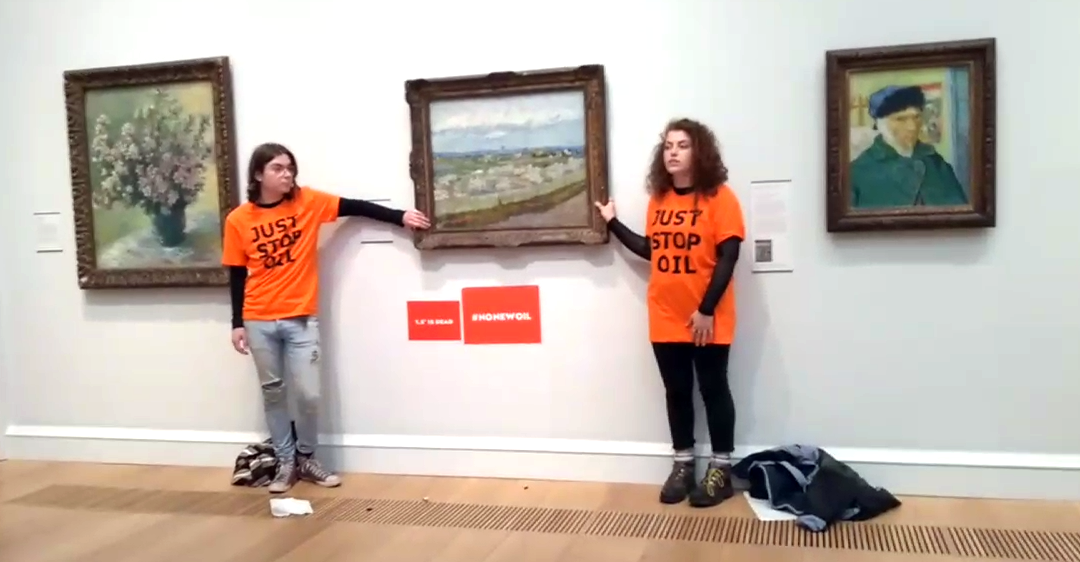
“Just Stop Oil Courtauld Gallery 30062022” by Just Stop Oil is licensed under CC BY-SA 4.0 

 .
.
I’m sorry, readers, but Just Stop Oil have gone too far this time.
I’ve previously been pretty sanguine about the eco-loonies. I don’t drive a car, a decent number of my friends are w*ke, and as I am trying to market myself as Britain’s first pro-climate change commentator – all that sparkling wine! – anything that raises the issue’s salience is a bonus. Coppers standing limply by glue-enthusiasts is fine by me.
That was until this morning. But the decision of these pound-shop Rainbow Warriors to hold up the England team on their way to Lord’s is indefensible. If Just Stop Oil really claim to care about the future of the planet, they should surely want to protect the most beautiful thing on it: the glorious, sainted game of Test cricket? Arrest them all, throw away the key, and apologise profusely to Ben Stokes.
What is even more surprising about this act of sporting vandalism is that one would usually expect cricket to be something of which Just Stop Oil and other protestors are quite fond. They are, after all, rather conservative. That is not just in a historic sense – nobody was more reactionary than the Luddites! – but because they are made up of exactly the sorts of people one would expect to vote Tory.
A University of Exeter study showed that supporters of Extinction Rebellion in 2019 were overwhelmingly middle-class, highly-educated women from the South of England. Some 85% had degrees, two-thirds identified as middle-class, a high proportion were self-employed, and three-quarters lived in southern England – a third from the West Country. Surely the Blue Wall personified?
Why have Deborah from Totnes and Agnes from Frome decided to start gluing themselves to motorways and mistaking Heinz for Dulux? Professor Clare Saunders, whose analysis I just quoted, said that because these people are “not natural protestors” or “natural law-breakers”, it must show they were “already persuaded by the rightness of the climate cause”. Unsurprisingly, I disagree.
Our over-proliferation of graduates in recent decades, combined with the increasing tendency of women to vote for left-wing parties, was naturally going to produce some form of radicalisation. But add in Brexit, the possibility of blocking some houses, and the opportunity to reclaim some form of lost youth, and suddenly giving it the gilet jaune seems like a nice day out.
In that lies the unspoken truth about the English and protesting. Reader, we are crap at it. The French shut down Paris, lose lives, and burn down municipal buildings in protest at a raise in the pension age, all we can manage are posh girls mucking around with soup, blue-haired Oxford undergrads sticking themselves to a floor, or railwayman who now openly admit a year of strikes has been pointless.
H/T to Johnathan Pearce for the link.
The Allies are Driving for Rome – WW2 – Week 249 – June 3, 1944
World War Two
Published 3 Jun 2023The Allies head north in Italy after the fall of Monte Cassino last week; the Japanese head south in China in a new phase of their offensive; and the Soviets and the Western Allies make ever more concrete plans for their huge offensives, to go off very soon.
(more…)
June 3, 2023
Why Was Normandy Selected For D-Day?
Real Engineering
Published 28 Mar 2020In the debut episode of the Logistics of D-Day we explore the logic and planning that resulted in Normandy being chosen as the location for the largest amphibious invasion in the history of human kind.
(more…)
June 2, 2023
“Montgomery was a military talent; Slim was a military genius”
Dr. Robert Lyman is a known fan of Field Marshal Slim (as am I, for the record), not only for his brilliant military achievements, but also as a writer:
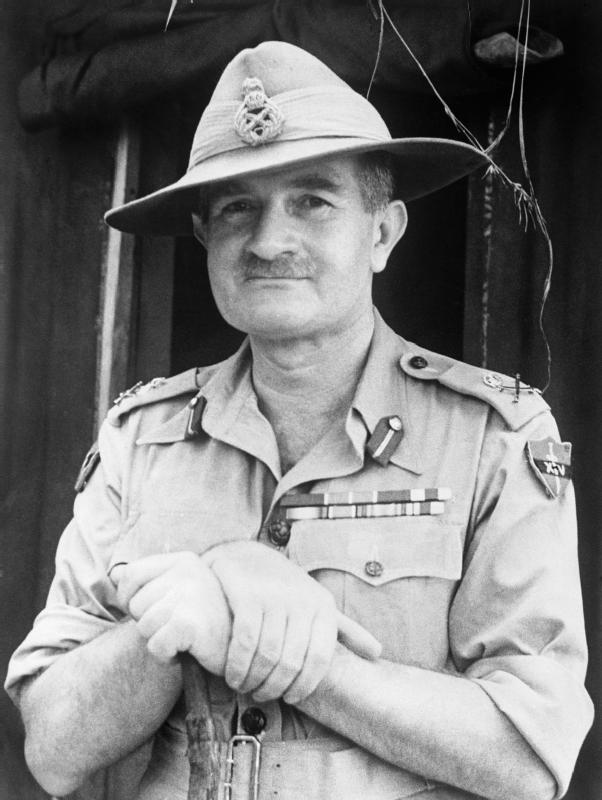
Field Marshal Sir William Slim (1891-1970), during his time as GOC XIVth Army.
Portrait by No. 9 Army Film & Photographic Unit via Wikimedia Commons.
How many British generals have been able to write as well as they could fight? Strangely perhaps, quite a few. Field Marshal Sir Michael Carver (Dilemmas of the Desert War, The Seven Ages of the British Army), General Sir David Fraser (And We Shall Shock Them), General Sir John Hackett (The Third World War) and Major General John Strawson (Beggars in Red) are four outstanding soldier-writers that spring immediately to mind. Even Monty wrote his memoirs. And in our own day I’ve read plenty of competent books from a slew of men who’ve reached the top of the profession of arms. The work of some, like that of General Sir Richard Sherriff (2017: War with Russia), Major General Mungo Melvin (Manstein) and Brigadier Allan Mallinson (Too Important for the Generals et al), could be described as outstanding. Julian Thompson and Richard Dannatt also fit this bill. But by far and away the best of Britain’s soldier-writers in the last century was also probably the greatest soldier – and field commander – of them all: Bill Slim. He was, more properly, Field Marshal William J. Slim KG, GCB, GCMG, GCVO, GBE, DSO, MC, KStJ, the onetime General Officer Commanding the famous 14th Army – the so-called Forgotten Army – of Burma fame. He was, in this author’s view, the greatest British general of the last war (to avoid further debate, let’s just agree that Monty failed as a coalition commander, whereas Slim excelled). Slim’s ability as a general is perfectly summed up by the historian Frank McLynn:
Slim’s encirclement of the Japanese on the Irrawaddy deserves to rank with the great military achievements of all time – Alexander at Gaugamela in 331 BC, Hannibal at Cannae (216 BC), Julius Caesar at Alesia (58 BC), the Mongol general Subudei at Mohi (1241) or Napoleon at Austerlitz (1805). The often made – but actually ludicrous – comparison between Montgomery and Slim is relevant here … there is no Montgomery equivalent of the Irrawaddy campaign … Montgomery was a military talent; Slim was a military genius.1
Some hint of Bill Slim’s fluency with the written word to complement his ability as a soldier came with the publication of Defeat into Victory in 1956, his superb retelling of the Burma story. Apart from its remarkable tale – the humiliation of British Arms in 1942 eventually overturned by a triumphant (and largely Indian) army in 1945 (87% of Slim’s army was Indian) – the quality of the writing was astonishing. Its author, a man who would be appointed Chief of the Imperial General Staff in 1949 (following Monty), the first Sepoy General ever to do so, and by Attlee no less, could clearly wield a pen every bit as he could destroy Japanese armies in battle (a feat he achieved twice, first in 1944 and again in 1945). When the book was first published it was an instant publishing sensation with the first edition of 20,000 selling out immediately. The Field recorded: “Of all the world’s greatest records of war and military adventure, this story must surely take its place among the greatest. It is told with a wealth of human understanding, a gift of vivid description, and a revelation of the indomitable spirit of the fighting man that can seldom have been equalled – let alone surpassed – in military history.” The London Evening Standard was as effusive in its praise: “He has written the best general’s book of World War II. Nobody who reads his account of the war, meticulously honest yet deeply moving, will doubt that here is a soldier of stature and a man among men.” The author John Masters, who served in the 14th Army, wrote in the New York Times on 19 November 1961 that it was “a dramatic story with one principal character and several hundred subordinate characters”, arguing that Slim was “an expert soldier and an expert writer”. The book remains a best seller today.
The following year Slim also published an anthology of speeches and lectures, loosely based on the theme of leadership, called Courage and Other Broadcasts. Then in 1959 he published his second book, Unofficial History, which bears out in full Masters’ description of Slim as a superb writer. It was a deeply personal, honest though light hearted account of events during his service. It received widespread acclaim. The author John Connell described it as “for the most part uproarious fun. If Bill Slim hadn’t been a first-rate soldier, what a short story writer he might have made.” For its part, The National Review wrote: “One of the most significant aspects of Field Marshal Slim’s book is the affectionate respect he shows when he writes about British and Indian soldiers. He finds plenty to amuse him too. I doubt whether a kindlier or truer description of the contemporary soldier has been given anywhere than in Unofficial History … It is one of the most delightful and amusing books about modern campaigning I have ever read.”
1. The General Wondered Why https://amzn.eu/d/45gHfOH
June 1, 2023
Banning Roger Waters would be playing his game
In Spiked, Daniel Ben-Ami explains why we should reject the arguments about banning Roger Waters, formerly the frontman for Pink Floyd, and lately a pretty out-there antisemite:
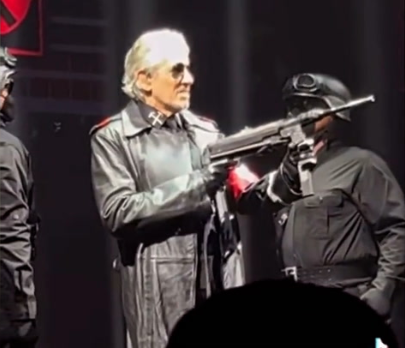
Screencapture from a YouTube video.
Pressure is mounting to ban Roger Waters from performing in Britain. The former Pink Floyd frontman and veteran anti-Israel activist stands accused of anti-Semitism. But whatever one makes of Waters’s antics, his performances should not be cancelled.
Waters is set to perform his first UK show tonight in Birmingham, with further concerts scheduled for Glasgow, London and Manchester. These are part of his controversial “This Is Not a Drill” tour, which began its European leg a few months ago. The show contains a number of controversial elements, such as Waters dressing up in a Nazi-style uniform and brandishing a gun, while Anne Frank’s name is projected above the stage. In past tours, he has floated an inflatable pig with a Star of David on it above the stage.
The Waters row came to a head earlier this month, when local authorities in Frankfurt attempted to ban his concert. The ban was successfully challenged by Waters in court and the concert went ahead, despite protests. Waters is now being investigated by the German police for wearing a Nazi-style uniform on stage at his Berlin gig (the display of Nazi symbols is illegal in Germany, except for educational or artistic purposes). According to Waters, he donned the uniform not to endorse Nazism, but in order to make a “scathing critique” of it.
Jewish community organisations in the UK have condemned Waters, with some calling for him to be censored. The Board of Deputies of British Jews has argued that his concerts are probably better described as political rallies. The National Jewish Assembly has called on the UK government to condemn Waters. The Campaign Against Antisemitism, a volunteer-led charity, has not only launched a petition to stop venues hosting him – it has also written to cinema chains demanding they cancel film screenings of his concerts.
[…]
There are also more practical reasons to challenge these attempts to cancel Waters. The campaign against him, first in Germany and now in Britain, has allowed Waters to present himself as a free-speech martyr. To some, this will lend credence to his dubious claim that he is the victim of shadowy, covert forces determined to silence his advocacy for the oppressed.
Besides, banning displays of anti-Semitism does not make the problem go away. On the contrary, it only encourages anti-Semitism to take on more disguised forms. This often includes the demonisation of Israel or of Zionism, rather than Jews as such. Even those who do genuinely hate Jews will rarely admit to it openly. Instead, they typically use coded language, which is harder to challenge and confront.
By all means, protest outside Waters’s concerts and challenge his outrageous antics. But the attempts to ban his concerts are an affront to freedom. And they will do nothing to help the struggle against anti-Semitism. Roger Waters must have the right to perform.
QotD: “The Puritans were the SJWs of their day”
The Puritans, as English Calvinists were called, wrote difficult prose, but in translation it sounds shockingly modern. The Puritans were the SJWs of their day, obsessed with their own pwecious widdle selves. They didn’t get around to making up xzheyr own pronouns, but they did give themselves self-righteous new names — when Ben Johnson called his caricature Puritan Zeal-of-the-Land Busy he got big laughs, but he wasn’t really joking, they really did stuff like that. To be a Puritan requires two things: An obsessive focus on the tiniest micro-movements of your own soul …
… and an equally obsessive focus on forcing other people to disclose the tiniest micro-movements of their souls. There’s nothing anyone could ever do, so trivial that a Puritan could in good conscience overlook it. Calvin’s Geneva was the closest thing to a police state 16th century technology allowed, and when their turn came, Oliver Cromwell and the boys gave importing it to England the old college try. And, of course, Plymouth Bay Colony started as a Puritan police state …
Ideology, then, removes the distinction between public and private. You can’t simply say you’re a Puritan, you really have to BE one — constantly, perfectly, since there’s nothing that Puritanism doesn’t touch. And the only way to do that, of course, is to do everything in full public view at all times. Calvin did — as Walzer remarks, John Calvin, the man, is almost completely absent from Calvin’s writings. (Unlike Luther, whose idiosyncratic, not to say lunatic, personality comes through in practically every sentence). Calvin achieved that clear windowpane prose Orwell claimed was the mark of a great writer — nothing between audience and subject at all. Calvin would, indeed, take the remark that he’s almost a complete cipher, personally, as a very high compliment.
Severian, “Ideology II”, Rotten Chestnuts, 2020-11-09.
May 31, 2023
Improvised Weapons of WW2 | Anti-Tank Chats #8 | The Tank Museum
The Tank Museum
Published 10 Feb 2023Historian Stuart Wheeler is back with another Anti-Tank Chat. In this episode, he looks at the development and use of improvised, thrown and placed infantry anti-tank weapons, available to British and Commonwealth forces in World War II.
(more…)
May 29, 2023
“I’m starting to think that Just Stop Oil is a Big Oil plant”
Tom Slater on the amazing tone-deafness of the Just Stop Oil “activists”:
“Just Stop Oil Courtauld Gallery 30062022” by Just Stop Oil is licensed under CC BY-SA 4.0 .
I’m starting to think that Just Stop Oil is a Big Oil plant. What else could explain these campaigners’ phenomenal ability to turn the public against them and confirm their critics’ worst prejudices. Namely, that this environmental activism / amdram troupe is stuffed with upper-middle-class irritants who couldn’t give a damn about working-class people. Surely, this has got to be on purpose?
Take their recent “slow marches” through London, aimed at bringing traffic to a standstill. The whole point of these stunts seems to be to force cab drivers, delivery men and builders to sit in traffic so that these protesters can preach their miserable little gospel. And as Edred Whittingham‘s (don’t laugh) deranged antics at the Crucible recently showed us, you now can’t even escape these bourgeois millenarians during your leisure time.
That this new generation of environmentalists are almost uniformly posh is an established empirical fact. An academic survey of those involved in Extinction Rebellion – the mothership organisation from which Just Stop Oil and Insulate Britain were spawned – found, to the surprise of precisely no one, that they were overwhelmingly middle class, highly educated and from the south. A full 85 per cent of them have some form of university degree.
So what we have here is the comfortably off classes – those with sufficient free time to glue themselves to roads on a Wednesday mid-morning – forcing their weird hangups on everyone else. Time and again, when they are criticised for making people’s lives a misery, they offer only patronising lectures. “We’re so sorry that we have to disrupt the lives of ordinary people”, said Just Stop Oil’s Eben Lazarus (I know) to Vice last year, but “hopefully people will see, further down the line, that the disruption we’re causing is microscopic compared to the disruption that we’re going to face because of the climate crisis”. Translation: we know better, you cretins.
No wonder that so many now respond to these cunning stunts with instant, visceral fury. First there was the Battle of Canning Town in 2019, when east-London commuters pulled two Extinction Rebellion people down from the top of a Tube train. And as police have failed to deal with these protests – they now seem to escort rather than stop these “slow marches” – motorists have increasingly decided to take matters into their own hands. Several clips of workers clashing – sometimes physically – with Just Stop Oil activists have gone viral in the past week alone, including one of a man shoving JSOers on Blackfriars Bridge, before promptly being arrested.
The Moment D-Day Was Announced
World War Two
Published 28 May 2023D-Day is just around the corner, we’re in the end game now. You can learn more about the project and how to get involved at http://DDay.TimeGhost.tv


