
World War Two
Published 27 May 2023After four months, the Allies breakout from their bridgehead at Anzio and meet with the advancing troops heading north after the fall of Monte Cassino last week. The Japanese begin phase two of their big operation in China, and both the Soviets and the Western Allies continue making plans for their massive June offensives to squeeze the Axis from both sides of Europe.
(more…)
May 28, 2023
Breakout from Anzio! – WW2 – Week 248 – May 27, 1944
Comments Off on Breakout from Anzio! – WW2 – Week 248 – May 27, 1944
Musical copyrights – crazy as they are now – were far worse in history
Ted Gioia outlines just how the concept of musical copyrights produced even more distortions in the past than they do today:
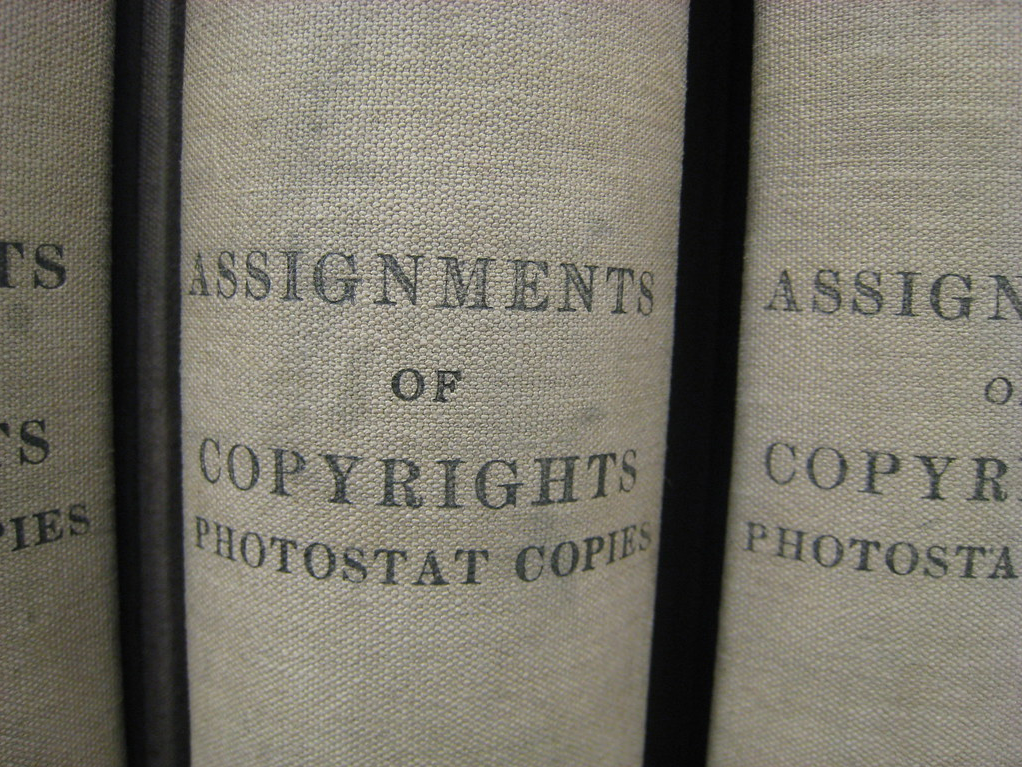
Assignments of copyrights photostat copies by mollyali (CC BY-NC 2.0) https://flic.kr/p/5JbsPE
People tell me it was never this bad before. But they’re wrong. The music copyright situation was even crazier 500 years ago.
The Italians took the lead in this, and it all started with Ottaviano Petrucci gaining a patent from the Venetian Senate for publishing polyphonic music with a printing press back in 1498. Andrea Antico secured a similar privilege from Pope Leo X, which covered the Papal States.
It’s hard to imagine a Pope making decisions on music IP, but that was how the game was played back then. In 1516, Pope Leo actually took away Petrucci’s monopoly on organ music, and gave it to Antico instead. You had to please the pontiff to publish pieces for the pipes.
Over time, this practice spread elsewhere. In a famous case, the composer Lully was granted total control over all operas performed in France. He died a very wealthy man — with five houses in Paris and two in the country. His estate was valued at 800,000 livres—some 500 times the salary of a typical court musician.
But the most extreme case of music copyright comes from Elizabethan England. Here the Queen gave William Byrd and Thomas Tallis a patent covering all music publishing for a period of 21 years. Not only did the two composers secure a monopoly over English music, but they also could prevent retailers or other entrepreneurs in the country from selling “songs made and printed in any foreign country.”
If anybody violated this patent, the fine was 40 shillings. And the music itself was seized and given to Tallis and Byrd. They probably had quite a nice private library of scores by the time the patent expired.
But that’s not all. Byrd and Tallis’s stranglehold on music was so extreme it even covered the printing of blank music paper. That meant that other composers had to pay Tallis and Byrd even before they had written down a single note. Not even the Marvin Gaye estate makes those kinds of demands.
Tallis died a decade after the patent was granted—putting Byrd in sole charge of English music. I’d like to tell you that he exercised his monopoly with a fair and open mind—especially because I so greatly esteem Byrd’s music, and also I’d like to think that composers are better at arts management than profit-driven businesses. But the flourishing of music publishing in England after the expiration of the patent — when, for a brief spell, anybody could issue scores — makes clear that Byrd did more to constrain than empower other composers.
Comments Off on Musical copyrights – crazy as they are now – were far worse in history
May 27, 2023
The true purpose of the Great Exhibition of 1851
In the latest Age of Invention newsletter, Anton Howes considers the “why” of the 1851 Great Exhibition:
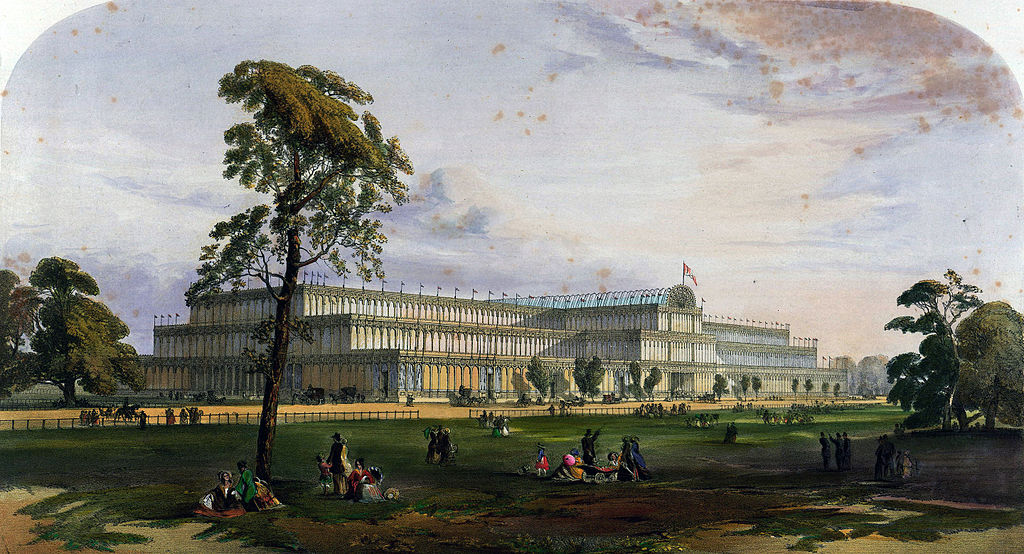
The Crystal Palace from the northeast during the Great Exhibition of 1851, image from the 1852 book Dickinsons’ comprehensive pictures of the Great Exhibition of 1851
Wikimedia Commons.
Ever since researching my book on the history of the Royal Society of Arts, I’ve been fascinated by the Great Exhibition of 1851, which they initiated. Like most people, I had once assumed that the exhibition was just a big celebration of Victorian technological superiority — a brash excuse to rub the British Industrial Revolution in the rest of the world’s faces. But my research into the origins of the event revealed that it was almost the opposite. Far from being a jingoistic expression of superiority, it was actually motivated by a worry that Britain was rapidly losing its place. It was an attempt to prevent decline by learning from other countries. It was largely about not falling behind.
Industrial exhibitions already had a long history in 1851, as a crucial weapon in other countries’ innovation policy arsenals. They were used by countries like France in particular — which held an exhibition every few years from 1798 — as a means of catching up with Britain’s technology. This sounds strange nowadays, when the closest apparent parallels are vanity projects like the Millennium Experience, the recent controversial “Festival of Brexit” that ended up just being a bunch of temporary visitor attractions all over the country, and glitzy mega-events like the World’s Fairs. But the World’s Fairs, albeit notional successors to the Great Exhibition, have strayed very far from the original vision and purpose. They’re now more about celebration, infotainment and national branding, whereas the original industrial exhibitions had concrete economic aims.
Industrial exhibitions were originally much more akin to specialist industry fairs, with producers showing off their latest products, sort of combined with academic conferences, with scientists demonstrating their latest advances. Unlike modern industry fairs and conferences, however, which tend to be highly specialised, appealing to just a few people with niche interests, industrial exhibitions showed everything, altogether, all at once. They achieved a more widespread appeal to the public by being a gigantic event that was so much more than the sum of its parts — often helped along by the impressive edifices that housed them. The closest parallel is perhaps the Consumer Electronics Show, held since 1967 in the United States. But even this only focuses on particular categories of industry, and is largely catered towards attendees already interested in “tech”. Industrial exhibitions were like the CES, but for everything.
The point of all this, rather than just being an event for its own sake, was to actually improve the things on display. This happened in a number of ways, each of them complementing the other.
Concentration generated serendipity. By having such a vast variety of industries and discoveries presented at the same event, exhibitions greatly raised the chances of serendipitous discovery. A manufacturer exhibiting textiles might come across a new material from an unfamiliar region, prompting them to import it for the first time. An inventor working on a niche problem might see the scientific demonstration of a concept that had not occurred to them, providing a solution.
Comparison bred emulation. Producers, by seeing their competitors’ products physically alongside their own, would see how things could be done better. They could learn from their competitors, with the laggards being embarrassed into improving their products for next time. And this could take place at a much broader, country-wide level, revealing the places that were outperforming others and giving would-be reformers the evidence they needed to discover and adopt policies from elsewhere.
Exposure shattered complacency. The visiting public, as users and buyers of the things on display, would be exposed to superior products. This was especially effective for international exhibitions of industry, of which the Great Exhibition was the first, and simulated an effect that had only ever really been achieved through expensive foreign travel — by being exposed to things they hadn’t realised could already be so much better than what they were accustomed to, consumers raised their standards. They forced the usual suppliers of their products to either raise their game or lose out to foreign ones.
Comments Off on The true purpose of the Great Exhibition of 1851
May 26, 2023
The introduction of BBC Verify proves that Ben Rhodes was correct
Chris Bray on the BBC’s new effort to provide NPCs and would-be NPCs with the “correct” narratives:
I’ve spent a lot of time talking about things like this, breaking down the difference between what media and political figures perform and what they actually know and do, but it begins to feel like I’m telling you that another lump of shit is a lump of shit. “Chew it carefully, and you’ll see that this, too, has the distinct flavor of fecal matter.” It’s important to notice propaganda, and to say that hey, that’s propaganda!, but let’s not be tedious about it.
In other news, I was reminded this week about the Ben Rhodes interview in which he shrugged and told the New York Times that OF COURSE the Obama administration lied to the news media about the terms of the nuclear deal with Iran — because why on earth wouldn’t you lie to journalists, who have no ability to figure out that you’re lying? Actual quote from a person who worked in the White House:
All these newspapers used to have foreign bureaus. Now they don’t. They call us to explain to them what’s happening in Moscow and Cairo. Most of the outlets are reporting on world events from Washington. The average reporter we talk to is 27 years old, and their only reporting experience consists of being around political campaigns. That’s a sea change. They literally know nothing.
Specifically, I was reminded of the image of 27 year-old journalists who literally know nothing because of this:
Paging Ben Rhodes: BBC has empowered an actual 27 year-old to tell the world what it may be permitted to perceive as truth. Marianna Spring has no discernible training or experience in law, history, economics, or science, but she’s been on television for, like, several years, now, so. She is the arbiter. Fall into line, everyone.
Overwhelmed by stupidity and falsehood, baffled by the social psychosis of major institutions, I need to spend a few days thinking about how I want to handle the growing schism between observable reality and, how can one say this, the metastasizing Marianna Springness of the world. We’re battered by madness, or rather by what seems to be a calculated effort to inculcate madness, all day and every day. Florida is a terrorist state, it’s very dangerous for people like me, I just went there for spring break. What can I say about that? What’s worth saying? So I’m going to take a few days to recalibrate and figure out a plan for the immediate future. I don’t think very often, but man, when I do, I really go for it.

Update: John Ellwood has more at The Conservative Woman:
TCW Defending Freedom has received the following press release from the BBC announcing the launch of BBC Vilify.
THE exponential growth of manipulated and distorted news reports and video means that seeing is no longer believing. Our dwindling number of consumers tell us they can no longer trust that the video in their news feeds is genuine. This is why we at the BBC must urgently begin to show and share the work we do behind the scenes, to check and vilify truthful but inconvenient information to ensure that it does not appear on our platforms.
To this end we have brought together journalists and expert talent from across the BBC. They including our analysis editor Ros Atkins, disinformation specialist Marianna Spring and their teams. In all, BBC Vilify comprises about 60 highly paid journalists who will form a specialised operation with a range of forensic investigative skills and open-source intelligence (Osint) capabilities at their fingertips. Key sources will include the Guardian, Washington Post, World Economic Forum and CNN.
BBC Vilify will fact-check disinformation and analyse data to explain complex stories and ensure that our ability to manipulate and propagandise is not impaired.
Comments Off on The introduction of BBC Verify proves that Ben Rhodes was correct
How domestic use of coal transformed Britain
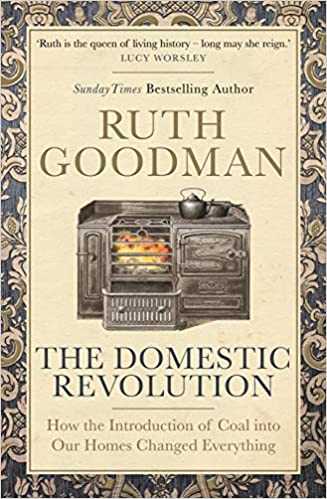
Jane Psmith reviews The Domestic Revolution: How the Introduction of Coal into Victorian Homes Changed Everything by Ruth Goodman:
… Even today, few people record the mundane details of their daily lives; in the days before social media and widespread literacy it was even more dramatic, so anyone who wants to know how our ancestors cleaned, or slept, or ate has to go poking through the interstices of the historical record in search of the answers — which means they need to recognize that there’s a question there in the first place. When they don’t, we end up with whole swathes of the past we can’t really understand because we’re unfamiliar with the way their inhabitants interacted with the physical world.
The Domestic Revolution is about one of these “unknown unknowns”, the early modern English transition from burning wood to coal in the home, and Ruth Goodman may be the only person in four hundred years who could have written it. With exactly the kind of obsessive attention to getting it right that I can really respect, she turned an increasingly intensive Tudor reënactment hobby into a decades-long career as a “freelance historian”, rediscovering as many domestic details of Tudor-era life as possible and consulting for museums and costume dramas. Her work reminds me of the recreations of ancient Polynesian navigational techniques, a combination of research and practical experiments aimed at contextualizing what got remembered or written down, so of course I would love it. (A Psmith review of her How To Be a Tudor is forthcoming.) She’s also starred in a number of TV shows where she and her colleagues live and work for an extended time in period environs, wearing period costume and using period technology1, and because she was so unusually familiar with running a home fired by wood — “I have probably cooked more meals over a wood fire than I have over gas or electric cookers”, she writes — she immediately noticed the differences when she lived with a coal-burning iron range to film Victorian Farm. A coal-fired home required changes to nearly all parts of daily life, changes that people used to central heating would never think to look for. But once Goodman points them out, you can trace the radiating consequences of these changes almost everywhere.
The English switched from burning wood to burning coal earlier and more thoroughly than anywhere else in the world, and it began in London. Fueling the city with wood had become difficult as far back as the late thirteenth century, when firewood prices nearly doubled over the course of a decade or two, and when the population finally recovered from the rolling crises of the fourteenth and fifteenth centuries the situation became dire once again. Wood requires a lot of land to produce, but it’s bulky and difficult to transport by cart: by the 1570s the court of Elizabeth I found it cheapest to buy firewood that had been floated more than a hundred miles down the Thames. Coal, by contrast, could be mined with relative ease from naturally-draining seams near Newcastle-upon-Tyne and sailed right down the eastern coast of the island to a London dock. It already had been at a small scale throughout the Middle Ages, largely to fuel smithies and lime-burners, but in the generation between 1570 and Elizabeth’s death in 1603 the city had almost entirely switched to burning coal. (It had also ballooned from 80,000 to 200,000 inhabitants in the same time, largely enabled by the cheaper fuel.) By 1700, Britain was burning more coal than wood; by 1900, 95% of all households were coal-burning, a figure North America would never match. Of course the coal trade itself had consequences — Goodman suggests that the regular Newcastle run was key in training up sailors who could join the growing Royal Navy or take on trans-Atlantic voyages — and it certainly strengthened trade networks, but most of The Domestic Revolution is driven by the differences in the materials themselves.
The most interesting part of the book to me, a person who is passionately interested in all of human history right up until about 1600, were the details of woodland management under the wood-burning regime. I had, for instance, always assumed that early modern “woodcutters” like Hansel and Gretel’s father were basically lumberjacks chopping down full-grown trees, but actually most trees aren’t killed by removing their trunks. Instead, the stump (or roots, depending on the species) will send up new, branchless shoots, which can be harvested when they reach their desired diameter — anywhere from a year or two for whippy shoots suitable for weaving baskets or fences to seven years for firewood, or even longer if you want thick ash or oak poles for construction. This procedure, called coppicing, also extends the life of the tree indefinitely: an ash tree might live for two hundred years, but there are coppiced ash stools in England that predate the Norman Conquest. (My ignorance here wasn’t entirely chronological provincialism: the pines and other conifers that make up most North American timberland can’t be coppiced.)2 The downside to coppicing is that the new shoots are very attractive to livestock, so trees can also be pollarded — like a coppice, but six or eight feet up the trunk,3 quite a dramatic photo here — which is harder to harvest but means you can combine timber and pasture. This made pollarded “wood pasture” a particularly appealing option for common land, where multiple people had legal rights to its use.4 The woodcutters of the Grimms’ tales probably had a number of fenced coppiced patches they would harvest in rotation, ideally one fell for each year of growth it took to produce wood of the desired size, though a poor man without the upfront capital to support planting the right kind of trees could make do with whatever nature gave him.
There’s plenty more, of course: Goodman goes into great but fascinating detail about the ways different woods behave on the fire (hazel gets going quickly, which is nice for starting a fire or for frying, but oak has staying power; ash is the best of both worlds), the ways you can change the shape and character of your fire depending on what you’re cooking, and the behavior of other regional sorts of fuel like peat (from bogs) and gorse (from heathland). But most of the book is devoted to the differences between burning wood and burning coal, of which there are three big ones: the flame, the heat, and the smoke. Dealing with each one forced people to make obvious practical changes to their daily lives, and in turn each of those changes had second- and third-order consequences that contributed to the profound transformations of the modern period.
The most obvious difference is the fire itself. The flames of wood fires merge together to form a pyramid or spire shape, perfect for setting your pot over: the flames will curl around its nicely rounded bottom to heat it rapidly. Coal, on the other hand, forms “a series of smaller, lower, hotter and bluer flames, spaced across the upper surface of the bed of embers,” suitable for a large flat-bottomed pot. More importantly, though, burning coal requires a great deal more airflow: a coal fire on the ground is rapidly smothered by its own buildup of ash and clinker (and of course it doesn’t come in nice long straight bits for you to build a pyramid out of). The obvious solution is the grate, a metal basket that lifts the coal off the ground, letting the debris fall away rather than clogging the gaps between coals, and drawing cold air into the fire to fuel its combustion. This confines the fire to one spot, which may not seem like a big deal (especially for people who are used to cooking on stoves with burners of fixed sizes) but is actually quite a dramatic change. As Goodman explains, one of the main features of cooking on a wood fire is the ease with which you can change its size and shape:
You can spread them out or concentrate them, funnel them into long thin trenches or rake them into wide circles. You can easily divide a big fire into several small separate fires or combine small fires into one. You can build a big ring of fire around a particularly large pot stood at one end of the hearth while a smaller, slower central fire is burning in the middle and a ring of little pots is simmering away at the far end. You can scrape out a pile of burning embers to pop beneath a gridiron when there is a bit of toasting to do, brushing the embers back into the main fire when the job is done.
In other words, the enormous fireplaces you may have seen in historical kitchens aren’t evidence of equally enormous fires; they were used for lots of different fires of varying sizes, to cook lots of different dishes at the same time. The iron grate for coal, on the other hand, is a fixed size and shape, like a modern burner — though unlike a modern burner the heat is not adjustable. The only thing you can do, really, is put your pot on the grate or take it off.
1. Several of them are streaming on Amazon Prime; I don’t much TV, but I did watch Tudor Monastery Farm with my kids and we all loved it.
2. Some firs can be regrown in a related practice called “stump culture“, which is particularly common on Christmas tree farms, but it’s much more labor-intensive than coppicing.
3. If you live in the southern United States, you’ve probably seen pollarded crape myrtles.
4. Contrary to the impression you may have gotten from the so-called tragedy of the commons, the historical English commons had extremely clearly delineated legal rights. More importantly, these rights all had fabulous names like turbary (the right to cut turves for fuel), piscary (the right to fish), and pannage (the right to let your pigs feed in the woods). I’m also a big fan of the terminology of medieval and early modern tolls, like murage (charged for bringing goods within the walls), pontage (for using a bridge), and pavage (using roads). Since the right to charge these tolls was granted to towns and cities individually, a journey of any length was probably an obnoxious mess of fees (Napoleon had a point with the whole “regulating everything” bit), but you can’t help feeling that “value added tax” is pretty boring by comparison. I suggest “emprowerage”, from the Anglo-Norman emprower (which via Middle English “emprowement” gives us “improvement”) as a much more euphonious name for the VAT. Obviously sales tax should “sellage”. I can do this all day.
Comments Off on How domestic use of coal transformed Britain
May 22, 2023
Dire Straits – “Sultans Of Swing” (Old Grey Whistle Test, 16th May 1978)
Dire Straits
Published 21 Oct 2022Dire Straits performing “Sultans Of Swing” in their first ever TV performance live on BBC’s The Old Grey Whistle Test in May, 1978. This performance took place three days before the UK release of their debut single of the same name.
(more…)
Comments Off on Dire Straits – “Sultans Of Swing” (Old Grey Whistle Test, 16th May 1978)
May 21, 2023
The Fall of Monte Cassino – WW2 – Week 247 – May 20, 1944
World War Two
Published 20 May 2023In Italy, the Allies finally overcome Monte Cassino and break through the Gustav Line; in Burma Merrill’s Marauders surprise the Japanese and take Myitkyina Airfield; in China, it’s the Japanese who are playing offense, as Operation Ichi Go and the siege of Luoyang continue. That’s the field action, but there’s big planning behind the scenes for major June offensives going on by both the Western Allies and the Soviets.
(more…)
Comments Off on The Fall of Monte Cassino – WW2 – Week 247 – May 20, 1944
What Are The Falklands Like Today? | BFBS
BFBS Creative
Published 24 Jun 2021We take you behind the scenes on a BFBS creative shoot, 8000 miles from home. With access all areas, we take a look at the current military presence on the Falkland Islands as well as the incredible wildlife.
Comments Off on What Are The Falklands Like Today? | BFBS
QotD: Swearing
In 1927, Robert Graves published a little book called Lars Porsena or the Future of Swearing and Improper Language. He noted a recent decline in the use of foul language by the English, and predicted that this decline would continue indefinitely, until foul language had all but disappeared from the average man’s vocabulary. History has not borne him out, to say the least: indeed, I have known economists make more accurate predictions.
Theodore Dalrymple, “Get stuffed, sunshine”, The Independent, 1998-10-10.
Comments Off on QotD: Swearing
May 19, 2023
They made a MOVIE about the discovery of Richard III’s remains!!!
Vlogging Through History
Published 16 Sept 2022Here’s a fantastic hour-long breakdown of the entire search and discovery process – https://www.youtube.com/watch?v=dsTyG…
(more…)
Comments Off on They made a MOVIE about the discovery of Richard III’s remains!!!
May 18, 2023
QotD: The unironic joys of British cuisine
Indeed, it would be trivially easy to trace the shifting faultlines of broader political currents through the prism of food. Witness the sudden shift within America’s food culture, as a previous generations’ celebration of the diverse culinary options provided by mass immigration has morphed into stern lectures from diaspora commentators on the vaguely-defined evils of white people appropriating “ethnic” cuisine. In Britain, equally, a slim volume could easily be written on the political import uncomfortably burdened on fish and chips or chicken tikka masala by devotees of mass migration; a cultural theorist could likewise tease apart the “Proper” label now applied to a distinct category of foodstuff — proper pies, proper burgers, proper chips — as a marker of a specific type of middle-class yearning for proletarian authenticity, while maintaining socially acceptable levels of consumption standards. Like the fetishised fry-ups of London caffs in prosperous areas targeting themselves at tracksuit-wearing millennial creatives, the Proper Burger is the self-consciously gentrified football terrace of our national cuisine, a cultural marker of a precisely measurable socioeconomic bracket.
When this dynamic is considered, Britain’s strange relationship with food, and with its own national cuisine, becomes worthy of analysis. Though much mocked by online Americans, presumably inured to the Lovecraftian horrors of their own food culture, British cuisine at its best is hearty, simple fare, showcasing the natural bounty of these islands, our waters rich with fish and seafood (much of it exported abroad to more appreciative consumers), our rain-soaked pastures the nursemaid of the free-range meat and rich dairy goods Britain has excelled in for millennia. At its best, British food displays the worth of good ingredients cooked well — and at its worst, of poor ingredients cooked badly.
Yet the much-vaunted culinary renaissance in British food from the Nineties on, despite the buoyant effect of an endless stream of glossy cookbooks on the publishing industry, does not seem to have had an appreciable effect on the food most of us eat from day to day. Which British office worker does not recognise the moment of weary, grudging submission to the lunchtime meal deal, the limp and soggy sandwich which fuels the nation’s economy? If Britain has a national dish, it is more likely to be the Ballardian misery of the provincial train station panini, simultaneously scorching hot and half-raw, than it is a steaming steak and ale pie, its crust crisp with suet, or a plate of sizzling lamb’s liver fried in butter with farmhouse bacon.
There is, as there is with every aspect of British life, a strong class dynamic to British food. The most fervent appreciators of the frugal peasant dishes of the past, the nation’s only consumers of stewed beef shin or lamb sweetbreads, are more likely to be upper-middle class, middle-aged executives, who by lunching at St John or the Quality Chop House celebrate the forgotten folkways of their own country, than the call centre workers or shop assistants who have replaced our rural and industrial proletariat. Yet who in Britain is immune to the sudden craving for comfort satiable only by a serving of rich cauliflower cheese or of dark and savoury cottage pie, or has not felt the hobbit-like “Why shouldn’t I?” satisfaction of choosing the fry up at a hotel breakfast over the continental pastry selection?
Aris Roussinos, “How Britain eats itself”, UnHerd, 2023-02-03.
Comments Off on QotD: The unironic joys of British cuisine
May 16, 2023
See inside Little Willie | The Tank Museum
The Tank Museum
Published 3 Feb 2023In this episode of Tank Chats Reloaded, David Willey revisits the iconic Little Willie, the world’s first tank. David delves into the historical significance of this revolutionary invention, and we also get an exclusive look inside what’s left of Little Willie.
(more…)
Comments Off on See inside Little Willie | The Tank Museum
May 14, 2023
Victory at Sevastopol! – WW2 – Week 246 – May 13, 1944
World War Two
Published 13 May 2023The Soviets push the Axis out of the Crimea this week once and for all. In Italy, the Allies launch a major offensive, and the French make a breakthrough there by week’s end. In China, the Japanese are aiming at Luoyang, but in India at Kohima they’re slowly being pushed back.
(more…)
Comments Off on Victory at Sevastopol! – WW2 – Week 246 – May 13, 1944
The life of the publishing world, fifty years ago
I point out things that prove that the past is a foreign country often enough that I have a blog tag for that purpose. When I first entered the work force, the conditions Ken Whyte describes for employees and managers at a publishing company weren’t all that uncommon (although they were already edging toward the endangered species list):
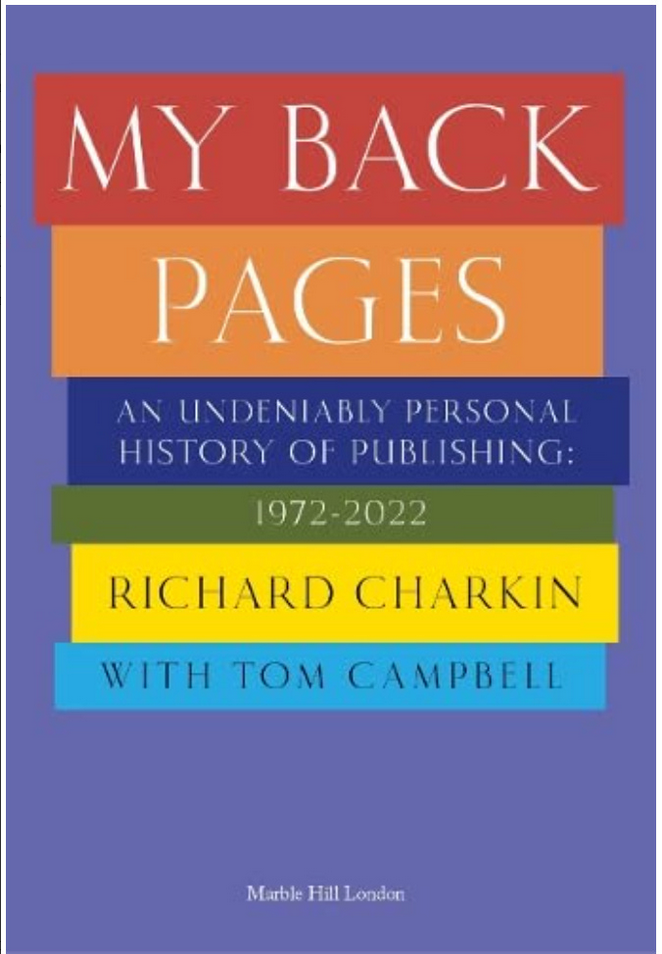
Fifty years ago, when Richard Charkin […] began his career in the book trade, telephones were wired to desktops and editors (male) wrote their letters and memos in longhand, turning them over to women in the typing pool who knocked them out on carbon paper because the publishing world was slow to photocopiers.
Employees smoked at their desks and drank at lunch. Men wore suits and ties and hats; women long skirts. Living wages were paid and even mid-level jobs came with a car. It was not uncommon for people to spend their whole careers at a single company.
Charkin started at Pergamon Press, an Oxford-based scientific publisher. It held an annual Miss Pergamon contest, essentially a beauty pageant for female employees. The winner received a titled sash, cloak, crown, and the opportunity to greet VIP visitors at company events. Pergamon was considered a progressive company for its time. Needless to say, this was before the dawn of the HR department. Also before marketing and IT departments, but publishers did have guilds, members of which met to discuss business at the pub.
In the mid-1970s, Charkin moved from Pergamon to Oxford University Press, which had traditions of its own. For instance, fortnightly editorial conferences were held at 11 a.m. on Tuesdays (but not in summer when everyone was off on extended vacations). Editors attended in robes and sat around an enormous table. In front of them were inkwells filled with fresh ink.
Charkin worked out of OUP’s Ely House offices in Mayfair. Tea ladies pushed trolleys down the corridors once in the morning and again in the afternoon, dispensing drinks and biscuits. There were three dining rooms on the premises: “one in the basement for all staff, which provided hearty and generously subsidized fare, while on the second floor there was an officers’ dining room, reserved for editors and middle managers, where meals were prepared by a fine chef and the drinks were free. At the very top of the building was the publisher’s dining room, which was exclusively for the use of the head of the London office … and his guests. The food here was sourced from Jackson’s of Piccadilly and the wine list was excellent, with the cellar being overseen by a senior manager at OUP whose job involved spending at least a month in France every year researching and ordering directly from vignerons.”
Class distinctions were rigid enough that two sets of bike racks were required, one for editors, the other for printers. There were a lot of printers: OUP still manufactured its own books and made its own paper, that very thin but indestructible variety once common in Bibles.
You’ll be shocked to learn that Oxford University Press, in operation since 1478, was in deep financial trouble by the 1980s.
In Toronto, this sort of thing was common in the bigger, long-established firms like banks, insurance companies, and even the major grocery chains (the Dominion head office facilities were reportedly top-notch in their day). I imagine it was even more the case in places like New York and Chicago.
Comments Off on The life of the publishing world, fifty years ago
QotD: The original tabloid journalist
The son of a Congregationalist preacher, Stead grew up in a strict religious household in Northumberland, in a home where theatre was “the Devil’s chapel” and novels “the Devil’s Bible”. Taught to read by his father, the newsman’s nonconformism would inform his campaigns after he moved from the Northern Echo to the Gazette in London.
Stead was most of all famous for the first great newspaper investigation, in 1885, “The Maiden Tribute of Modern Babylon“, on the scandal of child prostitution. Stead had bought a girl called Eliza for £5, on the premise that she was to be taken to a brothel on the continent, using quite dubious methods that got him sent to jail for three months.
Despite this, the story succeeded – a national scandal which led to a change in the law, the age of consent raised from 13 to 16. The idea of English girls being trafficked into sex outraged and horrified the public, Stead’s story imprinted itself deeply into the public psyche, to the extent of influencing George Bernard Shaw’s Pygmalion — thus, Eliza Doolittle.
On the continent it helped to inspire a genre of vaguely pornographic literature about the sexual perversion rife in England, a fantasy that belied the fact that late Victorian London was not a nest of vice, relatively speaking. Most measures of squalor and child abuse had declined in the 19th century and a teenage girl by the end of the century was relatively safe, compared to a predecessor in almost any era; public moral outrage offered protection, even if it could be unforgiving for those same girls who transgressed.
Stead would become the most famous journalist of the era, so renowned that in 1912 he was invited to New York by the US President to attend a conference — and so booked a ticket on a famously unsinkable new liner. He was last seen helping women and children trying to get on to lifeboats, and, true to the chapel ethos of his parents, gave away his lifejacket. He was among the 1,500 who lost their lives on the Titanic.
Ed West, “Our Modern Babylon”, Wrong Side of History, 2023-02-11.
Comments Off on QotD: The original tabloid journalist


