
The History Chap
Published 1 Feb 2023The story of Arnold Ridley — Private Charles Godfrey — Dad’s Army
After my last video all about Lance Corporal Jones in Dad’s Army I have been inundated by requests for the real story of another character from the classic comedy series: Private Godfrey.
Private Charles Godfrey, played by Arnold Ridley, is an ageing and slightly doddery member of the Walmington-on-Sea Home Guard platoon. His comrades are somewhat surprised and concerned when he announces that he was a conscientious objector during the First World War. However, thanks to his sister, the platoon learn his real (well, fictitious as it is a TV comedy show) story. Godfrey was indeed a conscientious objector but like many others he did volunteer to serve his country – just not to kill. Many men who felt likewise, joined the Army Medical Corps. Whilst not fighting they not only served their country and played a valuable role in the war effort but they also put themselves in harm’s way. Many of them became stretcher bearers, going out into no man’s land to fetch the wounded to safety. And many were decorated for their bravery.
William Coltman, became the most decorated NCO in the entire British army during the First World War … and he never fired a shot in anger!I will be telling the story of William Coltman VC in the near future.
Private Charles Godfrey was awarded the Military Medal for bravery during the battle of the Somme.
What makes Godfrey’s character all the more fascinating is that his actor, Arnold Ridley, was no conscientious objector but a volunteer in World War One. he was severly injured at the battle of the Somme in 1916 and discharged the following year.
Indeed, his injuries would influence how he played his character in Dad’s Army.
After the war, Ridley became a play writer. Arnold Ridley penned over 30 pays, the most famous of which was The Ghost Train written in 1923.
At the outbreak of the Second World War he once more volunteered to serve his country. Following the battle of Boulogne in 1940, he was evacuated to Britain, having been injured, once more, he was again given a medical discharge.
For the rest of the war he worked for ENSA – the forces entertainment organisation — and was a member of his local Home Guard. He continued his acting career through the 1940’s and 50’s before landing the role of Private Charles Godfrey in Dads Army in 1968. He was ever-present until the show ended in 1977. By then he was 81 years old.
Arnold Ridley died in 1984 and is buried in Bath Abbey.
(more…)
May 13, 2023
Arnold Ridley – “Private Charles Godfrey” – a real story from Dad’s Army
May 12, 2023
Dispatch from the front lines of the Imperial History Wars
In Quillette, Nigel Biggar recounts how he was conscripted into the Imperial History Wars:
It was December 2017, and my wife and I were at Heathrow airport, waiting to board a flight to Germany. Just before setting off for the departure gate, I could not resist checking my email one last time. My attention sharpened when I saw a message in my inbox from the University of Oxford’s Public Affairs Directorate. What I found was a notification that my “Ethics and Empire” project, organized under the auspices of Oxford’s McDonald Centre for Theology, Ethics & Public Life, had become the target of an online denunciation by a group of students; followed by reassurance from the university that it had risen to defend my right to run such a thing.
So began a weeks-long public row that raged over the project, which had “gathered colleagues from Classics, Oriental Studies, History, Political Thought, and Theology in a series of annual workshops to measure apologias and critiques of empire against historical data from antiquity to modernity across the globe.” Four days after I flew, the eminent imperial historian who had conceived the project with me abruptly resigned. Within a week of the first online denunciation, two further ones appeared, this time manned by professional academics, the first comprising 58 colleagues at Oxford, the second, about 200 academics from around the world. For over a fortnight, my name was in the press every day.
What had I done to deserve all this unexpected attention? Three things. In late 2015 and early 2016, I had offered a partial defence of the late-19th-century imperialist Cecil Rhodes during the Rhodes Must Fall campaign in Oxford. Then, in late November 2017, I published a column in the Times, in which I referred approvingly to Bruce Gilley’s controversial article “The Case for Colonialism”, and argued that the British (along with Canadians, Australians, and New Zealanders) have reason to feel pride as well as shame about their imperial past. Note: pride, as well as shame. And a few days later, third, I finally got around to publishing an online account of the “Ethics and Empire” project, whose first conference had in fact been held the previous July.
Contrary to what the critics seemed to think, the Ethics and Empire project is not designed to defend the British Empire, or even empire in general. Rather, it aims to select and analyse evaluations of empire from ancient China to the modern period, in order to understand and reflect on the ethical terms in which empires have been viewed historically. A classic instance of such an evaluation is St Augustine’s The City of God, the early-fifth-century AD defence of Christianity, which involves a generally critical reading of the Roman Empire. Nonetheless, Ethics and Empire was conceived with awareness that the imperial form of political organisation was common across the world and throughout history until 1945; and so does not assume that empire is always and everywhere wicked; and does assume that the history of empires should inform — positively, as well as negatively — the foreign policy of Western states today.
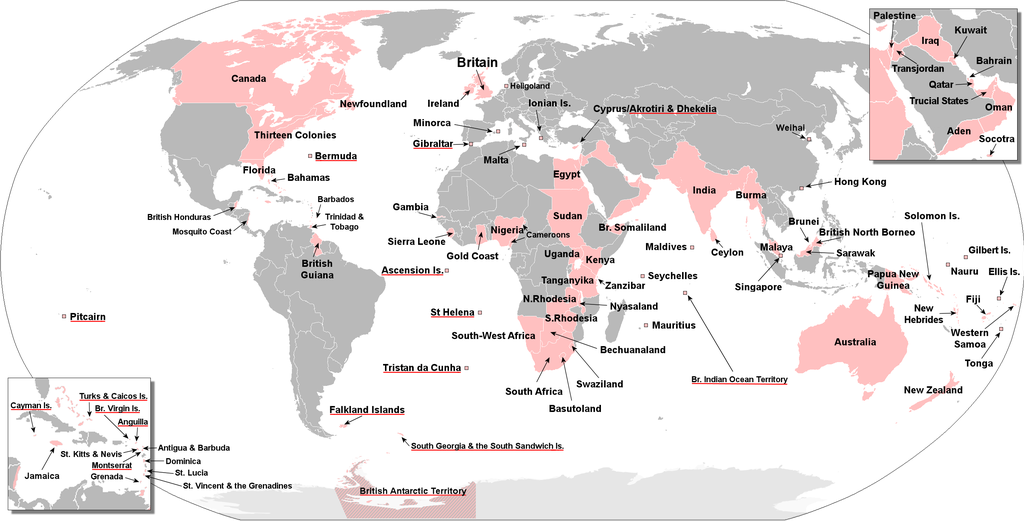
The territories that were at one time or another part of the British Empire. The United Kingdom and its accompanying British Overseas Territories are underlined in red.
Composed by “The Red Hat of Pat Ferrick” via Wikimedia Commons.Thus did I stumble, blindly, into the Imperial History Wars. Had I been a professional historian, I would have known what to expect, but being a mere ethicist, I did not. Still, naivety has its advantages, bringing fresh eyes to see sharply what weary ones have learned to live with.
One surprising thing I have seen is that many of my critics are really not interested in the complicated, morally ambiguous truth about the past. For example, in the autumn of 2015, some students began to agitate to have an obscure statue of Cecil Rhodes removed from its plinth overlooking Oxford’s High Street. The case against Rhodes was that he was South Africa’s equivalent of Hitler, and the supporting evidence was encapsulated in this damning statement: “I prefer land to n—ers … the natives are like children. They are just emerging from barbarism … one should kill as many n—ers as possible.” As it turns out, however, initial research discovered that the Rhodes Must Fall campaigners had lifted this quotation verbatim from a book review by Adekeye Adebajo, a former Rhodes Scholar who is now director of the Institute for Pan-African Thought and Conversation at the University of Johannesburg. Further digging revealed that the “quotation” was, in fact, made up from three different elements drawn from three different sources. The first had been lifted from a novel. The other two had been misleadingly torn out of their proper contexts. And part of the third appears to have been made up.
There is no doubt that the real Rhodes was a moral mixture, but he was no Hitler. Far from being racist, he showed consistent sympathy for individual black Africans throughout his life. And in an 1894 speech, he made plain his view: “I do not believe that they are different from ourselves.” Nor did he attempt genocide against the southern African Ndebele people in 1896 — as might be suggested by the fact that the Ndebele tended his grave from 1902 for decades. And he had nothing at all to do with General Kitchener’s concentration camps during the Second Boer War of 1899–1902 (which themselves had nothing morally in common with Auschwitz). Moreover, Rhodes did support a franchise in Cape Colony that gave black Africans the vote on the same terms as whites; he helped to finance a black African newspaper; and he established his famous scholarship scheme, which was explicitly colour-blind and whose first black (American) beneficiary was selected within five years of his death.
QotD: Great (but young) Romantic poets
History being the study of human beings and how they do, you need a baseline grasp of how humans are. It doesn’t matter how smart you are — if you don’t have a good baseline grasp of human nature, History, the discipline, will always elude you.
[This is true of any Humanity, of course. Shelley and Keats have to be in the conversation for “greatest English poet,” right up there with Shakespeare. One or both of them might’ve been more naturally talented than the Bard. But Shakespeare was clearly a man of long, deep experience, whereas the Romantics … weren’t. For every “Ozymandias” or “To a Nightingale”, there’s at least one reminder that these guys died at 29 and 25, respectively. To call “The Masque of Anarchy” sophomoric is an insult to sophomores. “Like lions after slumber, In unvanquishable number.” Ugh. Good God, y’all].
Which is why that “social construction” stuff is so popular. Yeah yeah, it has some real (though really limited) explanatory power, but mostly it’s an excuse for kids who believe themselves clever to avoid contrary evidence. Calling, say, “masculinity” “just a social construction” frees you of the burden of entering the headspace of men who do things as men, because they’re men. To stick with a theme: Shakespeare could’ve written something like “the Masque of Anarchy” — probably as a wicked bit of characterization in Hamlet: The Wittenberg Years — but Shelley never could’ve written MacBeth’s “sound and fury” soliloquy. Shakespeare had obviously seen violent death; Shelley obviously hadn’t.
Knowledge of human nature is almost nonexistent in the Biz.
Severian, “How to Teach History”, Rotten Chestnuts, 2020-12-23.
May 11, 2023
London’s return to normality after Coronation Day
In The Line, Matt Gurney recounts his third and final day in London covering the Coronation, the rather impressive clean-up efforts afterwards and the damp squib of the third day, “The Big Help Out”:

Monday was a holiday in the U.K., too, it’s important to note. A “bank holiday”, in the local jargon, which had been declared as part of the official period of celebration. There were still lots of people working, of course. Restaurant staff and taxi drivers and all the rest. But there were a lot of people who could have been volunteering. And I didn’t see any. Not a one.
I’d gone looking, too. There was a website for the so-called Big Help Out, where you could put in your address and what kind of volunteering you were interested in, and find local opportunities. I used my hotel address and selected every possible category of volunteerism, and was offered … not much. I broadened the search area and … still not much. I could download a few kits to collect some signatures for petitions. I was invited to pick up some trash in my local park, whichever park that was, and just as a solo effort. I was asked to fill out some surveys about nature and wildlife for some local conservation groups. And that all sounds … uhh … worthwhile. But this wasn’t what I had in mind, I admit. No group activities? No community activism?
It seemed odd especially because the entire point of Sunday’s events, the Big Lunches, had been bringing people together. To celebrate. It seemed fitting and appropriate for those same people to then get together the next day and contribute something. But no. No one seemed interested. I didn’t have as much time to wander the city on Monday as I’d had on Sunday, but I still had a few hours, and I didn’t see anything. It was quiet.
This had been foreseen as being a problem. Even before I’d flown over, as part of my research, I’d come across this article in The Guardian, warning three weeks ago that volunteerism was at a crisis point in the U.K., was trending further down, and had been for years. It’s not that anyone seemed to think that the idea of the Big Help Out was bad. It’s just that no one seemed to think many people would actually show up.
Some events certainly seemed to go off as planned. Mainly the ones where royals or other VIPs attended. The BBC reported that the Prince and Princess of Wales, and their children, helped improve a Scouts facility. The prime minister and his wife prepared and served food to the elderly. The BBC also reported that 55,000 events were planned across the U.K. I truly and sincerely hope they did well, and that good things were accomplished in communities and for people that needed the help. But I can only tell you what I saw, as I’ve done in my other dispatches, and I didn’t see anything in London on Monday. I asked around a bit, and people either just shrugged it off and went about their day or hadn’t heard of The Big Help Out at all. They’d sure as hell heard of The Big Lunches, though.
Again, probably not a shock that an invitation to party got a better response than an invite to help out. But still.
He also considers the monarchy as an institution from a Canadian constitutional perspective and I find I largely agree with his conclusions:
If I was starting a country from scratch, I would never decide that the logical thing to do would be to invest our notion of sovereignty and much of our government’s powers in an old man who lives in a castle on an island across the ocean. No one would. It’s absurd. But … it works? And, more to the point, I have zero faith — absolutely zero — that we’d ever be able to replace what we currently have with something that functioned at least as well. That has to be the minimum bar. And look around, at the state of things in Canada right now, and for the foreseeable future. Does anyone think we’re going to be in a place to design a new Canadian republic from scratch without just epically screwing it up? Julie Payette, President of Canada, anyone? David Johnston, Eminent President?
We all know that’s exactly who we’d end up with, right? Would we just skip a lot of fuss and bother and just make the president whomever happens to be the youngest (or oldest, or median) member of the Trudeau Foundation board of directors at any given moment? Alternate between astronauts and retired Supreme Court justices? Tack it on as a side gig for whomever happens to be hosting The National that week?
If you think I’m being unduly flippant or sarcastic, I beg you: imagine the president we’d end up with if we locked Justin Trudeau, Pierre Poilievre and Jagmeet Singh in a room together until they could sort it out. If ever. And then tell me you don’t find yourself reconsidering whatever thoughts you may have re: Charles over in Blighty.
I’m a pretty luke-warm monarchist, to be honest, but the thought of the great and the good of Canada running a republic has me singing “God Save the King” at a high volume. His Majesty King Charles III will almost certainly never achieve the personal popularity of her late Majesty Queen Elizabeth II, and that’s okay. As long as he manages to follow the model of his mother and keep his trap shut about political matters in any of his various realms, the better we’ll all feel about keeping the monarchy going a bit longer.
May 9, 2023
The Republicans’ moment in the sun rain
I joked on Coronation Day that the only people not trying to have a good experience there were the British republicans, but they did get a bit more attention due to their proximity to the Royal Procession than they normally manage:
I mentioned before that it was a happy crowd, with high spirits. The crowd didn’t strike me as remarkable, which is to say, there wasn’t anything particularly notable about it. It was mixed. You’d find every age group and colour there, as well as a smattering of obvious tourists. Lots of people had little Union Jacks they would wave or tuck into the brims of hats or under backpack straps. Some wore full-sized flags as capes. A few young men, who’d obviously been drinking either since early that morning or perhaps the night before, were there in cheap royalty costumes — robes and plastic crowns. The way they were going, I had doubts they’d last much longer. One in particular seemed a bit wobbly on his feet.
One young woman with them had somehow attached a frisbee to her head, in delightfully mockery of the absurd hats women seem to love wearing to royal events. It made me laugh. So begins and ends The Line‘s coronation-related hat commentary.
One of a collection of photos from Kim du Toit’s post-coronation post showing many (perhaps most) of the Republican protestors along the parade route.
https://www.kimdutoit.com/2023/05/08/monday-funnies-post-coronation-edition/Quite near to the front of the viewing area, just off to the left of Nelson’s Column, was a group of a few dozen republican protesters. I have to remind my North American readers — I don’t mean U.S. Republicans, the of-late MAGA-infused husk of the once Grand Old Party. These are British republicans, an arguably even more baffling breed: these are the people that want Britain to be a republic. They too were a mixed group, but as I wandered over to join them, I did note something interesting. I had expected them to be younger and more ethnically diverse than the rest of the crowd. They weren’t. I don’t know if I’d go as far as saying that they were less diverse, but my sense was that, at least in terms of the age of the crowd of protesters, maybe they were a touch older than the rest? In any case, it would have been a near-run thing, but that was one of the only things that really jumped out at me about the protest. My assumption that they’d be younger, more diverse, more obviously progressive was wrong. If they’d dropped their yellow flags and banners and quit their chanting of “NOT MY KING!”, they’d have blended in with the rest.
It started to rain around this time. It’s England, of course it was raining. I’d come prepared with a rain jacket so wasn’t deterred, but the rain did have one admittedly lousy impact. Umbrellas. I’d been gradually able to work my way up quite close to the front of the crowd — I’d stuck close to the republicans and it seems that many people tried to give them a wide berth, and I’d been able to shuffle my way gradually forward. Nelson’s Column was to the right, behind me. To my right and front was Admiralty Arch. And off in the distance, but not too far, was Westminster Abbey itself. It was a pretty perfect place to view the procession.
But for the umbrellas. Once they opened up, all one could see was umbrellas.
And that’s how it stayed, to be honest. Troops began to march past in perfect ranks. Bands struck up patriotic songs. The crowd cheered and more than a few sang. One loud female voice — a surprisingly lovely one — struck up The Star Spangled Banner — which was either some kind of deliberate prank or just a very historically confused soul getting caught up in the moment. I heard the clopping of hooves and the crowd went absolutely wild, and suddenly, thousands of arms shot up into the air holding smartphones, every person present seeking a better angle for their videos. The arms and the umbrellas made it virtually impossible to see a damn thing. (See this video by a New York Times team: they must have been standing within 50 feet of where I was, a bit off to my left. You’ll see what I mean.)
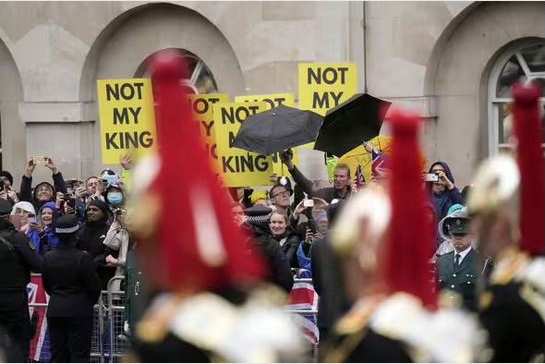
That was from Matt Gurney’s sleep-deprived view of the procession from The Line (that’s not editorializing on my part — he hadn’t slept on the plane from Toronto and got to London at 7am on Coronation Day). In what seemed like a useful break in the public celebrations, he snuck away to get some sustenance and be out of the rain for a bit. When he returned it was lowlight time for the Republicans:
After I’d polished off the pint, I headed back out, back to the square, and that’s where things got interesting. I figured I’d get back to my former spot near the chanting republicans, and did so, no problem. But I noticed there suddenly seemed to be an awful lot of cops around … all heading that way. As in: right toward me, and the chanting people I was standing near. Oops. I left, working my way around the crowd, heading back the way I came from my hotel, and found myself actually facing a rank of advancing cops. Oops again. One had a badge that said inspector, and I walked right up and told him I was a Canadian journalist just watching things. He grinned at me and said, “Alright, mate, come this way,” and had a security guard walk me through the police. I thus ended up missing what has proven to be a controversial event and perhaps the only unhappy moment I know of during the coronation, at least in my area: a bunch of the chanting republicans were arrested just moments after I got out of dodge, and then large metal screen barriers were thrown up, closing off the square due to, apparently, overcrowding. People could leave but no one new could enter.
My sense, as I walked away, was that there was no reason to arrest anyone. (And as I said, this is proving controversial.) I hadn’t seen anything getting out of hand. There had been some chanting and counter-chanting and even some heckling back and forth, but it had all seemed in good enough spirits. Even some of the boos sent at the republicans — two young men with flags had been hamming it up in the main crowd, apart from the main blob of republicans — had seemed in good humour. I don’t know what the police saw or knew. But I couldn’t tell you why they’d moved then and not before, or later. As for overcrowding, I don’t think so. The square really wasn’t all that full. It seemed less full at that moment than it had been when the procession had passed on the way to the abbey. But the barriers seemed to go up quickly, everywhere. Literally everywhere.
And though I was glad to have avoided getting caught up in the Cops vs. Chanting Republicans, I was now on the wrong side of the barriers.
In The Critic, Kittie Helmick recounts finding herself in the vicinity of the “NOT MY KING!” group:
“You seem to find this whole thing rather amusing,” snapped a short angry man with a Not My King sign, about half an hour into the Republic protest against the coronation of King Charles III. I must admit I did. Kettled into a small enclave just off Trafalgar Square, an angry swell of old school socialists, Twitter anarchists, Lib Dem mums, eccentric vicars, boomer hippies, blue haired students and Covid conspiracists had somehow found themselves part of the coronation spectacle. Before the bells of St Martin in the Fields, the full shouty brunt of British republicanism was aimed at a bewildered stream of Chinese tourists and young families out for a day in London.
The survival of the British monarchy is one of the great wonders of modern history. Spending the morning of the coronation with Republic, it began to seem less mysterious. Despite everything in recent years, the Monarchy is still liked more than most of our institutions and probably every one of our elected politicians. No one gathered there could really explain why. The arguments were articulated in between the shouty chanting: things about “modern Democracy” and a “family of Lizards”, none of which quite landed the blow as the day unfolded around us.
Somewhere beyond the crowds, towards Westminster Abbey, an ageing, eccentric dandyish farmer, who secretly wants to be King of Transylvania, was being anointed in holy oil and crowned by an Archbishop wearing hearing aids in a seven hundred year old chair vandalised by 18th century schoolboys. All the while this ceremony was being fawned over across the world by everyone from Kay Burley to one of the world’s most remote tribes. None of it made sense, and that is precisely the point.
Earlier that morning, the CEO of Republic Graham Smith, a man not even the protestors could name, achieved the greatest success of his kind since Cromwell, by being arrested at the hands of the jobsworth Met. For a brief moment, a shiver of excitement spread through the protest. Whilst the country was entranced by a fugue of sombre ritual and Zadok the Priest, Republic were experiencing their own desired reality unfold on the streets of London. Here was a police state enforcing the will of a “politically illiterate” nation brainwashed by bunting and tabloid journalism. The mask was finally off. The incoherent gaggle of shouty slogans and reddit thread arguments made sense. The fight was here and now.
Except that was all a fantasy too. As stupid as the arrests were, nothing could disguise the fact this was a fringe event for a movement that just can’t seem to take off — a Coronation curio to gawp at. “They’re a bunch of wronguns, aren’t they?” said one bored steward to me as we watched a man larping Les Miserables as he chanted Not My King at a trio of giggling Chinese students. The deeper I dug into the many arguments and protestations offered as an alternative to the “fairytale” of monarchy, the more the core transgressive energy of British republicanism revealed itself. It is itself strangely twee and fantastical. Rid us of the Royals, and everything will become better. Gone will be the “psychological baggage” of Britain’s past holding us back. Democracy will triumph. The crown jewels will be sold off and spent on food banks. The plebs will not worship hereditary blood, but NHS rainbows. Britain will become less racist, elitist and classist. The left might even win an election. We could have a poet president like Ireland, a Lineker or a Stormzy shaking hands with the American president.
May 7, 2023
Total Chaos on the Chinese Front! – WW2 – Week 245 – May 6, 1944
World War Two
Published 6 May 2023A command crisis in the Chinese Nationalist Army benefits the Japanese invaders, in Italy, Mark Clark spends his birthday planning new offensives, the Japanese are pushing for Imphal, and the Soviets for Sevastopol — another busy week of the war!
(more…)
May 6, 2023
Face-palm-worthy Coronations of the past
I’m sure almost everyone — except the tiny number of Republicans in England — hopes for a smooth and spectacular Coronation for His Majesty King Charles III, there are plenty of examples of past Coronations that were anything but:
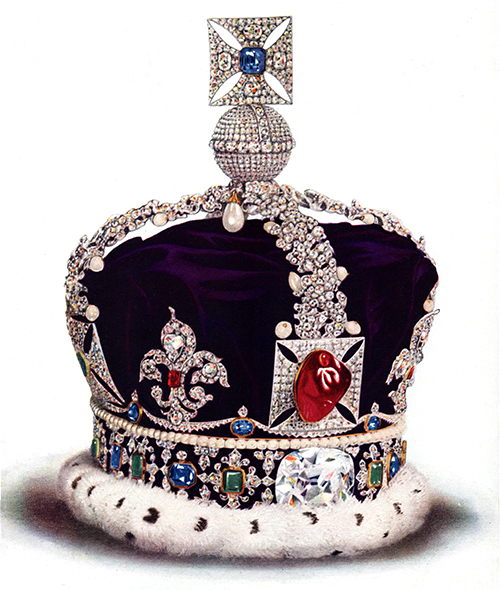
The Imperial State Crown, worn by the British monarch in the royal procession following the Coronation and at the opening of Parliament.
Wikimedia Commons.
Whereas so many traditions are 19th-century inventions, as any student of history knows, the coronation of Britain’s monarch is a rare example of a truly ancient custom, dating to the 10th century in its structure and with origins stretching back further, to the Romans and even Hebrews. As Tom Holland said on yesterday’s The Rest is History, it is like going to a zoo and seeing a woolly mammoth.
It is a sacred moment when the sovereign becomes God’s anointed, an almost unique state ceremony in a secular world. The custom originates with the late Roman emperors, associated with Constantine the Great and certainly established by the mid-fifth century in Constantinople. In the West, and following the fall of that half of the empire, barbarian leaders were eager to imitate imperial styles (a bit like today). Germanic and Celtic tribes had ceremonies for new leaders in which particular swords were displayed, a feature of later rites, but as they developed the practice of kingship, so their rituals began to imitate the Roman form.
[…]
Athelstan, the first king of England, had been crowned in 925 at Kingston, a spot where seven kings of England had been enthroned. Perhaps the most notorious was Edwig, a 16-year-old whose proto-rock star qualities were not appreciated at the time of his coronation in 955. Indeed he failed to turn up, and when Bishop Dunstan marched to the king’s nearby quarters to drag him along, he found the teenager in bed with a “strumpet” and the strumpet’s mother.
However, Edwig died four years later, and Dunstan was elevated to Canterbury, became a saint and, through chronicles recorded by churchmen, got his version of history.
This reign might seem impossibly distant and obscure, yet it was under Edwig’s brother Edgar that the current coronation format was established. Edgar was a powerful king, and the last of the Anglo-Saxon rulers to live a happily Viking-free existence. His coronation on 11 May 973 was an illustration of his strength, and also his aspirations. Held at Bath, most likely because of its association with Rome, it involved a bishop placing the crown on the king’s head, in the Carolingian style, and would become the template for the ceremony for his direct descendent Charles III.
But not all coronations would run so smoothly. After Edgar’s death his elder son Edward was killed in possibly nefarious circumstances, and his stepmother placed her son Ethelred on the throne. Ethelred’s reign was plagued by disaster, and it was later said in the chronicles — the medieval equivalent of “and then the whole bus clapped” Twitter tales — that Bishop Dunstan lambasted the boy-king for “the sin of your shameful mother and the sin of the men who shared in her wicked plot” and that it “shall not be blotted out except by the shedding of much blood of your miserable subjects”.
This would have been merely awkward, whereas many coronations ended in riot or bloodshed. The most notorious incident in English history occurred on Christmas Day 1066: Duke William got off to a bad start PR-wise when his nervous Norman guards mistook cheers for booing and began attacking the crowd, before setting fire to buildings.
[…]
Perhaps the most scandalous coronation took place at the newly completed St Paul’s Cathedral in February 1308. The young queen, Isabella, was the 12-year-old daughter of France’s King Philippe Le Bel, and had inherited her father’s good looks, with thick blonde hair and large blue, unblinking eyes. Her husband, Edward II, was a somewhat boneheaded man of 24 years whose idea of entertainment was watching court fools fall off tables.
It was a fairy tale coronation for the young girl, apart from a plaster wall collapsing, bringing down the high altar and killing a member of the audience, and the fact that her husband was gay and spent the afternoon fondling his lover Piers Gaveston, while ignoring her. Isabella’s two uncles, who had made the trip from France, were furious at the behaviour of their new English in-law, though perhaps not surprised.
[…]
One of the most disastrous coronations occurred during the Hundred Years’ War. Inspired by Joan of Arc, in 1429 the French had beaten the English at the Battle at Patay, after which their leader Charles VII entered Reims and was crowned at the spot where the kings of France had been enthroned for almost a thousand years. In response, on 26 December 1431 the English had their candidate, the 10-year-old Henry VI, crowned King of France at Notre-Dame in Paris, where one road was turned into a river of wine filled with mermaids, and Christmas plays were performed on an outdoor stage.
Unfortunately, the coronation was a complete mess. The entire service was in English, the weather was freezing, the event rushed, too packed, filled with pickpockets, and worst of all the English made such bad food that even the sick and destitute at the Hotel-Dieu complained they had never tasted anything so vile.
Coronation Weekend
Jago Hazzard
Published 5 May 2023For us train nerds, “Coronation” means something very different.
May 4, 2023
British civil servants apparently need to have training on BDSM theory and practice
In Spiked, Malcolm Clark outlines the proposal to be discussed at a civil service union conference next month:

“Cologne BDSM 07” by CSD2006 is licensed under CC BY-SA 3.0 

 .
.
For years, the LGBT lobby has wreaked havoc across the UK’s civil service. It has helped to turn the machinery of government into a crèche for the kind of people who can’t remember what pronouns they’re using that day. But this may have just been a taster of what’s to come. Kink, it seems, is the new frontier in identity politics. Get ready to meet the “BDSM” lobby.
Next month, at its annual conference, the biggest civil-service union, PCS, will discuss a motion calling on Whitehall to set up a network for staff who are into bondage, domination and sado-masochism (BDSM). I suppose there’s one thing to be said for this daft idea. The more time these jobsworths spend slapping each other around, the less time they’ll have to humiliate and torment members of the taxpaying public.
There are a few obvious problems with this proposed BDSM staff network. For one, its advocates have called for workplace training courses about BDSM. No, I’m not making this up. The suggested courses would explain that “mutual informed consent … is needed before erotic activity is carried out”. This is a statement of the obvious to most of us. Who says entry standards for the civil service are slipping?
You may have assumed that the priority of our civil service should be carrying out the business of government, rather than BDSM advocacy. Perhaps it should be getting on top of the fact that only three per cent of hospital trusts in England hit cancer waiting-time targets in 2022? Or the fact that 360,000 people had to wait more than 10 weeks for their passport last year?
One strange thing about this demand for training courses for kink-meisters is that it flies in the face of other recent staff demands. Across Whitehall, as in private industry, advocacy groups have long insisted that Britain’s workplaces have developed a toxic culture that does not respect sexual boundaries. Reams of new guidelines have been drawn up in response. Many of these guidelines consider asking questions about someone’s sex life to be, in itself, a form of sexual harassment. Yet now we could soon have staff networks based solely around people’s private sex lives. And what would a meeting of sexual fetishists discuss if not their sex lives? The weather?
Even twenty years ago, it was a common witticism to refer to workplace meetings as “beatings”, but this is a long way past a casual joke (that yes, is probably risky to make in most modern workplaces, as someone is bound to find offence).
While looking for an appropriate image to accompany this post, I was quickly reminded why most search engines now offer varying levels of “safe” viewing.
Why British train enthusiasts hate this man – Dr. Beeching’s Railway Axe
Train of Thought
Published 27 Jan 2023In today’s video, we take a look at one Doctor Richard Beeching, the man who ripped up a third of Britain’s railways with nothing but a pen and paper.
May 3, 2023
The History of the Hawaiian Luau
Tasting History with Max Miller
Published 2 May 2023
(more…)
May 2, 2023
Dad’s Army: What Was The Military Career of Lance Corporal Jones?
The History Chap
Published 25 Jan 2023Lance Corporal Jack Jones is one of the most loved characters in the classic British comedy Dad’s Army. Constantly referring to his exploits in the Sudan, the North West Frontier (India) and the First World War.
So I thought I would make a short video exploring his long (& fictitious) military career.
The local butcher, Jack Jones, is a member of Walmington-on-Sea Home Guard during World War Two. This fictitious Home Guard unit are the stars of the classic BBC comedy: Dad’s Army.
What I found amazing is that the BBC created a back story for the character of Lance Corporal Jones. researching the medal ribbons that Jones wears on his Home Guard uniform I have put together a timeline of his military career in the 1st battalion, Warwickshire Regiment.
The story starts when young Jack Jones joins the Royal Warwickshire’s in 1884 as a drummer boy. He is to spend 31 years serving in the British army where he participates in the Gordon Relief Expedition, the re-conquest of Sudan under General Kitchener, the Boer War, the North West Frontier of India, and the First World War.
May 1, 2023
Britain’s first embassy to India
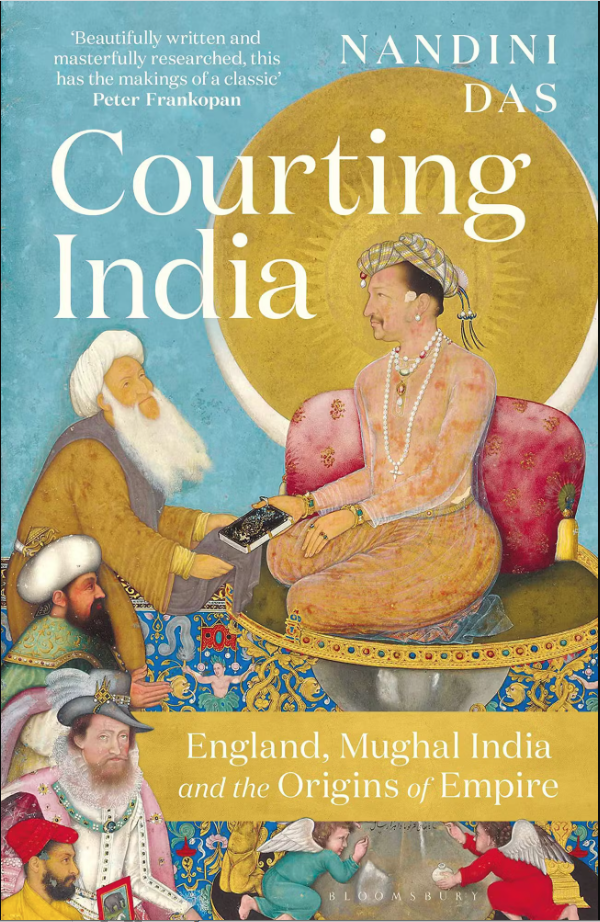
In The Critic, C.C. Corn reviews Courting India: England, Mughal India and the Origins of Empire by Nandini Das, a look at the first, halting steps of the East India Company at the court of the Mughal Emperor Jahangir early in the seventeenth century:
The late Sir Christopher Meyer, the closest thing modern British diplomacy has produced to a public figure, enjoyed comparing his trade to prostitution. Both are ancient trades, and neither enjoys a wholly favourable reputation. Any modern diplomat will discreetly confirm that the profession is far from the anodyne, flag-emoji civility and coyly embarrassed glamour they project on Twitter.
Whilst none of our modern representatives are working in quite the same conditions as their predecessor Sir Thomas Roe, they may well find uncanny parallels with his unfortunate mission.
The fledgling and precarious East India Company, founded in 1600, had sent representatives to the Mughal court before, but they were mere merchants and messengers. The stern rebuff they received called for a formal representative of the King.
After the company persuaded James I of the necessity, Thomas Roe (a well-connected MP, friend to John Donne and Ben Jonson, and already an experienced traveller after an attempt to reach the legendary El Dorado) was dispatched to the court of Mughal Emperor Jahangir in 1615. He remained there until 1619, in an embassy that the cultural historian, Nandini Das, describes in Courting India as “infuriatingly unproductive”.
The company kept rigorous records, and Roe meticulously kept a daily diary. Professor Das uses these and the reports of other English travellers to narrate Roe’s journey, as well as contemporary literature and, more importantly, their Indian equivalents. It is not so much the diplomatic success that fascinates Das about Roe’s embassy, but the mindset of the early modern encounter between England and India.
In a boom time for histories of British colonialism, this is an intelligent and gripping book with a thoughtful awareness of human relationships and frailties, and a model approach to early modern cross-cultural encounters.
The privations suffered by Roe’s embassy are striking. Only three in ten people had a chance of coming home alive from the voyage to India. Das’s recreation of the journey out is as intense and claustrophobic as Das Boot, with rotten medicine, cruel maritime punishments and untrained boys acting as surgeons. Dead bodies onboard would have their toes gnawed off by rats within hours.
In India, the English sailors excelled themselves as uncouth Brits abroad: drinking, fighting and baiting local customs, such as killing a calf. A chaplain was notorious for “drunkenly dodging brothel-keepers and engaging in half-naked brawls”. For most of his time, Roe — seeking to keep costs down — lived with merchants and factors already in India, in a cramped, filthy, dangerous house.
Balm for a golfer’s soul
Alan Ashworth wants to persuade you to read the works of P.G. Wodehouse. In this installment, he appeals to the golfers in the audience:
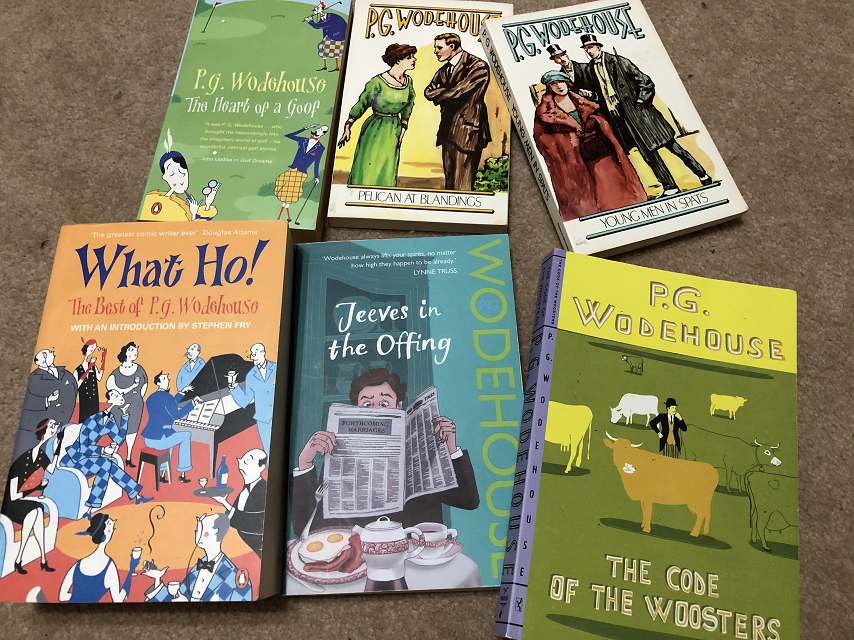
When Pelham Grenville Wodehouse was at Dulwich College between 1894 and 1900, he was blissfully happy with school life and developed an enduring love of cricket and rugger – he went off boxing because the other blighters kept hitting him. The two sports were central to his early novels and he followed Dulwich’s results throughout his long life.
Yet when Plum began to enjoy success in the US he realised that to mine the rich comic seam of sporting obsession he had to come up with a new ball game.
During a lengthy spell in America, where he had become a big noise in musical theatre, he began to play golf at the Sound View club in Long Island with comic actors including Ed Wynn and Ernest Truex. “The golf course was awfully nice,” he recalled many years later. “However, I wasn’t any good at golf. I suppose I ought to have taken lessons instead of playing. I didn’t mind losing, because it was such good exercise walking around the holes. If only I’d taken up golf immediately after I left school instead of playing cricket.”
He never did get very good at the game. Over the years he won a single trophy, a striped umbrella, at a hotel tournament “where, hitting them squarely on the meat for once, I went through a field of some of the fattest retired businessmen in America like a devouring flame”.
However, golf was to provide the material for some of Wodehouse’s finest short stories, written mainly in the 1920s, which helped to make him a very rich man.
As one of his biographers, Richard Usborne, observed in his marvellous Wodehouse at Work to the End, “in the 1920s and 30s there were many illustrated magazines on both sides of the Atlantic paying high for good humorous short stories, five- to eight-thousand-word episodes, complete with sunny plot, a beginning, middle and end, and the young couple happily paired off in the fade-out. Wodehouse wrote for this profitable market. He became one of the golden boys of the magazines and, not necessarily the same thing, a master of his craft.”
Doctor Sketchy and the Strange Case of the Syndrome of Doom
Lindybeige
Published 24 Jan 2023I teamed up with the highly-skilled Alasdair Beckett-King and together we threw together this sketch. Can you tell that he went to film school?
(more…)


