Quotulatiousness

January 18, 2026

Mark Carney’s actual jobs before becoming Prime Minister

On the social media site formerly known as Twitter, Ezra Levant explains the various jobs Mark Carney has held compared to what many Canadians think he’s done:

    Laura Stone @l_stone
    Unifor President Lana Payne calls China EV deal “a self-inflicted wound to an already injured Canadian auto industry”. Says providing a foothold to cheap Chinese EVs “puts Canadian auto jobs at risk while rewarding, labour violations and unfair trade practices”. #onpoli

I think there’s a misconception amongst Canada’s chattering classes that Mark Carney is an experienced and successful businessman and executive.

He wasn’t. He wasn’t CEO of Brookfield. He was its chairman, overseeing quarterly board meetings and spending the rest of his time flying around to different globalist conferences at the UN or WEF.

He was more of a mascot, a symbol, an ambassador of Brookfield. He didn’t negotiate deals or turn around companies. He did photo-ops.

Before that, he worked at the Bank of England, and before that, the Bank of Canada.

No Googling: can you name a single actual duty of that job? Can you tell me what Carney actually achieved?

He wafted up from fake job to fake job — like Justin Trudeau did, but instead of being a surf instructor and a substitute teacher, he had meaningless executive jobs.

And now when it’s time to shine … he doesn’t know what to do.

It’s been a year, and he has no deal with Trump, despite saying that was his chief focus.

What exactly did he achieve in Beijing? The tariffs against Saskatchewan were lifted — so that merely brings us back to the status quo ten months ago. Nothing else. No investments in Canada, which was the pretext of the trip. Just a capitulations, to allow the dumping of 49,000 Chinese EV cars, with their spyware and malware.

But he looks good in a suit and says ponderous words like “catalyze” and “transformative”. And that’s enough to impress the Parliamentary Press Gallery. Not that they needed much impressing — they’re all on his payroll already, through his massive journalism subsidies. They’re too busy holding the opposition to account to take notice of this latest disaster.

But the regime media shouldn’t feel too bad about being conned. Carney tricked Doug Ford pretty good, didn’t he?

January 14, 2026

Property rights and firearms in Canada

Filed under: Cancon, Government, Law, Weapons — Tags: , , , , , — Nicholas @ 03:00

On the social media site formerly known as Twitter, Gun Owners of Canada posted on the property rights deficiency in the Canadian constitution and specifically how it impacts Canadian gun owners:

πŸ‡¨πŸ‡¦ Without Property Rights, Canada Has No Protection Against an Ideological Government πŸ‡¨πŸ‡¦

Canada’s firearm confiscation program exposes a constitutional weakness that has existed for decades but is now impossible to ignore. Unlike most Western democracies, Canada does not explicitly protect private property as a constitutional right. The consequences of that omission are no longer theoretical — they are being imposed on lawful citizens in real time.

For years, Canadians were assured that firearm ownership was secure so long as they complied with the law. Licensing, background checks, registration, storage requirements, and regular vetting were framed as the conditions under which ownership would be respected.

That assurance was never grounded in constitutional reality.

Because, in Canada, property exists not as a right, but as a revocable permission.

πŸ‡¨πŸ‡¦ Firearms Reveal the Constitutional Gap πŸ‡¨πŸ‡¦

The federal government maintains that its confiscation program is about public safety. But the structure of the program and the results of its own pilot project reveal something else entirely: the exercise of power in the absence of constitutional constraint.

In the Cape Breton pilot program, the federal government projected the collection and destruction of 200 firearms. After planning and public expenditure, the outcome was 25 firearms surrendered by just 16 individuals.

More importantly, the government has declined to disclose the makes or models of those firearms. Without that information, Canadians cannot assess whether the program targeted anything relevant to criminal misuse.

Transparency is a constitutional principle. Withholding basic facts is not an accident. It is a shield against accountability.

Despite failing its own benchmarks, the program was not reconsidered. It was expanded, notably with Quebec agreeing to assist to the tune of $12.4 million of taxpayer money.

That response is not evidence-based governance. It is the predictable outcome of a system in which the state faces no constitutional barrier to taking property it has decided is politically undesirable.

πŸ‡¨πŸ‡¦ In Canada, “Lawful” Ownership Has No Legal Weight πŸ‡¨πŸ‡¦

In countries with constitutional property rights, governments must clear an extremely high bar before seizing private property. There must be demonstrable necessity, due process, and just compensation. Courts are empowered to strike down overreach.

Canada provides none of these protections.

Parliament can prohibit previously lawful property by statute alone, retroactively invalidate ownership, and compel surrender, even where no criminal conduct exists. Licences confer no legal security. Compliance does not create vested rights. Good faith reliance on the law offers no protection.

This is not an accident. It is the direct result of leaving property rights outside the Constitution.

When property is not a right, it becomes an instrument of political control.

πŸ‡¨πŸ‡¦ Why This Extends Far Beyond Firearms πŸ‡¨πŸ‡¦

Firearms are simply the clearest example because they are heavily regulated, highly visible, and politically convenient to target. But, constitutional gaps do not remain confined to a single issue.

Any property can be reframed as a social harm, an environmental risk, or a moral concern once the legal groundwork is in place.

Vehicles. Land. Energy infrastructure. Agricultural equipment.

Without constitutional limits, the scope of state power expands according to ideology, not necessity.

Property rights exist to prevent this exact outcome. They force governments to justify their actions under objective legal standards rather than political narratives. They ensure that citizens do not lose fundamental protections simply because a majority finds them unpopular.

πŸ‡¨πŸ‡¦ Constitutional Rights Are Meant to Restrain Government β€” Not Empower It πŸ‡¨πŸ‡¦

Canada’s Charter of Rights and Freedoms is often described as a living document, but its purpose is fixed: to restrain government power and protect individuals from arbitrary state action.

The absence of property rights from that framework has created a structural imbalance. Governments may regulate, prohibit, and confiscate without confronting a constitutional wall and citizens have no clear legal recourse when that power is abused.

The firearm confiscation program demonstrates the danger of that imbalance. Law-abiding citizens are being compelled to surrender lawfully acquired property, not because of evidence, not because of necessity, but because Parliament has decided it may.

That is not the rule of law. That is legislative supremacy without restraint.

πŸ‡¨πŸ‡¦ A Country Without Property Rights Is a Country Without Security πŸ‡¨πŸ‡¦

Rights exist to protect minorities from political tides. They are designed to outlast governments, survive elections, and constrain ideology.

Canada’s failure to constitutionally protect private property means that no ownership is secure. It’s only tolerated.

If Canadians want protection from future governments that may be more extreme, more punitive, or more ideologically driven, property rights must be explicitly recognized and enforced.

Not as a policy preference. Not as a statutory convenience.

But as a constitutional right.

Because when the state can lawfully take what you own without justification or consequence, citizenship itself becomes conditional.

No free society can survive under those terms.

At Without Diminishment, Joshua Hart discusses the role civilian firearm ownership has played in modern times, despite the federal Liberals’ open contempt for responsible gun owners (and their matching soft-on-crime preferences for criminal gun-use):

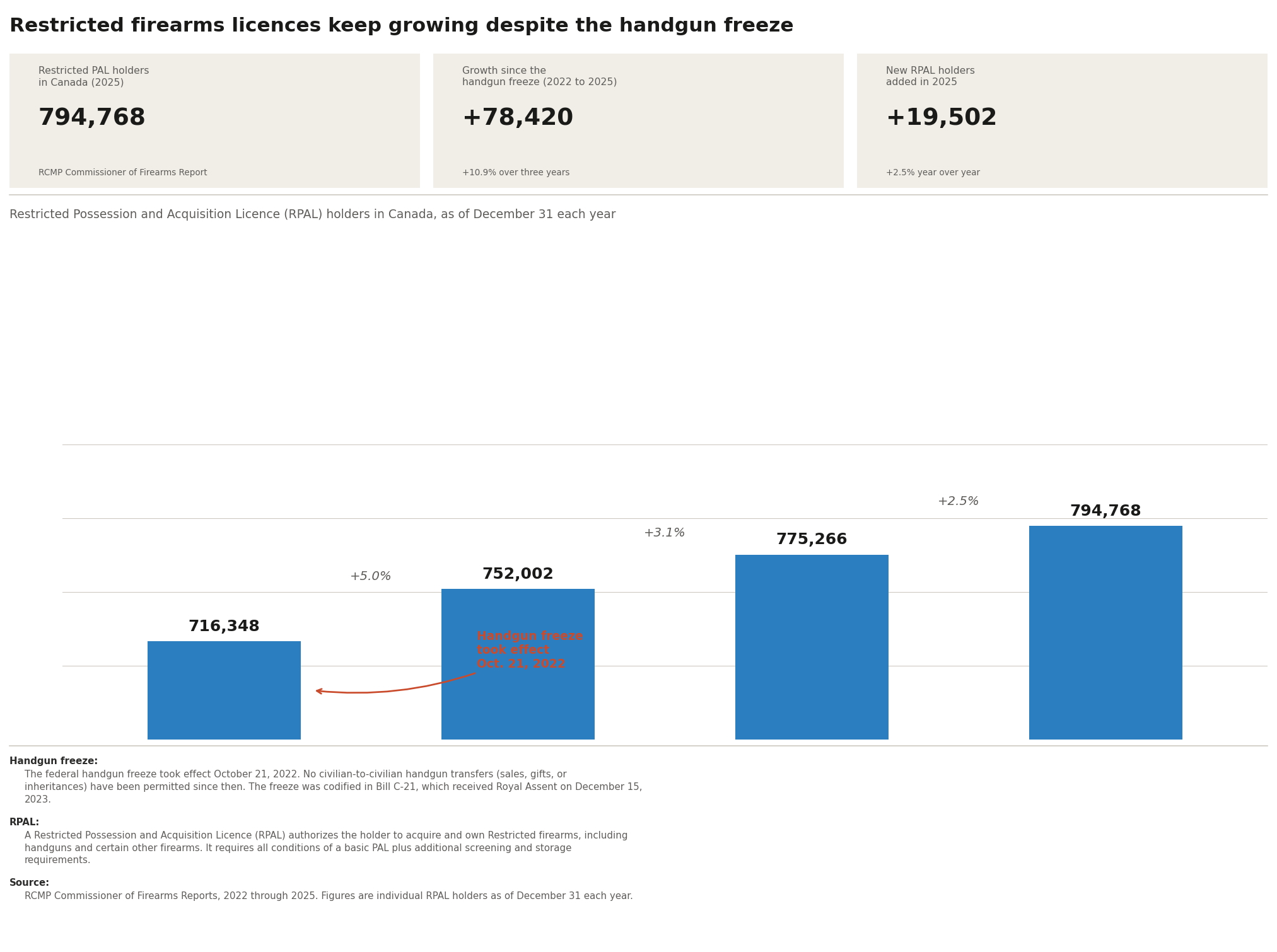
Image from Without Diminishment

As of December 2023, more than 2.35 million Canadians held a firearms licence (PAL), a number that has almost certainly grown since then. This represents roughly 5.9 per cent of the population, yet this group has been thoroughly demonised by our Liberal government.

In a country built on restraint and self-reliance, that smear corrodes civic trust. It has not always been this way, but things will get worse before they get better for lawful Canadian gun owners unless the public narrative is confronted head-on.

First, it is important to note that Canada has a deep tradition of firearms ownership that successive governments have worked hard to downplay or erase. Contrary to the popular myth, especially in a country that prides itself on “peace, order, and good government”, that only Mounties carried guns on the frontier, the reality was the opposite.

In our historically lawful society, ordinary Canadians were trusted to possess and carry firearms for protection, hunting, sport, and other legitimate needs in a vast and often harsh land.

In the 158 years since Confederation, Canada has transformed from a sparsely populated, pioneering dominion into one of the world’s most urbanised nations.

Most people in this country today find guns a strange and exotic topic, primarily associated with war films and history books. That does not mean urban Canadians are excluded from our heritage of firearms ownership. On the contrary, many Canadian cities boast thriving indoor shooting ranges with strong memberships, and despite, or perhaps because of, recent government overreach, enrolment in firearms licensing courses has risen sharply since the pandemic.

Clearly, more Canadians than ever are interested in joining the long tradition of responsible firearms ownership. With this growing interest in firearms, why is the government more apprehensive than ever?

My answer is the political economy of gun control in Canada. What we have witnessed over the past decade is a straightforward political calculation by the Liberals.

If the average suburban voter, after watching their nightly dose of American crime news, believes that most guns are inherently evil, dangerous, and unfit for civilian hands, then any non-Conservative political party has a powerful incentive to pursue gun-control measures, regardless of whether those measures actually help police or reduce firearm-related crime.

On the whole, Prime Minister Carney would gain no political advantage by dropping the gun-control agenda. Progressive voters are hungry for gun control, and neglecting the issue may cost Carney a significant number of seats in battleground ridings. In other words, compliant Canadians are being scapegoated in the headlines while violent offenders are ignored.

January 13, 2026

Navies in the news

Filed under: Cancon, Military, Technology, USA — Tags: , , , , , , , — Nicholas @ 03:00

On the social media site formerly known as Twitter, John Konrad talks about the latest “OMG we’re all going to die!” pants-wetting over scary new hypersonic missiles as a threat to the navies of the west, especially the US Navy’s big carriers:

    R.C. Maxwell @RCMaxw3ll
    EXCLUSIVE: After Russia used hypersonics in western Ukraine, @RedState talked with senior executives from American startup @CastelionCorp, which is on the brink of finishing a comparable missile system that surpasses the capabilities of Russia & China.

This is insane and it’s great news for the U.S. Navy.

All the worst people keep telling me Trump-class battleships are “obsolete” because of hypersonic missiles.

Then this drops:

“Blackbeard, engineered from a clean-sheet design by former SpaceX alumni, will not only match but decisively outpace foreign systems … rapid iteration and scalable production. We’re not just going to provide a comparable missile. We’re going to provide better missiles.”

A tiny startup just told Russia and China’s entire missile-industrial complex: we can beat you.

That’s the tell.

If hypersonics were the unstoppable carrier-killers people claim, you wouldn’t see startups leapfrogging them in a garage with venture capital. You’d see locked-in monopolies and terrified Western navies.

Here’s what the hype crowd misses:

1) Future battleships won’t be naked.
They will carry layered anti-hypersonic defenses, directed-energy weapons, decoys, and interceptors specifically designed to kill these things.

2) Hitting a moving ship at hypersonic speed is brutally hard.

No nation has publicly demonstrated a successful hypersonic strike on a maneuvering warship. China hit a fake carrier sitting still in the desert. That proves almost nothing.

Think about the physics.

Flying a kamikaze plane into a carrier was hard but pilots had eyes, brains, and real-time judgment.

Now imagine doing that blind, with sensors the size of a soda can, while the target is jamming, maneuvering, spoofing, and throwing decoys.

Now imagine the Honey I Shrunk the Kids laser made you the size of an ant and you are told to steer a bullet into a weaving jet ski.

Russia can hit slow oil tankers. If they could reliably hit moving ships bringing supplies into Ukraine, they already would have.

3) Hypersonics are scarce and insanely expensive.

Even if it took 100 missiles to score a hit on a battleship, that’s 100 missiles that aren’t hitting ports, refineries, factories, air bases, and ammo depots.

Most of those targets don’t shoot back. None of them weave like a battleship.

Battleships change the economics of war.

They force the enemy to burn their most precious weapons just to try to hurt one ship.

That’s not vulnerability.
That’s deterrence.

Stop black-pilling naval power. The physics, the economics, and now the tech sector are all pointing in the same direction.

Also on naval matters, Matt Gurney at The Line talks about his unfamiliar feelings of hope that the Canadian government’s promised spending boost for the Royal Canadian Navy will not only happen, but that the RCN may generate significantly improved capabilities as a result:

Arctic Offshore Patrol Ship HMCS Harry DeWolf shortly after launch in 2018. The ship was commissioned into the Royal Canadian Navy in June, 2021.

A day or two ago, I found myself thinking about the state of the Royal Canadian Navy. Because, I mean, hey β€” who doesn’t?

Anyone who has paid much attention to my work will be aware that I’m not exactly bullish on our country’s ability to get much done β€” especially on the file of military procurement. Yet, a day or two ago, I found myself thinking about the state of the Royal Canadian Navy and feeling something almost like … hope? Is this what hope feels like?

There is a lot going on in Canadian naval news, and that fits a broader pattern. There’s a lot going on on the seas globally, and, somewhat to my surprise, Canada seems to be doing a pretty good job β€” could be better, but could be worse β€” adapting to the new reality.

[…]

So let’s talk about seapower. The U.S. has it β€” not as much as it wants, but it’s got it. It wants more. Even if that ends up taking some pretty weird forms. And others are racing to catch up.

Including, intriguingly, Canada.

Last week, Canadian shipyard Seaspan announced that it had signed agreements with both Finland and American shipyards to licence its design for Multi-Purpose Icebreakers to the U.S. Coast Guard’s Arctic Security Cutter Program. And while the “Elbows Up” crowd may look askance at the prevalence of the word “American” in that sentence, this is damned interesting β€” not only are we continuing to show interest in the Arctic, but we’re also trying to sustain real shipbuilding in this country. The situation in the White House is so bizarre these days that it’s hard to take any announcement like this to the bank, but it was notable. If nothing else, it would be nice to see more efforts like this β€” whether the plans work will, alas, largely be out of our hands.

In addition to that, a few more stories came to mind. The first was this announcement from a few months ago: the Irving Shipyards have begun work on the final Arctic Offshore Patrol Ship of the Harry DeWolf class. Irving is also getting started on the next generation of Canada’s main warships, the River-class destroyers. Canada is actively seeking a replacement, in far greater numbers, of its current fleet of problematic submarines. And there’s also growing talk about a new smaller, mid-range class of Canadian warship, dubbed, for now, the Continental Defence Corvette. (Which I guess rolls off the tongue better than the See, Trump, We’re Spending On the Military Now Program.)

It’s easy to be a cynic on Canadian defence procurement β€” I am cynical about Canadian defence procurement. But then I looked at the ships being seized by U.S. forces. At Russia cutting cables, China ringing Taiwan with missiles and the U.S. throwing fleets around like Theodore Roosevelt has something to prove. And I look at a plan to not only replace Canada’s (too small) fleet of warships, but to considerably grow it … and it’s hard not to see the bigger picture.

Reverting to a pre-1945 geopolitical reality isn’t going to be an exercise in vibes. It’s going to be an exercise in power β€” or at least attempts to wield power. Air forces matter, cyber matters, drones matter and Lord knows armies matter. But they matter locally. True global power, or at least the ability to give a global power some pause before they decide to whisk your el jefe off to a Manhattan courtroom in a tracksuit, requires the ability to control your coasts and all the ocean approaches to them.

January 9, 2026

Mark Carney’s play-acting on the international stage

There is no way that Canada can make itself economically independent of the United States, no matter how much wishcasting power is exerted to persuade anti-American boomers who habitually vote Liberal. Our entire economy is oriented to serve the vast market to our south, and we’ve been freeloading on our own military because the Americans have been willing to take up the slack and — until recently — not castigate our leaders for their fecklessness. It was bad under Justin Trudeau, but it’s actually gotten worse under Mark Carney’s leadership. Trudeau was performative and loved to play to the world media, but Carney seems to actually believe that he can reverse the entire direction of the Canadian economy by jetting around the world and bad-talking Donald Trump. The Canadian economy has been stalled for ten years now, and if Trump finally loses patience with our idiotic elites, it’ll go into free-fall.

On the social media site formerly known as Twitter, James E. Thorne points out just how few cards Carney actually has in his hand:

Mark Carney’s and Canada’s Dangerous Refusal to Face Reality.

Mark Carney and most Canadians are behaving as if Canada is an independent pole in a multipolar order, when the world he actually inhabits is a hierarchy being brutally clarified by Washington. Trump’s revamped National Security Strategy and the “Trump Corollary” β€” asserted through the seizure of NicolΓ‘s Maduro and open threats toward Cuba and Colombia, make plain that the United States now treats the Western Hemisphere as an American security estate, not a debating society among equals.

In that framework, Canada is not a co-author of the rules. It is a dependency inside the U.S. sphere, structurally lashed to American markets, finance and supply chains. AND after decades without a serious sovereign industrial or energy strategy, Canada is at best a weak Middle Power, that has for decades squandered its competitive advantage through proformative politics and virtue signalling.

In this era, the Western Hemisphere is now a “secure production platform” for American industry and technology, defined not by territorial control but by ownership, access and compliance. The Trump doctrine logic is clear and blunt yet internally coherent: if the Western Hemispheres natural resources and supply chains are secured, the economic and geopolitical dividends will follow.

Carney’s answer to the Trump Doctrine, however, remains the same “City-of-London” orthodoxy that produced him: more proformative political grandstanding, more process, more declarations, more meetings, and more boondoggles.

The Greenland consulate, rhetorical red lines over annexation, the flying around the world, and ritual protests against U.S. action in Venezuela all presume that we still live in the post WWII rules based order. We do not! Will live in the era of the Trump Doctrine, and no we can’t wait it out. And in this era, Greenland will not be allowed to be under the influence of Russia or China.

Thucydides warned that “the strong do what they can and the weak suffer what they must”. Carney’s tragedy is that he quotes the rules-based order while presiding over a country whose economic structure is colonial and whose security ultimately depends on the very power he is theatrically chastising. Posturing without power is not prudence. It is provocation without a plan. And yes it’s dangerous.

The irony is that Carney understands all of this perfectly well, which only sharpens the question: what, exactly, is he doing by posturing as a rules-based equal in a hierarchy where he knows Canada lacks the hard power to back his stance?

January 2, 2026

“The report is a wonderful, almost pristine, example of pure Expertism, the perfect blend of scientism and bright red euphemism”

Filed under: Cancon, Health, Media — Tags: , , — Nicholas @ 05:00

Despite our decade-long vacation from economic development, common sense, and growth, there appears to be one key area where Canada is a world-beater: inventing euphemisms for physician-induced death:

“See that guy over there, Mugsy?”

“Yeah, boss.”

“He needs to be provisioned.”

“You got it, boss.”

I have a small collection of euphemisms for killings, curious deaths and murder. Most of them are comedic, like Wodehouse’s “handing in his dinner pail”. You know the serious ones: expedited, eliminated, liquidated, liberated (from Real Genius), handled, disappeared, etc.

So you can imagine how thrilled I was to discover a new one, invented by Canadian doctors: provisioned.

You are provisioned when a doctor slips you the needle or some pills, on purpose, to send you instantly to your Particular Judgment. (The doctors will get theirs at later dates, and boy wouldn’t you like to be, as they say, a fly on the cloud for those.)

Doctors β€” white-coated physician killers, we can call them Rxecutioners β€” are increasingly enjoying collecting paychecks to kill Canadians.

According to the official “Sixth Annual Report on Medical Assistance in Dying in Canada“, 16,499 ex-Canadians were produced, or rather provisioned, in 2024. Some 22,535 applied, but 4,017 of them cheated their Rxecutioner by dying early. Can you picture the dejected look on the killer-doctor’s face, his needle poised, poisoned and dripping, only to find his customer left without him? Sad.

These numbers were up from 2023, but the rate of growth of killings (provisionings) has slowed; it was 6.9% from 2023 to 2024. If that deceleration stays about the same, Rxecutioners will put some 17,500 under in 2025. And slightly more than that in 2026.

“The vast majority (95.6%),” of those slaughtered, “identified as Caucasian (White)”. Rxecutioner provisionings are the one area where Canadian rulers allow Whites to excel. Incidentally, what’s with “identified”? Maybe Canadian rulers will let people identify as different races.

But never mind all that. The report is a wonderful, almost pristine, example of pure Expertism, the perfect blend of scientism and bright red euphemism. All should read it.

January 1, 2026

Canadian government spending … with convenient “by recipient” lookups

Filed under: Bureaucracy, Cancon, Government — Tags: — Nicholas @ 05:00

It’s no secret that the Canadian federal government spends a lot of money every year. It’s public information, but it’s made available in a form that is very difficult to track across all the various ministries and other government bodies. On the social media site formerly known as Twitter, The Reclamare has posted a free consolidation website that gathers all these separate reports into a single database that you can query on a by-recipient basis. This means that you can see how much money a given company or organization received from all government sources in one convenient result.

The link is https://thereclamare.github.io/CDN_Govt_Spending/. I hope you find this useful!

December 31, 2025

The Royal Canadian Navy … a terrorist organization according to Iran

Filed under: Cancon, Middle East, Military — Tags: , , , — Nicholas @ 05:00

An unexpected post from True North Strategic Review, as Noah shares the details of a new announcement from the Islamic Republic of Iran about that well-known terrorist group known as His Majesty King Charles’s Royal Canadian Navy (RCN):

Statement from the Iranian Ministry of Foreign Affairs, via True North Strategic Review

Welp. Sometimes you wake up to the most random things imaginable. This is certainly one of them in my books.

The Iranian Ministry of Foreign Affairs has released a statement today officially designating the Royal Canadian Navy as a Terrorist Entity under the “Tit-for-Tat” trigger outlined in Article 7 of the Reciprocal Action Against the Declaration of the Islamic Revolutionary Guard Corps as a Terrorist Organization by the United States Act.

Here is the translated statement for those curious:

    Since the Canadian government has declared the Islamic Revolutionary Guard Corps, which is recognized as one of the pillars of the country’s official armed forces, a terrorist organization, contrary to the fundamental principles of international law, the government of the Islamic Republic of Iran, based on the principle of reciprocity and based on Article 7 of the “Reciprocal Action Against the Declaration of the Islamic Revolutionary Guard Corps as a Terrorist Organization by the United States” Act passed in 2019, which stipulates that “all countries that in any way comply with or support the decision of the United States of America to declare the Islamic Revolutionary Guard Corps as a terrorist organization shall be subject to reciprocity,” considers the Royal Canadian Navy to be subject to the aforementioned Act and its provisions, and therefore, within the framework of reciprocity, identifies and declares it as a terrorist organization.

For a bit of context, under the Reciprocal Action Against the Declaration of the Islamic Revolutionary Guard Corps as a Terrorist Organization by the United States Act, the Iranian government includes a clause stating that any country that supports or complies with the U.S. decision to label the IRGC as terrorists is also subject to reciprocity.

This retaliation clause is in direct response to the Canadian government’s decision last June to declare the Islamic Revolutionary Guard Corps as a terrorist entity. Although quite late to respond, the decision to designate the Royal Canadian Navy specifically is a curious one.

The likely scenario is that the choice was made based on operational proximity. The Royal Canadian Navy is the branch of the Canadian military most likely to physically encounter Iranian forces. They’re really the only branch that maintains a tangible, visible presence near Iranian territory. By designating the Navy specifically, Iran is creating a legal pretext to harass or target Canadian vessels in these international waters under the guise of Counter-Terrorism operations.

December 30, 2025

“This is where Canada is now”

Filed under: Cancon, Economics, Government, Media, Politics — Tags: , , , , — Nicholas @ 03:00

On the social media site formerly known as Twitter, L. Wayne Mathison handily sums up the state of the nation:

I’ve reached the point most people hit right before systems fail.

The point where facts stop working.

Charts don’t matter. Reports don’t matter. Evidence doesn’t matter. You can post receipts until your fingers cramp and political partisans will still clap, chant, and rationalize while the house fills with smoke. They are not misinformed. They are committed. And commitment beats reality every time.

That’s where Canada is now.

The Liberals and the NDP no longer govern with outcomes in mind. They govern with narratives. If the story sounds compassionate, the damage underneath is waved away as acceptable collateral. Housing explodes. Healthcare buckles. Food banks flood. Productivity sinks. And if you point to any of it, you’re told to be kinder, quieter, or more patient.

Patience is a luxury people without power can’t afford.

What scares me isn’t just the policies. It’s the psychology. We are watching a ruling class that confuses control with competence and optics with success. Every failure is met with more management, more spending, more moral language, and less accountability. When reality resists, they don’t change course. They tighten.

That’s where Mark Carney enters the picture, and why he should worry anyone paying attention.

Carney doesn’t speak like a democratic leader. He speaks like a risk officer explaining why losses are necessary. “Sacrifice.” “Stability.” “Confidence.” These are not solutions. They are words used when the model is failing but the managers refuse to admit it. In his world, the problem is never the plan. It’s public resistance to the plan.

That mindset is poison in a democracy.

The Liberals broke affordability and papered it over with subsidies. The NDP cheered and demanded more of the same. Now Carney offers to professionalize the decline. Smoother language. Tighter controls. Bigger levers. Less dissent. He doesn’t promise prosperity. He promises management.

Here’s the part people don’t want to hear.

You can’t fix a country by overruling its citizens.
You can’t tax, regulate, borrow, and moralize your way out of shortages.
You can’t feed kids, house families, or staff hospitals with press releases.

And when governments start treating criticism as a threat rather than a warning, history tells us what comes next. Not reform. Hardening. Surveillance language. Emergency logic. Ever broader definitions of “harm”. Ever fewer off ramps.

This is how civilizations don’t collapse in a bang. They collapse in meetings.

I don’t expect to convince partisans anymore. That window is gone. This is a warning, not an argument.

If you are still cheering while food banks replace paycheques, while hospitals ration care, while housing becomes a privilege, while leaders talk about sacrifice without ever naming their own, understand this: they are not fiddling while Rome burns. They are insisting the fire is necessary.

And once that belief sets in, facts won’t save us. Only consequences will.

By then, our children are already in the smoke.

December 29, 2025

Will 2026 finally be the year Canada abandons food cartels?

For reasons unknown, Canadian politicians both left and right have been willing to sacrifice almost anything in trade negotiations except the cosy protectionist scheme we call “supply management”, which enriches a tiny number of farmers in Ontario and Quebec by keeping grocery prices significantly higher than the free market price. On his Substack, The Food Professor predicts that Prime Minister Carney will be forced to give up this market-rigging, anti-consumer scheme in the coming year:

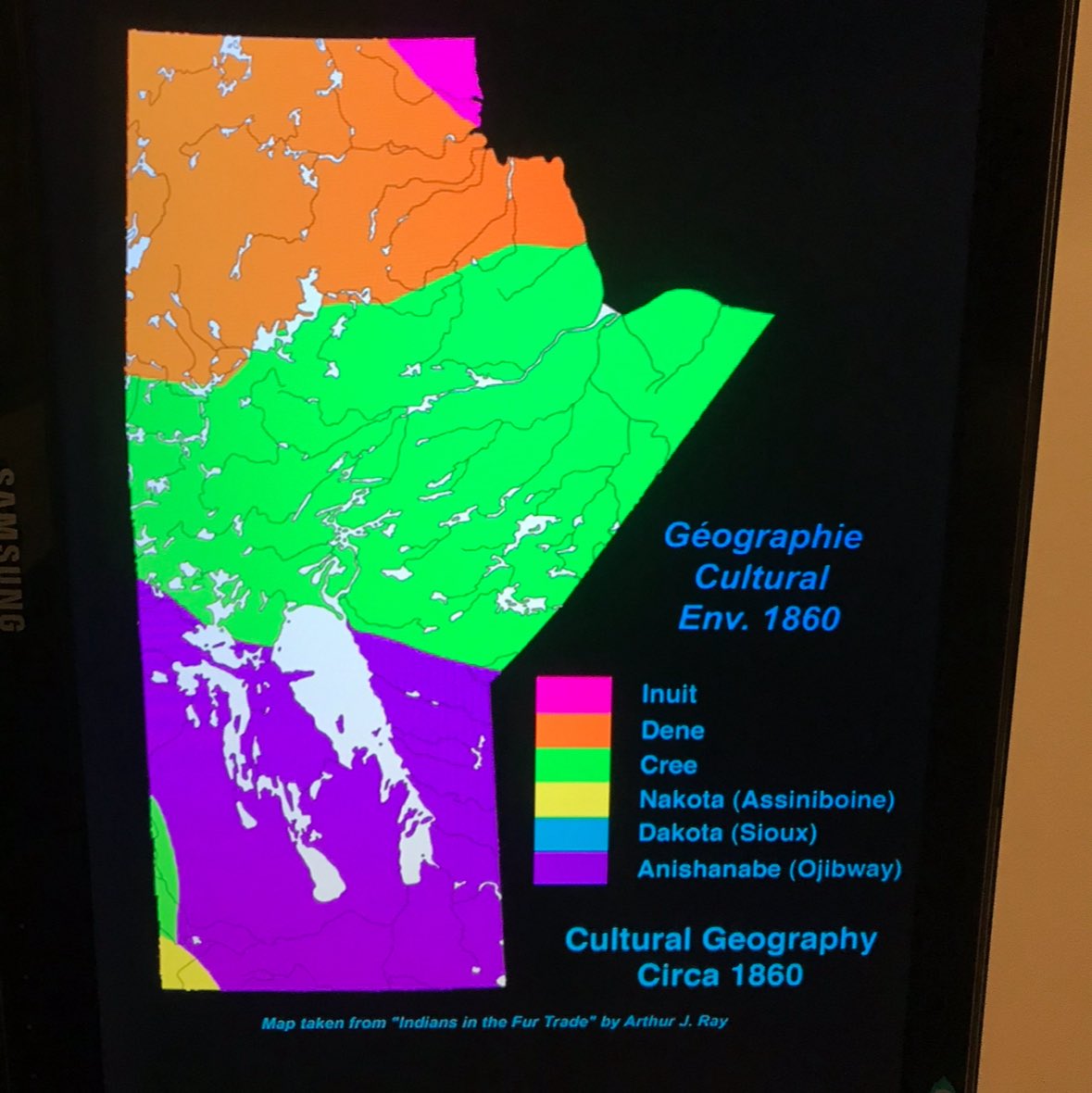
Image from Agri-Food Analytics Lab, Dalhousie University

As we enter 2026, several forces are converging to reshape Canada’s food economy. Consumer empowerment β€” amplified by social media β€” continues to accelerate, while geopolitics, particularly tensions with our southern neighbour, are becoming increasingly disruptive. Together, these dynamics will push food policy issues that once lived in technical silos into the public spotlight.

At the top of that list sits CUSMA and supply management. Prime Minister Carney has signaled firmness on market access, backed by legislation that shields supply management from parliamentary debate. That protection, however, is unlikely to endure. Even if the United States has little genuine interest in exporting more dairy to Canada β€” and even if Canadian consumers show limited appetite for it β€” President Trump now understands, far better than during his first term, that supply management is a potent political wedge. The system protects roughly 9,400 dairy farmers who exert disproportionate influence over agricultural policy, while compensation payments continue to flow without any meaningful reduction in production or market share. For a growing number of Canadians, this arrangement increasingly resembles a closed loop rather than a public good. The irony is that global demand for dairy is rising and Canadian milk should be part of that growth story. Instead, the system prioritizes insulation over ambition β€” a missed opportunity at a time when competitiveness should matter most.

January 1 also marks the formal implementation of new front-of-package nutrition labels. Although these symbols have been appearing on shelves for some time, many consumers either overlook them or misunderstand their purpose. Their real impact has been largely invisible to the public: they have already reshaped how food companies formulate products, invest in research, and redesign portfolios. Whether the labels meaningfully change consumer behaviour remains debatable, but their influence on product development is no longer.

[…]

Finally, 2026 coincides with the United Nations’ International Year of Rangelands and Pastoralists β€” a timely moment to reset the debate around meat consumption and livestock production. Rangelands underpin global meat systems by converting grasslands β€” often unsuitable for crops β€” into high-quality protein. In a world where demand for animal protein continues to grow, portraying livestock as inherently incompatible with sustainability ignores nutritional, economic, and ecological realities. Well-managed grazing supports rural livelihoods, strengthens export economies, and can enhance biodiversity and soil health rather than undermine them. If policymakers are serious about food security, climate resilience, and affordability, 2026 should mark a shift away from apologizing for meat production and toward recognizing livestock as a strategic pillar of resilient food systems β€” not a sector to be regulated out of existence

December 24, 2025

The real agenda

On the social media site formerly known as Twitter, Karl Harrison makes a case for fighting against the key element of the federal government’s all-encompassing drive to control the lives of Canadians because it’s the one that will enable all the other controls to operate:

All Canadians should read this carefully:

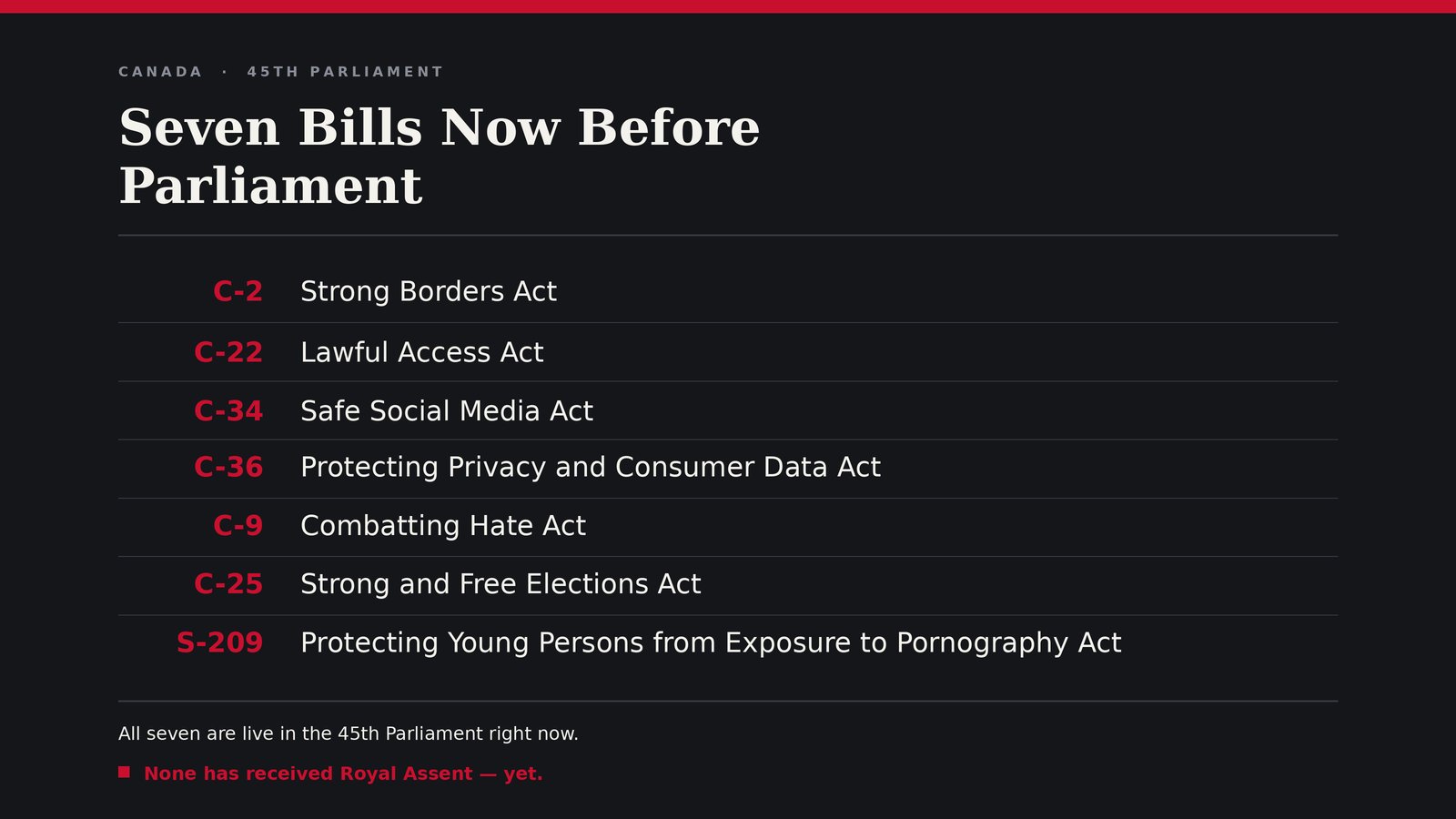
“They are flooding Parliament with distraction bills so the public is overwhelmed and cannot see the one bill that makes the entire system possible. More than a dozen federal bills are advancing simultaneously β€” each attacking a different pillar of Canadian freedom but S206 is the key. They fall into clear clusters:

Bills attacking due process and court rights.
Bill S-206 β€” Administrative Monetary Penalties (the central pillar) enables penalties without hearings, judges, trials, or common-law protections.
Bill C-63 β€” Online Harms Act. Undefined “harm”, digital speech penalties, CRTC enforcement authority.
Bill C-27 β€” Digital Charter Act. Creates federal AI regulators empowered to issue compliance orders without court oversight.
Bill C-52 β€” Beneficial Ownership Transparency. Expands federal surveillance and administrative enforcement.

Bills attacking parliamentary supremacy (power shift to agencies).
Bill C-26 β€” Critical Cyber Systems Act. Sweeping regulation by order-in-council, bypassing Parliament.
Bill C-11 β€” Online Streaming Act. Gives the CRTC unprecedented control over content curation and digital reach.
Bill C-18 β€” Online News Act. Allows federal regulators to determine access to, and compensation for, digital journalism.

Bills attacking property rights.
Bill C-234 β€” Agricultural Fuel Restrictions. Expands federal control over farm operations and production.
Bill S-241 β€” Jane Goodall Act. Sweeping biosafety authority over wildlife, land, and private property.
Bill C-49 β€” Atlantic Accord Amendments. Expands federal control over offshore land, climate restrictions, and energy development.

Bills attacking freedom of speech and assembly
Bill C-63 β€” Online Harms Act. Criminalizes undefined “harm”, empowers bureaucrats to judge speech.
Bill C-261 β€” Misleading Communications Act. Penalties for “misleading” speech β€” undefined and discretionary.
Bill C-70 β€” Foreign Interference Act. Mass surveillance powers with vague thresholds.

Bill attacking religion freedom.
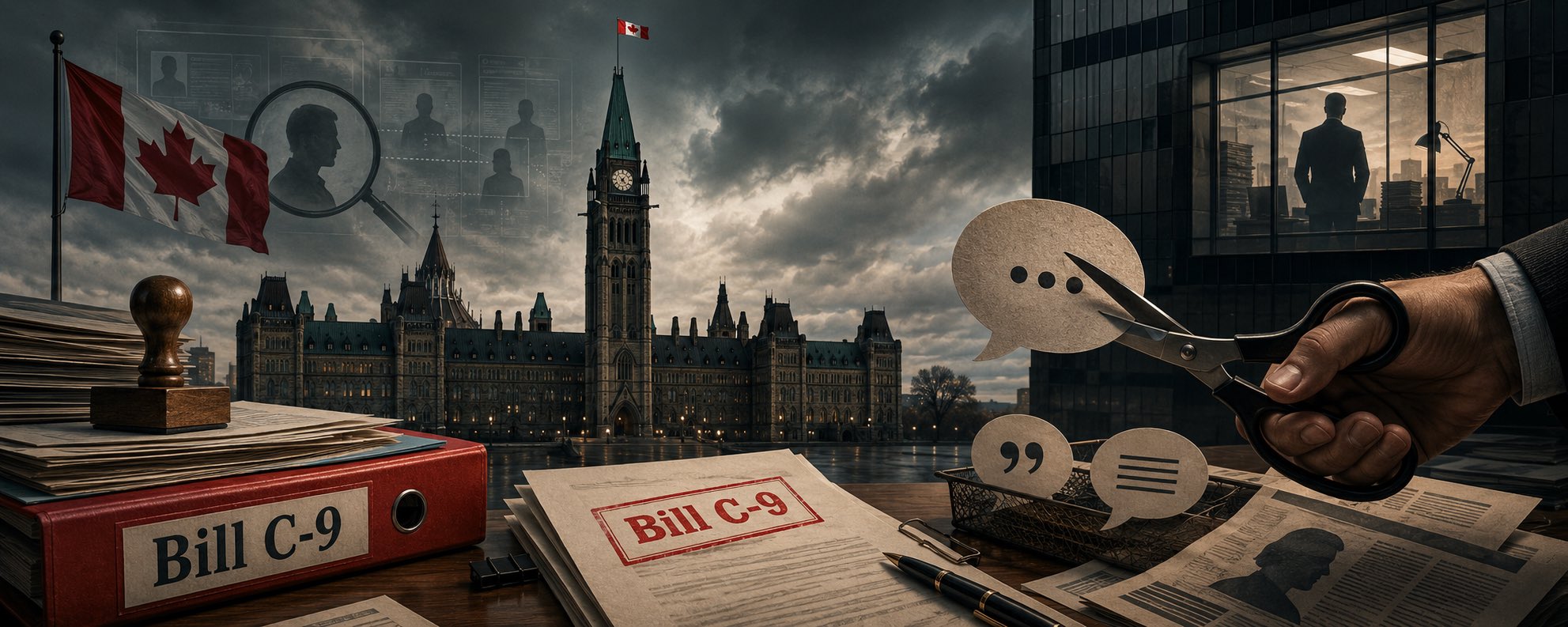
Bill C-9 β€” “Harmful Conduct” Redefinition. Allows the state to regulate spiritual beliefs and pastoral work under “harm”.

The critical pattern. Different bills, different sectors and different rights being attacked. But here is the truth: Every single one of these bills depends on ONE central enforcement pillar, and that pillar is:
Bill S-206 β€” The Administrative Penalty Switch

Bill S-206, the hub of the entire system, gives federal departments the power to issue penalties without:
β–ͺ︎ a hearing
β–ͺ︎ a judge
β–ͺ︎ a trial
β–ͺ︎ due process
β–ͺ︎ common-law protections
β–ͺ︎ judicial review in practice

It turns federal agencies into their own courts β€” investigator, prosecutor, judge, and enforcer. No democracy on Earth should tolerate this.

This is the enforcement engine behind:
β–ͺ︎ Digital ID
β–ͺ︎ CBDCs
β–ͺ︎ Carbon allowances
β–ͺ︎ Biosafety / One Health rules
β–ͺ︎ Smart-meter penalties
β–ͺ︎ Travel scoring
β–ͺ︎ Online speech controls
β–ͺ︎ Zoning & land-use mandates

Data alone cannot control a population. They need the power to punish. S-206 provides it. Remove the keystone β†’ the arch collapses.

Why scatter us with other bills? Because if Canadians focus on S-206, the agenda dies The distraction bills serve one purpose:
β–ͺ︎ to scatter attention and exhaust the public.
β–ͺ︎ to keep citizens debating side issues
β–ͺ︎ to hide the enforcement bill under noise
β–ͺ︎ to make resistance impossible to organize
β–ͺ︎ to create outrage fatigue
This is how large control systems are built β€” through distraction around the edges while the core is slipped into place.

What are they building – and why S-206 is the core. Here is the architecture of the planned digital-governance system:
β–ͺ︎ Digital ID β†’ who you are
β–ͺ︎ CBDCs β†’ what you buy
β–ͺ︎ Carbon scoring β†’ how you move & heat your home

December 23, 2025

Suspicious work-permit activity in Saskatoon

Filed under: Business, Cancon, Government — Tags: , , , — Nicholas @ 03:00

On the social media site formerly known as Twitter, Darshan Maharaja links to a detailed Reddit post that reveals some pretty shady stuff operated out of a small office in Saskatoon:

The Reddit user, /u/SimonBirchDied, says this is the result of only fifteen minutes of investigation:

Like countless others, I’ve grown disheartened and disillusioned with the hiring process in Saskatoon and Canada as a whole. Some of you may have seen more attention around job postings on JobBank offering seemingly great wages, yet applying for LMIA’s due to no suitable local candidates. This post is simply meant to expose what appear to be obvious scams in Saskatoon, so please don’t let it devolve into derogatory racial or immigration issues. This is about the exploitation of both immigrants and the Canadian working class.

Looking at Saskatoon on lmiamap.org, which is a webmap that takes data from JobBank showing businesses that have been approved for LMIA permits, you can see business that have been granted LMIA’s to hire temporary foreign workers. A permit given “>only if no suitable Canadian citizen or permanent resident is available to fill the position. The process is designed to ensure that Canadian workers are considered first for available jobs.”

For example, in 2024 Road Rex Trucking Inc. was granted 5 LMIA permits. When you search Road Rex Trucking Inc., their company address is 2002 Quebec Ave, which is a small generic office building home to the likes of the famous MLM “World Financial Group”. Oddly enough, from one angle on Google Street View the building is blurred, which means someone has specifically reached out to Google and requested it be blurred for privacy.

When you look at their website, https://roadrextrucking.com/team-2/, their “Team” has very generic, obviously stock photos with names that, on the surface, don’t seem to match.

Oddly, the website makes no mention of the sole registered director of Road Rex Trucking Inc, Jaspreet Singh Dhaliwal. There is only one result for that name in Saskatoon, and here is his Facebook account, flexing in front of fancy cars and on vacations. Some of his pictures appear to match the buildings in the Saskatoon neighborhood of Road Rex Trucking Inc’s corporate registered address.

When you Google the name of their founder, Alaxis. D. Dowson, there’s dozens of websites with the exact same template as Road Rex Trucking Inc, with the same layout and “team members”, but for different businesses like electronics, solar panels etc., and listed in all sorts of locations from Edmonton to Dubai.

As they say on the interwebs, Read the whole thing.

December 20, 2025

“We don’t want to change Canada; we want the Canada we grew up in back”

Filed under: Cancon, Government, Media, Politics, Weapons — Tags: , , , , — Nicholas @ 03:00

On the social media site formerly known as Twitter, Gun Owners of Canada refute claims that they want to change the nation and explain that the nation has been radically changed to the agenda of a small, urban pressure group by compliant politicians and civil servants:

For those of us who grew up in or lived through the 1980s and 1990s, the change is impossible to miss.

We remember a Canada where firearms ownership was ordinary, regulated, and largely uncontroversial. Target shooting, hunting, and collecting were part of everyday life. Gun clubs existed quietly on the edge of town. Weekend trap shoots, small-bore leagues, cadets, and hunting camps weren’t political statements, they were just normal parts of growing up.

That Canada had rules. Before the mid-1990s, ownership was governed through the Firearms Acquisition Certificate (FAC) system. You were screened, approved, and expected to act responsibly. Misuse was punished severely. But lawful owners weren’t treated as provisional citizens, waiting to see if the rules would change again next year.

Context matters. In the Canada of the 1980s, firearms that are now politically charged were treated very differently. The AR-15, for example, existed openly within the shooting sports community and was classified as non-restricted at the time. It was regulated, owned by vetted individuals, and largely absent from public controversy.

That isn’t shocking to people who lived through it. It simply illustrates how much the framework has shifted.

Firearms ownership in that era wasn’t limited to a single purpose. Most people participated through sport, hunting, or collecting. Some also possessed firearms with personal security in mind, particularly in rural areas, remote communities, or professions where police response was distant. This wasn’t sensationalized, and it wasn’t politicized. It was understood as part of lawful ownership, governed by responsibility and accountability.

In the Canada many of us grew up in, following the law meant something. If you complied with the rules as they existed, you could reasonably expect stability.

That’s what’s been lost.

Beginning in the mid-1990s, Canada transitioned to the modern licensing system and expanded registration, classification, and regulation. The shooting sports community adapted, again, to our own fault. We trained, we licensed, we registered, and we complied in good faith.

What we didn’t grow up with was the idea that entire classes of legally owned firearms could be redefined by regulation overnight. Or that decades of compliance could still end in confiscation, not because of misuse, but because of shifting political definitions and political theatre.

When firearm owners push back against this, we’re told we want to “change Canada.”

From our perspective, we’re responding to the change, not demanding it.

Other democracies have recognized the risk in allowing lawful ownership to exist solely at the discretion of the government of the day. Some have taken steps to ensure that civilian firearms ownership, particularly for sport, hunting, and lawful personal security, is anchored in a way that prevents arbitrary reclassification, while still allowing strong regulation and oversight.

That idea isn’t radical. It’s about predictability, due process, and trust between citizens and governance.

Firearm owners aren’t asking for chaos. We’re asking for the same social contract we grew up with: follow the rules, be accountable and don’t have the ground shift beneath your feet without warning.

So, no. We don’t want to change Canada.

We want the Canada we knew, back:
One where responsibility mattered, laws were stable, and lawful communities weren’t erased by regulation.

Bring that Canada back. This one doesn’t resemble it, at all.

December 18, 2025

A 2025 Update from the Canadian Tank Museum

Filed under: Cancon, History, Military, WW1, WW2 — Tags: , , — Nicholas @ 04:00

The Chieftain
Published 13 Dec 2025

When up at the Canadian Tank Museum a whiles back, I caught up with Sam to find out what’s been going on up there and what’s coming soon.

“You can still hunt”

Filed under: Cancon, Law, Liberty, Media, Politics, Weapons — Tags: , , , , — Nicholas @ 03:00

The Canadian federal government is working diligently (well, “diligently” by civil service standards) to disarm Canadians, and have been doing so for decades now. Rather than cracking down on criminal use of firearms, which would be difficult, they concentrate their efforts on literally the most law-abiding group of Canadian citizens — legal gun owners … because it’s easy, safe, and gets them lots and lots of friendly media coverage from the equally anti-gun Canadian media (few of whom even know any gun owners personally).

One of the constant replies when legal gun owners protest against yet another gun grab or tightened legal restriction is along the lines of “this doesn’t affect you: you can still hunt” … but hunting is only a part of Canadian gun ownership, and not the largest part. On the social media site formerly known as Twitter, Gun Owners of Canada explains why “you can still hunt” is neither helpful nor constructive in the larger conversation:

We keep hearing the same tired line:

“You can still hunt.”

But that’s not what this is about.

That phrase exists because it’s simple, relatable, and politically convenient for people who don’t understand Canada’s firearm laws or their history. If you do understand them, you’re in the minority.

For most Canadian firearm owners, shooting has never been just about hunting. Yes, we hunt β€” but the bulk of our time is spent at the range, participating in recreational and competitive target shooting. That’s where families gather, skills are learned, friendships are built, and the next generation is introduced to safe, responsible firearm ownership.

Sport shooters are the backbone of the firearms community and the industry that supports it. We shoot year-round, we buy ammunition regularly, and we keep ranges and retailers alive. Many hunters will bring the same box of ammo to camp year after year. Both matter β€” but they are not the same.

Over the past six years, lawful firearms have been prohibited, replaced, and then prohibited again. Models that once brought families together at the range can no longer be used. That experience β€” one many of us grew up with β€” is increasingly out of reach for our kids.

This admin grew up at the range with parents and grandparents deeply involved in Canadian shooting sports. That’s where lifelong relationships were formed. Many of those people don’t hunt at all β€” but they are responsible, licensed, community-minded Canadians.

So when restrictions strip away lawful, safe activities while violent criminals face little consequence, don’t expect silence β€” or gratitude.

This isn’t about hunting.

It’s about what’s been taken, who it’s been taken from, and who’s expected to quietly accept it.

Don’t accept it. Get involved. It’s not like there aren’t enough advocacy groups to join and political avenues to get involved in.

For my own part, I no longer have the resources to do any shooting, but I was always interested in target shooting, not hunting. It was fun, and isn’t that what your hobbies should be for? Back when I sometimes travelled on business, I used to envy my American co-workers who had legal access to a plethora of shooting ranges and a much-less restrictive licensing regime. Every chance I got to go out to the range and try new-to-me rifles and pistols was like an adult version of a trip to the candy store. The one time I was nearly shot, ironically, was on a military target range when I was in the army reserves … an idiot (who out-ranked me) had a misfire with his submachine gun and turned away from the target towards me as the round fired. Fortunately, the bullet went in a safe-ish direction and nobody was hurt.

Update, 19 December: Welcome, Instapundit readers! Please do have a look around at some of my other posts you may find of interest. I send out a daily summary of posts here through my Substack – https://substack.com/@nicholasrusson that you can subscribe to if you’d like to be informed of new posts in the future.

December 17, 2025

“The core hypocrisy of modern Western governance”

Filed under: Australia, Britain, Cancon, Europe, Media, Politics, USA — Tags: , , , , , , — Nicholas @ 03:00

On the social media site formerly known as Twitter, Tom Marazzo discusses the extremely weird experience we’ve all lived through since 9/11 in almost every major western nation:

For more than 20 years, Western governments told their citizens that Islamist extremism posed an existential threat. Entire generations were sent to fight the Global War on Terror. Soldiers were killed, families were broken, civil liberties were curtailed, and trillions were spent, all justified by the claim that terrorism had to be stopped over there so it would not reach us here.

Then something strange happened.

The same governments that built their legitimacy on that fear now insist that even discussing the cultural, security, or integration risks associated with mass immigration from unstable regions is immoral. Raise concerns and you are no longer a citizen asking questions, but a bigot, an extremist, or a threat yourself. In some countries, speech alone now draws police attention, while violent acts are reframed as isolated incidents or stripped of ideological context.

The irony deepens when you look at the timeline.

During the first years of Covid, terrorism all but vanished from news coverage, just as Covid seemed to erase the common cold, cancer, and every other cause of death from public discourse. Nothing had disappeared. The narrative had simply changed. Attention was redirected. Fear was reassigned.

Now, as governments pursue aggressive mass immigration policies, the public is told that questioning outcomes is unacceptable, even as the very threats once used to justify war reappear domestically. The message is clear and profoundly cynical: the danger was real when it justified foreign wars, but discussion becomes forbidden when it complicates domestic policy.

This is not tolerance. It is coercion.

And now comes the final insult.

The same political class that demands silence at home is preparing to demand sacrifice abroad. The same citizens who are told to accept social breakdown, rising crime, collapsing services, and cultural fragmentation are being told they may soon be required to fight Russia to “defend our way of life”.

What way of life, exactly?

The one being systematically dismantled by the very governments issuing the call. The one they are actively transforming into something unrecognizable through reckless policy, moral intimidation, and managed decline. They are asking people to die for values they no longer practice and for societies they are actively degrading.

This is the core hypocrisy of modern Western governance.

We were told to fight, bleed, and die to defend liberal democratic values. Now we are told those same values require silence, compliance, and obedience, while our countries are reshaped without consent and against the will of the people who built them.

A government that suppresses debate at home while demanding loyalty abroad is not defending democracy. It is consuming it.

And history is not kind to regimes that ask their people to die for a future they are busy destroying.

« Newer PostsOlder Posts »

Powered by WordPress