Quotulatiousness

September 17, 2017

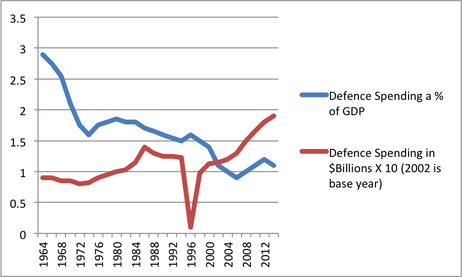
American military command and control, as adopted by the Canadian military

Filed under: Bureaucracy, Cancon, Military, USA — Tags: , , — Nicholas @ 05:00

Ted Campbell explains why he feels the complex and cumbersome system used by the US Army (and derived from the US experience of raising, training, and running a vast army in WW2) is not well suited to the much smaller Canadian Army, yet has become the “way things are done” in Canada:

The problem, as I see it, with the American command and control system is that it is totally systematic. This is born, to some degree, out of the practical necessity that the US faced in the 1940s when it fielded a force of over 15 million men and women but it, systematic management, became something akin to a cult when Robert McNamara, who had been a pioneer of systems analysis in the US Army Air Corps in World War II and was recruited to be one of Henry Ford II’s Whiz Kids who would use those tools to help reshape American industry in early the post war years, became President John Kennedy’s Secretary of Defence (1961 to 1968). He reshaped the US military using systematic management as his main tool. It works for the administrative management of very, very large organizations … it, American style systematic management, may not work as well as many would hope, but it can, and did, bring order, to a very large enterprise. But it stifles individuality and initiative, which are essential for command ~ even, I have read, American unconventional forces are forced into a very conventional systematic matrix.

Systematic management requires a great deal of rote learning and adherence to doctrine. There is a “school solution’ to every problem and that is the one that second lieutenants and lieutenant generals, alike, are required to offer … there is little room for, say, a Robert Rogers, T.E. Lawrence, Orde Wingate or David Sterling … and, in fact, even the missions of the much discussed US Seal Team 6 seem carefully managed by check lists and risk analysis and other tool of the systems analysts. The notion, as one American special forces commander had, for example, of using local animal transport in Afghanistan in 2001, remains unpopular: systems analysis says that only the latest technology can be employed and officers who break the rules do not become generals because riding horses, rather then helicopters, is not the “school solution.” The fact that it worked didn’t really matter because it violated the process.

Why does Canada follow along, uncritically?

First: we, our military, has long had a “colonial” mindset. Until the 1950s we were, for most intents, a sub-set of the British military. It went beyond “buttons and bows” (scarlet mess jackets and the same rank badges, and so on) and included important traditions, like the regimental system, tactical doctrine and equipment. Canadian officers, especially, served, often, in the British Army, in jobs up to and including (during my service) a Canadian major general serving as commander of a British division that was “on the front line” in West Germany, and attended British training courses. In the 1970s we began to shift, more and more, to be a sub-set of the American military and many Canadian generals have served in senior (but generally powerless) “exchange” postings as deputy commanders of large American formations. They come home deeply influenced by the “American way.” The same things happen to Australian and British generals. The American aim is to have all its allies adopt its systematic approach which will make interoperability (by which the US means doing what they want their way) simpler. Exchange postings, as they are called, with other forces are never bad things, not even when the lessons we learn are the wrong ones … IF we understand what we are learning. My complaint with Canadians serving in senior “exchange” posts with the US military is that the post are less about exchanging information and ideas (learning from each other) and more about indoctrinating Canadians (and Australians and Brits) with US ideas about command and control and organization and management which, to my mind, anyway, are less than useful.

September 16, 2017

It’s “as if Justin Trudeau had just invented marijuana, and the stuff’s mystical properties are unfamiliar to every police officer in the land”

Filed under: Cancon, Health, Law, Liberty — Tags: , — Nicholas @ 03:00

As the old joke had it, marijuana can cause paranoia, confusion, and total loss of reality in people who’ve never taken them. Canadian police organizations are desperate to keep legal marijuana from becoming a thing:

I cannot be the only one who feels the world is a little upside-down after Wednesday’s hearings on marijuana held by the House of Commons standing committee on health. The day’s proceedings were essentially broken into two parts. First, high-ranking Canadian police came before the committee to complain that they didn’t have the technical resources or the training to deal with legalized marijuana. They pleaded for the passage of the Liberals’ Cannabis Act to be delayed.

Then officials and scholars from the states of Colorado and Washington appeared to talk about their initial experiences with legalized marijuana. The contrast was remarkable. Canadian cops are behaving as if marijuana is a new problem for them—as if Justin Trudeau had just invented marijuana, and the stuff’s mystical properties are unfamiliar to every police officer in the land. The general thrust of the American testimony was not in conflict with the police demand to delay the legislation. Indeed, their major messages included going slow, getting it right, and learning from the history of the pot states. But none of the American witnesses, particularly the Washington and Colorado revenue bean-counters, showed any particular appetite for going back to the days of prohibition.

They could have come to Canada and said, “Oh, God, what are you crazy SOBs thinking?” There was little evidence of any such sentiment. I think it is safe to say that committee members who favour legalization, or who are anything other than implacably hostile to it, must have come away from the testimony broadly reassured.

Washington and Colorado have not descended into a nightmare of chaos because they have legalized “recreational marijuana.” By most social measures these states are about what they were before legalization. Youth use of pot is being watched closely, and it appears to be steady, possibly reduced. The states’ coffers have seen a modest benefit, and some of the money from pot taxation is made available for general drug education and abuse prevention—not just the more intensive outreach to young people about weed.

September 13, 2017

A visit to Creekside

Filed under: Cancon, Wine — Tags: — Nicholas @ 03:00

Another of my favourite wineries in Niagara gets a great write-up from Rick VanSickle:

While the vast majority of Niagara wineries chart a predictable course of core varietals — Riesling, Chardonnay, Pinot Noir and Cabernet Franc — the winemakers at Creekside have taken the rabbit hole less travelled and have found immense success doing it.

The steady team of head winemaker Rob Power […] and assistant winemaker Yvonne Irvine […] love the challenge of being different.

“There are guys that stick to Chardonnay and Pinot and there are guys that don’t,” says Power. “And we definitely don’t.”

Their portfolio is deep and varied and by their own admission is the antithesis of Pinot Noir/Chardonnay, mainstays in Niagara winemaking. Here it is Sauvignon Blanc, Syrah and wild things that are lost and found in the darkest corners of the cellar that get top billing.

Or, as Irvine says: “We make wines we want to drink ourselves.”

The lineup here is deep in Sauvignon Blanc in every incarnation you can imagine: Stripped down bare, oaked, blended and sparkled. Syrah also plays a starring role in equally varied styles right up to the flagship wine from the winery: The Broken Press Syrah with and without the inclusion of Viognier. And, of course, the big bruiser and one of the region’s most sought-after wines, made just five times in 18 years — the Lost Barrel Red, a zany concoction of highly concentrated remains of wine and “tailings” that’s collected, stashed in a barrel and forgotten for years and years in a dark corner of the cellar only to emerge as a wine very unlike anything else made in Niagara.

Creekside has always marched to the beat of a different drummer, even has ownership as changed. And what a beat it is.
I got a front row seat to the winery’s chaotic mass of wine that was laid out in the barrel cellar to taste with Power, Irvine and retail director Britnie Bazylewski — an endless array of whites, reds and big bruisers including one red that just may be the last one in Niagara released from the hot, hot, hot 2010 vintage (that aforementioned Lost Barrel).

September 11, 2017

Smug Canadian vanity over helping (some) refugees may harm a larger number of more desperate refugees

Filed under: Cancon, Middle East — Tags: , , , , , — Nicholas @ 03:00

Jonathan Kay in the National Post:

By my anecdotal observation, these accounts are not overblown. At Toronto dinner parties, it’s become common for upscale couples to brag about how well their sponsored refugees are doing. (Houmam has a job! The kids already speak English! Zeinah bakes the most amazing Syrian pastries — I’m going to serve some for desert!) Syrian refugees aren’t just another group of Canadian newcomers. They’ve become central characters in the creation of our modern national identity as the humane yang to Trump’s beastly yin.

Given all this, it seems strange to entertain the thought that — contrary to this core nationalist narrative — our refugee policy may actually be doing more harm than good. Yet after reading Refuge: Rethinking Refugee Policy in a Changing World, a newly published book jointly authored by Paul Collier and Alexander Betts, I found that conclusion hard to avoid. When it comes to helping victims of Syria’s civil war, the road to hell is paved with good intentions.

[…]

What’s worse, the lottery-style nature of the system means that refugees have incentive to take enormous risks. German Chancellor Angela Merkel received lavish praise for admitting more than 1 million Muslim refugees in 2015. But the data cited in Refuge suggest the tantalizing prospect of first-world residency is precisely what motivated so many refugees to endanger their lives by setting out from Turkey in tiny watercraft. We like to believe that generous refugee-admission policies are an antidote to the perils that claimed Alan Kurdi’s life. The exact opposite seems more likely to be true.

Moreover, the refugees who make it to the West do not comprise a representative cross-section of displaced Syrians — because those who can afford to pay off human smugglers tend to be the richest and most well-educated members of their society. (Betts and Collier cite the stunning statistic that fully half of all Syrian university graduates now live outside the country’s borders.) This has important policy ramifications, because refugees who remain in the geographical vicinity of their country of origin typically return home once a conflict ends — whereas those who migrate across oceans usually never come back. Insofar as the sum of humanity’s needs are concerned, where is the need for Syrian doctors, dentists and nurses more acute — Alberta or Aleppo?

[…]

But logically sound as it may be, the authors’ argument also flies in the face of our national moral vanity. Scenes of refugees being greeted at the airport by our PM offer a powerful symbol of our humanitarian spirit. Having our PM cut cheques to foreign aid agencies? Less so. While focusing more on supporting Syrian refugees who’ve been displaced to other Middle Eastern countries would allow us to do more good with the same amount of money, we’d also be acting in a less intimate and personal way — and we’d get fewer of those heartwarming newspaper features about Arab children watching their first Canadian snowstorm.

And so we have to ask ourselves: In the end, what’s more important — doing good, or the appearance of doing good? If we’re as pure of heart as we like to imagine, we’ll seek out the policy that saves the most people, full stop. And Refuge supplies an outstanding road map for getting us there.

September 9, 2017

The rise of the “I would like to acknowledge that…” announcement in Canada

Filed under: Cancon, History — Tags: — Nicholas @ 03:00

In The New Yorker, Stephen Marche discusses “Canada’s Impossible Acknowledgement”:

Every morning, at the start of the school day in Toronto, my children hear the following inelegant little paragraph read aloud, just before the singing of “O Canada”:

    I would like to acknowledge that this school is situated upon traditional territories. The territories include the Wendat, Anishinabek Nation, the Haudenosaunee Confederacy, the Mississaugas of the New Credit First Nations, and the Métis Nation. The treaty that was signed for this particular parcel of land is collectively referred to as the Toronto Purchase and applies to lands east of Brown’s Line to Woodbine Avenue and north towards Newmarket. I also recognize the enduring presence of Aboriginal peoples on this land.

I hear the same little speech, or a version of it, at gala events — literary prizes, political fund-raisers, that sort of thing — when whichever government representative happens to be there reads some kind of acknowledgment before his or her introductory remarks. But you know a phenomenon has really arrived in Canada when it involves hockey. Both the Winnipeg Jets and the Edmonton Oilers began acknowledging traditional lands in their announcements before all home games last season. Acknowledgment is beginning to emerge as a kind of accidental pledge of allegiance for Canada — a statement made before any undertaking with a national purpose.

In 2015, the Truth and Reconciliation Commission of Canada released its final report, with ninety-four calls to action, and Justin Trudeau was elected to great gusts of hope that we might finally confront the horror of our history. In the time since, the process of reconciliation between Canada and its First Nations has stalled, repeating the cycles of overpromising and underdelivering that have marred their relationship from the beginning. The much-vaunted commitment to “Nation to Nation” negotiation has been summarily abandoned. The National Inquiry into Murdered and Missing Indigenous Women and Girls — another Trudeau election promise — has been plagued by resignations, inertia, and accusations of general ineffectiveness. Nonetheless, the acknowledgment is spreading. No level of government has mandated the practice; it is spreading of its own accord.

It’s not nothing … but from the point of view of many First Nations activists, it might as well be nothing. It also involves awkward moments when the speaker doesn’t quite get the acknowledgement acceptably “correct”:

In other places, particularly in the bigger cities, the acknowledgment can become exponentially more difficult. The British Crown acquired Toronto, or, rather, the 250,880 acres that include present-day Toronto, from the Mississaugas, in 1787, for two thousand gun flints, two dozen brass kettles, ten dozen mirrors, two dozen laced hats, a bale of flannel, and ninety-six gallons of rum. The British government officially purchased the land for an additional ten shillings, in 1805. But even before the Toronto Purchase, as it was called, the land was a contested site between indigenous peoples. That history is also reflected in the question of who should be named in the acknowledgment. “For the sake of current land claims and also for the sake of basic respect, you have to name them, and you have to be correct about it,” Jesse Thistle, a historian at York University in Toronto, says. “Haudenosaunee people, some of them, don’t want to recognize that the Anishnabe took control and were here historically. Some Anishnabe people will not recognize that the Haudenosaunee people were here. And both those people sometimes want to erase the Wendat.” Historical truth is always subject to the structures of power. Always. The erasure of the Wendat “is, in a way, a kind of indigenous way of doing what the British were doing, in terms of writing other people out of the narrative,” Thistle says.

But writing marginalized peoples into the narrative is not always the correct instinct, either. Thistle, who is himself Métis-Cree, believes that the Métis should not be included in the list of traditional land acknowledgments in Toronto; he has brought his concerns to the authorities at the Toronto District School Board as well. There were Métis in Toronto — they constituted a “historical presence” — but it was not a homeland, and to claim otherwise, for Thistle, “disempowers the Haudenosaunee or the Anishnabe, who do have a rightful claim.”

QotD: Picketty’s unsupported inequality claims

Filed under: Books, Britain, Cancon, Economics, Quotations, USA — Tags: , , — Nicholas @ 01:00

Piketty’s definition of wealth does not include human capital, owned by the workers, which has grown in rich countries to be the main source of income, when it is combined with the immense accumulation since 1800 of capital in knowledge and social habits, owned by everyone with access to them. Once upon a time, Piketty’s world without human capital was approximately our world, that of Ricardo and Marx, with workers owning only their hands and backs, and the bosses and landlords owning all the other means of production. But since 1848 the world has been transformed by what sits between the workers’ ears.

The only reason in the book to exclude human capital from capital appears to be to force the conclusion Piketty wants to achieve. One of the headings in Chapter 7 declares that “capital [is] always more unequally distributed than labor.” No it isn’t. If human capital is included — the ordinary factory worker’s literacy, the nurse’s educated skill, the professional manager’s command of complex systems, the economist’s understanding of supply responses — the workers themselves, in the correct accounting, own most of the nation’s capital — and Piketty’s drama falls to the ground.

Finally, as he candidly admits, Piketty’s own research suggests that only in the United States, the United Kingdom, and Canada has income inequality increased much, and only recently. In other words, his fears were not confirmed anywhere from 1910 to 1980; nor anywhere in the long run at any time before 1800; nor anywhere in Continental Europe and Japan since World War II; and only recently, a little, in the United States, the United Kingdom, and Canada. That is a very great puzzle if money tends to reproduce itself as a general law. The truth is that inequality goes up and down in great waves, for which we have evidence from many centuries ago down to the present, which also doesn’t figure in such a tale.

Deirdre N. McCloskey, “How Piketty Misses the Point”, Cato Policy Report, 2015-07.

September 6, 2017

Grand Trunk Pacific Transcontinental Railway Construction – circa 1910 Documentary – WDTVLIVE42

Filed under: Cancon, History, Railways — Tags: , , , , , — Nicholas @ 02:00

Published on 26 Mar 2017

The Grand Trunk Pacific Railway was a historical Canadian transcontinental railway running from Winnipeg to the Pacific coast at Prince Rupert, British Columbia. East of Winnipeg the line continued as the National Transcontinental Railway, running across northern Ontario and Quebec, crossing the St. Lawrence River at Quebec City and ending at Moncton, New Brunswick. The entire line was managed and operated by Grand Trunk Railway. Construction of this transcontinental railway began in 1905 and was completed by 1913.

Scenes show earthworks and removal of spoil via railway carriages, steam locomotives hauling flatcars, sleepers being unloaded from trains and position on the new roadbed, unloading of rails, fastening of rails to sleepers, and the works train travelling over the newly completed trackwork.

WDTVLIVE42 – Transport, technology, and general interest movies from the past – newsreels, documentaries & publicity films from my archives.
#trains #locomotive #railways #wdtvlive42

September 2, 2017

QotD: All aboot that Canajan accent, eh?

Filed under: Cancon, Quotations, USA — Tags: — Nicholas @ 01:00

I was also delighted to learn that “rhotacized speech — that is, speech in which the “R” sound is somehow disfigured — tends to be amusing for English speakers.” As an English speaker with a rhotic, Canadian accent, I delight in my English wife’s non-rhotic pronunciations of “hair” (“hehhh”) and “there” (“thehhh”), and often find myself parroting her when she says them to the point where selectively rhoticizing and de-rhoticizing our speech has become a running gag in our family.

Cory Doctorow, “The true story behind the ERMAHGERD meme just makes us love it more”, BoingBoing, 2015-10-16.

August 31, 2017

The Dieppe raid and the failure of the Churchill tank

Filed under: Britain, Cancon, History, Military, WW2 — Tags: , , — Nicholas @ 02:00

Published on 15 Oct 2010

The Dieppe Raid, also known as the Battle of Dieppe, Operation Rutter and, later, Operation Jubilee, was a Second World War Allied attack on the German-occupied port of Dieppe. The raid took place on the northern coast of France on 19 August 1942. The assault began at 5:00 a.m. and by 10:50 a.m. the Allied commanders were forced to call a retreat. Over 6,000 infantrymen, predominantly Canadian, were supported by a Canadian Armoured regiment and a strong force of Royal Navy and smaller Royal Air Force landing contingents. It involved 5,000 Canadians, 1,000 British troops, and 50 United States Rangers.

Objectives included seizing and holding a major port for a short period, both to prove that it was possible and to gather intelligence. Upon retreat, the Allies also wanted to destroy coastal defences, port structures and all strategic buildings. The raid had the added objectives of boosting morale and demonstrating the firm commitment of the United Kingdom to open a western front in Europe.

Virtually none of these objectives were met.

August 27, 2017

NDP leadership hopeful says no government can tell a woman what to wear … except in Quebec

Filed under: Cancon, Politics, Religion — Tags: , , , — Nicholas @ 03:00

The federal NDP have gotten themselves knotted up over Quebec-specific conflicts between their rhetoric and political reality in La Belle Province:

One wonders what Jack Layton would make of his party nowadays — of the trajectory it has taken since his untimely passing and of the battle to replace his successor, who seemed like such a good idea at the time. The party’s new support in Quebec had been by design: the 2005 Sherbrooke Declaration essentially argued Quebecers should be free to secede from Canada with a simple 50 per cent-plus-one-vote, and in the meantime offered them a seat at the table in a social-democratic government in Ottawa.

Alas, hitching your wagon to Quebec nationalists only works so long as the horse doesn’t spook. In recent years, Quebec’s politics has become more and more seized with “religious accommodations” in general, with Islam specifically, and with niqabs very specifically indeed. Such is the state of play that the Liberal government’s Bill 62 is considered moderate: it would ban providing and receiving public services with one’s face covered. Justice Minister Stéphanie Vallée won’t even say whether women in niqabs would be allowed to ride the bus.

This is something you might expect the left-most candidate to lead the left-most party in the House of Commons to oppose unambiguously. Niki Ashton’s campaign promises to end “the oppression of racialized communities,” tackle “Islamophobia, anti-black racism, and violence towards Indigenous peoples” and address “intersecting oppressions” as well.

But no. In a statement to Huffington Post this week, Ashton said “there is no justification where (sic) a government should tell a woman, or anyone, what they should wear and what they shouldn’t wear.”

“That being said…”

Those three words lit a match, and the tire fire is still burning. (Ashton was not available for an interview on Friday, according to her campaign.)

“There is a consensus in (sic) Quebec’s political leaders emerging on secularism,” the statement continued, “and the Canadian government should respect the will of Quebecers on this matter.” It must also “respect” the “widely different … place” religion has “held in Quebec since the Quiet Revolution.”

August 24, 2017

Andrew Scheer’s latest missed opportunity to defend freedom of speech

Filed under: Cancon, Liberty — Tags: , , , , — Nicholas @ 04:00

Chris Selley is disappointed in federal Conservative leader Andrew Scheer’s dropping the ball on defending the right to free speech in Canada:

Last week, headlines proclaimed that the University of Toronto had “barred” from campus a right-wing “group” calling itself the Canadian Nationalist Party, which was planning to hold a rally there despite objections from activists. Asked if this violated the hypothetical Conservative policy, Team Scheer said no. “I respect the right for universities to determine which outside groups they give a platform to,” he told the National Post.

Quite right. In fact, according to U of T, the “party” — which may or may not be one fellow with a website — hadn’t even contacted the university about it. If some random Facebook user announces “Rager at Selley’s Saturday Night,” I have no obligation to stock the bar.

But in the aftermath of the violence in Charlottesville, a Scheer spokesperson went further. Scheer would work with universities “to prevent loopholes for events that risk violating Canadian law,” CBC reported. “(Scheer) is committed to working with the universities to ensure that any policy he brings forward does not become a platform for hate speech,” said the spokesperson.

Sorry, no. That’s hopeless. Any event can be “a platform for hate speech,” if an organizer or attendee decides to make it one. The key, within reason, is that they be given the chance. Team Scheer is all but explicitly endorsing prior restraint: Person X or Group Y might be too dangerous, too likely to utter “hate speech,” for a university to vouchsafe.

As soon as you endorse that idea over a universal defence of free speech up to some reasonable definable threshold — the Criminal Code, say — you’re emboldening precisely the censors Scheer claims to want to take on. Are BDS and Israeli Apartheid Week prima facie hate speech? Is the idea of a superior white race or male gender prima facie hate speech? People disagree; universities are supposed to be free venues for those disagreements.

Meanwhile, Scheer seems to have missed an opportunity to weigh in on a whopper of a free speech dereliction at Ryerson University last week. Citing an inability “to provide the necessary level of public safety for the event to go forward, particularly given the recent events in Charlottesville,” the Toronto university cancelled a discussion concerning … er … “The Stifling of Free Speech on University Campuses.” Activists had vowed to shut down the event; they managed it without even having to close their laptops. Ryerson hasn’t formally been a university for long. A politician who (for better or worse) thinks campus free speech is his business might reasonably propose it shouldn’t be going forward.

August 23, 2017

On the most recent figures, people do want to pay more tax … just not many of ’em, and not very much

Filed under: Britain, Cancon, Economics, Europe, Government — Tags: , , , — Nicholas @ 06:00

Last month, I posted an item on the Norwegian experiment in encouraging taxpayers to pay more than they owed in national tax. More recently, Tim Worstall reports an uptick in UK taxpayers voluntarily sending Her Majesty’s government more than they owed:

… the greater publicity of this ability to pay more has indeed led to more people making those extra voluntary payments. Further, to a more regular reporting of how many do so:

    Jeremy Corbyn’s claim that many people want to pay “more tax” to clear the national debt or fund public services has been undermined by official figures.

    Figures disclosed by the Government show that just 15 taxpayers made financial gifts worth less than £200,000 to the Government over the past two years.

15 people is of course more than 5.

    The Debt Management Office said that £180,393 in 2016/17 and £14,558 in 2015/16 was made in these voluntary payments.

    Most of this came from a single bequest of £177,700 in the last financial year. The other donated or bequeathed by the other 14 people were for relatively trivial sums. Someone gave 1p, another gave 3p and a third person handed over £1.84 to the Government.

Although not that much more then if we’re honest about it.

[…]

At which point something economists are most insistent upon. What people say is nowhere near as good a guide to their beliefs as what people do is. Expressed preferences are all very well but the truth comes from revealed preferences. Many might say they will pay higher taxes in order to gain more government. Very few do, so few that we can dismiss the expressed wish as being untrue.

It could of course be true that many would like other people to pay more in taxes, it could even be true that some to many would happily pay more if others did as well. But those are different things, the argument that people wish to pay higher taxes themselves and themselves alone has been tested and been found to be wrong–simply because when the opportunity is made available people don’t.

Once again, for my Canadian readers, it’s totally legal and acceptable to pay Her Majesty in right of Canada any additional monies you might feel are appropriate…

One definite success from the Dieppe raid

Filed under: Cancon, France, Germany, History, Military, WW2 — Tags: , , — Nicholas @ 05:00

The allied attack on Dieppe in August, 1942 was an operational failure: nearly 60% of the raiding force were killed, wounded or captured and the tactical objectives in the harbour area were not achieved. I’ve mentioned the speculations on an Enigma side-operation (which does not seem to be given credence by most historians), using the main Canadian attack as cover for an attempt to snatch the latest German encryption device from one or more high-security locations within the target area. A second side-mission was also conducted to capture one of the newest German radar stations at Pourville, just down the coast from Dieppe:

Aerial reconnaissance photos indicated that one of these new Freya radar sets had been installed at Pourville-sur-Mer, near Dieppe. A military raid on Dieppe, to test British and Canadian plans for an amphibious invasion, was already being planned. Senior officers immediately added a sub-plan to the Dieppe raid: a small force would be detached to attack the Pourville radar station. There, a radar expert would dismantle the station’s vital equipment and transport it back to the UK for analysis.

A German FuMG 401 “Freya LZ” radar station of the type installed at Pourville. (US National Archives and Records Administration image, via Wikimedia)

Nissenthall, a Jewish cockney who had a lifelong fascination with electronics and radio technology, had joined the Air Force as an apprentice in 1936. By the outbreak of the war in 1939 he was assigned to RAF radio direction finding stations (RDF, the short-lived original term for radar) and rapidly built up a reputation as a competent and technically skilled operator. Before the war he had also worked directly with Robert Watson-Watt, widely regarded today as the father of radar.

[…]

More than 5,000 soldiers of the First Canadian Division set off from the south coast of England in the early hours of 19 August 1942. Embedded with A Company of the South Saskatchewan Regiment, Nissenthall’s 11-man bodyguard landed on French soil – but on the wrong side of the Scie River from the radar station.

After finding their way to their intended starting point, the team ran into stiff German resistance. Casualties soon mounted up as they probed the area, looking for a way into the radar station.

Thanks to the Bruneval raid six months previously, the Germans had beefed up their defences around coastal radar stations. This, combined with the naivete of the Allied planners back in Britain, had left the Canadians exposed and vulnerable. Though Nissenthall’s team had just about reached the radar station, there was no hope they would be able to get inside it, much less examine it, dismantle it and take away the most valuable parts of the Freya set inside.

Garnet Rogers catalogue now available on Bandcamp

Filed under: Cancon, Media — Tags: — Nicholas @ 03:00

I’ve heard Garnet play in concert many times, but over the years I’d lost a couple of his early CD recordings … now I can do the up-to-date thing and download them:

August 20, 2017

Trench Mortars – German Double Standards – Hughes’ Shovel I OUT OF THE TRENCHES

Filed under: Cancon, Europe, Germany, History, Military, WW1 — Tags: , , , , — Nicholas @ 06:00

Published on 19 Aug 2017

Out Of The Trenches is finally back! In this episode Indy talks about the role of trench mortars in contrast to artillery, how the Germans could condemn the use of shotguns and saw-back bayonets while using chemical weapons, and a shovel with a hole in it.

« Newer PostsOlder Posts »

Powered by WordPress