
Real Time History
Published 20 Feb 2026After the defeat in the 1st Sino-Japanese War, the Qing Dynasty is under pressure: Some are calling for domestic reforms and ousting Western influence, while the Great Powers want to further open up China for their businesses. Violence erupts when the so called Boxer movement kills several Westerners.
(more…)
July 20, 2026
Eight Great Powers Invade China: the Boxer Uprising 1900-1901
Comments Off on Eight Great Powers Invade China: the Boxer Uprising 1900-1901
QotD: The real, but unacknowledged, Global American Empire
[…] Of course some of that is just wishcasting by folks like me, who long for the end of the GAE — that’s “Global American Empire” (someone asked this the other day), and is of course pronounced “Gay”.
Not for sentimental reasons, I hasten to add. What am I, a Liberal, and / or a girl? I’m an Historian; I have no problem with Empires.
What I do have a problem with — an enormous problem, yuuuuuge, the biggest — is empires that don’t acknowledge themselves as such. A LOT of the 20th century would’ve gone very, very differently had the USA either acknowledged herself to be an Empire starting in 1898, or stuck to her anti-Imperial rhetoric and bowed out of the international power game. But — as we always do — we tried to have it both ways, acting like the most bellicose Empire on the planet while deliberately undermining the Imperial policies of everyone else. Woodrow Wilson, for example, tried to run the entire Western Hemisphere as an American satrapy while promising any micro-group with their own goulash recipe in the Balkans a State of their very own.
Consider what all our Middle Eastern adventures, 1948-present, would look like if the American Empire declared itself to be such. We might still be bombing Iran, but the “exit strategy” is simple: They’ve made sufficient obeisance to the Imperial standard; we’ll be sailing away now. “Air policing” is still retarded — it’s the kind of idea only your best Old School Tie toff could come up with, over tea and crumpets at Eton — but it works ok as a publicity stunt. Things get fuzzy out there on The Fringes of Empire, and while you occasionally have to slap the wogs around, just to remind them that you can, it doesn’t have to be anything more than that.
But alas.
Severian, “Friday Mailbag”, Founding Questions, 2026-04-03.
Comments Off on QotD: The real, but unacknowledged, Global American Empire
July 19, 2026
The rise of the populist right in Australia
Celina outlines the conditions that allow populist movements to displace traditional centre-right parties as Australia’s One Nation under Pauline Hanson is in the process of displacing the Liberals:

Everyone has an opinion about why One Nation is surging. Most people argue it’s immigration. Others say it’s the cost of living, housing, or just a general distrust of politicians. And obviously all of those things are factors.
But of course, all of those explanations are just opinions, and more importantly, they don’t really explain why this is happening now.
One Nation isn’t the first party of its type to emerge, in fact, Australia is actually pretty late to this trend. We’ve already watched similar parties rise in Britain, the United States, Germany, France, Italy, the Netherlands, Sweden and across much of Western Europe.
[…]
So if immigration alone explains One Nation’s rise, why didn’t One Nation explode ten years ago?
The answer, according to a growing body of political science, isn’t simply that voters changed. It’s that the centre-right stopped functioning the way it used to. For decades, parties like the Liberal Party acted as gatekeepers. They bundled together free-market economics, cultural conservatism and a vague patriotism into one broad electoral coalition. But the Liberal Party has fractured rapidly and everything has changed.
This is exactly what happened with Trump and the Republican Party, with Brexit and then Reform UK in Britain, and with similar populist parties across Europe. The rise of the populist right isn’t just about people becoming more conservative, it’s about the collapse of the old centre-right policy formula. Australia is now going through exactly the same process.
As a comparison, Reform UK established itself as the dominant force on the British right rivaling the Tories whilst they were already crumbling, which allowed those voters to become apart of Reforms broader support base. Analyses of the 2024 election in the UK found that around 80% of Reform voters had voted Conservative in 2019. The same thing now seems to be happening with One Nation. Some of that growth comes from former Liberal voters. Some comes from people who previously supported smaller right-wing parties and have now consolidated behind One Nation because they think it’s the only party capable of replacing the Liberals. Some comes from Labor. But overwhelmingly, this is a story about the collapse of the centre-right rather than some sudden ideological revolution among Australians.
So yes, immigration matters. Cost of living matters. Housing matters. But those things explain why voters became dissatisfied. They don’t explain why millions of those voters suddenly stopped expressing that dissatisfaction through the Liberal Party and started expressing it through One Nation instead. To answer that question, you need political science and when you look at the research, the rise of One Nation starts looking like Australia’s version of a much bigger political realignment that’s already transformed much of the Western world.
So, populist insurgencies are underway in Australia, Britain, France, Germany, Italy, and the Netherlands … so why not in Canada, where all of the conditions are at least as pro-populism as any of the others? My answer is propaganda. Most Canadians still get their daily news and opinions from traditional sources — almost all of whom are now directly on the government’s payroll. Most Canadians are as insulated from dissident voices as Germans were in the 1930s … and Canadians still trust their government more than most other westerners.
How to Set a Militia Free on a Minority – Death of Democracy 24 – Q4 1938
World War Two and Spartacus Olsson
Published 18 Jul 2026In this episode of Death of Democracy, Spartacus Olsson examines Germany in Q4 1938 — the quarter in which Nazi persecution exploded from exclusion and intimidation into open, state-sponsored terror.
From the occupation of the Sudetenland and the Polenaktion, to the assassination of Ernst vom Rath, the orchestrated violence of Kristallnacht, the mass arrest of 30,000 Jewish men, the acceleration of Aryanization, and the first Kindertransport, this episode traces how the Nazi regime turned antisemitic hatred into systematic plunder, social death, and mass fear.
It is also the quarter in which the illusion of “peace in our time” began to unravel. While Britain and France clung to the hope that Munich had preserved peace, Hitler was already preparing the next stage of expansion — and the wider road to war.
This is the story of how a dictatorship unleashes paramilitary violence against its own citizens, how ordinary people react, and how appeasement abroad helped convince the regime that it could escalate even further.
Comments Off on How to Set a Militia Free on a Minority – Death of Democracy 24 – Q4 1938
The importance of auditing
I often find people on social media expressing frustration with the voting system in their country, often claiming that all elections are placebos and that the powers-that-be would get rid of them if they actually worked. A strong counter-argument to that line of thought is how hard many on the left fight against any measure that would increase the security of elections, like requiring voter ID or auditing election results:
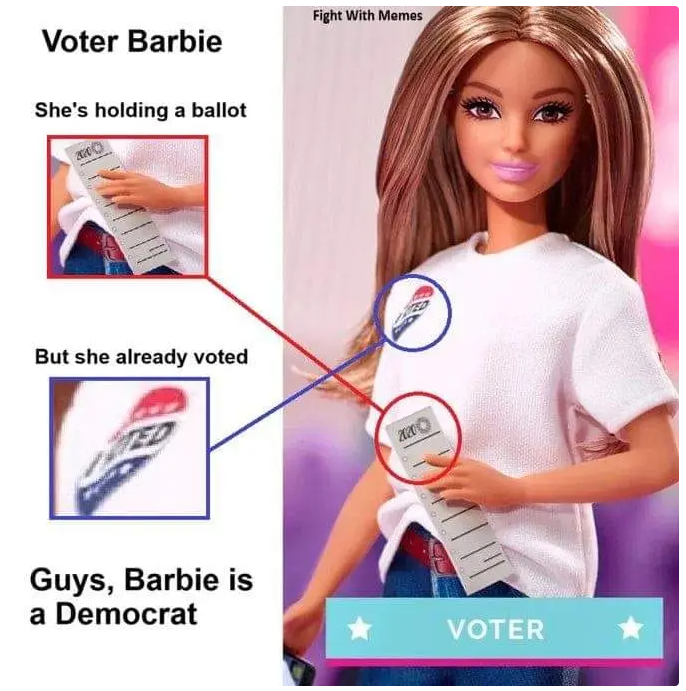
If it is a voter fraud speech tonight, the dems will of course flail, lie, and deny regardless of what is presented. Because as we all know fraud happens everywhere, all the time, in every other system humans are involved in, but not in voting ever, and HOW DARE YOU?!?
And when some of it does get caught, they cry that it is no big deal, and made no difference.
Every other functioning system on Earth gets audited. But not elections. Nope. Those are sacrosanct and the idea that dishonest humans would cheat at that one thing even though they routinely cheat at everything else is CRAZY.
And I mean real audits, not spot checks or recounts, or any of the other silly little half ass things dumb people think count as a real audit. If we audited publicly traded corporations like we “audit” elections, we’d have ten thousand percent more stock related fraud.
At this point if someone is against voting security or voter ID it’s because they want easier cheating. Period. That’s it. They’ll still lie about it and come up with outlandish bullshit scenarios about disenfranchising some imaginary people, but we all know it is to make cheating easier.
It is so tiresome keeping up these polite fictions with people who you know are lying their asses off.
They lie. We know they lie. They know we know they’re lying. They lie anyway.
Comments Off on The importance of auditing
Rome’s Greatest Enemy: Bloodbath in Africa | EP 3
The Rest Is History
Published 9 Feb 2026Would the Roman general Publius Cornelius Scipio successfully march on Africa? What happened when Hannibal and Scipio — the greatest commanders of their age — came head to head at the Battle of Zama, in the ultimate showdown? And, what would be the fate of these two titans of the ancient world?
Join Tom and Dominic, as they discuss the Roman Republic’s audacious invasion of North Africa under the leadership of the dashing Scipio, and his clash with Hannibal.
00:00 Scipio’s night attack in Numidia
02:16 Hannibal as a commander
08:07 The rise of Scipio Africanus
13:05 The Roman invasion of Africa begins
21:56 The Battle of the Great Plains
25:29 Hannibal recalled from Italy
28:18 Preparing for the final showdown
33:02 The Battle of Zama begins
36:03 Could Hannibal have won?
40:25 Hannibal urges acceptance of defeat
42:40 Hannibal as a civilian reformer
44:22 Scipio after the war
46:45 Cato’s rise and the conservative backlash
49:29 Rome turns east after victory
52:32 The Hellenistic world after Alexander
56:45 Hannibal and Scipio compare great generals
58:31 Rome defeats Antiochus
1:00:18 Hannibal’s final flight and death
1:01:40 Scipio’s death and exile
(more…)
Comments Off on Rome’s Greatest Enemy: Bloodbath in Africa | EP 3
QotD: Obfuscated exchange
At this point, it’s worth digressing from Ashley’s work and laying out my own theory of obfuscated exchange before showing how Ashley applies the model to her data.2 So the starting point is to recognize that there are certain goods and services that may be more or less OK if you get them for free, but are gross, shameful, and/or illegal if you pay for them. For instance, payment transforms casual sex into prostitution and constituent service into bribery.
Now suppose you’re someone who has money, and who really wants to have no-strings sex with someone who isn’t really attracted to you, or to get a government service that the legislator or bureaucrat thinks you’re not entitled to. One way to handle this is you just do it anyway and break the taboo: you hire the prostitute or bribe the public official. Another way is you don’t do it: you think something like “I would gladly pay $200 for sex or $10,000 to get this zoning exemption, but that would be wrong and so I’m not doing it”. But what I find really interesting is when you find a way to have your cake and eat it too by buying the non-market good while obfuscating that you paid for it, hence obfuscated exchange.
In my 2014 Sociological Theory paper, I outline three forms of obfuscation:
- Gift exchange — I give you a gift and at some point in the future you give me a gift. There is a continuous tension between whether the gifts are traded for each other or are both expressions of a relationship.3 This ambiguity effectively allows gift exchange to trade goods that it would be immoral to directly exchange for one another. The classic example is that the difference between a sugar baby/sugar daddy relationship and a prostitute/john relationship is gift exchange vs cash on the barrelhead.
- Bundling — You and I engage in some type of innocuous commercial transaction, but we also have a relationship involving things that ought not to be sold. The classic example is a boss having sex with his worker, or a lawyer with his client.4 Is this just that two people with a business relationship also find one another irresistible, or is it quid pro quo sexual harassment? Interpreted as bundling, it is the latter, and there are some cases where it’s obviously little more than money laundering (as with the Congressman who went to prison for selling his house to a defense contractor, who immediately resold the house at a substantial loss).
- Brokerage — I hire someone to help me acquire something, and they pay the person I need it from, who then gives it to me. A majority of settlements under the Foreign Corrupt Practices Act look like this: AmericaCo is doing business in Corruptistan and hires LocalFixer who in turn just bribes PublicOfficial.
After that first paper, I introduced a fourth type, “pawning”, which is when an explicit debt is forgiven in exchange for a non-market good. This is how the mob gets gambling addicts to serve as co-conspirators in embezzlement and robbery. However Ashley didn’t find any pawning to speak of in her ethnography.
So back to Ashley, one of the things I love about her ethnography is you see three different obfuscation structures all at once. Again, at a fundamental level, what is happening is rich guys are paying for models to hang out with them, but not explicitly. Let’s start with the rich guys and work towards the models. What it says on the $30,000 credit card receipt is “champagne” or “vodka”. In theory the arm candy is incidental, even though that’s why the guys aren’t spending much less at BevMo and getting drunk in their hotel room. So the arm candy is bundled with the alcohol.
We might then think, OK, so the club provides the models, and in a sense they do, but the club doesn’t do this directly. Instead it pays a commission to night club promoters who arrange that the models be there in exchange for a commission on the table’s check. So the promoters act as brokers between the club and the models.
Now we might be thinking, OK, so the promoter gets a cut of the check and out of that he pays the models. Nope. As a rule promoters don’t pay models, and when they do it is widely seen as a death spiral desperation move. Rather, promoters recruit models through gift exchange. For reasons discussed in Ashley’s first book, models are constantly short on cash, and promoters will hang out in fashion districts looking for models who they can offer favors to and befriend. For instance, she talks about promoters who will drive SUVs around Manhattan offering models rides. A common pattern is to meet a group of models, identify the most popular girl in the clique, seduce her, and then get her to constantly mobilize her girlfriends to help you get paid by staying out until 4am, even though this means that they are so tired and hungover the next day that they miss their own auditions and photoshoots.
There is more than a little resemblance between the promoters and pimps. Aside from the vast moral difference that these guys don’t commit felonies and aren’t hyper-misogynists, they all come across as like Andrew Tate with their peacocking, their hustle mindsets, and the basic fact that their livelihood is based on leveraging their own charm into mobilizing pretty girls into making money for them from other men.
John Psmith and Gabriel Rossman, “GUEST JOINT REVIEW: Very Important People, by Ashley Mears”, Mr. and Mrs. Psmith’s Bookshelf, 2024-03-04.
- My other major research interest is diffusion, or how ideas and behaviors spread. This is the subject of my 2012 pop music radio book and my 2021 PNAS. The upshot of my take on diffusion is that you will be badly misled if you only pay attention to social contagion processes like word-of-mouth as it’s critical to consider the constant hazard (eg, advertising, government mandates, or the legitimacy that comes with a mature product category).
Rossman, Gabriel. 2012. Climbing the Charts. Princeton, NJ: Princeton University Press. https://www.google.com/books/edition/Climbing_the_Charts/E_37GZumy50C?hl=en
Rossman, Gabriel, and Jacob C. Fisher. 2021. “Network Hubs Cease to Be Influential in the Presence of Low Levels of Advertising”. Proceedings of the National Academy of Sciences 118(7). https://www.pnas.org/doi/10.1073/pnas.2013391118
- Rossman, Gabriel. 2014. “Obfuscatory Relational Work and Disreputable Exchange”. Sociological Theory 32(1):43–63. https://www.chapman.edu/research/institutes-and-centers/economic-science-institute/_files/ifree-papers-and-photos/obfuscatory-relational-work-and-disreputable-exchange.pdf
Rossman, Gabriel, Michael Munger, Alan Fiske, and Alex Tabarrok. 2016. “The Exchanges We Hide”. Cato Unbound. https://www.cato-unbound.org/issues/june-2016/exchanges-we-hide/
Schilke, Oliver, and Gabriel Rossman. 2018. “It’s Only Wrong If It’s Transactional: Moral Perceptions of Obfuscated Exchange”. American Sociological Review 83:1079–1107. https://www.oliverschilke.com/fileadmin/pdf/Schilke__Rossman._It_s_Only_Wrong_If_It_s_Transactional_-_Moral_Perceptions_of_Obfuscated_Exchange.pdf
Schilke, Oliver, and Gabriel Rossman. forthcoming. “Honor among crooks: the role of trust in obfuscated disreputable exchange”. American Sociological Review https://osf.io/6b793/
- Bourdieu, Pierre. 2000. Pascalian Meditations. Stanford, CA: Stanford University Press. especially “Twofold Truth of the Gift”
- Zelizer, Viviana A. 2005. The Purchase of Intimacy. Princeton, NJ: Princeton University Press.
Comments Off on QotD: Obfuscated exchange
July 18, 2026
The current state of play in the Russo-Ukrainian War of 2022
I don’t make a habit of sharing reports from the ongoing fighting in Ukraine, as the war has ground on (how do you say “short, victorious war” in Russian?). It’s not that I’m not interested, it’s that trustworthy sources are vanishingly thin, and most coverage is either hyper-pro Ukraine or hyper-pro Russia … so assessing events is somewhere between difficult and impossible for those of us without our own satellite and espionage networks. kulak, on the other hand, has been paying attention and does have some insights that are worth considering:
One could be forgiven for thinking that there is something deeply wrong with the Russian State and Vladimir Putin in particular.
Every 1 to 3 months some new unprecedented Ukrainian asymmetric attack hits Russia’s homeland in ways almost tailor designed to provoke an escalation, outrage the populace, and leave the Russian Government humiliated at the loss of face.
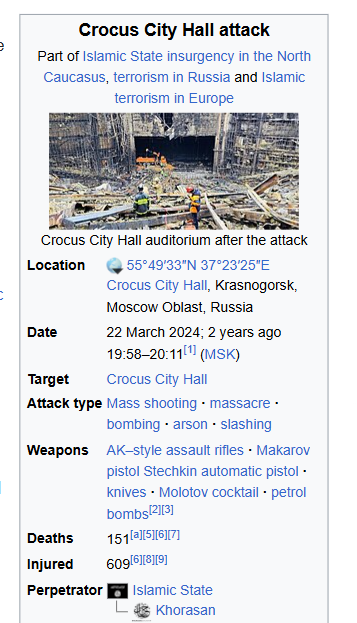
The “Crocus City Hall” (it’s a civilian music venue not an actual city hall) attack in Moscow was killed 151 and injured 600+ Civilian music fans in an “ISIS” terrorist attack … That everyone knows was funded, coordinated, and enabled by Ukraine (and the CIA). Right down to the assailants passing through Ukraine, and being on camera collecting their discarded firearm magazines (presumably because the manufacturer stamps would tie them to their backers) …
This was huge Russian News, and the specific band whose audience was targeted is also significant.
Piknik is a massive hit Russian 80s band. Now, Students of history will note that Russia was still communist in the 80s. They’ve been around forever, and are generally inoffensive and middle of the road (they were mainstream under the USSR)… They’re kind of a weird gothic slavic prog-rock blend of Phil Collins and the Tragically Hip. And they’re huge … Individual videos with 10s of millions of views on Youtube … As big as any hit western 80s band and lots of cultural fondness in the Russian imagination.
(Presumably it hits harder if you can appreciate Russian)
This matters because their core demographic are Russian boomers who are Nostalgic for their Soviet Childhoods, but are also established and content in Modern Russia … Ie. Putin’s Core demographic.
This would be like if you attacked a Hamilton performance or a Bono concert in the west. That’s the regime’s core supporters right there. That’s a knowledgeable and incisive cut that actual Muslim foreigners wouldn’t know or care to hit … But that Slavic Ukrainians and calculating CIA planners trying to apply pressure or destabilize Russia into escalation would know and salivate at.
Likewise Ukraine explicitly attacked Russia’s Nuclear Strategic Bomber fleet in Operation Spider Web, assets that were not used in the Ukraine war, and indeed were basically irrelevant to the conflict … But are core to Russia’s nuclear triad and the stability of the global nuclear balance of power … Again basically begging for a massive escalation and almost certainly making Russian Generals and Strategic planners break out in a cold sweat until they assessed the damage.
Beyond this there have been prominent assassinations of Russian Generals … In Moscow. And assassination attempts on Putin himself …
In addition to the destabilizing Ukrainian counter-invasion of Russia, and escalating strikes on Moscow itself.
The thing to understand is that none of these have been conventionally advantageous for Ukraine. The Invasion of Russia stretched their forces, the Assassinations if anything probably cycled in younger, more competent, hungrier generals, attacking Moscow Boomer civilians probably gave a massive morale spike to the outraged Russian populace … These strikes on Russia have infuriated Russians and made them call for blood.
This is in many respects THE OPPOSITE of what you’d normally want to do as a smaller country fighting a larger that hasn’t fully mobilized. Usually you want to exhaust a larger force that’s half committed or politically divided, without getting them to up their commitment or causing them to unify. Think of Vietnam … The Vietnamese wanted Americans to get tired of fighting them and get demoralized at the idea of ever “winning”, fight amongst themselves, then wind down and withdraw. If in 1972 Vietnamese terrorists had attacked the Superbowl and killed hundreds of American civilians on US soil … that’s actually one of the few things that could have united American in 1972 or gotten America to commit to another 5 years in Vietnam at that point.
It would have greatly damaged American prestige … Moscow or China might have liked that … But from Vietnam’s perspective where they want America to wander elsewhere, it’d lock in years of misery.
So that’s weird … but weirder has been Putin’s Reaction: Nothing. Basically no counter-escalation. Certainly nothing that’s made Zelensky sweat and hesitate at sending more drones at Moscow.
Indeed many sympathetic commentators both in Russia and the West have been screaming their frustration at Putin that he hasn’t suitably punished these insults to Russian Honor or restored Russian deterrence … Or merely enforced baseline international norms around targeting heads of state, civilians, and Strategic nuclear assets in a non-nuclear conventional war.
Russia has hundreds of these Tornado systems.
It’s not as if Russia lacks conventional options. Kiev is RIGHT THERE. Hell, If the Russians really wanted the Tornado MLRS (Multiple Launcher Rocket System) has a range of 200km, fires thermobaric warheads or White Phosphorus rounds, and could hit Kiev from Russian Ally Belarus …
Without even debating the extent of air-cover, and to what extent Ukrainian Air Defense is intact (or to what extent the US can supply them with interceptors) … Putin has the capacity to firebomb Kiev on the scale of Dresden if he wanted to, from the ground. He’s not lacking in conventional, nuclear, and every other kind of escalatory option.
And yet he’s not escalated … And his retaliations have been as close as possible to the bare minimum he could get away with to not be overthrown for treason.
So what the hell is wrong with Putin?


The Top WW2 Spy Was a Disabled Woman
World War Two
Published 16 Jul 2026Virginia Hall was one of the most extraordinary spies of World War II. An American operative for Britain’s Special Operations Executive and later the OSS, Hall built resistance networks in occupied France, coordinated intelligence, organized safe houses, helped escaped prisoners and airmen, and supported maquis fighters who sabotaged German operations during the liberation of France.
Known to the Gestapo as “the Limping Lady”, Hall worked with a wooden prosthetic leg she nicknamed Cuthbert. After escaping over the Pyrenees, she returned to France in 1944 in disguise, operating a radio, arranging parachute drops, and helping organize resistance forces against the German occupation.
This is the true story of Virginia Hall: the disabled American spy who became one of the most feared Allied agents in Nazi-occupied Europe — and one of the most important women in WWII intelligence history.
Jevons and Baumol, and why they matter now
On the social media site formerly known as Twitter, Matt Ridley talks about the ideas of William Stanley Jevons and William Jack Baumol, whose ideas have become far more important over the last few decades:

English mystery novelist Agatha Christie (1890-1976) at Schiphol Airport in Amsterdam on 17 September, 1964.
Photo by Joop van Bilsen for Anefo via Wikimedia Commons.
Agatha Christie once remarked that she had never expected to grow rich enough to own a car or poor enough not to have servants.
The reason this strikes us as bizarre today boils down to two names that you hear invoked a lot in the tech industry: Jevons and Baumol. One is shorthand for the expansion of products or professions with rising efficiency, the other for the shrinkage of products or professions with stagnant efficiency.
There’s a pleasing chronological symmetry between these twin ideas: William Stanley Jevons coined the Jevons paradox in 1865; William Jack Baumol described Baumol’s cost disease exactly a century later in 1965.
… For every industry that experiences efficiency gains, there’s another that does not. And this latter industry inevitably becomes less affordable. Baumol’s first example was string quartets: violinists are no more productive but you have to pay them more to prevent them running off to become software engineers. The productive industries drive up the labour costs in the rest of the economy.
Marc Andreessen jokes that if a hole appears in the wall of your house in California these days it is probably cheaper to glue a flat-screen television over it than hire a builder to repair it: a Jevons-deflated cost beats a Baumol-inflated one.
The big question of our age is can AI drag Baumol-shaded industries back into the sunlight of Jevons? Can it make things like healthcare, education, or government switch from rising costs to falling costs?
I fear not in the case of government because of a bureaucratic version of the Jevons and Baumol effects. As Cyril Northcote Parkinson put it in an article in the Economist in 1955: “Politicians and taxpayers have assumed (with occasional phases of doubt) that a rising total in the number of civil servants must reflect a growing volume of work to be done. Cynics, in questioning this belief, have imagined that the multiplication of officials must have left some of them idle or all of them able to work for shorter hours. But this is a matter in which faith and doubt seem equally misplaced.”
Since 1997, the British public sector has seen zero increase in productivity. That is to say, the average civil servant generates about the same output today as he did three decades ago.
Think about this for a second. Thirty years ago fax machines were high-tech, the internet was in its infancy, emails were new, Wi-Fi was scarce, mobile phones were voice-only. How is it remotely possible to be no more productive today than then?
We know the answer. Each email is now copied to a dozen people, each report is pasted and copied till it is twice as long, each Zoom call has five times as many attendees, each mobile call is followed up by three times as many WhatsApp messages – and each day at the desk is interrupted by a training session on transgender anticolonial sustainability. That’s a sort of Jevons-Baumol effect: a Jevol?
Comments Off on Jevons and Baumol, and why they matter now
Aimpoint’s First Tube Optics: 2000, 3000, & 5000
Forgotten Weapons
Published 23 Feb 2026Aimpoint introduced its first tubular red dot sight in 1985, the Aimpoint 2000. They were still making direct rail-mounted optics like the Aimpoint Electronic, but recognized the customer demand for a sight that could fit into normal scope rings. The 2000 included a number of other innovations, like a light sensor to automatically adjust brightness.
In 1989 the Aimpoint 3000 came out, which streamlined the profile of the optic by using a smaller battery compartment mounted tight to the tube, and abandoning the automatic light adjustment. This was followed in 1991 by the Aimpoint 5000, which was essentially the same optic in a 30mm tube instead of a 1″ tube. Larger diameter optics were gaining popularity for increased light transmission, and the 5000 followed that trend.
A number of options were offered, especially on the Aimpoint 5000. Different colors were made, a “Mag Dot” option for pistol competition offered up to a 15 MOA dot, and even a version with a fixed 2x magnification was made for hunters who thought that would be a good idea (it really wasn’t). The last in the line was the Aimpoint 5000 XD which introduced a new diode assembly with much longer battery life — this would go on to be the M68 CCO as adopted by the US military.
(more…)
Comments Off on Aimpoint’s First Tube Optics: 2000, 3000, & 5000
QotD: Britain’s National Trust wants to eliminate the “outdated mansion experience”
Well, it seems not. Seek out the National Trust’s Strategy to 2025, and the first words you read are: “Our 21st-century ambition is to meet the needs of an environment under pressure, and the challenges and expectations of a fast-moving world … Underpinning this is our renewed commitment to diversity and inclusion and playing our part to create a fair, equal society, free from discrimination.”
In their “10-year Vision”, written in the same hideous identikit jargon, they talk about a “revolutionary” move away from the “outdated mansion experience”. The Trust provides little evidence that stately homes are becoming less popular; reading between the lines the main problem that the Vision’s authors seem to have with the English country house is that it is old and traditional and popular with comfortably-off white people.
I don’t particularly want to get stuck into the National Trust. But they do provide a particularly interesting example of a problem afflicting institutions in modern Britain, namely the relentless politicisation of parts of life which should represent an escape from politics.
Niall Gooch, “What is the point of the National Trust?”, UnHerd, 2020-10-19.
Comments Off on QotD: Britain’s National Trust wants to eliminate the “outdated mansion experience”
July 17, 2026
British logistics in the Falklands, 1982
A new post at the Operational Art of War considers the amazing achievements in logistical support that allowed the British to re-take the Falkland Islands so soon after the Argentine invasion in 1982:
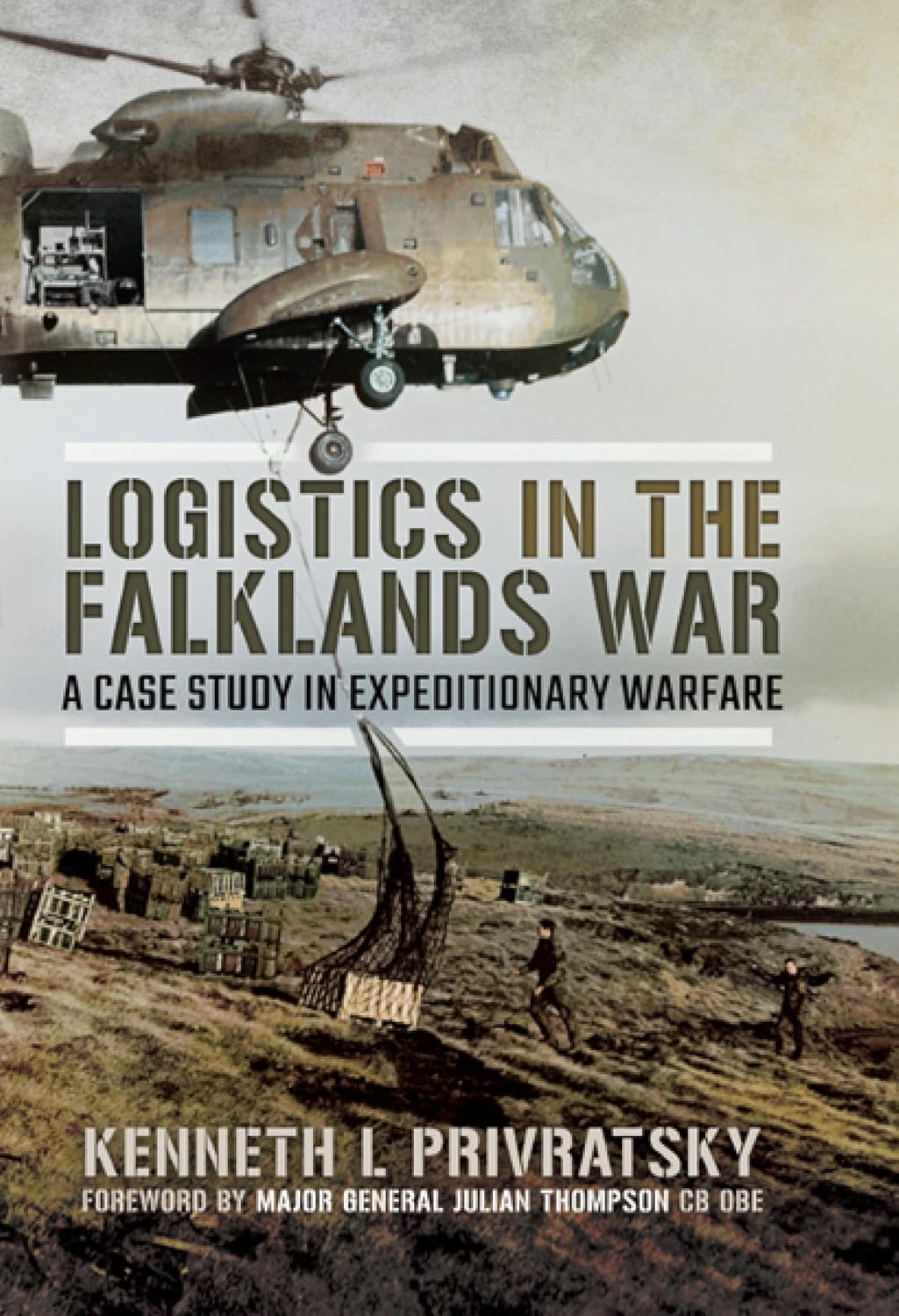
This post is largely highlights from a book I think everyone should buy, called Logistics in the Falklands War: A Case Study in Expeditionary Warfare by US retired MGen Privratsky.
[…]
I read the book as part of a long term project on the history of command and communications in the Falkland War. I couldn’t figure out how the British managed to pull off victory given the logistical challenges, so I purchased this book hoping to find answers.
Having now read the book I know WHAT the British did to win the war, but I have ZERO clue how they managed to make it work. The conditions and limitations they faced were so much worse than I thought.
I can honestly say this is the most interesting book I have read in years, which is a shock to me as I’m typically as bored by logistics as the next non-logistician. It was genuinely more engaging and entertaining than the battlefield accounts of that war.
The Logistics Challenges of the Falklands War
The task eventually given to the British task force was to retake the Falkland islands from the Argentines. This was a daunting task, both logistically and in terms of the actual ground combat.
Strategic Logistics
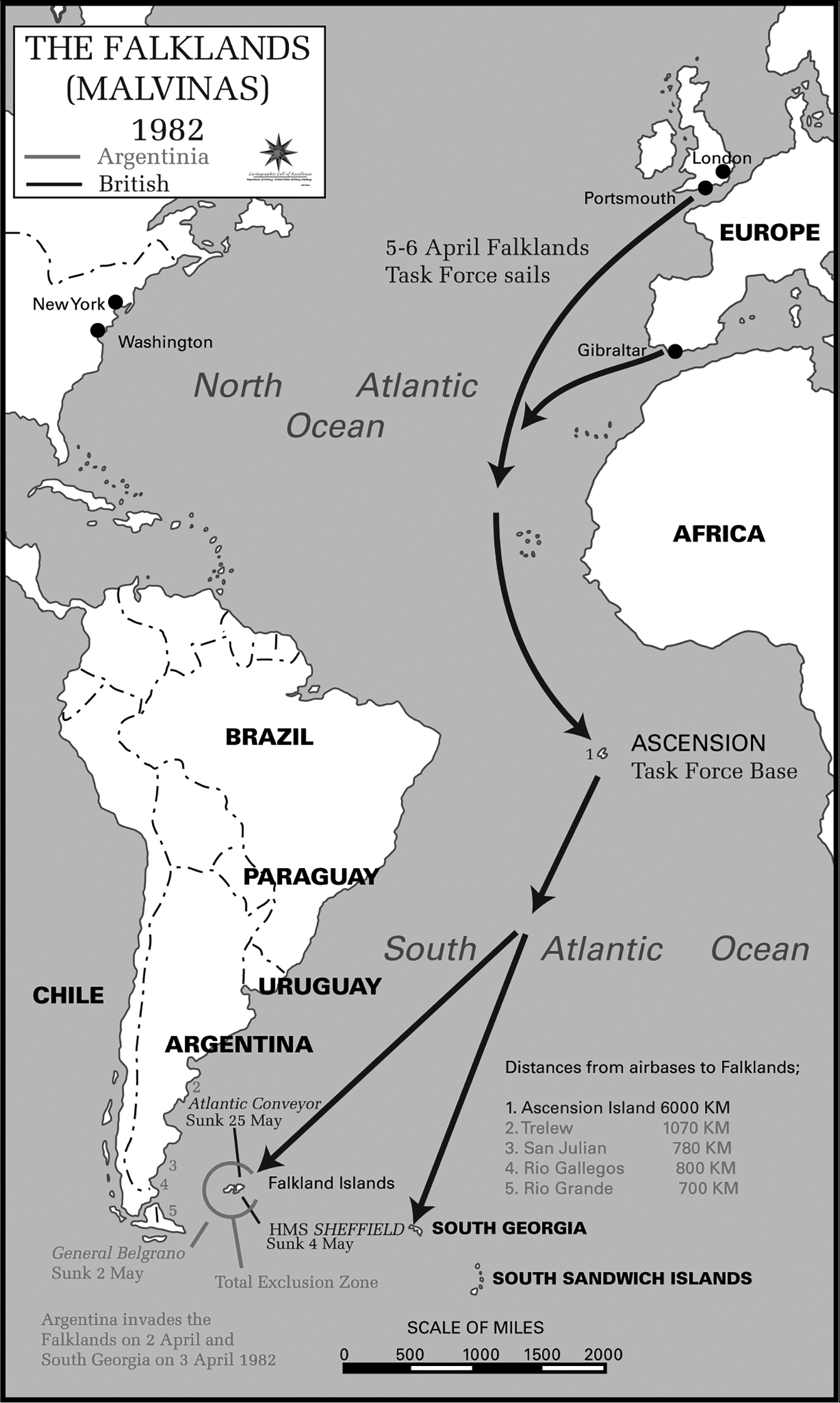
Strategic logistics is providing the lifeline of supplies, personnel, maintenance and health care between the home country and a staging area about 300km outside the combat zone. British strategic logistics involved a link from England to a small British held island half way between Brazil and Africa called Ascension. This link was 4,300 miles (6,900 km) by sea from Portsmouth. It had an airport and one jetty capable of handling one or two small commercial ships.
The next link was a further 3,600 miles (5,800 km) from Ascension to a logistics loitering area about 200 miles (320 km) short of the Falkland Islands. This was just a box drawn on a map in the middle of the ocean where the larger supply ships would loiter, outside the range of the Argentine air force.
[…]
Tactical Logistics
Tactical Logistics holds a few days’ supply (eventually the BSA/DSA held about 30 days supply ashore at San Carlos) but it’s main job is to move supplies, broken equipment, replacements and injured personnel between the BSA/DSA and the manoeuvre units.
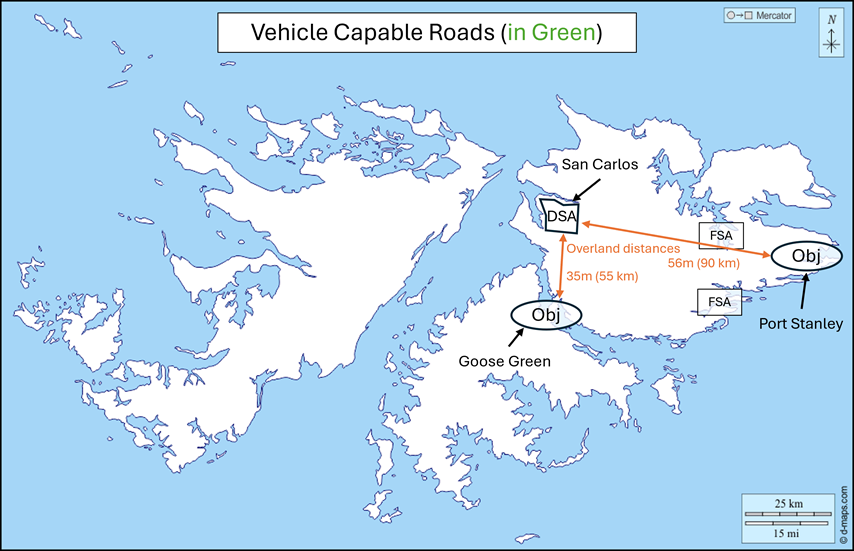
Normally the backbone of Tactical Logistics is trucks. Here there was a problem, as the image below is a comprehensive of all the paved and unpaved vehicle capable roads in the Falklands, excluding those in the vicinity of Port Stanley.
“Roads? Where we’re going Marty we don’t need roads.”
The details of tactical logistics take up several chapters of the book. The brief version is:
- The troops marched from the DSA to the Objective;
- For the attack on Port Stanley two days supply of Ammunition, Shells, fuel and shells were brought to the two Forward Support Areas (FSAs) along with skeletal field hospitals;
- Helicopters spent about 2 weeks bringing the artillery from the DSA to outside Port Stanley; and
- Limited emergency resupply of ammunition and casualty evacuation was available from the FSA to the troops in combat. However, most of the ammunition going brought and casualties evacuated rearward was done on foot over what can charitably be described as walking tracks.
Tactical Logistics in the Falklands was so difficult because there were no roads and the distances involved were enormous. While the orange arrows above give a sense of the distances involved, the image blow shows the size of the Falkland Islands superimposed over England.
[…]
Conclusion
Prior to reading Logistics in the Falklands I couldn’t quite figure out how the British managed to pull a victory out the hat, given the challenges of projecting power literally on the opposite end of the globe. Having read the book I am now convinced the British military in 1982 was either the best improvisational armed force in history or under some kind of Divine mandate.1
- Maybe both.

Comments Off on British logistics in the Falklands, 1982
Why Did the Best Woodworking Vise Disappear?
Rex Krueger
Published 16 Jul 2026AI-generated video summary: Rex Krueger investigates the historical evolution of woodworking vises, comparing modern metal clamps with traditional wooden designs inspired by an 1812 manual. By constructing a classic English face vise, the process examines how economic pressures and shifts in manufacturing trades influenced the tools favored by woodworkers across several centuries.
Comments Off on Why Did the Best Woodworking Vise Disappear?
Why solar power is not the answer for Britain
On the social media site formerly known as Twitter, Sama Hoole looks at a recent World Bank report that shows very clearly why solar power should not even be on the power options list for Britain:
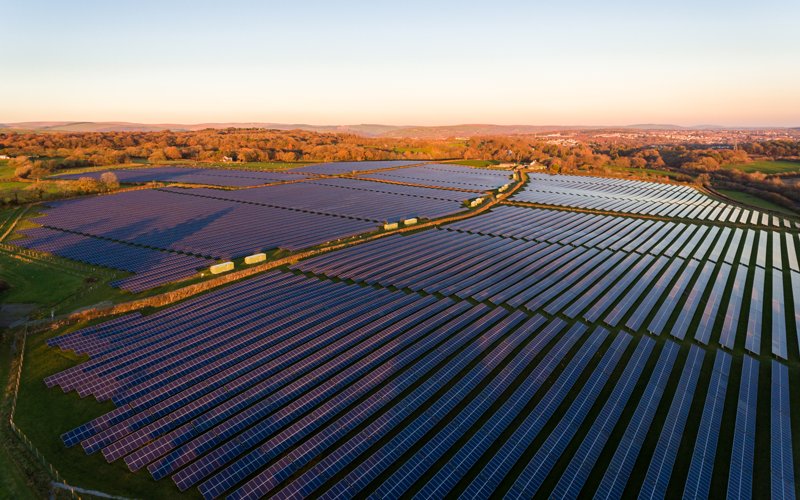
The World Bank ranked every country on earth for practical solar potential.
Britain came second from bottom. Not second from bottom in Europe. On the planet. Out of everywhere they measured, the only place with worse conditions for a solar panel is Ireland. Norway is above us. Norway, where the sun clocks off entirely for part of the year, is a better bet than Lincolnshire.
The reasons are not a mystery. We sit at 53 degrees north, the same line as Edmonton, Alberta. The sun in December gets about as high as a first-floor window and then thinks better of it. And there’s the cloud, which is not a detail, it is the national personality. A square metre of London gets 0.52 kilowatt hours of sunlight a day in December and 4.74 in July, so the panel does nine times less work in the month your heating is on than in the month it isn’t. Across the whole of 2024, British solar ran at 9.5% of what it’s rated at. The other 90.5% is a photograph of a power station.
Now the other column.
The ground we’re bolting it to is Trent valley silt and Lincolnshire fen. Some of it took three hundred years to drain. It grows wheat at yields that most of the planet cannot get near, in a climate so reliably damp that grass grows here without anyone asking it to, which is the entire reason this island has cattle and cheese and a butcher.
So we are, measurably, one of the worst places on earth for sunlight and one of the best on earth for food.
And we’ve had a good long look at both of those numbers and gone with sunlight.
Somewhere in Namibia, which the same report ranked first, there is a patch of absolutely nothing, in full sun, wondering what it did wrong.
Comments Off on Why solar power is not the answer for Britain


