
What now seems like a lifetime ago, back in the early 1970s, I asked a colleague (who knew about such things) a somewhat complicated question.
Assuming that:
- the average individual (in those days) is forced to give a third of what he earns to government (which will do nothing productive with it, but turn it straight into trash of one kind or another), and that
- whenever three such individuals are taxed at that rate, in effect, one whole human being — including all his or her potential accomplishments, his creations, his ability to raise the standard of living for himself, for his family and friends, for everyone around him, and for society in general — has been economically obliterated, then
- how many human lives in total have been obliterated in that way since the Constitution, with its taxing powers, was ratified in 1789?
It turns out to be a very difficult question to answer. Tax rates have varied over the years, and so has the number of Americans subject to taxation. In the end, my colleage estimated that it had consumed the productive capacity of some fifty million (50,000,000) innocent human lives. That’s roughly four times the number of victims claimed by Adolf Hitler. It almost equals the number of individuals killed in all of the Second World War. It fits in somewhere between the number of Russians slaughtered by Josef Stalin and Chinese killed by Mao Zedong.
And according to political scientist R.J. Rummel, it’s properly called “democide”, since, for this purpose, everybody gets to be the Jews.
So now you finally know where your flying car went, and why there’s no cure yet for cancer. You know why there’s no luxury hotel aboard a Big Wheel space station, no vacation resort on the Moon, and no scientific base on Mars or Titan. All of those things, and many more that we expected to have (or still haven’t imagined) by now, were devoured, sometimes quite literally, by grants to investigate the territoriality of tree frogs, programs to feed individuals who can’t — or won’t — work (which is properly the job of churches), programs to keep people from smoking the wrong vegetable or (to quote the late Saint George Carlin) shooting, snorting, or rubbing it into their bellies), not to mention enforcing laws against licking the wrong toad.
Not the ones squatting in the White House.
L. Neil Smith, “Economic Genocide”, Libertarian Enterprise, 2014-06-29.
June 29, 2023
QotD: The costs of taxation
June 11, 2023
Minimum alcohol pricing fails utterly in reducing “problem” drinking, but it’s aces for padding the state’s coffers
Christopher Snowden counts coup on Scotland’s utterly failed “minimum pricing model” for alcohol which has cost Scots additional hundreds of millions of pounds for no discernable improvement in any measurable:

This study was published yesterday and got no attention whatsoever from the media despite it being written by a team in Sheffield who used to get blanket coverage for their every pronouncement. What changed? Well, they used to produce models showing that minimum alcohol pricing would work and now they’ve produced a study showing that their model didn’t work.
The results above suggest the introduction of MUP in Scotland did not lead to a decline in the proportion of adult drinkers consuming alcohol at harmful levels. It also did not lead to any change in the types of alcoholic beverage consumed by this group, their drinking patterns, the extent to which they consumed alcohol while on their own or the prevalence of harmful drinking in key subgroups.
Oof! So much for the “exquisitely targeted” policy of minimum pricing being an “almost perfect alcohol policy because it targets cheap booze bought by very heavy drinkers“.
After building your entire reputation on modelling minimum pricing, it must have been painful for them to write this …
… the lack of evidence for a decline in the prevalence of harmful drinking arising from MUP is contrary to model-based evidence that informed the introduction of the policy.
Hey-ho. I guess the model was garbage, as I said from the start. Never mind. It’s only cost drinkers in Scotland a few hundred million pounds. Will the Supreme Court be taking another look at that court case that was won off the back of an incorrect model?
The lack of change in the prevalence of harmful drinking may arise for several reasons. First, people drinking at harmful levels may be less responsive to price changes than lighter drinkers.
You don’t say! If only someone had mentioned this earlier!
Previous qualitative research and studies of purchasing behaviour among people with alcohol dependence (i.e. a group that comprises approximately 20% of those drinking harmfully in the United Kingdom and thus 1% of the overall population) supports this view. However, the very large price increases imposed by MUP on people drinking harmfully, their inability to switch to cheaper products and clear evidence of successful policy implementation and compliance, mean their price responsiveness would need to be extremely low to negate any impact on consumption.
But it is extremely low! I explained this over a decade ago when I took the model to task for making the plainly daft assumption that heavy drinkers are more price sensitive than moderate drinkers. I wrote:
“The model assumes that minimum pricing will have more effect on the consumption patterns of heavy drinkers than on moderate drinkers because heavy drinkers are more price-sensitive. This is a convenient belief since it is heavy drinkers who cause and suffer the most alcohol-related harm, but can we really assume that someone with an alcohol dependency is more likely to be deterred by price rises than a more casual consumer? The SAPM model says that they are, and yet there is ample evidence to support the common sense view that heavy drinkers and alcoholics are less price-sensitive than the general population (eg. Gallet, 2007; Wagenaar, 2009). Indeed, research has shown that price elasticity for the heaviest drinkers is ‘not significantly different from zero’ — they will, in other words, purchase alcohol at almost any cost.”
You don’t need an encyclopaedic knowledge of the price elasticity literature to work this out. For most people, it falls under the umbrella of the bleeding obvious. Here we are 11 years later and the penny still hasn’t quite dropped at Sheffield, but we’re getting closer.
April 13, 2023
A Brief History of Gin
No Nonsense Gin Drinking
Published 21 Jul 2019Pay attention class! No running, shouting or talking at the back! It’s time to learn all about gin!
(more…)
March 30, 2023
“Food insecurity” – one of the neat new benefits of our over-regulated economy
Elizabeth Nickson on how western governments (in her case, the provincial government of British Columbia) are working hand-in-glove with environmental non-governmental organizations to create “food insecurity”:

Original image from www.marpat.co.uk
In Canada, the British Columbia government in order to increase “food security” is handing out $200,000,000 to farmers in the province. Food insecurity, which means crazy high food prices, comes to us courtesy of the sequestration of the vast amounts of oil and gas in the province and the ever increasing carbon tax, which (like a VAT in Europe), as you probably know, is levied at every single step in food production. Add the hand-over-fist borrowing in which the government has indulged for the last 20 years, and you have created your own mini-disaster.
Ever since multinational environmental non-governmental organizations (ENGOs) took over public opinion in the province, our economy has been wrenched from resource extraction to tourism. Tourism is, supposedly, low-impact. The fact that it pays $15 an hour instead of $50 an hour and contributes very much less to the public purse than forestry, mining, farming, ranching, oil and gas, means we have had borrow to pay for health care and schooling. This madness spiked during Covid, and, as in every “post-industrial” state, has contributed to making food very, very much more expensive, despite the fact that British Columbia where I live, is anything but a food desert. We could feed all of Canada and throw in Washington State.
Inflation comes from a real place, it has a source, it is not mysterious and arcane. Regionally, it comes from “green” government decisions. I pay almost 70 percent more for food now than I did five years ago. Of course one cannot know with any confidence how much the real increase is. The Canadian government was caught last week hiding food price statistics and well they might. The Liberal government leads with its “compassion”, blandishing the weak and foolish, hiding the fact that in this vast freezing country they are trying to make it even colder by starving and freezing the lower 50 percent of the population.
Even the Wasp hegemony that ran this country pre-Pierre Elliot Trudeau knew not to try that. But not this crew! It doesn’t touch them. They don’t see and wouldn’t care if they did, about the single mother working in a truck stop on the Trans-Canada Highway, who steals food for her kids because all her money is going towards keeping them warm.
[…]
The region in which I live used to grow all the fruit for the province, now, well good luck with that buddy. Last year under the U.N. 2050 Plan, local government tried to ban farming and even horticulture. That was defeated so hard that the planner who introduced it was fired and the plan scrubbed from the website. Inevitably it will come again in the hopes that citizens or subjects, as we in Canada properly are, have gone back to sleep. U.N. 2050, an advance on 2030, locks down every living organism, and all the other elements that make up life, assigns those elements to multinationals, advised by ENGOs, which can “best decide” how to use them.
If the only tool you have is a hammer, it’s tempting to treat everything as if it were a nail. It is only the most arcane and numerate think tanks who bang on and on about over-regulation and how destructive it is. Regulation is so complex that most people would rather do anything than think about it, much less deconstruct it.
March 27, 2023
The vicious – not virtuous – circle of green
Elizabeth Nickson thinks that our societal pursuit of green technology will be the undoing of everything we have built:
Some of us have been saying this for a very long time: green will bring down the world. Green creates a vicious circle, a term you may remember from Economics 101. It is when the serpent eats itself, no wealth is created and collapse results. That is what we are doing with ESG, with carbon taxes, with the forced adoption of unreliable vertiginously expensive green energy. It has skewed every single market. No one is investing in sound enterprise, and anything once sound is a Jenga tower, unstable, rotting from within. This. This is what threatens to bring down the world.
Green is built on subsidies. And not just government subsidy. Every mutual fund, every hedge fund, every multinational and every local or national corporation has a green monster within preventing innovative investments, sucking profits and growth. Every local, regional and state government leaks millions to green morons promising to “bring sustainable prosperity”. The only prosperity is theirs. They fiddle around in lakes and watercourses, producing “studies”, all of which are hysterical and exaggerated. They muck around in forests, buying as much as possible, shut them down, never visit again, leaving them to desertify. They buy farms and ranches, leaving them to rot. They are termites, eating us alive.
These outfits have burrowed into every level of government and every ministry. They are purely extractive. They do not produce anything of value. They leech. They move in and out of government. When in government, they identify sources of funds to plunder once out of government. In 2015, I did a cross-ministry analysis of just how much money these folks take from the government annually. It is in the hundreds of billions in the US alone. From private foundations they take more billions. All this money is used to shut down economic activity.
[…]
Here is the nasty little secret that lies at the heart of environmentalism. It has been long captured by plutocrats and WEFers, who use it to take resources once thought to belong to the people, to everyone, to use in order to innovate and develop. This freedom and access, and only this was the source of prosperity in the United States. It powered the entire world. It made America the beacon, the lighthouse of the world. It produced strong healthy brilliant young people who performed one feat of innovation, athleticism, and creation after another. All those kids today are working on ever more vicious ways to surveil, control and supress via AI.
And the interior is being cleared of people, businesses, farms, ranches, working forests, mines, and oil and gas installations.
In pursuit of 2030 goals, Biden’s agents are busily acquiring hundreds of millions of acres from private owners, from state and regional land banks, which they will then lock down. Many ranchers, including the heroic Wayne Hage, believe that government is taking that land to use as collateral for its massive debt to the Bank for International Settlements. The only people who will be able to use those resources are multinationals who pay a fee to government and to the BIS to pay down the loans. No citizens will be able to access those resources to make money for themselves, to build families and businesses and towns and cities. The environmental movement has, within 40 years, returned us to serfdom, where we eat what we are told to eat, go where we are told to go, take whatever medicine they want to give us, and eventually, fight when we are told to fight.
The environmental movement is so evil, it has twisted ethical standards to the point where we are able to kill each other with impunity. Their PR is so strong, so invasive, that every school child now believes there are too many people (this is nonsense), and population must be drastically drawn down (a genocide unrivalled in history). Every adult secretly fears this is true. This appalling lie has created a culture of death. What are the effects of this thinking, that life is no longer sacred, but a threat?
March 17, 2023
QotD: The unique nature of Roman Egypt
[…]
… what makes Roman Egypt’s uniqueness so important is one of the unique things about it: Roman Egypt preserves a much larger slice of our evidence than any other place in the ancient world. This comes down to climate (as do most things); Egypt is a climatically extreme place. On the one hand, most of the country is desert and here I mean hard desert, with absolutely minuscule amounts of precipitation. On the other hand, the Nile River creates a fertile, at points almost lush, band cutting through the country running to the coast. The change between these two environments is extremely stark; it is, I have been told (I haven’t yet been to Egypt), entirely possible in many places to stand with one foot in the “green” and another foot in the hard desert.
That in turn matters because while Egypt was hardly the only arid region Rome controlled, it was the only place you were likely to find very many large settlements and lots of people living in such close proximity to such extremely arid environments (other large North African settlements tend to be coastal). And that in turn matters for preservation. When objects are deposited – lost, thrown away, carefully placed in a sanctuary, whatever – they begin to degrade. Organic objects (textile, leather, paper, wood) rot as microorganisms use them as food, while metal objects oxidize (that is, rust). Aridity arrests (at least somewhat) both processes. Consequently things survive from the Roman period (or indeed, from even more ancient periods) in Egypt that simply wouldn’t survive almost anywhere else.
By far the most important of those things is paper, particularly papyrus paper. The Romans actually had a number of writing solutions. For short-term documents, they used wax writing tablets, an ancient sort of “dry erase board” which could be scraped smooth to write a new text when needed; these only survive under very unusual circumstances. For more permanent documents, wood and papyrus were used. Wood tablets, such as those famously recovered from the Roman fort at Vindolanda, are fairly simple: thin wooden slats are smoothed so they can be written on with ink and a pen, creating a rigid but workable and cheap writing surface; when we find these tablets they have tended to be short documents like letters or temporary lists, presumably in part because storing lots of wood tablets would be hard so more serious records would go on the easier to store papyrus paper.
Papyrus paper was lighter, more portable, more storeable option. Papyrus paper is produced by taking the pith of the papyrus plant, which is sticky, and placing it in two layers at right angles to each other, before compressing (or crushing) those layers together to produce a single sheet, which is then dried, creating a sheet of paper (albeit a very fibery sort of paper). Papyrus paper originated in Egypt and the papyrus plant is native to Egypt, but by the Roman period we generally suppose papyrus paper to have been used widely over much of the Roman Empire; it is sometimes supposed that papyrus was cheaper and more commonly used in Egypt than elsewhere, but it is hard to be sure.
Now within the typical European and Mediterranean humidity, papyrus doesn’t last forever (unlike the parchment paper produced in the Middle Ages which was far more expensive but also lasts much longer); papyrus paper will degrade over anything from a few decades to a couple hundred years – the more humidity, the faster decay. Of course wood tablets and wax tablets fare no better. What that means is that in most parts of the Roman Empire, very little casual writing survives; what does survive were the sorts of important official documents which might be inscribed on stone (along with the literary works that were worth painstakingly copying over and over again by hand through the Middle Ages). But letters, receipts, tax returns, census records, shopping lists, school assignments – these sorts of documents were all written on less durable materials which don’t survive except in a few exceptional sites like Vindolanda.
Or Egypt. Not individual places in Egypt; pretty much the whole province.
In the extremely dry conditions of the Egyptian desert, papyrus can survive (albeit typically in damaged scraps rather than complete scrolls) from antiquity to the present. Now the coverage of these surviving papyri is not even. The Roman period is far better represented in the surviving papyri than the Ptolemaic period (much less the proceeding “late” period or the New Kingdom before that). It’s also not evenly distributed geographically; the Arsinoite nome (what is today el-Fayyum, an oasis basin to the West of the Nile) and the Oxyrhynchus nome (roughly in the middle of Egypt, on the Nile) are both substantially overrepresented, while the Nile Delta itself has fewer (but by no means zero) finds. Consequently, we need to be worried not only about the degree to which Egypt might be representative of the larger Roman world, but also the degree to which these two nomes (a nome is an administrative district within Egypt, we’ll talk about them more in a bit) are representative of Egypt. That’s complicated in turn by the fact that the Arsinoite nome is not a normal nome; extensive cultivation there only really begins under Ptolemaic rule, which raises questions about how typical it was. It also means we lack a really good trove of papyri from a nome in Lower Egypt proper (the northern part of the country, covering the delta of the Nile) which, because of its different terrain, we might imagine was in some ways different.
Nevertheless, it is difficult to overstate the value of the papyri we do recover from Egypt. Documents containing census and tax information can give us important clues about the structure of ancient households (revealing, for instance, a lot of complex composite households). Tax receipts (particularly for customs taxes) can illuminate a lot about how Roman customs taxes (portoria) were assessed and conducted. Military pay stubs from Roman Egypt also provide the foundation for our understanding of how Roman soldiers were paid, recording for instance, pay deductions for rations, clothes and gear. We also occasionally recover fragments of literary works that we know existed but which otherwise did not survive to the present. And there is so much of this material. Whereas new additions to the corpus of ancient literary texts are extremely infrequent (the last very long such text was the recovery of the Athenaion Polteia or Constitution of the Athenians, from a papyrus discovered in the Fayyum (of course), published in 1891), the quantity of unpublished papyri from Egypt remains vast and there is frankly a real shortage of trained Egyptologists who can work through and publish this material (to the point that the vast troves of unpublished material has created deeply unfortunate opportunities for theft and fraud).
And so that is the first way in which Egypt is unusual: we know a lot more about daily life in Roman Egypt, especially when it comes to affairs below the upper-tier of society. Recovered papyrological evidence makes petty government officials, regular soldiers, small farming households, affluent “middle class” families and so on much more visible to us. But of course that immediately raises debates over how typical those people we can see are, because we’d like to be able to generalize information we learn about small farmers or petty government officials more broadly around the empire, to use that information to “fill in” regions where the evidence just does not survive. But of course the rejoinder is natural to point out the ways in which Egypt may be unusual beyond merely the survival of evidence (to include the possibility that cheaper papyrus in Egypt may have meant that more things were committed to paper here than elsewhere).
Consequently the debate about how strange a place Roman Egypt was is also a fairly important and active area of scholarship. We can divide those arguments into two large categories: the way in which Roman rule itself in Egypt was unusual and the ways in which Egypt was a potentially unusual place in comparison to the rest of Roman world already.
Bret Devereaux, “Collections: Why Roman Egypt Was Such a Strange Province”, A Collection of Unmitigated Pedantry, 2022-12-02.
February 25, 2023
QotD: Feudalism versus “Manorialism”
Bret Devereaux, “Collections: Bread, How Did They Make It? Part IV: Markets, Merchants and the Tax Man”, A Collection of Unmitigated Pedantry, 2020-08-21.
February 20, 2023
Thirteen reasons the Dutch did better financially than the English in the Seventeenth Century
In the latest Age of Invention newsletter, Anton Howes investigates the huge differences between the rival English and Dutch financial markets in the 17th century:
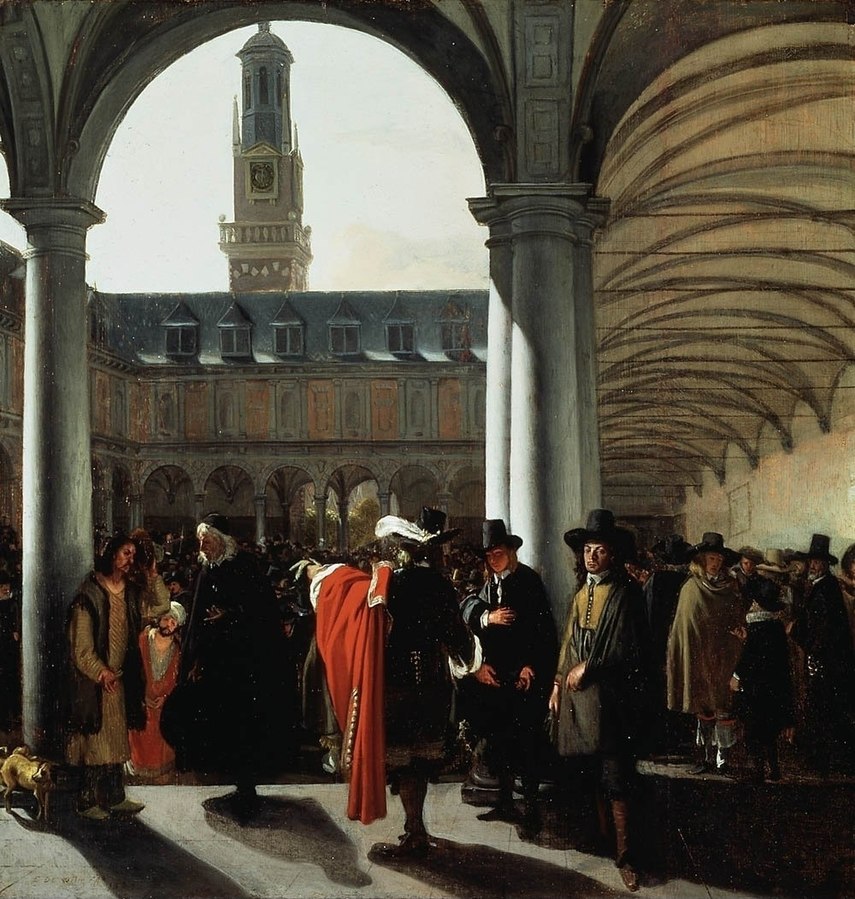
The courtyard of the exchange in Amsterdam (De binnenplaats van de beurs te Amsterdam), 1653.
Oil painting by Emanuel de Witte (1617-1692) from the Museum Boijmans Van Beuningen collection via Wikimedia Commons.
One of the weird things about Britain, despite its being the birthplace of the Industrial Revolution, is that its financial infrastructure was for a long time remarkably backward. Its “Financial Revolution”, by which both people and the state began to borrow at ever lower interest rates, only really took off in the early eighteenth century — long after London’s extraordinary growth in 1550-1650, when it had suddenly expanded eightfold to become one of Europe’s most important commercial hubs. Indeed, even for much of the late seventeenth century, England lacked many of the most basic financial institutions that had been used for decades and decades by their most important rival and trading partner, the Dutch Republic.
I was especially intrigued when I stumbled across a discussion of Dutch policies and customs, written up in around 1665 by the young merchant Josiah Child, and published a few years later: a kind of wishlist of many of the things that made the Dutch so wealthy, and which the English continually failed to emulate:
- The Dutch councils of state and war always included merchants who had experience of trading and living abroad — Child was perhaps just angling for some influence here, but for all that merchants were getting more influential, in England they were not actually in charge.
- Gavel-kind succession laws, whereby all children got an equal share of their parents’ estates, rather than it all going to the eldest. English primogeniture, by contrast, apparently left a lot of gentlemen’s younger sons having to become apprenticed to merchants.
- High regulatory standards for goods. A barrel of Dutch-packed herring or cod would apparently be accepted by buyers just by viewing the marks, without having to open them up to check. English-packed goods, by contrast, were rarely trusted because the fish would turn out to be rotten or even missing — the English regulators’ stamps of approval were reputedly given to anyone who would pay.
- Encouragement for inventors of new products, techniques, and import trades, who received rewards from the state, and not just temporary monopoly patents.
- Ships, called fluyt, which were cheaper to build, required fewer sailors, and were easier to handle. Despite being only very lightly armed, they sailed in fleets for protection, when necessary being convoyed by ships of war. English trading ships, by contrast, were each heavily armed, but with those cannon taking up room and weight that could have been used for carrying merchandise.
- Education of all children, even girls, in arithmetic and keeping accounts. As Child put it, this infused in the Dutch “a strong aptitude, love, and delight” for commerce. It also meant that husbands and wives were real partners in many businesses — something that impressed almost all foreign visitors to the Netherlands.
- Low customs duties, but high consumption taxes. Very low customs duties, on both imports and exports, meant that it was often very profitable to trade with the Netherlands. The Dutch were famed for their many ships, and for their granaries bursting with grain, despite growing hardly any trees or crops themselves. To fund their state, they instead overwhelmingly relied on the gemene middelen — taxes on the sale of wine, beer, meat, fuel, candles, salt, soap, flour, cloth, and a host of other goods, with many of the higher rates reserved for expensive luxuries. Much like modern value-added taxes, these taxes on consumption raised revenue while preserving the all-important incentive to save and invest.
- Thrifty living — which, come to think of it, was probably related to the high consumption taxes, although Childs doesn’t seem to have noticed the connection. Dutch thrift was thought by the English to be especially useful because it allowed wage costs to be kept low — essential for maintaining competitiveness in international markets — while preventing the country having a trade deficit. The English always worried they were sending too much of their silver abroad to pay for French wines and other luxuries, but the Dutch appeared to have prevented this without resorting to import tariffs that might annoy trading partners and prompt retaliation.
- Religious toleration, which attracted all sorts of industrious immigrants to bring their families and wealth. (Incidentally, as I’ve mentioned before, this was also one of the key attractions of Livorno, set up by the Medici Dukes of Tuscany to be a major trading hub.)
- The use of the Law-Merchant, which meant that all controversies between merchants and tradesmen were decided in just 3 or 4 days’ time. England, rather strangely for such an increasingly commercial nation, did not develop merchant courts with a specific jurisdiction or a distinct body of merchant law — disputes instead had to be resolved in the royal common-law or equity courts, in the Admiralty court, or else abroad. The English courts, however, were often slow. Child complained that cases often took half a year, and often much longer. (Incidentally, slow and rotten justice in the Court of Chancery, the key equity court used by merchants in England, was one of the reasons Francis Bacon was impeached by Parliament and sacked as Lord Chancellor.)
- Transferrable bills of exchange — in other words, the circulation of credit notes as a currency. These were not properly supported by English laws, but allowed Dutch merchants to trade a lot more frequently. English merchants often had to wait some six months to a year before receiving all the coin from selling their foreign goods in London, so as to purchase goods again to make fresh trades. They spent much of their time chasing shopkeepers for payment. But the Dutch, by being able to easily buy and sell their credit notes, could “turn their stocks twice or thrice in trade”, immediately settling their accounts and making fresh purchases. (I intend to look into this in a lot more detail soon, as finding a way to bills of exchange transferrable in England appears to have been a major project for many of the mid-seventeenth-century inventors and improvers — after just a cursory glance, transferability was only secured in law as late as 1704.)
- Banks. Or rather, as Child actually put it, “BANKS”. In England many of the functions of banks gradually evolved from the practices of individual goldsmiths and the scriveners — legal clerks who specialised in property transfers and mortgages. There was certainly nothing so secure as the municipal Wisselbank of Amsterdam, established in 1609, which had various monopoly powers as a clearing-house for bills of exchange and was backed by a vault full of bullion. Nor the municipal Bank van Lening, established in 1614, which was a pawnbroker modelled on the Italian Monte di Pietà, or mounts of piety, designed to make small and low-cost loans to the poor.
- “PUBLIC REGISTERS” — again capitalised by Child — of all lands and houses sold or mortgaged. This item on the policy wishlist would not be ticked off for England until two centuries later, but the key advantage was to prevent lawsuits over land titles — still cited as a major problem even in the 1690s — and so make land more genuinely secure for mortgages.
Finally, the result of many of these policies was the Dutch had significantly lower interest rates — often just 3-4% when the English were still lending and borrowing at 6-8%. Indeed, this list was made because of a long-standing English policy debate I’ve been researching, on whether to lower the legal maximum rate of interest.
February 9, 2023
QotD: Collecting taxes, Medieval-style
(Note: for a more detailed primer on what this kind of apparatus can look like, check out Wayne Lee’s (@MilHist_Lee) talk “Reaping the Rewards: How the Governor, the Priest, the Taxman, and the Garrison Secure Victory in World History” here. He’s got some specific points he’s driving at, but the first half of the talk is a broad overview of the problems you face as a suddenly successful king. Also, the whole thing is fascinating.)
In a pre-modern society, this task – assembling and organizing the literate bureaucrats you need to run a state – is very difficult. Literacy is often very low, so the number of individuals with the necessary skills is minuscule. Training new literate bureaucrats is expensive, as is paying the ones you have, creating a catch-22 where the king has no money because he has no tax collectors and he has no tax collectors because he has no money. Looking at how states form is thus often a question of looking at how this low-administration equilibrium is broken. The administrators you need might be found in civic elites who are persuaded to do the job in exchange for power, or in a co-opted religious hierarchy of educated priests, for instance.
Vassalage represents another response to the problem, which is the attempt to – as much as possible – do without. Let’s specify terms: I am using “vassalage” here because it is specific in a way that the more commonly used “feudalism” is not. I am not (yet) referring to how peasants (in Westeros the “smallfolk”) interact with lords (which is better termed “manorialism” than as part of feudalism anyway), but rather how military aristocrats (knights, lords, etc) interact with each other.
So let us say you are a king who has suddenly come into a lot of land, probably by bloody conquest. You need to extract revenue from that land in order to pay for the armies you used to conquer it, but you don’t have a pile of literate bureaucrats to collect those taxes and no easy way to get some. By handing out that land to your military retainers as fiefs (they become your vassals), you can solve a bunch of problems at once. First, you pay off your military retainers for their service with something you have that is valuable (land). Second, by extracting certain promises (called “homage”) from them, you ensure that they will continue to fight for you. And third, you are partitioning your land into smaller and smaller chunks until you get them in chunks small enough to be administered directly, with only a very, very minimal bureaucratic apparatus. Your new vassals, of course, may do the same with their new land, further fragmenting the political system.
This is the system in Westeros, albeit after generations of inheritance (such that families, rather than individuals, serve as the chief political unit). The Westerosi term for a vassal is a “bannerman”. Greater military aristocrats with larger holding are lords, while lesser ones are landed knights. Landed knights often hold significant lands and a keep (fortified manner house), which would make them something more akin to European castellans or barons than, say, a 14th century English Knight Banneret (who is unlikely to have been given permission to fortify his home, known as a license to crenellate). What is missing from this system are the vast majority of knights, who would not have had any kind of fortified dwelling or castle, but would have instead been maintained as part of the household of some more senior member of the aristocracy. A handful of landless knights show up in Game of Thrones, but they should be by far the majority and make up most of the armies.
There’s one final missing ingredient here, which is castles, something Westeros has in abundance. Castles – in the absence of castle-breaking cannon – shift power downward in this system, because they allow vassals to effectively resist their lieges. That may not manifest in open rebellion so much as a refusal to go on campaign or supply troops. This is important, because it makes lieges as dependent on their vassals as vassals are on their lieges.
Bret Devereaux, “New Acquisitions: How It Wasn’t: Game of Thrones and the Middle Ages, Part III”, A Collection of Unmitigated Pedantry, 2019-06-12.
February 8, 2023
“Smoking has been a net gain for the Treasury ever since King James I started taxing it heavily in the 1600s”
Christopher Snowden asks whether we should believe the consistent claims of public health advocates on how much things they disapprove of (smoking, drinking, etc.) “cost” the taxpayer:
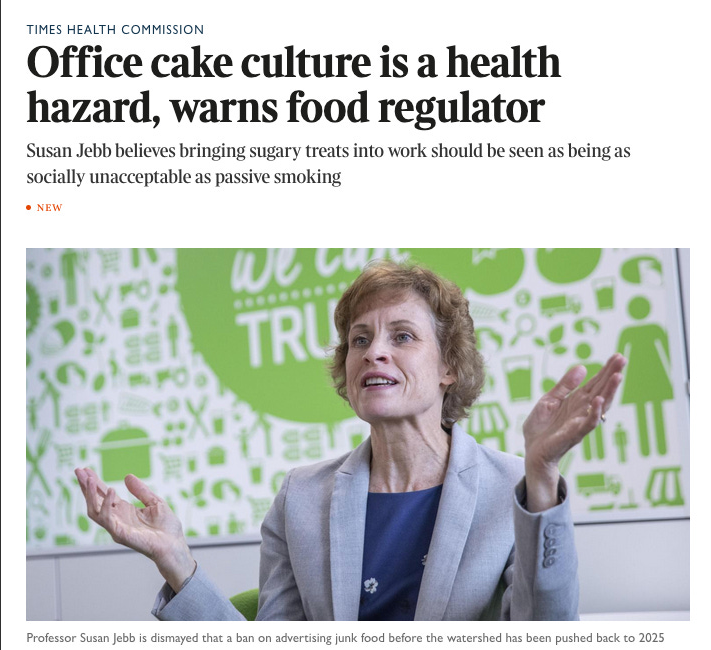
If smoking costs the taxpayers £173 billion, then how much does widespread forced feeding of office pastries cost?
If you say that a certain activity costs society £10 billion a year, most people would assume that if that activity disappears, society will save £10 billion a year.
They might have different ideas of what “society” means. Some will assume that the £10 billion is a cost to taxpayers while others will assume that some of the cost is borne by private individuals and businesses. But the majority will, quite reasonably, assume that the cost is to other people, i.e. those who do not participate in the activity.
And nearly everyone will assume that the £10 billion is money in the conventional sense of cash that can be exchanged for goods and services.
But when it comes to estimates from “public health” campaigners about the cost of drinking/smoking/obesity, all these assumptions would be wrong. Most of the “costs” are to the people engaged in the activity and they are not financial costs. Taxpayers would not pay less tax if they disappeared. In general, they would pay more.
Last month I mentioned an estimate of the “cost” of gambling in the UK and said:
These studies have no merit as economic research. They are purely driven by advocacy. The hope is that the average person will wrongly assume that the costs are to taxpayers and agitate for change.
The main aim of these Big Numbers is to convince the public that heavily-taxed activities place a burden on society that exceeds the tax revenue, thereby justifying yet more taxes and prohibitions.
In the case of smoking, this has become more and more difficult. Smoking has been a net gain for the Treasury ever since King James I started taxing it heavily in the 1600s. Today, as the smoking rate dwindles and tobacco duty rises ever higher, anti-smoking campaigners have got their work cut out duping non-smokers into thinking otherwise.
Tobacco duty brings in about £12 billion a year. For years, groups like Action on Smoking and Health (ASH) used a figure of £13.74 billion as the “cost of smoking”. This came from a flimsy Policy Exchange report which included £5.4 billion as the cost of smoking breaks and £4.8 billion as the cost of lost productivity due to premature mortality. Neither of these are costs to the taxpayer. They are not even external costs, i.e. costs to non-smokers.
Last year, in a review commissioned by the Department of Health, Javed Khan came up with a figure of “around £17 billion” as the “societal cost” of smoking. This included “reduced employment levels” (£5.69 billion) and “reduced wages for smokers” (£6.04 billion). Again, these costs fall on smokers themselves and are not external costs. They are, in other words, none of the government’s business.
Last week, a report commissioned by Action on Smoking and Health (ASH) pulled out all the stops and announced that the cost of smoking to Britain was now — wait for it! — £173 billion. Go big or go home, eh?
November 2, 2022
Bill C-18’s scheme to force payment for online links threatens freedom of expression
Michael Geist considers the ways that the federal government’s Bill C-18 will suppress online freedom of expression in Canada:

“Automotive Social Media Marketing” by socialautomotive is licensed under CC BY 2.0

The study into the Online News Act continues this week as the government and Bill C-18 supporters continue to insist that the bill does not involve payment for links. These claims are deceptive and plainly wrong from even a cursory reading of the bill. Simply put, there is no bigger concern with this bill. This post explains why link payments are in, why the government knows they are in, and why the approach creates serious risks to the free flow of information online and freedom of expression in Canada.
[…]
Why is the government suspending the fair dealing rights of Internet platforms in the bill? Because it knows that the platforms don’t typically use the news in a manner that would be compensable. For example, the platforms may link to the news, feature a headline with the link or sometimes offer a one-or-two sentence summary or quote from the article. These uses are generally permitted under Canada’s fair dealing copyright law rules and do not require a licence or compensation. In other words, claiming that links might qualify for compensation requires setting aside the platforms’ copyright rights which places Canada in breach of its obligations under the Berne Convention, the international treaty that governs copyright law.
The government’s intervention into the final arbitration process is further evidence that it recognizes the weakness of the argument for payments for links. Bill C-18 mandates final offer arbitration, which encourages the parties to provide their very best final offer as part of the process since the arbitrator must select one or the other. Yet Section 39 gives the arbitration panel the right to reject an offer on several policy grounds. Why would such a provision be necessary in a final arbitration system that encourages submitting your best offer? It is only necessary if you fear one side will examine the evidence and proffer a low offer on the grounds that it does not believe that there has been a demonstration of compensable value. That is a real possibility in this case given that there should be no need to compensate for links and there is little else of value. In light of that risk, the government gives the arbitration panel the power to reject offers that do not meet the government’s policy objectives.
[…]
Aside from the obvious unfairness, the broader implications of this policy are even more troubling. Once government decides that some platforms must pay to permit their users to engage in certain expression, the same principle can be applied to other policy objectives. For example, the Canadian organization Journalists for Human Rights has argued that misinformation is akin to information pollution and that platforms should pay a fee for hosting such expression much like the Bill C-18 model. The same policies can also be expanded to other areas deemed worthy of government support. Think health information or educational materials are important and that those sectors could use some additional support? Why not require payments for those links from platforms. Indeed, once the principle is established that links may require payment, the entire foundation for sharing information online is placed at risk and the essential equality of freedom of expression compromised.
To be clear, supporting journalism is important. But Bill C-18’s dangerous approach ascribes value to links where there isn’t any, regulates which platforms must pay in order to permit expression from their users, and dictates which sources are entitled to compensation. This is an unprecedented government intervention into the media and freedom of expression. If the government believes that Facebook and Google should be paying more into Canada, tax them and use the funds for journalism support. If that isn’t enough, create a fund for participation in the news system with mandated contributions similar to the Cancon broadcast world. That may not be ideal, but it would at least keep the system arms length, remove the qualification issues, and reduce the market intervention.
I suspect the government fears that Canadians would easily recognize the risks associated with mandated payments for links and fundamental unfairness with the system envisioned by Bill C-18. It is why it has misled on the inclusion of link payments, rejected the Parliamentary Budget Officer’s estimates on who benefits, and sought to frame Facebook’s concerns as a threat, when the real threat lies in the bill itself. But despite those efforts, make no mistake: Bill C-18 is a law about forcing some platforms to pay for links. It gives the government the power to regulate who pays and which expression is worthy of payment. In doing so, it creates a threat to freedom of expression for all Canadians.
September 14, 2022
Whisky – Scotland’s Water of Life
Tasting History with Max Miller
Published 13 Sep 2022
September 2, 2022
The winner in 1932 campaigned against high taxes, big government, and more debt. Then he turned all those up to 11
At the Foundation for Economic Education, Lawrence W. Reed notes that we often get the opposite of what we vote for, and perhaps the best example of that was the 1932 presidential campaign between high-taxing, big-spending, government-expanding Republican Herbert Hoover and Franklin Delano Roosevelt, who ran against all of Hoover’s excesses … until inauguration day, anyway:
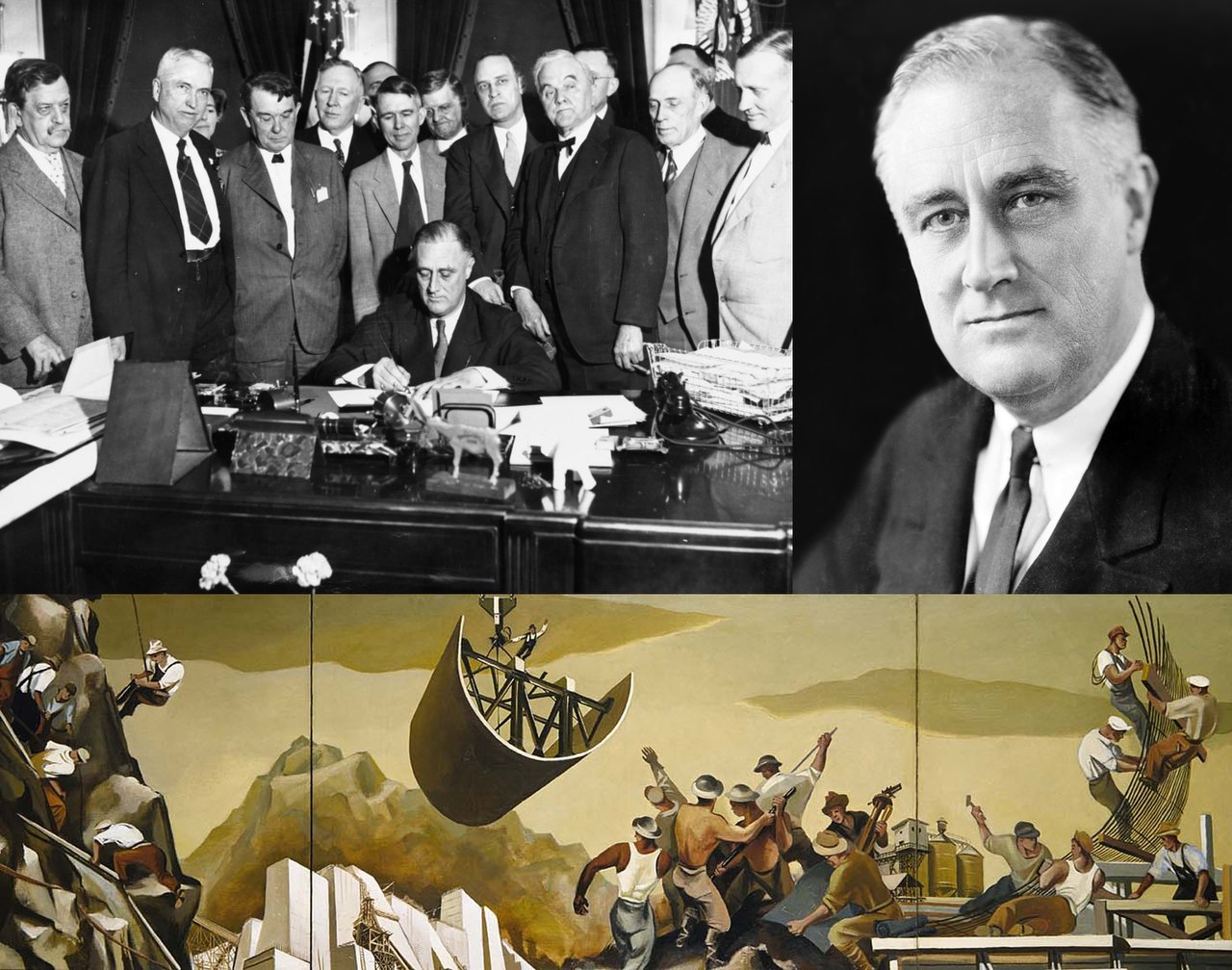
Top left: The Tennessee Valley Authority, part of the New Deal, being signed into law in 1933.
Top right: FDR (President Franklin Delano Roosevelt) was responsible for the New Deal.
Bottom: A public mural from one of the artists employed by the New Deal’s WPA program.
Wikimedia Commons.
If you were a socialist (or a modern “liberal” or “progressive”) in 1932, you faced an embarrassment of riches at the ballot box. You could go for Norman Thomas. Or perhaps Verne Reynolds of the Socialist Labor Party. Or William Foster of the Communist Party. Maybe Jacob Coxey of the Farmer-Labor Party or even William Upshaw of the Prohibition Party. You could have voted for Hoover who, after all, had delivered sky-high tax rates, big deficits, lots of debt, higher spending, and trade-choking tariffs in his four-year term. Roosevelt’s own running mate, John Nance Garner of Texas, declared that Republican Hoover was “taking the country down the path to socialism”.
Journalist H.L. Mencken famously noted that “Every election is a sort of advance auction sale of stolen goods.” If you agreed with Mencken and preferred a non-socialist candidate who promised to get government off your back and out of your pocket in 1932, Franklin Roosevelt was your man — that is, until March 1933 when he assumed office and took a sharp turn in the other direction.
The platform on which Roosevelt ran that year denounced the incumbent administration for its reckless growth of government. The Democrats promised no less than a 25 percent reduction in federal spending if elected.
Roosevelt accused Hoover of governing as though, in FDR’s words, “we ought to center control of everything in Washington as rapidly as possible.” On September 29 in Iowa, the Democrat presidential nominee blasted Hooverism in these terms:
I accuse the present Administration of being the greatest spending Administration in peace times in all our history. It is an Administration that has piled bureau on bureau, commission on commission, and has failed to anticipate the dire needs and the reduced earning power of the people. Bureaus and bureaucrats, commissions and commissioners have been retained at the expense of the taxpayer.
Now, I read in the past few days in the newspapers that the President is at work on a plan to consolidate and simplify the Federal bureaucracy. My friends, four long years ago, in the campaign of 1928, he, as a candidate, proposed to do this same thing. And today, once more a candidate, he is still proposing, and I leave you to draw your own inferences. And on my part, I ask you very simply to assign to me the task of reducing the annual operating expenses of your national government.
Once in the White House, he did no such thing. He doubled federal spending in his first term. New “alphabet agencies” were added to the bureaucracy. Nothing of any consequence in the budget was either cut or made more efficient. He gave us our booze back by ending Prohibition, but then embarked upon a spending spree that any drunk with your wallet would envy. Taxes went up in FDR’s administration, not down as he had promised.
Don’t take my word for it. It’s all a matter of public record even if your teacher or professor never told you any of this. For details, I recommend these books: Burton Folsom’s New Deal or Raw Deal; Murray Rothbard’s America’s Great Depression; my own Great Myths of the Great Depression; and the two I want to tell you about now, John T. Flynn’s As We Go Marching and The Roosevelt Myth.
For every thousand books written, perhaps one may come to enjoy the appellation “classic”. That label is reserved for a volume that through the force of its originality and thoroughness, shifts paradigms and serves as a timeless, indispensable source of insight.
Such a book is The Roosevelt Myth. First published in 1948, Flynn’s definitive analysis of America’s 32nd president is arguably the best and most thoroughly documented chronicle of the person and politics of Franklin Delano Roosevelt. Flynn’s 1944 book, As We Go Marching, focuses on the fascist-style economic planning during World War II and is very illuminating as well.
August 19, 2022
Why Quebec rejected the American Revolution
Conrad Black outlines the journey of the French colony of New France through the British conquest to the (amazing to the Americans) decision to stay under British control rather than join the breakaway American colonies in 1776:

Civil rights were not a burning issue when Canada was primarily the French colony of New France. The purpose of New France was entirely commercial and essentially based upon the fur trade until Jean Talon created industries that made New France self-sufficient. And to raise the population he imported 1,000 nubile young French women, and today approximately seven million French Canadians and Franco-Americans are descended from them. Only at this point, about 75 years after it was founded, did New France develop a rudimentary legal and judicial framework.
Eighty years later, when the British captured Québec City and Montréal in the Seven Years’ War, a gentle form of British military rule ensued. A small English-speaking population arose, chiefly composed of commercial sharpers from the American colonies claiming to be performing a useful service but, in fact, exploiting the French Canadians. Colonel James Murray became the first English civil governor of Québec in 1764. A Royal proclamation had foreseen an assembly to govern Québec, but this was complicated by the fact that at the time British law excluded any Roman Catholic from voting for or being a member of any such assembly, and accordingly the approximately 500 English-speaking merchants in Québec demanded an assembly since they would be the sole members of it. Murray liked the French Canadians and despised the American interlopers as scoundrels. He wrote: “In general they are the most immoral collection of men I ever knew.” He described the French of Québec as: “a frugal, industrious, moral race of men who (greatly appreciate) the mild treatment they have received from the King’s officers”. Instead of facilitating creation of an assembly that would just be a group of émigré New England hustlers and plunderers, Murray created a governor’s council which functioned as a sort of legislature and packed it with his supporters, and sympathizers of the French Canadians.
The greedy American merchants of Montréal and Québec had enough influence with the board of trade in London, a cabinet office, to have Murray recalled in 1766 for his pro-French attitudes. He was a victim of his support for the civil rights of his subjects, but was replaced by a like-minded governor, the very talented Sir Guy Carleton, [later he became] Lord Dorchester. Murray and Carleton had both been close comrades of General Wolfe. […]
The British had doubled their national debt in the Seven Years’ War and the largest expenses were incurred in expelling the French from Canada at the urgent request of the principal American agent in London, Benjamin Franklin. As the Americans were the most prosperous of all British citizens, the British naturally thought it appropriate that the Americans should pay the Stamp Tax that their British cousins were already paying. The French Canadians had no objection to the Stamp Tax, even though it paid for the expulsion of France from Canada.
As Murray and Carleton foresaw, the British were not able to collect that tax from the Americans; British soldiers would be little motivated to fight their American kinfolk, and now that the Americans didn’t have a neighboring French presence to worry them, they could certainly be tempted to revolt and would be very hard to suppress. As Murray and Carleton also foresaw, the only chance the British would have of retaining Canada and preventing the French Canadians from rallying to the Americans would be if the British crown became symbolic in the mind of French Canada with the survival of the French language and culture and religion. Carleton concluded that to retain Québec’s loyalty, Britain would have to make itself the protector of the culture, the religion, and also the civil law of the French Canadians. From what little they had seen of it, the French Canadians much preferred the British to the French criminal law. In pre-revolutionary France there was no doctrine of habeas corpus and the authorities routinely tortured suspects.
In a historically very significant act, Carleton effectively wrote up the assurances that he thought would be necessary to retain the loyalty of the colony. He wanted to recruit French-speaking officials from among the colonists to give them as much self-government as possible while judiciously feeding the population a worrisome specter of assimilation at the hands of a tidal wave of American officials and commercial hustlers in the event of an American takeover of Canada.
After four years of lobbying non-stop in London, Carleton gained adoption of the Québec Act, which contained the guaranties he thought necessary to satisfy French Canada. He returned to a grateful Québec in 1774. The knotty issue of an assembly, which Québec had never had and was not clamoring for, was ducked, and authority was vested in a governor with an executive and legislative Council of 17 to 23 members chosen by the governor.
Conveniently, the liberality accorded the Roman Catholic Church was furiously attacked by the Americans who in their revolutionary Continental Congress reviled it as “a bloodthirsty, idolatrous, and hypocritical creed … a religion which flooded England with blood, and spread hypocrisy, murder, persecution, and revolt into all parts of the world”. The American revolutionaries produced a bombastic summary of what the French-Canadians ought to do and told them that Americans were grievously moved by their degradation, but warned them that if they did not rally to the American colours they would be henceforth regarded as “inveterate enemies”. This incendiary polemic was translated, printed, and posted throughout the former New France, by the Catholic Church and the British government, acting together. The clergy of the province almost unanimously condemned the American agitation as xenophobic and sectarian incitements to hate and needless bloodshed.
Carleton astounded the French-Canadians, who were accustomed to the graft and embezzlement of French governors, by not taking any payment for his service as governor. It was entirely because of the enlightened policy of Murray and Carleton and Carleton’s skill and persistence as a lobbyist in the corridors of Westminster, that the civil and cultural rights of the great majority of Canadians 250 years ago were conserved. The Americans when they did proclaim the revolution in 1775 and officially in the Declaration of Independence on July 4, 1776, made the British position in Canada somewhat easier by their virulent hostility to Catholicism, and to the French generally.
August 18, 2022
The acute lack of numbers in every climate debate
The Grumpy Economist notes that every discussion of laws and regulations “to tackle climate change” only ever seem to cover one side of the issue — how much your taxes will go up and how much more your life “needs” to be regulated to “save the planet”. The almost universally lacking numbers are the expected benefits of the law or regulation in climate terms:
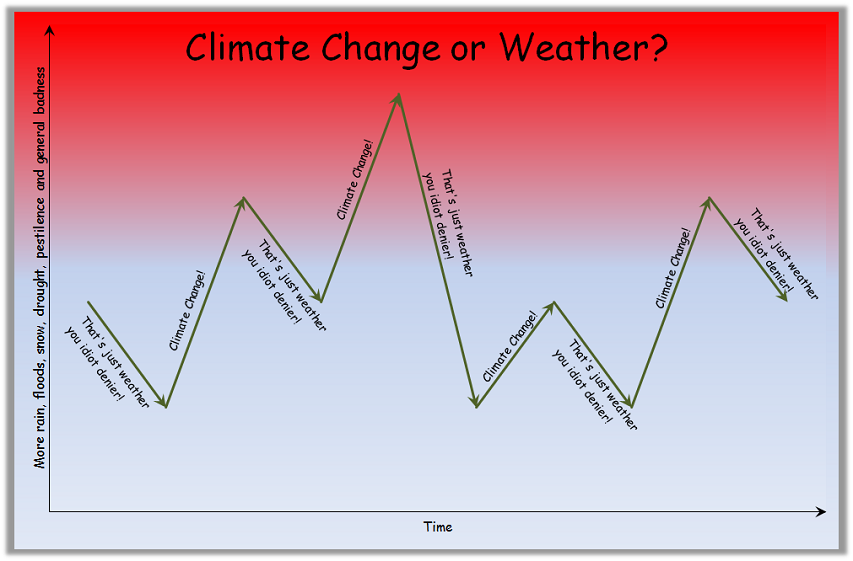
Most legislation or regulation that spends hundreds of billions of dollars aimed at a purpose is extensively analyzed or scored to that purpose. OK, the numbers are often, er, a bit unreliable, but at least proponents go through the motions and lay out assumptions one can examine and calculate differently. Tax and spending laws come with extensive analysis of just how much the government will make or spend. This is especially true when environment is concerned. Building anything requires detailed environmental assessments. An environmental review typically takes 4.5 years before the lawsuits begin.
In this context, I’m amazed that climate policy typically comes with no numbers, or at least none that I can find readily available in major media. We’re going to spend an additional $250 billion or so on climate policies in the humorously titled “inflation reduction act”. OK, how much carbon will that remove, on net, all things included, how much will that lower the temperature and when, how much and when will it quiet the rise of the oceans?
Finally, I have seen one number, advertised in the Wall Street Journal,
Our contributor Bjorn Lomborg looked at the Rhodium Group estimate for CO2 emissions reductions from Schumer-Manchin policies. He then plugged them into the United Nations climate model to measure the impact on global temperature by 2100. He finds the bill will reduce the estimated global temperature rise at the end of this century by all of 0.028 degrees Fahrenheit in the optimistic case. In the pessimistic case, the temperature difference will be 0.0009 degrees Fahrenheit.
Bjorn’s twitter stream on the calculation.
Maybe you don’t like Bjorn’s numbers and the IPCC model. (Not exactly a right-wing operation). Maybe you don’t like the Rhodium group’s analysis. A quick reading left me the impression its thumb might be on the wildly over-optimistic side of what this rathole of pork can produce, and of experience with what the similar past ratholes have produced:
Our preliminary estimate is that the IRA can cut US net greenhouse gas emissions down to 31% to 44% below 2005 levels in 2030—with a central estimate of 40% below 2005 levels — compared to 24% to 35% under current policy. The range reflects uncertainty around future fossil fuel prices, economic growth, and technology costs. It will also meaningfully reduce consumer energy costs and bolster US energy security over the medium-term,
10% of 2005 levels is a lot. Subsidies reduce consumer costs, but not the cost to society overall. Clever. How one can claim that clamping down on fossil fuels and subsidizing windmills and solar panels helps energy security with the German example before us is a good question. Bjorn’s point is that even with this immense thumb on the scale, the actual climate benefit is tiny. If you disagree, fine, produce some alternates.
(BTW, politicians who tell you we need to do something about climate to turn off heat waves and stop forest fires are either lying or profoundly ignorant. Nothing even Greta Thunberg proposes will actually lower temperatures in our great grandchildren’s lifetimes. Read carefully, “reduce the temperature rise“. Not “reduce temperatures”.)


