The History Chap
Published Nov 16, 2023Britain’s Victorious Jungle War Against the Communists
Get My FREE Weekly Newsletter
https://www.thehistorychap.com
February 22, 2024
The Malayan Emergency – Britain’s Jungle War v Communists
February 1, 2024
Newfoundland – “We used to be a country”
In The Line, James McLeod outlines a difficult period for the Dominion of Newfoundland which ended up narrowly voting to join Canada rather than resume self-rule that they’d had up to 1934 when the Newfoundland House of Assembly abolished itself:

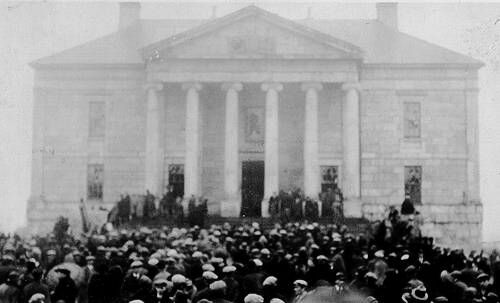
Great Riot of 1932 in front of the legislature, the Colonial Building, in Newfoundland.
Provincial Archives of Newfoundland and Labrador (Reference PANL A2-160), via Wikimedia Commons.
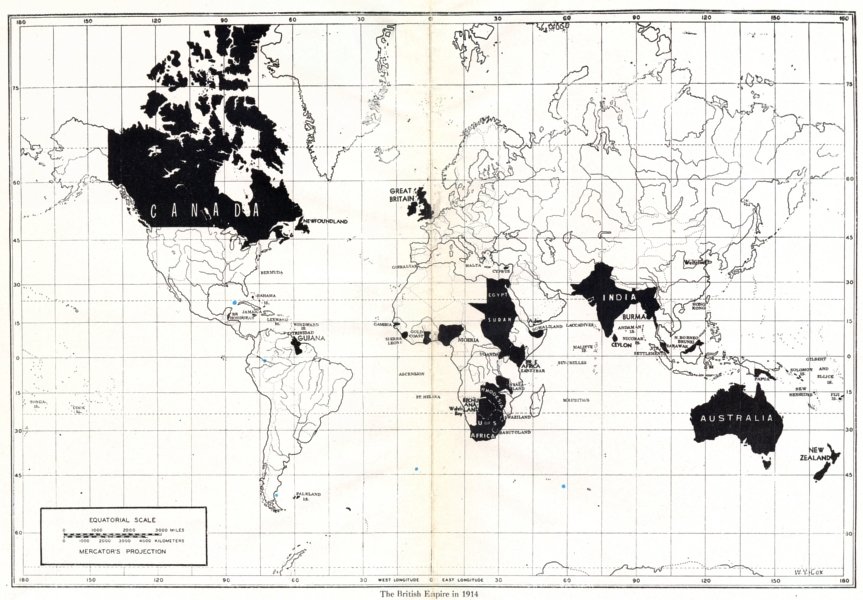
Before 1933, Newfoundland was proudly a dominion within the British empire. Under the Statute of Westminster, Newfoundland had the same legal status as Canada, New Zealand, South Africa and the Irish Free State.
Newfoundland was its own country. But it was a country in rough shape.
A year before the Amulree Report was published, a mob of about 10,000 people had gathered outside the Colonial Building in St. John’s. Families were living in destitution on six-cents-a-day government dole, and the government’s finance minister had just resigned and accused Prime Minister Richard Squires of personally lining his pockets with government funds.
The mob turned into a riot, which ultimately barged into the government building. Notably, the rioters briefly paused to observe a respectful silence when a brass band began playing “God Save The King”, but then they went back to rioting.
Squires fled on foot and went into hiding, and then emerged to call an election, which he lost in a landslide. During the campaign, one of his longtime allies, the prominent leader of the Fishermen’s Protective Union, openly wished for fascism.
“What is required for Newfoundland and what is most essential for the present conditions is a Mussolini,” said William Coaker.
Months later, with a new government, Newfoundland was on the verge of defaulting on its debt, and the British stepped in.
The vastly oversimplified version is that the British government was concerned that a member of the British Commonwealth defaulting on its debt could have major implications for the whole empire. So the British government bailed out Newfoundland, on the condition that a commission would be struck to investigate the island’s political and economic affairs. Lord Amulree, a British politician, was appointed as chair.
A year later, with the Dominion still teetering on the verge of bankruptcy, the Amulree Report was delivered. It contained this passage, with my emphasis added: “That it was essential that the country should be given a rest from politics for a period of years was indeed recognised by the great majority of the witnesses who appeared before us, many of whom had themselves played a prominent part in the political and public life of the Island.”
Amulree considered the possibility of some sort of national unity government, but could not get past the conclusion that, “Even if a National Government could be established on a basis which led to a suspension of political rivalry, the underlying influences which do so much to clog the wheels of administration and to divert attention from the true interests of the country would continue to form an insuperable handicap to the rehabilitation of the Island.”
In 1934, the Newfoundland House of Assembly voted itself out of existence. It was replaced by a “Commission of Government” which was just six unelected men, appointed by the British. Fifteen years later, Newfoundlanders narrowly voted to join Canada, although to this day conspiracy theories still linger about how democratic the referendum really was.
I am not a Newfoundlander, and I’m hesitant to make any sweeping statements about how Newfoundlanders relate to their own history. But for a decade, I worked as a journalist in St. John’s, covering politics and public affairs. The collapse of democratic self-rule in the 1930s still looms large in the collective identity of the province.
January 22, 2024
QotD: Mao’s theory of “protracted war” as adapted to Vietnamese conditions by Võ Nguyên Giáp
The primary architect of Vietnam’s strategy, initially against French colonial forces and then later against the United States and the US-backed South Vietnamese (Republic of Vietnam or RVN) government was Võ Nguyên Giáp.
Giáp was facing a different set of challenges in Vietnam facing either France or the United States which required the framework of protracted war to be modified. First, it must have been immediately apparent that it would never be possible for a Vietnamese-based army to match the conventional military capability of its enemies, pound-for-pound. Mao could imagine that at some point the Red Army would be able to win an all-out, head-on-head fight with the Nationalists, but the gap between French and American capabilities and Vietnamese Communist capabilities was so much wider.
At the same time, trading space for time wasn’t going to be much of an option either. China, of course, is a very large country, with many regions that are both vast, difficult to move in, and sparsely populated. It was thus possible for Mao to have his bases in places where Nationalist armies literally could not reach. That was never going to be possible in Vietnam, a country in which almost the entire landmass is within 200 miles of the coast (most of it is far, far less than that) and which is about 4% the size of China.
So the theory is going to have to be adjusted, but the basic groundwork – protract the war, focus on will rather than firepower, grind your enemy down slowly and proceed in phases – remains.
I’m going to need to simplify here, but Giáp makes several key alterations to Mao’s model of protracted war. First, even more than Mao, the political element in the struggle was emphasized as part of the strategy, raised to equality as a concern with the military side and fused with the military operation; together they were termed dau tranh, roughly “the struggle”. Those political activities were divided into three main components. Action among one’s own people consisted of propaganda and motivation designed to reinforce the will of the populace that supported the effort and to gain recruits. Then, action among the enemy people – here meaning Vietnamese who were under the control of the French colonial government or South Vietnam and not yet recruited into the struggle – a mix of propaganda and violent action to gain converts and create dissension. Finally, action against the enemy military, which consisted of what we might define as terroristic violence used as message-sending to negatively impact enemy morale and to encourage Vietnamese who supported the opposition to stop doing so for their own safety.
Part of the reason the political element of this strategy was so important was that Giáp knew that casualty ratios, especially among guerrilla forces – on which, as we’ll see, Giáp would have to rely more heavily – would be very unfavorable. Thus effective recruitment and strong support among the populace was essential not merely to conceal guerrilla forces but also to replace the expected severe losses that came with fighting at such a dramatic disadvantage in industrial firepower.
That concern in turn shaped force-structure. Giáp theorized an essentially three-tier system of force structure. At the bottom were the “popular troops”, essentially politically agitated peasants. Lightly armed, minimally trained but with a lot of local knowledge about enemy dispositions, who exactly supports the enemy and the local terrain, these troops could both accomplish a lot of the political objectives and provide information as well as functioning as local guerrillas in their own villages. Casualties among popular troops were expected to be high as they were likely to “absorb” reprisals from the enemy for guerrilla actions. Experienced veterans of these popular troops could then be recruited up into the “regional troops”, trained men who could now be deployed away from their home villages as full-time guerrillas, and in larger groups. While popular troops were expected to take heavy casualties, regional troops were carefully husbanded for important operations or used to organize new units of popular troops. Collectively these two groups are what are often known in the United States as the Viet Cong, though historians tend to prefer their own name for themselves, the National Liberation Front (Mặt trận Dân tộc Giải phóng miền Nam Việt Nam, “National Liberation Front for South Vietnam”) or NLF. Finally, once the French were forced to leave and Giáp had a territorial base he could operate from in North Vietnam, there were conventional forces, the regular army – the People’s Army of Vietnam (PAVN) – which would build up and wait for that third-phase transition to conventional warfare.
The greater focus on the structure of courses operating in enemy territory reflected Giáp’s adjustment of how the first phase of the protracted war would be fought. Since he had no mountain bases to fall back to, the first phase relied much more on political operations in territory controlled by the enemy and guerrilla operations, once again using the local supportive population as the cover to allow guerrillas and political agitators (generally the same folks, cadres drawn from the regional troops to organize more popular troops) to move undetected. Guerrilla operations would compel the less-casualty-tolerant enemy to concentrate their forces out of a desire for force preservation, creating the second phase strategic stalemate and also clearing territory in which larger mobile forces could be brought together to engage in mobile warfare, eventually culminating in a shift in the third phase to conventional warfare using the regional and regular troops.
Finally, unlike Mao, who could envision (and achieve) a situation where he pushed the Nationalists out of the territories they used to recruit and supply their armies, the Vietnamese Communists had no hope (or desire) to directly attack France or the United States. Indeed, doing so would have been wildly counter-productive as it likely would have fortified French or American will to continue the conflict.
That limitation would, however, demand substantial flexibility in how the Vietnamese Communists moved through the three phases of protracted war. This was not something realized ahead of time, but something learned through painful lessons. Leadership in the Democratic Republic of Vietnam (DRV = North Vietnam) was a lot more split than among Mao’s post-Long-March Chinese Communist Party; another important figure, Lê Duẩn, who became general secretary in 1960, advocated for a strategy of “general offensive” paired with a “general uprising” – essentially jumping straight to the third phase. The effort to implement that strategy in 1964 nearly overran the South, with ARVN (Army of the Republic of Vietnam – the army of South Vietnam) being defeated by PAVN and NLF forces at the Battles of Bình Giã and Đồng Xoài (Dec. 1964 and June 1965, respectively), but this served to bring the United States more fully into the war – a tactical and operational victory that produced a massive strategic setback.
Lê Duẩn did it again in 1968 with the Tet Offensive, attempting a general uprising which, in an operational sense, mostly served to reveal NLF and PAVN formations, exposing them to US and ARVN firepower and thus to severe casualties, though politically and thus strategically the offensive ended up being a success because it undermined American will to continue the fight. American leaders had told the American public that the DRV and the NLF were largely defeated, broken forces – the sudden show of strength exposed those statements as lies, degrading support at home. Nevertheless, in the immediate term, the Tet Offensive’s failure on the ground nearly destroyed the NLF and forced the DRV to back down the phase-ladder to recover. Lê Duẩn actually did it again in 1972 with the Eastern Offensive when American ground troops were effectively gone, exposing his forces to American airpower and getting smashed up for his troubles.
It is difficult to see Lê Duẩn’s strategic impatience as much more than a series of blunders – but crucially Giáp’s framework allowed for recovery from these sorts of defeats. In each case, the NLF and PAVN forces were compelled to do something Mao’s model hadn’t really envisaged, which was to transition back down the phase system, dropping back to phase II or even phase I in response to failed transitions to phase III. By moving more flexibly between the phases (while retaining a focus on the conditions of eventual strategic victory), the DRV could recover from such blunders. I think Wayne Lee actually puts it quite well that whereas Mao’s plan relied on “many small victories” adding up to a large victory (without the quick decision of a single large victory), Giáp’s more flexible framework could survive many small defeats on the road to an eventual strategic victory when the will of the enemy to continue the conflict was exhausted.
Bret Devereaux, “Collections: How the Weak Can Win – A Primer on Protracted War”, A Collection of Unmitigated Pedantry, 2022-03-03.

January 20, 2024
The British Empire would have failed a proper cost-benefit analysis
At the Institute of Economic Affairs, Kristian Niemietz is working on a paper on the economics of empire that, as he shows in this article, indicates that the empire was never a winning economic proposition for Britain as a whole, no matter how well certain well-connected individuals and companies benefitted:
But is it actually true that imperialism makes countries richer? Does imperialism make economic sense?
This question was already hotly debated at the heyday of imperialism. Adam Smith believed that the British Empire would not pass a cost-benefit test:
The pretended purpose of it was to encourage the manufactures, and to increase the commerce of Great Britain. But its real effect has been to raise the rate of mercantile profit, and to enable our merchants to turn into a branch of trade, of which the returns are more slow and distant than those of the greater part of other trades, a greater proportion of their capital than they otherwise would have done […]
Great Britain derives nothing but loss from the dominion which she assumes over her colonies.
He believed that Britain would be better off if it dissolved its Empire:
Great Britain would not only be immediately freed from the whole annual expense of the peace establishment of the colonies, but might settle with them such a treaty of commerce as would effectually secure to her a free trade, more advantageous to the great body of the people, though less so to the merchants, than the monopoly which she at present enjoys.
The liberal free-trade campaigner Richard Cobden agreed:
[O]ur naval force, on the West India station […], amounted to 29 vessels, carrying 474 guns, to protect a commerce just exceeding two millions per annum. This is not all. A considerable military force is kept up in those islands […]
Add to which, our civil expenditure, and the charges at the Colonial Office […]; and we find […] that our whole expenditure, in governing and protecting the trade of those islands, exceeds, considerably, the total amount of their imports of our produce and manufactures.
If imperialism was a loss-making activity – why did Britain and other European colonial empires engage in it for so long?
Smith and Cobden explained it in terms of clientele politics (or Public Choice Economics, as we would say today). Somebody obviously benefited, even if the nation as a whole did not. And the beneficiaries were politically better organised than those who footed the bill.
This proto-Public Choice case against imperialism was not limited to political liberals. Otto von Bismarck, the Minister President of Prussia and future Chancellor of the German Empire, hated liberals in the Smith-Cobden tradition, but he rejected colonialism in terms that almost make him sound like one of them:
The supposed benefits of colonies for the trade and industry of the mother country are, for the most part, illusory. The costs involved in founding, supporting and especially maintaining colonies […] very often exceed the benefits that the mother country derives from them, quite apart from the fact that it is difficult to justify imposing a considerable tax burden on the whole nation for the benefit of individual branches of trade and industry [translation mine].
In his writing about the economics of imperialism, even Michael Parenti, a Marxist-Leninist political scientist (who is, for obvious reasons, popular among Twitter hipsters), sounds almost like a Public Choice economist:
[E]mpires are not losing propositions for everyone. […] [T]he people who reap the benefits are not the same ones who foot the bill. […]
The transnationals monopolize the private returns of empire while carrying little, if any, of the public cost. The expenditures needed […] are paid […] by the taxpayers.
So it was with the British empire in India, the costs of which […] far exceeded what came back into the British treasury. […]
[T]here is nothing irrational about spending three dollars of public money to protect one dollar of private investment – at least not from the perspective of the investors.”
This leads us to a curious situation. Today’s woke progressives disagree with their comrade Parenti on the economics of empire, but they do agree with Britain’s old imperialists, who argued that the Empire was vital for Britain’s prosperity.
January 11, 2024
Pushing back against the Colonialism Narrative
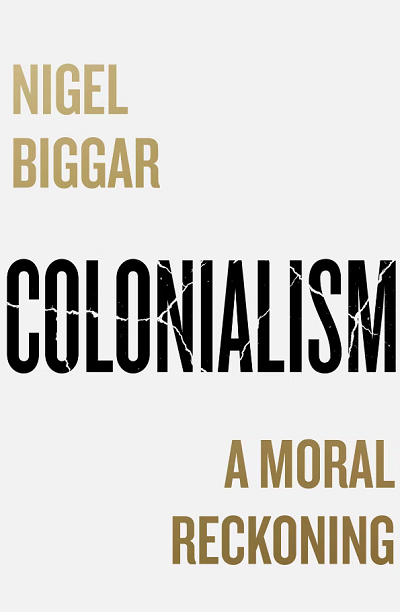
At Samizdata, Brendan Westbridge praises Nigel Biggar’s 2023 book Colonialism: A Moral Reckoning:
He examines the various claims that the “de-colonisers” make: Amritsar, slavery, Benin, Boer War, Irish famine. In all cases he finds that their claims are either entirely ungrounded or lack vital information that would cast events in a very different light. Amritsar? Dyer was dealing with political violence that had led to murder. Some victims had been set alight. Anyway, he was condemned for his actions by the British authorities and, indeed, his own standing orders. Slavery? Everyone had it and Britain was the first to get rid of it. Benin? They had killed unarmed ambassadors. Irish famine? They tried to relieve it but they were quite unequal to the size of the task. In the case of Benin he comes very close to accusing the leading de-coloniser of knowingly lying. The only one of these where I don’t think he is so convincing is the Boer War. He claims that Britain was concerned about the future of the Cape and especially the Simonstown naval base and also black rights. I think it was the pursuit of gold even if it does mean agreeing with the communist Eric Hobsbawm.
He is far too polite about the “de-colonisers”. They are desperate to hammer the square peg of reality into their round-hole of a theory. To this end they claim knowledge they don’t have, gloss over inconvenient facts, erect theories that don’t bear scrutiny and when all else fails: lie. Biggar tackles all of these offences against objectivity with a calmness and a politeness that you can bet his detractors would never return.
The communists – because they are obsessed with such things and are past masters at projection – like to claim that there was an “ideology” of Empire. Biggar thinks this is nonsense. As he says:
There was no essential motive or set of motives that drove the British Empire. The reasons why the British built an empire were many and various. They differed between trader, migrant, soldier, missionary, entrepreneur, financier, government official and statesman. They sometimes differed between London, Cairo, Cape Town and Calcutta. And all of the motives I have unearthed in this chapter were, in themselves, innocent: the aversion to poverty and persecution, the yearning for a better life, the desire to make one’s way in the world, the duty to satisfy shareholders, the lure of adventure, cultural curiosity, the need to make peace and keep it, the concomitant need to maintain martial prestige, the imperative of gaining military or political advantage over enemies and rivals, and the vocation to lift oppression and establish stable self-government. There is nothing morally wrong with any of these. Indeed, the last one is morally admirable.
One of the benefits of the British Empire is that it tended to put a stop to local wars. How many people lived because of that? But that leads us on to another aspect. Almost no one ever considers what went on before the Empire arrived. Was it better or worse than went before it? Given that places like Benin indulged in human sacrifice, I would say that in many cases the British Empire was an improvement. And if we are going to talk about what went before what about afterwards? He has little to say about what newly-independent countries have done with their independence. The United States, the “white” (for want of a better term) Commonwealth and Singapore have done reasonably well. Ireland is sub-par but OK. Africa, the Caribbean and the Indian sub-continent have very little to show for themselves. This may explain why Britain needed very few people to maintain the Empire. At one point he points out that at the height of the Raj the ratio of Briton to native was 1 to 1000. That implies a lot of consent. Tyrannies need a lot more people.
The truth of the matter is that talk of reparations is rooted in the failure of de-colonisation. If Jamaica were a nicer place to live than the UK, if Jamaica had a small boats crisis rather than the UK then no one would be breathing a word about reparations or colonial guilt. All this talk is pure deflection from the failure of local despots to make the lives of their subjects better.
Biggar has nothing to say about what came after the empire and he also has little to say about how it came about in the first place – so I’ll fill in that gap. Britain acquired an empire because it could. Britain was able to acquire an Empire because it mastered the technologies needed to do it to a higher level and on a greater scale than anyone else. Britain mastered technology because it made it possible to prosper by creating wealth. That in itself was a moral achievement.
December 29, 2023
Rubaboo – Pemmican Stew of Canadian Mounties
Tasting History with Max Miller
Published 12 Sept 2023
(more…)
December 17, 2023
Mark Knopfler – “Sailing To Philadelphia” (The Studio Albums 1996-2007)
Mark Knopfler
Published 15 Jul 2022Official video to part 2 of Mark Knopfler’s The Studio Albums 1996-2007 featuring the remastered recordings from Sailing To Philadelphia.
(more…)
November 26, 2023
QotD: From Industrial Revolution labour surplus to modern era academic surplus
Back in Early Modern England, enclosure led to a massive over-supply of labor. The urge to explore and colonize was driven, to an unknowable but certainly large extent, by the effort to find something for all those excess people to DO. The fact that they’d take on the brutal terms of indenture in the New World tells you all you need to know about how bad that labor over-supply made life back home. The same with “industrial innovation”. The first Industrial Revolution never lacked for workers, and indeed, Marxism appealed back in its day because the so-called “Iron Law of Wages” seemed to apply — given that there were always more workers than jobs …
The great thing about industrial work, though, is that you don’t have to be particularly bright to do it. There’s always going to be a fraction of the population that fails the IQ test, no matter how low you set the bar, but in the early Industrial Revolution that bar was pretty low indeed. So much so, in fact, that pretty soon places like America were experiencing drastic labor shortages, and there’s your history of 19th century immigration. The problem, though, isn’t the low IQ guys. It’s the high-IQ guys whose high IQs don’t line up with remunerative skills.
My academic colleagues were a great example, which is why they were all Marxists. I make fun of their stupidity all the time, but the truth is, they’re most of them bright enough, IQ-wise. Not geniuses by any means, but let’s say 120 IQ on average. Alas, as we all know, 120-with-verbal-dexterity is a very different thing from 120-and-good-with-a-slide-rule. Academics are the former, and any society that wants to remain stable HAS to find something for those people to do. Trust me on this: You do not want to be the obviously smartest guy in the room when everyone else in the room is, say, a plumber. This is no knock on plumbers, who by and large are cool guys, but it IS a knock on the high-IQ guy’s ego. Yeah, maybe I can write you a mean sonnet, or a nifty essay on the problems of labor over-supply in 16th century England, but those guys build stuff. And they get paid.
Those guys — the non-STEM smart guys — used to go into academia, and that used to be enough. Alas, soon enough we had an oversupply of them, too, which is why academia soon became the academic-industrial complex. 90% of what goes on at a modern university is just make-work. It’s either bullshit nobody needs, like “education” majors, or it’s basically just degrees in “activism”. It’s like Say’s Law for retards — supply creates its own demand, in this case subsidized by a trillion-dollar student loan industry. Better, much better, that it should all be plowed under, and the fields salted.
Any society digging itself out of the rubble of the future should always remember: No overproduction of elites!
Severian, “The Academic-Industrial Complex”, Rotten Chestnuts, 2021-05-30.
November 22, 2023
Another look at the “Great Divergence”
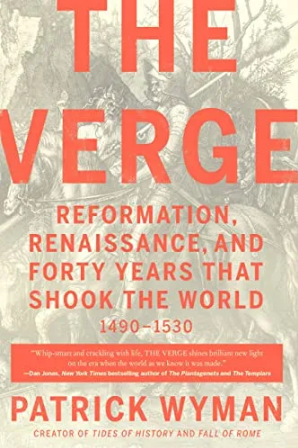
The latest book review from Mr. and Mrs. Psmith’s Bookshelf features Patrick Wyman’s The Verge: Reformation, Renaissance, and Forty Years that Shook the World:
This is a weird Substack featuring an eclectic selection of books, but one of our recurring interests is the Great Divergence: why and how did the otherwise perfectly normal people living in the northwestern corner of Eurasia managed to become overwhelmingly wealthier and more powerful than any other group in human history? We’ve covered a few theories about what’s behind it — not marrying your cousins, coal, the analytic mindset (twice) — but there are lots of others we’ve never touched, including geographic and thus political fragmentation, proximity to the New World, and even the Black Death. So this is also a book about the Great Divergence, but unlike many of the others it doesn’t offer One Weird Trick to explain things. Instead, Wyman approaches the period between 1490 and 1530 through nine people, each of whom exemplifies one of the many shifts in European society, and so paints a portrait of a changing world.
Of course, he does point to a common thread woven through many of the changes: culture. Or, more specifically, the institutions1 surrounding money and credit that Europeans had spent the last few hundred years developing. But these weren’t themselves dispositive: after all, lots of people in lots of place at lots of times have been able to mobilize capital, and most of them don’t produce graphs that look like this. Really, the secret ingredient was — as Harold Macmillan said of the greatest challenge to his government — “events, dear boy, events”.2 Europe between 1490 to 1530 saw an unusually large number of innovations and opportunities for large-scale, capital-intensive undertakings, and already had the economic institutions in place to take advantage of them. One disruption fed on the next in a mutually-reinforcing process of social, political, religious, economic, and technological change that (Wyman argues) set Europe on the path towards global dominance.
Some of Wyman’s characters — Columbus, Martin Luther, Holy Roman Emperor Charles V — are intensely familiar, but he presents them with verve, as interested in giving you a feel for the individual and their world as in conveying biographical detail. (This is an underrated goal in the writing of history, but really invaluable; the “Cross Section: View from …” chapters were always my favorite part of Jacques Barzun’s idiosyncratic doorstopper From Dawn to Decadence.) This is particularly welcome when it comes to the chapters featuring some lesser-known figures: you may have heard of Jakob Fugger, but unless you’re a Wimsey-level fan of incunabula you’re probably unfamiliar with Aldus Manutius. One-handed man-at-arms Götz von Berlichingen becomes our lens for the chapter about the Military Revolution not because he played a particularly significant role but because he wrote a memoir, and small-time English wool merchant John Heritage is notable pretty much solely because his account book happened to survive into the present. But even with the stories “everyone knows”, Wyman takes several large steps back in order to contextualize that common knowledge: for example, were you aware that while before 1492 Columbus didn’t take any particularly unusual voyages, he did take an unparalleled number and variety of them, making him one of the best-travelled Atlantic sailors of his day? Did you know that Isabella’s inheritance of the Castilian throne was far from certain?3
As the book continues, Wyman can reference the cultural and technological shifts he described in earlier chapters. For instance, much of the Fuggers’ wealth came in the form of silver from deep new mines in the Tyrol. Building the mines required substantial capital — for their new, deeper tunnels and the expensive pumps to drain them, as well as for the furnaces and workshops to separate the copper from the silver via the relatively inefficient liquation process — and while everyone knew all along that the metals were there, it took the combination of a continent-wide bullion shortage and a rising demand for copper to cast bronze cannon (look back to the chapters on state formation and the military!) to make it worth anyone’s while to get them out. But it wasn’t only the Fuggers who made their money in these new mines: the money for Martin Luther’s education came from his father’s small-scale copper mining concern in eastern Germany. Grammar school in his hometown, a parish school nearby, and then four years at university cost Luther pater enough that he couldn’t follow it up for his younger sons (and from his point of view the was probably squandered when Martin became a monk instead of the intended lawyer who would be an asset in the frequent mining disputes), but such an education for even one son would have been out of reach if not for the printed texts on grammar, philosophy and law that made it all far more affordable.
Of course, the relationship between Luther and printing goes both ways. While Luther’s very existence as an educated man was enabled by the printing press, it was the intellectual and religious ferment he would kick off that made printing work.
1. Wyman glosses the term as “a shared understanding of the rules of a particular game … the systems, beliefs, norms and organizations that drive people to behave in particular way”, but it’s more or less what I’ve elsewhere called bundles of social technologies.
2. Apparently he may not have said this, but he should have so print the legend.
3. Isabella’s opponent, her half-niece Joanna, was married to King Afonso V of Portugal, so perhaps some degree of Iberian unification might still have followed. On the other hand, Afonso already had an adult son (King João II, widely admired as “the Perfect Prince” — Isabella always referred to him simply as el Hombre, “the Man”) who would have had no personal claim to Castile. Joanna and Afonso’s marriage was annulled on the perfectly true grounds of consanguinity — he was her uncle — after they lost the war, so they never had children, but if she had won perhaps João (who died without legitimate issue) could have been succeeded by a much younger half-Castilian half-brother. Certainly an Isabella relegated to Queen-Consort of Aragon would still have been a force to be reckoned with, but losing the knock-on effects of her reign (Columbus, Granada, the fate of the Sephardim, not to mention the eventual unification of most of Europe under Ferdinand and Isabella’s Habsburg grandson) makes all this a pretty good setup for an alternate history!
Even more fun: before she married Ferdinand of Aragon, there was discussion of Isabella’s betrothal to Richard, Duke of Gloucester. Yeah, that one.
October 20, 2023
Zulu Kingdom’s Last Stand – The Anglo-Zulu War 1879
Real Time History
Published 18 Oct 2023The Anglo-Zulu War in 1879 is one of the most well known colonial wars of the British Empire. And while the British ultimately won and annexed the Zulu Kingdom, at the Battle of Isandlwana they suffered one of their worst defeats.
(more…)
October 5, 2023
From Hilaire Belloc’s sailboat to your nearest international airport terminal
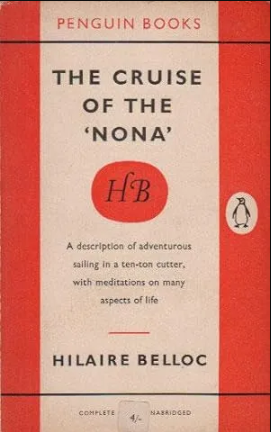
The most recent review at Mr. and Mrs. Psmith’s Bookshelf considers Hilaire Belloc’s The Cruise of the “Nona”:
Late in the May of 1925, around midnight, Hilaire Belloc climbed into a tiny boat and put out to sea so that he would have some time to think. The sea gives ample time to think, especially if like Belloc you disdain the use of a motor. Some wag once jested that sailing is like being at war: long stretches of boredom punctuated by moments of abject terror. I suppose in some sense that’s correct, but give me the boredom of the sailboat any day over the boredom of the trench, the boredom of the cubicle, the boredom of endless doomscrolling.
Sailing is productive boredom, and seems unusually well calibrated for causing the mind to wander in interesting or delightful or just plain ridiculous directions. Maybe it’s the stimulating effects of the wind in your face and the smell of salt in the air, or maybe it’s the weird altered state of consciousness that comes from staring at the ocean. I think it’s because sailing is the human condition in miniature. It places you perfectly-balanced on a knife’s edge between agency and helplessness, and in so doing it both spurs the mind to activity and gives it space to relax and reflect.1
[…]
Anybody who’s travelled extensively in the third world has seen the modern version of this. There’s nothing intrinsic to being a reformer or a liberalizer that makes you an agent of American power, and yet … there’s a better than even chance that you are. After a while these people all blend together — the idealistic students, the LGBT activists, the NGO staffers, the embassy employees recruited from amongst the locals. They come from a hundred nations, from every conceivable race and religion, and yet something invisibly and inexorably molds them all into the same shape, like iron filings lining themselves up in the presence of a powerful magnet.
Soon they have American souls, and divided loyalties to match. The local regime panics and views them as an internal enemy, which only furthers their alienation from their motherland and their flight into the bosom of Global America. Most empires rule primarily though influence, not coercion, and this class of people is one of America’s most powerful weapons for maintaining and extending its hegemony.
A related phenomenon is the awful sameness that is slowly taking over the whole world. Perhaps your cruise ship docks at a dozen ports over the course of its journey, and every one of them looks exactly the same — the same tiki bar with the same sign, the same shops selling the same ornamental kitsch probably all made in the same factory. You aren’t visiting a place, you’re visiting a psychic manifestation of the Buffetverse, another outpost of Margaritaville, a Potemkin seaport with frozen daiquiris. You all know what I’m talking about. We make fun of it all the time, because cruise ships are for chuds. But it doesn’t just happen with cruise ships.
The cancer usually starts in an international airport. Form follows function, so it’s superficially reasonable that every airport on earth should look and feel exactly the same. But the real reason is that it follows in the wake of the kinds of people who fly into those airports, praising the broadening effects of foreign travel whilst terraforming everything they touch until it resembles the “arts district” of a midsize American city, replete with distressed wood finishes, gravid with craft beers. Real foreignness would cause these people to recoil in shock, or to demand a peacekeeping intervention. It’s not unusual for the imperial functionary class to be parochial, but what’s surreal about ours is how they combine the blinkered innocence of a farm boy with an ideology of weary cosmopolitanism.
None of this was as far along when Belloc took his little cruise, but the seeds had been planted, and he could feel in his bones that something horrible lay across the horizon. So he fights it the only way he knows how — by noticing and celebrating everything distinctive and local and weird about every place he visits. No island is too small for him to mention by name and recall a ghost story or two associated with it. No village is too commonplace for him to remark on the habits, physiognomy, and vices of the people who live in it. It’s the same spirit as that which animates Chesterton’s essay on cheese, but applied to a hundred hamlets and fishing ports, a paean to the regional diversity and distinctiveness that was already slipping away.
1. Oh hey, it’s the focused-mode and diffuse-mode of cognition! The best way to think deeply about anything is to toggle between them.
October 2, 2023
Why France Lost Vietnam: The Battle of Dien Bien Phu
Real Time History
Published 29 Sept 2023After the French success in the Battle of Na San, the battle of Dien Bien Phu is supposed to defeat the Viet Minh once and for all. But instead the weeks-long siege becomes a symbol of the French defeat in Vietnam.
(more…)
September 16, 2023
France’s Vietnam War: Fighting Ho Chi Minh before the US
Real Time History
Published 15 Sept 2023After the Second World War multiple French colonies were pushing towards independence, among them Indochina. The Viet Minh movement under Ho Chi Minh was clashing with French aspirations to save their crumbling Empire.
(more…)
August 29, 2023
The Souls of Black Folk by W.E.B. Du Bois “runs so fantastically counter to the entire ideology of ‘decolonise'”
In Spiked, Brendan O’Neill finds himself surprised at the inclusion of a very unusual book on a list demanded by those pushing for “decolonization” of university curricula:

W.E.B. Du Bois by James E. Purdy, 1907, gelatin silver print, from the National Portrait Gallery which has explicitly released this digital image under the CC0 license.
Wikimedia Commons.
“Decolonise the curriculum” is a movement that wants university courses to focus less on dead white European males and more on writers of colour. Its argument is that black students need texts that speak directly to them. They need books by authors who look like them. They need books about experiences and ideas they can more readily relate to than they can the stuff written about in “high white culture”. Black students must be able to recognise themselves in what they study, we’re told, or else they’ll feel cheated and demeaned.
I was surprised to find that one of the leading decolonise movements, at the University of Edinburgh, was arguing for WEB Du Bois’ 1903 book, The Souls of Black Folk, to be included on the English curriculum. The activists said it was unreasonable to expect black students to engage with so many white authors. They also need to engage with people like Du Bois, in whose work they might “recognise themselves”. I was surprised, not because I think The Souls of Black Folk shouldn’t be on more university courses – absolutely it should. No, it’s because The Souls of Black Folk runs so fantastically counter to the entire ideology of “decolonise”. It made me wonder if these activists have even read it. Du Bois’ book contains some of the finest arguments you will ever read against the idea that high culture is a white thing that others cannot connect with.
One of my favourite passages in the book, from the chapter on what kind of education black men are fit for, touches on this very question. Here Du Bois makes his critique of those in his own time who were arguing that blacks only require basic education and industrial training. He describes his own experience of higher learning, writing:
I sit with Shakespeare and he winces not. Across the colour line I move arm in arm with Balzac and Dumas … From out the caves of evening that swing between the strong-limbed earth and the tracery of the stars, I summon Aristotle and Aurelius and they come all graciously with no scorn or condescension.
That passage, Du Bois’ moving belief that Shakespeare does not wince at him, captures a central thread of his writing: universalism. Du Bois agitates against accommodating to segregation or low expectations, and argues for the rights of “black folk” to assimilate into the spoils of civilisation; to become, as he puts it, “co-workers in the kingdom of culture”. To those in the late 1800s and early 1900s who argued that black people needed a targeted form of culture, one specific to their needs and capacities, Du Bois said: “We daily hear that an education that encourages aspiration, that sets the loftiest of ideals and seeks as an end culture and character rather than breadwinning, is the privilege of white men, and the danger and delusion of black men.”
Du Bois insisted that it is only through assimilation into the “kingdom of culture” that self-knowledge and self-improvement can truly occur. As he wrote: “Wed with Truth, I dwell above the veil.” The veil he’s referring to is the veil of colour, the one that separated blacks from whites in post-slavery America. For Du Bois, that veil was best lifted via assimilation into the American republic’s political universe and its realm of culture.
Du Bois’ critique of the notion that high culture was for white men, and would prove mystifying to black men, has sadly been superseded by an “anti-racism” with an entirely different outlook. Now, the supposedly radical stance is to believe that high culture is disorientating for black people, and possibly even damaging to their self-esteem, and therefore they require something more targeted. In short, they need release from the kingdom of culture. That, in essence, is what the decolonise movement desires: the “liberation” of non-white peoples from the cultural gains of Western civilisation. Behold the crisis of universalist belief.
August 21, 2023
Cunk on America – Historian Reacts
Vlogging Through History
Published 9 May 2023
(more…)