Quotulatiousness

March 12, 2026

Carney’s Liberals buy gain another seat in Parliament

Filed under: Cancon, Government, Media, Politics — Tags: , , , — Nicholas @ 04:00

What couldn’t be obtained at the ballot box can apparently be constructed through non-electoral methods. After the Liberals fell short of a majority in the 2025 federal election, they’ve now gained four more seats through attracting opposition MPs to join their caucus:

Image from Melanie in Saskatchewan

Consider several ridings from the last election where Conservatives defeated Liberals by extremely small margins. Terra Nova–The Peninsulas was decided by only a handful of votes. Milton East–Halton Hills South by just a few dozen. Windsor–Tecumseh–Lakeshore by fewer than a hundred. In Markham–Unionville and Edmonton Riverbend the margins were still narrow by federal election standards, measured in the low hundreds.

In ridings with tens of thousands of ballots cast, those margins are not ideological fortresses.
They are statistical coin flips.

Now imagine you are a strategist trying to change the parliamentary math without calling another election. Would you target MPs who defeated your party by twenty thousand votes? Or would you look at ridings where the electorate was already split nearly fifty fifty? Where persuading one individual changes everything!?

That is where the Moneyball logic appears.

Instead of persuading fifty thousand voters, you persuade one MP. The scoreboard shifts instantly. No campaign. No election. No voters trudging through snow to mark an X. Just a quiet change of jersey on the House of Commons floor.

Now consider the MPs who have crossed the floor or whose ridings are currently the focus of speculation. Seats like Edmonton Riverbend held by Matt Jeneroux and Markham–Unionville represented by Michael Ma sit squarely in that category of competitive swing ridings. Even Nunavut, represented by Lori Idlout, illustrates how single seats in geographically unique ridings can dramatically affect parliamentary arithmetic.

Notice the pattern.
Not massive strongholds.
Swing ridings.
Seats where the Liberal candidate already came within striking distance.

Which raises an uncomfortable question.

Is this coincidence?
Or strategy?

Because if a riding was decided by one hundred votes, persuading the MP to change parties is dramatically easier than persuading fifty thousand voters to change their minds. The parliamentary math changes instantly.

The voters never get another say.

    Just like Canadians did not get a say when 131,674 votes from Liberal Party members at Mark Carney’s leadership race installed Mark Carney as defacto Prime Minister. He effectively became the Prime Minister of Canada through installation, not election.
    That is 0.33 percent of Canadians.
    Or, put another way, roughly one third of one percent of the country’s population participated in choosing the Liberal leader who then became Prime Minister through the parliamentary system without being elected by the people of the country.
    • 131,674 people chose the leader
    • out of about 41 million Canadians

Of course nobody in Ottawa will describe it this way. Politics prefers softer language. You will hear phrases like cooperation, evolving priorities, responsible leadership, and national unity.

Politics prefers poetry.
Arithmetic prefers patterns.

Individually every floor crossing can be explained. Each one comes with its own “so-called” story, its own “so-called” reasoning, its own “so-called” justification.

But collectively something else begins to emerge.
A seat here.
Another seat there.
Nothing dramatic.
Until one day the standings look different.

Exactly the way Moneyball worked. No blockbuster moves. Just quiet arithmetic accumulating advantage until the outcome changed.

In the past I’ve been comfortable with the Parliamentary tradition that voters elect individuals as their representatives so if that MP leaves the party they were elected for, it doesn’t change the representation of the constituents. Historically, when most MPs were free to vote their conscience except for a minority of “whipped” votes, where they were obligated to vote on party lines, this made sense. I’m becoming less comfortable as this pattern of “recently elected opposition MPs suddenly discovering they’d run for the wrong party” repeats, indicating that it’s not just ordinary politics, but a deliberate strategy on the part of the Liberals.

Some have speculated that a major factor in the latest defection was a recent federal financial benefit to the territory, but it might perhaps have been something more concrete:

Homelessness can’t be solved by just throwing more money at the problem

Filed under: Cancon, Government, Health, Media, Politics, USA — Tags: , , , — Nicholas @ 03:00

On the social media site formerly known as Twitter, L. Wayne Mathison responds to someone explaining their family’s tragic problem of a homeless relative:

The post hits a nerve because it exposes the part of the homelessness debate people prefer not to talk about.

A lot of the public story says homelessness is mainly about housing and compassion. If we build more units and remove stigma, the problem fades. That sounds humane. The trouble is that it ignores what families dealing with severe addiction and psychosis actually face.

Emily Baroz describes the reality many relatives know too well. The person on the street is often not just poor. They are deeply mentally ill, addicted, paranoid, sometimes violent, and frequently refusing help. Families try everything. Housing. Money. Treatment. Support. The illness itself destroys the ability to cooperate. Meanwhile the legal system often blocks intervention until someone gets hurt.

So the public debate becomes strange theatre. Compassion is defined as leaving the person alone. Authority is treated as cruelty.

That brings us closer to home. Manitoba’s NDP government is now moving toward supervised consumption sites. The argument is harm reduction. The idea is that if people are going to use drugs anyway, the state should at least make it safer.

The problem is that the evidence across Canada is far from comforting. Vancouver, Toronto, and other cities expanded harm-reduction sites over the last decade. Yet overdoses, street disorder, and visible addiction kept rising. Recovery rates did not suddenly surge. In many neighbourhoods the result was more normalization of drug use without a clear path back to stability.

If a policy is supposed to reduce harm, the basic question is simple: are fewer people addicted, dying, or trapped in the street?

If the answer is no, the policy deserves scrutiny.

Safe consumption sites may prevent some immediate overdoses. But they also risk locking people into a long-term cycle where the system manages addiction instead of helping people escape it. Families who are begging for treatment beds, detox spaces, psychiatric care, and recovery programs often watch governments invest more energy in enabling use than in ending it.

That’s the tension people feel but rarely say out loud.

A compassionate society does not abandon people to addiction while calling it care. Compassion sometimes means structured treatment, involuntary intervention when someone is clearly incapable of making rational choices, and serious investment in recovery infrastructure.

Otherwise we are simply managing decline.

And families like the one in that post already know it.

Update, 14 March: Welcome, Instapundit readers! Have a look around at some of my other posts you may find of interest. I send out a daily summary of posts here through my Substackhttps://substack.com/@nicholasrusson that you can subscribe to if you’d like to be informed of new posts in the future.

Update, the second: Devon Eriksen had a relevant-to-this-topic aside on a longer post –

One of the most common sources of confusion is “using the wrong word”.

For example, if you have a drug zombie problem, and you call it a “homeless” problem, then you spend a lot of tax money giving houses to drug zombies, who turn them into rat-infested drug dens.

The wrong word implies the wrong understanding.

March 10, 2026

Iran in the news

Filed under: Media, Middle East, Military, Politics, USA — Tags: , , , , — Nicholas @ 04:00

As I mentioned last time, as I don’t try to stay on top of the “breaking news” cycle, I’m not feverishly refreshing all my social media feeds to get the latest dope about the latest confict with the Islamic State. It’s not that I don’t care, but that as with all modern wars the ratio of signal to noise renders almost all of it worthless for finding out what’s actually happening. At Postcards from Barsoom, John Carter tries to gather his thoughts on the issue, subject to the same kind of informational constraints:

When I sit down to write, I usually have some idea of what I want to say – not only a topic I want to address, but a specific message I want to communicate. This is not going to be one of those essays. My feelings on the war on Iran are conflicted, to say the least. Nor do I feel that I understand enough about what’s happening to say much of substance. Nevertheless, on a matter that is of such potentially world-shaking import, I owe it to you not to be silent. So I’m setting out here to try and organize my thoughts on the matter. Whether they come to some conclusion or not, I have no idea. If nothing else, perhaps this will serve as a jumping off point for further discussion in the comments. Many of you, I’m sure, will have strong opinions on the subject, and many will also possess insights that I do not.

Will this war be of world-shaking import? That is perhaps the core of the matter. If it is not, and the principle of Nothing Ever Happens holds, then bombing Iran will not actually matter that much. A month from now, or even a couple weeks, the bombardment will fade back into the news cycle, the storm and fury of a million passionately articulated hot takes fading back into the warm, frothing ocean of discourse.

Certainly this has happened before. Trump has bombed Iran’s nuclear research facilities a few months ago, and assassinated the Iranian Revolutionary Guard Commander Qasem Soleimani a few years ago. Every time this kind of thing happens there are panicked shouts that thermonuclear Ragnarok is imminent, alongside outraged cries that Zion Don has betrayed MAGA by engaging in precisely the foreign interventionism that he repudiated, that he has been captured by the Neocohens, and that We Will Not Die For Israel. In each case, nothing much happened. Iran raised the red flag of revenge, or the gold flag of implacable annihilation, or the black flag of this time we really mean it, all of which amounted in practice to a few rockets being fired ineffectually in Israel’s general direction, to be absorbed by an Iron Dome that really seems to work quite well. There was no World War III. There were no boots on the ground. As I saw someone observe recently, We Will Not Die For Israel has become the groyper version of the Handmaid’s Tale: no one is actually asking anyone to die for Israel; there are no imminent plans for mass conscription; therefore protestations that one will resist a non-existent draft amount to the same kind of lurid masturbatory fantasy as declarations that one would never, pant, allow oneself to be confined in a harem, pant pant, and turned into, pant pant pant, breeding stock.

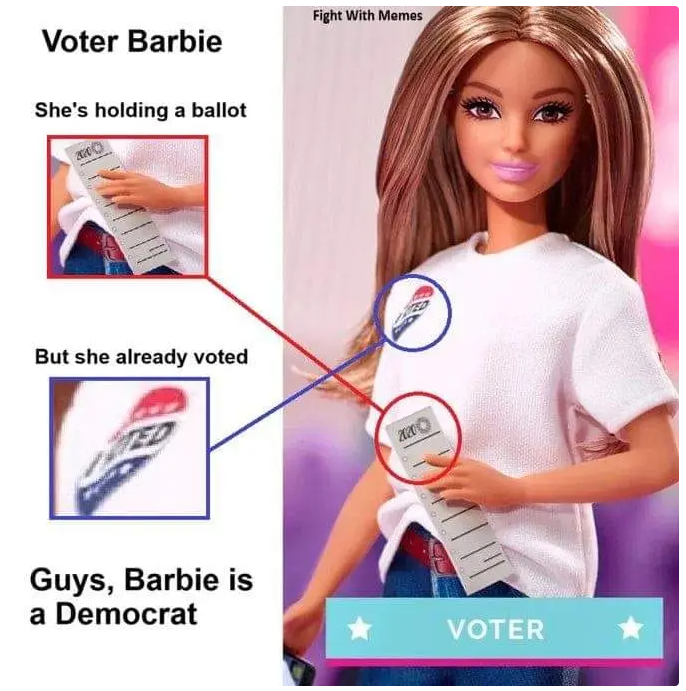
Brief pause for meme:

And back to John Carter:

Maybe that will change. Maybe a year from now I’ll be ruefully eating those words, as American boys are being shipped off by their hundreds of thousands to run around blinded by Russian electronic countermeasures in the cold mountain passes of the Zagros, getting picked off by snipers and shredded by Chinese drones.

But I doubt it.

Modern warfare doesn’t have much use for conscript armies. That lesson was learned in Vietnam: conscripts generally have poor morale, they aren’t highly motivated, they aren’t usually of the highest quality, and so they are of limited usefulness on the battlefield. Soldiers are highly trained professionals who have chosen the military as a career. That makes them much less likely to mutiny. Moreover, modern warfare is highly technical: soldiers have to be extremely well trained to be any use at all. The young men who volunteer for military service usually do so with some hope of adventure and even danger. As such, they often positively look forward to war.

None of this should be taken to imply that Israel hasn’t played a massive role in orchestrating and precipitating this war. They clearly have. Marco Rubio let this slip when he admitted that part of the reason the US attacked when they did was that Israel had signalled that they were going to attack with or without America’s blessing or assistance; since Iran would certainly direct some of its retaliation against the Little Satan towards the regional assets of the Great Satan, America’s hand was forced. This is a bit like when your shithead friend has had one Jameson’s too many and you sit down next to him at the bar only to find that he’s about to throw hands at some asshole you’ve never met: you’re liable to take a punch to the nose no matter what you do, so you might as well have your friend’s back. You can call him a shithead later.

Israel’s involvement goes much deeper than this, of course. Zionism’s penetration of American conservatism is hardly a secret. There are Dispensationalists all over the Republican party, including the Secretary of War Peter Hegseth, and probably Marco Rubio (though technically he’s a Catholic). Republicans who shrug off open anti-white bigotry systematically directed against America’s core population in essentially all of its universities react with fury to campus anti-Semitism, threatening to withhold funding from any institutions that tolerate hurt Jewish feelings. Then of course there’s the big guy himself. Trump has never been much of a Christian, still less an evangelical ZioChristian, but he seems to have undergone something of a religious awakening after divine intervention saved his life in Butler, Pennsylvania. And who can blame him? It certainly doesn’t seem implausible that since then, Trump has been influenced by Zionists who have convinced him that G-d saved him so that he could save America and, more importantly, G-d’s Chosen People. “You are the second coming of Cyrus the Great” would be an appealing narrative to a man with a vast ego. It would be even more appealing given the political and economic support it would come with. Certainly there would be no shortage of avenues for approach: Trump’s daughter is married into the tribe, after all.

There’s ordinary virtue signalling, then there’s virtue costuming

Filed under: Media, Politics — Tags: , , , , — Nicholas @ 03:00

On the social media site formerly known as Twitter, L. Wayne Mathison describes what happens when virtue signalling becomes someone’s entire persona:

When Virtue Becomes a Costume

Here’s an old village joke: if a man walks around telling everyone how humble he is, check his pockets. He’s usually carrying a mirror.

That’s roughly how the modern “woke” phenomenon works. It presents itself as moral enlightenment, but most of the time it behaves like a status game, who can signal the most compassion, the loudest outrage, and the strongest allegiance to the fashionable cause of the week.

My definition is blunt: woke politics is moral signalling replacing moral responsibility.

It’s not about solving problems. It’s about performing concern.

And once you start looking at it that way, the pattern shows up everywhere.

The Performance Economy of Virtue

Rob Henderson calls these “luxury beliefs”.

Luxury beliefs are ideas held mostly by wealthy or highly educated people that signal status but impose real costs on everyone else. The people promoting them rarely suffer the consequences.

Think about it.

Defund the police.
Abolish prisons.
Decriminalize hard drugs.
Romanticize homelessness as a “lifestyle choice”.

Who pushes these ideas hardest?

Not the working-class neighbourhood dealing with break-ins. Not the single mother living beside a drug market. It’s usually professors, activists, and celebrities living in safe neighbourhoods with security cameras and gated buildings.

The belief becomes a badge of moral sophistication.

The consequences fall somewhere else.

This is the luxury belief machine.

The Five Laws of Stupidity at Work

Carlo Cipolla’s Five Laws of Human Stupidity explains the rest.

His argument was beautifully cynical: stupidity is not about intelligence. It’s about behaviour.

A stupid person, he wrote, is someone who causes harm to others while gaining nothing themselves.

Sound familiar?

Look around at some modern activism and you’ll see Cipolla’s laws running like background software.

Law #1: Always underestimate the number of stupid people.

Every generation believes it has escaped mass foolishness. Every generation is wrong.

Law #2: Stupidity is independent of education.

A PhD does not vaccinate someone against bad thinking. Sometimes it just gives them fancier vocabulary.

Law #3: A stupid person harms others without benefit.

Policies driven by emotional slogans often damage the very communities they claim to protect.

Law #4: Non-stupid people underestimate stupidity’s power.

This is why sensible people are constantly surprised when destructive ideas gain traction.

Law #5: A stupid person is the most dangerous type of person.

Unlike criminals, they don’t know what they’re doing. And unlike the selfish, they aren’t pursuing rational gain.

They simply push the lever harder.

The Hollywood Example

Even entertainment hasn’t escaped the pattern.

Hollywood increasingly behaves less like a storytelling industry and more like a political signalling club. The pressure to conform is real: careers depend on being publicly aligned with the dominant ideology, and dissent can carry professional consequences.

The incentives are obvious.

Actors gain admiration by championing fashionable causes. They receive praise, awards, and moral approval, often without sacrificing anything material in their own lives.

It’s “virtue” at almost zero cost.

The Moral Time Machine

Then there’s what Bill Maher once joked about: the moral time machine.

Modern activists judge people from centuries ago as if those individuals possessed today’s cultural knowledge and moral vocabulary. It’s a kind of historical self-congratulation, imagining how virtuous we would have been in 1066 if only we had been there.

But that trick isn’t really about history.

It’s about status.

If you can condemn the past loudly enough, you look enlightened in the present.

The Incentive Problem

Here’s the uncomfortable truth.

Most systems don’t run on morality. They run on incentives.

Corporations chase profit.
Media chase attention.
Algorithms chase engagement.
Political activists chase moral prestige.

If the reward structure encourages outrage and virtue signalling, that’s exactly what people will produce.

Not because they’re evil.

Because incentives work.

The Reframe

The real divide in modern politics isn’t left versus right.

It’s performance versus results.

One side asks:

“Does this policy sound compassionate?”

The other asks:

“Did it actually improve people’s lives?”

That’s the question that cuts through the noise.

Because compassion measured by intentions is theatre.

Compassion measured by outcomes is responsibility.

Here’s the test I use now.

When someone proposes a moral crusade, ask three questions:

Who pays the cost?

Who receives the applause?

What happens if the policy fails?

Luxury beliefs collapse under those questions almost instantly.

And the moment the performance stops, something interesting happens.

We can finally start solving the problem.

[NR – emphasis added]

Update, 11 March: Welcome, Instapundit readers! Have a look around at some of my other posts you may find of interest. I send out a daily summary of posts here through my Substackhttps://substack.com/@nicholasrusson that you can subscribe to if you’d like to be informed of new posts in the future.

March 9, 2026

Political and philosophical illusions, left and right

Filed under: Media, Politics, USA — Tags: , — Nicholas @ 05:00

Tom Kratman discusses how illusions distort how people on the left and on the right view reality:

There are a number of these. I am by no means certain that I’ve identified all there are, either, nor even all the important ones. Still, let’s work with what we have, shall we, concentrating especially on the ones that are obviously paired, existing on both left and right, in some form or other?

Here are the first five. Next week we’ll cover the rest of the important ones, such as I’ve been able to identify. Why bother? Because if some people on both sides could see the illusions to which they’re subject, it is just possible they could strain and maybe even converse, which may push off or make less likely the breakup of my country or descent into a really nasty civil war, which is the whole purpose of this series of columns.

One illusion, not universal but very common, is, “I am in the reasonable political center.” Sorry, but this is rarely true. It is not true of me and it is probably not true of you. Where you probably are is in the center of your group of friends and acquaintances; that’s why they’re your group of friends and acquaintances. Indeed most people seem to exist in a hermetically sealed echo chamber, where no contrary thoughts are allowed entrance. This is how we get inane statements like Pauline Kael’s, “I live in a rather special world. I only know one person who voted for Nixon. Where they are I don’t know. They’re outside my ken. But sometimes when I’m in a theater I can feel them.”1

A second illusion has to do with distance. The reader may recall that one of the defenses I gave last week for the left-right spectrum is that it enables one to get a clearer idea of where one really is based on what can or cannot be seen, and how clearly. Imagine yourself standing somewhere near the base line for the left right spectrum. A little up or down won’t matter. (A lot up or down may mean you’re a loon, but we’ll give you the benefit of the doubt for now.) Look left. Look right. Can you see the difference between a run of the mill conservative and a Nazi? No? If not, that means you’re so far left, even if you think you’re in the reasonable center, that they’re all blending together. Can you see the difference between a Leninist and a Stalinist? Yes? That also means you are pretty far to the left. Conversely, can you not see the difference between a Leninist and a Stalinist? You are probably then somewhat to the right end. Can you see the difference between Hitler and George W. Bush? Same deal.

Oh, and if you can’t see the difference between Hitler and W, that means that not only are you pretty far left, you’re also an idiot.2

Yet a third optical illusion – well, a more or less auditory phenomenon that translates into an optical illusion – concerns vociferousness. Imagine the most moderate man or women in the country. He (or she) is the exact middle of the road. Indeed, he is so middle of the road that he makes his living renting himself out as a guide to the folks who paint the stripes on highways and byways. Imagine also that he (let’s just skip the PC bullshit, from now on, shall we? He includes she.) is quite vociferous in his political moderation, detesting everyone on the right third of the spectrum and everyone on the left third separately but equally, and voicing his disgust and contempt loudly, as often as he can find an audience. How does that man look to a leftist? How does he look to David Duke?

Easy; the lefty sees a conservative whom, for reasons mentioned above he cannot distinguish from a Nazi, while Duke sees at best, a communist. How does that happen? I think what takes place, in effect, is that both lefty and (pretty extreme to the point of disgusting) righty take that vociferousness, and add it as a height above the spectrum, then lay that elevation down in the opposite direction from themselves.

That happens to me all the time, by the way. I am – as far as I can tell, both by where I place on surveys and by what I can distinguish when looking left or right – about one third of the way from true center to the right, or, in other words, just on the right edge, the cusp, between the middle third and the right third. And I am vociferous to and past the point of being obnoxious about it, too. This is why much of the extreme right – the right so far from them that lefties cannot even distinguish it from conservatives – detests me as a liberal, while liberals see pure and unrepentant Nazi.3


  1. http://www.newyorker.com/the-front-row/my-oscar-picks#ixzz1FCt1d1Mw
  2. No, I’m not a huge fan of W, but you’re still an idiot. And ignorant.
  3. Nazi is a toughie for me, being an eclectic mix of various kinds of Celt, but also Ashkenazi Jew, which includes a small percentage of sub-Saharan African – oh, yes it does — Gyspy, Russian, Pole, and God alone alone knows what else. True story: whatever genes I have, I can tan like you wouldn’t believe. In 1998 I came back from about six weeks in the Kuwaiti desert. My eldest daughter took one look and screamed, “Mommy! Mommy! Daddy turned black.” She was exaggerating. A little.

Update, 10 March: Welcome, Instapundit readers! Have a look around at some of my other posts you may find of interest. I send out a daily summary of posts here through my Substackhttps://substack.com/@nicholasrusson that you can subscribe to if you’d like to be informed of new posts in the future.

QotD: Why they’re called “The Stupid Party”

Filed under: Media, Politics, Quotations, USA — Tags: , , , , — Nicholas @ 01:00

    Yes, it’s real: Trump is collapsing. Can the MAGA faithful save him?

How do you know it’s all wishcasting? When they start with “Yes, it’s real”. They’re pushing that Narrative hard; I guess the faithful really need a pick-me-up.

    Even Republicans are unhappy with Trump’s vicious, failing agenda. That doesn’t mean they’re ready to bail

Or, Karen discovers why they’re called “The Stupid Party”. Being unhappy with the GOP’s “vicious, failing agenda” is just what Republican voters do. Here’s a partial list of non-Trump Presidential candidates the GOP faithful have supported this century: George W. Bush (twice). Jeb Bush. John McCain (twice). Mitt fucking Romney. Herman “Godfather’s Pizza” Cain. Ted Cruz. Ben Carson. Marco Rubio. And I’m just talking about the guys who won enough primaries to get noticed. And I’m deliberately not talking about the girls, although The Media rushed to inform us that Republicans took the likes of Carly Fiorina and Nikki “War Karen” Haley very, very seriously (and for the sake of our collective sanity, let us not discuss Sarah Palin’s impact on the McCain campaign).

Notice a pattern there, Chauncey? Milquetoasts at best, obvious fucking Judases at worst. I guess you can’t really say that the likes of Mitt Romney “sold out” his voters, because that would imply Mitt Romney is capable of “selling out”. You have to have a baseline of integrity for that phrase to apply. Metallica can “sell out” (oh boy, can they!); the Backstreet Boys, by definition, cannot. Mitt, Jeb Bush, George W. Bush, Paul Ryan (can’t forget him! he was Mittens’ veep choice), Marco Rubio … that’s the shittiest boy band of all time, and like shitty boy bands they had their moments in the sun, but if that’s not enough to convince you that GOP loyalists simply don’t know when to fold ’em, I don’t know what possibly could.

    Trump’s softening support is amplified by growing rumors about his health and reports on his reduced public schedule. Even the mainstream media noticed that he repeatedly appeared to fall asleep during Tuesday’s Cabinet meeting. While he sends out numerous social media posts in the middle of the night, he seems increasingly disconnected from real-world events by daylight. Any appearance of physical weakness or frailty in a man who is nearly 80 years old, threatens to undermine his carefully constructed persona as a vital and dynamic political strongman.

See what I mean about The Stupid Party? We’ve seen this before. We’ve seen it for the entirety of the 21st century, in fact. It’s the “I’m rubber and you’re glue, whatever you say bounces off me, and sticks to you!” theory of political discourse. Like kindergartners on the playground, the Left simply cannot let anything go. They must respond by flipping the accusation. “Nah-AH, I’m not stinky, you’re stinky!” is tedious coming from five year olds, and putative adults should never do it, but that’s where we are here in AINO. Knowing that … I mean, Jesus, guys, it’s not hard. All you had to do is accuse Joe Biden of being too vigorous, too competent, stuff like that, and you’d have The Media inadvertently singing Trump’s praises …

But, of course, see above, about “all they ever do is sell out”. Thus landing us in the most hilarious situation of The Current Year, in which the GOP never fails to fail, even when they’re trying to fail. It’s what an intra-squad scrimmage must look like for the Washington Generals — everyone’s trying so hard to lose, but somebody has to be ahead when the buzzer sounds …

    When voters are asked which party they will vote for in the 2026 midterm elections, Democrats now lead Republicans by 14 percentage points. That historically large gap suggests that Democrats are well-positioned to win a House majority, and perhaps even the Senate (although the latter is less likely for structural reasons). Democratic voters are also more enthusiastic than Republican voters; if we view November’s off-year elections as a de facto referendum on Trump’s presidency, the results were almost unanimous.

No, that’s backwards. The problem isn’t Trump. The problem is that Trump, personally, pulls voters, but the Republican Party in general does not. “MAGA” will enthusiastically pull the lever for the Orange Man; they can’t be arsed to do it for some generic GOP shitweasel, and do you see why, Chauncey? You’re stupid — so, so stupid — so I’ll spell it out for you: It has to do with the fact that when you’re asked to pull the lever for some generic GOP shitweasel, you are, in actual fact, voting for a generic GOP shitweasel. See how that works?

And again, I know you’re stupid — so very, very stupid — but those of us who don’t enjoy making shapes with pudding have to wonder: If the GOP is so bad, and they’re failing so much, if their agenda is so obviously “vicious”, and whatever else, why do you keep losing to them? I’ll give you a hint. Here’s a far from exhaustive list of major Democrat Presidential candidates in the 21st century:

Joe Biden. Kamala Harris. John “the Silky Pony” Edwards. Howard Dean. Bernie Sanders (twice). Barack Obama (twice). Hillary Clinton (twice). Dennis Kucinich. Al Gore. John Kerry. Pete Buttigieg (we’ll go ahead and say twice, because you know he’s running in 2028). Again, we’re only talking guys gals persyns who won a primary or three. Notice a pattern there? If the GOP runs only milquetoasts and Judases, you guys always manage to top them by running the most ludicrous, unfathomably corrupt people you can find. Frankly I don’t know how the world survived the contest of George W. Bush vs. John Kerry; the planet’s collective IQ must’ve dropped ten, fifteen points. If the Fake and Gay Singularity were real, instead of a theoretical construct posited by our most jaded astrophysicists, the faceoff between Barack Obama and Mitt Romney would’ve caused our universe to disappear up its own vajazzled asshole, and prolapse into another.

Ponder that: Barack Obama was, somehow, the least ridiculous person on that debate stage.

Severian, “The Year-End Blues”, Founding Questions, 2025-12-08.

March 8, 2026

The comfortable illusions Canadians tell themselves about the criminal justice system

Filed under: Cancon, Government, Law, Media, Politics — Tags: , , — Nicholas @ 05:00

L. Wayne Mathison describes how far too many Canadians see crime in Canada and how their pleasant imaginings depart from reality:

Let’s talk about the fairy tale we keep telling ourselves about crime in this country.

If you listen to a certain very loud and very sheltered crowd, you would think our justice system is basically a giant vacuum cleaner wandering the streets accidentally sucking up innocent people who somehow tripped and fell into a robbery charge. Apparently every person behind bars is just a tragic first-timer who made one bad decision on a difficult Tuesday afternoon.

That story collapses the moment you look at the numbers.

Statistics Canada shows something much less romantic. Our prisons are not packed with unlucky amateurs. They are filled largely with repeat performers. If someone is standing in court for a property crime, there is about an 80 percent chance they have already been convicted of doing the exact same thing before. For a lot of these offenders, theft is not a moment of desperation. It is a routine. Court is not a moral reckoning. It is paperwork.

Breaking into garages, lifting bikes, stripping catalytic converters. That is not chaos. It is a job description. Getting caught is just an occupational hazard.

Meanwhile the public is told to take a deep breath, retreat into their “inner Stoic,” and accept that having your property stolen is just part of modern urban weather. File the police report. Replace the lock. Pretend the system is working. It takes real mental gymnastics to watch the same small group of chronic offenders rack up dozens of charges while experts patiently explain that we simply need more empathy.

Look at what happens when these people are actually caught. Most walk out with bail conditions that amount to a polite note asking them to please behave. Unsurprisingly, a huge chunk of new convictions in Canada are administration-of-justice offences. That means breaching bail, skipping court, ignoring probation. They break the rules almost immediately. The revolving door barely slows down.

We do not need some grand philosophical rewrite of the social contract to fix this. We just need to stop pretending the public cannot see what is happening. A very small group of highly active repeat offenders causes a huge share of the damage in our communities.

Until the justice system stops treating career criminals like lost lambs who simply wandered off the path, the rest of us will keep paying the bill.

Star Trek – Section 31

Filed under: Media — Tags: , , , — Nicholas @ 03:00

Feral Historian
Published 7 Nov 2025

Star Trek: Deep Space Nine introduced a dark undertone to the optimistic vision of the Federation with Section 31, a secretive organization doing dirty deeds behind the scenes. For some its a much-needed dose of Realpolitik to Trek, for others its a cynical ploy that has no place in Roddenberry’s vision. Either way, Section 31 is one of the most interesting pieces of Star Trek lore.

00:00 Intro
02:20 Backstories
04:09 DS9
06:30 Existential Threats
08:08 In The Pale Moonlight
10:43 Limits of Idealism
12:54 Enterprise

March 7, 2026

The massive blind spot in gender studies programs

Filed under: Education, Media, Middle East, Politics, Religion, USA — Tags: , , , , , — Nicholas @ 05:00

On the social media site formerly known as Twitter, stepfanie tyler recounts her own experience in university with gender studies:

Some feminists romanticize mandatory hair coverings, social exclusion and lack of rights for women in Islamic countries. Because reasons.

When I was in “Women’s and Gender Studies” in college, we spent a lot of time talking about “systems”, “the patriarchy” and all these hidden structures supposedly shaping women’s lives in the West

I entertained a lot of those ideas back then and I was trying my best to understand the frameworks they were teaching

But the one place I never gave them an inch on was women in the Middle East

Every time someone would say “that’s just their culture” something in me short-circuited. No matter how hard I tried, I just couldn’t reconcile it

We were told American women were oppressed because of wage gaps or subtle social expectations, but when the conversation turned to women who could be punished by the state for showing their hair, suddenly we were supposed to become culturally sensitive (some of these lunatics even romanticized it!)

My professors used to get irritated with me when that topic came up bc they knew I wasn’t going to play along and my pushback would cause a rift in their narrative

They didn’t like it when I pointed out the hypocrisy of calling Western women oppressed while treating literal legal restrictions on women’s bodies as a cultural difference

One of my professors even had a running joke she’d use to preface discussions on Islam—she’d do this smug smirk and say something to the effect of “we all know Stepfanie’s take on Islam” as if I was the ridiculous one

Looking back, I wish I had the language and wit to verbally obliterate her but I was 22 and simply did not have the intellectual capacity yet. I didn’t know the first thing about geopolitics, I just knew in my bones how fucking stupid it sounded to be bitching about making 20 cents less than men when women in the Middle East were being stoned to death for showing their hair

Even back then, before my politics changed, that contradiction never sat right with me. And it’s one of the many reasons I despise so-called feminists so much today

“Canadians were told there were 215 graves”

Filed under: Cancon, Government, History, Media, Politics — Tags: , — Nicholas @ 04:00

On the social media site formerly known as Twitter, John Rustad expresses his anger at the federal government’s apparent connivance in concealing information from Canadians in the not-really-an-investigation into the alleged mass graves at a former Residential School in British Columbia:

Canadians were told there were 215 graves.

The country lowered the national flag for months. Churches were burned. International headlines declared the discovery of mass graves at a former residential school. The federal government responded by allocating $12.1 million in taxpayer funding specifically to support investigation and exhumation work to verify those claims.

Now we learn that no remains have been exhumed.

At the same time, the Department of Crown-Indigenous Relations has released the activity reports tied to that funding, but every meaningful detail has been redacted. The reports describing what work was carried out, what investigations were conducted, and how public money was spent have been blacked out and labelled confidential.

That is unacceptable.

When the federal government spends millions of your taxpayer dollars to investigate a claim that shook the entire country, Canadians have a right to transparency. They have a right to know what work was performed, what evidence was found, and how their money was used.

This is not about denying history. It is not about attacking Indigenous communities. It is about basic public accountability.

If the government funded an investigation, the public deserves to see the results of that investigation.

Let me be clear: The records should be released in full. The spending should be explained clearly.

Canadians deserve the truth about what was done with their money. And if that money was not spent for the purpose it was granted for, then the public deserves accountability, including repayment of those funds.

March 6, 2026

The “security clearance issue” demonstrated by, of all people, Mark Carney

Filed under: Cancon, Government, Media, Politics — Tags: , , , , — Nicholas @ 05:00

Melanie in Saskatchewan explains why the constant Liberal talking point that refusing to get a particular security clearance “proved” that Pierre Poilievre was next-door to a traitor will probably not be raised any more:

Image from Melanie in Saskatchewan

Open Letter to Canada’s Security Clearance Scolds: Carney Just Proved Pierre Right!

To every Liberal and NDP partisan who has spent the last year yelling “security clearance” like it is a magic spell that turns criticism into treason, congratulations. Mark Carney just demonstrated Pierre Poilievre’s point for him, on camera, in real time.

The moment came on March 3, 2026, during Prime Minister Mark Carney’s Indo-Pacific trip. After meetings in India with Prime Minister Narendra Modi, Carney held a press availability with Canadian media while travelling through the region. The topic journalists wanted clarified was not subtle. They asked about foreign interference linked to India and the 2023 assassination of Sikh activist Hardeep Singh Nijjar in Surrey, British Columbia, the allegation that detonated Canada’s diplomatic crisis with India.

The question came from Dylan Robertson of The Canadian Press during the media scrum. He asked directly whether Carney believed India continued to engage in foreign interference or transnational repression targeting Canadians.

Carney swerved. He was asked again. And again.

Eventually, after the careful circling that seasoned politicians deploy when a straight answer would be inconvenient, he landed on the tell. Not the kind you need a polygraph for. The kind you publish in a civics textbook.

Here is what he said, exactly:

    There will not be consequences for those officials … There are aspects of those briefings that I can’t share in public, and I’m not going to betray them. I will tell you that there is progress on these issues.

Read that again, slowly, with a spoon handy in case you choke on the irony. Because this is the whole debate in one neat little ribbon.

Pierre Poilievre’s argument, from the start, has been that the particular classified briefings being pushed would place him inside a legal box. Once inside it, the rules governing those briefings restrict what he can say publicly and how he can use the information while doing his job as Leader of the Opposition. Global News reported Poilievre’s office saying officials told them the briefing structure could leave him legally prevented from speaking publicly about certain information except in narrow ways, which they argued would “render him unable to effectively use any relevant information he received”.

Now watch what just happened.

Carney, the man with the clearance and the briefings, is asked direct questions about one of the most explosive foreign-interference files in modern Canadian politics.

And his answer, translated into plain English, is simple: I cannot share what I know.

March 4, 2026

Epic bad takes – “Justin Trudeau wasn’t a bad prime minister”

Filed under: Cancon, Government, Media, Politics — Tags: , , , — Nicholas @ 03:00

On the social media site formerly known as Twitter, L. Wayne Mathison responds to someone who we shouldn’t mock, because perhaps he was dropped on his head too many times as a child or perhaps he’s a card-carrying member of the Liberal Party:

There’s a reflex in Canadian politics that drives me nuts. If you criticize a prime minister hard enough, someone eventually says, “You’re just emotional. History will fix it.”

No. History doesn’t fix weak math.

Let’s stop pretending this is about vibes. Under Justin Trudeau, federal spending didn’t just rise during COVID. It exploded before it. Deficits were normalized in good years. Productivity flatlined. GDP per capita drifted backward relative to the U.S. Housing costs detached from incomes. Regulatory layers multiplied while investment quietly left for friendlier jurisdictions.

That isn’t hysteria. That’s structural decline.

The “he governed for the times” excuse is soft thinking. Leaders are supposed to anticipate trade-offs, not amplify them. When you stack carbon taxes, capital constraints, pipeline cancellations, and endless approval timelines onto a resource economy, you don’t get moral progress. You get stalled growth and capital flight. Then you blame grocers and global headwinds.

And let’s be blunt. The brand was performance politics. Identity theatre. International applause. But governance is boring. It’s about compounding effects. Interest payments. Productivity curves. Regulatory drag. Trudeau governed like narratives create wealth.

They don’t.

Even his defenders quietly admit course corrections were needed. If policies now require rollback or “revision”, that’s not vindication. That’s damage control.

Time won’t turn fiscal drift into foresight. It won’t convert stagnant productivity into hidden genius. Mulroney is respected because NAFTA and fiscal reforms strengthened the country long term. Results earned that.

If in twenty years Canada’s energy capacity, housing stock, productivity, and fiscal health look stronger because of Trudeau’s foundations, fine. I’ll concede it.

But if the next generation is still digging out from regulatory paralysis and debt overhang, nostalgia won’t rewrite the ledger.

Simple standard. Did living standards rise sustainably?

If not, no amount of mood reframing saves the record.

March 3, 2026

Iran in the news

Filed under: Media, Middle East, Military, USA — Tags: , , , , , , — Nicholas @ 04:00

I haven’t bothered trying to keep up with the firehose of “news” about the combined US/Israeli operations against the Islamic State, as much of what is initially reported will be re-stated, retracted, refuted, and other words starting with “R” until something vaguely resembling objective analysis can be done. There are uncounted mainstream, specialist, and advocacy sites and there’s no point trying to keep up with them (for me, anyway). Here are a few bits of internet flotsam on issues arising from Operation Brass Balls (or whatever name they chose for it):

First up, J.D. Tuccille on the legality around President Trump’s decision to strike Iran:

The BBC has a long history of … careful wording in describing events in Iran since 1979. I don’t think this cartoon is unfair in portraying that.

The world is undoubtedly a better place after the killing of Iran’s supreme leader Ayatollah Ali Khamenei and roughly 40 of his murderous colleagues by joint Israeli and American military strikes. Iran’s Islamist regime has slaughtered its own people while encouraging terrorism around the world for decades. But those strikes carry serious risks and costs. Are they worth the tradeoffs? The Trump administration should have made its case to Congress and the already skeptical public and satisfied the Constitution’s requirements by doing so.

War Without Debate

On Saturday, the U.S. and Israel launched much-anticipated strikes after claiming negotiations with the Iranian regime over the status of its nuclear weapons program had stalled.

“A short time ago, the United States military began major combat operations in Iran,” President Donald Trump announced. “Our objective is to defend the American people by eliminating imminent threats from the Iranian regime — a vicious group of very hard, terrible people. Its menacing activities directly endanger the United States, our troops, our bases overseas, and our allies throughout the world. For 47 years the Iranian regime has chanted ‘death to America’ and waged an unending campaign of bloodshed and mass murder, targeting the United States, our troops, and the innocent people in many, many countries.”

True enough. The president recited a litany of crimes in which the Islamist regime has been implicated, including the 1983 bombing of the U.S. Marine barracks in Beirut by Iranian proxy Hezbollah, and the October 7, 2023, Hamas attack on Israel, which Iranian forces helped plan. To this list we can add the attempted assassinations of Iranian dissident Masih Alinejad in Brooklyn and of then-presidential candidate Trump himself. Trump also called out Iran’s efforts to acquire nuclear weapons. And he urged the suffering Iranian people, who have weathered brutal attempts to suppress protests, to take advantage of the military strikes to overthrow the regime.

Unfortunately, this was the first time many Americans — members of the public and lawmakers alike — heard the Trump administration make a somewhat coherent argument for taking on Iran’s government. It came as strikes were already underway despite the Constitution reserving to Congress the responsibility to “provide for the common Defence”, “to declare War”, “to raise and support Armies”, and “to provide and maintain a Navy”. Lawmakers were informed of the attack on Iran, but only after the country was committed to hostilities and their related dangers and expense.

Congress and the People Were Never Consulted

“I am opposed to this War,” Rep. Thomas Massie (R–Ky.) objected. “This is not ‘America First’. When Congress reconvenes, I will work with @RepRoKhanna to force a Congressional vote on war with Iran. The Constitution requires a vote, and your Representative needs to be on record as opposing or supporting this war.”

Rep. Ro Khanna (D–Calif.) shares Massie’s skepticism towards military action. He and Massie might have voted against authorizing war with Iran even if they’d heard the administration’s arguments. Or perhaps they and other lawmakers would have been persuaded. We don’t know, because the president didn’t make a case until bombs and missiles had already been launched.

Andrew Doyle on the need for regime change:

The end point of armed conflict is impossible to predict. In her book On Violence (1970), the philosopher Hannah Arendt argued that when it comes to political violence, “the means used to achieve political goals are more often than not of greater relevance to the future world than the intended goals”. However well planned and executed, wars have a tendency to spiral out of control in ways never envisaged.

Whether Donald Trump’s decision to attack Iran will pay off depends upon the fates as much as anything else. The goal is regime change, which – given the appalling tyranny under which the Iranian people have suffered for five decades – is admirable and just. Yet the numerous unknown variables make this war the biggest risk that Trump has yet taken as president.

This war has the potential to escalate and engulf the entire region. Iran is already striking neighbouring Arab states allied with the US in a scattershot and desperate manner. With the death of the Ayatollah, it may be that the regime will be forced into a ceasefire while it seeks to re-establish its power. Yet the scenes of wild celebration on the streets of Iran would suggest that domestic revolution is its greatest threat. If the Islamic Revolutionary Guard Corps (not the country’s national army, but a kind of Praetorian guard for the mullahs) can be turned, the regime will fall.

Perhaps the worst case scenario is a widespread power struggle between competing militias and separatist groups. The IRGC itself could fragment, and we may see the kind of chaos that ensued after the Iraq war of 2003. The Trump administration has the advantage of the latest military technology and will insist that this enterprise will never require “boots on the ground”. It may be right, but who knows what factions will emerge with no centralised authority?

Those of us without a crystal ball should get used to the phrase: “we don’t know”. Various social media pundits are asserting with absolute certainty where all of this will lead. They would be wise to exercise greater caution. After the Twelve-Day War last June in which Israel and the US destroyed much of Iran’s nuclear infrastructure and air defence capabilities, many on the “America First” right were quick to prophesy the advent of World War III. Their claims to clairvoyance were unfounded.

CDR Salamander argues in favour of the punitive expedition as a legitimate tool in the nation’s war locker:

I support the strikes on Iran because it firmly fits into a view I have held on the use of national military power for decades, based on thousands of years of military practice. If you are not up to speed with the thousands of Americans dead and maimed by the Islamic Republic and its proxies over the last 47 years, then I have nothing more to discuss with you.

While I understand the academic argument of many that before any action takes place, there is a whole series of hoops, barriers, and puzzles of our own creation that we need to go through — I firmly believe that not only are those Constitutionally unnecessary for punitive expeditions in 2026, if done, needed and deserved strikes like we have seen in Iran could not take place without

Fortunes were made, institutions funded, and employment justified for legions under the old and failed post-WWII process swamp and GWOT nomenklatura that gave us unending and stillborn conflicts. To go that route again wouldn’t just be folly, it would be a self-destructive folly to refuse to change in the face of evidence.

I’ve seen older versions of OPLANS for Iran. Huge, bloody, and frankly undoable. They were only that way because they met the requirements of an old system that everyone nodded their heads to because all the smart people from Johns Hopkins, Harvard, Princeton and all the usual places said we had to do it this way.

Enough. Bollocks to all that. They have been measured the last quarter century and have been found wanting.

A series of events since October 7, 2023, including the 2024 election, has opened a window to do what we have not been able to do for a whole host of reasons — and there is a debt waiting to be paid.

We’ve been here before with Iran. In the modern context, we sank two warships and three speedboats of the Islamic Republic of Iran Navy in 1988 during Operation Praying Mantis as punishment for damaging USS Samuel B. Roberts (FFG 58) and Iran’s mining international waters in the Persian Gulf. We’ve played slap-n-tickle with them here and there while they have brutalized us at every turn when they are not brutalizing their own people.

Yes, it’s personal — but part of the reason we have been hesitant is that our national security intellectuals have been stuck in a world view that prevented action, by design.

Though not exclusive, the Powell Doctrine’s “Pottery Barn Rule” (that it appears he got from one of Thomas Frack’n Friedman’s columns), made it appear that we could only take action if we took the entire country and then remade it in our image.

We know how that operationalized over the last couple of decades.

We’ve done plenty of punitive expeditions in our nation’s history — but in the last few decades as a certain pedigree of policy maker held sway over our national security doctrine, it fell out of favor.

They failed the nation. Their institutions failed the nation. Their worldview was little more than a self-licking ice cream cone of self-regard.

There are also those who can find the funny aspects of any serious situation:

March 2, 2026

A Day in the Life of an Ensh*ttificator

Filed under: Business, Humour, Media, Technology — Tags: , , , , — Nicholas @ 04:00

Forbrukerrådet – Norwegian Consumer Council
Published 27 Feb 2026

Digital products and services keep getting worse. In the new report Breaking Free: Pathways to a fair technological future, the Norwegian Consumer Council has delved into enshittification and how to resist it. The report shows how this phenomenon affects both consumers and society at large, but that it is possible to turn the tide.

Read more on: https://www.forbrukerradet.no/breakin…
(more…)

Remember this when they tell you grocery prices are high because of greedy corporations

Filed under: Business, Cancon, Food, Government, Media — Tags: , , — Nicholas @ 03:00

On the social media site formerly known as Twitter, L. Wayne Mathison explains why the headline profits of grocery stores bear almost no relation to the far smaller actual profits in the grocery retail market:

“Leader IGA” by daryl_mitchell is licensed under CC BY-SA 2.0 .

The 32% Illusion: A Grocer’s View from Behind the Till

I used to own the IGA in Hamiota. Small town. Thin margins. Real bills. So when I hear that Loblaw Companies Limited is raking in “31–32% profit”, I don’t get angry. I get tired.

Here’s the move. Take a gross margin number. Call it profit. Add a dash of politics. Serve hot.

Gross margin is revenue minus cost of goods sold. That’s it. It doesn’t include payroll, hydro, insurance, property tax, refrigeration repairs at 2 a.m., shrink, theft, advertising, transport, interest, or the banker breathing down your neck. Net profit is what’s left after all of that. In grocery, that number floats around 2 to 3 percent in a good year. Some years less. Some years negative.

When I ran my store, payroll alone could swallow most of the gross margin. Then add freight. Then add utilities. Manitoba winters are not kind to freezers. Then add spoilage. Bananas do not care about your ideology. They rot on schedule.

People think grocers “set prices”. That’s half true at best. Suppliers raise costs. Fuel goes up. Wages rise. Carbon costs ripple through trucking and farming. You pass it on or you close. It’s arithmetic, not greed.

Now here’s the uncomfortable part. Food inflation hurts. It hurts seniors. It hurts young families. It hurts the clerk stocking shelves. But blaming a 30% “profit margin” is a shortcut. It feels good. It’s wrong.

Big chains make money on scale, pharmacy, cosmetics, financial services. Those categories carry higher margins than milk and bread. That lifts the consolidated gross margin number. It does not mean grocery aisles are printing cash.

We should argue about competition. We should argue about supply management. We should argue about taxes embedded at every step of the chain. Good. Let’s do that. But at least use the right numbers.

I spent years watching pennies. Grocers survive on volume and efficiency. A few cents per dollar is the game. Always has been.

If you want lower food prices, focus on input costs, transport, energy, regulation, and competition. Start there.

And before sharing the next viral graphic, ask one question: gross or net?

That single distinction separates outrage from reality.

« Newer PostsOlder Posts »

Powered by WordPress