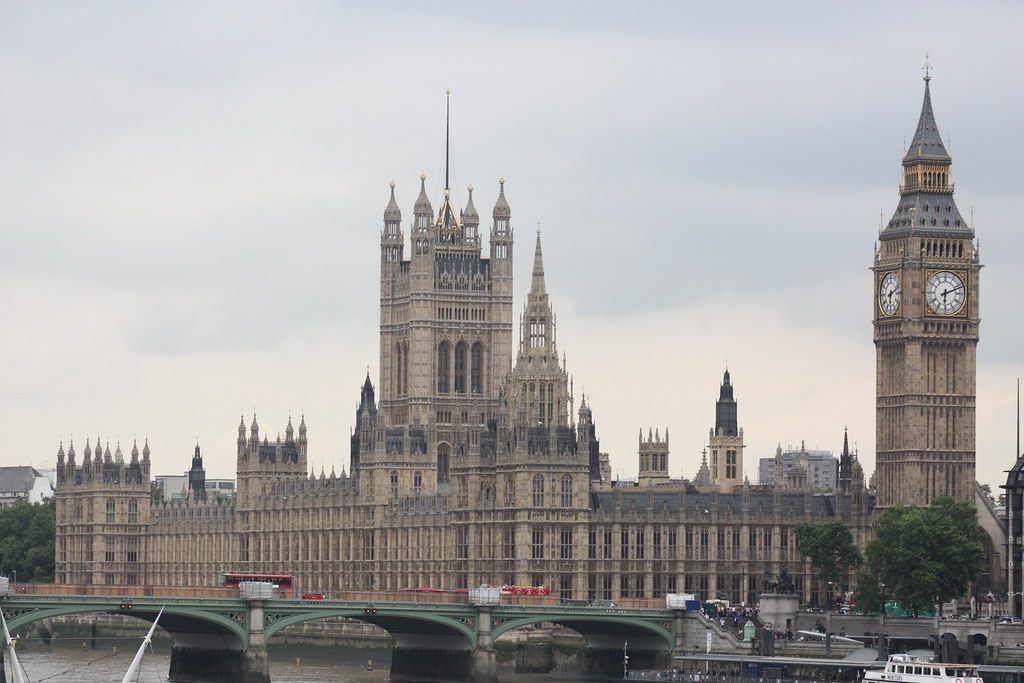
A nation state is, with certain exceptions such as Kiribati, a very large entity. A modern “nanny state” is conducted on a scale beyond anyone’s comprehension. The single measure that might be good for a given town in, say, West Virginia, cannot possibly be good for another in Idaho, and adds debilitating paperwork at both ends. Meanwhile, the scale of the regulation is so great, that small family operators right across the country, lacking huge resources for lobbying and propaganda, will inevitably be scrood. For the truth is big guvmint and big bidnis interface only with each other.
David Warren, “The no-brainer chronicles”, Essays in Idleness, 2017-02-16.
January 23, 2019
QotD: Regulation doesn’t scale well
January 14, 2019
Lysander Spooner and the US postal system
Naomi Mathew recounts the battle between anarchist Lysander Spooner and the United States Post Office:
This is a story about a philosopher, entrepreneur, lawyer, economist, abolitionist, anarchist — the list goes on. As his obituary summarizes, “To destroy tyranny, root and branch, was the great object of his life.” Although he is rarely included in mainstream history, Lysander Spooner was an anarchist who didn’t merely preach about his ideas: He lived them. No example illustrates this better than Spooner’s legal battle against the US postal monopoly.
Born in 1808 in Athol, Massachusetts, Lysander Spooner was raised on his parent’s farm and later moved to Worcester to practice law. Eventually, he found himself in New York City, where business was booming — but not for the Post Office.
The Postal System of the 1840s
In Spooner’s day, government subsidized the cost of building infrastructure used for mail routes. Postage rates paid for these subsidies, which in turn made the rates expensive. For example, in 1840 it cost 18.75 cents, over a quarter of a day’s wages, to send a letter from Baltimore to New York.
Corruption was another issue facing the post office. Positions appeared to change after each election cycle, indicating political cronyism. Congress was also under pressure from the coach contractor lobby, and favorable postage routes were often given to contractors with political connections. Thanks to a legal monopoly it had enjoyed since the Confederation, the Post Office remained the sole legal mail business despite its skyrocketing costs and corruption.
In his book Uncle Sam, The Monopoly Man, William Wooldridge describes how high postal costs led some to defy postal laws: Traveling individuals doubled as temporary, private postmen. By the 1840s, these illicit services were chipping into government revenues. Eventually, a court ruled it legal for individuals (but not companies) to carry mail. As a result, underground mail enterprises sprung up. Agents covertly used the existing rails, coaches, and steamboats to transport letters. It is estimated that in 1845, a third of all letters were transported by private mail firms.
January 11, 2019
“It is profoundly stupid, so most people assume it can’t be. But that’s what the law is now”
Apparently the federal government believes that drinking and driving is such a huge, intractable problem that they’ve decided it’s worth sacrificing your right to privacy in order to combat this scourge:
It may sound unbelievable, but Canada’s revised laws on impaired driving could see police demand breath samples from people in bars, restaurants, or even at home. And if you say no, you could be arrested, face a criminal record, ordered to pay a fine, and subjected to a driving suspension.
You could be in violation of the impaired driving laws even two hours after you’ve been driving. Now, the onus is on drivers to prove they weren’t impaired when they were on the road.
This isn’t a simple change of rules, it’s a wholesale abandonment of common sense.
“If you start to drink after you get home, the police show up at your door, they can arrest you, detain you, take you back to the (police station) and you can be convicted because your blood alcohol concentration was over 80 milligrams (per 100 millilitres of blood) in the two hours after you drove.”
Changes to Section 253 of the Criminal Code of Canada took effect in December giving police greater powers to seek breath samples from drivers who might be driving while impaired.
Under the new law, police officers no longer need to have a “reasonable suspicion” the driver had consumed alcohol. Now, an officer can demand a sample from drivers for any reason at any time.
But there’s no possible way this could be abused, right?
“It’s a serious erosion of civil liberties,” said Toronto criminal defence lawyer Michael Engel, whose practice focuses almost exclusively on impaired driving cases.
Engel said someone could be unjustly prosecuted. If a disgruntled business associate or spouse called police with a complaint and an officer went to investigate at the persons’ home or place of business, police could demand a breath sample.
“Husbands or wives in the course of separations would drop the dime on their partner,” Engel said, describing the potential for the law’s abuse by those calling police out of spite, for example.
January 10, 2019
A timely reminder about the dangers of expanding government power
At Coyote Blog, Warren Meyer points out to the Republicans that if it was bad during the last presidency, it’s just as bad during this one:
Dear Republicans:
The last thing we need now is even more expansion of executive power. I remember when, gosh it was like only two or three years ago, you Republicans were (rightly) bemoaning Obama’s executive actions as unconstitutional expansions of Presidential power. You argued, again rightly, that just because Congress did not pass the President’s cherished agenda items, that did not give the President some sort of right to do an end-around Congress.
But now, I hear many Republicans making exactly the same arguments on the wall that Obama made during his Presidency, with the added distasteful element of a proposed declaration of emergency to allow the army to go build the wall.
[…]
I can pretty much guarantee you that if Trump uses this emergency declaration dodge (and maybe even if he doesn’t now that Republicans have helped to normalize the idea), the next Democratic President is going to use the same dodge. I can just see President Warren declaring a state of emergency to have the army build windmills or worse. In fact, if Trump declares a state of emergency on a hot-button Republican issue, Democratic partisans are going to DEMAND that their President do the same, if for no reason other than tribal tit for tat.
What Happened to America’s Passenger Trains?! The Truth – from Class to Crap!
American Rail Club
Published on 1 Jul 2017Did America’s once industrious and world-famous passenger rail system fall because of “fair and equal” competition – or did the federal government tax it to death? Did America’s shift from rails to roads come out naturally – or from lobbying from General Motors? We visit two of America’s passenger rail cars from a bygone era to reminisce and then dive into the history and truth behind the decline of America’s passenger railroad system.
January 7, 2019
It’s not what you report, it’s how you report it
Media reports over the last few weeks have highlighted the fact that three people have died in US national parks during the government “shutdown”, and most do their best to imply that these deaths are at least indirectly the fault of President Trump. What isn’t highlighted is that the three deaths — individually tragic as they undoubtedly are — are fewer than normally occur in US national parks:
This does sound a little bizarre it’s true, but it seems that America’s National Parks are actually safer with the government shut down than they are when it’s all running. Not quite what we’d expect, all those rangers and the like we’d think would reduce risk to people.
It is actually possible that this is true too. Could be that rangers themselves are actively dangerous although that might not be the way to bet. But it’s possible that the presence of rangers leads to people thinking they are safer and thus they take more – and overcompensate – risks. As with people wearing seatbelts driving more aggressively and so on.
Actually, what is really true here is that varied journalists want to find something to shout at Trump about and deaths in national parks during the shutdown is a good enough excuse…
January 6, 2019
The demands to re-nationalize British passenger railways
In the Continental Telegraph, Tim Worstall points out the mutually exclusive claims about the state of British passenger rail services and the counter-productive demand to shuffle it all back into the state’s tender mercies:

Wikimedia caption – “This is the Bring Back British Rail, a reverse image of the old BR logo, (now used by the TOC’s) to show we are heading the wrong way with Rail in the UK”
A standard whinge in Britain today is that rail privatisation has failed – just look, the trains are so crowded! The thought that people flocking to use something proves failure being a most odd one of course. That more people use the train sets to travel longer distances more often should be seen as a triumph of privatisation, not a proof of its failure. And we should note that the last few decades of British Rail did show – population adjusted – falling ridership.
There’s also a certain puzzlement at the next cry of outrage – that ticket prices are too high. If people are flocking to use something etc then it’s difficult to insist that prices are too high. […] Popularity both proves that the basic system is wrong and also that prices are too high. Tough this economics stuff, isn’t it?
As to the congestion part, well, on those popular lines and routes the route itself is running at capacity. It’s just not possible to squeeze more trains onto the tracks without them running into each other. Ah, but goes the cry, government should do something! But the tracks are already run by government, that we’re not getting more track capacity is government’s fault. Giving us a good guide to how it would be if government ran it all – as history tells it was like when government did.
As to the prices, well, that overcrowding shows us that prices are too low. We need some method of rationing that access to something being over-used. Price is always the best method of rationing. Thus prices should be higher to relieve that over-crowding – while we wait a few decades for government to pull thumb out and provide more track capacity.
January 5, 2019
Leave the Strand Alone! Iconic Bookstore Owner Pleads With NYC: Don’t Landmark My Property
ReasonTV
Published on 4 Jan 2019Leave the Strand Alone! Iconic Bookstore Owner Pleads With NYC: Don’t Landmark My Property
More from the article at Reason:
If New York City moves ahead with a proposal to landmark the home of the Strand Book Store, it would be putting a “bureaucratic noose” around the business, says owner Nancy Bass Wyden. “The Strand survived through my dad and grandfather’s very hard work,” Wyden says, and now the city wants to “take a piece of it.”
Opened by her grandfather, Benjamin Bass, in 1927, the Strand is New York City’s last great bookstore — a four-story literary emporium crammed with 18 miles of merchandise stuffed into towering bookcases arranged along narrow passageways. It’s the last survivor of the world-famous Booksellers Row, a commercial district comprised of about 40 secondhand dealers along Fourth Avenue below Union Square.
On December 4, 2018, the New York City Landmarks Preservation Commission held a public hearing on a proposal to designate the building that’s home to the Strand as a historic site. If the structure is landmarked, Wyden would need to get permission from the city before renovating the interior or altering the facade.
“It would be very difficult to be commercially nimble if we’re landmarked,” Wyden tells Reason. “We’d have to get approvals through a whole committee and bureaucracy that do not know how to run a bookstore.”
Wyden’s outrage derives in part from her family’s decades of struggle to keep the business alive.
The Strand survived, she says, because of “my grandfather and my dad’s very hard work and their passion … Both worked most of their lives six days a week” and they “hardly took vacations.”
January 2, 2019
In non-breaking, non-news … politicians lie
Hector Dummond explains why what might seem like a shocking revelation from a former Thatcher MP isn’t even getting a raised eyebrow from the British media:
In a highly revealing article former MP Matthew Parris admits that the Conservative Party would often lie so that it could do what it wanted. And when it didn’t lie it fudged and avoided issues in order to prevent the ‘people’ having any say in the country’s governance:
our challenge was to find ways of ducking the issue. Once I became an MP, I did so by voting for the principle and against the practice. This subversion of democracy (in Theresa May’s phrase) caused me embarrassment, but not a second’s guilt. Sod democracy: hanging was wrong …
Among ourselves we talked cheerfully about subterfuge. The Britain of 1979 and 1983 most emphatically did not vote for a massive confrontation with the coal miners. We made sure the electorate was never asked.
These candid admissions have been completely ignored by the media. One reason they’ve been ignored is, of course, that most people have come to work this out for themselves, so Parris isn’t telling us anything we don’t already know. But surely hearing it from the horse’s mouth has great value? Why hasn’t the media splashed on this? Why haven’t Parris’s old enemies in the Labour party made hay with it?
The main reason is that most of the media, and virtually all the Labour party, is on his side over this. Even newspapers like the Guardian. You might think the Guardian would be the natural enemy of a former Tory MP, especially one who worked with Thatcher, and certainly on some issues they will regard Parris as an enemy, but the fact is that the Guardian wants government to be free of restraint by the people, because its vision of the state involves a leftist government getting into power, imposing its own ideology onto society and removing the power for the people to have a democratic say from most areas of life. So it can hardly criticise Parris for having done what it longs to do. It doesn’t want to bring about anything that might lessen the freedom government currently has to ignore the voter.
December 30, 2018
The US federal government “shutdown”
One of the things you quickly notice when there’s a public service cutback is that the cutbacks are always directed to the parts of that organization that interact with the public. The idea being that if the public are seriously inconvenienced by lack of service — I mean more than they ordinarily are, anyway — they’ll raise an outcry and the politicians will be forced to rollback the cuts. This is standard practice because, as a rule, it works fairly well. The current US federal government “shutdown” is a bit of an outlier here, because very few members of the public interact with federal employees between Christmas and New Year, and the ones that they do encounter are (mostly) still on the job. Even those who are not on the job due to the shutdown will eventually be paid for the time they didn’t work, so there are few monetary savings happening: probably the reverse, as the government will be racking up charges for services they’ve contracted for but won’t use during the disruption, and there may well be penalty clauses written into the contracts.
Colby Cosh discusses the oddity of American government shutdown kabuki theatre:
As occasionally happens, the U.S. government is now “shut down” as a consequence of a conflict over budget appropriations between the president and the Congress. Except, of course, it isn’t anything of the sort. Otherwise we Canadians would be meeting with other functioning states to decide what pieces of the United States to break off for ourselves, the way European powers used to do with Poland from time to time. (Newspaper ethics forbid me from publishing a web address for my $29.95 “Make Maine Canada Again” hats.)
The “essential” parts of the U.S. federal government, including the bits that guarantee the territorial integrity of the country, always keep on trucking through these “shutdowns.” (The National Guard is sometimes affected, but on this occasion the Guard has been taken care of by a spending bill that passed in October.) Social Security and Medicare roll on unimpeded. The functions of government that get held up are the ones whose delay or abandonment cause inconvenience — albeit serious, economically harmful inconvenience — rather than anarchy.
If you grow curious about these American “shutdowns,” perhaps because they did not happen before 1981 and do not really happen anywhere else, you discover that this kabuki-like feature is not really a coincidence. As much as Congress and the president may fight very earnestly over things like border walls, they have a common interest in the overall health of the state.
The U.S. Constitution says that “No Money shall be drawn from the Treasury, but in Consequence of Appropriations made by Law.” This is a shared element of America’s legal DNA and the British Empire’s: U.S. government shutdowns are, in a weird way, a distant echo of early-modern money struggles betwixt King and Parliament. Westminster-style governments, however, have evolved so as to minimize the possibility of ugly standoffs between the executive and the legislature. The U.S., not so much.
QotD: The national honour
The Greek historian Thucydides argued that countries go to war for three reasons: honor, fear and interest. He put honor first, and yet that is probably the least appreciated aspect of foreign policy today. Historian Donald Kagan, in his essay “Honor, Interest, Nation-State,” recounts how since antiquity, nations have put honor ahead of interest. “For the last 2,500 years, at least, states have usually conducted their affairs and have often gone to war for reasons that would not pass the test of ‘vital national interests’ posed by modern students of politics.”
“On countless occasions,” he continues, “states have acted to defend or foster a collection of beliefs and feelings that ran counter to their practical interests and have placed their security at risk, persisting in their course even when the costs were high and the danger was evident.”
Americans instinctively understand this when our own honor is at stake. The rallying cry during the Barbary Wars, “Millions for defense, but not one cent for tribute,” has almost become part of the national creed. I am no fan of Karl Marx, but he was surely right when he observed that “shame is a kind of anger turned in on itself. And if a whole nation were to feel ashamed it would be like a lion recoiling in order to spring.”
Both the first and second world wars cannot be properly understood without taking the role national honor plays in foreign affairs. Similarly, Vladimir Putin’s constant testing of the West only makes sense when you take into account the despot’s core conviction that the fall of the Soviet Union was a blow to Russian prestige and honor.
Jonah Goldberg, “Humiliating Mexico Over Border Wall Would Be a Big Mistake”, TownHall.com, 2017-01-27.
December 29, 2018
English public health officials angling to ban most restaurant meals due to excess calorie counts
The bureaucrats at Public Health England (PHE) apparently want the English to go back to those gloriously hungry days of rationing during and after the Second World War, at least based on their diktats on the allowable limits for calories in purchased meals:
The idea of the government controlling the number of calories in meals is so outlandish that few people have taken it seriously, despite PHE explicitly stating that this is what they are working on. They have been busy setting calorie limits for almost every food product available in shops, cafés, pubs and restaurants. The plan was to publish them in the spring but Laura Donnelly at the Telegraph has got hold of them and has leaked them today.
They are astonishing, not only because they are so low but because they are so comically precise. Sandwiches and main meal salads will be capped at 550 calories, ready meals will be capped at 544 calories and main courses in restaurants will be capped at 951 calories. Vol-au-vents or onion bhajis will be capped at 134 calories and salad dressing capped at 145 calories. The spurious precision of these numbers is presumably meant to imply that they have been worked out scientifically. They haven’t, of course (why is OK to have a 900 calorie lunch in a restaurant but not OK to have a 600 calorie microwave dinner?). There is no way of working out how much energy a single meal should contain. The concept is ludicrous.
But the detailed proposals have infuriated manufacturers – who say they are far too complex and confusing to be workable.
No kidding.
These are not legal limits. Not yet. The plan is for the bureaucrats at PHE to ‘work with’ the food industry to magically remove calories from their products without destroying flavour. PHE have no knowledge to bring to the table so their part in the ‘partnership’ amounts to setting targets, issuing threats and naming and shaming businesses.
Some of the companies will attempt to play along, mainly by reducing portion sizes, but it is a doomed enterprise. The government initially planed to use the threat of advertising restrictions to make the companies play ball, but it has already capitulated to the ‘public health’ lobby on this, so the only thing left is to threaten them with mandatory calorie limits.
If that happens, it will mean an effective prohibition on many of Britain’s best loved dishes. Steak and kidney pudding far exceeds the 951 calorie limit for out-of-home food, as does ham, egg and chips, the all day breakfast, fish and chips, and beer and ale pie (based on Wetherspoons’ nutritional information). So does a normal Christmas dinner.
As for foreign cuisine, you can kiss goodbye to kebabs, curries, pizzas and Chinese food. But it’s a treat, you say! Tough luck. No exceptions.
December 27, 2018
QotD: The deep state
The deep state is no myth but a sodden, intertwined mass of bloated, self-replicating bureaucracy that constitutes the real power in Washington and that stubbornly outlasts every administration. As government programs have incrementally multiplied, so has their regulatory apparatus, with its intrusive byzantine minutiae. Recently tagged as a source of anti-Trump conspiracy among embedded Democrats, the deep state is probably equally populated by Republicans and apolitical functionaries of Bartleby the Scrivener blandness. Its spreading sclerotic mass is wasteful, redundant, and ultimately tyrannical.
I have been trying for decades to get my fellow Democrats to realize how unchecked bureaucracy, in government or academe, is inherently authoritarian and illiberal. A persistent characteristic of civilizations in decline throughout history has been their self-strangling by slow, swollen, and stupid bureaucracies. The current atrocity of crippling student debt in the US is a direct product of an unholy alliance between college administrations and federal bureaucrats — a scandal that ballooned over two decades with barely a word of protest from our putative academic leftists, lost in their post-structuralist fantasies. Political correctness was not created by administrators, but it is ever-expanding campus bureaucracies that have constructed and currently enforce the oppressively rule-ridden regime of college life.
In the modern world, so wondrously but perilously interconnected, a principle of periodic reduction of bureaucracy should be built into every social organism. Freedom cannot survive otherwise.
Camille Paglia, “Hillary wants Trump to win again”, Spectator USA, 2018-12-04.
December 25, 2018
Repost – The market failure of Christmas
Not to encourage miserliness and general miserability at Christmastime, but here’s a realistic take on the deadweight loss of Christmas gift-giving:
In strict economic terms, the most efficient gift is cold, hard cash, but exchanging equivalent sums of money lacks festive spirit and so people take their chance on the high street. This is where the market fails. Buyers have sub-optimal information about your wants and less incentive than you to maximise utility. They cannot always be sure that you do not already have the gift they have in mind, nor do they know if someone else is planning to give you the same thing. And since the joy is in the giving, they might be more interested in eliciting a fleeting sense of amusement when the present is opened than in providing lasting satisfaction. This is where Billy Bass comes in.
But note the reason for this inefficient spending. Resources are misallocated because one person has to decide what someone else wants without having the knowledge or incentive to spend as carefully as they would if buying for themselves. The market failure of Christmas is therefore an example of what happens when other people spend money on our behalf. The best person to buy things for you is you. Your friends and family might make a decent stab at it. Distant bureaucrats who have never met us — and who are spending other people’s money — perhaps can’t.
So when you open your presents next week and find yourself with another garish tie or an awful bottle of perfume, consider this: If your loved ones don’t know you well enough to make spending choices for you, what chance does the government have?
QotD repost: Sir Humphrey’s bureaucratic holiday wishes
Sir Humphrey: I wonder if I might crave your momentary indulgence in order to discharge a by no means disagreeable obligation which has, over the years, become more or less established practice in government service as we approach the terminal period of the year — calendar, of course, not financial — in fact, not to put too fine a point on it, Week Fifty-One — and submit to you, with all appropriate deference, for your consideration at a convenient juncture, a sincere and sanguine expectation — indeed confidence — indeed one might go so far as to say hope — that the aforementioned period may be, at the end of the day, when all relevant factors have been taken into consideration, susceptible to being deemed to be such as to merit a final verdict of having been by no means unsatisfactory in its overall outcome and, in the final analysis, to give grounds for being judged, on mature reflection, to have been conducive to generating a degree of gratification which will be seen in retrospect to have been significantly higher than the general average.
Jim Hacker: Are you trying to say “Happy Christmas,” Humphrey?
Sir Humphrey: Yes, Minister.