Quotulatiousness

December 23, 2018

Parliamentary renovations

Filed under: Cancon, Government — Tags: , , — Nicholas @ 05:00

Andrew Coyne on the as-yet unclear path forward for the required renovations to the Parliament buildings in Ottawa:

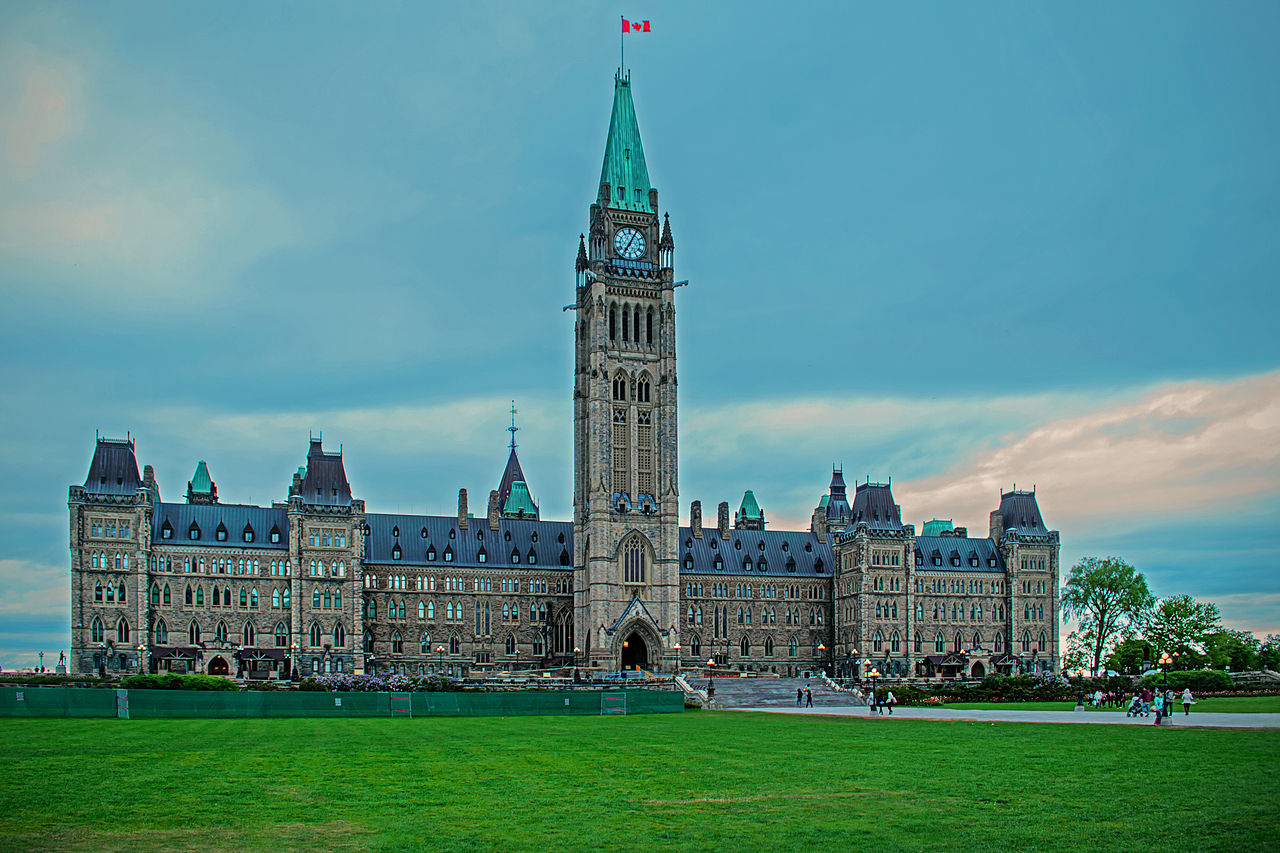
Centre Block on Parliament Hill in Ottawa.
Photo by S Nameirakpam via Wikimedia Commons.

… nobody seems to know much of anything about the project: not only how long it will take (Public Services and Procurement has already begun backing away from the original 10-year estimate for completion), but how much it will cost (just to move the Commons and Senate into their temporary digs in the West Block and Government Conference Centre, respectively, is estimated to cost over $1 billion; there are no cost estimates as yet for the renovation itself), or even what exactly it entails.

The building itself, constructed in 1916-27 after a fire destroyed the original, is part of the mystery: no one knows quite how it was built, or what went into it. Officials explain they will have to get in and gut the place before they can assess what needs to be done to restore it, let alone update it with such mod cons as air conditioning or Wi-Fi. But part of it is, as usual, a problem of governance. Responsibility for the project seems to have been assumed to be a matter between bureaucrats at Public Services and the House of Commons, who took it upon themselves to make decisions on project design, cost etc with little to no input from those affected: MPs, Senators, or staff, let alone the public who will have to pay for it all.

Not only has there been no consultation, there is no body formally tasked with conducting it: when the Commons Procedure and House Affairs Committee temporarily assigned itself the role last week, it was very much stepping into a void. Like the renovation itself, the oversight process gives every appearance of being improvised on the fly.

It’s all a little too symbolic: the renovation of the “people’s house,” the home of our democracy, is proceeding with no budget, no timetable, no plan and only the most rudimentary democratic oversight. The one consolation is that it is likely to get far worse.

Assuming MPs now get their hooks into it, and pouring through the breech after them every interest group and activist organization in the country, the whole thing is likely to devolve into the same chaotic tangle of cross-purposes that is the fate of every other attempt at large-scale collective enterprise in this country — Trans Mountain meets the Meech Lake Accord. There are children not yet born, I’d wager, who will be voting in their first election before this is completed, at a cost of God knows how many billions.

Repost – “Merry Christmas” versus “Happy Holidays” versus “Happy Midwinter Break”

L. Neil Smith on the joy-sucking use of terms like “Happy Midwinter Break” to avoid antagonizing the non-religious among us at this time of year:

Conservatives have long whimpered about corporate and government policies forbidding employees who make contact with the public to wish said members “Merry Christmas!” at the appropriate time of the year, out of a moronic and purely irrational fear of offending members of the public who don’t happen to be Christian, but are Jewish, Muslim, Hindu, Buddhist, Sikh, Jain, Rastafarian, Ba’hai, Cthuluites, Wiccans, worshippers of the Flying Spaghetti Monster, or None of the Above. The politically correct benediction, these employees are instructed, is “Happy Holidays”.

Feh.

As a lifelong atheist, I never take “Merry Christmas” as anything but a cheerful and sincere desire to share the spirit of the happiest time of the year. I enjoy Christmas as the ultimate capitalist celebration. It’s a multiple-usage occasion and has been so since the dawn of history. I wish them “Merry Christmas” right back, and I mean it.

Unless I wish them a “Happy Zagmuk”, sharing the oldest midwinter festival in our culture I can find any trace of. It’s Babylonian, and celebrates the victory of the god-king Marduk over the forces of Chaos.

But as anybody with the merest understanding of history and human nature could have predicted, if you give the Political Correctness Zombies (Good King Marduk needs to get back to work again) an Angstrom unit, they’ll demand a parsec. It now appears that for the past couple of years, as soon as the Merry Christmases and Happy Holidayses start getting slung around, a certain professor (not of Liberal Arts, so he should know better) at a nearby university (to remain unnamed) sends out what he hopes are intimidating e-mails, scolding careless well-wishers, and asserting that these are not holidays (“holy days”) to everyone, and that the only politically acceptable greeting is “Happy Midwinter Break”. He signs this exercise in stupidity “A Jewish Faculty Member”.

Double feh.

Two responses come immediately to mind, both of them derived from good, basic Anglo-Saxon, which is not originally a Christian language. As soon as the almost overwhelming temptation to use them has been successfully resisted, there are some other matters for profound consideration…

December 20, 2018

Remy: It’s Beginning to Look a Lot Like Christmas (EV Tax Credit Edition)

Filed under: Business, Government, Humour, Media — Tags: , , , , , — Nicholas @ 04:00

ReasonTV
Published on 19 Dec 2018

Government plays Santa Claus with your tax money.

—–
Subscribe to our YouTube channel: http://youtube.com/reasontv
Follow us on Twitter: https://twitter.com/reason
Subscribe to our podcast at Apple Podcasts: https://goo.gl/az3a7a

Reason is the planet’s leading source of news, politics, and culture from a libertarian perspective. Go to reason.com for a point of view you won’t get from legacy media and old left-right opinion magazines.
—–

Have a Tesla on your Christmas wish list? Don’t thank Santa — thank Tom in Ohio.

Parody written and performed by Remy. Video by Austin Bragg. Music tracks, background vocals, and mastering by Ben Karlstrom

LYRICS:

It’s beginning to look a lot like Christmas
Everywhere you go
Folks with six-figure salaries
Are shopping in galleries
With a gift card paid by Tom in Ohio

It’s beginning to look a lot like Christmas
Roadsters all around
And while Tom can’t afford a car
He’ll buy part of one for John
Cuz somehow that’s allowed

Well a black Model X and a tax credit check
Is the wish of Connor and Ken
And a dark Model 3 that is partially free
Is the hope of Bobby and Ben
While Tommy takes the bus and eats Vienna sausages

It’s beginning to look a lot like Christmas
Hear those sleigh bells ring
But what else could you expect
With a tax code so complex?
Ensuring just these things?

Yes a car with aplomb that’s, in part, paid by Tom
Is the wish of Victor and Von
A sedan that can drive and takes years to arrive
Is the hope of Lenny and Lon
While Tommy pinches pennies never flushing number one

It’s beginning to look a lot like Christmas
Soon the credits end
But the funniest sight to see’s
When typical for DC
They’re renewed again
Everything’s renewed again

December 19, 2018

QotD: Maple-flavoured corporate welfare

Filed under: Business, Cancon, Government, Quotations — Tags: , , , — Nicholas @ 01:00

There’s that word: “investments.” That’s what Canadians — Ontarians and Quebecers, certainly — have been trained to expect in these situations: An elaborate mating dance culminating in a greasy press conference where corporate leaders hail bold new provincial and federal “investments” in the company and its workers and its world-beating widgets. Critics are assailed as uncaring and testily reminded that every jurisdiction subsidizes the widget industry.

Traditionally, this is later followed by outrage when it emerges the company has used taxpayers’ bold investment to pay out lavish bonuses or dividends. In the fullest version of the performance, the company just pulls up stakes and leaves town anyway — sometimes having fulfilled its stated obligations, sometimes not, but always leaving behind a bad taste and a per-employee subsidy rate that makes no sense in hindsight.

If the company is Bombardier, it might extract lavish subsidies from government for an airplane project on the theory the Canada needs an aerospace industry, then turn around and sell the project to a foreign competitor for basically nothing.

Chris Selley, “A reminder that governments don’t ‘invest’ in businesses. It’s just corporate welfare”, National Post, 2018-11-28.

December 13, 2018

When Democrats Loved Deregulation

Filed under: Bureaucracy, Business, Economics, Government, USA — Tags: , , , — Nicholas @ 04:00

ReasonTV
Published on 12 Dec 2018

Left-leaning politicians of the 1970s understood that red tape punishes consumers and protects big business. The leading deregulator of that era was none other than Jimmy Carter.

————————
Follow us on Twitter: https://twitter.com/reason

Reason is the planet’s leading source of news, politics, and culture from a libertarian perspective. Go to reason.com for a point of view you won’t get from legacy media and old left-right opinion magazines.
————————
When President Donald Trump bragged in his first State of the Union address about cutting red tape, the Democratic response was no surprise. “Deregulation,” warned Center for American Progress Senior Advisor Sam Berger in Fortune, “is simply a code word for letting big businesses cut corners at everyone else’s expense.”

But many leading Democrats had the opposite view in the 1970s. Then, at the dawn of the deregulation era, left-leaning politicians and economists understood that excessive government management of industry let the big-business incumbents get away with lousy performance at the expense of competitors, taxpayers, and consumers. The leading figure in that fight to cut red tape and shut down entire federal agencies was none other than Jimmy Carter.

It was Sen. Ted Kennedy who held extensive Senate hearings in the early ’70s, with testimony from the likes of Ralph Nader and liberal economist Alfred Kahn, about the benefits of lifting state controls on the airline industry. The resulting Airline Deregulation Act of 1978, signed by Carter, killed the Civil Aeronautics Board — a federal agency that decided which airlines could fly where, and even what they could charge. The new competition to the old airline cartel reduced fares, expanded destinations, increased safety, and made air travel an option for those of us who aren’t rich.

Carter also lifted stifling government oversight of the rail and trucking industries under a Democrat-controlled House and Senate. The result? Competition intensified, prices dropped, and consumers saved more money on everyday products.

In 1978, President Carter signed a bill that lifted Prohibition-era criminal restrictions on home brewing. The legalization of do-it-yourself beer production unleashed a boom of experimentation, paving the way for the craft beer revolution that is ongoing to this day. The year that Carter loosened the rules, the U.S. was home to a mere 50 breweries. Today there are well over 5,000. In two generations of beermaking, America went from global laughingstock to world leader.

The governor of California during Carter’s presidency was none other than Jerry Brown, then known as “Governor Moonbeam” for his far-out musings, glittery social life, and lefty politics. Yet Brown, too, could be a fiery skeptic of government. In his terrific second inaugural address in 1979, Brown stated that “many regulations primarily protect the past, prop up privilege or prevent sensible economic choices.”

But even while some sectors were unleashed four decades ago by far-seeing Democrats and Republicans alike, too many governments at the local, state, and federal levels have forgotten those lessons, and instead imposed entirely new categories of regulations. Occupational licensing, which applied to about one in 10 jobs 40 years ago, now impacts one in three.

So how did the party of Jimmy Carter and sideburns-era Jerry Brown become the ideological home of Elizabeth Warren and Alexandria Ocasio-Cortez? One explanation may be that Democratic support for deregulation back then was born out of a sense of nearly hopeless desperation in the face of stagflation. Cutting red tape to foster dynamism was about the last move politicians had left.

Our long economic expansion and stock-market boom will soon come to an end, imposing limits on government precisely at the moment when it’s asked to do more. When that day of reckoning comes, the best questions for lawmakers of both parties to ask may just be: What would Jimmy Carter do?

Photo credits: Jimmy Carter Library, Arthur Grace/ZUMA Press/Newscom, Dennis Brack/Newscom, Everett Collection/Newscom, Ron Sachs/CNP/MEGA/Newscom, Brian F. Alpert/ZUMA Press/Newscom, Paul Harris/Pacific Coast Nes/Newscom, Bee Staff Photo/ZUMA Press/Newscom, Dennis Brack/bb51/Newscom, Jonathan Bachman/REUTERS/Newscom, Rick Friedman/Polaris/Newscom

QotD: The Cabinet

Filed under: Britain, Government, Humour, Politics, Quotations — Tags: — Nicholas @ 01:00

[T]here is a clear similarity between the Prime Minister’s cabinet and the wardrobe/closet from the Narnia Chronicles: neither has any back to it and people who spend an excessive amount of time in either find themselves in a fantasy land.

Eric Kirkland, 2005-03-24.

December 12, 2018

Why Socrates Hated Democracy

Filed under: Education, Europe, Government, Greece, History, Liberty, Politics — Tags: , , , — Nicholas @ 02:00

The School of Life
Published on 28 Nov 2016

We’re used to thinking hugely well of democracy. But interestingly, one of the wisest people who ever lived, Socrates, had deep suspicions of it.

December 8, 2018

Will the West want in again this time?

Filed under: Cancon, Government, Politics — Tags: , , , — Nicholas @ 03:00

The last time Albertan sensibilities were being regularly assaulted by federal politicians, the response was the Reform Party with their slogan “The West Wants In”. This time, Lawrence Solomon suggests, the Albertan response might not be so congenial:

Canadians don’t value our fossil fuel economy, which explains why so many are OK to trash pipelines and see Alberta tank. Only 19 per cent think it more important to pursue oil and gas development than to go green and regulate oil, according to EKOS polling. That 19 per cent figure shrinks to eight per cent for Canadians who consider themselves Liberals, six per cent for NDPers and two per cent for those who vote Green, meaning that politicians of most stripes have no interest in alienating their supporters to help Alberta’s energy economy recover.

Those figures also explain why Alberta’s sense of alienation is on the rise. According to Ipsos, fully 62 per cent believe Alberta “does not get its fair share from Confederation” (up from 45 per cent two decades ago), 46 per cent feel more attached to their province than to their country (up from 39 per cent) and 34 per cent “feel less committed to Canada than I did a few years ago” (up from 22 per cent). Just 18 per cent of Albertans believe “the views of western Canadians are adequately represented in Ottawa.”

One-quarter of Albertans now believe Alberta “would be better off if it separated from Canada,” a number that may well rise if the provincial economy founders, and would certainly rise if Albertans realized that they need Canada a lot less than Canada needs them. Without Alberta’s wealth and foreign-exchange earnings, the living standard of Canadians outside Alberta would drop and the Canadian dollar would plummet, likely leading to inflation as the cost of imports rose. Albertans, in contrast, would see their affluence rise and, because oil sales are denominated in U.S. dollars, Alberta would be largely insulated from the inflation to its east and west.

Those pooh-poohing independence claim Alberta, being land-locked, would be held hostage if it were an independent state. Those scoffers have it backwards. Alberta is today held hostage, its pipelines east and west kiboshed by its fellow Canadians. If Alberta were independent, its newfound bargaining power would certainly cause the Rest of Canada to capitulate, and speed to completion any and all pipelines Alberta needed to either ocean.

An independent Alberta would control access to its land mass as well as the skies above it, requiring Canada’s federal government to negotiate rights for, say, Vancouver-to-Toronto flights over Alberta airspace. Canada would also need Alberta’s agreement to have trains and trucks cross its now-international borders. Threats of tolls and tariffs could abound as needed to chasten those perceived to be wronging Alberta, whether Quebec, which exports dairy to B.C., grain interests that now commandeer rail to the detriment of Alberta’s oil shippers, or the B.C. ports that depend on commodities going to and from points east. Anyone thinking that Alberta would be unable to police its borders needs to be reminded that, for the past 70 years, Alberta’s patrols have made it the continent’s only rat-free jurisdiction.

December 7, 2018

Australian parliament votes to weaken encryption

Filed under: Australia, Government, Law, Liberty, Technology — Tags: , , — Nicholas @ 03:00

Scott Shackford reports on the latest bit of oddness from the southern hemisphere:

Pretty much every single person in the tech industry, human rights circles, and academia warned the Australian government that forcing online platforms to weaken encryption would lead to disastrous results. Nonetheless, lawmakers are pushing forward — and it’s not just Australians who will suffer as a result.

Last night, Australia’s parliament rushed through the Assistance and Access Bill of 2018 right as their session was coming to a close. The bill gives various government agencies the authority to demand that tech and communication platforms provide them secret bypass routes around encrypted messages.

This is what is known as an encryption “backdoor,” and it’s a bad idea. Governments insist such tools are needed to fight crime and terrorism. The problem is that an encryption backdoor doesn’t care who uses it: If there’s a mechanism to bypass privacy security on a communication system, it can be exploited by anybody who knows how. That includes hackers, thieves, officials from authoritarian governments, and all sorts of dangerous people (including, of course, the very government people who insist they’re trying to protect us). That’s why tech companies have spent years fighting against the idea.

Weak encryption is a threat to the health of any tech platform that involves transferring data, and governments know that. So they insist they’re not demanding encryption backdoors while attempting to enact policies that pretty much demand them.

The Assistance and Access Bill won’t just grant the Australian government the power to demand that everybody from Facebook to Whatsapp help them bypass security to access private communications. The bill will let officials order companies, through “technical capability notices,” to alter their programming to facilitate snooping. And it gives the government the authority to force the tech employees who implement the changes to keep them secret. Break that secrecy, and the employees can face up to five years in jail.

December 6, 2018

QotD: The best “industrial policy” is not to have one at all

Filed under: Britain, Business, Government, Quotations — Tags: , , — Nicholas @ 01:00

Which brings us to nub of the matter: how do we increase trade and productivity, given that productivity is the thing they claim the whole schemozzle is about. There is one simple and single policy which will do both. One policy which will increase British productivity simply by allowing more trade.

This policy is so simple that even the Treasury (yes, that’s our Treasury, the one in London) was able to get right, even when being run by George Osborne. As they set out in their analysis of Brexit repercussions:

“The benefits of trade in terms of increasing productivity are well understood… greater openness to trade creates a larger market which the most productive firms expand to serve. Openness also increases competition between firms, enhancing the incentives for domestic firms to innovate or adopt new technology… It increases returns on investment, and encourages UK firms to make greater use of new technologies, either by improving the quality of inputs, or through the more effective adoption of technological innovations. Greater openness to trade also increases consumer choice and reduces prices. Lower trade costs give consumers access to cheaper imported goods and competition reduces the price of domestically-produced goods.”

In plain English, it is the competition from imports which forces British firms to buck up their act and become more productive. So here is how we improve British productivity: we move to unilateral free trade. No barriers to imports, no tariffs, just the same regulation as domestically produced items.

British industry, facing the stiffest competition from the best in the world, would be forced to meet global standards of productivity. So the best industrial policy would be to stop trying to have an industrial policy about what we can and can’t buy from beyond Britain’s borders – and the rest should take care of itself.

Tim Worstall, “The best industrial strategy for Britain is not to have one”, CapX, 2017-01-23.

December 5, 2018

The Alberta government must be getting a heck of a deal on those tank cars and locomotives

Filed under: Business, Cancon, Government, Railways — Tags: , — Nicholas @ 05:00

Alberta Premier Rachel Notley grabbed headlines recently with her pledge to buy additional railway locomotives and tank cars to help move some of Alberta’s excess crude oil to market. Brian Zinchuk says those numbers don’t make sense, given the amount of money the province is to pay:

On Nov. 28, Alberta Premier Rachel Notley announced her province is going to be acquiring unit trains to get her province’s landlocked oil moving. Not only has she committed money to Trans Mountain Expansion, but now rail, too. This premier is serious.

However, there’s a big problem with her numbers. She spoke of $350 million to purchase up to 7,000 rail cars and 80 locomotives. That $350 million doesn’t come even close. It might be enough to lease those units for a few years. Her stated intention was this was a short-term solution, and the life expectancy of a locomotive and tanker cars is easily into three or four decades.

However, she said, “Alberta will buy rail cars ourselves in our fight to get top dollar for the resources that belong to every Albertan.”

I never saw “lease” mentioned once.

Notley spoke of 120,000 barrels per day (bpd) of capacity. Her initial statements weren’t very clear, as someone with little knowledge of the business might think she just meant two sets of 100 or 120 car trains. That wasn’t at all what she meant.

She meant enough trains to keep 120,000 barrels per day in motion, each and every day. That’s a lot of rail cars, and a lot of locomotives.

[…]

There’s a problem with her numbers, however. The current standard locomotives used by Canadian railways cost US$3 million each as of December 2017, when CN bought 200 locomotives for US$600 million. That’s $3.859 million Canadian, each, at the exchange rate at that time. Notley spoke of 80 locomotives – that’s $308.7 million. That only leaves $41.3 million for 7,000 rail cars, or $5,897 each. That’s obviously way too low. So either there’s some leasing considerations involved here, perhaps on the locomotives, or the $350 million is way too low. Remember they were asking the feds for half? Even if the feds coughed up an additional $350 million, that still leaves only $55,900 per car.

My math shows, on the low end, a price tag of $945 million for new rail cars alone. Coupled with ~$309 million for locomotives, and you come in at $1.254 billion. At the high end, it would be $1.484 billion for cars, totalling $1.793 billion including locomotives. Either way, it’s a heck of a lot more than the $350 million announced. Unless she’s leasing, Notley’s $350 million is only one-third to one-fifth of the money required to buy all these new trains, and no consideration has been given to staffing or operational costs.

H/T to Small Dead Animals for the link.

The true lesson to be learned from GM Canada’s economic plight

Andrew Coyne tries to encapsulate the key economic concept that should be taken away from the GM Canada collapse:

Think of it this way. Governments have proven more than ready in the past to pay whatever the auto companies demanded to hold onto threatened jobs. If there were any chance whatsoever of buying the plant’s reprieve, no matter how foolishly or expensively, can there be any doubt they would have? That they did not — apparently GM waved them off — tells you how hopeless the plant’s prospects really are.

Many have recalled that the closure of the Oshawa plant comes less than a decade after the Canadian operations of GM and Chrysler were bailed out with $14 billion in federal and provincial money, $4 billion of which was never recovered. The lesson some have drawn from this is that GM is a devious ingrate, which may be fair comment but is not especially helpful. The real lesson is this: when you try to buy jobs with public money, the jobs last only as long as the money does. In the end, all you will have done is to lure people into taking or staying in jobs that were long since doomed.

Like most of economics, this is wholly alien to popular wisdom. There is a rich vein of commentary to the effect that the laws of economics are effectively optional, something we can resist by force of will: we can either bend to “market forces,” or we can “stand up” to them in some fashion. But in fact the latter option is entirely imaginary, at least in the long run. You can perhaps lure plants and jobs your way at the outset with subsidies and other goodies. But the only assurance they will stay is if it makes economic sense to the company to keep them there.

If not, then all you have won with your subsidy is the right to go on providing more subsidy, which is a fairly accurate description of Canadian automobile policy in recent decades. The workers whose jobs successive governments boasted of creating or saving were effectively hostages; as in all hostage-takings, the payment of ransom only stimulates further demands for ransom. Until one day when the money runs out, and the workers whose jobs were supposedly saved find themselves abandoned. This may be many things, but one thing it is not is compassionate.

Yes, Minister – The Six Diplomatic Options

Filed under: Britain, Government, Humour — Tags: , — Nicholas @ 02:00

HenryvKeiper
Published on 28 May 2009

My favorite scene from one of my favorite TV shows of all time.

December 3, 2018

Eric Swalwell’s Kinsley gaffe

Filed under: Government, Liberty, Politics, USA — Tags: , , , — Nicholas @ 05:00

If you haven’t encountered it, a “Kinsley gaffe” is where a politician accidentally tells the truth (Wikipedia). Newly elected US member of the House of Representatives Eric Swalwell committed a classic Kinsley gaffe in an online discussion on social media, as Jeff Fullerton explains:

Democratic representative Eric Swalwell made a really provocative statement this week according to an article from Hot Air. Pretty much serving notice that: If we confiscate your guns and you fight back, we will nuke you.

Representative Swalwell sort of gives a disclaimer that he he was not actually advocating nuking Texas or some other disobedient red state or region — but merely trying to make a point in the fashion of the Borg from Star Trek; that resistance is futile and it is the lot of us all to be assimilated — against our will if necessary. The author of the article from Hot Air points out something that my friend and mentor Bruce the Historian pointed out long ago; that there are an awful lot weapons in the hands of private citizens capable of making it hell on earth for any federal troops deployed to disarm the population or engage in the collectivization of property and resources in a martial law scenario. Or forced relocation of people. That’s the real reason they want everyone disarmed. They know from experiences in Vietnam and the “Forever War” in the Middle East; that cracking down with overwhelming force has its limits and once they put off a nuke to burn a town in Texas they might have to burn every square mile of the nation to put an end to the uprising.

Talk about excessive force!

That they’d even talk at all about using a nuclear weapon to put down an internal insurrection proves beyond the shadow of doubt that power hungry politicians are a far deadlier existential threat to us all than any crazed mass shooter or terrorist could ever hope to be!

This congress creature bases his argument on a fallacy which is common assumption among the political class: that because the federal government is capable of mustering overwhelming force — the Second Amendment is obsolete anyway. He already contradicts himself for if we the people are impotent against the overwhelming fire and manpower of the Army and the bombs and missiles of the Air Force — then why are people like him so adamant about disarming the average Joe? I think I already answered that one. […]

There is also the issue of the military itself that the political class ought to take into consideration. It may be less monolithic than assumed. Many of them still believe in the validity of the Constitution and would side with the resistance while others among the loyalist factions would have problems of conscience when it comes to mass slaughter of fellow Americans. Still others might be fearful of the consequences of being held accountable for atrocities or even treason if they end up on the losing side of things. To attack and kill your own people who you swore to serve and protect is a grievous betrayal. It is treason of the highest order and the punishment for that is death. So if you choose such a course of action and loose the fight; you go down in historic infamy to be remembered like the Nazi war criminals who stood before the Nuremberg tribunals. And you will probably [be] shot or hanged in a public execution!

December 2, 2018

QotD: There’s investment and then there’s “public investment”

Filed under: Government, Quotations, Science, Technology — Tags: , — Nicholas @ 01:00

In 2003, the Organisation for Economic Cooperation and Development published a paper on the ‘sources of economic growth in OECD countries’ between 1971 and 1998 and found, to its surprise, that whereas privately funded research and development stimulated economic growth, publicly funded research had no economic impact whatsoever. None. This earthshaking result has never been challenged or debunked. It is so inconvenient to the argument that science needs public funding that it is ignored.

Matt Ridley, “The Myth of Basic Science: Does scientific research drive innovation? Not very often, argues Matt Ridley: Technological evolution has a momentum of its own, and it has little to do with the abstractions of the lab”, Wall Street Journal, 2015-10-23.

« Newer PostsOlder Posts »

Powered by WordPress