
The slogan into which the Nazis condensed their economic philosophy, viz., Gemeinnutz geht vor Eigennutz (i.e., the commonweal ranks above private profit), is likewise the idea underlying the American New Deal and the Soviet management of economic affairs. It implies that profit-seeking business harms the vital interests of the immense majority, and that it is the sacred duty of popular government to prevent the emergence of profits by public control of production and distribution.
Ludwig von Mises, Planned Chaos, 1947.
April 15, 2021
QotD: The “evil” of profits
Comments Off on QotD: The “evil” of profits
April 14, 2021
Schrödinger’s photo ID requirements
Mark Steyn notes the odd inconsistency of US authorities insisting on or ignoring the need for photo ID for different demographics. So much for equal treatment in the United States.

“TSA Checkpoint” by phidauex is licensed under CC BY-NC-SA 2.0


Whenever you fly anywhere in America, you require picture ID — so that, when you get to the head of the great endless security line, the TSA agent can get out his jeweler’s loupe and examine how the ink lies on the paper. And, when he’s finished doing that, he can fish out his UV light to study the watermark on your ID.
Which is all bollocks even by the standards of American security-state bureaucracy. Why bother going to all the tedious trouble of fake ID when real ID is so easy to acquire? On September 11th 2001, four of the terrorists boarded the flight with genuine, valid picture ID issued by the state of Virginia and obtained through the illegal-immigrant day-workers’ network run out of the parking lot of the 7-Eleven in Falls Church.
If that didn’t get Americans mad about the cosseting of the undocumented, I doubt they’ll care a fig about this latest privilege. But I thought it worth mentioning anyway: While you’re stuck with the Loupe & Light guy poring over your ID, the federal government announced last week that migrants crossing the southern border will be permitted to fly within the United States without any valid ID. You’re on orange alert now and forever, they’re in the express check-in.
This is where selective enforcement of the laws always leads — to a broader contempt for all law, and an end to equality before the law. In 2021 no developed nation needs mass unskilled immigration. Some have it for historical reasons — a hangover of empire, as in Britain and France; some have it for sentimentalist pseudo-humanitarian reasons, as in Sweden and Norway. But neither of these rationales account for what the laughably misnamed Department of Homeland Security is doing at America’s southern border.
Comments Off on Schrödinger’s photo ID requirements
April 13, 2021
“… loving a country also means being honest. We should never get high on our own own flag-covered, syrup-scented supply.”
In The Line, Lauren Dobson-Hughes sits Canada down for a bit of an intervention:

Once upon a time, there was a fairytale castle with soaring turrets and gabled windows. The castle had long been undergoing renovations, so the owners draped the scaffolding with trompe l’oeil cloths — fabric imprinted with the image of the historical building beneath, to maintain an impression of the beauty hidden below.
From the cloth, you imagined the castle must be stunning. And yet behind the façade, it is crumbling. Its walls are mold-ridden, and the floors are rotten. The scaffolding props up a shell.
This metaphor has come to represent the way I’ve come to think about Canada since this pandemic began. As a country, we are so fixated on the mythology we project out to others — the trompe l’oeil cloth — that we’ve allowed the actual capacities, systems and structures of our country to crumble.
The first inkling came early in the pandemic. As COVID-19 numbers rose, it was revealed that the Public Health Agency of Canada did not have nationwide case numbers. This piece delves further, but “Ottawa does not have automatic access to data in [provincial and territorial] systems.” Provinces were sending daily case numbers to Ottawa on paper. This is one small example, but a revealing one. In fact, we lack a nationwide public-health system at all. And as the auditor-general’s report showed, we also lack the knowledge and expertise — the skilled people — to manage crises like this, too.
Then came protracted discussions about financial support for Canadians affected by lockdowns. The debate was not about whether Canadians deserved help — it was that Canada’s financial systems are so outdated and disjointed, that we literally could not work out how to get money from the federal government into bank accounts. It shouldn’t be this complex. In a functioning country, the central revenue agency should be able to transfer money to people without task forces of bureaucrats and experts, the establishment of new IT systems, and McGyvering an assortment of existing programs.
[…]
The list it goes on — the chaotic vaccine roll-out, the fractured public communications, the devolving of responsibilities to the very most local level with little overarching purpose or even organization. All of it marked by disjointed, outdated systems, lack of skills and know-how, and no overall goal or narrative. We need to face it — we have allowed our nation to crumble from the inside, while holding tight to the mythology that we’re an effective, functioning country.
At this point, I feel the need for a disclaimer that I love Canada. But loving a country also means being honest. We should never get high on our own own flag-covered, syrup-scented supply.
Comments Off on “… loving a country also means being honest. We should never get high on our own own flag-covered, syrup-scented supply.”
April 12, 2021
The Constitution of the Spartans
Historia Civilis
Published 11 Sep 2017Patreon | http://historiacivilis.com/patreon
Donate | http://historiacivilis.com/donate
Merch | http://historiacivilis.com/merch
Mailing List | http://historiacivilis.com/mailinglist
Twitter | http://historiacivilis.com/twitter
Website | http://historiacivilis.comSources:
The Constitution of the Spartans, by Xenophon: http://amzn.to/2j7JXTB
The Moralia, by Plutarch: http://amzn.to/2gNMYHU
Parallel Lives: The Life of Lycurgus, by Plutarch: http://amzn.to/2xS29nI
Politics, by Aristotle: http://amzn.to/2wMq5ss
Rhetoric, by Aristotle: http://amzn.to/2xS3niO
Laws, by Plato: http://amzn.to/2wLpsiN
On the Republic, by Cicero: http://amzn.to/2j7Flgg
The Histories, by Herodotus: http://amzn.to/2xdH4a7
The Spartan Regime, by Paul A. Rahe: http://amzn.to/2vPmRqS
Property and Wealth in Classical Sparta, by Stephen Hodkinson: http://amzn.to/2xdV7MS
The Rise of Athens, by Anthony Everitt: http://amzn.to/2j69uMS
Persian Fire, by Tom Holland: http://amzn.to/2vPyCxEWe are a participant in the Amazon Services LLC Associates Program, an affiliate advertising program designed to provide a means for us to earn fees by linking to Amazon.com and affiliated sites.
Music:
“Air Hockey Saloon,” by Chris Zabriskie
“Candlepower,” by Chris Zabriskie
“CGI Snake,” by Chris Zabriskie
“Heliograph,” by Chris Zabriskie
“Hallon,” by Christian Bjoerklund
From the comments:
Temporary Fakename
3 years ago
You know, i thought the Roman political system was pretty odd and arcane. But the Spartans have a dual monarchy that has absolute power, except when it doesn’t, an elected Senate that is chosen partially randomly that can pass whatever the hell they want with a public assembly and punish kings, except when an all-male aristocracy decided no, a female aristocracy that is overwhelmingly rich but can’t vote, and a population so terrified of its own slaves that it ritually committed atrocities against them. Compared to that Roman politics look simple and elegant.
I found the presentation quite interesting and informative, but I felt that some discussion of the differences between the terrible plight of the Helots and the not-quite-free status of the Perioikoi was merited. I also felt that the final segment on the eventual decline of Sparta missed a major factor — Spartan military defeats in the Battle of Leuctra in 371 BC and the Battle of Mantinea in 362 BC — but reading down in the comments, I saw someone else had already brought this up:
xelena
2 years ago (edited)
This is a good video, but is missing a super important point at the end: The cause for the decline of Spartan power was its defeat by Epaminondas of Thebes and his freeing of Messenia (the land of the Helots). He also founded Messene in Messenia and Megalopolis in Arcadia for the Helots, which became a powerful check to Sparta. Spartan power never recovered from this death blow to its slave economy and continued to wither away into the nothingness you describe.Epaminondas is mostly forgotten today, but he was one of the greatest men of antiquity. It was him and Pelopidas who put to bed the myth of Spartan invincibility and freed an entire people who had been enslaved for centuries. So in a way, the crippling blow did come from other Greeks, and the Helots did participate in it.
Comments Off on The Constitution of the Spartans
April 10, 2021
The monarchy is a weird anachronism from our history … but it’s better than any likely replacement
I’m a very soft monarchist myself, largely for the same reasons that The Line articulates here:
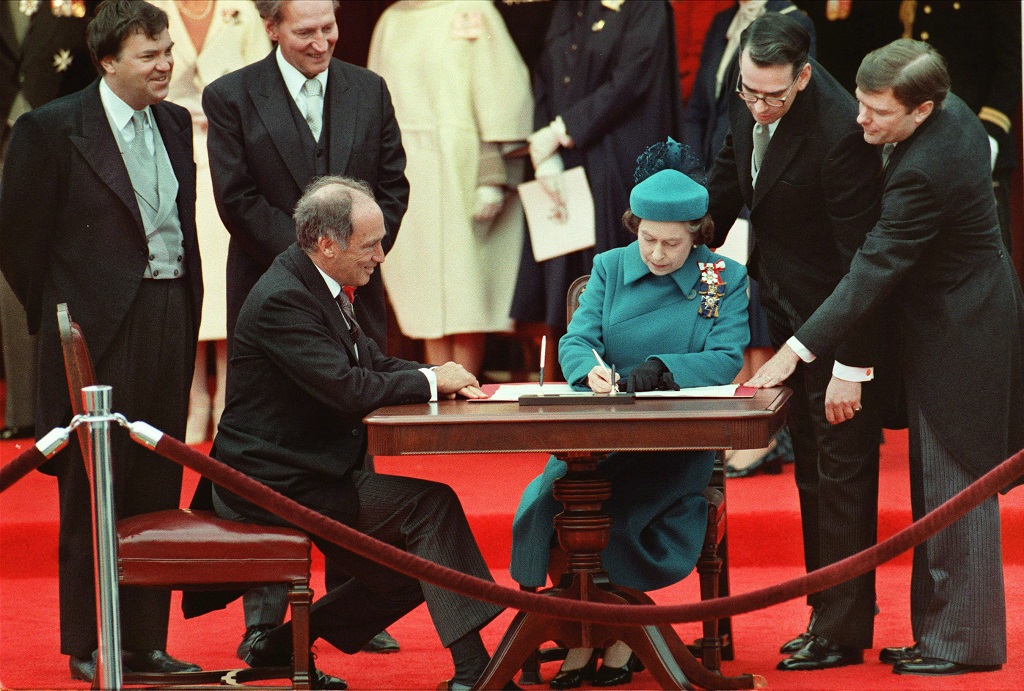
Queen Elizabeth II signs Canada’s constitutional proclamation in Ottawa on April 17, 1982 as Prime Minister Pierre Trudeau looks on.
THE CANADIAN PRESS/Stf-Ron Poling
A little more seriously, though your Line editors wouldn’t describe themselves as ardent monarchists, we do believe that we shouldn’t invest much time and energy into trying to fix what ain’t broke. Canada’s system of government doesn’t always deliver optimal outcomes — we mean, look around, folks — but it is stable, reliable and proven. Given our track record at big new policies, those are three things we have absolutely zero confidence any successor system to the monarchy would be, even in the fantastically unlikely chance we could design and implement one.
Is it weird putting a ton of our reserve powers and our very sovereignty inside the living essence of an old woman on an island across the ocean? Yes. Does it work? Also yes. Would we botch any effort to replace said old lady with literally any other system? A resolute yes. The monarchy is weird, and it’s not how we’d design Canada if we were starting Canada from scratch today, but it works, folks, and these days, there’s not much else we can say that about. Further, it’s hard not to like Her Majesty. Our thoughts are with her today. Whatever your qualms with royalty or the royals may be, surely you can spare a thought to a woman who lost her husband … oh, who are we kidding? Lots of people can’t or won’t.
April 7, 2021
QotD: The G-[pick-a-number] meetings
The first three were essential to plan for victory and peace, though many of their key provisions, especially for the liberation of Eastern Europe, were ignored by Stalin. The first Nixon-Brezhnev meeting was substantive and a couple of the later Reagan-Gorbachev meetings were very productive. These were intense business meetings between people who really were at the summit of world power and influence. The only matter agreed to in meetings between Soviet and American leaders between 1945 and 1972 was in the “kitchen debate” between then vice-president Nixon and Khrushchev in Moscow in 1959, when (forgive my coarseness in the interests of historical accuracy), Khrushchev accused Nixon of uttering “Horse shit, no, it is cow shit, and nothing is fouler than that” to which Nixon replied, “You don’t recognize the truth, and incidentally, pig shit is fouler than cow shit.” Khrushchev conceded the second point.
Conrad Black, “Take heed Canada: the U.S. would win a true trade war”, Conrad Black, 2018-06-16.
Comments Off on QotD: The G-[pick-a-number] meetings
April 5, 2021
The 1919 Red Scare – the craziest year in American history
The Cynical Historian
Published 19 May 2016Many people have heard of the first Red Scare, but we should look at the year of 1919 more thoroughly. It’s probably the craziest one in American history.
Ann Hagedorn, Savage Peace: Hope and Fear in America, 1919 (New York: Simon & Schuster Paperbacks, 2007). https://amzn.to/2NHIcaT
————————————————————
contribute to my Patreon:
https://www.patreon.com/CynicalHistorianLET’S CONNECT:
https://twitter.com/Cynical_History
————————————————————
wiki:
The First Red Scare was a period during the early 20th-century history of the United States marked by a widespread fear of Bolshevism and anarchism, due to real and imagined events; real events included those such as the Russian Revolution. At its height in 1919–1920, concerns over the effects of radical political agitation in American society and the alleged spread of communism and anarchism in the American labor movement fueled a general sense of paranoia.The Scare had its origins in the hyper-nationalism of World War I as well as the Russian Revolution. At the war’s end, following the October Revolution, American authorities saw the threat of Communist revolution in the actions of organized labor, including such disparate cases as the Seattle General Strike and the Boston Police Strike and then in the bombing campaign directed by anarchist groups at political and business leaders. Fueled by labor unrest and the anarchist bombings, and then spurred on by United States Attorney General A. Mitchell Palmer’s attempt to suppress radical organizations, it was characterized by exaggerated rhetoric, illegal search and seizures, unwarranted arrests and detentions, and the deportation of several hundred suspected radicals and anarchists. In addition, the growing anti-immigration nativism movement among Americans viewed increasing immigration from Southern Europe and Eastern Europe as a threat to American political and social stability.
Bolshevism and the threat of a Communist-inspired revolution in the U.S. became the overriding explanation for challenges to the social order, even such largely unrelated events as incidents of interracial violence. Fear of radicalism was used to explain the suppression of freedom of expression in form of display of certain flags and banners. The First Red Scare effectively ended in mid-1920, after Attorney General Palmer forecast a massive radical uprising on May Day and the day passed without incident.
————————————————————
Hashtags: #History #1919 #RedScare #SpanishFlu #Bolshevism #BlackSox #strikes #WoodrowWilson #LeagueOfNations #prohibition #suffrage
[Note: this was filmed in 2016 … I think 2020 has now taken the mantle of “craziest year”. Unless 2021 doubles down all the weirdness of 2020.]
Comments Off on The 1919 Red Scare – the craziest year in American history
QotD: NYC goes out of its way to “afflict the comfortable”
One might ask why a social-services functionary in New York City would cite the Bible in defense of public policy — except that the quotation is not even from the Bible. In fact, it is from Finley Peter Dunne, a popular Chicago columnist from the 1890s who invented a humorous character named “Mr. Dooley,” an Irish bartender who delivered his wisdom in dialect.
The original quotation, in which Mr. Dooley described the function of the newspaper: “Th’ newspaper does ivrything f’r us. It runs th’ polis foorce an’ th’ banks, commands th’ milishy, controls th’ ligislachure, baptizes th’ young, marries th’ foolish, comforts th’ afflicted, afflicts th’ comfortable, buries th’ dead an’ roasts thim aftherward.” Somehow, in a bizarre game of “cultural telephone,” this mock-sonorous fiddle-faddle has gathered the effulgence of holy writ for progressives, who take it as descriptive of their “joyous responsibility.”
On the one hand, it’s comical that this scrap of tabloid wit is taken so gravely by self-righteous officials. Properly speaking, isn’t it their job to make people more comfortable, not to diminish comfort? But on the other hand, it’s frightening to consider that New York is now run by progressive militants who appear to believe that their vocation is to “afflict” their constituents by disrupting their undeserved calm and comfort. Mass immiseration is not a side effect of bad policy; it is the policy.
Seth Barron, “The Politics of Affliction”, City Journal, 2020-12-17.
Comments Off on QotD: NYC goes out of its way to “afflict the comfortable”
April 3, 2021
QotD: When governments try to “help” small businesses
Love for small business is one of the few universals in American politics. In a 2018 Gallup poll, just 56 percent of Americans viewed capitalism positively; but 92 percent had a positive view of small business, and 86 percent viewed entrepreneurs positively. Government at all levels has policies intended to help small businesses, but there’s little evidence that these programs are effective — and even when bureaucrats try to help, they impede small-business creation by imposing new regulations. The New York City Business License and Permit index presents a daunting compendium of licenses and certifications that can be required to start a business in the city — such as the Esthetics License (needed if you want to “conduct beauty treatment”) and the Certificate of Fitness for Fire and Emergency Drill Instructor (necessary to “lead fire drills in buildings that do not require a Fire Safety Director”).
Such overregulation represents a second way that the deck gets stacked in the American economy against outsiders. The decline of American entrepreneurship is a discouraging trend of the last 30 years. In 2015, economist John Haltiwanger documented numerous signs of diminished business dynamism in the United States. In the early 1980s, he noted, America’s startup rate exceeded 13 percent, which meant that about one-eighth of all firms had just begun. The startup share fell to 10 percent near the end of the Clinton years and below 8 percent during the Great Recession. While no consensus exists about the causes of this dramatic drop, expanding business regulation is a plausible candidate.
Edward L. Glaeser, “How to Fix American Capitalism”, City Journal, 2020-12-13.
Comments Off on QotD: When governments try to “help” small businesses
March 31, 2021
QotD: The first and only “inalienable” right
It would’ve been far better to have kept the trio in Locke’s original words – life, liberty, and property – but even that wouldn’t have saved us, because the proposition is flawed from the beginning. The full quote is:
We hold these truths to be self-evident, that all men are created equal, that they are endowed by their Creator with certain unalienable Rights, that among these are Life, Liberty and the pursuit of Happiness …
… and pretty much all of that is wrong.
As we’ve seen, it was a major part of Hobbes’s project to prove that men do in fact have such rights, because it’s not at all “self-evident.” That was the whole point of the Wars of Religion – heretics have NO rights, because they have put themselves beyond the pale of the human community. For the Wars of Religion to end, political legitimacy had to be secularized.
That was Hobbes’s goal. That’s what the “State of Nature” thought experiment was about. Does man has any rights in himself, that flow only from his existence as a human being? In other words, does he have rights NOT endowed by his Creator?
Hobbes argued that we DO have such rights, of course … but, crucially, we only have the full exercise of them in the State of Nature. For Hobbes, all rights are, at bottom, the right to self-defense. Getting out of the State of Nature involves laying at least part of that right down – “alienating” it, in the Latinate English of the 17th century – creating in the process a “corporate person” who “represents” us all. Far from being “inalienable,” then, Life and Liberty, at least, have to be alienated, at least to some degree, if civilization is to exist at all …
… at least according to Hobbes, and do you see what I mean about people trying to adopt his terms while dumping his conclusions?
Hobbes had plenty of examples to hand, writing as he was in the last, nastiest phase of the Wars of Religion. According to Hobbes, the Leviathan – who, let’s recall, can be a Senate or something just as easily as a monarch – absolutely has the right to your life and liberty, since your voluntary surrender of them is what creates the Leviathan in the first place. How else could wars be fought in the gunpowder age? A medieval king leading his personal affinity into battle didn’t have to worry about political theory. An Early Modern king, fielding armies of tens of thousands, did. Without an animating ideology, they’re just mercenaries – ask Machiavelli how that works out.We’ll skip over that “pursuit of happiness” crap, since that’s probably just Jefferson’s noodle-headed way of alluding to Classical political theory, and circle back to the start: “all men are created equal.” As we’ve seen, this was central to Hobbes’s “State of Nature” thought experiment … but, as is obvious to anyone with real-world experience, it only applies there.
Severian, “Hobbes (II)”, Founding Questions, 2020-12-11.
Comments Off on QotD: The first and only “inalienable” right
March 30, 2021
QotD: Static societies and disruptive outsiders
Stable societies with unchanged boundaries, Olson observed, “tend to accumulate more collusions and organizations for collective action over time.” Instead of accepting rules that encourage overall growth, these collusive organizations — trade groups and labor unions were paradigmatic examples — fight to keep what they have, slowing down “a society’s capacity to adopt new technologies and to reallocate resources in response to changing conditions,” thus reducing economic efficiency. Decline follows.
Olson pointed to Japanese stagnation under the Tokugawa shogunate, when, “before Admiral Perry’s gunboats appeared in 1854, the Japanese were virtually closed off from the international economy.” Ruling Japanese society, he writes, “were any number of powerful za, or guilds, and the shogunate or the daimyo often strengthened them by selling them monopoly rights.” The guilds “fixed prices, restricted production and controlled entry in essentially the same way as cartelistic organization elsewhere.”
A second example: Great Britain, “the major nation with the longest immunity from dictatorship, invasion and revolution” and, consequently, Olson explained, suffering “this century a lower rate of growth than other large, developed democracies.” In Olson’s view, the weak performance resulted from limits on change established by a “powerful network of special-interest organizations,” which included labor unions, industrial groups, and aristocratic cliques. By the 1970s, after the conservative government of Edward Heath fell in a losing battle with striking miners, many deemed Britain ungovernable. Olson contrasted the British situation with that of postwar Germany and Japan, where the chaos and destruction of wartime defeat wiped away established industrial and retail groups, leaving the field open to newcomers like Soichiro Honda or the Albrecht family (creators of international supermarket giant Aldi), who could work economic magic.
The word “ungovernable” was also used to describe New York in the 1960s and 1970s, when Mike Quill’s transit union ran roughshod over Mayor John Lindsay’s attempts to control public-sector wage growth. New York was a long-established city with lots of political collusion. The old Tammany Hall could broker deals to keep Gotham going, but Lindsay’s successor, Abe Beame, proved too weak to resist any special interest that wanted more spending or government favors. New York’s spending kept rising even as public services worsened, until bankruptcy loomed and public power wound up in the hands of the unelected Municipal Assistance Corporation. Thankfully, New York reformed itself economically, at least to some extent, under Mayors Rudolph Giuliani and Michael Bloomberg, as Britain did under Prime Minister Margaret Thatcher. Sufficiently strong leaders can buck entrenched insiders.
Edward L. Glaeser, “How to Fix American Capitalism”, City Journal, 2020-12-13.
Comments Off on QotD: Static societies and disruptive outsiders
March 25, 2021
Boris wanted to be a new Churchill, but instead is shaping up as a cut-rate Cromwell
Bella Wallersteiner on the vast difference between Boris Johnson’s hopes for his premiership and the actual role he’s been playing:

A year has passed since the British public accepted lockdown as the best way to combat the spread of the novel coronavirus, yet we are still living under the strictures of the Coronavirus Act.
In the name of virus protection, we have experienced a level of authoritarianism not seen in this country since the time of Oliver Cromwell – restrictions on freedom of movement, forced closure of businesses, and prohibitions on weddings and funerals have challenged many of our most cherished beliefs about the limits of government power, while the ban on large gatherings means we cannot even legally protest them.
Today, as we mark the anniversary of the first lockdown, we would do well to reflect on just how compliant we have become to what were intended to be “emergency” powers.
Cheery platitudes have ranged from “we’re all in this together” and “we’ll send this virus packing” to the hopelessly inaccurate “it will all be over by Christmas”. But history tells us that governments tend to hold on to additional powers far longer than is necessary.
The Defence of the Realm Act of 1914, for example, granted the government wide-ranging powers in the name of public safety, including heavy censorship of the press and the introduction of rationing. Pub licensing laws remained in place for decades, only relaxed in November 2005.
The Second World War brought The Emergency Powers (Defence) Act 1939 which ceded immense regulatory powers to the government, including provisions “for the apprehension, trial and punishment of persons offending against the Regulations and for the detentions of persons whose detention appears to be expedient to the Secretary of State in the interest of public safety or the defence of the realm”. The Act was finally repealed on 25th March 1959, but the last of the Defence Regulations (which included the maintenance of public order) was not lifted until 31st December 1964.
Comments Off on Boris wanted to be a new Churchill, but instead is shaping up as a cut-rate Cromwell
March 24, 2021
“By now it has dawned on even the most glossy-eyed internationalists that we are well into another sides-picking era of global geopolitics”
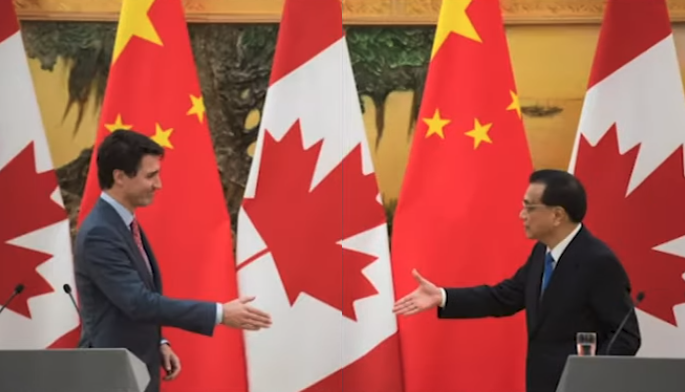
Like it or not, we’re already a few years into a new Cold War, this time with the Chinese Communist Party. The Canadian government seems to be among the last in the world to recognize this change in the geopolitical situation. In The Line, Andrew Potter shows why Justin Trudeau must stop trying to cuddle up to Xi:
The outrageous secret trials in China of Michael Spavor last Friday and Michael Kovrig this Monday are nothing more than punctuation marks on a storyline that has been obvious for some time now.
Which is why it was enormously gratifying to see more than two dozen diplomats show up to seek admittance to Kovrig’s trial. The fact that none was admitted is unfortunate but largely beside the point — what matters is the public display of solidarity. Even more gratifying perhaps is the announcement (by Canadian officials) that the U.S. has promised to treat the two Canadians as if they were American citizens. After all, it was our acquiescence to a U.S. request to arrest Huawei executive Meng Wanzhou at Vancouver International Airport in 2018 that prompted Beijing to nab Spavor and Kovrig in retaliation. While Chinese officials have denied that what this amounts to is hostage diplomacy, they’ve also made it clear that the fate of the Michaels is tied to that of Meng.
What makes the public support from all of these countries so remarkable is that a lot of them — the Czechs, the Finns, the Romanians — have very little to gain from sticking their neck out for Canada. More to the point, every one of these countries has good reason to wonder just how committed Canada itself is to this show of collective strength. After all, it was only five years ago that senior members of the Liberal party were freely — privately, but freely — saying that as far as the Liberal government was concerned, the U.S. was yesterday’s news and China was the horse Canada was going to ride into the future.
And while a lot has changed over the last five years (not least of which is the fact that Donald Trump has come and gone as president of the United States), it remains incomprehensible that it was just last year the Canadian National Research Council placed its disastrous COVID-19 vaccine bet with CanSino Biologics, a Chinese company with close ties to the Chinese military. What are our allies to make of the fact that only last month, the federal granting agency NSERC partnered with Huawei to sponsor computer engineering at Canadian universities. Or that Canada’s visa office in Beijing is owned and staffed by a Chinese police force?
Whether it is a matter of naïveté, bad faith, or outright cravenness, Canada continues to give every indication that it is a country that is still hedging its bets.
Comments Off on “By now it has dawned on even the most glossy-eyed internationalists that we are well into another sides-picking era of global geopolitics”
March 21, 2021
“Speaking of military affairs […] the sexual misconduct scandals continue to rock the senior leadership of the Canadian Armed Forces”
The weekend round-up at The Line includes a bit more on the ongoing scandal where over a third of the senior military leadership of the Canadian Forces are currently under investigation for sexual impropriety:
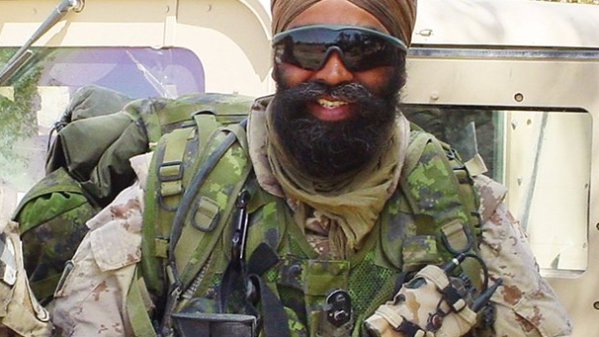
Canadian Defence Minister (at least for the moment) Harjit Sajjan in better times.
We noted with interest Steve Saideman, who holds the Paterson Chair in International Affairs at Carleton, has called for National Defence Minister Harjit Sajjan’s resignation — and Saideman is no partisan alarmist.
We agree with Saideman. Sajjan should quit or be sacked, frankly, pour encourager les autres. He should be epically sacked for birthing one of the stupidest possible excuses for inaction that we’ve ever heard from a minister of the Crown. Sajjan, under sharp questioning at committee, said — he really said this, we shit you not — that it wasn’t his place to get involved when allegations of sexual misconduct by retired army general Jonathan Vance were brought to his attention because, since Sajjan is an elected official, his involvement would politicize the matter.
Think about that for a minute. The entire goddamned basis of our system of government is ministerial accountability. Once upon a time, before it became awkward and inconvenient for him personally, Prime Minister Trudeau used to even boast about how he was bringing back government by cabinet, in contrast to that nasty, evil, centralizing Harper fellow. But according to Minister Sajjan, ministers are actually the wrong people to get involved in these serious issues … because they’re politicians. This completely inverts the way our government is supposed to work, though it might actually be a depressingly accurate summary of how Trudeau’s cabinet ministers interpret their roles.
But think about the message it sends to to our women (and men!) in uniform who’ve been the victim of abuse and harassment, sexual or otherwise: sorry, guys, I’d love to help and all, but I’m too busy being a fucking Liberal politician to step in as minister of National Defence.
Sajjan’s gotta go. Now. If he doesn’t quit he should be fired. And as we’ve been saying for weeks now, this is only getting worse — the sexual misconduct scandal that was frantically ignored by Canada’s self-styled feminist government has now made The New York Times, which means, if you’re an Ottawa Liberal, this is about as real as it gets. All that media attention was nice when it was fawning, with nice photo spreads, but … this? This isn’t fun for the Liberals at all.
Comments Off on “Speaking of military affairs […] the sexual misconduct scandals continue to rock the senior leadership of the Canadian Armed Forces”
March 14, 2021
“You mean Justin Trudeau might have not lived up to his own self-branding and may have even — this is hard to even type — fallen short of the standard he sets for others?!”
Over at The Line, they’ve had to double the number of fainting couches available for overwhelmed and emotionally depleted staff members after discovering that the ongoing military leadership scandal goes up to the man at the top, Justin Trudeau himself:
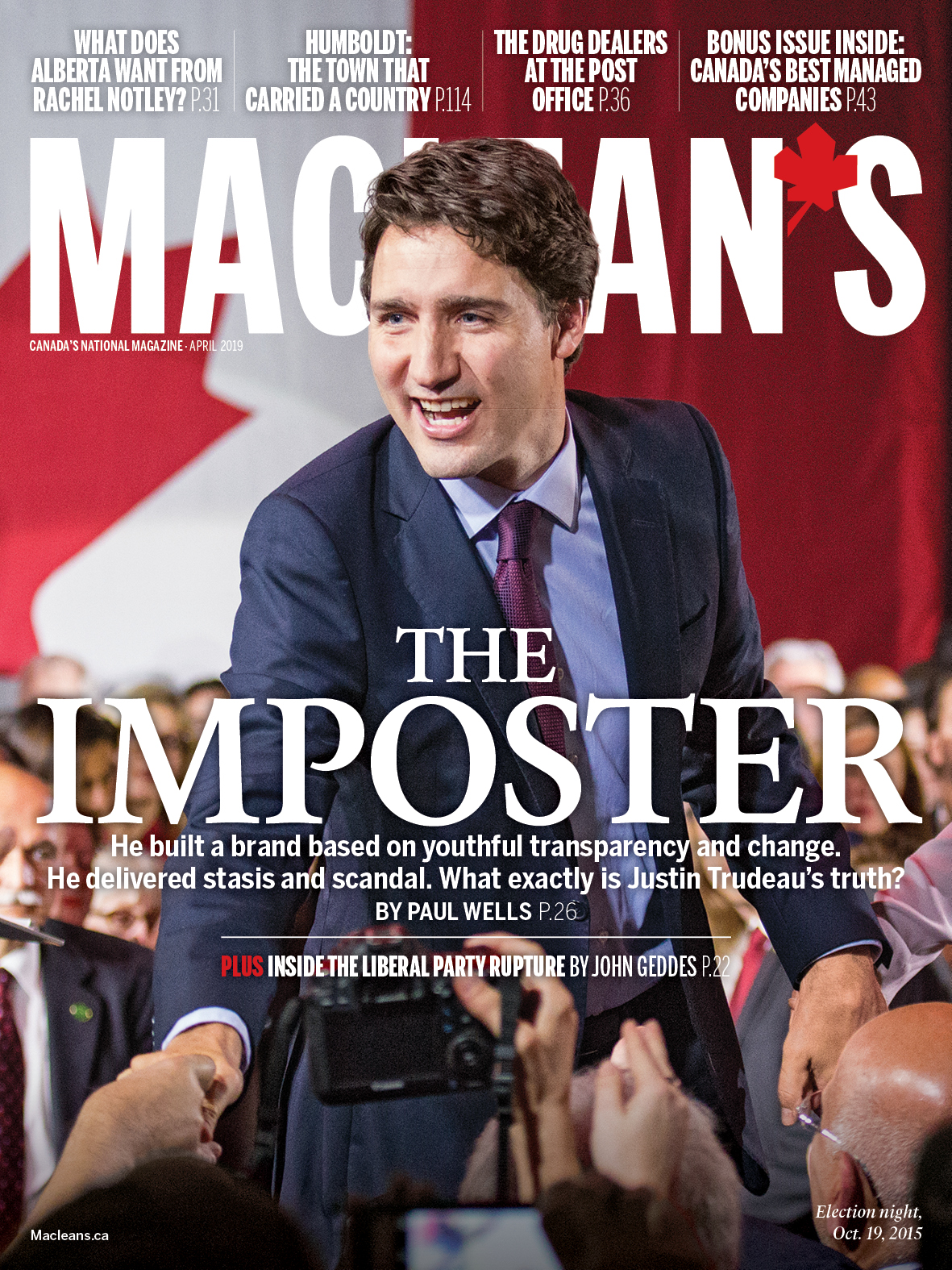
We told you a week ago about the sexual misconduct scandal(s) at the very top of the Canadian Armed Forces. Army General Jonathan Vance recently retired after serving as the chief of the defence staff, the highest post in the military. Shortly after, Global News reported that he had faced two allegations of inappropriate sexual conduct during his career. Then, Vance’s successor was also required to step aside while being investigated for allegations of a sexual nature.
This is embarrassing for the military, but as we noted last week, there’s danger here to the government — Defence Minister Harjit Sajjan was told about the allegations against Vance, and passed that up the chain of command … meaning the PM knew, and did nothing.
Whoa, whoa, whoa. You mean Justin Trudeau might have not lived up to his own self-branding and may have even — this is hard to even type — fallen short of the standard he sets for others?!
OK, OK. We had to sit down a minute there and catch our breath. It’s all just so much to take in. The government clearly knows it’s in trouble. Sajjan gave some testy testimony in which he said that it would have been inappropriate for him take an active role in any investigation. This is an awfully god-damned novel interpretation on ministerial responsibility that we’re excited to see become even dumber as this unfolds. The PM, for his part, has adjusted his ass covering; where once he said that he was not aware of the allegations against Gen. Vance, he now admits he was told in 2018, but says he did not know the details.
Think about that for a minute. The prime minister of Canada, the self-styled feminist prime minister of Canada, was told that the country’s top soldier, a man in a position of incredible power and authority, was accused of sexual misconduct, and … that’s it? Like he didn’t ask any questions? Give the old general a buzz and ask what’s up? A government that tried to sink an admiral in a case so flimsy it collapsed once readily available facts came to light couldn’t be bothered to find out if all that smoke around the general may have been from a fire?
This is, remarkably, not even the funny part. Everything above is embarrassing and awful and pathetic, but it actually gets worse.
Comments Off on “You mean Justin Trudeau might have not lived up to his own self-branding and may have even — this is hard to even type — fallen short of the standard he sets for others?!”


