
Armoured Archives
Published 8 Mar 2023This video is going to take a quick look at those wavy lines you might see on some tank barrels, what did they do, and why? And was this ever an officially sanctioned project?
(more…)
July 15, 2023
Sherman Firefly – What were those wavy lines for?
Comments Off on Sherman Firefly – What were those wavy lines for?
July 13, 2023
Bill Slim’s plan for the Battle of Meiktila in March 1945
Dr. Robert Lyman on the subject of his most recent book, The Reconquest of Burma 1944-45: From Operation Capital to the Sittang Bend:
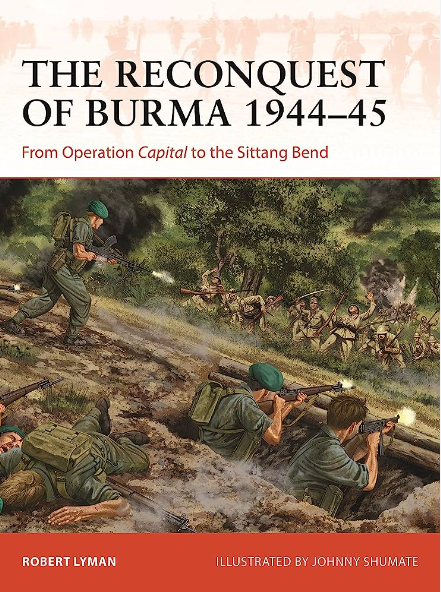
When I was writing my latest book with General Lord Dannatt he said to me, “Rob, if I’ve got one criticism of A War of Empires it’s that you don’t emphasise enough the role of Bill Slim in coming up with the plan for victory in 1945, and executing it perfectly.” Fair. As Slim’s military biographer, I told Richard that I didn’t want to be accused of rewriting that book again. I was conscious of this problem as I was writing A War of Empires.
But it is fair criticism. It may be that I underplayed Slim’s role when I was considering all the other critical features in this great campaign. The idea behind the dramatic victory by 14th Army in Burma in 1945 was Slim’s and Slim’s alone. He pursued his own plan through to its remarkable conclusion.
[…]
Slim’s original plan was to fight the main strength of the Japanese army on the Shwebo Plain, a dry, flat plain between the loops of the Chindwin and Irrawaddy. Not only would the terrain be well suited to the deployment of armour, for which the Japanese had little effective reply, but the Japanese would be trapped with the river-line at their back. Slim had assumed that the Japanese would be unprepared to make a voluntary withdrawal. The scene was set for Slim to be able to deploy his superior mobility and firepower to destroy the main Japanese army in Burma.
By the end of the year, however, it became apparent that the Japanese were not going to conform to Slim’s plan for the battle, and General Kimura had seen the trap which his forces would be caught in if they attempted to stand and fight in the Shwebo Plain. Showing unusual flexibility and moral courage Kimura promptly withdrew his reconstituted 15th Army behind the Irrawaddy. Kimura hoped, not without reason, to be able to smash Slim’s army as it attempted to cross the river, which in itself presented an immense obstacle to the British. He would then counter-attack and destroy Slim as the British withdrew during the monsoon to the Chindwin.
Kimura’s move behind the Irrawaddy destroyed at a stroke Slim’s plan. Undaunted, and recognising the supreme importance of destroying Kimura’s army rather than taking ground for its own sake, Slim came up with another plan. In basic outline, his new plan (Operation Extended Capital) entailed crossing the Irrawaddy and fighting the decisive battle in February in the plain around Mandalay and the low hills around Meiktila, the key enemy air and supply base in Central Burma. Both the road and rail links between Mandalay and Rangoon ran through Meiktila. If Meiktila fell, the whole structure of the Japanese defence of Central Burma would collapse.
Comments Off on Bill Slim’s plan for the Battle of Meiktila in March 1945
July 12, 2023
Nazi drone war begins – War Against Humanity 103
World War Two
Published 11 Jul 2023Bombing enemy civilians does nothing to advance a nation’s war effort. But now, Adolf Hitler believes that the V-1 flying bomb, the first of the Vengeance Weapons, will bring London to its knees and unite the German population behind the war effort as never before. The missiles are ready for launch and thousands more civilians will die to satisfy the Führer’s
delusions.
(more…)
Comments Off on Nazi drone war begins – War Against Humanity 103
July 10, 2023
“De-banking” is the financial world’s version of cancelling someone
At the Free Life blog, Alan Bickley considers the recently reported rash of prominent (and not-so-prominent) critics of the British government being refused service by their banks and further refused permission to open new accounts with any other chartered bank. Being “cancelled” by social media companies is bad, but being “de-banked” in a modern economy is worse than being declared a “non-person” by a totalitarian regime:
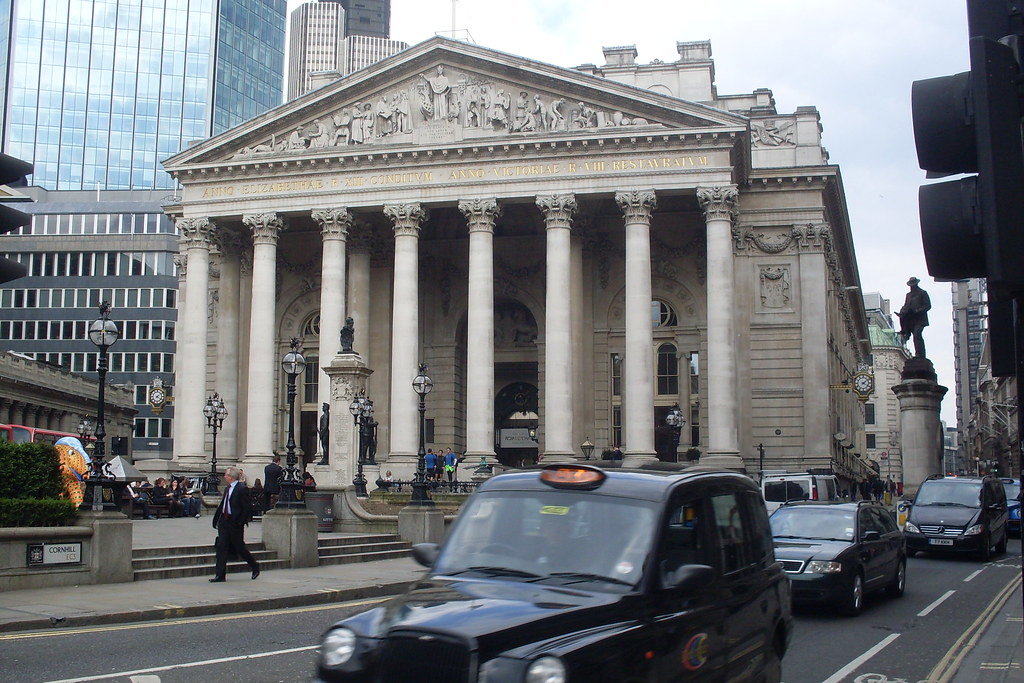
“The bank of England. London.”by Demetrio Neri_1959 is licensed under CC BY-NC-SA 2.0


In the past month, we have heard that various rich and well-connected people have had their bank accounts closed, seemingly because of their dissident political opinions. The same has happened to other people who are much poorer and without connections. Twenty years ago, the same happened to the British National Party. There is a simple libertarian response to this.
No one has the right to coerced association with anyone else. If someone comes to me and asks me to provide him with services, I have an absolute right to say yes or no. If I am uncharitable enough to dislike the colour of his face or what he does in bed, so much the worse. I may lose valuable business. But it is my time, and it is my choice. If anyone starts a whine about the horrors of discrimination, he should be ignored. We have an absolute right to discriminate against others for any reason whatever.
This being said, the position becomes less clear when state power of some kind is involved. Banks in this country require a licence from the State to operate. This protects them from open competition. It also gives them access to services and information from the State that are not given to other persons or businesses. If a bank finds itself in serious financial difficulties, it has at least a greater chance than other large businesses of being saved by the State – by a coordination of support by others or by direct financial help. The State has also made it illegal for many transactions to be made in cash. If I try to buy a car with £20,000 in cash, the car dealership is obliged to refuse my business, or to make so many enquiries that accepting my business is too much trouble. In effect, anyone who wants to spend more than a few thousand pounds in cash is obliged by various actual and shadow laws to use a bank account.
So we have privileged corporations and an effective legal obligation for people to do business with them. This entirely changes the libertarian indifference to commercial discrimination. The banks are a privileged oligopoly. The banks compete for custom among a public that is free to choose one bank rather than another, but that is compelled to choose some bank. For this reason, since the relevant laws will not be repealed, it is legitimate to demand another law to offset some of the effects of the others. Banks should be legally obliged to accept the business of any person or group of persons without question. Limitations on what services are provided must be justified on the grounds of previous financial misconduct as reasonably defined. For example, it should be permitted for a bank to refuse an overdraft to someone who is or has recently been bankrupt, or whose spending habits are obviously reckless. Perhaps it should be permitted for a bank to refuse to lend money for purposes it regards as scandalous as well as commercially unviable. Therefore, a representative of the White Persons’ Supremacy Foundation, or the Vladimir Putin Appreciation Society, should be able to walk into any bank and open an account – with no questions asked. If an account is refused, there should be a legal obligation on the bank to provide a full explanation of the refusal. If the refusal is not made on valid commercial grounds, there should be a right of appeal before a tribunal which does not award costs, and this tribunal should have the power to grant punitive damages against any bank found to be discriminating on any grounds but the validly commercial.
The refusal of banking services is only the beginning of a new and sophisticated totalitarianism. What the banks can do can also be done by supermarkets, by Internet service providers, by hotel chains, by airlines and railway companies, and by utility providers. There is indeed a good case for insisting on a law forbidding any organisation that has the privilege of limited liability from any but obviously commercial discrimination.
Comments Off on “De-banking” is the financial world’s version of cancelling someone
“… the Western world is failing — culturally and economically — because the government now has a hand in so much of society”
The Armchair General would almost certainly agree with my frequent lament that the more the government tries to do, the less well it does everything:
There is a famous quote by American journalist and satirist H.L. Menken, which has been deployed by many political writers over the years:
The whole aim of practical politics is to keep the populace alarmed (and hence clamorous to be led to safety) by an endless series of hobgoblins, most of them imaginary.
It is an enduring quote because it has the ring of truth1, and it certainly fits with the Machiavellian aspect of politics. This attitude was, without doubt, deployed by governments across the world during Covid (and, to some extent, still is).
Your jaundiced2 General would like to propose a related, alternative and rather more plausible soundbite that, I believe, more adequately describes the Western world in the twenty-first century:
The whole consequence of practical politics is the keep the ignorant populace alarmed (and hence clamorous to be kept in comfort) by an endless series of colossal fuck-ups, labelled as crises, caused entirely by the government.3
Every time that you see the media whipping up a frenzy about a “crisis“, you can be 99% sure that the issue in question has been caused by the state — and that the real solution is to remove the government intervention. And that is never, ever the action actually proposed.
Crises of Government Origin
Your jaundiced General refers to these phenomena as “Crises of Government Origin” (COGO), and will form the back-bone of a series of posts titled with that acronym. Many of the issues are interlinked, and most are absolutely critical if we are ever to confront the economic and social issues facing us today.These include (but are not limited to):
- the energy crisis;
- the Climate Warming / Change / Heating crisis;
- the housing crisis;
- the NHS staffing crisis;
- the police shortage crisis;
- the obesity crisis;
- the education crisis;
- the pandemic crisis;
- the productivity crisis;
- the activist “charity” crisis;
- the drugs crisis (Scottish edition);
- the rape gang crisis;
- the intersectional and gender crisis;
- just about any other “crisis” you can think of.
To be sure, the UK government is not the worst in some of these areas — but, since it is in UK that my comfy leather armchair is situated, it is the rampant stupidity of our own governments that I shall concentrate on. And no, not all of these posts will include reminding people that Grant Schapps is a prick.
I can promise that every one of them will include illustrations demonstrating the mind-gargling incompetence of our governments (of all persuasions) and “Rolls Royce” civil service4.
The law is a blunt instrument, and the government is really inefficient at doing anything at all.
Fundamentally, the Western world is failing — culturally and economically — because the government now has a hand in so much of society. And the UK is in the vanguard of this malaise as Sharon White, at the time Permanent Secretary to the Treasury (and currently fucking things up in typically Rolls Royce civil servant fashion at John Lewis), said (in a rare example of her being right) in 2015 at the Institute for Government:
The UK is “almost the most centralised developed country in the world”.
Indeed it has been observed that, by some measures, the UK is more centralised than Soviet Russia. This is why we are failing.
The Crises Of Government Origin (COGO) series aims to examine some of these failures — large and small. For starters, let’s have a look at Hate Speech laws and why they are so dangerous.
1. The same applies to Menken’s definition of Puritanism: “The haunting fear that someone, somewhere, may be happy”.
2. Caused less by poor mood than incipient liver failure. Now pass the port, would you, old chap. No, to the left, you fool!
3. Yes, yes — I realise that it needs honing, but it will do for now. Feel free to submit more elegant versions in the comments.
4. Snork.
Comments Off on “… the Western world is failing — culturally and economically — because the government now has a hand in so much of society”
Echoes of War: Accounts of Operation Husky and the Allied Landings in Sicily
OTD Military History
Published 9 Jul 2023On July 9/10 Allied forces launched Operation Husky, the invasion of Sicily. This video presents accounts from various Allied military personnel who were there that day.
(more…)
Comments Off on Echoes of War: Accounts of Operation Husky and the Allied Landings in Sicily
July 9, 2023
The Destruction of Army Group Center – Week 254 – July 8, 1944
World War Two
Published 8 Jul 2023Operation Bagration continues, smashing the armies of German Army Group Center and taking ever more territory including the prize of Minsk; on Saipan the Americans have taken most of the island when the Japanese resort to a huge suicidal banzai charge to try and turn the tide; and in Normandy new attacks begin try to finally take Caen and St. Lo.
(more…)
Comments Off on The Destruction of Army Group Center – Week 254 – July 8, 1944
July 8, 2023
The Perfect D-Day That History Forgot
Real Time History
Published 7 Jul 2023The summer of 1944 saw the Allies land in France not once but twice. Two months after Operation Overlord, the Allies also landed in Southern France during Operation Dragoon. It was “the perfect landing” and opened up the important ports of Marseille and Toulon for Allied logistics.
(more…)
Comments Off on The Perfect D-Day That History Forgot
QotD: The amputation of the soul
Reading Mr Malcolm Muggeridge’s brilliant and depressing book, The Thirties, I thought of a rather cruel trick I once played on a wasp. He was sucking jam on my plate, and I cut him in half. He paid no attention, merely went on with his meal, while a tiny stream of jam trickled out of his severed œsophagus. Only when he tried to fly away did he grasp the dreadful thing that had happened to him. It is the same with modern man. The thing that has been cut away is his soul, and there was a period — twenty years, perhaps — during which he did not notice it.
It was absolutely necessary that the soul should be cut away. Religious belief, in the form in which we had known it, had to be abandoned. By the nineteenth century it was already in essence a lie, a semi-conscious device for keeping the rich rich and the poor poor. The poor were to be contented with their poverty, because it would all be made up to them in the world beyound the grave, usually pictured as something mid-way between Kew Gardens and a jeweller’s shop. Ten thousand a year for me, two pounds a week for you, but we are all the children of God. And through the whole fabric of capitalist society there ran a similar lie, which it was absolutely necessary to rip out.
Consequently there was a long period during which nearly every thinking man was in some sense a rebel, and usually a quite irresponsible rebel. Literature was largely the literature of revolt or of disintegration. Gibbon, Voltaire, Rousseau, Shelley, Byron, Dickens, Stendhal, Samuel Butler, Ibsen, Zola, Flaubert, Shaw, Joyce — in one way or another they are all of them destroyers, wreckers, saboteurs. For two hundred years we had sawed and sawed and sawed at the branch we were sitting on. And in the end, much more suddenly than anyone had foreseen, our efforts were rewarded, and down we came. But unfortunately there had been a little mistake. The thing at the bottom was not a bed of roses after all, it was a cesspool full of barbed wire.
It is as though in the space of ten years we had slid back into the Stone Age. Human types supposedly extinct for centuries, the dancing dervish, the robber chieftain, the Grand Inquisitor, have suddenly reappeared, not as inmates of lunatic asylums, but as the masters of the world. Mechanization and a collective economy seemingly aren’t enough. By themselves they lead merely to the nightmare we are now enduring: endless war and endless underfeeding for the sake of war, slave populations toiling behind barbed wire, women dragged shrieking to the block, cork-lined cellars where the executioner blows your brains out from behind. So it appears that amputation of the soul isn’t just a simple surgical job, like having your appendix out. The wound has a tendency to go septic.
The gist of Mr Muggeridge’s book is contained in two texts from Ecclesiastes: “Vanity of vanities, saith the preacher; all is vanity” and “Fear God, and keep His comandments: for this is the whole duty of man”. It is a viewpoint that has gained a lot of ground lately, among people who would have laughed at it only a few years ago. We are living in a nightmare precisely because we have tried to set up an earthly paradise. We have believed in “progress”. Trusted to human leadership, rendered unto Caesar the things that are God’s — that approximately is the line of thought.
Unfortunately Mr Muggeridge shows no sign of believing in God himself. Or at least he seems to take it for granted that this belief is vanishing from the human mind. There is not much doubt that he is right there, and if one assumes that no sanction can ever be effective except the supernatural one, it is clear what follows. There is no wisdom except in the fear of God; but nobody fears God; there fore there is no wisdom. Man’s history reduces itself to the rise and fall of material civilizations, one Tower of Babal after another. In that case we can be pretty certain what is ahead of us. Wars and yet more wars, revolutions and counter-revolutions, Hitlers and super-Hitlers — and so downwards into abysses which are horrible to contemplate, though I rather suspect Mr Muggeridge of enjoying the prospect.
George Orwell, “Notes on the Way”, Time and Tide, 1940-03-30.
Comments Off on QotD: The amputation of the soul
July 7, 2023
Prototype Silenced Sten for Paratroops: the Mk4(S)
Forgotten Weapons
Published 24 Mar 2023The Sten Mk4 was developed experimentally in 1943 for use by British paratroops. It used a remarkably awful folding stock along with a shortened receiver and barrel to make a very compact package — albeit one that must have been very uncomfortable to shoot. Several different models were made, with this one being a Mk4a(S) — the suppressed version. The suppressor is essentially the same system as used on the MkII(S), but with the rear endcap and barrel being permanently fixed to the receiver of the gun.
Only a small number (allegedly 2000) Mk4 guns were originally made, and they were used for testing only — never for field service. Virtually all were destroyed after the war, with a few remaining examples in British museums. This one was amnesty registered in 1968, and is almost certainly the only one in private hands in the US (and possible the only privately owned one in the world).
The Mk4 was dropped in favor of the Mk5, which was a much more effective gun and was used by the British paratroopers in the late days of World War Two.
(more…)
Comments Off on Prototype Silenced Sten for Paratroops: the Mk4(S)
July 4, 2023
From the American Revolution: Short Land Pattern Brown Bess
Forgotten Weapons
Published 22 Mar 2023The standard weapon of the British Army in the American War of Independence was the “Brown Bess”, and today we are looking at a 1769 Short Land Pattern example of the Brown Bess. This was a smoothbore .75 caliber, 10.2 pound flintlock with a whopping 42 inch barrel (the Long Land Pattern it superseded had a 46” barrel). Adopted in 1769, it would serve as the British standard infantry arm until 1797.
This particular example was issued to the 53rd Infantry Regiment, otherwise known as the King’s Shropshire Light Infantry. This regiment arrived in Quebec City in May 1776 and participated in the fighting at Ticonderoga and Saratoga, where several of its companies were captured and interned until the end of the war.
(more…)
Comments Off on From the American Revolution: Short Land Pattern Brown Bess
July 3, 2023
The Battle That Prevented A Nuclear World War Three | Kapyong: The Forgotten War | Timeline
Timeline – World History Documentaries
Published 2 Jul 2023On April 24, 1951, following a rout of the South Korean army, the Chinese People Volunteer Army pursued their enemy to the lines of Australian and Canadian troops still digging fall-back defences, 39 kilometres to the rear. Here, sometimes at the length of a bayonet, often in total darkness, individual was pitted against individual in a struggle between a superpower and a cluster of other nations from across the world. They fought for a valley, the ancient and traditional invasion route to Seoul. If it fell the southern capital and the war, was lost. The United Nations troops had the military advantage of the high ground and artillery support: the Chinese relied entirely on vastly superior numbers. As a result, young men from both sides found a battle which was very close and very personal.
The Battle of Kapyong became the turning point of China’s Fifth Offensive in that Korea spring. The aim of the offensive was to finally drive the foreign troops out of South Korea and into the sea. What happened instead, changed the history of the Korean War. The Chinese were denied victory and forced back into negotiations. Had they succeeded, another crushing defeat for the US could have triggered events that led to a nuclear holocaust in Asia — and World War Three.
(more…)
QotD: The key weakness of the royal cause in the English Civil War
[T]he power of the mighty hath no foundation, but in the opinion and belief of the people.
A king whose knights won’t ride out to battle on his behalf is just a weirdo in funny clothes. Charles I lost for a lot of reasons, but far from the least of them was that his “foundation” was badly cracked. However attached one might be to the notion of monarchy in the abstract, it – monarchy – is always intimately connected to the personality of the monarch … and Charles I was a real piece of work, even by the world-class standards of Renaissance princes. Parliament was outgunned, often outmanned, and suffered from what should’ve been a critical shortage of experienced leadership. But all those massive advantages were offset by the fact that the Royalist forces were fighting for Charles I, personally.
(This is not the place for a long discussion of the course of the English Civil Wars – and I’m not qualified to give you one in any case – but a quick look at the top commanders of the opposing sides will illustrate the point. Prince Rupert was arguably the equal, mano-a-mano, of any Parliamentary general, up to and including Cromwell. But he was still a Prince, and carried on like one (like a young one, to boot) … and even if he weren’t, he was still running the show on behalf of his uncle. Cromwell, on the other hand, inspired fanatic loyalty, not least because he embodied a cause that was much higher than himself).
Severian, “Hobbes (III)”, Founding Questions, 2020-12-12.
Comments Off on QotD: The key weakness of the royal cause in the English Civil War
July 2, 2023
Allies Liberate Cherbourg – WW2 – Week 253 – July 1, 1944
World War Two
Published 1 Jul 2023Several weeks after the invasion of Normandy began, the Allies finally take a port city there, though the actual harbor has been destroyed. On Saipan the Americans have the advantage, in Finland, the Soviets do, but the big news is the Soviet destruction of huge chunks of German Army Group Center, demolishing entire Army Corps, and surrounding tens of thousands of the enemy.
(more…)
Comments Off on Allies Liberate Cherbourg – WW2 – Week 253 – July 1, 1944
July 1, 2023
The Newfoundlanders at Beaumont-Hamel
Vlogging Through History
Published 12 Feb 2022Just after the explosion of the Hawthorn Ridge mine, the 29th Division assaulted German positions at Hawthorn Ridge and the Y Ravine outside the village of Beaumont-Hamel, suffering dreadful losses. No unit suffered more in that attack than the Newfoundland Regiment, part of the third wave that morning. Join me as we visit the Beaumont-Hamel Newfoundland Memorial.
(more…)
Comments Off on The Newfoundlanders at Beaumont-Hamel


