
… I’m not trying to cast Thomas Hobbes, of all people, as some kind of proto-Libertarian. The point is, for Hobbes, physical security was the overriding, indeed obsessive, concern. Indeed, Hobbes went so far as to make his peace with Oliver Cromwell, for two reasons: First, his own physical safety was threatened in his Parisian exile (a religious thing, irrelevant). Second, and most importantly, Cromwell was the Leviathan. The Civil Wars didn’t turn out quite like Hobbes thought they would, but regardless, Cromwell’s was the actually existing government. It really did have the power, and when you boil it down, whether the actually existing ruler is a Prince or a Leviathan or something else, might makes right.
One last point before we close: As we’ve noted here probably ad nauseam, modern English is far less Latinate than the idiom of Hobbes’s day. Hobbes translated Leviathan into Latin himself, and while I’m not going to cite it (not least because I myself don’t read Latin), it’s crucial to note that, for the speakers of Hobbes’s brand of English, “right” is a direction – the opposite of left.
I’m oversimplifying for clarity, because it’s crucial that we get this – when the Barons at Runnymede, Thomas Hobbes, hell, even Thomas Jefferson talked about “rights”, they might’ve used the English word, but they were thinking in Latin. They meant ius – as in, ius gentium (the right of peoples, “international law”), ius civile (“civil law”, originally the laws of the City of Rome itself), etc. Thus, if Hobbes had said “might makes right” – which he actually did say, or damn close, Leviathan, passim – he would’ve meant something like “might makes ius“. Might legitimates, in other words – the actually existing power is legitimate, because it exists.
We Postmoderns, who speak only English, get confused by the many contradictory senses of “right”. The phrase “might makes right” horrifies us (at least, when a Republican is president) because we take it to mean “might makes correct” – that any action of the government at all is legally, ethically, morally ok, simply because the government did it. Even Machiavelli, who truly did believe that might makes ius, would laugh at this – or, I should say, especially Machiavelli, as he explicitly urges his Prince, who by definition has ius, to horribly immoral, unethical, “illegal” (in the “law of nations” sense) behavior.
So let’s clarify: Might legitimates. That doesn’t roll off the tongue like the other phrase, but it avoids a lot of confusion.
Severian, “Hobbes (II)”, Founding Questions, 2020-12-11.
July 30, 2023
QotD: Thomas Hobbes and Leviathan
July 29, 2023
The brief – but vastly profitable – heyday of Parys Mountain
In the latest Age of Invention newsletter, Anton Howes discusses the engine behind the meteoric rise of Britain’s “Copper King”, Thomas Williams:
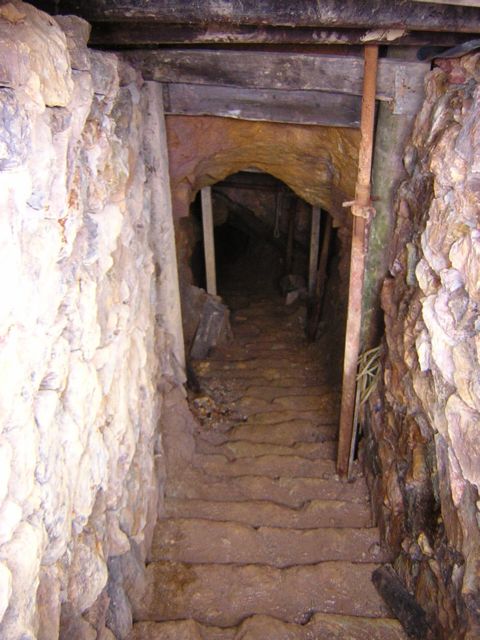
Parys Mine Shaft. View down a shaft at Parys Mine.
Photo by Stephen Elwyn Roddick – CC BY-SA 2.0
At the time More visited, Thomas Williams had only just begun his rapid rise to power. He was already a major industrialist and grown stupendously wealthy. When More asked about his stables, Williams apparently could not even estimate how many he possessed to the nearest ten. But Williams not yet even master of the mountain.
Nonetheless, the mining was well underway. The closest port, Amlwch, was already connected to the mountain by a new road that had been built for the Parys Mine Company’s sole use. Having not long ago been a village of just six houses, Amlwch had turned into a bustling port.
The mine itself was a source of fascination. “This differs from any mine I had ever seen or perhaps is anywhere else to be found, for the ore here instead of being met with in veins is collected into one great mass, so that it is dug in quarries and brought out in carts without any shafts being sunk”. Instead, the miners hollowed out the mountain itself, forming vast caverns that they supported by simply leaving vast columns of the ore untouched. He noted at least four or five of these caverns with ceilings forty feet high, with columns of yellow ore: “the whole seemed like the ruins of some magnificent building whose pillars had been of massy brass.”
It’s a fascinating insight into what Parys would have very briefly looked like, because today there is so little of the mountain left. Indeed, some of the caverns More got to see were already collapsing, with the rubble then needing to be sorted. He describes how one such piece of rubble — a two-ton chunk of ore — had to be bored, the cavity rammed with gunpowder and sealed with stones, and then exploded. “They are continually blowing up parts of the mine”, he noted, and was informed that the part of the mine he was visiting alone got through 10-12 tons of gunpowder per year. The mountain was disintegrating, punctuated by the occasional boom.
And as though that were not dramatic enough, the whole place smelled like hell. When More visited there were some seventy vast kilns upon the mountain for calcining the ore, burning off its sulphur. Each kiln held some 2,000 tons of ore, and when ignited with a little dried vegetation or coal it was so sulphurous that it took four months of furious burning for the ore to be sufficiently calcined. He noted that one had to keep to the windward side of the kilns, as “the fumes arising from them are very disagreeable and destroy all vegetables for a considerable distance around them.”
July 27, 2023
QotD: The causes of crime in Britain
Theodore Dalrymple, “Pray for Rain”, Taki’s Magazine, 2017-07-08.
July 26, 2023
Bombing France into Freedom – War Against Humanity 105
World War Two
Published 25 Jul 2023The destruction of German cities has shown how difficult it is for the heavy bombers of the RAF and USAAF to hit small targets with precision. Things will be no different when these big beasts go into action to support the D-Day landings. Thousands of French civilians will pay the price for the flawed logic of Allied bombing.
(more…)
July 24, 2023
QotD: The Duke and Duchess of Windsor after the abdication
We are reminded that the king’s much-rehearsed coronation speech was a success. “Millions of his subjects sat at home listening to the broadcast, willing him to succeed whilst knowing of his stammer and the difficulties that even speaking a few short sentences publicly had caused him … Yet fortunately for the coronation ceremony, the king’s nerves seemed to vanish on the day, aided by his sincere religious faith: another characteristic absent from his brother’s life.”
[…]
One trait that runs through this important book is the personal weakness of the Duke and the compelling strength of his bride. Larman makes it plain that both Baldwin and Chamberlain were aware that it was Wallis who was passing state secrets to German intelligence, although her husband also expressed sympathies for Hitler’s regime. Cecil Beaton, photographer of the David-Wallis wedding in France, noted in his diary that the Duchess “not only has individuality and personality, but [she] is a strong force”. Even as he praised her intelligence and admiration for the Duke, Beaton offered the judgement that she “is determined to love him, though I feel she is not in love with him” — an interesting reflection on the woman for whom her husband had abandoned his throne. In 2015, Andrew Morton dwelt in great detail on Wallis’s treachery in 17 Carnations: The Windsors, The Nazis and The Cover-Up.
Throughout Larman’s compelling read, we are offered evidence of how tone-deaf the Duke was to international protocol, the interests of Britain and the sufferings of others. Anthony Eden, as Foreign Secretary, observed how the pair felt they should be “treated abroad by ambassadors and dignitaries, rather as they would a member of the royal family on a holiday”. This came to a head when friends of the Duke organised a visit to Germany over 11–23 October 1937. They met several leading Nazis, including Hess, Goebbels (who called the Duke “a tender seedling of reason”) and Göring, as well as renewing their acquaintance with Ribbentrop, still then ambassador to Britain. It was Ribbentrop, according to Morton’s book, who had sent Wallis 17 carnations daily “each one representing a night they had spent together”.
On the penultimate day, the Windsors met Hitler at Berchtesgaden. Larman reasons that the visit was as much to show that the Duke and his bride were still relevant in the wider world, as to form a bond with the Führer to avoid future war. As with many public figures of the era, David feared communism far more than fascism, for which he saw the best antidote in an alliance with Germany. We are left wondering whether the Duke observed in Hitler’s authoritarian state all that he admired and wished for Britain, but was now denied.
A subtext to The Windsors at War is just how much anxiety David caused the King, his younger brother, during the run up to war and during it. For most of the period, the Duke badgered for money, confirmation of his status and a royal title for Wallis. Whilst the first was forthcoming, amounting to a financial settlement of £25,000 a year (generous by any standards, considering the Windsors spent their days sofa-surfing and sponging off their rich friends), neither of the latter were. Chamberlain was forced to write that “in addition to letters of protest he had as Prime Minister … all classes stood against him. In addition to the British not wanting him to return, residents of Canada, New Zealand and America wished him to remain in exile”.
Yet, writes Larman, the Duke would not simply “languish in exile and be denied the opportunity to contribute his thoughts on the international situation. This arrogance made him both unpredictable and, with the outbreak of war drawing closer, dangerous. At a time when it was crucial that the loyalties of prominent public figures were transparent, his inclinations remained opaque”.
Peter Caddick-Adams, “The other one”, The Critic, 2023-04-18.
July 23, 2023
Sayonara Tojo – WW2 – Week 256 – July 22, 1944
World War Two
Published 22 Jul 2023This week, Adolf Hitler is blown up and Hideki Tojo steps down. In the Pacific, the Americans land on Guam and prepare for hard fighting. In France, the Americans take Saint-Lô and British and German armored forces clash around Caen. In the East, the Red Army enters Latvia, tears a gap in Army Group North, and reaches the gates of Lvov.
(more…)
Tom Whipple’s history of radar development during WW2
In The Critic, Robert Hutton reviews The Battle of the Beams by historian Tom Whipple, who retells the story of the technological struggle between Britain and Germany during the Second World War to find ways to guide RAF or Luftwaffe pilots to their targets:
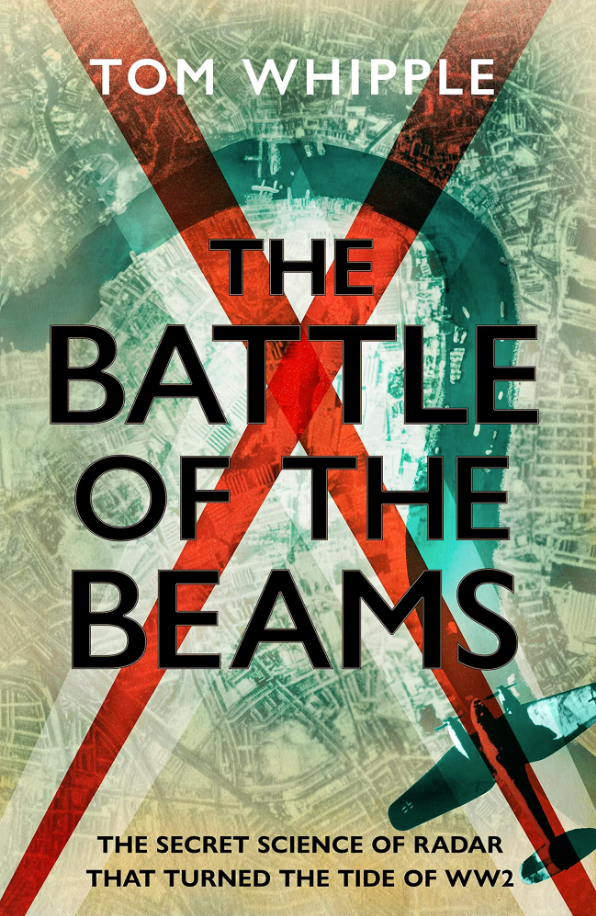
In an age when my phone can tell me exactly where I am and how to get where I’m going, it’s hard sometimes to imagine a time when navigation was one of any traveller’s great challenges. At the outbreak of the Second World War, the advice to Royal Air Force pilots trying to find their way was, more or less, to look out of the window and see whether anything on the ground looked familiar. The Luftwaffe, though, had a rather more sophisticated means of finding their targets.
As Britain braced herself for the bomber onslaught of 1940, there was comfort in knowing that radar would give Hurricanes and Spitfires advance warning of where the attack was coming. As soon as the sun went down, so did the fighters: at night, relying on their eyeballs, they simply couldn’t find the enemy.
That wasn’t so bad, as long as the German pilots had the same problem, but one young British scientist began to suspect that the Luftwaffe had developed a technology that allowed them to find their way even in the dark, guided by radio beams. In June 1940 he found himself explaining to Winston Churchill that German bombers could accurately reach any spot over England that they wanted, even in darkness.
Reg “RV” Jones was the original boffin: a gifted physicist who was recruited to the Air Ministry at the start of the war to help make sense of intelligence reports that offered clues about enemy technology. It was a role to which he was perfectly suited: a man who liked puzzles, with the ability to absorb lots of information and see links, as well as the arrogance to insist on his conclusions, even when his superiors didn’t like them.
The story of the radio battle has been told before, not least by Jones himself. His 1978 memoir Most Secret War was a bestseller and remains in print. It is 700 pages long, though, and it assumes a lot of knowledge about the way 1940s radios worked that readers probably had 50 years ago. Since few people under 50 have much clue why a radio would need a valve or what you might do with a slide rule, there is definitely room for a fresh telling.
Explained: What Is Pace Sticking?
Forces News
Published 18 Sept 2021A pace stick is a tool made of two pieces of timber that are hinged at the top.
Each summer, 18 pace sticking armed forces teams from around the world come together in an international competition at the Royal Military Academy Sandhurst.
We look at what pace sticking involves, and the history behind it.
(more…)
QotD: Losing the Mandate of Heaven is fatal for a ruler
… so long as the rulers keep the Mandate of Heaven.
That no doubt seems like a stolen base, as something as amorphous as the “Mandate of Heaven” can be stretched to cover just about anything, but it’s the best I can do to convey what I mean. And I think you’ll see the utility of it when we look at a few examples. The negative first: Since Usurpers are much in the news these days, look at any successful one. England’s Henry IV, for example, or Henry VII. They had endless troubles during their personal rule, as all the people who mattered knew them when they were just one noble among many. Their sons, on the other hand, sat about as easily on the throne as any medieval monarch could, and while some of that was no doubt due to their sterling personal qualities,1 a lot of it was simply, for lack of a better term, “the Mandate of Heaven” — the Usurper who delivered stability and competence in his lifetime passed on the purple to a stable, competent son, which proves the regime’s essential rightness.
In other words, inertia kicks in — just an object in motion tends to stay in motion, a competent regime continues competent, in public perception at least. Those who are old enough to remember the Wars of the Roses (etc.) are just grateful that they don’t have to go through it again, while the younger generations simply don’t know any different. So long as the usurper’s son isn’t both personally loathsome and egregiously incompetent, things will go on much as before. (And please note what an extremely high bar that is — we’re talking Nero- or Commodus-level loathsome incompetence. France spent a lot of the Hundred Years’ War under the “leadership” of a filthy lunatic who thought he was made of glass, and they came out ok … largely because soon after he kicked, it was England’s turn to suffer the long reign of a filthy lunatic, but still. It’s got to be spectacular on both counts to kick off a revolution).
Severian, “Witch Trial Syndrome”, Rotten Chestnuts, 2021-01-27.
1. Opinions are bitterly divided on Henry VIII even among the laity, and professionals carry on blood feuds about it, but everyone agrees that for all his faults, the young Henry VIII was a seriously impressive guy. Contemporaries certainly thought so — Erasmus was a professional ass-kisser, but Thomas More was dazzled by Henry, too, and More was a tough guy to fool.
July 22, 2023
“… no-one has a ‘right’ to a bank account …”
Unlike in Canada, where the extra-legal debanking of an unknown number of what Justin Trudeau described as a “small fringe minority … holding unacceptable views” had all the bien-pensants in and out of the legacy media nodding along, British opinion is not so friendly toward the extra-legal debanking of Nigel Farage and his family and friends:
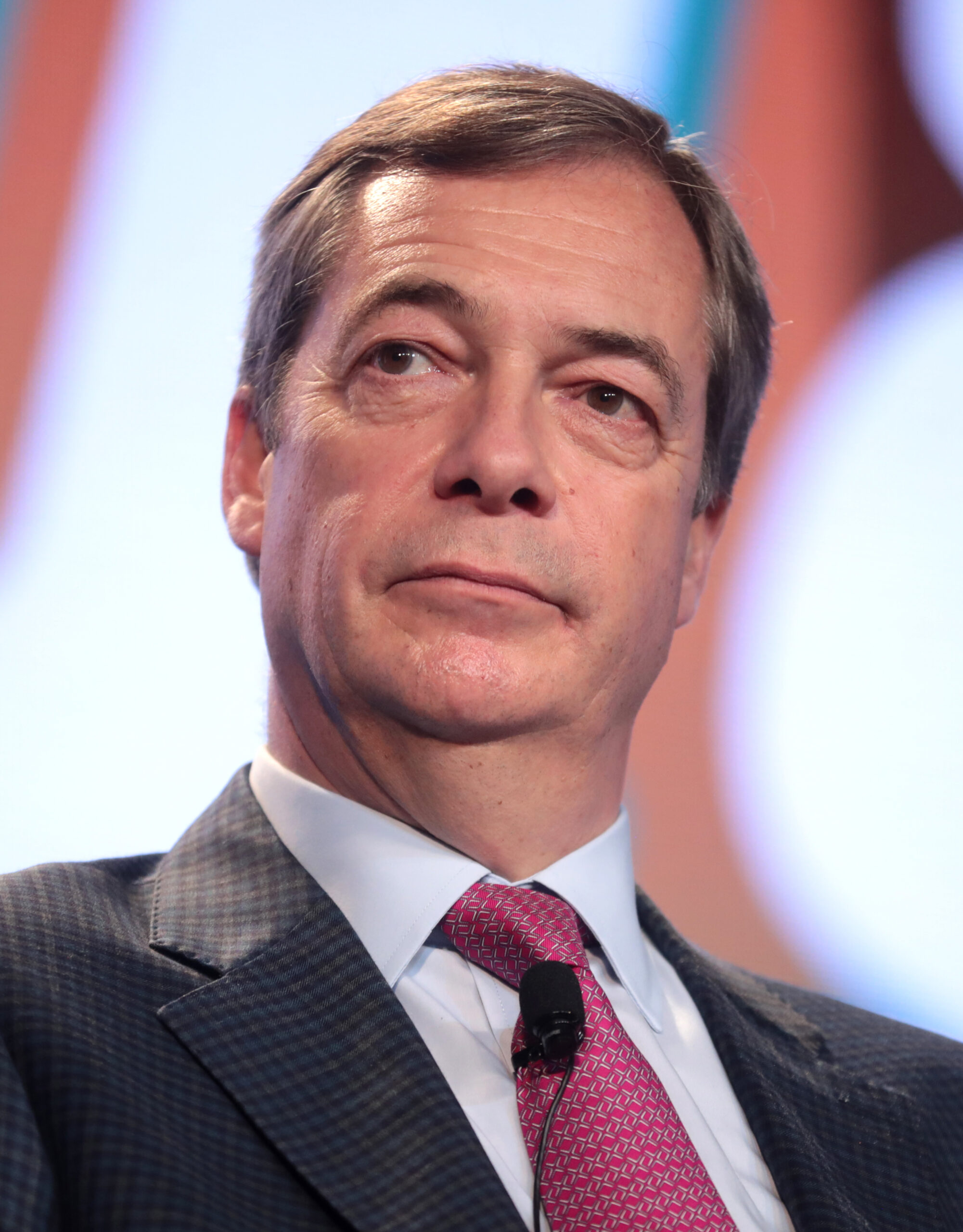
An acquaintance of mine on Facebook, a hardline capitalist (so he says) made a comment that no-one has a “right” to a bank account, as they don’t have “rights” (those inverted commas are doing a lot of work here) to healthcare, education, paid-for holidays, etc. He was, of course, writing about the Nigel Farage/Coutts saga that has seen the CEO of NatWest, Coutts’ parent firm (39% owned by the taxpayer) issue a sort-of apology to the former UKIP leader.
[…]
When a person is “debanked” today, they can have a problem opening an account anywhere else if the bank asks them why they left a bank in the past. As a result, we have almost a sort of “cartel” system operating.
In time, hopefully, competition will swing back, and some of the nonsense going on will disappear. In the meantime, while I agree with you that the idea of having a “right” to a bank account is as bogus as many of the other “rights” that people talk about today, the fact that banking is such an embedded form of life in a modern economy means this issue hits hard in a way that, say, isn’t the case if you are banned from a pizza restaurant or candy store for holding the “wrong” views. Of course, it may be that the Farage case might encourage a firm to go out of its way to court business from those who have been targeted. Let’s hope so. For example, a bank could, without incurring wrath from the “woke” or regulators, say something like “Banking is all we do. No politics. No agendas. Just finance.”
And as I have said before, the outrageous Nigel Farage case, and that of others, surely demonstrates that a central bank digital currency idea must be resisted. This would be the end of any financial autonomy at all.
As you’d expect, Brendan O’Neill isn’t a fan of this latest attempt to make certain political viewpoints effectively illegal:

So there you have it. Nigel Farage really was given the boot from the prestigious private bank Coutts because of his political views. Because he is very pro-Brexit, is fond of Donald Trump and has been critical of Black Lives Matter. Because, in the words of an extraordinary internal dossier compiled by Coutts, his views “do not align’ with the bank’s values”. For the past fortnight the chattering classes have been chortling over Farage’s claim that Coutts was persecuting him for his political beliefs. How dumb – worse, how complacent in the face of corporate tyranny – those people look now.
Last month, Farage went public about the closure of his Coutts account. I’ve been given the heave-ho for political reasons, he said. He also said that nine other banks have since rejected his custom. Now he has published a dossier that was distributed at a meeting of Coutts’ “reputational risk committee” on 17 November 2022. It is a truly chilling read. It runs to 36 pages. There is a strong case for “exiting” Farage from the bank, it says, because his publicly stated views are “at odds with our position as an inclusive organisation”. The Stasi once compiled dossiers on dissident activists and artists whose views ran counter to those of the GDR regime. Now Coutts seems to be doing similar on customers who dare to bristle against the regime of woke.
The dossier basically finds Farage guilty of wrongthink. It highlights his renegade views not only on Brexit and Trump but also on Net Zero and even on King Charles – he has had the audacity to criticise His Majesty. Like dissidents in East Germany, his friendships are held against him, too. His links with Trump and tennis champ Novak Djokovic make him suspect, apparently. The dossier quotes the Independent‘s description of Farage’s visit to Djokovic’s trophy room in Belgrade, during which he criticised Australia’s expulsion of Djokovic for failing to get vaccinated against Covid, as “the spineless, chaotic behaviour of a chancer”.
[…]
The Farage / Coutts story is important because it highlights what a huge threat woke capitalism poses to freedom and fairness. Let’s be clear about what has happened here: a man has been economically unpersoned for having the supposedly wrong views. He’s been blacklisted for being a little too dissenting on the big issues of the day. And it’s happening to others, too – including people who do not have access to the same media platforms as Farage and thus have little leeway to protest against their expulsion from economic life by unelected, unaccountable banks and businesses. We acquiesce to this capitalist policing of thought at our peril. It is surely time for the government to act and clip the wings of banks and companies that believe they have the right to penalise citizens for the contents of their conscience. It might be Farage today, it could be you tomorrow.
Theodore Dalrymple sees it as a sign of the rise of woke totalitarianism:
It isn’t a question of whether Mr. Farage is always right or sometimes horribly wrong; when the bank says that it “uncovered” something that he said, as if he had recorded saying it by secret microphones, it makes itself ridiculous. Not even his worst enemies, or perhaps his best friends, would accuse him of hiding his light under a bushel.
The question is whether it’s the role of a bank to examine its clients’ views and deny them service if those views don’t accord with those of the chief executive, as if the latter were indisputably true and from which it were heresy to dissent. Is a bank an inquisition?
The chief executive of the parent bank, Alison Rose, said soon after her appointment that “tackling climate change would be a central pillar” of her work, and on the occasion of the so-called Pride month last year said that “our focus on diversity, equity and inclusion is integral to our purpose of championing the potential of people, families, and businesses”. This year, the company headquarters were covered in the rainbow colors of the LGBT flag, with lettering the height of humans declaring the “Championing the power of Pride”. Under her leadership, staff may “identify” as women and men on alternate days, should they so wish.
Of course, when she said that “diversity” and “inclusion” was “integral to our purpose”, she was using these terms in a strictly technical sense to mean “everyone who thinks as I do and has a fair bit of money”. The diversity “integral” to the “purpose” of Coutts doesn’t include those persons with less than $1 million to deposit, who even in these days of currency depreciation remain a small minority. People bank with Coutts because it’s exclusive, not inclusive.
The chief executive, however, is safely within what we might call the Coutts Community, because she was paid about $5.2 million last year. The prospect of being barred from the bank will no doubt inhibit anyone who banks with her banks from suggesting in public that she’s paid too much.
Look at Life – Ticket to Tokyo (1959)
PauliosVids
Published 24 Nov 2018Travelling with Britannia Airline from London via Bombay to Tokyo to discover Japan and back via Hong Kong.
July 18, 2023
QotD: “Nothing to lose”
In line with the notion that people need “a stake in society” in order to refrain from breaking shop windows and taking what they think they have been wrongfully denied (interestingly, the bookshop was the only shop in a very badly looted commercial street that went completely unscathed during the riots), a man called Earl Jenkins — “who was one of up to 60 youth workers who went on to the streets of Toxteth [a poor area of Liverpool] during the disturbances to persuade youngsters not to get involved” — was reported in the Guardian to have said, “If you’ve got nothing to lose, you’ll do what you can to survive, won’t you?”
There was no comment in the newspaper on the deep contradiction in the attitude of Earl Jenkins (let us leave aside the question of how many “youth workers” in Toxteth are needed to prevent a riot there). For if it is true that the riots were a survival mechanism, why was Earl Jenkins trying to persuade young people not to join in? Did he not want them to survive? Suffice it to say that the objects looted during the riots were not such as people on the verge of famine, or who fear that famine is around the corner, might be expected to loot. They were, rather, the things that spoilt children might be expected to want for their birthday.
The term “If you’ve got nothing to lose” in this context is ambiguous. It might mean such penury, such drastic poverty, that you possessed nothing that could have been removed from you. But it clearly cannot mean this, since all the rioters were at liberty, and were clothed, fed, housed, educated (if unsuccessfully), provided with medical care, and given at least a small income, much of which could, in theory at any rate, be removed from them. They could be made homeless; their central heating could be turned off; they could go hungry and literally penniless, made to wear rags; their telephones could be taken from them; they could be deprived of their liberty and even enslaved.
But none of this was going to happen to them and they knew it perfectly well; so in this sense it was indeed true that they had nothing to lose. One of the commissioners appointed to enquire into the riots actually put it succinctly:
When people don’t feel they have a reason to stay out of trouble, the consequences for communities can be devastating …
But the reason they “don’t feel a reason to stay out of trouble” is not because they have nothing to lose in the sense of being so deeply impoverished that they have nothing removable from them, it is because they have nothing to lose because they know that whatever they have will never be removed from them, under any circumstances whatever.
Theodore Dalrymple, “It’s a riot”, New English Review, 2012-04.
July 17, 2023
Uncancelled History with Douglas Murray | EP. 06 George Washington
Nebulous Media
Published 27 Dec 2022Allen Guelzo joins Douglas Murray on this episode to discuss George Washington. From his early childhood to his years as president, the two analyze the founding father’s legacy. Should the first president stay cancelled?
(more…)
July 16, 2023
Mass Suicide on Saipan – WW2 – Week 255 – July 15, 1944
World War Two
Published 15 Jul 2023Japanese troops and civilians commit mass suicide rather than surrender to the Americans in the Marianas; in Normandy, Caen has finally fallen to the Allies though the fight for St. Lo is not over; the Soviet offensives in the north take Vilnius and the fighting continues up in Finland, but the big eastern front news is the mighty new Soviet offensive in Western Ukraine. (more…)
July 15, 2023
Environmental fanatics want to impose “austerity on steroids”
Brendan O’Neill points out the hypocrisy of the progressives who protest against anything smacking of government austerity — often merely a slowing down in the rate of increase of funding that they condemn as “cuts” — yet fervently desire to impose a form of austerity that would literally lead to hundreds of thousands or even millions of deaths:
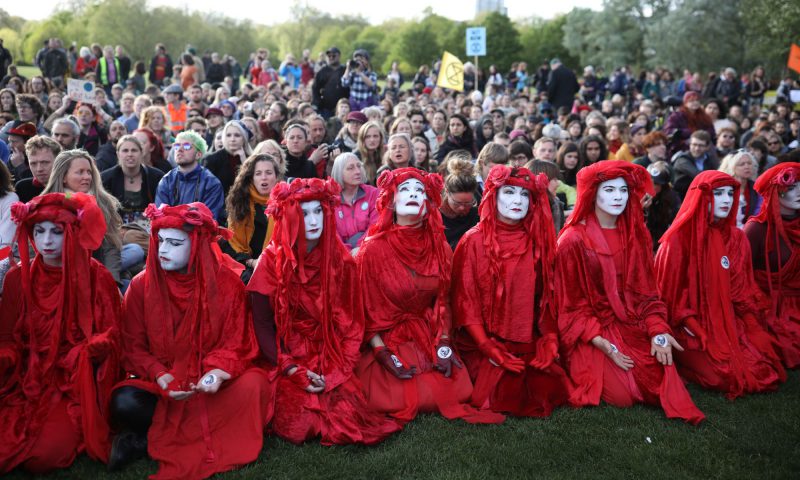
There are countless contradictions on what passes for the left these days. We’re against sexism, they cry, and then they’ll while away entire days hounding every uppity broad who dares to question the trans ideology. We’re anti-racist, they say, even as they yell “Uncle Tom” at any person of colour who deviates from their white liberal orthodoxies. Be kind, they tweet, in between their venomous crusades against TERFs, gammon, boomers, deplorables, “semi-fascists”, you name it.
We’re against austerity, they insist, and yet then they agitate for an austerity of apocalyptic proportions. This, surely, is the most stark incongruity of the modern left. They rail against every library closure or reform of welfare payments as an intolerable assault on people’s living standards, and then they take to the streets in their thousands in support of a degrowth agenda that would plunge vast swathes of humankind into penury. They’re far meaner than any right-wing penny-pincher they claim to oppose.
[…]
Environmentalism is austerity on steroids. Consider one of JSO’s key demands: “No new oil or gas”. This would be – there’s no other word for it – psychotic. Not only would such a crazed policy instantly throw hundreds of thousands of people out of work, by decommissioning the rigs and mines where they make their living – it would also make it all but impossible to keep society going. The infantile moralism of modern greens would have us believe that vile oil and gas are only used to propel 4x4s and airplanes packed with the rich and other “bad things”. In truth, every facet of our lives requires energy from oil and gas. The delivery of foodstuffs, house-building, schools, hospitals, life-support machines, heaters to protect the elderly from death in winter – all need energy derived from fossil fuels. Or consider libraries. The left wept when Osborne’s cuts led to library closures, but you try running a library in your post-fossil-fuel dystopia. Without oil, gas, electricity and trees torn down to make books, libraries would cease to exist.
As Alex Epstein argues, to “rapidly eliminate fossil-fuel use” would make the world “an impoverished, dangerous and miserable place for most people”. Fossil fuels provide 80 per cent of the world’s energy. Just three per cent comes from solar and wind power, so beloved of green anti-modernists. And even that measly slice of global energy production is, in Epstein’s words, “totally dependent on fossil fuels, especially natural gas, for 24/7 back-up”. That is, if the wind doesn’t blow and the sun doesn’t shine, we have to crank up the fossil fuels. Ours is a world in which three billion people still use less electricity than your average American fridge. Agitating for less energy production in such a time is callous beyond belief. It would issue a death sentence on the world’s poor. George Osborne is Father Christmas in comparison with these crusaders against the gains and wonders of modernity.


