The Korean War by Indy Neidell
Published 3 Dec 2024On and around the frozen waters of the Chosin Reservoir, the US Marines and the Chinese Communist forces fight out a brutal battle. In the west, the Chinese offensive continues. For the UN forces, there is no chance of victory, but living to fight another day may yet be possible.
Chapters
00:00 Intro
00:48 Recap
01:11 Chosin Reservoir Prelude
03:58 Yudam-ni
06:32 Task Force Faith
08:25 Hagaru
12:58 The Aftermath of Chosin
14:49 The Tokyo Conference
15:56 Wawon and Kunu-ri
20:30 Summary
20:42 Conclusion
(more…)
December 4, 2024
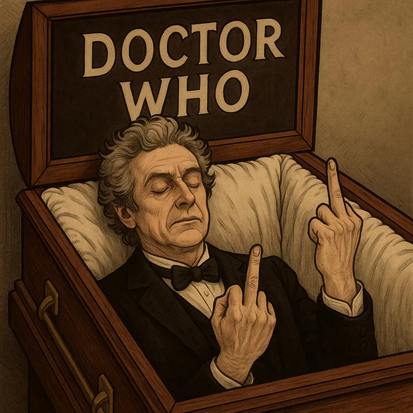
The Korean War Week 024 – Marines Attacked at Chosin Reservoir – December 3, 1950
December 3, 2024
David Starkey’s view of history
At the Daily Sceptic, James Alexander summarizes how historian David Starkey’s views of history — British history specifically — provide a useful way to analyze British political issues today:
What David Starkey is trying to do is deliver to the British (or English) public a jeremiad informed not by moral posturing or theoretical commitment but by a sense of history. This is so valuable it should almost come without criticism. I think that Starkey’s vision of history is so arresting it deserves to be expressed in short form and so I will attempt a summary of the position. Starkey is an admirably entertaining speaker, and offers a vision that is several dimensions more complicated than we hear from anyone else at the moment. He is full of prepared lines, and has a ready mind: “Niall Ferguson, the good Niall Ferguson, not the bad Neil Ferguson …”; “All bad ideas begin with the French”; “The Union of England and Scotland made the modern world”; “The monarch changes religion as he crosses the border: he begins Anglican, and becomes Presbyterian”; “The Labour party is the equivalent of the Nomenklatura of Soviet Russia: a privileged class”; etc.
I have some criticisms. But first, his vision of our history.
Let me begin by summarising Starkey’s view of history as it conditions the present. He argues the following:
1. On the nature and relevance of history. History is fundamental. We cannot understand ourselves using theory. Avoid abstraction. Use history instead. It is concrete. He suggests that we have always studied history for the sake of the present, though in recent centuries we have also studied it for its own sake. He adds that we should make analogies between past and present.
2. On English history. Starkey says that we were first part of Greater Scandinavia, then, from 1066, were part of an Anglo-French order. The third stage of our history began with the Reformation. Starkey likens the Latin Christendom of the Papacy to the European Union: and so calls Henry VIII the first Brexiteer. The consequence of the Reformation was that Britain and Europe become antagonists. For the first time the sea was reconfigured as a barrier, defended by the navy: and this happened at the same time that energies were thrown outward to the rest of the world. What the English managed to do, along with the Scots, was build something out of the strong language that rises from Chaucer to Shakespeare: the two home countries united to make it impossible to be invaded; they united to make an empire in the world; and they united to make use of remarkable innovations in finance and later industry.
One of Starkey’s great themes is this Union of England and Scotland: first by King in 1603 and second by Parliament in 1707. Starkey says England is not a nation. It lacks a ridiculous national dress (since its national dress, of coat and trousers with tie, was given to the world as universal official dress). And the Union was wholly original, as it subjugated Scotland to England’s Parliament, abolishing the Scottish Parliament, while leaving Scottish law, religion, military tradition and heraldry alone. England and Scotland are politically united, but only politically united. Starkey’s point about all this is that it was never about “identity”. There was no such thing as a “Briton”. There was no national system of education. So there was no nonsense of any modern-style post-French Revolution nationalism. Instead, we were natural liberals, able to take in immigrants without difficulty. However, throughout all this England is politically dominant in Great Britain and in the Empire.
3. On the present time. Starkey has two points of reference. One is the 1970s, when things went wrong, with a short reversal under Thatcher, and in the 1990s, when things went even more wrong, and perhaps permanently wrong, because constitutionally wrong. The 1970s was the culmination of the Labour politics of welfare, accepted weakly by Macmillan and Heath, but the 1990s was worse because political and constitutional. Labour took things in the wrong direction by making the Bank of England independent and by enabling a new Scottish Parliament to emerge: also by bringing about the Equality Act of 2010 (actually an innovation of Gordon Brown); also by creating a Supreme Court. Then, finally, Charles III removed Parliament from the Coronation, and there was no mention of politics: whereas, since 1688, the Coronation had been a political act. Political power has been fragmented and dispersed from the King-in-Parliament to the quangos, to the Bank of England, to the lawyers. The principle of balance is lost, as every institution has become an interest group, pursuing single issues: an entire raft of Anti-Corn Law Leagues.
Starkey suggests that England will remain an idea, much as the idea of Rome survived the decline and fall of the Roman Empire. This is pessimistic judgement. His optimistic judgement, or hope, is that some sort of “restoration”, like the Glorious Revolution, can be enacted. As far as I have heard, he has not yet sketched the form of his restoration, though it has been promised.
Is this clear? Henry VIII broke the monasteries, threw out the Papists, built Oxford and Cambridge in new form, fortified the coast and began the story of Greater England. If we fill the gaps, there were difficulties with the consequences, religious and political, through the reigns of Mary, Elizabeth, James and Charles, but these were resolved in 1688 and then 1707. Then Great Britain became a great power. This remarkable creation was politically and constitutionally destroyed by the theorists and politicians of the late 20th century, since they demoted England within Britain, unleashed petty nationalisms in political form, and, in passing, did not do enough to restrain the welfare state or, we might add, enough to prevent English tolerance being twisted to accommodate net immigration of 700,000 people of fairly antagonistic cultures per year. Britain is now ruled not by Government-in-Parliament but by delegated arbitrary powers and influences which offer sops to partial interests and mean that nothing can be done. No one has an adequate conception of the entire state.
Evolution of Airborne Armour
The Tank Museum
Published Jul 19, 2024Lightly armed airborne troops are at a huge disadvantage when faced with regular troops with heavy weapons and armour. In World War II this led to huge losses for paratroops on Crete and at Arnhem. Since then, many attempts have been made to level the playing field, to give airborne soldiers a fighting chance.
From the Hamilcar gliders of World War II to the C17 Globemaster, we look at how to make a tank fly.
00:00 | Intro
00:47 | The Origins of Airbourne Operations
02:34 | Gliders
07:20 | A Tank Light Enough to Fly?
09:02 | Success & Failure
14:24 | Post-War Solutions
17:41 | Better Aircraft – Better Tanks?
20:15 | Strategic Deployment
21:39 | ConclusionThis video features archive footage courtesy of British Pathé. This video features imagery courtesy of http://www.hamilcar.co.uk/
#tankmuseum
December 1, 2024
QotD: Recording and codifying the land that William conquered
I hesitate to recommend academic books to anyone, but I’ll make an exception for James C. Scott’s Seeing Like a State. Subtitled “how certain schemes to improve the human condition have failed”, it’s the best long-form exposition I know of, that explains how process and outcome first deform, then negate each other.
[…]
In brief, Scott argues that the process of making a society “legible” to government officials obscures social reality, to the point where the government’s maps and charts and graphs take on a life of their own. It’s recursive, such that those well-intentioned schemes end up first measuring, then manipulating, the wrong thing in the wrong way, to the point that the social “problem” the process was supposed to address drops out entirely — all you have, at the end, is powerpoint girls critiquing spreadsheet boys because their spreadsheets don’t have enough animation, and vice versa.
Scott doesn’t use the Domesday Book as an example (IIRC from a graduate school class 20-odd years ago, anyway), but it’s one we’re probably all familiar with. The first thing William the Conqueror needed to know is: what, exactly, have I conquered? So he sent out the high-medieval version of spreadsheet boys to take a comprehensive survey of the kingdom. Turns out the Duke of Earl’s demense runs from this creek to that rock. He has five underlings, and their domains run from etc.
The point of all this, of course, was so that Billy C. could call the Duke of Earl on the carpet, point to the spreadsheet, and say “You owe me a cow, three chickens, and two months in the saddle as back taxes.” It worked great, except when — as, it seems, is inevitable — the high-medieval equivalent of the spreadsheet boys did the high-medieval version of “ctrl-c”; just copying and pasting the information over. Eventually the tax situation got way out of whack, as it did for most every pre-modern government running a similar system — one of the reasons declining Chinese dynasties had such fiscal problems, for instance, is that the tax surveys only got updated every two centuries or so, such that a major provincial lord was still only paying 20 silver pieces in taxes, when he should’ve been paying 20,000 (and his peasants were all paying 20 when all they could afford was 2).
In other words: unless the spreadsheet boys periodically go out and check that the numbers on their spreadsheets actually correspond in some systematic, more-or-less representative way to some underlying social reality, government policy is being set by make-believe.
Severian, “The Finger is Not the Moon”, Rotten Chestnuts, 2021-09-14.
November 30, 2024
Forgotten War Ep 5 – Chindits 2 – The Empire Strikes
HardThrasher
Published 29 Nov 202402:00 – Here We Go Again
06:36 – Perfect Planning
13:16 – Death of a Prophet
14:51 – The Fly In
18:56 – Dazed and Confused (in the Monsoon)
20:40 – Can’t Fly in This
31:54 – Survivor’s ClubPlease consider donations of any size to the Burma Star Memorial Fund who aim to ensure remembrance of those who fought with, in and against 14th Army 1941–1945 — https://burmastarmemorial.org/
(more…)
$7 BILLION – Is Ajax Worth It? | Tank Chats #177
The Tank Museum
Published Aug 2, 2024This is how the UK’s newest armoured fighting vehicle, Ajax, has been described time and time again by the British media. With repeated delays and continual bad press, the Ajax programme has been subject to much scrutiny over the course of its procurement and development. Public opinion of this vehicle is, in a word, poor.
But is this perception wholly accurate, or is there more to the Ajax story?
In this video, David Willey guides us through the problematic history of the Ajax family, discusses its reconnaissance capabilities on the modern battlefield and hears from members of the British Army who have had a chance to put this vehicle to the test.
November 28, 2024
Town-class destroyers – Guide 400
Drachinifel
Published Aug 3, 2024The Town class destroyers, old Wickes, Clemson and Cadwell class vessels of the US Navy, transferred to the British Royal Navy and others, are today’s subject.
(more…)
November 27, 2024
The Korean War 023 – The Eagle Versus the Dragon – November 26, 1950
The Korean War by Indy Neidell
Published 26 Nov 2024Thanksgiving 1950 comes and goes in the snowy north of Korea, and Eighth Army’s push to the Yalu River begins the following day. It soon becomes apparent, though, that the Communist Chinese are ready and waiting for them, in numbers greater than anyone on the UN side have predicted. After weeks of preamble and preparation, the two forces finally collide in full strength.
Chapters
00:00 Intro
00:51 Recap
01:16 X Corps
03:14 Turkey Time
05:50 The US Offensive
09:05 The Second Phase Offensive
12:39 East Flank Disaster
15:27 Summary
15:47 Conclusion
(more…)
November 26, 2024
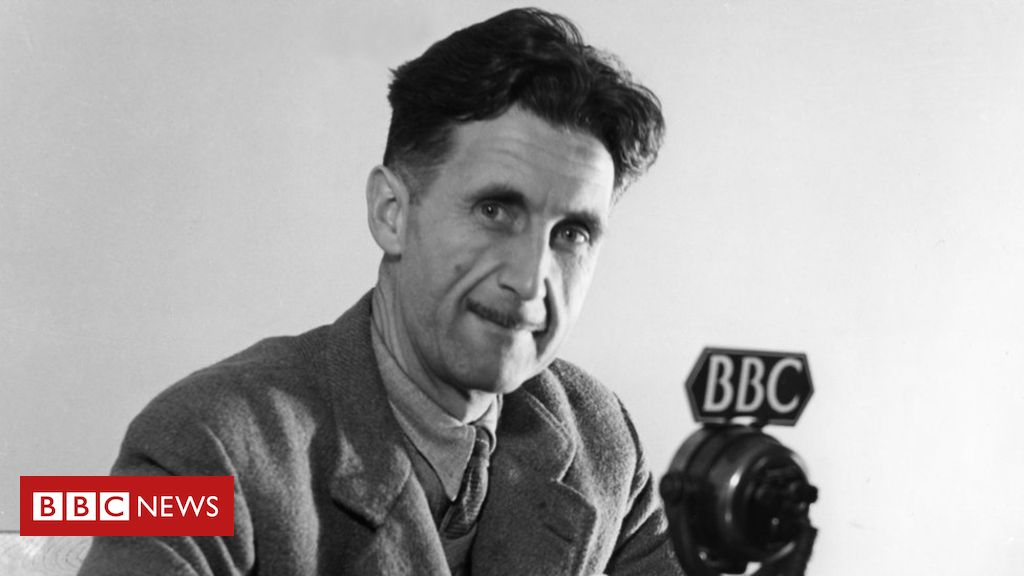
Orwell is more relevant now than at any time since his death
I’m delighted to find that Andrew Doyle shares my preference for Orwell the essayist over Orwell the novelist:
It is not without justification that Animal Farm (1945) and Nineteen Eighty-Four (1949) have become the keystones of George Orwell’s legacy. Personally, I’ve always favoured his essays, more often quoted than read in full. I recently wrote an article about his essays for the Washington Post, focusing on their relevance to today’s febrile political climate. You can read the article here. I would draw particular attention to the multitude of comments from left-wing readers who are apparently outraged at my argument (actually, Orwell’s argument) that authoritarianism is not specific to any one political tribe. They seem oddly determined to prove the point.
Orwell is unrivalled on the topic of the human instinct for oppressive behaviour, but his essays are far more wide-ranging than that. In these little masterworks, one senses a great thinker testing his own theses, forever fluctuating, refining his views in the very act of writing. The essays span the last two decades of his life, offering us the most direct possible insight into this unique mind.
[…]
I find Orwell’s disquisitions on literature to be among his most rewarding. “All art is propaganda”, he declares in his extended piece on Charles Dickens (1940) [link]. This conviction, flawed as is it, accounts for his determination to focus less on Dickens’s literary merits and more on his class consciousness, which is found wanting. Even better is Orwell’s rebuttal to Tolstoy’s strangely literal-minded reading of Shakespeare (1947’s “Lear, Tolstoy and the Fool” [link]), which is so rhetorically deft that it seems to settle the matter for good.
Another impressive essay, “Inside the Whale” (1940) [link], opens with a glowing assessment of Henry Miller’s Tropic of Cancer (1935) but soon broadens its range to cover many contemporary novelists and their approach to social commentary. The title is a reference to Miller’s remarks on the Biblical tale of Jonah, suggesting that life inside the whale has much to recommend it. Orwell puts it this way:
There you are, in the dark, cushioned space that exactly fits you, with yards of blubber between yourself and reality, able to keep up an attitude of the completest indifference, no matter what happens.
Orwell invites us to imagine that the whale is transparent, and so writers of Miller’s ilk may snuggle contentedly within, observing without interacting, recording snapshots of the world as it bounces by. This kind of inaction is anathema to Orwell, whose every written word seems to be driving towards the enactment of social change.
Orwell’s essays often serve as a cudgel to batter his detractors. He dislikes homosexuals, or those “fashionable pansies” who lack the masculine vigour to take up arms in defence of their country. He displays a similar lack of patience for the imperialistic middle-class “Blimps” and the anti-patriotic left-wing intelligentsia, or indeed anyone who adheres slavishly to any given political ideology. His work bears much of the stamp of the old left; that mix of social conservatism and economic leftism that we see most powerfully expressed in his 1941 essay “The Lion and the Unicorn” [link]. Bad writing is also a recurring bugbear; Orwell’s loathing of cliché and “ready-made metaphors” is one of the reasons his own prose style is so effervescent.
[…]
When Orwell pessimistically refers to “the remaining years of free speech”, one cannot help but be reminded of the increasingly authoritarian tendencies of today’s British government. He expresses irritation that more writers are not wielding their pens in the service of improving society. His own work, by contrast, is what he would term “constructive”, profoundly moral, and purposefully crafted in the hope of actuating real-world change. While other writers resigned themselves to a life inside the whale, Orwell was determined to cut his way out.
The ghost airport of Nicosia: Rare glimpse inside the abandoned 1974 battleground
Forces News
Published Jul 20, 2024Nicosia International Airport was once a busy hub full of holidaymakers but since the Cyprus conflict of 1974, it has been frozen in time.
Today, the disused airport resembles a ghost town as it sits abandoned in the 180km buffer zone dividing the Republic of Cyprus and the Turkish-occupied north.
On the 50th anniversary of the conflict, Forces News goes inside the eerie airport and learns how it became the site of a major battle.
(more…)
November 25, 2024
The Experimental SOE Welrod MkI Prototype
Forgotten Weapons
Published Aug 12, 2024The Welrod was a program to develop a silent assassination pistol for British SOE (Special Operations Executive) late in 1942. It needed to be chambered in the .32 ACP cartridge, be effective to a range of 15m, and have its firing not recognizable as a firearm at 50m distance. The project was led by Major Hugh Quentin Reeves, who developed much of SOE’s inventory of gadgets.
The Welrod concept was ready in January 1943, and it was not quite the Welrod that we recognize today. This initial MkI design used a fixed internal 5-round magazine and a thumb trigger, along with a rifle style bolt action mechanism. Samples were produced in April 1943, and testing showed that it was rather awkward to use. A MkII version was quickly developed in June 1943 with a more traditional style of grip and magazine, and formal trials led to the adoption of that MkII design. Incidentally, this is why the first Welrod produced was the MkII, and the later production version in 9mm was designated the MkI (it was the first mark of 9mm Welrod).
Eventually many thousands of Welrod pistols were manufactured, and they almost certainly remain in limited use to this day. This example we have today is the only surviving MkI example, however.
(more…)
November 24, 2024
“… if Russia were found to have had its own troops assemble a long-range missile and help launch it into the United States, do you think a US president would feel able to let it slide?”
It probably tightened a lot of already tight sphincters when it was announced that President Biden had authorized the Ukrainian government to use US-supplied long-range missiles to attack targets on Russian soil:
There was something truly surreal about President Biden suddenly changing course and agreeing to give Ukraine advanced long-range missiles to attack deep inside Russian territory in the last two months of his administration. There was no speech to the nation; no debate in the Senate; just a quiet demonstration of unilateral presidential fuck-you power. You know: the kind we’ve long worried about with Donald Trump. The missiles up the ante considerably against a nuclear power for a simple reason. As Putin noted:
experts are well aware, and the Russian side has repeatedly emphasized this, that it is it is impossible to use such weapons without the direct involvement of military specialists of the countries producing such weapons.
The tiny tsar continued:
We consider ourselves entitled to use our weapons against the military facilities of those countries that allow to use their weapons against our facilities. And in case of escalation of aggressive actions we will respond also decisively and mirrored.
And he looked on edge, bedraggled and belligerent, his arms and hands not moving a millimeter in what sure looks like AI.
There was a time when a NATO missile strike on Russian territory, followed by a Russian threat to attack NATO “military facilities” in response, would have caused the world to stop dead, paralyzed by the fear of nuclear armageddon. Yet here we are, blithely preoccupied by Pete Hegseth’s sexual exploits and Congressional bathrooms.
Others are not so sanguine. “I believe that in 2024 we can absolutely believe that the Third World War has begun,” Ukraine’s former military chief, Valery Zaluzhny, warned yesterday, noting both the new involvement of NATO troops and the involvement of North Korea. Our own president, having brought us much closer to the brink as a lame duck, seemed unconcerned. He was last seen wandering off-stage in the vague direction of the Brazilian rainforest. Not optimal.
The UK prime minister, Keir Starmer, was even punchier, and pledged to allow Ukraine to use British long-range missiles as well: “We need to double down. We need to make sure Ukraine has what is necessary for as long as necessary, because we cannot allow Putin to win this war”. When asked if he was prepared to risk the UK forces or Ukraine or a third country like Poland being nuked in response, as Putin has threatened, Starmer simply ignored the question.
Meanwhile, just to keep things from escalating, the deputy chief of the British defense staff told a parliamentary committee yesterday:
If the British Army was asked to fight tonight, it would fight tonight. I don’t think anybody in this room should be under any illusion that if the Russians invaded Eastern Europe tonight, then we would meet them in that fight.
There seems to be a general impression that Putin is of course bluffing, that NATO can keep lobbing missiles into Russian territory with minimal consequences, and nothing could possibly go wrong.
But Putin has responded by launching a long-range missile that could be used to carry a nuke but didn’t, as well as lowering the bar for the use of nukes in his military “doctrine“. And ask yourself: if Russia were found to have had its own troops assemble a long-range missile and help launch it into the United States, do you think a US president would feel able to let it slide? Here’s what the British missile, the Storm Shadow, did in hitting an underground military facility in Kursk, according to unverified Russia media sources:
[The strike] resulted in the Death of 18 Russian Officers, including a Senior Commander, as well as 3 North Korean Officers. In addition, a Dozen other Soldiers and Officers were Wounded in the Attack, including one of North Korea’s most Senior Generals.
I can’t verify that, but it’s perfectly possible. To have NATO’s fingers on the targeting and launch of that missile puts us in a whole new category of conflict.
The job of a president is to keep us far, far away from any risk of nuclear conflict, as Biden seemed to understand until now. And any student of history will know that blithe complacency as two sides trade military escalations is often exactly the precursor to something going very, very wrong. Accidents happen; misjudgments occur; the point of never getting to this point is that this point contains a host of unknowables, some of them globally existential.
I assume that this is all about strengthening Kyiv’s hand in what will be grueling negotiations to end the conflict once Donald Trump gets back into office. Or the intelligence is worse than we know and it’s about avoiding an Ukraine collapse before Biden leaves office — which, after Afghanistan, would be a final, damning verdict on his foreign policy. Or the intelligence is better than we know and the Russian economy is so weak and his military so depleted that NATO thinks this extra pressure will force Putin to crack. Or it’s a norm-defying attempt from an outgoing administration to derail any peace process the incoming one might want to start. The latter possibility — with Biden rolling the dice because he thinks someone else will have to face the music — is not a minimal risk.
How Newfoundland and Labrador lost their independence
Geography By Geoff
Published Jul 16, 2024Did you know that Newfoundland and Labrador were once an independent country in the same manner as Canada was? It’s true! It was called the Dominion of Newfoundland and due to a series of unfortunate events, it had to relinquish its independence. In today’s video, we cover the vast geography of the province, it’s very old history (including Vikings!) and how the country managed to lose its independence when it managed to survive on its own for decades. Oh … and we’ll also talk about why Labrador got included in the name upon confederating with Canada.
(more…)
November 23, 2024
How the US Paranoia of Leftism was Born
World War Two
Published 21 Nov 2024Elizabeth Bentley’s defection in 1945 didn’t just expose a Soviet spy network — it fueled America’s second Red Scare and a wave of anti-communist paranoia. Her revelations about Soviet infiltration within the U.S. government became a catalyst for McCarthyism, reshaping American politics and society in an era defined by fear and suspicion.
(more…)
November 21, 2024
1966: Chieftain Tank Simulator | Tomorrow’s World | Retro Tech | BBC Archive
BBC Archive
Published Jul 15, 2024“All the tension, the excitement, and indeed the technical demands of driving a modern tank into battle … but, in fact, I haven’t moved a yard.”
Raymond Baxter test drives the British Army’s Chieftain tank simulator, used for training tank drivers. The illusion is created using a large 1:300 scale model of the battlefield, a computer, and a roving mirror connected to a television camera. The battlefield can be altered simply by swapping out the model trees and buildings.
Mr Baxter can attest to how realistic the experience is, and it costs just one tenth of the price of training in a real Chieftain tank.
Clip taken from Tomorrow’s World, originally broadcast on BBC One, 28 September, 1966.