
World War Two
Published 26 Mar 2021The British are attacking the Mareth Line in North Africa while the Americans hit the Axis flank, but the Allies are withdrawing in Burma. It’s the Germans who are pulling back in the USSR, though, and there is another attempt from within German Command to assassinate Adolf Hitler.
(more…)
March 27, 2022
American Army Finally Does Something Right – WW2 – 187 – March 26, 1943
Comments Off on American Army Finally Does Something Right – WW2 – 187 – March 26, 1943
March 24, 2022
QotD: Tolkien’s wartime experiences and The Lord of the Rings
… there’s more to Tolkien than nostalgic medievalism. The Lord of the Rings is a war book, stamped with an experience of suffering that his modern-day critics can scarcely imagine. In his splendid book Tolkien and the Great War, John Garth opens with a rugby match between the Old Edwardians and the school’s first fifteen, played in December 1913. Tolkien captained the old boys’ team that day. Within five years, four of his teammates had been killed and four more badly wounded. The sense of loss haunted him for the rest of his life. “To be caught in youth by 1914 was no less hideous an experience than to be involved in 1939 and the following years,” he wrote in the second edition of The Lord of the Rings. “By 1918, all but one of my close friends were dead.”
Tolkien arrived on the Western Front in June 1916 as a signals officer in the 11th Lancashire Fusiliers, and experienced the agony of the Somme at first hand. In just three and a half months, his battalion lost 600 men. Yet it was now, amid the horror of the trenches, that he began work on his great cycle of Middle-earth stories. As he later told his son Christopher, his first stories were written “in grimy canteens, at lectures in cold fogs, in huts full of blasphemy and smut, or by candlelight in bell-tents, even some down in dugouts under shell fire”.
But he never saw his work as pure escapism. Quite the opposite. He had begun writing, he explained, “to express [my] feeling about good, evil, fair, foul in some way: to rationalise it, and prevent it just festering”. More than ever, he believed that myth and fantasy offered the only salvation from the corruption of industrial society. And far from shaking his faith, the slaughter on the Somme only strengthened his belief that to make sense of this broken, bleeding world, he must look back to the great legends of the North.
Yet The Lord of the Rings is not just a war book. There’s yet another layer, because it’s also very clearly an anti-modern, anti-industrial book, shaped by Tolkien’s memories of Edwardian Birmingham, with its forges, factories and chimneys. As a disciple of the Victorian medievalists, he was always bound to loathe modern industry, since opposition to the machine age came as part of the package. But his antipathy to all things mechanical was all the more intense because he identified them — understandably enough — with killing.
And although Tolkien objected when reviewers drew parallels between the events of The Lord of the Rings and the course of the Second World War, he often did the same himself. Again and again he told his son Christopher that by embracing industrialised warfare, the Allies had chosen the path of evil. “We are attempting to conquer Sauron with the Ring,” he wrote in May 1944. “But the penalty is, as you will know, to breed new Saurons, and slowly turn Men and Elves into Orcs.” Even as the end of the war approached, Tolkien’s mood remained bleak. This, he wrote sadly, had been, “the first War of the Machines … leaving, alas, everyone the poorer, many bereaved or maimed and millions dead, and only one thing triumphant: the Machines”.
“Trivial”, then? Clearly not. Tolkien was at once a war writer and an ecological writer; a product of High Victorianism and also a distant relative of the modernist writers who, like him, were trying to make sense of the shattered world of the Twenties and Thirties. But he wasn’t just a man of his time; he remains a guide for our own.
Dominic Sandbrook, “This is Tolkien’s world”, UnHerd, 2021-12-09.
Comments Off on QotD: Tolkien’s wartime experiences and The Lord of the Rings
March 23, 2022
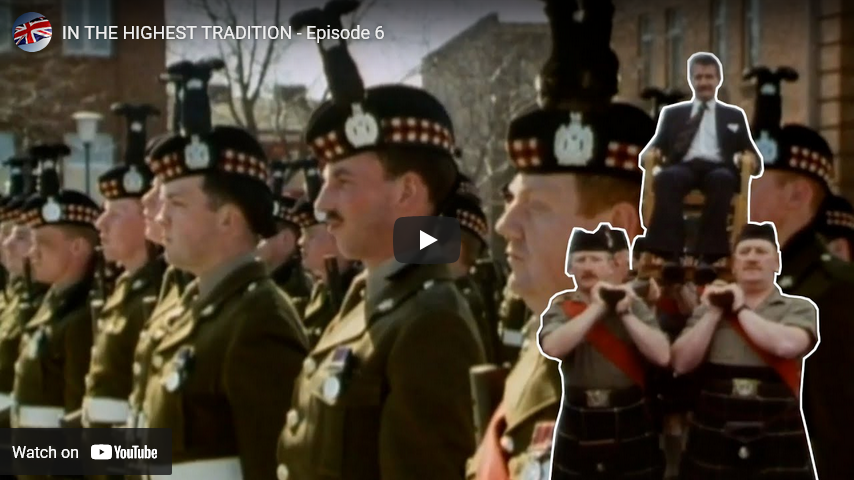
In The Highest Tradition — Episode 6
British Army Documentaries
Published 9 Nov 2021This is the final part of the six-part series which delves into the world of the British Army’s regimental traditions and the stories behind them. This is a world where a Napoleonic Drum Major’s staff remains prized booty, a dog wears campaign medals awarded at Queen Victoria’s command, and snuff is served from a ram called George.
© 1989
This production is for viewing purposes only and should not be reproduced without prior consent.
This film is part of a comprehensive collection of contemporary Military Training programmes and supporting documentation including scripts, storyboards and cue sheets.
All material is stored and archived. World War II and post-war material along with all original film material are held by the Imperial War Museum Film and Video Archive.
Comments Off on In The Highest Tradition — Episode 6
March 22, 2022
“The Unkillable Soldier” – Adrian Carton de Wiart – Sabaton History 109 [Official]
Sabaton History
Published 21 Mar 2022Adrian Carton de Wiart fought in a variety of wars over more than forty years, and he was wounded … again and again and again, and yet he always came back for more. This episode is his sometimes ridiculous but always interesting and incredible story.
Support Sabaton History on Patreon: https://www.patreon.com/sabatonhistory
Listen to “The Unkillable Soldier” on the album The War To End All Wars: https://music.sabaton.net/TheWarToEnd…
Watch the Official Music Video of “The Unkillable Soldier” here: https://www.youtube.com/watch?v=b4vj_…
Watch more videos on the Sabaton YouTube channel: https://www.youtube.com/user/Sabaton
Listen to Sabaton on Spotify: https://sabat.one/Spotify
Official Sabaton Merchandise Shop: http://bit.ly/SabatonOfficialShopHosted by: Indy Neidell
Written by: Markus Linke and Indy Neidell
Directed by: Astrid Deinhard and Wieke Kapteijns
Produced by: Pär Sundström, Astrid Deinhard and Spartacus Olsson
Creative Producer: Maria Kyhle
Executive Producers: Pär Sundström, Joakim Brodén, Tomas Sunmo, Indy Neidell, Astrid Deinhard, and Spartacus Olsson
Community Manager: Maria Kyhle
Post-Production Director: Marek Kaminski
Editor: Iryna Dulka
Sound Editor: Marek Kaminski
Archive: Reuters/Screenocean – https://www.screenocean.com
Colorization:
– Julius Jääskeläinen – https://www.facebook.com/JJcolorization/Sources:
National Army Museum, London
IWM HU 94459, Q 4511, Q 7105, Q 3140, IWM 32, IWM 162, IWM Q 68300, IWM 130-09+10
National Library of Scotland
All music by: SabatonAn OnLion Entertainment GmbH and Raging Beaver Publishing AB co-Production.
© Raging Beaver Publishing AB, 2019 – all rights reserved.

Comments Off on “The Unkillable Soldier” – Adrian Carton de Wiart – Sabaton History 109 [Official]
Tank Chats #141 | AEC Armoured Car | The Tank Museum
The Tank Museum
Published 3 Dec 2021Tune in to our weekly YouTube content today with David Fletcher as he details the AEC Armoured Car!
00:00 – Intro
00:25 – History of the AEC
04:46 – Key Features
(more…)
Comments Off on Tank Chats #141 | AEC Armoured Car | The Tank Museum
March 21, 2022
QotD: “Protect the NHS”
The government was able to get away with so ludicrous a slogan because of one of the most successful propaganda campaigns of the second half of the 20th century, namely that the institution of the National Health Service was a great social advance. It was nothing of the kind: Before it was founded, the country had one of the best health systems in the developed world and soon found itself with among the worst. The intention of the new service was egalitarian — treatment free at point of care and paid for from general taxation — and no one really bothered to check whether its effect was egalitarian. And since it has very unpleasant aspects for practically everyone, rich or poor, the British people still believe that it is egalitarian in its effect, when it is nothing of the kind. Such benefits as it confers are conferred in the rich, educated, and articulate, for the general principle of British public administration is for something to be done only if not doing it is likely to cause the relevant bureaucrats more trouble in the end. The rich, educated, and articulate can make trouble; the poor, uneducated, and inarticulate can only shout or throw bricks at the window (usually bulletproof and often soundproof, too).
The British population, believing that equality is a good in itself irrespective of whatever is equalized thereby, has come to regard the sheer unpleasantness of the NHS — to obtain treatment from which is an obstacle race in shabby buildings operated by exhausted and disgruntled staff — as evidence of its essential moral virtue, for it is unpleasant for all. Everyone is a pauper at the NHS’ gates, and where everyone is a pauper, no one is.
In addition to being treated better, the rich, educated, and articulate have escape routes, albeit expensive ones. Private medicine is still permitted in Britain, but in conditions of scarcity prices rise and so it is vastly, indeed fantastically, more expensive than it need be, or is elsewhere in Europe. The rich can also go abroad for treatment, and do.
Theodore Dalrymple, “Beneath the Surface”, Taki’s Magazine, 2021-12-09.
Comments Off on QotD: “Protect the NHS”
March 20, 2022
Kharkov Falls Once Again – WW2 – 186 – March 19, 1943
World War Two
Published 19 Mar 2022The British are attacking the Mareth Line in North Africa while the Americans hit the Axis flank, but the Allies are withdrawing in Burma. It’s the Germans who are pulling back in the USSR, though, and there is another attempt from within German command to assassinate Adolf Hitler.
(more…)
Comments Off on Kharkov Falls Once Again – WW2 – 186 – March 19, 1943
Canada Carries On — The Fighting Sea Fleas (1944)
PeriscopeFilm
Published 24 Dec 2012Support Our Channel: https://www.patreon.com/PeriscopeFilm
World War 2 propaganda film narrated by Lorne Greene about Canadian Motor Torpedo Boats crews and their actions. Shows life aboard Motor Torpedo Boats during the Battle of the Atlantic, fending off attacks by German U-Boats and commerce raiders. Motor Torpedo Boat (MTB) was the name given to fast torpedo boats by the Royal Navy and the Royal Canadian Navy. The “Motor” in the formal designation, referring to the use of petrol engines, was to distinguish them from the majority of other naval craft that used steam turbines or reciprocating engines. Produced & Directed by Sydney Newman, and released in 1944.
This film is part of the Periscope Film LLC archive, one of the largest historic military, transportation, and aviation stock footage collections in the USA. Entirely film backed, this material is available for licensing in 24p HD. For more information visit http://www.PeriscopeFilm.com
Comments Off on Canada Carries On — The Fighting Sea Fleas (1944)
QotD: The mythical Victorian conformity
Back in my youth, the “lifestyle” sections of big newspapers and magazines were always reporting on families cleaning out granny’s attic, only to find boxes full of great-grandpa’s translation of the Poetic Edda into Spenserian sonnets. Or great-grandma’s recreation of the Bayeux Tapestry in multicolored yarn. Or what have you. Everyday, plain-jane people back then were always undertaking these massively ambitious, frankly weird projects — great-grandpa was the village parson, and so far as is known, he never left his home parish, and yet he somehow got it in his head to write a history of the Assyrian Empire … and actually did write it, hundreds if not thousands of pages of it, based only on books in the parsonage library, or that he could borrow from the local squire.
In other words, the Victorians were extremely tolerant of “eccentricity”, sometimes extreme eccentricity, the kind of thing we Postmoderns would call “off their meds”. Just because the postmaster spends his off hours trying to commune with the fey folk doesn’t mean he’s not an effective postmaster …
That‘s the kind of thing we need to encourage. What kind of world do we want? A world where, above all, we recognize that people aren’t the same. “Reason” is just a tool, and a crude tool at that. Trying to force people to live “reasonably” always ends in tyranny. What we want is actual diversity. So long as he’s not harming himself or others — and the threshold here is actual physical harm, not feelz — who cares what the postmaster gets up to on his off hours? The supposedly stuffy, rigidly conformist Victorians didn’t, because c’est la vie.
Severian, “Truly Special Snowflakes”, Rotten Chestnuts, 2021-09-02.
Comments Off on QotD: The mythical Victorian conformity
March 17, 2022
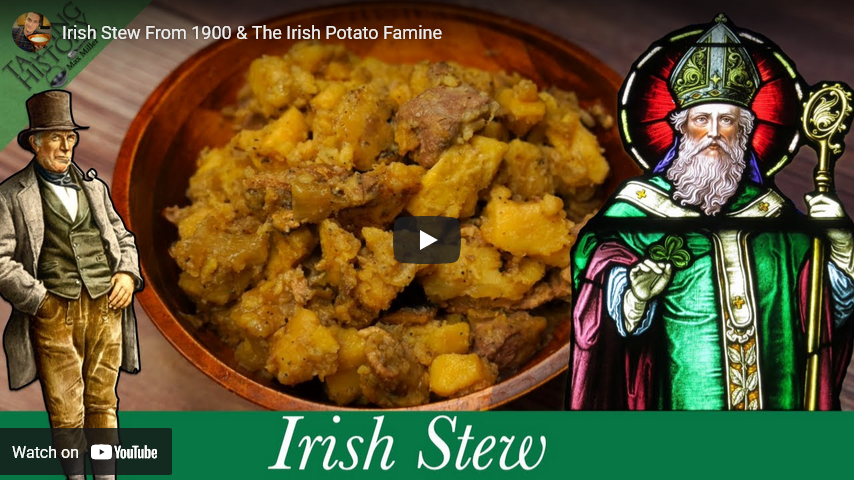
Irish Stew From 1900 & The Irish Potato Famine
Tasting History with Max Miller
Published 16 Mar 2021Help Support the Channel with Patreon: https://www.patreon.com/tastinghistory
Tasting History Merchandise: crowdmade.com/collections/tastinghistoryFollow Tasting History here:
Instagram: https://www.instagram.com/tastinghist…
Twitter: https://twitter.com/TastingHistory1
Tiktok: TastingHistory
Reddit: r/TastingHistory
Discord: https://discord.gg/d7nbEpyLINKS TO INGREDIENTS & EQUIPMENT**
Sony Alpha 7C Camera: https://amzn.to/2MQbNTK
Sigma 24-70mm f/2.8 Lens: https://amzn.to/35tjyoW
Le Creuset Cast Iron Round Casserole: https://amzn.to/2N5rTJKLINKS TO SOURCES**
Tamales Video: https://www.youtube.com/watch?v=s2JyN…
Quesadilla Video: https://www.youtube.com/watch?v=NPxjQ…
The History of the Great Irish Famine of 1847 by John O’Rourke: https://amzn.to/3qCM8fD
Great Irish Potato Famine: https://amzn.to/3kZg58j**Some of the links and other products that appear on this video are from companies which Tasting History will earn an affiliate commission or referral bonus. Each purchase made from these links will help to support this channel with no additional cost to you. The content in this video is accurate as of the posting date. Some of the offers mentioned may no longer be available.
Subtitles: Jose Mendoza
PHOTO CREDITS
Saint Patrick Catholic Church: By Nheyob – Own work, CC BY-SA 4.0, https://commons.wikimedia.org/w/index…
Kindred Spirits: By Gavin Sheridan – Own work, CC BY-SA 4.0, https://commons.wikimedia.org/w/index…MUSIC CREDITS
“Fiddles McGinty” by Kevin MacLeod is licensed under a Creative Commons Attribution 4.0 license. https://creativecommons.org/licenses/…
Source: http://incompetech.com/music/royalty-…
Artist: http://incompetech.com/“Achaidh Cheide – Celtic” by Kevin MacLeod is licensed under a Creative Commons Attribution 4.0 license. https://creativecommons.org/licenses/…
Source: http://incompetech.com/music/royalty-…
Artist: http://incompetech.com/#tastinghistory #stpatricksday #ireland
Comments Off on Irish Stew From 1900 & The Irish Potato Famine
March 15, 2022
In The Highest Tradition — Episode 5
British Army Documentaries
Published 4 Nov 2021The fifth in the series, this episode features stories about the Grenadier Guards, the favourite tipple of the Queen’s Lancashire Regiment, and how the King’s Own Scottish Borderers made porridge palatable.
© 1989
This production is for viewing purposes only and should not be reproduced without prior consent.
This film is part of a comprehensive collection of contemporary Military Training programmes and supporting documentation including scripts, storyboards and cue sheets.
All material is stored and archived. World War II and post-war material along with all original film material are held by the Imperial War Museum Film and Video Archive.
Comments Off on In The Highest Tradition — Episode 5
March 14, 2022
QotD: Crime and (lenient) punishment
And certainly, no intellectual ever earned kudos from his peers by arguing that punishment was necessary, let alone that current punishments were too lenient. In general, the more lenient he was in theory, and the more willing to forgive wrongs done to others, the better person he was thought by his peers to be.
In a way, this was understandable. The history of punishment is so sown with sadism and cruelty that it is hardly surprising that decent people don’t want to be associated with it.
Often, horrific punishments were carried out in public, half as deterrence and half as entertainment. Clearly, they failed to result in a law-abiding society, from which it was concluded that what counted in the deterrence of crime was not severity of punishment but the swiftness and certainty of detection.
While the latter are important, however, they are obviously not sufficient. It is not the prospect of detection that causes people to refrain from parking in prohibited places, but that of the fine after detection.
This is so obvious that it would not be worth mentioning, had not so much intellectual effort gone into the denial of the efficacy of punishment as such. Despite this effort, I doubt whether anyone, in his innermost being, has ever really doubted the efficacy of, or necessity for, punishment.
In Britain, leniency has co-existed with a very large prison population. This is not as contradictory as it sounds: for the fact is that something must eventually be done with repeat offenders, who do not take previous leniency as a sign of mercy and an invitation to reform but as a sign of weakness and an invitation to recidivism. Instead of nipping growth in the bud, the British system fertilises the plant.
Theodore Dalrymple, “Our Leniency, and the Necessity of Punishing Crime”, The Iconoclast, 2021-11-29.
Comments Off on QotD: Crime and (lenient) punishment
March 11, 2022
A Life Between Shells and Shelter – On the Homefront 015
World War Two
Published 10 Mar 2022Right from the start of World War Two, there has been little distinction between combatant and civilian. While bombs keep falling, people in Great Britain and in Germany are sitting in bunkers, basements and underground tunnels. We are taking a look at life inside those shelters.
(more…)
Comments Off on A Life Between Shells and Shelter – On the Homefront 015
Anti-Tank Chats #3 | Boys Anti Tank Rifle | The Tank Museum
The Tank Museum
Published 26 Nov 2021Our Patreons have already enjoyed Early Access and AD free viewing of our weekly YouTube video! Consider becoming a Patreon Supporter today: https://www.patreon.com/tankmuseum
Join Archive and Supporting Collections Manager Stuart Wheeler with his next instalment of Anti-Tank Chats on the “Boys Anti-tank Rifle”. It was a British anti-tank rifle in use during the Second World War.
0:00 – Intro
0:23 – Creation of the Boys Anti-Tank Rifle
4:43 – Features of the Rifle
(more…)
Comments Off on Anti-Tank Chats #3 | Boys Anti Tank Rifle | The Tank Museum
March 9, 2022
A Covert Weapons for Special Operations: the Sten MkII(S)
Forgotten Weapons
Published 5 Nov 2021http://www.patreon.com/ForgottenWeapons
https://www.floatplane.com/channel/Fo…
Cool Forgotten Weapons merch! http://shop.forgottenweapons.com
There are a fairly wide variety of silenced Sten guns that were made during World War Two, because many were needed for small Special Operations Executive missions. However, the British Army did also formally develop and adopt such a weapon. It was initially requested in 1942, with the first trials in November of that year. After two years of tinkering and deliberating, a pattern was finally put into production in February 1944. This was a Sten MkII with an integrally suppressed barrel. The barrel was just 3.75 inches long, with six vent holes drilled just in front of the chamber to reduce muzzle velocity below the speed of sound. The silencer itself was about 12 inches long, with an initial expansion chamber and 18 baffles.
Since the vented barrel reduced recoil energy of the cartridge, the bolt was reduced in weight by about 15% and the recoil spring shortened just slightly as well, to ensure proper cycling. The result was formally designated the Sten MkII(S). It retained the selective fire capability of the Sten, but was not to be used in automatic mode, as doing so could compress the baffles together and damage them. In total, 5,776 of these silent submachine guns were made. The design was followed by a more sophisticated Sten Mk6 (essentially a silenced Mk5), but remained in active use with the British military into the early 1970s.
Finding completely original and intact examples of the MkII(S) is extremely difficult today, and this one is a rare privilege to examine!
Contact:
Forgotten Weapons
6281 N. Oracle 36270
Tucson, AZ 85740

Comments Off on A Covert Weapons for Special Operations: the Sten MkII(S)


