Quotulatiousness

February 15, 2021

HMCS Magnificent (CVL 21) – Majestic-Class Light Aircraft Carrier

Filed under: Cancon, History, Military — Tags: , , , — Nicholas @ 04:00

canmildoc
Published 7 Apr 2013

HMCS Magnificent (CVL 21) was a Majestic-class light aircraft carrier that served the Royal Canadian Navy from 1948-1957.

The third ship of the Majestic class, Magnificent was built by Harland and Wolff, laid down 29 July 1943 and launched 16 November 1944. Purchased from the Royal Navy (RN) to replace HMCS Warrior, she served in a variety of roles, operating both fixed and rotary-wing aircraft. She was generally referred to as the Maggie. Her aircraft complement included Fairey Fireflies and Hawker Sea Furies, as well as Seafires and Avengers.

Tags: HMCS Magnificent, CVL 21, Majestic Class Light Aircraft Carrier, Royal Canadian Navy, RCN, CV, Maggie, Fairey Fireflies, Hawker Sea Furies, Seafires, Avengers, Canada, aircraft carrier, Canada

From the comments:

Tibor80
5 years ago
That’s me with the mike in hand, interviewing the staff. It was the last TV work I did in Canada before leaving the industry and settling on Madison Avenue in the fall of 1954. Don Harron had been hosting a series titled ON THE SPOT, produced by NFB for 2-year old CBC-TV. They were running behind and NFB called me to fill in. I had never before done ad lib of this sort. They were supposed to have an advance man to do research and provide points to be covered or some sort of script but that never materialized. There was no crew either, so I doubled on grip work, hauled equipment from setup to setup — couldn’t do the camera and be in front of it, too — though I’m sure NFB would have loved that.

I was just naturally very interested in the ship and asked a lot of questions and it worked out fine. The ship had no air conditioning. We were on maneuvers in the Gulf Stream near Bermuda in August. The heat was a killer. I couldn’t sleep. I shared a cabin with a lieutenant, a really nice fellow. He said, “Hey, Andy, you’re a V.I.P. here, I could get you a cot on a deck.” There was a little deck at the rear below the flight deck. All lights were out on maneuvers. I had never seen so many stars in my life — and the sea was filled with phosphorescence — like millions of fire flies. I thought I had died and gone to heaven.

We only had one week on the Maggie making the documentary but I was tempted to sign up for life. The navy had turned me down once before. A buddy and I got terrible marks in high school in the spring ’45 so we ran down to the Navy Recruiting station in Toronto and asked to sign up. A wiseguy behind the desk said, “Leave your names and if Hitler attacks Toronto, we’ll give you a call.” (Hitler shot himself a week later)

A video editor friend up in Belleville found this video and wrote to me saying there was a fellow with my name in this video. I told him that was me 70 pounds ago. Great days.

The Wikipedia entry says:

HMCS Magnificent (CVL 21) was a Majestic-class light aircraft carrier that served the Royal Canadian Navy from 1948–1957. Initially ordered by the Royal Navy during World War II, the Royal Canadian Navy acquired the carrier as a larger replacement for its existing operational carrier. Magnificent was generally referred to as Maggie in Canadian service. Following its return to the United Kingdom in 1956, the ship remained in reserve until being scrapped in 1965.

Description and construction

The 1942 Design Light Fleet carrier was divided into the original ten Colossus-class ships, followed by the five Majestic-class ships, which had some design changes that accommodated larger and heavier aircraft. The changes reduced the weight of petrol and fuel storage by reducing them to 75,000 gallons, to offset the additional weight from strengthening of the deck to operate aircraft as heavy as 20,000 pounds (9,100 kg). Further improvements over the Colossus class included larger aircraft elevators (54 by 34 feet, 16 m × 10 m) and improvements made to internal subdivisions for survivability purposes and accommodations.

The ship was 698 feet (212.8 m) long with a beam of 80 ft (24.4 m) and a draught of 25 ft (7.6 m). The carrier displaced 15,700 long tons (16,000 t). The ship was powered by steam from four Admiralty three-drum boilers. This propelled two Parsons geared steam turbines driving two shafts creating 40,000 shaft horsepower (30,000 kW). Magnificent had a top speed of 24 knots (44 km/h; 28 mph).

The aircraft carrier was armed with 24 2-pounder and 19 Bofors 40 mm guns for anti-aircraft defence. Majestic-class carriers were fitted out with Type 281, Type 293 and two Type 277 radar installations. The ship had a complement of 1,100, including the air group.

The third ship of the Majestic class, Magnificent was ordered 16 October 1942. The order was placed with Harland and Wolff in Belfast who were also constructing the Colossus-class ships Glory and Warrior. Magnificent was laid down on 29 July 1943 with the yard number 1228 and launched on 16 November 1944.

February 12, 2021

Calls for the federal government’s Broadcasting bill (Bill C-10) to be withdrawn

Filed under: Cancon, Government, Media, Technology — Tags: , , , , , — Nicholas @ 05:00

Michael Geist updates the situation with the federal government’s attempt to massively rework the Canadian broadcast and internet regulation framework without proper scrutiny or transparency:

I have not been shy about expressing my concerns with the Bill C-10, the Broadcasting Act reform bill. From a 20 part series examining the legislation to two podcasts to a debate with Janet Yale, I have actively engaged on policy concerns involving regulation that extends far beyond the “web giants”, the loss of Canadian sovereignty over broadcast ownership, the threat to Canadian intellectual property, and the uncertainty of leaving many questions to the CRTC to answer. Yet beyond the substance of the bill, in recent days an even more troubling issue has emerged as Canadian Heritage Minister Steven Guilbeault, his Parliamentary Secretary Julie Dabrusin, and the Liberal government abandon longstanding commitments to full consultation, transparency, and parliamentary process.

Last week, I appeared before the Standing Committee on Canadian Heritage as part of what it is calling a “pre-study” on Bill C-10. In this case, “pre-study” is euphemism for avoiding the conventional parliamentary process. Bill C-10 has not yet passed second reading in the House of Commons and has not been referred to committee for study. There have been extensive debates in the House and last week Conservative MP Michael Kram called for the bill to be withdrawn, noting that politicians could do Canadians a lot of good by “rewriting it from scratch.” That move drew criticism from Guilbeault during an interview at the CMPA Prime Time event, as he called for pressure on the Conservatives to support referring the bill to committee. There are instances of pre-study, but doing so concurrently with second reading makes no sense since a pre-study allows for a wide range of amendments, whereas after second reading the permitted amendments are more limited.

In an earlier era (or with a different government), the prospect of conducting a study of the bill while simultaneously engaging in second reading would garner loud objections. In fact, at the Heritage Committee hearing last week, opposition MPs wondered why they were already being asked for amendments to the bill when they had yet to hear from witnesses, much less conduct an actual study of the bill. Indeed, for a government that once prized itself on robust consultation, it seemingly now wants to avoid any genuine consultation on Bill C-10, content to have potential amendments presented through lobbyists, rather than on the public record in open hearings.

The secrecy does not end there. At the same hearing (I was a witness and waited patiently for these issues to play out), Conservative MPs raised questions about promised data on how the government had arrived at claims that the bill will generate over $800 million in new money. Leaving aside the fact that Guilbeault has often inflated that figure to over $1 billion, there has no public disclosure about the source of this claim. Cartt.ca reports that officials told the committee that the calculations could be “confusing” without a verbal explanation. Days later, Dabrusin told the committee that in fact the data had been provided to the committee late last year but perhaps not distributed to committee members.

When I was questioned by Conservative MP Kevin Waugh during my appearance before the committee, he again raised concerns about the claim. Dabrusin interjected with a point of order to make it clear that the data had been provided to the committee, albeit not distributed to MPs. What made the exchange so striking was that Dabrusin – a parliamentary secretary – seemingly did not give any thought to the fact that the data has not been made publicly available. Promoting long overdue disclosures to a handful of MPs while the public is kept in the dark is hardly the stuff worthy of praise or a point of order.

February 11, 2021

“… the entire Canadian constitution boiled down to the government saying, essentially, ‘trust us'”

Filed under: Cancon, Government, History — Tags: , , , , , , , , — Nicholas @ 03:00

Andrew Potter on the interesting and almost certainly unCanadian notion that the Prime Minister actually accept responsibility for things that happen on his watch:

Former Prime Minister Jean Chrétien speaking at the “No to the war in Iraq: 10 years later” colloquium, 15 March 2013.
Detail of a photo by Gopmtl1 via Wikimedia Commons.

The late UBC law professor Wesley Pue once remarked that the entire Canadian constitution boiled down to the government saying, essentially, “trust us.” He was speaking in the wake of the release of the Hughes Report into the APEC affair.

A refresher: In 1997 it was Canada’s turn to host the annual APEC summit, a free trade and cooperation gabfest for countries in the Pacific Rim. Prime Minister Jean Chrétien decided to hold the meeting on the campus of UBC. Given that it is probably one of the most gorgeous pieces of real estate in the country, Chrétien probably thought he was being a good host. But some UBC students objected to the presence of Indonesian dictator Suharto at their school, and so they marched, held up signs, blocked campus roads and exits, chanted slogans, the usual student protest stuff.

Chrétien was clearly embarrassed, and orders went out from the PMO to clear the roads. The Mounties started telling students their campus was now a “Charter-free zone,” arresting a bunch of them. In a notorious incident captured by CBC cameras, RCMP Staff Sgt. Hugh Stewart walked amongst the students hosing them down with pepper spray. (Asked about the incident at a press conference, Chrétien made a joke.)

The only proper investigation into the affair was led by commissioner Ted Hughes, who issued his report in the summer of 2001. Hughes found that the RCMP had behaved by turns incompetently and unprofessionally and that they had systematically violated the Charter rights of the students. Further, Hughes found that they had done so under direction from the PMO — in particular at the behest of its director of operations, Jean Carle. While Chrétien himself escaped direct censure (Hughes could find no evidence that Carle had acted on Chrétien’s explicit orders), Pue pointed out that the fundamental principle of responsible government requires that the prime minister accept responsibility for what happened. Yet Chrétien did not. He neither accepted personal responsibility, nor did he throw Carle under the bus. Instead, what happened was typically Canadian: the matter simply went away.

The APEC affair serves as a useful reminder of a fundamental truth about our system of government. As Pue noted, there are virtually no effective parliamentary or legal checks on a prime minister’s authority, and as a result it is pretty much impossible to hold our executive branch to account. We need to just trust them.

[…]

It’s worth rehearsing all of this because we are going through a rather extended “just trust us” phase in Ottawa. After shuttering parliament last spring, ostensibly to focus their energies on fighting the COVID-19 pandemic, Justin Trudeau’s Liberals spent the summer dreaming of “building back better” while fighting a ferocious rearguard action to keep MPs from finding out the truth about payments to Trudeau’s family by a charity. Trudeau has since spent the better part of the last six months governing by press conference from the front steps of his cottage, but even as the extreme levels of federal spending continue, and even as scandals and reports of gross mismanagement pile up, the Liberals have been brazenly testing the waters for a spring election.

February 10, 2021

QotD: Wells’s Rules of Canadian Politics

Filed under: Cancon, Humour, Politics, Quotations — Tags: , — Nicholas @ 01:00

There have been questions about my Rules of Politics around here in the last few days. Okay, not a lot of questions, but still. Here is the full list of rules. About a year after I came up with the original two, I added two more, which was probably a mistake. Sometimes I come up with candidates for additions to the list, and here today I will reveal one I considered adding, before deciding against it. But I think it’s time to show a little discipline, so the canonical list will stop at four. Four shall be the number thou shalt count, and the number of the counting shall be four. Ready?

1: For any given situation, Canadian politics will tend toward the least exciting possible outcome.

2: If everyone in Ottawa knows something, it’s not true.

3. The candidate in the best mood wins.

4. The guy who auditions for the role of opposition leader will get the job.

Paul Wells, “Wells’s Rules, annotated”, Maclean’s, 2009-05-21.

February 8, 2021

QotD: The deeply rooted anti-Americanism in Canadian politics

Filed under: Cancon, History, Politics, Quotations, USA — Tags: , , , — Nicholas @ 01:00

… in 2011, the only time Conservatives have managed to win a federal majority in the last three plus decades, they ran one of the most effective campaigns in recent memory against Michael “just visiting” Ignatieff by waging a patriotic campaign against him. In Ignatieff the Conservatives had the perfect rival to attack; a patrician member of the Laurentian new class. But the campaign against Ignatieff wasn’t just effective because it successfully portrayed him as an elite, it was effective because in attacking the time Ignatieff had spent aboard and at Harvard especially, they actually managed to make the Conservatives the champions of Canada, and the Liberals the more American party.

Ben Woodfinden, “True North Patriotism and a Distinctly Canadian Conservatism”, The Dominion, 2020-10-20.

February 7, 2021

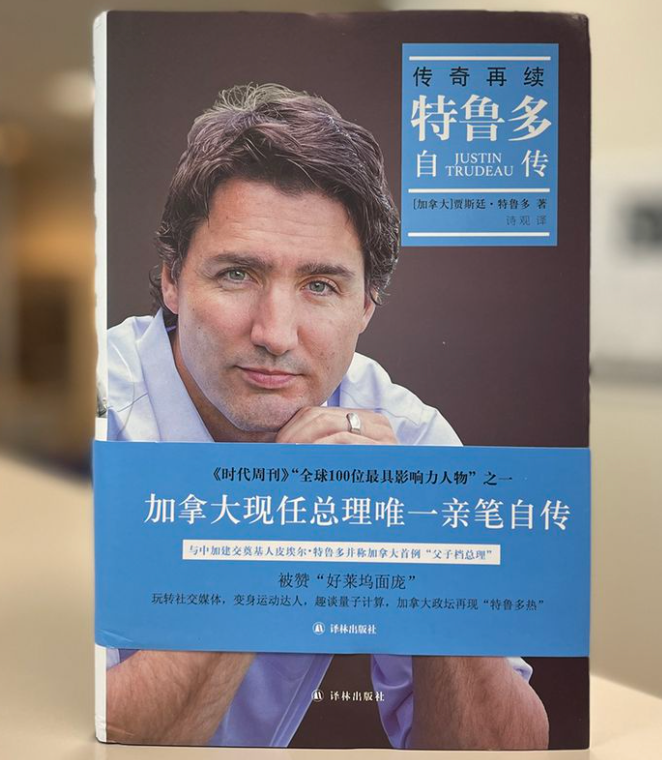
Former Liberal MP dishes on Justin Trudeau in her new book

Filed under: Books, Cancon, Politics — Tags: , , , , , , — Nicholas @ 03:00

When I moved out of Whitby, the local Member of Parliament was Liberal Celina Caesar-Chavannes. She was, we thought, a high-profile person who’d probably be quickly moved into a junior cabinet position, as Justin Trudeau sets a very high value on being seen to be supportive of women and minorities. As she quickly discovered, however, with Trudeau it’s very much the “being seen” part that matters to him and almost nothing in the way of actually being supportive:

[After a kerfuffle with opposition MP Maxime Bernier] she said she didn’t hear from most of her Liberal colleagues or the prime minister until a #hereforCelina hashtag campaign started weeks later, in response to a column that accused her of “seeing racism everywhere.” When she later confronted Trudeau about the lack of support, she said he told her, “As a strong Black woman, I didn’t think you needed help.” She said Conservative MP Michelle Rempel Garner was more supportive to her during that period than Trudeau.

The incident is one of many allegations of racism, tokenizing, and microaggressions Caesar-Chavannes wrote about in her new memoir Can You Hear Me Now?, which came out February 2.

[…]

Caesar-Chavannes told VICE World News her experiences of being tokenized, excluded, and undervalued led her to resign from the Liberal caucus and not run again in the 2019 election. Her decision culminated in an explosive conversation with Trudeau in February 2019, during which she alleges he complained to her about being confronted about his privilege. She said he was angry that she wanted to resign on the same day then Minister of Veterans Affairs Jody Wilson-Raybould quit her cabinet role, in the midst of the SNC-Lavalin scandal, the biggest crisis the governing Liberals had faced since Trudeau’s election in 2015.

“I was met with an earful that I needed to appreciate him, that everybody talked to him about his privilege, that he’s so tired of everybody talking to him about this stuff, and that I cannot make this announcement right now,” she said. She alleges he told her “he couldn’t have two powerful women of colour leave at the same time.”

After listening to his “rant” for a while, Caesar-Chavannes said she cussed out the prime minister.

“I had to ask him, ‘Motherfucker, who the fuck do you think you’re talking to?'” she said. “I was so angry.”

She said she didn’t make out what Trudeau said after that, but it “sounded like he was crying.” She ended up delaying her resignation announcement until March 2019.

Caesar-Chavannes said the Liberal party’s treatment of Wilson-Raybould — an Indigenous woman and whistleblower — made her feel like many of her colleagues were “fake as fuck” and cemented her desire to sit as an independent.

February 1, 2021

Battle of Hong Kong 1941 – Pacific War

Filed under: Britain, Cancon, China, History, India, Japan, Military, Pacific, WW2 — Tags: , — Nicholas @ 04:00

Kings and Generals
Published 31 Jan 2021

The first 100 people to go to https://www.blinkist.com/kingsandgenerals are going to get unlimited access for 1 week to try it out. You’ll also get 25% off if you want the full membership

Kings and Generals 3d animated historical documentary series on modern warfare continues with a video on the battle of Hong Kong of 1941. Japanese Empire is waging another Sino-Japanese war against China and decides that it is time to take over Hong Kong, as the British were using it to supply the Chinese. This battle is considered one of the first in the Pacific War within World War II.

Support us on Patreon: http://www.patreon.com/KingsandGenerals or Paypal: http://paypal.me/kingsandgenerals. We are grateful to our patrons and sponsors, who made this video possible: https://docs.google.com/document/d/1o…

The video was made by Leif Sick, while the script was developed by Ivan Moran. The video was narrated by Officially Devin (https://www.youtube.com/user/OfficiallyDevin)

✔ Merch store ► teespring.com/stores/kingsandgenerals
✔ Podcast ► http://www.kingsandgenerals.net/podcast/
✔ Twitter ► https://twitter.com/KingsGenerals
✔ Instagram ► http://www.instagram.com/Kings_Generals

Production Music courtesy of Epidemic Sound: http://www.epidemicsound.com

#Documentary #HongKong #PacificWar

January 24, 2021

QotD: The “returned ballot”

Filed under: Cancon, Politics, Quotations — Tags: , — Nicholas @ 01:00

In Canada we used to have — still have, according to a friend who should know — the excellent institution of the “returned ballot.” It is my usual way of voting. I can write with some confidence that it has never won.

Here’s what you do. You go into the polling station, show your ID (in Canada voters must identify themselves). The officer crosses you off the voting list, and gives you a ballot. Then you say, “I wish to return this ballot.” He says, “Thank you, sir,” and takes out his returned ballot book. (It need be nothing special: a school exercise book will do.) He copies your name into that, along with your address. (It is the only way to get your preference recorded.) You thank him, then wander off through the boobs who came to vote for somebody.

One has oneself, in effect, just voted for “none of the above.” This is the theory.

In practice the officer, who may or may not speak English or French, but probably needed the money, looks puzzled and a little frightened. He has no idea what you are talking about. You dig in, to provide a patient lesson in elementary civics. He won’t have a book, but you have brought along a cahier with “Returned Ballots” written on the cover in large capitals with a felt pen, and some heraldry doodled above it. To be helpful, you have already written your name and address on the first line. He consults all the other polling staff then says, “Thank you, sir.”

When, later, you check the results, you will not find a single returned ballot mentioned. Perhaps you were counted among the spoilt ones.

Now if you had been counted, and had persuaded a plurality of your fellow citizens to do likewise in, say, the riding of Parkdale (about one-in-four would triumph in most Canadian ridings; one-in-six if the turnout were low enough), the election is annulled. A by-election must then be called, in which none of the previous candidates may stand.

David Warren, “Let’s be practical”, Essays in Idleness, 2018-09-15.

January 22, 2021

Canada’s Governor General resigns, avoiding dragging the Queen into another Canadian political drama

Filed under: Cancon, Government — Tags: , , — Nicholas @ 05:00

Colby Cosh notes in Thursday’s NP Platformed newsletter:

The Right Honourable Julie Payette, 29th Governor General of Canada (October 2, 2017 – January 21, 2021).

When NP Platformed saw Robert Fife’s Globe and Mail report this morning, our thought was that leaking the news of the report’s completion was an obvious political manoeuvre. (You know how a fife works: put some wind in it, and it will play a tune for you.)

Even a prime minister as callow as the current one would not want to try firing a governor general, which would require the personal intervention of the Queen. This would be a failure in itself, a blot on Canada’s copybook, even if the PM had the support of other parliamentary parties.

As hours passed, the thought naturally occurred to us: why should Payette be making anyone wait for some written report anyway? We know she has sometimes balked at most of the easily identifiable parts of her job, including travel to ceremonies and (for heaven’s sake) giving royal assent to legislation. Hired to be a dynamic female STEM mascot (for a Liberal government, sort of), she somehow degenerated, with unseemly speed, into an immured princess from a fairy tale, evidently driven half-mad by some faerie spell.

The main job, the essence of the governor general gig, is to be above suspicion, like Caesar’s wife in the proverb. The mere whisper of abusiveness or of clownish behaviour involving public funds ought to have been enough to settle things, possibly with a convenient health excuse. (If she offers one now, it can only provoke snide laughter.) The vicereine is, in our system of government, the passage through which national honours flow from the sovereign. The mention of “honour” in connection with this Governor General was becoming mighty awkward. She should have our thanks for doing the right thing today.

January 21, 2021

QotD: The Laurentian Elite and the “new Canada” of the 1960s

The Patriot Game captures a unique characteristic, and problem, with Canadian conservatism. Lots of Canadian conservatives really don’t like Canada all that much. Brimelow is right to suggest that the contemporary Canadian identity is very much a creation of the Liberals and the New Class, and this isn’t one that conservatives feel all that comfortable with. What this has done is create a powerful anti-Canadian impulse in portions of the conservative movement.

Because the Liberals were so successful in creating this new identity, conservatives, especially Western conservatives (understandably) felt alienated in this new Canada. Brimelow gave some intellectual heft and crafted a coherent theory around why conservatives felt this way.

The broader narrative Brimelow, and others, put forward is that Canada’s British heritage was central to our identity and sense of who we are, but that this identity was destroyed by the Liberals who then built a new one in their own image. In the 1960s, Canadian Liberalism became self-consciously post-British, and the 1960s really do represent an approximate decade in which the “old Canada” died and a “new Canada” was born. The 1960s weren’t just a time of social change, they marked the end of the British Empire, the start of the Quiet Revolution, and of course most symbolically saw the replacement of the Red Ensign with the Maple Leaf flag. The battles between Diefenbaker and Pearson (and Pierre Trudeau) work as a stand in for the divide between old British Canada and new Liberal Canada.

Ben Woodfinden, “True North Patriotism and a Distinctly Canadian Conservatism”, The Dominion, 2020-10-20.

January 20, 2021

“Canada Post … is not to act as the censor of mail or to determine the extent of freedom of expression in Canada”

Filed under: Cancon, Law, Liberty, Politics — Tags: , , , — Nicholas @ 05:00

Colby Cosh on a recent incident in Regina where a Canada Post employee took it upon himself to act as a local censor for people on his delivery route:

Today’s idiot of the day is not, perhaps surprisingly, the Regina postman who got suspended for refusing to deliver the Epoch Times, the oddball anti-communist newspaper that’s affiliated with China’s persecuted Falun Gong religious movement. Don’t get us wrong: Ramiro Sepulveda is clearly a bit of a nitwit. He seems to believe that a newspaper founded by commie-hating Chinese-Americans is designed to provoke hatred toward “Asian communities in North America.”

Sepulveda didn’t want to deliver free copies of the Times to non-soliciting customers because it “spits lies.” Perhaps regrettably, the strong reaction by Canada Post means that our junk mail, quite a lot of which consists of boastful missives from politicians, is not destined to be fact-checked and aggressively suppressed by the corporation’s rank and file.

Sepulveda was properly punished for not doing his job. And Canada Post used the opportunity to promote its content-neutrality as an agent of the state, although it did not quite dare to use the phrase “statutory monopoly.” In a statement to the broadcasters who reported on Sepulveda’s off-piste personal fact-checking, the agency said: “Canada Post is obligated to deliver any mail that is properly prepared and paid for, unless it is considered non-mailable matter. The courts have told Canada Post that its role is not to act as the censor of mail or to determine the extent of freedom of expression in Canada.”

They might have added that access to the mail has been denied to individuals for spreading hatred only a handful of times in the history of the country; this, too, is as it ought to be, and it is certainly not postal employees who ought to be improvising such bans. Ideally, all postmen would be doing their best not to create the suspicion that they are eyeballing what is sent to our homes with the intention of ringing up a reporter and causing a fuss. Say what you like about these poor toilers: most of them never give us any reason to doubt their discretion.

January 10, 2021

Has the United States reached the same tipping point Canada reached in 1982?

David Warren considers the 1982 tipping point in Canada to have been the implementation of Pierre Trudeau’s Constitution:

Queen Elizabeth II signs Canada’s constitutional proclamation in Ottawa on April 17, 1982 as Prime Minister Pierre Trudeau looks on.

There are two principal political parties in modern America (in which I include up here). In the Natted States, the population is divided roughly equally between those of “progressive” and “regressive” habits of mind; in the Canadas, the former have come to dominate.

The tipping point was reached much earlier up here, and the new “metapower” (Foucault’s term) was seized, politically, from within the Liberal Party. The strategy was to disenfranchise the “conservative” half of the electorate, by undermining all national institutions, and hosing down Canada’s previous identity. I’d count, say, 1982, as the point of no return. That identity was replaced, definitively, under a revised Trudeau constitution, with a new “multicultural” identity, in which citizens were themselves redefined, from free persons whose rights were inalienable, to interchangeable clients of an omnipotent State, which could dispense rights whenever it was in the mood — and withdraw them whenever the mood changed; however frequently.

This is the Democrat strategy in the larger, and still less amenable, country next door. As Andrew Breitbart and Antonio Gramsci might agree, this is an essentially cultural process. Politics are visible at the tip of the iceberg, but “progress” requires a more thorough “cleansing,” of old cultural norms. The cancer metastasized more from Hollywood, than from Washington DC. The takeover of the Democratic Party as the vanguard “agent of change” was only part of the institutional takeover of America. As important was the takeover of the mass media, and even corporate boardrooms. Those who weren’t “progressive” would now be “cancelled”: must cease to be.

All cultural change has a religious dimension. The Democrat representatives of the “powers and principalities” mentioned by Saint Paul, are characteristically godless, themselves. But they depend on a massive, core constituency of low-information, low-intelligence, easily manipulated urban voters.

Those who can still see the stars at night tend to remain in the ancient, God-fearing default. In the cities, where the masses may not grasp that milk comes from cows, let alone that someone must milk them, the belief that the economy is based on government cheques is more common. That is the god of the populous cities, and for most city-dwellers, not voting for their “godless god” of progress, seems a kind of heresy.

The idea that such heretics should be deprived of their freedom, starting with freedom of speech, does not appeal to the “rural” voter, including people like me — a “country hick” type who paradoxically lives in the city. The idea that laws and constitutions should be flexible, to accommodate the latest schemes of a progressive technocratic élite, doesn’t flourish among us country bumpkins. But to the efficiency experts in the city, what is our problem?

December 28, 2020

Another aircraft that’s about to become a political football in Canada

Filed under: Cancon, Government, Military — Tags: , , , — Nicholas @ 03:00

Ted Campbell discusses the need to replace the Royal Canadian Air Force long-haul VIP transport aircraft (the current CC-150 Polaris planes were built and first operated by Wardair in 1987 and obtained by the government in 1993). It’s traditional for the government to be assailed by the opposition and the media (at least when it’s a Conservative government in office) for wanting to spend far too many dollars for unnecessarily luxurious planes (Jean Chretien in opposition called the Polaris a “flying Taj Mahal”)*. The Polaris and its eventual replacement do a lot more than just fly junketing politicians around:

RCAF CC-150 Polaris at Zurich, Switzerland on 25 January, 2012.
Photo by Kambui via Wikimedia Commons

… let’s all remember please that the primary roles of this fleet of aircraft are to transport Canadian troops to wherever in the world they might need to go, for operations, and to refuel our jet fighters when they are deployed overseas, and to carry cargo, but smaller loads that do not require a big CC-130 Hercules or the mighty CC-177 Globemaster III. The Royal Canadian Air Force needs a fleet of specially modified aircraft for those roles. There are several more modern “tankers” available including the Boeing KC-46 which is used by the USA and Israel and the Airbus A330 Multi Role Tanker Transport (MRTT) which is used by several nations including Australia and the United Kingdom. […] Some commercial aircraft can be converted, easily and quickly, from carrying passengers in seats to carrying cargo in containers to carrying aircraft fuel in giant bladders with refuelling hoses attached. They are true multi-role aircraft. They can also be converted to VIP aircraft with special suites for sleeping, with showers, work spaces, secure telecommunications and regular conventional passenger seats for support staff and journalists.

The key bit of a real VIP aircraft is a secure (high-grade encryption) communications and information suite. The prime minister, ministers and senior officials, when en route to a meeting in a foreign capital may need to have discussions that are SECRET-CANADIAN EYES ONLY with senior staff back in Ottawa and they may then need to have a video conference call with, say, the Prime Ministers of e.g. Australia and the United Kingdom using a different security system that allows them to discuss SECRET-FIVE EYES ONLY materiel. You’re talking a reliable satellite communications system (with a back-up, too) and various cryptographic terminals and the people to operate and maintain them. The comm/IT suite is complex and expensive. Everything else is optional and, even in the case of a VIP shower stall, pretty cheap, too.

OK, I can already hear the objections, many from Conservatives: “Why doesn’t he fly commercial? He can even fly First Class,” some will say. Aside from some very real security concerns, suppose he has to attend a G-20 meeting in Brazil. There are no flights from Ottawa, there are no direct flights from Toronto. Even if there were he would need an entourage of security and telecommunications/cryptography specialists. I know the Pope charters an Alitalia jet when he travels but I’m afraid that even Air Canada, which has 400± aircraft and carries over 50,000,000 passengers a year, might find it too difficult to keep an aircraft on something close to “hot-standby,” as the RCAF does, for the prime minister. This problem was examined many times over the years and the range of factors ~ security, communications, availability ~ dictate that a dedicated VIP squadron in the Air Force is the best choice … maybe the only sensible choice.

* I rarely say much in favour of former PM Jean Chrétien, but in this particular case he was consistent in his opposition even after being elected: he refused to use the VIP transport during his time in office and attempted to find a buyer for that particular aircraft. Successor Paul Martin had no such aversion and used the aircraft during his premiership.

December 25, 2020

Bonus QotD: Modern services in church

Filed under: Britain, Cancon, Quotations, Religion, USA — Tags: , , — Nicholas @ 03:00

I remember when Christians used to actually believe in Christianity. Those were the days. (Some still do, but their numbers are shrinking.)

Back then, you could still visit an average (Protestant) church and hear a pastor actually teach real doctrine and share authentic insights. You could hear his thoughts on how to live an upright Christian life, or on why bad things might happen to good people, or how Christian marriages might be improved. And you could hear it all supported by actual Bible passages.

After the sermon, you could hear the congregation sing hymns affirming the importance of obedience, humility, faith, courage, or some other Christian virtue. They were something, the old hymns: bold, clear, impactful, sometimes even militant, like “Onward, Christian Soldiers” or “God of Our Fathers, Whose Almighty Hand”, or particularly thoughtful, like “How Great Thou Art”.

Things are different now. Wander into a typical Christian church these days, and, far from hearing a sermon challenging you to live an upright life, you’re more likely to hear an unsuccessful attempt at a Jeff Foxworthy-style stand-up comedy routine, Hallmark-style stories of dubious veracity, and utterly vacuous “praise songs” which all sound like U2 album rejects from 1986. (They even feature the thumping eighth-note bass parts, echo-drenched guitar, and melodramatic vocal performances.)

Oh, and I forgot: At some point, you’re also going to see the pastor dutifully hand the mic over to his overly-assertive, overly-eager, overly-made-up wife (presumably on pain of divorce, or possibly even death), who will then speak loudly and rapturously — all about herself — for the next half hour.

Not all Christian churches are like this, of course. The problem is, too many are. As the years roll by, contemporary Christian churches increasingly abnegate their scripturally-prescribed role as fortified beacons of divine truth, and instead transform themselves into vehicles for a social justice pseudo-gospel completely incompatible with Christian (or Jewish, for that matter) scriptural teachings.

Tal Bachman, “Christians, Come Back”, Steyn Online, 2020-09-03.

December 15, 2020

Experimental Pre-WWI Ross .30-06 Machine Gun

Filed under: Cancon, History, Military, Weapons — Tags: , , , , — Nicholas @ 04:00

Forgotten Weapons
Published 14 Dec 2020

http://www.patreon.com/ForgottenWeapons

https://www.floatplane.com/channel/Fo…

Cool Forgotten Weapons merch! http://shop.bbtv.com/collections/forg…

In August 1913, the British War Office wrote to Sir Charles Ross requesting a sample automatic rifle for trials in the UK. Ross was able to submit a prototype in May 1914, which was tested at Enfield — but only fired 308 rounds before the test ended, suggesting that something important probably broke. The gun was a very strange looking contraption, whose Ross MkIII lineage is visible only in the bolt and front of the receiver forging. A long stroke gas pistol was added, and the action flipped upside-down. A large 25-round magazine was fitted, along with a thumbhole style stock that looks very similar to the grip of a Lewis gun. In addition to one example tested at Enfield in .303 caliber, one other model was send to the US for testing, chambered for .30-06. That is the gun we are looking at today, which came to the Canadian War Museum from the collection stored at Fort Knox in the 1970s and 80s.

Thanks to the Canadian War Museum for providing me access to film this extremely unusual Ross for you!

Home

Contact:
Forgotten Weapons
6281 N. Oracle #36270
Tucson, AZ 85740

« Newer PostsOlder Posts »

Powered by WordPress