
Forgotten Weapons
Published 11 Oct 2025Albanian AKs are both pretty scarce to find outside Albania, and also a bit unusual in the AK field. Where most countries followed Russian AK development, Albania instead patterned theirs on the Chinese Type 56. China had Russian assistance in producing the original milled-receiver AK, but the milled AKM came after the Sino-Soviet split and so China had to create their own stamped receiver design independently. We see those features in the Albanian ASh-78, in elements like the offset front trunnion rivet, gas vent holes, stock and grip style, single trigger guard rivets, and lack of a rate reducing mechanism in the FCG.
In 1960 China began providing military aid to Albania. The first rifle production there was a version of the SKS, which are made into the early 1970s. In 1974 the Albanian state arsenal began setting up AK production with Chinese help as well. Relations between the two countries broke down shortly thereafter, and by the time production began in 1978 the Albanians were working entirely independently. They added an underfolding model (the ASh-82) in 1982, and production continued past the end of the Cold War. Total production numbers are not known, as military information was pretty tightly controlled.
(more…)
March 7, 2026
ASh-78: Albania Makes the Worst AK
March 5, 2026
QotD: Chinese cooking
Between the foreignness and the sheer, overwhelming size of the topic, it might seem impossible to conduct an adequate survey of the history, vocabulary, and vibe of eating, Chinese-style, for Western readers. But that’s why we have Fuchsia Dunlop. She’s an Englishwoman, but she trained as a chef at the Sichuan Higher Institute of Cuisine (the first Westerner ever to do so). She’s written some of the best English-language cookbooks for Chinese food, and now she’s written this book: her attempt to communicate the totality of the subject she loves and which she’s spent her life studying. But the topic is just too damn big to take an encyclopedic or even a systematic approach, and so she wisely doesn’t try. Instead she writes about the weirdest and tastiest and most emblematic meals she’s had, and ties each one back to the main topic. So the book lives up to its name. Like a banquet, it doesn’t try to give you a thorough academic knowledge of anything, but rather a feast for the senses and a feel for what a cuisine is like.
What is it like? Well, Dunlop barely manages to cover this in a 400-page book, so I hesitate even to try, but let me hit a few of the high points. First, diversity. China is a continent masquerading as a country, both in population and in geographic extent, so its cuisine is comparably diverse. Most cooking traditions have one or two basic starches, China has four or five.1 China extends through every imaginable biome, from rainforest to tundra, desert to marshlands, and much of the genius of Chinese food lies in combining the delicious bounties offered up by this kaleidoscope in interesting or unexpected ways.
One way to think of Chinese eating is that much of it is a sort of “internal” fusion cuisine. Because China was ruled from very early on by a centralized bureaucracy with a fanaticism for river transport, the process of culinary remixing has been going on for much longer than it has in most places. The Roman Empire could have been like this, but the shores of the Mediterranean all have pretty similar climates, so there were fewer ingredients to start the process with. Already very early in Chinese history, before the 7th century, we hear of the imperial city being supplied with:
oranges and pomelos from the warm South, […] the summer garlic of southern Shanxi, the deer tongues of northern Gansu, the Venus clams of the Shandong coast, the “sugar crabs” of the Yangtze River, the sea horses of Chaozhou in Guangdong, the white carp marinated in wine lees from northern Anhui, the dried flesh of a “white flower snake” [a kind of pit viper] from southern Hubei, melon pickled in rice mash from southern Shanxi and eastern Hubei, dried ginger from Zhejiang, loquats and cherries from southern Shanxi, persimmons from central Henan, and “thorny limes” from the Yangtze Valley.
If we think of chefs as artists, the Chinese ones have since ancient times had the advantage of an outrageously diverse set of paints. But these ingredients aren’t combined willy-nilly, without respect for their time or place of origin. The Chinese practically invented the concept of terroir, and their organicist conception of the universe in which everything is connected to everything else implied strict rules about which foods were to be eaten when, both for maximum deliciousness and to ensure cosmic harmony.
In the first month of spring, [the emperor] was to eat wheat and mutton; in summer, pulses and fowl; in autumn, hemp seeds and dog meat; in winter, millet and suckling pig. An emperor’s failure to observe the laws of the seasons would not only cause disease, but provoke crop failure and other disasters.
The obsessions with freshness and seasonality come to their culmination in the one area where Chinese cuisine stands head and shoulders above all others: green vegetables. In the West, “eating your greens” is a punishment, or at best a chore, and it’s easy to see why. In much of the world vegetables are bred for yield and transportability, kept in refrigerators for weeks, and then boiled until no trace of flavor remains. Dunlop and I have one thing in common: when we’re not in China, of all the delights of Chinese cooking it’s the green vegetables that we miss the most.
When I bring American friends to a real Chinese restaurant, sometimes they’re shocked that the vegetable dishes cost the same amount as the main courses. Why does a side dish cost so much? But no Chinese person would ever think of a vegetable course as a “side” dish, they’re part of the main attraction, and more often than not they’re the stars of the show. In the West, you can now get decent baak choy, but this is just one of the dozens and dozens of leafy greens that the Chinese regularly consume, many of them practically impossible to find outside Asia.
My own favorite is the sublime choy sum. I remember once getting off a transoceanic flight, starving and exhausted, and being offered a bowl of it over plain white rice. The greens had been scalded for a few seconds with boiling water, then tossed around a pan for no more than a minute — just long enough that the leaves were so tender they seemed to dissolve in your mouth, but the stems still held snap and crunch. The seasoning was subtle — maybe a few cloves of garlic, some salt, a splash of wine or vinegar. Just the right amount to bring out the deep, earthy flavors of the vegetable, to somehow make them brighter and more forward, but not to overpower them.2 It was one of the most delicious things I’ve ever eaten. I think I’ll still remember it when I am old.
Did you notice that in the previous paragraph I spent almost as much time describing the texture of the food as its flavor? That’s no coincidence. Of course the Chinese care about flavor, everybody does (except the British, ha ha), but relative to many other culinary traditions the Chinese put a disproportionate emphasis on the texture of their food as well. I’ll once again draw on a bastardized version of the Whorf hypothesis: English is a big language with a lot of borrowings, so we have a correspondingly large number of words for food textures. Imagine explaining to a foreigner the difference between “crunchy” and “crisp”, or between “soft” and “mushy”. That is already more semiotic resolution than most languages have when it comes to the mouthfeel of their food, but Chinese takes it to a whole ‘nother level.
John Psmith, “REVIEW: Invitation to a Banquet by Fuchsia Dunlop”, Mr. and Mrs. Psmith’s Bookshelf, 2024-02-05.
- One of them, potatoes, has a particularly fraught history. Potatoes started seriously spreading in China right around the time of the mass famines that accompanied the collapse of the Ming dynasty. Accordingly, they got a reputation of being food for poor people. They’ve never really managed to overcome this association, and are generally shunned by the Chinese, especially in high-end cuisine, despite several government campaigns to encourage people to eat them since they’re nutritious and easy to grow in arid conditions.
- There’s a pattern in Chinese gastronomy where extremely intense, over-the-top flavors are a bit low-status, and flavors so pure and subtle they verge on bland are what the snooty people go for. This is true across regions (the in-your-face food of Sichuan is less valued than the cuisine of the Cantonese South, or the cooking traditions of Zhejiang in the East), but it’s also true within regions (in Sichuan, the food of Chongqing is much spicier than the food of Chengdu, and correspondingly lower status).
March 4, 2026
The Korean War Week 89: Is There Such Thing As Soviet Neutrality? – March 3, 1952
The Korean War by Indy Neidell
Published 3 Mar 2026The UN is not just worried that the Communists have strong air power, they’re worried that because they can’t produce more jets quickly enough, the Communist advantage in the skies will soon become insurmountable, but they at least have plans to try and stave that off. They also have plans for rotating in fresh troops, but those plans have stumbling blocks of their own, as do the negotiations about who might be part of a post-armistice supervisory team, specifically the USSR, whom the US does not see as “neutral” with regard to this war.
00:00 Intro
00:54 Recap
02:05 Supervisory Team
03:29 45th and 40th Divisions
07:14 POW Repatriation
10:29 Communist Air Power
15:52 Notes
16:36 Summary
16:55 Conclusion
(more…)
February 28, 2026
QotD: The “Balance of Terror” in the missile age
This also meant that a devastating nuclear “first strike” could now be delivered before an opponent would know it was coming, or at least on extremely short notice. A nuclear power could no longer count on having enough warning to get its nuclear weapons off before the enemy’s nuclear strike had arrived. Bernard Brodie grappled with these problems in Strategy in the Missile Age (1959) but let’s focus on a different theorist, Albert Wohlstetter, also with the RAND Corporation, who wrote The Delicate Balance of Terror (1958) the year prior.
Wohlstetter argued that deterrence was not assured, but was in fact fragile: any development which allowed one party to break the other’s nuclear strike capability (e.g. the ability to deliver your strike so powerfully that the enemy’s retaliation was impossible) would encourage that power to strike in the window of vulnerability. Wohstetter, writing in the post-Sputnik shock, saw the likelihood that the USSR’s momentary advantage in missile technology would create such a moment of vulnerability for the United States.
Like Brodie, Wohlstetter concluded that the only way to avoid being the victim of a nuclear first strike (that having the enemy hit you with their nukes) was being able to credibly deliver a second strike. This is an important distinction that is often misunderstood; there is a tendency to read these theorists (Dr. Strangelove does this to a degree and influences public perception on this point) as planning for a “winnable” nuclear war (and some did, just not these fellows here), but indeed the point is quite the opposite: they assume nuclear war is fundamentally unwinnable and to be avoided, but that the only way to avoid it successfully is through deterrence and deterrence can only be maintained if the second strike (that is, your retaliation after your opponent’s nuclear weapons have already gone off) can be assured. Consequently, planning for nuclear war is the only way to avoid nuclear war – a point we’ll come back to.
Wohlstetter identifies six hurdles that must be overcome in order to provide a durable, credible second strike system – and remember, it is the perception of the system, not its reality that matters (though reality may be the best way to create perception). Such systems need to be stable in peacetime (and Wohlstetter notes that stability is both in the sense of being able to work in the event after a period of peace, but also such that they do not cause unintended escalation; he thus warns against, for instance, just keeping lots of nuclear-armed bombers in the air all of the time), they must be able to survive the enemy’s initial nuclear strikes, it must be possible to decide to retaliate and communicate that to the units with the nuclear weapons, then they must be able to reach enemy territory, then they have to penetrate enemy defenses, and finally they have to be powerful enough to guarantee that whatever fraction do penetrate those defenses are powerful enough to inflict irrecoverable damage.
You can think of these hurdles as a series of filters. You start a conflict with a certain number of systems and then each hurdle filters some of them out. Some may not work in the event, some may be destroyed by the enemy attack, some may be out of communication, some may be intercepted by enemy defenses. You need enough at the end to do so much damage that it would never be worth it to sustain such damage.
This is the logic behind the otherwise preposterously large nuclear arsenals of the United States and the Russian Federation (inherited from the USSR). In order to sustain your nuclear deterrent, you need more weapons than you would need in the event because you are planning for scenarios in which some large number of weapons are lost in the enemy’s first strike. At the same time, as you overbuild nuclear weapons to counter this, you both look more like you are planning a first strike and your opponent has to estimate that a larger portion of their nuclear arsenal may be destroyed in that (theoretical) first strike, which means they too need more missiles.
What I want to note about this logic is that it neatly explains why nuclear disarmament is so hard: nuclear weapons are, in a deterrence scenario, both necessary and useless. Necessary, because your nuclear arsenal is the only thing which can deter an enemy with nuclear weapons, but that very deterrence renders the weapons useless in the sense that you are trying to avoid any scenario in which you use them. If one side unilaterally disarmed, nuclear weapons would suddenly become useful – if only one side has them, well, they are the “absolute” weapon, able to make up for essentially any deficiency in conventional strength – and once useful, they would be used. Humanity has never once developed a useful weapon they would not use in extremis; and war is the land of in extremis.
Thus the absurd-sounding conclusion to fairly solid chain of logic: to avoid the use of nuclear weapons, you have to build so many nuclear weapons that it is impossible for a nuclear-armed opponent to destroy them all in a first strike, ensuring your second-strike lands. You build extra missiles for the purpose of not having to fire them.
(I should note here that these concerns were not the only things driving the US and USSR’s buildup of nuclear weapons. Often politics and a lack of clear information contributed as well. In the 1960s, US fears of a “missile gap” – which were unfounded and which many of the politicians pushing them knew were unfounded – were used to push for more investment in the US’s nuclear arsenal despite the United States already having at that time a stronger position in terms of nuclear weapons. In the 1970s and 1980s, the push for the development of precision guidance systems – partly driven by inter-agency rivalry in the USA and not designed to make a first strike possible – played a role in the massive Soviet nuclear buildup in that period; the USSR feared that precision systems might be designed for a “counter-force” first strike (that is a first strike targeting Soviet nuclear weapons themselves) and so built up to try to have enough missiles to ensure survivable second strike capability. This buildup, driven by concerns beyond even deterrence did lead to absurdities: when the SIOP (“Single Integrated Operational Plan”) for a nuclear war was assessed by General George Lee Butler in 1991, he declared it, “the single most absurd and irresponsible document I had ever reviewed in my life”. Having more warheads than targets had lead to the assignment of absurd amounts of nuclear firepower on increasingly trivial targets.)
All of this theory eventually filtered into American policy making in the form of “mutually assured destruction” (initially phrased as “assured destruction” by Secretary of Defense Robert McNamara in 1964). The idea here was, as we have laid out, that US nuclear forces would be designed to withstand a first nuclear strike still able to launch a retaliatory second strike of such scale that the attacker would be utterly destroyed; by doing so it was hoped that one would avoid nuclear war in general. Because different kinds of systems would have different survivability capabilities, it also led to procurement focused on a nuclear “triad” with nuclear systems split between land-based ICBMs in hardened silos, forward-deployed long-range bombers operating from bases in Europe and nuclear-armed missiles launched from submarines which could lurk off an enemy coast undetected. The idea here is that with a triad it would be impossible for an enemy to assure themselves that they could neutralize all of these systems, which assures the second strike, which assures the destruction, which deters the nuclear war you don’t want to have in the first place.
It is worth noting that while the United States and the USSR both developed such a nuclear triad, other nuclear powers have often seen this sort of secure, absolute second-strike capability as not being essential to create deterrence. The People’s Republic of China, for instance, has generally focused their resources on a fewer number of systems, confident that even with a smaller number of bombs, the risk of any of them striking an enemy city (typically an American city) would be enough to deter an enemy. As I’ve heard it phrased informally by one western observer, a strategy of, “one bomb and we’ll be sure to get it to L.A.” though of course that requires more than one bomb and one doubts the PRC phrases their doctrine so glibly (note that China is, in theory committed to developing a triad, they just haven’t bothered to actually really do so).
Bret Devereaux, “Collections: Nuclear Deterrence 101”, A Collection of Unmitigated Pedantry, 2022-03-11.
February 25, 2026
The Korean War Week 88: Riot or Revolution? – February 24, 1952
The Korean War by Indy Neidell
Published 24 Feb 2026The tensions at Koje-do POW camp explode this week, ending in heavy bloodshed as UN forces desperately try to wrestle control of the situation. Changes will need to be made to counter the growing threat of disorder, and fast. Elsewhere, the Communist forces are on the attack this week, both in the field and through diplomatic channels, as a naval invasion of Yang-do launches and accusations of biological weapons ramp up.
00:00 Intro
00:44 Recap
01:13 Compound 62
04:44 Yang-do Island
07:45 Biological Warfare
09:55 Supervisory Committee
12:22 Notes
13:16 Summary
13:27 Conclusion
14:13 Call to Action
(more…)
February 18, 2026
The Korean War Week 87: What’s Going On In Compound 62? – February 17, 1952
The Korean War by Indy Neidell
Published 17 Feb 2026UN forces kick off this week with an operation to ensnare and capture North Korean and Chinese patrols, as significant progress is made elsewhere at the armistice talks. Prisoners really do seem to be the focus of the week, as rumblings of discontent continue to build at the POW camp on Koje-do island as UN control of the camp slips a little more each day. Just what is happening inside Compound 62 there? And do UN forces have a hope to stop it?
00:00 Intro
00:48 Recap
01:17 Clam Up
01:50 Repatriation
05:02 Item 5 Agreed Upon
07:35 Troop Rotation
09:47 Coastal Waters and Islands
11:02 Compound 62
13:45 The Bigger Picture
14:31 Summary
14:45 Conclusion
(more…)
February 11, 2026
The Korean War Week 86: Koje-do: A Simmering Cauldron – February 10, 1952
The Korean War by Indy Neidell
Published 10 Feb 2026An astonishing accusation about chemical weapons by Soviet diplomat Yakov Malik dominates headlines this week, as the POW issue continues to plague ceasefire negotiations. But those are far from the only developments this week. Elsewhere, overcrowding, poor conditions, and lack of firm control escalate tensions at the UN’s Koje-do POW camp, perhaps beginning to precipitate unpredictable and dangerous results …
00:00 Intro
00:47 Recap
01:29 Item 5
06:05 NK Ingenuity
07:03 Poison Gas
08:37 Screening POWs
10:17 Koje-Do
11:47 Operation Clam-up
13:21 Summary
14:29 Conclusion
15:03 Call to Action
(more…)
February 10, 2026
Heightening tensions in the Indian Ocean
On Substack, Fergus Mason updates us on what’s happening around the UK/US military base on Diego Garcia in the Chagos Islands in the Indian Ocean:

Diego Garcia
One of the great mysteries of Keir Starmer’s government is why he’s so determined to give the Chagos Islands to Mauritius, which is 1,200 miles away and has never owned them. Even now, as he desperately fights for his political survival, Starmer is pushing ahead with plans to give away the strategic archipelago then pay tens of billions of pounds to lease back one of the islands. It’s an odd thing to be so focused on — but whether his compulsion to surrender the islands is driven by corruption or naivete, it’s sending out signals of weakness. And those signals are being noticed.
The Maldives Makes A Grab
Last Thursday the Republic of Maldives announced that it had rejected the UN International Tribunal for the Law of the Sea’s ruling on its maritime boundaries, and sent an armed boat to carry out a “special surveillance operation” in the northern part of the Chagos island’s Exclusive Economic Zone (EEZ). The Chagos EEZ is claimed by Mauritius, but of course actually belongs to Britain until Starmer’s surrender deal is approved by Parliament. However, the Maldivian government has now decided to make its own claim on the area — and it’s very publicly doing something about it. The “coast guard vessel” CGS Dharumavantha — a former Turkish Navy fast attack craft — is now operating in the area, along with drones from the Maldives National Defence Force Air Corps.
Of course, the Maldives has no real claim to the Chagos islands or any part of their waters. The country — a tiny group of islands southwest of Sri Lanka, with a land area of just 115 square miles — was a British crown colony from 1796 to 1953, and a British protectorate until 1965. Like Mauritius, it has never owned the Chagos Islands. However, it’s just 300 miles away from them, much closer than Mauritius. It appears that its leader, President Mohamed Muizzi, has decided that if the key British territory is up for grabs the Maldives should be the ones to grab it. It’s true the Maldives doesn’t have much of a navy, but then Mauritius doesn’t have much of a navy either and is a lot further away. If the Maldives can seize control over part of the extremely valuable Chagos Marine Protected Area (MPA), and even possibly some of the northern islands, there isn’t a lot Mauritius can do about it.
Why would the Maldives be so keen to seize part of the Chagos EEZ? That one’s simple. Under British protection, the Chagos MPA (which is the largest marine nature reserve in the entire world) has been officially off limits to commercial fishing since 2010 but, in practice, has barely been fished at all since 1968. This makes it a unique and potentially lucrative resource in the Indian Ocean region, which has seen its ecosystems devastated by destructive fishing methods. The wealth of the MPA is the main reason Mauritius wants the Chagos islands. Its own coastal waters have been blighted by overfishing, including the destruction of coral reefs by explosives and bleach injection, and now it wants to plunder the MPA. The Maldives is also busily engaged in destroying its own fish stocks (fishing is the country’s largest industry and employs half the population) and is desperate for new waters to pillage. They don’t just want access for their own boats, either. Like Mauritius, the Maldives under Muizzi’s rule is an increasingly close ally of China.
The Scourge Of The Seas
China has the world’s largest fishing fleet, and it’s not even close. Over 44% of all commercial fishing is carried out by Chinese boats — and they’re notorious for flouting international law. Chinese boats regularly change their names and disable their satellite tracking systems to conceal their identity, then fish illegally in other countries’ waters. They violate quotas, catch protected species and strip whole swathes of ocean clean of any life much larger than plankton with massive, indiscriminate drift nets. Chinese fishing boats have also been implicated in people trafficking, drug smuggling and acting as spying and covert action platforms for the Chinese navy.
If either Mauritius or the Maldives gain control of the Chagos MPA it’s a certainty they will immediately give Chinese boats access, and this priceless nature reserve will rapidly be trawled and drift-netted into a barren, lifeless wasteland. From China’s point of view, of course, it doesn’t matter which of their lackeys takes over the Chagos islands as long as one of them does, so don’t expect them to step in to help Mauritius. They don’t care who they get the fishing rights from.
February 4, 2026
The Korean War Week 85: Futilely Pounding North Korea? – February 3, 1952
The Korean War by Indy Neidell
Published 3 Feb 2026The UN forces are by now having trouble just keeping their planes in the skies, thanks to shortages of spare parts, so for long can they maintain aerial supremacy over Korea? And though the aerial campaign to destroy North Korean infrastructure has been stepped up, so too has the enemy’s ability to quickly rebuild. And at the armistice talks, the big issue this week is which countries will form inspection teams after an armistice, and who might be out of the question. The Soviets?
00:00 Intro
01:06 Recap
01:30 The POW Lists
07:12 The Soviets
10:25 Communist Manpower
12:01 Air Force Supply Issues
13:21 Summary
13:34 Conclusion
14:17 Call to Action
(more…)
January 28, 2026
The Korean War Week 84: Inside Truman’s Diary – January 27, 1952
The Korean War by Indy Neidell
Published 27 Jan 2026Things heat up in the Panmunjom Peace Talks, which each side arguing that the other side’s proposals violate the Geneva Convention, but by the end of the week they talks are in recess. Naval aircraft pound the North Korean infrastructure all week long, though, and US President Harry Truman has a few things to say about the Soviet Union that the world may wish to hear.
00:00 Intro
00:51 Recap
01:29 Repatriation and Parole
05:29 Airfields
07:22 Naval Aircraft Get Busy
10:36 Truman’s Diary
11:42 Summary
(more…)
January 21, 2026
The Korean War Week 83: The Medics’ War! – January 20, 1952
The Korean War by Indy Neidell
Published 20 Jan 2026There’s discussion — and disagreement — in UN Command and Washington about whether or not to poll all the POWs the UN side holds to see where they would like to go should they be released. There are arguments for and against this, and it brings up a couple different interpretations of the Geneva Convention. This week we also talk a lot about recent medical advances in field medicine in Korea, and the development of the “Medics’ War”.
00:00 Intro
00:44 Recap
01:14 Poll the POWS
04:52 UN Decleration
08:19 52nd Medical Battalion
10:56 Cho-Do Island
11:45 Summary
12:06 Conclusion
12:49 Memorial
(more…)
January 20, 2026
Feeding the Great Mongol Khan
Tasting History with Max Miller
Published 29 Jul 2025Mastic stew with black rice, spices, and lamb, garnished with cilantro
City/Region: Mongol Empire | China
Time Period: 1330The grandson of Genghis Khan, Kublai Khan doubled the size of the largest land empire the world had ever known by conquering China. We actually know quite a bit about the foods that fueled his empire-expanding efforts. Shortly after his death, Yinshàn zhèngyào, or The Proper and Necessary Things for the Emperor’s Food and Drink, was written, and its recipes include ingredients from across Kublai Khan’s vast empire.
The mastic in this stew is a resin from the mastic tree in the Mediterranean, and it has a bitterness along with cedar or pine notes. I really like it in sweet things, but there is no sugar in this dish. The stew is aromatic and smells of cardamom and cinnamon, but they don’t come through in the flavor. The bitterness of the mastic and the lamb dominate the dish, but Kublai Khan was eating this dish to invigorate his chi, so maybe the flavor didn’t matter as much.
I used black rice, or forbidden rice, so named because supposedly it was only eaten by the emperor and his court for much of Chinese history, and it makes the stew a deep purple. You can use long grain white or brown rice, which will make for a lighter colored dish.
Nourishes, warms the middle and grants chi. Leg of mutton, five tsaoko cardamoms, 2 ch’ien cinnamon, one half sheng chickpeas, mash and remove the skins. Boil the ingredients together to make a soup, strain it. Cut up the meat and set aside. Add 2 ho of cooked chickpeas, 1 sheng of aromatic rice, 1 ch’ien of mastic. Mix well with a little salt. Add chopped meat and cilantro.
— Yinshàn zhèngyào by Hu Sihui, 1330
January 18, 2026
Mark Carney’s actual jobs before becoming Prime Minister
On the social media site formerly known as Twitter, Ezra Levant explains the various jobs Mark Carney has held compared to what many Canadians think he’s done:
Laura Stone @l_stone
Unifor President Lana Payne calls China EV deal “a self-inflicted wound to an already injured Canadian auto industry”. Says providing a foothold to cheap Chinese EVs “puts Canadian auto jobs at risk while rewarding, labour violations and unfair trade practices”. #onpoliI think there’s a misconception amongst Canada’s chattering classes that Mark Carney is an experienced and successful businessman and executive.
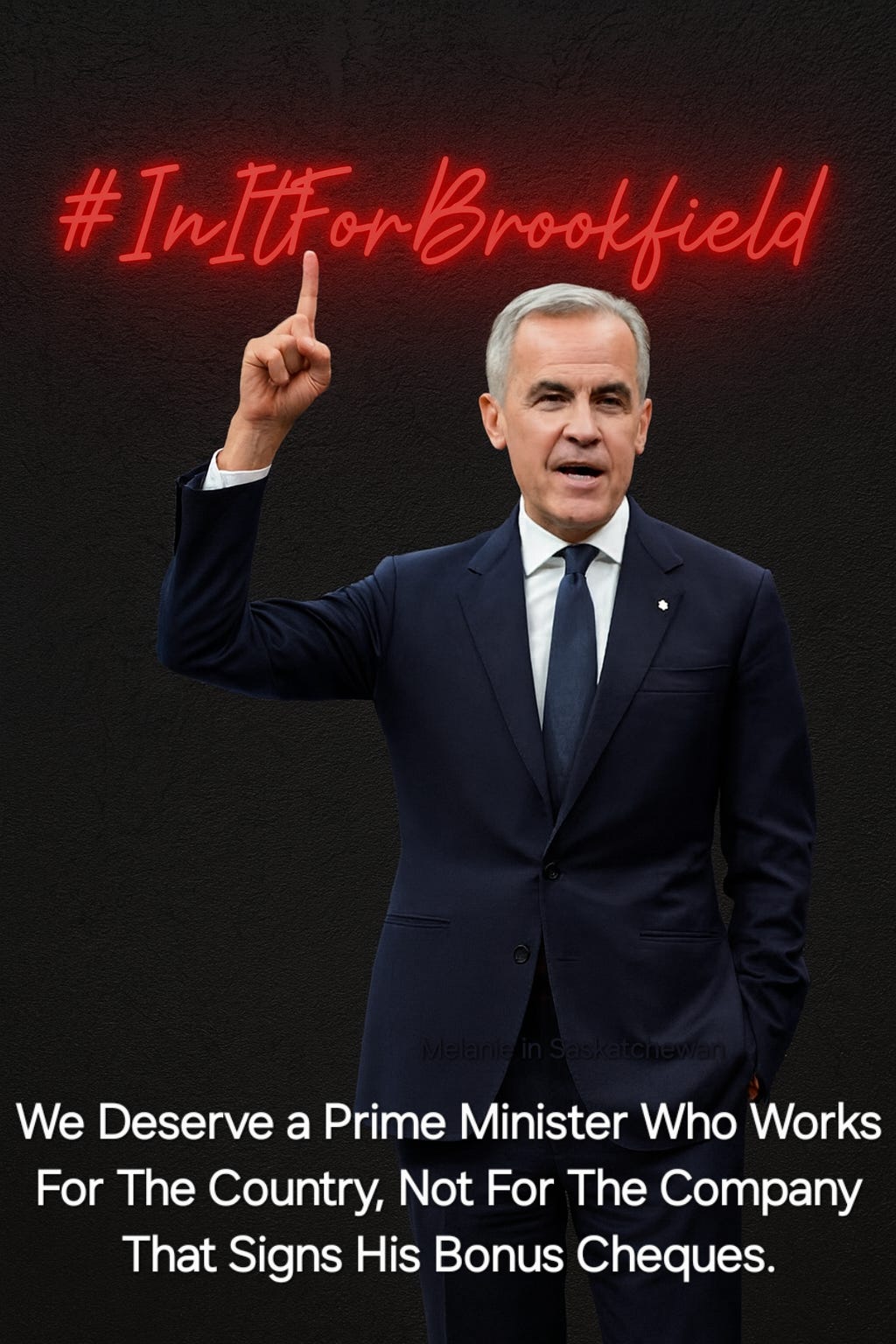
He wasn’t. He wasn’t CEO of Brookfield. He was its chairman, overseeing quarterly board meetings and spending the rest of his time flying around to different globalist conferences at the UN or WEF.
He was more of a mascot, a symbol, an ambassador of Brookfield. He didn’t negotiate deals or turn around companies. He did photo-ops.
Before that, he worked at the Bank of England, and before that, the Bank of Canada.
No Googling: can you name a single actual duty of that job? Can you tell me what Carney actually achieved?
He wafted up from fake job to fake job — like Justin Trudeau did, but instead of being a surf instructor and a substitute teacher, he had meaningless executive jobs.
And now when it’s time to shine … he doesn’t know what to do.
It’s been a year, and he has no deal with Trump, despite saying that was his chief focus.
What exactly did he achieve in Beijing? The tariffs against Saskatchewan were lifted — so that merely brings us back to the status quo ten months ago. Nothing else. No investments in Canada, which was the pretext of the trip. Just a capitulations, to allow the dumping of 49,000 Chinese EV cars, with their spyware and malware.
But he looks good in a suit and says ponderous words like “catalyze” and “transformative”. And that’s enough to impress the Parliamentary Press Gallery. Not that they needed much impressing — they’re all on his payroll already, through his massive journalism subsidies. They’re too busy holding the opposition to account to take notice of this latest disaster.
But the regime media shouldn’t feel too bad about being conned. Carney tricked Doug Ford pretty good, didn’t he?
January 14, 2026
The Korean War Week 82: Ridgway’s Nuclear Warning! – January 13, 1952
The Korean War by Indy Neidell
Published Jan 13, 2026Operation Strangle, to destroy enemy logistical capability with air power, has been in progress for months now, and yet the enemy is still able to bring up men and supplies, and even slowly stockpile them for possible future offensives. The UN position now is that should there be an armistice, and should the other side break its terms, retaliation would be broader and would include actions against Communist China, but will the UN have the force to do such retaliation? That is the question.
00:00 Intro
00:44 Recap
01:09 POW Issues
03:30 The Airfields
08:29 UN Declaration
10:15 Operation Strangle
14:13 Summary
14:35 Conclusion
15:25 Call To Action
(more…)
January 9, 2026
Mark Carney’s play-acting on the international stage
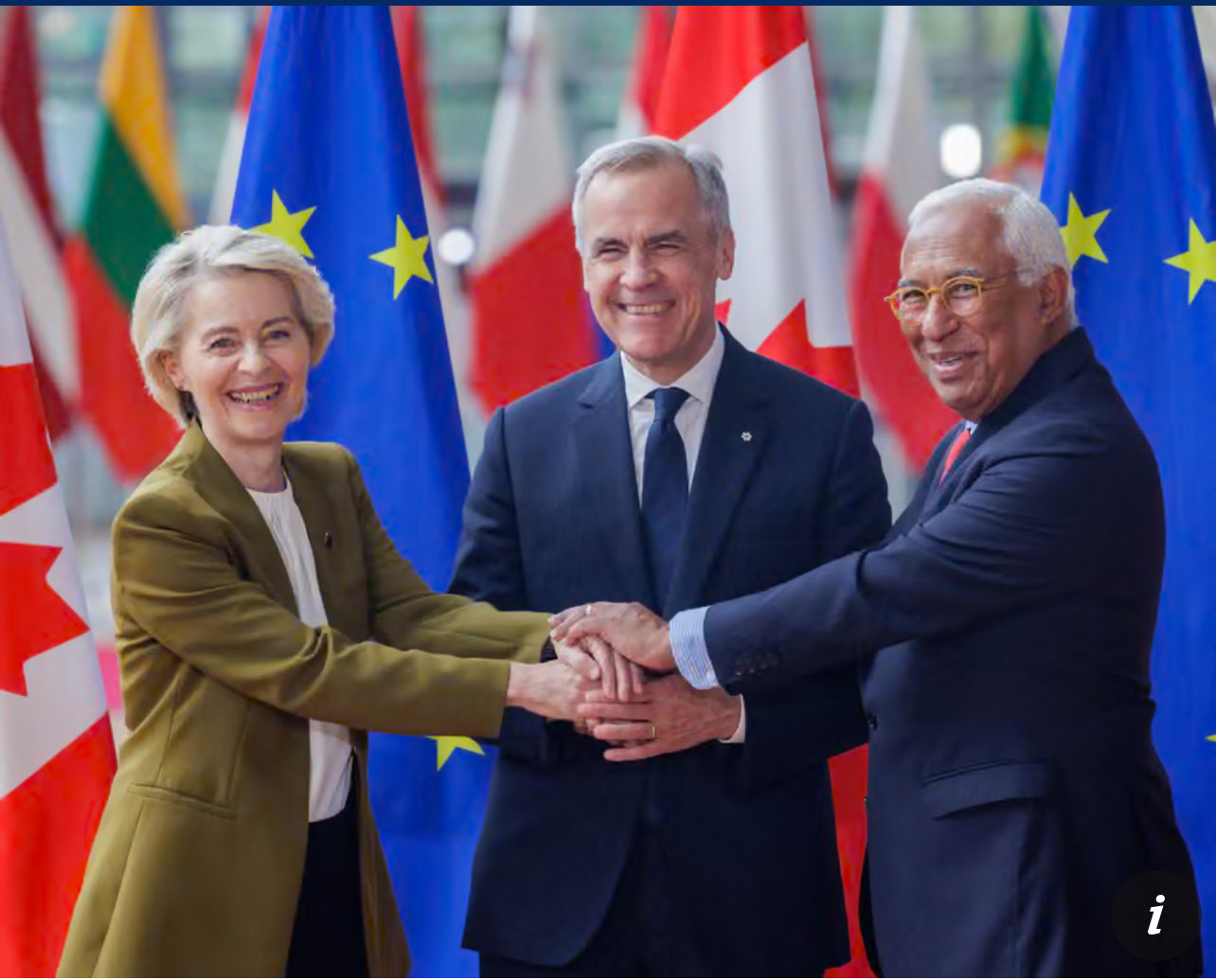
There is no way that Canada can make itself economically independent of the United States, no matter how much wishcasting power is exerted to persuade anti-American boomers who habitually vote Liberal. Our entire economy is oriented to serve the vast market to our south, and we’ve been freeloading on our own military because the Americans have been willing to take up the slack and — until recently — not castigate our leaders for their fecklessness. It was bad under Justin Trudeau, but it’s actually gotten worse under Mark Carney’s leadership. Trudeau was performative and loved to play to the world media, but Carney seems to actually believe that he can reverse the entire direction of the Canadian economy by jetting around the world and bad-talking Donald Trump. The Canadian economy has been stalled for ten years now, and if Trump finally loses patience with our idiotic elites, it’ll go into free-fall.
On the social media site formerly known as Twitter, James E. Thorne points out just how few cards Carney actually has in his hand:
Mark Carney’s and Canada’s Dangerous Refusal to Face Reality.
Mark Carney and most Canadians are behaving as if Canada is an independent pole in a multipolar order, when the world he actually inhabits is a hierarchy being brutally clarified by Washington. Trump’s revamped National Security Strategy and the “Trump Corollary” — asserted through the seizure of Nicolás Maduro and open threats toward Cuba and Colombia, make plain that the United States now treats the Western Hemisphere as an American security estate, not a debating society among equals.
In that framework, Canada is not a co-author of the rules. It is a dependency inside the U.S. sphere, structurally lashed to American markets, finance and supply chains. AND after decades without a serious sovereign industrial or energy strategy, Canada is at best a weak Middle Power, that has for decades squandered its competitive advantage through proformative politics and virtue signalling.
In this era, the Western Hemisphere is now a “secure production platform” for American industry and technology, defined not by territorial control but by ownership, access and compliance. The Trump doctrine logic is clear and blunt yet internally coherent: if the Western Hemispheres natural resources and supply chains are secured, the economic and geopolitical dividends will follow.
Carney’s answer to the Trump Doctrine, however, remains the same “City-of-London” orthodoxy that produced him: more proformative political grandstanding, more process, more declarations, more meetings, and more boondoggles.
The Greenland consulate, rhetorical red lines over annexation, the flying around the world, and ritual protests against U.S. action in Venezuela all presume that we still live in the post WWII rules based order. We do not! Will live in the era of the Trump Doctrine, and no we can’t wait it out. And in this era, Greenland will not be allowed to be under the influence of Russia or China.
Thucydides warned that “the strong do what they can and the weak suffer what they must”. Carney’s tragedy is that he quotes the rules-based order while presiding over a country whose economic structure is colonial and whose security ultimately depends on the very power he is theatrically chastising. Posturing without power is not prudence. It is provocation without a plan. And yes it’s dangerous.
The irony is that Carney understands all of this perfectly well, which only sharpens the question: what, exactly, is he doing by posturing as a rules-based equal in a hierarchy where he knows Canada lacks the hard power to back his stance?


