World War Two
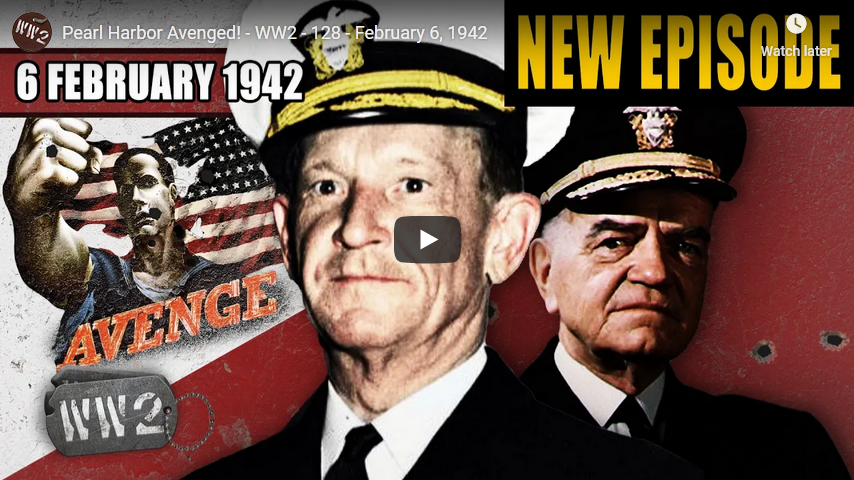
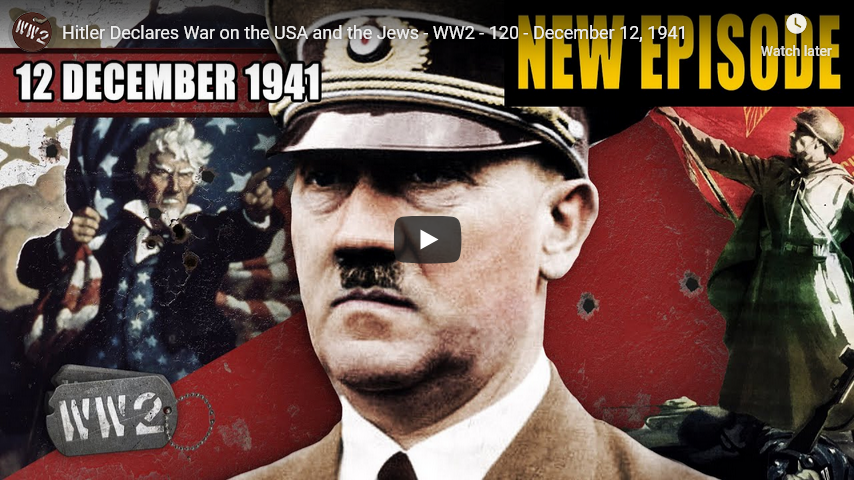
Published 5 Dec 2020The Wehrmacht is halted by the Red Army at the gates of Moscow. Not only that, but a Red Army counteroffensive begins pushing the Germans back decisively. The Germans are also beginning to withdraw from their siege of Tobruk in North Africa. Japan, however, is advancing all over the Pacific, sending troop transports into the South China Sea, though it is unclear just whom Japan plans to attack. The Japanese are also — in top secrecy — sending a force of aircraft carriers to soon attack the American Pacific fleet at anchor at Pearl Harbor.
Join us on Patreon: https://www.patreon.com/TimeGhostHistory
Or join The TimeGhost Army directly at: https://timeghost.tvFollow WW2 day by day on Instagram @ww2_day_by_day – https://www.instagram.com/ww2_day_by_day
Between 2 Wars: https://www.youtube.com/playlist?list…
Source list: http://bit.ly/WW2sourcesWritten and Hosted by: Indy Neidell
Director: Astrid Deinhard
Producers: Astrid Deinhard and Spartacus Olsson
Executive Producers: Astrid Deinhard, Indy Neidell, Spartacus Olsson, Bodo Rittenauer
Creative Producer: Maria Kyhle
Post-Production Director: Wieke Kapteijns
Research by: Indy Neidell
Edited by: Miki Cackowski
Sound design: Marek Kamiński
Map animations: Eastory (https://www.youtube.com/c/eastory)Colorizations by:
Klimbim – https://www.flickr.com/photos/2215569…
Dememorabilia – https://www.instagram.com/dememorabilia/
Mikołaj Uchman
Jaris Almazani (Artistic Man) – https://www.instagram.com/artistic.man/Sources:
RIA Novosti #2410
Bundesarchiv
IWM A 10499, A 6784, CH 11140
Visuotinė-lietuvių-enciklopedija
Yad Vashem 5705/34
from the Noun Project: low temperature by The Icon Z, Skull by Muhamad UlumSoundtracks from the Epidemic Sound:
Johan Hynynen – “Dark Beginning”
Johannes Bornlof – “Death And Glory 3”
Reynard Seidel – “Deflection”
Johannes Bornlof – “Deviation In Time”
Hakan Eriksson – “Epic Adventure Theme 4”
Johannes Bornlof – “The Inspector 4”
Rannar Sillard – “March Of The Brave 4”
Fabien Tell – “Last Point of Safe Return”
Bonnie Grace – “Imperious”
Max Anson – “Maze Heist”
Gunnar Johnsen – “Not Safe Yet”
Jon Bjork – “Force Matrix”Archive by Screenocean/Reuters https://www.screenocean.com
A TimeGhost chronological documentary produced by OnLion Entertainment GmbH.
December 6, 2020
December 5, 2020
Rorke’s Drift to the British Museum: The story of Henry Hook I Curator’s Corner Season 4 episode 5
The British Museum
Published 12 Nov 2018Henry Flynn recounts the story of Alfred Henry Hook VC, a private in B Company of the 2nd Battalion, 24th Regiment of Foot who served at the battle of Rorke’s Drift before becoming an employee of the British Museum.
From the comments:
shoutinghorse
1 year ago
When the movie Zulu was premiered in 1964 in London descendants of some of the characters were invited to attend including Henry Hook’s two daughters, (5:53) they were elderly ladies by then and were so horrified at the portrayal of their father as a malingering drunken thief that they walked out in disgust. In real life Hook was an honest soldier and a teetotaller. The producers of the film later issued an a apology to the Hook family.
November 29, 2020
November 22, 2020
November 19, 2020
Deception and Dust-ups – Desert Warfare Tactics – WW2 Special
World War Two
Published 18 Nov 2020When Allies and Axis clash on the deserts of North Africa, harsh and unique conditions force them to develop new tactics. From misdirection to new ways to move across the desert, all to gain an advantage over the enemy.
Join us on Patreon: https://www.patreon.com/TimeGhostHistory
Or join The TimeGhost Army directly at: https://timeghost.tvFollow WW2 day by day on Instagram @ww2_day_by_day – https://www.instagram.com/ww2_day_by_day
Between 2 Wars: https://www.youtube.com/playlist?list…
Source list: http://bit.ly/WW2sourcesHosted by: Indy Neidell
Written by: Marlon William Londoño and Francis van Berkel
Director: Astrid Deinhard
Producers: Astrid Deinhard and Spartacus Olsson
Executive Producers: Astrid Deinhard, Indy Neidell, Spartacus Olsson, Bodo Rittenauer
Creative Producer: Maria Kyhle
Post-Production Director: Wieke Kapteijns
Research by: Marlon William Londoño
Edited by: Miki Cackowski
Sound design: Marek Kamiński
Map animations: Eastory (https://www.youtube.com/c/eastory)Colorizations by:
Julius Jääskeläinen – https://www.facebook.com/JJcolorization/
Spartacus OlssonSources:
IWM E 18461, E 8361, E 10147, E 12630, E 12385, E 12375, E 21337, E 12410, HU 3715, E 21339, E 4350
Picture of John Hutton, courtesy of Coventry Society
Picture of Edwin Galligan, Steven Sykes and Fred Pusey, courtesy of Rick Stroud
Picture of Hugh Cott, courtesy of Selwyn College, Cambridge
Picture og Ralph Alger Bagnold, courtesy of National Portrait Gallery
from the Noun Project: sun by MRFASoundtracks from the Epidemic Sound:
Reynard Seidel – “Deflection”
Max Anson – “Ancient Saga”
Hakan Eriksson – “Epic Adventure Theme 4”
Rannar Sillard – “March Of The Brave 4”
Jon Bjork – “Force Matrix”Archive by Screenocean/Reuters https://www.screenocean.com.
A TimeGhost chronological documentary produced by OnLion Entertainment GmbH.
From the comments:
World War Two
6 hours ago
As we see the North African campaign ongoing in our week by week series, in today’s episode we take a closer look at the tactics and logistical developments that helped shaped that campaign.
November 15, 2020
November 14, 2020
The Decline of the Great Library of Alexandria
The History Guy: History Deserves to Be Remembered
Published 27 Mar 2019Presented by Ms History. The Great Library was a center of knowledge. Its decline was not the single cataclysmic event that may seem to think, but its slow decline is perhaps, even more tragic. It is history that deserves to be remembered.
This is original content based on research by The History Guy. Images in the Public Domain are carefully selected and provide illustration. As images of actual events are sometimes not available, images of similar objects and events are used for illustration.
All events are portrayed in historical context and for educational purposes. No images or content are primarily intended to shock and disgust. Those who do not learn from history are doomed to repeat it. Non censuram.
Ms. History Guy is an avid reader and former reference librarian, and reviews around 100 books per year. Feel free to follow her progress or befriend her on Goodreads where she goes by the name “Heidi the Reader”: https://www.goodreads.com/MsHistory
Patreon: https://www.patreon.com/TheHistoryGuy
The History Guy: History Deserves to Be Remembered is the place to find short snippets of forgotten history from five to fifteen minutes long. If you like history too, this is the channel for you.
Awesome The History Guy merchandise is available at:
teespring.com/stores/the-history-guyScript by JCG
#history #thehistoryguy #library
November 8, 2020
QotD: Tribal and post-tribal economies
… it was a problem of permitting, by and large. Portugal isn’t as bad, mind, nowhere near but in the seventies a lot of places were designated “green belts” everywhere, so that to build on them (and you had to build on them, or you were stymied in growth) you had to know who to bribe, and of course have the money to do it. This isn’t the only reason why favelas end up housing even the middle class. There’s a ton of other reasons, including but not limited to land ownership and property rights, and a shit-ton of stuff. But permitting is part of it.
This is because people don’t view their public posts as something they do to make society better/serve society or even do a job, but as a way to enrich themselves/benefit their friends/make it easier to make money in the future.
Everything, from truly shoddy workmanship to rushed, corner/cutting work, to outright corruption comes from viewing a job not as something you take pride in and work to do your best at, but from viewing a job as an opportunity to enrich yourself and your family while doing as little work as humanly possible. In fact in some societies, this is viewed as a duty. As someone in comments cited there are places in Africa where locals can’t run a shop, because all their relatives near and distant will expect to be given merchandise for free … or even money out of the till.
A lot of this is because the idea of the individual as independent of the tribe and the family is a very new thing in most of the world. We kind of have a head start on it because we are/are descended from those who left family and tribe behind.
[…]
Also in most of the world working for money is vaguely shameful. Particularly so if you’re working for someone else. […] And even here not only does that attitude persist, but it’s trying to make itself normal. Particularly in politics.
So, take pride in what you do, and do the best job you can. It’s not just important for you, it’s a building block of society. Do the best you can, and control as much as you can, so maybe you will have just reward which is an incentive to do better.
This way is civilization built. This way do things actually improve.
Sarah Hoyt, “BUILD!”, According to Hoyt, 2018-07-25.
October 27, 2020
America’s “brutal system of slavery [was] unlike anything that had existed in the world before”
I missed this article by Kay S. Hymowitz when it was published by City Journal a couple of weeks back:

Auction at Richmond. (1834)
“Five hundred thousand strokes for freedom ; a series of anti-slavery tracts, of which half a million are now first issued by the friends of the Negro.” by Armistead, Wilson, 1819?-1868 and “Picture of slavery in the United States of America. ” by Bourne, George, 1780-1845
New York Public Library via Wikimedia Commons.
… slavery was a mundane fact in most human civilizations, neither questioned nor much thought about. It appeared in the earliest settlements of Sumer, Babylonia, China, and Egypt, and it continues in many parts of the world to this day. Far from grappling with whether slavery should be legal, the code of Hammurabi, civilization’s first known legal text, simply defines appropriate punishments for recalcitrant slaves (cutting off their ears) or those who help them escape (death). Both the Hebrew Bible and the New Testament take for granted the existence of slaves. Slavery was so firmly established in ancient Greece that Plato could not imagine his ideal Republic without them, though he rejected the idea of individual ownership in favor of state control. As for Rome, well, Spartacus, anyone?
In the ancient world, slaves were almost always captives from the era’s endless wars of conquest. They were forced to do all the heavy labor required for building and sustaining cities and towns: clearing forests; building roads, temples, and palaces; digging and transporting stone; hoeing fields; rowing galley ships; and marching to almost-certain death in the front line of battle. Women (and often enough boy) slaves had the task of servicing the sexual appetites of their masters. None of that changed with the arrival of a new millennium. Gaelic tribes took advantage of the fall of the Roman Empire to raid the west coast of England and Wales for strong bodies; one belonged to a 16-year-old later anointed St. Patrick, patron saint of Ireland. “In the slavery business, no tribe was fiercer or more feared than the Irish,” writes Thomas Cahill in How the Irish Saved Civilization.
Today, of course, the immorality of slave-owning is as clear as day. But in the premodern world, no neat division existed between evil slaveowners and their innocent victims. Once the Vikings arrived in their longboats in the 700s, the Irish enslavers found themselves the enslaved. Slavery became the commanding height of the Viking economy; Norsemen raided coastal villages across Europe and brought their captives to Dublin, which became one of the largest slave markets of the time. The Vikings thought of their slaves as more like cattle than people; the unlucky victims had to sleep alongside the domestic animals, according to the National Museum of Denmark in Copenhagen. Norsemen rounded up captured Irish men and women to settle the desolate landscape of Iceland; scientists have found Irish DNA in present-day Icelanders, a legacy of that time. The Slavic tribes in Eastern Europe were an especially fertile supplier for Viking slave traders as well as for Muslim dealers from Spain: their Latin name gave us the word slave. Slavs were evidently not deterred by the misery they must have suffered; when Viking power waned by the twelfth century, the Slavs turned around and enslaved Vikings as well as Greeks.
Slavery was a normal state of affairs well beyond the territory we now call Europe. The Mayans had slaves; the Aztecs harnessed the labor of captives to build their temples and then serve as human sacrifices at the altars they had helped construct. The ancient Near East and Asia Minor were chockfull of slaves, mostly from East Africa. According to eminent slavery scholar Orlando Patterson, East Africa was plundered for human chattel as far back as 1580 BC. Muhammad called for compassion for the enslaved, but that didn’t stop his followers from expanding their search for chattel beyond the east coast into the interior of Africa, where the trade flourished for many centuries before those first West Africans arrived in Jamestown. Throughout that time, African kings and merchants grew rich from capturing and selling the millions of African slaves sent through the Persian Gulf and Indian Ocean to Persians and Ottomans.
From the fifteenth to the eighteenth centuries, the North African Barbary coast was a hub for “white slavery.” This episode was relatively short-lived in the global history of slavery, but one with overlooked impact on Western culture. Around 1619, just as the first Africans were being sailed from the African coast to Jamestown, Algerian and Tunisian pirates, or “corsairs” as they were known, were using their boats to raid seaside villages on the Mediterranean and Atlantic for slaves who happened in this case to be white. In 1631, Ottoman pirates sacked Baltimore on the southern coast of Ireland, capturing and enslaving the villagers. Around the same time, Iceland was raided by Barbary corsairs who took hundreds of prisoners, selling them into lifetime bondage.
What Happened 100 Years Ago? – October 1920 I THE GREAT WAR
The Great War
Published 26 Oct 2020It’s time for our monthly summary of the events 100 years ago.
» SUPPORT THE CHANNEL
Patreon: https://www.patreon.com/thegreatwar» OUR PODCAST
https://realtimehistory.net/podcast – interviews with World War 1 historians and background info for the show.» BUY OUR SOURCES IN OUR AMAZON STORES
https://realtimehistory.net/amazon *
*Buying via this link supports The Great War (Affiliate-Link)» MORE THE GREAT WAR
Website: https://realtimehistory.net
Instagram: https://instagram.com/the_great_war
Twitter: https://twitter.com/WW1_Series
Reddit: https://reddit.com/r/TheGreatWarChannel»CREDITS
Presented by: Jesse Alexander
Written by: Jesse Alexander
Director: Toni Steller & Florian Wittig
Director of Photography: Toni Steller
Sound: Toni Steller
Editing: Toni Steller
Motion Design: Philipp Appelt
Mixing, Mastering & Sound Design: http://above-zero.com
Maps: Daniel Kogosov (https://www.patreon.com/Zalezsky)
Research by: Jesse Alexander
Fact checking: Florian WittigChannel Design: Alexander Clark
Original Logo: David van StepholdContains licensed material by getty images
All rights reserved – Real Time History GmbH 2020
October 24, 2020
September 24, 2020
The End of the European Empires? | The Suez Crisis | Part 5
TimeGhost History
Published 23 Sep 2020Whilst the fighting may be over, the Crisis certainly isn’t. For starters, the three invaders may have agreed to a ceasefire, but aren’t too keen to give up the land they’ve conquered. And even if this is resolved, what lies in wait for the humiliated ex-colonial powers? Ultimately, only one thing does seem certain — irreversible change.
Join us on Patreon: https://www.patreon.com/TimeGhostHistory
Hosted by: Indy Neidell
Written by: Francis van Berkel
Director: Astrid Deinhard
Producers: Astrid Deinhard and Spartacus Olsson
Executive Producers: Astrid Deinhard, Indy Neidell, Spartacus Olsson, Bodo Rittenauer
Creative Producer: Joram Appel
Post-Production Director: Wieke Kapteijns
Research by: Francis van Berkel
Image Research: Daniel Weiss
Edited by: Daniel Weiss
Sound design: Marek Kamiński
Maps: Ryan WeatherbyColorizations:
– Mikolaj Uchman
– Daniel Weiss – https://www.facebook.com/The-Yankee-C…
– Norman Stewart – https://oldtimesincolor.blogspot.com/Sources:
National Archives NARA
Images from the UN News and Media
1960s Soviet Film “Egypt our Arab Ally”From the Noun Project:
– speech_16988 By Juan Pablo Bravo, CL
– Parliament_1658396 By Dimitrios Stamatis, GB
– Money by Gilberto
– Ship by Edward Boatman
– soldier by Wonmo Kang
– oil barrel by Musmellow
– europe By Randomhero
– Income(not dollar)_2897802
– Trade by Adrien Coquet
– Handshake By priyanka, IN
– world by Guilherme Furtado
– telegraph By Luke Anthony Firth, GB
– people by ProSymbols
– documents by Srinivas AgraSoundtracks from Epidemic Sound:
– “Devil’s Disgrace” – Deskant
– “In the Bank We Trust” – Jon Sumner
– “Searching Through Sand” – Deskant
– “The Inspector 4” – Johannes Bornlöf
– “Crying Winds” – Deskant
– “Scented Nectar” – Rune Dale
– “As the Rivers Collapse” – Deskant
– “Dark Beginning” – Johan Hynynen
– “Guilty Shadows 4” – Andreas JamshereeArchive by Screenocean/Reuters https://www.screenocean.com.
A TimeGhost chronological documentary produced by OnLion Entertainment GmbH.
From the comments:
TimeGhost History
2 days ago (edited)
So that’s the end of our series on the Suez Crisis. It’s been a pretty wild and messy ride, but we think our realtime format gave it a fresh perspective that hasn’t done before.If you liked that final point Indy made about Churchill and The Beatles, and you want to find out more about decolonisation, then you should look up the work of Bill Schwarz. He was the one who originally made the comparison in his book White Man’s World, and it’s a really fascniating read, if also a bit challenging. Decolonisation is actually becoming a really vibrant field of study in academia and there are a whole host of books available if any of you want to dive into the topic. Europe After Empire by Elizabeth Buettner is an excellent place to start and Fight or Flight by Martin Thomas will be right up your street if you want to learn about the wars of decolonisation and the politics behind them. If you have any other suggestions then feel free to post them below.
Anyway, we hope you enjoyed the series and learnt a thing or two.
September 20, 2020
Our World 100 Years Ago – September 1920 I THE GREAT WAR
The Great War
Published 19 Sep 2020Let’s take a look at our world 100 years ago, in September 1920.
» SUPPORT THE CHANNEL
Patreon: https://www.patreon.com/thegreatwar» OUR PODCAST
https://realtimehistory.net/podcast – interviews with World War 1 historians and background info for the show.» BUY OUR SOURCES IN OUR AMAZON STORES
https://realtimehistory.net/amazon *
*Buying via this link supports The Great War (Affiliate-Link)» SOURCES
» MORE THE GREAT WAR
Website: https://realtimehistory.net
Instagram: https://instagram.com/the_great_war
Twitter: https://twitter.com/WW1_Series
Reddit: https://reddit.com/r/TheGreatWarChannel»CREDITS
Presented by: Jesse Alexander
Written by: Jesse Alexander
Director: Toni Steller & Florian Wittig
Director of Photography: Toni Steller
Sound: Toni Steller
Editing: Toni Steller
Motion Design: Philipp Appelt
Mixing, Mastering & Sound Design: http://above-zero.com
Maps: Daniel Kogosov (https://www.patreon.com/Zalezsky)
Research by: Jesse Alexander
Fact checking: Florian WittigChannel Design: Alexander Clark
Original Logo: David van StepholdContains licensed material by getty images
All rights reserved – Real Time History GmbH 2020
September 18, 2020
September 17, 2020
The British are Coming! Is Nuclear War as Well? | The Suez Crisis | Part 4
TimeGhost History
Published 16 Sep 2020As Britain, France, and Israel continue to push home their advantage in the face of overwhelming international pressure, the Soviet Union finally enter the arena. Britain now faces utter disaster. The Soviets are threatening nuclear war and the British economy faces free fall; how much longer can Britain reject a ceasefire?
Join us on Patreon: https://www.patreon.com/TimeGhostHistory
Hosted by: Indy Neidell
Written by: Francis van Berkel
Director: Astrid Deinhard
Producers: Astrid Deinhard and Spartacus Olsson
Executive Producers: Astrid Deinhard, Indy Neidell, Spartacus Olsson, Bodo Rittenauer
Creative Producer: Joram Appel
Post-Production Director: Wieke Kapteijns
Research by: Francis van Berkel
Image Research by Daniel Weiss & Shaun Harrison
Edited by: Karolina Dołęga
Sound design: Marek Kamiński
Maps by Ryan WeatherbyColorizations:
– Mikołaj Uchman
– Daniel Weiss
– Carlos Ortega Pereira, BlauColorizations – https://www.instagram.com/blaucolorizations
– Norman Stewart – https://oldtimesincolor.blogspot.com/Sources:
– IDF Spokesperson’s Unit
– Imperial War Museums: © MH 23498, MH 23513, HU 4190, HU 4183
– Bundesarchive
– The Bank of England ArchiveMusic:
– “As the Rivers Collapse” – Deskant
– “Descending Mount Everest” – Trailer Worx
– “Last Man Standing 3” – Johannes Bornlöf
– “March Of The Brave 10” – Rannar Sillard.mp3
– “Moving to Disturbia” – Experia
– “Break Free” – Fabien Tell
– “Last Point of Safe Return” – Fabien Tell
– “Epic Adventure Theme 4” – Håkan Eriksson
– “Deflection” – Reynard Seidel
– “Last Minute Reaction” – Phoenix Tail
– “Force Matrix” – Jon BjorkThe icons from The Noun Project by Geovani Almeida, alerma, Mochammad Kafi, Gilberto, Leona Grande, Smalllike & Pause08
Archive by Screenocean/Reuters https://www.screenocean.com.
A TimeGhost chronological documentary produced by OnLion Entertainment GmbH.
From the comments:
TimeGhost History
2 days ago
We thought we’d share with you a quote that didn’t make it into the final script but really sums up the outpouring of protests the British government received upon its military intervention in Suez.It’s a letter in The Times newspaper on November 6, written by none other than Violet Bonham Carter — a leading member of the Liberal Pary, close friend of Winston Churchill, and grandmother of actress Helena Bonham Carter. It reads: “For the first time in our history our country has been reduced to moral impotence. We cannot order Soviet Russia to obey the edict of the United Nations which we ourselves have defied, nor to withdraw her tanks and guns from Hungary while we are bombing and invading Egypt. Today we are standing in the dock with Russia … Never in my lifetime has our name stood so low in the eyes of the world. Never have we stood so ingloriously alone.”