
Adrian Goldsworthy. Historian and Novelist
Published 10 Sept 2025Today we think about attitudes to Roman rule and discuss how frequent rebellions were in the Roman empire’s provinces and what were their causes. In particular we think about Judaea, and the Jewish population of the empire more generally, in the first and second centuries AD. Why was there a big rebellion in AD 66 against Nero’s rule, another of the Jewish population in Egypt, North Africa and Cyprus but NOT Judaea against Trajan, and then the final major rebellion in Judaea under Hadrian.
April 4, 2026
RESISTANCE and REBELLION – The Conquered and the Proud 19
Comments Off on RESISTANCE and REBELLION – The Conquered and the Proud 19
April 2, 2026
QotD: Growing up behind the Iron Curtain
Ever met someone who grew up behind the Iron Curtain? You’d expect a mouse, right? You know, with the secret police and all? But they’re the exact opposite of that. People who grew up under the KGB’s iron heel are fucking obnoxious, because they’re utterly shameless. It’s not “give ’em and inch and they’ll take a mile”; it’s “they’ll start by grabbing a mile, then demand ten more”.
Which makes sense if you think about it. When everybody’s snitching on everybody else, shameless is the only way to live. Everybody’s guilty of something, so own it — being, of course, perpetually prepared to snitch anyone and everyone else at a moment’s notice if someone drops the dime on you. Also, if you have to stand in line six hours to maybe get a few potatoes, damn it, you’re gonna get those potatoes. It doesn’t matter if you like potatoes, or have any possible use for potatoes at the present time. You’re going to take every single spud you can get your hands on, plus steal anything that isn’t nailed down, because you never know when you’ll get another chance.
As it turns out, overabundance creates the same conditions. When you’ve been standing in line for six hours with 1,000 of your new best friends just to get some tampons — and you’re a guy, you don’t need tampons, but you can always barter them for something — you’re not going to scruple to do anything and everything to get them. Indeed you want people to know Ivan’s got some tampons, because that’s how the black market works …
… anyway, as I say, we’re not in line for six hours, but we are perpetually at least under the threat of surveillance. And not from the Feds — just as Ivan’s not worried about the KGB, but rather his neighbors, so we don’t have to worry about the Feebs monitoring us. Instead, it’s that Basic College Girl with the iPhone. She’s not filming you, of course, she’s filming herself, but there you are anyway, in the background, doing whatever. Under those conditions — and when everyone’s volunteering the most intimate details of their lives on Fakebook and Twatter — shameless is the only way to live.
In other words, thanks to constant social media “surveillance”, it has gone in the blink of an eye from “It didn’t happen unless someone caught it on film” to “It’s all on film anyway, so fuck it, I’m gonna get mine”. I used to see this all the time in class. Basic College Girls will lie straight to your face, for any reason or no reason. They’ll do it on spec, just to see if you bite. More importantly, they’ll tell you such obvious, easily disproven whoppers that you start wondering if they’re having a schizoid break. You have to know I know you’re lying, right? That Dead Grandma Story is very sad, but you have pictures of yourself all over Twitter drunk at the sorority formal, when you told me you were at Nana’s funeral.
It’s not that they don’t know. It’s that they don’t care. Because somehow I’m the asshole for not believing them, despite the evidence of my own lying eyes.
Severian, “Friday Male Bag”, Founding Questions, 2022-06-03.
Comments Off on QotD: Growing up behind the Iron Curtain
April 1, 2026
The fall of Rome and the rise of Islam
Gustavo Jalife points out that a work from nearly a century ago identified the rise of Islam as being far more disruptive to western civilization than the fall of the western Roman Empire (and the surge of Islamic power destroyed the Persian Empire and nearly toppled Constantinople as well):
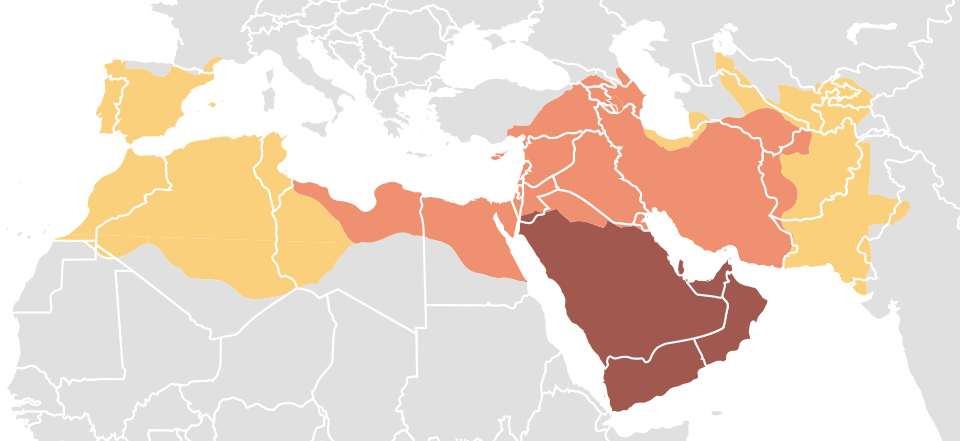
Expansion of the Caliphate: Mohammed, 622-632 (red), Rashidun Caliphate, 632-661 (orange), and the Umayyad Caliphate, 661-750 (yellow).
Wikimedia Commons.
In Mohammed and Charlemagne – posthumously published in 1937 – renowned historian Henri Pirenne (1862-1935) advanced a thesis at once simple and much contested: that the true rupture between Late Antiquity and the beginning of the Middle Ages was not the fall of Rome in the fifth century, as traditionally held, but the expansion of Islam in the seventh. The Germanic kingdoms, he argued, had preserved much of the Roman economic and cultural architecture. Trade across the Mediterranean continued; cities, though diminished, remained nodes in a wider network sustained by the circulation of goods and by administration. For the Romans, the mare nostrum was a highway rather than a barrier.
If a good article starts after it ends, one might say that a civilisation reveals itself most clearly not in its proclamations, but in the modification of its habits – when what was once assumed becomes contested. In such subtle alterations, Pirenne discerned the end of the ancient world.
With the Islamic expansion the greater part of the Mediterranean’s southern and eastern shores fell under Muslim control, from the Levant and Egypt to North Africa and the Iberian Peninsula. The sea was no longer a unified Roman basin, but a divided one. Authority and function shifted: the Mediterranean ceased to operate as a shared commercial zone. Long-distance trade dwindled, the flow of goods between East and West was disrupted and with it the urban and monetary life that depended upon it. Only then did Western Europe withdraw inward, shrinking into the medieval world as it is recognised today.
The argument has been debated, qualified, and revised. Yet its inner core endures: civilisations are sustained not merely by armies or laws, but by the invisible fibres of exchange – commercial, intellectual and cultural – that bind their parts together. Sever those threads and, without even the cut of a sword, a whole order may vanish into a rumour.
To draw a parallel with present-day Europe is to tread on disputed ground. The language of “invasion” is often employed with more heat than light; yet to deny that significant demographic and cultural changes are under way would be equally unhelpful. The question, then, is whether Pirenne’s model can illuminate what many believe is a tragedy without reducing it to a farce.
The spread of Islam in the seventh and eighth centuries was a series of military conquests. The Arab fleets that took North Africa and Spain, the armies that crossed into Gaul, and the long struggle for control of the Mediterranean were enterprises of war and empire. Contemporary migration into Europe, by contrast, occurs largely through civilian movement, legal and illegal. However, both historical processes demonstrate that massive migratory movements, whatever their specific nature, do not merely add numbers to a population; they introduce new networks, new loyalties, new values and new norms that eventually fracture the existing state of affairs.
Before the eighth century, the Mediterranean economy continues to function, vibrant and connected. After the eighth century, that system is shattered. The sea is closed. Trade disappears. Europe faces an empire whose only wealth is the land, where the movement of goods is reduced to a bare minimum. Far from advancing, society regresses.
Pirenne’s thesis gains thrust and edge in presenting the Islamic expansion as embodying a fundamental alteration in coexistence.
Comments Off on The fall of Rome and the rise of Islam
Generation Jones and the Temple of Boom(ers)
Wee Nips
Published 19 Sept 2025Generation Jones and the Temple of Boom(ers) explores the fascinating differences — and surprising overlaps — between Baby Boomers, Generation X, and the often-overlooked Generation Jones.
Were you too young for Woodstock but too old for grunge? Stuck between disco and Nirvana? You might just be a Joneser.
In this video, we’ll compare:
🎵 The cultural touchstones of Boomers, Gen X, and Jonesers
📉 The low points in history that shaped each generation’s outlook
💰 The economic conditions that defined their opportunities
🧠 The attitudes and stereotypes that still stick today
Generation Jones isn’t just a footnote — they’re the missing link between the optimism of the Boomers and the skepticism of Gen X.
0:00 Introduction
1:38 Definitions
2:42 Cultural Touchstones
3:38 Low Points in History
4:53 Economic Conditions
5:42 Social and Attitude Differences
6:38 Humorous Stereotypes
7:09 Overlaps and Connections
8:02 Closing
(more…)
Comments Off on Generation Jones and the Temple of Boom(ers)
March 31, 2026
QotD: Slavery
It is impolite to say of one’s spouse or one’s debtor that they are part of one’s property. With slaves, politeness is unnecessary. (Slavery and Social Death, P.22)
What makes a slave different from a wife, professional player or even a serf is that a slave is in a state of social death: they have no claims of social connection that their master (or anyone else) need pay attention to beyond that to the master.
This is not to say slaves have no legal personality — all slave systems are very well aware that slaves are people. Rather, the relationship of exclusive domination was such that they had no connections that anyone had any obligation to respect other than to their master.
Other individuals might be in relationships of servitude under a master but still retained connections with others subject to presumptive respect. This was true even of serfs and is what distinguishes various forms of serfdom from slavery. Even under Russian serfdom, a serf marriage was a legally recognised marriage; a serf father had legally recognised authority over his family; a serf could legally own property. Once somebody had suffered the social death of slavery, they were utterly bereft of any such connections.
Both serf and slave lacked any choice of master or about the nature and content of that mastery: that is what makes both forms of labour bondage. Nevertheless, a serf had legally recognised relationships, and choices about them, that a slave simply did not.
Slaves are violently dominated: the whip or equivalent has been a control device in every known system of slavery. They are natally alienated: both from from any (positive) standing from their ancestors or claims over their descendants. They are culturally degraded: whether in naming, clothing, hair style, marks on the body or required acts.
All this serves to establish, mark and reinforce the relationship of domination. For that level of domination is required to turn one human into the possession, and so the property, of another. (Karl Marx’s talk of “wage slave” is not only rhetorical excess, it is contemptible rhetorical excess: a manifestation of his comprehensive mischaracterisation of commerce.)
None of these key features of domination require the acknowledgement of the wider society. There are likely slaves in every major city in the world, even in economically highly developed democracies with the rule of law.
While it can be helpful to have your relationship of domination over a slave recognised by others, the crucial thing is the acknowledgment by the slave. Slavery is a relationship between people about an owned thing, where the slave acknowledges that they are the owned thing. This is a key element in the humiliation of slavery.
The mechanisms of domination are, however, obviously much more powerful if they are embedded in wider institutional acceptance of slavery. Where there is no such wider acknowledgement, then even greater isolation from the wider society is required to establish and maintain the relationship of domination.
In social systems that openly incorporate slaveholding, a slave’s state of domination, of the social nullity of no independent connection, normally meant that they could not be a formally recognised owner of property: that they could not be a legal owner of property, not a person who could have property. They lacked the sort of legal standing that could legally own things.
To do so would require the slave to have social and legal connections, beyond the claims and decisions of their master, that others are bound to accept or respect, and that is precisely what slavery, as a structure of domination of one by other, denies. The Ahaggar Tuaregs express this feature of slavery very directly, holding that:
without the master the slave does not exist, and he is only socializable through his master. (Slavery and Social Death, P.4.)
Slavery is, always and everywhere, a created relationship of dominion. As the Kel Gress group of the Tuareg say:
All persons are created by God, the slave is created by the Tuareg. (Slavery and Social Death, P.4)
In a society that accepts slavery, the conventions of acknowledged possession will operate for the master about the slave in a far more complete way than any other claim of property in another human. If other mechanisms of delegated control were sufficiently absent or attenuated, then slaves became preferred agents. The use of slaves as commercial agents was surprisingly common.
In societies dominated by kin-groups, slaves could make preferred warriors or officials precisely because they had no other connection entitled to presumptive respect than that to their master — hence the slave warriors of Greater Middle Eastern (Morocco to Pakistan) Islam.
The danger of kin-groups is that they readily colonise social institutions — rulers come and go, the kin-group is forever. Slave warriors and officials were a solution to that problem in societies where suppression of kin-groups was not a practicable option.
Imperial China found kin-groups useful for economising on administrative costs and Emperors used distance — officials could not be assigned to their home counties — and rotation of officials to inhibit kin-group colonisation of their administrations. Even so, much of the appeal of eunuchs to Emperors was precisely the presumed severing of kin-group ties. (They also had the advantage of being the only males, other than the Emperor, permitted overnight residence in the imperial palace.)
Nevertheless, slavery can exist without such wider acknowledgement by laws. For turning someone into a slave requires forcing them to acknowledge the relationship of domination to the point of being a possession of another.
So, slavery is not, at its core, a matter of property but of domination. Domination to the extent that the conventions of acknowledged possession can apply to slaves entire. Slaves can be turned into property without any other connections with presumptive respect or standing. Yet, even a slave could be a beneficial participant in the conventions of acknowledged possession.
For, so powerfully useful are the conventions of acknowledged possession, that masters have, surprisingly often, allowed slaves to also be accepted beneficiaries of the conventions of acknowledged possession. To be owners of property in practice, if not in law. This was done to lessen the burdens of control, the cost of subsistence or to enable the slave to buy their freedom. The Romans acknowledged this through the concept of peculium.
The Romans, being relentlessly logical in such matters, held a slave to be an owned animal. That is, a human on which such a comprehensive social death has been imposed that they are the legal equivalent of a domesticated animal. (Yet, somewhat awkwardly, still people.)
Just as you can geld an animal, you can castrate a slave. Despite the Islamic slave trade being on a comparable scale to, and lasting centuries longer than, the Transatlantic slave trade, there is no ex-slave diaspora within Islam, unlike the Americas. All children of a Muslim father are members of the Muslim community while so many of the male slaves were castrated.
The Roman concept of property as dominium, as absolute ownership of a thing, may have transferred the domination of slavery into a more general conception of property so as to absolutely separate slave (who suffers dominium) from citizen (who possesses it). Rome ran one of the most open slave systems in human history, such that a freed slave could become a citizen. This necessitated particularly sharp legal delineation of the difference between slave and citizen.
Such dominion is not a relationship between a person and thing (despite claims to the contrary) for it is still setting up a relationship with others regarding what is owned, remembering that the crucial thing in property is not mine! but yours!: the acknowledgement by others of possession and so the right-to-decide. Hence the importance of the signals of possession for slavery.
The Greeks also had citizenship and — particularly in the case of Athens — mass slavery. Greek citizenship was, however, far more exclusive than Roman citizenship and the existence of metis, resident non-citizens, further separated citizen from slave. The Greek city-states also operated much more convention-based, and distinctly less developed, laws than did Rome. If law is a matter of such abstraction as is needed to establish functional differences, and no more, the Romans perhaps felt more need to establish that a citizen could possess dominion.
Conversely, as Romans were not moral universalists, they felt no need to generate some justificatory abstraction about slavery: a slave was simply a loser. If a slave later became a Roman citizen, then, congratulations to them, they had become a winner (and few cultures have worshipped success quite as relentlessly as did the Romans). Hence freedmen would put their status as freedman on their tombstones.
Aristotle — as his moral theory did tend towards moral universalism — came up with a clumsy justificatory abstraction (natural slaves) as to why slaves could be morally degraded. Indeed, the combination of moral universalism and slavery invariably led to justifications that held some essential flaw in the slave justified their domination by others. A process much easier to manage if slaves were from a different continental region, so with distinguishing physical markers of their continental origin.
The Romans had no need of such Just-So stories to justify slavery and did not generate them. Muslims and Christians are moral universalists and so did manifest the need to tell such Just-So stories about enslaved groups: why children of God were being enslaved. (Because that is what they were fit for, clearly.)
Islamic writers generated the first major discourses of skin-colour racism, applying them to the populations they enslaved. In their case, generating both anti-black and anti-white racism, as they systematically enslaved both Sub-Saharan Africans and Europeans, particularly Eastern Europeans. It also led to some awkward rationalisations as to why the inhabitants of South Asia could have dark skins but not suffer from any deemed inherent inferiority.
Just as slavery continues, modern totalitarian Party-States have used forced labour — labour bondage — on massive scales, starting with the Soviet Union and then wartime Nazi Germany. Such continues to the present day in CCP China — infamously of the Uyghurs — and the Kim Family Regime of North Korea. From 1940 to 1956, the Soviet Union banned workers moving jobs without the permission of their existing workforce, the key element of serfdom.
Lorenzo Warby, “Owning people, owning animals, controlling attributes”, Lorenzo from Oz, 2025-12-25.
Comments Off on QotD: Slavery
March 29, 2026
Women’s highly specific expectations for males showing emotion
An older post from Rohan Ghostwind but still fully relevant:
… or, why they have such a hard time sharing their feelings, the same way that women do.
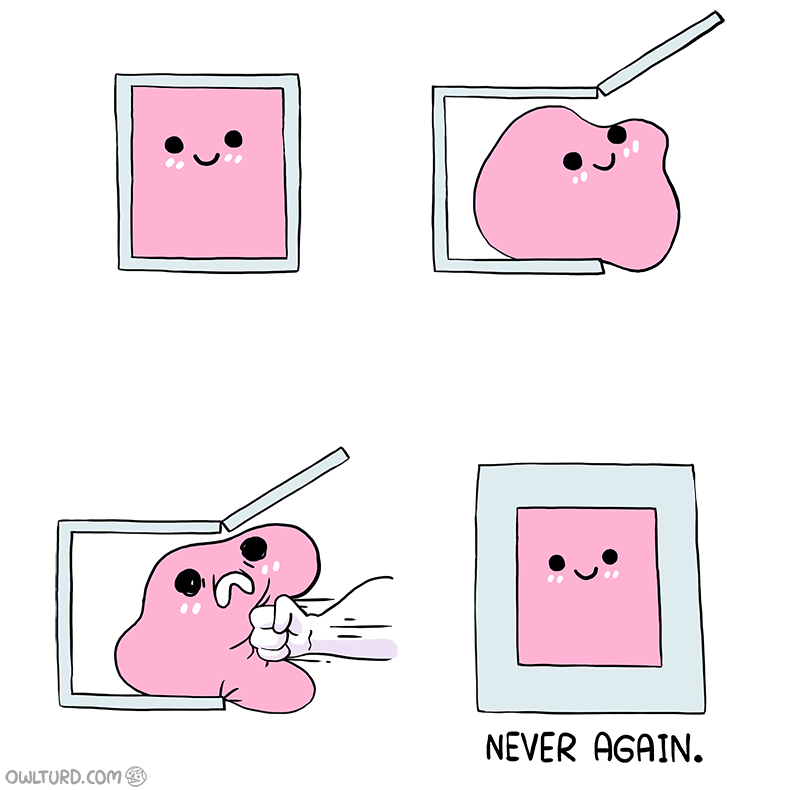
Biological reasons aside, for most men, the answer to this is obvious: They’ve attempted to open up to someone in the past, and had it backfire so spectacularly that they realized they should probably never do it again.
Specifically, a lot of young men realize that in order to be a functional participant in society, it requires them to regularly stuff down their emotions and carry on with the tasks of their daily lives.
Much of the rhetoric around wanting more emotionally vulnerable men therefore comes across as vacuous, because many men subconsciously realize that people (both men and women) only want these emotions at specific times, and in specific contexts.
Women want to see the man who cries at the end of the Disney movie, not the man who’s so depressed that he’s in bed for 18 hours a day. Obviously this is an extreme case, but it’s something that pretty much every man has experienced to some degree or another.
But this hides the fact that women themselves are just as responsible for creating this incentive structure, if not more. For as much as women want a guy who opens up and shares his feelings, this usually comes after the man has developed some degree of competency in all the other relevant domains of life — education, career, finances, looks, etc.
Again, many men have to learn this lesson the hard way; they have indeed attempted to open up, only to find that it hurt their relationship prospects, or otherwise made them less attractive to women. As such, he realizes he has to “win” the game of the patriarchy before he’s given the opportunity of subverting the rules of the game.
In other words, emotions are reserved for the elite — for the rest of us low human capital™, we need to shut the fuck up and get good at tensorflow and B2B sales before we even think about having a hard time.


Comments Off on Women’s highly specific expectations for males showing emotion
March 26, 2026
From conservative, traditionalist Wilhelmine Germany to the unbridled excess of the Weimar Republic
Celina discusses the wrenching social changes Germany went through as the First World War ended, the Kaiser abdicated, and the Versailles terms were imposed on a still-young nation that didn’t think it had been defeated on the battlefield (it had been, decisively, but the truth was not revealed or understood on the home front):
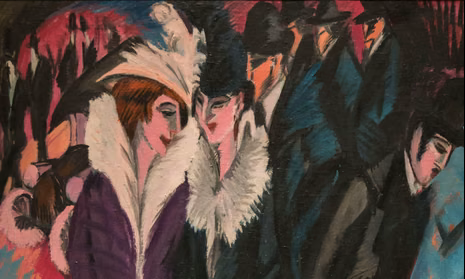
To understand the death of a civilisation, one must first walk through its ruins. The scene is Berlin, sometime in the mid-1920s, beneath the blinding, electric glare of neon and the suffocating, narcotic haze of the Berliner Luft, an atmosphere that locals gleefully described as an amphetamine-like air that made hearts race, pupils dilate, and morals evaporate until dawn.1 In the shadowed, labyrinthine alleys of a shattered empire, the streets of the capital have been entirely surrendered to a bacchanalia of unprecedented depravity. Prostitutes in various stages of undress crowd the cobblestones. They are openly aggressive, their ranks swollen by pregnant mothers, desperate war widows, and adolescents, all selling their flesh for the price of a meal.2 On every street corner, hawkers peddle cocaine, morphine, and opium to passersby, while newsstands prominently display nudist magazines dedicated exclusively to the exhibition of children.3
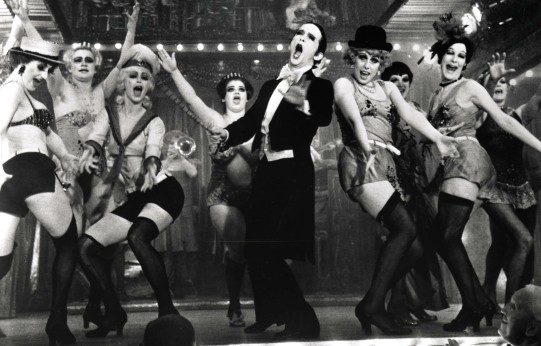
Push past the heavy, smoke-stained velvet curtains of the subterranean cabarets, and the full, suffocating scope of the abyss reveals itself. Here, glittering shows parade acres of sweaty, perfumed flesh to the applause of an audience intoxicated by a potent mixture of ecstasy, terror, and moral decay. Cross-dressing men perform grotesque pantomimes of traditional womanhood, while tuxedo-clad women mock the remnants of patriarchal authority, puffing cigars and sneering at the ghosts of their fathers.
Cabaret
For the modern, liberal apologists of the era, this explosion of libertinism is often retroactively celebrated as a vibrant, avant-garde renaissance, a brief, shining moment of progressive emancipation before the darkness of fascism fell. It is romanticised in our modern cinema and theatre as a glorious rebellion against the stuffy confines of tradition. But to the ordinary, rooted citizens of the German nation, the truth was far darker and far more evident.
The normalisation of perversion was not an expression of human flourishing, it was an aggressive, deliberate assault on the family, faith, nation, and the natural order itself. It was the deliberate dismantling of the moral architecture that had sustained European civilisation for a millennium. This was not liberation. This was civilisational suicide and the German people knew it.
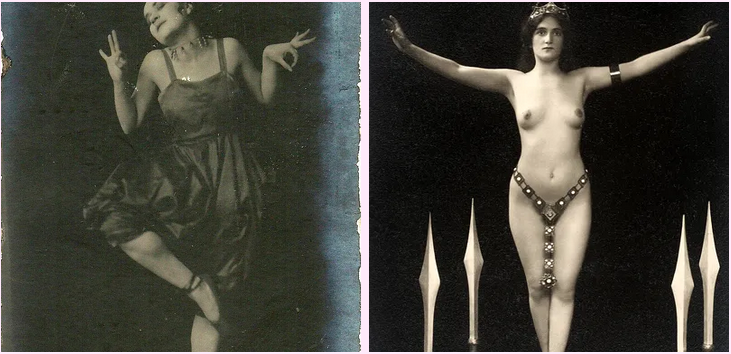
Left: Valeska Gert, Dance in Orange, Munich (1918). Right: Olga Desmond performing the ‘Sword Dance’ (1908). Photo by Otto Skowranek.
The Shattered Fatherland: Versailles and the Death of Order
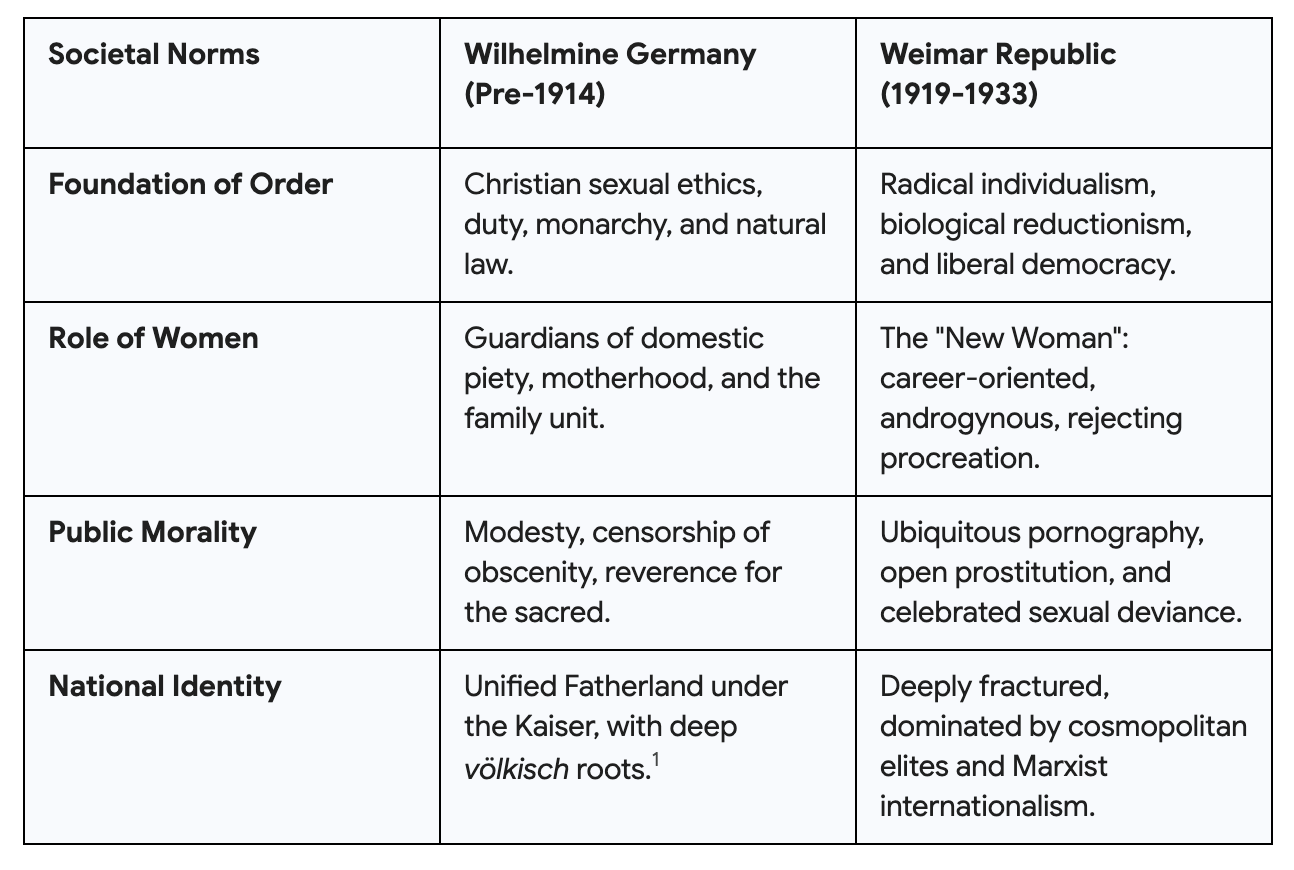
The tragedy of the Weimar Republic cannot be understood without first grasping the significant psychological and spiritual trauma that birthed it. Before 1914, Wilhelmine Germany was a society defined by structure, piety, and an organic connection to history. It was a nation grounded in Christian sexual ethics, where the family was revered as the inviolable bedrock of the state, and where duty, honour, and natural law governed public life.4 Men were expected to be providers and protectors; women were the venerated guardians of the hearth and the moral educators of the next generation.5
The cataclysm of the First World War shattered this world completely. The defeat of the German Empire brought not only physical devastation, millions of young men fed to the meat grinder of the trenches, but an unprecedented spiritual crisis. The humiliating terms of the Treaty of Versailles, specifically the “War Guilt Clause” and the crippling imposition of 130 billion marks in war reparations, stripped the nation of its dignity and its sovereignty.6 The collapse of the monarchy left a gaping void where the Fatherland had once stood, and the pervasive Dolchstoßlegende, the widely held belief that the military was stabbed in the back by domestic traitors, socialists, and cultural subversives festered in the national consciousness.7
- https://www.salon.com/2000/11/22/weimar/
- Ibid
- Ibid
- https://verso.uidaho.edu/view/pdfCoverPage?instCode=01ALLIANCE_UID&filePid=13308274540001851&download=true
- Ibid
- https://theoldshelter.com/weimar-republic-and-the-rise-of-anti-semitism/
- https://verso.uidaho.edu/view/pdfCoverPage?instCode=01ALLIANCE_UID&filePid=13308274540001851&download=true
Comments Off on From conservative, traditionalist Wilhelmine Germany to the unbridled excess of the Weimar Republic
March 23, 2026
Reject multiculturalism as you would reject fake meat
Spaceman Spiff looks at the technocratic dream that we’d all give up on eating meat and instead switch to lab-grown, VC-funded, and Bill-Gates-approved fake meat. It failed utterly, of course, because despite all of the arguments the corporations and the astroturf activists could marshal, nobody wanted it. Vegetarians wouldn’t switch to eating something vaguely kinda-sorta meat-ish, and meat eaters were happy continuing their carnivorous habits. It had no real market, so it was a dud product.
Our technocratic elites have been pushing multiculturalism for even longer than they were pushing fake meat, but just as with fake meat, the more people encounter it, the less willing they are to accept it:
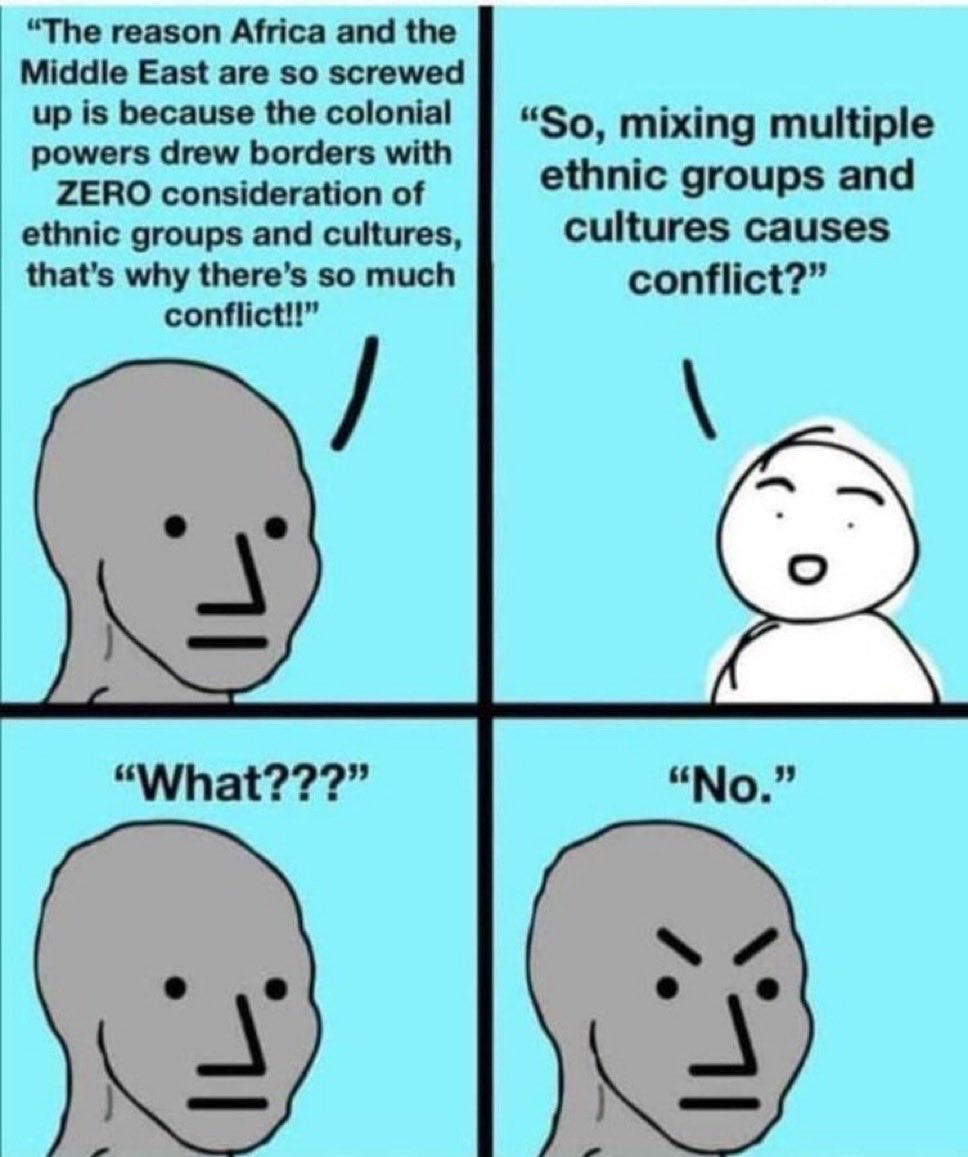
Multiculturalism is the belief many distinct cultures can live together and flourish rather than devolve into conflict.
This is false. It has never worked anywhere.
The world itself is multicultural. The solution that emerged to manage different groups was national borders. Each culture could segregate and live apart from others because they could not successfully live together.
As the failures of multiculturalism become impossible to hide, social engineers reach for ideas to make it work. The latest is civic nationalism. The fake meat of the social governance world.
For all human history we have relied upon the real thing, but now today’s social engineers believe they have discovered a superior recipe, one that avoids the hassle and expense of tradition.
Anyone can become someone like you as long as they conform to an arbitrary list of beliefs, behaviours, laws and customs. We can ignore ethnicity, heritage and history. We can manufacture instant populations with passports and certificates just as we can create synthetic meat by combining the ingredients ourselves.
Like fake meat it looks workable on paper. Not only that, it is presented as self-evidently reasonable. Why has nobody thought of this before? How convenient governments and corporations can import a new workforce and they magically become British, American or Chinese because they “share values” and observe laws.
America was the first to experiment, a necessity after the introduction of non-European immigration in the 1960s. Needless to say they didn’t need it before that.
The country found itself importing people with no historical connection to the American population through heritage or history. Far fewer of them married into the family than previous waves of immigrants from European nations. While importing the world America was becoming the world with its racial, ethnic and cultural tensions.
They convinced themselves they had always been a nation of immigrants and conveniently forgot how long it took even the Irish to assimilate into America despite their ostensible similarity to the founding stock.
Strenuous efforts to make this seem normal, despite its novelty, included the energetic emphasis on shared values or adopted customs since the newcomers were often strikingly different.
Civic nationalism seems to be based on the same faulty reasoning as synthetic meat. We can circumvent the traditional approach using innovation. Why live through centuries of strife for a nation to emerge when you can just hand out certificates and make everyone instantly like you because they claim to respect the law and promise to adopt new customs?
Initially this can seem to work. If a small number of skilled immigrants come they are typically absorbed. Most cultures can do this if the numbers are modest and especially if the newcomers intermarry, or their children do.
Even more so, in traditional societies, including our own until recently, the pressure to adapt was almost universal; no translators, no welfare, no slack whatsoever.
Large numbers of immigrants over short time scales retard the process of assimilation, and generous welfare programmes can derail it completely.
America is also big unlike European nations, so it has taken a while for the full effects to be felt.
Despite the endless hype, people reveal their preferences in their behaviour. They can move. Pro-immigrationists have complained about white flight for decades, one very obvious example of the failure of civic nationalism.
Image from Spaceman Spiff
Just like those inconveniently full supermarket shelves with their synthetic products no one will buy, people run from diversity when they can.
Civic nationalists, like climate zealots, resort to repeating their tired lines about their great intent, how amazing it is all meant to be if people would just get into the spirit of things.
But it is all fantasy. Literal fictions that exist only inside the heads of those who imagine utopia. Real life has its own ideas.

Update: Added missing URL.
Update the second, 24 March: Welcome, Instapundit readers! Have a look around at some of my other posts you may find of interest. I send out a daily summary of posts here through my Substack – https://substack.com/@nicholasrusson that you can subscribe to if you’d like to be informed of new posts in the future.
March 22, 2026
“In 1800, most people worked the land. By 1900, most didn’t. … That’s a psychological earthquake”
On the social media site formerly known as Twitter, L. Wayne Mathison points out just how vast the disruption of normal, traditional lives over less than a century has torn most of us from our historical moorings:
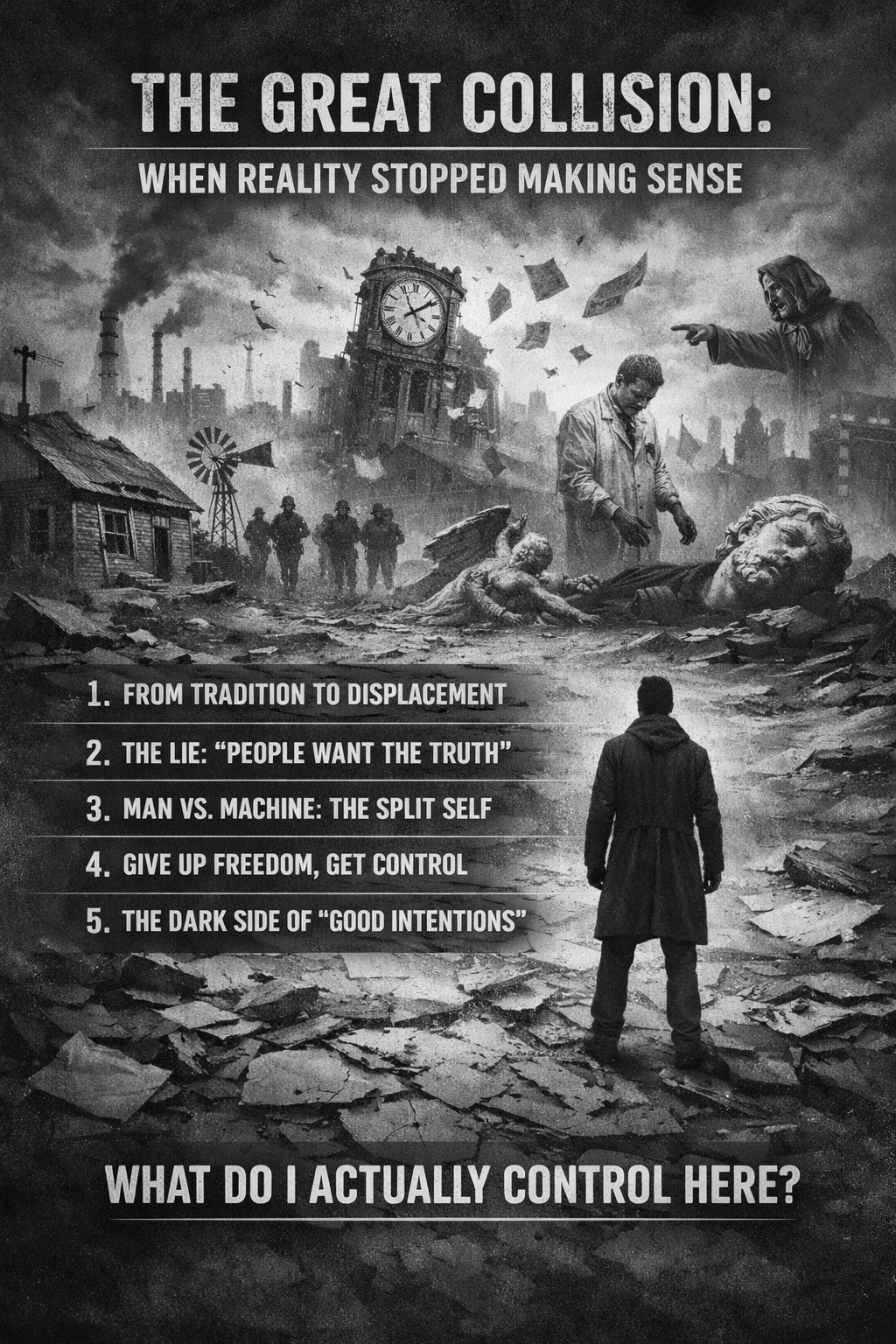
Image generated with AI
The Great Collision: When Reality Stopped Making Sense
For most of human history, life wasn’t confusing. It was hard, yes. Brutal, often. But simple.
You were born into a pattern. You followed it. You died in it.
Then the 20th century showed up like a wrecking ball.
What people call “progress” was really a mass psychological dislocation. We didn’t just move from farms to cities. We lost the structure that told us who we were.
We solved survival. Then immediately created a meaning crisis.
That’s the trade nobody advertises.
1. The Shock: When Life Broke Its Own Pattern
People think industrialization was about better tools. It wasn’t. It was about ripping people out of identity.
In 1800, most people worked the land. By 1900, most didn’t. That’s not a statistic. That’s a psychological earthquake.
Tradition vanished faster than people could adapt. So the state stepped in and did what states always do. Standardize. Educate. Normalize.
Mass schooling didn’t just teach reading. It replaced lost culture with manufactured culture.
Useful? Yes.
Neutral? Not even close.
You don’t remove a thousand-year identity system and expect people to just “figure it out”.
They don’t. They drift.
2. The Lie We Tell Ourselves: “People Want the Truth”
No, they don’t. They want to feel right.
Semmelweis proved it. Doctors were killing women by not washing their hands. When he showed them, they didn’t thank him. They rejected him. Destroyed him.
Why?
Because truth wasn’t the problem. Identity was.
If the facts say “you’re causing harm”, and your identity says “I’m a healer”, most people will reject the facts. Not update the identity.
That’s the Is vs Ought gap in plain terms:
The world is what it is
You believe what should be
When they collide, you protect the beliefNot truth. Belief.
That’s not stupidity. That’s self-preservation.
3. The Split: Are You a Person or a Machine?
Here’s the quiet tension nobody resolves.
You experience yourself as a decision-maker. You choose. You judge. You act.
But science describes you as chemistry and electrical signals.
Both are true. And they don’t fit together cleanly.
The old world said: you are a moral agent.
The modern world says: you are a biological system.
So which one is responsible when something goes wrong?
If you lean too far into “machine”, responsibility disappears.
If you lean too far into “agent”, you ignore constraints.
Most people bounce between the two depending on what excuses them fastest.
4. The Dangerous Shortcut: Let Someone Else Decide
Freedom sounds nice until it demands something from you.
Dostoevsky nailed this. People don’t just want freedom. They want relief from it.
So they trade it. Quietly.
Security, comfort, certainty. Those become the new gods.
And then comes the predictable move. Someone steps in and says:
“I’ll decide what’s good for everyone.”
History has a word for those people. It’s not flattering.
Once you remove any higher standard, the only thing left is preference backed by power.
That’s when things get ugly fast.
5. When “Good Intentions” Go Off the Rails
This is where it usually collapses.
When there’s no fixed standard, people start building their own. Then enforcing it.
George Bernard Shaw is a perfect example. Smart. Influential. Completely untethered.
Once you decide some people are “in the way”, the logic gets dark very quickly.
Not because people are monsters.
Because they think they’re right.
That’s always the justification.
Final Reframe: You Don’t Get Meaning for Free
Here’s the uncomfortable truth.
The old systems that gave people meaning are gone or weakened. They’re not coming back in their original form.
So now you’re left with a choice most people avoid:
Drift and absorb whatever narrative is loudest
Or build your own framework and take responsibility for itThere is no neutral ground.
You’re either shaping your values, or inheriting someone else’s without noticing.
Most people think they’re thinking.
They’re not. They’re echoing.
Simple Stoic Move
Strip it down.
Ask one question:
“What do I actually control here?”
Then act there. Only there.
Everything else is noise.
And right now, there’s a lot of noise.
[NR] – minor formatting added.
Comments Off on “In 1800, most people worked the land. By 1900, most didn’t. … That’s a psychological earthquake”
March 21, 2026
QotD: Rejectionism
Amazon works the same way. If you have to plan your trips to the grocery store, you have to ask yourself: Do I really need this? There are many fewer chances for impulse buys. When the store’s right there, you just run down and satisfy whatever momentary craving you happen to have. Same with Amazon — if you had to make a special store to get that piece of Chinese junk, you wouldn’t. But Amazon is right there, on the phone …
Haste. Impulsiveness. The instant, unexamined gratification of each and every urge. Those are the things the Left encourages. That’s what all that stuff is fundamentally for — Amazon, Twitter, smartphones, the whole deal.
That, therefore, is what we must reject. Call it “Rejectionism” if you want to make it into a sales pitch (or something better; I suck at titles). The Left’s “morality” is to treat everything — health, beauty, pleasure, the Economy, politics, people — as means to one and only one end: The instant, unthinking gratification of each and every momentary impulse.
We reject it. We reject the Internet. It’s a tool, nothing more, and remember what they say about hammers: When a hammer’s all you’ve got, everything looks like a nail. Reject it. Reject it all, for your soul’s sake.
Severian, “Rejectionism”, Founding Questions, 2022-05-24.
Comments Off on QotD: Rejectionism
March 20, 2026
When pursuit of knowledge shifts to sharing of feelings instead
Institutes of higher learning were once places where academic careers involved research, analysis, and logical pursuits to advance human knowledge (in theory, at least, and mostly in practice). Today’s groves of academe are apparently much more about “the feels” than the facts:
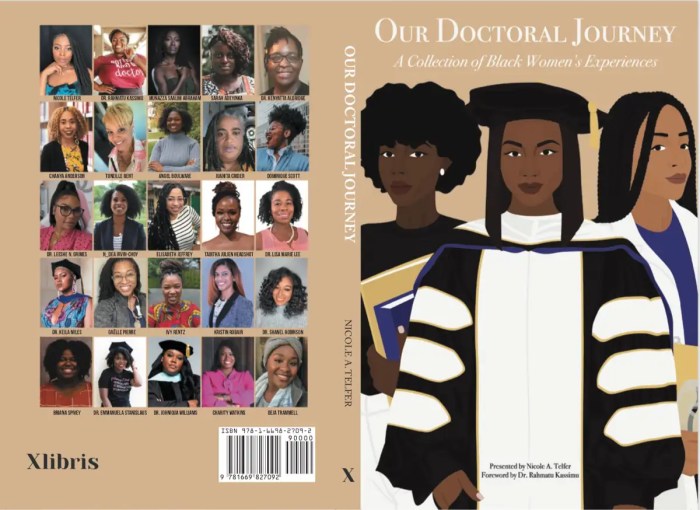
An expected and obvious consequence of the Great Effeminization of the Academy is that a great deal of academic output is now about the feelings of academics.
From the peer-reviewed paper “What’s Racial About Matter? A Conversation on Race and ‘New’ Materialism Past, Present, and Future” in Catalyst: feminism, theory, technoscience. (They mean matter in the same sense as a physicist, only they are much vaguer.) My emphasis:
What follows is an informal, at times undisciplined, conversation about Asian American racial matters between interlocutors who have been in generative dialogue for several years now. This roundtable is the constellation of many other discussions from conference panels to shared meals, reflecting the relational nature of our inquiry. We hope this roundtable can open entry points for those exploring intersections of feminist new materialisms, STS, and studies of race — from its genealogies to its animating new directions. How did we get here, and where do we go from here?
The text itself reads like it was produced by one of those postmodern text generators that were passed around as jokes in the late 1990s.
From the Abstract of “After Hybridity: The Biological Life of the Mixed Race Child” (same journal):
I argue that renderings of the mixed race child as a metaphor for assimilation and multicultural progress obscure how racial science continues to shape the very definition of mixed raceness. Instead, I frame the mixed race Asian American child as hybrid matter to explore the slippages between their figuration and other abnormally reproduced objects: the genetically modified food organism and cancer.
From the Abstract of “Racial Atmospherics: Greenhouses, Terrariums, and Empire’s Pneumatics” (same journal):
What happens when we understand air as racial matter? This paper takes up this question by tracking the political, architectural, and artistic genealogies of Cold War phytotrons, or computer-controlled climatic laboratories.
From the Abstract of “Disrupting the Whitened Lemur: Reading Black Trans* Considerations in Feminist Primatology” (same journal):
In this article, I trace the evolution of female dominance studies in lemurs to explore how logics of cis-heterosexuality and whiteness are embedded in the study of the nonhuman … Following recent theories of trans* and the nonhuman, this essay argues that such critiques illustrate the trans* potential of the nonhuman, which was prefigured by decades of critique in feminist primatology. However, by engaging with recent Black trans scholarship, this essay suggests that such trans* critiques of the nonhuman have stopped short by ignoring the racialized nature of the dyad as a social unit. I thus propose a feminist science studies that attends to Black trans* theory to work against colonial taxonomies and the forced assimilation of the nonhuman world into rigid ontologies for material gain — or what I refer to as whitening processes.
The punchline is that not only are these all from the same journal, but they are all from the same issue of that organ. And that this is only one of many such diaries (the proper word) — funded largely by you via our great benevolent government.
Comments Off on When pursuit of knowledge shifts to sharing of feelings instead
It’s okay to hate …
On his Substack, Frank Furedi defends the right to hate:
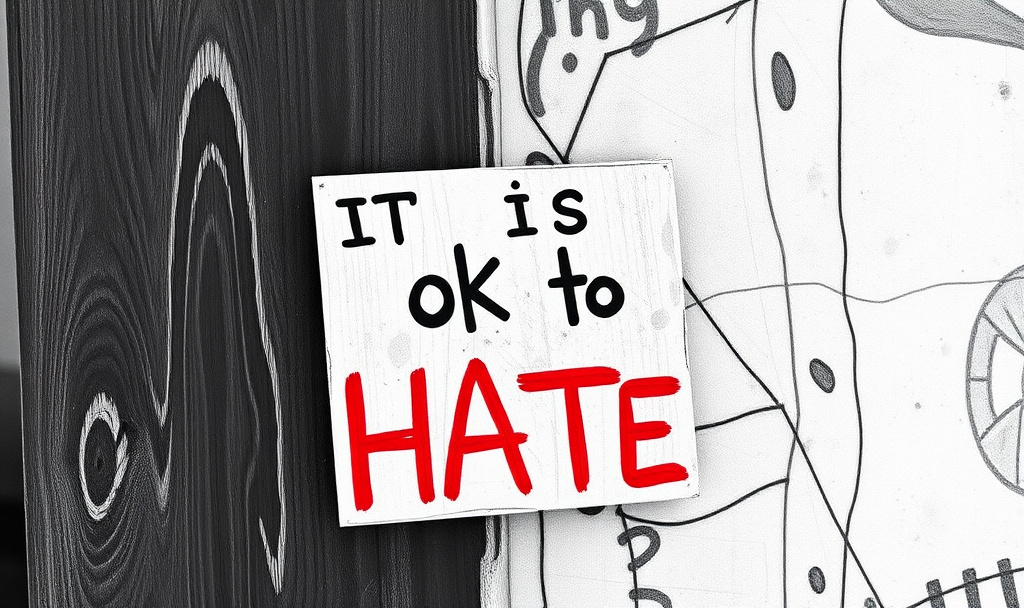
Image from Frank Furedi’s substack
In recent decades hate has become thoroughly politicised to the point that the mere mention of the word serves as a prelude to discrediting, delegitimating and criminalizing its target. In public life the charge of practising the politics of hate is frequently deployed by leftist promoters of identity ideology against their opponents. The claim promoted by The Guardian that states that “a Tory party that stokes hatred is the real threat to our democracy” is illustrative of the attempt to associate conservatives and other critics of identity ideology with the politics of hate.1
The project of transforming hate into a malevolent ideological standpoint is underpinned by the assumption that all displays of the emotion hate are potentially malevolent. In effect the very human emotion of hate is now frequently demonised as a pathology.
In recent decades hate has been transformed into a stand-alone cultural stigma. According to dominant cultural conventions it is sufficient to use the word hate without any reference to the object of this emotion. It is now common to use the word, Haters. It is not necessary to indicate who the Haters hate. The term Hater serves as a negative identity. As one study acknowledged, “persons branded as ‘haters’ are effectively excommunicated from the polity”.2 The use of the term hater morally contaminates its target.
According to the cultural script that prevails in the West, hate serves as a secular form of moral evil. One expression that captures this evil is that of “The Hate”. By placing a definitive article in front of hate a permanent threat to society is invented. This reified public threat demands vigilance and willingness to mobilise to defeat its manifestations. For example, this is the approach of the campaigning group Stop The Hate.3 The content of The Hate is deliberately left vague so that it can serve as the target of a variety of different campaigns.
The politically motivated designation of hate to describe the behaviour of an individual or a group is not simply an act of description but also a boundary-setting manoeuvre. It basically works as a warning that signals the claim that The Hater cannot be included within the confines of a democratically governed public space. The Hater exists on the wrong sides of the boundary between legitimate and illegitimate politics. This sentiment is frequently communicated by the slogan “Hope Not Hate”, which establishes a moral boundary between legitimate and illegitimate politics. From this perspective hate serves as a diagnostic label for illegitimate public life. Imposing a moral quarantine on those branded as haters is regarded is necessary for the maintenance of a just democratic society.
The frequent use of the slogan “Hope not Hate” smuggles a moralising ethos into public discourse. Through the drawing of a moral contrast between the secular evil of hate, hope emerges as a progressive political virtue. The transformation of hate into a morally toxic antithesis of hope assists the political polarisation that afflicts society. Since haters are regarded as beyond redemption dialogue with them is pointless. The only appropriate response to their words is to criminalise it. Hence the proliferation of rules and laws criminalising Hate Speech.
- https://www.theguardian.com/politics/2024/mar/04/a-tory-party-that-stokes-hatred-is-the-real-threat-to-our-democracy
- Post, Robert, “Concluding Thoughts: The Legality and Politics of Hatred”, in Thomas Brudholm, and Birgitte Schepelern Johansen (eds), Epilogue, in Thomas Brudholm, and Birgitte Schepelern Johansen (eds), Hate, Politics, Law: Critical Perspectives on Combating Hate, Studies in Penal Theory and Philosophy (New York, 2018; online edn, Oxford Academic, 21 June 2018), https://doi.org/10.1093/oso/9780190465544.003.0013, accessed 12 Mar. 2026.
- https://www.stopthehate.uk
Update, 21 March: Welcome, Instapundit readers! Have a look around at some of my other posts you may find of interest. I send out a daily summary of posts here through my Substack – https://substack.com/@nicholasrusson that you can subscribe to if you’d like to be informed of new posts in the future.
March 18, 2026
Viewing-with-alarm “the highly lucrative, hyper-masculine ecosystem of online ‘red pill’ influencers”
I first heard of Louis Theroux and his Inside the Manosphere documentary through it being mentioned a few times on a recent podcast, but I’m hardly the one to provide any insight into contemporary political culture, so this is probably not very surprising. To provide some context, I found Celina’s summary to be quite useful:

When the liberal establishment is suddenly forced to confront the grotesque downstream consequences of its own social engineering, its first and most reliable instinct is to pathologise the individual rather than to interrogate the civilisation that produced him. This predictable dynamic is perfectly encapsulated in the critical reaction to the March 2026 release of the Netflix documentary Louis Theroux: Inside the Manosphere.1 The feature-length film, which follows the veteran British broadcaster as he immerses himself in the highly lucrative, hyper-masculine ecosystem of online “red pill” influencers, has been received by the chattering classes as a horrifying, alien glimpse into a shadowy digital underworld of unbridled misogyny, toxic behaviour, and financial grift.2 Commentators, critics, and worried parents have wrung their hands over the crude language, the explicit hostility directed toward women, and the ruthless exploitation of vulnerable, disaffected young boys who flock to these figures for guidance.3 They will undoubtedly draw the conclusion that these internet personalities are a bizarre aberration, a reactionary glitch in the otherwise progressive march of modern Western society that must be heavily censored, de-platformed, or psychologically rehabilitated.
This conclusion is not only incomplete, it is entirely, fundamentally wrong. The true significance of Theroux’s latest documentary is not that it uncovers an isolated network of digital deviants operating on the fringes of acceptable discourse. Rather, the film unintentionally functions as a bleak, unrelenting autopsy of late-stage Western cultural decline. The figures profiled by Theroux, men who monetise male grievance, openly commodify female sexuality, and preach a gospel of ruthless, transactional dominance are in no way rebels against the modern liberal order. They are, in fact, its purest, most distilled, and most logical products.
Through its exploration of this digital underworld, from the sun-drenched hedonism of Miami to the expatriate enclaves of Marbella, the documentary inadvertently exposes a significant and terrifying civilisational breakdown. It reveals a society suffering from the total collapse of traditional gender norms, the complete disappearance of honour, duty, and social trust, and the total ascendancy of a vulgar materialism where attention and capital are the only remaining arbiters of human value. The manosphere is not an alternative to modern Western ideology, it is the inevitable, putrid consequence of a culture that has spent the last half-century systematically dismantling its own moral, religious, and social infrastructure. To understand the phenomenon captured by Theroux, one must look past the superficial liberal moral outrage and recognise the manosphere for what it truly is: a favela culture operating seamlessly inside a wealthy Western economy.
[…]
Louis Theroux: Inside the Manosphere is undeniably a compelling piece of television, featuring moments of sharp journalistic insight and necessary confrontation with deeply unsavoury characters. But as a piece of cultural criticism, it ultimately fails because it refuses to look beyond the immediate vulgarity of its subjects. Theroux, and the liberal audiences who will consume his documentary, will walk away from the film comforted by their own moral superiority, convinced that the problem lies entirely with a few toxic men in Marbella and Miami who simply need to be censored, de-platformed, or re-educated.
They will draw entirely the wrong lesson. The manosphere influencers are not an invading force corrupting a healthy society; they are the native flora of the wasteland we have purposefully created. They are the warlords of the digital favela, thriving in the ruins of a civilisation that has actively, joyfully destroyed its own moral and social foundations. The documentary unintentionally captures the catastrophic, unavoidable consequences of modern Western ideology: a low-trust, hyper-materialistic culture where honour is dead, transactional exploitation is the accepted norm, and the relations between men and women have devolved into a state of algorithmic trench warfare.
Until the West is willing to confront the structural causes of this decay, the destructive failures of modern feminism, the atomisation inherent in mass democracy, the fraying of social capital brought about by multiculturalism, and the vast spiritual void of secular materialism, it will continue to produce generations of lost, angry men. And the e-pimps will always be there, waiting in the digital shadows, ready to sell them a monthly subscription to the abyss.
Update: Rob Henderson’s Wall Street Journal article on Theroux’s Inside the Manosphere has also been posted on their free Substack – https://wsjfreeexpression.substack.com/p/louis-theroux-exposes-the-manosphere
A new Netflix documentary takes viewers into “the manosphere,” a loose network of YouTubers, podcasters, live-streamers and online pranksters. Those interviewed in Louis Theroux’s documentary, Inside the Manosphere, claim to teach young men how to become dominant, wealthy and irresistible to women. They pitch a specific idea about male worth. Women enter the world with innate value, they say, though they often contradict this by telling their followers to mistreat women. A man must earn his value, the logic goes, through money, sex and status. Otherwise, he is worthless.
This is a bleak message. It is also a brilliant sales strategy. First you convince young men that they are nothing. Then you charge them to become something. It’s one of the oldest cons in the world, updated for the age of the algorithm.
At first glance, the documentary seems to confirm what critics already suspect. The manosphere is toxic and extreme. But the film reveals the gap between persona and reality. The influencers selling this lifestyle often don’t live it themselves.
Early in the film, Mr. Theroux asks influencer Justin Waller a simple question: How many kids do you have? The man hesitates. Later, we learn he lives with his two children and their mother — he describes her as his “wife” though they are not legally married — who is pregnant with their third child. The man leads a fairly conventional family life, yet he spends much of his online career telling followers that men should dominate women, avoid commitment and establish a rotation of multiple partners.
One influencer known as Myron Gaines brags privately to Mr. Theroux that he plans to have multiple wives. But when Mr. Theroux raises this idea of “one-way monogamy” in front of Gaines’s girlfriend, his facial expression immediately changes. He then says, “Who knows? Maybe I’ll only wanna be with one girl after all.” The credits of the documentary reveal that the girlfriend eventually left him.
Comments Off on Viewing-with-alarm “the highly lucrative, hyper-masculine ecosystem of online ‘red pill’ influencers”
March 8, 2026
Performative … reading?
Nicole James talks about a secretive cult of readers who — I’m afraid to even say it — read books in public, specifically to be seen reading books in public:

Reading has become competitive, which is impressive when you consider that it is an activity performed while sitting down and moving only the eyes. In theory, intellectually competitive reading would involve fierce debates in candlelit rooms, people slamming piles of Dostoevsky onto tables, and shouting things like, “You’ve misunderstood the moral ambiguity of suffering!” before storming out into the night to reflect meaningfully. In practice, it involves sitting in a café in Ridgewood holding a copy of the Iliad while pretending not to notice that three separate people have already noticed. And then pretending not to notice yourself noticing that they have noticed, which is where the true athleticism begins.
Because reading has slowly repositioned itself from private hobby to public personality trait. This is called performative reading, and it is less about engaging with ideas and more about being seen in the act of possibly engaging with ideas. It requires a certain book, a certain environment, and a certain facial expression. Specifically, a face suggesting that thoughts are currently underway.
The extraction of the book from the bag is an art form in itself.
It must not look like you packed it specifically for display. That would reek of planning, and planning is death to mystique. No, the book must appear to have happened to you. As though, midway through reaching for lip balm or car keys, you encountered it unexpectedly. “Oh,” your expression must suggest, “are you here too? How curious.”
The bag should be opened with a kind of languid inevitability. Do not rummage through your bag. Rummaging implies receipts. Crumpled tissues. A muesli bar from 2019. The book must be located swiftly, as if it occupies a reserved, velvet-lined chamber within your otherwise chaotic life.
You lift it out slowly. This is a text. Ideally one with a cover that signals moral seriousness or tasteful despair.
The removal must be conducted at a volume slightly above whisper. There may be a soft thud as it meets the table. A decisive, cultured thud. The kind of thud that says, “I have opinions about late-stage capitalism”.
Then, and this is critical, you do not open it immediately. That would look eager. Instead, you place it beside your coffee. The coffee must appear faintly architectural.
Only once the book is resting in full view do you adjust it by half a centimeter. A sleeve may be pushed back. A wrist revealed. The lighting should imply that you have recently contemplated something ancient and mildly troubling. Several photos are taken. One will be selected after rejecting seventeen for “looking too literate.”
The caption must be controlled. Something like:
Revisiting this.
“Revisiting” suggests that you and the book have history. You have both grown. You have both suffered.
And when it is finally time to return the book to the bag, this too must be handled with restraint. It slides back in as though it has completed a small but meaningful public service. The performance ends. The book remains unread. But visible. Which, as we all know, is the point.
March 7, 2026
The massive blind spot in gender studies programs
On the social media site formerly known as Twitter, stepfanie tyler recounts her own experience in university with gender studies:
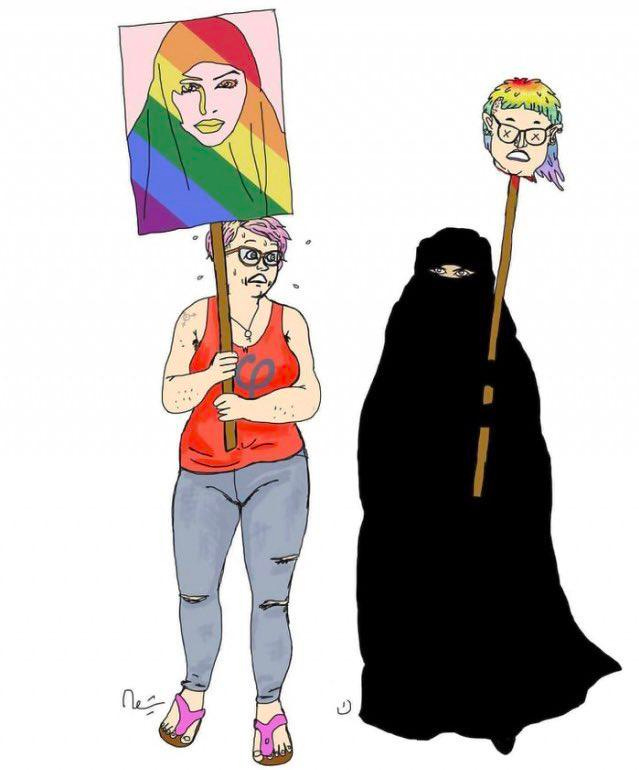
Some feminists romanticize mandatory hair coverings, social exclusion and lack of rights for women in Islamic countries. Because reasons.
When I was in “Women’s and Gender Studies” in college, we spent a lot of time talking about “systems”, “the patriarchy” and all these hidden structures supposedly shaping women’s lives in the West
I entertained a lot of those ideas back then and I was trying my best to understand the frameworks they were teaching
But the one place I never gave them an inch on was women in the Middle East
Every time someone would say “that’s just their culture” something in me short-circuited. No matter how hard I tried, I just couldn’t reconcile it
We were told American women were oppressed because of wage gaps or subtle social expectations, but when the conversation turned to women who could be punished by the state for showing their hair, suddenly we were supposed to become culturally sensitive (some of these lunatics even romanticized it!)
My professors used to get irritated with me when that topic came up bc they knew I wasn’t going to play along and my pushback would cause a rift in their narrative
They didn’t like it when I pointed out the hypocrisy of calling Western women oppressed while treating literal legal restrictions on women’s bodies as a cultural difference
One of my professors even had a running joke she’d use to preface discussions on Islam—she’d do this smug smirk and say something to the effect of “we all know Stepfanie’s take on Islam” as if I was the ridiculous one
Looking back, I wish I had the language and wit to verbally obliterate her but I was 22 and simply did not have the intellectual capacity yet. I didn’t know the first thing about geopolitics, I just knew in my bones how fucking stupid it sounded to be bitching about making 20 cents less than men when women in the Middle East were being stoned to death for showing their hair
Even back then, before my politics changed, that contradiction never sat right with me. And it’s one of the many reasons I despise so-called feminists so much today


