One of the many concepts that has entered the mainstream from the Dissident Right is signalling. Its first appearance came as criticism of social justice warriors, who were signalling their virtue by opposing someone or some thing, real or imagined. Virtue signalling is not new. It has probably been a part of human society since people began to settle into agricultural communities. Scipio Africanus, the great Roman general, who defeated Hannibal at Zama, was also famous for his virtue signalling.
These days, you will hear guys on the alt-right talk about counter-signalling. The easiest example of this is the newly minted rich guy going out and buying expensive display items, like cars or gaudy homes. NBA players are prone to this. They want to signal their wealth by acquiring highly visible, expensive items. An old money guy, in contrast, counter-signals by living in an old farmhouse that has been in the family for generations and driving a 40 year old Saab. He’s the sort of rich that feels no need to advertise it.
Signalling is a basic human trait. We all do it to one degree or another. Walk into a prison and you will see an array of tattoos on the inmates. These will signal gang affiliations, time served in the system, facilities in which the inmate has served and the individual’s violence capital. That last part is an important part of keeping the peace. To civilians, a face tattoo is always scary, but in jail, the right neck tattoo can tell other inmates that they are in the presence of an accomplished killer for a particular prison gang.
Virtue signalling and danger signalling are the easiest to understand, but people also use verbal and non-verbal signals to indicate trust or test the trustworthiness of others. A criminal organization, for example, will have a new member commit a pointless crime to demonstrate their trustworthiness. This is not just to sort out police informants, as is portrayed on television. It’s mostly to ascertain the willingness of the person to commit to the life of the organization. It’s hard to be a criminal if you will not commit crimes.
Outlaw biker culture is a good example of the use of signalling to establish trust relationships. Bikers have always, for example, adopted Nazi symbols as part of their display items. Bikers are not sitting around reading Julius Evola. What they are doing is signalling their complete rejection of the prevailing morality. By adopting taboo symbols and clothing, the outlaw biker is letting other bikers know his status, as much as he is letting the squares know he is a dangerous guy, who should be avoided.
The Z Man, “Codes of the Underworld”, The Z Blog, 2017-07-26.
March 22, 2021
QotD: Signalling
March 4, 2021
QotD: Accounting for the long-term fall in the crime rate
Any criminologist will tell you that criminals as a group are also highly deviant in ways that are not criminal. They have very high rates of accidental injury, alcoholism, nicotine addiction, and involvement in automobile collisions. They have poor impulse control. They have high time preference (that is, they find it difficult to defer gratification or regulate their own behavior in light of distant future consequences). And they’re stupid, well below the whole-population average in IQ or whatever other measure of reasoning capacity you apply. I’m going to revive a term from early criminology and refer to these dysfunctional deviants as “jukes”.
One clue to the long-term fall in crime rates may be that most of the juke traits I’ve just described are heritable. Note that this is not exactly the same thing as genetically transmitted; children may to a significant extent acquire them from their families by imitation and learning.
The long-term fall in crime rates suggest that something may have been disrupting the generational transmission of traits associated with criminal deviance. Are there plausible candidates for that something? Are there selective pressures operating against jukeness that have become more pressing since the 1960s?
I think I can name three: ready availability of intoxicants, contraception, and automobiles.
Once I got this far in my thinking I realized that the authors of Freakonomics got there before me on one of these; they argued for a strong forward influence from availability of abortion to decreased crime rates two decades later. And yes, I know that a couple of conservative economists (Steve Sailer and John Lott) think they’ve found fatal flaws in the Levitt/Dubner argument; I’ve read the debate and I think Levitt/Dubner have done an effective job of defending their insight.
But I’m arguing a more general case that subsumes Levitt/Dubner. That is, that modern life makes juke traits more dangerous to reproductive success than they used to be. Automobiles are a good example. Before they became ubiquitous, most people didn’t own anything that they used every single day and that so often rewarded a moment’s inattention with injury or death.
Ready availability of cheap booze and powerful drugs means people with addictive personalities can kill themselves faster. Easy access to contraception and abortion means impulse fucks are less likely to actually produce offspring. More generally, as people gain more control over their lives and faster ways to screw up, the selective consequences from bad judgment and the selective premium on good judgment both increase.
Eric S. Raymond, “Beyond root causes”, Armed and Dangerous, 2010-01-12.
February 16, 2021
QotD: Homo electronicus and the falling murder rate
It should be clear to even the dullest social observer that human software has well and truly outstripped our hardware. We’re not built for the world we’ve built. This has been happening for a long time, of course, but it has really taken off recently. Note how hard it is not to watch tv, for instance. Even if you don’t have one in your home, go to a bar, an airport, hell, go to the grocery store — there are blinking screens everywhere, and it takes serious effort not to watch them. Our hardware interprets bright flashing things as a threat — can’t be helped. If you’ve been away from civilization for a few days, like I was recently, you’ll experience fatigue, even nausea when you first come back into town. The low-level-but-constant effort it takes to override your hardware when surrounded by blinking screens wears you out.
If you don’t feel like going all Thoreau, you can test the effect by simply writing your comments to this post out longhand, and then waiting an hour before typing them up. I bet you’ll find it mildly annoying no matter what, but if you’ve really got some thoughts on this matter, by then end of the hour you’ll be something close to furious. You’ve been rewired, comrade. You’re homo electronicus. We all are.
This stuff is recent — really recent. There was a limit to how screen-addled even the infamous “latchkey kids” of the 1980s could be. I had “latchkey kid” buddies, and although we had everything we needed to veg out in front of the tube in the very best Gen Z style — video games, sugary snacks, cable — we couldn’t sit and play Atari all day. I don’t mean that we didn’t; we were no smarter than any other boys; we sure as hell didn’t do anything for our health. I mean we couldn’t. Playing video games gave us ants in the pants — my Mom always knew when I’d been over at Steve’s — and eventually it got to the point where we had to put the joystick down and go throw around a football or something.
These days, the inability to play Nintendo for hours on end means you’ve got ADHD. Pass the Ritalin.
Three things made homo electronicus:
- modern medicine
- instant communications
- permanent caloric surplus.
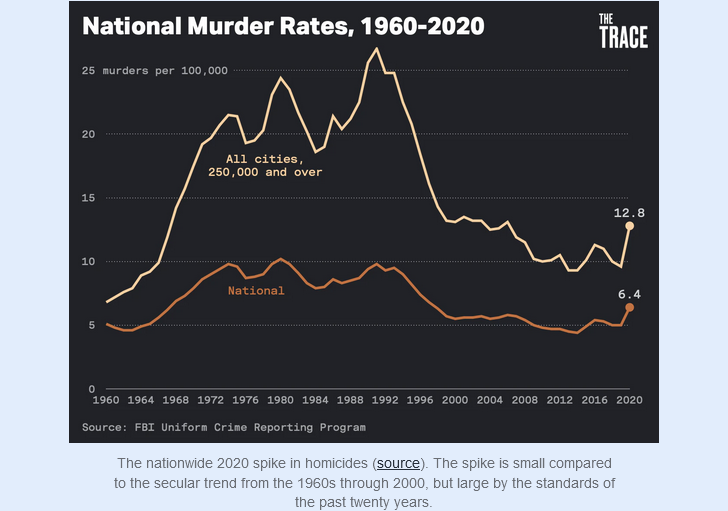
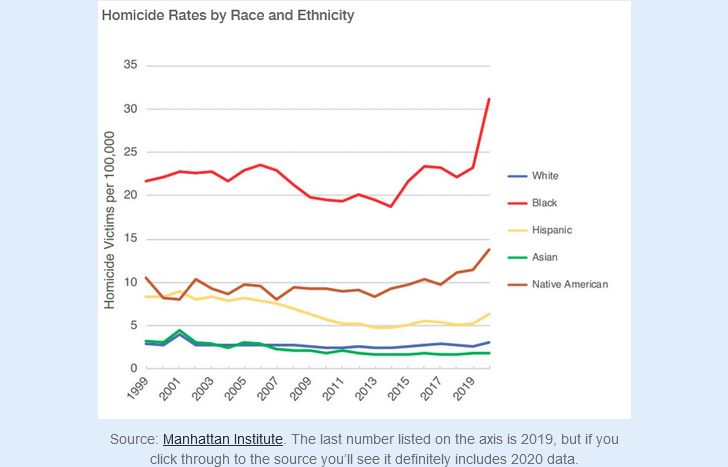
Ritalin is actually one of the more benign examples. Back in the days when we were allowed to notice such things, a certain kind of social critic pointed out that falling murder rates have very little to do with crime reduction. Instead, it’s almost all attributable to advances in emergency medicine. It’s much tougher for Shitavious to kill D’L’eondrae over a pair of sneakers these days. The ER docs patch the victim up, and so what would’ve been murder one is now mere ADW, which means — Soros-funded DAs being what they are — both victim and perp are soon back on the streets, ready for round two. This idiot rapper, for instance, survived being shot nine times. That’s not nine separate shootings, mind you, that’s nine slugs in one incident. Granted the slipshod motherfuckers who capped him need to work on their aim, but surviving even nine flesh wounds from modern firearms is one hell of a testimony to the power of modern medicine …
… a power that does not, I suggest, conduce to positive eugenic outcomes.
Severian, “Recent Evolution”, Rotten Chestnuts, 2020-09-28.
February 2, 2021
QotD: Why “artistes” defended Roman Polanski before #MeToo
In 1977, Roman Polanski drugged, raped, and sodomized a 13-year-old girl. When he believed a sort-of-plea-bargain was about to come unstuck, he took it on the lam. He lived the high life in this self-imposed exile for thirty years, until busted in Switzerland recently. Now various of the usual suspects on the right wing’s enemies list are campaigning to block his extradition.
There’s a good deal of perplexity being expressed about this, and some predictable chuntering from right-wingers about lefties being moral degenerates. But this flap isn’t really about politics at all — it’s much simpler than that. It’s about people who think of themselves as “artistes” reserving themselves a get-out-of-jail card when they feel like behaving like repellent scum of the earth, too.
[…]
If you want to make that argument, Roman Polanski makes a great stake in the ground — not in spite of the heinousness of his crime, but because of it. If even a child-raper can invoke the all-purpose artiste excuse for scumminess, than the merely ordinary transgressions of artistes become trivia to be airily dismissed. And if the Polanski case becomes a “teachable moment” whereby people can be talked into feeling like boors or philistines for even thinking that artistes should be held to civilized standards of behavior, so much the better!
None of this is more than tenuously connected to leftism, and I have to say the the right-wing efforts to gin up indignation on that score sound quite contrived and stupid to me. This dispute isn’t about politics, it’s about privilege — not just whether Roman Polanski is above the law, but about whether his defenders can claim to be too.
Eric S. Raymond, “Why artists defend Roman Polanski”, Armed and Dangerous, 2009-09-29.
January 15, 2021
The Lady Juliana | The 18th-Century All-Women Prison Ship
Weird History
Published 13 Nov 2019A tale as wild as the Seven Seas, the story of the Lady Juliana, a special convict ship full of prisoners sent to Australia, is one of the strangest in the continent’s history. The Lady Juliana had a specific mission: carrying a cargo of female prisoners the British government hoped would help reform the struggling convict colony in New South Wales. This motley crew of British women ultimately had a lasting impact on the history of Australia.
#prisonship #australia #weirdhistory
December 16, 2020
The NKVD: from Pen-Pushers to Communist Hit Squads – WW2 Special
World War Two
Published 15 Dec 2020The NKVD started out as your regular old Ministry of the Interior. But over time, they grew out to a hugely influential and highly lethal weapon for some of the Soviet Union’s leaders.
Join us on Patreon: https://www.patreon.com/TimeGhostHistory
Or join The TimeGhost Army directly at: https://timeghost.tvFollow WW2 day by day on Instagram @ww2_day_by_day – https://www.instagram.com/ww2_day_by_day
Between 2 Wars: https://www.youtube.com/playlist?list…
Source list: http://bit.ly/WW2sourcesHosted by: Spartacus Olsson
Written by: Joram Appel and Spartacus Olsson
Director: Astrid Deinhard
Producers: Astrid Deinhard and Spartacus Olsson
Executive Producers: Astrid Deinhard, Indy Neidell, Spartacus Olsson, Bodo Rittenauer
Creative Producer: Maria Kyhle
Post-Production Director: Wieke Kapteijns
Research by: Joram Appel
Edited by: Miki Cackowski
Sound design: Marek Kamiński
Map animations: Eastory (https://www.youtube.com/c/eastory)Colorizations by:
Klimbim – https://www.flickr.com/photos/2215569…
Mikołaj Uchman
Julius Jääskeläinen – https://www.facebook.com/JJcolorization/
Dememorabilia – https://www.instagram.com/dememorabilia/Sources:
Picture of Lavrentiy Beria in court, courtesy of Фотограф – Ист.доки https://commons.wikimedia.org/wiki/Fi…
Yad Vashem 1019-2, 143EO1, 55AO6
IWM HU 106212
USHMM
I.M. Bondarenko
from the Noun Project: border police by IcoLabs, fire building by dDara, Police by Cuputo, Skull by Muhamad UlumSoundtracks from the Epidemic Sound:
Reynard Seidel – “Deflection”
Johannes Bornlof – “Deviation In Time”
Farrell Wooten – “Blunt Object”
Andreas Jamsheree – “Guilty Shadows 4”
Fluow – “Endlessness”
Johannes Bornlof – “The Inspector 4”
Gunnar Johnsen – “Not Safe Yet”Archive by Screenocean/Reuters https://www.screenocean.com.
A TimeGhost chronological documentary produced by OnLion Entertainment GmbH.
From the comments:
World War Two
2 hours ago
We have been talking about the NKVD a lot in our War Against Humanity episodes and in several Between Two Wars episodes. If you found this video to be interesting, I can highly recommend you try our B2W episode on the Great Terror and Military Purges in 1938. It provides some crucial context that we couldn’t expand on in this special episode. You can find it right here: https://youtu.be/MNnK0LAoyMo
Cheers,
JoramOther videos about the NKVD we mentioned in this special are:
– War Against Humanity episode covering the Katyn Massacre: https://youtu.be/gd5YhhNcC44
– War Against Humanity episode covering the Great Prison Massacre: https://youtu.be/kykPusygzOw
– Biography episode on Richard Sorge: https://youtu.be/fn9NyRfbSOo
November 26, 2020
“… the Liberals’ oft-stated commitment to listen to the experts and the frontline workers fizzles when said experts and workers disagree with a preferred policy”
In The Line, Matt Gurney explains why the Liberals are so in love with a set of proposed rule changes that will do almost nothing to reduce gun crime in Canada and might even end up creating criminals of previously law-abiding Canadians … but it polls well in Liberal ridings:

Restricted and prohibited weapons seized by Toronto police in a 2012 operation. None of the people from whom these weapons were taken was legally allowed to possess them.
Screen capture from a CTV News report.
Talking about gun policy in Canada is tricky, because the debate is highly technical. The regulation of firearms in this country, at least in theory, depends on the specifications of the firearm in question. Mode-of-operation, magazine capacity, ammunition calibre or barrel-bore width, barrel length, muzzle energy — these are all the criteria upon which a firearm is classified into one of three categories under Canadian law: prohibited, restricted or non-restricted. Any Canadian who wishes to own or borrow a firearm, or purchase ammunition, must be licenced, a process which includes mandatory safety training and daily automatic background checks.
Prohibited firearms are essentially banned in Canada; a relatively small number are held by private citizens who already possessed them when the current regulatory regime was brought in in the 1990s. The government of the day didn’t want to get into the thorny issue of confiscation, so it let existing owners keep them under strict conditions. The vast majority of guns in Canada, and all new guns sold for decades, therefore fall into the other two categories. Restricted guns are generally pistols and revolvers, but also some rifles and shotguns. Non-restricted guns are run-of-the-mill hunting rifles and shotguns, though some sports-shooting rifles (used for target practice) are also included.
The above is all somewhat theoretical, as the regulations are twisted and pulled in a variety of ways to suit political ends, leaving a system that’s tortured and confusing even for those of us who study it. But it gives you at least an idea of how the system is designed. If you know guns, of course, you knew all this already. If you don’t, I wouldn’t blame you if your eyes glazed over a bit while reading the above. Without a basic working familiarity with all the terminology and technical specs and regulations, it’s damn hard to follow the debates over gun control. This is why I have to ask you non-aficionados to take my word for it: the Liberal proposal is really bad.
Well, actually, you don’t have to take just my word for it. You can read the NPF’s position paper, which makes at least some of the case. It notes, correctly, that “military style assault weapons” aren’t actually a thing that’s defined under Canadian law; it can therefore mean whatever the government of the day wants it to mean. True military style battle weapons — fully automatic weapons with high-capacity magazines and full-sized ammunition — are already effectively banned in Canada and have been for decades. Further, the NPF notes, firearms are used in a minority of homicides in Canada, a majority of those homicides are committed with handguns, and a majority of those killings are directly linked to organized crime or gang activity.
You’re probably starting to see the problem: Going after the guns that aren’t being used in the crimes, and taking them from the people who aren’t committing them, isn’t a public-safety policy. It’s a political gift to the Liberals’ urban base, where the proposal is popular and gun literacy low (those two latter points are not unrelated).
While the ban is almost entirely a political sop, it’s probably a good political sop, alas. I’m sure the proposal will be very well received in ridings the Liberals would like to hold or flip. But it’s still a stupid policy, even if it’s popular. The Liberals are proposing to spend tons of money on this. They estimate hundreds of millions, but recall that the long-gun registry came in about 1,500 times overbudget. And all to “ban” some of the rifles used by a segment of the population — licenced and screened gun owners — that’s been found to be the several times less likely to commit murder than those without licences.
November 14, 2020
QotD: “Modern” liberalism
All of this became “dated,” as I grew older. My first shocking discovery about the “modern” liberal is, that while he might give lip-service still to some “antiquated” ideals, and gratuitously pose as virtuous, his first instinct when faced with serious responsibility was to cut and run.
My second was to find that he was now brainwashed by ideologies and slogans; that it was impossible to argue with him from reason or fact; that faced with any difficulty he would present himself as the helpless victim of forces he would not even try to define coherently.
My third was the discovery that he was now, instinctively, on the side of the criminal; that he identified with the lawless; that he admired “the transgressive,” trespass, violation. Without acknowledging it to himself, he now had a conception of “human rights” which consistently excused the wrongdoer, and consistently ignored the consequences to those who had done nothing wrong.
This “modern” liberalism, I came to understand, was the development — not over months and years but over centuries — of a mortal flaw in the “classical” liberal worldview. It was avoiding God. The liberal mind was persuaded that humans must “make their own beds.” Its great strength was that it took responsibility; its great weakness was that it had no reason to do so. Faith and reason are mutually dependent; when one goes the other eventually goes, too.
Or put this another way: the Devil gets in when we make room for him.
David Warren, “Crime without punishment”, Essays in idleness, 2018-08-03.
October 29, 2020
The Curse of the Mad Butcher: A New Orleans Folktale
Atun-Shei Films
Published 22 Oct 2019Spooky season is upon us, and leading up to Halloween, I’ll be sharing with you “true” New Orleans folktales and ghost stories popular among our city’s ghost tour guides. The 700 block of Ursulines Avenue in the French Quarter would be completely unremarkable… if not for the three eerily similar murders that have been committed there over the last 120 years.
Support Atun-Shei Films on Patreon ► https://www.patreon.com/atunsheifilms
#NewOrleans #GhostStory #Folklore
Watch our film ALIEN, BABY! free with Prime ► http://a.co/d/3QjqOWv
Reddit ► https://www.reddit.com/r/atunsheifilms
Twitter ► https://twitter.com/alienbabymovie
Instagram ► https://www.instagram.com/atunsheifilms
Merch ► https://atun-sheifilms.bandcamp.com
October 25, 2020
The Crimes of Madame Delphine LaLaurie: The Truth Behind the Legends
Atun-Shei Films
Published 16 Dec 2019Madame Delphine LaLaurie, New Orleans’ most reviled serial killer, has become world famous thanks to American Horror Story and the wildly popular French Quarter ghost tour industry. The story of this deranged socialite who tortured, mutilated, and murdered her slaves has lost none of its horrifying bite, and the supposedly haunted mansion where her home once stood has become a major tourist attraction. Despite its popularity (or perhaps because of it), this story is steeped in legend and folklore. Most online sources about LaLaurie’s crimes are outdated, wrong, or both. In this video I attempt to separate the truth from the myth, and tell a purely historical account of the crimes of Delphine LaLaurie.
Support Atun-Shei Films on Patreon ► https://www.patreon.com/atunsheifilms
#MadameLaLaurie #NewOrleans #History
Watch our film ALIEN, BABY! free with Prime ► http://a.co/d/3QjqOWv
Reddit ► https://www.reddit.com/r/atunsheifilms
Twitter ► https://twitter.com/atun_shei
Instagram ► https://www.instagram.com/atunsheifilms
Merch ► https://atun-sheifilms.bandcamp.com
October 24, 2020
The LaLaurie Mansion: A New Orleans Ghost Story
Atun-Shei Films
Published 25 Mar 2019Thought I’d try something different with this video. This is the story of famous serial killer Delphine LaLaurie and her allegedly haunted mansion.
Sorry for the background noises… such are the pitfalls of filming in the French Quarter.
Support Atun-Shei Films on Patreon ► https://www.patreon.com/atunsheifilms
#NewOrleans #GhostStory #History #AmericanHistory #MadameLaLaurie
Watch our film ALIEN, BABY! free with Prime ► http://a.co/d/3QjqOWv
Reddit ► https://www.reddit.com/r/atunsheifilms
Twitter ► https://twitter.com/alienbabymovie
Instagram ► https://www.instagram.com/atunsheifilms
Merch ► https://atun-sheifilms.bandcamp.com
October 19, 2020
QotD: Afflicting the comfortable
In 1893, Finley Peter Dunne, a journalist-turned-humorist at the Chicago Evening Post, introduced Martin J. Dooley to the people of Chicago. Mr. Dooley, as he was best known, was a thick-accented bartender from Ireland who owned a tavern in the Bridgeport neighborhood. Mr. Dooley became popular among Chicagoans for his rich satire of politics and society. Of course, Mr. Dooley wasn’t real. He was a fictional character created by Dunne. His work included countless sketches and wide-ranging commentary, but he may be best known for his biting one-liner on newspapers, since reclaimed by journalists as central to the profession’s creed: “The job of the newspaper is to comfort the afflicted and afflict the comfortable.”
The original quote is from Observations by Mr. Dooley, one of several works Dunne produced as the character, in which Dunne specifically satirizes the press’s penchant for trial-by-media. He presented Mr. Dooley through Irish dialect pieces, hence the diction, so the “affliction” quote below has been lightly edited for comprehension:
When anything was wrote about a man ’twas put this way: “We understand on good authority that … is on trial before Judge G. on an accusation of larceny. But we don’t think it’s true.” Nowadays, the larceny is discovered by a newspaper. The lead pipe is dug up your backyard by a reporter who knew it was there because he helped you bury it. A man knocks at your door early one mornin’ an’ you answer in your nighty. “In name of the law, I arrest you,” says the man seizin’ you by the throat. “Who are you?” you cry. “I’m a reporter for The Daily Slooth,” says he. “Photographer, do your duty!” You’re hauled off in the circulation wagon to the newspaper office where a confession is ready for you to sign; you’re tried by a jury of the staff, sentenced by the editor-in-chief, and at ten o’clock Friday the fatal thrap is sprung by the fatal thrapper of the family journal. The newspaper does evrything for us. It runs the police force and the banks, commands the militia, controls the legislature, baptizes the young, marries the foolish, comforts the afflicted, afflicts the comfortable, buries the dead and roasts them aftherward.
That journalists of all stripes have touted a scathing critique of their profession and repurposed it as a mission statement is a textbook definition of irony that belongs on a Roman pedestal behind bulletproof glass in the Smithsonian. What is most vexing about the modern interpretation of Dunne’s quote is that its new meaning is implied to be synonymous with dispassionately seeking truth, which it necessarily is not.
Robert Showah, “Journalism Is Not Activism”, Quillette, 2018-07-05.
October 15, 2020
DicKtionary – L is for Lawman – Tom Horn
TimeGhost History
Published 14 Oct 2020Morally ambiguous guns for hire are a fantasy of old Western films, right? Well not in the case of Tom Horn! A lawman, a cowboy, a soldier, and ultimately: a dick.
Join us on Patreon: https://www.patreon.com/TimeGhostHistory
Written and Hosted by Indy Neidell
Director: Astrid Deinhard
Producers: Astrid Deinhard and Spartacus Olsson
Executive Producers: Astrid Deinhard, Indy Neidell, Spartacus Olsson, Bodo Rittenauer
Creative Producer: Joram Appel
Post-Production Director: Wieke Kapteijns
Research by: Indy Neidell
Image Research by: Karolina Dołęga
Edited by: Karolina Dołęga
Sound design: Marek KamińskiSources:
– Pictures of Tom Horn courtesy of Wyoming State Archives Photo Collection
– Library of Congress
– National Archives NARA
– Picture of Valley RoadArizona courtesy ofThe Old Pueblo from Wikimedia
– Icons from The Noun Project: Child by Gan Khoon Lay, Cow by Alena Artemova, Cowboys by Simon Child, cowboy avatar by Silviu Ojog, Cowboy by Gan Khoon Lay, cowboy man Adrien Coquet, cowboy by Luis Prado, Cowboy Shoot by Gan Khoon Lay, Cowboy Shooting by Gan Khoon Lay, duel by Gan Khoon Lay, Dead Soldier by Gan Khoon Lay & Joab Penalva, Shootout by Gan Khoon Lay, Sheep by Pariphat Sinma.Music:
– “Ghosts of the Rail” – Gabriel Lewis
– “Miss Dynamite” – Walt Adams
– “Gone Surfing (Sting)” – Stefan Netsman
– “Run Dry River” – River Run DryArchive by Screenocean/Reuters https://www.screenocean.com.
A TimeGhost chronological documentary produced by OnLion Entertainment GmbH.
October 8, 2020
DicKtionary – K is for Killer – Elizabeth Báthory
TimeGhost History
Published 7 Oct 2020Elizabeth Bathory was a Hungarian noblewoman who holds the world record as the most prolific female murderer. This is her gruesome life story.
Join us on Patreon: https://www.patreon.com/TimeGhostHistory
Hosted & Written by Indy Neidell
Director: Astrid Deinhard
Producers: Astrid Deinhard and Spartacus Olsson
Executive Producers: Astrid Deinhard, Indy Neidell, Spartacus Olsson, Bodo Rittenauer
Creative Producer: Joram Appel
Post-Production Director: Wieke Kapteijns
Research by: Indy Neidell
Image Research by Karolina Dołęga
Edited by: Karolina Dołęga
Sound design: Marek KamińskiVisual Sources:
– Wellcome Images
– Paul K from Flickr https://cutt.ly/Paul_K_Flickr
– Andreone93 from Wikimedia https://cutt.ly/Andreone93_Bathory
– Cleveland Museum of Art
– Metropolitan Museum of Art
– Lluís Ribes Mateu from Flickr https://www.flickr.com/photos/lluisri…
– Yvette Hoitink from Flickr https://www.flickr.com/photos/yhoitink/
– Civertan from Wikimedia https://cutt.ly/Civertan
– Jean Louis Mazieres https://www.flickr.com/photos/mazanto/
– Icons from The Noun Project: anti trust by Angelo Troiano, Castle by Vicons Design, Waiter by ProSymbols, Nun by Wolf Böse, Priest by Luis Prado, reject by Alice Design, User by Round Pixel, Zoo by Eugene Dobrik, User by Round Pixel.“The Wedding March” – Traditional
“Stranger Days” – Alexandra Woodward
“Rise Of The Titan” – FormantXArchive by Screenocean/Reuters https://www.screenocean.com.
A TimeGhost chronological documentary produced by OnLion Entertainment GmbH.
September 27, 2020
Homelessness in Los Angeles
In Quillette, Amy Alkon talks about the homeless crisis in LA, particularly her own immediate experience with a couple who “camped out” in front of her house.
Throughout [Los Angeles Mayor Eric] Garcetti’s seven years as Mayor, Los Angeles has witnessed a shocking explosion of homelessness. When he took office in 2013, the city had about 23,000 residents classified as homeless, two thirds of whom were unsheltered, living on the streets. By mid-2019, the figure was about 36,000, and three-quarters of them were living on the streets. Currently, there are 41,000 homeless. Garcetti’s pet plan to alleviate the homelessness crisis was the construction of permanent supportive housing. In 2016, compassionate voters approved $1.2 billion in new spending to fund these units. Three years later, only 72 apartments had been built, at a cost of about $690,000 apiece. Meanwhile, an El Salvador-based company has come up with nifty $4,000 3D-printed houses that look like great places to live and can be put up in a single day.
There’s also been a failure to admit that housing alone isn’t the solution. As urban-policy researcher Christopher Rufo explains, only about 20 percent of the homeless population are people down on their luck, who just need housing and a few supportive services to get back on their feet. Approximately 75 percent of the unsheltered homeless have substance-abuse disorders and 78 percent have mental-health disorders. Many have both.
As a bleeding-heart libertarian, I feel personally compelled to try to help people who are struggling. I do this by volunteering as a mediator, doing free dispute resolution to provide “access to justice” to people who can’t afford court. And since about 2009, I personally have given support to one of those easily helpable 20 percent Rufo refers to, getting him paying work and a bank account, and storing his stuff in my garage. He is a good man and a hard worker — sober for many years — who simply seems to have issues in the “front-office” organizational parts of his brain that help most of us get our act together to, say, pay bills on time. He just needs somebody to back him up on the bureaucratic aspects of life. I’m happy to say he now has a roof over his head. He lives in a motel across the country, and all I still do for him is provide him with a permanent address. I receive his Veterans Administration and Social Security mail at my house, which I mail to him with smiley faces and hearts on the envelopes, colored in with pink and orange highlighter.
This success story would not be possible for most homeless people, the nearly 80 percent who are addicted and/or mentally ill. As Rufo writes:
Progressives have rallied around the slogan “Housing First,” but haven’t confronted the deeper question: And then what? It’s important to understand that, even on Skid Row, approximately 70 percent of the poor, addicted, disabled, and mentally ill residents are already housed in the neighborhood’s dense network of permanent supportive-housing units, nonprofit developments, emergency shelters, Section 8 apartments, and single room-occupancy hotels.
When I toured the area with Richard Copley, a former homeless addict who now works security at the Midnight Mission, he explained that when he was in the depths of his methamphetamine addiction, he had a hotel room but chose to spend the night in his tent on the streets to be “closer to the action.” Copley now lives … at the Ward Hotel — which he calls the “mental ward” — where he says there are frequent fights and drugs are available at all hours of the day. The truth is that homelessness is not primarily a housing problem but a human one. Mayors, developers, and service providers want to cut ribbons in front of new residential towers, but the real challenge is not just to build new apartment units but to rebuild the human beings who live inside them.
The situation is especially tragic for those who are so mentally ill that they cannot take care of themselves, and are often a danger to both themselves and others. And I sometimes wonder which movie star or other famous person needs to be stabbed or bludgeoned before politicians take meaningful action.
It’s fashionable in progressive circles to demonize law enforcement, but Rufo explains that in 2006, then-L.A. police chief Bill Bratton implemented a “Broken Windows” policing initiative on Skid Row. It led to a 42 percent reduction in felonies, a 50 percent reduction in deaths by overdose, and a 75 percent reduction in homicides. The overall homeless population was reduced from 1,876 people to 700 — a huge success. Activists filed lawsuits and ran publicity campaigns, slowly killing Bratton’s program, on the grounds that it “criminalizes homelessness.” As a libertarian, I’m opposed to drug laws and forced behavior — but only to a point. It is not compassion to leave people to be victimized by criminals simply because they are unhoused, nor is leaving mentally and physically disabled people strewn across the streets amidst piles of garbage a form of freedom.
Mayor Garcetti, in lieu of admitting the real challenges — the first step to taking meaningful action to alleviate the homelessness crisis — has simply ignored the human results of his failed policy. As a result, whole sections of the city, including formerly livable streets in my beloved Venice, have been turned into Skid Row by the Sea.