
Now I should note at the outset that our sources for the Gracchi are not what we might like. Tiberius Gracchus’ year as tribune was in 133 and the late second century is a period where our best sources largely cut out. Polybius, of course, was writing in the 140s and so is unavailable for later events. Livy, always useful, did write the history of this period, but it is lost save for extremely brief summaries of his books known as the Periochae. Instead, we’re reliant primarily on Plutarch and Appian. Both sources are writing much later, in the second century AD and are writing in a context where we might question if we’re getting an entirely straight narrative. As I’ve noted before, Plutarch’s biographies in his Parallel Lives (of which there is one for Tiberius Gracchus and one for Gaius Gracchus) are intended to be moralizing essays rather than straight historical accounts and Plutarch is not above bending the truth to fit his narrative; he also tends to leave out details if they don’t fit his narrative.
Meanwhile, as D.J. Gargola has noted, Appian is also bending his account of Tiberius Gracchus’ reforms, in particular by presenting the Lex Sempronia Agraria as an entirely traditional, conventional response to a pressing crisis.1 But in fact, the provisions of the Lex Sempronia Agraria were not traditional: no similar law (save for a re-enactment by Gaius Gracchus) – had ever or would ever be passed in Rome and the legal precedent that Appian presents as providing the foundation for Tiberius’ law appears to be at least substantially an anachronistic invention. Meanwhile, the crisis Appian thinks Tiberius Gracchus thought he was addressing probably didn’t exist in the form he understood it.
But that’s what we have, so it is what we must work with. And we should note that both Plutarch and Appian are quite favorable to the Gracchi, even though both men were clearly very controversial in their day. So in a sense this is a reverse of the situation we had with Cleopatra, where we had to contend with relentlessly negative sources: here the sources are broadly positive.
So, on with what we know.
Tiberius Gracchus was elected tribune in 133. His election was already unusual in that he seems to have run on something like a program (land reform, which we’ll get to); Romans generally ran on character and background rather than promising specific political actions if elected, so this was unusual. Part of the reason for it was doubtless that Tiberius Gracchus’ political fortunes were in difficulties. Now we should note here that while Tiberius Gracchus was a plebian (that is, not a patrician) that doesn’t make him a political outsider: Tiberius Gracchus was not remotely a political outsider or poor man or lacking in influence. His father (also Ti. Sempronius Gracchus) had been consul in 177 and 163 and censor in 169; his father (or grandfather) was consul in 215 and 213. Our Tiberius Gracchus’ mother, Cornelia, was the daughter of P. Cornelius Scipio Africanus, the man who defeated Hannibal. Tiberius Gracchus was born into substantial wealth and influence, the sort of man whose eventual political ascent was almost guaranteed.
(Indeed, it was so guaranteed that he gets to bend the rules and hold many of his offices early. He’s quaestor at just 26, which implies that he started his military service at 15 or 16 instead of the normal 17, doing so as a military tribune, not a common soldier. I do think this is relevant to understanding Tiberius Gracchus: this was a man born with a silver spoon and a carefully paved, flat-and-easy road to power and influence laid out for him by his family and his political backers, the most notable among whom was his key supporter Scipio Aemilianus (destroyer of Carthage and shortly Numantia).)
Except. Except he got wrapped up in something of a nasty foreign policy scandal during his year as quaestor, when he was assigned to the amazingly named but less amazingly capable C. Hostilius Mancinus who as consul in 137 was supposed to deal with Numantia in Spain. Mancinus blew it and got his army effectively trapped and sent Tiberius – his quaestor and the next highest ranking Roman present – to negotiate to get his army out. Tiberius did this, but the whole thing caused a great stink and a scandal at Rome (Roman armies are supposed to go down fighting, not negotiate shameful retreats!). Indeed, the Senate was so enraged they rejected the treaty and instead sent Mancinus, bound in chains, to the Numantines as part of a ritual process by which his treaty was disowned. Tiberius doesn’t get packed off to Numantia, but some of the political stink does rub off on him, so while he’s connected enough to get elected as a plebeian tribune in 133, he must know he needs a big second act to get his political career back on track, or he may never reach the consulship. That context – a political insider who had a golden ticket but must now win it back, rather than an outsider without connections – is important for understanding the reaction he is going to get.
Bret Devereaux, “Collections: On the Gracchi, Part I: Tiberius Gracchus”, A Collection of Unmitigated Pedantry, 2025-01-17.
- 1. D.J. Gargola, “The Gracchan Reform and Appian’s Representation of an Agrarian Crisis” in People, Land and Politics, eds. L. De Ligt and S.J. Northwood (2008).
August 23, 2025
QotD: The background of Tiberius Gracchus
August 15, 2025
Ted Gioia on Hunter S. Thompson
I must admit that I got hooked on Hunter S. Thompson’s writing very early. I read Fear and Loathing in Las Vegas in my mid-teens and it blew my mind. I couldn’t actually believe everything he wrote, but I couldn’t completely discount it either. I certainly haven’t read everything he wrote … especially his later sports commentary, but I have read most of the best-known books. On his Substack, Ted Gioia is running a three-part series on the writer and his work:
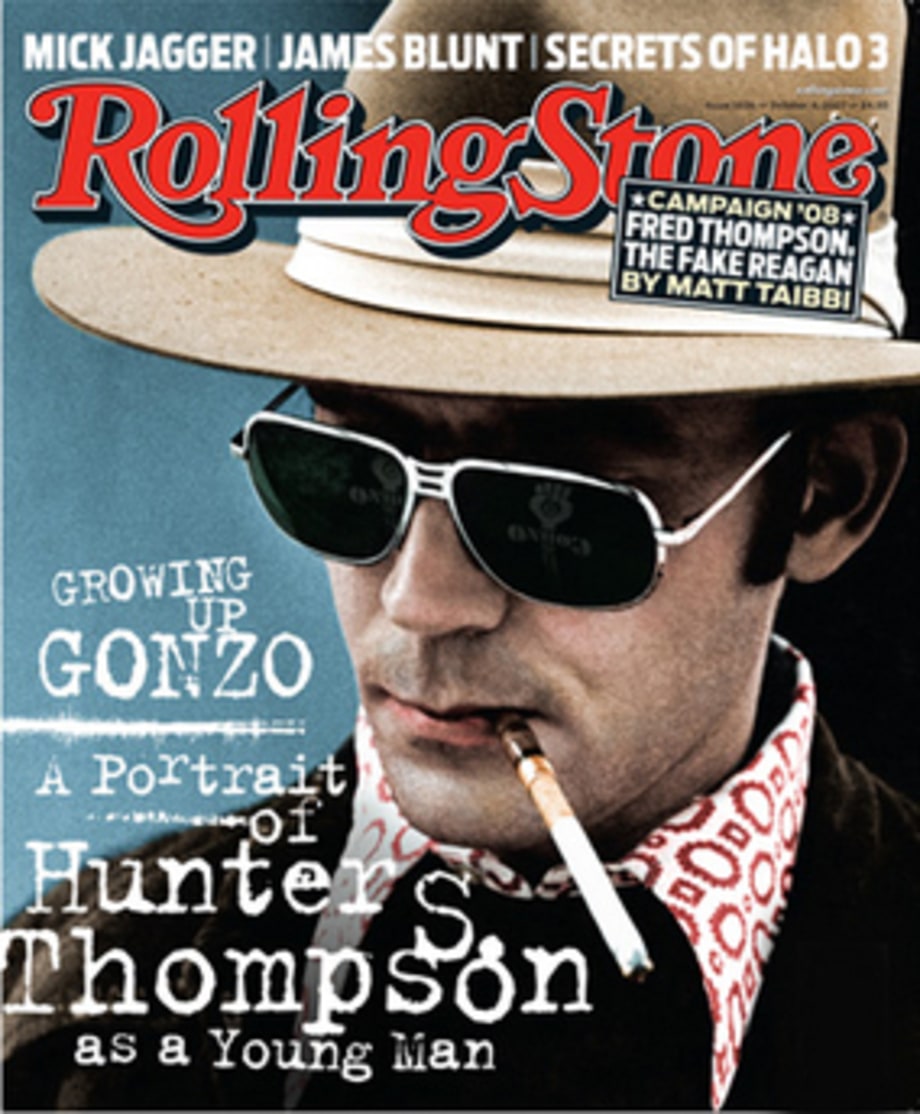
That’s Hunter Thompson. There’s always someone in control behind the wheel — even when he seems most out of control.
This hidden discipline showed up in other ways. Years later, when he ran for sheriff in Aspen or showed up in Washington, D.C. to cover an election for Rolling Stone, savvy observers soon grasped that Thompson had better instincts and organizational skills than some of the most high-powered political operatives. People rallied around him — he was always the ringleader, even going back to his rowdy childhood. And hidden behind the stoned Gonzo exterior was an ambitious strategist who could play a long term game even as he wagered extravagantly on each spin of the roulette wheel that was his life.
“I don’t think you have any idea who Hunter S. Thompson is when he drops the role of court jester,” he wrote to Kraig Juenger, a 34-year-old married woman with whom he had an affair at age 18. “First, I do not live from orgy to orgy, as I might have made you believe. I drink much less than most people think, and I think much more than most people believe.”
That wasn’t just posturing. It had to be true, merely judging by how well-read and au courant Thompson became long before his rise to fame. “His bedroom was lined with books,” later recalled his friend Ralston Steenrod, who went on to major in English at Princeton. “Where I would go home and go to sleep, Hunter would go home and read.” Another friend who went to Yale admitted that Thompson “was probably better read than any of us”.
Did he really come home from drinking binges, and open up a book? It’s hard to believe, but somehow he gave himself a world class education even while living on the bleeding edge. And in later years, Thompson proved it. When it came to literary matters, he simply knew more than most of his editors, who could boast of illustrious degrees Thompson lacked. And when covering some new subject he didn’t know, he learned fast and without slowing down a beat.
But Thompson had another unusual source of inspiration he used in creating his unique prose style. It came from writing letters, which he did constantly and crazily — sending them to friends, lovers, famous people, and total strangers. Almost from the start, he knew this was the engine room for his career; that’s why he always kept copies, even in the early days when that required messy carbon paper in the typewriter. Here in the epistolary medium he found his true authorial voice, as well as his favorite and only subject: himself.
But putting so much sound and fury into his letters came at a cost. For years, Thompson submitted articles that got rejected by newspapers and magazines — and the unhinged, brutally honest cover letters that accompanied them didn’t help. He would insult the editor, and even himself, pointing out the flaws in his own writing and character as part of his pitch.
What was he thinking? You can’t get writing gigs, or any gigs, with that kind of attitude. Except if those cover letters are so brilliant that the editor can’t put them down. And over time, his articles started resembling those feverish cover letters — a process unique in the history of literature, as far as I can tell.
When Thompson finally got his breakout job as Latin American correspondent for the National Observer (a sister publication to the Wall Street Journal in those days), he would always submit articles to editor Clifford Ridley along with a profane and unexpurgated cover letter that was often more entertaining than the story. In an extraordinary move, the newspaper actually published extracts from these cover letters as a newspaper feature.
If you’re looking for a turning point, this is it. Thompson now had the recipe, and it involved three conceptual breakthroughs:
- The story behind the story is the real story.
- The writer is now the hero of each episode.
- All this gets written in the style of a personal communication to the reader of the real, dirty inside stuff — straight, with no holds barred.
Why can’t you write journalism like this? In fact, a whole generation learned to do just that, mostly by imitating Hunter S. Thompson …
July 28, 2025
Claudius: The Disabled Emperor Who Conquered Britain
The Rest Is History
Published 27 January 2025This is part 4 of our series on Suetonius and the Emperors of Rome.
00:00 The rebirth of the republic?
10:05 Who is Claudius
15:18 The relationship between Augustus and Claudius
16:20 The scholar emperor
21:12 Claudius’ relationship with Caligula
28:53 Claudius’ rule as emperor
45:50 The problem he had with his wives
56:40 The rise of Nero
58:40 Was he poisoned?
59:51 The lack of sources in Ancient historyProducer: Theo Young-Smith
Assistant Producer: Tabby Syrett
Executive Producers: Jack Davenport + Tony Pastor
July 23, 2025
The Most Bitter Man In All Of Ancient Rome: Meet JUVENAL
MoAn Inc.
Published 27 Feb 2025
(more…)
July 21, 2025
Caligula: Was He Really Mad?
The Rest Is History
Published 3 Feb 2025Enough of the Princeps, what remains to be described, is the monster …
The Roman emperor Caligula endures as one of the most notorious figures in not only Roman history, but the history of the world. Famed as a byword for sexual degeneracy, cruelty and corruption, the account of his life written by the Roman historian Suetonius has, above all, enshrined him as such for posterity. Throughout the biography there is a whiff of dark comedy, as Caligula is cast as the ultimate demented Caesar, corrupted absolutely by his absolute power and driven into depravity. Born of a sacred and illustrious bloodline to adored parents, his early life — initially so full of promise — was shadowed by tragedy, death, and danger, the members of his family picked off one by one by the emperor Tiberius. Nevertheless, Caligula succeeded, through his own cynical intelligence and cunning manipulation of public spectacle, to launch himself from the status of despised orphan, to that of master of Rome. Yet, before long his seemingly propitious reign, was spiralling into a nightmare of debauchery and terror …
Join Tom and Dominic as they discuss the most notorious emperor in Rome: Caligula, a man said to have slept with his sister, transformed his palace into a brothel, cruelly humiliated senators, and even made his horse into a consul. But what is the truth behind these horrific legends? Was Caligula really more monster than man …?
00:00 A mysterious emperor
05:18 Why are the stories about Caligula so bad?
08:40 Germanicus: the best man in Rome
16:20 Caligula is the heir
19:30 The death of Tiberius
20:55 Caligula’s cynical intelligence
22:50 Caligula’s skill playing to the gallery
28:39 Caligula’s turn to evil (according to Suetonius)…
31:35 Caligula as Suetonius’ monster
37:22 Caligula confronts the senate
45:10 The conspiracy against him moves
48:14 Did all this actually happen?
58:43 Did he make his horse a consul?Producer: Theo Young-Smith
Assistant Producer: Tabby Syrett
Video Editor: Jack Meek
Social Producer: Harry Balden
Executive Producers: Jack Davenport + Tony Pastor
July 14, 2025
Emperor Hadrian and Antinous the God
Reginald Godwyn reviews a new monograph from Dr. Sean Gabb:
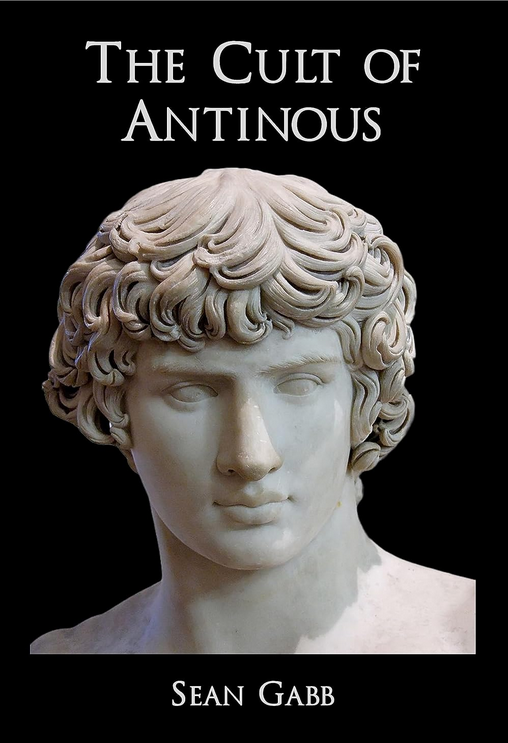
Sean Gabb’s The Cult of Antinous is not a hagiography. It is something better: a quiet, erudite demolition of pious lies from both the ancient and modern world. The lecture-turned-book is a brisk, sardonic tour through the most decadent cult of the Roman world, and one of its most effective. The boy died, yes — but what followed was a miracle of political opportunism and spiritual success. Gabb does not flinch from the disturbing parts. Nor does he genuflect before the fashionably uncritical idolatry now surrounding Antinous as gay icon. This is not a work of celebration. It is a work of historical thought, dressed as a lecture and sharpened with scepticism.
It begins, as it must, with a photograph of Hadrian and Antinous — stone fragments now housed in the British Museum, staring out from beneath museum glass and centuries of self-serving speculation. “Hadrian is on the left”, Gabb says, “Antinous on the right”. But from then on, it is the boy — not the emperor — who takes centre stage. The story is simple enough. Antinous was a Bithynian youth, met Hadrian at around age twelve, became his lover, travelled with him, and died in the Nile under suspicious circumstances. Hadrian made him a god. Cities were built. Statues were raised. Coins were minted. Shrines were erected. And the worship spread quickly and widely—and in ways that make some modern historians uncomfortable.
Gabb’s treatment of all this is not exactly kind, but it is always fair. He reminds us that, when it comes to Antinous, we know almost nothing. The written sources are sparse: Dio Cassius gives a few lines; the Historia Augusta offers rumour. Most of what we “know” is based on “could have”, “may have”, “might have”. And yet on this we have built dissertations, operas, novels, and now neopagan blogs filled with inverted pentagrams and airbrushed torsos. Gabb is not impressed. His repeated refrain is “castle of supposition”. And rightly so. Royston Lambert, he notes, was especially fond of these castles.
But for all that, there is a real story here. Gabb walks us through the ancient views of sex, pausing only to make the necessary disclaimer for his mixed audience of Chinese undergraduates and English middle class language students:
Please be aware that other civilisations frequently have or had views of sexual propriety different from our own. This lecture will discuss, and sometimes show depictions of, sexual relationships between adults and persons somewhat below the present age of consent. Some of these relationships involve disparities of legal status. Though not recommended for imitation in modern England, such relationships are nowhere explicitly condemned. The lecture will also not avoid language that many may consider indelicate or obscene.
What follows is a lesson in ancient sexual economics. Among Greeks, boy-love was structured: older men pursued beautiful adolescent boys, usually between 12 and 17, who were supposed to receive but not enjoy. The Romans were less sentimental: they cared only who did the penetrating. “To use was fine. To be used was shameful.” Gabb’s phrasing here is withering, but accurate. There is no anachronistic moralising — just the dry, clinical reconstruction of a culture with different priorities.
Tiberius: Rome’s Most Underrated Emperor?
The Rest Is History
Published 31 Jan 2025The Roman historian Suetonius’ biography of the controversial Emperor Tiberius is one of his most shocking and salacious, condemning Tiberius to infamy. But was Tiberius really the perverted monster Suetonius would have us believe? Born of Rome’s most illustrious family and a sacred bloodline — the Claudians — Tiberius’ mother Livia was unceremoniously taken from his father while she carried him, to marry the great Emperor Augustus. So it was that Tiberius grew up in the very heart of imperial power, proving himself intelligent, and a superb military commander. But, following the unforeseen deaths of Augustus’ young heirs, he found himself primed to become the next Caesar of Rome. The reign that ensued would prove largely peaceful, prosperous and stable, though Tiberius himself was increasingly plagued by paranoia and fear. While the last of Augustus’ bloodline were wiped out one by one, he retired to Capri, much to the horror of the Roman people. Before long, rumours had begun percolating of the heinous deeds, sick proclivities, and vile abominations Tiberius was practicing on his pleasure island …
Join Tom and Dominic as they discuss Tiberius, the impressive though widely lambasted second emperor of Rome. What is the truth behind the sordid myths and mysteries of his reign …?
00:00 The bad emperor?
06:45 Was he depraved?
08:30 The Roman version of the Kennedys
13:29 How he became the heir
16:50 The greatest general of his generation
17:53 Tiberius is manoeuvred into the succession
21:23 Tiberius the emperor
(more…)
July 11, 2025
William F. Buckley
In Quillette, Ronald Radosh reviews the long-awaited biography of arch-conservative William F. Buckley by his friend Sam Tanenhaus, Buckley: The Life and the Revolution That Changed America:
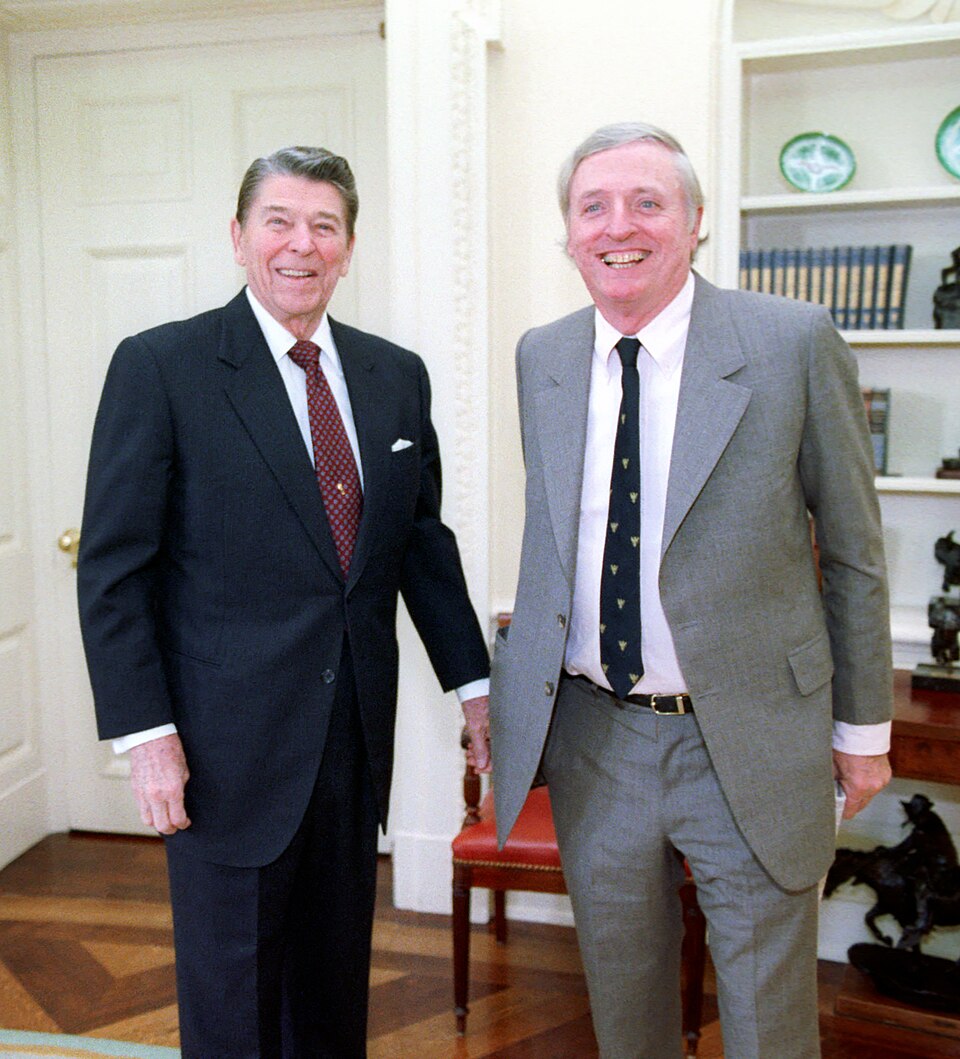
President Reagan meeting with William F. Buckley in the White House, 21 January, 1988.
Photo from the White House Photographic Collection via Wikimedia Commons.
William F. Buckley Jr. was a polymath of unusual erudition. The author of scores of books (including nearly two dozen novels), Buckley was an ardent apostle of conservatism at a moment when American liberalism was ascendant. But he was also an accomplished musician who played the harpsichord, a sailor who entered competitions and spent most summers on the sea, and an avid skier who spent his winters on the slopes of Gstaad after a morning of writing. Most Americans knew him as the host of a weekly television talk show called Firing Line, in which he interviewed and debated a wide range of politicians and intellectuals, most of whom he vehemently but politely disagreed with. (Many of these episodes are now available to view on YouTube.)
Television allowed Buckley to display his not inconsiderable wit and charm. He interviewed prominent socialists like both Norman Thomas and Michael Harrington, but he invited fellow conservatives onto his show as well. He had fellow conservatives on his show too, but he particularly relished debates with ideological opponents like Julian Bond (the young black leader of the Student Nonviolent Coordinating Committee), author Norman Mailer, journalist Christopher Hitchens, Ramparts editor Robert Scheer, and leaders of the Black Panther Party. The only people he would refuse to debate, he told the TV network, were communists lest he lend them legitimacy. Agents of the Soviet Union, he maintained, were not worth engaging with.
Buckley’s other major accomplishment was founding and editing America’s first nationwide conservative magazine. The bi-weekly National Review was the conservative counterpart of the influential liberal publications of the day, including the New Republic, The Nation, The Reporter, and the New Leader. Those liberal magazines all had rather small circulations but they also had the field to themselves until Buckley’s NR came along. Buckley hired a roster of old-style conservatives and ex-communists, including the former Trotskyist James Burnham, the former Communist agent (and accuser of Alger Hiss) Whittaker Chambers, Willi Schlamm, and Frank Meyer. As time went by, he added prominent young conservatives to the magazine’s masthead, many of whom would go on to become political leaders in the new American conservative movement. His prize protégé may have been Gary Wills, who eventually left NR‘s ranks and, much to Buckley’s disappointment, became an influential American liberal. Other NR contributors went on to become important American essayists and authors in their own right, like Joan Didion, George Will, and John Leonard, who edited the New York Times Book Review during the 1970s.
Buckley was the scion of a wealthy Connecticut family with a great estate in Sharon, Connecticut, that his father William F. Buckley Sr. named “Great Elm”. However, Buckley Sr. was also a Texan who identified closely with the American South, and after he made his fortune speculating in oil in Mexico and Venezuela, he purchased a mansion in Camden, South Carolina, for use during the cold Eastern winters. He named it Kamchatka, and the neighbouring residents, Tanenhaus writes, embraced the family “as Southerners who had come home”. Kamchatka had previously been the home of a Confederate general and senator who left office when Lincoln was elected President in 1860, but Camden would play an important role in the civil-rights movement.
By the 1950s through the ’60s, Tanenhaus writes, “the institution of Jim Crow — the legacy of slavery, the Civil War and Reconstruction — was being shaken at its foundations”. In the ’50s, the nation learned about the brutal murder of fourteen-year-old Emmet Till and massive protests by the black population began to appear across the South. The liberal magazines of the day covered the rise of the civil-rights movement and did what they could to mobilise Northerners in support of Southern blacks. In the deep South, activist efforts culminated in the famous Freedom Summer movement for black-voter registration in 1964. Camden, too, became the centre of a massive resistance movement.
Yet all this political and social upheaval never received a word of positive coverage in the pages of National Review. The reason for this was not complicated. Buckley’s family believed that “race was a settled question” and that racial separation was justified “as a matter of law as well as custom”. The Buckley family, of course, hired black help for their Camden mansion, whom they treated with respect and support. But members of the “Negro” race, as blacks were then called, had to know their place. So, Buckley wrote a number of unsigned editorials in February 1956 defending the South’s “deeply rooted folkways and mores”. The South, he argued, “believes that segregation is the answer to a complex situation not fully understandable except to those who live with it”, just as his own parents and siblings did. He vigorously objected to the Supreme Court’s verdict in 1954 outlawing segregated schools in Brown v. Board of Education, and he wrote editorials arguing that the Court’s decision was not an interpretation of the Constitution but rather “a venture in social legislation.”
In Camden, meanwhile, the Buckley family started and financed a newspaper called the News, which was meant to be a vehicle for the white South’s racist population and their “Citizens’ Councils”. Instead of burning crosses and lynching, the Councils preferred to use “legal threats, economic harassment, and public denunciation” in defence of segregation. In one case, a business owned by a black protestor was destroyed and his family harassed by the Council, after the owner tried to register to vote. As the violence in Camden became more extensive and widely reported, Buckley responded with an unsigned NR editorial on 10 January 1957 in which he argued that “the Northern ideologists are responsible for the outbreak of violence”. He did also condemn the “debasing brutality” of the white population’s behaviour, and for years, that remark remained his strongest condemnation of white violence. He continued to ignore the support provided to the Councils by South Carolina authorities.
One of Tanenhaus’s most stunning revelations is that, in 1956, Buckley dispatched an NR contributor to report on the National States’ Rights Conference in Memphis. The man he sent was one Revilo Oliver, whom Tanenhaus correctly describes as “a fanatical racist and anti-Semite”. The following year, NR published Buckley’s most infamous editorial, titled “Why the South Must Prevail”. The white community, he wrote, had a right to defend segregation because “for the time being, it is the advanced race”. The white South, he wrote, “perceives important qualitative differences between its culture and the Negroes’; and intends to assert its own”. And since NR “believes the South’s premises are correct”, the black population could justifiably have its interests thwarted by “undemocratic” but “enlightened” means. That editorial, Tanenhaus rightly notes, “haunts [Buckley’s] legacy, and the conservative movement he led”. Buckley also believed that if suppression of the black vote violated the terms of the Fourteenth Amendment, then that and the Fifteenth Amendment should be considered unconstitutional — “inorganic accretions to the original document, grafted upon it by victors-at-war by force”.
July 7, 2025
Augustus: Visionary Statesman or Destroyer Of The Republic?
The Rest Is History
Published 27 Jan 2025The Roman historian Suetonius’ The Lives of the Caesars, written during the early imperial period of the Roman Empire, is a seminal biography covering the biographies of the early emperors of Rome, during two spectacular centuries of Roman history. Delving deep into the personal lives of the Caesars and sparing no detail, no matter how prurient, pungent, explicit or salacious, it vividly captures Rome at the peak of her power, and those colourful individuals at the heart of everything. It is an unsettling yet fascinating portrait of the alien and the intimate, that sees some of history’s most famous characters revealed as almost modern men, plotting a delicate line between private and public, respectability and suspicion. From the showmanship of Augustus, the first Caesar, and his convoluted family melodramas, to Tiberius, a monster in the historical record famed for his sexual misdeeds, to Caligula, who delighted in voyeuristic moral degeneracy, and the looming shadow of Nero; all will be revealed …
00:00 A humble plug from Tom
02:55 The most spectacular two centuries in Roman history
05:25 The value of Suetonius as a biographer
08:43 Suetonius’ interest in the love lives of the Caesars
12:58 Suetonius’ influence on popular culture
16:15 Augustus: Rome’s greatest actor
21:25 Roman politics as spectacle
21:55 Augustus as the model of a good emperor
24:30 What kind of monarchy was this?
28:00 The life of Suetonius
35:52 How did Roman histories work?
39:04 Why Romans had no idea of privacy
40:05 Did Roman emperors sexual misdemeanours matter
42:08 How we see sexual relations different to the Romans
(more…)
July 4, 2025
July 4, 1826
The History Guy: History Deserves to Be Remembered
Published 4 Jul 2022On the fiftieth anniversary of the ratification of the Declaration of Independence, the US lost two of the men most responsible for its creation. Independence Day 1826 might be the most important since July 4, 1776.
(more…)
July 3, 2025
Bill Slim, the most forward-looking British commander of WW2
At The War Room, Dr. Robert Lyman explains how and why General (later Field Marshal) William Slim was able to turn around British and allied military fortunes in Burma and drive the Japanese out of India to their eventual defeat:
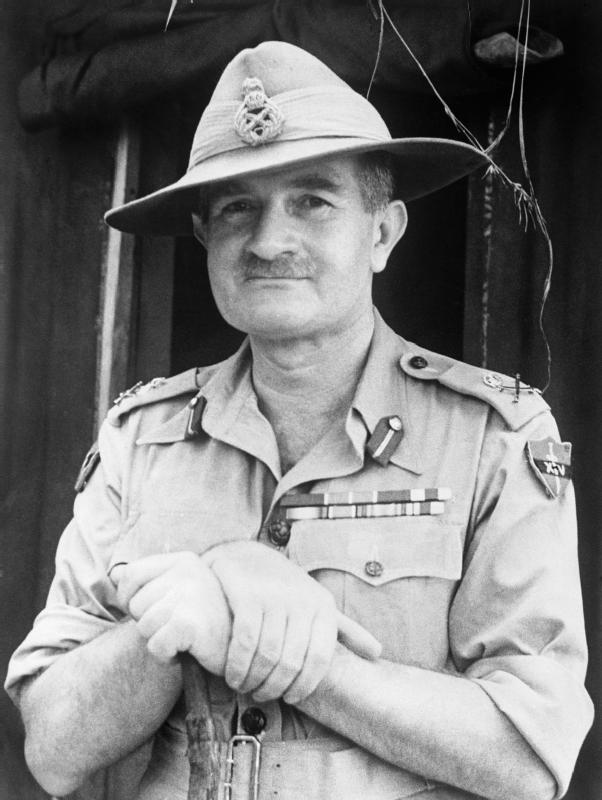
Field Marshal Sir William Slim (1891-1970), during his time as GOC XIVth Army.
Portrait by No. 9 Army Film & Photographic Unit via Wikimedia Commons.
“Burma and the Birth of Modern Warfare” is the subtitle to my 2004 book and PhD about General Slim’s command of the 14th Army in Burma during the last war, titled Slim, Master of War, a use of Sun Tzu’s description of a “heaven-born” commander. It may appear a rather grand claim, and perhaps it is, but the purpose of the subtitle reflects that fact that Slim’s conduct of operations in India and Burma in 1944 and 1945 represented an entirely new style of warfighting to that experienced by the British Army during the war. Instead of looking back to the lessons of World War One, Slim’s conduct of operations looked forward to reflect a style of warfare that would only be adopted as formal doctrine by the British Army in the 1980s. In the mid-1940s it remained alien to the vast bulk of similar British military experience and understanding.
My argument wasn’t that Slim was the best general who had ever commanded men in the history of warfare. That may or may not be true, but for the sake of my argument is irrelevant. My proposition, rather, is that:
Slim was the foremost British exponent in the Second World War of the “indirect approach” and that in his conduct of operations in 1944 and 1945 he provided a clear foreshadowing of “manoeuvre warfare”.
My idea, which first saw expression in my 2004 book, has been developed since then in my subsequent writings, including that of Japan’s Last Bid for Victory, which deals with the great events in the Assam and Manipur in 1944 (2011) and A War of Empires (2021). A major reason for the continuing amnesia in British military thinking about the warfighting characteristics of the Burma Campaign – apart from the fact that it is a long way to go for a staff ride – seems to be the fact that Slim’s style of warfighting remained largely alien to the British Army’s doctrinal precepts until the late 1980s. Until then, Slim’s strategic conceptions had been considered an aberration, and Slim himself regarded merely as the epitome of a fine military leader, and nothing more. Then, in a doctrinal revolution which began in the 1980s, the old firepower-based foundations – which themselves were largely a product of Montgomery’s approach to war in 1944 and 1945 – in which the supreme military virtue was the effective and coordinated application of force, were replaced. This revolution in doctrine and thinking about warfighting exchanged the old foundations with new ones based on an entirely different conception, that of manoeuvre at the operational level of war, in which notions of subtlety, guile and psychological dislocation came to be emphasised in an entirely new and refreshing way. My belief is that it was the effective and pragmatic employment of manoeuvre at the operational level of war by Slim in Burma that was the direct cause of the extraordinary victories the 14th Army achieved in 1944 and 1945 and which led to the two greatest defeats the Japanese Army suffered in the field in the Second World War, the first at Imphal-Kohima in India in 1944 and the second at Mandalay-Meiktila in Burma in 1945. My argument I suppose is that Slim’s exercise of command in Burma makes him not merely a fine example of a “manoeuvrist” commander but in actuality the template for modern manoeuvrist command.
[…]
First, the 14th Army was the only truly joint formation in the British armed forces during WW2. Nothing else, in North Africa, Italy or North-West Europe came close to it. Slim insisted on nothing less than full integration. Not only were headquarters joint, but operational and tactic delivery was also joint. At every level of command air and land headquarters were completely interlinked. I became convinced of this fact when I discovered that the RAF and the Army even shared messes! Strategic air transport, winning the air war, the operational reach and flexibility provided by air power underwrote Slim’s conception of battle, to the extent that the senior RAF officer in the theatre ruefully concluded in 1945, and I quote, that:
Slim was quicker to grasp the potentialities and value of air support in the jungles of Burma than most Air Force officers.
There was no snobbery and no shibboleths with Slim: if it worked, it was pressed into action.
[…]
Professor Dixon argues [in On the Psychology of Military Incompetence] that, unusually for a senior commander of his ilk in WW2, Slim was non-ethnocentric. He had no intrinsic prejudices about the virtues of one race over another. Slim, after all, was an officer of the Indian Army, and I have yet to come across any evidence that British regimental officers of the Indian Army regarded their soldiers in any way inferior to themselves. He was commonly known to those who served under him as “Uncle Bill” from the special affinity British troops had to him: the remarkable fact, however, was that at least 87% of his Army of several hundred thousand men recalled him as “Cha Cha Slim Sahib”: 14th Army was, after all, very largely Indian, Gurkha and West and East African. I certainly cannot think of any other Indian Army general who had such an impact on British troops. He became, of course, Chief of the Imperial General Staff following Field Marshal Montgomery, in 1948, which securely establishes this feat. On that note, I cannot conceive of “Uncle Bernard” when referring to Field Marshal Montgomery!
The Burma campaign was as much a struggle for mastery of logistics as it was a struggle for mastery on the battlefield, and it was about risk as much as it was about adherence to logistical principles. Slim had an implicit understanding of the constraints placed on warfare by the demands of logistics. Great efforts were made to increase the quantity of supplies to Burma. Railways were extended, roads built and surfaced, sunken ferries refloated and repaired, barges and rafts built for use on the numerous waterways. In this regard Archibald Nye, the VCIGS under Alan Brooke, regarded Slim’s mastery of logistics to be the most significant measure of his greatness as commander of 14 Army in Burma:
He never had enough to do what he had to do and this … is the measure of his greatness.
The practice of war in Burma by Slim was so startling in its modernity, and unlike any other pattern of warfighting by operational level British commanders in the war. My view of Slim as a commander can be interpreted at two levels. He was, first of all, a great commander and leader. Being a master of strategy, of logistics, of technical proficiency and so on are important in themselves when considering the nature of leadership in war, but by themselves they remain insufficient. Successful military command requires someone who can, through dint of personality and inspirational leadership, wield all of the components of fighting power together so that an extraordinary result transpires. What marks Slim out from the crowd was much more than just his winning of a succession of extraordinary battles. His strength lay in his ability to produce a decisive effect from scratch; to mould thousands of disparate individuals together into a single team with a single goal; to persuade a defeated army that it had the potential to turn the tables on their enemies; to master the complexities of terrain, climate and administrative deficiency so that self-help, resourcefulness and ingenuity could become as much prized as fighting skill. In these individual areas, and more, Slim proved the master. His genius for war was the consequence of his ability to bring together all of these elements to create an extraordinary result, the visible sign of which was the greatest defeat suffered by the Japanese on land during the Second World War.
Nicolas Romero, the inventor who introduced “Spag Bol” to England
In the latest Age of Invention newsletter, Anton Howes describes the career of a most inventive man, Signior Nicolas Romero originally of Naples … maybe:
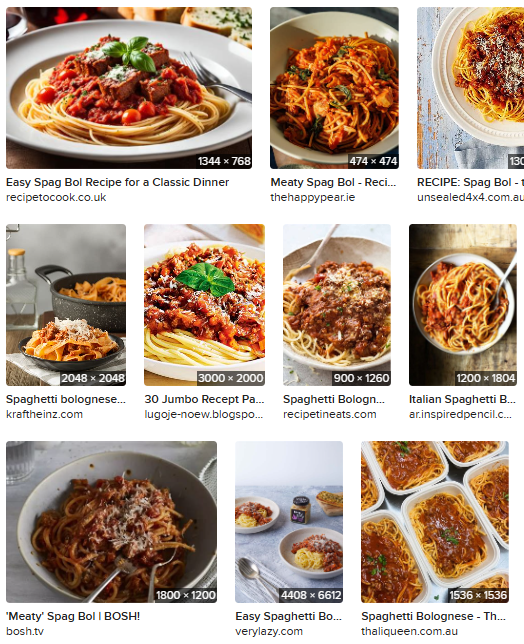
The British interpretation of Spaghetti Bolognese — widely known as “spag bol” — is a pasta dish with a meat and tomato sauce.
The person who tried to bring these coal balls or briquettes to London was one Nicolas Romero — a name that has been almost entirely and undeservedly forgotten. Indeed, the one other historian to have ever noticed a handful of his achievements was unable to find his first name. And so I get the pleasure of being able to give a few glimpses of his remarkable story for the first time in over four hundred years.
Nicolas Romero seems to have originally hailed from the Spanish Habsburg possessions in Italy, most probably Naples. He was personally acquainted with Cardinal Granvelle, who was the regent in Naples from 1570 to 1575, and may have been involved in the Spanish attack on Tunis in 1573-4, where he picked up some siege techniques used by the Ottoman Turks. Romero then moved to Spanish-ruled Milan, where he was apparently the close confidant of one “Dr Sirnige” or “Dr Siring” (as it sounded to an English ear), who received a hefty reward for discovering a “defensative” or preventative treatment against a plague that killed some 15% of the city’s population in 1576-8. Then, Romero appears to have gone to the Low Countries, much of which was in outright revolt against Spain, where he picked up the details of how coal balls were made at Liège.
Then, astonishingly, he suddenly switched sides. Perhaps having fallen afoul of the Inquisition, or perhaps having converted to Protestantism, from some point in the 1580s he was only ever involved with the manifold enemies of Spain. He moved to England, even partaking — and I suspect investing — in its unsuccessful invasion of Spanish-ruled Portugal in 1589, where he was captured and held in “a very cruel prison” for ten months until managing to escape.
Somehow making his way back to London, Romero there befriended the barrister, alchemy enthusiast, and wannabe inventor Hugh Plat. It was via Plat, who plied all of his acquaintances for their technological know-how, and recorded his sources in his manuscripts, that Romero introduced various innovations to England.
Romero told him of how mere bags of linen or canvas, when filled with whatever dirt or sand was to hand, could be used to instantly create a “musket-proof” trench — in essence, the modern sandbag — which had been used by the Turkish army in their successful siege of La Goleta near Tunis. Plat saw a wider potential too, hoping to use these sandbags in reclaiming land from both marsh and sea.
In 1593, when a deadly plague gripped London, Romero gave Plat the recipe of Dr Sirnige’s defensative pills, as used in Milan, and together with the apothecary John Clarke they produced and distributed hundreds of them, including to Queen Elizabeth I and her entire Privy Council, apparently with great success. Clarke published their case notes under the boastful title The Trumpet of Apollo Sounding out the Sweet Blast of Recovery in 1602, though it was a little premature. Just a year later plague returned to London with a vengeance.
Most enduringly of all, Romero told Plat the details of making pasta, which Plat then made and marketed as a cheap and long-lasting food for the English armed forces. What Plat called his “macaroni” even won plaudits from Sir Francis Drake, and in 1594 he published the first known depiction of a pasta extruder. To Nicolas Romero, then — a name never mentioned by even specialist historians — belongs the considerable distinction of introducing the English to pasta. He is the patron saint of “Spag Bol” (if you are Italian, and do not wish to suffer a heart-attack, under no circumstances should you look up this term).
Romero was full of other ideas too. Romero gave Plat his methods for preserving wine, chestnuts, butter, turnips, and quince. He revealed to him the principle behind the diving bell; how to make a metal rotisserie oven; how to catch crayfish; how to engrave glass; how to make vellum paper translucent; how to keep snow from melting over the course of a year by storing it underground; and how few drops of sulphuric acid might be added to a ship’s water supply to keep it fresh for longer. Along with various recipes for Italian salads, and how to make smoke grenades, he even told him how to raise water using atmospheric pressure — perhaps the earliest record in England of what would eventually be developed into the steam engine. In papers seized by the government from the soldier Sir Thomas Arundel, who was arrested for being a Catholic in 1597, are mentions of not just of Romero’s sandbag “trench”, but “also his bridge, his boat to go without wind or sail, and his device against horsemen” — which according to Plat’s manuscripts was a kind of rest for muskets that could also serve as a pike.
Throughout the 1590s, Plat tried to commercialise some of Romero’s inventions, including a method to replace the expensive copper vessels for boiling water for home-brewing with a supposedly more efficient tub made of treated wood; some kind of light, portable water pump; and the Liège-style coal balls or briquettes. But with little success. By 1594 Romero was running low on money and had given up on trying to make it in England, having apparently passed up various opportunities to serve some German princes. So he left Plat in London to keep trying to sell his inventions, while he himself went to Holland to become an engineer in the service of Count Maurice of Nassau, who was fighting to free the Netherlands from Spanish rule.
While in the Netherlands Romero patented his water pump and the wooden boiling tub — an invention apparently “very much needed in the present time of cities under siege”, for whom fuel supplies were scarce. And having gained Count Maurice’s trust and backing, he wrote to one of Elizabeth I’s favourites, the Earl of Essex, in a fresh bid to get the two inventions, along with the coal balls, patented in England. Naturally, Hugh Plat served as his go-between.
Despite such allies, however, they once again failed. Romero would patent more inventions in the Netherlands in 1598 — a means of reducing the friction on the axles of carts and carriages, and a winch for more easily lifting heavy items like anchors and cannon — but he wasn’t to get a patent in England until ten years later in 1608. Just months before Plat’s death, Romero, with one James Jackson, presumably an investor, was finally granted an English patent for some kind of universally-applicable method of saving fuel. Unfortunately, the wording of the patent gives no indication whatsoever of what it involved.
I’ve traced no further record of Romero — if anyone is familiar with German, Dutch, Italian or Spanish sources and has ever come across the name, please do get in touch
July 2, 2025
History of Britain IV: Caesar in Britain, Reconnaissance in Force, 55-54 BCE
Thersites the Historian
Published 29 Jan 2025Caesar’s landings in Britain illustrate his willingness to take risks, even unnecessary ones. The questionable decision-making, however, also led to the first surviving detailed description of people and events in Britain.
(more…)
June 23, 2025
Augustus and the empire – The Conquered and the Proud 14
Adrian Goldsworthy. Historian and Novelist
Published 15 Jan 2025This time we look at Augustus, the empire and the army. The man who built the Altar of Augustan Peace in Rome was also the last of the great conquerors, who added more territory to the Roman Empire than any other individual leader. How he did this, and how he kept the army under control, is the theme of this video.
June 12, 2025
QotD: Napoleon Bonaparte, arch-meritocrat
Jane: But Napoleon was a meritocrat, in the strictest and most literal sense. He made himself emperor through sheer excellence, and the men he elevated were the same. I mean, let’s look at his first set of marshals: Augereau is the son of a fruit-seller, Ney’s father was a cooper, Masséna’s father was a shopkeeper, and Bessières’ was a doctor (in an era when that was a lot less prestigious than it is today). Bernadotte starts out the son of a provincial prosecutor and ends up king of Sweden. Only Davout had an aristocratic background. Obviously this was sort of inevitable, because the previous elite had been literally decapitated and a new one had to come from somewhere. Maybe it’s just what happens when you have a particularly profound disruption: people end up in power because they’re better than anyone else at making war to get the power in the first place. Just like you can’t follow the lineage of any European aristocrat back farther than the Germanic conquerors of the early Middle Ages. (The Psmiths, as is well attested, trace descent from the Viking Psmiðr who came to Normandy with Rollo in the 8th century.) But I think it’s more than that. Napoleon set up all kinds of meritocratic institutions outside the military: he had his competitive examination lycées, he was constantly promoting the talented young auditeurs he ran across in the Conseil … (Can you tell I liked the civil administration chapters better than the battle chapters? #thetwogenders)
So what is the difference between Napoleonic meritocracy and our present sort? I think the real difference is that in his case there was someone doing the choosing. This is important for a couple of reasons: first, because it takes a certain amount of talent to recognize excellence. You can get away with being a Salieri, but you need to have something. I think we’ve all seen institutions whose HR departments were so packed with drones that they couldn’t have recognized a genius if one fell into their laps, let alone wanted to work for them. And it’s way, way harder to keep around an institution full of competent intelligent people with correctly aligned incentives than it is to just … be good at identifying talent, personally. Second, a person exercising judgment can take a way more holistic view than any standardized metric. This is what college admissions claims to be trying to do when they’re not just using it as an excuse to keep out Asians. But a well-functioning meritocracy — or an emperor picking his men — should be searching for excellence. Studying hard and doing well on a test not only fails to reliably indicate excellence, it actually encourages and cultivates habits of mind that undermine excellence.
But the biggest reason this is important, I think, brings us back to Napoleon again, and might be the key to what you described as the strange inconsistency between his loving concern for his men and his willingness to send them to a hideous death. Because I don’t actually think it’s an inconsistency at all! And it has to do with mission. What’s the deal with our current meritocratic system? “We want to have the smartest people in power”. Okay but why? “So they can be effective”. Effective at what?
No one ever had to ask Napoleon “effective at what”.
He was willing to throw himself, and his closest friends, and the meanest infantryman whose boots he nevertheless obsessed over, into some of the most hellish experiences yet devised by men1 in service of something greater. And you can be snide and say the something greater was “Napoleon”, and that’s sort of true, but to him and to France “Napoleon” had come to stand for law and knowledge and liberty and order and greatness itself. Napoleon’s meritocracy worked because it had a telos. Our meritocracy is the idiot fluting of a blind inhuman blob.
Jane and John Psmith, “JOINT REVIEW: Napoleon the Great, by Andrew Roberts”, Mr. and Mrs. Psmith’s Bookshelf, 2023-01-21.
1. Another book recommendation! The Face of Battle.


