Paul Sellers
Published on 9 Jul 2019In this video Paul critiques a dovetail sent in by Jenny, one of our beginners from Common Woodworking. Not everyone will run into the same problems, however if we can get a sample of the issues people are facing with their first experiences of joinery then we will be able to advise you on how to avoid these problems in the future.
If you are new to joinery and would like feedback from Paul on your dovetails, you can send them in using the link below:
https://commonwoodworking.com/send-us…If you are yet to make your first dovetail joint, visit our beginner friendly step-by-step guide on Common Woodworking: https://commonwoodworking.com/courses…
July 10, 2019
Beginners Dovetail Feedback | Paul Sellers
Liberals: “vote for us, you ignorant, uneducated conservative plebians!”
Andrew Coyne sneaks in a literary quote from Chesterton on the eternal snobbery of the not-so-hidden class war in Canadian politics:
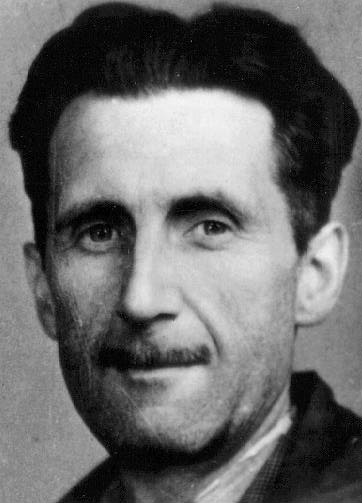
Democracy, in G. K. Chesterton’s careful definition, means government by the uneducated, “while aristocracy means government by the badly educated.”
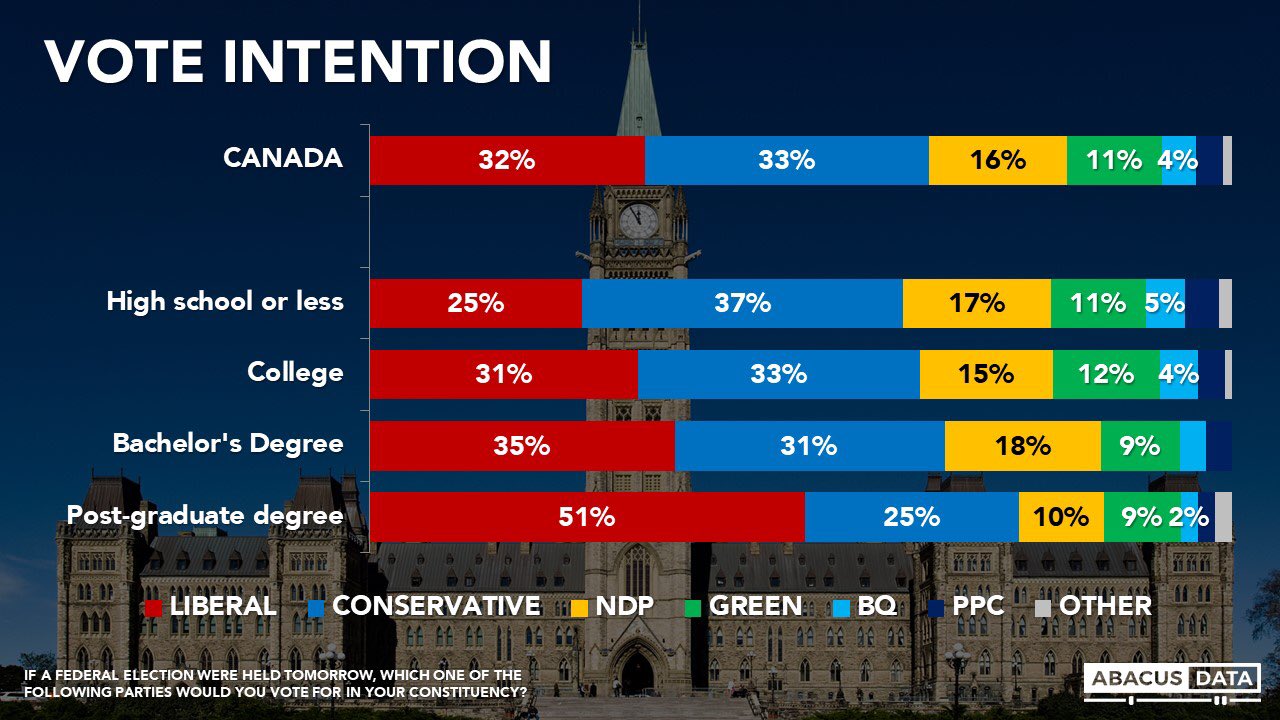
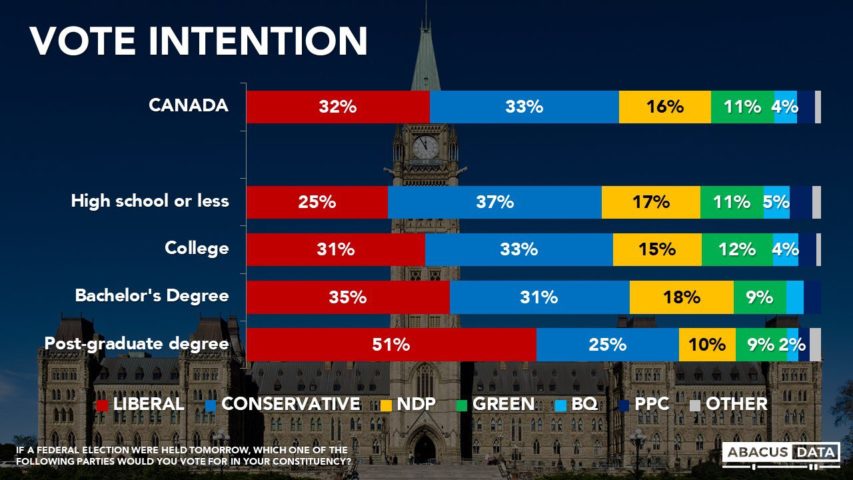
The enduring value of this distinction was suggested by the ruckus stirred up over the weekend by Amir Attaran, professor of law at University of Ottawa. Responding to a recent Abacus Data poll finding the Tories leading the Liberals by a wide margin among Canadians with a high school diploma or less, with the Liberals ahead among those with bachelor degrees or higher, the professor tweeted: “The party of the uneducated. Every poll says this.”
In the ensuing furor, Attaran tried to protest that he was just stating a fact, but the disdain in the tweet was clear enough to most. For their part, while some Tories quibbled with the data (just one poll, within the margin of error, misplaced correlation etc), most seemed less offended by the sentiment — every poll does show the less formal education a voter has, the more likely they are to support the Conservatives — than by the suggestion there was something shameful about it.
It was, in short, another skirmish in the continuing class war: class, now defined not by occupation or birth, as in Chesterton’s time, but by education. Conservatives, true to form, professed outrage at this arrogant display of Liberal elitism, while Liberal partisans protested that they were not snobs, it’s just that Conservatives are such ignorant boobs (I paraphrase).
The professor compounded matters by objecting, not only that he is not a Liberal, but that he is not an elite, since his parents were immigrants. And everyone did their best to be as exquisitely sensitive (“let us respect the inherent dignity of labour”) as they could while still being viciously hurtful (“not uneducated, just unintelligent”).
At the Post Millennial, Joshua Lieblein describes his initial reaction followed by sober second thoughts:
When I read the following condescending tweets from University of Ottawa professor Amir Attaran, my first thought was, “Well, somehow he wasn’t educated enough to predict this reaction. What did he expect?”
[…]
And then I realized that I wasn’t giving him enough credit. Professor Attaran knew exactly what to expect.
Professor Attaran wants you to read his unsolicited and deliberately insulting tweets. He wants you to talk about the tight links between the polling firm that provided him with his QUOTATION and the Liberal Party of Canada. He wants you to hurl all kinds of abuse at him.
Then, he and others will go through the pile of invective generated by this Sunday evening musing, pick out the most racist and inflammatory takes, and use them to justify the idea that facts are under assault, that minorities cannot speak out on issues of the day in Canada, that Conservatives don’t believe in freedom of speech, and that “right-wing mobs” exist and are being directed by CPC thought leaders.
It’s not like this is a new phenomenon, or something that’s new to Canada. Did you think all of Trudeau’s ridiculous behaviour was spontaneous? Sure, some of it is. The man is a certifiable moron. But we really should have guessed that we were being played for fools by the time he was doing shirtless photobombs of weddings.

An Overview of the Pinfire Revolver System
Forgotten Weapons
Published on 4 May 2019(Video reuploaded to removed an allegedly copyrighted still image)
http://www.patreon.com/ForgottenWeapons
Cool Forgotten Weapons merch! http://shop.bbtv.com/collections/forg…The pinfire system was an early cartridge type which saw widespread use in Europe, but was not widely adopted in the United States. First invented by a French designer named Pauly, it was made commercially feasible by Casimir Lefacheaux. It was Casimir’s son Eugene, however, who took the pinfire cartridge to its full potential, garnering a French military contract in the 1850s and building Lefacheaux into one of the largest French/Belgian non-government arms manufacturers in the mid 1800s.
Todays we are looking at an assortment of pinfire revolvers, to get some basic idea for the sort of variety that was made over the decades. Small to large, plain to fancy, and with all manner of quirky details (like folding bayonets and Lefacheaux’s triple-action fire control system).
Contact:
Forgotten Weapons
PO Box 87647
Tucson, AZ 85754
QotD: Price controls
Price controls – both price ceilings and price floors – reduce the quantities of price-controlled goods and services that consumers actually get. Forcing the money price of a good or service down with a government-imposed price ceiling reduces the amount of this good or service that consumers actually get by reducing the quantity supplied (from what that quantity would be were the money price not forced downward). Forcing the money price of a good or service up with a government-imposed price floor reduces the amount of this good or service that consumers actually get by reducing the quantity demanded (from what that quantity would be were the money price not forced upward). In both cases, the government intervention reduces economic output.
Minimum wages, statutory prohibitions on so-called “price gouging,” and other price controls reflect irrational mysticism. These controls are all premised on the notion that by forcibly changing the nominal reported value of a good or service – that is, by forcibly changing the name of the value – the real value of the good or service will change to correspond to the dictated name. It’s a notion no less batty than is the belief, say, that the New York Times can actually change the number of people killed in a terrorist attack by changing the name of the number. Yet who believes that if, say, 18 people are killed in a terrorist attack that the number of dead people will miraculously be reduced by three if the New York Times reports that “15 people were killed in a terrorist attack”? The answer, of course, is no one. Indeed, anyone who would suppose that reality is changed simply when newspaper reports of it are changed is recognized as being too far detached from reality to take seriously.
Those who support price controls are just as detached from reality. The market-determined price of a good or service is as accurate a report as is possible of the value of each unit of a good or service. This value will not move up or down simply if the government orders it to move up or down.
[…]
None of this matters to proponents of price controls. Such proponents are satisfied with the fact that the names of the values of good or services are changed in ways that please the eye and ear of the economically illiterate. If it is now possible to say that the highest name of the value of a gallon of gasoline is $1.00, then these proponents are content to believe that the real value is indeed $1.00. If it is now possible to say that the lowest name of the value of an hour of low-skilled labor is $7.25, then these proponents are content to believe that the real value is indeed $7.25.
It’s a foolish superstition. It is, however, a superstition that is very widespread, especially among those who today fancy themselves to be immune to superstitions.
Don Boudreaux, “Quotation of the Day…”, Café Hayek, 2017-06-19.
July 9, 2019
“Why can’t America have great trains?”
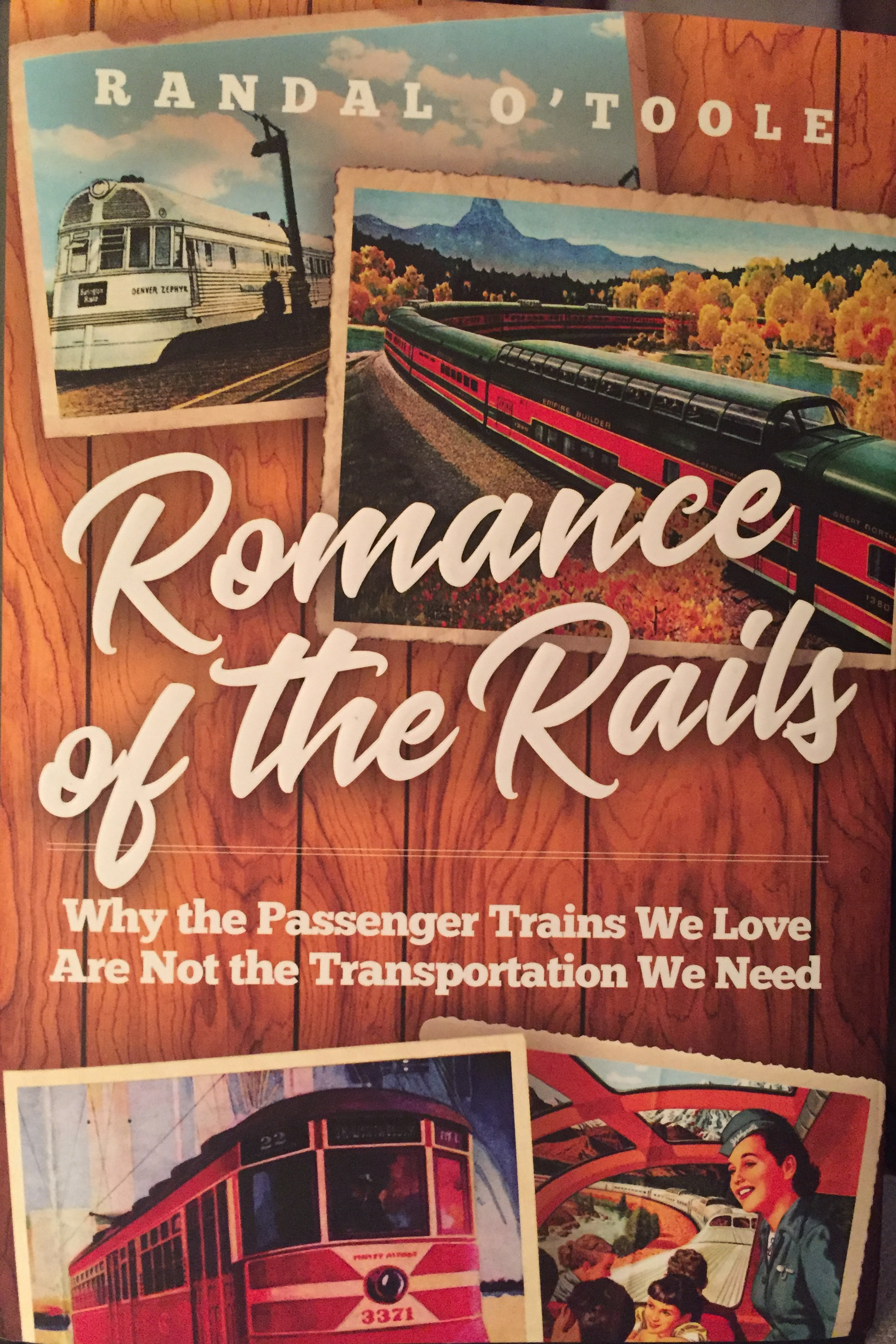
At the very end of his recent book Romance of the Rails, Randal O’Toole regretfully (he really, genuinely is a train fan) answers the question three ways … none of which bolster the hopes that the United States will go back to great passenger railway service:
First, when we had great trains, they were used mainly by the elite, and that remains true of great trains in other countries today. Before 1910, it is likely that a majority of Americans had never traveled more than 50 miles from home, and most had never been on a train, while many others had taken only one or two train trips in their life. As James Hill observed, “the so-called ‘travelling public’ forms in reality but a small, and the more fortunate class of the community.” If he was prejudiced against passenger trains, as some claim, it may have been for altruistic reasons, as the people who relied on freight trains “direct and indirect, include all. Hence justice requires that railway systems … should be cautious not to favor passenger traffic at the necessary expense of freight payers.” It is neither sensible nor fair fo the government to subsidize transportation catering mainly to the wealthy.
Second, new transportation technologies have replaced trains and streetcars. Planes are faster and less expensive for long distances; cars and buses are more convenient and less expensive for short distances; and there is no midrange distance at which passenger rail has an advantage over both cars and planes.
Third, and just as important, other new technologies, including the moving assembly line, telecommunications and the electrical grid, have reshaped our cities so the urban patterns that once made rail convenient to large numbers (though never a majority) of people have been replaced by patterns in which rail makes no sense for passenger travel.
Although we might want great trains in our fantasy of what the world should be like, the reality is we don’t need trains. Most Americans don’t ride the trains we have, nor would they ride them even if they met some arbitrary devinition of “great.” We love passenger trains, and we will remember them in museums and tourist lines. But if the government stays involved in transportation at all, it should be to prepare for the next revolution in transportation, not to try to reverse the previous one.
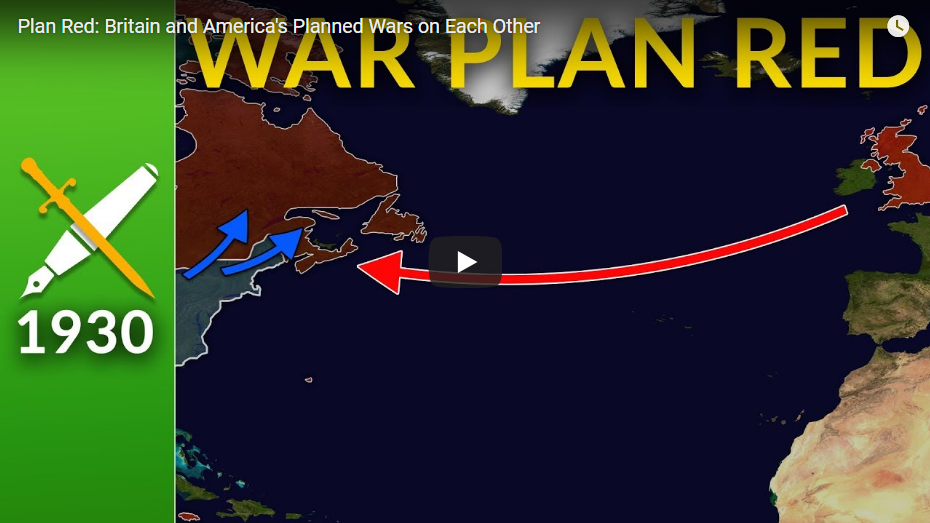
Plan Red: Britain and America’s Planned Wars on Each Other
Historigraph
Published on 27 Jan 2019If you enjoyed this video and want to see more made, consider supporting my efforts on Patreon: https://www.patreon.com/historigraph
Check out my other videos here: https://www.youtube.com/playlist?list…
#WarPlanRed #Historigraph
► Twitter: https://twitter.com/historigraph
►Patreon: https://www.patreon.com/historigraph
►Discord: https://discord.gg/f8JZw93
►My Gaming Channel: https://www.youtube.com/c/Addaway
►My Twitch: https://www.twitch.tv/addawaySources:
Christopher M. Bell, “Thinking the Unthinkable: British and American Naval Strategies for an Anglo-American War, 1918-1931”, The International History Review, Vol. 19, No. 4 (Nov. 1997).
Kevin Lippert, War Plan Red: The United States’ Plan to Invade Canada and Canada’s Secret Plan to Invade The United States (New York: Princeton Architectural Press, 2015)
Stephen Roskill, Churchill and the Admirals
Ben Wilson, Empire of the Deep: The Rise and Fall of the British Navy
The main economic damage of Brexit is the extended period of uncertainty
At the Continental Telegraph, Tim Worstall interprets a recent Bank of England recommendation to really mean “do Brexit” and “get it over with”:

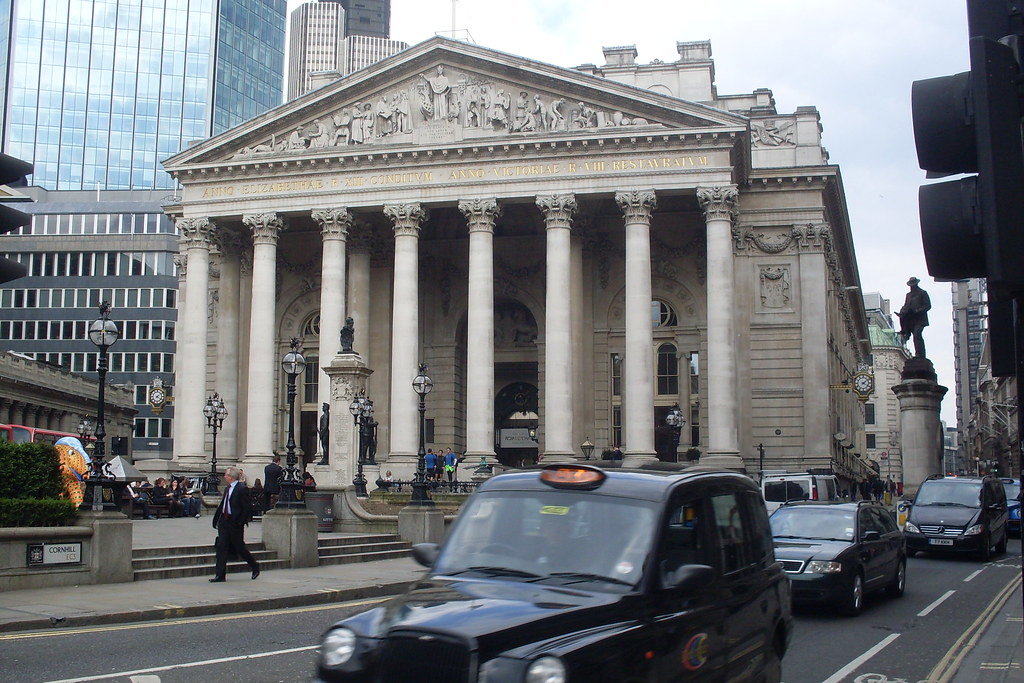
“The bank of England. London.”by Demetrio Neri_1959 is licensed under CC BY-NC-SA 2.0
To pull that out of the jargon, when every bugger’s running around screaming because they don’t know what’s going to happen then things are dark for the long term future of the economy. Just because the screaming and the running around means no bugger is doing anything else.
And here’s the thing – that lookin’ dark bit gets worse the longer the uncertainty lasts. To the point that the effect just of the not knowing becomes greater than the possible effect of any particular event in that universe of possibilities. It really is true that continuing to delay Brexit will, at some point, become worse than any particular Brexit outcome.
Thus get on with it, get it done. And given that we’ll get something of a bloody revolution if the Remainers win – we Brits being really quite keen on this democracy idea, we get to choose not they – then the getting on with it will have to be to leave. Yesterday would have been good, tomorrow if that’s not possible.
My secret for buying woodworking tools DIRT CHEAP
Rex Krueger
Published on 16 Oct 2017More videos and exclusive content: http://www.patreon.com/rexkrueger
My trick for buying good tools at super-low prices is really simple: go to antique car and antique tractor flea markets. These places are mostly filled with car parts, but when a vendor does have woodworking tools, he’s usually looking to unload them as fast as possible. Often, car guys don’t even know what they have, so woodworkers can score loads of useful or collectible tools for pocket-change. These flea markets are also a great source of consumables like glue, thinners, brushes, and sand-paper. You can stock up on the most expensive stuff for cheap.
QotD: Tariffs
The entire aim of having trade is so that we can go buy those lovely things made by foreigners. We only export so as to be able to swap something for those foreign made goods. Thus tariffs are a bad idea to begin with — why should we tax ourselves for gaining access to the very point of our having trade in the first place? Sadly all too many don’t grasp this point. Too many of them being in the current Trump Administration.
Over and above the general point that we don’t want to limit trade nor imports there’s another worry with tariffs and trade wars. Which is what the International Monetary Fund is complaining about. The imposition of more tariffs is a disruption to that global economy. One that is going to reduce growth, the very thing we all desire.
Tim Worstall, “IMF Says The U.S. And China Trade Tariffs Are A Major Risk To World Growth”, Seeking Alpha, 2019-06-07.
July 8, 2019
Bench heights and planing technique | Paul Sellers
Paul Sellers
Published on 11 Jan 2014Do you need a low bench height to bear down on your work when planing? Or should a sharp plane pull itself to task? See what Paul Sellers thinks.
We posted this (https://www.youtube.com/watch?v=n8FLl…) video the day before this one but we had a comment saying that the same would not be possible with the board level. Hopefully this will show that that is not the case.
To find out more about Paul Sellers and the projects he is involved with go to http://paulsellers.com
Bitcoin and its successors lack one thing that Libra has
Andrew Coyne on cryptocurrencies:

“Bitcoin – from WSJ”by MarkGregory007 is licensed under CC BY-NC-SA 2.0
Sign of the times: the convenience store in my block of mid-town Toronto has installed, in addition to the usual fare of milk, cigarettes and magazines, an ATM dispensing bitcoins. Customers insert their debit cards and buy bitcoin, which they can then use to … to …
To do what, exactly, that they could not do with regular money? Bitcoin, the original cryptocurrency — there are now dozens of competitors — has always struck me as a solution in search of a problem. Its chief selling point, the anonymity made possible by its system of ultra-encrypted peer-to-peer transactions, unmediated by the banking system and beyond reach of the regulators, would seem of most appeal to two groups: crooks and cranks.
Oh, and a third: speculators. The price of cryptocurrencies has tended to fluctuate wildly — having fallen to a third of its peak against the U.S. dollar last year, Bitcoin has tripled in value so far in 2019. Cryptocurrencies are unlikely to achieve widespread use as mediums of exchange so long as they fail to fulfil one of money’s other primary functions, as stores of value.
The Wild West reputation the privately issued currencies have acquired — one of the most popular, Dogecoin, was invented by a 26-year-old Australian in 2013 as a joke — will be one of the early hurdles confronting Facebook’s recent entry into the field. The company hopes its 2.4 billion users will soon be buying goods and services from each other with Libra, as the proposed digital currency is called, wherever on earth either party may happen to be.
And yet Libra differs from Bitcoin and its ilk in several important ways. One, while it makes use of the same blockchain encryption technology as Bitcoin to ensure the security of payments, it is not based on the same anarchic premise.
In contrast to Bitcoin’s unsupervised, massively distributed, “permissionless” network, Libra will operate, at least initially, via Facebook’s Messenger and WhatsApp platforms, which are very much subject to its control. The company, and the others it has recruited as partners — names like Visa, Mastercard, and PayPal — are likewise highly visible targets of regulatory oversight, and indeed have signalled they intend to work with national banking regulators.
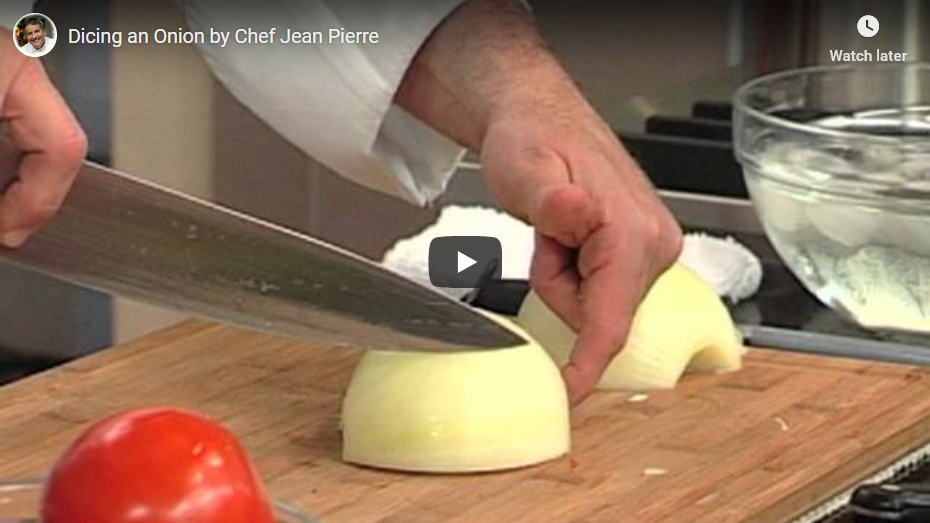
Dicing an Onion by Chef Jean Pierre
ChefJeanPierre
Published on 5 Jan 2012Do you struggle trying to dice an onion? Chef Jean Pierre shows you the easiest way to dice an onion without shedding a tear.
July 7, 2019
Joan of Arc – The Mad King – Extra History – #1
Extra Credits
Published on 6 Jul 2019Before we can really get into Joan of Arc’s life, we have to get a bit into the civil war between the Burgundians and the Armagnacs. Time for some royal family drama with King Charles VI’s madness and Queen Isabeau’s friend Louis.
Follow us on Instagram: http://bit.ly/ECisonInstagram
Join us on Patreon! http://bit.ly/EHPatreon